

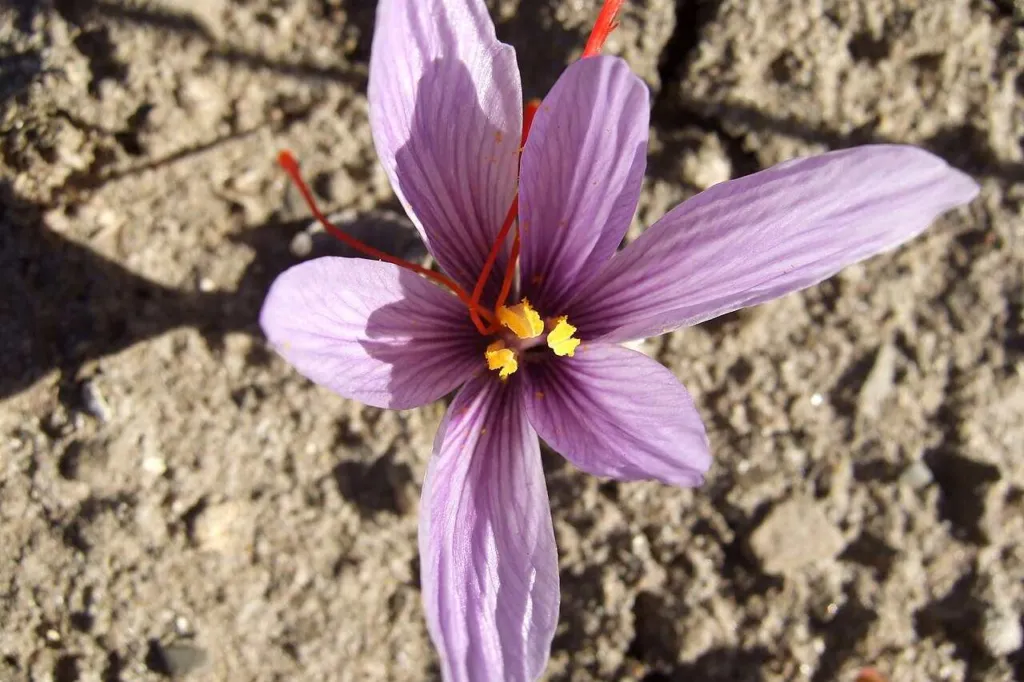
Cover: saffron crocus in flower, France. Photo: Emilie40 · CC0 · Wikimedia Commons
Saffron is three red threads from the heart of a purple crocus, picked by hand each autumn for at least 3,500 years. Attested Its stigma extracts are now in more than a hundred Australian mood, stress and sleep products. Attested The trials behind them are real, mostly small, and mostly paid for by the companies that make the extracts. Evidence suggests
This is AIP Literature Review and Critical Analysis AIP-LR-CROSAT in the Australian Institute of Pharmacognosy’s series of literature reviews and critical analyses. It covers Crocus sativus L.: its identity and lookalikes, its botany and Greek origin, its history from Bronze Age frescoes to Persian medicine, how the spice becomes a standardised extract, its chemistry and pharmacology, a close reading of the human trials of mood, stress and sleep, its safety and interactions (including combination products that contain St John’s wort), its position under Australian medicines, poisons, food and biosecurity law as read in October 2026, Australia’s small Tasmanian saffron industry, and the long history of saffron fraud.
This article is educational. It is not medical, legal or regulatory advice, and it is not an advertisement. No product is recommended or discouraged. The Institute has no commercial interest in any saffron product.
1. Mood medication. Saffron is not an approved treatment for depression in Australia. Nobody should stop, reduce or swap a prescribed antidepressant for a supplement on their own. Anyone on mood medication who is considering saffron should first consult a degree-qualified herbalist with competencies and adequate training in pharmacognosy. Attested
2. Check for St John’s wort. 8 of the 124 saffron medicines on the ARTG also contain St John’s wort (Hypericum perforatum), which lowers blood levels of many medicines, including oral contraceptives, warfarin, ciclosporin and some HIV and cancer drugs, and has been linked to serotonin syndrome with antidepressants. Read the ingredient list. Confirmed
3. Dose. The trials used about 15 to 30 mg of extract a day. Adverse effects are reported above about 5 g a day. Saffron is food in a recipe and a concentrated product in a capsule. Evidence suggests
4. Pregnancy and breastfeeding. High doses can stimulate the uterus. Culinary amounts have a long record of use; extracts have almost no safety data in pregnancy or breastfeeding. Evidence suggests
5. Autumn crocus is a different plant. Colchicum autumnale (autumn crocus, meadow saffron) contains colchicine and is a Schedule 4 poison. It is not saffron. Attested
6. Blood-thinning and mood-related medicines. A 2026 safety review advises caution with anticoagulant and antiplatelet medicines, after one bleeding case with rivaroxaban, and in bipolar disorder, after a few reports of hypomania. Evidence suggests
Emergency: agitation, confusion, fever, a racing heart, tremor or rigid muscles after combining medicines needs Triple Zero (000). For a suspected poisoning or overdose, call the Poisons Information Centre on 13 11 26 (24 hours, Australia-wide). For support with low mood, Lifeline is on 13 11 14. Report suspected side effects to the TGA (TGA, reporting adverse events).
| Botanical name | Crocus sativus L., iris family, Iridaceae; a sterile triploid grown from corms Confirmed §2 |
| Part used | The dried stigma (the red threads); the spice and the extracts Confirmed §2 |
| Lookalikes | Autumn crocus, Colchicum autumnale (toxic, Schedule 4); safflower (an adulterant) Attested §2 |
| Origin | Arose in Bronze Age Greece from wild Crocus cartwrightianus Evidence suggests §3 |
| In Australia (plants) | No wild records; grown on a small scale, chiefly in Tasmania since 1990 Attested §10 |
| History | Akrotiri frescoes about 1600 BCE; Persian medicine; a world spice and dye Attested §4 |
| Chemistry | Crocins (colour), picrocrocin (bitterness), safranal (aroma), crocetin; kaempferol glycosides Confirmed §6 |
| Spice vs extract | Extracts are standardised concentrates; trial doses 15 to 30 mg a day Confirmed §5 |
| Mood, stress, sleep | Many small, short, mostly industry-funded trials report modest benefits; one publicly funded trial found none Evidence suggests §8 |
| Depression | Not an approved use; labels may not refer to mental illness Attested §8 |
| Safety | Well tolerated at trial doses short term; toxic at gram doses; care in pregnancy Evidence suggests §9 |
| Interactions | 8 Australian saffron medicines also contain St John’s wort Attested §9 |
| Australian law | Permissible listed-medicine ingredient; 124 active ARTG entries; not in the Poisons Standard Attested §10 |
| Quality | The most adulterated spice; label mismatches in 65% of 17 Spanish supplements Confirmed §11 |
| Emergency | Triple Zero (000); Poisons Information Centre 13 11 26 Attested §9 |
- Confirmed Established in humans by trial, or an unambiguous analytical or chemical fact.
- Evidence suggests Real published data, but preclinical, observational, small, uncontrolled or not independently replicated.
- Mechanism A plausible mechanistic or pharmacological inference, or the Institute’s own interpretation, short of a measured outcome.
- Traditional Historical, culinary or ethnobotanical use. Evidence of practice. Efficacy is a separate question.
- Attested A documentary fact attested in a named record: a legislative instrument, a regulator’s register or web page, a biodiversity database, a historical source or a paper’s own statement (for example, who funded it). It states what the record says.
- Unsourced A statement the Institute could not trace to a source it was able to open and read, flagged so no reader mistakes it for a sourced claim.
Every PubMed ID (PMID) below links to its record and was checked against PubMed in October 2026, and every paper cited by PMID was read in full text. Papers the Institute could not open in full have been requested through its library and are not cited for their content. Every compound was checked against PubChem and is linked by CID. Every Australian regulatory statement was read from the regulator’s or the legislature’s own document or database in October 2026. Iranian, European, Indian, United States and other overseas material is overseas and does not govern Australia.
The plant. Saffron is the dried stigma of Crocus sativus, a sterile crocus that arose in Bronze Age Greece and survives only because people replant its corms. Its colour, bitterness and aroma come from crocins, picrocrocin and safranal. Confirmed
Spice and capsule. The threads in the pantry are a food graded under ISO 3632. The capsules contain standardised extracts, usually 15 to 30 mg a day in trials, sold in Australia as listed (AUST L) medicines. The Institute counted 124 of them on the ARTG in October 2026, most listed since 2024. Attested
The evidence. Early Iranian trials in diagnosed depression and later trials of branded extracts in Australia, Europe and India report modest improvements in self-rated mood, stress and sleep over four to twelve weeks. The trials are small and short, most were funded by the extract makers, and the one publicly funded trial found no effect on its main outcome. A label saying “supports healthy mood” is a wellbeing claim; listed saffron products may not present themselves as treating mental illness. Evidence suggests
Safety. Trial doses are well tolerated in the short term; toxicity appears at gram doses, and high doses can stimulate the uterus. The interaction to look for is St John’s wort, present in 8 Australian saffron medicines. Evidence suggests
In Australia. Saffron is a permitted listed-medicine ingredient, is not in the Poisons Standard, and is grown on a small scale in Tasmania. Anyone on mood medication should consult a degree-qualified herbalist with competencies and adequate training in pharmacognosy before adding saffron.
 Chapter 1Why saffron, and why now
 Chapter 2Identity and taxonomy
 Chapter 3Botany, origin and distribution
 Chapter 4Traditional and historical use
 Chapter 5From flower to spice to capsule
 Chapter 6Phytochemistry
 Chapter 7Pharmacology
 Chapter 8Clinical evidence
 Chapter 9Safety and interactions
 Chapter 10In Australia: law and market
 Chapter 11Quality, adulteration and fraud
 Chapter 12Discussion and research agenda
1. Why saffron, and why now
Walk into an Australian pharmacy this year and saffron is on the shelf twice: as a few red threads in a tiny jar near the cooking spices, and as a capsule in the mood and sleep aisle. The Institute searched the Australian Register of Therapeutic Goods (ARTG) in October 2026 and found 124 active medicines containing Crocus sativus, every one of them a listed (AUST L) complementary medicine. Twenty of them entered the register before 2024. One hundred and four have entered since (ARTG searches, October 2026). Attested Chapter 10 sets out what those listings permit a label to say.
The growth is overseas too. Trade reporting from the United States in mid-2026 described a steep rise in saffron supplement sales within a fast-growing “mood” category. The Institute could not open the retail data behind those reports and does not rely on any percentage from them; the figures are American in any case and say nothing about the Australian market. Unsourced
The public message has become muddled. Saffron is a kitchen spice, the most expensive one most people will ever buy. Online it is called a “natural antidepressant”. On some shelves it shares a capsule with St John’s wort, a herb with a long list of documented interactions with prescription medicines, and that detail rarely makes it into lifestyle coverage. This review sorts these threads out. It covers what the plant is, what is in a saffron thread and in a standardised extract, what the human trials of mood, stress and sleep show and how far they can be trusted, the safety record, how the products are regulated in Australia, and the long history of fraud in the saffron trade.
The Institute writes as an admirer of this plant. Saffron has been grown, painted, traded and cooked for at least 3,500 years, and its modern clinical literature is larger than most herbs can claim. Taking it seriously means reading that literature carefully, including the studies that found nothing and the companies that paid for the studies that found something.
2. Identity and taxonomy
Name and family
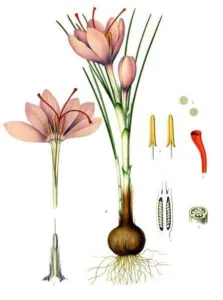
Saffron is the dried stigma of Crocus sativus L., the saffron crocus, in the iris family, Iridaceae. Attested Linnaeus named it; the epithet sativus means “cultivated”, and it is apt. The saffron crocus is a male-sterile triploid with three sets of chromosomes (2n = 3x = 24). It sets no viable seed and exists only because people keep planting its corms PMID 38572115; PMID 35283878. Confirmed
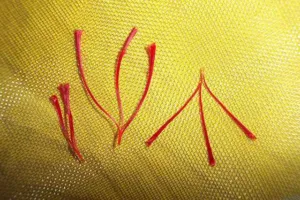
The spice is the stigma: the three red, trumpet-ended threads at the centre of each flower that catch pollen in a fertile crocus. The yellow stamens and purple petals are by-products. They have their own chemistry and are studied in their own right, but they are not saffron in the trade sense PMID 38144850. Confirmed
Names that cause confusion
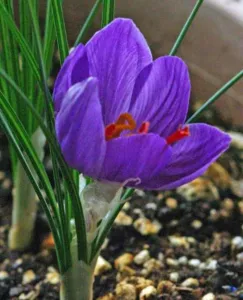
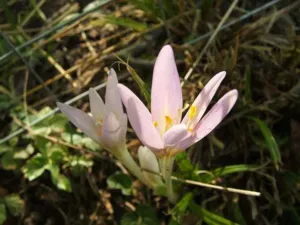
Two other plants borrow the word “saffron”, and one of them is dangerous. Colchicum autumnale, called autumn crocus or meadow saffron, flowers in autumn like the saffron crocus and looks similar, but it belongs to a different family and contains colchicine. Colchicine and Colchicum autumnale are both Schedule 4 (prescription-only) in the current Australian Poisons Standard (Poisons Standard, October 2026). Attested Gardeners who grow their own saffron should be able to tell the two apart. The saffron crocus has three long red stigmas that hang outside the flower; colchicum flowers have six stamens and pale, thread-like styles.
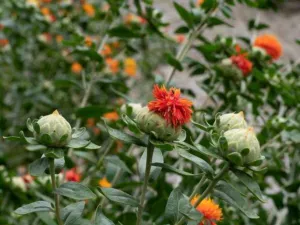
The second plant is safflower, Carthamus tinctorius, a daisy-family plant whose orange florets are sold in some markets under saffron-like names. It is harmless as a food. It is also one of the commonest adulterants of real saffron (chapter 11) PMID 38144850. Confirmed “Indian saffron” is sometimes used loosely for turmeric. None of these is Crocus sativus, and none of them was tested in the trials discussed below.
3. Botany, origin and distribution
A plant that lives by its corms
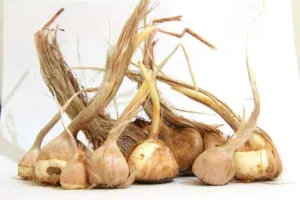
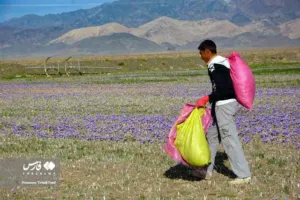
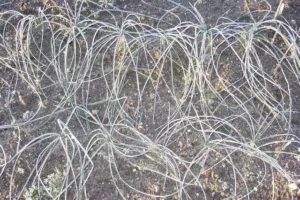
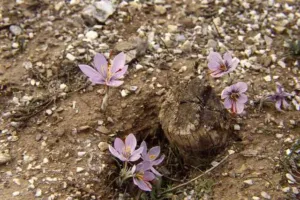
The saffron crocus grows from a corm, a swollen underground stem wrapped in fibrous tunics. In autumn it sends up narrow grass-like leaves and one or a few purple flowers; through winter the old corm feeds a set of daughter corms, which are lifted and replanted to keep the crop going. Because the plant is sterile, every saffron crocus in the world is a clone or near-clone propagated this way PMID 38572115. Confirmed The flowers open for a short season in autumn and must be picked within days, by hand, which is the main reason the spice is so expensive. Mechanism
Where it came from
The origin of the saffron crocus was argued over for a century. Genetic work now points to a wild Greek species, Crocus cartwrightianus, as its only parent: saffron is an autotriploid, meaning all three of its chromosome sets come from that one species, with no second species involved PMID 38572115; PMID 35283878. Confirmed A 2022 review that put the genetic evidence beside Bronze Age art concluded that both point to early Greece, with Attica the most likely region of origin PMID 35283878. Evidence suggests The same group of studies traced the deep red colour to a gene, CCD2, that arose in Crocus by duplication and took on the job of cutting zeaxanthin into the saffron pigments PMID 38572115. Confirmed
Where it grows now, including Australia
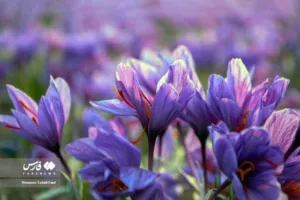
From Greece and Persia, saffron cultivation spread across the Mediterranean and Asia and later around the world PMID 35283878. Attested The photographs in this review come from saffron plantings in France, Iran, Türkiye and Kashmir. The crop does best with cold winters, dry summers and well-drained soil. Mechanism It is not part of the Australian flora. The Atlas of Living Australia held no Australian occurrence records for Crocus sativus when searched in October 2026, and its name-matching service resolved the name only to the genus Crocus (Atlas of Living Australia). Attested As a sterile plant that only spreads by corms, it has no means of escaping cultivation by seed, and the Institute found nothing to suggest it is naturalised or declared a weed anywhere in Australia. Mechanism
It is grown here, on a small scale, mainly in Tasmania (chapter 10). Cardwell’s wet tropics are a poor match for a plant that wants a cold, dry dormancy; this is a southern crop.
4. Traditional and historical use
Bronze Age Greece
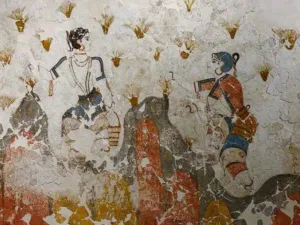
Some of the oldest pictures of saffron gathering are on the walls of Xeste 3, a building at Akrotiri on the island of Thera (Santorini). Young women pick crocus flowers among the rocks, painted about 1600 BCE PMID 35283878. Attested By about 300 BCE Theophrastus, in his Historia plantarum, described the crocus being propagated by its corms PMID 35283878. Attested Saffron then travelled with trade into Persia, the Arab world, India and medieval Europe, as a dye, a perfume, a food colouring and a medicine.
Medicine, food and ritual
Saffron has been used traditionally as an analgesic and sedative, and for digestive, respiratory and infectious complaints PMID 29510352. Traditional In Persian medicine it was also given in childbirth to ease labour PMID 42186868. Traditional A 2026 integrative review of saffron and pregnancy found that Iranian and Middle Eastern women still use it in late pregnancy to strengthen the mother, to “brighten” the baby’s complexion and to prepare for labour PMID 42186868. Traditional The same review reports that very large doses have been used in folk practice to end a pregnancy PMID 42186868. Traditional That history matters for safety, and chapter 9 returns to it.
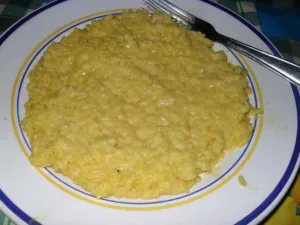
In the kitchen, saffron colours and flavours paella, risotto alla milanese, Persian rice, Indian biryani and kheer, and the saffron buns of Cornwall and Sweden. Its colour has dyed cloth, and its threads have been offered in temples. None of this is evidence that saffron changes mood. It is evidence that people have valued it highly for a very long time, and that most people who have eaten saffron have eaten it in small culinary amounts. Traditional
5. From flower to spice to capsule
Harvest and drying
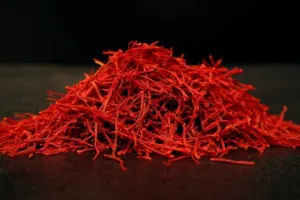
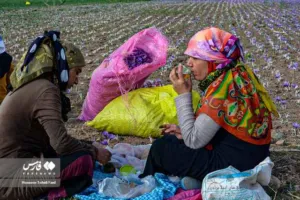
Saffron is picked flower by flower. The stigmas are separated by hand and dried, and drying is where the chemistry of the spice is made: the bitter glycoside picrocrocin in the fresh stigma breaks down to safranal, the main aroma compound, as the threads dry and age PMID 38144850. Confirmed Old or badly stored saffron loses colour and aroma, which is one reason it is graded.
The spice and the extract are different products
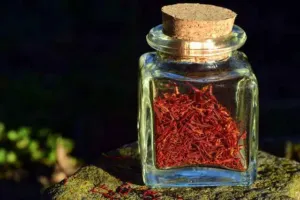
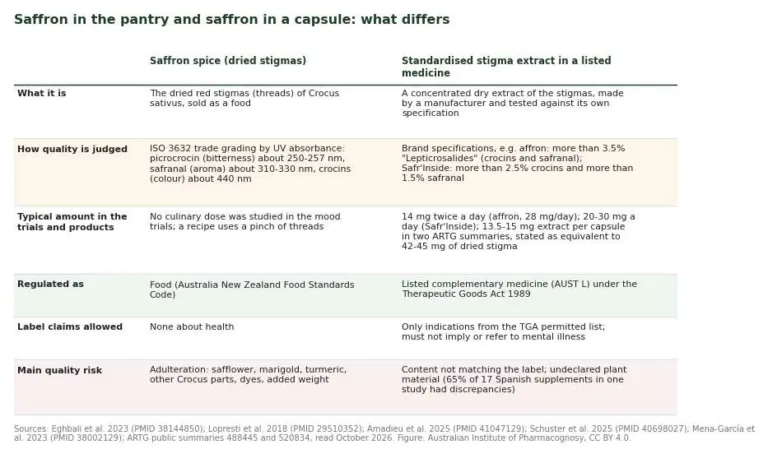
The threads in a spice jar are graded under an international trade standard, ISO 3632, which uses ultraviolet light absorbance at three wavelengths to estimate picrocrocin (bitterness), safranal (aroma) and the crocins (colour) PMID 38144850. Confirmed A saffron capsule usually contains an extract instead. The extracts used in the trials are proprietary concentrates standardised to their maker’s own markers. affron, the extract in the Australian trials, is standardised to more than 3.5% of what its maker calls “Lepticrosalides”, a measure that includes safranal and the crocins PMID 29510352. Attested Safr’Inside, the extract in the French, German and British trials, is standardised to more than 2.5% crocins and more than 1.5% safranal PMID 41047129. Attested
The doses are small: 14 mg twice a day for affron and 20 to 30 mg a day for Safr’Inside in the trials read for this review PMID 42389708; PMID 40698027. Confirmed On the public ARTG summaries the Institute read, a capsule containing 13.5 to 15 mg of extract is stated as equivalent to 42 to 45 mg of dried stigma (ARTG 488445; ARTG 520834). Attested The pantry spice and the capsule therefore start from the same plant part but are different products, with different quality tests, different regulators and, so far, separate evidence. No trial read for this review tested the culinary use of saffron threads on mood.
6. Phytochemistry
The four signature compounds
Saffron’s chemistry is dominated by apocarotenoids, fragments cut from the carotenoid zeaxanthin by the enzyme CCD2 PMID 38572115. Confirmed Four of them define the spice.
- Crocins (CID 5281233 for crocin, the digentiobiosyl ester) are water-soluble pigments in which the dicarboxylic acid crocetin is bound to sugars. They give saffron its colour, and several cis and trans forms occur together PMID 38144850. Confirmed Crocins can make up a large share of the dried stigma; one 2025 analysis of a hydroalcoholic extract of Tuscan saffron found 479 mg of total crocins per gram of freeze-dried extract, mainly trans-crocin 4 and trans-crocin 3 PMID 39754520. Confirmed
- Crocetin (CID 5281232) is the aglycone. It is the form found in human blood after saffron is swallowed (chapter 7) PMID 32089715. Confirmed
- Picrocrocin (CID 130796) is the bitter glycoside, and the precursor of safranal PMID 38144850. Confirmed
- Safranal (CID 61041) is the volatile aldehyde that gives saffron its smell PMID 38144850. Confirmed
Saffron also contains kaempferol glycosides, and about 150 compounds have been characterised in it in total PMID 38144850. Confirmed In the same review’s compound table, most of the flavonol glycosides listed are recorded from the petals and stamens, which are by-products of the harvest PMID 38144850. Evidence suggests
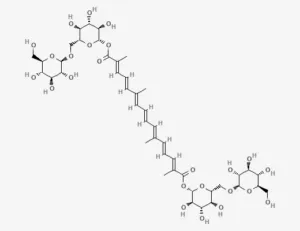
C44H64O24 · the main red pigment
PubChem CID 5281233 · structure image: PubChem, public domain
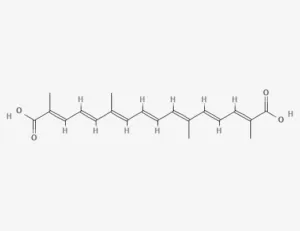
C20H24O4 · the pigment core, found in blood
PubChem CID 5281232 · structure image: PubChem, public domain
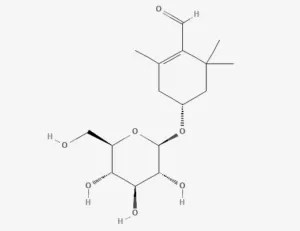
C16H26O7 · the bitter glycoside
PubChem CID 130796 · structure image: PubChem, public domain
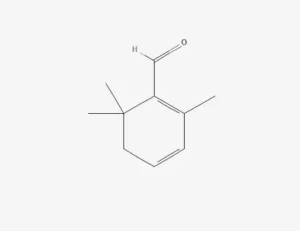
C10H14O · the aroma
PubChem CID 61041 · structure image: PubChem, public domain
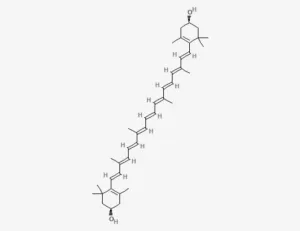
C40H56O2 · the carotenoid parent
PubChem CID 5280899 · structure image: PubChem, public domain
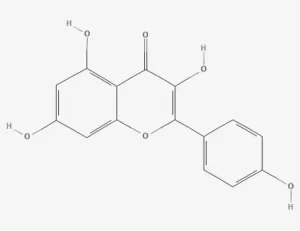
C15H10O6 · flavonol, present as glycosides
PubChem CID 5280863 · structure image: PubChem, public domain
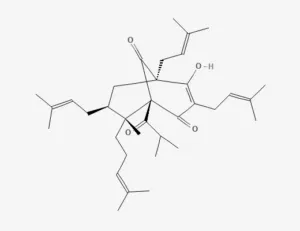
C35H52O4 · St John’s wort, for comparison
PubChem CID 441298 · structure image: PubChem, public domain
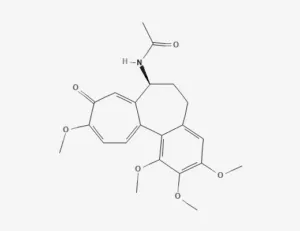
C22H25NO6 · autumn crocus, for comparison
PubChem CID 6167 · structure image: PubChem, public domain
Eight structures: the four saffron signature compounds (crocin, crocetin, picrocrocin, safranal); zeaxanthin, the carotenoid that the enzyme CCD2 cuts to make them; kaempferol, the flavonol found as glycosides; and, for comparison, hyperforin from St John’s wort and colchicine from the toxic autumn crocus. Every CID was checked against PubChem in October 2026; the depictions are PubChem’s own (US National Library of Medicine, public domain).
Why the compounds matter for a capsule
The ratio of these compounds changes with drying, storage, extraction solvent and the plant material itself, and standardisation markers differ from one brand to another (chapter 5). Confirmed A trial of one extract is a trial of that extract. Results from affron cannot be assumed for Safr’Inside or for a pinch of kitchen saffron, and the reverse also holds. Mechanism
7. Pharmacology
What reaches the blood
Crocins are large, sugar-bound molecules and are poorly absorbed intact. In a study of 13 healthy volunteers given 56 or 84 mg of affron, crocetin appeared in plasma with a peak 60 to 90 minutes after the dose, and the rise was dose-dependent PMID 32089715. Confirmed In the same paper’s simulated digestion, about 40% of the crocins were bioaccessible and the safranal content roughly doubled, which suggests that digestion itself converts some precursors PMID 32089715. Evidence suggests That study was run by the maker of the extract PMID 32089715. Attested The working picture is that crocins are hydrolysed in the gut to crocetin, which is absorbed; safranal is absorbed as a small volatile molecule. Mechanism
Proposed mechanisms for mood and sleep
The mechanism papers come mostly from animals and cells. Trial authors cite rodent work in which saffron extract improved serotonergic and dopaminergic signalling and reduced stress-induced activation of the hypothalamic-pituitary-adrenal (HPA) axis PMID 41047129. Mechanism Sleep researchers propose effects on melatonin through the serotonin pathway and on the gut microbiota PMID 40762630. Mechanism In the 2025 Gut-Sleep-Brain trial, four weeks of saffron extract changed the abundance of several gut bacterial groups, and some of those changes correlated with sleep measures PMID 40762630. Evidence suggests Correlation in a 52-person pilot is a lead for future work and proves no mechanism.
The human mechanistic data are thinner. In a crossover study of 19 young men, a single 30 mg dose of Safr’Inside delayed the peak of salivary cortisol after a laboratory stress test and lowered self-rated stress PMID 37447245. Evidence suggests In the six-week French trial, by contrast, the same extract made no difference to inflammatory markers or to HPA-axis reactivity, although it changed one amino-acid metabolite, N-acetylphenylalanine PMID 41047129. Evidence suggests Nobody yet knows which compound, at what blood level, does what in the human brain. Mechanism
8. Clinical evidence: mood, stress and sleep
This chapter reads the human trials closely: who ran them, on whom, for how long, with what extract, and who paid. Saffron is not approved to treat depression in Australia, and nothing here should be read as a recommendation to use it that way. The question is what the studies show.
The first wave: Iranian trials in diagnosed depression
The first controlled trials were run in Tehran from 2004 onwards, in adults diagnosed with mild to moderate major depression. In the earliest, 30 patients were randomised to saffron extract 30 mg a day or the tricyclic antidepressant imipramine 100 mg a day for six weeks, and both groups improved to a similar extent; there was no placebo group PMID 15341662. Evidence suggests Similar small trials compared saffron with fluoxetine or citalopram, or with placebo.
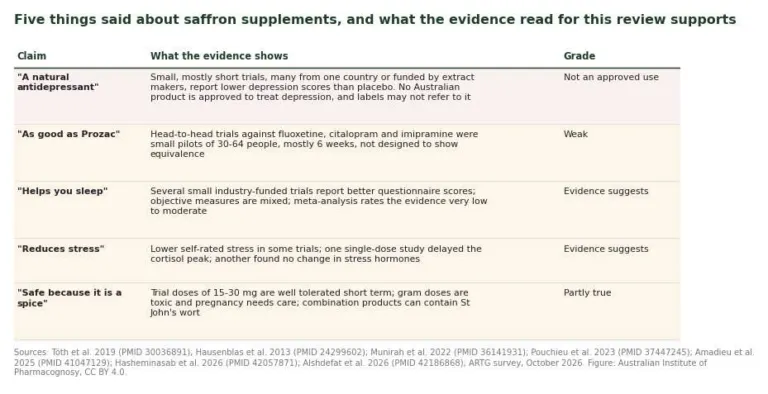
A 2019 meta-analysis pooled these trials. Saffron reduced depression scores more than placebo (Hedges’ g 0.89, 95% CI 0.37 to 1.41, five trials) and was statistically non-inferior to the antidepressants it was compared with (g −0.25, 95% CI −0.50 to 0.004) PMID 30036891. Evidence suggests Its authors listed the limits plainly: every included trial was conducted in Iran, several enrolled patients with other illnesses such as coronary artery disease, more than 500 patients were involved in total, and the optimum dose and duration were unknown. They called for larger trials run by independent groups PMID 30036891. Attested An earlier meta-analysis found the same pattern and made the same call for research teams outside Iran PMID 24299602. Attested The head-to-head trials enrolled 30 to 64 people each and ran mostly for six weeks PMID 30036891; Confirmed trials of that size cannot show that two treatments are equivalent. Mechanism
The second wave: standardised extracts, many of them Australian
From 2017 the literature shifted to branded, standardised extracts tested in people without a diagnosis, using wellbeing, mood, stress and sleep scales. Much of that work was done in Perth, by Adrian Lopresti and colleagues at Murdoch University and Clinical Research Australia, using affron.
In 80 Western Australian teenagers aged 12 to 16 with mild to moderate anxiety or depressive symptoms, eight weeks of affron 14 mg twice a day improved the teenagers’ own ratings of internalising symptoms more than placebo (p = 0.049), but the parents’ ratings were inconsistent PMID 29510352. Evidence suggests Sixty-eight participants finished. The study was funded by Pharmactive Biotech Products, the Spanish maker of affron, and one author was a Pharmactive employee PMID 29510352. Attested In 62 recreationally active adults over six weeks, affron 28 mg a day produced no between-group difference on any outcome; differences appeared only when men were analysed separately PMID 35813851. Evidence suggests In 2026, a twelve-week trial in 86 women aged 50 to 70 with low mood and poor sleep reported a 2.37-point greater fall in the depression subscale of the DASS-21 than placebo (effect size d = 0.48), and no difference in sleep disturbance, the main sleep measure PMID 42389708. Evidence suggests Its funder, Pharmactive, was involved in the study concept and design PMID 42389708. Attested The Perth group’s other affron trials, in healthy adults, adults with poor sleep and adults already taking antidepressants, could not be opened in full for this review and are not described here (see References).
The other main extract, Safr’Inside, made by Activ’Inside in France, has produced mixed results. In 165 German adults with moderate insomnia, four weeks of 20 or 30 mg a day lowered the Athens Insomnia Scale by 0.95 points more than placebo on a scale that runs from 0 to 24, and lowered perceived stress PMID 40698027. Evidence suggests In 52 British adults aged 55 to 85 with sleep complaints, 30 mg a day in a gummy for four weeks improved questionnaire sleep scores and shortened sleep onset measured by a home EEG headband PMID 40762630. Evidence suggests In 51 healthy French adults with subclinical depressive symptoms, six weeks of 30 mg a day did not improve the primary outcome, a combined score of depression, anxiety and fatigue, or any of those symptoms separately; one secondary mental-health score improved PMID 41047129. Evidence suggests That French trial was the only one in this set funded by public grants, and its result is the most cautious PMID 41047129. Attested Two of its authors worked for the extract’s maker PMID 41047129. Attested Other extracts have been tested in Belgium and India, again with company funding PMID 33925432; PMID 42465135. Attested
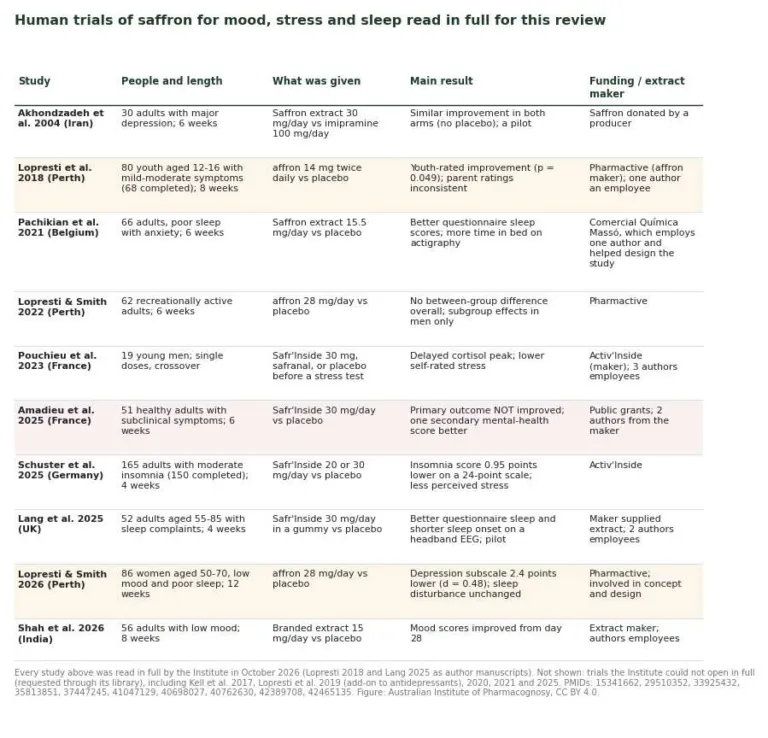
Sleep, taken together
A 2022 meta-analysis of eight sleep trials (431 participants) found that saffron improved sleep quality (standardised mean difference 0.89) and duration, but the effect on insomnia severity did not reach significance, heterogeneity was high, and the certainty of evidence was rated very low to moderate PMID 36141931. Evidence suggests Five of the eight trials, including every trial that contributed to the primary outcome, declared funding from pharmaceutical or nutraceutical companies PMID 36141931. Attested A 2023 systematic review of the same field reached a more favourable conclusion from a similar set of trials PMID 37484523. Evidence suggests The trials since then (Figure 2) have kept the same shape: small, short, positive on questionnaires, mixed on objective measures.
The large network meta-analysis
A 2025 network meta-analysis of 192 trials of 44 nutraceuticals for depressive disorders ranked saffron among the supplements that did better than placebo, and estimated an effect for saffron added to an antidepressant of 3.79 standardised mean differences PMID 40314175. Evidence suggests An effect that size is far beyond what any antidepressant achieves and is a warning sign: it is the kind of number that small, single-centre trials produce. The same analysis rated only 2 of its 192 trials at low overall risk of bias PMID 40314175. Attested The Institute reads it as support for further trials. It cannot tell anyone how much saffron helps.
What “supports healthy mood” means on an Australian label
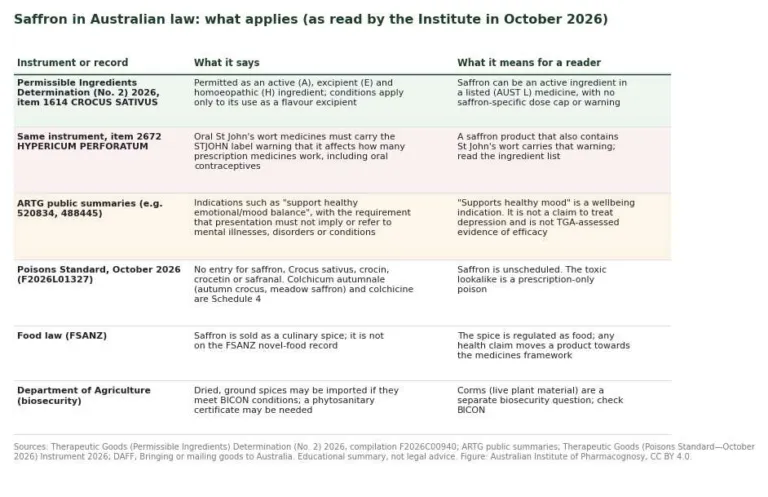
Saffron capsules in Australia are listed medicines. Their sponsors choose indications from a TGA-permitted list and certify that they hold evidence for them, and the TGA states that the indications on listed medicines are not evaluated at the time of listing (TGA, listed complementary medicines). Attested On the public ARTG summaries the Institute read, saffron products carry indications such as “Support healthy emotional/mood balance” and “Decrease/reduce/relieve symptoms of stress”, with the condition that “Product presentation must not imply or refer to mental illnesses, disorders or conditions” (ARTG 520834; ARTG 488445). Attested A “supports healthy mood” label is therefore a wellbeing claim made under conditions that forbid presenting the product as a treatment for depression. Where a label can say more, it says so in the TGA’s own words: one product summary the Institute read also permits mood and wellbeing indications for teenagers and children over 12 (ARTG 488445). Attested The only trial in that age group that the Institute read is the Perth youth trial, with its inconsistent parent ratings PMID 29510352. Evidence suggests
Depression is a medical condition that deserves proper assessment and care. Anyone with persistent low mood, or with thoughts of self-harm, should seek help; in Australia, Lifeline is on 13 11 14, and Triple Zero (000) is for emergencies.
9. Safety and interactions
At trial doses
The largest safety review to date, published in 2026, gathered 102 clinical trials and one case report of single-ingredient saffron preparations. Pooling the trials that reported adverse events, 441 events were recorded in 1,479 people taking saffron (29.8%) and 531 in 1,202 people in the control groups (44.1%) PMID 42057871. Evidence suggests The authors warned against reading the lower figure as a benefit of saffron: many trials collected adverse events passively, control groups often received active drugs with known side effects, and nocebo reporting is common in anxiety and depression trials PMID 42057871. Attested The commonest complaints with saffron were gastrointestinal (nausea, appetite change, abdominal discomfort), followed by headache, tiredness, sedation and dizziness; a small number were psychological, including restlessness, anxiety and a few reports of hypomania PMID 42057871. Evidence suggests The authors judged saffron generally well tolerated at usual doses over short periods, and asked for more care in people with psychiatric illness, in older people, in people taking anticoagulant or antiplatelet medicines, and in pregnancy and breastfeeding PMID 42057871. Attested Most of those trials used 15 to 100 mg a day; the few that used up to 400 mg a day were too small for firm conclusions PMID 42057871. Attested The trials read for this review are consistent with that picture PMID 41047129; PMID 29510352; PMID 42389708. Evidence suggests Most ran for 12 weeks or less, so long-term safety data in humans are limited. Mechanism
At gram doses
Toxicity appears at doses more than a hundred times the trial doses. Reviews describe adverse effects in people above about 5 g a day, and the 2026 pregnancy review records 20 g as a potentially fatal amount PMID 41462633; PMID 42186868. Evidence suggests In animals the oral LD50 of saffron in mice was about 4.1 g per kilogram PMID 28293386. Confirmed Judged by LD50 values in animal tests, safranal is more acutely toxic than crocin or whole saffron PMID 28293386. Confirmed In a healthy-volunteer study reported in the 2026 safety review, one participant taking 200 or 400 mg a day of saffron for seven days had abnormal uterine bleeding PMID 42057871. Evidence suggests Allergy, including anaphylaxis in people with multiple allergies, has been reported PMID 30036891. Evidence suggests
Pregnancy and breastfeeding
Saffron’s effect on the uterus is the main pregnancy concern. The 2026 integrative review found that low doses (about 250 mg a day) have been tested at term to help ripen the cervix and ease labour, without reported maternal or newborn harm in those trials, while high doses or occupational exposure during harvest have been linked to uterine stimulation and miscarriage PMID 42186868. Evidence suggests Its authors advise against saffron at more than food amounts in the first and second trimesters, when safety data are lacking and the miscarriage concern is greatest, and against any use in high-risk pregnancies PMID 42186868. Attested An Iranian case-control study found no link between ordinary dietary saffron in pregnancy, mostly fewer than three threads a day, and congenital anomalies PMID 40772092. Evidence suggests Most mood trials excluded pregnant and breastfeeding women PMID 41047129. Attested One Iranian trial gave saffron 15 mg twice a day for eight weeks to 30 mothers with postpartum depression; the safety review lists two reports of low breast-milk supply and one of bleeding gums in that group PMID 42057871. Evidence suggests Two reports in one small trial cannot show cause, but they are the only lactation signal on record. The Institute’s reading: culinary saffron in food has a long record of use in pregnancy, while concentrated extracts have almost no safety data in pregnancy or breastfeeding, and the higher-dose signal means an extract is best not started in pregnancy or while breastfeeding without advice from a degree-qualified herbalist with competencies and adequate training in pharmacognosy. Mechanism
Children and adolescents
Short trials in children and adolescents with attention-deficit/hyperactivity disorder used 20 to 30 mg a day for six weeks; reported effects included headache, dry mouth, nausea, insomnia, reduced appetite and sweating PMID 42057871. Evidence suggests Together with the Perth youth trial, these give only short-term safety data in young people PMID 29510352. Evidence suggests Capsules should be stored out of children’s reach, and an accidental ingestion is a matter for the Poisons Information Centre (see below). Attested
With prescribed antidepressants and other medicines
Saffron extract has been given alongside antidepressants in several trials, and the network meta-analysis included saffron-plus-antidepressant arms PMID 40314175. Evidence suggests No serotonin syndrome was described in the trials and reviews read for this article. Evidence suggests The proposed serotonergic action means that an additive effect with SSRIs and related drugs is plausible, and the trials were small and short. Mechanism The 2026 safety review flagged anticoagulant and antiplatelet medicines as needing caution, and noted the lack of reliable interaction data PMID 42057871. Attested It cites laboratory work in which saffron reduced human platelet aggregation in a dose-dependent way, which gives the concern a plausible mechanism PMID 42057871. Mechanism Its one included case report described a 64-year-old man with atrial fibrillation who had an acute bleed while taking rivaroxaban with a saffron supplement; tests pointed to platelet dysfunction, and the bleeding resolved when both were stopped PMID 42057871. Evidence suggests One case does not establish an interaction. It is the basis for the review’s advice against combining saffron with direct oral anticoagulants. Attested Hypomania was reported in a few trial participants PMID 42057871, Evidence suggests which matters for anyone with bipolar disorder or a history of mania. Mechanism Sedation and tiredness were among the commoner complaints PMID 42057871, Evidence suggests so an additive effect with sedating medicines or alcohol is plausible. Mechanism
Nobody should stop, reduce or swap a prescribed antidepressant for a supplement on their own. Anyone on mood medication who is considering saffron should consult a degree-qualified herbalist with competencies and adequate training in pharmacognosy, who can review the whole medicine list.
Combination products that contain St John’s wort
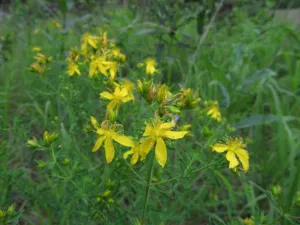
This is the interaction risk that lifestyle coverage tends to miss. Of the 124 saffron medicines on the ARTG in October 2026, 8 also contain St John’s wort, Hypericum perforatum (ARTG searches, October 2026). Attested St John’s wort activates the pregnane X receptor and induces CYP3A4 and P-glycoprotein, altering blood levels of drugs such as ciclosporin, tacrolimus, digoxin, warfarin, alprazolam, simvastatin, HIV medicines such as indinavir and nevirapine, the cancer medicines irinotecan and imatinib, and oral contraceptives; the size of the effect tracks the hyperforin content of the extract PMID 31742659; PMID 19859815. Confirmed Extracts delivering 1 mg of hyperforin a day or less have not produced clinically relevant pharmacokinetic interactions PMID 31742659, Evidence suggests but a label rarely states hyperforin content. Case reports have linked St John’s wort taken with sertraline, paroxetine and other serotonin reuptake inhibitors to serotonin syndrome PMID 19859815; PMID 38406216. Evidence suggests
Australian law requires every oral St John’s wort medicine to carry a warning that it affects the way many prescription medicines work, including oral contraceptives (Permissible Ingredients Determination). Attested The warning belongs to the St John’s wort and travels with it into any combination. Anyone taking prescription medicines who picks up a saffron product should read the ingredient list for Hypericum perforatum or St John’s wort.
When to get help
Signs of serotonin excess include agitation, confusion, a rapid heart rate, sweating, fever, tremor, shivering, muscle jerks and rigidity PMID 38406216. Confirmed They need urgent care. Call Triple Zero (000) in an emergency. For a suspected poisoning or overdose, including a child who has eaten saffron capsules or any part of an autumn crocus, call the Poisons Information Centre on 13 11 26 (24 hours, Australia-wide). Suspected side effects of a medicine can be reported to the TGA (TGA, reporting adverse events).
10. In Australia: the law and the market
Medicines: listed, unscheduled, and growing fast
Saffron is a permissible ingredient for listed medicines. Item 1614 of the Therapeutic Goods (Permissible Ingredients) Determination allows Crocus sativus as an active, excipient or homoeopathic ingredient; its only conditions apply to use as a flavour excipient, and there is no saffron-specific dose cap or warning statement (Permissible Ingredients Determination). Attested Saffron, crocin, crocetin and safranal are not named in the October 2026 Poisons Standard (Poisons Standard, October 2026). Attested On the Institute’s reading, saffron is therefore unscheduled, and nothing about it triggers an Office of Drug Control permit. Mechanism
The Institute’s ARTG survey found 124 active medicines containing saffron, all listed: 116 AUST L and 8 export-only entries. Thirteen contain saffron alone. The commonest partners are ashwagandha (Withania somnifera, 25 entries), theanine (17), lemon balm (Melissa officinalis, 11) and turmeric (Curcuma longa, 10); eight include St John’s wort (ARTG searches, October 2026). Attested Two products named in news coverage illustrate the format. Nature’s Own Saffron+ (AUST L 520834) combines 14 mg of saffron stigma extract with vitamin D and magnesium; Herbs of Gold Saffron Mood Balance (AUST L 488445 and 525307) combines saffron extract with lemon balm (ARTG 520834; ARTG 488445). Attested The public summaries do not say which branded extract a product uses, and the Institute makes no claim about that. Attested
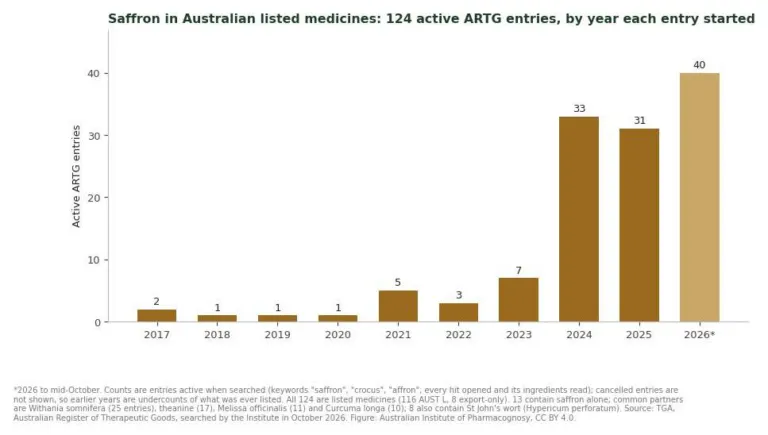
A listed medicine is low-risk by design. Its ingredients must come from the permitted list, it must be made according to the principles of good manufacturing practice, and its sponsor certifies that it holds evidence for its indications; the TGA reviews a random and targeted selection of listings after they reach the market (TGA, listed complementary medicines). Attested An AUST L number on a saffron capsule tells a reader that the product is legally supplied under that system. It is not a TGA finding that the product works. Attested
Food, imports and biosecurity
The threads in the spice aisle are food. Saffron has no entry in the FSANZ record of views on novel foods (FSANZ Record of Views), Attested and its use as a culinary spice is long established. Traditional Dried, ground spices may be brought into Australia if they meet the import conditions in the Department of Agriculture’s BICON system, and a phytosanitary certificate may be needed (DAFF, bringing or mailing goods). Attested Corms are live plant material and fall under separate nursery-stock conditions, which a grower should check in BICON before ordering from overseas. Mechanism
Australian saffron: a small Tasmanian industry
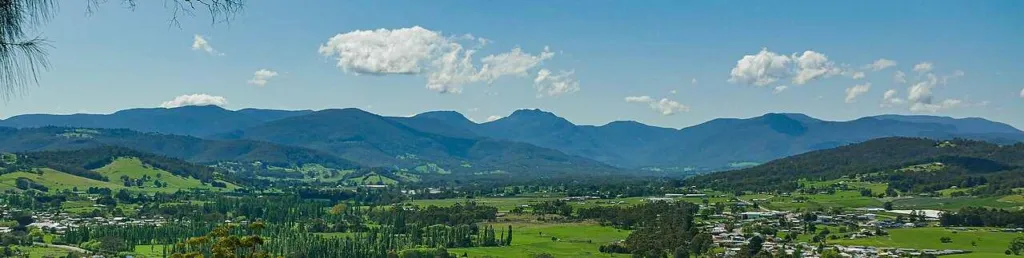
Saffron is grown commercially in Australia on a small scale. Tas-Saff, at Glaziers Bay in the Huon Valley south of Hobart, was started by Terry and Nicky Noonan in 1990 on three acres overlooking the Huon River, according to the Huon Valley Council (Huon Valley Council, Tas-Saff). Attested Research to build the industry was commissioned through the Rural Industries Research and Development Corporation, now AgriFutures Australia, and carried out at the Tasmanian Institute of Agriculture, including projects on developing an internationally competitive saffron industry and on drying technology and aroma (UTAS repository). Attested The repository lists both reports as restricted, so the Institute could not read them. Figures for the number of Australian growers and their total crop circulate in the trade press, but the Institute found no official statistics to confirm them. Unsourced Australian-grown saffron is a niche, premium spice; the stigma extracts in Australian capsules are made overseas, the affron trials used Spanish-grown saffron PMID 29510352, Attested and Australian saffron supplies are far too small to feed that market. Mechanism
11. Quality, adulteration and fraud
The most adulterated spice
Saffron’s price per gram has invited fraud for as long as it has been traded. A 2023 review of analytical methods described it as the most adulterated spice. Plant adulterants include safflower, marigold (Calendula), turmeric, stigmas of other crocus species such as Crocus vernus, gardenia fruit extract, maize silk and wild carrot; synthetic additions include dyes, liquid glycerine and nylon fibres PMID 38144850. Confirmed The review describes thin-layer chromatography, HPLC, gas chromatography with mass spectrometry, UV-visible and NMR spectroscopy and metabolomic profiling as tools for detecting them, and notes that ISO 3632 spectrophotometry, which measures the three quality markers, has a high potential for error when used to detect adulteration or establish origin PMID 38144850. Confirmed
Supplements too
Capsules are harder to check by eye. In a Spanish study of 17 saffron food supplements analysed by liquid and gas chromatography with mass spectrometry, safranal and crocins were found in all but one, but 65% did not match the content declared on the label, and the analysis found undeclared additives and plant material other than saffron PMID 38002129. Confirmed Those were Spanish products, sold as foods under European rules, and the result does not apply directly to Australian listed medicines, which must be made under Australian good manufacturing practice. Attested The Institute is not aware of a published survey of saffron medicines on the Australian market. Mechanism
For the kitchen spice, a few practical signs help. Real saffron threads are deep red and trumpet-shaped at one end, safflower florets are orange and tubular, and a price far below the market for real saffron is a warning in itself. These are the Institute’s practical pointers and have never been validated as a test. Unsourced None of these tests is conclusive, and none works on a powder.
12. Discussion: conclusions, hypotheses and research still required
What the evidence supports
Saffron is the dried stigma of a sterile, corm-propagated crocus that arose in Bronze Age Greece from Crocus cartwrightianus. Its colour, taste and smell come from crocins, picrocrocin and safranal, apocarotenoids made by a gene that evolved for the purpose. Confirmed Standardised stigma extracts at 15 to 30 mg a day have been tested in many small randomised trials. Taken together they report modest improvements in self-rated mood, stress and sleep compared with placebo over four to twelve weeks. Evidence suggests Short-term tolerability at those doses is good. Evidence suggests The evidence does not show that saffron treats depression, that it matches antidepressants, or that a culinary amount of saffron does anything to mood, and Australian law does not allow a saffron product to claim any of those things. Attested
Two features of the evidence should temper any reading of it. Most trials were funded by, or included staff of, the company that made the extract being tested, and the one publicly funded trial in this set did not meet its primary outcome. Attested And effect sizes in this field shrink as trials get bigger and more independent, which is the usual pattern when early results come from small, single-centre studies. Mechanism Neither point means the extracts do nothing. They mean the size of the benefit is uncertain, and that the field now needs larger, independent trials.
What we can reasonably hypothesise
- The sleep and stress findings may share a mechanism through the HPA axis, given the delayed cortisol peak after a single dose; but the six-week French trial saw no HPA change. A hypothesis, testable with standardised cortisol protocols in longer trials. Mechanism
- Crocetin is the most likely circulating active form, given that it is what appears in plasma; whether safranal contributes separately is open. Mechanism
- Differences between brands may come from different crocin-to-safranal ratios, which would mean results should not be pooled across extracts without stratifying by composition. Mechanism
- The gut microbiota changes in one pilot may reflect saffron’s effect on sleep, or may be a consequence of better sleep; the direction is unknown. Mechanism
What research is still required
- Clinical research: an adequately powered (several hundred participants), publicly funded or independently governed randomised trial of a standardised extract in Australian adults with low mood, pre-registered on the ANZCTR, with a 12-month follow-up and an active comparison arm. A separate trial in people already taking SSRIs or SNRIs, with systematic recording of serotonergic adverse effects.
- Pharmacokinetics: dose-ranging crocetin and safranal plasma studies across the main branded extracts, and formal interaction studies with sertraline, escitalopram, warfarin and a direct oral anticoagulant.
- Pharmacovigilance: analysis of TGA Database of Adverse Event Notifications reports for saffron-containing medicines, separated into single-ingredient products and St John’s wort combinations.
- Quality analysis: an Australian market survey of saffron medicines and retail saffron spice, with HPLC-DAD crocin and picrocrocin profiles, GC-MS for safranal, and DNA or HPTLC screening for safflower, marigold and turmeric, reported against label claims.
- Toxicology and reproductive safety: a prospective registry or pregnancy cohort that records extract use separately from culinary saffron.
- Regulatory science: whether combination listed medicines containing both saffron and St John’s wort should state hyperforin content, so readers can judge interaction risk.
- Agronomy and botany: publication of the Tasmanian saffron research, and trials of corm sources and drying methods suited to Australian conditions, with voucher specimens lodged in an Australian herbarium.
- History of materia medica: a critical edition-based study of saffron’s uses for mood and childbirth in Persian medical texts, to separate documented traditional indications from later attributions.
Saffron has earned its place in kitchens for three and a half thousand years, and it has earned serious clinical attention in the last twenty. The next step belongs to better trials, and to readers who keep reading the ingredient list.
About the Australian Institute of Pharmacognosy and this series
The Australian Institute of Pharmacognosy is a clinic and research laboratory in Cardwell, far north Queensland, studying medicinal plants and natural products to the same evidentiary standard as any other branch of pharmacology: traditional knowledge taken seriously, and tested honestly. Visit the Institute at australian-pharmacognosy.org.
Series: AIP Literature Reviews and Critical Analyses (evidence reviews). Related reviews: ashwagandha (Withania somnifera) is the herb most often combined with saffron in Australian listed medicines; turmeric (Curcuma longa) is another frequent partner and was tested with saffron in an early Perth depression trial; sour jujube seed (Ziziphus jujuba) covers the evidence for another sleep herb; kava (Piper methysticum) covers anxiety and Australian law; and black cohosh (Actaea racemosa) covers the perimenopause products in which saffron now often appears. Earlier reviews: echinacea (Echinacea purpurea) · Greek mountain tea (Sideritis scardica) · devil’s claw (Harpagophytum procumbens) · Indian barberry (Berberis aristata). Follow the series for a new evidence review each morning.
Corrections: if you find an error or a source we have missed, write to the Institute at our contact form. We would rather correct a claim than repeat it.
About the images and the evidence. Photographs are from Wikimedia Commons under the licences named in each caption and in the image credits. Chemical structures are PubChem depictions, linked by CID. The five figures are the Institute’s own, drawn from the sources printed in each figure. No AI-generated images are used.
Head of Education and Research
Australian Institute of Pharmacognosy
Cardwell QLD, Australia
australian-pharmacognosy.org · our contact form
Suggested citation: Ridley T. Saffron (Crocus sativus L.): the spice and the standardised extract, chemistry, the human evidence on mood, stress and sleep, safety and interactions, quality and the Australian regulatory position. AIP Literature Review and Critical Analysis AIP-LR-CROSAT. Cardwell (QLD): Australian Institute of Pharmacognosy; 2026.
Educational content only; not medical, legal or regulatory advice. Australian regulatory information reflects the ARTG and its public summaries, the Permissible Ingredients Determination, the Poisons Standard, the FSANZ Record of Views, and TGA and Department of Agriculture web pages as read in October 2026 and may change. Iranian, European, Indian, United States and other overseas material is described as overseas material and does not govern Australian law. Products are named only as they appear on the public ARTG record; no product is advertised, endorsed or recommended. Material drawn from Commonwealth sources is © Commonwealth of Australia and appears here as short extracts for the purpose of reporting, criticism and review.
References
42 references: tap to open
Listed in order of first citation. All 29 PMIDs were verified against PubMed in October 2026 and read in full text (Lopresti et al. 2018 as the authors’ submitted manuscript in the CSIC repository; Lang et al. 2025 as the accepted manuscript; Amadieu et al. 2025 as the published version deposited in HAL); every regulatory, legislative and biodiversity record was read from its own source. Requested through the Institute’s library and not cited for their content: Kell et al. 2017 (affron in healthy adults); Lopresti et al. 2019 (affron added to antidepressants); Lopresti et al. 2020 and 2021 (affron and sleep); Lopresti et al. 2025 (affron and low mood); Lopresti et al. 2017 (curcumin and saffron in major depression); Lopresti and Drummond 2014 (systematic review and mechanisms); Akhondzadeh et al. 2005; Dai et al. 2020; Mahmoudi et al. 2026 (GRADE meta-analysis of 34 trials); Shafiee et al. 2025 (saffron versus SSRIs); Lian et al. 2022 (sleep meta-analysis); Sarris et al. 2022 (WFSBP and CANMAT nutraceutical guidelines); Modaghegh et al. 2008 and Ayatollahi et al. 2014 (safety in healthy volunteers); Umigai et al. 2011 and Hosseini et al. 2018 (pharmacokinetics); Bathaei et al. 2025 (cytochrome P450); Mehdizadeh et al. 2026 (saffron fraud). The United States retail figures mentioned in chapter 1 could not be traced to a source the Institute could open.
- Therapeutic Goods Administration. Reporting adverse events for consumers. Read by the Institute in October 2026. https://www.tga.gov.au/safety/reporting-problems/reporting-adverse-events-consumers
- Therapeutic Goods Administration. Australian Register of Therapeutic Goods, public keyword searches run by the Institute in October 2026 for “saffron” (14 results), “crocus” (124) and “affron” (12). The public record of every entry returned was opened and its ingredients read: 124 active entries contained Crocus sativus, all listed medicines (116 LI, 8 LIE); 13 contained no other active ingredient; 8 also contained Hypericum perforatum (ARTG 307546, 443111, 452465, 479733, 481426, 522352, 526288, 528569). Raw survey held by the Institute. https://www.tga.gov.au/resources/artg
- Xu Z, Chen S, Wang Y, Tian Y, Wang X, Xin T, et al. Crocus genome reveals the evolutionary origin of crocin biosynthesis. Acta Pharm Sin B. 2024 Apr;14(4):1878-1891. PMID 38572115. DOI 10.1016/j.apsb.2023.12.013.
- Kazemi-Shahandashti SS, Mann L, El-Nagish A, Harpke D, Nemati Z, Usadel B, et al. Ancient Artworks and Crocus Genetics Both Support Saffron's Origin in Early Greece. Front Plant Sci. 2022;13:834416. PMID 35283878. DOI 10.3389/fpls.2022.834416.
- Eghbali S, Farhadi F, Askari VR. An overview of analytical methods employed for quality assessment of Crocus sativus (saffron). Food Chem X. 2023 Dec 30;20:100992. PMID 38144850. DOI 10.1016/j.fochx.2023.100992.
- Therapeutic Goods (Poisons Standard—October 2026) Instrument 2026 (Cth), F2026L01327, registered 30/09/2026. Full text searched by the Institute in October 2026: no entry for saffron, Crocus, crocin, crocetin, picrocrocin or safranal; COLCHICINE and COLCHICUM AUTUMNALE in Schedule 4; no entry for Hypericum. https://www.legislation.gov.au/F2026L01327/asmade
- Atlas of Living Australia. Occurrence search for Crocus sativus, Australia only, and name-matching query, October 2026: 0 Australian occurrence records; the name matched only to the genus Crocus. https://biocache.ala.org.au/occurrences/search?q=taxon_name%3A%22Crocus%20sativus%22
- Lopresti AL, Drummond PD, Inarejos-García AM, Prodanov M. affron®, a standardised extract from saffron (Crocus sativus L.) for the treatment of youth anxiety and depressive symptoms: A randomised, double-blind, placebo-controlled study. J Affect Disord. 2018 May;232:349-357. PMID 29510352. DOI 10.1016/j.jad.2018.02.070.
- Alshdefat A, Ayed A, Aqtam I, Ibitoye O, Vincent S, Furqani AA. Saffron and Pregnancy: Cultural Practices, Beliefs, and Safety Evidence: An Integrative Review. J Evid Based Integr Med. 2026;31:2515690X261455162. PMID 42186868. DOI 10.1177/2515690X261455162.
- Amadieu C, Leyrolle Q, Farneti M, Anesi A, Bruchet E, Montet J, et al. Effect of saffron extract supplementation on mood in healthy adults with subclinical symptoms of depression: a randomized, double-blind placebo-controlled study. Am J Clin Nutr. 2025 Dec;122(6):1625-1635. PMID 41047129. DOI 10.1016/j.ajcnut.2025.09.050.
- Lopresti AL, Smith SJ. The effects of a saffron extract (Affron®) on mood, sleep, self-esteem, and exploratory measures of physical appearance in women aged 50 to 70 years experiencing low mood and poor sleep: a randomised, double-blind, placebo-controlled trial. Front Nutr. 2026;13:1838513. PMID 42389708. DOI 10.3389/fnut.2026.1838513.
- Schuster J, Mundhenke C, Nordsieck H, Pouchieu C, Pourtau L, Hahn A. Effect of a saffron extract on sleep quality in adults with moderate insomnia: A decentralized, randomized, double-blind, placebo-controlled trial. Sleep Med X. 2025 Dec 15;10:100147. PMID 40698027. DOI 10.1016/j.sleepx.2025.100147.
- Therapeutic Goods Administration. ARTG 488445 and 525307, Saffron Mood Balance (sponsor Herbs of Gold Pty Ltd), listed medicines, ARTG start dates 12/05/2025 and 07/04/2026. Public summaries read by the Institute in October 2026: Crocus sativus stigma extract dry concentrate 13.5 mg and 15 mg respectively (each equivalent to dry stigma 45 mg) with Melissa officinalis herb extract; permitted indications including emotional wellbeing and mood indications for teenagers, adolescents and children over 12; the requirement that presentation must not imply or refer to mental illnesses, disorders or conditions and must refer only to mild anxiety. https://www.tga.gov.au/resources/artg/488445
- Therapeutic Goods Administration. ARTG 520834, Nature’s Own Saffron+ (sponsor Opella Healthcare Australia Pty Ltd), listed medicine, ARTG start date 26/11/2025. Public summary read by the Institute in October 2026: active ingredients colecalciferol 5 µg, Crocus sativus stigma extract dry concentrate 14 mg (equivalent to dry stigma 42 mg), heavy magnesium oxide (magnesium 160 mg); permitted indications and the indication requirement that product presentation must not imply or refer to mental illnesses, disorders or conditions. https://www.tga.gov.au/resources/artg/520834
- Corridori E, Salviati S, Demontis MG, Vignolini P, Vita C, Fagiolini A, et al. Therapeutic Potential of Saffron Extract in Mild Depression: A Study of Its Role on Anhedonia in Rats and Humans. Phytother Res. 2025 Mar;39(3):1277-1291. PMID 39754520. DOI 10.1002/ptr.8424.
- Almodóvar P, Briskey D, Rao A, Prodanov M, Inarejos-García AM. Bioaccessibility and Pharmacokinetics of a Commercial Saffron (Crocus sativus L.) Extract. Evid Based Complement Alternat Med. 2020;2020:1575730. PMID 32089715. DOI 10.1155/2020/1575730.
- Lang L, Ditton A, Stanescu A, Jainani V, McArthur S, Pourtau L, et al. A standardised saffron extract improves subjective and objective sleep quality in healthy older adults with sleep complaints: results from the gut-sleep-brain axis randomised, double-blind, placebo-controlled pilot study. Food Funct. 2025 Aug 26;16(17):6817-6832. PMID 40762630. DOI 10.1039/d5fo00917k.
- Pouchieu C, Pourtau L, Brossaud J, Gaudout D, Corcuff JB, Capuron L, et al. Acute Effect of a Saffron Extract (Safr'InsideTM) and Its Main Volatile Compound on the Stress Response in Healthy Young Men: A Randomized, Double Blind, Placebo-Controlled, Crossover Study. Nutrients. 2023 Jun 27;15(13). PMID 37447245. DOI 10.3390/nu15132921.
- Akhondzadeh S, Fallah-Pour H, Afkham K, Jamshidi AH, Khalighi-Cigaroudi F. Comparison of Crocus sativus L. and imipramine in the treatment of mild to moderate depression: a pilot double-blind randomized trial [ISRCTN45683816]. BMC Complement Altern Med. 2004 Sep 02;4:12. PMID 15341662. DOI 10.1186/1472-6882-4-12.
- Tóth B, Hegyi P, Lantos T, Szakács Z, Kerémi B, Varga G, et al. The Efficacy of Saffron in the Treatment of Mild to Moderate Depression: A Meta-analysis. Planta Med. 2019 Jan;85(1):24-31. PMID 30036891. DOI 10.1055/a-0660-9565.
- Hausenblas HA, Saha D, Dubyak PJ, Anton SD. Saffron (Crocus sativus L.) and major depressive disorder: a meta-analysis of randomized clinical trials. J Integr Med. 2013 Nov;11(6):377-83. PMID 24299602. DOI 10.3736/jintegrmed2013056.
- Lopresti AL, Smith SJ. An examination into the mental and physical effects of a saffron extract (affron®) in recreationally-active adults: A randomized, double-blind, placebo-controlled study. J Int Soc Sports Nutr. 2022;19(1):219-238. PMID 35813851. DOI 10.1080/15502783.2022.2083455.
- Pachikian BD, Copine S, Suchareau M, Deldicque L. Effects of Saffron Extract on Sleep Quality: A Randomized Double-Blind Controlled Clinical Trial. Nutrients. 2021 Apr 27;13(5). PMID 33925432. DOI 10.3390/nu13051473.
- Shah S, Shah N, Shah J, S D, S J, Sudha Rani P. Standardized Saffron Extract Formulation for Low Mood and Subclinical Depressive Symptoms: A Randomized, Double-Blind, Placebo-Controlled Trial. Cureus. 2026 Jun;18(6):e110935. PMID 42465135. DOI 10.7759/cureus.110935.
- Munirah MP, Norhayati MN, Noraini M. Crocus Sativus for Insomnia: A Systematic Review and Meta-Analysis. Int J Environ Res Public Health. 2022 Sep 16;19(18). PMID 36141931. DOI 10.3390/ijerph191811658.
- Sadat Rafiei SK, Abolghasemi S, Frashidi M, Ebrahimi S, Gharei F, Razmkhah Z, et al. Saffron and Sleep Quality: A Systematic Review of Randomized Controlled Trials. Nutr Metab Insights. 2023;16:11786388231160317. PMID 37484523. DOI 10.1177/11786388231160317.
- Cheng YC, Huang WL, Chen WY, Huang YC, Kuo PH, Tu YK. Comparative efficacy and tolerability of nutraceuticals for depressive disorder: A systematic review and network meta-analysis. Psychol Med. 2025 May 02;55:e134. PMID 40314175. DOI 10.1017/S0033291725000996.
- Therapeutic Goods Administration. Listed complementary medicines. Web page, last updated 4 May 2018. Read by the Institute in October 2026: listing requirements (permitted low-risk ingredients, principles of Good Manufacturing Practice, indications for health maintenance and non-serious conditions), sponsor certification, the statement that indications are not evaluated by the TGA at the time of listing, the AUST L number, and random and targeted compliance reviews. https://www.tga.gov.au/products/medicines/listed-medicines/overview/listed-complementary-medicines
- Hasheminasab FS, Hajimonfarednejad M, Najibi SM, Hashempur MH. Adverse Events of Saffron (Crocus sativus L.): Systematic Review of Current Evidence. Health Sci Rep. 2026 May;9(5):e72212. PMID 42057871. DOI 10.1002/hsr2.72212.
- Ziani A, Bekkouch O, Ouahhoud S, Baddaoui S, Ben'Mbarek S, Bekkouch A, et al. Phytochemistry, Biological Activities, Molecular Mechanisms, and Toxicity of Saffron (Crocus sativus L.): A Comprehensive Overview. Antioxidants (Basel). 2025 Nov 28;14(12). PMID 41462633. DOI 10.3390/antiox14121433.
- Bostan HB, Mehri S, Hosseinzadeh H. Toxicology effects of saffron and its constituents: a review. Iran J Basic Med Sci. 2017 Feb;20(2):110-121. PMID 28293386. DOI 10.22038/ijbms.2017.8230.
- Najafi E, Nejad MEM, Bazyar H, Moghaddam HR, Nasiri K, Aghamohammadi V, et al. The relationship between the maternal consumption of barberry, saffron, pickled vegetables, and tea and the odds of congenital anomalies in Iranian children under 10 years of age: A case-control study. J Educ Health Promot. 2025;14:258. PMID 40772092. DOI 10.4103/jehp.jehp_180_24.
- Nicolussi S, Drewe J, Butterweck V, Meyer Zu Schwabedissen HE. Clinical relevance of St. John's wort drug interactions revisited. Br J Pharmacol. 2020 Mar;177(6):1212-1226. PMID 31742659. DOI 10.1111/bph.14936.
- Borrelli F, Izzo AA. Herb-drug interactions with St John's wort (Hypericum perforatum): an update on clinical observations. AAPS J. 2009 Dec;11(4):710-27. PMID 19859815. DOI 10.1208/s12248-009-9146-8.
- Badar A. Serotonin syndrome: An often-neglected medical emergency. J Family Community Med. 2024;31(1):1-8. PMID 38406216. DOI 10.4103/jfcm.jfcm_236_23.
- Therapeutic Goods (Permissible Ingredients) Determination (No. 2) 2026 (Cth), F2026L00707, compilation No. 1 (F2026C00940, compilation date 17/09/2026). Schedule 1 read by the Institute in October 2026: item 1614 CROCUS SATIVUS (purposes A, E, H; conditions apply only to use as a flavour excipient) and item 2672 HYPERICUM PERFORATUM (oral use requires the STJOHN warning statement); definitions of A (active), E (excipient) and H (homoeopathic) in section 4. https://www.legislation.gov.au/F2026L00707/latest/text
- Food Standards Australia New Zealand. Record of views formed in response to enquiries (Standard 1.5.1, Novel Foods). Updated September 2026. Read in full by the Institute in October 2026: no entry for saffron or Crocus. https://www.foodstandards.gov.au/business/novel/novelrecs
- Department of Agriculture, Fisheries and Forestry. Bringing or mailing goods to Australia: “Spices and herbs”. Web page read by the Institute in October 2026. https://www.agriculture.gov.au/travelling/bringing-mailing-goods
- Huon Valley Council. Tas-Saff. Business directory page, read by the Institute in October 2026: founded 1990 by Terry and Nicky Noonan on three acres overlooking the Huon River at Glaziers Bay, Tasmania. https://www.huonvalley.tas.gov.au/service/tas-saff/
- University of Tasmania research repository. Menary R. Development of an Internationally Competitive Saffron Industry (Rural Industries Research and Development Corporation project UT-39A); and Menary R, Gregory MJ. Australian saffron: commercialization of drying technology and aroma (project PRJ-005474). Tasmanian Institute of Agriculture; funder recorded as AgriFutures. Catalogue records read October 2026; report files restricted by the repository and not read. https://figshare.utas.edu.au/articles/report/Development_of_an_Internationally_Competitive_Saffron_Industry/23164061
- Mena-García A, Sanz ML, Díez-Municio M, Ruiz-Matute AI. A Combined Gas and Liquid Chromatographic Approach for Quality Evaluation of Saffron-Based Food Supplements. Foods. 2023 Nov 09;12(22). PMID 38002129. DOI 10.3390/foods12224071.
- Chemical records and structure depictions: PubChem, US National Library of Medicine, public domain. CIDs cited in the text: 5281233, 5281232, 130796, 61041, 5280899, 5280863, 441298, 6167.
Image credits
- Crocus sativus, saffron (35).jpg, Emilie40. CC0. Wikimedia Commons. Resized and re-encoded for the web by AIP; no other changes.
- Saffron threads in a glass jar ( Viora Saffron packaging).jpg, ulleo. CC0. Wikimedia Commons. Resized and re-encoded for the web by AIP; no other changes.
- Crocus sativus, saffron (39).jpg, Emilie40. CC0. Wikimedia Commons. Resized and re-encoded for the web by AIP; no other changes.
- Crocus sativus – Köhler–s Medizinal-Pflanzen-194.jpg, Franz Eugen Köhler, Köhler's Medizinal-Pflanzen. Public domain. Wikimedia Commons. Resized and re-encoded for the web by AIP; no other changes.
- Saffron onions-IMG 7549-2.jpg, Safa Daneshvar. CC BY-SA 3.0. Wikimedia Commons. Resized and re-encoded for the web by AIP; no other changes.
- Crocus sativus, saffron (21).jpg, Emilie40. CC0. Wikimedia Commons. Resized and re-encoded for the web by AIP; no other changes.
- Crocus cartwrightianus Sounion 1.jpg, Peter coxhead. CC BY-SA 3.0. Wikimedia Commons. Resized and re-encoded for the web by AIP; no other changes.
- Saffron gatherers, fresco from Akrotiri, 17th c BC, MPTh, 226310x.jpg, Zde. CC BY-SA 4.0. Wikimedia Commons. Resized and re-encoded for the web by AIP; no other changes.
- Harvesting saffron – Iran (1).jpg, Hossein Tohidi Fard. CC BY 4.0. Wikimedia Commons. Resized and re-encoded for the web by AIP; no other changes.
- Harvesting saffron – Iran (7).jpg, Hossein Tohidi Fard. CC BY 4.0. Wikimedia Commons. Resized and re-encoded for the web by AIP; no other changes.
- Saffron-IMG 6634-2.jpg, Safa Daneshvar. CC BY-SA 3.0. Wikimedia Commons. Resized and re-encoded for the web by AIP; no other changes.
- Crocus sativus, saffron (4).jpg, Emilie40. CC0. Wikimedia Commons. Resized and re-encoded for the web by AIP; no other changes.
- Harvesting saffron – Iran (16).jpg, Hossein Tohidi Fard. CC BY 4.0. Wikimedia Commons. Resized and re-encoded for the web by AIP; no other changes.
- Crocus sativus – Saffron crocus – Safran 01.JPG, Zeynel Cebeci. CC BY-SA 4.0. Wikimedia Commons. Resized and re-encoded for the web by AIP; no other changes.
- Colchicum autumnale2.jpg, Várkonyi Tibor. CC BY-SA 4.0. Wikimedia Commons. Resized and re-encoded for the web by AIP; no other changes.
- Hypericum perforatum, 2021-06-19, Castle Shannon, 01.jpg, Cbaile19. CC0. Wikimedia Commons. Resized and re-encoded for the web by AIP; no other changes.
- Huon Valley panorama from Scenic Hill.jpg, jacobharrisau. CC BY-SA 2.0. Wikimedia Commons. Resized and re-encoded for the web by AIP; no other changes.
- Safflower (Carthamus tinctorius)) (29083687088).jpg, Esin Üstün from Istanbul, Turkey. CC BY 2.0. Wikimedia Commons. Resized and re-encoded for the web by AIP; no other changes.
- Risotto alla Milanese.JPG, Number55. CC BY-SA 3.0. Wikimedia Commons. Resized and re-encoded for the web by AIP; no other changes.
- Chemical structure depictions (crocin, crocetin, picrocrocin, safranal, zeaxanthin, kaempferol, hyperforin, colchicine): PubChem, US National Library of Medicine. Public domain.
- Figures 1 to 5 (the spice and extract table, the human trials table, the ARTG listings chart, the Australian regulatory table and the claims table): Australian Institute of Pharmacognosy, 2026, CC BY 4.0, drawn from the sources printed in each figure.
The Institute sets and publishes its own monographs. The catalogue is in Publications.