
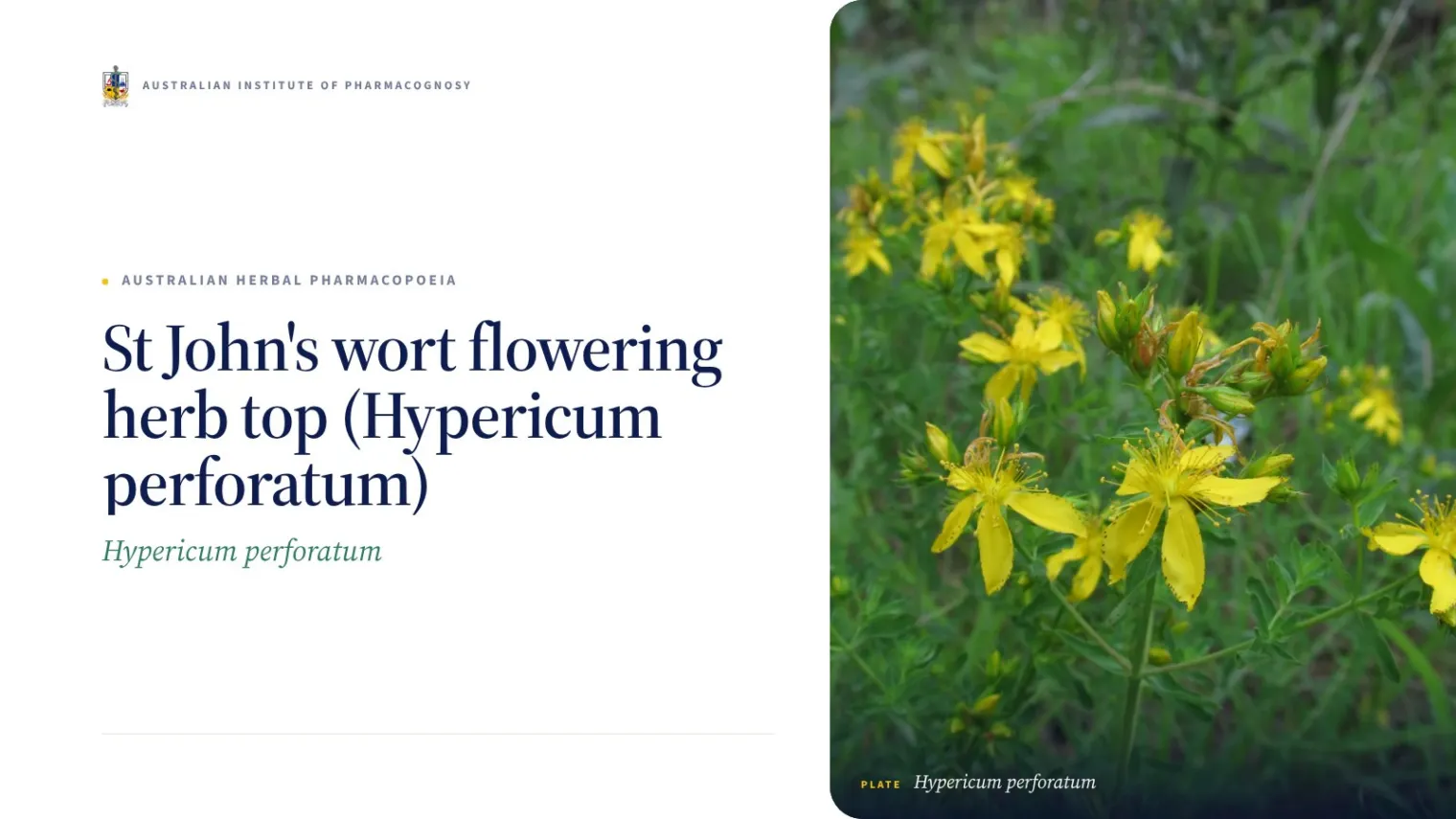
Australian Herbal Pharmacopoeia (working title), Monograph AIP-PH-HYPPER (formerly AIP-HP 012)
Version: 1.0 draft, working document, published while in build
Date: 2026
Prepared by: Dr Thomas Ridley, Head of Education and Research, Australian Institute of Pharmacognosy, Cardwell, Queensland
Series note: The Australian Herbal Pharmacopoeia is the name of AIP’s own monograph series. It is not a statutory standard under the Therapeutic Goods Act 1989 (Cth) and carries no official, government or national-standard status.
0. Free-teaser block
0.1 Identity card
| Monograph number | AIP-PH-HYPPER (formerly AIP-HP 012) |
| Title | St John’s wort flowering herb top (Hypericum perforatum L.), Hyperici herba |
| Version / year | 1.0 draft, 2026. Next review 2029, or sooner on any of the triggers in section 20.5 |
| Accepted binomial | Hypericum perforatum L., Sp. Pl. 2: 785 (1 May 1753). IPNI record 433719-1, checked live 27/09/2026 [1] |
| Family | Hypericaceae (APG IV). Older texts, IPNI’s own family field and the WHO monograph still file it under Clusiaceae (= Guttiferae); the segregate family Hypericaceae is the current placement and the one the Ph. Eur. and the trade use [1,2,3,5,9] |
| Plant part | Whole or fragmented dried flowering tops, harvested during flowering time [3] |
| Latin drug name | Hyperici herba |
| Principal synonyms | Hypericum officinarum Crantz, H. officinale Gaterau, H. vulgare Lam., H. veronense Schrank, H. noeanum Boiss. [5,8], each name confirmed in IPNI with its author and place of publication on 27/09/2026 [1]. Infraspecific taxa in current use include subsp. angustifolium A.Fröhl. (1911), subsp. veronense (Schrank) H.Lindb. (1906), subsp. songaricum (Ledeb. ex Rchb.) N.Robson (2002) and subsp. chinense N.Robson (2002) [1] |
| Common names | English: St John’s wort, perforate St John’s wort, common St John’s wort, hardhay, Klamath weed. German: Johanniskraut, Tüpfelhartheu. French: millepertuis (sommité fleurie). Italian: iperico. Spanish: hipérico, corazoncillo. Danish: prikbladet perikon. Russian: zwieroboij. Twenty-two further EU-language names are listed by the EMA [5,6,7] |
| Pharmacopoeial status elsewhere | Ph. Eur.: yes — monograph 1438, St. John’s wort / Hyperici herba (read in the library copy, Ph. Eur. 8.0, pp. 1391–1392) [3]; and monograph 1874, St. John’s wort dry extract, quantified / Hyperici herbae extractum siccum quantificatum (pp. 1393–1394) [4]. BP: yes, by Ph. Eur. adoption [7,8]. USP–NF: yes [7,8]. WHO: yes — Herba Hyperici, WHO monographs vol. 2, pp. 149–171 [5]. EMA/HMPC: yes — EU herbal monograph on Hypericum perforatum L., herba, EMA/HMPC/7695/2021, Final Revision 1, adopted 23/11/2022, carrying both a well-established-use and a traditional-use column [6]. BHP 1996: yes [8]. American Herbal Pharmacopoeia: yes, 1997 [5,8]. Commission E: yes, positive [7]. ESCOP: yes [8] |
| Australian status | Permissible Ingredients Determination: yes — Therapeutic Goods (Permissible Ingredients) Determination (No. 2) 2026 (Cth), F2026L00707, Schedule 1 item 2672 HYPERICUM PERFORATUM, purposes A (active), E (excipient), H (homoeopathic), carrying a mandatory label warning (code STJOHN) for any medicine for oral ingestion: the label must state that St John’s wort affects the way many prescription medicines work, oral contraceptives included, followed by the prescribed referral sentence. Two congeners are separately permitted: item 2670 Hypericum ascyron and item 2671 Hypericum japonicum, both A and H only. Text read from the Federal Register of Legislation 27/09/2026 [11]. Poisons Standard: not scheduled — the full text of the Therapeutic Goods (Poisons Standard: June 2026) Instrument 2026 (Cth), F2026L00633, was searched on 27/09/2026 for "hypericum", "St John", "hyperforin" and "naphthodianthrone": no entry in any Schedule or Appendix [12]. ARTG: 87 entries returned for the keyword "hypericum" on 27/09/2026, including MediHerb Nevaton Mood (ARTG 522352, 14/01/2026) [13]. Introduced, not native. Not restricted matter in Queensland — the Biosecurity Regulation 2016 (Qld) full text was searched 27/09/2026 and returns no entry for Hypericum or St John’s wort [14]; in New South Wales it carries the general biosecurity duty under the Biosecurity Act 2015 and regional asset-protection measures in the Central Tablelands, Central West and other regions [15]. 48,036 Australian occurrence records in the Atlas of Living Australia, 92.8 per cent of them in NSW; 438 in Queensland, every one of them in the cool southern highlands [16] |
| Named markers and limits | Total hypericins, expressed as hypericin (CID 3663, C₃₀H₁₆O₈, Mr 504.4): minimum 0.08 per cent, dried drug, by spectrophotometry at 590 nm, specific absorbance taken as 870, Ph. Eur. 1438 assay [3]. For the quantified dry extract, Ph. Eur. 1874: total hypericins 0.10–0.30 per cent; flavonoids expressed as rutin, minimum 6.0 per cent; hyperforin, maximum 6.0 per cent and not more than the labelled content, all on the anhydrous extract [4]. AIP sets no limit of its own: no AIP batch data exists (section 7) |
| Evidence snapshot | Mild to moderate major depression, standardised extract vs placebo: Tier A, 18 placebo-controlled RCTs, n = 2,922, RR 1.53 (95% CI 1.19–1.97), moderate certainty [18]. Vs SSRI or tricyclic in mild to moderate depression: Tier A, 17 RCTs, RR 1.01 (95% CI 0.90–1.14), with fewer adverse events (OR 0.67, 95% CI 0.56–0.81) [18]. Relapse prevention after response: Tier B, 1 continuation RCT (n = 398) and one re-analysis [7,31]. Severe depression: Tier C — no adequate trial. Menopausal psychological symptoms: Tier B [22]. Somatoform disorders: Tier B [7]. Topical oil for wounds and skin: Tier C. OCD, social phobia, IBS, childhood ADHD: Tier C, each a single negative RCT [31]. Antiviral: Tier C, two phase I studies showing no antiviral effect and dose-limiting phototoxicity [7]. Traditional European use for nervous complaints, sciatica and wounds: Tier T [7,9] |
| Suggested citation | Ridley T. St John’s wort flowering herb top (Hypericum perforatum L.), Hyperici herba. Australian Herbal Pharmacopoeia (working title), monograph AIP-PH-HYPPER, version 1.0 draft. Cardwell: Australian Institute of Pharmacognosy; 2026. DOI to be assigned |
| Provenance | Original AIP data: none. Every analytical figure, limit, method, trial result and occurrence count in this monograph was produced by someone else and is attributed where it appears. Sections 5, 8 and 9 carry the AIP bench data pending flag: AIP has made no photomicrograph, run no TLC plate and run no HPLC of this drug. Figures F5, F7, F9, F9b, F10, F10b, F11 and F12 are AIP drawings or replots of cited published numbers, and are labelled as such. No figure in this monograph is a generated, AI-made or altered image of a specimen, section, plate or chromatogram |
| Compiler and review | Compiled by Dr Thomas Ridley (Education and Research). Technical review: Dr Fiona MacAllister (Botanical, sections 1-5 and the adulterant part of 10, and figures F1-F5 and F9), reviewed in 2026; Dr Eleanor Whitcombe (Medicine, sections 12, 13, 15, and figure F10), reviewed in 2026; Dr Hana Suzuki (QA, sections 6-10, and figures F6, F7 and F8), reviewed in 2026 — her edits are in the document and recorded at 0.3(h) and 20.3, but no QA review file was on record when the citation audit ran; Dr Thomas Ridley (Education and Research, evidence and citation audit of every reference, the evidence ledger, and sections 11, 13, 14, 16-19), reviewed in 2026, which is a compiler’s audit of his own compilation and not an independent one under Evidence Charter rule 7, so a Librarian read of section 19 is still outstanding. Published: not yet. Last modified: 2026. Version 1.0 draft. Visual layout and figure review: Jesse Kirby (Community Outreach, figure placement, captions, source and licence credit lines, and the page design of monograph.pdf), reviewed in 2026 |
| Canonical URL | /pharmacopoeia/hypericum-perforatum/ (on publication) |
0.2 Summary
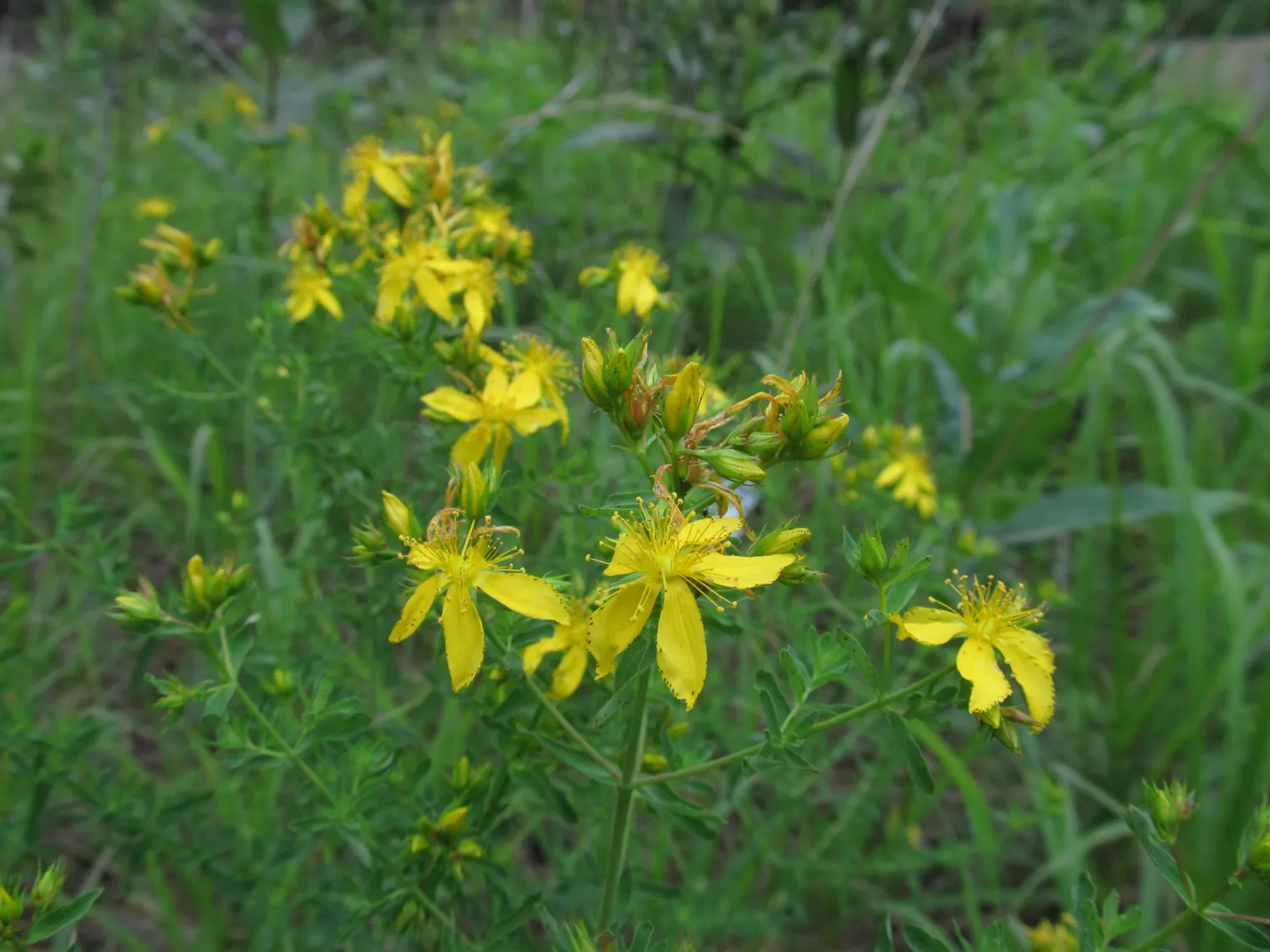
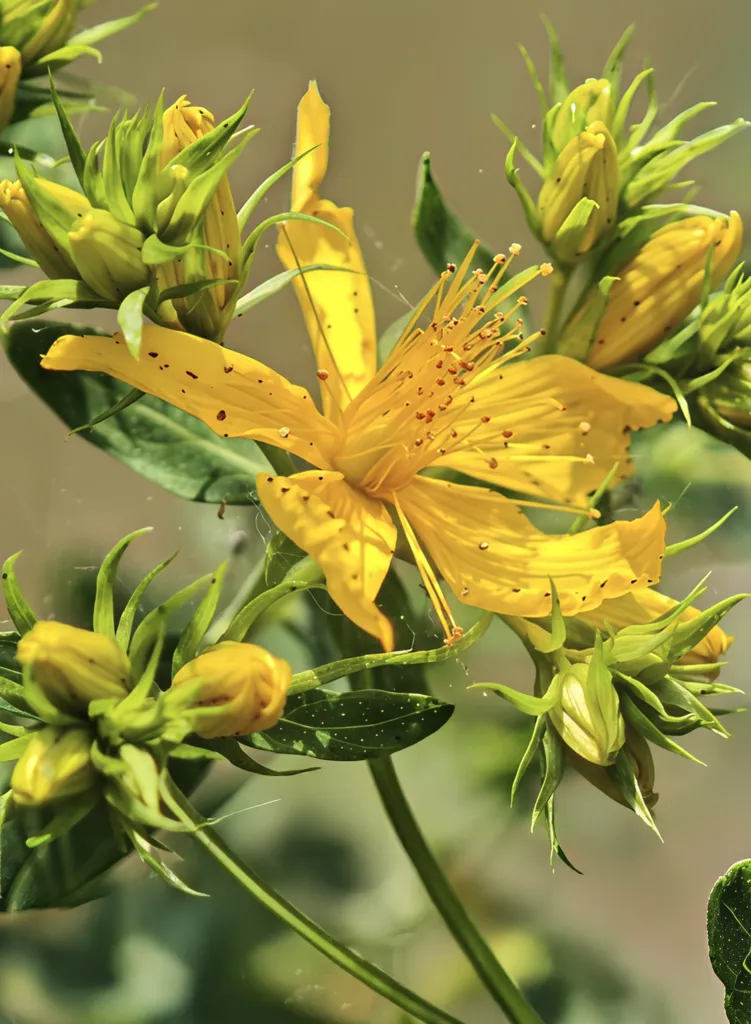
St John’s wort is the dried flowering top of Hypericum perforatum L., a perennial herb of Europe, western Asia and North Africa that has naturalised across every temperate continent and is a serious pasture weed in south-eastern Australia. The drug is identified by a round stem bearing two opposite longitudinal ridges, opposite sessile leaves whose translucent secretory cavities look like perforations against the light, and black marginal glands on leaf, sepal and petal; under the microscope by the paracytic stomata, the red-pigmented dark glands and the complete absence of trichomes; and by a thin-layer chromatogram in which two reddish-orange flavonoid zones sit in the lower third and two red naphthodianthrone zones in the upper third. The European Pharmacopoeia assays it as total hypericins at 590 nm with a floor of 0.08 per cent on the dried drug.
Standardised hydroalcoholic and methanolic extracts have better evidence behind them in mild to moderate major depression than any other herbal medicine: 18 placebo-controlled randomised trials in 2,922 patients give a response risk ratio of 1.53, and 17 comparator trials show no difference from standard antidepressants with fewer adverse events. The certainty is moderate, not high, heterogeneity is large, and nothing adequate has been done in severe depression. A 2026 network meta-analysis reached the same species by a different route and warned that the effect sizes it recovered were larger than any credible antidepressant trial produces, and that they tracked study quality downwards.
The safety problem is not toxicity. It is that hyperforin activates the pregnane X receptor and induces CYP3A4, CYP2B6, CYP2C9, CYP2C19 and P-glycoprotein in proportion to the daily hyperforin dose, which has cost transplant patients their grafts and has caused contraceptive failure. Below about 1 mg of hyperforin a day no clinically relevant interaction has been reported; above it, the effect rises with the dose. That single number, not the species and not the indication, is what a dispensary needs from a certificate of analysis. Anyone considering St John’s wort while taking prescribed medicines should consult a degree-qualified herbalist with competencies and adequate training in pharmacognosy.
58 more pages follow · 28,897 words, 30 figures, 34 tables
Still to come in this monograph
- 1. Nomenclature
- 2. Definition
- 3. Source and Australian supply
- 4. Macroscopy
- 5. Microscopy
- 6. Chemistry
- 7. Named markers and assay limits
- 8. TLC fingerprint
- 9. HPLC fingerprint
- 10. Identity, purity, adulterants and contaminants
- 11. Traditional use
- 12. Current practice: use, preparations and doses
- 13. Clinical evidence
- 14. Pharmacology
- 15. Safety
- 16. Discussion
- 17. Conclusions
- 18. Research still needed
- 19. References
- 20. Document control
The rest of this monograph is open to members. One membership covers every members’ feature on the site.
Checking your membership…
Report an error or submit evidence
If something in this monograph is wrong, out of date or missing, tell us and show us the evidence. Every report is logged under the AIP Evidence Charter and assessed on the evidence alone; the outcome is kept on the record, and an upheld report is corrected with a dated notice on this page.
Open the report form
The Institute sets and publishes its own monographs. The catalogue is in Publications.