
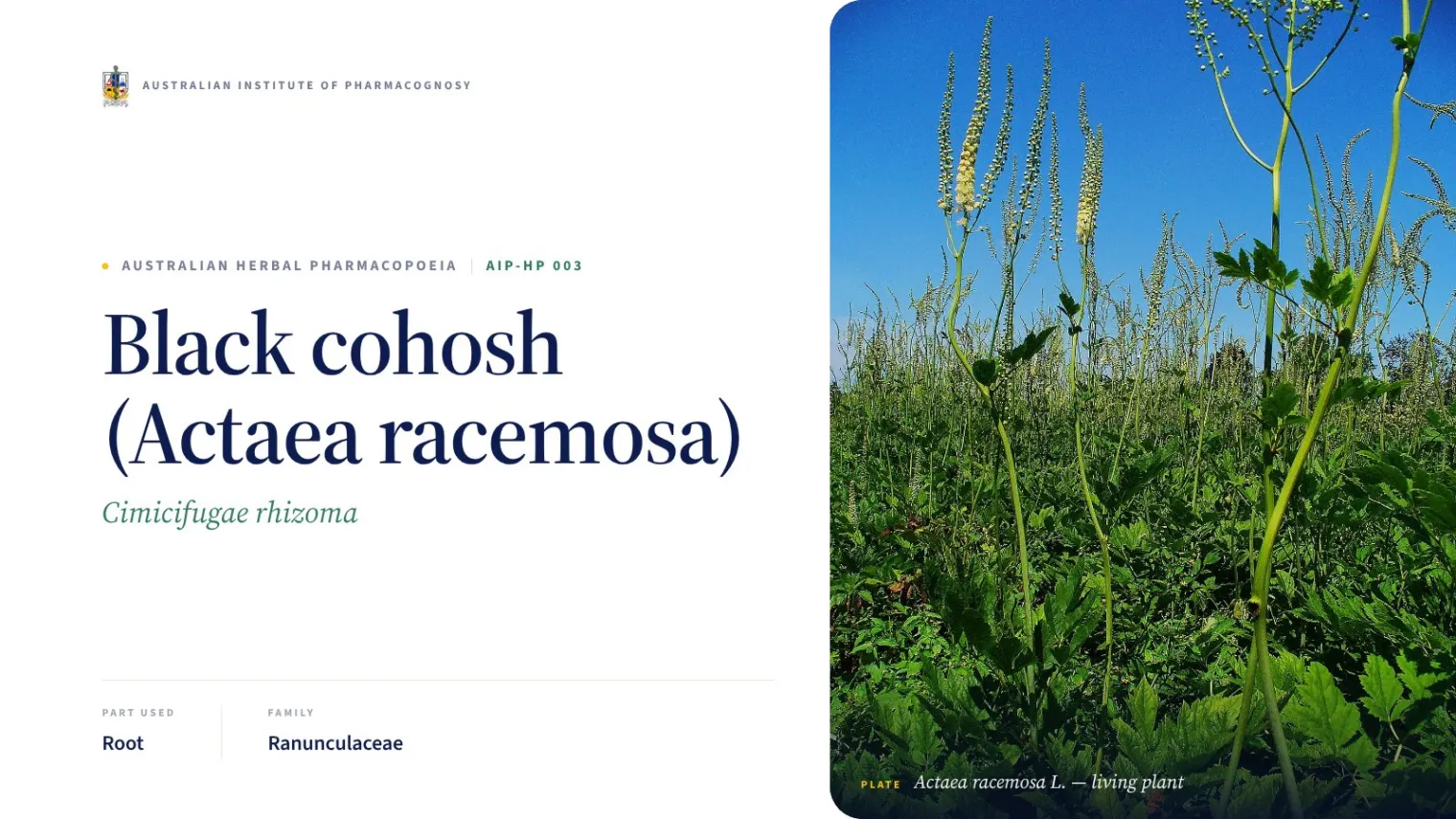
Black cohosh root (Actaea racemosa L.), Ranunculaceae
Australian Herbal Pharmacopoeia (working title), Monograph AIP-PH-ACTRAC (formerly AIP-HP 003)
Status: version 1.0, live at https://www.australian-pharmacognosy.org/pharmacopoeia/actaea-racemosa/, all reviews and the pre-publication final test on record. Published at first draft under the CEO’s order. Botanical technical review done in 2026; full-text source revision by the compiler 2026; QA review done in 2026; Medicine review done in 2026; Education and Research evidence and citation audit done in 2026; Community Outreach layout and figure review done in 2026; not reviewed by Legal.
Date: 2026. Next review: on sign-off, then three-yearly or sooner if a major trial, safety signal or new pharmacopoeial text appears.
Prepared by: the Australian Institute of Pharmacognosy, Far North Queensland, Australia. Every author and contributor is named at the end of the monograph.
Contributors: Dr Thomas Ridley (library and literature search, registry search, regulatory instrument search, synthesis, drafting, figure placement, reference verification, evidence and citation audit). Technical review: Dr Fiona MacAllister (Botanical, sections 1-5 and 10), Dr Hana Suzuki (QA, sections 6-10) and Dr Eleanor Whitcombe (Medicine, sections 12, 13 and 15), each in 2026. Jesse Kirby (Community Outreach) reviewed figure placement, captions and credit lines and set the page layout in 2026. Librarian and History and Philosophy checks are still to come and will be credited once done. Dr Luke Iggulden, Chief Scientific Officer, is senior author: he set the scope of the series in the CEO directive and made the research possible.
Access marker for IT and Community Outreach: everything from here to the line "END OF FREE TEASER" is the free portion (section 0). Everything after it is paid.
0. Free teaser
0.1 Identity card
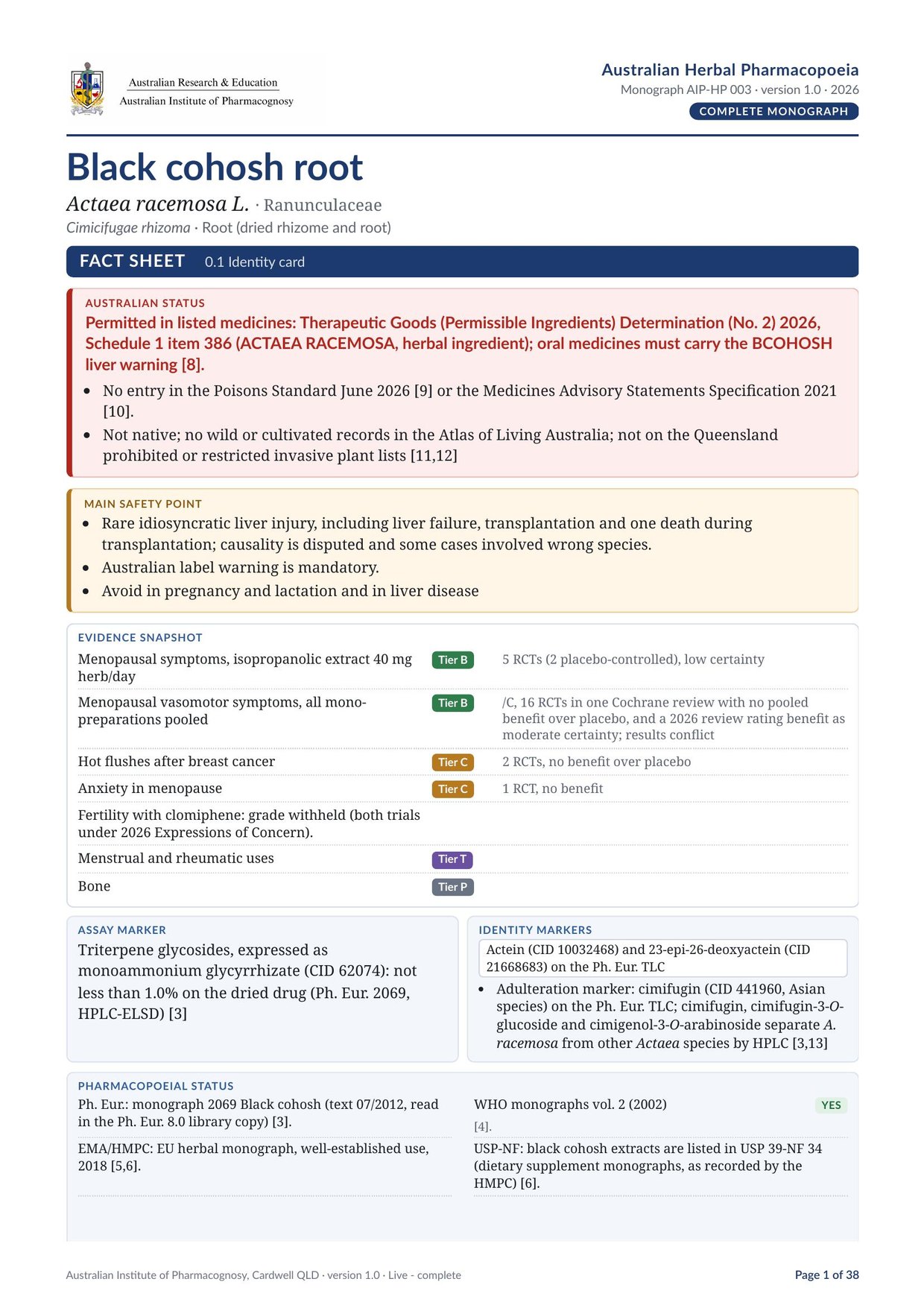
| Monograph | AIP-PH-ACTRAC (formerly AIP-HP 003), Black cohosh root. Version 1.0, 22/09/2026. Next review: on sign-off |
| Accepted name | Actaea racemosa L., Ranunculaceae (APG IV). Accepted in POWO/WCVP (release of 16/09/2026, read in September 2026 through ChecklistBank dataset 2000; IPNI 316204-2) [1] |
| Basionym and synonyms | Homotypic synonyms: Cimicifuga racemosa (L.) Nutt. (the name used by the EMA, WHO and most trials), Cimicifuga serpentaria Pursh, Macrotrys racemosa (L.) Sweet, Botrophis serpentaria Raf., Megotrys serpentaria Raf., Thalictrodes racemosa (L.) Kuntze [1]. Cimicifuga was merged into Actaea in a 1998 revision [2] |
| Drug name | Cimicifugae rhizoma (Ph. Eur. 2069: dried rhizome and root) [3]; WHO title Rhizoma Cimicifugae Racemosae [4] |
| Common names | Black cohosh, black snakeroot, bugbane, rattle root, squaw root, macrotys (English); Traubensilberkerze, Cimicifugawurzelstock (German); actée à grappes (French) [2,4,5] |
| Pharmacopoeial status | Ph. Eur.: monograph 2069 Black cohosh (text 07/2012, read in the Ph. Eur. 8.0 library copy) [3]. WHO monographs vol. 2 (2002): yes [4]. EMA/HMPC: EU herbal monograph, well-established use, 2018 [5,6]. USP-NF: black cohosh extracts are listed in USP 39-NF 34 (dietary supplement monographs, as recorded by the HMPC) [6]. BHP 1983 and BHP 1996: monographs exist; the WHO monograph takes its macroscopy and most of its purity limits from BHP 1996 (its loss-on-drying limit comes from Hagers Handbuch) [4,7]. Chinese and Japanese pharmacopoeias use the name Rhizoma Cimicifugae for other Actaea species [4] |
| Australian status | Permitted in listed medicines: Therapeutic Goods (Permissible Ingredients) Determination (No. 2) 2026, Schedule 1 item 386 (ACTAEA RACEMOSA, herbal ingredient); oral medicines must carry the BCOHOSH liver warning [8]. No entry in the Poisons Standard June 2026 [9] or the Medicines Advisory Statements Specification 2021 [10]. Not native; no wild or cultivated records in the Atlas of Living Australia; not on the Queensland prohibited or restricted invasive plant lists [11,12] |
| Assay marker | Triterpene glycosides, expressed as monoammonium glycyrrhizate (CID 62074): not less than 1.0% on the dried drug (Ph. Eur. 2069, HPLC-ELSD) [3] |
| Identity markers | Actein (CID 10032468) and 23-epi-26-deoxyactein (CID 21668683) on the Ph. Eur. TLC. Adulteration marker: cimifugin (CID 441960, Asian species) on the Ph. Eur. TLC; cimifugin, cimifugin-3-O-glucoside and cimigenol-3-O-arabinoside separate A. racemosa from other Actaea species by HPLC [3,13] |
| Evidence snapshot | Menopausal symptoms, isopropanolic extract 40 mg herb/day: Tier B, 5 RCTs (2 placebo-controlled), low certainty. Menopausal vasomotor symptoms, all mono-preparations pooled: Tier B/C, 16 RCTs in one Cochrane review with no pooled benefit over placebo, and a 2026 review rating benefit as moderate certainty; results conflict. Hot flushes after breast cancer: Tier C, 2 RCTs, no benefit over placebo. Anxiety in menopause: Tier C, 1 RCT, no benefit. Fertility with clomiphene: grade withheld (both trials under 2026 Expressions of Concern). Menstrual and rheumatic uses: Tier T. Bone: Tier P |
| Main safety point | Rare idiosyncratic liver injury, including liver failure, transplantation and one death during transplantation; causality is disputed and some cases involved wrong species. Australian label warning is mandatory. Avoid in pregnancy and lactation and in liver disease |
| Suggested citation | Ridley T, Iggulden L. Cimicifugae rhizoma (black cohosh root, Actaea racemosa L.). Australian Herbal Pharmacopoeia monograph AIP-PH-ACTRAC (v1.0). Cardwell (QLD): Australian Institute of Pharmacognosy; 2026. DOI to be assigned |
| Compiler and review | Compiled by Dr Thomas Ridley (Education and Research). Technical review: Dr Fiona MacAllister (Botanical, sections 1-5, 10), reviewed in 2026; Dr Hana Suzuki (QA, sections 6-10), reviewed in 2026; Dr Eleanor Whitcombe (Medicine, sections 12, 13, 15), reviewed in 2026; Dr Thomas Ridley (Education and Research, evidence and citation audit of all sections and figure sources), reviewed in 2026 (the compiler’s own audit, not an independent check); Jesse Kirby (Community Outreach, teaser and whole-document layout, figure placement and credit lines), reviewed in 2026. Published: 2026. Last modified: 2026. Version 1.0 |
| Provenance | Original AIP data: none. Every limit, method, measurement and trial result comes from the cited pharmacopoeias, regulators, reference works and papers; sections 4, 5, 8, 9 and 10 are marked "AIP bench data pending" |
| Canonical URL | /pharmacopoeia/actaea-racemosa/ |
0.2 Summary
Black cohosh is the dried rhizome and root of Actaea racemosa, a tall woodland perennial of eastern North America, still traded under its older name Cimicifuga racemosa. The drug is a dark, knotted, horny rhizome with thin brittle roots; under the microscope it shows starch, lignified vessels and fibres and brown cork, with no crystals. The European Pharmacopoeia identifies it by thin-layer chromatography of its cycloartane triterpene glycosides (actein, 23-epi-26-deoxyactein) and assays at least 1.0 per cent triterpene glycosides by HPLC. Substitution with Asian Actaea species is a documented trade problem and is the main quality risk. The herb is used for menopausal hot flushes and sweating. Trials of standardised European extracts at about 40 mg of herb a day show modest benefit in some studies and none in others, and pooled analyses disagree. The main safety concern is rare liver injury, which carries a mandatory Australian label warning. Anyone considering it should consult a degree-qualified herbalist with competencies and adequate training in pharmacognosy.
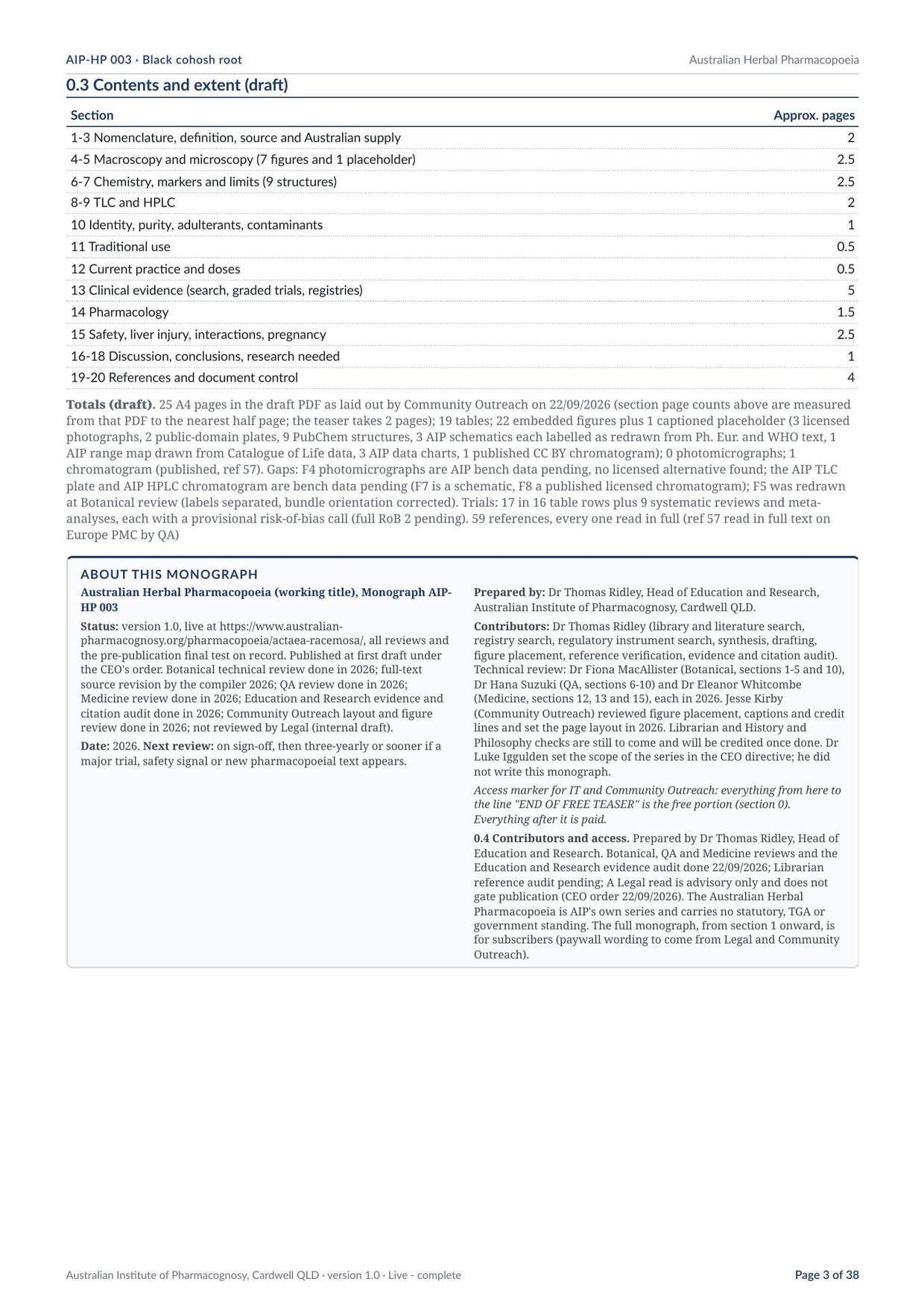
0.3 Contents and extent (draft)
| Section | Approx. pages |
|---|---|
| 1-3 Nomenclature, definition, source and Australian supply | 2 |
| 4-5 Macroscopy and microscopy (7 figures and 1 placeholder) | 2.5 |
| 6-7 Chemistry, markers and limits (9 structures) | 2.5 |
| 8-9 TLC and HPLC | 2 |
| 10 Identity, purity, adulterants, contaminants | 1 |
| 11 Traditional use | 0.5 |
| 12 Current practice and doses | 0.5 |
| 13 Clinical evidence (search, graded trials, registries) | 5 |
| 14 Pharmacology | 1.5 |
| 15 Safety, liver injury, interactions, pregnancy | 2.5 |
| 16-18 Discussion, conclusions, research needed | 1 |
| 19-20 References and document control | 4 |
| Totals (draft) | 25 A4 pages in the draft PDF as laid out by Community Outreach on 22/09/2026 (section page counts above are measured from that PDF to the nearest half page; the teaser takes 2 pages); 19 tables; 22 embedded figures plus 1 captioned placeholder (3 licensed photographs, 2 public-domain plates, 9 PubChem structures, 3 AIP schematics each labelled as redrawn from Ph. Eur. and WHO text, 1 AIP range map drawn from Catalogue of Life data, 3 AIP data charts, 1 published CC BY chromatogram); 0 photomicrographs; 1 chromatogram (published, ref 57). Gaps: F4 photomicrographs are AIP bench data pending, no licensed alternative found; the AIP TLC plate and AIP HPLC chromatogram are bench data pending (F7 is a schematic, F8 a published licensed chromatogram); F5 was redrawn at Botanical review (labels separated, bundle orientation corrected). Trials: 17 in 16 table rows plus 9 systematic reviews and meta-analyses, each with a provisional risk-of-bias call (full RoB 2 pending). 59 references, every one read in full (ref 57 read in full text on Europe PMC by QA) |
0.4 Contributors and access
Prepared by the Australian Institute of Pharmacognosy. Botanical, QA and Medicine reviews and the Education and Research evidence audit done 22/09/2026; Librarian reference audit pending; A Legal read is advisory only and does not gate publication (CEO order 22/09/2026). The Australian Herbal Pharmacopoeia is AIP’s own series and carries no statutory, TGA or government standing. The full monograph, from section 1 onward, is for subscribers (paywall wording to come from Legal and Community Outreach).
Free to every reader. The safety section of every monograph is open to everyone, signed in or not. In an emergency call 000. For poisoning, call the Poisons Information Centre on 13 11 26.
15. Safety
15.1 Adverse effects in trials
Across more than 6300 trial participants the HMPC found adverse events mostly mild: gastrointestinal upset, rash and other allergic skin reactions, facial or peripheral oedema; frequency not known [5,6]. Mills and Bone add headache, vertigo, weight gain, breast tenderness, heavy legs and vaginal bleeding as minor reports, and note that higher doses have been linked with headache [2]. A 2022 review of spontaneous reports, case reports and trials found no evidence that black cohosh causes weight gain [49]. Liver enzymes were unchanged in the trials that measured them (Osmers, Frei-Kleiner, Nappi, Bai [6]; Geller [44]), and a meta-analysis of five RCTs (1117 women) of the isopropanolic extract found no adverse effect on liver function (Naser 2011, as reported by Mills and Bone [2]).
15.2 Liver injury
Case record. A Queensland series of six patients with severe hepatitis after herbal remedies (Princess Alexandra Hospital, Brisbane, 1996-2001) included one woman who needed urgent liver transplantation for fulminant hepatic failure after brief use of black cohosh; the products were not analysed [50]. Mills and Bone identify her as a 47-year-old who had taken black cohosh alone for about a week, and note that the dose and product were not stated and rechallenge was not done [2]. They also record a second Australian case: a 52-year-old woman with acute liver failure, treated by liver transplantation, who had taken a pharmacist-prescribed mixture of 1:1 liquid extracts containing 10% black cohosh at 7.5 mL twice daily (about 1.5 mL of 1:1 black cohosh, or 1.5 g of herb, a day); TGA analysis was said to confirm golden seal, black cohosh and Ginkgo in the mixture [2]. That dose lies inside the practitioner range in section 12. In a US case, a 54-year-old woman who had taken black cohosh 1000 mg daily for 8 months (and drank two glasses of wine nightly) developed fulminant hepatic failure and died in the operating theatre during liver transplantation; the authors scored the case RUCAM 6 (probable) [51]. The HMPC’s 2007 review found 4 of 44 poorly documented cases coherent with black cohosh (2 probable, with autoimmune hepatitis), then five cases assessed as "probable" by RUCAM by 2010, three further literature cases in 2013-2014, and a 2017 German report of toxic hepatitis (RUCAM 7) on one of the extracts the HMPC accepts (DER 4.5-8.5:1, ethanol 60%); one death with liver failure had several other possible causes (fluoxetine, paracetamol, propoxyphene, alcohol) [6]. Teschke’s group analysed all 69 cases reported by 2009 and found no likelihood of causality in 68, most being confounded or missing critical information (as reported by Mills and Bone [2]).
Wrong species. Health Canada analysed three products linked to liver reports and found no authentic black cohosh; several licensed products without authentic black cohosh were then withdrawn [2]. The TGA Laboratories found other species in 35% of Australian products tested in 2001 [2]. The HMPC adds that the product used is rarely identified in the published case reports [6].
Australian regulatory action. In February 2006 the TGA reported 47 liver cases worldwide, 9 Australian (4 hospitalised, 2 needing transplantation), judged the evidence of a causal association sufficient, and required a label warning [2,25]. The current Permissible Ingredients Determination requires oral medicines containing A. racemosa to carry warning statement BCOHOSH: that in very rare cases black cohosh has been associated with liver failure, listing yellowing of skin or eyes, dark urine, nausea, vomiting, unusual tiredness, weakness, abdominal pain and loss of appetite as reasons to stop the product at once [8]. MediHerb carries equivalent wording and contraindicates use in pre-existing liver disease [15].
TGA safety communications and DAEN (checked in September 2026 by Medicine). The TGA’s February 2006 statement is quoted here from Mills and Bone [2]; the TGA-hosted Australian Adverse Drug Reactions Bulletin file for that period returned HTTP 404 and the TGA site search returned no current black cohosh safety page to our tools, so no safety communication later than 2006 is cited. The Database of Adverse Event Notifications (DAEN, medicines) sits behind an interactive terms-and-conditions page that our tools cannot query; Australian report counts for Actaea or Cimicifuga were therefore not obtained and must be pulled by hand before release. The operative Australian requirement is the BCOHOSH warning in the current Permissible Ingredients Determination [8].
Assessment (AIP comment). Causality is unproven in most cases but a rare idiosyncratic reaction cannot be excluded, and substitution may explain some cases. The practical rule is the same either way: authenticate the raw material (section 10), avoid in liver disease, and stop at the first sign of liver injury.
15.3 Contraindications and precautions (each with source and grade)
| Situation | Position | Source | Grade of evidence |
|---|---|---|---|
| Pre-existing liver disease | Contraindicated (MediHerb, Mills and Bone); caution (HMPC) | [2,5,15] | Case reports and regulatory assessment |
| Signs of liver injury during use | Stop at once | [5,8] | Regulatory requirement |
| Hypersensitivity | Contraindicated | [5] | Regulatory |
| Pregnancy | Avoid (WHO, HMPC, Braun and Cohen); professional supervision (MediHerb) | [4,5,15,25] | Theoretical and traditional |
| Lactation | Contraindicated or not recommended | [4,5,15] | Theoretical |
| Children under 12 | Not recommended (WHO); no relevant indication (HMPC) | [4,5] | No data |
| Breast cancer or other hormone-dependent tumour | Not without specialist oversight (HMPC); caution at higher doses (MediHerb) | [5,15] | Preclinical (metastasis in one mouse model) and observational data |
| With oestrogens | Not together unless supervised (HMPC) | [5] | Theoretical |
| General anaesthesia | Stop 7 days before (MediHerb) | [15] | Manufacturer precaution; no data cited |
15.4 Herb-drug interactions
| Drug or class | Finding | Grade |
|---|---|---|
| CYP2D6 substrates | Weak inhibition in 12 healthy volunteers (about 7%) with 1090 mg twice daily for 28 days, judged not clinically relevant [52]; a later study in 18 volunteers found no effect [2] | Pharmacokinetic study |
| CYP1A2, CYP2E1, CYP3A4/5 substrates | No significant effect in volunteers [52]; no effect on CYP3A (Gurley 2006a, as reported by the HMPC [6]) | Pharmacokinetic study |
| Digoxin (P-glycoprotein) | No effect on digoxin pharmacokinetics in 16 volunteers taking 40 mg daily for 14 days [53] | Pharmacokinetic study |
| Atorvastatin | Two case reports of raised liver enzymes with combined use; other drugs were involved and the HMPC could not attribute the effect [6] | Case reports |
| Tamoxifen | In vitro inhibition of CYP2D6-mediated conversion to active metabolites (Li 2011, as reported by the HMPC [6]); in vitro, extract augmented tamoxifen’s antiproliferative effect [2]; no increase in breast cancer recurrence in a cohort of 1102 users [2,6] | Theoretical and observational |
| Cytotoxic drugs | In vitro, actein acted synergistically with doxorubicin and 5-fluorouracil (Einbond [2,6]); other in vitro work altered the cytotoxicity of docetaxel, doxorubicin, cisplatin and 4-hydroperoxycyclophosphamide [2] | Theoretical |
| Azathioprine, ciclosporin | One case in which black cohosh seemed to antagonise immunosuppression after transplantation (Belgian product information, as recorded by the HMPC [6]) | Case report |
15.5 Pregnancy and lactation
Mills and Bone assign Australian category B2 and record the traditional restriction except to assist childbirth; in a 1999 survey 45% of 90 US nurse-midwives who used herbs used black cohosh to stimulate labour, and a neonate suffered hypoxic-ischaemic brain damage after the mother took blue and black cohosh at about 42 weeks [2]. Animal data on reproductive and developmental toxicity are insufficient, and there are no data on the dry extracts in pregnancy or lactation [6]. Mills and colleagues give labour induction "evidence grade E" and the pregnancy use "evidence level 4" on their own scales [54]. AIP position: avoid in pregnancy and lactation.
15.6 Breast cancer
In MMTV-neu transgenic mice fed black cohosh for 12 months, primary mammary tumour incidence was not increased but lung metastases were significantly more frequent (Davis 2008, as reported by the HMPC and Mills and Bone [2,6]); Mills and Bone question the relevance of the model [2]. In women, a German cohort of 18 861 breast cancer patients, 1102 of them treated with the isopropanolic extract, found no increase in recurrence (Henneicke-von Zepelin 2007 [2,6]); a US case-control study (Rebbeck 2007 [2,6]) and a German case-control study [55] found reduced risk, and the VITAL cohort found no association (HR 1.17, 95% CI 0.75-1.82) [56]. The HMPC calls the German case-control design confusing, with many confounders [6]. A systematic review found no association with increased breast cancer risk [41]. The observational designs are prone to confounding, so absence of harm is not established; the HMPC advises against use after hormone-dependent tumours without specialist oversight [5].
15.7 Children and older people
No data in children. Trials enrolled women up to about 70 years; no specific studies in older people [6].
15.8 Toxicology and overdose
Six-month rat study of the isopropanolic extract (Korn 1991): NOEL 22.5 mg/kg (human equivalent about 3.6 mg/kg, against a daily dose of about 0.08 mg/kg for a 60 kg adult) [6]. Mills and Bone summarise the same study as showing no toxic effects at up to 5 g/kg/day [2]; the two sources disagree and QA should check the study report. The Ames test on the isopropanolic extract does not meet current guidelines; a guideline-conform Ames test exists for the 60% ethanolic extract [6]. A US National Toxicology Program study of an ethanolic extract (90 days, up to 1000 mg/kg/day) found dose-dependent haematological changes and more micronucleated red cells in rats and mice [46]. Early reports describe nausea, vomiting, severe headache, vertigo, joint pain, red eyes and weak pulse after 5 g of herb or 12 g of fluid extract, perhaps partly due to baneberry admixture [2,24]. No case of overdose has been reported in the databases the HMPC searched [6].
15.9 Referral
Anyone with liver disease, a hormone-dependent cancer, pregnancy or breastfeeding, or taking statins or cancer treatment, should consult a degree-qualified herbalist with competencies and adequate training in pharmacognosy before using black cohosh.
Inside the typeset monograph


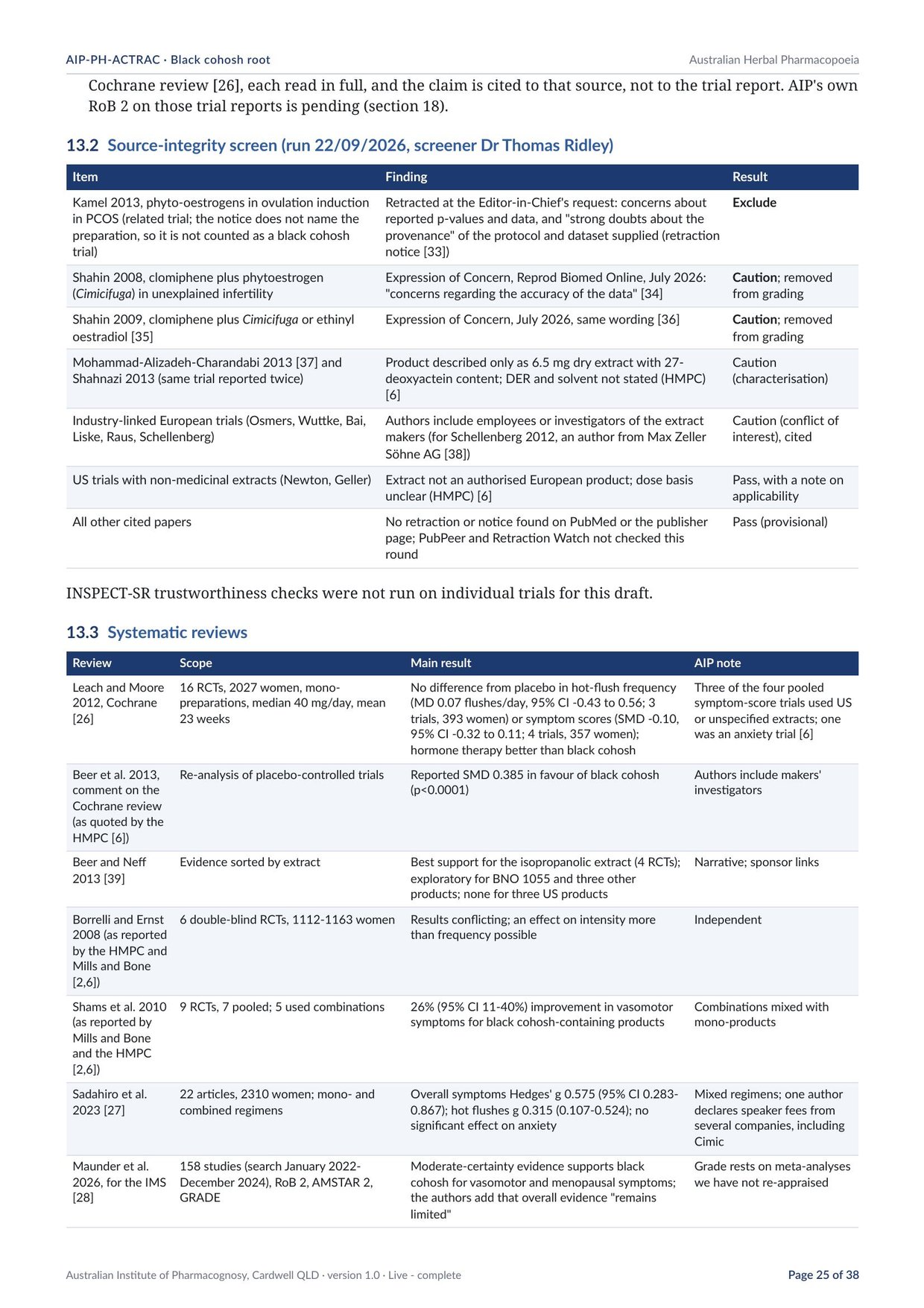
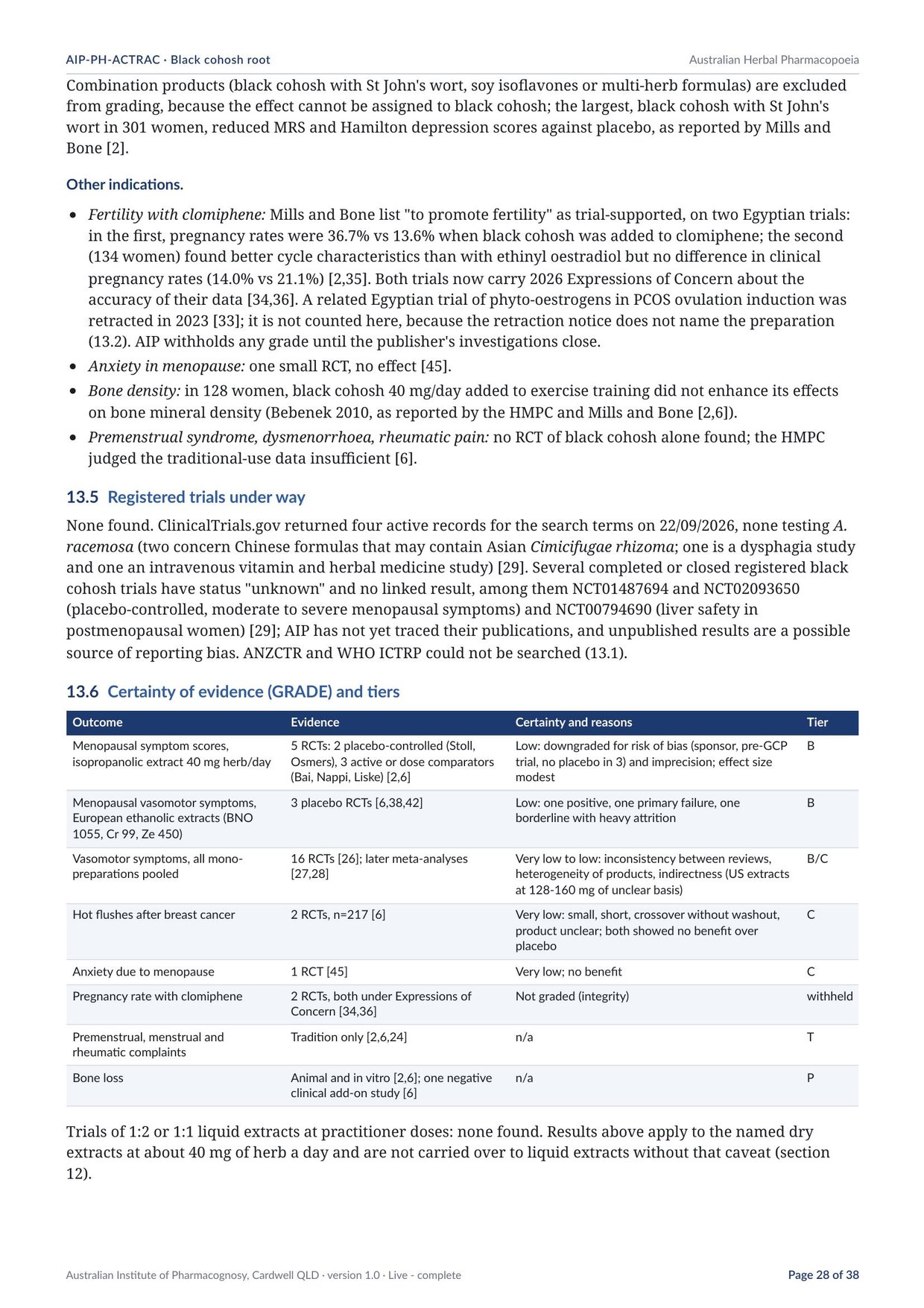
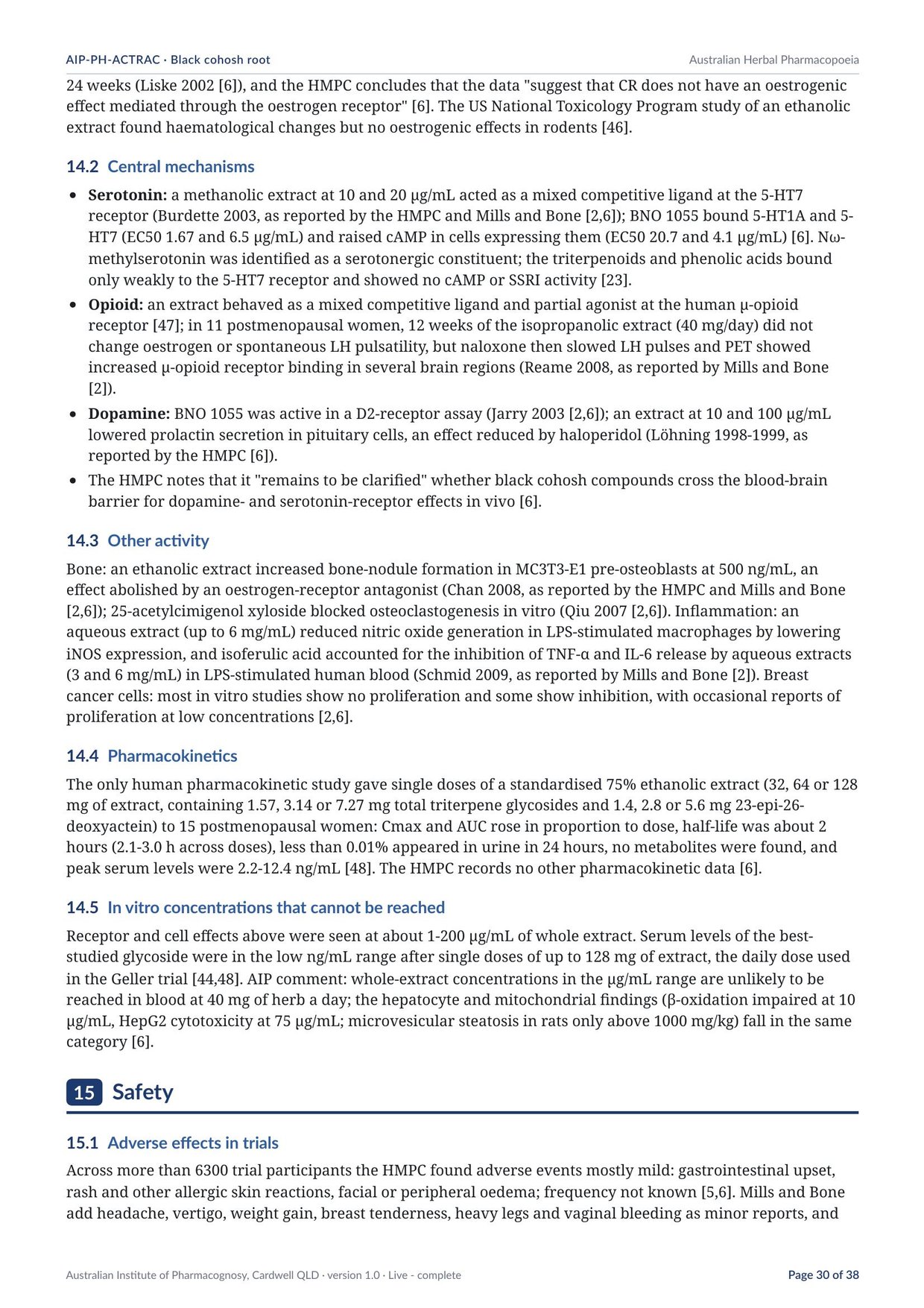
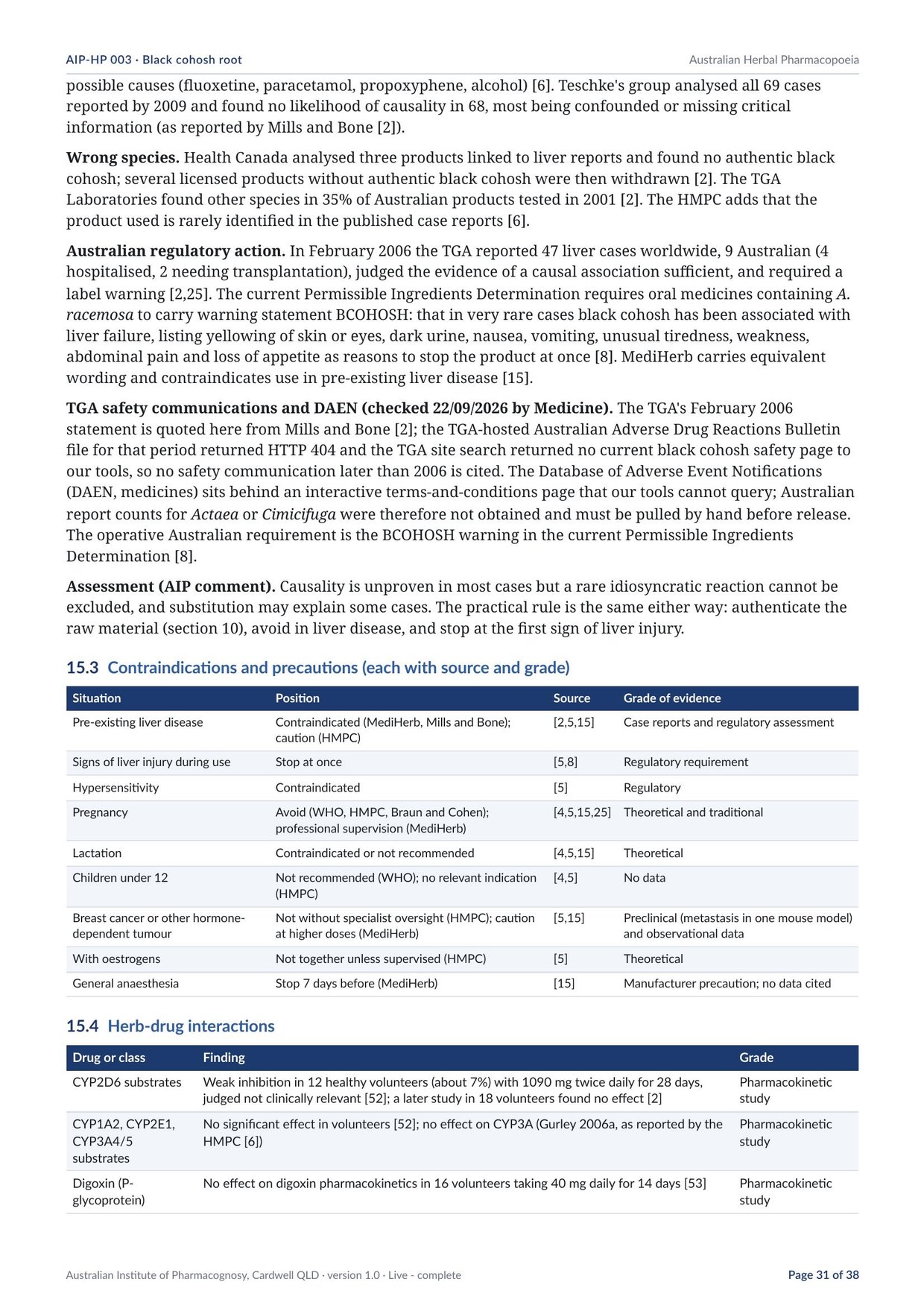
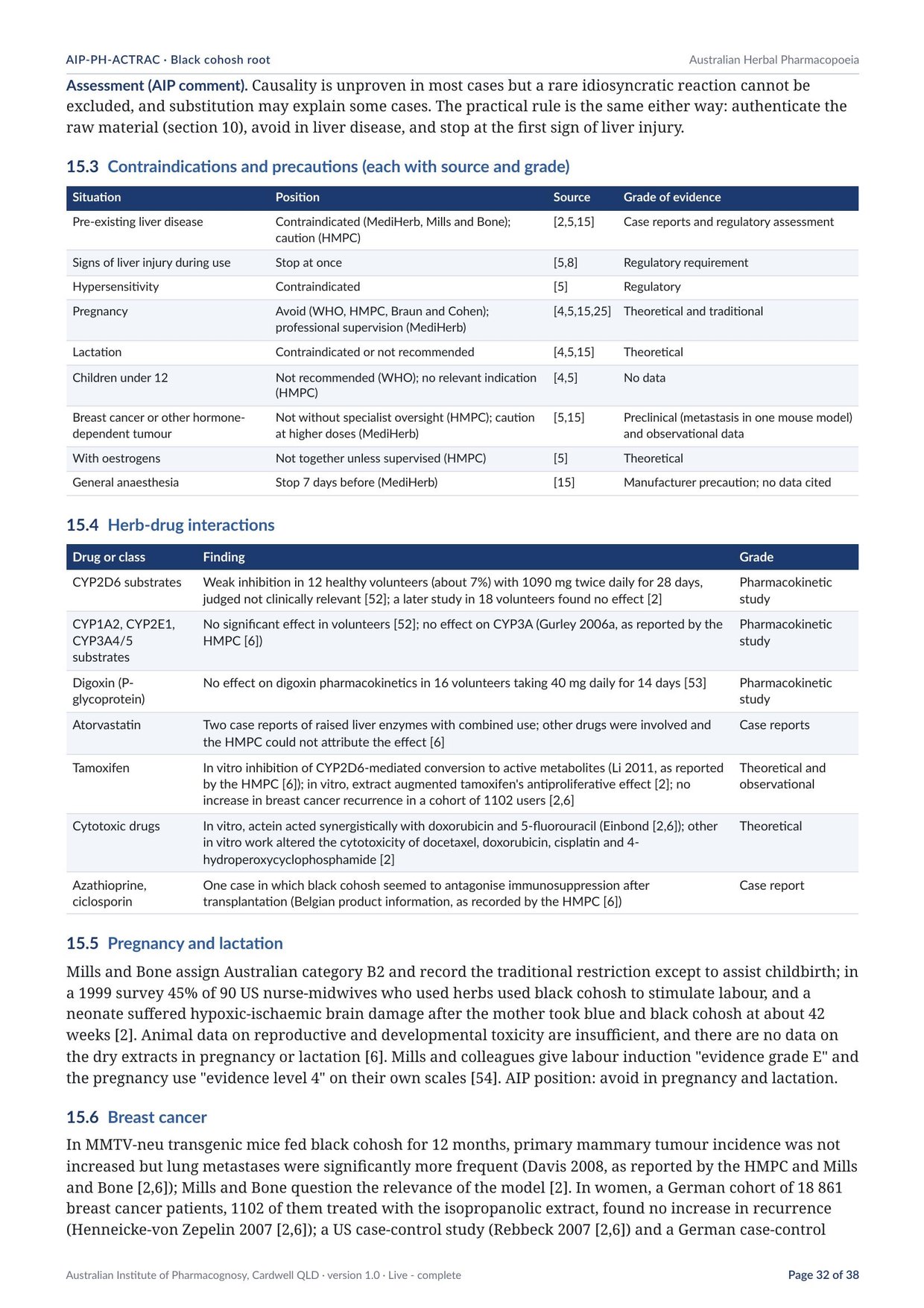
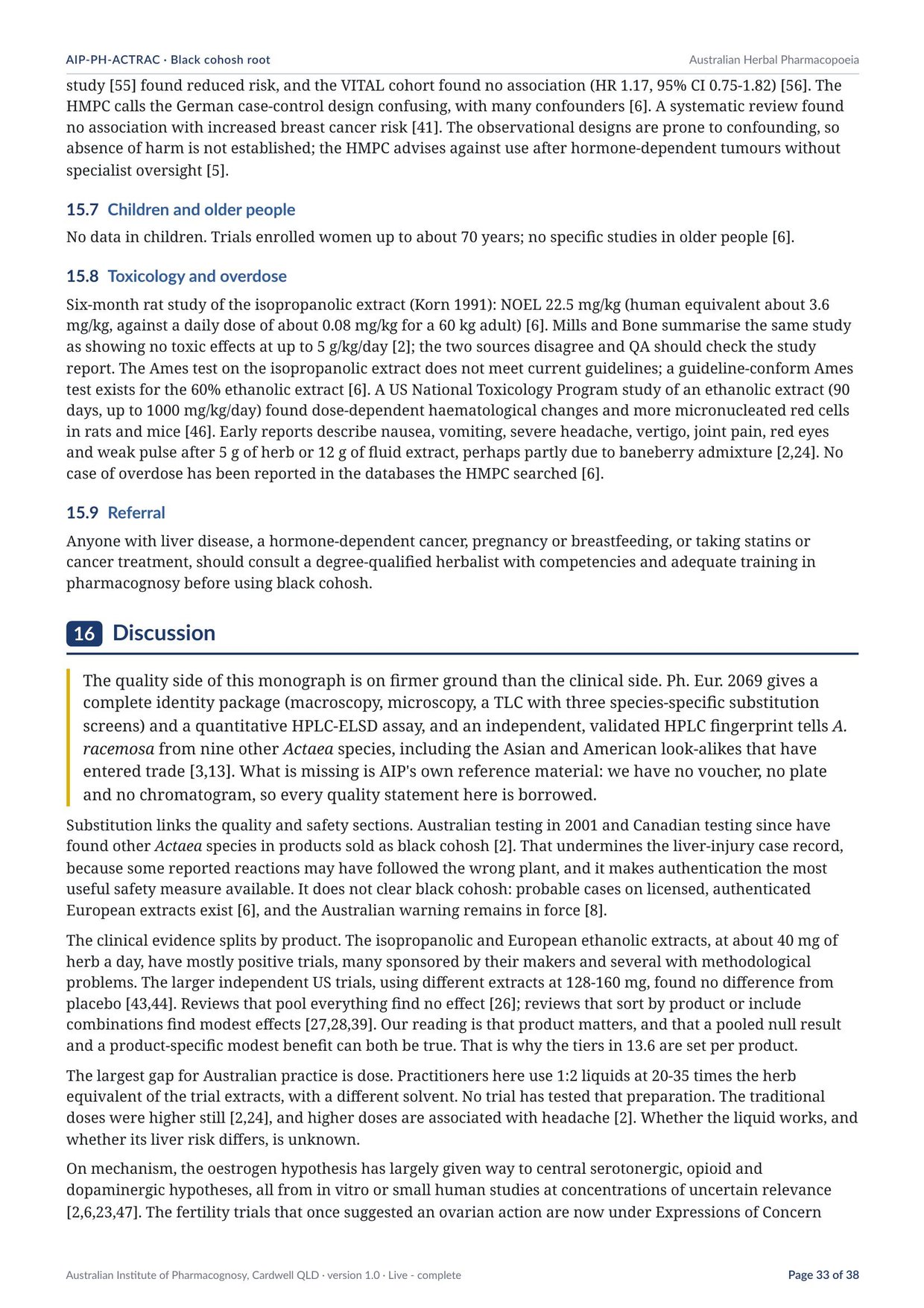
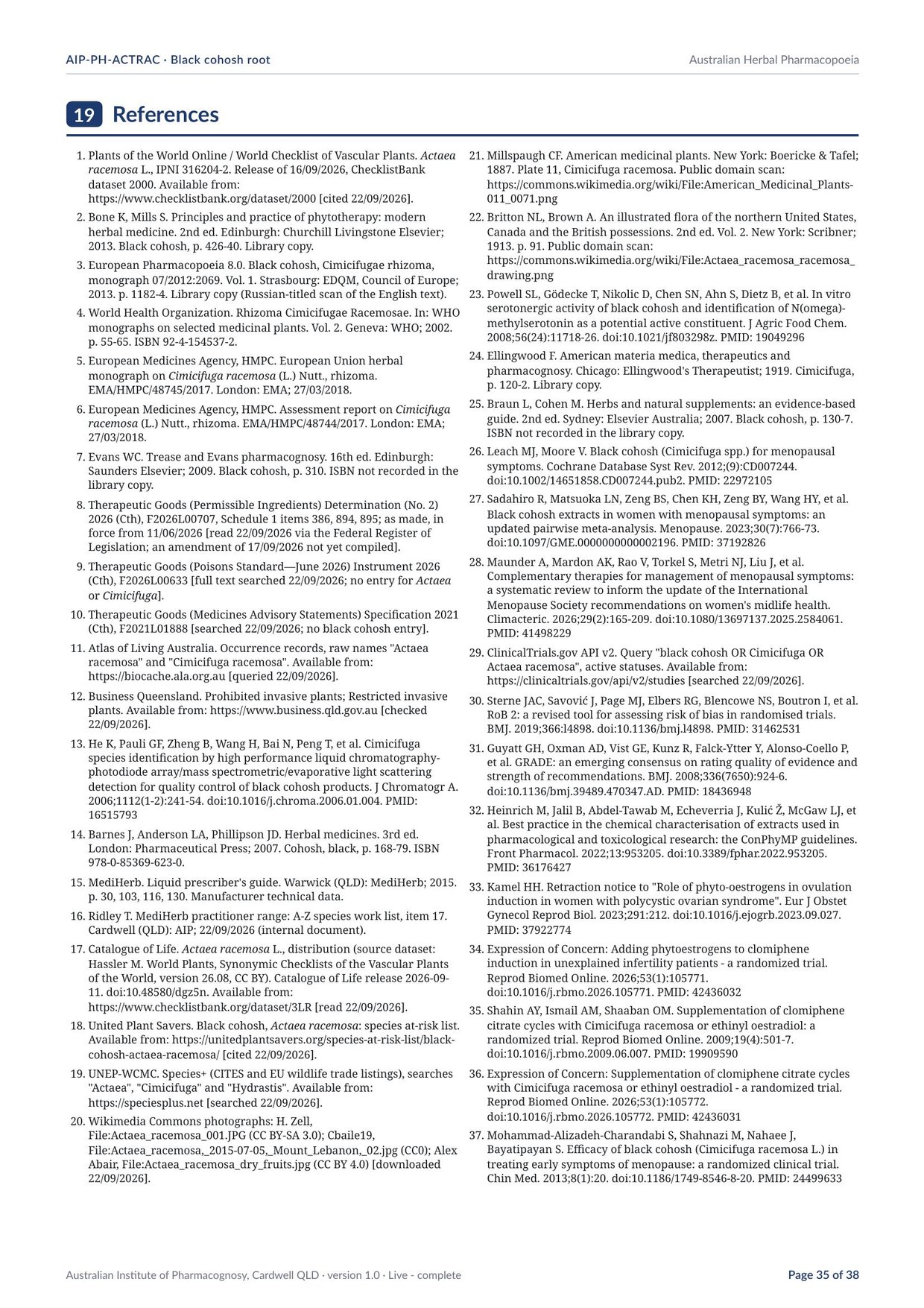
Tap a page to open it big enough to read.
10 pages read at full size, the safety section among them. The pages shown small are in the full monograph.
- 38 pages, read in the AIP Reader
- Version 1.0
- Licence personal, for life, one screen at a time
AUD $20this monograph in full, in the AIP Reader
The preview and the safety section are free, with no account and no sign-in. The microscopy, the chemistry, the TLC and HPLC fingerprints and the rest read in the AIP Reader, on this AUD $20 licence or a Scholar membership.
25 more pages follow · 12,721 words, 22 figures, 15 tables
Still to come in this monograph
- 1. Nomenclature
- 2. Definition
- 3. Source and Australian supply
- 4. Macroscopy
- 5. Microscopy
- 6. Chemistry
- 7. Named markers and assay limits
- 8. TLC fingerprint
- 9. HPLC fingerprint
- 10. Identity, purity, adulterants and contaminants
- 11. Traditional use
- 12. Current practice: use, preparations and doses
- 13. Clinical evidence
- 14. Pharmacology
- 16. Discussion
- 17. Conclusions
- 18. Research still needed
- 19. References
- 20. Document control
The rest of this monograph reads in the AIP Reader: every page in your name, always the current version, on a Scholar membership or the AUD $20 copy of this one title.
Checking your membership…
Report an error or submit evidence
If something in this monograph is wrong, out of date or missing, tell us and show us the evidence. Every report is logged under the AIP Evidence Charter and assessed on the evidence alone; the outcome is kept on the record, and an upheld report is corrected with a dated notice on this page.
Open the report form
The typeset edition of this monograph, set for print with the plates and chromatograms at full size, is $20 AUD in Publications.