The Australian Institute of Pharmacognosy (formerly the Australian Institute of Ethnobotanical Research) is an independent, not-for-profit research and education institute based in Cardwell, in the wet tropics of far north Queensland.
Pharmacognosy is the scientific study of medicines that come from natural sources, especially plants. Ethnobotany is the study of how people use plants. Our work in pharmacognosy and ethnobotany research looks at three things: the plants themselves, the traditions that have used them, and the evidence behind what is claimed for them.
Our mission is to advance scientific understanding of medicines of botanical origin: what they contain, how they act, and what the evidence says about their use in healthcare. We also study how cultures around the world have used plants for healing, and we respect the rights of the people that knowledge belongs to. We are at an early stage, and this page sets out plainly what we do now and what we plan to do.
Documentation: careful records of plants and the evidence
Good research starts with good records. We document the plants we study so that anyone who follows can check what is known about a plant, and how well it is known.
In the field
The Institute carries out regular plant surveys. Since January 2026 they have covered north Queensland, around Cardwell and the wet tropics; earlier records, from 2023, come from south-east Queensland. Observations are logged on iNaturalist and added to the Institute’s botanical reference library. Identifications made from photographs stay marked provisional until they are confirmed to research grade.
We look, photograph and record. Many native plants are protected in Queensland, and collecting them, especially in national parks and the Wet Tropics World Heritage Area, may need a permit. We ask visitors to our observations map to leave plants where they grow.
In the library
The research library the Institute works from holds 868 catalogued volumes on herbal medicine, ethnobotany, pharmacopoeias and the history of plant use. The Institute has begun a set of plant dossiers, many on wet-tropics species, starting with local plants. Every version of every Institute paper is kept in an archive. A public reading list for the monograph series is planned.
At the bench
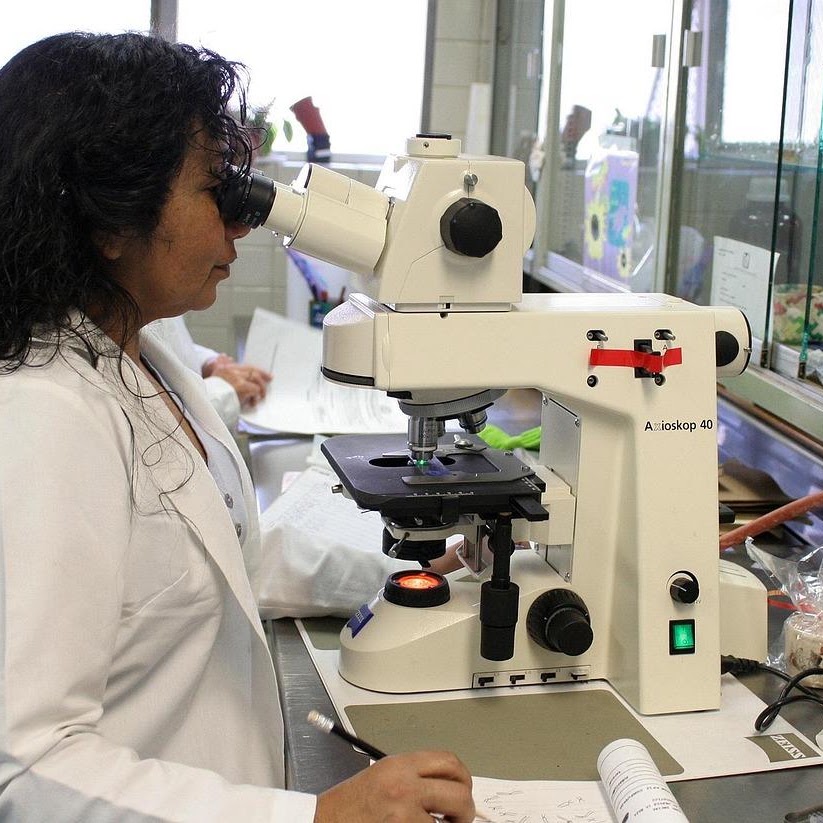
Reference microscopy profiles, compiled from published pharmacopoeial descriptions, are in place for four dried herbs: chamomile, damiana, senna leaf and thyme. The next step is to add laboratory microscopy to specimen records, starting with those four herbs.
The Institute plans to set up thin-layer chromatography (TLC) for routine checks on the identity and quality of plant material. This has not started yet.
The Cardwell laboratory the Institute works with now has an equipment register and written bench-safety rules. Standard operating procedures and calibration of measuring equipment are planned next. The laboratory is privately owned and run by a researcher who holds a Laboratory Charter from the Institute; the Institute has access to it but does not own it or its equipment.
In print, with the evidence labelled
AIP Monographs are public plant profiles, numbered in the order they are published. Every statement in them is labelled with the strength of its evidence, so readers can tell traditional use, laboratory findings and results in people apart. Each monograph ends by setting out where the evidence stops and what research is still needed.
We record traditional use as history and culture. It is not clinical evidence, and we never present it as proof that a plant is safe or effective.
Pharmacognosy is little known outside specialist circles. We want more people to understand it: what the evidence shows, where it stops, and the risks as well as the potential benefits.
The blog
We publish articles and monographs on our blog and plan to post at least one new article each week.
Further monographs will be added here as they are published.
The observations map
Our observations map shows plants of interest recorded during the Institute’s field surveys, drawn from its iNaturalist records. Please look, photograph and leave plants where they grow. Some are protected, and some are poisonous.
The newsletter
Occasional news of new research, monographs, field work and events. You can unsubscribe at any time. Subscribe to the newsletter.
Workshops and talks (planned)
The Institute’s Strategic Plan 2025–2029 includes workshops, seminars and public education. None is scheduled yet. Newsletter subscribers will hear first.
How we write about plants. Every claim we publish is labelled with the strength of its evidence. Traditional use and laboratory results do not show that a plant is safe or effective in people. Our publications are general education, not personal health advice. Before using any herb, or if you take a prescription medicine, consult a degree-qualified herbalist with competencies and adequate training in pharmacognosy. In an emergency call 000; for poisoning call the Poisons Information Centre on 13 11 26. See our Health Information Disclaimer.
No single institute can study the world’s medicinal plants alone. The purposes in our Constitution include collaborating with universities, research institutions, healthcare providers and traditional knowledge holders, and fostering international cooperation in pharmacognosy research. These are aims. The Institute has no partnerships in place yet, and this page will say so until it does.
Researchers and institutions
We intend to explore research partnerships with universities and other research institutions and, where appropriate, to formalise them through memoranda of understanding or research agreements. If you work on botanical drugs, ethnobotany or phytochemistry and would like to discuss working with the Institute, please get in touch through our contact form.
Traditional knowledge holders
Much of what is known about medicinal plants is held by Indigenous peoples, including Aboriginal and Torres Strait Islander peoples, who have known and cared for the plants of this continent for many thousands of years. That knowledge belongs to its custodians, and the same principle applies to traditional knowledge from other countries.
Under its Constitution, the Institute is committed to protecting, preserving and properly acknowledging traditional knowledge of medicinal plants. In practice:
we will not seek, record or use traditional knowledge from Aboriginal and Torres Strait Islander peoples or other Indigenous communities without the free, prior and informed consent of its custodians;
where we write about traditional use that is already in published sources, we cite those sources and acknowledge the peoples it comes from;
where custodians share knowledge with us, we will agree with them how any benefits are shared; and
we welcome contact from Traditional Owners and Indigenous organisations about anything we publish, and we will listen and respond to their concerns.
The Institute acknowledges the Girramay People, Traditional Owners of the land in and around Cardwell, and pays respect to Elders past and present. Read our Acknowledgement of Country.
Our local community
The Institute is recruiting further board members, including independent members, as the next step towards incorporation and charity registration. If you would like to be considered, please get in touch.
The Institute is small. Much of its day-to-day work, including records, literature review and drafting, is carried out on systems built in-house and organised into departments. The departments named on this site are run on the Institute’s in-house systems. The Institute is responsible for everything it publishes.
How we are governed
The Institute operates on a not-for-profit basis under its Constitution, adopted by special resolution on 17 May 2025. The Constitution requires the Institute’s income and property to be applied only to its purposes. Its priorities are set out in the Strategic Plan 2025–2029, and its governance policies are published under Legal & Governance.
Our status. The Australian Institute of Pharmacognosy is an unincorporated not-for-profit body (ABN 80 473 856 173). It is not registered with the Australian Charities and Not-for-profits Commission and is not a Deductible Gift Recipient, so gifts to it are not tax-deductible. It is not accepting donations at present. The Institute is working towards incorporation, charity registration and, after that, Deductible Gift Recipient endorsement; those decisions rest with the regulators. See Legal Status and Fundraising.
Get involved
Stay informed
Subscribe to our newsletter for occasional news of new research, monographs, field work and events.