

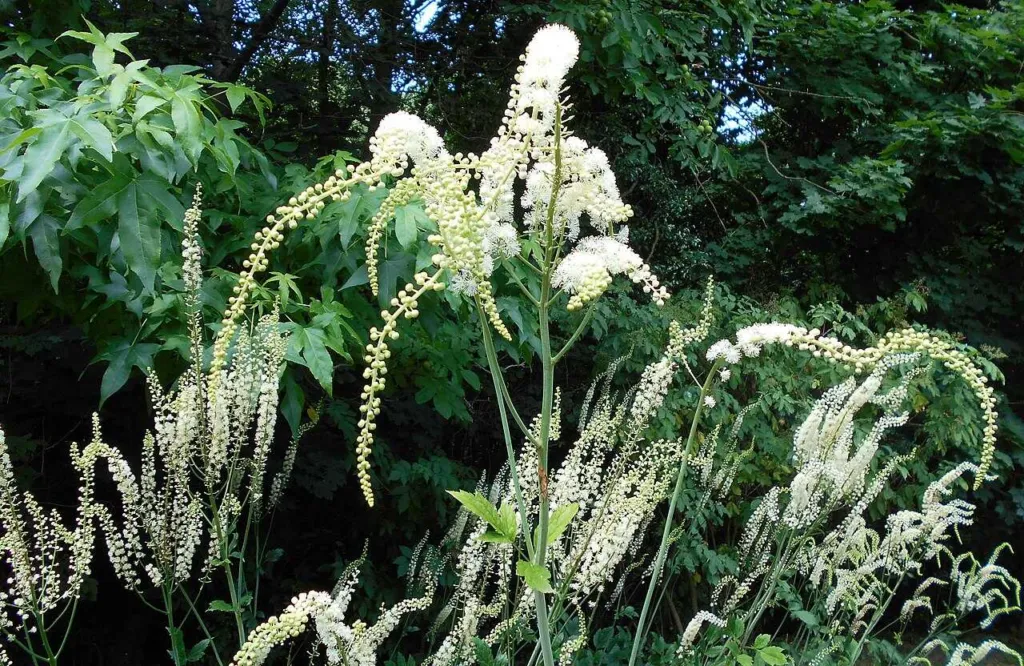
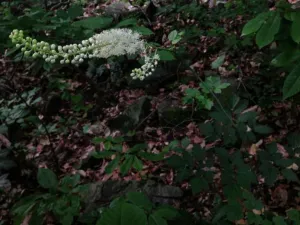
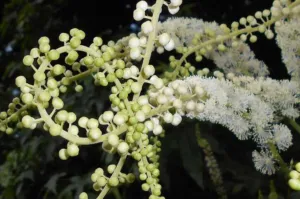
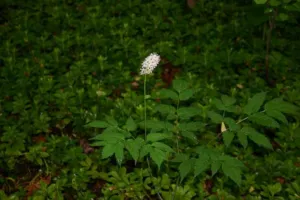
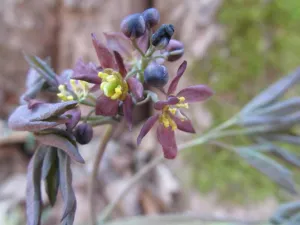
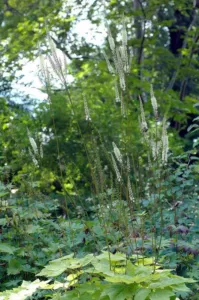
Cover: Actaea racemosa in flower at the botanical garden of Maria Curie-Skłodowska University, Lublin. Photo: Salicyna · CC BY-SA 4.0 · Wikimedia Commons
Of 59 black cohosh entries on the Australian register, 54 are blends. Attested The trials that found a modest benefit for hot flushes tested single, named European extracts. Confirmed And overseas surveys keep finding that a large share of material sold as black cohosh is another plant. Evidence suggests
This is AIP Literature Review and Critical Analysis AIP-LR-ACTRAC in the Australian Institute of Pharmacognosy’s series of literature reviews and critical analyses. It covers Actaea racemosa L., the North American root sold in Australia as black cohosh: why it has two Latin names, its botany and its long medicinal record in North America and Europe, its chemistry, why it contains no hormones, what the trials and systematic reviews found for hot flushes and what they say about perimenopause, what is actually in the 59 products on the Australian register and why blends cannot borrow single-extract evidence, the liver warning and the case record behind it, substitution with Asian Actaea species, and a practical guide to the species, extract and dose on an Australian label.
This article is educational. It is not medical, legal or regulatory advice, and it is not an advertisement. The two products it names are named only for what their public ARTG records say; nothing here recommends or discourages any product. The Institute has no commercial interest in black cohosh.
1. The liver. Rare liver injury, including liver failure, has been reported with black cohosh, and Australian law requires a label warning. If yellowing of the skin or eyes, dark urine, nausea, vomiting, unusual tiredness, weakness, abdominal pain or loss of appetite appears, stop the product the same day and get medical care promptly. Attested
2. Who should avoid it. Women who are pregnant or breastfeeding, where the EU monograph does not recommend it, and anyone allergic to it; in the Institute’s view, also anyone under 18 and people with existing liver disease (the EU monograph asks for caution with a liver history). Pregnancy is still possible in perimenopause, and the EU monograph advises women who could conceive to consider effective contraception while taking it (EU herbal monograph 2018). Attested
3. Breast cancer, hormone therapy and other medicines. With a history of breast or another hormone-dependent cancer, while on tamoxifen, an aromatase inhibitor or hormone therapy, or with a statin or several regular medicines, consult a degree-qualified herbalist with competencies and adequate training in pharmacognosy first. Evidence suggests
4. Check the species and the blend. Look for Actaea racemosa on the label and choose products entered on the ARTG. Substitution with Asian Actaea species has been documented in Australia and overseas, and products bought from overseas websites are often not on the ARTG. In a blend, each partner herb brings its own cautions. Attested
5. Vaginal bleeding. The EU monograph lists vaginal bleeding during use as a reason to seek medical advice (EU herbal monograph 2018). Bleeding after menopause needs prompt medical assessment whatever a woman is taking. Attested
Emergency: call Triple Zero (000). For a suspected poisoning or overdose, call the Poisons Information Centre on 13 11 26 (24 hours, Australia-wide). Report suspected side effects to the TGA (TGA, reporting adverse events). Before taking any botanical drug, consult a degree-qualified herbalist with competencies and adequate training in pharmacognosy.
| Botanical name | Actaea racemosa L. (1753), Ranunculaceae. Synonym Cimicifuga racemosa (L.) Nutt. (1818) Attested §2 |
| Common names | Black cohosh, black snakeroot, bugbane, rattle root, macrotys. Blue cohosh is a different plant Attested §2 |
| Part used | Dried rhizome and root Attested §3 |
| Native range | Eastern North America; mostly wild-harvested Attested §3 |
| In Australia | Not native or naturalised; all supply imported Attested §3 |
| Tradition | Indigenous North American, Eclectic and German use for women’s complaints, rheumatism and nerve pain Traditional §4 |
| Chemistry | Cycloartane triterpene glycosides (actein, 23-epi-26-deoxyactein), phenolic acids, Nω-methylserotonin Confirmed §5 |
| Mechanism | Central serotonin and opioid receptor effects in the laboratory; unconfirmed in people Evidence suggests §6 |
| Hormones? | Contains no hormones; the later studies found no oestrogen-receptor action Evidence suggests §6 |
| Hot flushes | Modest benefit in trials of specific European extracts at about 40 mg of root a day; none for black cohosh pooled, or in two large US trials Evidence suggests §7 |
| Perimenopause | No trial read for this review was designed around perimenopausal women; subgroup results are mixed Attested §7 |
| On the ARTG | 59 entries: 5 single-herb, 54 blends; chaste tree, shatavari, sage, red clover and ashwagandha the commonest partners Attested §8 |
| Liver | Rare idiosyncratic injury possible; probable in a few documented cases; no signal in clinical trials Evidence suggests §9 |
| Breast cancer | Observational studies show no increased risk; no benefit for hot flushes after breast cancer Evidence suggests §9 |
| Substitution | TGA testing in 2001: 35% of Australian products held other species; overseas reviews report about 42% of samples adulterated or mislabelled Attested §10 |
| Australian law | Permitted in listed medicines with mandatory BCOHOSH warning; unscheduled Attested §11 |
| Emergency | Triple Zero (000); Poisons Information Centre 13 11 26 Attested §11 |
- Confirmed Established in humans by trial, or an unambiguous analytical or chemical fact.
- Evidence suggests Real published data, but preclinical, observational, small, inconsistent or not independently replicated.
- Mechanism A plausible mechanistic or pharmacological inference about how something works, short of a measured outcome.
- Traditional Historical or ethnobotanical use. Evidence of practice. Efficacy is a separate question.
- Attested A documentary fact attested in a named record: a legislative instrument, a regulator’s register or report, a taxonomic index, a biodiversity database or a historical text. It states what the record says.
- Unsourced A statement the Institute could not trace to a source it was able to open and read, flagged so no reader mistakes it for a sourced claim.
Every PubMed ID (PMID) below links to its record and was checked against PubMed in October 2026, and every paper cited by PMID was read in full text. Trial reports the Institute could not open in full are cited through the EMA assessment report, the Cochrane review or Bone and Mills, each read in full, and have been requested through the Institute’s library. Every compound was checked against PubChem and is linked by CID. Every Australian regulatory statement was read from the regulator’s or the legislature’s own document or database in October 2026 unless another month is given. European and US material is overseas and does not govern Australia.
The plant. Black cohosh is the root of Actaea racemosa, a woodland plant of eastern North America. Cimicifuga racemosa is an older synonym for the same plant. It contains no hormones, and later studies did not find the oestrogen-like action once claimed for it. Evidence suggests
Hot flushes. The best evidence is for one kind of product: the isopropanolic extract sold in Europe as Remifemin (chapter 8 explains why the Australian register entry cannot confirm the Australian tablet is the same extract), and the Ze 450 extract, at about 40 mg of root a day for 12 weeks. Trials of those found a modest benefit over placebo. Two large independent US trials of other extracts found none, and the Cochrane review, pooling everything, found no clear benefit. In the independent comparisons, hormone therapy relieved hot flushes more. None of the trials read for this review was designed around perimenopausal women. Evidence suggests
What is in the bottle. Of 59 black cohosh entries on the Australian register, 54 are blends, most often with chaste tree, shatavari, sage, red clover or ashwagandha. Trials of a single extract do not describe them. Overseas surveys have found a large share of products sold as black cohosh, around 42 per cent in one review, adulterated or mislabelled, usually with cheaper Asian Actaea species; in 2001 the TGA found other species in 35 per cent of Australian products tested. Attested
The liver. The TGA required a warning in 2006 after reviewing 47 liver cases worldwide, 9 in Australia. A few documented cases are probable; many others are confounded or involved unidentified products, and some products linked to liver reports turned out to contain other species. The clinical trials have shown no liver signal. The reaction is rare and unpredictable, which is why the label says to stop at the first symptom. Evidence suggests
Before taking it. Check the label for Actaea racemosa, the dose and the other ingredients. Avoid it with liver disease, in pregnancy, while breastfeeding and under 18. Vaginal bleeding during use needs prompt medical assessment. With a breast-cancer history, hormone therapy or regular medicines, or for any other question, consult a degree-qualified herbalist with competencies and adequate training in pharmacognosy.
 Chapter 1Perimenopause and a crowded shelf
 Chapter 2Identity and taxonomy
 Chapter 3Botany and Australian status
 Chapter 4Traditional use
 Chapter 5Phytochemistry
 Chapter 6Pharmacology
 Chapter 7Clinical evidence and perimenopause
 Chapter 8Extracts and blends
 Chapter 9Safety and interactions
 Chapter 10What is in the bottle
 Chapter 11Reading the label
 Chapter 12Discussion and research agenda
1. Perimenopause, and a crowded shelf
Perimenopause has become a supplement aisle of its own. The years before the last period, with their irregular cycles, hot flushes, broken sleep and shifting moods, used to be discussed quietly, if at all. In 2026 they are marketed loudly, and black cohosh sits in the middle of the shelf. A keyword search of the Australian Register of Therapeutic Goods (ARTG) for “actaea racemosa”, run by the Institute in October 2026, returned 59 entries, and the Institute opened the public record of every one (ARTG survey, October 2026). Attested Twenty-nine of the 59 carry an ARTG date in 2024, 2025 or 2026, and four have “peri” in the product name (ARTG survey, October 2026). Attested
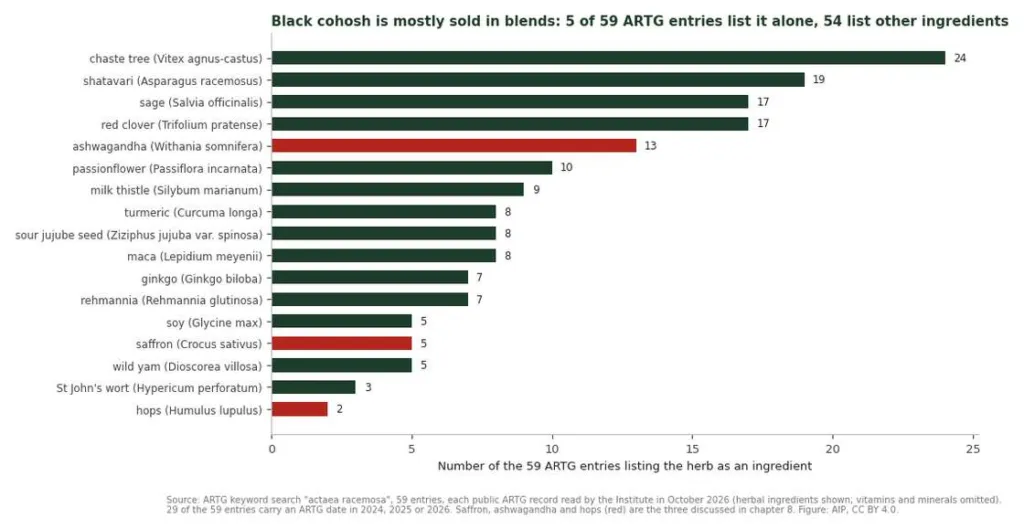
Only five of those entries list black cohosh as the sole ingredient. The other 54 are blends, with a median of seven listed ingredients and as many as 43. The herbs most often paired with black cohosh are chaste tree (24 entries), shatavari (19), sage (17), red clover (17) and ashwagandha (13); saffron appears in five and hops in two (ARTG survey, October 2026). Attested Figure 8 in chapter 8 sets the counts out in full.
The marketing reaches buyers mostly through screens. No Australian study of it was found, but an overseas one gives the flavour. A content analysis of 1,000 Instagram posts under the ten most popular menopause hashtags, collected by a US research team in June 2024, found that 661 promoted branded menopause supplements; 18.3 per cent of those posts were written by credentialed clinicians and the rest by businesses and non-clinicians. Black cohosh and chaste tree were the commonest ingredients, each in six of the 20 most-promoted products, and nine of the 20 used proprietary blends that did not disclose full composition (PMID 41967977). Evidence suggests That study is overseas: it describes what an overseas research team found on Instagram, and it says nothing about Australian regulation or the Australian market.
Turn an Australian black cohosh product over and two messages appear. The front carries an indication such as relief of hot flushes associated with menopause, chosen by the sponsor from the TGA’s list of permitted indications and backed by evidence the sponsor holds (TGA, Listed medicines). Attested The side carries a block of small capitals that begins “In very rare cases, black cohosh has been associated with liver failure”, a warning written into Commonwealth law for every oral medicine containing Actaea racemosa (Permissible Ingredients Determination). Attested Neither message says which plant species is in the tablet, which extract the hot-flush evidence came from, how strong that evidence is, or how often the liver reaction happens.
This review takes those questions in turn. In brief: black cohosh is a North American woodland root with a long record of use by Indigenous nations, nineteenth-century American physicians and twentieth-century German medicine. One kind of extract, at a small daily dose, has the best trial record for hot flushes and sweating, and the trials and pooled analyses still disagree. The herb contains no hormones, and the evidence that it acts like oestrogen has faded. The liver reaction is real enough for regulators on three continents to require a warning and rare enough that no trial has seen it. And a substantial share of material sold as black cohosh around the world has turned out, on testing, to be something else. Each of those points matters when choosing what to put in the basket.
2. Identity and taxonomy: from Cimicifuga to Actaea, and back
Labels, papers and practitioners use two Latin names for this plant, and many readers assume the newer one, Actaea racemosa, is a recent invention. It is the oldest name. Carl Linnaeus described the plant as Actaea racemosa in Species Plantarum in 1753 (volume 1, page 504), and on the same page he named its Asian relative Actaea cimicifuga (IPNI 316204-2). Attested In 1818 Thomas Nuttall moved the American plant into the genus Cimicifuga, making it Cimicifuga racemosa (L.) Nutt., in his Genera of North American Plants (volume 2, page 15) (IPNI 316204-2). Attested For most of the next two centuries that was the name in pharmacopoeias, textbooks and trials.
In 1998 James Compton, Alastair Culham and Stephen Jury published a revision of the group in the journal Taxon, using morphology and DNA sequences, and folded Cimicifuga back into Actaea (IPNI 316204-2; the revision itself is described in Bone and Mills 2013). Attested The World Checklist of Vascular Plants accepts Actaea racemosa L.; Cimicifuga racemosa (L.) Nutt. is a homotypic synonym (AIP-PH-ACTRAC). Attested The European Medicines Agency, the WHO and most trial reports still write Cimicifuga racemosa; the European Pharmacopoeia and the TGA write Actaea racemosa (AIP-PH-ACTRAC). Attested They are the same plant. The family is Ranunculaceae, the buttercup family.
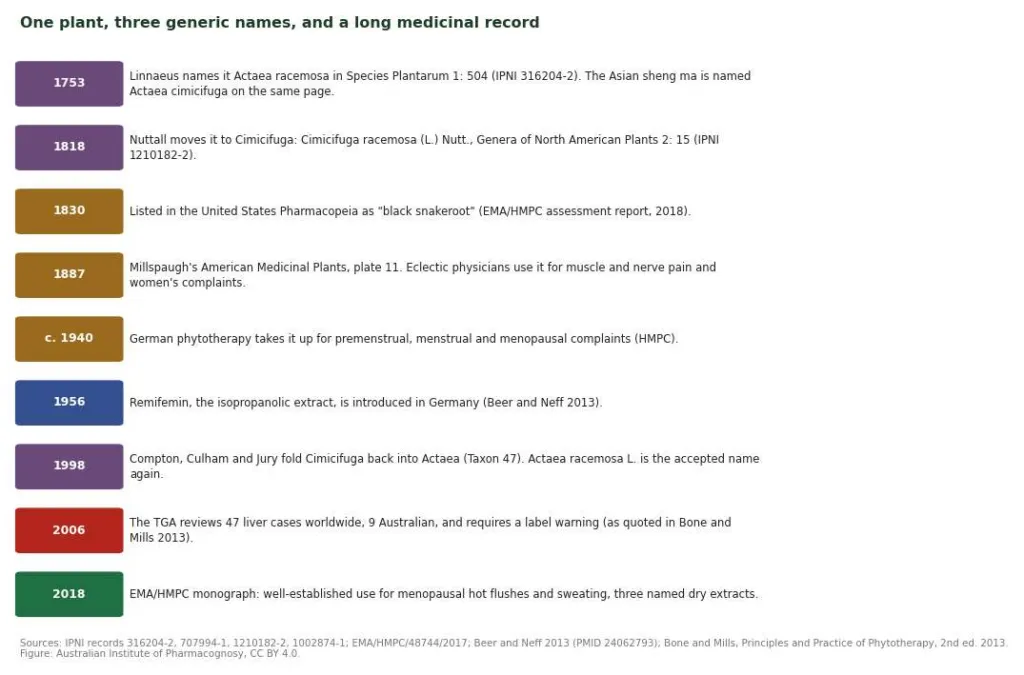
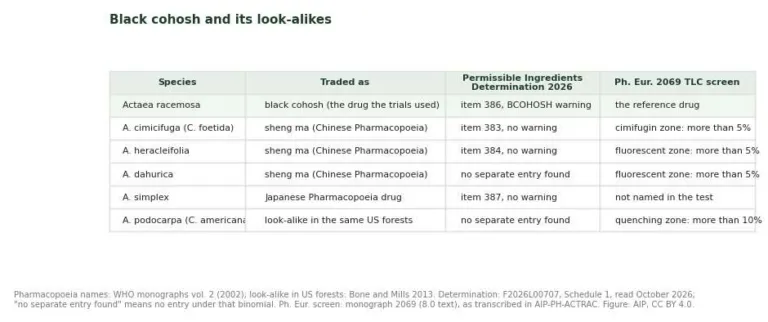
The name change is a practical matter for a shopper for one reason. The drug name Cimicifugae rhizoma belongs to more than one species. In the Chinese Pharmacopoeia it means the rhizome of Actaea cimicifuga (as Cimicifuga foetida), A. heracleifolia or A. dahurica, the herb called sheng ma; the Japanese Pharmacopoeia uses A. simplex and related species (AIP-PH-ACTRAC). Attested A label reading only “Cimicifuga” does not tell you that the plant is the North American species the trials used. Chapter 10 returns to this, because it bears directly on the liver question.
Common names add their own confusion. Black cohosh has also been sold as black snakeroot, bugbane, rattle root and macrotys (AIP-PH-ACTRAC). Attested An older English name in American trade, “squaw root”, is offensive to many people and survives only in old texts (AIP-PH-ACTRAC). Attested Blue cohosh, Caulophyllum thalictroides, is a different plant in a different family (Berberidaceae), with different chemistry and a separate safety record. The shared word “cohosh” is the only thing the two have in common (AIP-PH-ACTRAC). Attested
3. Botany, distribution and Australian status
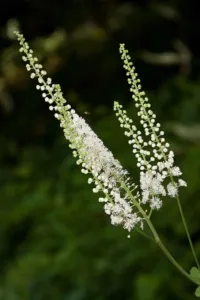
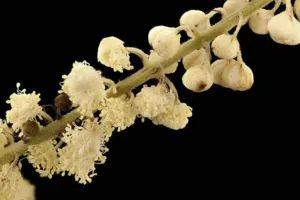
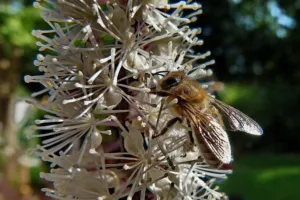
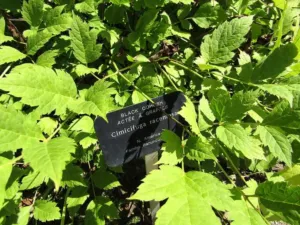
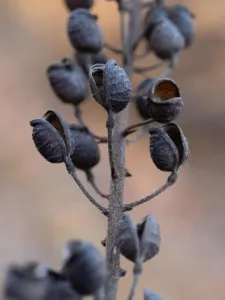
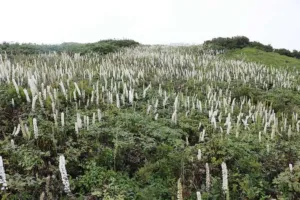
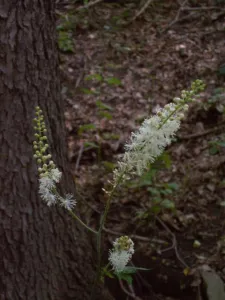
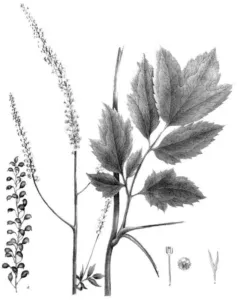
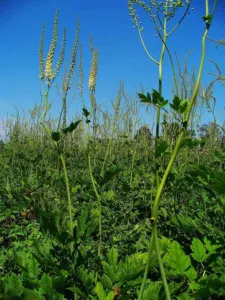
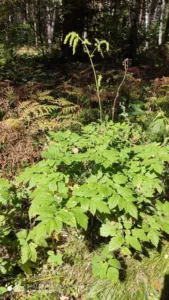
Black cohosh is a perennial herb of eastern North American woodland, 1 to 2.5 m tall in flower, growing from a thick, knotted rhizome (AIP-PH-ACTRAC). Attested In midsummer it sends up long, branched spikes of small white flowers, and what a passer-by notices is a mass of creamy stamens, as the photographs in this review show. The fruits are small dry follicles, pictured at the head of chapter 9. Attested
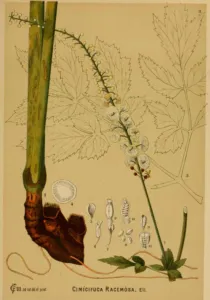
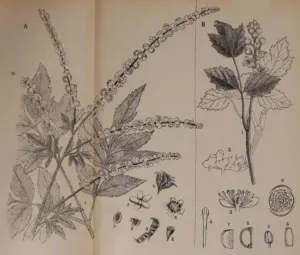
The part used is underground: a dark, knotted, horny rhizome, 1.5 to 2.5 cm thick, with thin brittle roots attached. The European Pharmacopoeia defines the drug as the dried rhizome and root, and requires at least 1.0 per cent triterpene glycosides (AIP-PH-ACTRAC). Attested Millspaugh’s plate of 1887 shows the rhizome at the base of the stem, which is the part the trade digs.
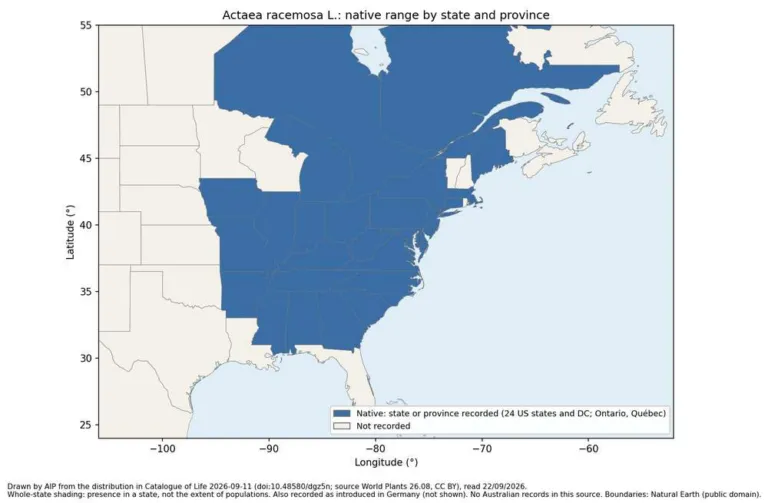
The native range runs from Ontario and Québec south to Georgia and west to Missouri and Arkansas. The Catalogue of Life records it as native in 24 US states and the District of Columbia and in two Canadian provinces (AIP-PH-ACTRAC). Attested Almost the whole world supply is still dug from the wild. United Plant Savers lists black cohosh as “at risk” and estimates that about 97 per cent of a harvest of up to 500,000 pounds of dry root a year is wild-collected, as recorded in the Institute’s pharmacopoeia monograph (AIP-PH-ACTRAC). Attested The species is not listed under CITES (AIP-PH-ACTRAC). Attested
Black cohosh is not native to Australia and has not naturalised here. The Atlas of Living Australia holds 22 herbarium sheets under either name, all collected in the United States, Germany or France or with no origin recorded; none was collected in Australia (Atlas of Living Australia). Attested Neither Actaea nor Cimicifuga appears in the Queensland Biosecurity Act 2014 or its Regulation (Biosecurity Act 2014 (Qld)). Attested Every black cohosh medicine sold in Australia is therefore made from imported root or imported extract.
4. Traditional and historical use
The Institute keeps traditional use separate from clinical evidence throughout this review. This chapter records how people have used the root. It says nothing about whether those uses work.
The root was used by Indigenous nations of eastern North America long before European settlement. The EMA’s assessors and the textbook of Bone and Mills record uses for malaise, kidney complaints, rheumatism, snakebite, nervous complaints and women’s complaints, including as an aid in labour, and the name “rattle snakeroot” reflects the snakebite use (EMA/HMPC assessment report 2018; Bone and Mills 2013). Traditional Neither source names particular nations, and the Institute has not located a primary ethnographic record that does. That gap is a real one, and it is noted again in the discussion.
Settlers took the plant into their own medicine quickly. The United States Pharmacopeia listed it in 1830 as black snakeroot (EMA/HMPC assessment report 2018). Attested It became one of the favourite remedies of the Eclectic physicians of the nineteenth century, who used it for muscular aching and rheumatism, neuralgia, menstrual pain and irregularity, nervous irritability and, controversially, as a “partus preparator” in the last weeks of pregnancy (Bone and Mills 2013). Traditional The Eclectics also recorded what too much did: a bursting frontal headache, dizziness, dimmed vision and nausea, which settled when the dose was stopped (Bone and Mills 2013). Traditional Bone and Mills suggest that some of those early overdose reports may reflect baneberry root mixed into the drug (Bone and Mills 2013). Evidence suggests
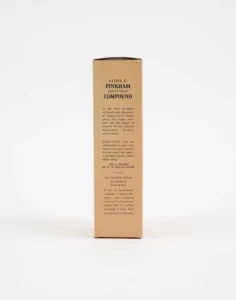
Black cohosh also went into the patent medicines of the period. The box of Lydia E. Pinkham’s Vegetable Compound, a famous American remedy “for menopause and menstruation”, lists Cimicifuga racemosa among several plant extracts (Pinkham packaging). Attested A multi-herb menopause tonic is an old idea, in other words, and older than any trial.
The modern European chapter began in Germany. German phytotherapy took up the root around 1940 for premenstrual, menstrual and menopausal complaints; Commission E covered all three in 1989, and its 1994 revision kept only menopausal symptoms (EMA/HMPC assessment report 2018). Attested Remifemin, an extract made with 40 per cent isopropanol, came onto the German market in 1956 and is the product behind most of the early trials (PMID 24062793). Attested In 2018 the EMA’s herbal committee accepted “well-established use” for three named dry extracts, for “the relief of menopausal complaints such as hot flushes and profuse sweating” (EU herbal monograph 2018). Attested That phrase, “well-established use”, is an EU legal category based on published clinical data. It applies to those three extracts, in Europe. It does not govern Australian products.
The plant is not native here and the Institute knows of no Aboriginal or Torres Strait Islander use.
5. Phytochemistry
The root contains three groups of compounds that matter for this review: triterpene glycosides, phenolic acids and their esters, and small amounts of nitrogen-containing compounds.
The triterpene glycosides are the signature group. They are 9,19-cycloartane triterpenes with a sugar (xylose or arabinose) attached, and more than twenty are known. The names readers meet most often are actein, 23-epi-26-deoxyactein (once called 27-deoxyactein), cimicifugoside and the cimiracemosides, with cimigenol as the aglycone of one series (AIP-PH-ACTRAC). Confirmed Total triterpene glycosides is what the European Pharmacopoeia measures in its assay, and actein and 23-epi-26-deoxyactein are its identity markers on thin-layer chromatography (AIP-PH-ACTRAC). Confirmed A 2026 open-access study that ran the pharmacopoeial HPLC method on cultivated rhizomes found that three malonylated glycosides present in the fresh drug run alongside the pharmacopoeial peaks, so the figure a laboratory reports depends on which peaks it counts: 1.56 and 1.49 per cent in two lots by the pharmacopoeial peak selection, 2.49 and 2.61 per cent with the malonylated compounds included (PMID 42588776). Confirmed
The phenolic group includes isoferulic and ferulic acids and esters of fukiic and piscidic acid, among them fukinolic acid and the cimicifugic acids (AIP-PH-ACTRAC). Confirmed The nitrogen compounds include Nω-methylserotonin, which binds serotonin receptors in cell assays (PMID 19049296). Evidence suggests
Two compounds are shown here for what they reveal about quality and history. Cimifugin is a chromone found in the Asian species and absent from authentic black cohosh; the European Pharmacopoeia uses it to detect substitution (PMID 16515793; AIP-PH-ACTRAC). Confirmed Formononetin, an isoflavone, was reported in early work and underpinned the idea that black cohosh is a plant oestrogen. Most later analyses of authenticated root and rhizome did not find it (PMID 16515793; AIP-PH-ACTRAC). Confirmed Its disappearance from the chemistry is one reason the oestrogen explanation lost ground (chapter 6).
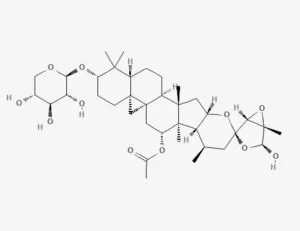
C37H56O11 · triterpene glycoside; pharmacopoeial identity marker
PubChem CID 10032468 · structure image: PubChem, public domain
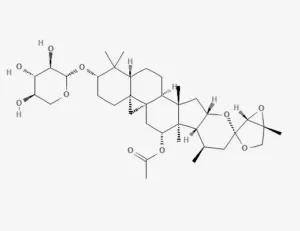
C37H56O10 · identity marker; measured in the only human PK study
PubChem CID 21668683 · structure image: PubChem, public domain
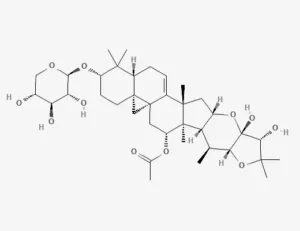
C37H56O11 · one of the cimiracemosides in the assay sum
PubChem CID 21606551 · structure image: PubChem, public domain
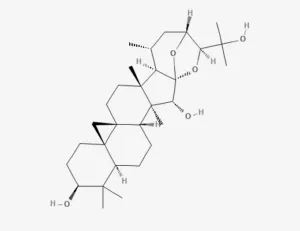
C30H48O5 · aglycone of a glycoside series
PubChem CID 16020000 · structure image: PubChem, public domain
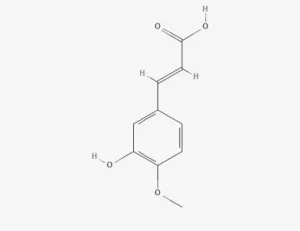
C10H10O4 · phenolic acid
PubChem CID 736186 · structure image: PubChem, public domain
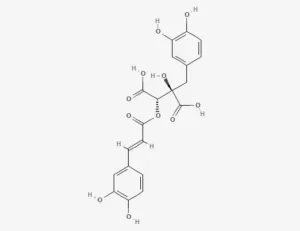
C20H18O11 · phenolic ester
PubChem CID 6441059 · structure image: PubChem, public domain
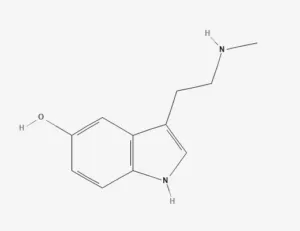
C11H14N2O · binds serotonin receptors in cell assays
PubChem CID 150885 · structure image: PubChem, public domain
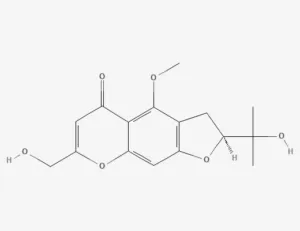
C16H18O6 · chromone of the Asian species; marks substitution
PubChem CID 441960 · structure image: PubChem, public domain
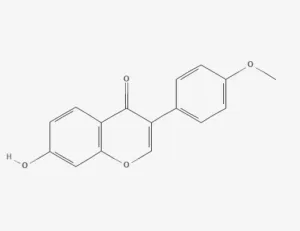
C16H12O4 · isoflavone reported early; later work did not find it
PubChem CID 5280378 · structure image: PubChem, public domain
Nine constituents of the black cohosh rhizome. Cimifugin marks the Asian substitutes; formononetin was reported early and not found in later work. Every CID was checked against PubChem in October 2026; the depictions are PubChem’s own (US National Library of Medicine, public domain), background whitened by the Institute.
No single constituent has been shown to carry the clinical effect. The EMA’s assessors state that “neither the mechanism of action nor the constituents relevant for the improvement of menopausal complaints are known”, and treat the whole extract as the active substance (EMA/HMPC assessment report 2018). Attested For a shopper this has one consequence: no marker compound on a label can tell you whether the product behaves like the extract in a trial. The extraction solvent, the ratio of root to extract and the dose all change what ends up in the tablet.
6. Pharmacology: how it might work
Everything in this chapter comes from cell cultures, animals or very small human studies. None of it is evidence that black cohosh relieves symptoms.
No hormones, and no phytoestrogen in the usual sense
Black cohosh contains no hormones: the constituent groups identified in the root are triterpene glycosides, phenolic acids and a few nitrogen compounds, and none of them is a steroid hormone (AIP-PH-ACTRAC). Confirmed The word “phytoestrogen” usually means a plant compound, such as the isoflavones of soy, that binds the body’s oestrogen receptors and acts as a weak oestrogen. Black cohosh was once placed in that group, largely because early analyses reported the isoflavone formononetin in the root. Most later analyses of authenticated root found none (chapter 5), and the receptor studies described below did not confirm oestrogen-like binding (PMID 16515793; EMA/HMPC assessment report 2018). Evidence suggests Marketing that calls black cohosh a “natural oestrogen” is therefore out of step with the current evidence. The overseas Instagram study in chapter 1 found the phrase “natural oestrogen” in supplement posts by self-described homeopaths (PMID 41967977). Attested
The oestrogen hypothesis, and why it faded
Early experiments in the 1980s found fractions of the root binding to oestrogen receptors in rat uterus and lowering luteinising hormone in ovariectomised rats after injection, as summarised by the EMA (EMA/HMPC assessment report 2018). Evidence suggests Later work did not confirm direct receptor binding. The ethanolic extract BNO 1055 showed no binding to either human oestrogen receptor, and other extracts failed to bind the receptors in breast-cancer cell lines (EMA/HMPC assessment report 2018; Bone and Mills 2013). Evidence suggests In rats, extracts did not enlarge the uterus (EMA/HMPC assessment report 2018). Evidence suggests A 90-day US National Toxicology Program study of an ethanolic extract in rats and mice found no oestrogenic effects (PMID 22687605). Evidence suggests In women, 24 weeks of the isopropanolic extract left FSH, LH, prolactin and oestradiol unchanged (EMA/HMPC assessment report 2018). Confirmed The EMA’s committee concluded that the data “suggest that CR does not have an oestrogenic effect mediated through the oestrogen receptor” (EMA/HMPC assessment report 2018). Attested This matters for anyone reading a blend label. In one of the rat studies the EMA reviewed, the oestrogen-like comparison was a soy extract containing the isoflavones genistein and daidzein (EMA/HMPC assessment report 2018); Attested soy appears in five of the Australian black cohosh blends (ARTG survey, October 2026), Attested and in a blend like that the isoflavones and the black cohosh are two different kinds of ingredient. Mechanism
Brain chemistry
Attention moved to the brain. Extracts act at serotonin receptors in cell assays, and Nω-methylserotonin has been identified as one constituent responsible (PMID 19049296). Evidence suggests An extract behaved as a mixed competitive ligand and partial agonist at the human μ-opioid receptor (PMID 17177511). Evidence suggests Dopamine-receptor activity has also been reported (EMA/HMPC assessment report 2018). Evidence suggests Hot flushes are generated in the hypothalamus, where serotonin, noradrenaline and opioid signalling help set the thermoregulatory zone, so these findings give a plausible route to an effect. Mechanism The EMA notes that it “remains to be clarified” whether the relevant compounds reach the brain in people (EMA/HMPC assessment report 2018). Attested
How much reaches the blood
Only one human pharmacokinetic study exists. Fifteen postmenopausal women took single doses of a standardised extract containing up to 5.6 mg of 23-epi-26-deoxyactein; peak serum levels were 2.2 to 12.4 ng/mL, the half-life about two hours, and almost none appeared in urine (PMID 20032972). Confirmed Many of the receptor and cell effects were seen at microgram-per-millilitre concentrations of whole extract (AIP-PH-ACTRAC). Attested Whether such levels of any active constituent are reached in the body at a 40 mg daily dose is unknown, and probably unlikely. Mechanism
7. Clinical evidence: hot flushes, perimenopause and other symptoms
The Institute’s pharmacognostic monograph on black cohosh root sets out the trial record in full, with a provisional risk-of-bias call on each study (AIP-PH-ACTRAC). This chapter gives the parts a reader needs to judge the claim on the box. Several trial reports sit behind publisher paywalls; where the Institute could not read a report in full, the result is cited from the EMA assessment report, the Cochrane review or Bone and Mills, each of which the Institute has read in full.
The placebo-controlled trials
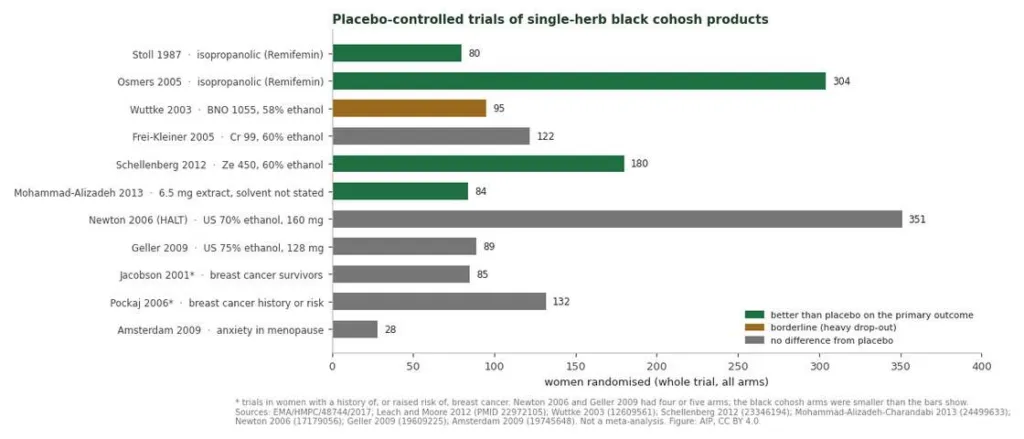
Eleven placebo-controlled trials of single-herb black cohosh products in menopausal women are summarised in Figure 3. The picture divides by product.
The isopropanolic extract (Remifemin, 40 per cent isopropanol, about 40 mg of root a day) has two placebo-controlled trials. The larger, Osmers and colleagues in 2005, enrolled 304 postmenopausal German women for 12 weeks. The total Menopause Rating Scale improved more on the extract than on placebo (p = 0.01), the effect was larger in women early in menopause, and the hot-flush subscore improved (p = 0.007), with no clinically relevant change in liver tests (EMA/HMPC assessment report 2018). Confirmed The EMA’s own table records the improvement over placebo on the MRS I score as 0.03 to 0.05 units (EMA/HMPC assessment report 2018). Confirmed The older Stoll trial of 1987, in 80 women, also favoured the extract (EMA/HMPC assessment report 2018). Evidence suggests
The European ethanolic extracts give mixed results. Ze 450 (60 per cent ethanol) beat placebo at both 40 and 80 mg of root a day in 180 women over 12 weeks (PMID 23346194). Confirmed BNO 1055 (58 per cent ethanol) was reported equal to conjugated oestrogens and better than placebo, but 33 of the 95 women randomised were excluded from the analysis for protocol violations and the EMA judged the placebo difference “just below” significance (PMID 12609561; EMA/HMPC assessment report 2018). Evidence suggests Cr 99 (60 per cent ethanol) showed no significant difference overall in 122 women (EMA/HMPC assessment report 2018). Confirmed A trial in 84 Iranian women using a 6.5 mg extract, solvent not stated, found improvement on the Greene scale over eight weeks (PMID 24499633). Evidence suggests
The US extracts, tested at higher doses by independent investigators, did not beat placebo. The HALT study enrolled 351 women for a year; its black cohosh arm (160 mg a day of a 70 per cent ethanol extract) did no better than placebo for the frequency or intensity of hot flushes, while hormone therapy cut them by about four a day (PMID 17179056). Confirmed Geller and colleagues, with a vouchered and chemically authenticated 128 mg extract, saw hot flushes fall 34 per cent on black cohosh and 63 per cent on placebo over a year (PMID 19609225). Confirmed
The placebo figure in that last trial is worth a pause. Hot flushes respond strongly to placebo in every menopause trial, often by a third or more, and they also ease with time. Any product will appear to “work” for many women who try it, which is why only placebo-controlled trials can answer the question (PMID 19609225; PMID 17179056). Confirmed
What the trials say about perimenopause
Most black cohosh trials enrolled women who were already postmenopausal, or mixed peri- and postmenopausal women in one group. That is a problem for a product sold for perimenopause. The EMA’s assessors explain why: postmenopausal women are the only group that can be precisely defined (no period for more than 12 months, FSH above 40 U/L), while for pre- and perimenopause “a precise definition is difficult”, so they asked for the groups to be studied separately and wrote that “the whole transition period has to be investigated carefully” (EMA/HMPC assessment report 2018). Attested
The subgroup results that exist point in different directions. In the Ze 450 trial, only the higher dose (80 mg of root a day) beat placebo in the women classed as premenopausal, while the lower dose worked in the early and late postmenopausal groups (EMA/HMPC assessment report 2018; PMID 23346194). Evidence suggests In the Cr 99 trial, which missed its main result, the EMA’s table records a significant difference in the perimenopausal subgroup (EMA/HMPC assessment report 2018). Evidence suggests In the Osmers trial, which enrolled only postmenopausal women, the EMA records better efficacy in early menopause (EMA/HMPC assessment report 2018). Evidence suggests Subgroup findings like these are hypotheses for a new trial. None of the black cohosh trials read for this review was designed around perimenopausal women as its main population. Attested
What the reviews concluded
The 2012 Cochrane review pooled 16 trials (2,027 women) of black cohosh alone and found no significant difference from placebo in hot-flush frequency (3 trials, 393 women) or in menopausal symptom scores (4 trials, 357 women). Its authors concluded that there was “insufficient evidence to support the use of black cohosh for menopausal symptoms” while judging further study justified (PMID 22972105). Confirmed Three of the four trials pooled for symptom scores used US or unspecified extracts, and one was an anxiety trial, a point the EMA’s assessors and the makers of the European extracts both raised (EMA/HMPC assessment report 2018). Attested
Beer and Neff in 2013 were the first to sort the evidence by extract, and found the best support for the isopropanolic extract, exploratory evidence for BNO 1055 and three other European products, and none for three US products (PMID 24062793). Evidence suggests One of its authors disclosed a congress lecture supported by Schaper & Brümmer, the maker of the isopropanolic extract, which a reader should weigh. A 2023 meta-analysis of 22 articles (2,310 women), mixing single-herb and combination products, found moderate overall benefit on menopausal symptoms and a smaller one on hot flushes, with no significant effect on anxiety (PMID 37192826). Evidence suggests The 2026 systematic review written to inform the International Menopause Society’s recommendations rated the evidence for black cohosh in hot flushes and menopausal symptoms as moderate certainty, while adding that the overall evidence “remains limited” (PMID 41498229). Evidence suggests A second 2026 review of non-soy herbal supplements found three of four black cohosh trials positive and judged the doses and scales too varied to support a recommendation (PMID 42451042). Evidence suggests A third 2026 systematic review, on efficacy and safety, has been requested through the Institute’s library and is not described here until it has been read in full.
Read together, the reviews are less contradictory than their headlines. A pooled null and a product-specific modest benefit can both be true, if some products work and others do not. The Institute’s reading is that the isopropanolic and Ze 450 extracts at about 40 to 80 mg of root a day have reasonable evidence of a modest effect on hot flushes and overall menopausal scores; that the evidence for black cohosh as a category is weak; and that in the independent US trials hormone therapy reduced hot flushes much more than black cohosh did. Evidence suggests
What users report
Trials are one kind of evidence; the experience of the women who use the herb is another, and it deserves a hearing. A German pharmacy database of patient-reported outcomes, collected from 2014 to 2016 and published in 2026, held 220 women who had used single-herb black cohosh medicines for menopausal complaints: 33.6 per cent rated the benefit “very good” and 46.8 per cent “moderate to distinct”, and 5.5 per cent noticed no change (PMID 41937616). Evidence suggests Black cohosh was also the herb with the most reports of tolerability problems that affected daily life in that database, though such reports were rare overall and black cohosh was also the herb most used (PMID 41937616). Evidence suggests The database is owned by Kooperation Phytopharmaka, a German scientific association; one author works for Bayer Consumer Health and that association, and the university authors are funded by the manufacturer Dr. Willmar Schwabe, as the paper states (PMID 41937616). Attested These are uncontrolled reports from regulated German products, open to the same placebo response and natural easing seen in the trials. They show that many women value the herb. They cannot show how much of the benefit the herb itself provides.
Other questions
For hot flushes after breast cancer, two placebo-controlled trials (85 and 132 women) found no benefit over placebo (EMA/HMPC assessment report 2018; PMID 22972105). Confirmed For anxiety in menopause, one small trial (28 women) found none (PMID 19745648). Confirmed Two Egyptian trials of black cohosh added to clomiphene for fertility, once cited as positive, now carry 2026 Expressions of Concern from the publisher, which questions whether the two trials could have run concurrently at the same institution as reported and notes inconsistent results between them (PMID 42436032; PMID 42436031); a related trial of phyto-oestrogens in polycystic ovary syndrome by another author was retracted in 2023 (PMID 37922774). Attested The Institute does not count either fertility trial as evidence while those concerns stand. Uses for period pain, premenstrual symptoms and rheumatic pain rest on tradition alone. Traditional
8. Extracts and blends: why a perimenopause formula cannot borrow the evidence
Every positive trial in chapter 7 tested a named extract made in a defined way: a stated solvent (40 per cent isopropanol, or 58 or 60 per cent ethanol), a stated drug-to-extract ratio, and a dose equivalent to roughly 40 mg of dried root a day, given alone (EU herbal monograph 2018). Confirmed Change the solvent and a different mix of compounds comes out of the root. Change the dose and the exposure changes. Add other active herbs and the product is a different medicine. A trial of one extract is evidence for that extract. Mechanism
What is in Australian products
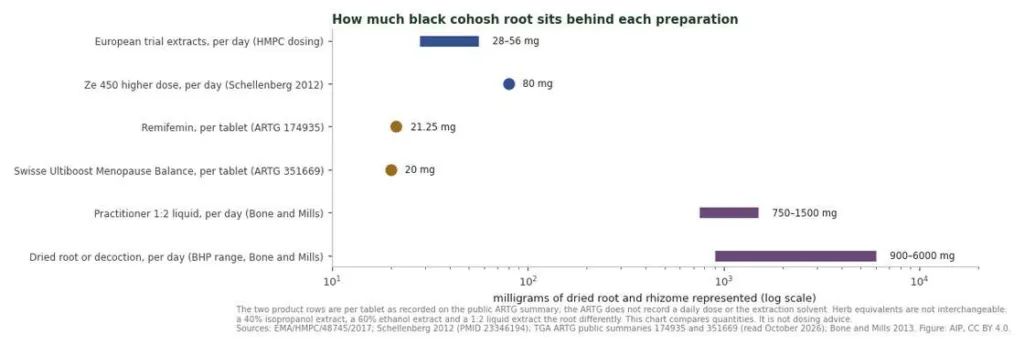
Two Australian products show the range, taken from their public ARTG summaries. Remifemin (AUST L 174935, sponsor Aspen Pharmacare Australia) lists a single active ingredient: Actaea racemosa rhizome extract dry concentrate 2.5 mg per tablet, equivalent to 21.25 mg of dry rhizome (ARTG 174935). Attested Remifemin is the brand name of the isopropanolic extract in the European trials (PMID 24062793); Attested the public ARTG summary does not record the extraction solvent, so the Institute cannot confirm from the register alone that the Australian tablet is the identical extract. Attested Swisse Ultiboost Menopause Balance (AUST L 351669, sponsor Swisse Wellness) lists Actaea racemosa root and rhizome extract 4 mg per tablet, equivalent to 20 mg of dry root and rhizome, together with soy (Glycine max) seed extract equivalent to 13.8 g of dry seed, sage (Salvia officinalis) leaf extract equivalent to 1.3 g of dry leaf, calcium and vitamin D (ARTG 351669). Attested No trial in this review tested that combination. Attested
Those two sit at either end of a long list. Of the 59 entries the Institute read, 54 are blends (ARTG survey, October 2026). Attested Chaste tree, shatavari, sage and red clover lead the partner herbs; ashwagandha appears in 13 entries, passionflower in 10, milk thistle in 9, and turmeric, maca and sour jujube seed in 8 each. Saffron is in 5 of the 59 entries and hops in 2, both hops entries also containing saffron (ARTG survey, October 2026). Attested In the overseas Instagram study, saffron was an ingredient in two of the 20 most-promoted menopause products and ashwagandha in several more (PMID 41967977). Attested The Institute has published separate reviews of ashwagandha, turmeric and sour jujube seed, and each partner herb has a literature of its own that this review does not assess.
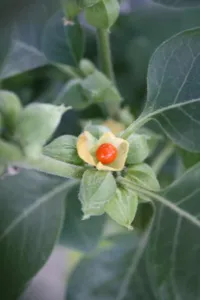
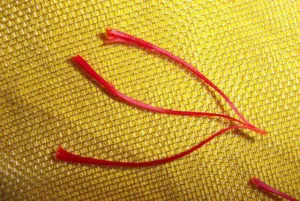
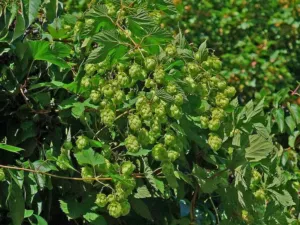
Saffron, ashwagandha and hops
Ashwagandha, saffron and hops show how a blend changes the question. Ashwagandha root has trials of its own in stress and sleep, and a record of rare liver injury that the TGA addressed in a 2024 safety advisory and a 2026 update; Australian law requires no liver warning on its label, and its only mandated warning concerns pregnancy, with an exemption that covers most root extracts. The Institute’s ashwagandha review sets that record out (AIP review of ashwagandha). Attested A capsule that combines ashwagandha and black cohosh therefore holds two herbs with rare liver reports, only one of which is named in a liver warning on the box. Attested Saffron and hops have their own pharmacology and their own trial records, which the Institute has not reviewed here. On the Australian register they are minor partners, present in five of the 59 entries between them (ARTG survey, October 2026). Attested
What a blend study looks like
Blends can be tested, and occasionally are. A 2025 study from India gave 30 perimenopausal women aged 40 to 48 a daily capsule of ashwagandha extract (300 mg), chaste tree extract (50 mg), soy extract standardised to 40 per cent isoflavones (50 mg), black cohosh root extract (30 mg), magnesium and vitamins for 60 days. Menopause Rating Scale scores fell from 39 to 2.7, and 93 per cent of the women reported that their hot flushes had resolved (PMID 40677428). Evidence suggests The study had no placebo or control group, a limitation its authors acknowledge, and it was funded by the company that markets the capsule (PMID 40677428). Attested Set beside the placebo responses in chapter 7, a 93 per cent resolution of hot flushes over two months, with nothing to compare it against, cannot separate the capsule from placebo, time and the natural course of perimenopause. It is evidence about that capsule, and a reason for a proper trial. Evidence suggests A placebo-controlled trial of a combination of black cohosh, soy isoflavones and SDG lignans was published in 2025; the Institute has requested the full report and does not describe it here until it has been read.
The opposite gap: practitioner doses
None of this means a blend is ineffective or unsafe. Its other ingredients may have evidence of their own, which this review has not assessed. The blend’s evidence has to come from trials of the blend. The hot-flush indication on a listed blend is the sponsor’s choice from the TGA’s permitted list, backed by evidence the sponsor holds and the TGA does not assess before listing (TGA, Listed medicines). Attested The largest combination trial reported by Bone and Mills, black cohosh with St John’s wort in 301 women, improved menopausal and depression scores against placebo (Bone and Mills 2013). Evidence suggests That result belongs to that combination, and St John’s wort brings its own long list of drug interactions.
The other gap runs the opposite way. Bone and Mills give the typical dose used by Western herbalists, including in Australia, as 1.5 to 3 mL a day of a 1:2 liquid extract, which represents 750 to 1,500 mg of root (Bone and Mills 2013); the Australian practitioner liquid is made in 60 per cent ethanol (AIP-PH-ACTRAC). Attested That is roughly 19 to 38 times the root equivalent of the trial extracts, made with a different solvent. No trial has tested it, for efficacy or for safety (AIP-PH-ACTRAC). Attested Practitioners who use it are relying on traditional experience and on the general pharmacology, and should say so to their patients.
9. Safety and interactions
In trials black cohosh is well tolerated. In trials that treated more than 6,300 participants the EMA’s assessors found an acceptable safety profile, and the EU monograph lists mostly mild adverse effects: stomach upset, rashes and other allergic skin reactions, and swelling of the face or ankles, with frequency not known (EMA/HMPC assessment report 2018; EU herbal monograph 2018). Confirmed Bone and Mills add headache, dizziness, breast tenderness and a heavy feeling in the legs as occasional reports, and link headache to higher doses (Bone and Mills 2013). Evidence suggests A 2022 review of trials and spontaneous reports found no evidence that black cohosh causes weight gain (PMID 34608830). Evidence suggests The EU monograph lists hypersensitivity to the herb as its one contraindication, reports no interactions, and records that no case of overdose has been reported (EU herbal monograph 2018). Attested The question that matters most is the liver.
Why the TGA requires the liver warning
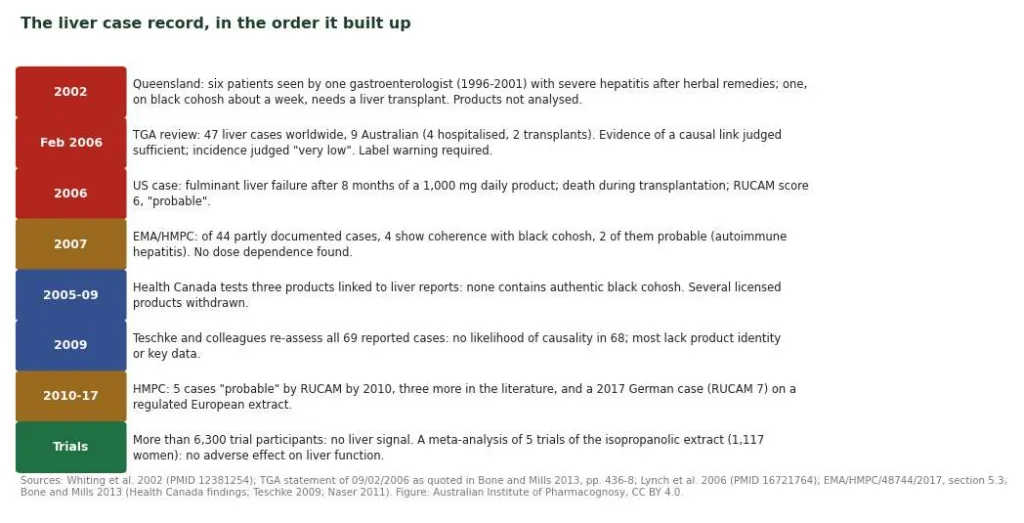
On 9 February 2006 the TGA announced the result of a safety review. At the time there were 47 reports of liver reactions worldwide, 9 of them Australian; in Australia 4 patients had been hospitalised and 2 had needed liver transplants. The TGA acknowledged that some reports were confounded by multiple ingredients, other medicines or other illness, concluded that there was “sufficient evidence of a causal association between Black cohosh and serious hepatitis”, and added that “considering the widespread use of Black cohosh, the incidence of liver reaction appears to be very low” (TGA statement as quoted by Bone and Mills 2013). Attested It required a label warning. The UK medicines regulator required a similar warning that July (Bone and Mills 2013). Attested The Institute could not find the original 2006 statement on the TGA’s website and read it in that textbook quotation. Attested A search in October 2026 found no current TGA review, alert or consultation on black cohosh. Attested
The wording in force today is warning statement BCOHOSH, required by the Therapeutic Goods (Permissible Ingredients) Determination on every oral medicine containing Actaea racemosa, black cohosh dry or black cohosh powder: “Warning: In very rare cases, black cohosh has been associated with liver failure. If you are experiencing yellowing of the skin or whites of the eyes, dark urine, nausea, vomiting, unusual tiredness, weakness, stomach or abdominal pain, and/or loss of appetite, you should stop using this product”, followed by a direction to seek medical care (Permissible Ingredients Determination). Attested The warning is a condition of the ingredient being permitted at all. It applies to every product, single extract or blend, cheap or expensive.
What the case reports show
The first Australian report came from Queensland in 2002. A gastroenterologist described six patients seen between 1996 and 2001 with severe hepatitis after herbal remedies; the most serious, a 47-year-old woman who had taken black cohosh for menopausal symptoms for about a week, needed an urgent liver transplant. The products were not analysed (PMID 12381254). Evidence suggests Bone and Mills record a second Australian transplant case, a woman taking a pharmacist-prescribed mixture of liquid extracts in which black cohosh was 10 per cent with golden seal and ginkgo among other herbs (Bone and Mills 2013). Evidence suggests In the United States in 2006, a 54-year-old woman who had taken a 1,000 mg black cohosh product daily for eight months, and drank two glasses of wine nightly, developed fulminant liver failure and died during transplantation from uncontrollable bleeding (PMID 16721764). Evidence suggests
How sure can anyone be that black cohosh caused these cases? Liver injury from drugs and herbs is diagnosed largely by exclusion, and the standard tool is the RUCAM score (Roussel Uclaf Causality Assessment Method), which weighs timing, other causes, and what happens when the product is stopped or restarted. The EMA’s committee reviewed 44 partly documented cases in 2007 and found 4 coherent with black cohosh, 2 of them “probable” and presenting as autoimmune hepatitis; it found no dose dependence and no known mechanism (EMA/HMPC assessment report 2018). Attested By 2010 five cases had been assessed as probable, three more appeared in the literature in 2013 and 2014, and in 2017 a German report described toxic hepatitis, RUCAM score 7, in a woman taking one of the regulated European extracts at the standard dose (EMA/HMPC assessment report 2018). Attested Teschke and colleagues, working the other way, re-assessed all 69 cases reported by 2009 and found no likelihood of causality in 68, most being confounded or missing basic information, often including what the product was (Bone and Mills 2013). Evidence suggests A 2025 toxicology review from scientists at the US National Center for Toxicological Research reached a similar balance: causality is weak in most assessed cases, deliberate rechallenge is not possible because of the risk to patients, and regulators have kept their warnings as cases accumulate (PMID 40503925). Evidence suggests
How rare
Nobody knows the rate, because no one knows how many women take black cohosh. The EMA notes only that a “huge amount of patients” must have used it across Europe (EMA/HMPC assessment report 2018). Attested The trials give the other boundary. The EMA’s assessors found an acceptable safety profile in clinical trials that treated more than 6,300 participants, and a meta-analysis of five trials of the isopropanolic extract in 1,117 women found no adverse effect on liver function (EMA/HMPC assessment report 2018; Bone and Mills 2013). Confirmed A reaction too rare to show up as a signal among thousands of trial participants, set against probable cases in spontaneous reports, is the signature of an idiosyncratic reaction: unpredictable, unrelated to dose, affecting very few people. Mechanism
Background liver disease adds a confounder. Bone and Mills cite a Victorian Liver Transplant Unit series of 80 adults with fulminant liver failure from 1988 to 2002, about one case per million people a year, in which about a third had no identifiable cause and most patients were women; they point out that the age and sex of people with unexplained hepatitis overlap with those of black cohosh users, so some cases blamed on the herb may be coincidental (Bone and Mills 2013). Evidence suggests That argument cuts both ways. It weakens individual case reports. It does not explain away the probable cases on authenticated European extracts. Mechanism
The Institute’s position matches the regulators’. A rare idiosyncratic liver reaction to black cohosh is possible and cannot be excluded; most reported cases do not establish it; and substitution with other species may account for some of them (chapter 10). Evidence suggests The practical rules are the same whichever explanation is right: buy from a sponsor with a quality system, avoid black cohosh with existing liver disease, and stop it at once if any of the warning symptoms appear. Attested
Laboratory findings on chromosomes
One further finding belongs in a full account. In US National Toxicology Program studies, an ethanolic black cohosh extract given to rats and mice for three months at doses up to 1,000 mg per kg of body weight a day caused dose-related changes in red blood cells, including more micronuclei, a marker of chromosome damage; in a two-year study it raised micronucleus counts in female mice and was not carcinogenic in them (PMID 22687605; PMID 40503925). Evidence suggests In rats given the extract for two years from before birth, the same programme recorded a slight, statistically non-significant rise in benign uterine papillomas, which it classed as equivocal evidence of carcinogenic activity (PMID 40503925). Evidence suggests Cell studies suggest the damage comes from interference with the cell’s division machinery, and was seen at concentrations of 75 micrograms per millilitre and above (PMID 40503925). Mechanism Those doses and concentrations are far above what a 40 mg daily dose of root could produce in a person, going by the blood levels in chapter 6, and no human study has looked for the effect. Mechanism The finding is a reason for the long-term human safety research listed in the discussion, and it gives no reason to think that ordinary use harms chromosomes.
Breast cancer history
The concern was that a herb for menopausal symptoms might act like oestrogen on breast tissue. The pharmacology in chapter 6 makes direct oestrogenic action unlikely. Evidence suggests One study in genetically engineered mice found no rise in primary breast tumours on black cohosh but more lung metastases, a result whose relevance to women is disputed (EMA/HMPC assessment report 2018; Bone and Mills 2013). Evidence suggests In women, a German cohort of 18,861 breast-cancer patients, 1,102 of them treated with the isopropanolic extract, found no increase in recurrence, and case-control studies in Germany and the United States found lower, not higher, breast-cancer risk among users (EMA/HMPC assessment report 2018; PMID 19661079). Evidence suggests The US VITAL cohort found no association (hazard ratio 1.17, 95% confidence interval 0.75 to 1.82) (PMID 20615886). Evidence suggests A 2014 systematic review found no association with increased breast-cancer risk, and no evidence that black cohosh relieves hot flushes in breast-cancer patients (PMID 23439657). Evidence suggests
These are observational studies, open to confounding, and they do not prove safety. The EMA advises that women treated for breast cancer or another hormone-dependent tumour should not use black cohosh without specialist oversight (EU herbal monograph 2018). Attested Tamoxifen is converted to its active form by the liver enzyme CYP2D6, and one laboratory study found black cohosh extract inhibiting that conversion in vitro (EMA/HMPC assessment report 2018). Mechanism In volunteers, black cohosh had at most a weak effect on CYP2D6 (PMID 15900287). Evidence suggests Blends add a separate question: soy, a partner in five Australian entries, brings isoflavones of its own (chapter 6). Mechanism Anyone with a breast-cancer history should consult a degree-qualified herbalist with competencies and adequate training in pharmacognosy before taking black cohosh or a blend containing it, and make sure everyone treating the cancer knows.
Hormone therapy and other medicines
Black cohosh has been tested against hormone therapy and alongside it in trials, but its effect when taken together with oestrogen is unstudied; the EMA advises against combining them without supervision (EU herbal monograph 2018). Attested In healthy volunteers it had no significant effect on CYP1A2, CYP2E1 or CYP3A4/5 and a weak effect on CYP2D6, judged not clinically relevant (PMID 15900287), and it did not change digoxin levels (PMID 16221754). Confirmed Two reports, one published case and one spontaneous report, describe raised liver enzymes in women taking black cohosh with atorvastatin; other factors were present and the EMA could not attribute the effect (EMA/HMPC assessment report 2018). Evidence suggests One case suggested it antagonised immunosuppression after a transplant (EMA/HMPC assessment report 2018). Evidence suggests In a blend, every other ingredient brings its own interaction profile; St John’s wort, for example, is present in three of the Australian entries (ARTG survey, October 2026). Attested Anyone taking a statin, other medicines that load the liver, cancer treatment or transplant drugs should consult a degree-qualified herbalist with competencies and adequate training in pharmacognosy before adding black cohosh.
Pregnancy, breastfeeding and children
The EMA states that safety in pregnancy and breastfeeding has not been established and does not recommend use in either (EU herbal monograph 2018). Attested The Eclectic use as a labour aid, and a survey in which 45 per cent of 90 US nurse-midwives who used herbs used black cohosh to stimulate labour, describe practice, and safety in pregnancy was never established (Bone and Mills 2013). Traditional The Institute’s position is to avoid it in pregnancy and breastfeeding. Pregnancy is still possible in perimenopause, the very group these products are now sold to, and the EU monograph advises women of childbearing potential to consider effective contraception while taking it; it also notes that no fertility data are available (EU herbal monograph 2018). Attested The EU monograph records no relevant indication in children or adolescents (EU herbal monograph 2018), Attested the Institute knows of no paediatric safety study, and it does not support use in anyone under 18. The EMA also advises against taking it for more than six months without supervision, as a precaution, and lists vaginal bleeding during use as a reason to seek medical advice (EU herbal monograph 2018). Attested Bleeding after menopause needs prompt medical assessment whatever a woman is taking. On the liver, the EU monograph asks people with a history of liver disorder to take it with caution (EU herbal monograph 2018); Attested the Institute goes further and advises against it with existing liver disease, because a damaged liver leaves less reserve if a rare reaction does occur. Mechanism
10. Quality and adulteration: what is in the bottle
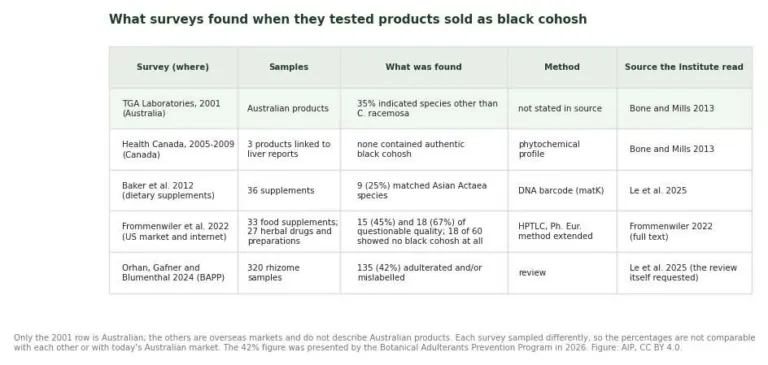
Black cohosh has one of the best-documented substitution problems of any herb. In 2026 Dr Stefan Gafner of the American Botanical Council, presenting data from the ABC-AHP-NCNPR Botanical Adulterants Prevention Program to the Society for Medicinal Plant and Natural Product Research congress in Reims (30 August to 2 September 2026), placed black cohosh second among the herbs the programme has assessed, at about 42 per cent of samples adulterated, behind ginkgo at 57 per cent, as reported in the trade press (NutraIngredients, 17 September 2026). Attested The same figure appears in a 2024 review by Orhan, Gafner and Blumenthal, which found 135 of 320 black cohosh rhizome samples adulterated and/or mislabelled, especially products sold as dietary supplements; the Institute read that figure in a 2025 toxicology review that cites it, and has requested the 2024 review itself (PMID 40503925). Evidence suggests The Institute has not yet read which markets those samples came from, and the figure should not be read as a measure of Australian products. Attested
Other surveys tell the same story from different angles (Figure 9). A 2022 study tested 60 products and ingredients sold as black cohosh in the United States and online by high-performance thin-layer chromatography, using and extending the European Pharmacopoeia method. Fifteen of 33 food supplements and 18 of 27 herbal drugs and extracts were of questionable quality, mostly through adulteration, and 18 of the 60 samples showed no trace of black cohosh at all; the authors note that Chinese powdered material and extract can cost as little as a quarter of the authentic root (PMID 36003516). Confirmed A 2012 DNA-barcoding study of 36 dietary supplements labelled as black cohosh found 9 matching Asian Actaea species, as reported in the 2025 review (PMID 40503925). Evidence suggests In the same 2022 study, every milk thistle and coneflower product regulated as a traditional herbal medicinal product, a medicine category with pharmaceutical quality controls, passed; no black cohosh medicine of that kind was among the samples (PMID 36003516). Confirmed
The Australian record
Substitution has reached Australia before. Bone and Mills record that Australian manufacturers were alerted in August 1998 to the substitution of black cohosh by other Cimicifuga species, and that in May 2001 the TGA Laboratories advised that 35 per cent of the Australian products they tested indicated species other than C. racemosa; C. foetida, C. dahurica, C. heracleifolia and C. simplex were implicated (Bone and Mills 2013). Attested In Canada, Health Canada analysed three products linked to liver reports between 2005 and 2009 and found that none contained authentic black cohosh; their phytochemical profiles were consistent with related species, and a review of all licensed products led to the voluntary withdrawal of products without authentic black cohosh, including those in four of the adverse reaction cases (Bone and Mills 2013). Attested The Institute knows of no published Australian market survey since the TGA testing of 2001. Attested
Substitution is easy to miss. Asian Actaea rhizome is a standard commodity of Chinese and Japanese medicine, sold as sheng ma, and a powdered or extracted root carries no visible clue to its species. Mechanism Sheng ma is a medicine in its own right, with its own chemistry, rich in chromones such as cimifugin, and its own place in East Asian practice; it was never tested in the black cohosh trials (PMID 16515793). Confirmed
How substitution is caught
The laboratory tools exist. The European Pharmacopoeia’s thin-layer test screens for more than 5 per cent of A. cimicifuga (by a cimifugin zone), A. heracleifolia and A. dahurica, and more than 10 per cent of the American look-alike A. podocarpa (AIP-PH-ACTRAC). Confirmed A validated HPLC fingerprint separates A. racemosa from nine other species using cimifugin, cimifugin-3-O-glucoside and cimigenol-3-O-arabinoside as markers (PMID 16515793). Confirmed What a shopper cannot see is whether a given sponsor runs those tests on every batch.
Australian law adds one detail. The Permissible Ingredients Determination lists the Asian species Actaea cimicifuga, A. heracleifolia and A. simplex as permitted herbal ingredients in their own right, and the BCOHOSH warning attaches only to A. racemosa (Permissible Ingredients Determination). Attested A product can lawfully contain sheng ma, under its own name. The problem arises only when the label says Actaea racemosa and the root inside is something else. None of the 59 ARTG entries the Institute read lists an Asian Actaea species (ARTG survey, October 2026). Attested
Substitution and the liver
Whether substitution explains the liver cases is an open question. It would explain why many early case products could not be identified, and the Health Canada findings show it happened in at least some reported cases. Evidence suggests It cannot explain the probable German case on a regulated European extract, and no study has shown that Asian Actaea species are more toxic to the liver than black cohosh. Attested The toxicologists of the 2025 review make the same point: the contribution of adulterants to adverse effects “cannot be ruled out without sufficient data” (PMID 40503925). Attested The link is a reasonable hypothesis that the existing record cannot settle. Authentic material from a sponsor that tests identity is the one step that guards against both possibilities.
11. Australian regulatory status and reading the label
Where black cohosh sits in Australian law
Actaea racemosa is a permitted herbal ingredient for listed medicines under the Therapeutic Goods (Permissible Ingredients) Determination (No. 2) 2026, Schedule 1 item 386, with the BCOHOSH warning required in oral medicines; the entries black cohosh dry (item 894) and black cohosh powder (item 895) carry the same warning (Permissible Ingredients Determination). Attested It has no entry in the Poisons Standard (June 2026), so it is unscheduled (Poisons Standard, June 2026). Attested It is not a controlled substance and needs no Office of Drug Control permit. Dried root brought into Australia is subject to biosecurity import conditions set by the Department of Agriculture, Fisheries and Forestry; the Institute did not retrieve the specific import case for this review. Unsourced A herbalist may also prepare it for an individual after a consultation, under an exemption in the Therapeutic Goods Regulations (Therapeutic Goods Regulations 1990). Attested
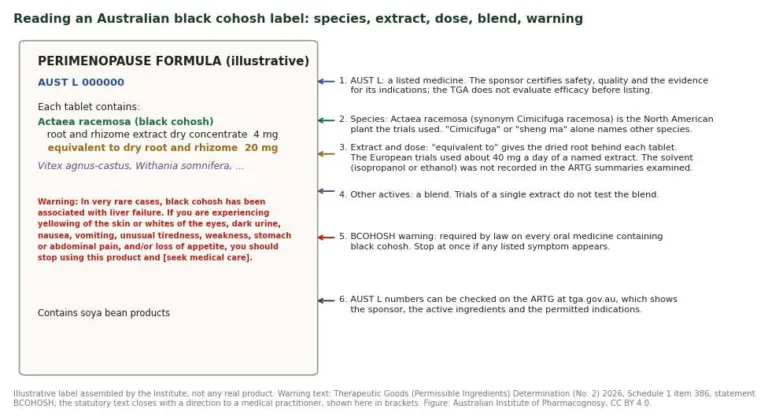
Almost every black cohosh product on Australian shelves is a listed medicine, marked AUST L. For a listed medicine the sponsor certifies that the ingredients are permitted, that the product is made under good manufacturing practice, and that it holds evidence for the indications it chose; listed medicines “are not individually evaluated by the TGA for quality, safety and efficacy before they are supplied”, and the TGA can target a product for a compliance review and ask to see the evidence (TGA, Listed medicines). Attested An AUST L number therefore tells you a product is legally on the market and made to a manufacturing standard. It does not tell you the TGA has judged that it works.
A practical guide for Australian buyers
1. Check the species. The label should name Actaea racemosa, or its synonym Cimicifuga racemosa. That is the North American plant every trial in this review used. “Cimicifuga” on its own, “sheng ma”, “bugbane” or another Actaea species names a different plant, lawful under its own name and untested for hot flushes in these trials. Attested Blue cohosh is a different plant again (chapter 2).
2. Check whether it is a blend. Is black cohosh the only active, or one of several? If it is one of several, the black cohosh trials do not describe the product, and each partner herb has its own evidence and its own cautions. The full list, with quantities, is on the ARTG at tga.gov.au: search the AUST L number and open the public summary. Attested
3. Check the extract and the dose. The “equivalent to” line gives the milligrams of dried root behind each tablet. The European trials used about 40 mg a day of a named extract, and the two Australian products examined here contain about 20 mg per tablet (ARTG 174935; ARTG 351669). Attested The extraction solvent, isopropanol or ethanol, was not recorded in those public summaries; a sponsor can be asked which extract it uses and whether it is the extract tested in a named trial. Attested A larger number is no sign of a better product, because no trial has shown that more root works better or is as safe.
4. Read the warning, and act on it. If yellowing of the skin or eyes, dark urine, nausea, vomiting, unusual tiredness, weakness, abdominal pain or loss of appetite appears, stop the product the same day and get medical care promptly. Attested In an emergency call Triple Zero (000); for a suspected poisoning or overdose, the Poisons Information Centre is on 13 11 26, 24 hours a day. Suspected side effects can be reported to the TGA (TGA, reporting adverse events).
5. Know your own situation. Do not take black cohosh with existing liver disease, in pregnancy, while breastfeeding, under 18 or if you are allergic to it. Pregnancy is still possible in perimenopause, and the EU monograph advises effective contraception while taking it (EU herbal monograph 2018). Vaginal bleeding during use needs prompt medical assessment. With a history of breast or other hormone-dependent cancer, while taking tamoxifen, an aromatase inhibitor or hormone therapy, or with a statin or several other regular medicines, consult a degree-qualified herbalist with competencies and adequate training in pharmacognosy before starting. Attested
6. Give it a fair, limited trial. The European trials ran for 12 weeks, and the EMA advises against going beyond six months without supervision (EU herbal monograph 2018). Attested Because hot flushes respond to placebo, ease with time and come and go in perimenopause, a symptom diary kept for a few weeks before and during use gives a clearer answer than memory.
7. Imported products. Products bought from overseas websites are often not on the ARTG and may not carry the warning. The EMA notes that in the United States and the United Kingdom black cohosh is sold as a dietary supplement or unlicensed remedy, usually without professional advice and without a patient leaflet (EMA/HMPC assessment report 2018). Attested The overseas surveys in chapter 10 found the highest rates of substitution in products sold as dietary supplements (PMID 36003516; PMID 40503925). Evidence suggests That is overseas regulation and does not govern Australian products.
Discussion: conclusions, hypotheses and research still required
What the evidence supports
Black cohosh is Actaea racemosa L., the name Linnaeus gave it in 1753; Cimicifuga racemosa is a synonym, and the plant is the same. Attested It contains no hormones, and the later evidence does not support a direct oestrogen-like action. Evidence suggests Specific European dry extracts, above all the isopropanolic extract and Ze 450, at about 40 to 80 mg of root a day, have placebo-controlled evidence of a modest reduction in hot flushes and menopausal symptom scores over 12 weeks, from trials that are mostly industry-linked and of varying quality. Evidence suggests The category “black cohosh” as a whole does not show a pooled benefit, and two large independent US trials of other extracts found none. Confirmed In the independent US trials and the Cochrane review, hormone therapy relieved hot flushes more than black cohosh. Confirmed None of the black cohosh trials read for this review was designed around perimenopausal women. Attested There is no evidence of benefit for hot flushes after breast cancer or for menopausal anxiety. Confirmed A rare idiosyncratic liver reaction is possible, has been judged probable in a small number of documented cases, and has not emerged as a signal in clinical trials treating more than 6,300 participants. Evidence suggests Substitution with Asian Actaea species has been documented in Australia, Canada and the United States, and in overseas surveys it is common among products sold as dietary supplements. Attested Most Australian products are blends, which the single-extract trials do not describe. Attested The label warning is a legal requirement for every oral product. Attested
What can reasonably be hypothesised
That the product differences in chapter 7 are real, and arise from the solvent and dose: isopropanol and ethanol extract different fractions of the root, and the positive trials share a low dose and a defined extract. This is a hypothesis; no trial has compared extracts head to head. Mechanism That the effect on hot flushes, where present, runs through central serotonergic or opioid pathways. The receptor data fit this, and the blood levels make it uncertain. Mechanism That perimenopausal women may need a different dose from postmenopausal women, as the Ze 450 subgroup hints. Untested. Mechanism That substitution accounts for some unidentified-product liver cases. Plausible, and untested by any case-control or product-testing study. Mechanism That blends deliver the black cohosh effect at roughly half the trial dose per tablet, alongside whatever their partner herbs contribute. Untested. Mechanism
What research would move the subject forward
Quality analysis and pharmacognosy. A cross-sectional authentication survey of black cohosh products on the Australian market, the first since the TGA testing of 2001: 30 or more products from pharmacy, supermarket, practitioner and online channels, chosen to include the newer perimenopause blends, tested by the European Pharmacopoeia thin-layer screens, the HPLC fingerprint with its cimifugin markers, and DNA barcoding against vouchered reference material. In a blend, other herbs crowd the chromatogram, so the method must be validated for multi-herb matrices first. The Institute could run the chromatography once its bench is equipped. Attested
Pharmacovigilance and toxicology. Linkage of Australian liver-injury reports involving black cohosh with laboratory testing of the actual product taken, so that each case can be scored by RUCAM with species identity known. This needs agreements with hospitals or the TGA and ethics approval. A pull of the TGA’s Database of Adverse Event Notifications for Actaea and Cimicifuga, which the Institute could not query by machine, is the simple first step. Attested A mechanistic study comparing A. racemosa and Asian Actaea extracts in human hepatocyte models, at concentrations relevant to blood levels, would test the substitution hypothesis directly. Mechanism A micronucleus test in long-term human users of the European extracts would settle whether the rodent chromosome finding has any human counterpart. Mechanism
Clinical research. An independent, registered, placebo-controlled trial in perimenopausal women, defined by a published reproductive-ageing staging system, testing the isopropanolic extract at two doses with a daily hot-flush diary as the primary outcome, long enough (six months) to separate drug from placebo and time, with liver tests at baseline and follow-up. Separately, a trial of a 1:2 liquid extract at Australian practitioner doses, which has never been tested. And trials of the best-selling Australian blends as formulated, which are the products most Australian women actually take. Each needs ethics approval. Attested
Ethnobotany and history. The Indigenous North American uses are recorded in this literature only at second hand and without naming the nations concerned. Tracing the primary ethnographic sources, with the communities’ involvement, would correct a record that currently flattens many traditions into one line. Attested
Regulatory science. The ARTG public summary does not record extraction solvent or drug-to-extract ratio, which are the variables that separate the trial extracts from each other. Recording them would let a buyer, a herbalist or a researcher see which products resemble a tested extract. A second question is whether a partner herb with its own liver reports, such as ashwagandha, should be named in a combined warning when it shares a capsule with black cohosh. Both are questions for the TGA’s listed-medicine framework, and ones the Institute would support with evidence. Attested
Black cohosh has earned its place in herbal medicine over two centuries, and some of its extracts probably help some women with hot flushes, modestly. Very rarely it may injure the liver, and the warning exists so that anyone affected stops early. A buyer who knows which plant and which extract the evidence describes, checks whether the bottle holds a blend, reads the warning, and considers her own circumstances first is using the herb the way the evidence allows. Before taking any botanical drug, consult a degree-qualified herbalist with competencies and adequate training in pharmacognosy.
About the Australian Institute of Pharmacognosy and this series
The Australian Institute of Pharmacognosy is a clinic and research laboratory in Cardwell, far north Queensland, studying medicinal plants and natural products to the same evidentiary standard as any other branch of pharmacology: traditional knowledge taken seriously, and tested honestly. Visit the Institute at australian-pharmacognosy.org.
Series: AIP Literature Reviews and Critical Analyses (evidence reviews). The Institute’s full pharmacognostic monograph on the root, with identity, purity and chromatography, is AIP-PH-ACTRAC, black cohosh root. Previous reviews: Greek mountain tea (Sideritis scardica) · sutherlandia (Lessertia frutescens) · ashwagandha (Withania somnifera) · pygeum (Prunus africana) · Indian barberry (Berberis aristata) · devil’s claw (Harpagophytum procumbens) · turmeric (Curcuma longa) · sour jujube seed (Ziziphus jujuba) · soursop (Annona muricata) · umckaloabo (Pelargonium sidoides) · andrographis (Andrographis paniculata) · Syrian rue (Peganum harmala). Follow the series for a new evidence review each morning.
Corrections: if you find an error or a source we have missed, write to the Institute at our contact form. We would rather correct a claim than repeat it.
About the images and the evidence. Photographs are from Wikimedia Commons under the licences given in each caption and in the image credits; none is of an authenticated, vouchered specimen. The figures were drawn by the Institute from the sources printed in each one, and Figure 8 from the public ARTG records of all 59 entries returned by the Institute’s search. Trial results the Institute could not read in the original report are cited from the EMA assessment report, the Cochrane review or Bone and Mills, each read in full; the original reports, the 2024 adulteration review and two newer studies have been requested through the Institute’s library. This review builds on an earlier draft of the same piece that was read by the Institute’s Community Outreach, Legal and Medicine departments, whose corrections are carried forward.
Head of Education and Research
Australian Institute of Pharmacognosy
Cardwell QLD, Australia
australian-pharmacognosy.org · our contact form
Suggested citation: Ridley T. Black cohosh (Actaea racemosa L.): perimenopause, the hot-flush evidence, extracts and blends, adulteration, the liver warning and the Australian label. AIP Literature Review and Critical Analysis AIP-LR-ACTRAC. Cardwell (QLD): Australian Institute of Pharmacognosy; 2026.
Educational content only; not medical, legal or regulatory advice. Australian regulatory information reflects the ARTG, the Permissible Ingredients Determination, the Poisons Standard and TGA publications as read in October 2026 and may change. European Medicines Agency, US, German, Canadian and Indian material is described as overseas material and does not govern Australian law. Products are named only for what their public ARTG records state; no product is advertised, endorsed or recommended. Material drawn from Commonwealth sources is © Commonwealth of Australia and appears here as short extracts for the purpose of reporting, criticism and review.
References
52 references: tap to open
Listed in order of first citation. All 33 PMIDs were verified against PubMed in October 2026 and read in full text; every regulatory, legislative, taxonomic and biodiversity record was read from its own source. Trial reports that could not be read in full were requested through the Institute’s library and are cited through the reviews named in the text. The 2024 Botanical Adulterants Prevention Program review (Orhan, Gafner and Blumenthal), a 2026 systematic review in Menopause and a 2025 trial of a black cohosh combination were requested and are not cited for their content.
- European Medicines Agency, Committee on Herbal Medicinal Products. European Union herbal monograph on Cimicifuga racemosa (L.) Nutt., rhizoma. EMA/HMPC/48745/2017. Final, 27 March 2018. Read in full. Overseas regulatory document; it does not govern Australian products. https://www.ema.europa.eu/en/medicines/herbal/cimicifugae-rhizoma
- Therapeutic Goods Administration. Reporting adverse events for consumers. Read by the Institute in September 2026. https://www.tga.gov.au/safety/reporting-problems/reporting-adverse-events-consumers
- Therapeutic Goods Administration. Australian Register of Therapeutic Goods. Keyword search “actaea racemosa”, run by the Institute in October 2026: 59 entries. The public ARTG record of each entry (name, ARTG date, sponsor and listed ingredients) was opened and read, and the counts in this review were made from those records; the raw survey is held by the Institute. Five entries list Actaea racemosa as the only ingredient; 54 list other ingredients; 29 carry an ARTG date in 2024, 2025 or 2026; none lists an Asian Actaea species. https://www.tga.gov.au/resources/artg?keywords=actaea%20racemosa
- Eubanks AA, Shvartsman K. Social Media and Supplements for Menopausal Symptoms: A Content Analysis. BJOG. 2026 Sep;133(10):1885-1892. PMID 41967977. DOI 10.1111/1471-0528.70242.
- Therapeutic Goods Administration. Listed medicines. Last updated 15 November 2023; read by the Institute in October 2026. “Listed medicines are not individually evaluated by the TGA for quality, safety and efficacy before they are supplied in the marketplace. Instead, sponsors (product owners) certify that their listed medicine meets requirements in relation to safety, quality and efficacy.” Indications are selected from the Permissible Indications Determination and must be supported by evidence held by the sponsor, which the TGA can check in a targeted compliance review. https://www.tga.gov.au/node/520077
- Therapeutic Goods (Permissible Ingredients) Determination (No. 2) 2026 (Cth), F2026L00707, registered 11/06/2026. Schedule 1 read by the Institute in October 2026: item 383 ACTAEA CIMICIFUGA, item 384 ACTAEA HERACLEIFOLIA, item 385 ACTAEA PACHYPODA, item 387 ACTAEA SIMPLEX and item 388 ACTAEA SPICATA (roles A, H, no specific requirement); item 386 ACTAEA RACEMOSA (roles A, H; when used in oral medicines, warning statement BCOHOSH required); items 894 BLACK COHOSH DRY and 895 BLACK COHOSH POWDER (BCOHOSH required). No entry under Actaea dahurica, Actaea podocarpa or Cimicifuga. https://www.legislation.gov.au/F2026L00707/asmade
- International Plant Names Index, queried October 2026: Actaea racemosa L., Species Plantarum 1: 504 (1753), record 316204-2; Actaea cimicifuga L., Species Plantarum 1: 504 (1753), record 707994-1; Cimicifuga racemosa (L.) Nutt., Genera of North American Plants 2: 15 (1818), record 1210182-2; Actaea racemosa var. dissecta (A.Gray) J.Compton, Taxon 47(3): 614 (1998), record 1002874-1. https://www.ipni.org/n/316204-2
- Bone K, Mills S. Principles and Practice of Phytotherapy: Modern Herbal Medicine. 2nd ed. Edinburgh: Churchill Livingstone Elsevier; 2013. Black cohosh, pp. 426–40, including the TGA statement of 9 February 2006 quoted on pp. 437–8. Read in full in the Institute’s library copy.
- Ridley T, Iggulden L. Cimicifugae rhizoma (black cohosh root, Actaea racemosa L.). Australian Herbal Pharmacopoeia monograph AIP-PH-ACTRAC, version 1.0. Cardwell (QLD): Australian Institute of Pharmacognosy; 2026. Sections 1–3, 6, 10 and 13, drawing on Ph. Eur. 2069, the WHO monographs vol. 2, the World Checklist of Vascular Plants, the Catalogue of Life and United Plant Savers as cited there. https://www.australian-pharmacognosy.org/pharmacopoeia/actaea-racemosa/
- Atlas of Living Australia. Occurrence searches by raw scientific name, October 2026: “Actaea racemosa” 17 records and “Cimicifuga racemosa” 5 records, all preserved specimens, from the United States (14), Germany (2) and France (1), with country not recorded for 5; none collected in Australia. https://biocache.ala.org.au/occurrences/search?q=raw_name%3A%22Actaea%20racemosa%22
- Biosecurity Act 2014 (Qld), reprint current as at 27/04/2026, and Biosecurity Regulation 2016 (Qld), full texts searched by the Institute in October 2026 for Actaea, Cimicifuga and cohosh: no mention. https://www.legislation.qld.gov.au/view/html/inforce/current/act-2014-007
- European Medicines Agency, Committee on Herbal Medicinal Products. Assessment report on Cimicifuga racemosa (L.) Nutt., rhizoma. EMA/HMPC/48744/2017. Final, 27 March 2018. Read in full. Overseas regulatory document; it does not govern Australian products. https://www.ema.europa.eu/en/medicines/herbal/cimicifugae-rhizoma
- Lydia E. Pinkham Medicine Company. Lydia E. Pinkham’s Vegetable Compound for Menopause and Menstruation, packaging, via the Digital Public Library of America; contributed to Wikimedia Commons by the Science History Institute (identifier padig:SHI-wkzh43d); the file record transcribes the listed ingredients including Cimicifuga racemosa. Viewed October 2026. Date of the packaging not recorded. https://commons.wikimedia.org/wiki/File:Lydia_E._Pinkham%27s_Vegetable_Compound_for_Menopause_and_Menstruation_-_DPLA_-_361b626570d10b785b11a3943c071fb5_(page_1).jpg
- Beer AM, Neff A. Differentiated Evaluation of Extract-Specific Evidence on Cimicifuga racemosa's Efficacy and Safety for Climacteric Complaints. Evid Based Complement Alternat Med. 2013;2013:860602. PMID 24062793. DOI 10.1155/2013/860602.
- Cătăuță LM, Senn R, Schenk A, Chaanin A, Halbsguth C, Danton O. Bridging Pharmacopeial Standards and Chemical Reality of Triterpene Glycosides in Actaea racemosa. Plants (Basel). 2026 Jul 24;15(15). PMID 42588776. DOI 10.3390/plants15152272.
- Powell SL, Gödecke T, Nikolic D, Chen SN, Ahn S, Dietz B, et al. In vitro serotonergic activity of black cohosh and identification of N(omega)-methylserotonin as a potential active constituent. J Agric Food Chem. 2008 Dec 24;56(24):11718-26. PMID 19049296. DOI 10.1021/jf803298z.
- He K, Pauli GF, Zheng B, Wang H, Bai N, Peng T, et al. Cimicifuga species identification by high performance liquid chromatography-photodiode array/mass spectrometric/evaporative light scattering detection for quality control of black cohosh products. J Chromatogr A. 2006 Apr 21;1112(1-2):241-54. PMID 16515793. DOI 10.1016/j.chroma.2006.01.004.
- Mercado-Feliciano M, Cora MC, Witt KL, Granville CA, Hejtmancik MR, Fomby L, et al. An ethanolic extract of black cohosh causes hematological changes but not estrogenic effects in female rodents. Toxicol Appl Pharmacol. 2012 Sep 01;263(2):138-47. PMID 22687605. DOI 10.1016/j.taap.2012.05.022.
- Rhyu MR, Lu J, Webster DE, Fabricant DS, Farnsworth NR, Wang ZJ. Black cohosh (Actaea racemosa, Cimicifuga racemosa) behaves as a mixed competitive ligand and partial agonist at the human mu opiate receptor. J Agric Food Chem. 2006 Dec 27;54(26):9852-7. PMID 17177511. DOI 10.1021/jf062808u.
- van Breemen RB, Liang W, Banuvar S, Shulman LP, Pang Y, Tao Y, et al. Pharmacokinetics of 23-epi-26-deoxyactein in women after oral administration of a standardized extract of black cohosh. Clin Pharmacol Ther. 2010 Feb;87(2):219-25. PMID 20032972. DOI 10.1038/clpt.2009.251.
- Schellenberg R, Saller R, Hess L, Melzer J, Zimmermann C, Drewe J, et al. Dose-Dependent Effects of the Cimicifuga racemosa Extract Ze 450 in the Treatment of Climacteric Complaints: A Randomized, Placebo-Controlled Study. Evid Based Complement Alternat Med. 2012;2012:260301. PMID 23346194. DOI 10.1155/2012/260301.
- Wuttke W, Seidlová-Wuttke D, Gorkow C. The Cimicifuga preparation BNO 1055 vs. conjugated estrogens in a double-blind placebo-controlled study: effects on menopause symptoms and bone markers. Maturitas. 2003 Mar 14;44 Suppl 1:S67-77. PMID 12609561. DOI 10.1016/s0378-5122(02)00350-x.
- Mohammad-Alizadeh-Charandabi S, Shahnazi M, Nahaee J, Bayatipayan S. Efficacy of black cohosh (Cimicifuga racemosa L.) in treating early symptoms of menopause: a randomized clinical trial. Chin Med. 2013 Nov 01;8(1):20. PMID 24499633. DOI 10.1186/1749-8546-8-20.
- Newton KM, Reed SD, LaCroix AZ, Grothaus LC, Ehrlich K, Guiltinan J. Treatment of vasomotor symptoms of menopause with black cohosh, multibotanicals, soy, hormone therapy, or placebo: a randomized trial. Ann Intern Med. 2006 Dec 19;145(12):869-79. PMID 17179056. DOI 10.7326/0003-4819-145-12-200612190-00003.
- Geller SE, Shulman LP, van Breemen RB, Banuvar S, Zhou Y, Epstein G, et al. Safety and efficacy of black cohosh and red clover for the management of vasomotor symptoms: a randomized controlled trial. Menopause. 2009;16(6):1156-66. PMID 19609225. DOI 10.1097/gme.0b013e3181ace49b.
- Leach MJ, Moore V. Black cohosh (Cimicifuga spp.) for menopausal symptoms. Cochrane Database Syst Rev. 2012 Sep 12;2012(9):CD007244. PMID 22972105. DOI 10.1002/14651858.CD007244.pub2.
- Sadahiro R, Matsuoka LN, Zeng BS, Chen KH, Zeng BY, Wang HY, et al. Black cohosh extracts in women with menopausal symptoms: an updated pairwise meta-analysis. Menopause. 2023 Jul 01;30(7):766-773. PMID 37192826. DOI 10.1097/GME.0000000000002196.
- Maunder A, Mardon AK, Rao V, Torkel S, Metri NJ, Liu J, et al. Complementary therapies for management of menopausal symptoms: a systematic review to inform the update of the International Menopause Society recommendations on women's midlife health. Climacteric. 2026 Apr;29(2):165-209. PMID 41498229. DOI 10.1080/13697137.2025.2584061.
- Jing G, Keane CM, Reynolds CM. The Effectiveness of Non-Soy Oral Herbal Supplements for Menopausal Symptoms: A Systematic Review. Nutrients. 2026 Jun 23;18(13). PMID 42451042. DOI 10.3390/nu18132037.
- Drebka A, Scholl AJ, Ochs T, Kelber O, Mösges R, Bachmeier BE. Trends and Patterns for the Use of Herbal Medicinal Products for Gynaecological Ailments. Phytother Res. 2026 Jun;40(6):3580-3594. PMID 41937616. DOI 10.1002/ptr.70321.
- Amsterdam JD, Yao Y, Mao JJ, Soeller I, Rockwell K, Shults J. Randomized, double-blind, placebo-controlled trial of Cimicifuga racemosa (black cohosh) in women with anxiety disorder due to menopause. J Clin Psychopharmacol. 2009 Oct;29(5):478-83. PMID 19745648. DOI 10.1097/JCP.0b013e3181b2abf2.
- . Expression of Concern: Adding phytoestrogens to clomiphene induction in unexplained infertility patients – a randomized trial. [Reproductive BioMedicine Online, 2008, Vol 16. No 4, 580-588]. Reprod Biomed Online. 2026 Jul;53(1):105771. PMID 42436032. DOI 10.1016/j.rbmo.2026.105771.
- . Expression of Concern: Supplementation of clomiphene citrate cycles with Cimicifuga racemosa or ethinyl oestradiol – a randomized trial. [Reproductive BioMedicine Online, 2009, Vol 19. No 4. p501-507]. Reprod Biomed Online. 2026 Jul;53(1):105772. PMID 42436031. DOI 10.1016/j.rbmo.2026.105772.
- Kamel HH. Retraction notice to 'Role of phyto-oestrogens in ovulation induction in women with polycystic ovarian syndrome' [Eur. J. Obstet. Gynecol. Reprod. Biol. 168 (2013) 60-63]. Eur J Obstet Gynecol Reprod Biol. 2023 Dec;291:212. PMID 37922774. DOI 10.1016/j.ejogrb.2023.09.027.
- Therapeutic Goods Administration. ARTG 174935, REMIFEMIN. Public summary, read by the Institute in October 2026: medicine listed, sponsor Aspen Pharmacare Australia Pty Ltd, ARTG start date 18/08/2010; single medicine product; active ingredient Actaea racemosa rhizome extract dry concentrate 2.5 mg, equivalent to Actaea racemosa (dry) 21.25 mg, per uncoated tablet; permitted indications for hot flushes and night sweats associated with menopause; BCOHOSH warning recorded. https://www.tga.gov.au/resources/artg/174935
- Therapeutic Goods Administration. ARTG 351669, Swisse Ultiboost Menopause Balance. Public summary, read by the Institute in October 2026: medicine listed, sponsor Swisse Wellness Pty Ltd, ARTG start date 14/12/2020; active ingredients per film-coated tablet: Actaea racemosa root and rhizome extract dry concentrate 4 mg (equivalent to 20 mg dry), calcium citrate tetrahydrate 771.04 mg (calcium 162.5 mg), colecalciferol 0.0125 mg, Glycine max seed extract dry concentrate 86.25 mg (equivalent to 13.8 g dry), Salvia officinalis leaf extract dry concentrate 236.36 mg (equivalent to 1.3 g dry); BCOHOSH warning recorded. https://www.tga.gov.au/resources/artg/351669
- Ridley T. Ashwagandha (Withania somnifera (L.) Dunal): the TGA liver warnings, the stress and sleep trials, the root and the leaf, and the Australian regulatory position. AIP Literature Review and Critical Analysis LR-11. Cardwell (QLD): Australian Institute of Pharmacognosy; 2026. Published as “Ashwagandha (Withania somnifera): the TGA liver warnings”. https://www.australian-pharmacognosy.org/blog/ashwagandha-withania-liver-safety-tga-evidence-australia/
- Choudhury R, Coelho K, Suryawanshi S, Hajare A, Kumar A. Effectiveness of Multisymptom Support for Better Relief and Alleviation of Common Effects in Perimenopause (EMBRACE PERIMENOPAUSE). Cureus. 2025 Jun;17(6):e86091. PMID 40677428. DOI 10.7759/cureus.86091.
- Naser B, Castelo-Branco C, Meden H, Minkin MJ, Rachoń D, Beer AM, et al. Weight gain in menopause: systematic review of adverse events in women treated with black cohosh. Climacteric. 2022 Jun;25(3):220-227. PMID 34608830. DOI 10.1080/13697137.2021.1973993.
- Whiting PW, Clouston A, Kerlin P. Black cohosh and other herbal remedies associated with acute hepatitis. Med J Aust. 2002 Oct 21;177(8):440-3. PMID 12381254. DOI 10.5694/j.1326-5377.2002.tb04886.x.
- Lynch CR, Folkers ME, Hutson WR. Fulminant hepatic failure associated with the use of black cohosh: a case report. Liver Transpl. 2006 Jun;12(6):989-92. PMID 16721764. DOI 10.1002/lt.20778.
- Le Y, Li X, Guo X, Seo JE, Manjanatha MG, Mei N. Review of black cohosh-induced toxicity and adverse clinical effects. J Environ Sci Health C Toxicol Carcinog. 2025;43(3):243-268. PMID 40503925. DOI 10.1080/26896583.2025.2513795.
- Obi N, Chang-Claude J, Berger J, Braendle W, Slanger T, Schmidt M, et al. The use of herbal preparations to alleviate climacteric disorders and risk of postmenopausal breast cancer in a German case-control study. Cancer Epidemiol Biomarkers Prev. 2009 Aug;18(8):2207-13. PMID 19661079. DOI 10.1158/1055-9965.EPI-09-0298.
- Brasky TM, Lampe JW, Potter JD, Patterson RE, White E. Specialty supplements and breast cancer risk in the VITamins And Lifestyle (VITAL) Cohort. Cancer Epidemiol Biomarkers Prev. 2010 Jul;19(7):1696-708. PMID 20615886. DOI 10.1158/1055-9965.EPI-10-0318.
- Fritz H, Seely D, McGowan J, Skidmore B, Fernandes R, Kennedy DA, et al. Black cohosh and breast cancer: a systematic review. Integr Cancer Ther. 2014 Jan;13(1):12-29. PMID 23439657. DOI 10.1177/1534735413477191.
- Gurley BJ, Gardner SF, Hubbard MA, Williams DK, Gentry WB, Khan IA, et al. In vivo effects of goldenseal, kava kava, black cohosh, and valerian on human cytochrome P450 1A2, 2D6, 2E1, and 3A4/5 phenotypes. Clin Pharmacol Ther. 2005 May;77(5):415-26. PMID 15900287. DOI 10.1016/j.clpt.2005.01.009.
- Gurley BJ, Barone GW, Williams DK, Carrier J, Breen P, Yates CR, et al. Effect of milk thistle (Silybum marianum) and black cohosh (Cimicifuga racemosa) supplementation on digoxin pharmacokinetics in humans. Drug Metab Dispos. 2006 Jan;34(1):69-74. PMID 16221754. DOI 10.1124/dmd.105.006312.
- Nicolle L. Botanical adulteration rising despite 15 years of industry action, data suggests. NutraIngredients, 17 September 2026. Trade-press report of Dr Stefan Gafner’s presentation of Botanical Adulterants Prevention Program data at the 74th International Congress and Annual Meeting of the Society for Medicinal Plant and Natural Product Research, Reims, France, 30 August to 2 September 2026; black cohosh 42%, second after ginkgo at 57%, from “data from three reviews conducted by ABC”. Read in full by the Institute in October 2026. Trade press; the underlying reviews are cited as described in the text. https://www.nutraingredients.com/Article/2026/09/17/botanical-adulteration-rising-despite-15-years-of-industry-action-data-suggests/
- Frommenwiler DA, Reich E, Sharaf MHM, Cañigueral S, Etheridge CJ. Investigation of market herbal products regulated under different categories: How can HPTLC help to detect quality problems?. Front Pharmacol. 2022;13:925298. PMID 36003516. DOI 10.3389/fphar.2022.925298.
- Therapeutic Goods (Poisons Standard—June 2026) Instrument 2026 (Cth), F2026L00633. Full text searched by the Institute in October 2026 for Actaea, Cimicifuga and cohosh: no entry. https://www.legislation.gov.au/F2026L00633/asmade
- Therapeutic Goods Regulations 1990 (Cth), Compilation No. 130 (F2026C00872), read by the Institute in September 2026. Schedule 8 item 4: herbalists and other practitioners preparing herbal preparations for a particular person after consultation. https://www.legislation.gov.au/F1996B00406/latest/text
- Chemical records and structure depictions: PubChem, US National Library of Medicine, public domain. CIDs cited in the text: 10032468, 21668683, 21606551, 16020000, 736186, 6441059, 150885, 441960, 5280378.
Image credits
- Actaea racemosa 2015-07-15 4399.JPG, Salicyna. CC BY-SA 4.0. Wikimedia Commons. Resized and re-encoded for the web by AIP; no other changes.
- Actaea racemosa (14921154015).jpg, -col-. CC BY-SA 2.0. Wikimedia Commons. Resized and re-encoded for the web by AIP; no other changes.
- Actaea racemosa, Black Cohosh, Howard County, MD 2017-08-09-16.14 (36757290982).jpg, USGS Bee Inventory and Monitoring Lab from Beltsville, Maryland, USA. Public domain. Wikimedia Commons. Resized and re-encoded for the web by AIP; no other changes.
- Actaea racemosa 001.JPG, H. Zell. CC BY-SA 3.0. Wikimedia Commons. Resized and re-encoded for the web by AIP; no other changes.
- Actaea racemosa, 2015-07-05, Mount Lebanon, 02.jpg, Cbaile19. CC0. Wikimedia Commons. Resized and re-encoded for the web by AIP; no other changes.
- Actaea racemosa, 2015-07-05, Mount Lebanon, 05.jpg, Cbaile19. CC0. Wikimedia Commons. Resized and re-encoded for the web by AIP; no other changes.
- Actaea racemosa dry fruits.jpg, Alex Abair. CC BY 4.0. Wikimedia Commons. Resized and re-encoded for the web by AIP; no other changes.
- Actaea racemosa 2015-07-15 4400b.JPG, Salicyna. CC BY-SA 4.0. Wikimedia Commons. Resized and re-encoded for the web by AIP; no other changes.
- Actaea racemosa – Black Cohosh.jpg, Fritzflohrreynolds. CC BY-SA 3.0. Wikimedia Commons. Resized and re-encoded for the web by AIP; no other changes.
- Black Snakeroot or Black Cohosh blossoms.jpg, Arthur T. LaBar. CC BY 2.0. Wikimedia Commons. Resized and re-encoded for the web by AIP; no other changes.
- Black cohosh 3.jpg, Schnobby. CC BY-SA 3.0. Wikimedia Commons. Resized and re-encoded for the web by AIP; no other changes.
- Cimicifuga racemosa 8501.JPG, SB Johnny. CC BY-SA 3.0. Wikimedia Commons. Resized and re-encoded for the web by AIP; no other changes.
- Cimicifuga racemosa (28184579414).jpg, Leonora (Ellie) Enking from East Preston, United Kingdom. CC BY-SA 2.0. Wikimedia Commons. Resized and re-encoded for the web by AIP; no other changes.
- American Medicinal Plants-011 0071.png, Charles Frederick Millspaugh. Public domain. Wikimedia Commons. Resized and re-encoded for the web by AIP; no other changes.
- FNY-04 Cimicifuga racemosa.png, John Torrey, M.D., F.L.S.. Public domain. Wikimedia Commons. Resized and re-encoded for the web by AIP; no other changes.
- Actaea cimicifuga 91443277.jpg, Татьяна Фирсова. CC0. Wikimedia Commons. Resized and re-encoded for the web by AIP; no other changes.
- Indian Medicinal Plants – Plate 22 – Cimicifuga fœtida.png, Kanhoba Ranchoddas Kirtikar and Baman Das Basu. Public domain. Wikimedia Commons. Resized and re-encoded for the web by AIP; no other changes.
- Cimicifuga heracleifolia (aka).jpg, André Karwath aka Aka. CC BY-SA 2.5. Wikimedia Commons. Resized and re-encoded for the web by AIP; no other changes.
- Actaea simplex (Mount Ibuki).jpg, Alpsdake. CC BY-SA 4.0. Wikimedia Commons. Resized and re-encoded for the web by AIP; no other changes.
- Caulophyllum thalictroides, 2021-04-08, Trillium Trail, 01.jpg, Cbaile19. CC0. Wikimedia Commons. Resized and re-encoded for the web by AIP; no other changes.
- Lydia E. Pinkham's Vegetable Compound for Menopause and Menstruation – DPLA – 361b626570d10b785b11a3943c071fb5 (page 1).jpg, Lydia E. Pinkham Medicine Company. CC BY 4.0. Wikimedia Commons. Contributed by the Science History Institute (identifier padig:SHI-wkzh43d) via the Digital Public Library of America. Resized and re-encoded for the web by AIP; no other changes.
- Crocus sativus, saffron(5).jpg, Emilie40. CC0. Wikimedia Commons. Resized and re-encoded for the web by AIP; no other changes.
- WithaniaFruit.jpg, Wowbobwow12. CC BY-SA 3.0. Wikimedia Commons. Resized and re-encoded for the web by AIP; no other changes.
- Humulus lupulus 007.JPG, H. Zell. CC BY-SA 3.0. Wikimedia Commons. Resized and re-encoded for the web by AIP; no other changes.
- Vitex agnus-castus 003.JPG, H. Zell. CC BY-SA 3.0. Wikimedia Commons. Resized and re-encoded for the web by AIP; no other changes.
- Chemical structure depictions (actein, 23-epi-26-deoxyactein, cimiracemoside A, cimigenol, isoferulic acid, fukinolic acid, cimifugin, formononetin, Nω-methylserotonin): PubChem, US National Library of Medicine. Public domain.
- Figures 1 and 3–9 (the names timeline, the placebo-controlled trials, root equivalents, the liver case record, the look-alike species table, the illustrative label, the ARTG ingredient survey and the adulteration surveys table): Australian Institute of Pharmacognosy, 2026, CC BY 4.0, drawn from the sources printed in each figure. Figure 2 (native range map): Australian Institute of Pharmacognosy, drawn from Catalogue of Life distribution data (source dataset World Plants, CC BY) with Natural Earth boundaries (public domain), CC BY 4.0.
The Institute sets and publishes its own monographs. The catalogue is in Publications.