

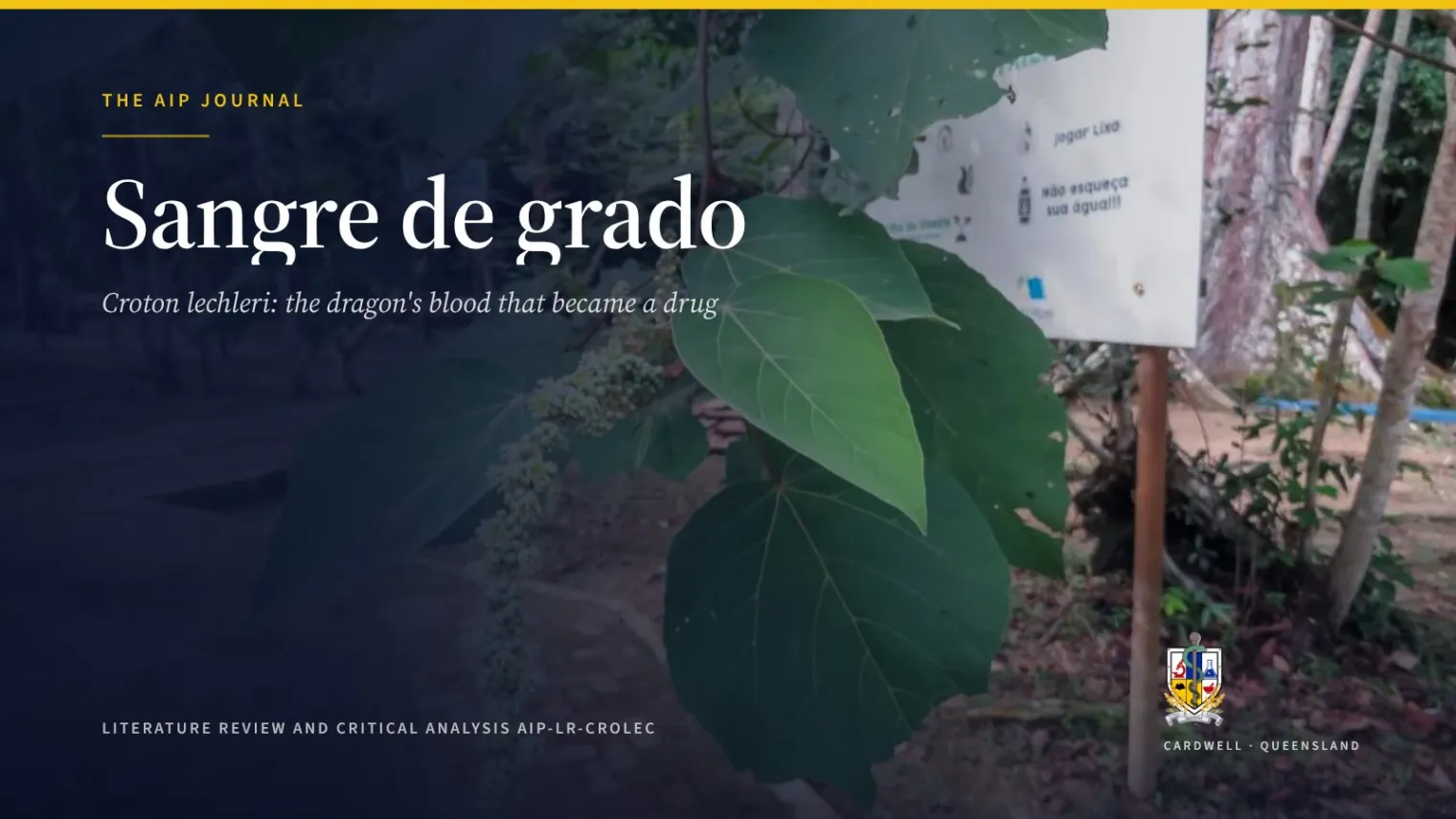
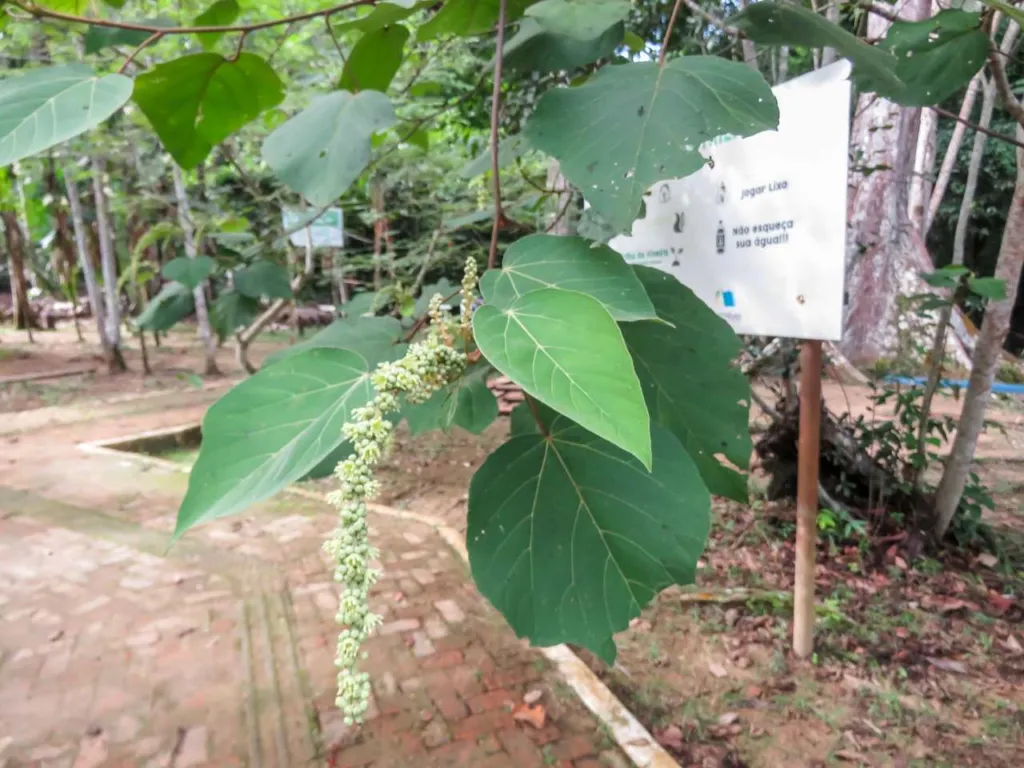
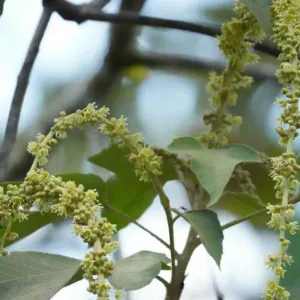
Cover: Croton lechleri in flower, Parque Natural Municipal de Porto Velho, Rondônia, Brazil (research-grade iNaturalist record). Photo: Diogo Luiz · CC BY 4.0 · iNaturalist
A red latex that Amazonian families dab on cuts and drink for diarrhoea Traditional became, in purified form, a prescription drug approved in the United States in 2012. Attested In Australia that drug has no approved product, and most “dragon’s blood” on sale comes from different plants altogether. Attested
This is AIP Literature Review and Critical Analysis AIP-LR-CROLEC in the Australian Institute of Pharmacognosy’s series of literature reviews and critical analyses. It introduces Croton lechleri Müll.Arg., the tree that gives sangre de grado: its name and the unrelated resins that share it, its botany and range, its traditional use in the western Amazon, the felling and replanting behind the commercial harvest in Peru, its chemistry, the chloride-channel pharmacology of the purified drug crofelemer, what the trials showed, why the drug, the raw sap and a generic dragon’s blood product are different things, its safety, and its standing under Australian law.
This article is educational. It is not medical, legal or regulatory advice, and it is not an advertisement. Products are named only for what public regulatory records say about them; nothing here recommends or discourages any product. The Institute has no commercial interest in sangre de grado or crofelemer.
1. Raw sap and the purified drug are different. The safety data for crofelemer, a purified tablet, do not cover raw sangre de grado sap, which also contains the alkaloid taspine. Taspine is strongly toxic to cells in laboratory studies, and its content varies widely between trees. No harm from oral sap has been documented in the papers the Institute read, and no formal safety study of oral sap in people was found. Evidence suggests
2. Pregnancy, breastfeeding and children. There are no human data. As a precaution in the absence of data, the Institute’s position is that sap and dragon’s blood products are best avoided by mouth in pregnancy and while breastfeeding, and by children. Crofelemer’s safety in children has not been established. Mechanism
3. Diarrhoea that needs medical care. Diarrhoea with blood, fever, severe pain, dehydration, after overseas travel, or in someone with HIV or a weakened immune system needs prompt medical assessment for infection before any herbal treatment. Babies, young children and frail older people can dehydrate quickly. Attested
4. Check what is in the bottle. “Dragon’s blood” may be Croton latex or resin from Dracaena or the rattan palm Daemonorops, with different chemistry and cautions. Croton lechleri is not a permitted ingredient of Australian listed medicines, and products bought from overseas are not evaluated by the TGA. Attested
Emergency: call Triple Zero (000). For a suspected poisoning or overdose, call the Poisons Information Centre on 13 11 26 (24 hours, Australia-wide). Report suspected side effects to the TGA (TGA, reporting adverse events). Before taking any botanical drug, consult a degree-qualified herbalist with competencies and adequate training in pharmacognosy.
| Botanical name | Croton lechleri Müll.Arg. (1866), Euphorbiaceae Attested §2 |
| Common names | Sangre de grado, sangre de drago, dragon’s blood. Other crotons share the names Attested §2 |
| Not the same as | Dragon’s blood resins of Dracaena and Daemonorops, sold as incense, pigment, skincare and in Chinese formulas Attested §2 |
| Part used | Red latex from the bark Attested §3 |
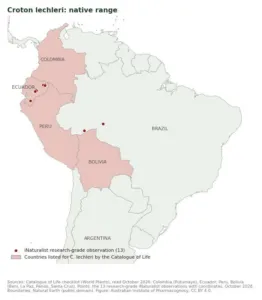
| Native range | Western Amazon: Colombia, Ecuador, Peru, Bolivia; recorded in western Brazil Attested §3 |
| In Australia | No wild or cultivated record found; one Ecuadorian herbarium specimen in Cairns Attested §3 |
| Tradition | Applied to wounds; taken in water for diarrhoea and stomach complaints Traditional §4 |
| Harvest | Trees are felled for latex, then replanted; wild-harvested Attested §5 |
| Chemistry | Mostly proanthocyanidins; alkaloid taspine at 1.3–20.4% of dry resin Confirmed §6 |
| Mechanism | Crofelemer blocks the CFTR and TMEM16A chloride channels from the gut lumen Evidence suggests §7 |
| Crofelemer trial | HIV non-infectious diarrhoea: 18% responders against 8% on placebo; US approval 2012 Confirmed §8 |
| Raw sap trials | One weak trial of an extract cream on small wounds; none by mouth Evidence suggests §8 |
| Safety | Crofelemer: mild, barely absorbed. Sap: taspine is cytotoxic in the laboratory; no human data Evidence suggests §10 |
| Australian law | Crofelemer Schedule 4, no ARTG product; C. lechleri not permitted in listed medicines Attested §11 |
| Emergency | Triple Zero (000); Poisons Information Centre 13 11 26 Attested §10 |
- Confirmed Established in humans by trial, or an unambiguous analytical or chemical fact.
- Evidence suggests Real published data, but preclinical, observational, small, post hoc or not independently replicated.
- Mechanism A plausible mechanistic or pharmacological inference about how something works, short of a measured outcome.
- Traditional Historical or ethnobotanical use. Evidence of practice. Efficacy is a separate question.
- Attested A documentary fact attested in a named record: a legislative instrument, a regulator’s register or label, a taxonomic index, a biodiversity database or a published account. It states what the record says.
- Unsourced A statement the Institute could not trace to a source it was able to open and read, flagged so no reader mistakes it for a sourced claim.
Every PubMed ID (PMID) below links to its record and was checked against PubMed in October 2026, and every paper cited by PMID was read in full text. Papers the Institute could not open in full have been requested through its library and are not cited for their content. Every compound was checked against PubChem and is linked by CID. Every Australian regulatory statement was read from the regulator’s or the legislature’s own document or database in October 2026 unless another month is given. United States material, including the crofelemer approval and label, is overseas and does not govern Australia.
The plant and the name. Sangre de grado is the red latex of Croton lechleri, a fast-growing tree of the western Amazon, and of a few related crotons. “Dragon’s blood” also names the red resins of Dracaena trees and the rattan palm Daemonorops, which are different plants with different chemistry. Only Croton latex gives sangre de grado and the drug crofelemer. Attested
Tradition. In Peru, Ecuador and nearby countries the sap is put on cuts and taken in water for diarrhoea and stomach complaints, a widespread and long-standing practice. Traditional
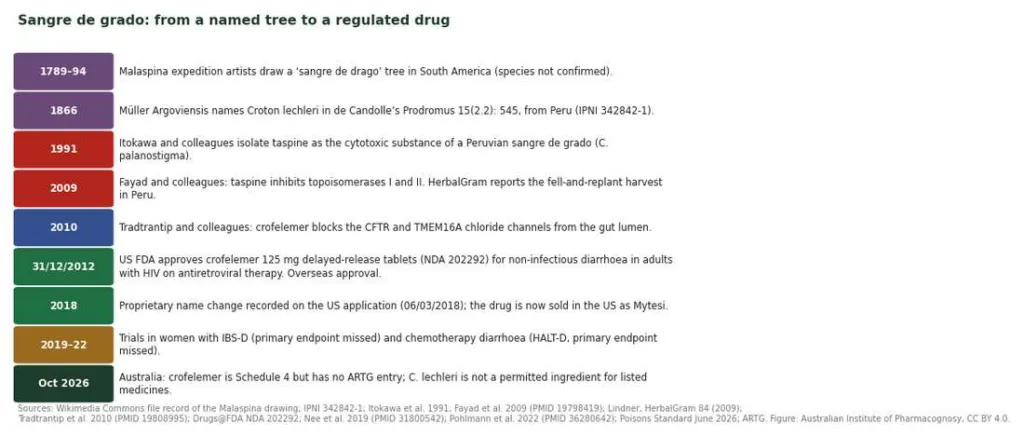
The drug. Crofelemer, a purified proanthocyanidin from the sap, blocks two chloride channels in the gut wall and is barely absorbed. In the trial behind its 2012 US approval, 18 per cent of adults with HIV-related non-infectious diarrhoea responded, against 8 per cent on placebo. Trials in irritable bowel syndrome and chemotherapy diarrhoea missed their main endpoints. The US approval does not apply in Australia. Confirmed
The sap is a different product. Raw sap also contains taspine, an alkaloid that is strongly toxic to cells in laboratory studies and varies widely between trees. There are no oral trials of the sap and no human pregnancy data. Evidence suggests
In Australia. Crofelemer is Schedule 4 with no product on the ARTG. Croton lechleri is not a permitted ingredient for listed medicines. The “dragon’s blood” in Australian listed medicines is Asian palm or dragon-tree resin. Before taking any botanical drug, consult a degree-qualified herbalist with competencies and adequate training in pharmacognosy.
 Chapter 1A red sap and a prescription drug
 Chapter 2Identity and the many dragon’s bloods
 Chapter 3Botany, range and Australian status
 Chapter 4Traditional and historical use
 Chapter 5Wild harvest in Peru
 Chapter 6Phytochemistry
 Chapter 7Pharmacology
 Chapter 8Clinical evidence
 Chapter 9Sap, drug and trade product
 Chapter 10Safety and interactions
 Chapter 11Australian regulatory status
 Chapter 12Discussion and research agenda
1. A red sap and a prescription drug
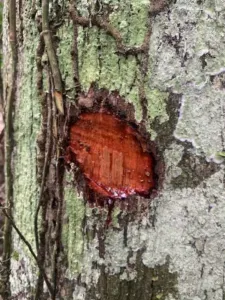
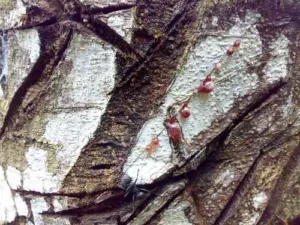
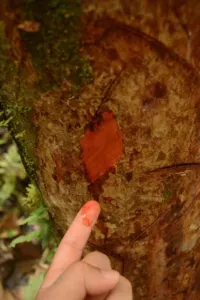
Cut the grey bark of Croton lechleri and it bleeds. The latex is a deep, clear red, it runs freely for a few seconds and then thickens, and in Peru and Ecuador it has a common name to match: sangre de grado, or sangre de drago, dragon’s blood. People in the western Amazon have dabbed it on cuts and taken it in water for stomach and bowel complaints for as long as anyone has written about the region’s medicine (PMID 40043740; HerbalGram 125 (2020)). Traditional
The same sap is the starting material for a modern prescription drug. On 31/12/2012 the United States Food and Drug Administration approved crofelemer, a purified mixture of proanthocyanidin chains extracted from the latex, as 125 mg delayed-release tablets for the symptomatic relief of non-infectious diarrhoea in adults with HIV/AIDS on antiretroviral therapy (Drugs@FDA, NDA 202292; FDA label, Mytesi). Attested It was first sold as Fulyzaq and later renamed Mytesi (PMID 28743606). Attested That approval is a decision of a United States regulator. It has no legal effect in Australia, and chapter 11 sets out where crofelemer and the sap stand here.
Very few herbal medicines have travelled that road from a market stall to a regulator’s approval as a new medicine, and the ones that have tend to be misunderstood in both directions. Admirers of the sap point to the drug as proof the folk remedy works. Sceptics point to the narrow approval as proof it does little. Both readings skip the details, and the details are what this review is about. The approved drug is a defined fraction of the sap, made to a specification, coated so that it survives the stomach, and tested in one group of patients for one kind of diarrhoea. The sap is a variable mixture that also contains an alkaloid, taspine, with strong effects on cells in the laboratory. Confirmed
A third thing complicates the picture for Australian readers. Search for “dragon’s blood” in Australia and most of what comes back is incense, ink, skincare and Chinese medicine, made from the red resins of quite different plants: Dracaena trees from Socotra, the Canary Islands and southern China, and the rattan palm Daemonorops draco of Sumatra and Borneo (PMID 25054444; PMID 34337055). Attested None of those resins is sangre de grado, and none of them is the source of crofelemer.
This is AIP-LR-CROLEC in the Australian Institute of Pharmacognosy’s literature reviews. It introduces the plant, sorts out the name, separates Amazonian traditional use from what the crofelemer trials showed, explains why a purified drug and a bottle of sap are different things, looks at how the latex is harvested in Peru, covers the chemistry and the safety record calmly, and reports what the Institute found when it searched the Australian registers in October 2026.
2. Identity, taxonomy and the many dragon’s bloods
The name on the label
The tree was named Croton lechleri by the Swiss botanist Johannes Müller of Aargau, who signed his work Müll.Arg., in the volume of de Candolle’s Prodromus published in late August 1866 (volume 15, part 2, page 545), from material collected in Peru (IPNI 342842-1). Attested The International Plant Names Index records it as name 342842-1. The Catalogue of Life, which draws here on the World Plants checklist, accepts the name and lists two synonyms: Croton draco var. cordatus Müll.Arg. and Oxydectes lechleri (Müll.Arg.) Kuntze (Catalogue of Life). Attested The synonym under Croton draco matters for readers of older literature, because C. draco itself is a separate species of Mexico and Central America that also bleeds red latex and is also called sangre de drago (PMID 31852435). Attested
The genus is enormous. Croton belongs to the spurge family, Euphorbiaceae, alongside rubber (Hevea), cassava and castor oil, and many of its species carry latex in specialised cells in the bark (PMID 31852435). Attested Several red-latex crotons of the Amazon are sold under the same Spanish names. Itokawa and colleagues, working in Tokyo in 1990, listed C. erythrochilus, C. lechleri and C. palanostigma (also called C. draconoides) as the species from which sangre de grado is usually obtained, and the sample they analysed, bought in Iquitos in August 1987, was C. palanostigma (PMID 1893488). Attested So even a bottle honestly labelled sangre de grado from Peru may hold the latex of more than one Croton species.
Four genera, one name
“Dragon’s blood” is older than the Amazonian trade by many centuries, and it has always meant any red resin or exudate dramatic enough to earn the name. Reviews of the subject list four genera from three unrelated plant families: Croton (Euphorbiaceae), Dracaena (now in Asparagaceae), Daemonorops (the rattan palms, Arecaceae) and Pterocarpus (the pea family, Fabaceae) (PMID 25054444; PMID 26870678; PMID 34337055). Attested The products have little in common beyond the colour.
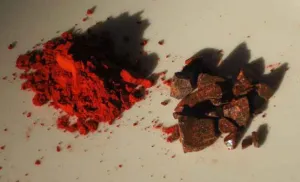
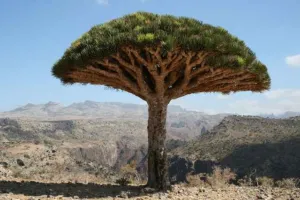
The dragon trees are the most famous. Dracaena cinnabari grows only on the island of Socotra, off Yemen, where the deep red resin from its cut stems is a commercially important export, and the species is listed as Vulnerable on the IUCN Red List (PMID 34337055). Attested Dracaena cochinchinensis of southern Yunnan and Guangxi, Vietnam and Laos is the source of Chinese dragon’s blood, which is extracted from resin-filled wood with alcohol, and the plant has been listed as a nationally endangered plant in China since 1987 (PMID 25054444). Attested Dracaena draco, the dragon tree of the Canary Islands, also bleeds resin from wounds in its trunk, as a Wellcome Collection aquatint of about 1819 shows below. Attested The rattan palm Daemonorops draco carries its red resin on its fruit, and that resin is sold as incense and as an apothecary’s or pigment-grade powder (Commons file record, Daemonorops resin). Attested
The chemistry differs as much as the botany. Croton latex is mostly proanthocyanidins, with alkaloids such as taspine (PMID 40043740). Confirmed Dracaena resins are dominated by flavonoids, chalcones and dihydrochalcones, including the loureirins (PMID 25054444; PMID 34337055). Confirmed The palm resin is known for the red flavylium pigment dracorhodin (CID 69509). Confirmed Chapter 6 shows the structures. The practical point is simple. A study of Dracaena or Daemonorops resin tells us nothing about sangre de grado, and the crofelemer trials tell us nothing about a jar of resin incense, whatever the label says.
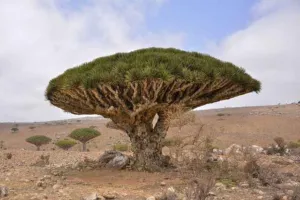
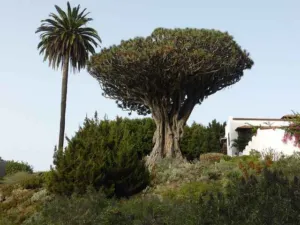
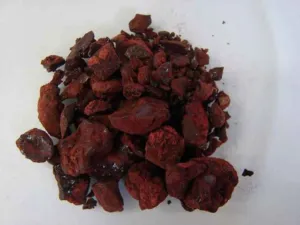
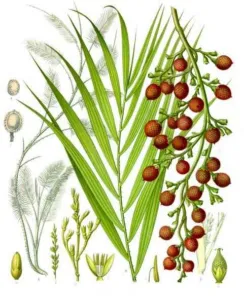
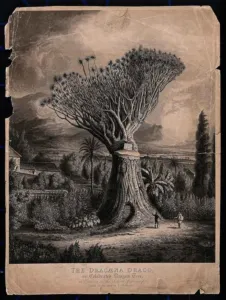
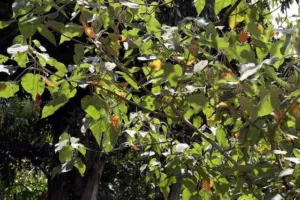
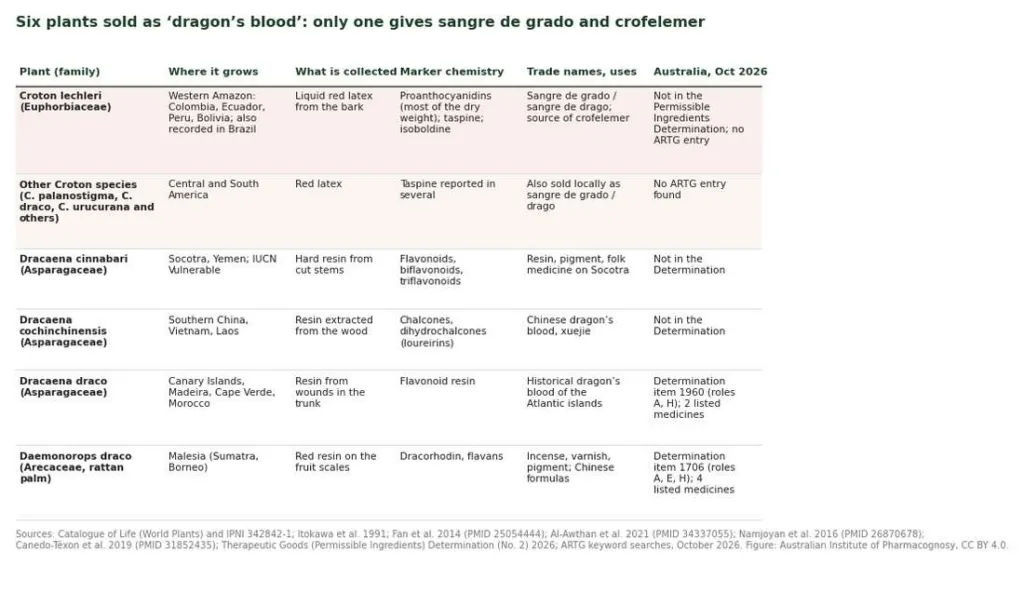
The 2025 review of C. lechleri chemistry by de Albuquerque and colleagues makes the same point from the laboratory side: products marketed as dragon’s blood that are unrelated to C. lechleri or even to Croton circulate widely, and the authors propose taspine together with the alkaloid isoboldine as a chemical fingerprint for the genuine sap (PMID 40043740). Evidence suggests Chapter 9 returns to that idea.
3. Botany, distribution and Australian status
The tree
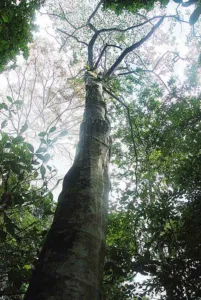
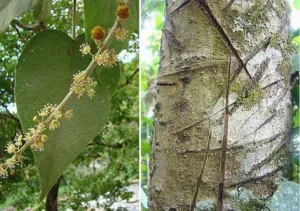
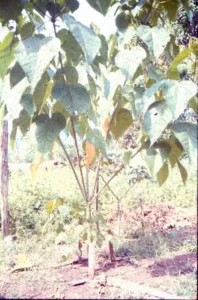
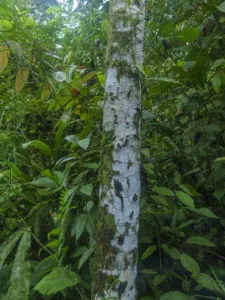
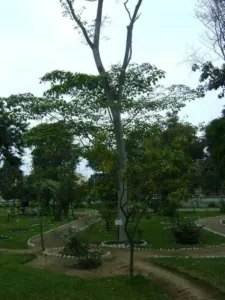
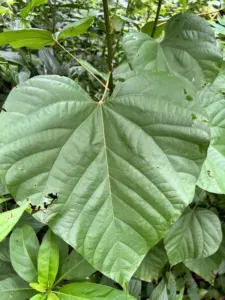
Croton lechleri is a small to emergent canopy tree with smooth white to grey bark and simple, alternate, heart-shaped leaves. Reported heights run from 3 to 25 m, trunk diameters from 15 to 55 cm, and its working life is short for a tree, about 5 to 20 years (PMID 40043740). Attested It is monoecious, carrying male and female flowers on the same tree, and flowers once a year in the dry season, between June and October in Peru, on terminal spikes up to 30 cm long (HerbalGram 125 (2020)). Attested The three-celled capsules split explosively between October and November, at the start of the rains, and a four-year-old tree can produce about 600,000 seeds in a season (HerbalGram 125 (2020)). Attested Seed lies dormant in the leaf litter beneath the parent until a gap opens, and seedlings grow 1 to 2 m a year in full sun (HerbalGram 125 (2020)). Attested That is the life of a pioneer: it colonises clearings, road edges, old gardens and riverbanks, and gives way as the forest closes over it.
The latex sits in laticifers, specialised latex-carrying cells in the bark. In the related C. draco, Canedo-Téxon and colleagues found the highest density of laticifers in the cortex of the roots, and more taspine in the roots than in the stem; the latex tapped from the trunk bark held more taspine than any organ they sampled (PMID 31852435). Evidence suggests Younger trees give a thinner, sometimes orange latex and older trees a thicker red one (PMID 40043740; HerbalGram 84 (2009)). Attested
Where it grows
The Catalogue of Life lists the species as native to Colombia (Putumayo), Ecuador, Peru and Bolivia (Beni, La Paz, Pando and Santa Cruz) (Catalogue of Life). Attested Field accounts place it at about 100 to 1,800 m elevation in the western Amazon, with temperatures of 18 to 30 °C and 2,000 to 4,000 mm of rain a year (PMID 40043740); the HerbalGram account of the harvest gives a general range of 300 to 2,000 m (HerbalGram 84 (2009)). Attested Research-grade observations on iNaturalist also include records from Rondônia in western Brazil (iNaturalist), and the 2020 HerbalGram article includes Brazil in the range (HerbalGram 125 (2020)). Attested
Is it in Australia?
The tree has no Australian record outside a herbarium cabinet. A search of the Atlas of Living Australia in October 2026 returned one record under the name Croton lechleri: a preserved specimen collected in Ecuador in 1991 by V. Zak and held by the Australian Tropical Herbarium in Cairns (Atlas of Living Australia). Attested There were no observations of the species growing in Australia. The full texts of the Biosecurity Act 2014 (Qld) and the Biosecurity Regulation 2016 (Qld) contain no mention of Croton lechleri, sangre de grado or dragon’s blood (Biosecurity Act 2014 (Qld)). Attested The Institute found no record of the species being cultivated in Australia; that may simply reflect what has been recorded, and a living collection in a tropical botanic garden would not surprise anyone in Cardwell, where the wet-tropics climate is close to its own. Unsourced Anyone thinking of growing it should know it is a pioneer that sets seed prolifically, which is the profile that makes biosecurity officers careful. Mechanism
4. Traditional and historical use
The written record of sangre de grado in Amazonian medicine is mostly second hand: botanists, chemists and companies describing what local people told them. The Institute has read those accounts in full; the older ethnographic sources they rely on, and the 2003 review of traditional use by Jones, have been requested through the Institute’s library and are not cited here for their content. With that caveat, the accounts agree closely with each other.
The commonest use is on the skin. Applied straight from the tree, the latex is rubbed into cuts, scrapes, bites and stings, where it dries to a pale film; it is also used for mouth ulcers, toothache and fungal infections of the skin (PMID 40043740; PMID 1893488). Traditional By mouth, a few drops in water are taken for diarrhoea, stomach ulcers and other gut complaints, and in Ecuador and Peru for diarrhoeas including dysentery and cholera (PMID 19808995; HerbalGram 125 (2020)). Traditional Reports also mention respiratory complaints, rheumatism and use against cancer (PMID 40043740; HerbalGram 125 (2020); PMID 1893488). Traditional The 2020 HerbalGram account describes trees grown in house gardens throughout the range so the latex can be taken as needed, by cutting a small incision in the trunk with a machete (HerbalGram 125 (2020)). Traditional
Those uses are evidence of practice, and a long and widespread one. They show what generations of people found worth doing with the sap. They do not, on their own, show how well it works for any of those purposes, and they say nothing about dose, frequency or harm, because a folk practice records habits more readily than outcomes. That is the reason the Institute tags them separately from the trials in chapter 8. Where a traditional use does have a pharmacological correlate, as the gut use does, the review states both and keeps the tags apart.
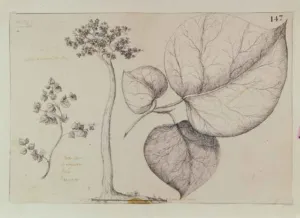
The name is old. The Malaspina expedition’s drawing shows that a South American tree was being called sangre de drago by the end of the eighteenth century (Malaspina drawing, file record). Attested The specific link between C. lechleri and the Peruvian trade becomes clear only with Müller’s description of 1866 and, much later, with the chemical work of the 1970s to 1990s, much of it on samples bought in Iquitos and Lima markets (PMID 1893488). Attested The modern drug programme began with an ethnobotanical drug-discovery company, Shaman Pharmaceuticals, whose intellectual property passed to Napo Pharmaceuticals when Shaman closed (HerbalGram 84 (2009)). Attested
5. Wild harvest and sustainability in Peru
The crofelemer label states that the drug substance is extracted from Croton lechleri “harvested from the wild in South America” (FDA label, Mytesi). Attested Crofelemer cannot currently be made synthetically, so every tablet begins as latex from a tree (HerbalGram 125 (2020)). Attested How that latex is collected is the most interesting sustainability story in this review, because the obvious method turned out to be the destructive one.
Why the trees are felled
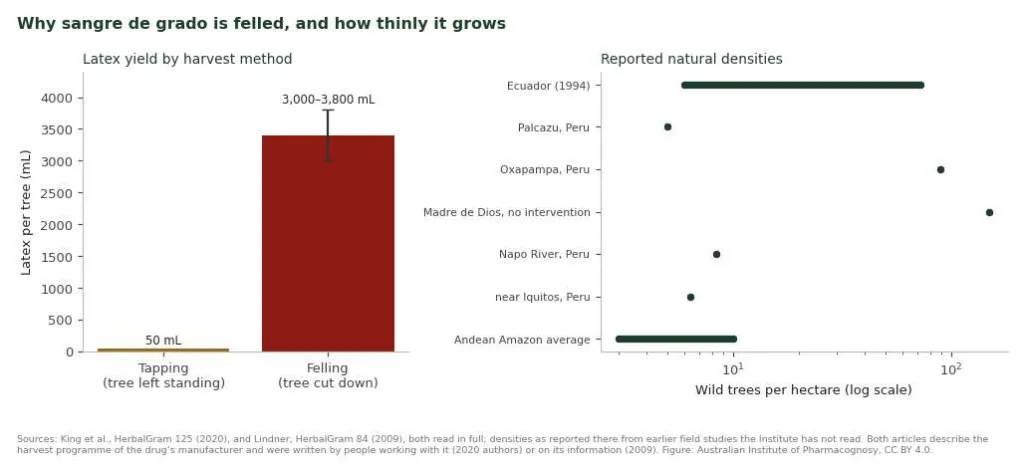
The latex can be tapped like rubber, by slashing the bark and catching what flows, and that is how families take small amounts from garden trees (HerbalGram 125 (2020)). Traditional When the drug developers tried tapping at scale, the trees gave little latex and many died. Bark samples sent to the Royal Botanic Gardens, Kew, were examined by Paula Rudall, who found that the latex vessels of Croton are non-articulated and do not regenerate when cut, unlike the articulated laticifers of the rubber tree, chicle or jelutong that can be tapped for years (HerbalGram 84 (2009)). Attested Preliminary studies reported about 50 mL of latex per tree by tapping against 3,000 to 3,800 mL by felling, with high mortality among tapped trees within 10 to 12 months (HerbalGram 125 (2020)). Evidence suggests
So the commercial harvest fells the tree. Collectors test a tree with a small slash, leave it standing if the latex is poor, and otherwise cut it down onto two logs with the base raised, then score rings around the bark every 15 cm and catch the latex in containers; trees of six or seven years and at least about 27 cm diameter yield an average of 3 to 4 L (HerbalGram 84 (2009)). Attested Collectors are advised to work early in the morning in dry weather, because heat and rain both reduce or dilute the yield (HerbalGram 84 (2009)). Attested
Replanting
Felling a tree for its latex is sustainable only if the trees are replaced faster than they are cut, and wild densities are low. Field studies summarised in the two HerbalGram articles give an average of 3 to 10 trees per hectare in Andean Amazon forest, with reports ranging from about 5 per hectare in Palcazu, Peru, to 149 per hectare in undisturbed plots in Madre de Dios (HerbalGram 84 (2009); HerbalGram 125 (2020)). Evidence suggests In 2009 Napo reported that 317,000 trees had been planted with its help, at a ratio of three to five trees planted for every tree felled (HerbalGram 84 (2009)). Attested The 2020 update, written by people who run the harvest, reports one programme in the Pichis valley with 140 Yánesha, Asháninka and local families, about 118,230 trees planted on about 230 hectares since 2009, a goal of up to five trees replanted for each gallon of latex, and latex currently drawn about 75 per cent from secondary forest, 15 per cent from reforestation sites and 10 per cent from logged primary forest, with a goal of shifting to 65 to 70 per cent from reforested areas (HerbalGram 125 (2020)). Attested Trees from plantations are recommended for harvest at 9 to 10 years (HerbalGram 125 (2020)). Attested The species is listed neither under CITES nor as threatened under United States law (HerbalGram 125 (2020)). Attested
Two cautions belong beside those figures. Both articles describe the manufacturer’s own supply chain, the 2020 one is written by people who work in it, and the funding is disclosed in the text; the Institute found no independent audit of the planting numbers. Attested And the Institute could not find a formal IUCN Red List assessment of C. lechleri; one 2004 Brazilian thesis, which the Institute has not read, is described in search results as listing it as critically endangered in Acre, which would be a regional judgement worth checking. Unsourced The ecology works in the tree’s favour: a fast-growing pioneer that seeds heavily and thrives in disturbed ground is the kind of species that can be farmed in agroforestry. The unregulated trade in sap for tourists, markets and online sellers is outside these programmes, and nobody appears to be counting it. Unsourced
6. Phytochemistry
Proanthocyanidins: most of the sap
Dry the latex and up to about 90 per cent of what remains is proanthocyanidin, according to the analyses summarised in the 2025 review (PMID 40043740). Confirmed Proanthocyanidins, also called condensed tannins, are chains of flavan-3-ol units. In C. lechleri the units are (+)-catechin (CID 9064), (−)-epicatechin (CID 72276), (+)-gallocatechin (CID 65084) and (−)-epigallocatechin (CID 72277), joined in random sequence through carbon-4 to carbon-6 or carbon-4 to carbon-8 bonds (PMID 19808995). Confirmed The dimer procyanidin B2 (CID 122738) shows what one such link looks like.
Crofelemer is a fraction of that proanthocyanidin. Tradtrantip and colleagues describe it as an amorphous dark red-brown powder with an average molecular mass of about 2,100 Da, its chains mostly 3 to 30 units long (PMID 19808995). Confirmed Kleindl and colleagues, who extracted it from commercial tablets, report an average molecular weight of about 2,300 Da and an average chain of about seven units, and found that the material changed measurably on storage at 25 and 40 °C over 30 days (PMID 28743606). Confirmed The US label gives an average degree of polymerisation of 5 to 7.5 by phloroglucinol degradation (FDA label, Mytesi). Attested Because the chains are random and of varying length, crofelemer has no single structure and no PubChem compound record; the Institute searched PubChem for it in October 2026 and found none. Attested Its quality is controlled through a set of analytical attributes, which is why lot-to-lot comparison of crofelemer has become a model problem in the regulation of complex botanical drugs (PMID 28743606). Confirmed
Taspine and the other alkaloids
Taspine (CID 215159; C20H19NO6) is the best-known alkaloid of the sap. Its PubChem structure has two lactone rings, two methoxy groups and a dimethylaminoethyl side chain, and it occurs in several unrelated families, including Berberidaceae and Magnoliaceae as well as Euphorbiaceae (PMID 1893488). Confirmed In the related C. draco, transcriptomic and metabolomic work supports the aporphine alkaloid magnoflorine (CID 73337) as its probable precursor, though none of the enzymes for the final steps has been characterised (PMID 31852435). Evidence suggests
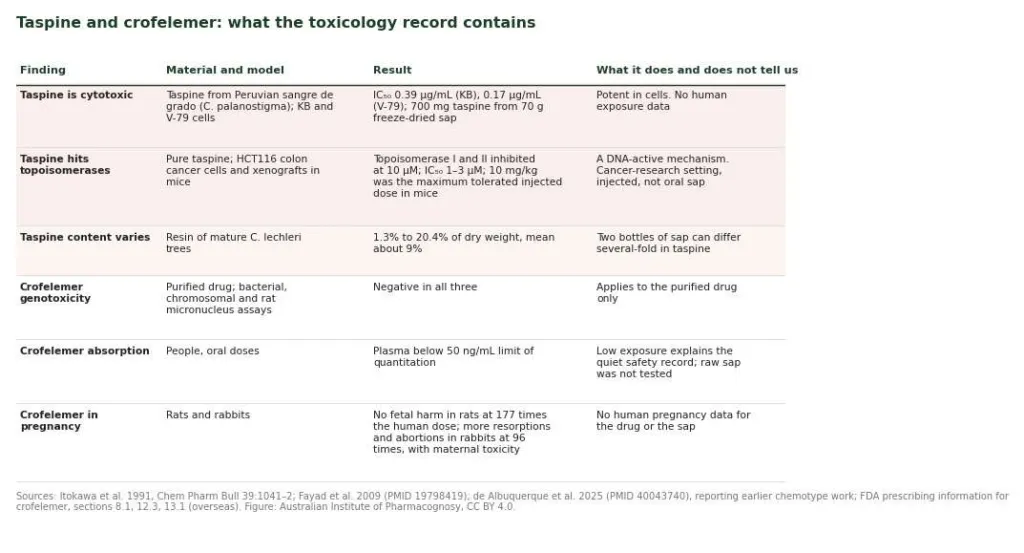
The amount of taspine in sap is very uneven. The 2025 review reports a range of 1.3 to 20.4 per cent of the resin’s dry weight in mature trees, with a mean near 9 per cent, and describes three alkaloid chemotypes of C. lechleri, distinguished by glaucine, isoboldine (CID 133323) and thaliporphine, with isoboldine present in all three (PMID 40043740). Evidence suggests Itokawa’s group obtained 700 mg of taspine from 70 g of freeze-dried C. palanostigma sap, about 1 per cent (PMID 1893488). Confirmed A fifteen-fold spread between trees means that two bottles of sap can differ greatly in alkaloid content, a point chapter 10 returns to.
Everything else
The sap also contains smaller amounts of lignans such as 3′,4-O-dimethylcedrusin, megastigmanes, phenylpropanoids, a clerodane saponin, diterpenes such as crolechinic acid, phytosterols including β-sitosterol, and the morphinane alkaloid sinoacutine; the bark yields an essential oil (PMID 40043740). Confirmed The marker compounds of the look-alike resins are shown below for comparison: loureirin B (CID 189670) from Chinese Dracaena dragon’s blood and dracorhodin (CID 69509) from the rattan palm (PMID 25054444). Confirmed
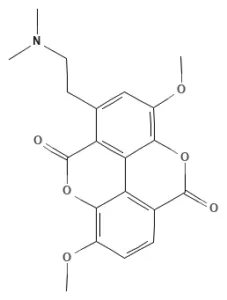
C20H19NO6 · alkaloid of the sap; cytotoxic, topoisomerase inhibitor
PubChem CID 215159 · structure image: PubChem, public domain
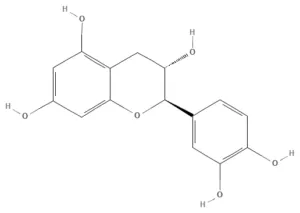
C15H14O6 · flavan-3-ol unit of the proanthocyanidins
PubChem CID 9064 · structure image: PubChem, public domain
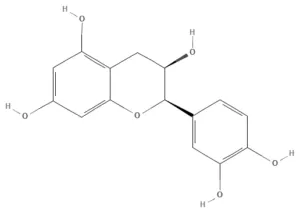
C15H14O6 · flavan-3-ol unit
PubChem CID 72276 · structure image: PubChem, public domain
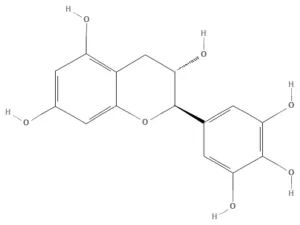
C15H14O7 · flavan-3-ol unit
PubChem CID 65084 · structure image: PubChem, public domain
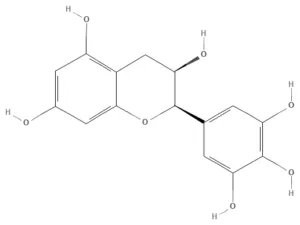
C15H14O7 · flavan-3-ol unit
PubChem CID 72277 · structure image: PubChem, public domain
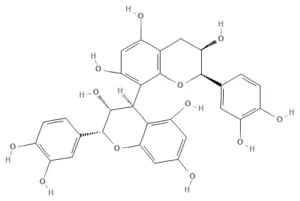
C30H26O12 · a dimer, showing the 4→8 link
PubChem CID 122738 · structure image: PubChem, public domain
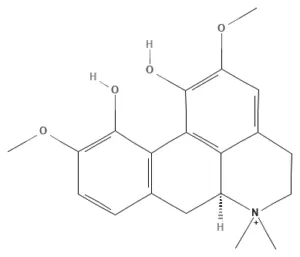
C20H24NO4+ · probable precursor of taspine
PubChem CID 73337 · structure image: PubChem, public domain
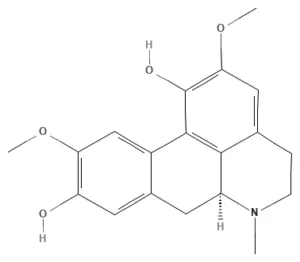
C19H21NO4 · alkaloid in all three chemotypes
PubChem CID 133323 · structure image: PubChem, public domain
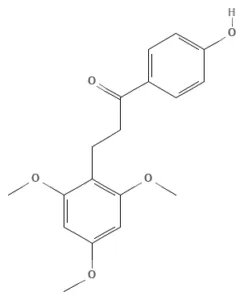
C18H20O5 · marker of Chinese Dracaena resin
PubChem CID 189670 · structure image: PubChem, public domain
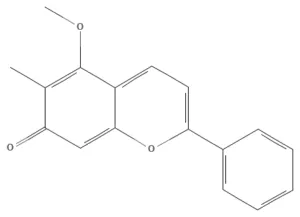
C17H14O3 · red pigment of Daemonorops resin
PubChem CID 69509 · structure image: PubChem, public domain
Ten structures. The first eight belong to Croton latex: taspine, the four flavan-3-ol units of the proanthocyanidins and crofelemer, a dimer showing how they link, the taspine precursor magnoflorine and the chemotype marker isoboldine. The last two mark the unrelated resins sold under the same name. Crofelemer itself, a random oligomer, has no single structure or PubChem CID. Every CID was checked against PubChem in October 2026; the depictions are PubChem’s own (US National Library of Medicine, public domain), background whitened and cropped by the Institute.
7. Pharmacology: two chloride channels in the gut wall
Most diarrhoea that is not caused by a damaged gut lining is secretory: the cells lining the intestine pump chloride into the gut, sodium and water follow, and the bowel fills with fluid faster than it can absorb it. Chloride leaves the cells through channels on their luminal surface. The two main ones are CFTR, the cystic fibrosis transmembrane conductance regulator, opened by cyclic AMP (the route used by cholera toxin), and the calcium-activated chloride channels, of which TMEM16A is the best characterised (PMID 19808995). Confirmed
Tradtrantip, Namkung and Verkman worked out where crofelemer acts. In human intestinal T84 cells it blocked chloride secretion driven by both cyclic AMP and calcium. In cells engineered to express one channel at a time, crofelemer acting from the outside of the cell blocked CFTR partially, to a maximum of about 60 per cent with an IC50 near 7 µM, by stabilising the closed state of the channel; the block resisted washing out, with less than half reversed after four hours. It blocked TMEM16A almost completely, by more than 90 per cent, with an IC50 near 6.5 µM. It had little or no effect on sodium or potassium channels or on cyclic AMP and calcium signalling inside the cell (PMID 19808995). Evidence suggests Earlier work on the parent extract SB-300 and the related proanthocyanidin SP-303 had shown CFTR-mediated chloride secretion blocked in T84 cells, as summarised in the 2025 review (PMID 40043740). Evidence suggests
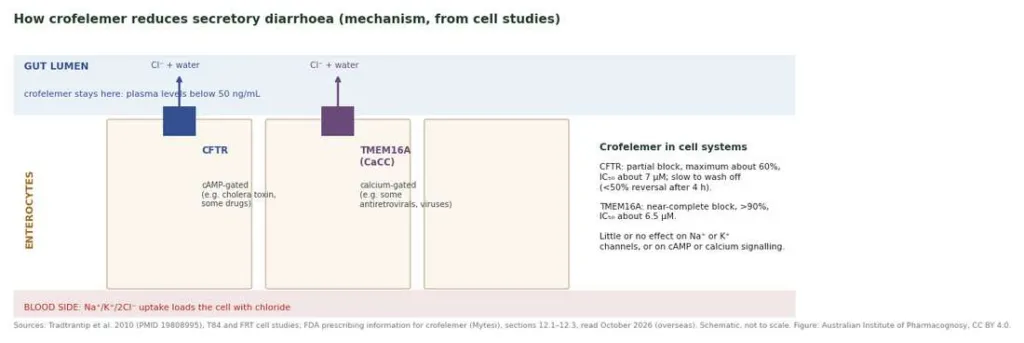
The mechanism fits the drug’s other properties. Crofelemer is large and polar, so it is barely absorbed: in people, plasma concentrations after oral doses are below the 50 ng/mL limit of the assay, and standard pharmacokinetic parameters cannot be calculated (FDA label, Mytesi). Confirmed It therefore acts from the gut lumen, which is where the target channels face. Patients given eight times the usual daily dose had lower stool chloride than those on placebo, which is the change the mechanism predicts (FDA label, Mytesi). Evidence suggests Antiretroviral drugs and some cancer drugs are thought to provoke diarrhoea partly through calcium-activated chloride secretion, which would make the strong TMEM16A block relevant to the patients crofelemer was approved for; Tradtrantip and colleagues describe the evidence for that link as indirect (PMID 19808995). Mechanism
What the sap does in the laboratory
The whole sap has a wider spread of reported activities, almost all from cell and animal studies. Taspine increased the migration of human skin fibroblasts and had a dose-related wound-healing effect in rats, and the sap’s proanthocyanidins are thought to help a wound by forming a film, binding proteins at the wound edge and acting as antioxidants (PMID 40043740). Evidence suggests The sap inhibited both the classical and alternative pathways of complement and reduced inflammation in rats when injected, effects the authors attributed mainly to constituents other than taspine (PMID 40043740). Evidence suggests Taspine itself is a dual inhibitor of topoisomerases I and II, the enzymes that untangle DNA, and kills cancer cells in culture at low micromolar concentrations (PMID 19798419). Evidence suggests That last finding is the bridge to the safety chapter.
8. Clinical evidence
Almost all the controlled human evidence concerns crofelemer, a purified drug in an enteric-coated tablet. One small trial tested a crude extract of the sap on the skin. The Institute found no randomised trial of raw sangre de grado taken by mouth.
HIV-associated diarrhoea: the approval trial
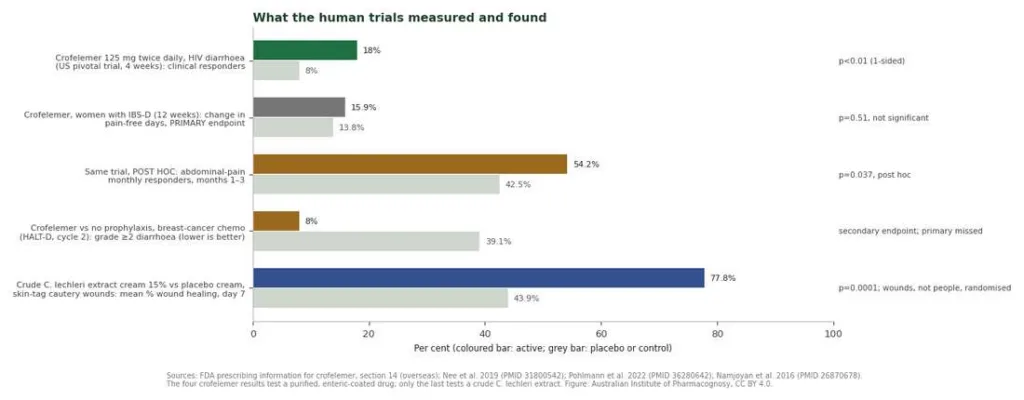
The trial behind the US approval enrolled 374 adults with HIV on stable antiretroviral therapy who had had diarrhoea for at least a month, after infections and other gut diseases had been excluded. In a two-stage design, people with at least one watery stool a day on most days of a 10-day placebo run-in were randomised to crofelemer or placebo for 31 days; 136 received the approved 125 mg twice daily and 138 placebo. Response was defined as two or fewer watery stools a week in at least two of the four weeks. Eighteen per cent of the crofelemer group responded, against 8 per cent on placebo (one-sided p < 0.01) (FDA label, Mytesi). Confirmed Of the 24 responders, 22 continued into an open five-month extension, and 14 were still responding at month five (FDA label, Mytesi). Attested
That result is real and modest. Ten more people in every hundred reached the response threshold than on placebo, in a population whose median diarrhoea had lasted four years. The trial population was 85 per cent male, there were too few women to assess the effect in them, and the drug worked less well in African-American patients than in others (FDA label, Mytesi). Confirmed The full trial report (MacArthur and colleagues, 2013) is open access on the publisher’s site, which blocked automated download; it has been requested through the Institute’s library, and the figures above are taken from the regulator-approved label, read in full.
Other diarrhoeas
In irritable bowel syndrome with diarrhoea, an earlier dose-ranging trial in 244 men and women missed its primary endpoint, with no effect in men, according to the account given by Nee and colleagues (PMID 31800542). Evidence suggests Their own trial randomised 240 women to crofelemer 125 mg or placebo twice daily for 12 weeks. The primary endpoint, change in the share of pain-free days, did not differ (15.9 against 13.8 per cent, p = 0.51), nor did stool consistency, frequency, urgency or adequate relief. A post hoc analysis using later FDA responder definitions found more abdominal-pain responders over three months on crofelemer (54.2 against 42.5 per cent, p = 0.037) (PMID 31800542). Evidence suggests A finding that appears only after the endpoints were redrawn is a lead for a new trial and nothing firmer. Attested
HALT-D randomised 51 patients with HER2-positive breast cancer starting chemotherapy and targeted antibodies to crofelemer for two cycles or to no prophylaxis, with standard anti-diarrhoeal rescue for all. The primary endpoint, any diarrhoea for two or more consecutive days, did not differ. Moderate or worse diarrhoea in the second cycle was less common with crofelemer (8.0 against 39.1 per cent), and the authors judged the primary endpoint insensitive (PMID 36280642). Evidence suggests The trial was open-label and small. Tradtrantip and colleagues also cite earlier randomised trials of SP-303, the parent proanthocyanidin, in diarrhoea in people with AIDS (Holodniy and colleagues, 1999) and in acute travellers’ diarrhoea (DiCesare and colleagues, 2002), and describe cholera as a target of trials then under way (PMID 19808995). Attested Both papers have been requested through the Institute’s library; the Institute has not yet read them in full and draws nothing from their results. Unsourced
The skin: one trial of a crude extract
Namjoyan and colleagues in Ahvaz, Iran, made an 80 per cent ethanol extract of C. lechleri powder bought from a Dutch ethnobotanical supplier, put it into a cream at 15 per cent, and compared it with a placebo cream coloured to match in 60 people having skin tags removed by cautery. The 100 wounds were randomised individually, 45 to the extract and 55 to placebo. The extract wounds healed faster at every visit: mean wound healing was 77.8 against 43.9 per cent at day 7, and 95.7 against 78.1 per cent at day 14 (p < 0.01 at all time points) (PMID 26870678). Evidence suggests
The effect is large and the design is weak. Wounds, not people, were the unit of randomisation and analysis, so wounds on the same person were treated as independent; the paper gives no sample-size calculation, no account of how allocation was concealed and no adverse-event report; the plant material was not identified by a botanist or vouchered; and it remains the only such trial. Attested It is a reasonable reason to run a better one.
The verdict by evidence grade
For crofelemer in HIV-associated non-infectious diarrhoea, one adequately sized randomised trial shows a modest benefit and earned a US approval. Confirmed For crofelemer in other diarrhoeas, the trials missed their primary endpoints and offer hypotheses. Evidence suggests For the crude sap on small wounds, one weak trial is positive. Evidence suggests For the raw sap taken by mouth for diarrhoea, the support is traditional use plus a mechanism shown for a purified fraction. Traditional Those are four different claims, and a product label or a website that blurs them is saying more than the evidence allows.
9. Sap, drug and trade product: quality and adulteration
Three different things are sold or discussed under the name dragon’s blood, and the evidence for one does not carry over to the others. Figure 7 sets them side by side.
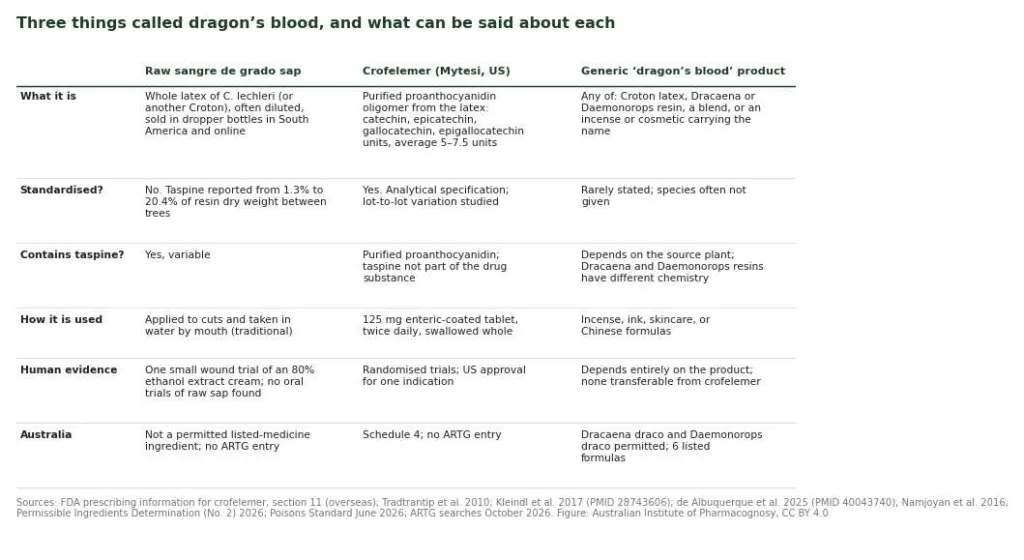
The purified drug. Crofelemer is a defined oligomer fraction made to an analytical specification, given as 125 mg in a tablet with an acid-resistant coating that releases it in the intestine, and studied for interactions, genotoxicity, carcinogenicity and effects in pregnant animals (FDA label, Mytesi). Attested Its quality attributes were studied closely because the starting latex varies from tree to tree (PMID 28743606). Confirmed The proanthocyanidin chains are the active ingredient. Whatever else is in the latex, taspine included, belongs to the raw material.
The raw sap. Sangre de grado sold in dropper bottles is the whole latex, sometimes diluted or preserved, from one or more Croton species, with taspine content that can vary about fifteen-fold (PMID 40043740; PMID 1893488). Evidence suggests Its proanthocyanidins overlap with crofelemer, but nobody has shown that a few drops of sap deliver the same dose of the same chain lengths to the same part of the gut, and the sap brings its alkaloids along with it. Mechanism The crofelemer trials are therefore indirect evidence for sap at best.
The trade product. “Dragon’s blood” on an incense stick, a candle, an ink, a face serum or a herbal formula may be Croton latex, Dracaena or Daemonorops resin, a mixture, or a fragrance named after any of them. Two of the plants are Asian palms and trees with their own chemistry and their own traditional uses in Chinese and Middle Eastern medicine (PMID 25054444; PMID 34337055). Attested The 2025 review notes that products sold as dragon’s blood that have nothing to do with C. lechleri are common and proposes taspine plus isoboldine, or the identification of specific proanthocyanidins, as markers (PMID 40043740). Evidence suggests No survey of Australian products of this kind was found, and the Institute did not test any. Unsourced
What a careful buyer can check
A label that gives the binomial Croton lechleri, the part used (latex or sap), the country of origin and a batch number tells you which plant you are holding. A label that says only “dragon’s blood”, or names Dracaena or Daemonorops, may be a different plant, whatever the marketing says about the Amazon, because the name covers both the Amazonian latex and the Asian resins. No Australian pharmacopoeial standard for the sap exists, so identity and taspine content can only be confirmed by laboratory testing, by thin-layer or liquid chromatography against reference taspine and isoboldine. Attested
10. Safety and interactions
The safety record splits into two very different halves: a purified drug with a regulator-reviewed dossier, and a traditional sap with a long history of use and almost no formal safety data. Both halves deserve a calm reading.
Crofelemer
In three placebo-controlled trials, 696 people with HIV took crofelemer for an average of 78 days. At the approved dose, the adverse reactions more common than on placebo were upper respiratory tract infection (6 against 2 per cent), bronchitis (4 against 0), cough (4 against 1), flatulence (3 against 1), raised bilirubin (3 against 1), nausea, back pain and joint pain (FDA label, Mytesi). Confirmed In the women with IBS-D, adverse events were as frequent on placebo (48 against 49 per cent) and there were no serious events on crofelemer (PMID 31800542). Confirmed The label lists no contraindications. Its one warning is to rule out infectious causes before starting, because treating an infection as non-infectious diarrhoea can delay the right treatment (FDA label, Mytesi). Attested
On interactions, crofelemer has shown the potential in laboratory tests to inhibit the transporters MRP2 and OATP1A2 and the enzyme CYP3A4 at concentrations expected in the gut. In people, four times the usual dose for six days did not change the blood levels of midazolam, a sensitive CYP3A4 test drug, and eight times the usual dose did not alter nelfinavir or zidovudine, while lamivudine exposure fell by 20 per cent, which the regulator judged clinically unimportant (FDA label, Mytesi). Confirmed Crofelemer was negative in bacterial mutation, chromosomal aberration and rat micronucleus tests, produced no drug-related tumours in a six-month transgenic mouse study or a two-year rat study, and did not affect fertility in rats (FDA label, Mytesi). Confirmed
Taspine and the raw sap
Taspine is a potent cytotoxin in cell culture. Itokawa’s group isolated it as the cytotoxic substance of Peruvian sangre de grado, with IC50 values of 0.39 µg/mL against KB cells and 0.17 µg/mL against V-79 hamster cells (PMID 1893488). Evidence suggests Fayad and colleagues showed that it inhibits topoisomerases I and II at 10 µM and kills cancer cell lines at 1 to 3 µM, including lines that pump other topoisomerase drugs out through efflux transporters; in mice, 10 mg/kg was the maximum tolerated injected dose (PMID 19798419). Evidence suggests Those are cancer-research findings, made with pure taspine in cells and injected animals. They do not show that drops of sap taken by mouth harm people, and the Institute found no case report of harm from oral sangre de grado. Attested They do give a plausible reason for caution with repeated oral use of a material whose taspine content varies so widely, and they are the reason genotoxicity studies of the sap were carried out. Those studies, by Rossi and colleagues (2003) and Lopes and colleagues (2004), have been requested through the Institute’s library and are not summarised here until they have been read in full. Mechanism
Pregnancy, breastfeeding and children
There are no human data on the sap or on crofelemer in pregnancy. Crofelemer is barely absorbed, and the label states that fetal exposure is not expected; pregnant rats showed no fetal harm at 177 times the human dose, while pregnant rabbits at 96 times the dose had more resorptions and abortions, alongside weight loss in the mothers that may explain them (FDA label, Mytesi). Attested Raw sap has never been studied in pregnancy, and a topoisomerase-inhibiting alkaloid is a poor candidate to try. Mechanism One more point concerns the name: a traditional use of the Dracaena cinnabari resin of Socotra as an abortifacient in early pregnancy is recorded (PMID 34337055). Traditional A product labelled only “dragon’s blood” could contain that resin. For crofelemer, the US label adds that there are no data on its presence in human milk, that safety and effectiveness have not been established in children, and that mothers with HIV are advised against breastfeeding because of the risk of transmitting the virus (FDA label, Mytesi). Attested No study of the sap in breastfeeding or in children was found. As a precaution in the absence of data, and not as a finding from any study, the Institute’s position is that sangre de grado and dragon’s blood products are best avoided by mouth in pregnancy and while breastfeeding, and by children, until data exist.
Practical points
- Diarrhoea with blood, fever, severe pain, dehydration, recent overseas travel or a weakened immune system needs prompt medical assessment, because an infection may need treatment that sap cannot give. In babies, young children and frail older people, diarrhoea can dehydrate quickly: signs such as drowsiness, very little urine, or being unable to keep fluids down need same-day care, and collapse or confusion is a reason to call Triple Zero (000). The crofelemer label carries the same warning for the purified drug (FDA label, Mytesi). Attested
- Sap applied to a small, clean cut is the traditional use with the least exposure. Deep, dirty, infected or burn wounds need proper wound care. Attested
- Tannin-rich materials can bind proteins and some medicines in the gut. Whether sap reduces the absorption of oral medicines has never been tested; spacing it a few hours from other medicines is a reasonable precaution. It matters most for medicines where a small fall in absorption could matter, such as antiretrovirals, anticancer drugs and warfarin, and people taking those should not add oral sap without professional advice. Mechanism
- Before taking any botanical drug, consult a degree-qualified herbalist with competencies and adequate training in pharmacognosy, especially with a chronic illness or regular medicines.
Suspected side effects of any medicine, herbal or otherwise, can be reported to the TGA (TGA, reporting adverse events). Attested In an emergency call Triple Zero (000); for a suspected poisoning call the Poisons Information Centre on 13 11 26. Attested
11. Australian regulatory status
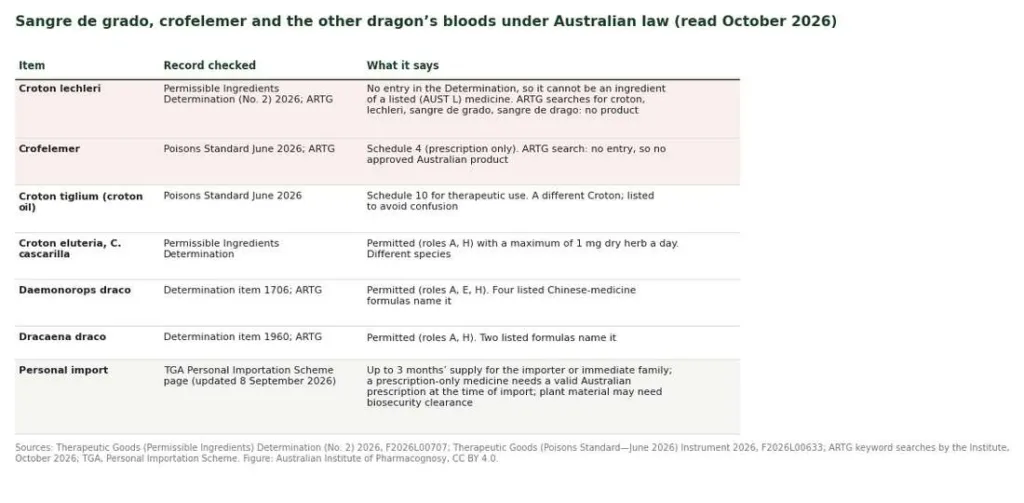
The Institute checked the Australian position directly in October 2026, in the registers and instruments themselves. Figure 9 summarises it.
Crofelemer: Schedule 4, with no Australian product
Crofelemer is listed in Schedule 4 of the Poisons Standard, the schedule for prescription-only medicines (Poisons Standard, June 2026). Attested A keyword search of the Australian Register of Therapeutic Goods (ARTG) for “crofelemer” returned no entry (ARTG searches, October 2026). Attested So there is no approved crofelemer medicine in Australia. The US approval of 2012 does not change that; it is an overseas decision under overseas law (Drugs@FDA, NDA 202292). Attested An unapproved prescription medicine can reach a particular patient through the TGA’s Special Access Scheme, applied for by the treating practitioner, and under the Personal Importation Scheme an individual may import up to three months’ supply of a prescription-only medicine for themselves or immediate family, holding a valid Australian prescription or written authority at the time of import and keeping within 15 months’ supply in any 12 months (TGA, Personal Importation Scheme). Attested The Institute makes no comment on whether either route would suit anyone; that is a clinical matter.
Croton lechleri: no permitted listing
Listed medicines, the AUST L products that make up most of the herbal shelf, may contain only ingredients named in the Therapeutic Goods (Permissible Ingredients) Determination. The current Determination, No. 2 of 2026, has no entry for Croton lechleri, sangre de grado or sangre de drago (Permissible Ingredients Determination). Attested Two other Croton species are there, C. cascarilla and C. eluteria (cascarilla bark), each permitted for active and homoeopathic use with a maximum recommended daily dose equivalent to 1 mg of dry herb (Permissible Ingredients Determination). Attested ARTG keyword searches for “croton”, “croton lechleri”, “lechleri”, “sangre de grado”, “sangre de drago” and “taspine” found no medicine containing C. lechleri; the four hits for “croton” were unrelated products whose names merely contain the letters (ARTG searches, October 2026). Attested A sponsor wanting to list a sap product would first need the TGA to evaluate and add the ingredient. Attested
Croton lechleri and taspine do not appear in the Poisons Standard (Poisons Standard, June 2026). Attested A different croton does: Croton tiglium, the source of croton oil, is in Schedule 10 for therapeutic use, the schedule for substances of such danger that their sale and supply as medicines is prohibited (Poisons Standard, June 2026). Attested Anyone searching “croton” in Australian law will meet that entry first, and it has nothing to do with sangre de grado.
The other dragon’s bloods
The two dragon’s blood plants that Australian law does name are the Asian ones. Daemonorops draco is item 1706 of the Determination, permitted as an active, excipient and homoeopathic ingredient, and Dracaena draco is item 1960, permitted as an active and homoeopathic ingredient (Permissible Ingredients Determination). Attested On the ARTG in October 2026, four listed Chinese-medicine formulas named Daemonorops draco among 4 to 24 ingredients, one of them with “Dragon’s Blood” in its name, and two listed formulas entered on 01/06/2026 named Dracaena draco (ARTG searches, October 2026). Attested So an Australian who buys an AUST L product with dragon’s blood on the label is buying palm or dragon-tree resin, inside a multi-herb formula, with no connection to sangre de grado or crofelemer. Attested
Importing sap, and growing the tree
Sap bought from an overseas website for personal use falls under the Personal Importation Scheme’s general conditions: personal or immediate-family use only, no more than three months’ supply at the maker’s dose, original packaging that identifies the product, and nothing containing a controlled substance; the TGA notes that goods of plant origin may need biosecurity clearance from the Department of Agriculture, Fisheries and Forestry (TGA, Personal Importation Scheme). Attested Neither the sap nor taspine is listed in the Poisons Standard (Poisons Standard, June 2026). Attested Office of Drug Control import permits rest on the Customs (Prohibited Imports) Regulations 1956, and the Institute found nothing suggesting the sap is captured by them. Unsourced The Institute did not check the Customs (Prohibited Imports) Regulations 1956 line by line or the biosecurity import conditions for this species. Unsourced Such products are not evaluated by the TGA, and their identity, purity and taspine content are unknown (TGA, Personal Importation Scheme). Attested
Herbalists in Australia may prepare herbal preparations for a particular person after consultation without a TGA manufacturing licence, under the exemption in Schedule 8 of the Therapeutic Goods Regulations 1990 (Therapeutic Goods Regulations 1990). Attested A separate exemption in Schedule 5 of the same Regulations covers medicines compounded for a particular person from inclusion in the ARTG; the Institute has not checked its current wording item by item. Unsourced Whether imported sap is an appropriate starting material for such a preparation is a professional judgement, and the identity and quality problems in chapter 9 apply in full. Attested The tree is not a declared or restricted plant under Queensland biosecurity law (Biosecurity Act 2014 (Qld)). Attested Any import of seed or living plants would need to meet federal biosecurity import conditions, which the Institute has not assessed for this species. Unsourced
Nothing in this chapter is legal advice. The registers change, and readers should check the ARTG and the current instruments for themselves.
Discussion: conclusions, hypotheses and research still required
What the evidence supports
Sangre de grado is the red latex of Croton lechleri, a fast-growing pioneer tree of the western Amazon, and of several related red-latex crotons sold under the same names. Attested It has a long and consistent record of traditional use on wounds and for gut complaints in Peru, Ecuador and neighbouring countries. Traditional Its dry matter is mostly proanthocyanidin, and it carries a variable load of the alkaloid taspine. Confirmed A purified proanthocyanidin fraction, crofelemer, blocks the CFTR and TMEM16A chloride channels from the gut lumen, is barely absorbed, and in one adequately sized trial produced a modest benefit in non-infectious diarrhoea in adults with HIV, which earned it a US approval in 2012. Confirmed Other crofelemer trials missed their primary endpoints. Evidence suggests One weak trial suggests a crude extract cream speeds the healing of small wounds. Evidence suggests In Australia crofelemer is Schedule 4 with no approved product, C. lechleri is absent from the list of ingredients permitted in listed medicines, and the “dragon’s blood” in Australian listed medicines comes from Asian palms and dragon trees. Attested The commercial harvest fells the trees and depends on replanting that the Institute has seen described only by the people who do it. Attested
What we can reasonably hypothesise
The traditional gut use has a pharmacological basis. The sap contains the same class of proanthocyanidin chains that block intestinal chloride channels, so it is plausible that oral sap reduces secretory diarrhoea. This remains a hypothesis: dose, chain length, release site and the effect of the other constituents are all unknown. Mechanism
The wound use draws on several actions at once. Tannin film formation, protein binding at the wound edge, antioxidant activity and taspine’s effect on fibroblast migration together fit the traditional use on small cuts. Mechanism
The sap’s risk lies mostly in its alkaloid fraction. The purified proanthocyanidin has a clean genotoxicity record; taspine is a topoisomerase inhibitor whose content varies fifteen-fold. If the sap carries a long-term oral risk, taspine is the first suspect. This is an inference from laboratory data, and the Institute knows of no human case that supports it. Mechanism
What research is still required
Botany and quality analysis. Vouchered reference specimens of C. lechleri and the other sangre de grado crotons, with a validated HPTLC or HPLC method for taspine and isoboldine, so that sap can be identified to species and its taspine content stated on the label. A market survey of sap and “dragon’s blood” products sold to Australians, testing species identity (DNA barcoding for the latex where possible, chemistry for the resins) and taspine content, would show how often the label matches the bottle.
Toxicology. A modern genotoxicity battery and a 90-day oral study of whole sap at realistic doses, with taspine measured; a study of taspine absorption from oral sap in people; and reproductive toxicology of the sap, since pregnancy is where the uncertainty matters most.
Clinical research. A properly randomised, person-level, ethics-approved trial of standardised sap on minor wounds, with adverse events reported, would test the strongest traditional claim. A pilot crossover trial of standardised oral sap against placebo in non-infectious chronic diarrhoea, with stool chloride as a mechanistic marker, would test whether the sap reproduces any of crofelemer’s effect.
Ethnobotany and history. The published uses rest on a thin layer of second-hand accounts. Primary ethnographic work with the communities who harvest and use the sap, with their consent and benefit sharing, would record which species, preparations and doses are actually used, and what problems people have seen.
Conservation and regulatory science. An independent assessment of wild populations and harvest pressure, including the informal sap trade, and a formal IUCN Red List assessment of C. lechleri. In Australia, an evaluation of whether the sap, standardised for taspine, could meet the evidence and safety bar for inclusion in the Permissible Ingredients Determination, and clearer public guidance on the difference between the Asian dragon’s blood resins already permitted and the Amazonian latex that is not.
Sangre de grado is a good example of a traditional medicine that pointed science in a productive direction. The sap led researchers to a new drug with a new mechanism, and the drug, in turn, gives the sap’s gut use a plausible basis. The bottle on the shelf still holds the whole latex, with all its variability, and the honest position is to respect the tradition, note that the kindest evidence for the sap concerns small wounds on the skin, treat oral use in pregnancy with caution, and ask for better studies. Before taking any botanical drug, consult a degree-qualified herbalist with competencies and adequate training in pharmacognosy.
About the Australian Institute of Pharmacognosy and this series
The Australian Institute of Pharmacognosy is a clinic and research laboratory in Cardwell, far north Queensland, studying medicinal plants and natural products to the same evidentiary standard as any other branch of pharmacology: traditional knowledge taken seriously, and tested honestly. Visit the Institute at australian-pharmacognosy.org.
Series: AIP Literature Reviews and Critical Analyses (evidence reviews). Related reviews: another Amazonian medicine the series has covered is soursop (Annona muricata), where a neurotoxic constituent likewise separates the traditional fruit from concentrated products; the series’ reviews of devil’s claw (Harpagophytum procumbens) and pygeum (Prunus africana) discuss wild harvest and supply of other bark and root medicines; and ashwagandha (Withania somnifera) and andrographis (Andrographis paniculata) show how the TGA handles safety signals in listed medicines. Earlier reviews: Greek mountain tea (Sideritis scardica) · sutherlandia (Lessertia frutescens) · Indian barberry (Berberis aristata) · turmeric (Curcuma longa) · sour jujube seed (Ziziphus jujuba) · umckaloabo (Pelargonium sidoides) · Syrian rue (Peganum harmala). Follow the series for a new evidence review each morning.
Corrections: if you find an error or a source we have missed, write to the Institute at our contact form. We would rather correct a claim than repeat it.
About the images and the evidence. Photographs are from Wikimedia Commons and iNaturalist under the licences given in each caption and in the image credits. Several iNaturalist photographs of Croton lechleri carry the observer’s identification without community confirmation, and the captions say so; none shows an authenticated, vouchered specimen. The figures were drawn by the Institute from the sources printed in each one. The ARTG, Poisons Standard, Permissible Ingredients Determination and TGA importation guidance were read in October 2026. The crofelemer approval trial is cited from the US prescribing information, read in full, while its journal report is obtained through the Institute’s library; other primary papers on the traditional uses and the sap’s genotoxicity have been requested and are not cited for their content.
Head of Education and Research
Australian Institute of Pharmacognosy
Cardwell QLD, Australia
australian-pharmacognosy.org · our contact form
Suggested citation: Ridley T. Sangre de grado (Croton lechleri Müll.Arg.): the name dragon’s blood, Amazonian traditional use, crofelemer and its trials, taspine, wild harvest, safety and the Australian regulatory position. AIP Literature Review and Critical Analysis AIP-LR-CROLEC. Cardwell (QLD): Australian Institute of Pharmacognosy; 2026.
Educational content only; not medical, legal or regulatory advice. Australian regulatory information reflects the ARTG, the Permissible Ingredients Determination, the Poisons Standard and TGA publications as read in October 2026 and may change. United States FDA material is described as overseas material and does not govern Australian law. Products are named only for what public regulatory records state; no product is advertised, endorsed or recommended. Material drawn from Commonwealth sources is © Commonwealth of Australia and appears here as short extracts for the purpose of reporting, criticism and review.
References
29 references: tap to open
Listed in order of first citation. All 11 PMIDs were verified against PubMed in October 2026 and read in full text; every regulatory, legislative, taxonomic and biodiversity record was read from its own source. Requested through the Institute’s library and not cited for their content: the ADVENT trial report (MacArthur et al. 2013), the SP-303 trials in AIDS and travellers’ diarrhoea (Holodniy et al. 1999; DiCesare et al. 2002), the IBS-D dose-ranging trial (Mangel and Chaturvedi 2008), Gabriel et al. 1999 and Miller et al. 2000 and 2001 on the sap’s gut and skin pharmacology, Vaisberg et al. 1989 on taspine and wound healing, Milanowski et al. 2002 on alkaloid chemotypes, Jones 2003 on traditional use, Montopoli et al. 2012 on cytotoxicity, and Rossi et al. 2003 and Lopes et al. 2004 on mutagenicity.
- Therapeutic Goods Administration. Reporting adverse events for consumers. Read by the Institute in October 2026. https://www.tga.gov.au/safety/reporting-problems/reporting-adverse-events-consumers
- de Albuquerque RDDG, León-Vargas FR, Carrasco-Montañez DD, Carranza-Gonzales JL, Ramos-Rivas YVS. A Review on Phytochemistry and Recent Pharmacology of Dragon's Blood (Croton lechleri), a Multifunctional Ethnomedicinal Resource from the Amazon Forest. Planta Med. 2025 Jul;91(8):409-418. PMID 40043740. DOI 10.1055/a-2551-5681.
- King S, Lazaro Martin M, Fonseca R, Pariona Fonseca M, Lozano Diaz CG, Garcia Valles K. Sustainable harvesting of dragon’s blood (Croton lechleri) in Peru. HerbalGram 2020;(125):44–57. Read in full by the Institute in October 2026. The authors work in the harvest and reforestation programme supplying the drug’s manufacturer; funding by Jaguar Health and Napo Pharmaceuticals is stated in the article. https://www.herbalgram.org/
- US Food and Drug Administration. Drugs@FDA: NDA 202292, MYTESI (crofelemer) 125 mg delayed-release tablet; original approval 12/31/2012 (US date format; 31/12/2012); supplement 6, 03/06/2018 (6 March 2018), labelling, proprietary name change. Read by the Institute in October 2026. Overseas record. https://www.accessdata.fda.gov/scripts/cder/daf/index.cfm?event=overview.process&ApplNo=202292
- Napo Pharmaceuticals, Inc. MYTESI (crofelemer) delayed-release tablets, for oral use. US prescribing information, SPL version 8, published on DailyMed 14 August 2026 (set ID 45584fba-8081-4cd1-a21e-3ea8237f62ff). Read in full by the Institute in October 2026. Overseas regulatory document; it does not govern Australian law or products. https://dailymed.nlm.nih.gov/dailymed/drugInfo.cfm?setid=45584fba-8081-4cd1-a21e-3ea8237f62ff
- Kleindl PA, Xiong J, Hewarathna A, Mozziconacci O, Nariya MK, Fisher AC, et al. The Botanical Drug Substance Crofelemer as a Model System for Comparative Characterization of Complex Mixture Drugs. J Pharm Sci. 2017 Nov;106(11):3242-3256. PMID 28743606. DOI 10.1016/j.xphs.2017.07.012.
- Fan JY, Yi T, Sze-To CM, Zhu L, Peng WL, Zhang YZ, et al. A systematic review of the botanical, phytochemical and pharmacological profile of Dracaena cochinchinensis, a plant source of the ethnomedicine "dragon's blood". Molecules. 2014 Jul 22;19(7):10650-69. PMID 25054444. DOI 10.3390/molecules190710650.
- Al-Awthan YS, Bahattab OS. Phytochemistry and Pharmacological Activities of Dracaena cinnabari Resin. Biomed Res Int. 2021;2021:8561696. PMID 34337055. DOI 10.1155/2021/8561696.
- International Plant Names Index, record 342842-1: Croton lechleri Müll.Arg., Prodr. [A. P. de Candolle] 15(2.2): 545 (late August 1866); original remarks “Peruv.” Queried October 2026. https://www.ipni.org/n/342842-1
- Catalogue of Life, Checklist 2026 (ChecklistBank dataset 3LR), taxon 6BKBQ, Croton lechleri Müll.Arg., accepted; source dataset World Plants (Hassler). Distribution: Colombia (Putumayo); Ecuador; Peru; Bolivia (Beni, La Paz, Pando, Santa Cruz). Synonyms: Croton draco var. cordatus Müll.Arg.; Oxydectes lechleri (Müll.Arg.) Kuntze. Read October 2026. https://www.checklistbank.org/dataset/3LR/taxon/6BKBQ
- Canedo-Téxon A, Ramón-Farias F, Monribot-Villanueva JL, Villafán E, Alonso-Sánchez A, Pérez-Torres CA, et al. Novel findings to the biosynthetic pathway of magnoflorine and taspine through transcriptomic and metabolomic analysis of Croton draco (Euphorbiaceae). BMC Plant Biol. 2019 Dec 18;19(1):560. PMID 31852435. DOI 10.1186/s12870-019-2195-y.
- Itokawa H, Ichihara Y, Mochizuki M, Enomori T, Morita H, Shirota O, et al. A cytotoxic substance from Sangre de Grado. Chem Pharm Bull (Tokyo). 1991 Apr;39(4):1041-2. PMID 1893488. DOI 10.1248/cpb.39.1041. Read in full (scanned original, J-STAGE).
- Namjoyan F, Kiashi F, Moosavi ZB, Saffari F, Makhmalzadeh BS. Efficacy of Dragon's blood cream on wound healing: A randomized, double-blind, placebo-controlled clinical trial. J Tradit Complement Med. 2016 Jan;6(1):37-40. PMID 26870678. DOI 10.1016/j.jtcme.2014.11.029.
- Wikimedia Commons. File: Dragon’s blood (Daemomorops draco).jpg, photograph and description by Andy Dingley (2010): “crushed incense and ground apothecary’s or pigment grade”. Read October 2026. https://commons.wikimedia.org/wiki/File:Dragon%27s_blood_(Daemomorops_draco).jpg
- Lindner KS. Blood of the dragon: the sustainable harvest and replanting of the Croton lechleri tree. HerbalGram 2009;(84). Austin (TX): American Botanical Council. Read in full by the Institute in October 2026 from the reprint. The article describes the harvest programme of the drug’s developer, Napo Pharmaceuticals, largely from the company’s information. https://www.herbalgram.org/
- iNaturalist. Research-grade observations of Croton lechleri with coordinates, queried by the Institute in October 2026 (13 records: Brazil 5, Ecuador 8). Community-science records; identifications are by observers and confirmers. https://www.inaturalist.org/taxa/search?q=Croton%20lechleri
- Atlas of Living Australia. Occurrence search, raw scientific name “Croton lechleri”, October 2026: 1 record, a preserved specimen collected in Ecuador in 1991 by V. Zak, data resource Australian Tropical Herbarium (CNS) AVH data; no Australian occurrence. https://biocache.ala.org.au/occurrences/search?q=raw_name%3A%22Croton%20lechleri%22
- Biosecurity Act 2014 (Qld), reprint current as at 27/04/2026, and Biosecurity Regulation 2016 (Qld), full texts searched by the Institute in October 2026 for Croton, sangre and dragon: no mention. https://www.legislation.qld.gov.au/view/html/inforce/current/act-2014-007
- Tradtrantip L, Namkung W, Verkman AS. Crofelemer, an antisecretory antidiarrheal proanthocyanidin oligomer extracted from Croton lechleri, targets two distinct intestinal chloride channels. Mol Pharmacol. 2010 Jan;77(1):69-78. PMID 19808995. DOI 10.1124/mol.109.061051.
- Wikimedia Commons. File: Dibujo del árbol Sangre de Drago.jpg. Drawing made during the Malaspina expedition (1789–1794), attributed to José Guyo; file description read October 2026. https://commons.wikimedia.org/wiki/File:Dibujo_del_%C3%A1rbol_Sangre_de_Drago.jpg
- Fayad W, Fryknäs M, Brnjic S, Olofsson MH, Larsson R, Linder S. Identification of a novel topoisomerase inhibitor effective in cells overexpressing drug efflux transporters. PLoS One. 2009 Oct 02;4(10):e7238. PMID 19798419. DOI 10.1371/journal.pone.0007238.
- Nee J, Salley K, Ludwig AG, Sommers T, Ballou S, Takazawa E, et al. Randomized Clinical Trial: Crofelemer Treatment in Women With Diarrhea-Predominant Irritable Bowel Syndrome. Clin Transl Gastroenterol. 2019 Dec;10(12):e00110. PMID 31800542. DOI 10.14309/ctg.0000000000000110.
- Pohlmann PR, Graham D, Wu T, Ottaviano Y, Mohebtash M, Kurian S, et al. HALT-D: a randomized open-label phase II study of crofelemer for the prevention of chemotherapy-induced diarrhea in patients with HER2-positive breast cancer receiving trastuzumab, pertuzumab, and a taxane. Breast Cancer Res Treat. 2022 Dec;196(3):571-581. PMID 36280642. DOI 10.1007/s10549-022-06743-9.
- Therapeutic Goods (Poisons Standard—June 2026) Instrument 2026 (Cth), F2026L00633. Full text searched by the Institute in October 2026: CROFELEMER, Schedule 4; CROTON TIGLIUM (cross-reference croton oil), Schedule 10 for therapeutic use and Appendix G; no entry for Croton lechleri or taspine. https://www.legislation.gov.au/F2026L00633/asmade
- Therapeutic Goods Administration. Australian Register of Therapeutic Goods, public keyword searches run by the Institute in October 2026 for “croton”, “croton lechleri”, “lechleri”, “crofelemer”, “dragon’s blood”, “dragons blood”, “sangre de grado”, “sangre de drago”, “dracaena”, “daemonorops” and “taspine”, with the public record of every hit opened and read. No entry contained Croton lechleri or crofelemer; the four “croton” hits were unrelated (a proton therapy system and three cyproterone tablets). Four listed medicines (licence category LI) name Daemonorops draco (ARTG 169261, 199753, 272415, 526216) and two name Dracaena draco (ARTG 527327, 527329). Raw survey held by the Institute. https://www.tga.gov.au/resources/artg
- Therapeutic Goods Administration. Personal Importation Scheme. Last updated 8 September 2026; read by the Institute in October 2026. https://www.tga.gov.au/products/unapproved-therapeutic-goods/personal-importation-scheme
- Therapeutic Goods (Permissible Ingredients) Determination (No. 2) 2026 (Cth), F2026L00707. Schedule 1 read by the Institute in October 2026: item 1617 CROTON CASCARILLA and item 1618 CROTON ELUTERIA (roles A, H; maximum recommended daily dose no more than the equivalent of 1 mg dry herbal material); item 1706 DAEMONOROPS DRACO (roles A, E, H); item 1960 DRACAENA DRACO (roles A, H). No entry for Croton lechleri, crofelemer, taspine, sangre de grado or sangre de drago. https://www.legislation.gov.au/F2026L00707/asmade
- Therapeutic Goods Regulations 1990 (Cth), Compilation No. 130 (F2026C00872), read by the Institute in September 2026. Schedule 8 item 4: herbalists and other practitioners preparing herbal preparations for a particular person after consultation. https://www.legislation.gov.au/F1996B00406/latest/text
- Chemical records and structure depictions: PubChem, US National Library of Medicine, public domain. CIDs cited in the text: 215159, 9064, 72276, 65084, 72277, 122738, 73337, 133323, 189670, 69509.
Image credits
- Árbol de Sangre de Grado en el Jardín Botánico de Lima.jpg, Esly Espinoza. CC BY-SA 4.0. Wikimedia Commons. Resized and re-encoded for the web by AIP; no other changes.
- Sangre de grado (Croton lechleri) en el jardín botánico de Takiwasi.jpg, Jaime Torres/Archivo Centro Takiwasi. CC BY-SA 4.0. Wikimedia Commons. Resized and re-encoded for the web by AIP; no other changes.
- Sangre de Grado.jpg, por natikka. CC BY 2.5. Wikimedia Commons. Resized and re-encoded for the web by AIP; no other changes.
- Croton drago (or lechleri), the Dragon's Blood tree (11239908285).jpg, Dick Culbert from Gibsons, B.C., Canada. CC BY 2.0. Wikimedia Commons. Resized and re-encoded for the web by AIP; no other changes.
- Croton lecheri – Flickr – Dick Culbert.jpg, Dick Culbert from Gibsons, B.C., Canada. CC BY 2.0. Wikimedia Commons. Resized and re-encoded for the web by AIP; no other changes.
- Dibujo del árbol Sangre de Drago.jpg, Jose Guyo (attributed to). CC BY-SA 4.0. Wikimedia Commons. Resized and re-encoded for the web by AIP; no other changes.
- Dragon's blood (Daemomorops draco).jpg, Andy Dingley. CC BY-SA 3.0. Wikimedia Commons. Resized and re-encoded for the web by AIP; no other changes.
- Sanguis1.JPG, Maša Sinreih in Valentina Vivod. CC BY-SA 3.0. Wikimedia Commons. Resized and re-encoded for the web by AIP; no other changes.
- Calamus draco – Köhler–s Medizinal-Pflanzen-023.jpg, Franz Eugen Köhler, Köhler's Medizinal-Pflanzen. Public domain. Wikimedia Commons. Resized and re-encoded for the web by AIP; no other changes.
- An old dragon tree (Dracaena draco) with a gash in its stem Wellcome V0043231.jpg, R. G. Reeve after J. J. Williams, c. 1819, Wellcome Collection. CC BY 4.0. Wikimedia Commons. Resized and re-encoded for the web by AIP; no other changes.
- Dragon's Blood Tree, Socotra Is.jpg, Rod Waddington. CC BY-SA 4.0. Wikimedia Commons. Resized and re-encoded for the web by AIP; no other changes.
- Dracaena cinnabari 111803110.jpg, Manuel Schwarz. CC BY 4.0. Wikimedia Commons. Resized and re-encoded for the web by AIP; no other changes.
- Drago milenario de Icod, Dracaena draco, Tenerife, Canarias, España.jpg, CARLOS TEIXIDOR CADENAS. CC BY-SA 4.0. Wikimedia Commons. Resized and re-encoded for the web by AIP; no other changes.
- Croton draco 0zz.jpg, Photo by David J. Stang. CC BY-SA 4.0. Wikimedia Commons. Resized and re-encoded for the web by AIP; no other changes.
- Photo 601346650, iNaturalist observation 331480994 (Parque Natural Municipal de Porto Velho – Av. Pref. Chiquilito Erse – Porto Velho, Rondônia, Brasil, 2025-12-07; research), Diogo Luiz ((c) Diogo Luiz, some rights reserved (CC BY)). CC BY 4.0. iNaturalist. Resized and re-encoded for the web by AIP; no other changes.
- Photo 186674607, iNaturalist observation 110639284 (tamopata research center, 2022-04-01; needs_id), Círculo de Investigación en Taxonomía, Florística y Ecología Vegetal (no rights reserved). CC0 1.0. iNaturalist. Resized and re-encoded for the web by AIP; no other changes.
- Photo 676333247, iNaturalist observation 370223803 (Leticia, Amazonas, Colombia, 2026-05-24; needs_id), Siddarth Machado ((c) Siddarth Machado, some rights reserved (CC BY)). CC BY 4.0. iNaturalist. Resized and re-encoded for the web by AIP; no other changes.
- Photo 459798109, iNaturalist observation 256447623 (Baños Canton, Ecuador, 2024-12-25; needs_id), Esteban Poveda ((c) Esteban Poveda, some rights reserved (CC BY)). CC BY 4.0. iNaturalist. Resized and re-encoded for the web by AIP; no other changes.
- Photo 260794721, iNaturalist observation 151174535 (Vía a Macas, desvío a la derecha sector Nuevo Mundo, 93CX+GC8, Puyo, Ecuador, 2022-05-31; research), Frank Dietze ((c) Frank Dietze, some rights reserved (CC BY)). CC BY 4.0. iNaturalist. Resized and re-encoded for the web by AIP; no other changes.
- Photo 260794767, iNaturalist observation 151174535 (Vía a Macas, desvío a la derecha sector Nuevo Mundo, 93CX+GC8, Puyo, Ecuador, 2022-05-31; research), Frank Dietze ((c) Frank Dietze, some rights reserved (CC BY)). CC BY 4.0. iNaturalist. Resized and re-encoded for the web by AIP; no other changes.
- Photo 260759540, iNaturalist observation 151157798 (Vía a Macas, desvío a la derecha sector Nuevo Mundo, 93CX+GC8, Puyo, Ecuador, 2021-09-01; needs_id), Frank Dietze ((c) Frank Dietze, some rights reserved (CC BY)). CC BY 4.0. iNaturalist. Resized and re-encoded for the web by AIP; no other changes.
- Photo 335178485, iNaturalist observation 191107948 (San Martín, PE, 2023-11-15; needs_id), iNaturalist user gptwisted (no rights reserved). CC0 1.0. iNaturalist. Resized and re-encoded for the web by AIP; no other changes.
- Chemical structure depictions (taspine, catechin, epicatechin, gallocatechin, epigallocatechin, procyanidin B2, magnoflorine, isoboldine, loureirin B, dracorhodin): PubChem, US National Library of Medicine. Public domain.
- Figures 1 and 3–9 (the six dragon’s bloods, the harvest chart, the mechanism schematic, the trials chart, the timeline, the sap and drug comparison, the toxicology table and the Australian status table): Australian Institute of Pharmacognosy, 2026, CC BY 4.0, drawn from the sources printed in each figure. Figure 2 (range map): Australian Institute of Pharmacognosy, drawn from Catalogue of Life distribution data and iNaturalist observation coordinates, with Natural Earth boundaries (public domain), CC BY 4.0.
The Institute sets and publishes its own monographs. The catalogue is in Publications.