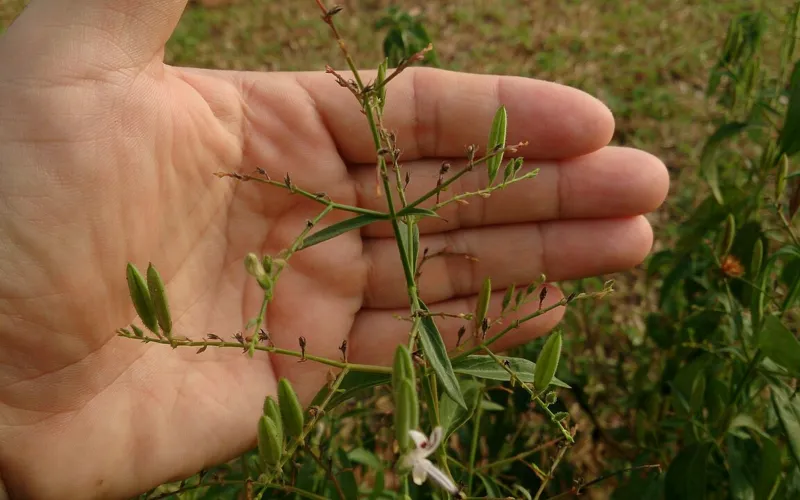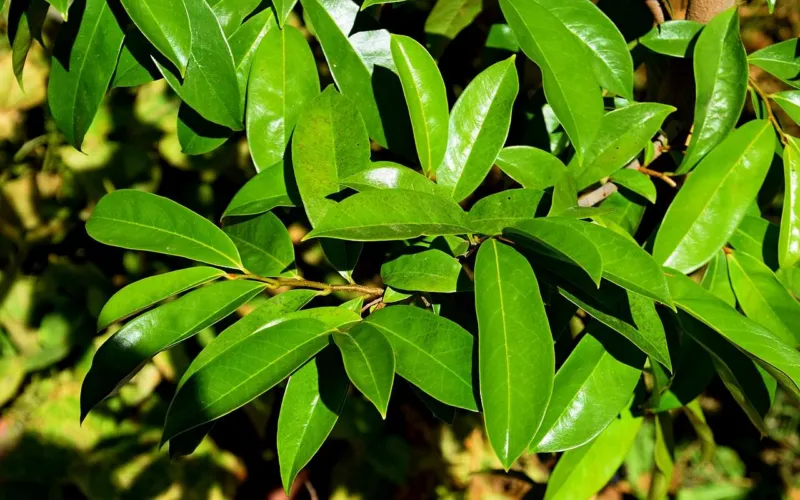

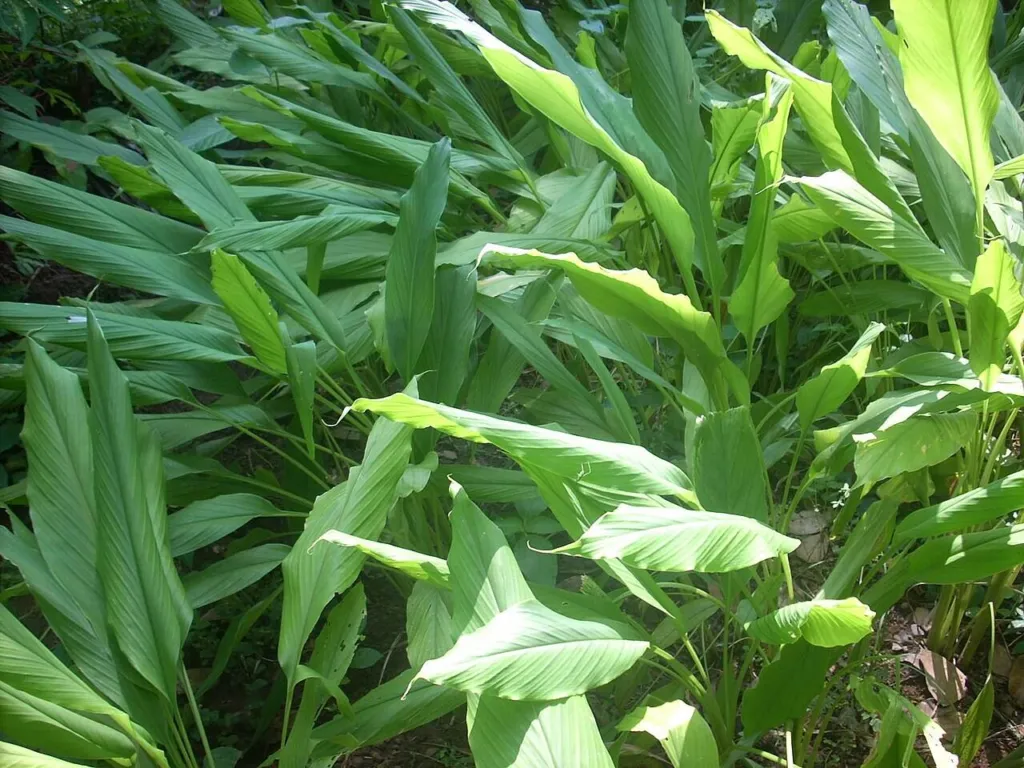
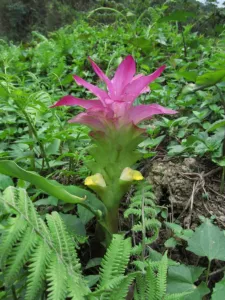
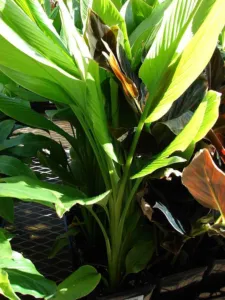
Cover: Curcuma longa in leaf. Photo: Manojk · CC BY-SA 3.0 · Wikimedia Commons
A teaspoon of turmeric in a curry and a capsule of turmeric extract with black pepper share a name and a plant. They do not share a dose, a blood level or a safety record. Since 1 March 2025 every oral turmeric or curcumin medicine listed in Australia has had to warn that, in very rare cases, it may harm the liver. Attested
This is No. 7 in the Australian Institute of Pharmacognosy’s evidence-graded literature review series. Turmeric is one of the best-selling herbal supplements in Australian pharmacies and supermarkets, and the liver question has flared again overseas this year. Here is the plant, its chemistry, what the trials show at the grade they deserve, what the liver cases look like, and where Australian law stands.
This article is educational. It is not medical, legal or regulatory advice, it is not an advertisement, and nothing in it is a recommendation to buy, prepare or take turmeric, curcumin or any product containing them. No brand, product name or sponsor is named anywhere in this article, and the Institute has no commercial interest in any turmeric product.
1. Concentrated turmeric and curcumin products can, very rarely, injure the liver. The TGA has recorded Australian cases including a death, and the injury is idiosyncratic: unpredictable, and not reliably tied to dose (TGA safety advisory, 15/08/2023; TGA final decisions, December 2023). Attested Turmeric eaten as food has not been identified as a concern (TGA safety advisory, 15/08/2023). Attested
2. Know the warning signs. Yellow skin or eyes, dark urine, pale stools, itch, unusual tiredness, nausea, loss of appetite or pain in the upper right abdomen while taking a turmeric product: stop it the same day and get medical assessment promptly. Take the bottle with you.
3. If you have or have had liver problems, the TGA advises avoiding turmeric and curcumin supplements (TGA safety advisory, 15/08/2023). Attested
4. Gallstones and bile-duct disease. Curcumin makes the gallbladder contract (PMID 10102956), Evidence suggests and the European herbal monograph advises against turmeric in biliary disease (EMA herbal monograph, 2018). Attested
5. Blood thinners and surgery. Curcumin inhibits platelet aggregation and the warfarin-clearing enzyme CYP2C9 in the laboratory (PMID 10484074; PMID 17433521). Mechanism Case reports describe sharp INR rises on warfarin and a related anticoagulant (PMID 42364655). Evidence suggests No trial has measured bleeding. Tell the team treating you about any turmeric product, especially before surgery.
6. Other narrow-margin medicines. Curcumin lowered exposure to tamoxifen’s active metabolite in a human study (PMID 30909366), and a transplant patient on tacrolimus developed toxic drug levels after high-dose turmeric (PMID 28104136). Evidence suggests Anyone on anticancer, immunosuppressant or anticoagulant drugs should tell the prescriber and dispensing pharmacist before starting or stopping a concentrated turmeric product.
7. Pregnancy and breastfeeding. No safety data exist for concentrated or enhanced-absorption products, and the Institute regards them as having no established place in pregnancy or breastfeeding. Turmeric in ordinary cooking is a different exposure.
8. Children. Australian law bars oral turmeric and curcumin listed products for children under two and caps curcumin for older children (Permissible Ingredients Determination). Attested
Emergency: for jaundice with confusion, drowsiness, vomiting blood or collapse, call Triple Zero (000). For a swallowed overdose, a child who has taken a supplement, or any poisons question, call the Poisons Information Centre on 13 11 26 (24 hours, Australia-wide). Before taking any botanical drug, consult a degree-qualified herbalist with competencies and adequate training in pharmacognosy.
| Botanical name | Curcuma longa L., Zingiberaceae; Species Plantarum 1: 2 (1753); synonym C. domestica Valeton Attested §2 |
| Common names | Turmeric; jiang huang (Chinese); “Indian saffron” Attested §2 |
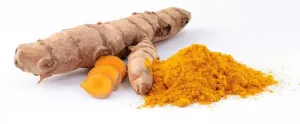
| The drug | The rhizome. Curcumin is roughly 0.5–5% of its dry weight Confirmed §3 |
| Related medicinal species | C. aromatica, C. zanthorrhiza, C. zedoaria: permitted in listed medicines, same liver warning Attested §2 |
| Native range | Unknown; a cultigen grown throughout tropical Asia Attested §4 |
| In Australia | 45 occurrence records, mostly cultivated; the native C. australasica is a different species Attested §4 |
| Traditional standing | Food, dye and medicine for close to 4,000 years; EMA accepts traditional use for mild digestive complaints only Traditional §5 |
| Main constituents | Curcumin, demethoxycurcumin, bisdemethoxycurcumin; turmerones in the volatile oil Confirmed §6 |
| Absorption | Poor. Piperine raised exposure about 20-fold in one study, a micellar form about 185-fold in another Confirmed §7 |
| Best human evidence | Modest short-term reduction in knee osteoarthritis pain; heterogeneous trials Evidence suggests §8 |
| Cure-all claims | Not supported by any adequate trial Attested §8 |
| Liver injury | Rare, idiosyncratic, latency 1–4 months; linked to HLA-B*35:01 in a US series; usually resolves on stopping Evidence suggests §9 |
| Other cautions | Past liver disease, gallstones, kidney stones, anticoagulants and antiplatelets, tamoxifen, tacrolimus, surgery, pregnancy and breastfeeding, children Attested §10 |
| Australian status | Permitted in listed medicines with the mandatory CURC warning since 01/03/2025; not in the Poisons Standard; not ODC-controlled Attested §11 |
| Quality | About one in five samples adulterated in overseas testing; synthetic curcumin and lead chromate documented overseas Evidence suggests §12 |
- Confirmed Established in humans by trial, or an unambiguous analytical, chemical or official-record fact.
- Evidence suggests Real published data, but preclinical, observational, small, case-based or not yet independently replicated.
- Mechanism A plausible mechanistic or pharmacological inference, not an outcome.
- Traditional Historical or ethnobotanical use. Evidence of practice, not of efficacy.
- Attested A documentary fact attested in a named record: a legislative instrument, a regulator’s publication, a taxonomic index, a flora or a database. It is a statement about what the record says, not a claim about what a plant does.
Every PubMed ID (PMID) below links to its record and was checked against PubMed on 22/09/2026. Every compound was checked against PubChem and is linked by CID. Every Australian regulatory statement was read from the regulator’s or the legislature’s own document. Where a claim could not be traced to a primary source it is marked unsourced.
What it is. The dried rhizome of Curcuma longa, a ginger-family plant grown across tropical Asia, used as a spice, dye and medicine for close to 4,000 years. Traditional Its yellow curcuminoids are poorly absorbed, and much of the supplement industry is built on changing that with extracts, black pepper and special formulations. Confirmed
The liver question. Concentrated turmeric and curcumin products have been linked, rarely, to liver injury, including deaths in Australia and overseas. The reaction is idiosyncratic, typically appears after one to four months, and usually resolves when the product is stopped. Evidence suggests The TGA put a liver warning on every oral listed product from 1 March 2025. Attested Turmeric eaten as food has not been identified as a risk. Attested
What the trials show. A modest, short-term reduction in knee osteoarthritis pain, including in a Tasmanian trial, in a literature where results vary widely. Evidence suggests Blood-marker results are mixed, and nothing supports the online picture of turmeric as an anti-inflammatory cure-all. Evidence suggests
The bit that surprised us. Australia acted on turmeric before Canada, the USP and Korea, and almost nobody has noticed. The warning is on the label already. So are the child dose caps. Attested
What to do with that. Treat the spice and the capsule as two different things. If you take a concentrated product, read the label (section 13), know the warning signs, and avoid it if you have had liver trouble. Before taking any botanical drug, consult a degree-qualified herbalist with competencies and adequate training in pharmacognosy.
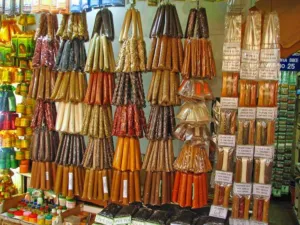
1. The spice in the kitchen and the capsule on the shelf
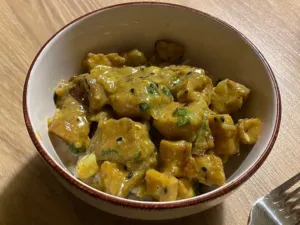
Turmeric has two lives in an Australian house. One is in the pantry, a jar of yellow powder that goes into a curry, a dhal or a golden latte a few grams at a time. The other is in the bathroom cabinet, a bottle of capsules bought from a pharmacy or supermarket shelf, taken every morning for sore knees or general wellbeing, often for months. People reasonably assume these are the same thing at different strengths. For most purposes that matter to safety, they are different things.
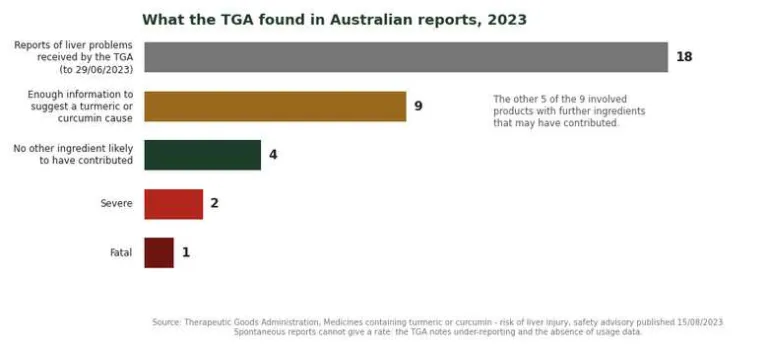
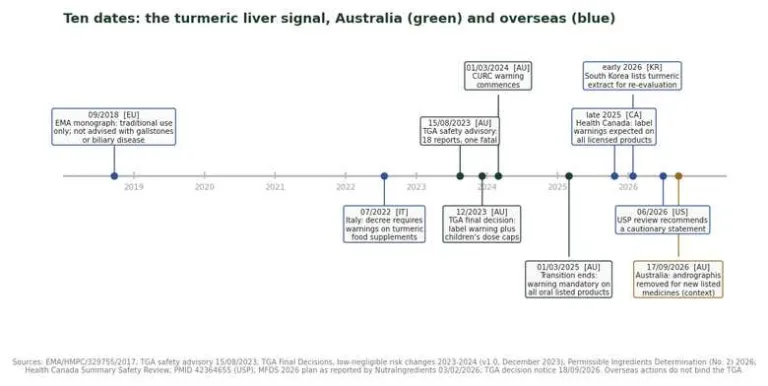
The Therapeutic Goods Administration said as much on 15 August 2023, when it warned that medicines and supplements containing turmeric or curcumin “may cause liver injury in rare cases”. By then the TGA had 18 Australian reports of liver problems in people taking these products. Nine carried enough information to suggest the turmeric product could be the cause, and in four of those nothing else in the product was likely to have contributed. Two of the four were severe, and one person died (TGA safety advisory, 15/08/2023). Confirmed In the same notice the TGA counted more than 600 listed medicines on the Australian Register of Therapeutic Goods containing turmeric, related Curcuma species or curcumin, and said the risk “does not appear to relate to Curcuma longa (turmeric) when consumed in typical dietary amounts as a food” (TGA safety advisory, 15/08/2023). Confirmed
The subject has come back into the news for reasons that mostly have nothing to do with Australia. Health Canada now expects liver-injury warnings on every licensed turmeric and curcuminoid product (Health Canada summary safety review). The United States Pharmacopeia’s supplement committee recommended a cautionary statement for its turmeric monographs (PMID 42364655). South Korea has put turmeric extract on its 2026 list of functional ingredients to re-evaluate (NutraIngredients, 03/02/2026). And on 17 September 2026 the TGA removed Andrographis paniculata from the ingredients permitted in new listed medicines, after years of anaphylaxis reports (TGA andrographis decision notice). Attested We covered that decision in our andrographis review, and since then the Institute has been asked which shelf herb is next.
For turmeric, the answer at the time of writing is that the TGA has already acted, in a different way. Since 1 March 2025 every oral listed medicine with turmeric or curcumin as an active ingredient has had to carry a liver warning on its label, and curcumin in children’s products has been capped by age (TGA final decisions, December 2023; Permissible Ingredients Determination). Attested Very few of the people now asking us about turmeric knew that. This review sets out the plant, the chemistry, what the trials found, what the liver cases look like, and the Australian law, so that the spice and the capsule can be judged separately. The Institute makes no therapeutic claim for turmeric or for any product that contains it.
2. Identity and taxonomy
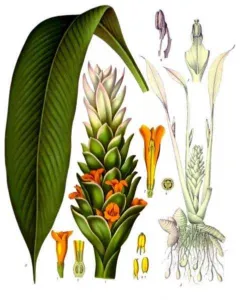
The accepted name is Curcuma longa L., published by Linnaeus in Species Plantarum in 1753, volume 1, page 2 (IPNI, Curcuma longa L.). Attested It belongs to Zingiberaceae, the ginger family, and the Flora of China lists Curcuma domestica Valeton as a synonym, gives the Chinese name 姜黄 jiang huang, and records the plant as “cultivated” in southern China, its “native origin unknown” and its use “medicinally and for spice” (Flora of China, Curcuma longa). Attested Turmeric is a cultigen. Nobody has found a wild population that is clearly its ancestor, and the plant is propagated by pieces of rhizome.
That matters for labels, because Curcuma is a large genus and several of its species are sold as medicines. Australia’s Permissible Ingredients Determination lists four as active ingredients for listed medicines: C. longa, C. aromatica (wild or kasturi turmeric), C. zanthorrhiza (Javanese turmeric or temulawak) and C. zedoaria (zedoary). All four now carry the same liver warning, because all four contain curcumin (Permissible Ingredients Determination; TGA safety advisory, 15/08/2023). Attested A label that says only “turmeric” without a binomial leaves you guessing which one you are buying.
The name “curcumin” causes its own confusion. Chemically it is one molecule, (1E,6E)-1,7-bis(4-hydroxy-3-methoxyphenyl)hepta-1,6-diene-3,5-dione, PubChem CID 969516. Confirmed In trade, “curcumin” has also been used for a purified mixture of three related curcuminoids. The TGA noticed sponsors using the word both ways, and when it set children’s dose limits in December 2023 it wrote the single molecule’s full chemical name into the law so there could be no argument about what was being capped (TGA final decisions, December 2023). Attested
3. Botany: the plant and the drug
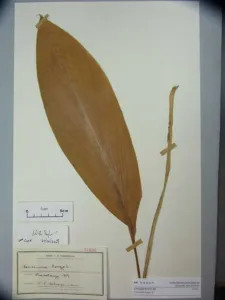
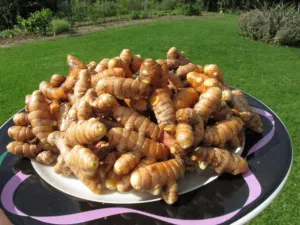
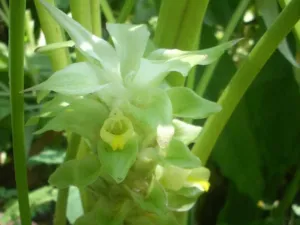
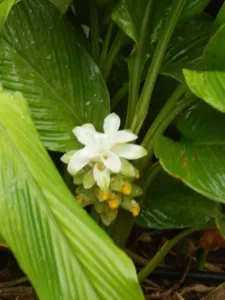
Turmeric is a perennial herb about a metre tall. Its long, glossy leaves on stalks 20–45 cm long rise from a branched underground stem, the rhizome, which is orange or bright yellow inside and aromatic. The flowers sit in a cylindrical spike among pale green bracts, topped with white, green or pinkish sterile bracts, and each small flower is pale yellow (Flora of China, Curcuma longa). Attested
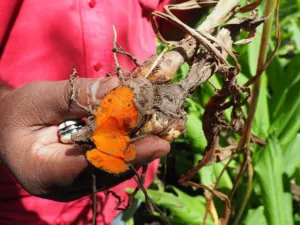
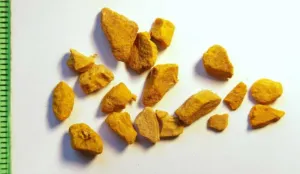
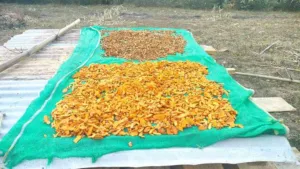
The drug is the rhizome, dried and usually ground. The European Pharmacopoeia carries a monograph for the dried rhizome (Ph. Eur. 2543), and the European Medicines Agency’s herbal committee built its turmeric monograph on material complying with it (EMA herbal monograph, 2018). Attested Curcumin makes up roughly 0.5–5% of the dry weight of the rhizome, a figure the TGA took from that EMA assessment (TGA final decisions, December 2023). Confirmed
That 0.5–5% figure sits under the whole argument of this review. A teaspoon of ground turmeric in a curry supplies tens of milligrams of curcuminoids at most. A single capsule of a 95% extract can supply several hundred. The plant is the same in both cases. What the person swallows is very different.
4. Distribution, cultivation and Australian status
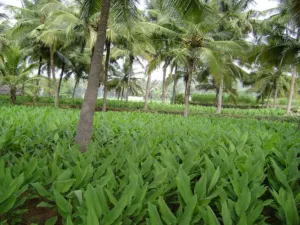
Turmeric is cultivated throughout tropical Asia (Flora of China, Curcuma longa). Attested India, Pakistan, Sri Lanka and Nepal together produce more than 80% of the world’s turmeric, according to the Stanford team whose lead-chromate work appears in section 12 (PMID 39053552). Evidence suggests Almost all the turmeric Australians eat or swallow is imported.
It does grow here. The Atlas of Living Australia held 45 Australian occurrence records for Curcuma longa when the Institute queried it on 22 September 2026: 38 from Queensland, 5 from New South Wales and 2 from the Northern Territory (Atlas of Living Australia). Attested Those are mostly garden plants and cultivation records, and the plant grows readily in wet-tropics gardens. The Institute could not find a published figure for the size of any Australian commercial crop, so none is given here.
Australia does have its own Curcuma. Curcuma australasica, the Cape York lily or native turmeric, is native to northern Australia, with 482 Australian records in the Atlas on the same day: 271 from the Northern Territory and 205 from Queensland (Atlas of Living Australia). Attested It is a different species and appears in no permitted-ingredient list. It is mentioned here so that a reader who finds a “native turmeric” in the bush, or in a garden centre, does not mistake it for the medicine or the spice.
5. Traditional and historical use
Turmeric has been a food, a dye and a medicine in South and Southeast Asia for close to 4,000 years, and its colour earned it the name “Indian saffron” (PMID 22593922). Traditional The TGA’s own summary puts it the same way: a spice for more than 4,000 years, and a medicine in traditional Indian (Ayurvedic) and Chinese medicine (TGA safety advisory, 15/08/2023). Traditional In Chinese materia medica the rhizome of C. longa is jiang huang (Flora of China, Curcuma longa). Attested Other Curcuma parts and species carry other Chinese names and other uses, which is one more reason to read the binomial on anything imported.
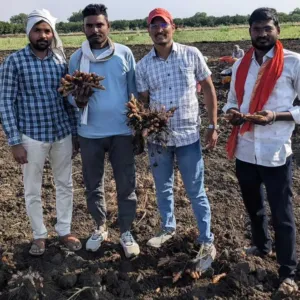
Europe’s regulators have looked hard at that record. In 2018 the European Medicines Agency’s Committee on Herbal Medicinal Products finalised its monograph on turmeric rhizome. It accepted one indication, and only as traditional use: “relief of digestive disturbances, such as feelings of fullness, slow digestion and flatulence”, described as “exclusively based upon long-standing use”. It granted no well-established use, the category that needs clinical evidence (EMA herbal monograph, 2018). Attested The preparations the EMA covered were powder, tea, tinctures and two dry extracts, at modest amounts. None was a 95% curcuminoid extract with an absorption enhancer.
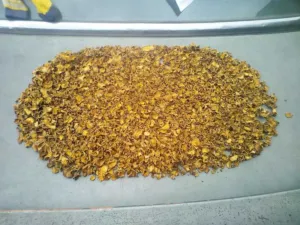
Traditional use tells us that people used turmeric, often and for a long time, mostly in food and in simple preparations. It does not tell us that a concentrated modern extract works for anything, and it tells us nothing about the safety of forms that did not exist until recently. That gap is where most of the current confusion comes from.
6. Phytochemistry
Two groups of compounds define turmeric. The first are the curcuminoids, the yellow pigments: curcumin, demethoxycurcumin and bisdemethoxycurcumin, which differ only in the number of methoxy groups on their two aromatic rings (969516; 5469424; 5315472). Confirmed In one ethanolic rhizome extract analysed at the University of Mississippi, curcumin made up 22.6%, demethoxycurcumin 6.1% and bisdemethoxycurcumin 6.6% (PMID 26336212). Evidence suggests That ratio of roughly 3:1:1 in natural extracts becomes a quality test in section 12.
The second group is the volatile oil, which gives fresh turmeric its smell. Its main compounds are sesquiterpene ketones, the turmerones. In the same Mississippi study ar-turmerone was the largest single component of the rhizome oil, at 36.9% (PMID 26336212). Evidence suggests Most 95% curcuminoid extracts carry little of the oil. Whole rhizome powder carries both groups.
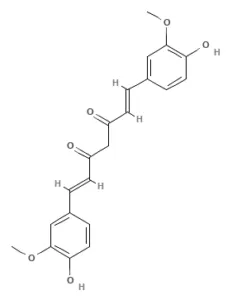
C21H20O6 · the main curcuminoid; the molecule capped in Australian children’s products
PubChem CID 969516
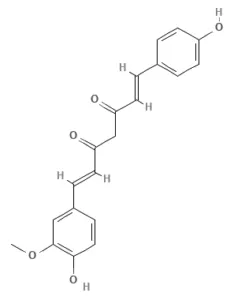
C20H18O5 · one methoxy group fewer
PubChem CID 5469424
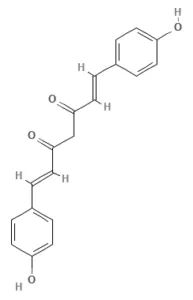
C19H16O4 · no methoxy groups; its absence can flag synthetic curcumin
PubChem CID 5315472
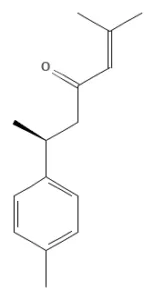
C15H20O · main ketone of the rhizome oil
PubChem CID 160512
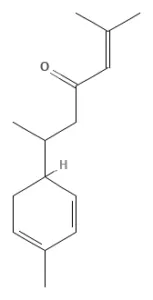
C15H22O · volatile oil ketone
PubChem CID 14632996
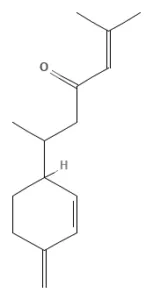
C15H22O · volatile oil ketone
PubChem CID 196216
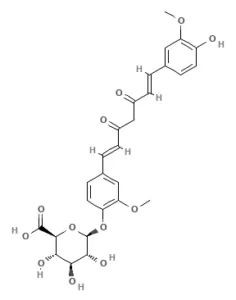
C27H28O12 · the main form circulating after a dose
PubChem CID 71315012
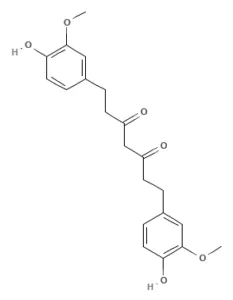
C21H24O6 · reduced metabolite; not a permitted listed-medicine ingredient
PubChem CID 124072
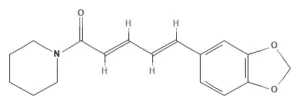
C17H19NO3 · black pepper alkaloid; blocks curcumin glucuronidation
PubChem CID 638024
The three curcuminoids, then three turmerones of the volatile oil, then two metabolites, then piperine. Every CID was checked against PubChem on 22/09/2026, and the depictions are PubChem’s own structure images (US National Library of Medicine, public domain).
Curcumin is chemically awkward. The two carbonyls sit in a 1,3-diketone that exists mostly as an enol, and the molecule is poorly soluble in water and breaks down quickly at neutral and alkaline pH into products that include ferulic acid and vanillin (PMID 28074653; PMID 17433521). Confirmed In the body it is conjugated fast, and the forms found in blood are mostly curcumin glucuronide and sulfate, with the reduced metabolite tetrahydrocurcumin also formed (PMID 15501961; TGA final decisions, December 2023). Confirmed Tetrahydrocurcuminoids are also made industrially by hydrogenating curcuminoids. The EU approved them as a novel food in 2021, but they are not a permitted ingredient in Australian listed medicines (TGA final decisions, December 2023). Attested
7. Pharmacology and pharmacokinetics
Almost everything about curcumin’s pharmacology runs into its absorption. In a Leicester phase I study, patients with advanced colorectal cancer took up to 3.6 g of curcumin a day for up to four months. Curcumin and its conjugates reached plasma at around 10 nanomoles per litre (PMID 15501961). Confirmed Laboratory studies that report effects of curcumin on inflammatory enzymes, signalling proteins and cell lines typically use concentrations in the micromolar range, about a thousand times higher (PMID 10484074; PMID 17433521). Mechanism Those laboratory effects are mechanisms and nothing more until something is shown in people.
In 2017 a group of medicinal chemists at the University of Minnesota reviewed the chemistry and concluded that curcumin is “an unstable, reactive, nonbioavailable compound and, therefore, a highly improbable lead”. They pointed out that curcumin behaves as a pan-assay interference compound, which means it can light up laboratory screens through its reactivity, colour and aggregation, whatever its target (PMID 28074653). Evidence suggests Other researchers answered that the review was too sweeping (PMID 28947929). Attested The argument is unsettled. For a reader, the useful point is that the long lists of molecular targets in wellness articles are not evidence of anything happening in a human body.
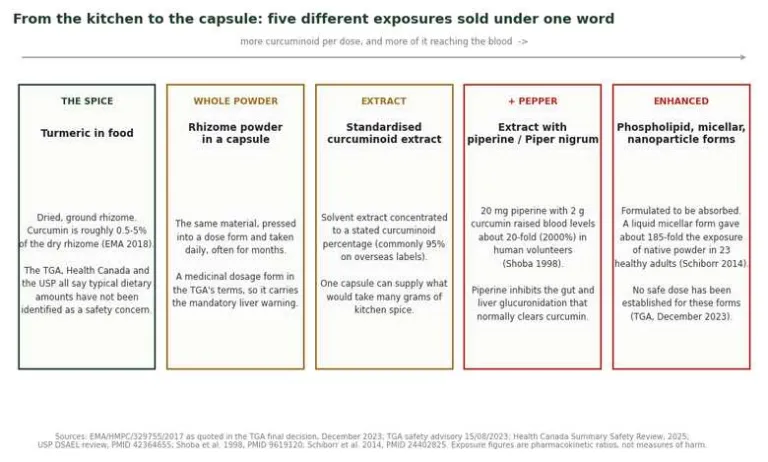
The supplement industry’s answer to poor absorption has been formulation. The oldest approach adds piperine, the pungent alkaloid of black pepper (638024), which inhibits the glucuronidation that clears curcumin in the gut wall and liver. In a 1998 study in healthy volunteers, 20 mg of piperine given with 2 g of curcumin raised curcumin exposure by about 2000%. Curcumin taken alone was barely detectable in serum (PMID 9619120). Confirmed Later approaches bind curcumin to phospholipids, dissolve it in micelles or build it into nanoparticles. A German crossover study in 23 healthy adults found a liquid micellar form gave about 185 times the blood exposure of native curcumin powder, with women absorbing more than men (PMID 24402825). Confirmed
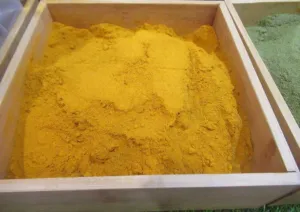
More exposure is the aim of these products, and it also changes the safety question. The acceptable daily intake of 0–3 mg of curcumin per kilogram of body weight set by the WHO–FAO expert committee (JECFA) in 2004 was based on animal studies of ordinary curcumin. The TGA noted in December 2023 that those data predate the liver reports and never considered enhanced-absorption forms, and that “a safe dose for highly bioavailable curcumin has not been subsequently established” (TGA final decisions, December 2023). Attested Piperine has a second problem. The 1998 authors chose it because it inhibits glucuronidation in the liver and gut wall, and glucuronidation clears many drugs as well as curcumin, which is a reason for caution with medicines in its own right (PMID 9619120). Mechanism
8. Clinical evidence
There are hundreds of human trials of turmeric and curcumin. Most are small, short, single-centre and of different products, and many come from a handful of countries. The evidence here is graded as it stands, for the outcomes that have been tested most.
Knee osteoarthritis pain
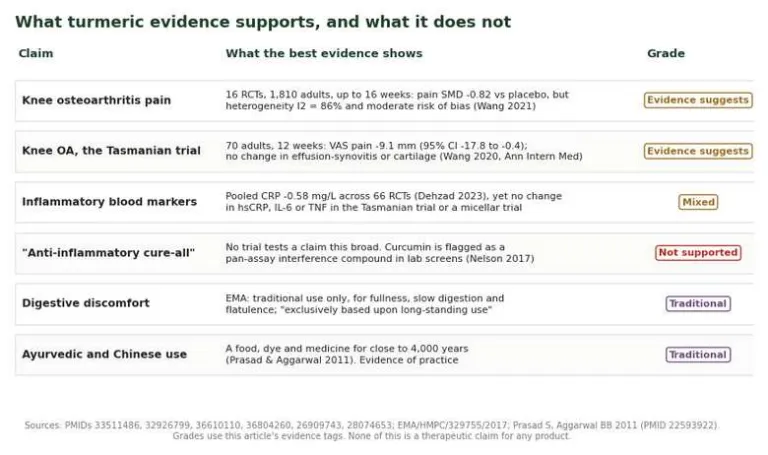
This is the best-studied use, and part of the best evidence is Australian. At the University of Tasmania, 70 people with painful knee osteoarthritis and joint effusion took a Curcuma longa extract or placebo for 12 weeks. Knee pain on a 100 mm visual analogue scale improved by 9.1 mm more on the extract (95% CI 0.4 to 17.8 mm). The swelling measured on MRI, one of the two primary outcomes, did not change, and neither did cartilage composition (PMID 32926799). Evidence suggests The trial was co-funded by the extract’s manufacturer, and its authors described the sample as modest and called for larger multicentre trials. On a 100 mm scale, a 9 mm difference is a modest effect.
The same Tasmanian group pooled 16 randomised trials involving 1,810 adults with knee osteoarthritis. Against placebo, turmeric extracts reduced pain with a standardised mean difference of −0.82, which looks large. The heterogeneity was 86%, the risk of bias moderate and the trials no longer than 16 weeks, and the authors themselves wrote that this leaves “some uncertainty about the true effect” (PMID 33511486). Evidence suggests An earlier Australian meta-analysis of supplements for osteoarthritis found turmeric extract and curcumin among those with large short-term effects on pain, while noting that the quality of the evidence across the supplements ranged from very low to high (PMID 29018060). Evidence suggests
Inflammatory blood markers
A 2023 meta-analysis of 66 randomised trials reported that curcumin or turmeric lowered C-reactive protein by an average of 0.58 mg/L, with smaller changes in TNF-α and IL-6 (PMID 36804260). Evidence suggests An earlier meta-analysis reported a larger CRP fall in people with inflammatory conditions (PMID 34586711). Evidence suggests Well-controlled trials cut the other way. In the Tasmanian trial, serum hsCRP, IL-6 and TNF-α did not differ between extract and placebo over 12 weeks (PMID 36610110). Evidence suggests In a German crossover trial of 42 adults with mildly raised cholesterol and CRP, six weeks of highly absorbed micellar curcuminoids reached measurable blood levels and changed no inflammatory marker (PMID 26909743). Evidence suggests A 0.58 mg/L change in CRP is a laboratory number. No trial has shown that it translates into fewer heart attacks, less disease or longer life.
The “anti-inflammatory cure-all”
Social media presents turmeric as an anti-inflammatory for almost everything: arthritis, gut health, skin, mood, memory, weight, blood sugar and cancer. No trial tests a claim that broad, and none could. Each condition needs its own trials, and for most of them the human evidence is small, short and mixed, or does not exist. The Institute found no adequately powered, independently replicated trial showing that a turmeric product prevents or treats a serious disease. We made the same finding in our soursop review for a different plant and a different cure-all claim. It is also why the TGA lets listed medicines claim only low-level indications and restricts references to serious disease in advertising (TGA restricted and prohibited representations). Attested
The Australian evidence can support one honest sentence. A turmeric extract produced a modest improvement in knee pain over three months in one well-run Tasmanian trial, in a literature where the effect sizes vary widely between studies. That is evidence of a possible modest benefit for one symptom. It is not evidence of a general anti-inflammatory effect.
9. The liver: what “idiosyncratic” means
Most drug side effects depend on dose. Take more and the risk rises, in most people, predictably. Idiosyncratic drug-induced liver injury works differently. It is rare, it happens in a small number of susceptible people, it cannot be predicted from the dose or the duration of use, and it usually appears after weeks to months of taking the product (PMID 36868489). Confirmed Health Canada described the turmeric signal in exactly those terms: “idiosyncratic (not dependent on the dose or duration of use, and unpredictable in onset with risk factors not fully known)” (Health Canada summary safety review). Attested The TGA estimated the rate might lie between 1 in 10,000 and 1 in 100,000 users. It could not be more precise, because nobody knows how many people take these products (TGA final decisions, December 2023). Attested
That has an uncomfortable consequence. Trials cannot find reactions this rare. The TGA pointed out that detecting an adverse effect at a rate below 1 in 10,000 needs more than 30,000 exposed participants, and no turmeric trial, alone or pooled, comes close (TGA final decisions, December 2023). Attested So “the trials showed no liver problems” and “turmeric causes rare liver injury” can both be true.
What the cases look like
The clearest series comes from the US Drug-Induced Liver Injury Network, which reviewed ten adjudicated turmeric cases enrolled between 2004 and 2022. All ten were enrolled from 2011 onwards, and six from 2017. Eight were women, with a median age of 56. Nine had a hepatocellular pattern of injury, five were admitted to hospital and one died of acute liver failure. Every product that could be tested contained turmeric, and three also contained piperine. Latency was typically one to four months (PMID 36252717). Evidence suggests
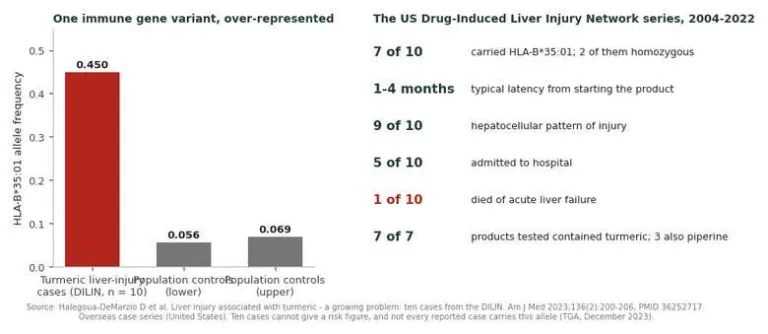
That series also produced the most interesting finding in the field. Seven of the ten patients carried the immune-system gene variant HLA-B*35:01, two of them with two copies, giving an allele frequency of 0.450 against 0.056–0.069 in population controls (PMID 36252717). Evidence suggests A Spanish case published in 2024, a 35-year-old woman taking a turmeric and black pepper tablet, carried the same allele and recovered after stopping (PMID 39297606). Evidence suggests An HLA association points to an immune mechanism: in susceptible people the drug or a metabolite is presented to T cells as foreign, and the liver becomes the battleground. Mechanism The TGA noted two limits in December 2023. Not every case carries the allele, and genetic screening before buying a supplement is not something the listed-medicines system can require (TGA final decisions, December 2023). Attested
Australian cases are in the literature too. Clinicians at the Alfred Hospital in Melbourne reported two cases of severe turmeric supplement hepatitis in 2019 (PMID 31214366). Evidence suggests University Hospital Geelong reported another in 2020 (PMID 32037709). Evidence suggests Monash Health reported a 40-year-old woman who developed fatigue, itch and dark urine after turmeric and black pepper “wellness shots” (PMID 39995754). Evidence suggests A Melbourne report described probable liver injury in a pregnant woman taking high-dose turmeric, which improved after her diet was changed (PMID 38352658). Evidence suggests In Tuscany, Italy’s phytovigilance system collected seven cases up to September 2019, all linked to high-bioavailability, high-dose curcumin products, and most improved on stopping (PMID 32656820). Evidence suggests The US LiverTox database rates turmeric as a likely rare cause of clinically apparent liver injury (PMID 31643876; TGA final decisions, December 2023). Attested
Where the risk sits
Every regulator that has looked at this separates food from supplements. The TGA, Health Canada and the USP committee all concluded that turmeric eaten as food in normal amounts has not been identified as a safety concern (TGA safety advisory, 15/08/2023; Health Canada summary safety review; PMID 42364655). Attested Most of the published cases involve concentrated products, and many involve piperine or other enhanced-absorption forms. The TGA was careful here too. It said the risk “may be higher” for enhanced-absorption and higher-dose products, noted that some cases involved products with no piperine and no absorption claim, and one US case involved a turmeric tea (TGA safety advisory, 15/08/2023; TGA final decisions, December 2023). Attested So a plain powder capsule cannot be called risk-free, and the absence of pepper on the label does not settle the question.
Early warning signs of liver injury
The Australian label warning lists yellowing of the skin or eyes, and unusual fatigue, nausea, loss of appetite, abdominal pain, dark urine or itching (Permissible Ingredients Determination). Attested The TGA’s advisory adds vomiting and weakness (TGA safety advisory, 15/08/2023). Attested Pale stools and pain under the right ribs also go with liver and bile-duct trouble; that is a general clinical point, unsourced in this article, and it is not part of the TGA wording.
If any of these appear while you are taking a turmeric or curcumin product, stop taking it the same day and get medical assessment promptly. A blood test is how liver injury is confirmed. Take the bottle with you, because the product name and AUST L number help anyone assessing you, and help the TGA if the case is reported. For jaundice with confusion, drowsiness or bleeding, call Triple Zero (000).
The good outcome in most published cases is that the injury resolved once the product was stopped. Health Canada said the same (Health Canada summary safety review). Attested The TGA gave its reason for requiring a warning that names the symptoms: continuing the product can lead to liver transplantation or death, while stopping early usually reverses the injury (TGA final decisions, December 2023). Attested
10. Other safety questions: interactions, gallstones, surgery and pregnancy
Anticoagulants and antiplatelet drugs
In laboratory studies curcumin inhibits platelet aggregation, most strongly the aggregation triggered by platelet-activating factor and arachidonic acid, partly by blocking thromboxane formation (PMID 10484074). Mechanism Ar-turmerone from the oil also inhibits platelet aggregation in vitro (PMID 16112857). Mechanism Curcumin inhibits several drug-metabolising enzymes in vitro, and CYP2C9 most potently of those tested, with an IC50 of 4.3 µM (PMID 17433521). Mechanism CYP2C9 is the main route by which the more active half of warfarin is cleared. Mechanism The authors of that enzyme study noted that it is unknown whether the effect matters in the liver, given how little curcumin reaches it. Enhanced-absorption products are designed to change that.
The human evidence is a handful of case reports, summarised in the 2026 USP review. A 56-year-old woman taking the vitamin K antagonist fluindione saw her INR rise from 2–3 to 6.5 after five days of turmeric infusions (2.5 g a day), and it settled when she stopped. Some people on warfarin have had INR rises above 10 after starting turmeric or curcumin supplements, and in 2018 New Zealand’s medicines regulator, Medsafe, warned that concentrated turmeric and curcumin products may interact with warfarin, a warning it said does not apply to turmeric in food (PMID 42364655). Evidence suggests Medsafe is an overseas regulator and its warning has no force in Australia. The Institute found no adequately powered interaction trial and no case series large enough to say how often this happens. The caution rests on those reports and on mechanism. For people on warfarin, clopidogrel, aspirin, apixaban, rivaroxaban or dabigatran, a concentrated or enhanced turmeric product is an unknown added to a drug where small changes matter. Piperine’s own enzyme inhibition widens the list of drugs that could be affected (PMID 9619120). Mechanism
Tamoxifen, tacrolimus and other narrow-margin drugs
Two human reports show the interaction question reaches beyond anticoagulants. In a Dutch pharmacokinetic study in women with breast cancer taking tamoxifen, curcumin at 1,200 mg three times a day lowered exposure to endoxifen, the active metabolite, by 7.7% (not statistically significant), and by 12.4% when 10 mg of piperine was added. The investigators had expected a rise. They concluded that curcumin could push some patients below the endoxifen level needed for the drug to work (PMID 30909366). Evidence suggests In California, a 56-year-old liver-transplant recipient on a stable low dose of tacrolimus presented with a tacrolimus blood level of 29.9 ng/mL and acute kidney injury after recent high-dose turmeric taken with his food. His kidney function improved once tacrolimus was withheld (PMID 28104136). Evidence suggests That is a single case, and its authors called it a probable interaction. Both reports involve drugs where a small change in blood level matters: anticancer hormone therapy, immunosuppressants after transplant, and the anticoagulants above. Anyone on such a drug who starts, stops or changes a concentrated turmeric product is making a change the prescriber and dispensing pharmacist need to know about. Mechanism
Gallstones and bile-duct disease
Curcumin makes the gallbladder contract. In a small Indonesian trial, 20 mg of curcumin reduced gallbladder volume by 29% within two hours compared with placebo (PMID 10102956), and in a follow-up 40 mg produced about a 50% contraction (PMID 12495265). Evidence suggests On that basis the EMA monograph advises against turmeric “in case of obstruction of the bile duct, cholangitis, liver disease, gallstones and any other biliary diseases” (EMA herbal monograph, 2018). Attested Health Canada also recommends against its turmeric products for people with biliary disorders (Health Canada summary safety review). Attested A contracting gallbladder that contains a stone can push the stone into the duct, which is why this caution exists. Mechanism
Kidney stones
Turmeric is rich in oxalate, and most of it is water-soluble. In a small crossover study of 11 healthy adults at the University of Wyoming, four weeks of supplemental turmeric raised urinary oxalate excretion significantly more than cinnamon or water, and the authors concluded that supplemental doses could raise kidney-stone risk in susceptible people (PMID 18469248). Evidence suggests The study measured urine chemistry and did not count stones. It is still a reasonable caution for anyone with a history of calcium oxalate stones who is considering a turmeric powder supplement taken in gram amounts. Highly purified curcumin extracts are likely to carry far less oxalate than whole powder, which is an inference and has not been measured in the studies cited here. Mechanism
Past liver problems
The TGA’s advice is direct. If you currently have, or have had, liver problems, avoid medicines and supplements containing Curcuma species or curcumin (TGA safety advisory, 15/08/2023). Attested The TGA’s advisory committee judged that people with a history of liver problems carry a higher risk (TGA final decisions, December 2023). Attested
Before surgery
No Australian regulator requires a turmeric product to be stopped before surgery, and the Institute found no trial of bleeding outcomes. The in-vitro antiplatelet activity above is the reason the question comes up, and it is a reasonable one to raise with the surgical team, who will ask about every supplement you take. Mechanism
Pregnancy, breastfeeding and children
The EMA did not establish use in children and adolescents under 18 because the data were inadequate (EMA herbal monograph, 2018). Attested Australian law bans oral listed products containing turmeric or curcumin for children under two, and caps the daily dose of the curcumin molecule at 36 mg for ages 2–3, 48 mg for ages 4–11 and 123 mg for ages 12–17 (Permissible Ingredients Determination). Attested Pregnancy and breastfeeding safety of concentrated products has not been established, and no trial has studied them. The Melbourne pregnancy case above is a single report (PMID 38352658). Evidence suggests Overseas regulators have been more direct than Australia’s label. Italy requires turmeric food supplements to state that they should not be used during pregnancy and lactation, and Health Canada’s labels for licensed turmeric products direct pregnant and breastfeeding women, and people with gallstones, bile-duct obstruction, stomach ulcers or excess stomach acid, to seek professional advice before use. Those rules are overseas, have no force in Australia, and are reported here as the TGA summarised them in December 2023 (TGA final decisions, December 2023). Attested The Australian CURC warning says nothing about pregnancy. With no safety data, no benefit shown in pregnancy, and the rare liver injury described above, the Institute’s position is that concentrated or enhanced-absorption turmeric products have no established place in pregnancy or breastfeeding. Turmeric used as a spice in ordinary cooking is a different exposure and has not been identified as a concern by any regulator cited here.
Long-term animal studies
The US National Toxicology Program fed turmeric oleoresin (79–85% curcumin) to rats and mice for up to two years. The rats showed larger livers at higher doses and gut lining changes at the highest dose (PMID 12616304). Evidence suggests Animal studies are poor at detecting idiosyncratic human liver injury, a point the TGA made when industry cited them as reassurance (TGA final decisions, December 2023). Attested

11. Where Australia stands
Listed medicines and the permitted-ingredient rules
Turmeric in Australian pharmacies and supermarkets is almost always a listed medicine, with an AUST L number on the label. Listed medicines are not assessed for efficacy before they reach the shelf. The sponsor certifies that it holds evidence for the claims, and the ingredients must come from the Permissible Ingredients Determination, which sets conditions on each one (TGA final decisions, December 2023). Attested For Curcuma longa (item 1647) and curcumin (item 1650), the current determination requires, for oral use as an active ingredient (Permissible Ingredients Determination): Attested
- the label warning (code CURC): “In very rare cases, Curcuma species may harm the liver. Stop use and see a doctor if you have yellowing skin/eyes or unusual: fatigue, nausea, appetite loss, abdominal pain, dark urine, or itching.” The curcumin entry carries the same wording with “curcumin” in place of “Curcuma species”;
- a maximum daily dose of the curcumin molecule of 36 mg for children aged 2–3, 48 mg for ages 4–11 and 123 mg for ages 12–17, derived by the TGA from the JECFA acceptable daily intake (TGA final decisions, December 2023);
- no use in children under two years.
The same warning and child limits apply to C. aromatica, C. zanthorrhiza and C. zedoaria. Curcumin used only as a colour is exempt (Permissible Ingredients Determination; TGA final decisions, December 2023). Attested These rules came out of the TGA’s 2023–2024 annual consultation. Ten submissions were received: three clinical professional bodies, representing gastroenterologists, hepatologists and clinical toxicologists, supported the change, while five industry submissions opposed it or gave mixed support. The TGA changed “rare” to “very rare”, commenced the requirements on 1 March 2024 and allowed existing products until 1 March 2025 to comply (TGA final decisions, December 2023). Attested The TGA said it did not intend to restrict access to Curcuma products and would keep the signal under review (TGA final decisions, December 2023). Attested
What the ARTG shows
The TGA counted over 600 listed medicines containing these Curcuma species or curcumin in August 2023 (TGA safety advisory, 15/08/2023). Attested The Institute tried to re-run the count on 22 September 2026, and the ARTG public search timed out on every attempt that day, so no newer figure is given here. As with sour jujube seed in our Ziziphus review, many of these entries are combination products, and the turmeric may be one active among several.
Piperine in Australian products
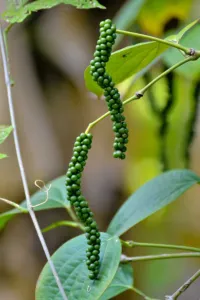
The permitted-ingredient rules add a local twist to the absorption story. Isolated piperine is permitted in listed medicines only as an excipient, in a flavour, at no more than 0.15% of the medicine. Black pepper itself, Piper nigrum, is permitted as an active ingredient (Permissible Ingredients Determination). Attested So an Australian “turmeric with black pepper” product will usually list a Piper nigrum extract among its actives, and the absorption enhancer may not be called piperine on the label at all.
Poisons Standard, import and the andrographis comparison
Turmeric, curcumin and piperine do not appear in the Poisons Standard; the full text of the June 2026 instrument was searched on 21 September 2026 (Poisons Standard, June 2026). Attested They are not controlled substances for the Office of Drug Control, whose import permissions cover medicinal cannabis, narcotics, psychotropic drugs and precursor chemicals (Office of Drug Control, controlled substances). Attested Culinary turmeric is a food and falls under Food Standards Australia New Zealand, and the TGA does not regulate it (TGA final decisions, December 2023). Attested
Andrographis is a useful comparison. That herb carried an allergy warning for years while anaphylaxis reports kept arriving, and on 17 September 2026 the TGA removed it from the permitted ingredients for new listed medicines, saying delay would pose a serious risk of injury. Existing andrographis listings may still be supplied, and the TGA said it would recommend that sponsors cancel or recall them (TGA andrographis decision notice). Attested Turmeric’s regulatory position is the stage andrographis was at before that: a known rare harm, managed by a label warning, with the TGA monitoring. Whether it stays there depends on the reports. That is one reason reporting suspected reactions matters (section 13). The Institute makes no prediction about any future TGA decision.
Overseas actions, which do not apply here
These are overseas decisions and they do not bind the TGA or change Australian law. Italy’s health ministry required warnings on turmeric food supplements by a decree of 28 July 2022 (Health Canada summary safety review). Attested Health Canada’s summary safety review reviewed 12 Canadian and more than 60 international cases, with three deaths of which two were attributed to liver injury from turmeric or curcuminoid products. It now expects licence holders to add warning signs and stop-use advice to all licensed oral products, of which Canada has authorised more than 3,000 (Health Canada summary safety review). Attested The USP committee recommended a cautionary statement for its turmeric and curcuminoid monographs, noting that reported injury “typically occurs after 1 to 4 months of use and generally resolves upon discontinuation” (PMID 42364655). Attested South Korea’s Ministry of Food and Drug Safety named turmeric extract in its plan to re-evaluate functional food ingredients in 2026, one of three chosen because of adverse-event reports, with findings due by the end of the year (NutraIngredients, 03/02/2026). Attested The Korean report is a trade-press account, and the Institute has not read the Korean-language notice itself.
12. Quality and adulteration
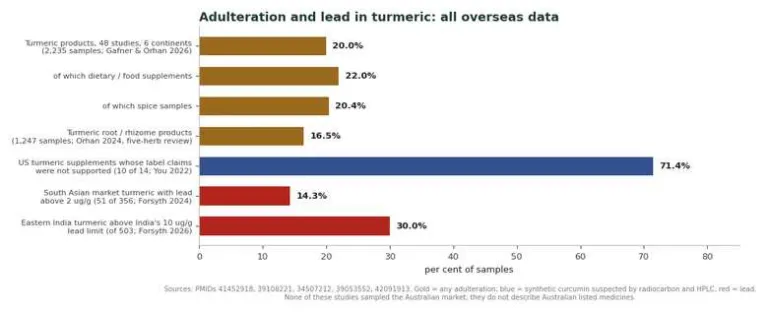
Turmeric is one of the most adulterated botanicals in world trade. In 2026 researchers at the American Botanical Council published a scoping review of 48 studies covering 2,235 commercial turmeric samples from six continents. It found an overall adulteration rate of 20.0%, with 22.0% for dietary and food supplements and 20.4% for spice samples (PMID 41452918). Evidence suggests Those figures pool published testing from many countries. The Council did not test the samples itself, and none of the figures describes the Australian market. An earlier estimate by the same group put turmeric root and rhizome products at 16.5% of 1,247 samples, and found that, across the five herbs it examined, licensed or registered herbal medicines were less likely to be adulterated than products sold as supplements (PMID 39108221). Evidence suggests
Synthetic curcumin
Curcumin can be made synthetically for a fraction of the cost of extracting it. A synthetic product contains curcumin with little or none of the other two curcuminoids, so an unnaturally high curcumin share of total curcuminoids is a warning sign. Radiocarbon dating settles it, because natural curcumin carries modern carbon-14 and curcumin made from fossil-derived feedstocks carries none. A US laboratory used both tests on 14 turmeric supplements and found that only four supported their label claims (PMID 34507212). Evidence suggests In the Italian liver cases, the absence of the minor curcuminoids in about 60% of the products led investigators to suspect synthetic material. The TGA noted in December 2023 that this was a hypothesis and had not been established, that no link between synthetic curcumin and liver injury has been shown, and that Australian rules do not currently exclude highly purified or synthetic curcumin from listed medicines (TGA final decisions, December 2023). Attested
Lead chromate: an overseas food-safety problem
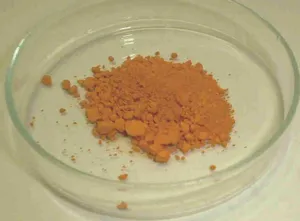
This is overseas data about the spice, stated as such. In Bangladesh, Stanford researchers traced lead chromate pigment being added to turmeric during polishing in seven of nine major producing districts, a practice wholesalers said had gone on for more than 30 years. Turmeric powder reached 1,152 µg of lead per gram (PMID 31550596). Confirmed Across 23 cities in India, Pakistan, Sri Lanka and Nepal, 14% of 356 samples had detectable lead above 2 µg/g, some above 1,000 µg/g (PMID 39053552). Confirmed In eastern India in 2021–2023, 30% of 503 samples exceeded India’s legal limit of 10 µg/g (PMID 42091913). Confirmed Ground turmeric has been identified as a source of lead exposure in the United States (PMID 28358991). Evidence suggests Lead chromate is PubChem CID 24460. Confirmed
Two points keep this in proportion for Australian readers. One industry submission to the TGA argued that raw materials in Australian listed medicines must be identified and controlled for adulterants and elemental impurities, which makes gross contamination less likely there than in loose market spice or products bought online (TGA final decisions, December 2023). Attested The Institute is not aware of any published Australian survey of lead in turmeric sold here, and that gap is noted in the discussion. The adulteration evidence also does not explain the liver cases. Italian investigators analysed the implicated products and excluded drugs, synthetic dyes and pyrrolizidine alkaloids, and the UK Committee on Toxicity judged contamination an unlikely explanation for the recent cases (TGA final decisions, December 2023). Attested
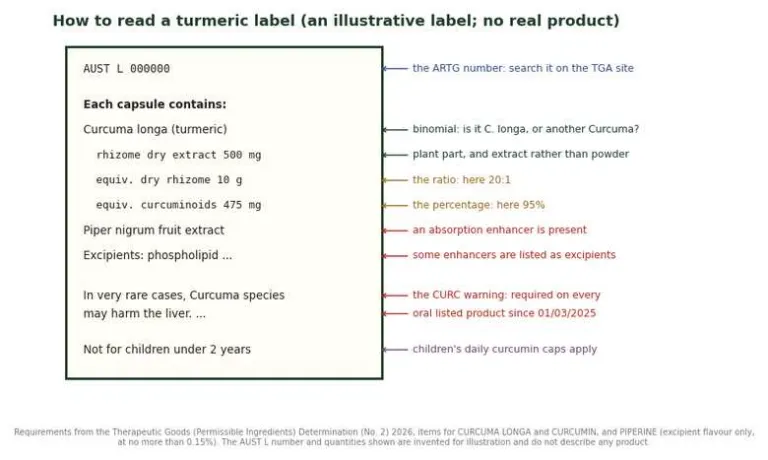
13. How to read a turmeric label, and how to report a reaction
A turmeric product label answers most of the questions in this review if you know where to look, and the items below are best read in this order.
- The AUST L number. It means the product is entered on the ARTG as a listed medicine, and you can look it up on the TGA website. A product with no AUST L or AUST R number is not an Australian listed or registered medicine; foods and some exempt goods carry neither. Attested
- The binomial. Curcuma longa is turmeric. C. aromatica, C. zanthorrhiza and C. zedoaria are different plants carrying the same warning (Permissible Ingredients Determination). Attested
- The plant part and the preparation. Rhizome powder, dry extract or isolated curcumin are three different exposures (section 7).
- The extract ratio. “Equivalent to 10 g dry rhizome” from a 500 mg extract means a 20:1 concentrate.
- The curcuminoid content. A percentage or a milligram figure for curcuminoids tells you how concentrated the product is.
- Any absorption enhancer. Look for Piper nigrum or black pepper among the actives, and for phospholipid, micellar, liposomal or nanoparticle claims. Some enhancers appear only in the excipients.
- The CURC warning. It must be on every oral listed product with turmeric or curcumin as an active. If an Australian-listed turmeric product lacks it, that is worth reporting to the TGA.
Reporting a suspected reaction
Consumers can report a suspected side effect of any medicine, including a complementary or herbal product, directly to the TGA, using the consumer form on the TGA’s adverse event reporting page (TGA adverse event reporting page). Attested The TGA itself said that under-reporting is a known limit of its system, and that a report made in uncertainty still helps detect signals (TGA final decisions, December 2023). Attested A useful report names the product and its AUST L number, the dose and how long it was taken, other medicines and supplements, the symptoms and when they began, and the blood test results if you have them. Reports are searchable in de-identified form in the TGA’s Database of Adverse Event Notifications.
For a swallowed overdose, or any poisons question, the Poisons Information Centre is on 13 11 26, 24 hours a day, Australia-wide. Before taking any botanical drug, consult a degree-qualified herbalist with competencies and adequate training in pharmacognosy.
Discussion: conclusions, hypotheses and research still required
What the evidence supports
Turmeric eaten as food has not been identified as a liver risk by the TGA, Health Canada or the USP committee (TGA safety advisory, 15/08/2023; Health Canada summary safety review; PMID 42364655). Attested Concentrated turmeric and curcumin products carry a rare, idiosyncratic risk of liver injury, documented in Australian, Italian, Spanish and US cases, including deaths. Evidence suggests The TGA determined a causal link, its Advisory Committee on Complementary Medicines judged the relationship medium to strong, and the TGA put a warning on every oral listed product (TGA final decisions, December 2023). Attested The human efficacy evidence is strongest for short-term knee osteoarthritis pain, and even there the effect is modest and inconsistent between trials (PMID 32926799; PMID 33511486). Evidence suggests The evidence does not support the claim that turmeric is a general anti-inflammatory for serious disease.
What we can reasonably hypothesise
These are hypotheses and are labelled as such. First, that the risk rises with systemic exposure to curcuminoids, so that enhanced-absorption products carry more of it per user than plain powder. The DILIN piperine cases and the Italian high-bioavailability cases fit this, but a dose-independent idiosyncratic reaction does not have to behave that way, and cases occur without enhancers. Mechanism Second, that HLA-B*35:01 marks an immune-mediated mechanism, and that carriers are at meaningfully higher risk. The allele frequency difference is large, but it comes from ten patients in one network. Evidence suggests Third, that piperine’s enzyme inhibition raises the interaction potential of turmeric products with drugs such as warfarin beyond anything curcumin alone could manage. That is plausible from the enzymology. The only human test found is the tamoxifen study, where adding piperine deepened the fall in endoxifen from 7.7% to 12.4% (PMID 30909366); for warfarin it has not been tested. Mechanism
What research is still required
- Pharmacovigilance and regulatory science. An analysis of the TGA’s adverse event data since 2023, broken down by product type (plain powder, standardised extract, piperine or Piper nigrum combination, phospholipid, micellar, nanoparticle), would test the exposure hypothesis directly. Reports that name the AUST L number make this possible.
- Pharmacogenomics. HLA typing of Australian turmeric liver-injury cases, and a case-control comparison with matched turmeric users, to replicate or refute the HLA-B*35:01 signal outside the US network.
- Clinical pharmacology. Properly powered interaction studies of enhanced-absorption turmeric products with warfarin, direct oral anticoagulants and antiplatelet drugs, measuring INR and bleeding endpoints, and CYP probe-drug studies with and without piperine.
- Quality analysis. An Australian market survey of turmeric spice and listed medicines: HPLC curcuminoid profiles to check label claims and flag synthetic curcumin, radiocarbon testing where the profile is suspect, and ICP-MS for lead and chromium. This is work a pharmacognosy laboratory is equipped to do.
- Clinical trials. Independent, multicentre, longer trials in knee osteoarthritis with pre-registered outcomes, using products characterised by HPLC, and reporting liver enzymes at baseline and during treatment.
- Consumer research. A study of whether Australians taking turmeric products notice and understand the CURC warning. A warning only protects people who read it.
About the Australian Institute of Pharmacognosy and this series
The Australian Institute of Pharmacognosy is a clinic and research laboratory in Cardwell, far north Queensland, studying medicinal plants and natural products to the same evidentiary standard as any other branch of pharmacology: traditional knowledge taken seriously, and tested honestly. Visit the Institute at australian-pharmacognosy.org.
Series: AIP Literature Reviews and Critical Analyses. Previous: sour jujube seed (Ziziphus jujuba) · soursop (Annona muricata) · umckaloabo (Pelargonium sidoides) · andrographis (Andrographis paniculata) · Syrian rue (Peganum harmala) · rosary pea (Abrus precatorius). Follow the Journal for new work from the Institute.
Corrections: if you find an error or a source we have missed, write to the Institute at our contact form. We would rather correct a claim than repeat it.
About the images and the evidence. Every plant photograph in this article is from Wikimedia Commons under the licence named in its caption. The structure depictions are from PubChem (US National Library of Medicine, public domain). The seven figures were drawn by the Institute from the sources printed in each one. The Institute has no commercial interest in any turmeric or curcumin product and names none in this article.
Head of Education and Research
Australian Institute of Pharmacognosy
Cardwell QLD, Australia
australian-pharmacognosy.org · our contact form
Suggested citation: Ridley T. Turmeric (Curcuma longa L.): an evidence-graded literature review and critical analysis on the spice, the concentrated supplement, the liver-injury signal and the Australian regulatory position. AIP Literature Review and Critical Analysis LR No. 7. Cardwell (QLD): Australian Institute of Pharmacognosy; 2026.
Educational content only; not medical, legal or regulatory advice. Australian regulatory information reflects the Permissible Ingredients Determination, the Poisons Standard and TGA publications as read on 21–22/09/2026 and may change. Overseas material is cited as overseas material and does not apply in Australia. No brand, product name or sponsor is named in this article and no product is advertised, endorsed or recommended. Material drawn from Commonwealth sources is © Commonwealth of Australia and appears here as short extracts for the purpose of reporting, criticism and review.
References
57 references: tap to open
Listed in order of first citation. All 40 PMIDs were verified against PubMed on 22/09/2026; every regulatory, legislative and botanical record was read from its own source.
- Therapeutic Goods Administration. Medicines containing turmeric or curcumin – risk of liver injury. Safety advisory, published 15/08/2023. Read 22/09/2026. Reports 18 Australian reports of liver problems to 29/06/2023, nine with enough information to suggest a turmeric or curcumin cause, four with no other likely contributing ingredient, two severe including one fatal; more than 600 listed medicines containing Curcuma longa, C. aromatica, C. zanthorrhiza, C. zedoaria and/or curcumin; the statement that the risk does not appear to relate to turmeric consumed in typical dietary amounts as a food; the consumer symptom list; and the advice that people who have or have had liver problems should avoid these products. https://www.tga.gov.au/news/safety-alerts/medicines-containing-turmeric-or-curcumin-risk-liver-injury
- Therapeutic Goods Administration. Proposed changes to requirements for listed medicine ingredients: annual low-negligible risk changes 2023–2024. Final decisions. Version 1.0, December 2023, section 1, “Curcuma species and curcumin and the risk of liver injury” (pp. 7–26). Read in full 22/09/2026. Source for: the ten submissions and their positions; the idiosyncratic-DILI rate estimate of 1 in 10,000 to 1 in 100,000; the rule-of-three sample-size point; the ACCM view that the relationship is medium to strong; the JECFA ADI of 0–3 mg/kg bw/day and its limits; the absence of an established safe dose for highly bioavailable curcumin; tetrahydrocurcuminoids; the Italian synthetic-curcumin hypothesis and the TGA’s assessment of it; the published Australian cases; commencement on 01/03/2024 with transition to 01/03/2025. https://consultations.tga.gov.au/medicines-regulation-division/low-neg-risk-2023-2024/user_uploads/cmes—low-negligible-risk-annual-consultation—2023-2024—final-decisions-document.pdf
- Rasyid A, Lelo A. The effect of curcumin and placebo on human gall-bladder function: an ultrasound study. Aliment Pharmacol Ther. 1999 Feb;13(2):245-9. PMID 10102956. DOI 10.1046/j.1365-2036.1999.00464.x.
- European Medicines Agency, Committee on Herbal Medicinal Products. European Union herbal monograph on Curcuma longa L., rhizoma. EMA/HMPC/329755/2017, final, adopted 25/09/2018. Copy held in the AIP library, read 22/09/2026. Traditional use only (digestive disturbances); no well-established use; material complies with Ph. Eur. monograph 2543; use under 18 not established; not recommended in bile-duct obstruction, cholangitis, liver disease, gallstones or other biliary disease. Overseas; does not apply in Australia. https://www.ema.europa.eu/en/medicines/herbal/curcumae-longae-rhizoma
- Shah BH, Nawaz Z, Pertani SA, Roomi A, Mahmood H, Saeed SA, et al. Inhibitory effect of curcumin, a food spice from turmeric, on platelet-activating factor- and arachidonic acid-mediated platelet aggregation through inhibition of thromboxane formation and Ca2+ signaling. Biochem Pharmacol. 1999 Oct 01;58(7):1167-72. PMID 10484074. DOI 10.1016/s0006-2952(99)00206-3.
- Appiah-Opong R, Commandeur JN, van Vugt-Lussenburg B, Vermeulen NP. Inhibition of human recombinant cytochrome P450s by curcumin and curcumin decomposition products. Toxicology. 2007 Jun 03;235(1-2):83-91. PMID 17433521. DOI 10.1016/j.tox.2007.03.007.
- Akhtar N, Barnes J, Gardiner P, Gurley BJ, Ko R, Koturbash I, et al. Rarely reported cases of hepatotoxicity associated with turmeric- and curcuminoid-containing dietary supplements: a comprehensive review by USP. Pharm Biol. 2026 Dec;64(1):866-901. PMID 42364655. DOI 10.1080/13880209.2026.2693375.
- Hussaarts KGAM, Hurkmans DP, Oomen-de Hoop E, van Harten LJ, Berghuis S, van Alphen RJ, et al. Impact of Curcumin (with or without Piperine) on the Pharmacokinetics of Tamoxifen. Cancers (Basel). 2019 Mar 22;11(3). PMID 30909366. DOI 10.3390/cancers11030403.
- Nayeri A, Wu S, Adams E, Tanner C, Meshman J, Saini I, et al. Acute Calcineurin Inhibitor Nephrotoxicity Secondary to Turmeric Intake: A Case Report. Transplant Proc. 2017;49(1):198-200. PMID 28104136. DOI 10.1016/j.transproceed.2016.11.029.
- Therapeutic Goods (Permissible Ingredients) Determination (No. 2) 2026 (Cth), F2026L00707. Copy downloaded from the Federal Register of Legislation on 21/09/2026 and searched 22/09/2026. Items 1646 CURCUMA AROMATICA, 1647 CURCUMA LONGA, 1648 CURCUMA ZANTHORRHIZA, 1649 CURCUMA ZEDOARIA and 1650 CURCUMIN (warning statement CURC; maximum daily doses of (1E,6E)-1,7-bis(4-hydroxy-3-methoxyphenyl)-1,6-heptadiene-3,5-dione of 36 mg, 48 mg and 123 mg for ages 2–3, 4–11 and 12–17; not permitted below 2 years); item 3935 PIPERINE (excipient flavour only, no more than 0.15%); PIPER NIGRUM (roles A, E, H). https://www.legislation.gov.au/F2026L00707/asmade
- Health Canada. Summary Safety Review – Turmeric and curcuminoids for oral use – Assessing the potential risk of hepatotoxicity. Drug and Health Products Portal. Read 22/09/2026. Overseas regulator; does not apply in Australia. Records 12 Canadian cases and more than 60 international case reports, three deaths of which two were attributed to hepatotoxicity, the idiosyncratic character of the injury, reversibility in most cases, more than 3,000 authorised products, exclusion of food use, and the label changes expected of licence holders. Its reference list cites the Italian Ministry of Health decree of 28 July 2022. https://dhpp.hpfb-dgpsa.ca/review-documents/resource/SSR1758121117867
- Koe T. South Korea re-evaluating turmeric, green coffee bean due to adverse reports. NutraIngredients, 03/02/2026. Read 22/09/2026. Trade-press report of the Ministry of Food and Drug Safety plan to re-evaluate nine functional ingredients in 2026, three of them (turmeric extract, green coffee bean extract, lemon balm extract mixed powder) because of adverse events. Overseas; the Korean-language notice was not read by AIP. https://www.nutraingredients.com/Article/2026/02/03/south-korea-re-evaluating-turmeric-green-coffee-bean-due-to-adverse-reports/
- Therapeutic Goods Administration. High-moderate risk changes to permissible ingredients – Andrographis paniculata 2026. Regulatory decision notice, published 18/09/2026. Read 22/09/2026. Records the section 26BC amendment removing Andrographis paniculata from the Permissible Ingredients Determination, commencing 17/09/2026, so that new medicines containing it can no longer be listed; existing listings are not immediately affected and the TGA will recommend voluntary cancellation or recall. https://www.tga.gov.au/news/regulatory-decision-notices/high-moderate-risk-changes-permissible-ingredients-andrographis-paniculata-2026
- International Plant Names Index. Curcuma longa L., Species Plantarum 1: 2 (1753). IPNI record 796451-1. Queried 22/09/2026. https://www.ipni.org/n/796451-1
- Curcuma longa Linnaeus. In: Wu Z-Y, Raven PH & Hong D-Y (eds), Flora of China, vol. 24, p. 361. Beijing: Science Press; St. Louis: Missouri Botanical Garden Press. Read at efloras.org, taxon id 200028370, on 22/09/2026. Gives the Chinese name, the synonym C. domestica Valeton, the description, “Cultivated … [native origin unknown; cultivated throughout tropical Asia]” and “Used medicinally and for spice”. http://www.efloras.org/florataxon.aspx?flora_id=2&taxon_id=200028370
- Forsyth JE, Mistree D, Nash E, Angrish M, Luby SP. Evidence of turmeric adulteration with lead chromate across South Asia. Sci Total Environ. 2024 Nov 01;949:175003. PMID 39053552. DOI 10.1016/j.scitotenv.2024.175003.
- Atlas of Living Australia. Occurrence record searches filtered to Australia, run through the ALA biocache web service on 22/09/2026. Curcuma longa: 45 records (Queensland 38, New South Wales 5, Northern Territory 2). Curcuma australasica: 482 records (Northern Territory 271, Queensland 205, New South Wales 1, state not supplied 5). https://biocache.ala.org.au/occurrences/search?q=taxon_name%3A%22Curcuma+longa%22&fq=country%3AAustralia
- Prasad S, Aggarwal BB. Turmeric, the golden spice: from traditional medicine to modern medicine. In: Benzie IFF, Wachtel-Galor S, editors. Herbal Medicine: Biomolecular and Clinical Aspects. 2nd ed. Boca Raton (FL): CRC Press/Taylor & Francis; 2011. Chapter 13. NCBI Bookshelf NBK92752. PMID 22593922.
- Ali A, Wang YH, Khan IA. Larvicidal and Biting Deterrent Activity of Essential Oils of Curcuma longa, Ar-turmerone, and Curcuminoids Against Aedes aegypti and Anopheles quadrimaculatus (Culicidae: Diptera). J Med Entomol. 2015 Sep;52(5):979-86. PMID 26336212. DOI 10.1093/jme/tjv072.
- Nelson KM, Dahlin JL, Bisson J, Graham J, Pauli GF, Walters MA. The Essential Medicinal Chemistry of Curcumin. J Med Chem. 2017 Mar 09;60(5):1620-1637. PMID 28074653. DOI 10.1021/acs.jmedchem.6b00975.
- Sharma RA, Euden SA, Platton SL, Cooke DN, Shafayat A, Hewitt HR, et al. Phase I clinical trial of oral curcumin: biomarkers of systemic activity and compliance. Clin Cancer Res. 2004 Oct 15;10(20):6847-54. PMID 15501961. DOI 10.1158/1078-0432.CCR-04-0744.
- Bahadori F, Demiray M. A Realistic View on "The Essential Medicinal Chemistry of Curcumin". ACS Med Chem Lett. 2017 Sep 14;8(9):893-896. PMID 28947929. DOI 10.1021/acsmedchemlett.7b00284.
- Shoba G, Joy D, Joseph T, Majeed M, Rajendran R, Srinivas PS. Influence of piperine on the pharmacokinetics of curcumin in animals and human volunteers. Planta Med. 1998 May;64(4):353-6. PMID 9619120. DOI 10.1055/s-2006-957450.
- Schiborr C, Kocher A, Behnam D, Jandasek J, Toelstede S, Frank J. The oral bioavailability of curcumin from micronized powder and liquid micelles is significantly increased in healthy humans and differs between sexes. Mol Nutr Food Res. 2014 Mar;58(3):516-27. PMID 24402825. DOI 10.1002/mnfr.201300724.
- Wang Z, Jones G, Winzenberg T, Cai G, Laslett LL, Aitken D, et al. Effectiveness of Curcuma longa Extract for the Treatment of Symptoms and Effusion-Synovitis of Knee Osteoarthritis : A Randomized Trial. Ann Intern Med. 2020 Dec 01;173(11):861-869. PMID 32926799. DOI 10.7326/M20-0990.
- Wang Z, Singh A, Jones G, Winzenberg T, Ding C, Chopra A, et al. Efficacy and Safety of Turmeric Extracts for the Treatment of Knee Osteoarthritis: a Systematic Review and Meta-analysis of Randomised Controlled Trials. Curr Rheumatol Rep. 2021 Jan 28;23(2):11. PMID 33511486. DOI 10.1007/s11926-020-00975-8.
- Liu X, Machado GC, Eyles JP, Ravi V, Hunter DJ. Dietary supplements for treating osteoarthritis: a systematic review and meta-analysis. Br J Sports Med. 2018 Feb;52(3):167-175. PMID 29018060. DOI 10.1136/bjsports-2016-097333.
- Dehzad MJ, Ghalandari H, Nouri M, Askarpour M. Antioxidant and anti-inflammatory effects of curcumin/turmeric supplementation in adults: A GRADE-assessed systematic review and dose-response meta-analysis of randomized controlled trials. Cytokine. 2023 Apr;164:156144. PMID 36804260. DOI 10.1016/j.cyto.2023.156144.
- Gorabi AM, Abbasifard M, Imani D, Aslani S, Razi B, Alizadeh S, et al. Effect of curcumin on C-reactive protein as a biomarker of systemic inflammation: An updated meta-analysis of randomized controlled trials. Phytother Res. 2022 Jan;36(1):85-97. PMID 34586711. DOI 10.1002/ptr.7284.
- Wang Z, Winzenberg T, Singh A, Aitken D, Blizzard L, Boesen M, et al. Effect of Curcuma longa extract on serum inflammatory markers and MRI-based synovitis in knee osteoarthritis: secondary analyses from the CurKOA randomised trial. Phytomedicine. 2023 Jan;109:154616. PMID 36610110. DOI 10.1016/j.phymed.2022.154616.
- Kocher A, Bohnert L, Schiborr C, Frank J. Highly bioavailable micellar curcuminoids accumulate in blood, are safe and do not reduce blood lipids and inflammation markers in moderately hyperlipidemic individuals. Mol Nutr Food Res. 2016 Jul;60(7):1555-63. PMID 26909743. DOI 10.1002/mnfr.201501034.
- Therapeutic Goods Administration. Restricted and prohibited representations in advertising, under the Therapeutic Goods Advertising Code. Representations referring to serious forms of disease are restricted or prohibited. https://www.tga.gov.au/products/regulations-all-products/advertising/applying-advertising-code/restricted-and-prohibited-representations-advertising
- Fontana RJ, Bjornsson ES, Reddy R, Andrade RJ. The Evolving Profile of Idiosyncratic Drug-Induced Liver Injury. Clin Gastroenterol Hepatol. 2023 Jul;21(8):2088-2099. PMID 36868489. DOI 10.1016/j.cgh.2022.12.040.
- Halegoua-DeMarzio D, Navarro V, Ahmad J, Avula B, Barnhart H, Barritt AS, et al. Liver Injury Associated with Turmeric-A Growing Problem: Ten Cases from the Drug-Induced Liver Injury Network [DILIN]. Am J Med. 2023 Feb;136(2):200-206. PMID 36252717. DOI 10.1016/j.amjmed.2022.09.026.
- Garaizabal Azkue ÍJ, Castiella A, Aburruza Ucar L, Torrente Iranzo S, Zapata Morcillo E. Turmeric associated liver injury (DILI) with susceptible HLA. Rev Esp Enferm Dig. 2024 Nov;116(11):650-651. PMID 39297606. DOI 10.17235/reed.2024.10763/2024.
- Luber RP, Rentsch C, Lontos S, Pope JD, Aung AK, Schneider HG, et al. Turmeric Induced Liver Injury: A Report of Two Cases. Case Reports Hepatol. 2019;2019:6741213. PMID 31214366. DOI 10.1155/2019/6741213.
- Chand S, Hair C, Beswick L. A rare case of turmeric-induced hepatotoxicity. Intern Med J. 2020 Feb;50(2):258-259. PMID 32037709. DOI 10.1111/imj.14727.
- Shrestha A, Elliott S, Abasszade JH, Wu K, Worland T, Simpson I, et al. Drug-Induced Liver Injury Associated with Turmeric and Piperine: A Case and Review. Case Rep Gastroenterol. 2025;19(1):96-106. PMID 39995754. DOI 10.1159/000543679.
- Haloub K, McNamara E, Yahya RH. An Unusual Case of Dietary-Induced Liver Injury during Pregnancy: A Case Report of Probable Liver Injury due to High-Dose Turmeric Intake and Literature Review. Case Reports Hepatol. 2024;2024:6677960. PMID 38352658. DOI 10.1155/2024/6677960.
- Lombardi N, Crescioli G, Maggini V, Ippoliti I, Menniti-Ippolito F, Gallo E, et al. Acute liver injury following turmeric use in Tuscany: An analysis of the Italian Phytovigilance database and systematic review of case reports. Br J Clin Pharmacol. 2021 Mar;87(3):741-753. PMID 32656820. DOI 10.1111/bcp.14460.
- National Institute of Diabetes and Digestive and Kidney Diseases. Turmeric. In: LiverTox: Clinical and Research Information on Drug-Induced Liver Injury [Internet]. Bethesda (MD): National Institute of Diabetes and Digestive and Kidney Diseases; 2012-. NCBI Bookshelf NBK548561. PMID 31643876.
- Lee HS. Antiplatelet property of Curcuma longa L. rhizome-derived ar-turmerone. Bioresour Technol. 2006 Aug;97(12):1372-6. PMID 16112857. DOI 10.1016/j.biortech.2005.07.006.
- Rasyid A, Rahman AR, Jaalam K, Lelo A. Effect of different curcumin dosages on human gall bladder. Asia Pac J Clin Nutr. 2002;11(4):314-8. PMID 12495265. DOI 10.1046/j.1440-6047.2002.00296.x.
- Tang M, Larson-Meyer DE, Liebman M. Effect of cinnamon and turmeric on urinary oxalate excretion, plasma lipids, and plasma glucose in healthy subjects. Am J Clin Nutr. 2008 May;87(5):1262-7. PMID 18469248. DOI 10.1093/ajcn/87.5.1262.
- . NTP Toxicology and Carcinogenesis Studies of Turmeric Oleoresin (CAS No. 8024-37-1) (Major Component 79%-85% Curcumin, CAS No. 458-37-7) in F344/N Rats and B6C3F1 Mice (Feed Studies). Natl Toxicol Program Tech Rep Ser. 1993 Aug;427:1-275. PMID 12616304.
- Therapeutic Goods (Poisons Standard—June 2026) Instrument 2026 (Cth), F2026L00633. Full text downloaded on 21/09/2026 and searched for curcuma, curcumin, turmeric and piperine: no entries. Scheduling is amended several times a year and takes legal effect through state and territory law. https://www.legislation.gov.au/F2026L00633/asmade
- Office of Drug Control. Controlled substances. Read 22/09/2026. Permission is required to import or export controlled substances, which include medicinal cannabis, narcotics, psychotropic drugs and precursor chemicals. https://www.odc.gov.au/controlled-substances
- Gafner S, Orhan N, Kahraman Ç, Blumenthal M. A scoping review of turmeric adulteration based on data from six continents. Pharm Biol. 2026 Dec;64(1):87-107. PMID 41452918. DOI 10.1080/13880209.2025.2606229.
- Orhan N, Gafner S, Blumenthal M. Estimating the extent of adulteration of the popular herbs black cohosh, echinacea, elder berry, ginkgo, and turmeric – its challenges and limitations. Nat Prod Rep. 2024 Oct 17;41(10):1604-1621. PMID 39108221. DOI 10.1039/d4np00014e.
- You H, Gershon H, Goren F, Xue F, Kantowski T, Monheit L. Analytical strategies to determine the labelling accuracy and economically-motivated adulteration of "natural" dietary supplements in the marketplace: Turmeric case study. Food Chem. 2022 Feb 15;370:131007. PMID 34507212. DOI 10.1016/j.foodchem.2021.131007.
- Forsyth JE, Nurunnahar S, Islam SS, Baker M, Yeasmin D, Islam MS, et al. Turmeric means "yellow" in Bengali: Lead chromate pigments added to turmeric threaten public health across Bangladesh. Environ Res. 2019 Dec;179(Pt A):108722. PMID 31550596. DOI 10.1016/j.envres.2019.108722.
- Forsyth JE, Sinha M, Bandekar A, Mistree D, Parida M, Nash E, et al. Systemic drivers of toxic food adulteration: lead chromate in turmeric across eastern India. NPJ Sci Food. 2026 May 06;10(1). PMID 42091913. DOI 10.1038/s41538-026-00867-8.
- Cowell W, Ireland T, Vorhees D, Heiger-Bernays W. Ground Turmeric as a Source of Lead Exposure in the United States. Public Health Rep. 2017;132(3):289-293. PMID 28358991. DOI 10.1177/0033354917700109.
- Therapeutic Goods Administration. Report an adverse event or safety problem (last updated 02/09/2026). Read 22/09/2026. Separate reporting routes for consumers, health professionals and industry, and a link to search the Database of Adverse Event Notifications (DAEN). https://www.tga.gov.au/safety/report-problem/report-adverse-event-or-safety-problem
- Chemical records and structure depictions: PubChem, US National Library of Medicine, public domain. CIDs cited in the text: 969516, 5469424, 5315472, 160512, 14632996, 196216, 71315012, 124072, 638024, 24460.
- Therapeutic Goods Administration. Australian Register of Therapeutic Goods public search. AIP attempted keyword searches for “Curcuma” and “curcumin” on 22/09/2026; every request timed out, so the only ARTG count in this article is the TGA’s own figure from August 2023. https://www.tga.gov.au/resources/artg
- Therapeutic Goods Administration. Database of Adverse Event Notifications (DAEN). Not queried for this article; no claim is made about the number of Australian reports after 29/06/2023. https://daen.tga.gov.au/
Image credits
- Curcuma longa മഞ്ഞൾ Turmeric.jpg, Manojk. CC BY-SA 3.0. Resized and re-encoded for the web by AIP; no other changes.
- Curcuma longa flower.jpg, Manojk. CC BY-SA 3.0. Resized and re-encoded for the web by AIP; no other changes.
- Starr-140925-1978-Curcuma longa-flowers-Pali o Waipio Huelo-Maui (24615928574).jpg, Forest and Kim Starr. CC BY 3.0 us. Resized and re-encoded for the web by AIP; no other changes.
- Turmeric rhizome.jpg, Schlawensko. CC BY-SA 4.0. Resized and re-encoded for the web by AIP; no other changes.
- Curcuma longa roots.jpg, Simon A. Eugster. CC BY-SA 3.0. Resized and re-encoded for the web by AIP; no other changes.
- Starr-170114-6484-Curcuma longa-harvest-Hawea Pl Olinda-Maui (31622682364).jpg, Forest and Kim Starr. CC BY 3.0 us. Resized and re-encoded for the web by AIP; no other changes.
- A turmeric field.jpg, Kavin1996. CC BY-SA 3.0. Resized and re-encoded for the web by AIP; no other changes.
- Farmers with freshly harvested turmeric fingers in a Ridhura village field.jpg, Govind Bhalerao. CC0. Resized and re-encoded for the web by AIP; no other changes.
- Waigaon Turmeric fingers in dried form.jpg, Shobha Tai Gaydhane. CC0. Resized and re-encoded for the web by AIP; no other changes.
- Drying Turmeric.jpg, SrijanaSikkim. CC BY-SA 4.0. Resized and re-encoded for the web by AIP; no other changes.
- Turmeric powder textures.jpg, CNEcija12345. CC BY-SA 4.0. Resized and re-encoded for the web by AIP; no other changes.
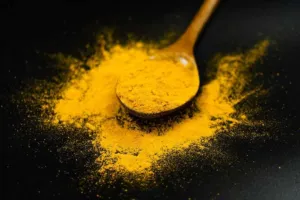
- Turmeric Powder on a Spoon – Black Background.jpg, formulatehealth. CC BY 2.0. Resized and re-encoded for the web by AIP; no other changes.
- Tofu curry with rice.jpg, Anna Korcheva. CC BY-SA 4.0. Resized and re-encoded for the web by AIP; no other changes.
- Spice shop in Kandy Market, Sri Lanka.jpg, McKay Savage. CC BY 2.0. Resized and re-encoded for the web by AIP; no other changes.
- Curcuma longa – Köhler–s Medizinal-Pflanzen-199.jpg, Franz Eugen Köhler, Köhler's Medizinal-Pflanzen. Public domain. Resized and re-encoded for the web by AIP; no other changes.
- Curcuma longa L. (AM AK94806).jpg, T. F. Cheeseman. CC BY 4.0. Resized and re-encoded for the web by AIP; no other changes.
- Black Pepper (Piper nigrum) fruits.jpg, K Hari Krishnan. CC BY-SA 3.0. Resized and re-encoded for the web by AIP; no other changes.
- Curcuma aromatica.jpg, goldentakin. CC BY 2.0. Resized and re-encoded for the web by AIP; no other changes.
- Rhizoma Curcumae xanthorrhizae by Danny S. – 001.jpg, Danny Steven S.. CC BY-SA 3.0. Resized and re-encoded for the web by AIP; no other changes.
- Starr 080103-1184 Curcuma australasica.jpg, Forest & Kim Starr. CC BY 3.0. Resized and re-encoded for the web by AIP; no other changes.
- Chromorange 2.jpg, FK1954. CC0. Resized and re-encoded for the web by AIP; no other changes.
- Drying turmeric, sliced turmeric, medicinal plants.jpg, Akopoly. CC BY-SA 4.0. Resized and re-encoded for the web by AIP; no other changes.
- Cardwell Victoria Street 1.jpg, Torbenbrinker. CC BY-SA 4.0. Resized and re-encoded for the web by AIP; no other changes.
- Cardwell Hinchinbrook Channel.jpg, Torbenbrinker. CC BY-SA 4.0. Resized and re-encoded for the web by AIP; no other changes.
- Chemical structure depictions (curcumin, demethoxycurcumin, bisdemethoxycurcumin, ar-turmerone, α-turmerone, curlone, curcumin glucuronide, tetrahydrocurcumin, piperine): PubChem, US National Library of Medicine. Public domain. Background whitened and cropped by AIP.
- Figures 1–7 (Australian reports to the TGA, the kitchen-to-capsule exposure diagram, the evidence map, the HLA-B*35:01 series, the regulatory timeline, overseas adulteration data, and label anatomy): Australian Institute of Pharmacognosy, 2026, CC BY 4.0, drawn from the sources printed in each figure.