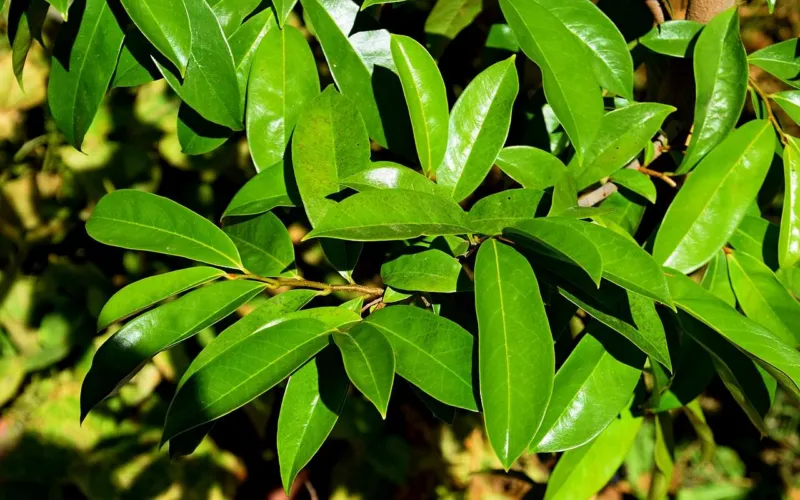

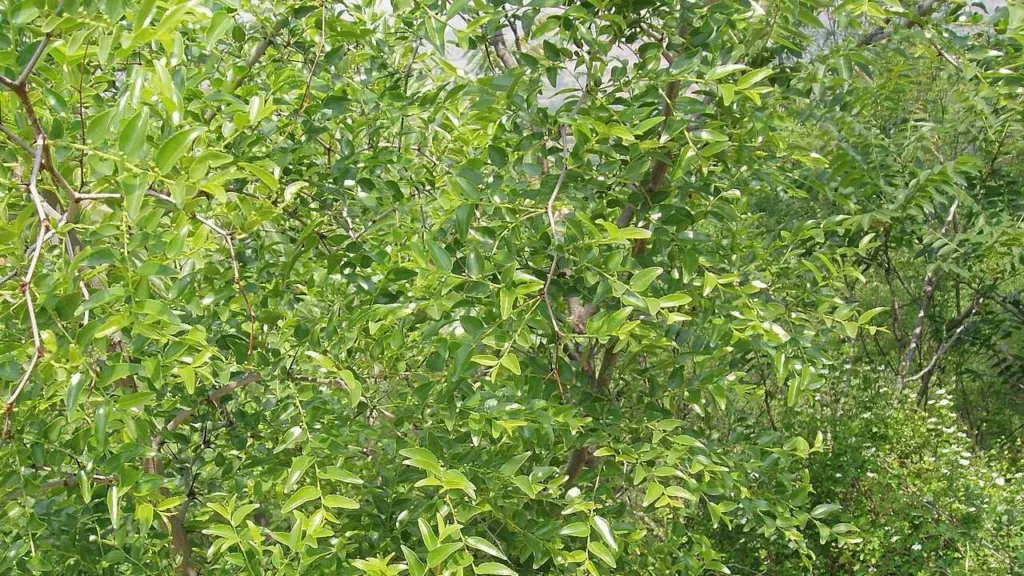
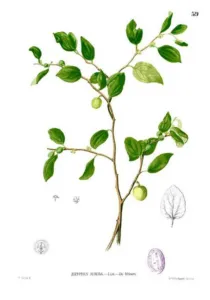
Cover: Ziziphus jujuba var. spinosa. Photo: Taken by Fanghong · CC BY-SA 3.0 · Wikimedia Commons
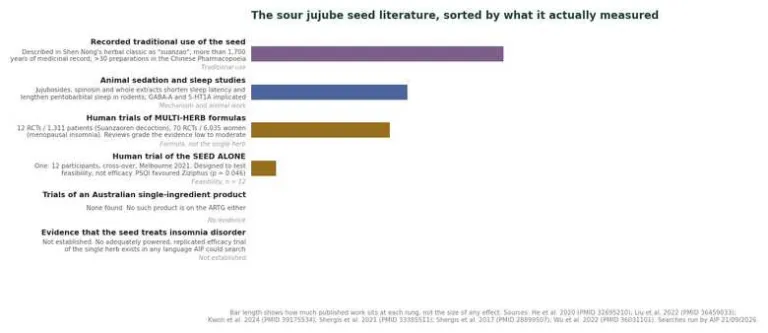
On 21 September 2026 the Institute opened all 230 entries the TGA’s public register returns for the word “Ziziphus” and read every ingredient list. One hundred and three of them contain the sour jujube seed. Not one of them contains it on its own. The research literature has exactly the same shape, and that is the whole problem with how this herb is being sold. Attested
This is No. 6 in the Australian Institute of Pharmacognosy’s evidence-graded monograph series. Suan zao ren is one of the most-prescribed sleep herbs in China, Japan and Korea, with a medicinal record past 1,700 years and a place in the Chinese Pharmacopoeia. It is also sitting on Australian sleep shelves under a name most buyers cannot decode, next to a jujube fruit industry that is about to teach the country the same word for something else. Here is the plant, the chemistry, the evidence at the grade the evidence actually sits at, and the Australian legal position, which no overseas article contains.
This article is educational. It is not medical, legal or regulatory advice, it is not an advertisement, and nothing in it is a recommendation to buy, prepare or take sour jujube seed or any product containing it. No brand, product name or sponsor is named anywhere in this article and the Institute has no commercial interest in any Ziziphus product. Australian Register of Therapeutic Goods entries are identified by their public register numbers only.
1. Anaphylaxis has happened. A 2024 case report describes a 28-year-old man with pollen allergy who took a Chinese decoction for insomnia, developed mucosal swelling and breathing difficulty within minutes, and dropped below 70 per cent blood oxygen; prick testing of every component was strongly positive to sour jujube seed, on a first-ever exposure (PMID 39552699). Evidence suggests Swelling of the lips, tongue or throat, a spreading rash or breathing difficulty after a dose is an emergency.
2. This herb is not a treatment for insomnia, and AIP makes no therapeutic claim for it. The human trial evidence is almost entirely for multi-herb formulas and is graded low to moderate by the reviewers themselves (PMID 36459033; PMID 39175534; PMID 36031101). Evidence suggests The one randomised trial of the seed alone enrolled twelve people and was designed to test feasibility (PMID 33385511). Evidence suggests
3. Persistent insomnia has causes worth finding. Sleep apnoea, thyroid disease, depression, chronic pain, alcohol, shift work and medication effects all present as bad sleep, and each needs its own management. Nothing in this article should be used to delay having that looked into.
4. Expect additive sedation. The animal pharmacology engages GABAA and 5-HT1A (PMID 36483742; PMID 18466960), Mechanism so the sensible working assumption is that it adds to alcohol, benzodiazepines, Z-drugs, opioids, sedating antihistamines and other sedating herbs — several of which are in the same Australian products. Driving and operating machinery belong in that sentence. No human interaction study exists, and the 5-HT1A half of that pharmacology means serotonergic antidepressants — SSRIs, SNRIs, tricyclics, MAOIs — carry a theoretical serotonin concern on top of the drowsiness; a 2004 case report letter is indexed under this genus, drug interactions and serotonin syndrome (PMID 15169710). Evidence suggests
5. Pregnancy, breastfeeding and children: not established. No human data supports use in any of the three. The Permissible Ingredients Determination attaches no warning requirement to this seed (Permissible Ingredients Determination), so where a Ziziphus product does carry a pregnancy statement it is driven by the product rather than by a regulator’s finding about the seed; of the four register entries AIP read in full, two carry one and two carry none. Attested
6. Unregulated imported Chinese herbal product carries documented risk. An Australian audit of 26 traditional Chinese medicines bought over the counter in South Australia found undeclared plant and animal DNA in half, undeclared pharmaceuticals including warfarin and dexamethasone in half, and arsenic, lead and cadmium, with 92% showing contamination or substitution — TGA-listed products among them (PMID 26658160). Confirmed
7. Do not collect it from an Australian roadside. The Ziziphus growing wild in northern Australia is chinee apple, Ziziphus mauritiana — a different species and a restricted invasive plant in Queensland (Business Queensland, chinee apple). Attested
Emergency: for collapse, seizure, severe confusion, difficulty breathing, or swelling of the face, lips, tongue or throat with or without a rash, call Triple Zero (000) immediately and say the word “anaphylaxis” if that is what it looks like. For a swallowed overdose, a child who has eaten any part of a plant, or any poisons question, call the Poisons Information Centre on 13 11 26 (24 hours, Australia-wide). Before taking any botanical drug, consult a degree-qualified herbalist with competencies and adequate training in pharmacognosy.
| Botanical name | Ziziphus jujuba Mill. var. spinosa (Bunge) Hu ex H.F.Chow, Rhamnaceae; species described in Gardeners Dictionary ed. 8 (1768), variety combined 1934 Attested §2 |
| Common names | Sour jujube, spine date, wild jujube; suan zao (the plant), suan zao ren (the seed), sanso-nin, sanjoin; pharmaceutical Latin Ziziphi Spinosae Semen Attested §2 |
| The drug | The seed, taken from the stone of the small sour drupe. The sweet orchard jujube is a different variety and a different medicine Attested §3 |
| Not to be confused with | Ziziphus mauritiana (chinee apple), a restricted invasive plant in Queensland, and Ziziphus jujuba var. jujuba, the food crop Attested §4 |
| Home range | Hills and dry sunny slopes of northern China — Hebei, Shanxi, Shaanxi, Henan, Gansu, Ningxia, Liaoning, Inner Mongolia, Xinjiang Confirmed §4 |
| In Australia | No wild occurrence records at all. Z. mauritiana has 7,072. The jujube being planted commercially is about 60 growers and 50,000 trees Attested §4 |
| Traditional standing | In Shen Nong’s Herbal Classic as suanzao; more than 1,700 years of medicinal record; over 30 preparations in the Chinese Pharmacopoeia Traditional §5 |
| Quality markers | Jujuboside A, jujuboside B and spinosin, assayed by HPLC-UV or ELSD with fingerprint; content varies with origin, ripening, processing and storage Confirmed §6 |
| Most plausible mechanism | GABAA receptor activation and 5-HT1A-dependent potentiation of sleep, shown in rodents; probably a multi-component effect rather than one marker Mechanism §7 |
| Best human evidence for the herb alone | One randomised, placebo-controlled cross-over feasibility trial, Melbourne 2021, n = 12; PSQI favoured the herb (p = 0.046), other outcomes did not differ Evidence suggests §8 |
| The formula evidence | 12 RCTs / 1,311 patients for Suanzaoren decoction; 70 RCTs / 6,035 women for menopausal insomnia; certainty graded moderate to low and risk of bias high Evidence suggests §8 |
| Is it a treatment for insomnia? | Not established. No adequately powered, replicated single-herb efficacy trial exists that AIP could find Attested §9 |
| Poisons Standard | Not scheduled; full text searched 21/09/2026 Attested §11 |
| Permitted ingredient? | Yes — item 5283 ZIZIPHUS JUJUBA VAR. SPINOSA, roles A and H, no plant part specified and no requirements Attested §11 |
| On the ARTG? | 103 entries of the 230 the keyword search returns, median 7 actives, none single-ingredient; extract ratios from 2:1 to 30:1 Attested §11 |
| Who dispenses it | Sold as listed medicines in pharmacies and supermarkets, and dispensed by Ahpra-registered Chinese medicine practitioners — 4,923 registrants, 3,168 in a herbal division Attested §11 |
| Main safety issues | One published case of anaphylaxis on a first exposure; additive sedation and a serotonergic concern by inference, with one 2004 case report letter and no interaction study; pregnancy, lactation, paediatric and long-term use all unestablished; and documented contamination and substitution in Chinese herbal products bought in Australia Evidence suggests §10 |
| Quality problem | Marker content fluctuates through the whole production chain, adulterants are a recognised category, and no Australian market survey of these products exists Attested §12 |
- Confirmed Established in humans by trial, or an unambiguous analytical, chemical or official-record fact — including what a regulator’s own published document says.
- Evidence suggests Real published data, but preclinical, observational, small or not yet independently replicated.
- Mechanism A plausible mechanistic or pharmacological inference, not an outcome.
- Traditional Historical or ethnobotanical use. Evidence of practice, not of efficacy.
- Attested A documentary fact attested in a named record — a legislative instrument, a regulator’s publication, a taxonomic index, a flora, a public register entry. A textual reading, not a claim about what a plant does.
Every PubMed ID (PMID) below links to its record and was checked against PubMed on 21/09/2026. Every compound was checked against PubChem and is linked by CID. Every Australian regulatory statement was read from the regulator’s or the legislature’s own document on the same day. Where a claim could not be traced to a primary source it is marked unsourced and stays that way.
What it is. The seed of a spiny, sour-fruited variety of the jujube, Ziziphus jujuba var. spinosa, from the dry hills of northern China. In Chinese medicine it is suan zao ren, and it is one of the most-dispensed sleep herbs in East Asia. Traditional The sweet red date turning up in Australian greengrocers is the orchard variety of the same species — a food, and a different drug. Attested
What the tradition says. A medicinal record past 1,700 years, an entry in the oldest surviving Chinese materia medica, and more than thirty preparations in the Chinese Pharmacopoeia. Traditional The TGA lets Australian products say exactly that and no more: “traditionally used in Chinese medicine to decrease/reduce/relieve sleeplessness”. Attested
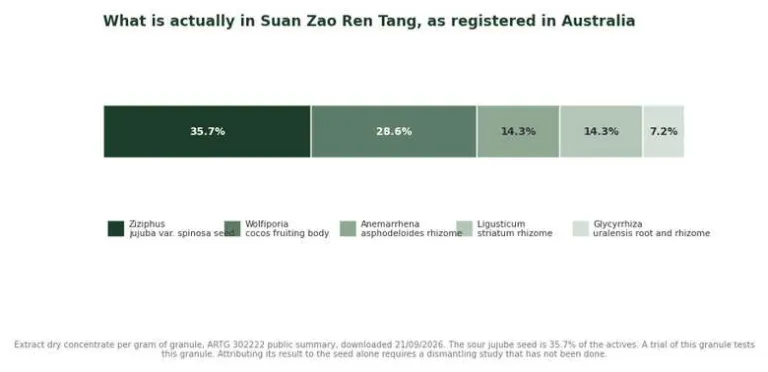
What the trials tested. Almost entirely multi-herb decoctions. The best-known is Suan Zao Ren Tang, in which this seed supplies about a third of the actives and four other herbs supply the rest. Meta-analyses of those formulas report benefit and then say, in their own conclusions, that the trials vary in quality and that better ones are needed. Evidence suggests A 2022 audit of 184 studies in this field found fewer than half reported an ethics number or clear inclusion criteria. Attested
The bit that surprised us. We expected to find a single-ingredient Ziziphus capsule on the Australian market and to compare it against the trial dose. The register returned none. All 103 ARTG entries carrying this seed are combinations — median seven actives — and the commonest companion is passionflower. Attested So even the strongest possible reading of the formula literature would not tell an Australian buyer what the thing in their hand does, and neither would the one single-herb trial, which enrolled twelve people and was a feasibility study.
What to do with that. Treat it as a herb with a serious tradition, a coherent animal pharmacology, a formula-level clinical literature of modest quality, and one small Australian pilot that justified a proper trial nobody has yet run. It is not a treatment for insomnia. If your sleep has been bad for weeks, the cause is worth finding. Before taking any botanical drug, consult a degree-qualified herbalist with competencies and adequate training in pharmacognosy.
1. The herb that is already in the aisle
Walk the sleep shelf of an Australian pharmacy or health-food shop and read the small print on the back of the packets. Somewhere in the middle of the ingredient lists, between the magnesium and the passionflower, you will keep meeting the words Ziziphus jujuba var. spinosa. Most buyers have no idea what it is. It has no everyday English name that has stuck here, the botanical name is a mouthful, and the Chinese name of the actual drug — suan zao ren, sour jujube seed — almost never appears on the front of the pack.
On 21 September 2026 the Institute opened every one of the 230 entries the Therapeutic Goods Administration’s public ARTG search returns for the keyword “Ziziphus” and read the ingredient list on each. One hundred and three of them list Ziziphus jujuba var. spinosa as an active ingredient. Seventy-three of those 103 were entered on the register since 2020, thirteen of them in the first nine months of 2026 alone (ARTG public search). Attested This is a herb Australians are buying at a rising rate under a name almost none of them can decode.
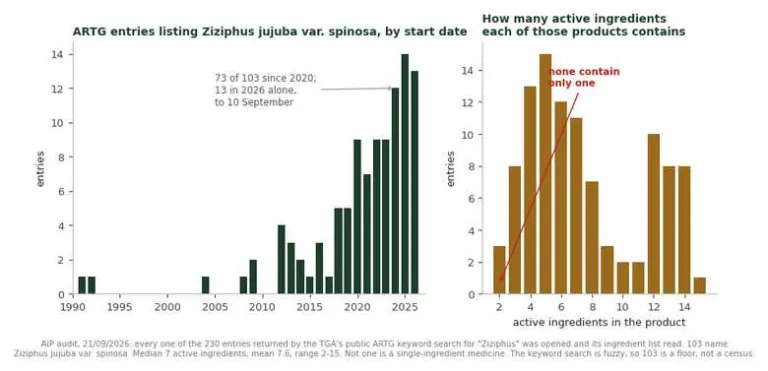
The second thing that audit turned up matters more than the first. Of those 103 entries, the number containing sour jujube seed as the only active ingredient is zero. The median product carries seven actives; the range runs from two to fifteen. That is the shape of the Australian market, and it sets up the problem the rest of this monograph is about, because the research literature has exactly the same shape and almost nobody says so out loud.
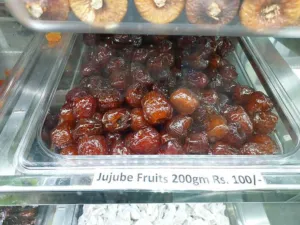
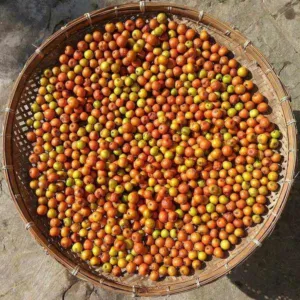
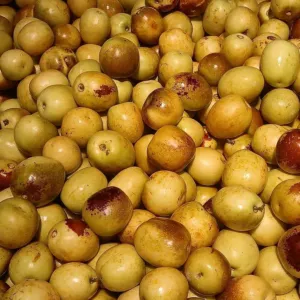
Meanwhile a second Ziziphus story is starting in Australia, in the greengrocer rather than the pharmacy. About sixty growers are cultivating roughly 50,000 jujube trees here, and the industry’s own strategic blueprint names low consumer awareness as its central problem (ABC News, 09/08/2025; AgriFutures Jujube 2030 Strategic Blueprint). Attested The fruit arriving in Australian shops and the seed arriving on Australian sleep labels come from closely related plants with the same genus name and an overlapping common name, and they are used for completely different things. Sorting that out is where this has to start.
The Institute makes no therapeutic claim for this herb. Nothing below is a recommendation to take it, and nothing below should be used to put off having persistent insomnia properly investigated.
2. Identity and taxonomy: three plants, one name
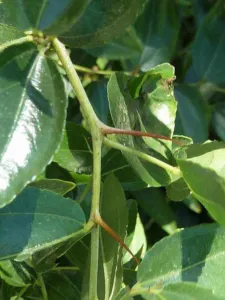
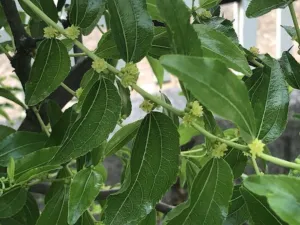
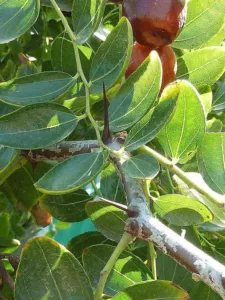
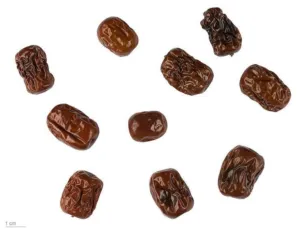
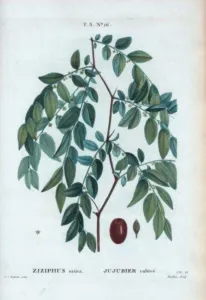
The accepted name of the jujube is Ziziphus jujuba Mill., published in the eighth edition of Philip Miller’s Gardeners Dictionary in 1768 (IPNI, Ziziphus jujuba Mill.). Attested It sits in Rhamnaceae, the buckthorn family. The Flora of China recognises three infraspecific taxa under it and separates them on the fruit and the branches. Variety jujuba, the orchard jujube, has a drupe 1.5–2 cm across with sweet flesh and a stone pointed at both ends. Variety spinosa has a drupe of 0.7–1.2 cm with thin, sour flesh and a stone blunt at both ends, on erect spiny branches (Flora of China, Ziziphus jujuba; Flora of China, var. spinosa). Attested
The medicinal variety has a long and tangled naming history, which is part of why labels get it wrong. Bunge described it as Ziziphus vulgaris var. spinosa in Enumeratio Plantarum Chinae Borealis in 1833. The combination in use today, Ziziphus jujuba var. spinosa (Bunge) Hu ex H.F.Chow, dates from Familiar Trees of Hopei in 1934. Along the way it has also been published as Z. sativa var. spinosa and as Z. spinosa (Flora of China, var. spinosa). Attested A packet reading “Ziziphus spinosa” is using a real but superseded name; a packet reading only “jujube extract” is telling you nothing at all.
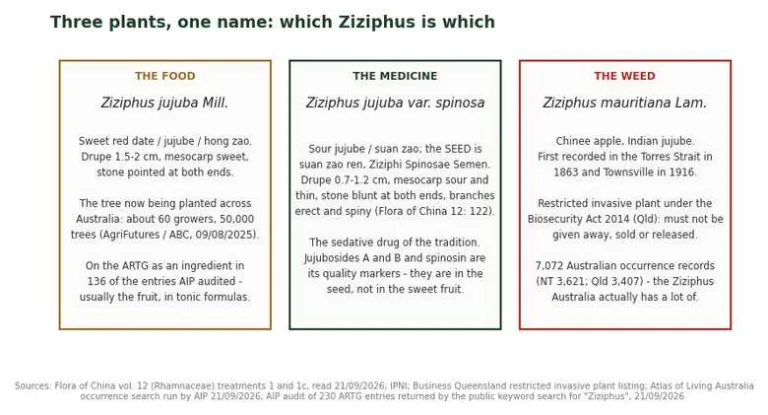
Then there is the third plant. Ziziphus mauritiana Lam. is called Indian jujube, Chinese date, and in north Queensland chinee apple. It was first recorded in the Torres Strait in 1863 and at Townsville in 1916, and it is a restricted invasive plant under the Biosecurity Act 2014 (Qld): landholders must manage its impacts, and it must not be given away, sold or released (Business Queensland, chinee apple). Attested It bears an edible fruit and it carries jujube common names, which is exactly the recipe for a well-meaning forager collecting the wrong thing.
The drug itself is the seed, extracted from the stone of the sour-fruited variety. In Chinese it is suan zao ren; in the Latin pharmaceutical style used through the East Asian literature it is Ziziphi Spinosae Semen, often abbreviated ZSS or SZS in papers. The Flora of China’s own note on the variety states the use plainly: “The seeds are used medicinally for relieving muscle spasms, as a tranquilizer, or to treat insomnia” (Flora of China, var. spinosa). Traditional A botanical flora saying so is a record of practice; it is not evidence that the seeds do it.
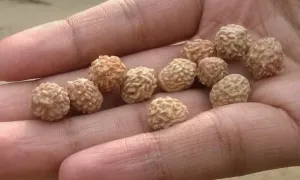
3. Botany: from drupe to stone to seed
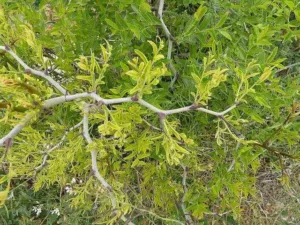
Both varieties are deciduous small trees or shrubs, the wild sour one usually shrubbier, reaching a few metres with erect spiny branches. Flowering runs June to July and fruiting August to September in its native range across the hills and dry sunny slopes of northern China — Hebei, Shanxi, Shaanxi, Henan, Gansu, Ningxia, Liaoning, Inner Mongolia, Xinjiang and neighbouring provinces (Flora of China, var. spinosa). Attested The flowers are small, yellow-green, five-merous and heavily nectar-bearing, which makes the wild variety an important honey plant in northern China.
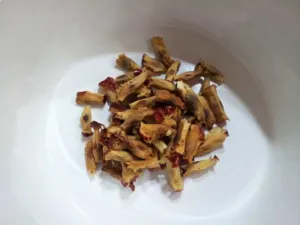
The fruit is a drupe. Inside the thin sour flesh sits a hard stone with one or two locules, and inside the stone sits the seed. Getting from orchard to pharmacy drawer means de-pulping, cracking the stone, and separating out the kernel, and the yield is small. That processing step is where the supply chain can go wrong, because a cracked stone fragment and a seed of another Ziziphus look similar enough to survive casual inspection.
The tradition then does one more thing to the seed: it fries it. Raw and stir-fried suan zao ren are treated in the Chinese materia medica as different medicines with different indications, and modern analytical work backs up that the two differ chemically. Mass-spectrometry imaging of the seed through processing shows the metabolites redistributing spatially as it is heated (PMID 38961089), Evidence suggests and a direct comparison of raw against fried seed in insomniac rats found the gut microbiota metabolised spinosin and jujuboside A faster after frying, with a lower peak plasma spinosin concentration (PMID 42392736). Evidence suggests Ginger-juice processed seed has been given its own mechanistic account in mice, through the HPA axis and cAMP/PKA signalling (PMID 41566751). Mechanism An Australian buyer reading an English-language label has no way of knowing which the manufacturer used, because almost no label says.
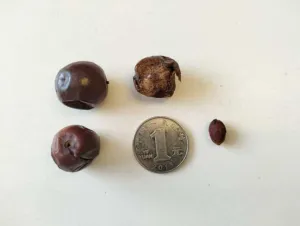
Wild-collected and cultivated material also differ. Transcriptomic and compositional work comparing wild against grafted sour jujube found measurable differences in seed chemistry (PMID 39425014), Evidence suggests and a field study in Lincheng County, Hebei, found that the content of the medicinal components tracked with plant traits and growing environment (PMID 40652208). Evidence suggests Where the seed came from, and what the season was like, moves the numbers.
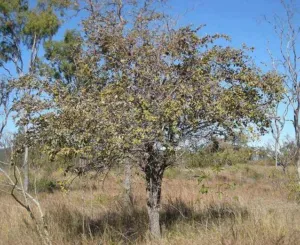
4. Where it grows, and what Australia actually has
Neither the jujube nor its sour variety grows wild here. The Atlas of Living Australia holds no Australian occurrence records at all for Ziziphus jujuba, and none for Ziziphus jujuba var. spinosa; across every other name in the genus there are seventeen (Atlas of Living Australia). Attested Orchard trees are cultivated plants and cultivation does not generate occurrence records, so that zero describes the wild flora rather than the nursery trade. What Australia does have a great deal of is chinee apple: 7,072 records, 3,621 in the Northern Territory and 3,407 in Queensland (Atlas of Living Australia). Attested
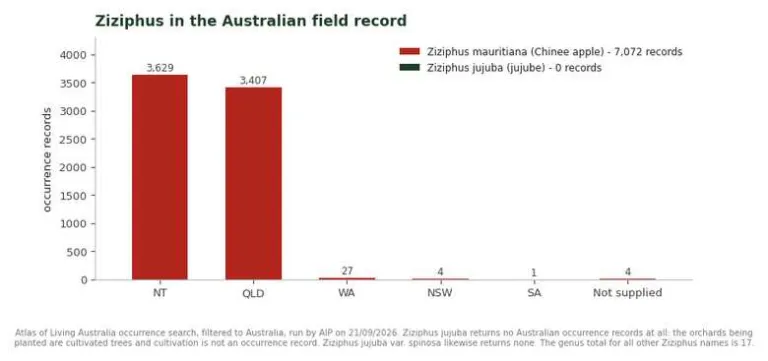
The cultivated side is moving fast. Australian jujube plantings are concentrated in irrigated inland horticulture — the Riverland in South Australia is one centre — and the crop is being grown for a counter-seasonal export window into Asian markets as well as for domestic sale (ABC News, 09/08/2025). Attested The AgriFutures Australian Jujube 2030 Strategic Blueprint, published in June 2022 and written by Trevor Ranford, sets out a national structure for an industry it describes as fragmented, with low consumer awareness as a headline constraint (AgriFutures Jujube 2030 Strategic Blueprint). Attested
Here is where the two stories collide. An industry is about to spend money teaching Australians the word “jujube”. A different part of the market is already selling Australians a sedative drug from a different variety of the same species, in products whose labels also say jujube. The fruit that is coming is a food. The seed that is already here is a herbal medicine with a sedative reputation. Nobody in either supply chain has an obvious commercial reason to explain the difference, so it falls to people like us.
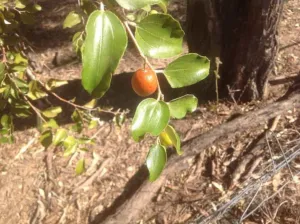
One practical consequence for readers in far north Queensland, where this Institute sits: the Ziziphus fruiting on a roadside between Cardwell and Townsville is almost certainly Ziziphus mauritiana, and collecting seed from it to use as suan zao ren would be both botanically wrong and, if you moved the material, a biosecurity problem (Business Queensland, chinee apple). Attested
5. What the tradition actually says
The seed has a long and specific record. It appears in Shen Nong’s Herbal Classic — the earliest surviving Chinese materia medica, compiled around the Eastern Han — under the name suanzao, and the classical decoction built around it is described in the Han-dynasty clinical literature. A 2020 review in the Chinese pharmacognosy literature puts the medicinal record at more than 1,700 years and counts more than thirty preparations containing the seed in the Pharmacopoeia of the People’s Republic of China (PMID 32695210). Traditional
The famous formula is Suan Zao Ren Tang, sour jujube seed decoction. Its modern Australian registration makes the composition entirely public: ARTG entry 302222, a listed granule, contains extract dry concentrates of Ziziphus jujuba var. spinosa seed, Wolfiporia cocos fruiting body, Anemarrhena asphodeloides rhizome, Ligusticum striatum rhizome and Glycyrrhiza uralensis root and rhizome (ARTG 302222 public summary). Attested By weight of actives, the sour jujube seed is 35.7 per cent of that granule.
The tradition’s own indications are broader than sleep. The materia medica record has the seed used for palpitations, dizziness, sweating, thirst and irritability as well as sleeplessness, and it distinguishes the raw seed from the fried seed for different presentations (PMID 32695210). Traditional The seed is also used for its nutritional reputation: the same plant supplies fruit for juice, vinegar and wine, leaves for tea, and flowers for honey (PMID 38472749). Traditional
Australian regulation, to its credit, describes the tradition in exactly those terms and refuses to go further. The permitted indications the TGA has accepted for ARTG 302222 are “Traditionally used in Chinese medicine to calm/stabilise/settle/regulate shen” and “Traditionally used in Chinese medicine to decrease/reduce/relieve sleeplessness”, with mandatory label statements attached (ARTG 302222 public summary). Attested Every one of those words after “traditionally used” is doing legal work: the claim is about the tradition, and the sponsor is not permitted to advertise it as anything else.
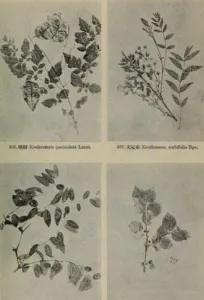
6. Phytochemistry: what is in the seed
More than 150 compounds have been isolated from Ziziphi Spinosae Semen, across terpenoids, alkaloids, flavonoids, fatty acids, volatile oils and polysaccharides (PMID 32695210). Confirmed Three of them carry the analytical weight. A 2023 review that went through more than 230 papers and books published between 1979 and 2022 on the quality control of this drug identified jujuboside A, jujuboside B and spinosin as the key quality markers, and found the mainstream assay methods to be HPLC with UV or evaporative light-scattering detection plus fingerprint analysis (PMID 36720435). Confirmed
That same review recorded something a buyer should know: the measured content of those markers fluctuates significantly, and the fluctuation is traceable through the whole production chain — growing region, ripening time, primary processing, the frying step, how the seed is combined in a formula, and storage. Crushing the seed and combining it with other herbs turned out to be the steps that most affect the actives (PMID 36720435). Confirmed A number on a certificate of analysis therefore describes that batch and that process, and not the species in general.
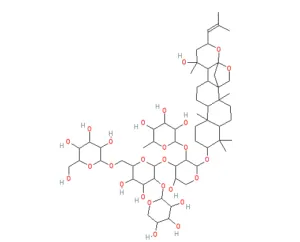
C58H94O26 · dammarane saponin; a quality marker of the drug
PubChem CID 51346169
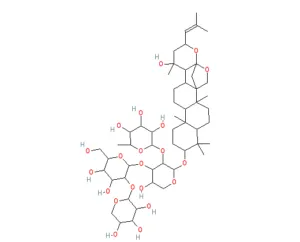
C52H84O21 · the second saponin marker; modulates AMPA receptors in animals
PubChem CID 24721031
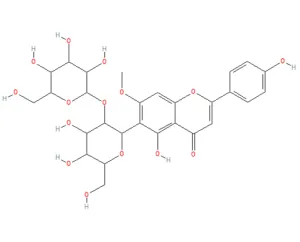
C28H32O15 · the C-glycosyl flavone marker; sedation acts through the serotonergic system, at postsynaptic 5-HT1A receptors
PubChem CID 155692
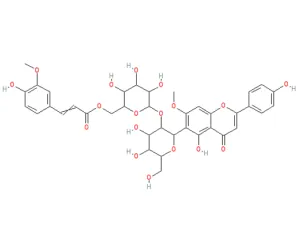
C38H40O18 · one of the acylated spinosins of the seed
PubChem CID 21597353
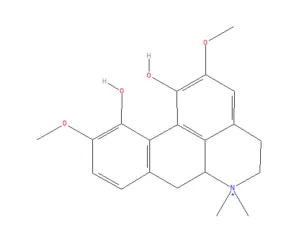
C20H24NO4+ · aporphine alkaloid quaternary cation
PubChem CID 73337
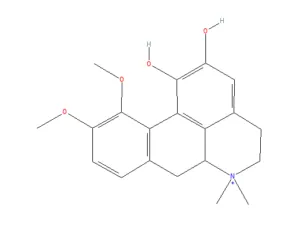
C20H24NO4+ · benzylisoquinoline alkaloid named from the genus
PubChem CID 102063083
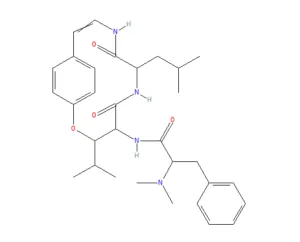
C31H42N4O4 · the cyclopeptide alkaloid series of the seed
PubChem CID 11731186
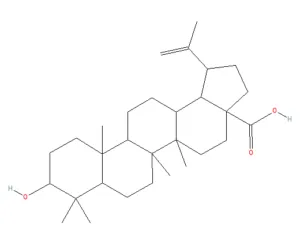
C30H48O3 · lupane triterpene acid of the seed and fruit
PubChem CID 64971
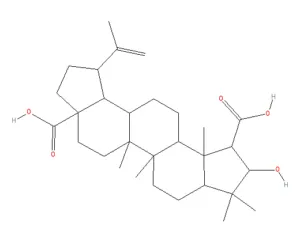
C30H46O5 · a Rhamnaceae-characteristic triterpene acid
PubChem CID 161352
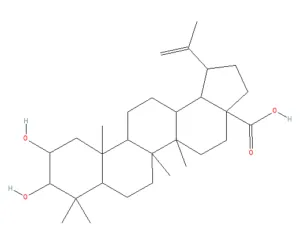
C30H48O4 · 2-hydroxy betulinic acid, widespread in the genus
PubChem CID 12305768
The three quality markers first, then an acylated spinosin, then the alkaloids, then the triterpene acids. Every CID was checked against PubChem on 21/09/2026 through the NCBI E-utilities interface; PubChem’s own REST and image services were returning “server busy” errors all day, so the depictions here were rendered from each record’s PubChem SMILES string by the NCI/CADD Chemical Identifier Resolver (US National Cancer Institute, public domain).
The jujubosides are dammarane-type triterpene saponins, and they are large molecules — jujuboside A is C58H94O26, with a molecular weight over 1,200. Spinosin is a C-glycosyl flavone built on an apigenin core, and the seed also carries a family of acylated spinosin derivatives such as 6′′′-feruloylspinosin. The alkaloid fraction includes the aporphine magnoflorine and cyclopeptide alkaloids of the sanjoinine series. Oleanane and lupane triterpene acids — betulinic, ceanothic and alphitolic acids — round out the profile.
The chemistry also supplies the identity test that a label cannot. Jujubosides and spinosin are seed constituents. The sweet jujube fruit being grown in the Riverland is a different organ of a different variety, and a marker assay for jujuboside A on a dried red date is the wrong assay on the wrong material. Where an Australian product names jujubosides or spinosin on the pack, that is a claim about the seed, and it is checkable.
7. Pharmacology at the bench
The animal literature on this seed is deep, consistent in direction, and entirely preclinical. The two mechanisms that recur are GABAergic and serotonergic.
The GABA story
Jujubosides given to rats increase total sleep time on EEG and EMG recording, and in mice they lengthen pentobarbital sleeping time (PMID 20347951). Evidence suggests Jujuboside A inhibits glutamate-mediated excitatory signalling in rat hippocampus (PMID 14531016). Mechanism Seed extract given to rats made insomniac with p-chlorophenylalanine acts through GABAA receptor activation (PMID 36483742), Evidence suggests and a 2025 study localised a jujuboside A effect to GABAergic modulation of the paraventricular thalamus in mice (PMID 40354840). Evidence suggests Jujuboside B also modulates AMPA receptor activity and suppresses febrile seizure in an animal model (PMID 36549370). Evidence suggests
The serotonin story
Spinosin, the marker flavone, augments pentobarbital-induced sleep in mice. The serotonin precursor 5-HTP potentiates that effect, and blocking serotonin synthesis with p-chlorophenylalanine suppresses pentobarbital sleep in a way spinosin reverses, which places the effect in the serotonergic system (PMID 18466960). Evidence suggests Follow-up work in rats localises it to postsynaptic 5-HT1A receptors, where spinosin behaves as an antagonist: it blocks the sleep-reducing action of the 5-HT1A agonist 8-OH-DPAT, and combining it with a 5-HT1A antagonist augments sleep further (PMID 20171860). Evidence suggests Direct measurement of five neurotransmitters in rat brain after aqueous seed extract found a pattern consistent with the hypnotic effect the behavioural studies report (PMID 31514987). Evidence suggests
What happens to it in a body
Comparative pharmacokinetics of six major compounds in normal and insomniac rats found that the disease state itself changed the exposure profile (PMID 32923013), Evidence suggests and systematic characterisation of what actually circulates after dosing found 151 compounds in rats — 58 parent compounds and 93 metabolites — of which only 16 were present in plasma, the rest appearing in urine, bile and faeces (PMID 33217708). Evidence suggests A 2025 review set out an integrated pharmacodynamic–pharmacokinetic network for the seed and argued that the effect is a multi-component one rather than the work of any single marker (PMID 41261403). Mechanism
All of that is real work and worth taking seriously. None of it is a human outcome. A rodent falling asleep faster after an intraperitoneal saponin dose tells you a receptor system is engaged; it does not tell you that a capsule taken by a 34-year-old in Brisbane will change her sleep, and the gap between those two statements is the entire subject of the next two chapters.
8. The clinical evidence, stated honestly
The formula trials
There is a substantial randomised-trial literature here, and almost all of it is on multi-herb formulas. A 2022 systematic review and meta-analysis of Suanzaoren decoction for chronic insomnia pooled 12 randomised trials and 1,311 patients. It reported improvement over control in clinical effective rate (RR 1.22, 95% CI 1.16–1.29), reduced recurrence (RR 0.47, 95% CI 0.28–0.80) and lower Pittsburgh Sleep Quality Index scores, and the authors’ own conclusion states that the included studies varied in quality and that large-sample, high-quality, multi-centre trials are still needed (PMID 36459033). Evidence suggests
A 2024 review of East Asian herbal medicine for menopausal insomnia pooled 70 randomised trials and 6,035 participants. Modified Suan Zao Ren Tang was the most frequently used formula and Ziziphus jujuba var. spinosa the most frequently used single herb across the whole body of trials. Compared with sedative-hypnotics, the herbal arms improved PSQI by 2.18 points (95% CI −2.56 to −1.80) with fewer adverse reactions — and the authors graded the certainty of the evidence as moderate to low (PMID 39175534). Evidence suggests
A 2025 Bayesian network meta-analysis of Chinese herbal medicine for insomnia included 186 randomised trials across 13 herbal interventions and ranked suanzaoren among the top five on PSQI (PMID 40826721). Evidence suggests Against that, a 2022 methodological audit of 184 clinical studies of Chinese herbal compounds for insomnia of yin-deficiency pattern found that fewer than half reported an ethics review number or clear inclusion criteria, and rated the methodological risk of bias as high (PMID 36031101). Attested Those two findings sit together, and the second one qualifies the first.
The single-herb trial
One trial has tested the seed on its own, and it was run in Melbourne. Shergis and colleagues at RMIT University, with a co-author at Monash, randomised twelve adults with insomnia to encapsulated Ziziphus spinosa granules at 2 g daily or placebo for four weeks, washed out for four weeks, then crossed them over. Sleep quality on the PSQI favoured the herb (t = −2.276, df = 10, 95% CI −3.3 to −0.04, p = 0.046); the other outcomes showed no significant difference; there were period effects; and the herb was well tolerated with only minor adverse events (PMID 33385511). Evidence suggests
Read the title of that paper before quoting it. It is a feasibility trial, and the authors say so: the objective was to evaluate the feasibility of implementing the protocol, the feasibility endpoints were the primary ones, and the conclusion asks for future clinical trials. Twelve participants is a sample sized to find out whether a bigger study can be run, and a p of 0.046 on one secondary measure in twelve people is a reason to fund that bigger study. It settles nothing about efficacy, and the researchers did not claim it did.
To the Institute’s knowledge there is no adequately powered, independently replicated randomised trial of sour jujube seed alone for insomnia disorder in any language we were able to search on 21/09/2026. If one exists in a database we could not reach, we would like to be sent it.
9. The transfer problem
Here is the move that happens in marketing copy, in blog posts, and sometimes in the introduction sections of papers that should know better. A meta-analysis of Suan Zao Ren Tang finds a benefit. Suan Zao Ren Tang is named after sour jujube seed. Therefore sour jujube seed works for insomnia, and here is a capsule of it.
Each step in that chain loses information. The meta-analysis tested a five-herb decoction in which the named seed supplies about a third of the actives (§5). The other four herbs are pharmacologically active in their own right. A formula trial is a test of the formula. Attributing its result to one ingredient requires a dismantling study — the formula against the formula minus the seed, or the seed against the whole — and that study has not been done at a scale that would settle it.
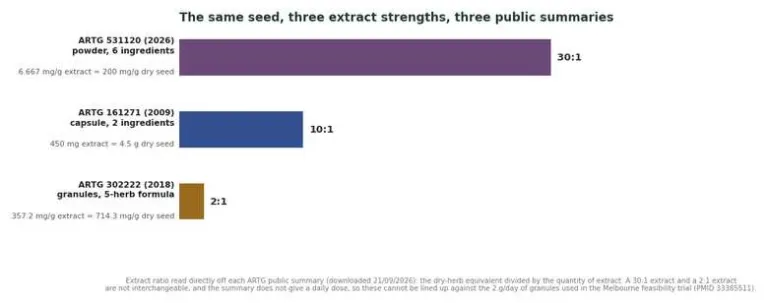
The dose does not transfer either. The Melbourne trial used 2 g of granules daily. Australian listed products give the seed in wildly different strengths, and the public summaries show it: ARTG 302222 is a 2:1 extract, ARTG 161271 a 10:1, and ARTG 531120, entered on 10 September 2026, a 30:1 (ARTG 302222 public summary; ARTG 161271 public summary; ARTG 531120 public summary). Attested A public summary gives the concentration but not the daily dose, so even a diligent reader cannot line an Australian product up against the trial.
And the preparation does not transfer. The classical evidence is for a decoction — herbs boiled in water, drunk warm. Much of the modern trial literature uses granules made from concentrated decoctions. The products on the Australian shelf are tablets, capsules, powders and, in one 2026 listing, chocolate. Water-soluble polysaccharides and large saponins do not necessarily survive that translation in the same proportions.
What can honestly be said is this. The tradition is long, serious and specific. The animal pharmacology is consistent and points at GABAA and 5-HT1A. The human evidence is mostly for multi-herb formulas, is graded low to moderate by the people who reviewed it, and one small Australian feasibility study of the single herb produced an encouraging signal on one measure in twelve people. That is a case for doing the trial. It is not a treatment for insomnia, and AIP does not present it as one.
10. Safety, interactions and what is not known
The seed has a benign toxicological reputation and the animal data support it. The review literature records intragastric doses of 150 g/kg in mice without toxic signs, chronic toxicity testing in rats showing very low toxicity, and negative genetic toxicity testing (Ames, bone-marrow micronucleus, sperm malformation) on a compound preparation containing the seed. An intraperitoneal LD50 of 14.33 ± 2 g/kg in mice is on record, and an intravenous alcohol-extract LD50 of 27.5 g/kg, while gavage of 340 g/kg of the same extract killed no mice over fourteen days (PMID 32695210). Evidence suggests Those are enormous doses by any route a person would use.
In the trials, tolerability has been unremarkable. The Melbourne feasibility study reported only minor adverse events (PMID 33385511), Evidence suggests and the menopausal-insomnia meta-analysis found significantly fewer adverse reactions in herbal arms than in sedative-hypnotic comparators (RR 0.15, 95% CI 0.07–0.34), with the caveat that trials of this quality under-report harms (PMID 39175534). Evidence suggests
The one acute human reaction on record
Set against that benign toxicology there is a published case of anaphylaxis. In 2024 the allergy department at Peking Union Medical College Hospital reported a 28-year-old man with seasonal pollen allergy who drank a multi-herb Chinese decoction prescribed for insomnia and, within minutes, developed mucosal swelling and breathing difficulty. In the emergency department the breathing worsened and he itched all over; his blood oxygen fell below 70 per cent breathing room air, came back to 97 per cent on nasal oxygen, and the episode settled over some hours. Ten days later a skin prick test with the whole decoction at original concentration raised a 9 × 10 mm wheal, and prick testing of every component in the prescription was strongly positive to fried sour jujube seed and to gardenia fruit — at six hours the sour jujube seed reaction was the only one still up. He had never taken the seed before, which is why the authors raise pollen-food allergy syndrome as the mechanism (PMID 39552699). Evidence suggests
The limits are the ordinary limits of a single case. He declined an oral challenge, which is understandable given the severity, so the seed was never formally confirmed as the culprit; gardenia fruit also tested positive; and the decoction carried many herbs. What the case does establish is that an immediate-type reaction to this seed is possible in a person, that it can be severe enough to need oxygen, and that it can arrive on a first exposure in someone already sensitised to pollen. Australia has a high background rate of pollen allergy, so that observation travels here. Sudden swelling of the lips, tongue or throat, a spreading rash, or any difficulty breathing after a dose is an emergency and belongs to Triple Zero (000), not to a wait-and-see.
The interactions that follow from the pharmacology
If a herb engages GABAA and 5-HT1A in animals, the sensible working assumption in a person is additive sedation. That means alcohol, benzodiazepines, the Z-drugs (zolpidem, zopiclone), opioids, sedating antihistamines, some antidepressants and antipsychotics, and other sedating herbs — valerian, kava, hops, passionflower, californian poppy — several of which are in the very same Australian products (§1). Passiflora incarnata turned up as the commonest companion ingredient in our ARTG audit, in 33 of the 103 entries. Mechanism This is a mechanistic inference, and AIP found no human interaction study of sour jujube seed with any sedative drug. Anything to do with driving, operating machinery or being on call belongs in the same sentence as that inference. The 5-HT1A half of the pharmacology (§7) points somewhere further: a herb that acts on serotonergic transmission sits alongside the serotonergic antidepressants — the SSRIs, the SNRIs, the tricyclics, the MAOIs — and alongside tramadol, triptans and St John’s wort, where the theoretical concern is serotonin excess as well as drowsiness. Mechanism
A 2019 systematic review and meta-analysis of herb–drug interactions screened 4,026 abstracts and found only 32 usable interaction studies, and its authors record large uncertainty about the validity of even those (PMID 30660822). Attested Sour jujube seed is not among the herbs it examined. No systematic interaction work has been done on it at all, so the silence in that literature measures the research effort rather than the risk.
One human report does exist and it is a single case. It gets either ignored or oversold, so here it is at its actual weight. In June 2004 the American Journal of Psychiatry published a letter titled “Venlafaxine and sour date nut”. The US National Library of Medicine indexes it as a case report in an adult woman with depressive disorder taking venlafaxine, under the headings Ziziphus (adverse effects), drug interactions, and serotonin syndrome and anaphylaxis as chemically induced (PMID 15169710). Evidence suggests The letter sits behind a subscription and AIP has not read the full text, so what is recorded here is the existence of the report and the terms an indexer assigned to it — nothing about the dose taken, the timing, the certainty of the attribution or how the patient fared. Read at that weight it is still the only published human signal for the combination, it lines up with the 5-HT1A work and with the anaphylaxis case above, and it is a single report about one person more than twenty years ago. Anyone taking a serotonergic antidepressant who is thinking about this seed should have that conversation with a degree-qualified herbalist with competencies and adequate training in pharmacognosy before starting, and not after.
What is not established
- Pregnancy and breastfeeding. Not established, and the regulatory position here is easy to misread. Item 5283 of the Permissible Ingredients Determination attaches no warning requirement of any kind to this seed (Permissible Ingredients Determination), so a pregnancy statement on the label of a Ziziphus product is not a regulator’s finding about the seed. Of the four public summaries AIP read line by line, two carry “Not recommended for use by pregnant and lactating women” (ARTG 161271 public summary; ARTG 531120 public summary) and two carry no pregnancy, lactation or paediatric warning at all (ARTG 302222 public summary; ARTG 479573 public summary) — and the entry with by far the highest proportion of the seed, at 357.2 mg of extract per gram, is one of the two with no warnings on its record. On 531120 the pregnancy statement sits beside a liver-injury warning that the register attributes by name to valerian, a different active in the same product. The precaution in pregnancy and lactation rests on the absence of human data, which is reason enough for it. Attested
- Children. Not established. One of those four summaries carries a label statement about children under twelve months (ARTG 161271 public summary), and that product also contains a hydrolysed milk protein active, so the statement cannot be read off onto the seed either. AIP found no paediatric trial of sour jujube seed, and no paediatric dose can be derived from an adult literature this thin. Attested
- Long-term use. The longest treatment arm in the single-herb trial was four weeks (PMID 33385511). Attested
- Liver and kidney disease, and interactions with anticoagulants. No adequate human data found.
- Enzyme and transporter interactions. AIP found no published study of the seed, of spinosin or of the jujubosides against human cytochrome P450 enzymes or P-glycoprotein. Pharmacokinetic interaction with a narrow-therapeutic-index drug — warfarin, digoxin, lithium, an antiepileptic, an immunosuppressant — can therefore be neither predicted nor excluded. Unsourced: no data was found either way.
- Allergy. Established as possible and unquantified. One case of anaphylaxis is published (PMID 39552699) and there is no population estimate of how often it happens, no characterised allergen and no commercial diagnostic test. Evidence suggests
- Australian adverse-event reports. AIP could not query the TGA’s Database of Adverse Event Notifications programmatically on 21/09/2026, so this article makes no claim about how many Australian reports name this herb. That gap is flagged rather than filled.
The risk that is actually documented
The strongest safety evidence in this field is Australian, and it is about the supply chain rather than the plant. In 2015 a team from Curtin, Murdoch, the University of Adelaide and the University of Western Australia audited 26 pre-packaged traditional Chinese medicine products bought over the counter in South Australia — from retail stores and from Chinese medicine practitioners, and many of them also sold internationally online — combining next-generation DNA sequencing with toxicological and heavy-metal screening. Half the samples contained DNA of undeclared plant or animal taxa, including an endangered Panthera species. Undeclared pharmaceuticals found included warfarin, dexamethasone, diclofenac, cyproheptadine and paracetamol. Mass spectrometry found arsenic, lead and cadmium, one sample at more than ten times the acceptable arsenic limit. Ninety-two per cent of the products showed some form of contamination or substitution (PMID 26658160). Confirmed
Read where those samples came from, because it is the part most summaries drop. They were not border seizures and they were not bought offshore. They were twenty-six pre-packaged products purchased in South Australia, and the study sorted them by whether the TGA had listed them. Both listed and unlisted products were found non-compliant: the sample with the largest number of undeclared pharmaceutical adulterants — six — was an AUST L listed medicine, and listed products appear in the heavy-metal table as well as unlisted ones (PMID 26658160). Confirmed
Two limits on what that can be made to mean. Twenty-six products is a small convenience sample from one state a decade ago, so it is not a prevalence estimate for the Australian shelf today, and none of the twenty-six is identified as a sour jujube seed product. What it does establish is that being on the ARTG did not, in that sample, guarantee the contents. No equivalent audit has been published since, and none has been pointed at this herb.
And the thing a herb cannot do
Persistent insomnia is a symptom with causes. Obstructive sleep apnoea, thyroid disease, depression and anxiety, chronic pain, alcohol, shift work, restless legs, medication side effects and an undiagnosed mood disorder all present as poor sleep, and every one of them has specific management that a sedating herb does not provide. Cognitive behavioural therapy for insomnia has a stronger evidence base than any botanical in this article. Taking a herb instead of finding out why you cannot sleep is the real harm available here, and it does not show up in a toxicology table.

11. Where Australia stands
The Poisons Standard
Not scheduled. The full text of the Therapeutic Goods (Poisons Standard—June 2026) Instrument 2026 was downloaded and searched on 21/09/2026 for Ziziphus, Zizyphus and jujube, and returns nothing; a control term in the same file returns its entries as expected, so the absence is genuine (Poisons Standard, June 2026). Attested Scheduling changes several times a year.
Permitted ingredients
All six volumes of the Therapeutic Goods (Permissible Ingredients) Determination (No. 2) 2026 were searched the same day. Schedule 1 carries item 5282 ZIZIPHUS JUJUBA, item 5283 ZIZIPHUS JUJUBA VAR. SPINOSA and item 5284 ZIZYPHUS SATIVA, each with roles A and H — active and homoeopathic — and an empty requirements column (Permissible Ingredients Determination). Attested Neighbouring items in the same table do carry mandatory warning statements and concentration limits, so the blank is a real blank.
Two things follow. First, no plant part is specified. As a matter of Australian law a listed medicine may use fruit, seed, leaf or bark of Ziziphus jujuba var. spinosa and satisfy the determination equally. Second, the determination lists all three names separately, so a sponsor choosing “ZIZIPHUS JUJUBA” for a product containing sour jujube seed would be naming the wrong item. The ARTG entries the Institute read do name the plant part in their public summaries — every sour jujube entry AIP opened specified “seed” — which is the industry doing better than the instrument requires.
The register
Sour jujube seed is lawfully sold in Australia in listed medicines carrying an AUST L number, in two quite different channels. One is the mass market: sleep, stress and menopause products sold in pharmacies and supermarkets, where the seed is one of several actives. The other is practitioner-only Chinese herbal dispensing, where the classical formulas are listed as granules and pills, some carrying the condition “For practitioner dispensing only” on the public summary (ARTG 479573 public summary). Attested A listing is a sponsor’s certification against the determination; the TGA does not assess a listed medicine for efficacy before it goes on sale.
The channel the register cannot show you
There is a third channel, and no AUST L number attaches to it. Schedule 5 of the Therapeutic Goods Regulations 1990 exempts from the requirement to be on the ARTG “drugs that are dispensed, or extemporaneously compounded, for a particular person for therapeutic application to that person” (Therapeutic Goods Regulations 1990, Schedule 5 exempt goods). Attested A practitioner who makes up a formula containing sour jujube seed for a named patient, after a consultation with that patient, is working inside that exemption, and the preparation needs no listing, because it is not a product being supplied to the public. That is the legal footing of bulk-granule and raw-herb dispensing in Australia, and it is why 103 listed products are an incomplete picture of how much of this herb is actually used here.
The exemption is narrow in one specific way. The TGA’s published guidance states that it does not cover a health practitioner making medicines up in advance, in anticipation of patients who may come in and ask for them (Therapeutic Goods Regulations 1990, Schedule 5 exempt goods). Attested Compounding a formula for Mrs A sits inside the exemption. Batching the same formula to put on a shelf is manufacturing a product for supply, and the listing, manufacturing and advertising rules apply to it in full.
Who may prescribe it
Chinese medicine practitioners in Australia are registered health practitioners under the National Law, regulated by the Chinese Medicine Board of Australia within Ahpra, with protected titles. At 31 March 2026 there were 4,923 registrants, 909 of them with a principal place of practice in Queensland. Of those, 3,168 hold registration in the Chinese herbal medicine practitioner division (Chinese Medicine Board registrant data, 31/03/2026). Attested The Board publishes guidelines for the safe practice of Chinese herbal medicine and a position statement on endangered species (Board guidelines for safe practice of Chinese herbal medicine; Board position statement on endangered species). Attested Herbalists trained in Western herbal medicine also dispense this herb; degree-qualified herbalists are not separately registered under the National Law, which makes checking qualifications the buyer’s job.
Importing it yourself
The Personal Importation Scheme allows an individual to import a therapeutic good for personal or immediate-family use, never for sale or supply, within quantity limits (TGA Personal Importation Scheme). Attested Goods imported that way have not been assessed by the TGA, which returns you to the 2015 audit findings above.
Two other Commonwealth gatekeepers get asked about and only one of them engages. The Office of Drug Control licenses and permits the import and export of controlled substances, which it describes as medicinal cannabis, narcotics, psychotropic drugs and precursor chemicals (Office of Drug Control, controlled substances). Attested Sour jujube seed is none of those, it is unscheduled in the Poisons Standard, and no ODC licence or permit is engaged by it. Biosecurity does engage: plant material arriving in Australia has to satisfy the import conditions for its commodity type, which is a question separate from the therapeutic goods one and separate again from drug control.
What may be said about it
Therapeutic claims in Australian advertising are constrained by the Therapeutic Goods Advertising Code, and representations referring to serious forms of disease are restricted or prohibited (TGA restricted and prohibited representations). Attested The indication requirements on the entries AIP read include “Product presentation must not imply or refer to mental illnesses, disorders or conditions” (ARTG 161271 public summary). Attested A sleep product carrying this herb may say it has been traditionally used in Chinese medicine to relieve sleeplessness. It may not present itself as a treatment for insomnia disorder, for anxiety or for depression.
If something goes wrong
Consumers can report a problem or side effect with a complementary or herbal medicine directly to the TGA (report an adverse event to the TGA). Attested Reports from the public count, and the pharmacovigilance base for herbal medicines in Australia is thin, and it stays thin while so few reports are made.
12. Quality, adulteration and how to read a label
The quality-control review cited earlier notes that more than 155 proprietary Chinese medicines contain this seed and that many commercial samples are difficult to qualify with current methods, with adulterants a recognised category in the literature (PMID 36720435). Attested The commercially obvious substitutions are the seeds of other Ziziphus species and of unrelated plants of similar appearance; the analytical answer is a marker assay for jujuboside A, jujuboside B and spinosin, plus a fingerprint.
AIP could find no published survey of the Australian retail market for this herb — no purchase-and-assay study of what is actually in Australian sour jujube seed products. That is a gap worth someone’s grant money, and it is named again in the research agenda below.
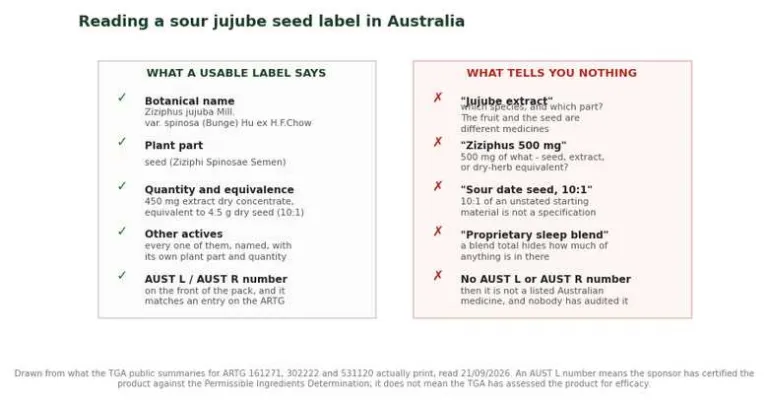
Five things make a label usable. The full botanical name with the variety. The plant part. The quantity of extract with its dry-herb equivalent, so you can work out the ratio. Every other active named with its own part and quantity. And an AUST L or AUST R number that matches a live entry you can look up yourself on the ARTG (ARTG public search). If a product gives you those five, you can reason about it. If it says “jujube extract 500 mg” and nothing else, there is nothing to reason about.
Before taking any botanical drug, consult a degree-qualified herbalist with competencies and adequate training in pharmacognosy, and ask them specifically which variety, which plant part and which extract ratio they are dispensing.
13. Discussion: conclusions, hypotheses and research still required
What this article supports
The drug called suan zao ren is the seed of Ziziphus jujuba Mill. var. spinosa (Bunge) Hu ex H.F.Chow, distinguished from the orchard jujube by a small sour thin-fleshed drupe with a blunt-ended stone on erect spiny branches (Flora of China, var. spinosa). Attested Its medicinal record runs past 1,700 years and it holds a place in the Chinese Pharmacopoeia (PMID 32695210). Traditional Jujuboside A, jujuboside B and spinosin are its accepted quality markers (PMID 36720435). Confirmed Its Australian legal position is settled and unremarkable: unscheduled, permitted as a listed-medicine ingredient with no plant-part restriction, and sold under AUST L numbers in both mass-market and practitioner channels (Poisons Standard, June 2026; Permissible Ingredients Determination; ARTG public search). Attested One hundred and three ARTG entries contain it and none contains it alone. Attested
What the evidence does not support is a single-ingredient sour jujube seed product presented as a treatment for insomnia. The trial base is formula-based, graded low to moderate by its own reviewers, and the only single-herb randomised study is a twelve-participant feasibility trial that was not designed to answer the efficacy question (PMID 36459033; PMID 39175534; PMID 36031101; PMID 33385511). Evidence suggests
What we can reasonably hypothesise
A multi-component effect. The pharmacokinetic work showing poor parent-saponin exposure, alongside the consistent behavioural results, is compatible with the active principle being a set of metabolites rather than any single marker (PMID 33217708; PMID 41261403). Mechanism If so, standardising a product to jujuboside A content may be standardising to the wrong thing, and this is testable.
Gut microbial activation. In vitro biotransformation of the seed saponins by human gut microbiota differs between healthy and insomniac donors (PMID 40362251), and metabolomic plus 16S studies — of a seed-and-Polygala pair in mice (PMID 38670402) and of the seed extract alone in rats (PMID 34220499) — report the intestinal flora shifting with the treatment. Mechanism A hypothesis follows: inter-individual response to this herb may be partly a microbiome phenomenon. No human study has tested that.
Processing as a pharmacological variable. Processing changes the seed measurably: the spatial distribution of its metabolites shifts after frying (PMID 38961089), and raw and fried seed are handled differently by gut microbiota and show different plasma profiles in rats (PMID 42392736). Evidence suggests Whether that changes anything in a person has not been tested. If that carries into people, then a trial that does not state its processing method has left an uncontrolled variable in the intervention.
Additive sedation, and a serotonergic question underneath it. GABAA and 5-HT1A engagement in animals gives a reasonable expectation of additive sedation with alcohol and sedative drugs in people (PMID 36483742; PMID 18466960). Mechanism The same 5-HT1A finding raises a second and sharper question, about co-administration with serotonergic antidepressants, on which the entire human record is one indexed case report letter from 2004 (PMID 15169710). Evidence suggests Both are hypotheses treated as precautions, and neither has been measured in a person.
An allergen worth characterising. The 2024 anaphylaxis case was skin-prick positive to sour jujube seed in a pollen-allergic man on a first exposure, which is the pattern of a cross-reactive pollen-food allergy rather than of acquired sensitisation (PMID 39552699). Evidence suggests If that is what it is, the responsible protein is likely to be a conserved panallergen, it would be identifiable, and the people at risk would be identifiable in advance. Nobody has looked.
What research is still required
Clinical research. The obvious next study is the one the Melbourne group asked for: an adequately powered, placebo-controlled randomised trial of standardised single-herb sour jujube seed in adults with DSM-defined insomnia disorder, with objective sleep measurement (actigraphy or polysomnography) alongside PSQI and ISI, a pre-registered protocol, and treatment arms long enough to say something about sustained use (PMID 33385511). Australia is a reasonable place to run it: there is an established clinical research group, an AHPRA-registered practitioner workforce of 3,168 herbal-division Chinese medicine practitioners to recruit through, and listed products already on the register.
Dismantling the formula. Somebody should test Suan Zao Ren Tang against the same formula with the sour jujube seed removed. Until that trial exists, every attribution of the formula literature to the single herb is an assumption.
Quality analysis. An Australian market survey: buy the products, assay jujuboside A, jujuboside B and spinosin against label, and authenticate the botanical identity by DNA barcoding. The 2015 South Australian audit gives the method and the precedent (PMID 26658160); nobody has pointed it at sour jujube seed products, and nobody has repeated it in the decade since. AIP would like to see that done and would contribute to it.
Safety and pharmacovigilance. Two things are missing and both are cheap. A structured interaction study of the seed against a serotonergic antidepressant and against a Z-drug, in healthy volunteers, would replace the whole inferential chapter above with data. And an allergen characterisation of sour jujube seed — identify the protein, work out the pollen cross-reactivity, make a prick-test reagent — would turn a single case report into something a clinic can act on. Alongside those, the TGA’s Database of Adverse Event Notifications should be interrogated properly for reports naming this genus; AIP could not query it programmatically on 21/09/2026 and has made no claim about what it holds.
Pharmacology. Human pharmacokinetics. There is rich rodent pharmacokinetic work and, so far as AIP could find, no published human PK study of the seed or of spinosin. Without one, dose translation from the animal literature is guesswork.
Regulatory science. Whether the Permissible Ingredients Determination should specify a plant part for item 5283 is a fair question to put to the TGA. Seed and fruit of this variety are different medicines with different markers, and the instrument currently treats them as one ingredient (Permissible Ingredients Determination).
Botany and horticulture. As the Australian jujube industry grows, someone should ask whether var. spinosa can be grown here as a seed crop, whether the marker content of Australian-grown seed matches the Chinese material, and what the biosecurity assessment of a spiny Ziziphus in Australian conditions looks like given what Z. mauritiana has done in the north (Business Queensland, chinee apple). That last question should be asked before the planting, not after.
Textual and historical work. The claim that the medicinal record runs past 1,700 years rests in this article on a modern review’s summary of the classical sources (PMID 32695210). A proper philological treatment — which text, which recension, which edition, what the entry actually says — has not been done in English for this drug, and AIP has not done it here.
If a reader can point us at evidence we have missed, particularly a single-herb efficacy trial or an Australian market-quality study, the Institute would rather correct this article than leave it standing.
About the Australian Institute of Pharmacognosy and this series
The Australian Institute of Pharmacognosy is a clinic and research laboratory in Cardwell, far north Queensland, studying medicinal plants and natural products to the same evidentiary standard as any other branch of pharmacology: traditional knowledge taken seriously, and tested honestly. Visit the Institute at australian-pharmacognosy.org.
Series: AIP Monographs. Previous: soursop (Annona muricata) · umckaloabo (Pelargonium sidoides) · andrographis (Andrographis paniculata), another herb whose Australian regulatory position turned out to be the most useful thing to write about · Syrian rue (Peganum harmala) · rosary pea (Abrus precatorius). Follow the series for a new evidence-graded monograph each morning.
Corrections: if you find an error or a source we have missed, write to the Institute at our contact form. We would rather correct a claim than repeat it.
Head of Education and Research
Australian Institute of Pharmacognosy
Cardwell QLD, Australia
australian-pharmacognosy.org · our contact form
Suggested citation: Ridley T. Ziziphus (Ziziphus jujuba Mill. var. spinosa): an evidence-graded monograph on sour jujube seed (suan zao ren), the formula-level trial literature behind the single-herb claims, and the Australian regulatory position. AIP Monograph No. 6. Cardwell (QLD): Australian Institute of Pharmacognosy; 2026.
Educational content only; not medical, legal or regulatory advice. Australian regulatory information reflects the Permissible Ingredients Determination, the Poisons Standard, the ARTG, Queensland biosecurity listings, Chinese Medicine Board registrant data and TGA publications as read on 21/09/2026 and may change. Overseas material is cited as overseas material and does not apply in Australia. No brand, product name or sponsor is named in this article and no product is advertised, endorsed or recommended. Nothing here is a recommendation to buy, avoid, supply or take any product. Australian Register of Therapeutic Goods entries are identified by their public register number only; the sponsor and product names carried on those entries are not reproduced. Material drawn from the ARTG and from other Commonwealth sources is © Commonwealth of Australia and appears here as short extracts for the purpose of reporting, criticism and review.
References
55 references: tap to open
Listed in order of first citation. All 31 PMIDs were verified against PubMed on 21/09/2026; every regulatory, legislative, botanical and register record was read from its own source the same day.
- Pan Z, Zhan M, Wang Q, Liu J, Li Y, Zhi F, et al. Case Report: Anaphylaxis caused by traditional Chinese medicine in a patient with pollinosis. Front Allergy. 2024;5:1470638. PMID 39552699. DOI 10.3389/falgy.2024.1470638.
- Liu XX, Ma YQ, Wang YG, Zhong FX, Yin XP, Zhang QM. Suanzaoren Decoction for the treatment of chronic insomnia: a systematic review and meta-analysis. Eur Rev Med Pharmacol Sci. 2022 Nov;26(22):8523-8533. PMID 36459033. DOI 10.26355/eurrev_202211_30388.
- Kwon CY, Lee B, Lee JY. Effectiveness and safety of East Asian herbal medicine for menopausal insomnia: a systematic review and meta-analysis. Front Pharmacol. 2024;15:1414700. PMID 39175534. DOI 10.3389/fphar.2024.1414700.
- Wu Q, Chen X, Gan G, Zhang Q, Yu L, Li C, et al. Visual analysis and evaluation of clinical research on Traditional Chinese medicine compounds in treating insomnia of Yin deficiency syndrome. J Ethnopharmacol. 2022 Nov 15;298:115669. PMID 36031101. DOI 10.1016/j.jep.2022.115669.
- Shergis JL, Hyde A, Meaklim H, Varma P, Da Costa C, Jackson ML. Medicinal seeds Ziziphus spinosa for insomnia: A randomized, placebo-controlled, cross-over, feasibility clinical trial. Complement Ther Med. 2021 Mar;57:102657. PMID 33385511. DOI 10.1016/j.ctim.2020.102657.
- Xiao F, Shao S, Zhang H, Li G, Piao S, Zhao D, et al. Neuroprotective effect of Ziziphi Spinosae Semen on rats with p-chlorophenylalanine-induced insomnia via activation of GABAA receptor. Front Pharmacol. 2022;13:965308. PMID 36483742. DOI 10.3389/fphar.2022.965308.
- Wang LE, Bai YJ, Shi XR, Cui XY, Cui SY, Zhang F, et al. Spinosin, a C-glycoside flavonoid from semen Zizhiphi Spinozae, potentiated pentobarbital-induced sleep via the serotonergic system. Pharmacol Biochem Behav. 2008 Sep;90(3):399-403. PMID 18466960. DOI 10.1016/j.pbb.2008.03.022.
- Stewart DE. Venlafaxine and sour date nut. Am J Psychiatry. 2004 Jun;161(6):1129-30. PMID 15169710. DOI 10.1176/appi.ajp.161.6.1129-a.
- Therapeutic Goods (Permissible Ingredients) Determination (No. 2) 2026 (Cth), F2026L00707. All volumes were downloaded from the Federal Register of Legislation and searched on 21/09/2026. Schedule 1 item 5282 ZIZIPHUS JUJUBA, item 5283 ZIZIPHUS JUJUBA VAR. SPINOSA and item 5284 ZIZYPHUS SATIVA each carry roles A and H and an empty requirements column; neighbouring items in the same table carry mandatory warning statements and concentration requirements, so the absence of any requirement is a genuine absence. No plant part is specified for any of the three. https://www.legislation.gov.au/F2026L00707/asmade
- Coghlan ML, Maker G, Crighton E, Haile J, Murray DC, White NE, et al. Combined DNA, toxicological and heavy metal analyses provides an auditing toolkit to improve pharmacovigilance of traditional Chinese medicine (TCM). Sci Rep. 2015 Dec 10;5:17475. PMID 26658160. DOI 10.1038/srep17475.
- Business Queensland. Chinee apple (Ziziphus mauritiana), restricted invasive plant under the Biosecurity Act 2014 (Qld). Read 21/09/2026. Records that the plant is native to southern Asia and eastern Africa, was first recorded in the Torres Strait in 1863 and in Townsville in 1916, is widespread in North Queensland, that landholders must manage its impacts, and that it must not be given away, sold or released into the environment. https://www.business.qld.gov.au/industries/farms-fishing-forestry/agriculture/biosecurity/plants/invasive/restricted/chinee-apple
- Therapeutic Goods Administration. Australian Register of Therapeutic Goods public search, keyword Ziziphus, run 21/09/2026. The search returned 230 entries across ten result pages. AIP opened every entry and read its ingredient list the same day: 103 list Ziziphus jujuba var. spinosa as an active ingredient (median 7 active ingredients, mean 7.6, range 2–15, none with a single active), and 136 list Ziziphus jujuba. The public keyword search is fuzzy — a nonsense control term returns 102 rows — so 103 is a floor rather than a census. Sponsor and product names appear on the public register and are not reproduced in this article. https://www.tga.gov.au/resources/artg?keywords=Ziziphus
- Schremmer J. Farmers bet on nutritionally rich jujubes becoming next food trend. ABC News (ABC Rural), 09/08/2025. Reports about 60 jujube growers and 50,000 trees in Australia on AgriFutures Australia data, growers in the South Australian Riverland, export to Hong Kong and Singapore with Vietnam and South Korea sought, and the counter-seasonal position of Australian supply. Read 21/09/2026. https://www.abc.net.au/news/rural/2025-08-09/farmers-invest-in-jujubes-despite-lack-of-consumer-knowledge/105395704
- Ranford T. Australian Jujube 2030 Strategic Blueprint. Wagga Wagga: AgriFutures Australia; published 3 June 2022. Publication code 22-048, 44 pages, ISBN 978-1-76053-271-0. Catalogue entry read 21/09/2026; the report PDF would not serve to an automated request on the day of checking, so this article relies on the catalogue entry and on the ABC News report of the blueprint’s findings. https://agrifutures.com.au/product/australian-jujube-2030-strategic-blueprint/
- International Plant Names Index. Ziziphus jujuba Mill., Rhamnaceae; protologue The Gardeners Dictionary, ed. 8, Ziziphus no. 1 (1768). IPNI record 719213-1. Queried 21/09/2026. https://www.ipni.org/n/719213-1
- Chen Y-L & Schirarend C. Ziziphus jujuba Miller. In: Wu Z-Y, Raven PH & Hong D-Y (eds), Flora of China, vol. 12 (Hippocastanaceae through Theaceae), pp. 115, 120, 122. Beijing: Science Press; St. Louis: Missouri Botanical Garden Press. Read at efloras.org, taxon id 200013464, on 21/09/2026. Gives the full description, the infraspecific key (drupe 1.5–2 cm with sweet mesocarp and a stone acute at both ends for var. jujuba; drupe under 1.2 cm with sour mesocarp and a stone obtuse at both ends for var. spinosa), the Chinese provincial distribution and the Kirkbride et al. 2007 conservation proposal against Z. zizyphus. http://www.efloras.org/florataxon.aspx?flora_id=2&taxon_id=200013464
- Chen Y-L & Schirarend C. Ziziphus jujuba var. spinosa (Bunge) Hu ex H. F. Chow, Familiar Trees of Hopei: 307 (1934). In: Flora of China, vol. 12: 122. Read at efloras.org, taxon id 200013468, on 21/09/2026. Records the basionym Ziziphus vulgaris var. spinosa Bunge, Enumeratio Plantarum Chinae Borealis: 14 (1833), the synonyms Z. sativa var. spinosa (Bunge) C. K. Schneider and Z. spinosa (Bunge) Hu ex F. H. Chen (1937, not Saint-Lager 1880), the description, the provincial distribution, and the note that “the seeds are used medicinally for relieving muscle spasms, as a tranquilizer, or to treat insomnia”. http://www.efloras.org/florataxon.aspx?flora_id=2&taxon_id=200013468
- Ma D, Zhao M, Guo H, Wang L, Li Y, Yuan S, et al. Spatial distribution of metabolites in processing Ziziphi Spinosae Semen as revealed by matrix-assisted laser desorption/ionization mass spectrometry imaging. Sci Rep. 2024 Jul 03;14(1):15263. PMID 38961089. DOI 10.1038/s41598-024-61500-w.
- Dong LL, Zhang HL, Cai YN, Yang RQ, Pei XP, Yan Y, et al. [Mechanism for enhancing efficacy through processing of Ziziphi Spinosae Semen based on in vivo and in vitro metabolic transformation]. Zhongguo Zhong Yao Za Zhi. 2026 May;51(10):2781-2790. PMID 42392736. DOI 10.19540/j.cnki.cjcmm.20260209.303.
- Xie L, Zhang X, Xue F, Gao Y, Guo J, Zhu H, et al. Discovery of the Underlying Mechanism of Ginger Juice Processed Ziziphi Spinosae Semen for Its Sedative-Hypnotic Effect on Insomnia Mice via Regulation of HPA Axis and cAMP/PKA Signaling Pathway. Mol Nutr Food Res. 2026 Jan;70(2):e70327. PMID 41566751. DOI 10.1002/mnfr.70327.
- Kong Y, He S, Ma D, Gu X, Wang Q, Zhao J, et al. Chemical composition determination and transcriptomic analyses provide insight into the differences between wild and grafted Semen Ziziphi Spinosae. BMC Genomics. 2024 Oct 18;25(1):978. PMID 39425014. DOI 10.1186/s12864-024-10837-7.
- Liu Q, Chen Y, Xue Z, Chen Y, Jiang J. Plant traits and environment affect the contents of medicinal components in Ziziphi spinosae semen in Lincheng County of Hebei Province. BMC Plant Biol. 2025 Jul 12;25(1):909. PMID 40652208. DOI 10.1186/s12870-025-06946-4.
- Atlas of Living Australia. Occurrence record searches filtered to Australia, run via the ALA biocache web service on 21/09/2026. Ziziphus jujuba: 0 records. Ziziphus jujuba var. spinosa: 0 records. Ziziphus mauritiana: 7,072 records — Northern Territory 3,621 (plus 8 recorded as “The Northern Territory”), Queensland 3,407, Western Australia 27, New South Wales 4, South Australia 1, state not supplied 4. All other names in the genus: 17 records. https://biocache.ala.org.au/occurrences/search?q=taxon_name%3A%22Ziziphus+mauritiana%22&fq=country%3AAustralia
- He SR, Zhao CB, Zhang JX, Wang J, Wu B, Wu CJ. Botanical and Traditional Uses and Phytochemical, Pharmacological, Pharmacokinetic, and Toxicological Characteristics of Ziziphi Spinosae Semen: A Review. Evid Based Complement Alternat Med. 2020;2020:5861821. PMID 32695210. DOI 10.1155/2020/5861821.
- Therapeutic Goods Administration. ARTG public summary, entry 302222 (listed medicine, start date 24/04/2018, oral granules). Downloaded 21/09/2026. Active ingredients per gram of granule: Anemarrhena asphodeloides rhizome extract dry concentrate 142.9 mg (equiv. 285.7 mg dry), Glycyrrhiza uralensis root and rhizome 71.5 mg (equiv. 142.9 mg), Ligusticum striatum rhizome 142.9 mg (equiv. 285.7 mg), Wolfiporia cocos fruiting body 285.7 mg (equiv. 571.4 mg) and Ziziphus jujuba var. spinosa seed 357.2 mg (equiv. 714.3 mg). Permitted indications: “Traditionally used in Chinese medicine to calm/stabilise/settle/regulate shen” and “Traditionally used in Chinese medicine to decrease/reduce/relieve sleeplessness”, with label statements required. The Warnings field on this entry reads “No Warnings included on Record”: it carries no pregnancy, lactation or paediatric statement, and it is the entry with the highest proportion of sour jujube seed of the four AIP read in full. https://www.tga.gov.au/resources/artg/302222
- Ruan W, Liu J, Zhang S, Huang Y, Zhang Y, Wang Z. Sour Jujube (Ziziphus jujuba var. spinosa): A Bibliometric Review of Its Bioactive Profile, Health Benefits and Trends in Food and Medicine Applications. Foods. 2024 Feb 20;13(5). PMID 38472749. DOI 10.3390/foods13050636.
- Gong L, Xie JB, Luo Y, Qiu ZD, Liu JR, Mei NJ, et al. Research progress of quality control for the seed of Ziziphus jujuba var. spinosa (Bunge) Hu ex H.F. Chow (Suan-Zao-Ren) and its proprietary Chinese medicines. J Ethnopharmacol. 2023 May 10;307:116204. PMID 36720435. DOI 10.1016/j.jep.2023.116204.
- Cao JX, Zhang QY, Cui SY, Cui XY, Zhang J, Zhang YH, et al. Hypnotic effect of jujubosides from Semen Ziziphi Spinosae. J Ethnopharmacol. 2010 Jul 06;130(1):163-6. PMID 20347951. DOI 10.1016/j.jep.2010.03.023.
- Zhang M, Ning G, Shou C, Lu Y, Hong D, Zheng X. Inhibitory effect of jujuboside A on glutamate-mediated excitatory signal pathway in hippocampus. Planta Med. 2003 Aug;69(8):692-5. PMID 14531016. DOI 10.1055/s-2003-42786.
- Wang M, Wang G, Zhao M, Hou L, Ma D, Yang H, et al. Jujuboside A in ameliorating insomnia in mice via GABAergic modulation of the PVT. J Ethnopharmacol. 2025 Jun 12;349:119939. PMID 40354840. DOI 10.1016/j.jep.2025.119939.
- Jin B, Bai W, Zhao J, Qin X, Guo H, Li Y, et al. Jujuboside B inhibits febrile seizure by modulating AMPA receptor activity. J Ethnopharmacol. 2023 Mar 25;304:116048. PMID 36549370. DOI 10.1016/j.jep.2022.116048.
- Wang LE, Cui XY, Cui SY, Cao JX, Zhang J, Zhang YH, et al. Potentiating effect of spinosin, a C-glycoside flavonoid of Semen Ziziphi spinosae, on pentobarbital-induced sleep may be related to postsynaptic 5-HT(1A) receptors. Phytomedicine. 2010 May;17(6):404-9. PMID 20171860. DOI 10.1016/j.phymed.2010.01.014.
- Yan Y, Li Q, DU HZ, Shen CX, Li AP, Pei XP, et al. Determination of five neurotransmitters in the rat brain for the study of the hypnotic effects of Ziziphi Spinosae Semen aqueous extract on insomnia rat model by UPLC-MS/MS. Chin J Nat Med. 2019 Jul;17(7):551-560. PMID 31514987. DOI 10.1016/S1875-5364(19)30077-9.
- Du C, Yan Y, Shen C, Cui X, Pei X, Qin X. Comparative pharmacokinetics of six major compounds in normal and insomnia rats after oral administration of Ziziphi Spinosae Semen aqueous extract. J Pharm Anal. 2020 Aug;10(4):385-395. PMID 32923013. DOI 10.1016/j.jpha.2020.03.003.
- Li M, Zhang FX, Wei ZC, Li ZT, Zhang GX, Li HJ. Systematically characterization of in vivo substances of Ziziphi Spinosae Semen in rats by ultra-high-performance liquid chromatography coupled with quadrupole time-of-flight tandem mass spectrometry analysis. J Pharm Biomed Anal. 2021 Jan 30;193:113756. PMID 33217708. DOI 10.1016/j.jpba.2020.113756.
- Wu Y, Sun L, Ma Y, Wu L, Niu W, Li J, et al. Decoding multicomponent crosstalk: integrated pharmacodynamic‒pharmacokinetic network of sour jujube seed. Chin Med. 2025 Nov 20;20(1):195. PMID 41261403. DOI 10.1186/s13020-025-01265-0.
- Li W, Wang Q, Dang C, Xiong Y, Lu Y. Chinese herbal medicine for insomnia: A systematic review and network meta-analysis. Medicine (Baltimore). 2025 Aug 15;104(33):e43789. PMID 40826721. DOI 10.1097/MD.0000000000043789.
- Therapeutic Goods Administration. ARTG public summary, entry 161271 (listed medicine, start date 22/04/2009, capsule). Downloaded 21/09/2026. Active ingredients: alpha casozepine enriched hydrolysed milk protein 75 mg and Ziziphus jujuba var. spinosa seed extract dry concentrate 450 mg, equivalent to 4.5 g of dry seed. Permitted indications are all of the “traditionally used in Chinese medicine” form. Warnings on the record include “Not recommended for use by pregnant and lactating women” and a statement for children under twelve months; indication requirements include “Product presentation must not imply or refer to mental illnesses, disorders or conditions”. https://www.tga.gov.au/resources/artg/161271
- Therapeutic Goods Administration. ARTG public summary, entry 531120 (listed medicine, start date 10/09/2026, oral powder). Downloaded 21/09/2026. Six actives including Ziziphus jujuba var. spinosa seed extract dry concentrate 6.667 mg/g, equivalent to 200 mg/g of dry seed, alongside valerian and withania. Warnings on the record include “Adults only”, “Not recommended for use by pregnant and lactating women”, a second pregnancy statement, and a liver-injury warning that the register attributes by name to valerian. https://www.tga.gov.au/resources/artg/531120
- Awortwe C, Bruckmueller H, Cascorbi I. Interaction of herbal products with prescribed medications: A systematic review and meta-analysis. Pharmacol Res. 2019 Mar;141:397-408. PMID 30660822. DOI 10.1016/j.phrs.2019.01.028.
- Therapeutic Goods Administration. ARTG public summary, entry 479573 (listed medicine, start date 18/02/2025), a nine-herb Chinese formula including Ziziphus jujuba var. spinosa. Downloaded 21/09/2026. Warnings on the record are “For practitioner dispensing only” and “Contains sugars”, with no pregnancy, lactation or paediatric statement; indication requirements include “Product presentation must not imply or refer to serious cardiovascular conditions” and “… must not imply or refer to mental illnesses, disorders or conditions”. https://www.tga.gov.au/resources/artg/479573
- Therapeutic Goods (Poisons Standard—June 2026) Instrument 2026 (Cth), F2026L00633. Full text downloaded and searched on 21/09/2026: Ziziphus, Zizyphus, jujube, jujuboside and spinosin return no entries, while a control term present in the instrument returns its entries as expected. Scheduling is amended several times a year and takes legal effect through state and territory law. https://www.legislation.gov.au/F2026L00633/asmade
- Therapeutic Goods Regulations 1990 (Cth), Schedule 5 (exempt goods), read 21/09/2026 from the Therapeutic Goods Administration’s own reproduction of the Schedule, which lists as exempt from inclusion in the ARTG “drugs that are dispensed, or extemporaneously compounded, for a particular person for therapeutic application to that person”. The item number within Schedule 5 is not given here because the two readings available to AIP on the day differed; it should be confirmed against the current compilation before the provision is relied on. The TGA’s guidance Manufacturing, supplying and advertising compounded medicines lawfully states that the exemption does not cover a health practitioner making medicines up in advance in anticipation of patients who may ask for them. https://www.tga.gov.au/resources/guidance/manufacturing-supplying-and-advertising-compounded-medicines-lawfully
- Chinese Medicine Board of Australia. Registrant data, reporting period 01 January 2026 to 31 March 2026. Downloaded from the Board’s statistics page and read 21/09/2026. Table 1.1: 4,923 registrants in total (ACT 58, NSW 1,875, NT 13, QLD 909, SA 237, TAS 46, VIC 1,391, WA 277, no principal place of practice 117), of whom 4,578 hold general registration. Table 1.4 by division: acupuncturist 1,723; acupuncturist and Chinese herbal dispenser 4; acupuncturist, Chinese herbal dispenser and Chinese herbal medicine practitioner 1,318; acupuncturist and Chinese herbal medicine practitioner 1,795; Chinese herbal dispenser 28; Chinese herbal dispenser and Chinese herbal medicine practitioner 17; Chinese herbal medicine practitioner 38. The four divisions including Chinese herbal medicine practitioner registration total 3,168. https://www.chinesemedicineboard.gov.au/About/Statistics.aspx
- Chinese Medicine Board of Australia. Guidelines for safe practice of Chinese herbal medicine. Read 21/09/2026. https://www.chinesemedicineboard.gov.au/Codes-Guidelines/Guidelines-for-safe-practice
- Chinese Medicine Board of Australia. Position statement: Endangered species and Chinese medicine in Australia. Read 21/09/2026. https://www.chinesemedicineboard.gov.au/Codes-Guidelines/Position-statements/endangered-species-and-Chinese-medicine-in-Australia
- Therapeutic Goods Administration. Personal Importation Scheme: personal or immediate-family use only, never for sale or supply, with quantity limits on each importation and over twelve months; goods imported this way are not assessed by the TGA. Read 21/09/2026. https://www.tga.gov.au/products/unapproved-therapeutic-goods/access-pathways/personal-importation-scheme
- Office of Drug Control (Department of Health, Disability and Ageing). Controlled substances. Read 21/09/2026. States that ODC permission is required to import or export controlled substances into or out of Australia, and that controlled substances include medicinal cannabis, narcotics, psychotropic drugs and precursor chemicals. No Ziziphus material or Ziziphus constituent falls within those categories; a specific isolated constituent should still be checked against the ODC controlled substances database before any import is arranged. https://www.odc.gov.au/controlled-substances
- Therapeutic Goods Administration. Restricted and prohibited representations in advertising, under the Therapeutic Goods Advertising Code. Representations referring to serious forms of disease are restricted or prohibited. Read 21/09/2026. https://www.tga.gov.au/products/regulations-all-products/advertising/applying-advertising-code/restricted-and-prohibited-representations-advertising
- Therapeutic Goods Administration. Report a problem or side effect, including with a complementary or herbal medicine. Consumers may report directly. Read 21/09/2026. https://www.tga.gov.au/safety/report-problem/report-adverse-event-or-safety-problem
- Cui X, Zhang S, He L, Duan H, Xie Y, Pei X, et al. In Vitro Biotransformation of Ziziphi Spinosae Semen Saponins by Gut Microbiota from Healthy and Insomniac Groups. Int J Mol Sci. 2025 Apr 24;26(9). PMID 40362251. DOI 10.3390/ijms26094011.
- Ren H, Kong X, Zhang Y, Deng F, Li J, Zhao F, et al. The therapeutic potential of Ziziphi Spinosae Semen and Polygalae Radix in insomnia management: Insights from gut microbiota and serum metabolomics techniques. J Ethnopharmacol. 2024 Aug 10;330:118255. PMID 38670402. DOI 10.1016/j.jep.2024.118255.
- Hua Y, Guo S, Xie H, Zhu Y, Yan H, Tao WW, et al. Ziziphus jujuba Mill. var. spinosa (Bunge) Hu ex H. F. Chou Seed Ameliorates Insomnia in Rats by Regulating Metabolomics and Intestinal Flora Composition. Front Pharmacol. 2021;12:653767. PMID 34220499. DOI 10.3389/fphar.2021.653767.
- Chemical records and structure depictions: PubChem, US National Library of Medicine, and the NCI/CADD Chemical Identifier Resolver, US National Cancer Institute. Both public domain. CIDs cited in the text: 51346169, 24721031, 155692, 21597353, 73337, 102063083, 11731186, 64971, 161352, 12305768.
- Therapeutic Goods Administration. Database of Adverse Event Notifications (DAEN). AIP attempted to query the DAEN medicines search on 21/09/2026 and could not do so programmatically; no claim about Australian adverse-event reports naming this herb is made in this article. https://daen.tga.gov.au/
Image credits
- ZiziphusJujubaVarSpinosa.jpg, Taken by Fanghong. CC BY-SA 3.0. Resized and re-encoded for the web by AIP; no other changes.
- Jujube spinosa dried.jpg, Shwabb1. CC BY-SA 4.0. Resized and re-encoded for the web by AIP; no other changes.
- Alb-Z. jujuba-spin-1.jpg, Philmarin. CC BY-SA 4.0. Resized and re-encoded for the web by AIP; no other changes.
- Alb-Z. jujuba-leav-1.jpg, Philmarin. CC BY-SA 4.0. Resized and re-encoded for the web by AIP; no other changes.
- Alb-Z. jujuba-ram-1.jpg, Philmarin. CC BY-SA 4.0. Resized and re-encoded for the web by AIP; no other changes.
- Giuggiolo Fiore 01.jpg, YukioSanjo. CC BY-SA 4.0. Resized and re-encoded for the web by AIP; no other changes.
- Ziziphus jujuba cv. Dongzao.jpg, Fumikas Sagisavas. CC0. Resized and re-encoded for the web by AIP; no other changes.
- Basket of Ziziphus jujuba (fruit) 20170115.jpg, Abhijitgogoi22. CC BY-SA 4.0. Resized and re-encoded for the web by AIP; no other changes.
- Jujube seed.jpg, Goldflakes. CC BY-SA 4.0. Resized and re-encoded for the web by AIP; no other changes.
- Jujube seeds.jpg, 가을들녁. CC BY 2.0 kr. Resized and re-encoded for the web by AIP; no other changes.
- Dried jujube.jpg, Vis M. CC BY-SA 4.0. Resized and re-encoded for the web by AIP; no other changes.
- Chinese herbal decoction (一貫煎) on snow.jpg, The Tran Dynasty. CC BY-SA 4.0. Resized and re-encoded for the web by AIP; no other changes.
- Chinese Herb Shop, Hong Kong, Tsim Sha Tsui – panoramio.jpg, Alfresco24. CC BY 3.0. Resized and re-encoded for the web by AIP; no other changes.
- Chinee Apple (Zizyphus mauritiana) fruit and leaves.jpg, Chris Gardiner. CC BY-SA 4.0. Resized and re-encoded for the web by AIP; no other changes.
- Zizyphus mauritiana tree.jpg, Ethel Aardvark. CC BY 3.0. Resized and re-encoded for the web by AIP; no other changes.
- Zizyphus jujuba Blanco1.59.png, Francisco Manuel Blanco (O.S.A.). Public domain. Resized and re-encoded for the web by AIP; no other changes.
- T3 16 Ziziphus sativa par Pierre-Joseph Redouté.jpeg, Pierre-Joseph Redouté. Public domain. Resized and re-encoded for the web by AIP; no other changes.
- Dong bei mu ben zhi wu tu zhi (1955) (20371644233).jpg, liu shen e. No restrictions. Resized and re-encoded for the web by AIP; no other changes.
- Ziziphus zizyphus MHNT.BOT.2012.10.26.jpg, Roger Culos. CC BY-SA 3.0. Resized and re-encoded for the web by AIP; no other changes.
- Cardwell Victoria Street 1.jpg, Torbenbrinker. CC BY-SA 4.0. Resized and re-encoded for the web by AIP; no other changes.
- Cardwell Hinchinbrook Channel.jpg, Torbenbrinker. CC BY-SA 4.0. Resized and re-encoded for the web by AIP; no other changes.
- Chemical structure depictions (jujuboside A and B, spinosin, 6′′′-feruloylspinosin, magnoflorine, zizyphusine, sanjoinine A, betulinic, ceanothic and alphitolic acids): rendered by AIP from each compound’s PubChem SMILES string using the NCI/CADD Chemical Identifier Resolver, US National Cancer Institute. Public domain.
- Figures 1–7 (Australian listings and their ingredient counts, the three Ziziphus species, Australian occurrence records, the composition of Suan Zao Ren Tang, the evidence ladder, extract ratios, and label anatomy): Australian Institute of Pharmacognosy, 2026, CC BY 4.0, drawn from the sources printed in each figure.