

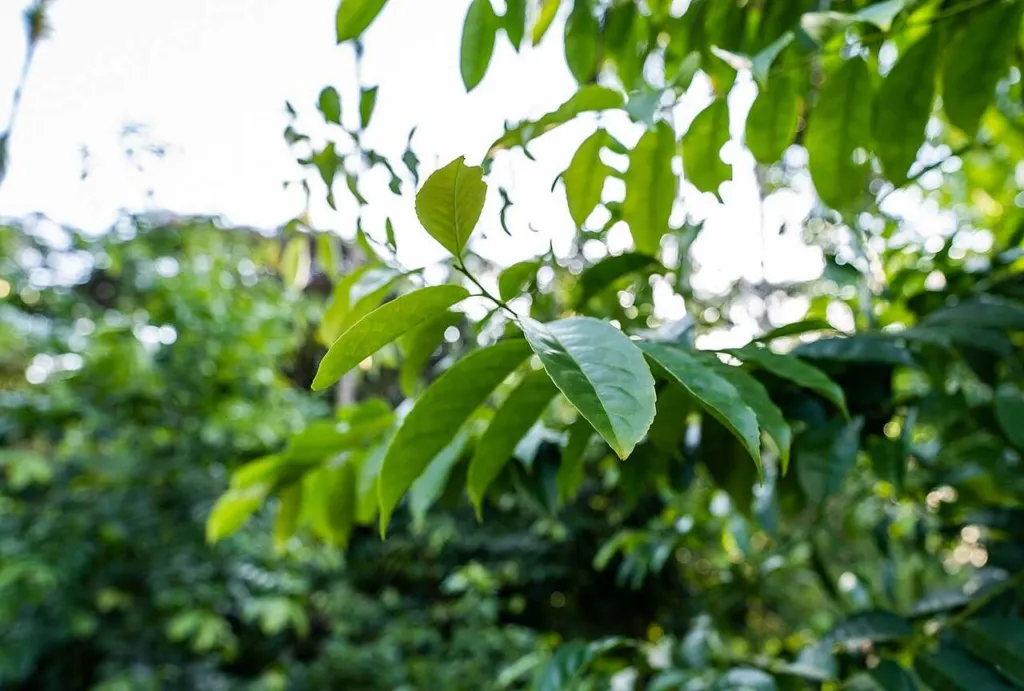
Cover: guayusa leaves. Photo: S.Freidank · CC BY-SA 4.0 · Wikimedia Commons
Before dawn in the Ecuadorian Amazon, Kichwa families have long gathered around a pot of boiled holly leaves to talk, plan the day and interpret their dreams. Traditional The leaf is guayusa, and it is full of caffeine. Confirmed Sold overseas as “clean energy”, it has now reached Australian shelves, where the leaf tea is an ordinary food and its concentrated extracts are not yet permitted. Attested
This is AIP Literature Review and Critical Analysis AIP-LR-ILEGUA in the Australian Institute of Pharmacognosy’s series of literature reviews and critical analyses. It covers Ilex guayusa Loes.: its identity and botany, its absence from the Australian flora and its native and naturalised relatives here, the Kichwa and Achuar traditions and the trade that has grown from them, its chemistry and pharmacology, every published human trial, safety and interactions as a caffeine source, its position under Australian food, medicines, poisons and import rules as read in October 2026, and what quality testing should look like.
This article is educational. It is not medical, legal or regulatory advice, and it is not an advertisement. No product is recommended or discouraged. The Institute has no commercial interest in any guayusa product.
1. It is a caffeine drink. Count guayusa with coffee, tea, cola, energy drinks, guarana and caffeinated supplements towards your daily total. On the Institute’s reading of the Food Standards Code, a plain guayusa leaf tea does not have to state its caffeine content. Mechanism
2. Pregnancy and breastfeeding. The TGA’s required label warning for caffeinated medicines is that more than 200 mg of caffeine a day is not recommended during pregnancy or breastfeeding. There are no guayusa-specific data. Attested
3. Medicines. Fluvoxamine, ciprofloxacin and some other medicines slow caffeine clearance, caffeine can raise clozapine levels, and a sudden change in caffeine intake can shift lithium levels. People on these, or with heart rhythm problems, high blood pressure, anxiety or poor sleep, should treat guayusa as they would strong coffee. Mechanism
4. Children. A strong brew or any guayusa extract is not a children’s drink in Australia; FSANZ links about 3 mg of caffeine per kilogram a day to anxiety in children. Attested
5. Extracts. Guayusa extracts concentrate caffeine to about 20%. FSANZ regards them as novel foods that have not been assessed for sale as food in Australia. Attested
Emergency: a racing or irregular heartbeat, chest pain, repeated vomiting, confusion or a seizure after a large caffeine intake needs Triple Zero (000). For a suspected poisoning or overdose, call the Poisons Information Centre on 13 11 26 (24 hours, Australia-wide). Report suspected side effects to the TGA (TGA, reporting adverse events). Before taking any botanical drug, consult a degree-qualified herbalist with competencies and adequate training in pharmacognosy.
| Botanical name | Ilex guayusa Loes. (1901), holly family, Aquifoliaceae Attested §2 |
| Common names | Guayusa, wayusa, wais (Ecuador, Colombia); huayusa (Peru) Attested §2 |
| Closest familiar relative | Yerba mate, Ilex paraguariensis Confirmed §2 |
| Where it grows | Upper Amazon of Ecuador, Colombia and Peru; domesticated, grown from cuttings Attested §3 |
| In Australia | No wild records; native I. arnhemensis in WA, NT, Qld; English holly naturalised in the south-east Attested §3 |
| Tradition | Kichwa guayusa upina before dawn; Achuar wayus purge; leaves found in a Bolivian tomb of about 500 CE Traditional §4 |
| Chemistry | Caffeine (about 1 to 3%, higher in some trees), chlorogenic acids, flavonol glycosides, ursolic acid, carotenoids Confirmed §6 |
| Pharmacology | Caffeine from guayusa is absorbed like synthetic caffeine Confirmed §7 |
| Human trials | 4 small single-dose trials of one industry-funded extract; caffeine-like effects; blood pressure up 4 to 6 mmHg Evidence suggests §8 |
| “Clean energy”, “no crash” | Never measured; no advantage over caffeine shown Evidence suggests §8 |
| Safety | Treat as caffeine: daily total, pregnancy, sleep, heart rhythm, CYP1A2 interactions Mechanism §9 |
| Australian food law | Leaf infusion: not a novel food (FSANZ 2015). Extracts: novel foods, not assessed Attested §10 |
| Australian medicines law | Not a permissible ingredient; 0 ARTG entries; not named in the Poisons Standard Attested §10 |
| Emergency | Triple Zero (000); Poisons Information Centre 13 11 26 Attested §9 |
- Confirmed Established in humans by trial, or an unambiguous analytical or chemical fact.
- Evidence suggests Real published data, but preclinical, observational, small, uncontrolled or not independently replicated.
- Mechanism A plausible mechanistic or pharmacological inference, or the Institute’s own interpretation, short of a measured outcome.
- Traditional Historical or ethnobotanical use. Evidence of practice. Efficacy is a separate question.
- Attested A documentary fact attested in a named record: a legislative instrument, a regulator’s register or web page, a taxonomic index, a biodiversity database, a historical text or a paper’s own statement. It states what the record says.
- Unsourced A statement the Institute could not trace to a source it was able to open and read, flagged so no reader mistakes it for a sourced claim.
Every PubMed ID (PMID) below links to its record and was checked against PubMed in October 2026, and every paper cited by PMID was read in full text. Papers the Institute could not open in full have been requested through its library and are not cited for their content; where their results are reported, the review that describes them is cited and named in the text. Every compound was checked against PubChem and is linked by CID. Every Australian regulatory statement was read from the regulator’s or the legislature’s own document or database in October 2026. Ecuadorian, Peruvian, United States and other overseas material is overseas and does not govern Australia.
The plant and its people. Guayusa, Ilex guayusa, is an Amazonian holly and a close relative of yerba mate. Kichwa families in Ecuador drink it before dawn as the centre of a family gathering, and it has been carried and traded in South America for at least 1,500 years. Commercial export since 2010 brings income to growers and pressure on their traditional gardens. Traditional
What is in it. Mostly caffeine, at roughly 1 to 3% of the dry leaf and more in some trees, with a little theobromine and theophylline, plenty of chlorogenic acids, flavonol glycosides and the triterpene ursolic acid. No published analysis read for this review found theanine. Confirmed
“Clean energy”? Four small, single-dose, industry-funded trials of one extract show the effects of caffeine: more alertness, faster responses, a few millimetres of mercury on blood pressure, and jitters at higher doses. In the one study that tested it, caffeine from guayusa was absorbed like synthetic caffeine. Nobody has measured a “crash”, and no advantage over plain caffeine has been shown. Evidence suggests
Safety. Treat guayusa as you would coffee: count it towards your daily caffeine, remember that the TGA’s required wording for caffeinated medicines says more than 200 mg a day is not recommended in pregnancy or breastfeeding, avoid it late in the day if sleep matters, and take care with fluvoxamine, ciprofloxacin, clozapine and other medicines that interact with caffeine. Mechanism
In Australia. FSANZ regards guayusa leaf brewed as a tea as a food that is not novel, with no safety concerns when used that way; extracts and extract drinks are novel foods that have not been assessed. Guayusa is not a permitted ingredient in listed medicines and is not named in the Poisons Standard. Small amounts of dried leaf tea can be brought in for personal use. Before taking any botanical drug, consult a degree-qualified herbalist with competencies and adequate training in pharmacognosy.
 Chapter 1Why guayusa, and why now
 Chapter 2Identity and taxonomy
 Chapter 3Botany and distribution
 Chapter 4Traditional and historical use
 Chapter 5People, trade and fair sourcing
 Chapter 6Phytochemistry
 Chapter 7Pharmacology
 Chapter 8Clinical evidence
 Chapter 9Safety and interactions
 Chapter 10In Australia: the law
 Chapter 11Quality and adulteration
 Chapter 12Discussion and research agenda
1. Why guayusa, and why now
In the Napo province of the Ecuadorian Amazon, the Kichwa day has traditionally started between one and five in the morning, around a pot of guayusa. The leaves of a holly tree are boiled over the fire, the family sits together, and the elders talk while the drink is shared PMID 42228731. Traditional The drink is caffeinated. Guayusa leaf contains caffeine with smaller amounts of theobromine and theophylline PMID 40649351, Confirmed and the caffeine levels reported for it are among the highest recorded for any leaf PMID 40649351. Evidence suggests
Ecuador began exporting guayusa leaf in 2010, mainly to the United States, and by 2024 twenty-five countries were buying it PMID 40649351. Attested Overseas it is marketed as a “clean caffeine” alternative to coffee, with promises of smooth energy and no crash. In Australia, a small local business sells dried guayusa online, including blends with native Australian myrtles (retail listings seen by the Institute in October 2026; the business is not named here, and the Institute has no connection with it). Attested Most Australians have never heard of the plant.
That gap is the reason for this review. Coffee alternatives and “smooth energy” drinks are a steady consumer interest here, and a reader who meets guayusa on a shelf or a web page deserves the facts the marketing leaves out: what the plant is, who has drunk it and how, what is in a cup, what the handful of human studies show, and how Australian food and medicines law treats it. The Institute writes as an admirer. A tree that Amazonian families have planted beside their homes and handed down to their children for generations deserves a careful reading of its evidence and a respectful account of its people.
One finding should be stated at the outset. A first search for an Australian food-safety view on guayusa came up empty. A closer reading of the Food Standards Australia New Zealand (FSANZ) novel-foods record found three entries, the first from 2015, which together give dried guayusa leaf a clear place in the Australian food supply and keep concentrated extracts out of it (FSANZ Record of Views). Attested Chapter 10 sets them out.
2. Identity and taxonomy
Name and author
The accepted name is Ilex guayusa Loes., published by the German botanist Theodor Loesener in 1901 in Nova Acta Academiae Caesareae Leopoldino-Carolinae Germanicae Naturae Curiosorum, volume 78, page 310 (IPNI). Attested Loesener described it without flowers, and the description was regarded as incomplete for that reason PMID 40649351. Attested The plant belongs to the holly family, Aquifoliaceae, and to the single large genus Ilex.
Common names follow the language of each place. In Ecuador and Colombia it is guayusa, with variants such as wayusa, wais and waysa; in Peru it is huayusa PMID 40649351. Attested The Achuar call their dawn guayusa ceremony wayus, and the Kichwa call the morning gathering guayusa upina or wayusaupina PMID 40649351; PMID 42228731. Attested
The caffeinated hollies
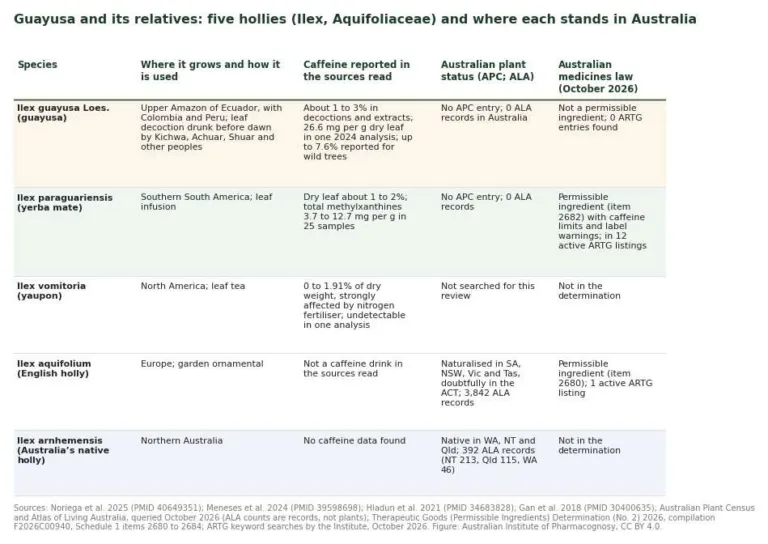
A handful of hollies are brewed as caffeinated drinks PMID 30400635. Attested The best known is yerba mate, Ilex paraguariensis, whose dried leaf carries roughly 1 to 2% caffeine PMID 34683828. Confirmed In North America, yaupon, Ilex vomitoria, has been reported with anywhere from none to 1.91% caffeine in its dry leaf, depending heavily on nitrogen fertiliser PMID 30400635. Confirmed Guayusa sits at the top of the group. A 2025 review of the plant reports that its alkaloid content, mainly caffeine, sets it apart from yerba mate and yaupon, with figures up to 75.7 mg of caffeine per gram of dry leaf reported for wild trees, close to the 78 mg per gram reported for guarana seed PMID 40649351. Evidence suggests The same review warns that leaves from the same species can differ sharply with location, soil, age, harvest method and genotype PMID 40649351. Attested
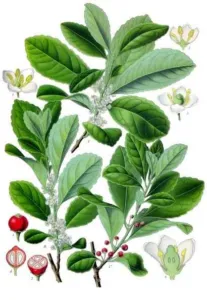
For an Australian reader, the relationship to yerba mate matters for a practical reason. Yerba mate is already a named ingredient in Australian listed medicines, with caffeine limits and label warnings attached, while guayusa is absent from that list (chapter 10). The two plants make the same alkaloid and are brewed the same way, so the safety thinking that applies to one carries straight across to the other. Mechanism
3. Botany and distribution, including Australia
The plant
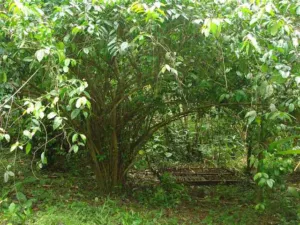
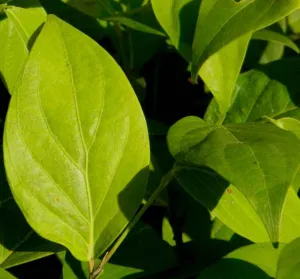
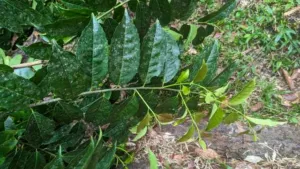
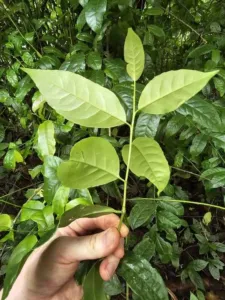
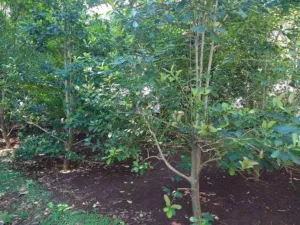
Guayusa is an evergreen tree, shrubby when young. Domesticated trees average 10 to 15 m with trunks up to 50 cm across at chest height; wild trees have been recorded at 25 m with 80 cm trunks PMID 40649351. Attested The leaves are alternate, simple, toothed and leathery, oblong to elliptic, 15 to 21 cm long and 5 to 7.5 cm wide, olive green and smooth or nearly so on both faces PMID 40649351. Attested The flowers are greenish white and the fruit is a round green berry about 1 cm across PMID 40649351. Attested
Like all hollies, guayusa is dioecious, with male and female flowers on separate trees. It can set seed where it is grown, but it is propagated almost entirely from cuttings of chosen mother plants, and seed fertility may have declined through generations of vegetative propagation PMID 40649351. Attested Kichwa growers in Napo told researchers that a 35 cm branch can be planted in the chakra at any time of year and needs no special care PMID 42228731. Traditional
Where it grows
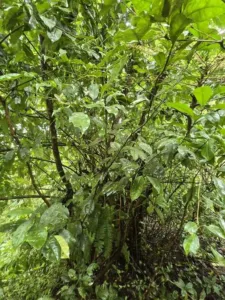
Guayusa is a plant of the western Amazon, from near sea level to about 1,500 m and occasionally higher. Most specimens are in the Ecuadorian Amazon, with populations in neighbouring Colombia and Peru; collections from Venezuela and Bolivia are thought to come from introduced plants PMID 40649351. Attested It grows on acidic, nutrient-poor soils (pH 4.3 to 5) with high aluminium, at average temperatures around 24 °C and 2,000 to 5,000 mm of rain a year PMID 40649351. Attested It is now essentially a domesticated plant. The 2025 review calls it a species domesticated for millennia, grown in home gardens, whose use does not threaten its survival PMID 40649351. Evidence suggests
Status in Australia
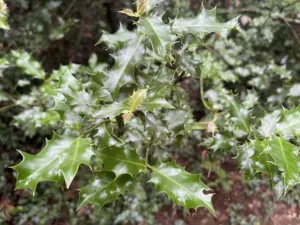
Guayusa has no entry in the Australian Plant Census, and the Atlas of Living Australia holds no Australian occurrence records for it; a name search for Ilex guayusa is matched only to the genus (Australian Plant Census; Atlas of Living Australia). Attested The Institute found no record of it growing wild in Australia. The genus is present. English holly, Ilex aquifolium, is recorded in the Census as naturalised in South Australia, New South Wales, Victoria and Tasmania, and doubtfully in the ACT, with 3,842 Atlas records, most of them from Victoria (Australian Plant Census; Atlas of Living Australia). Attested Australia also has its own native holly. Ilex arnhemensis is recorded as native in Western Australia, the Northern Territory and Queensland, with 392 Atlas records, 115 of them from Queensland (Australian Plant Census; Atlas of Living Australia). Attested The Institute found no published analysis of caffeine in the native species. Unsourced
The climate question is a fair one for readers in far north Queensland, where the Institute works. Cardwell’s wet-tropics rainfall and warmth overlap with the conditions guayusa grows in. The Institute has not tested whether guayusa would grow here, and bringing in live plants or seed is a biosecurity matter with its own rules (chapter 10). Mechanism
4. Traditional and historical use
Everything in this chapter is evidence of practice. It records what people have done and believed, and it is tagged accordingly. Questions of pharmacology belong to later chapters.
A drink with a long past
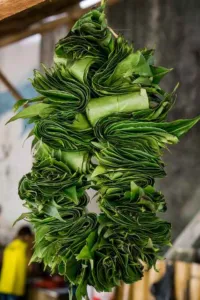
The oldest physical evidence is archaeological. Bags of carefully prepared guayusa leaves were found in a tomb in Bautista Saavedra province in the Bolivian highlands, dated to around 500 CE, together with snuff trays and tubes, spatulas and mortars, apparently the kit of a healer PMID 40649351; PMID 42228731. Attested Guayusa does not grow near that site, and authors have read the find as evidence that the leaf was valuable enough to carry or trade across the Andes PMID 40649351. Evidence suggests
Written records follow from the colonial period. Seventeenth-century accounts describe guayusa mixed with Datura, Banisteriopsis and tobacco in ritual and medicine PMID 42228731. Attested Eighteenth-century mission records from Colombia list medicinal uses, including the infusion with honey for infertility, and Jesuits in Ecuador sold the leaves in Quito PMID 40649351. Attested The English botanist Richard Spruce recorded plantations near Baños in 1857 and described the purging rituals that open the day PMID 40649351. Attested
Guayusa upina: the Kichwa dawn
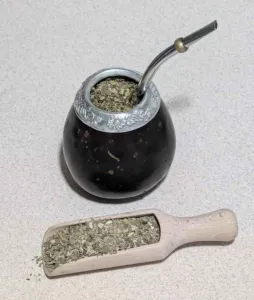
The fullest modern account comes from an interview study published in 2026. Alejandra Espinosa Andrade and Wilson Vásquez-Castillo interviewed 18 Kichwa guayusa growers, most of them living in Napo and affiliated with the Wiñak producers’ association, and made five field trips between September 2022 and September 2023 PMID 42228731. Attested Their informants describe the guayusa upina as a family gathering before dawn: the tea is made over an open fire, everyone sits around it, the elders tell stories and recount their lives, the day’s work is planned, dreams are interpreted, and people weave nets, shigra bags and baskets PMID 42228731. Traditional One participant described grandmothers rising at two or three in the morning to a pot that had simmered all night, so that the guayusa was black and bitter PMID 42228731. Traditional The traditional way is to drink it hot and unsweetened; the first cup may come with bread, and chicha de yuca may follow PMID 42228731. Traditional
The gathering also carried discipline. In the past, the eldest family member, or a respected visitor, advised the children, and misbehaving children could have chilli put in their eyes (uchurina), be beaten with nettles, or have tobacco water put up the nose PMID 42228731. Traditional Interviewees said these practices are now rare, although the community-level guayusa upina survives, sometimes as a festival for visitors PMID 42228731. Traditional
Among the benefits Kichwa growers attribute to guayusa, the most valued are its energising effect and its power to drive away sleepiness, laziness, body aches and hunger PMID 42228731. Traditional The literature they draw on also records guayusa as a stomach tonic, a diuretic, a cold remedy in combination with other plants, a mouth cleanser and an insect repellent, and as a wash for hunting dogs so that they dream and hunt well PMID 42228731; PMID 40649351. Traditional During the COVID-19 pandemic, communities kept drinking it, together with ginger, lemon and other forest plants, “so that the throat would not dry up” PMID 42228731. Traditional
Two details from the interviews matter for later chapters. Families reported no fixed starting age: children might begin drinking guayusa at one year old or at fifteen, as they wished, and two interviewees said it can be drunk in pregnancy PMID 42228731. Traditional The interviews record a living practice, and the Institute reports it with respect. They are not a safety study, and chapter 9 sets out the Australian guidance on caffeine in pregnancy and childhood alongside them.
Wayus: the Achuar purge
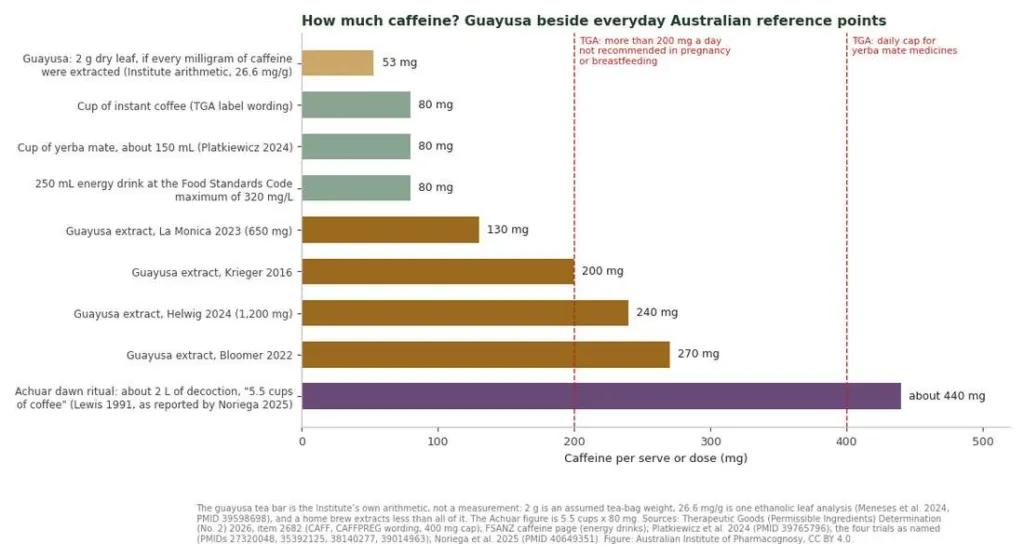
The Achuar drink guayusa differently. In the wayus ceremony men drink large volumes of strong decoction before dawn and then make themselves vomit; the Achuar consider it improper for a man to start the day with a full stomach, and the purge also spares them the headaches, nervousness and tremor of so much caffeine, which would put a hunter in danger PMID 40649351. Traditional Women drink less and do not purge PMID 40649351. Traditional The 2025 review, drawing on the 1991 study by Lewis and colleagues, puts the intake at about two litres per man, from roughly 150 g of dry leaf in 20 L of water, which it equates to about five and a half cups of coffee PMID 40649351. Evidence suggests (The Lewis paper itself has been requested through the Institute’s library; its figures are reported here as the review gives them.)
Other peoples, other uses
Shuar people drink guayusa for its benefits without making it a daily ritual; Secoya people use it for physical ailments; Cofán people prepare it in many drinks; and Tsáchila people drink it, bathe in its steam and use it for menstrual complaints PMID 40649351. Traditional In mestizo towns of eastern Ecuador it is drunk for pleasure with lemon and sugar, and in Macas it is mixed with an alcoholic bark maceration to make “guayusa con hueso” PMID 40649351. Traditional Several sources record guayusa as an occasional additive to ayahuasca PMID 40649351; PMID 42228731. Traditional That use is recorded here as ethnography. Guayusa is not named in the Poisons Standard, and none of its reported alkaloids is a prohibited (Schedule 9) substance (Poisons Standard, October 2026). Attested
5. People, trade and fair sourcing
Guayusa is grown in the chakra, the family-managed agroforestry garden of the Kichwa, which in Napo covers a quarter of a hectare to a hectare and a half and may hold fifty to ninety kinds of plant, from cassava and plantain to peanuts, beans and palms PMID 42228731. Attested The plant is an inheritance. Parents give a guayusa plant to a newly married couple to set in their new chakra, or hand on part of a chakra that already holds one; plants 56 years old were reported, and older ones exist PMID 42228731. Traditional The chakra is mainly in women’s care, and women, the mother or grandmother, do most of the harvesting PMID 42228731. Attested One plant can be picked every four months and can give up to three 25 kg sacks of leaf PMID 42228731. Attested
The export trade grew on top of this system. The 2025 review reports production in Napo, Pastaza and Orellana of 72 tonnes a year in 2022 and more than USD 3 million in leaf exports (an overseas figure in US dollars), with the first consortium of Ecuadorian guayusa exporters formed in 2022 PMID 40649351. Attested The same review puts the global guayusa market at USD 9.63 million in 2024; those are overseas figures, quoted as the review gives them PMID 40649351. Attested
What does that trade mean for the growers? The interview study gives a balanced answer. Commercial demand offers Kichwa families a more stable income and adds value to the chakra. It also pulls production towards the market, threatens to replace mixed gardens with monoculture, and may weaken the passing on of knowledge and the social life around the drink PMID 42228731. Evidence suggests Growers said guayusa does poorly in dense monoculture and needs companion species, and organic certification for export also favours mixed planting PMID 42228731. Attested Products from the chakra often sell at low prices in town markets PMID 42228731. Attested Some local initiatives, among them an Amazonian Kichwa Chakra Seal and the Wiñak association’s fair-trade marketing, aim to keep the value with the growers and the chakra intact PMID 42228731. Attested
For an Australian buyer, the Institute draws three practical points from this. Mechanism Leaf traced to a named producers’ association or cooperative in Napo, Pastaza or Orellana is easier to assess than anonymous bulk leaf. Organic or fair-trade certification is a claim about the supply chain; ask which scheme and which producer group it covers. And a traditional knowledge holder’s story on a packet is borrowed from someone; it is fair to ask whether that community agreed to its use and shares in the return. None of these points is a legal requirement in Australia. They are the questions a respectful buyer can ask.
6. Phytochemistry: what is in the leaf
Three groups of compounds dominate the published chemistry: methylxanthine alkaloids, chlorogenic acids and other phenolics, and triterpenes. The structures below are linked to their PubChem records.
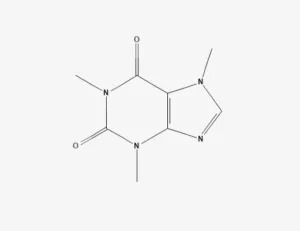
C8H10N4O2 · the main alkaloid
PubChem CID 2519 · structure image: PubChem, public domain
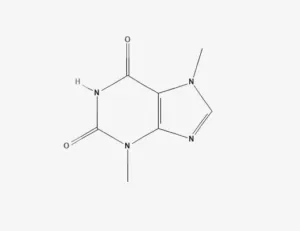
C7H8N4O2 · minor methylxanthine
PubChem CID 5429 · structure image: PubChem, public domain
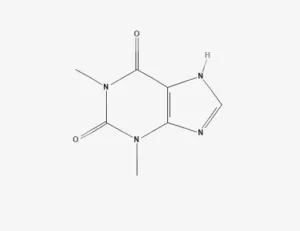
C7H8N4O2 · trace methylxanthine
PubChem CID 2153 · structure image: PubChem, public domain
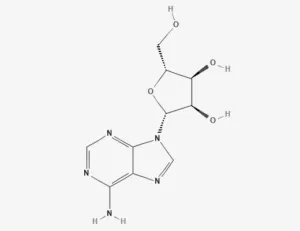
C10H13N5O4 · the body’s own signal that caffeine blocks, for comparison
PubChem CID 60961 · structure image: PubChem, public domain
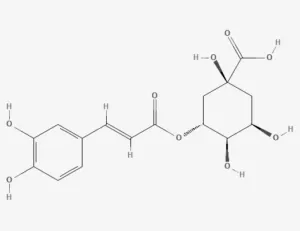
C16H18O9 · 5-caffeoylquinic acid
PubChem CID 1794427 · structure image: PubChem, public domain
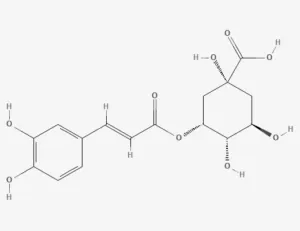
C16H18O9 · 3-caffeoylquinic acid
PubChem CID 5280633 · structure image: PubChem, public domain
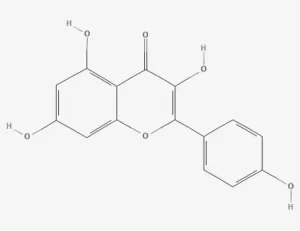
C15H10O6 · flavonol, present as glycosides
PubChem CID 5280863 · structure image: PubChem, public domain
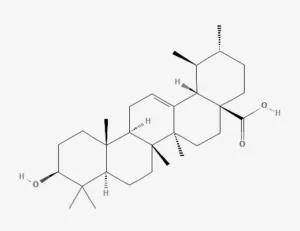
C30H48O3 · pentacyclic triterpene
PubChem CID 64945 · structure image: PubChem, public domain
Eight structures: three methylxanthines and adenosine, the signalling molecule caffeine blocks; two chlorogenic acids; the flavonol kaempferol, found in guayusa as glycosides; and ursolic acid, the main triterpene. Every CID was checked against PubChem in October 2026; the depictions are PubChem’s own (US National Library of Medicine, public domain).
Methylxanthines: caffeine first
Three methylxanthines have been found in guayusa: caffeine, theobromine and, in small amounts, theophylline PMID 40649351. Confirmed Caffeine is by far the largest. Reported caffeine depends on the method: above 1% and up to 3% in decoctions and infusions, 1.92 to 2.69% by ultrasound extraction, 1.22% by Soxhlet and 0.85% by ethanol extraction PMID 40649351. Confirmed A 2024 Ecuadorian analysis of dried leaf found 26.6 mg of caffeine per gram of dry weight, and cites earlier values of 29 to 32 mg per gram PMID 39598698. Confirmed Theobromine is far lower, 0.02 to 0.12% in decoctions, and theophylline is close to trace PMID 40649351. Confirmed
What does that mean for a cup? Nobody has published a measured caffeine content for a standard Australian-style cup of guayusa tea that the Institute could find. Unsourced As rough arithmetic from the 2024 leaf analysis, a 2 g tea bag of leaf at 26.6 mg per gram holds about 53 mg of caffeine PMID 39598698, and a home brew extracts only part of it. Mechanism Longer, hotter brewing extracts more of the leaf’s compounds PMID 38472807. Confirmed For comparison, the TGA’s required label wording takes a cup of instant coffee as about 80 mg, and a 150 mL cup of yerba mate also comes to about 80 mg Permissible Ingredients Determination; PMID 39765796. Attested The traditional Kichwa pot simmered all night, and the Achuar decoction, are far stronger than a tea bag (Figure 2). Mechanism
Chlorogenic acids and flavonoids
Guayusa is rich in chlorogenic acids, the caffeoylquinic acid esters also abundant in coffee. Reported values for chlorogenic acid (5-caffeoylquinic acid) include 7.53 to 26.53 mg per gram in hydroalcoholic extracts and about 6.5 mg per gram in water extracts, with neochlorogenic acid at 2.55 to 11.30 mg per gram PMID 40649351. Confirmed The 2024 Ecuadorian analysis found 14.45 mg of chlorogenic acid per gram of dry leaf and records published values from 6.51 to 24.10 mg per gram, with older leaves lower than young ones in one study PMID 39598698. Confirmed A detailed liquid chromatography–mass spectrometry study identified 29 phenolic compounds in guayusa infusions, among them caffeic acid glycosides, the three caffeoylquinic acid isomers, feruloylquinic acids and kaempferol and quercetin glycosides, with quercetin glycosides the predominant flavonols and kaempferol 3-O-galactoside the main kaempferol glycoside PMID 38472807. Confirmed That study’s corresponding author works for the company that makes the AmaTea guayusa extract, which a reader may weigh PMID 38472807. Attested Catechins, the signature polyphenols of green tea, have been reported only in small amounts, for example epigallocatechin gallate at about 0.09 mg per gram PMID 40649351. Confirmed
Triterpenes and carotenoids
After the alkaloids, the most abundant compounds are pentacyclic triterpenes, chiefly ursolic acid at 0.7 to 1% and amyrin esters at more than 0.5%, with squalene also present PMID 40649351. Confirmed The carotenoids lutein, β-carotene, α-carotene, violaxanthin and neoxanthin have been measured, with lutein the largest at 173 to 266 µg per gram, varying with whether the leaf is green or fermented PMID 40649351. Confirmed A 2025 study from the Ikiam university in Tena found that site and leaf age changed the phenolic and volatile profile, with 29 compounds identified by gas chromatography–mass spectrometry PMID 41097306. Confirmed
What is missing
Marketing sometimes says guayusa contains L-theanine, the amino acid in Camellia tea credited with taking the edge off caffeine. None of the composition papers read for this review reports theanine in guayusa leaf. Unsourced The Institute treats that claim as unsourced until someone publishes a measurement.
7. Pharmacology
Caffeine does most of the work
Caffeine blocks adenosine receptors, mainly the A1 and A2A subtypes. Adenosine signalling is one of the mechanisms that bring on sleep and sedation, so blocking it raises alertness; caffeine also slightly increases noradrenaline and dopamine release and affects heart rate and urine output PMID 34683828. Confirmed It is absorbed quickly, peaking in blood 30 to 120 minutes after an oral dose PMID 34683828. Confirmed About 80 to 90% of caffeine is cleared by the liver enzyme CYP1A2 to paraxanthine, and CYP1A2 activity varies five- to six-fold between people, largely for genetic reasons PMID 35280254. Confirmed Smoking speeds caffeine clearance, and oral contraceptives and some medicines, such as fluvoxamine, slow it PMID 35280254. Confirmed Those facts explain most of the differences people notice between one cup and another, and between one drinker and another. Mechanism
Is guayusa caffeine different?
The one study built to answer that question gave 12 healthy men 200 mg of caffeine in a drink, from a guayusa extract, a green coffee extract or synthetic caffeine, in random order PMID 27320048. Confirmed Caffeine from guayusa was absorbed and cleared in the same way as synthetic caffeine: peak level, total exposure and half-life all fell within the standard bioequivalence range PMID 27320048. Confirmed So the caffeine molecule in a guayusa drink behaves like caffeine from any other source.
The same study measured urinary neurotransmitters at one hour. Adrenaline rose by 2.78 µg/g creatinine after synthetic caffeine and by 0.5 after guayusa, and that difference reached p = 0.04 as a single comparison PMID 27320048. Evidence suggests The authors themselves report that it did not reach the level needed for significance once the multiple comparisons were accounted for PMID 27320048. Attested It is a hypothesis worth testing, from twelve men, a single dose and an industry-funded study. It is the main scientific basis offered for the idea that guayusa is “smoother” than other caffeine. Mechanism
Proposed contributions from the rest of the leaf
Authors have proposed that chlorogenic acids could modify caffeine’s effects, pointing to reports that chlorogenic acid derivatives bind adenosine transporters PMID 39014963. Mechanism Theobromine, the second most abundant methylxanthine, is reported to relax bronchial and blood-vessel smooth muscle PMID 40649351. Mechanism Ursolic acid acts on the bile-acid receptor TGR5 in laboratory studies, and amyrins inhibit the breakdown of an endocannabinoid, 2-arachidonoylglycerol PMID 40649351. Mechanism None of these has been shown to change how guayusa tea affects a person. Mechanism
Laboratory and animal findings
Guayusa extracts are strongly antioxidant in test-tube assays, and the antioxidant capacity of an infusion rises with brewing time and temperature PMID 38472807; PMID 40649351. Evidence suggests Water and solvent extracts inhibit bacteria including Staphylococcus aureus, and the periodontal bacteria Porphyromonas gingivalis and Prevotella intermedia, which fits the traditional use as a mouth rinse PMID 40649351. Evidence suggests Extracts inhibited the carbohydrate-digesting enzyme α-glucosidase in vitro PMID 41097306. Evidence suggests In 13 female rats with chemically induced diabetes, guayusa tea in the drinking water for 21 days kept blood glucose from rising as it did in untreated diabetic rats, and preserved one marker of blood-vessel nerve control; blood pressure, heart rate and oxidative stress markers did not differ between groups PMID 40143095. Evidence suggests An ethanolic extract increased ovarian and uterine weight and blood oestradiol in rats, a finding the 2025 review links to the traditional use for fertility PMID 40649351. Evidence suggests Each of these is a laboratory or animal result. None has been tested in people.
8. Clinical evidence: testing “clean energy” and “no crash”
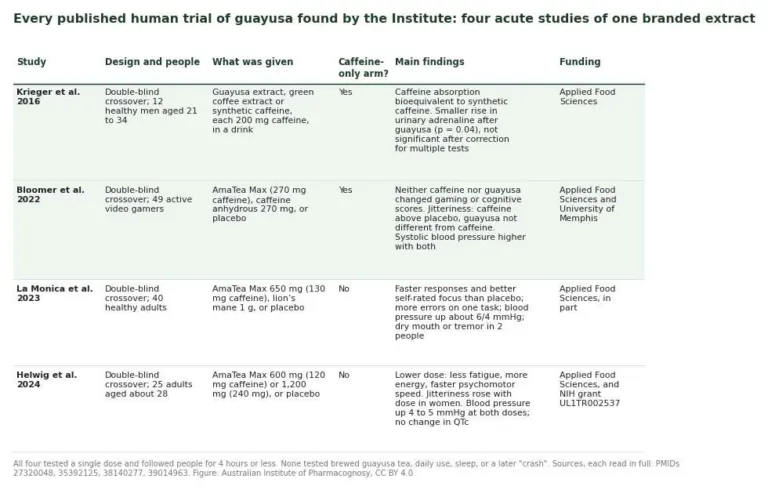
The Institute found four published human studies of guayusa (Figure 3). All four were randomised, double-blind and crossover in design, all tested a single dose of the same branded extract, AmaTea® or AmaTea® Max, standardised to about 20% caffeine and 30% chlorogenic acids, and all were funded wholly or partly by Applied Food Sciences, the company that makes it PMID 27320048; PMID 35392125; PMID 38140277; PMID 39014963. Attested No study has tested brewed guayusa tea as people drink it, regular daily use, or sleep. Attested
The two trials with a caffeine comparison
Krieger and colleagues (2016) is the absorption study described in chapter 7: equivalent caffeine kinetics, no difference in blood pressure or heart rate changes from synthetic caffeine, and an adrenaline difference that did not survive correction PMID 27320048. Confirmed No product-related adverse events were reported PMID 27320048. Evidence suggests
Bloomer and colleagues (2022) gave 49 active video gamers 270 mg of caffeine as AmaTea Max, 270 mg of caffeine anhydrous, or placebo, before four hours of play PMID 35392125. Confirmed Neither caffeine nor guayusa changed gaming or cognitive performance significantly; a trend towards more kills per match with guayusa did not reach significance (p = 0.075) PMID 35392125. Confirmed Jitteriness was higher with caffeine than placebo, and guayusa did not differ from caffeine on it PMID 35392125. Confirmed Systolic blood pressure was higher with both caffeine and guayusa than with placebo PMID 35392125. Confirmed Guayusa scored better than placebo on vigour and fatigue, with no direct advantage over caffeine reported for either PMID 35392125. Evidence suggests
The two placebo-only trials
La Monica and colleagues (2023) gave 40 healthy adults 650 mg of AmaTea Max (130 mg caffeine), 1 g of lion’s mane mushroom, or placebo PMID 38140277. Confirmed After guayusa, people responded faster and more often on working-memory and attention tasks and rated their focus, clarity and mood higher, but made more errors on one task and were worse at withholding responses on another PMID 38140277. Evidence suggests Blood pressure rose by about 6/4 mmHg at one hour; two people reported dry mouth or tremor PMID 38140277. Evidence suggests The authors themselves attribute most of the cognitive effect to caffeine PMID 38140277. Attested
Helwig and colleagues (2024) gave 25 adults 600 mg (120 mg caffeine) or 1,200 mg (240 mg caffeine) of the extract, or placebo PMID 39014963. Confirmed The lower dose reduced fatigue and total mood disturbance and increased energy and psychomotor speed; the higher dose improved reaction time on a hopping test PMID 39014963. Evidence suggests Jitteriness rose with dose in women only, and the women received more caffeine per kilogram of body weight than the men PMID 39014963. Evidence suggests Both doses raised systolic and diastolic blood pressure by 4 to 5 mmHg; neither changed the heart’s QTc interval PMID 39014963. Evidence suggests
What the evidence says about the marketing
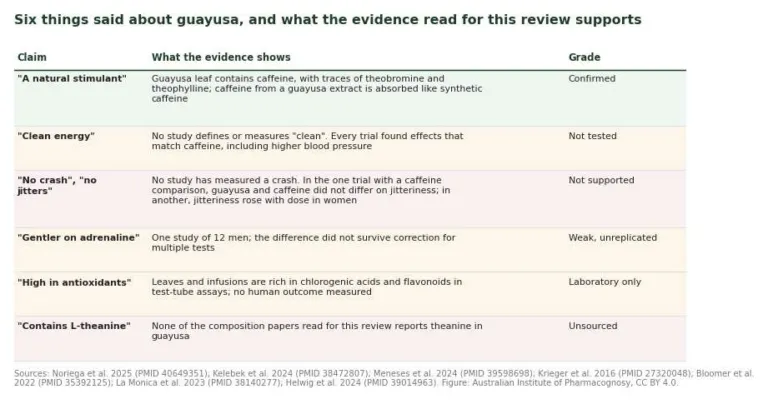
Read together, these studies show a caffeine product doing what caffeine does. It improves alertness and some measures of speed, raises blood pressure a little, and can cause jitters at higher doses, especially per kilogram of body weight. Evidence suggests “Clean energy” is not a scientific term, and no study has defined or measured it. Attested “No crash” has never been tested: none of the four studies followed people beyond four hours, measured an after-effect or rebound, or compared the evening after guayusa with the evening after coffee. Attested “No jitters” is contradicted by the data in one trial and not supported over caffeine in the other trial that could test it. Evidence suggests The suggestion of a gentler adrenaline response rests on one twelve-person study in which the difference did not survive the authors’ own statistical correction. Evidence suggests Figure 5 in chapter 11 summarises six common claims.
None of this makes guayusa a poor drink. It is a pleasant, mildly bitter, caffeinated tea with a long human record and a rich phenolic profile, and its caffeine behaves like the caffeine in coffee. The trial evidence supports that description and no further. Mechanism
9. Safety and interactions
The safest way to think about guayusa is as a caffeine drink with a chlorogenic-acid-rich leaf behind it. Its risks are, as far as the evidence shows, the risks of caffeine. The Institute found no published case report of harm from guayusa itself. Attested
Toxicology
The main toxicology package was published by Kapp and colleagues in 2016 on a guayusa concentrate; that paper has been requested through the Institute’s library, and its results are given here as two open reviews report them. In rats the median lethal dose was above 5,000 mg/kg, and 90 days of 1,200 or 2,500 mg/kg a day caused weight loss with no significant internal damage PMID 40649351. Evidence suggests A bacterial mutation (Ames) test and a chromosome aberration test in human lymphocytes were negative for the water extract PMID 40649351. Evidence suggests The concentrate tested contained about 36 mg of caffeine per mL PMID 30400635. Attested A separate test of a functional drink made from guayusa, Vernonanthura patens and cocoa husk found a median lethal dose above 2,000 mg/kg in mice PMID 33854951. Evidence suggests No toxicity studies have been done in pregnancy or in young children PMID 40649351. Attested
Total daily caffeine
FSANZ states that there is no recognised health-based guidance value, such as an acceptable daily intake, for caffeine (FSANZ, Caffeine). Attested Its expert group found evidence of increased anxiety in children at about 3 mg per kilogram of body weight a day, which corresponds to about 120 mg a day for children aged 9 to 13 and about 240 mg a day for adults (FSANZ, Caffeine). Attested For medicines, the TGA caps the maximum daily dose of a yerba mate medicine at 400 mg of caffeine and any single dose at 100 mg within three hours (Permissible Ingredients Determination). Attested Those Australian figures are the nearest official reference points for guayusa. Everything containing caffeine counts towards the day’s total: coffee, tea, cola, energy drinks, chocolate, guarana, pre-workout powders and some pain-relief medicines. Mechanism
Pregnancy and breastfeeding
Australian medicines law requires listed medicines delivering more than 10 mg of caffeine a day to carry the warning that caffeine intake of more than 200 mg a day is not recommended during pregnancy or breastfeeding (Permissible Ingredients Determination). Attested The evidence behind caffeine limits in pregnancy is mainly observational and still debated; a large Mendelian randomisation study did not find strong evidence that coffee intake itself causes miscarriage, stillbirth or preterm birth PMID 35679582. Evidence suggests Guayusa has no pregnancy-specific data at all PMID 40649351. Attested The Kichwa tradition of drinking guayusa in pregnancy is a cultural record and tells us nothing about dose or outcome. Traditional In Australia, the 200 mg a day statement is the standing reference, and guayusa caffeine counts towards it. Mechanism
Children
Kichwa children may drink guayusa when they wish PMID 42228731. Traditional In Australia, energy drinks must carry a statement that they are not suitable for young children, pregnant or lactating women or people sensitive to caffeine, and FSANZ’s anxiety threshold of about 3 mg per kilogram a day corresponds to about 120 mg a day for a child aged 9 to 13 (FSANZ, Caffeine). Attested A strong guayusa brew or any guayusa extract product is not a children’s drink in the Australian setting. Mechanism
Sleep
The best randomised evidence on caffeine and sleep in daily life comes from the CRAVE trial, in which 100 adults were randomly told on each of 14 days to drink caffeinated coffee or avoid caffeine. On coffee days they slept 36 minutes less a night, and slow caffeine metabolisers appeared to lose the most sleep PMID 36947466. Confirmed Nothing in the guayusa research suggests its caffeine is exempt. Guayusa is a morning drink by tradition, and an evening cup has the same consequences as an evening coffee. Mechanism
Heart rhythm and blood pressure
In CRAVE, coffee did not increase premature atrial beats, the outcome the trial was designed around, but premature ventricular beats rose from 102 to 154 a day, a rate ratio of 1.51 PMID 36947466. Confirmed In the guayusa trials, blood pressure rose by about 4 to 6 mmHg after a dose, and the QTc interval did not change at 120 or 240 mg PMID 39014963; PMID 38140277. Evidence suggests For people with arrhythmias, palpitations or high blood pressure, guayusa counts as caffeine. Mechanism
Interactions shared with other caffeine drinks
Because CYP1A2 does most of the work of clearing caffeine, anything that blocks that enzyme lets caffeine build up. Fluvoxamine is the strongest example: in volunteers a single 20 mg dose suppressed about 75% of CYP1A2 activity and raised caffeine exposure about five-fold, as reported in a 2025 review PMID 39870954. Confirmed A 2021 review of energy-drink interactions lists other CYP1A2 inhibitors, including fluoroquinolone antibiotics such as ciprofloxacin and enoxacin, cimetidine, oral contraceptives and some antiarrhythmics, and CYP1A2 substrates that compete with caffeine, including clozapine, olanzapine, theophylline, melatonin and tizanidine PMID 34683828. Mechanism Caffeine can also raise clozapine levels. One published case describes life-threatening clozapine toxicity in a man whose clozapine levels had been stable on a long-term dose, after he began drinking about 600 mg of caffeine a day in energy drinks PMID 33849480. Evidence suggests Caffeine also increases lithium excretion, so a sudden cut in caffeine intake can raise lithium levels and side effects; anyone on lithium should keep their caffeine intake steady and avoid starting or stopping guayusa abruptly PMID 34683828. Mechanism Combining caffeine with other stimulants, or using it to offset alcohol, adds stimulant effects and has been linked to harm in energy-drink users PMID 34683828. Mechanism The TGA requires yerba mate medicines above 80 mg of caffeine a day to warn users to limit other caffeine-containing products and that caffeine interacts with the liver enzyme CYP1A2 (Permissible Ingredients Determination). Attested The same cautions apply to guayusa. Mechanism
Reviews of energy-drink harms record raised blood pressure, arrhythmias, seizures, acute psychosis and, rarely, death at high caffeine intakes PMID 34683828. Evidence suggests A racing or irregular heartbeat, chest pain, repeated vomiting, confusion or a seizure after a large caffeine intake is an emergency.
Before taking any botanical drug, consult a degree-qualified herbalist with competencies and adequate training in pharmacognosy, and tell them about every medicine and caffeine source you use. For a suspected overdose or poisoning, call the Poisons Information Centre on 13 11 26; in an emergency, call Triple Zero (000). Suspected side effects can be reported to the TGA (TGA, reporting adverse events).
10. In Australia: food law, medicines law and imports
Every statement in this chapter was read from the regulator’s own document or register in October 2026. It is an educational summary, and the law may change. Attested
As a food: what FSANZ has said
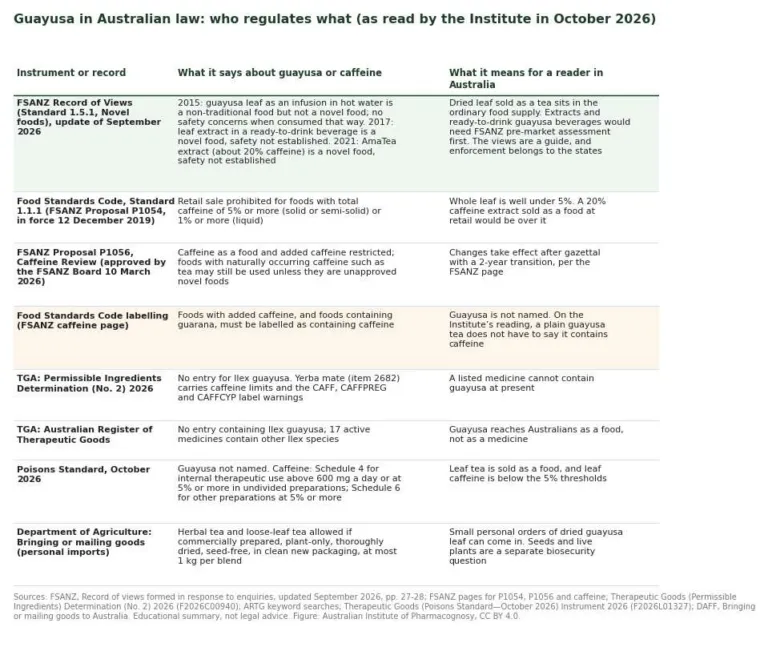
Under Standard 1.5.1 of the Food Standards Code, a novel food cannot be sold until FSANZ has assessed it. FSANZ’s Advisory Committee on Novel Foods publishes its views on enquiries in a Record of Views, and the September 2026 update holds three guayusa entries (FSANZ Record of Views). Attested
- 2015, guayusa leaf as an infusion in hot water: a non-traditional food, not a novel food. “Leaves are used in preparation of hot beverage (similar to tea). No safety concerns identified when consumed in this way.” Attested
- 2017, guayusa leaf extract in a ready-to-consume beverage: a novel food. “Safety not established.” Attested
- 2021, guayusa extract (AmaTea®), about 20% caffeine, for use in a range of foods: a novel food, with no tradition of use as a food ingredient in Australia and New Zealand; safety “requires assessment of proposed patterns and levels of use before it can be sold as food”. Attested
FSANZ notes that its views are a general guide, that the presentation of a product can change its status, and that enforcement belongs to the states, territories and New Zealand (FSANZ Record of Views). Attested On those views, dried guayusa leaf sold for brewing as a tea is an ordinary food in Australia, and guayusa extracts, including bottled guayusa drinks made from extract, need FSANZ pre-market assessment before they can lawfully be sold as food. The Institute found no FSANZ approval for any guayusa extract. Mechanism The same record treats a yerba mate extract standardised to 2% caffeine as a novel food in the same way (FSANZ Record of Views). Attested
As a food: the caffeine rules
Since 12 December 2019 the Code has prohibited retail sale of foods with total caffeine of 5% or more in a solid or semi-solid food, or 1% or more in a liquid (FSANZ, P1054). Attested Most published values for guayusa leaf, roughly 1 to 3% caffeine, sit below the 5% line, although the highest figure reported for leaf from wild trees, 7.57%, would be above it PMID 40649351; a 20% caffeine extract sold to consumers as a food would be well over it. Mechanism In March 2026 the FSANZ Board approved Proposal P1056, a broader caffeine review that prohibits retail sale of caffeine as a food and restricts adding caffeine to foods; foods with naturally occurring caffeine, such as tea, may still be used unless they are unapproved novel foods, and businesses have two years from gazettal to comply (FSANZ, P1056). Attested Cola-type drinks are capped at 145 mg of caffeine per kg and energy drinks at 320 mg per litre, and foods containing added caffeine or guarana must be labelled as containing caffeine (FSANZ, Caffeine). Attested Guayusa is not named in that labelling rule. On the Institute’s reading of FSANZ’s summary, a plain guayusa leaf tea does not have to declare its caffeine, so a reader cannot count on the label to say so. Mechanism
As a medicine
A listed medicine on the Australian Register of Therapeutic Goods (ARTG) may contain only ingredients named in the Permissible Ingredients Determination. The current compilation names five hollies, Ilex aquifolium, I. chinensis, I. paraguariensis, I. rotunda and I. verticillata; it does not name Ilex guayusa (Permissible Ingredients Determination). Attested The yerba mate entry (item 2682) makes caffeine a mandatory component, caps the daily dose at 400 mg of total caffeine and any dose at 100 mg in three hours, limits caffeine concentration, and requires “Adults only”, a caffeine-content statement, the pregnancy and breastfeeding warning, a warning to limit other caffeine and a CYP1A2 interaction warning above set doses (Permissible Ingredients Determination). Attested Those conditions show how the TGA thinks about a caffeinated holly, and they are a sensible model for anyone thinking about guayusa. Mechanism Keyword searches of the ARTG in October 2026 found no product containing Ilex guayusa; 17 active listed medicines contain other Ilex species, 12 of them yerba mate (ARTG searches, October 2026). Attested Guayusa therefore reaches Australians as a food. It cannot be an ingredient in a listed medicine, and a therapeutic claim made for a guayusa product would bring it into TGA territory as a therapeutic good that has not been assessed. Mechanism
The Poisons Standard
Guayusa is not named in the October 2026 Poisons Standard (Poisons Standard, October 2026). Attested Caffeine is: it is in Schedule 4 for internal therapeutic use, except in divided preparations with a maximum daily dose of no more than 600 mg, or undivided preparations under 5% caffeine with the same daily limit; and it is in Schedule 6 for other preparations at 5% or more (Poisons Standard, October 2026). Attested Brewed tea sits far below those thresholds, and most published leaf values (about 1 to 3%) sit below the 5% line. A concentrated guayusa extract is different: at about 20% caffeine, an extract supplied in a form other than a labelled therapeutic preparation within the 600 mg daily limit falls within the Schedule 6 caffeine entry (Poisons Standard, October 2026). Attested Mechanism
Bringing it in
For travellers and online buyers, the Department of Agriculture, Fisheries and Forestry allows herbal tea bags and loose-leaf herbal teas into Australia if they are commercially prepared and packaged (or in clean new packaging if loose), contain only plant material, are thoroughly dried, weigh no more than 1 kg per blend, and contain no seeds, or only permitted seeds (DAFF, bringing or mailing goods). Attested Seeds and live plants are a different and stricter matter, assessed case by case through the department’s import conditions system. Mechanism Guayusa capsules and extracts imported as therapeutic goods for personal use would fall under the TGA’s Personal Importation Scheme: own or immediate family use only, no more than three months’ supply at the manufacturer’s recommended dose, original packaging, and no controlled substances (TGA, Personal Importation Scheme). Attested Such products have not been assessed by the TGA, and the FSANZ view on extracts still applies to anything sold here as food. Mechanism
11. Quality and adulteration
Variable leaf, variable caffeine
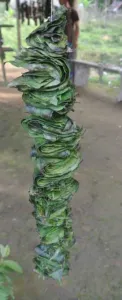
The chemistry of guayusa changes with where it grows, how old the leaf is, how it is processed and how it is brewed. Caffeine in published analyses runs from under 1% to more than 7% depending on method and source tree, and the Achuar choose particular trees because not all carry the same strength PMID 40649351. Confirmed Chlorogenic acid in young leaves has been measured above old leaves, and growing site changed the phenolic profile in the 2025 Ikiam study PMID 39598698; PMID 41097306. Confirmed Processing matters too: blanching and fermentation change the leaf’s phenolic and carotenoid content PMID 30400635; PMID 40649351. Confirmed Kichwa families dry the leaf in the sun or indoors, often in the kitchen, or hang a branch by the fire so that it slowly oxidises PMID 42228731. Traditional Long, hot brewing extracts more phenolics and more antioxidant activity PMID 38472807. Confirmed A buyer cannot know a cup’s caffeine from the packet unless the seller has tested it. Mechanism
Extracts are a different product
The commercial extract used in all four human trials is standardised to about 20% caffeine and 30% chlorogenic acids, with quercetin and kaempferol glycosides and other caffeoylquinic esters PMID 39014963. Confirmed In the 2024 trial, a second laboratory confirmed those levels in the capsules used PMID 39014963. Attested That is a concentrated caffeine ingredient, and it explains why FSANZ treats extracts differently from leaf. A decaffeinated, chlorogenic-acid-enriched guayusa fraction has also been made experimentally by supercritical antisolvent precipitation, reaching 238 mg of chlorogenic acid per gram with caffeine below 1% PMID 39598698. Confirmed
Identity and contaminants
The Institute found no published DNA barcoding study, market survey or adulteration report for guayusa products in the literature it read. Unsourced Whole dried leaves are distinctive, but cut and powdered tea, blends and extracts cannot be identified by eye, and other hollies or unrelated leaves could be substituted without detection. Mechanism Guayusa grows on acidic soils with high aluminium and reported heavy metals PMID 40649351. Attested No published survey of metals in finished guayusa products was found. Unsourced A standard quality file for an Australian importer would therefore include identity testing (macroscopy and microscopy of the leaf, HPLC fingerprinting of caffeine and chlorogenic acids, ideally DNA confirmation), a measured caffeine content per gram, and heavy metal and microbial limits. Mechanism
Discussion: conclusions, hypotheses and research still required
What the evidence supports
Guayusa is a caffeinated holly with a documented human history of at least fifteen centuries and a living place in Kichwa, Achuar and other Amazonian cultures. Attested Its leaf contains caffeine at levels among the highest reported for a leaf, small amounts of theobromine and theophylline, plenty of chlorogenic acids, flavonoid glycosides, ursolic acid and carotenoids. Confirmed Caffeine from guayusa is absorbed and cleared like any other caffeine. Confirmed Short-term studies of one standardised extract show the expected caffeine effects on alertness, speed and blood pressure. Evidence suggests In Australia, the leaf infusion is a food that FSANZ has found no safety concern with, extracts are novel foods without approval, and the plant is absent from the medicines lists. Attested
What remains a hypothesis
That guayusa caffeine is “smoother”, causes less adrenaline release, or avoids a crash, remains a hypothesis built on one small study whose difference did not survive correction. Evidence suggests That chlorogenic acids or other leaf compounds change how caffeine feels is plausible pharmacology without a human test. Mechanism That the laboratory antioxidant, antimicrobial and glucose-related findings translate into any human benefit is untested. Evidence suggests The Institute also wonders whether the slow, all-night simmer of the traditional pot, with its higher extraction, and the Achuar purge, which removes much of the drink, have shaped how guayusa’s strength has been understood; that is a musing, offered as one. Mechanism
What research would move the subject forward
- Analytical chemistry and quality: measured caffeine, theobromine and chlorogenic acid per cup for guayusa teas sold in Australia, brewed by standard home methods; a validated HPLC fingerprint and agreed identity and purity specifications; and a direct analysis for theanine to settle the marketing claim.
- Botany and identity: vouchered reference specimens and DNA barcodes for Ilex guayusa, a market survey of cut and blended products for substitution, and a first look at caffeine, if any, in Australia’s native Ilex arnhemensis.
- Clinical pharmacology: a randomised, independently funded crossover trial of brewed guayusa tea against caffeine-matched coffee and caffeine-matched black tea, with continuous measurement through the afternoon and evening to test the “crash” claim directly, and with actigraphy for sleep.
- Safety: CYP1A2 interaction data for guayusa itself (does the leaf matrix alter caffeine clearance?), and pharmacovigilance through the TGA and FSANZ channels as products appear here.
- Ethnobotany and ethics: research led by or with Kichwa and Achuar communities on how commercial demand is changing the chakra and the guayusa upina, and on how benefits from export reach growers.
- Regulatory science: a clear FSANZ position on guayusa labelling, so that buyers can see caffeine content on leaf teas as they already can for guarana.
About the Australian Institute of Pharmacognosy and this series
The Australian Institute of Pharmacognosy is a clinic and research laboratory in Cardwell, far north Queensland, studying medicinal plants and natural products to the same evidentiary standard as any other branch of pharmacology: traditional knowledge taken seriously, and tested honestly. Visit the Institute at australian-pharmacognosy.org.
Series: AIP Literature Reviews and Critical Analyses (evidence reviews). Related reviews: kava (Piper methysticum) is another ceremonial plant drink whose Australian status turns on food law; Greek mountain tea (Sideritis scardica) is a traditional herbal tea reviewed for Australian drinkers; sour jujube seed (Ziziphus jujuba) covers the other side of the sleep question; and sangre de grado (Croton lechleri) and soursop (Annona muricata) are other Amazonian plants that reach Australia mostly by mail order. Earlier reviews: echinacea (Echinacea purpurea) · Indian barberry (Berberis aristata) · turmeric (Curcuma longa) · ashwagandha (Withania somnifera) · black cohosh (Actaea racemosa) · devil’s claw (Harpagophytum procumbens). Follow the series for a new evidence review each morning.
Corrections: if you find an error or a source we have missed, write to the Institute at our contact form. We would rather correct a claim than repeat it.
About the images and the evidence. Photographs are from Wikimedia Commons and iNaturalist under the Creative Commons licences or public-domain terms shown with each; figures are the Institute’s own and every number in them is traced to a named source. Every paper cited by PubMed ID was read in full text. Papers that could not be opened in full were requested through the Institute’s library and are not cited for their content.
Head of Education and Research
Australian Institute of Pharmacognosy
Cardwell QLD, Australia
australian-pharmacognosy.org · our contact form
Suggested citation: Ridley T. Guayusa (Ilex guayusa Loes.): the Amazonian caffeinated holly, its Kichwa tradition, chemistry, human evidence, safety as a caffeine source and the Australian regulatory position. AIP Literature Review and Critical Analysis AIP-LR-ILEGUA. Cardwell (QLD): Australian Institute of Pharmacognosy; 2026.
Educational content only; not medical, legal or regulatory advice. Australian regulatory information reflects the FSANZ Record of Views and caffeine pages, the ARTG, the Permissible Ingredients Determination, the Poisons Standard, and TGA and Department of Agriculture web pages as read in October 2026 and may change. Ecuadorian, Peruvian, United States and other overseas material is described as overseas material and does not govern Australian law. No product is advertised, endorsed or recommended. Material drawn from Commonwealth sources is © Commonwealth of Australia and appears here as short extracts for the purpose of reporting, criticism and review.
References
33 references: tap to open
Listed in order of first citation. All 19 PMIDs were verified against PubMed in October 2026 and read in full text; every regulatory, legislative, taxonomic and biodiversity record was read from its own source. Requested through the Institute’s library and not cited for their content (where their results appear, the review that reports them is cited and named): Wise and Negrin 2020 (critical review of guayusa composition and safe use); Kapp et al. 2016 (general and genetic toxicology of guayusa concentrate); Lewis et al. 1991 (Achuar ritual use); García-Ruiz et al. 2017 (phenolics and carotenoids); Pardau et al. 2017 (guayusa and Camellia teas); Negrin et al. 2019 (chemotaxonomy of caffeinated hollies); Chianese et al. 2019 (triterpenoids); Villacís-Chiriboga et al. 2018 (leaf ripening); Gardiner et al. 2023 (caffeine and sleep meta-analysis). The European Food Safety Authority’s 2015 opinion on caffeine could not be retrieved in full on the day and is not cited.
- Therapeutic Goods Administration. Reporting adverse events for consumers. Read by the Institute in October 2026. https://www.tga.gov.au/safety/reporting-problems/reporting-adverse-events-consumers
- Espinosa Andrade A, Vásquez-Castillo W. Socio-cultural components related to the cropping, harvesting, and consumption of guayusa (Ilex guayusa Loes) in Amazonian Kichwa communities. PLoS One. 2026;21(6):e0349762. PMID 42228731. DOI 10.1371/journal.pone.0349762.
- Noriega P, Moreno E, Falcón A, Quishpe V, Noriega PDC. Guayusa (Ilex guayusa Loes.) Ancestral Plant of Ecuador: History, Traditional Uses, Chemistry, Biological Activity, and Potential Industrial Uses. Molecules. 2025 Jul 02;30(13). PMID 40649351. DOI 10.3390/molecules30132837.
- Food Standards Australia New Zealand. Record of views formed in response to enquiries (Standard 1.5.1, Novel Foods). Updated September 2026, pp. 27–28: entries for Ilex guayusa (leaf, infusion in hot water, 2015: non-traditional food, not novel food); Ilex guayusa (leaf extract in ready-to-consume beverage, 2017: novel food); Ilex guayusa extract (AmaTea®, about 20% caffeine, 2021: novel food); and Ilex paraguariensis extract standardised to 2% caffeine (novel food). Read in full by the Institute in October 2026. https://www.foodstandards.gov.au/business/novel/novelrecs
- International Plant Names Index, queried October 2026: Ilex guayusa Loes., Nova Acta Acad. Caes. Leop.-Carol. German. Nat. Cur. 78: 310 (1901), IPNI 127854-2. https://www.ipni.org/n/127854-2
- Gan RY, Zhang D, Wang M, Corke H. Health Benefits of Bioactive Compounds from the Genus Ilex, a Source of Traditional Caffeinated Beverages. Nutrients. 2018 Nov 05;10(11). PMID 30400635. DOI 10.3390/nu10111682.
- Hladun O, Papaseit E, Martín S, Barriocanal AM, Poyatos L, Farré M, et al. Interaction of Energy Drinks with Prescription Medication and Drugs of Abuse. Pharmaceutics. 2021 Sep 22;13(10). PMID 34683828. DOI 10.3390/pharmaceutics13101532.
- Australian Plant Census, Council of Heads of Australasian Herbaria, via the National Species List. Records read by the Institute in October 2026: Ilex arnhemensis, APC distribution WA, NT, Qld; Ilex aquifolium, SA (naturalised), NSW (naturalised), ACT (doubtfully naturalised), Vic (naturalised), Tas (naturalised). No APC entry for Ilex guayusa or I. paraguariensis; the Atlas of Living Australia name-matching service matches both only to the genus Ilex. https://id.biodiversity.org.au/node/apni/2907561
- Atlas of Living Australia. Occurrence searches, Australia only, October 2026: Ilex guayusa 0 records; I. paraguariensis 0; I. arnhemensis 392 (NT 213, Qld 115, WA 46, not supplied 18); I. aquifolium 3,842 (Vic 2,858, NSW 387, Tas 365, SA 201, ACT 29). https://biocache.ala.org.au/occurrences/search?q=taxon_name%3A%22Ilex%20arnhemensis%22
- Therapeutic Goods (Poisons Standard—October 2026) Instrument 2026 (Cth), F2026L01327, registered 30/09/2026. Full text searched by the Institute in October 2026: CAFFEINE entries in Schedule 4 and Schedule 6; no entry for Ilex or guayusa. https://www.legislation.gov.au/F2026L01327/asmade
- Meneses MÁ, Guzmán J, Cabrera J, Magallanes J, Valarezo E, Guamán-Balcázar MDC. Green Processing of Ilex guayusa: Antioxidant Concentration and Caffeine Reduction Using Encapsulation by Supercritical Antisolvent Process. Molecules. 2024 Nov 11;29(22). PMID 39598698. DOI 10.3390/molecules29225309.
- Kelebek H, Sasmaz HK, Aksay O, Selli S, Kahraman O, Fields C. Exploring the Impact of Infusion Parameters and In Vitro Digestion on the Phenolic Profile and Antioxidant Capacity of Guayusa (Ilex guayusa Loes.) Tea Using Liquid Chromatography, Diode Array Detection, and Electrospray Ionization Tandem Mass Spectrometry. Foods. 2024 Feb 24;13(5). PMID 38472807. DOI 10.3390/foods13050694.
- Therapeutic Goods (Permissible Ingredients) Determination (No. 2) 2026 (Cth), F2026L00707, compilation No. 1 (F2026C00940, compilation date 17/09/2026). Schedule 1 read by the Institute in October 2026: items 2680 ILEX AQUIFOLIUM, 2681 ILEX CHINENSIS, 2682 ILEX PARAGUARIENSIS (caffeine conditions and the ADULT, CAFF, CAFFPREG, CAFFLMT and CAFFCYP warning statements), 2683 ILEX ROTUNDA and 2684 ILEX VERTICILLATA; item 1054 CAFFEINE; no entry for Ilex guayusa. https://www.legislation.gov.au/F2026L00707/latest/text
- Płatkiewicz J, Okołowicz D, Frankowski R, Grześkowiak T, Jeszka-Skowron M, Zgoła-Grześkowiak A. Antioxidant Capacity, Phenolic Compounds, and Other Constituents of Cold and Hot Yerba Mate (Ilex paraguariensis) Infusions. Antioxidants (Basel). 2024 Nov 29;13(12). PMID 39765796. DOI 10.3390/antiox13121467.
- de Los Monteros-Silva NE, Martínez-Palacios K, Jiménez AM, Ochoa-Ocampo M, Garzón T, Carrillo-Vásconez T, et al. Unlocking the Ilex guayusa Potential: Volatile Composition, Antioxidant, Antidiabetic, and Hemolytic Activities, with In Silico Molecular Docking and ADMET Analysis of Hydroethanolic Extracts. Molecules. 2025 Sep 25;30(19). PMID 41097306. DOI 10.3390/molecules30193885.
- Grzegorzewski J, Bartsch F, Köller A, König M. Pharmacokinetics of Caffeine: A Systematic Analysis of Reported Data for Application in Metabolic Phenotyping and Liver Function Testing. Front Pharmacol. 2021;12:752826. PMID 35280254. DOI 10.3389/fphar.2021.752826.
- Krieger DR, Kalman DS, Feldman S, Arnillas L, Goldberg D, Gisbert O, et al. The Safety, Pharmacokinetics, and Nervous System Effects of Two Natural Sources of Caffeine in Healthy Adult Males. Clin Transl Sci. 2016 Oct;9(5):246-251. PMID 27320048. DOI 10.1111/cts.12403.
- Helwig NJ, Schwager LE, Berry AC, Zucker AC, Venenga JS, Sterbenz SC, et al. Acute, dose-response effects of guayusa leaf extract on mood, cognitive and motor-cognitive performance, and blood pressure, heart rate, and ventricular repolarization. J Int Soc Sports Nutr. 2024 Dec;21(1):2379424. PMID 39014963. DOI 10.1080/15502783.2024.2379424.
- Mello TC, Dias DDS, Bernardes N, Araujo AAD, Dos Santos CP, Llesuy S, et al. Ilex Guayusa Tea Improves Glycaemia and Autonomic Modulation in Female Streptozotocin-Induced Diabetic Rats. Pharmaceuticals (Basel). 2025 Feb 24;18(3). PMID 40143095. DOI 10.3390/ph18030316.
- Bloomer RJ, Martin KR, Pence JC. Impact of AmaTea® Max on physiological measures and gaming performance in active gamers: A placebo-controlled, double-blind, randomized study. J Clin Transl Res. 2022 Apr 29;8(2):93-102. PMID 35392125.
- La Monica MB, Raub B, Ziegenfuss EJ, Hartshorn S, Grdic J, Gustat A, et al. Acute Effects of Naturally Occurring Guayusa Tea and Nordic Lion's Mane Extracts on Cognitive Performance. Nutrients. 2023 Dec 06;15(24). PMID 38140277. DOI 10.3390/nu15245018.
- Paladines-Santacruz G, Orellana-Manzano A, Sarmiento G, Pilozo G, Iñiga E, Zaruma-Torres F, et al. Acute oral toxicity of a novel functional drink based on Ilex guayusa, Vernonanthura patens, and cocoa husk. Toxicol Rep. 2021;8:747-752. PMID 33854951. DOI 10.1016/j.toxrep.2021.03.026.
- Food Standards Australia New Zealand. Caffeine. Consumer web page, last updated 26 November 2025. Read by the Institute in October 2026. https://www.foodstandards.gov.au/consumer/prevention-of-foodborne-illness/caffeine
- Brito Nunes C, Huang P, Wang G, Lundberg M, D'Urso S, Wootton RE, et al. Mendelian randomization study of maternal coffee consumption and its influence on birthweight, stillbirth, miscarriage, gestational age and pre-term birth. Int J Epidemiol. 2023 Feb 08;52(1):165-177. PMID 35679582. DOI 10.1093/ije/dyac121.
- Marcus GM, Rosenthal DG, Nah G, Vittinghoff E, Fang C, Ogomori K, et al. Acute Effects of Coffee Consumption on Health among Ambulatory Adults. N Engl J Med. 2023 Mar 23;388(12):1092-1100. PMID 36947466. DOI 10.1056/NEJMoa2204737.
- Truong J, Abu-Suriya N, Tory D, Bahho R, Ismaiel A, Nguyen T, et al. An Exploration of the Interplay Between Caffeine and Antidepressants Through the Lens of Pharmacokinetics and Pharmacodynamics. Eur J Drug Metab Pharmacokinet. 2025 Jan;50(1):1-15. PMID 39870954. DOI 10.1007/s13318-024-00928-x.
- Yartsev A, Peisah C. Caffeine-clozapine interaction associated with severe toxicity and multiorgan system failure: a case report. BMC Psychiatry. 2021 Apr 13;21(1):192. PMID 33849480. DOI 10.1186/s12888-021-03199-x.
- Food Standards Australia New Zealand. P1054 – Pure and highly concentrated caffeine products. Web page, published 16 December 2020; prohibition in force from 12 December 2019 (Standard 1.1.1, subsection 1.1.1—10(5)). Read by the Institute in October 2026. https://foodstandards.gov.au/food-standards-code/proposals/P1054
- Food Standards Australia New Zealand. P1056 – Caffeine Review. Web page: FSANZ Board approval of 10 March 2026, what is changing and what is not. Read by the Institute in October 2026. https://www.foodstandards.gov.au/food-standards-code/proposals/P1056
- Therapeutic Goods Administration. Australian Register of Therapeutic Goods, public keyword searches run by the Institute in October 2026 for “guayusa” (159 results, all unrelated devices matched on spelling), “ilex” (175 results) and “yerba mate” (no results). The public record of every entry returned was opened and its ingredients read: no entry contained Ilex guayusa; 17 active medicines contained another Ilex species (I. paraguariensis 12, I. rotunda 2, I. chinensis 2, I. aquifolium 1). Raw survey held by the Institute. https://www.tga.gov.au/resources/artg
- Department of Agriculture, Fisheries and Forestry. Bringing or mailing goods to Australia: “Tea and herbal teas”. Web page read by the Institute in October 2026. https://www.agriculture.gov.au/travelling/bringing-mailing-goods
- Therapeutic Goods Administration. Personal Importation Scheme. Web page, last updated 8 September 2026. Read in full by the Institute in October 2026. https://www.tga.gov.au/products/unapproved-therapeutic-goods/personal-importation-scheme
- Chemical records and structure depictions: PubChem, US National Library of Medicine, public domain. CIDs cited in the text: 2519, 5429, 2153, 60961, 1794427, 5280633, 5280863, 64945.
Image credits
- Guayusa Blätter.jpg, S.Freidank. CC BY-SA 4.0. Wikimedia Commons. Resized and re-encoded for the web by AIP; no other changes.
- Hoja de Ilex guayusa.jpg, Pisofrix. CC BY-SA 4.0. Wikimedia Commons. Resized and re-encoded for the web by AIP; no other changes.
- Hojas de Guayusa (Ilex guayusa).jpg, Pisofrix. CC BY-SA 4.0. Wikimedia Commons. Resized and re-encoded for the web by AIP; no other changes.
- Photo of Ilex Guayusa tree.jpg, I $ore9515. CC BY-SA 3.0. Wikimedia Commons. Resized and re-encoded for the web by AIP; no other changes.
- Ilex guayusa getrocknet.jpg, Wambra. CC BY-SA 4.0. Wikimedia Commons. Resized and re-encoded for the web by AIP; no other changes.
- Ilex guayusa (18500702333).jpg, Dick Culbert from Gibsons, B.C., Canada. CC BY 2.0. Wikimedia Commons. Resized and re-encoded for the web by AIP; no other changes.
- Napo river at Puerto Napo town.jpg, Gabriel Gaona. CC BY-SA 4.0. Wikimedia Commons. Resized and re-encoded for the web by AIP; no other changes.
- Ilex paraguariensis at Buenos Aires Botanical Garden.jpg, Mx. Granger. CC0. Wikimedia Commons. Resized and re-encoded for the web by AIP; no other changes.
- Ilex paraguariensis – Köhler–s Medizinal-Pflanzen-074.jpg, Franz Eugen Köhler, Köhler's Medizinal-Pflanzen. Public domain. Wikimedia Commons. Resized and re-encoded for the web by AIP; no other changes.
- Traditional mate set calabash gourd with La Merced yerba mate.jpg, Siarhei Besarab. CC BY-SA 4.0. Wikimedia Commons. Resized and re-encoded for the web by AIP; no other changes.
- CaffeineCrystals Fibrous 10xDarkField.jpg, Zephyris. CC BY-SA 3.0. Wikimedia Commons. Resized and re-encoded for the web by AIP; no other changes.
- Photo 362205838, iNaturalist observation 204886955 (Pastaza, EC-PA, EC, 2024-03-24; research), Alan Rockefeller ((c) Alan Rockefeller, some rights reserved (CC BY)). CC BY 4.0. iNaturalist. Resized and re-encoded for the web by AIP; no other changes.
- Photo 362205860, iNaturalist observation 204886955 (Pastaza, EC-PA, EC, 2024-03-24; research), Alan Rockefeller ((c) Alan Rockefeller, some rights reserved (CC BY)). CC BY 4.0. iNaturalist. Resized and re-encoded for the web by AIP; no other changes.
- Photo 385911233, iNaturalist observation 218104333 (Loreto Cantón, Ecuador, 2023-01-26; research), Tom Field ((c) Tom Field, some rights reserved (CC BY)). CC BY 4.0. iNaturalist. Resized and re-encoded for the web by AIP; no other changes.
- Photo 468157274, iNaturalist observation 260666207 (Fatima, Ecuador, 2025-02-04; research), Alan Rockefeller ((c) Alan Rockefeller, some rights reserved (CC BY)). CC BY 4.0. iNaturalist. Resized and re-encoded for the web by AIP; no other changes.
- Photo 110270742, iNaturalist observation 68145839 (Clarke Road, Ferny Creek, VIC, AU, 2021-01-12; research), Dylan Wishart ((c) Dylan Wishart, some rights reserved (CC BY)). CC BY 4.0. iNaturalist. Resized and re-encoded for the web by AIP; no other changes.
- Chemical structure depictions (caffeine, theobromine, theophylline, adenosine, chlorogenic acid, neochlorogenic acid, kaempferol, ursolic acid): PubChem, US National Library of Medicine. Public domain.
- Figures 1 to 5 (the Ilex relatives table, the caffeine-per-serve chart, the human trials table, the Australian regulatory table and the claims table): Australian Institute of Pharmacognosy, 2026, CC BY 4.0, drawn from the sources printed in each figure.
The Institute sets and publishes its own monographs. The catalogue is in Publications.