
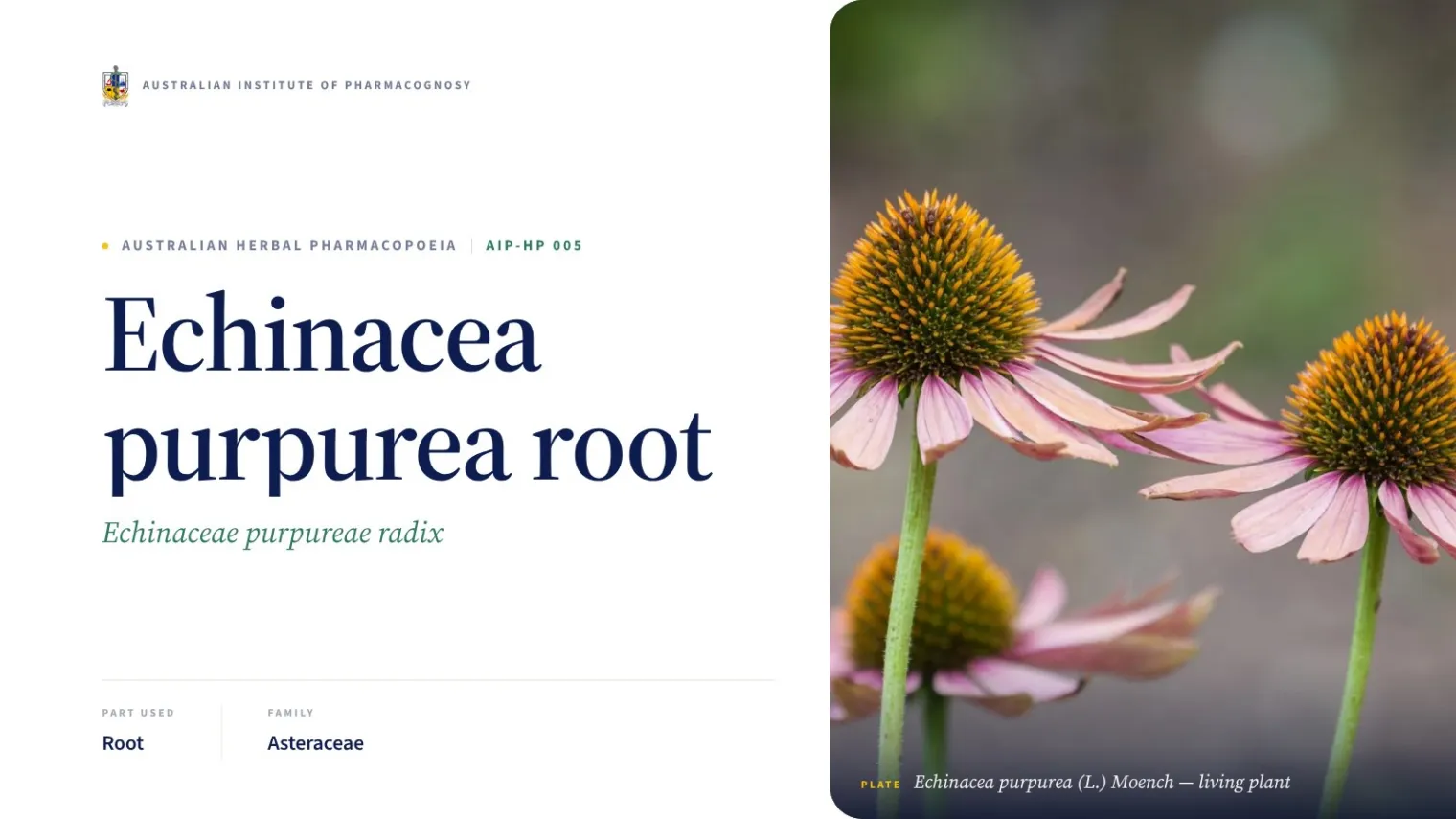
Echinacea purpurea root (Echinacea purpurea (L.) Moench), Asteraceae
Australian Herbal Pharmacopoeia (working title), Monograph AIP-PH-ECHPUR (formerly AIP-HP 005)
Status: version 1.0, live at https://www.australian-pharmacognosy.org/pharmacopoeia/echinacea-purpurea/, all reviews and the pre-publication final test on record. Published at first draft under the CEO’s order. Botanical, QA and Medicine technical reviews, the Education and Research evidence audit and the Community Outreach layout review done in 2026; Librarian reference audit pending; not reviewed by Legal.
Date: 2026. Next review: on sign-off, then three-yearly or sooner if a major trial, safety signal or new pharmacopoeial text appears.
Prepared by: the Australian Institute of Pharmacognosy, Far North Queensland, Australia. Every author and contributor is named at the end of the monograph.
Contributors: Dr Thomas Ridley (library and literature search, registry search, synthesis, drafting, figure sourcing and placement, AIP schematics and charts, reference verification). Section reviewers named in 0.1 are credited once they have reviewed. Dr Luke Iggulden, Chief Scientific Officer, is senior author: he set the scope of the series in the CEO directive and made the research possible.
0. Free teaser
0.1 Identity card
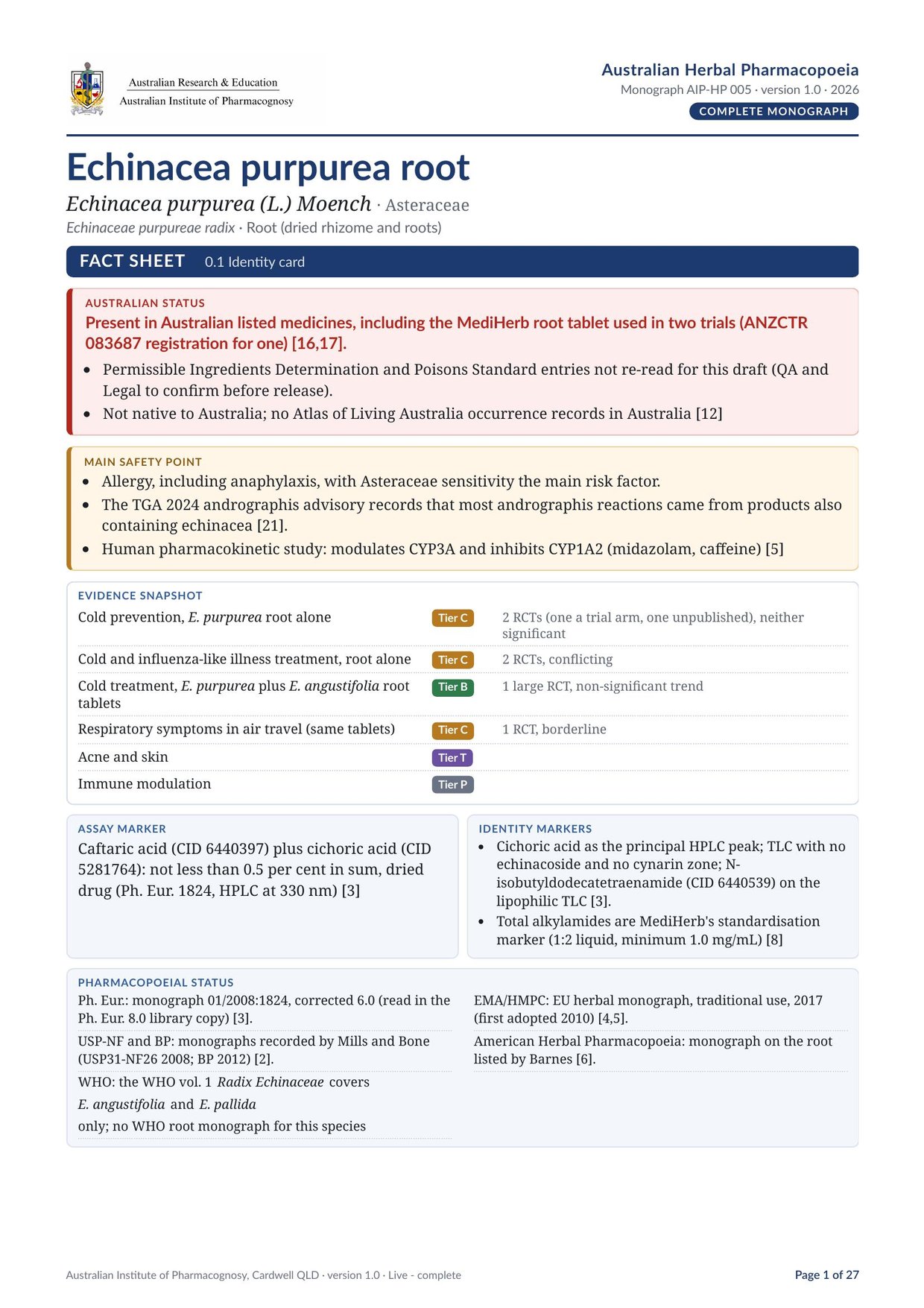
| Monograph | AIP-PH-ECHPUR (formerly AIP-HP 005), Echinacea purpurea root. Version 1.0, 23/09/2026. Next review: on sign-off |
| Accepted name | Echinacea purpurea (L.) Moench (1794), Asteraceae (APG IV). Accepted in WCVP, the checklist behind POWO (release 16/09/2026 via ChecklistBank dataset 2000, IPNI 1174497-2, read in September 2026) [1] |
| Synonyms | Basionym Rudbeckia purpurea L. Others include Brauneria purpurea (L.) Britton, Echinacea intermedia Lindl. ex Paxton, E. purpurea var. arkansana Steyerm., E. serotina (Nutt.) D.Don ex G.Don, Rudbeckia hispida Hoffmanns., R. serotina (Nutt.) Sweet [1,11,6]. MediHerb label botanical name: Echinacea purpurea [8]; trials: Echinacea purpurea [16]. TGA ingredient name not re-read for this draft (QA to confirm in the TGA ingredient database before release) |
| Drug name | Echinaceae purpureae radix, purple coneflower root (Ph. Eur. 1824; EU herbal monograph) [3,4] |
| Common names | Purple coneflower, eastern purple coneflower, broad-leaved purple coneflower, red sunflower, combflower (English); Purpursonnenhutwurzel (German); échinacée pourpre, racine d’ (French) [2,4,7] |
| Pharmacopoeial status | Ph. Eur.: monograph 01/2008:1824, corrected 6.0 (read in the Ph. Eur. 8.0 library copy) [3]. EMA/HMPC: EU herbal monograph, traditional use, 2017 (first adopted 2010) [4,5]. USP-NF and BP: monographs recorded by Mills and Bone (USP31-NF26 2008; BP 2012) [2]. American Herbal Pharmacopoeia: monograph on the root listed by Barnes [6]. WHO: the WHO vol. 1 Radix Echinaceae covers E. angustifolia and E. pallida only; no WHO root monograph for this species |
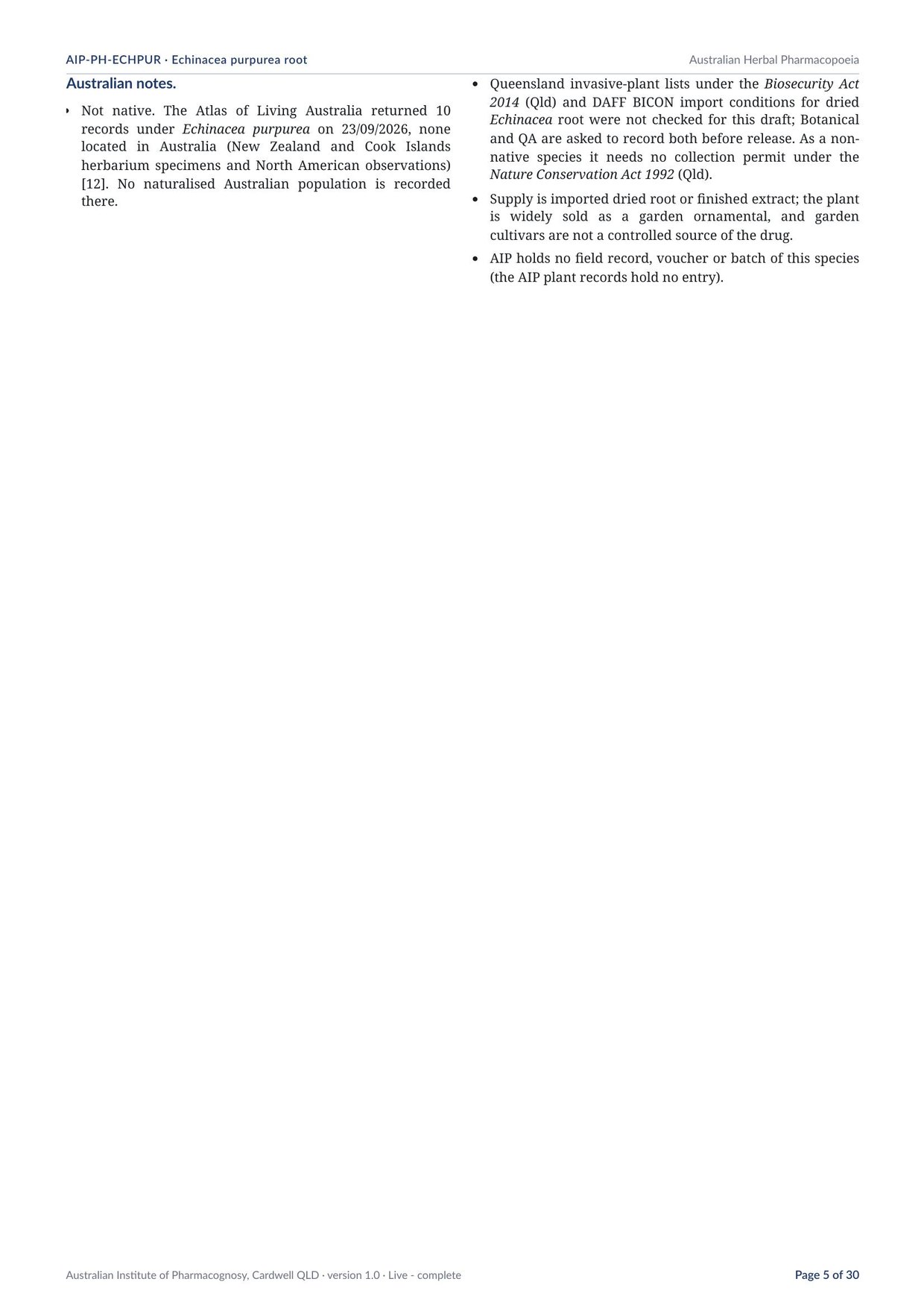
| Australian status | Present in Australian listed medicines, including the MediHerb root tablet used in two trials (ANZCTR 083687 registration for one) [16,17]. Permissible Ingredients Determination and Poisons Standard entries not re-read for this draft (QA and Legal to confirm before release). Not native to Australia; no Atlas of Living Australia occurrence records in Australia [12] |
| Assay marker | Caftaric acid (CID 6440397) plus cichoric acid (CID 5281764): not less than 0.5 per cent in sum, dried drug (Ph. Eur. 1824, HPLC at 330 nm) [3] |
| Identity markers | Cichoric acid as the principal HPLC peak; TLC with no echinacoside and no cynarin zone; N-isobutyldodecatetraenamide (CID 6440539) on the lipophilic TLC [3]. Total alkylamides are MediHerb’s standardisation marker (1:2 liquid, minimum 1.0 mg/mL) [8] |
| Evidence snapshot | Cold prevention, E. purpurea root alone: Tier C, 2 RCTs (one a trial arm, one unpublished), neither significant. Cold and influenza-like illness treatment, root alone: Tier C, 2 RCTs, conflicting. Cold treatment, E. purpurea plus E. angustifolia root tablets: Tier B, 1 large RCT, non-significant trend. Respiratory symptoms in air travel (same tablets): Tier C, 1 RCT, borderline. Acne and skin: Tier T. Immune modulation: Tier P |
| Main safety point | Allergy, including anaphylaxis, with Asteraceae sensitivity the main risk factor. The TGA 2024 andrographis advisory records that most andrographis reactions came from products also containing echinacea [21]. Human pharmacokinetic study: modulates CYP3A and inhibits CYP1A2 (midazolam, caffeine) [5] |
| Suggested citation | Ridley T, Iggulden L. Echinaceae purpureae radix (echinacea purpurea root, Echinacea purpurea (L.) Moench). Australian Herbal Pharmacopoeia monograph AIP-PH-ECHPUR (v1.0). Cardwell (QLD): Australian Institute of Pharmacognosy; 2026. DOI to be assigned |
| Compiler and review | Compiled by Dr Thomas Ridley (Education and Research). Technical review: Dr Fiona MacAllister (Botanical, sections 1-5, 10), reviewed in 2026; Dr Hana Suzuki (QA, sections 6-10), reviewed in 2026; Dr Eleanor Whitcombe (Medicine, sections 12, 13, 15), reviewed in 2026; Dr Thomas Ridley (Education and Research, evidence and citation audit, sections 1-3, 6-9 sources, 11-19 and figures), reviewed in 2026; Jesse Kirby (Community Outreach, free-sample and whole-document layout, figure placement, captions and credit lines), reviewed in 2026. Published: 2026. Last modified: 2026. Version 1.0 |
| Provenance | Original AIP data: none. Every limit, method, measurement and trial result comes from the cited pharmacopoeias, regulators, reference works and papers; sections 4, 5, 8, 9 and 10 are marked "AIP bench data pending" |
| Canonical URL | /pharmacopoeia/echinacea-purpurea/ |
0.2 Summary
Echinacea purpurea root is the dried rhizome and root of purple coneflower, a perennial daisy of the eastern and central United States and Ontario, now grown as a crop in Europe, North America and elsewhere. The crude drug is a branched, reddish-brown to dark brown rhizome with a white fibrous interior and many spirally twisted roots. Under the microscope its light-brown fibre bundles carry no black phytomelanin deposit, which separates it from E. angustifolia and E. pallida roots. The European Pharmacopoeia identifies it by two thin-layer chromatograms and a liquid chromatogram in which cichoric acid is the main peak, and requires at least 0.5 per cent caftaric plus cichoric acid. Echinacoside and cynarin should be absent. Parthenium integrifolium is the historical substitute. Australian practitioners use the root, alone or blended 60:40 with E. angustifolia root, as a 1:2 liquid or tablet to prevent and treat upper respiratory infections and for boils and skin complaints. The root-alone trials are few, old and conflicting; the best trial of a root blend showed a non-significant trend. The EU accepts only traditional use. Allergy is the main safety point, and the root changes CYP3A and CYP1A2 activity in people. Anyone considering it should consult a degree-qualified herbalist with competencies and adequate training in pharmacognosy.
0.3 Contents and extent (draft)
| Section | Approx. pages |
|---|---|
| 1-3 Nomenclature, definition, source and Australian supply (1 map) | 2.5 |
| 4-5 Macroscopy and microscopy (4 figures, 1 placeholder) | 3 |
| 6-7 Chemistry, markers and limits (9 structures) | 3 |
| 8-9 TLC and HPLC (4 figures) | 3 |
| 10 Identity, purity, adulterants, contaminants | 1.5 |
| 11 Traditional use | 1 |
| 12 Current practice and doses | 1.5 |
| 13 Clinical evidence (search, graded trials, registries, 2 charts) | 4 |
| 14 Pharmacology | 2 |
| 15 Safety | 2.5 |
| 16-18 Discussion, conclusions, research needed | 2 |
| 19-20 References and document control | 2.5 |
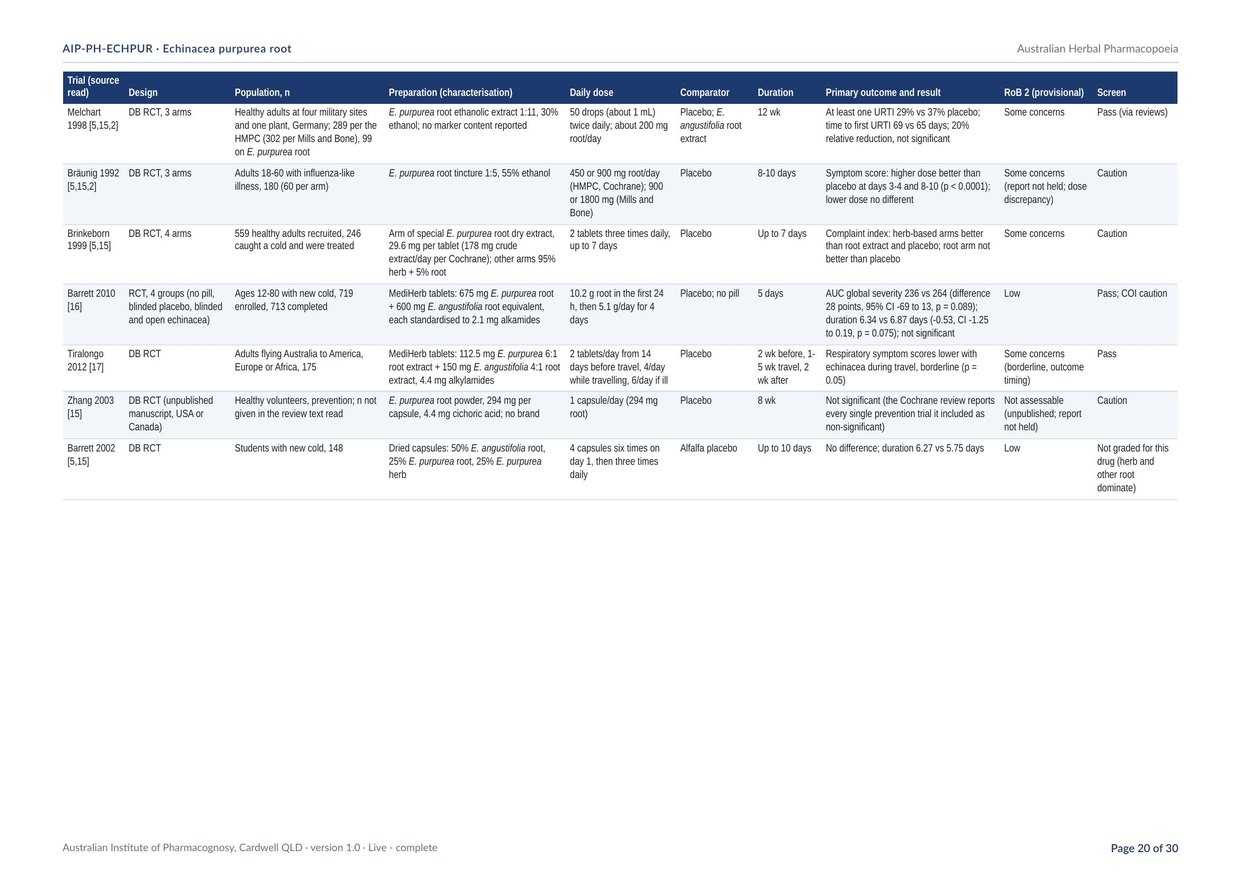
| Totals (draft) | About 28 A4 pages before layout; 17 tables; 20 embedded figures plus 1 captioned placeholder (1 licensed photograph of the living plant, 1 public-domain plate, 9 PubChem structures, 4 AIP schematics labelled as redrawn from Ph. Eur. text, 1 licensed published HPTLC plate, 1 licensed published chromatogram, 1 AIP range map, 2 AIP data charts); 0 photomicrographs; 1 chromatogram and 1 HPTLC plate (both published, refs 13, 14). Gaps: F3 is an AIP schematic because no licensed photograph of a vouchered E. purpurea crude root was found (AIP photograph pending); F4 photomicrographs are AIP bench data pending, no licensed alternative found; AIP TLC plate and HPLC run pending. Trials: 7 randomised trials containing the root tabulated in 13.4, 6 graded for this drug, plus 1 Cochrane review. 28 references, all read in full; trial reports not held in full are described only as reported in the HMPC assessment report and Mills and Bone, which were read in full |
0.4 Contributors and access
Prepared by the Australian Institute of Pharmacognosy. Botanical, QA and Medicine reviews, the Education and Research evidence audit and the Community Outreach layout review done 23/09/2026; Librarian reference audit pending; A Legal read is advisory only and does not gate publication (CEO order 22/09/2026). The Australian Herbal Pharmacopoeia is AIP’s own series and carries no statutory, TGA or government standing. The full monograph is for subscribers (paywall wording to come from Legal and Community Outreach).
1. Nomenclature
- Accepted name: Echinacea purpurea (L.) Moench (Asteraceae), published 1794 (IPNI 1174497-2). Accepted in WCVP, the checklist behind POWO (release of 16/09/2026, ChecklistBank dataset 2000, read in September 2026) [1], and in the Catalogue of Life (dataset 3LR, taxon 6DW3C, read in September 2026) [11]. The POWO web page itself refused an automated read in September 2026; the WCVP record is the same data.
- Basionym and synonyms: Rudbeckia purpurea L. is the basionym. The Catalogue of Life lists, among others, Brauneria purpurea (L.) Britton, Helichroa purpurea (L.) Raf., Lepachys purpurea (L.) Raf., Echinacea intermedia Lindl. ex Paxton, E. purpurea f. ligettii Steyerm., E. purpurea var. arkansana Steyerm., E. purpurea var. serotina (Nutt.) L.H.Bailey, E. serotina (Nutt.) D.Don ex G.Don, Rudbeckia hispida Hoffmanns., R. aspera Pers. and R. serotina (Nutt.) Sweet, plus eight further Rafinesque names in Helichroa (21 synonyms in all); WCVP gives the same 21 names [1,11]. WCVP spells the forma ligettii; IPNI spells it liggettii (IPNI 87157-2). Barnes gives a shorter list [6].
- Taxonomic position: McGregor’s 1968 revision recognised nine species; the 2001-2002 morphometric revision placed E. purpurea alone in subgenus Echinacea, with E. pallida, E. atrorubens and E. laevigata in subgenus Pallida [2]. E. purpurea keeps species rank in every treatment we read [1,2,11], so the name is stable for this monograph.
- Family: Asteraceae (Compositae), order Asterales, as in APG IV; WCVP places the genus there [1]. No recent change.
- Common names: purple coneflower, eastern purple coneflower, broad-leaved purple coneflower (English) [2]; combflower, red sunflower [7]; Purpursonnenhutwurzel (German), échinacée pourpre (racine d’) (French), Echinacea purpurea radice (Italian), rød solhatt rot (Norwegian) [4].
- Drug name and state: Echinaceae purpureae radix, the dried, whole or cut underground parts (rhizome and roots) [3]. Practitioners also use fresh-root preparations; the Ph. Eur. definition covers the dried drug only [3].
- Trade names in Australia: MediHerb "Echinacea Purpurea Root 1:2" (botanical name Echinacea purpurea, plant part root), "Echinacea Purpurea Glycetract 1:3" (root) and "Echinacea Premium Blend 1:2" (60% E. purpurea root 1:2 with 40% E. angustifolia root 1:2) [8]. The A-Z work list records Echinacea Premium, Sinus Forte and Broncafect tablets; their panels were not re-read for this draft. The TGA ingredient name used on ARTG entries was not re-read for this draft; QA is to confirm it before release.
- Name confusion: "Echinacea" on a label names neither species nor plant part. Many E. purpurea products are made mainly from the aerial parts (fresh-pressed herb juice, or 95% herb with 5% root) and are a different drug from this monograph [2,5]. "Echinacea Regular Blend" in the MediHerb range contains E. purpurea fresh whole plant, not root alone [8].
2. Definition
The dried, whole or cut underground parts of Echinacea purpurea (L.) Moench, containing not less than 0.5 per cent of the sum of caftaric acid (C13H12O9; Mr 312.2) and cichoric acid (C22H18O12; Mr 474.3), calculated with reference to the dried drug.
Basis: Ph. Eur. monograph 01/2008:1824, corrected 6.0, as printed in the 8.0 edition held in the library (p. 1359) [3]; the HMPC assessment report quotes the same definition [5]. The two acids are the assay markers; neither has been shown to carry a clinical effect (sections 6.4 and 14). QA is asked to confirm the definition against the Ph. Eur. edition in force before release.
Free to every reader. The safety section of every monograph is open to everyone, signed in or not. In an emergency call 000. For poisoning, call the Poisons Information Centre on 13 11 26.
15. Safety
15.1 Adverse effects in trials
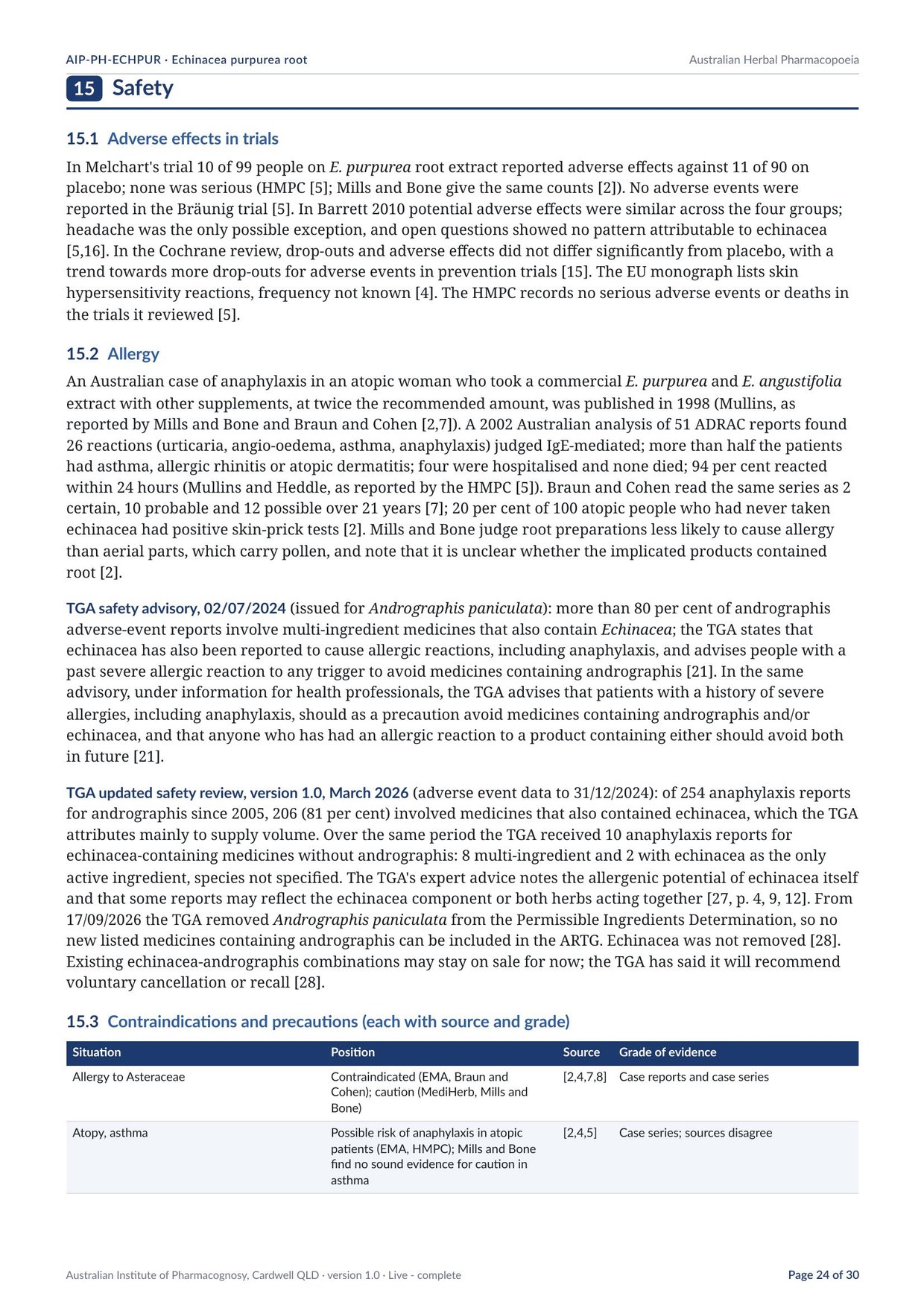
In Melchart’s trial 10 of 99 people on E. purpurea root extract reported adverse effects against 11 of 90 on placebo; none was serious (HMPC [5]; Mills and Bone give the same counts [2]). No adverse events were reported in the Bräunig trial [5]. In Barrett 2010 potential adverse effects were similar across the four groups; headache was the only possible exception, and open questions showed no pattern attributable to echinacea [5,16]. In the Cochrane review, drop-outs and adverse effects did not differ significantly from placebo, with a trend towards more drop-outs for adverse events in prevention trials [15]. The EU monograph lists skin hypersensitivity reactions, frequency not known [4]. The HMPC records no serious adverse events or deaths in the trials it reviewed [5].
15.2 Allergy
An Australian case of anaphylaxis in an atopic woman who took a commercial E. purpurea and E. angustifolia extract with other supplements, at twice the recommended amount, was published in 1998 (Mullins, as reported by Mills and Bone and Braun and Cohen [2,7]). A 2002 Australian analysis of 51 ADRAC reports found 26 reactions (urticaria, angio-oedema, asthma, anaphylaxis) judged IgE-mediated; more than half the patients had asthma, allergic rhinitis or atopic dermatitis; four were hospitalised and none died; 94 per cent reacted within 24 hours (Mullins and Heddle, as reported by the HMPC [5]). Braun and Cohen read the same series as 2 certain, 10 probable and 12 possible over 21 years [7]; 20 per cent of 100 atopic people who had never taken echinacea had positive skin-prick tests [2]. Mills and Bone judge root preparations less likely to cause allergy than aerial parts, which carry pollen, and note that it is unclear whether the implicated products contained root [2]. TGA safety advisory, 02/07/2024 (issued for Andrographis paniculata): more than 80 per cent of andrographis adverse-event reports involve multi-ingredient medicines that also contain Echinacea; the TGA states that echinacea has also been reported to cause allergic reactions, including anaphylaxis, and advises people with a past severe allergic reaction to any trigger to avoid medicines containing andrographis [21]. In the same advisory, under information for health professionals, the TGA advises that patients with a history of severe allergies, including anaphylaxis, should as a precaution avoid medicines containing andrographis and/or echinacea, and that anyone who has had an allergic reaction to a product containing either should avoid both in future [21]. TGA updated safety review, version 1.0, March 2026 (adverse event data to 31/12/2024): of 254 anaphylaxis reports for andrographis since 2005, 206 (81 per cent) involved medicines that also contained echinacea, which the TGA attributes mainly to supply volume. Over the same period the TGA received 10 anaphylaxis reports for echinacea-containing medicines without andrographis: 8 multi-ingredient and 2 with echinacea as the only active ingredient, species not specified. The TGA’s expert advice notes the allergenic potential of echinacea itself and that some reports may reflect the echinacea component or both herbs acting together [27, p. 4, 9, 12]. From 17/09/2026 the TGA removed Andrographis paniculata from the Permissible Ingredients Determination, so no new listed medicines containing andrographis can be included in the ARTG. Echinacea was not removed [28]. Existing echinacea-andrographis combinations may stay on sale for now; the TGA has said it will recommend voluntary cancellation or recall [28].
15.3 Contraindications and precautions (each with source and grade)
| Situation | Position | Source | Grade of evidence |
|---|---|---|---|
| Allergy to Asteraceae | Contraindicated (EMA, Braun and Cohen); caution (MediHerb, Mills and Bone) | [2,4,7,8] | Case reports and case series |
| Atopy, asthma | Possible risk of anaphylaxis in atopic patients (EMA, HMPC); Mills and Bone find no sound evidence for caution in asthma | [2,4,5] | Case series; sources disagree |
| History of severe allergy or anaphylaxis to any trigger; any allergic reaction to an echinacea- or andrographis-containing product | Avoid medicines containing echinacea and/or andrographis, as a precaution (TGA advice to health professionals) | [21,27] | Regulator pharmacovigilance (spontaneous reports; 10 echinacea-without-andrographis anaphylaxis reports to 31/12/2024) |
| Progressive systemic disorders, autoimmune disease, immunodeficiency, immunosuppression, white-cell disorders | Not recommended (EMA, as a warning); not supported by evidence (Mills and Bone) | [2,4,5] | Theoretical; no clinical data |
| Long-term immunosuppressant therapy (for example transplant) | Contraindicated long-term; short-term only (MediHerb, Mills and Bone) | [2,8] | Theoretical |
| Children under 12 | Not recommended (EMA; no adequate data) | [4,5] | No data |
| Pregnancy and lactation | Not recommended (EMA); professional supervision (MediHerb); category A (Mills and Bone) | [2,4,8] | One prospective cohort, species and part not identified (15.5) |
| General anaesthesia | Stop 7 days before (MediHerb) | [8] | Manufacturer precaution; no data cited |
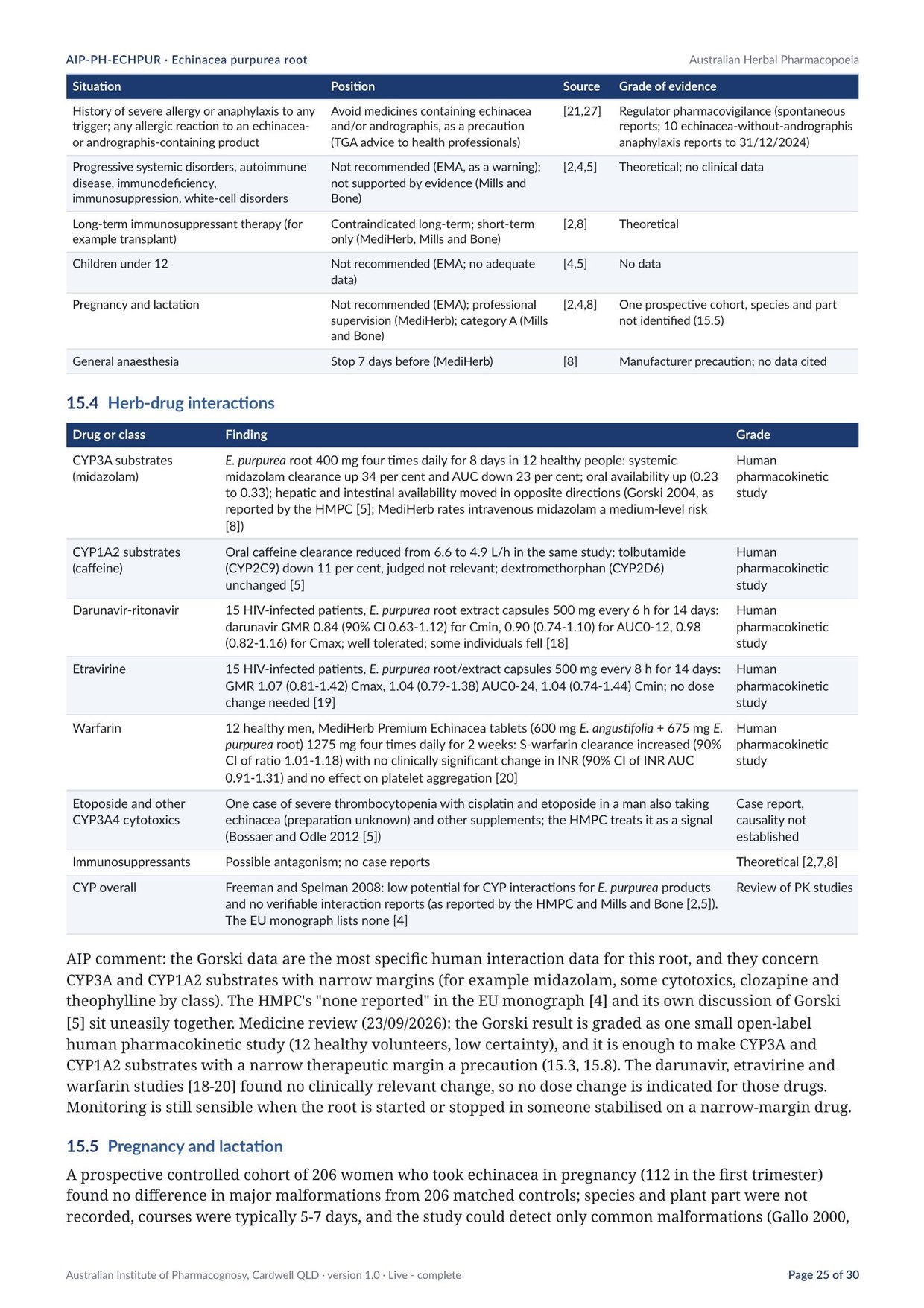
15.4 Herb-drug interactions
| Drug or class | Finding | Grade |
|---|---|---|
| CYP3A substrates (midazolam) | E. purpurea root 400 mg four times daily for 8 days in 12 healthy people: systemic midazolam clearance up 34 per cent and AUC down 23 per cent; oral availability up (0.23 to 0.33); hepatic and intestinal availability moved in opposite directions (Gorski 2004, as reported by the HMPC [5]; MediHerb rates intravenous midazolam a medium-level risk [8]) | Human pharmacokinetic study |
| CYP1A2 substrates (caffeine) | Oral caffeine clearance reduced from 6.6 to 4.9 L/h in the same study; tolbutamide (CYP2C9) down 11 per cent, judged not relevant; dextromethorphan (CYP2D6) unchanged [5] | Human pharmacokinetic study |
| Darunavir-ritonavir | 15 HIV-infected patients, E. purpurea root extract capsules 500 mg every 6 h for 14 days: darunavir GMR 0.84 (90% CI 0.63-1.12) for Cmin, 0.90 (0.74-1.10) for AUC0-12, 0.98 (0.82-1.16) for Cmax; well tolerated; some individuals fell [18] | Human pharmacokinetic study |
| Etravirine | 15 HIV-infected patients, E. purpurea root/extract capsules 500 mg every 8 h for 14 days: GMR 1.07 (0.81-1.42) Cmax, 1.04 (0.79-1.38) AUC0-24, 1.04 (0.74-1.44) Cmin; no dose change needed [19] | Human pharmacokinetic study |
| Warfarin | 12 healthy men, MediHerb Premium Echinacea tablets (600 mg E. angustifolia + 675 mg E. purpurea root) 1275 mg four times daily for 2 weeks: S-warfarin clearance increased (90% CI of ratio 1.01-1.18) with no clinically significant change in INR (90% CI of INR AUC 0.91-1.31) and no effect on platelet aggregation [20] | Human pharmacokinetic study |
| Etoposide and other CYP3A4 cytotoxics | One case of severe thrombocytopenia with cisplatin and etoposide in a man also taking echinacea (preparation unknown) and other supplements; the HMPC treats it as a signal (Bossaer and Odle 2012 [5]) | Case report, causality not established |
| Immunosuppressants | Possible antagonism; no case reports | Theoretical [2,7,8] |
| CYP overall | Freeman and Spelman 2008: low potential for CYP interactions for E. purpurea products and no verifiable interaction reports (as reported by the HMPC and Mills and Bone [2,5]). The EU monograph lists none [4] | Review of PK studies |
AIP comment: the Gorski data are the most specific human interaction data for this root, and they concern CYP3A and CYP1A2 substrates with narrow margins (for example midazolam, some cytotoxics, clozapine and theophylline by class). The HMPC’s "none reported" in the EU monograph [4] and its own discussion of Gorski [5] sit uneasily together. Medicine review (23/09/2026): the Gorski result is graded as one small open-label human pharmacokinetic study (12 healthy volunteers, low certainty), and it is enough to make CYP3A and CYP1A2 substrates with a narrow therapeutic margin a precaution (15.3, 15.8). The darunavir, etravirine and warfarin studies [18-20] found no clinically relevant change, so no dose change is indicated for those drugs. Monitoring is still sensible when the root is started or stopped in someone stabilised on a narrow-margin drug.
15.5 Pregnancy and lactation
A prospective controlled cohort of 206 women who took echinacea in pregnancy (112 in the first trimester) found no difference in major malformations from 206 matched controls; species and plant part were not recorded, courses were typically 5-7 days, and the study could detect only common malformations (Gallo 2000, as reported by the HMPC and Mills and Bone [5,2]). Pregnant mice fed E. purpurea (probably root) had fewer viable fetuses (Chow 2006, as reported by Mills and Bone [2]). Norwegian and Italian surveys found echinacea among the herbs most used in pregnancy, without species or part [5]. The EU monograph does not recommend use in pregnancy and lactation for lack of data [4]; MediHerb suggests professional supervision [8]; Mills and Bone place it in category A and judge it compatible with breastfeeding, noting that about 0.5 per cent of the maternal alkylamide dose reached the infant in one breastfeeding woman [2]. No reproductive toxicity study of E. purpurea root preparations exists [4,5]. Barrett 2010 excluded pregnant women [16].
AIP comment: the human evidence is one small cohort that cannot be assigned to this root. Certainty is very low. Medicine review (23/09/2026): AIP does not recommend routine use in pregnancy or lactation. This follows the EU position [4] in preference to the Mills and Bone category A [2], because category A assumes consumption by a large number of women, and the only cohort (206 women) neither recorded species and plant part nor could detect uncommon malformations. The mouse finding [2] is unreplicated; AIP records it as a signal that needs testing.
15.6 Children and older people
No adequate data in children; the EU monograph does not recommend use under 12 [4]. Mills and Bone have no specific information for the root in children [2]. MediHerb suggests the glycetract for children at a suitable dose [8]. No specific data in older people.
15.7 Toxicology and overdose
Oral acute toxicity of an E. purpurea root extract exceeded 3000 mg/kg in mice (Bauer and Liersch, as reported by the HMPC and Mills and Bone [2,5]). Male rats given root extract at 50 mg/kg for 8 weeks showed reduced testicular mass and histological change (as reported by Mills and Bone [2]). Repeat-dose, reproductive, genotoxicity and carcinogenicity tests on the EU monograph preparations have not been done, so no EU list entry was made [4,5]. No overdose case is reported [4]. A Finnish case records chronic misuse of a high-ethanol echinacea extract as a source of alcohol [5]. Case reports attributed to echinacea (species and part usually unstated) include erythema nodosum, leukopenia, aggravation of autoimmunity, acute hepatitis and hypereosinophilia [2]; causality has not been assessed for any of them. The saturated pyrrolizidine alkaloids carry no hepatotoxic structure [2].
TGA checks. The 02/07/2024 andrographis advisory covers echinacea combination products and is summarised in 15.2 [21]. The TGA’s March 2026 updated safety review (15.2) reports its own adverse event database counts to 31/12/2024 [27]. A direct DAEN (medicines) pull for "Echinacea" was not made (the DAEN search needs an interactive browser session, and the automated attempt for AIP-HP 004 in September 2026 was blocked). It is outstanding before release. The TGA safety-alert search for echinacea in September 2026 (Medicine) found no alert specific to echinacea beyond refs 21, 27 and 28.
15.8 Referral
Anyone with a known daisy-family allergy, asthma or atopy, an autoimmune or progressive systemic disease, a transplant or immunosuppressant treatment, anyone taking a medicine cleared by CYP3A or CYP1A2 with a narrow margin, or anyone pregnant or breastfeeding, should consult a degree-qualified herbalist with competencies and adequate training in pharmacognosy before using Echinacea purpurea root. Anyone with a history of severe allergy or anaphylaxis to any trigger, or who has had any allergic reaction to an echinacea or andrographis product, should avoid medicines containing echinacea (TGA advice [21]). Throat or tongue swelling, wheeze, hives or faintness after a dose is an emergency: call 000.
Inside the typeset monograph




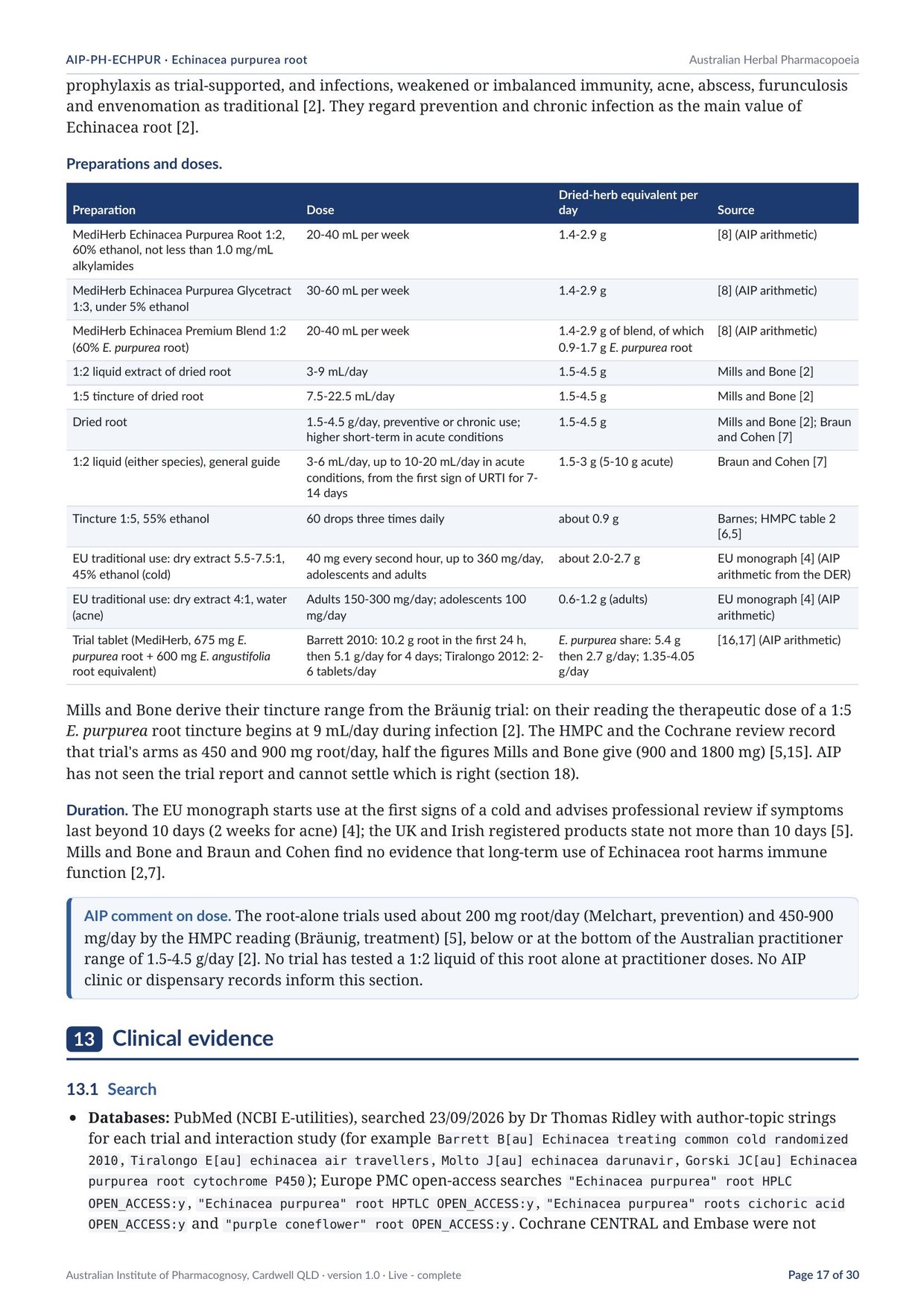
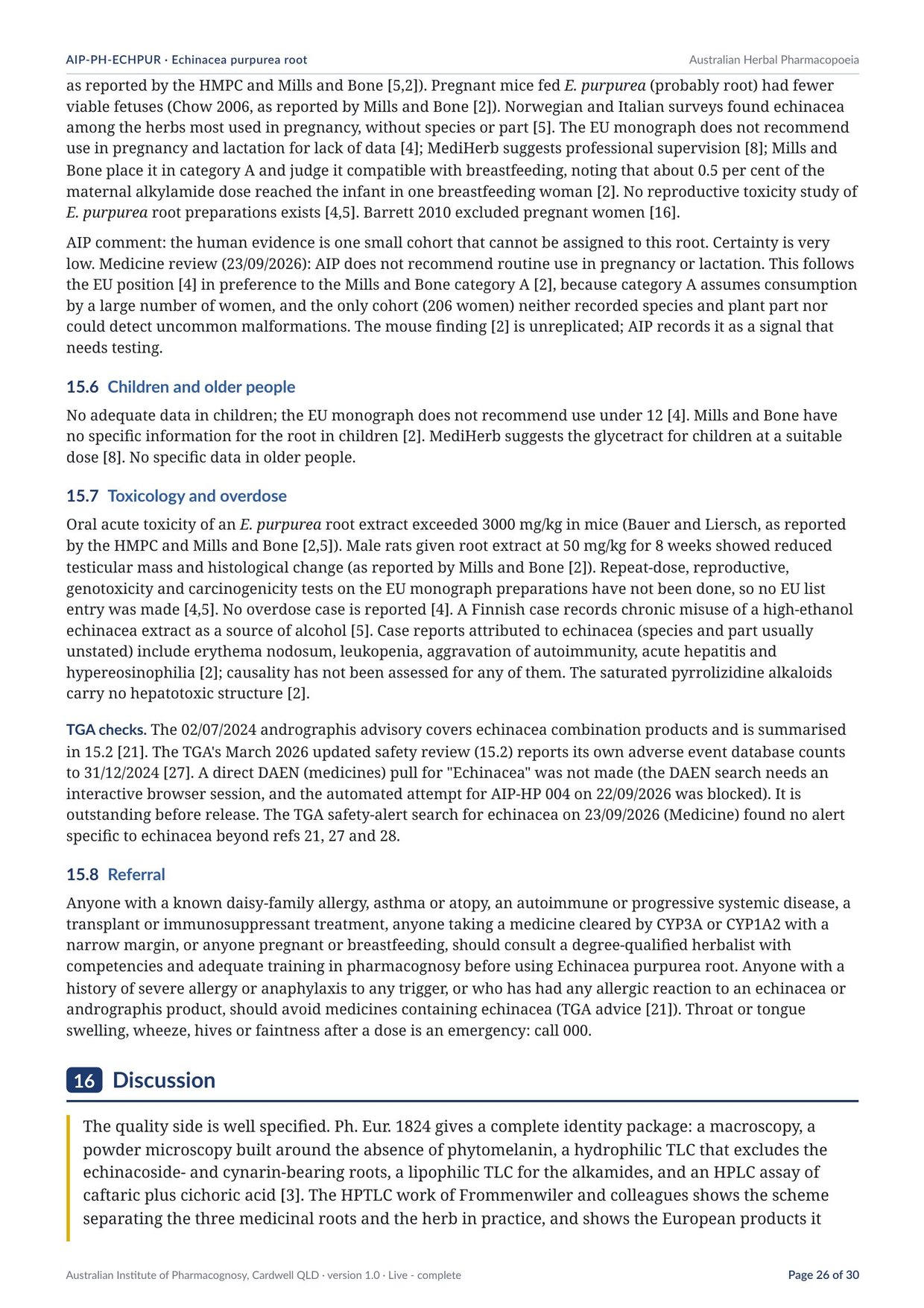

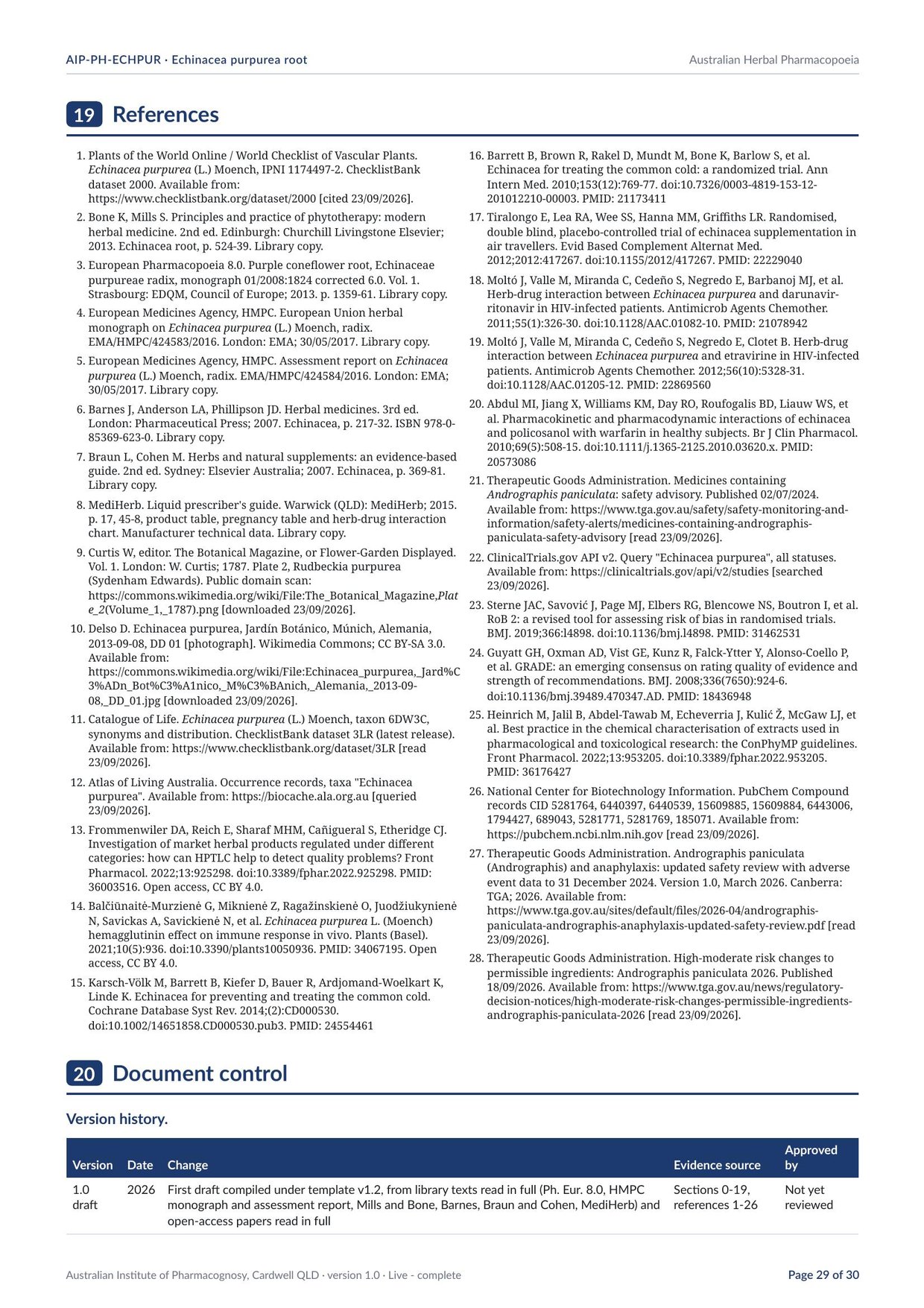
Tap a page to open it big enough to read.
10 pages read at full size, the safety section among them. The pages shown small are in the full monograph.
- 30 pages, read in the AIP Reader
- Version 1.0
- Licence personal, for life, one screen at a time
AUD $20this monograph in full, in the AIP Reader
The preview and the safety section are free, with no account and no sign-in. The microscopy, the chemistry, the TLC and HPLC fingerprints and the rest read in the AIP Reader, on this AUD $20 licence or a Scholar membership.
21 more pages follow · 10,749 words, 20 figures, 16 tables
Still to come in this monograph
- 3. Source and Australian supply
- 4. Macroscopy
- 5. Microscopy
- 6. Chemistry
- 7. Named markers and assay limits
- 8. TLC fingerprint
- 9. HPLC fingerprint
- 10. Identity, purity, adulterants and contaminants
- 11. Traditional use
- 12. Current practice: use, preparations and doses
- 13. Clinical evidence
- 14. Pharmacology
- 16. Discussion
- 17. Conclusions
- 18. Research still needed
- 19. References
- 20. Document control
The rest of this monograph reads in the AIP Reader: every page in your name, always the current version, on a Scholar membership or the AUD $20 copy of this one title.
Checking your membership…
Report an error or submit evidence
If something in this monograph is wrong, out of date or missing, tell us and show us the evidence. Every report is logged under the AIP Evidence Charter and assessed on the evidence alone; the outcome is kept on the record, and an upheld report is corrected with a dated notice on this page.
Open the report form
The typeset edition of this monograph, set for print with the plates and chromatograms at full size, is $20 AUD in Publications.