
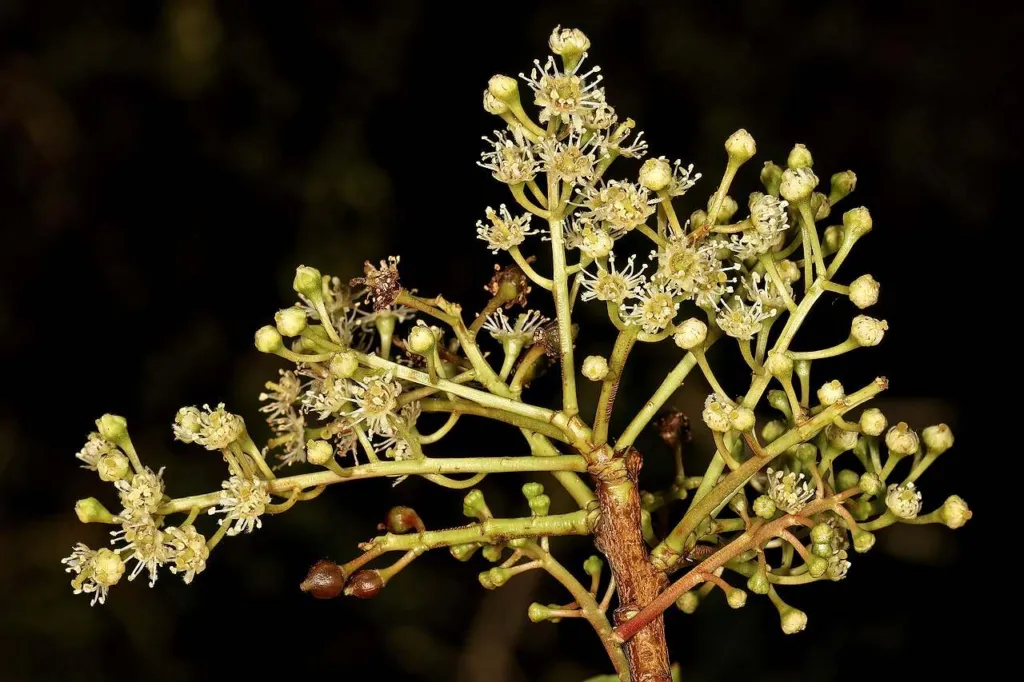
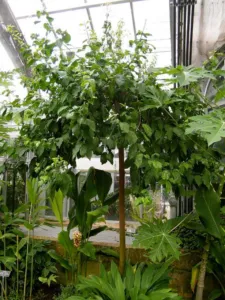
Cover: Prunus africana in flower, Kirstenbosch National Botanical Garden, Cape Town. Photo: SAplants · CC BY-SA 4.0 · Wikimedia Commons
Four medicines on the Australian register contain the bark of this tree. Three of them are forbidden by law from mentioning the condition their buyers are taking them for; the fourth may name it, and says one careful sentence about getting up at night. Attested Not one of the four states an extract specification, and there is not a single vouchered specimen of the plant anywhere in Australia. Attested
This is LR-10 in the Australian Institute of Pharmacognosy’s series of literature reviews and critical analyses. It reads Prunus africana (Hook.f.) Kalkman properly: the tree and the part used, the fat-soluble chemistry of the bark, the two androgen-receptor antagonists in it and the human pharmacokinetic data that do not exist, the eighteen randomised trials the whole reputation rests on, the one Australian trial behind the one Australian label, the prostate-cancer claim and where it comes from, the Australian regulatory position read from the Commonwealth’s own instruments, and the CITES-listed wild bark harvest that no Australian pack mentions.
This article is educational. It is not medical, legal or regulatory advice, it is not an advertisement, and nothing in it is a recommendation to buy or take pygeum or any product containing it. Products are named only where a public ARTG record exists and statements about them are confined to what that record says. The Institute has no commercial interest in any pygeum product and no relationship with any sponsor named here.
1. Urinary symptoms need a diagnosis before they need a herb. Benign prostatic hyperplasia and prostate cancer produce overlapping symptoms, and so do bladder stones, infection, stricture and neurological disease. The one Australian label permitted to name the condition says “medically diagnosed benign prostatic hypertrophy” for that reason (ARTG 367190). Attested Using a supplement to postpone finding out what is going on is the largest avoidable harm anywhere in this file.
2. Blood in the urine, fever, spasms, pain on passing urine, being unable to pass urine at all, or symptoms that are getting worse are not things to manage at home. The European monograph for this bark names exactly those six and directs the patient to immediate assessment (EMA/HMPC EU herbal monograph). Attested Acute urinary retention is a medical emergency: it is treated in an emergency department, within hours, and waiting on it risks the kidneys.
3. There are no interaction data, which is not the same as no interactions. The European assessment report records that no drug interactions have been reported from clinical trials or case studies (EMA/HMPC assessment report). Attested There is also no published cytochrome P450 study, no transporter study and no human pharmacokinetic study of any preparation of this bark. Attested Men taking it are commonly on alpha blockers, antihypertensives, statins and anticoagulants. Nobody has looked. Mechanism
4. Two cyanogenic substances are capped in Australian law. Amygdalin and hydrocyanic acid are mandatory components of Prunus africana under item 4189 of the Permissible Ingredients Determination, each limited to 10 mg/kg in the finished medicine (Permissible Ingredients Determination, item 4189). Attested Above those limits amygdalin sits in Schedule 10 of the Poisons Standard and hydrocyanic acid in Schedule 4 (Poisons Standard, June 2026). Attested Home-made preparations from raw bark are outside every one of those controls.
5. Not for women, not for anyone under 18, and nothing at all is known about pregnancy. The European monograph states there is no relevant use in children, adolescents under 18 or women, records “no fertility data available”, and enters pregnancy and lactation as “not relevant” (EMA/HMPC EU herbal monograph). Attested That last phrase describes who the medicine is for. It is not a finding that the bark is safe in pregnancy or in breastfeeding, and no such finding exists. No paediatric data of any kind exist either.
6. A cancer diagnosis is a reason to stop, not to start. There has never been a human trial of pygeum in prostate cancer. The WHO monograph frames the indication as applying where a prostate cancer diagnosis is negative, and a former European product carried a flat contraindication in diagnosed prostate cancer (EMA/HMPC assessment report). Attested
7. Anyone having a PSA test should have this on the record before the blood is drawn. The two androgen-receptor antagonists isolated from this bark suppress expression of the prostate-specific antigen gene in prostate cancer cell lines, and blocking the androgen receptor is the mechanism the laboratory work is built on (PMID 19771394; PMID 20965230). Evidence suggests No trial has measured a serum PSA in a man taking pygeum, and the European assessment report carries no PSA data at all, so whether an ordinary 75 to 100 mg dose moves the number is unknown in either direction. Attested PSA is the measurement used to decide whether a man is investigated for prostate cancer. An untested effect on it is a reason for the person interpreting the result to know the supplement is being taken. Mechanism
Emergency: call Triple Zero (000). For a suspected poisoning or overdose, call the Poisons Information Centre on 13 11 26 (24 hours, Australia-wide). Before taking any botanical drug, consult a degree-qualified herbalist with competencies and adequate training in pharmacognosy.
| Botanical name | Prunus africana (Hook.f.) Kalkman, Rosaceae; basionym Pygeum africanum Hook.f., which is still the trade name Attested §2 |
| Common names | Pygeum, African cherry, African prune, red stinkwood, bitter almond, mueri, umkhakhazi Attested §2 |
| The drug | Dried bark of the stems and branches. Australian entry 367190 declares stem bark outer. Not root, not leaf, not fruit Confirmed §3 |
| Native range | Montane forest of equatorial and southern Africa, from Ethiopia to the Cape, plus Madagascar and São Tomé Attested §4 |
| In Australia | Zero Atlas of Living Australia occurrence records under either name. No specimen, no cultivation, no supply. All imported Attested §4 |
| Traditional standing | Genitourinary medicine across the African range for centuries; a French prescription phytomedicine since 1969 Traditional §5 |
| Chemistry | Fat-soluble: β-sitosterol 15.7%, fatty acids 62.3%, triterpene acids ~14% of the bark, long-chain alcohols and their ferulate esters Attested §6 |
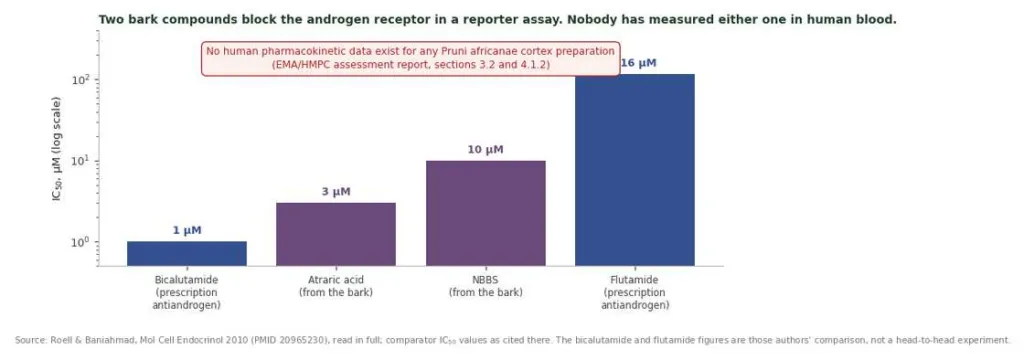
| Active candidates | Atraric acid and N-butylbenzenesulfonamide, complete and specific androgen receptor antagonists at 3 and 10 µM in reporter assays Evidence suggests §7 |
| Human pharmacokinetics | None exist. The EMA assessment report records “no data available” for both preclinical and clinical pharmacokinetics Attested §7 |
| Clinical evidence | 18 randomised trials, 1,562 men, mean 64 days. Nocturia −19%, residual urine −24%, peak flow +23%; effect size −0.8 SD (95% CI −1.4 to −0.3) Evidence suggests §8 |
| Trial quality | 1 of 18 reported allocation concealment. No trial against an alpha blocker or a 5α-reductase inhibitor. Most published before 2000 Attested §8 |
| In real practice | 43% of men on pygeum improved significantly in a 2,351-patient European cohort, against 57% on finasteride and 68% on alpha blockers Evidence suggests §8 |
| Australian trial | One 57-man three-month phase II trial of a five-plant capsule: night-time frequency down 39.3% against 7% on placebo Evidence suggests §9 |
| Prostate cancer | Substantial cell and one transgenic-mouse study. No human trial of any kind. Not an indication anywhere Evidence suggests §10 |
| Safety | Rarely digestive upset. No reported interactions, no reported overdose, no reported deaths. In rats liver enzymes and urea rise at 1 g/kg/day and organ damage appears at 3.3 g/kg/day, some hundreds of times the human dose Attested §11 |
| Women, pregnancy, children | No relevant use in women or under-18s. Pregnancy and lactation entered as “not relevant”, fertility data “none available”. A statement about the indication, not a safety finding Attested §11 |
| PSA | Both bark androgen-receptor antagonists suppress PSA expression in vitro. Serum PSA has never been measured in a man taking it Evidence suggests §11 |
| Not tested | Carcinogenicity not tested. Genotoxicity and reproductive toxicity not adequately tested. EMA says so in the monograph itself Attested §11 |
| Australian law | Permitted ingredient, item 4189, with amygdalin and hydrocyanic acid each capped at 10 mg/kg in the medicine Attested §12 |
| Poisons Standard | No entry for the plant. Amygdalin is Schedule 10 above 10 mg/kg; hydrocyanic acid is Schedule 4 above 10 mg/kg Attested §12 |
| Dose on the label | Europe: 50 mg twice daily of a chloroform 114–222:1 soft extract. Australia: 75 mg once daily of a 200:1 concentrate, plus four other actives Attested §12 |
| Quality | None of the four Australian public summaries states a sterol content, a marker or an extraction solvent Attested §13 |
| Supply | CITES Appendix II. 100% wild harvest by bark stripping from standing trees. No plantation industry of any scale Attested §14 |
- Confirmed Established in humans by trial, or an unambiguous analytical, chemical or official-record fact.
- Evidence suggests Real published data, but preclinical, observational, small, case-based or not yet independently replicated.
- Mechanism A plausible mechanistic or pharmacological inference about how something works, short of a measured outcome.
- Traditional Historical or ethnobotanical use. Evidence of practice. Efficacy is a separate question.
- Attested A documentary fact attested in a named record: a legislative instrument, a regulator’s publication, a taxonomic index or a database. It states what the record says. It makes no claim about what a plant does.
- Unsourced A statement the Institute could not trace to a source it was able to open and read. It is left in because it is useful context, and flagged so no reader mistakes it for a sourced claim.
Every PubMed ID (PMID) below links to its record and was checked against PubMed on 28/09/2026. Sixteen of the cited papers were read in full text and are held in the Institute’s library. Papers whose full text is paywalled were queued through the Institute’s library and are cited here only for facts also carried in a full text the Institute holds, principally the European Medicines Agency’s 37-page assessment report on this bark; where there is no such corroboration the text says the paper has not been read and asserts nothing from it. Every compound was checked against PubChem and is linked by CID. Every Australian regulatory statement was read from the regulator’s or the legislature’s own document. Where a source refused to open for the Institute, the text names it and makes no claim.
What it is. The dried bark of Prunus africana, an evergreen forest tree of the African mountains, extracted with chloroform or methylene chloride at around 200 parts of bark to one of extract, and swallowed at 75 to 100 mg a day. Attested The chemistry is fat-soluble: phytosterols, triterpene acids, long-chain alcohols and fatty acids. It is the lead herb in Caruso’s Prostate Eze Max and it appears in three other Australian listed medicines.
What the evidence supports. A modest, real improvement in lower urinary tract symptoms over six to twelve weeks: nocturia down about a fifth, residual urine down about a quarter, peak flow up about a quarter. Evidence suggests The eighteen randomised trials behind that are small, short, mostly pre-2000, and only one of the eighteen reported how allocation was concealed. None compared the bark with the drugs a man would actually be offered. In ordinary European practice fewer than half the men put on it improved significantly, against about two-thirds on an alpha blocker. Evidence suggests No urological guideline, European or American, includes it in a treatment algorithm. Attested
What it is not. There has never been a human trial of pygeum in prostate cancer. The laboratory work on prostate cancer cell lines is genuine and substantial, and it is cell work. Evidence suggests The regulatory tradition around this bark treats a cancer diagnosis as a reason to stop.
Safety. Gentle. Digestive upset, rarely, and nothing else reported in decades of European prescription use. Attested In animals the first biochemical signs appear at a gram per kilogram per day and frank organ damage at 3.3, hundreds of times the human dose. Carcinogenicity has never been tested, genotoxicity and reproductive toxicity have never been adequately tested, and there are no human pharmacokinetic data of any kind, which means there is no basis for estimating an interaction risk in the men most likely to be taking it. Mechanism
The bit that surprised us. Australia has already decided two things about this plant that its buyers do not know. Item 4189 of the Permissible Ingredients Determination makes amygdalin and hydrocyanic acid mandatory components of Prunus africana and caps each at 10 mg/kg, thresholds lifted straight out of Schedule 10 and Schedule 4 of the Poisons Standard. Attested And there is not one vouchered specimen of the tree in the Atlas of Living Australia. Attested A plant nobody in this country has ever collected is in a medicine sold in every second shopping centre.
Before taking it. Get the diagnosis first. Then consult a degree-qualified herbalist with competencies and adequate training in pharmacognosy, and tell them every prescription medicine you take.
1. Four products, one African tree, and a name nobody reads
There are exactly four medicines on the Australian Register of Therapeutic Goods that contain Prunus africana. The Institute searched the register on 28/09/2026 and read all four public summaries. Attested One of them, Caruso’s Prostate Eze Max, entry 367190, sells through Chemist Warehouse and pharmacy chains in quantity. The other three, Prostate Plus and Prostate Plus Ultra Max Capsule from Nature’s Care, and Biogency Prostate Care, are quieter, and two of them are the same formulation under two names (ARTG 406073; ARTG 403978). Attested
The front of none of those packs is going to make a reader think about Africa. The ingredient appears on the label as pygeum, or as Prunus africana in small type among four or five other Latin binomials, and the tree it comes from is a threatened evergreen of the equatorial African mountain forests whose bark is stripped from wild trunks in Cameroon, Kenya, Uganda, Madagascar and the eastern Congo. There is no plantation industry of any size anywhere. Every gram in every Australian capsule started as a hand-cut strip of bark off a living forest tree.
That is the first thing worth saying plainly, because the rest of this review turns on it. The second is that the four Australian entries are not allowed to say the same things as one another, and the difference has nothing to do with the herb.
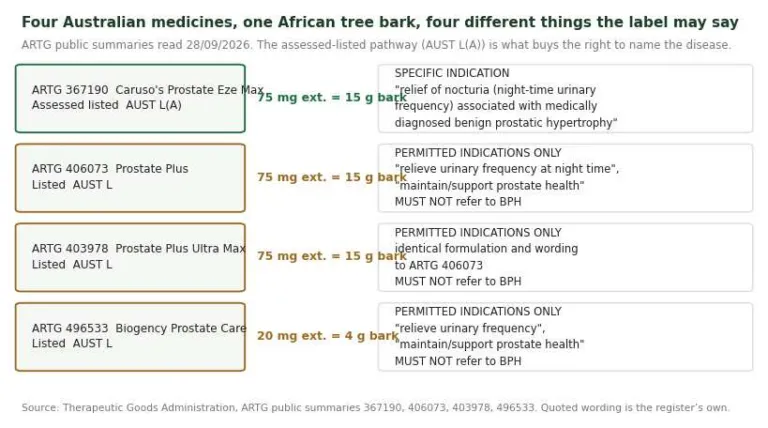
Caruso’s Prostate Eze Max carries a specific indication on the register: “For the relief of nocturia (night-time urinary frequency) associated with medically diagnosed benign prostatic hypertrophy.” Attested Read that sentence twice. It is about one symptom, at one time of day, in men who have already had the diagnosis made by someone else. It does not say the medicine treats the prostate, shrinks it, slows it, or does anything about cancer. The register records no warnings for that product at all (ARTG 367190).
The three ordinary listed medicines draw on the TGA’s fixed list of permitted indications instead. All three may say “maintain/support prostate health”; the two Nature’s Care entries may say “relieve urinary frequency at night time”, while the Biogency entry carries the broader “relieve urinary frequency” with no night-time wording at all (ARTG 403978; ARTG 496533). Each one carries an explicit indication requirement that the product presentation “must not imply or refer to serious genitourinary conditions like Benign Prostatic Hypertrophy, erectile dysfunction or hormone therapy”. Attested Same tree. Same 75 mg of extract in two of them. One may name the disease and three may not, because one went through an assessment of its evidence and three did not.
2. The name, and why two names matter
The accepted botanical name is Prunus africana (Hook.f.) Kalkman, published by the Dutch botanist Cornelis Kalkman in Blumea volume 13, page 33, in 1965, family Rosaceae. The International Plant Names Index carries it at record 729417-1 and records the basionym as Pygeum africanum Hook.f. (IPNI 729417-1). Attested Joseph Dalton Hooker described the plant in the genus Pygeum; Kalkman later sank Pygeum into Prunus, which is where it sits now.
The trade never followed. Every pharmacopoeial and regulatory document still in use carries both names in the same breath. The European Pharmacopoeia monograph is number 1886, the European Medicines Agency’s title is Pruni africanae cortex, the English standard term on the EMA monograph is “pygeum africanum bark”, and the Dutch name given in that same document is rood stinkhout, red stinkwood (EMA/HMPC EU herbal monograph). Attested Australian labels use pygeum. Searches use pygeum. Papers indexed before about 2010 use Pygeum africanum and papers after it use Prunus africana, which means anyone trying to assemble the literature has to search both or lose half of it.
The vernacular list in the EMA assessment report runs to three dozen names, most of them from the range states: mueri, muiru, mwiritsa, kiburabura, ol-koijuk, tendwet, umkhakhazi, umdumizulu, inkhokhokho, nuwehout (EMA/HMPC assessment report). Attested “Red stinkwood” and “bitter almond” are both about the smell of the cut wood, which brings us to the chemistry the Australian regulator has already noticed.
3. Botany, and which part is the drug
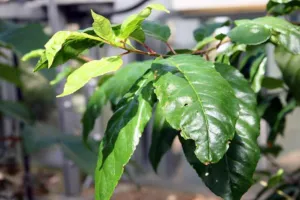
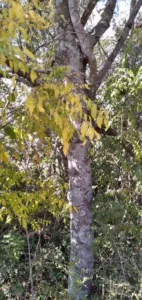
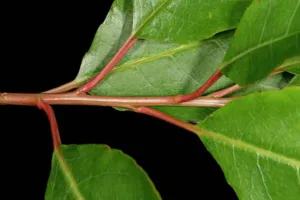
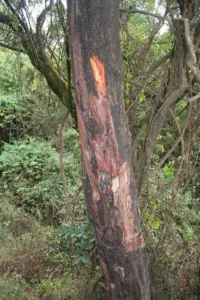
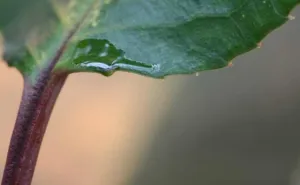
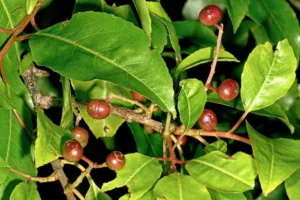
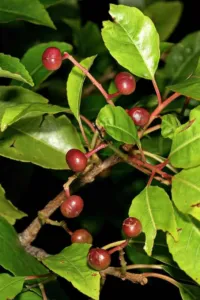
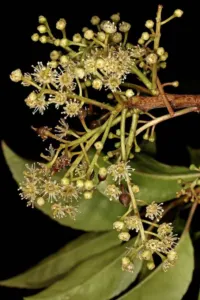
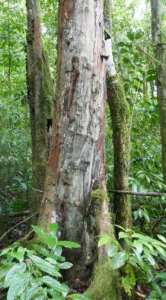
Prunus africana is an evergreen tree of 10 to 25 metres with a straight cylindrical trunk and a dense rounded crown. The leaves are alternate, simple, elliptic, leathery and glossy, 8 to 12 centimetres long, on long stalks, with shallow crenate margins and a midrib channelled above and prominent below. Bruise one and it smells of almonds. The flowers are small, white to cream, fragrant, in axillary racemes 3 to 8 centimetres long, with corolla lobes reaching about 2 millimetres. The fruits are cherry-shaped, 8 to 12 millimetres across, red to purplish-brown, with very bitter flesh and a bony stone. The wood is pale red, darkening to mahogany on exposure, straight-grained, very hard and very heavy, and it smells strongly of cyanide when freshly cut (EMA/HMPC assessment report). Attested
The drug is the bark. The European Pharmacopoeia defines it as the whole or cut dried bark of the stems and branches: red to blackish-brown, deeply square-fissured or corrugated, with a characteristic almond, hydrocyanic-acid-like odour (EMA/HMPC assessment report). Attested The Australian register is more specific still. Entry 367190 declares Prunus africana stem bark outer extract soft concentrate, 75 mg, equivalent to 15 g of dry plant (ARTG 367190). Attested Outer bark, not inner; stem, not root; bark, not leaf and not fruit.
That specificity is not pedantry. The recent laboratory literature on this species has mostly used whatever part the authors could obtain. A 2026 study at Delaware State University extracted bark, leaf and root separately and found the bark methanolic extract carried by far the highest total phenolic content, 1,397 mg gallic acid equivalents per gram, and the lowest antioxidant EC50 at 0.10 mg/mL (PMID 41731495). Evidence suggests A 2022 Korean study that produced a prostate-cell result used the root of a micropropagated plant, not bark at all (PMID 35116070). Evidence suggests A reader who takes a root or leaf result and applies it to a bark capsule has changed the drug.
The almond smell is cyanogenic. Australian law has dealt with that directly, and section 12 sets out how.
4. Where it grows, and its Australian status
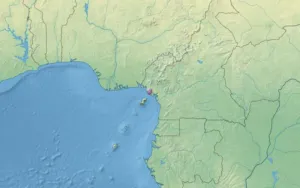
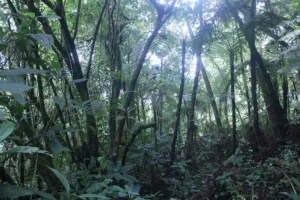
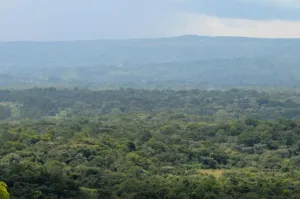
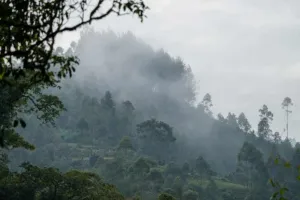
The native range is the montane forest of equatorial and southern Africa: Angola, Cameroon, Ethiopia, Ghana, Kenya, Madagascar, Malawi, Mozambique, the Congo, South Africa, Uganda, Tanzania, Zambia and Zimbabwe (EMA/HMPC assessment report). Attested It is a tree of the mist belt, of forest patches broken up by farmland and altitude, and its populations are islands rather than a continuous sheet. A 2016 study of its self-incompatibility genotypes across Ugandan populations found the genetic structure you would expect from that fragmentation, with implications for how much of the species’ diversity any one stand carries (PMID 27348423). Evidence suggests
In Australia the tree is absent. The Institute queried the Atlas of Living Australia on 28/09/2026 for both Prunus africana and Pygeum africanum and got zero occurrence records for either name (Atlas of Living Australia). Attested No herbarium specimens, no garden records, no observations, nothing. For comparison the same service holds 42 records for Berberis aristata, a plant that is also not naturalised here. Zero is a different kind of number: it means nobody has vouchered this tree in Australia at all. There is no Australian cultivation, no Australian harvest, no Australian weed risk and no Australian supply. One hundred per cent of what Australians swallow is imported extract.
The Institute found no Prunus africana entry anywhere in the Therapeutic Goods (Poisons Standard—June 2026) Instrument 2026, and no entry for pygeum under either name (Poisons Standard, June 2026). Attested The bark itself is not a scheduled poison in Australia. Two of its constituents are, and that is section 12.
5. What African tradition used it for, and what Europe did with that
The powdered bark has been used across its range for genitourinary complaints, and that is the traditional record the European monograph rests on. The EMA assessment report puts it briefly: the bark “is used by Africans natives to treat urinary problems”, and the species “has traditionally been used for centuries by African traditional healers to treat genitourinary disorders” (EMA/HMPC assessment report). Traditional The ethnobotanical surveys are broader than that. A 2024 review assembling the ethnomedicinal record across the range lists uses for malaria, fever, stomach pain, wounds, chest complaints and prostate disease (PMID 38654751). Traditional Kenyan and Ugandan surveys record it among plants used against cancers, which becomes relevant in section 10 (PMID 28286531). Traditional
What happened next is unusual in the history of materia medica, and it happened fast. In the 1960s French pharmaceutical interest turned to the bark, and by 1969 a chloroform soft extract was on the French market as a prescription-grade phytomedicine for urinary symptoms of prostatic enlargement. That single product, continuously marketed since 1969, is what allowed the EMA’s Committee on Herbal Medicinal Products to grant a traditional-use monograph forty-seven years later, because the Directive requires thirty years of medicinal use and this one had it (EMA/HMPC assessment report). Attested
The traditional standing being certified in Europe is therefore a European commercial tradition of the last half-century, sitting on top of an African medicinal tradition of much longer standing that the European monograph acknowledges in three sentences. Both are real. They are not the same claim, and the distinction is worth keeping because the dosage, the solvent and the extract ratio in the monograph all come from the French product and none of them come from African practice.
Uses well outside the urinary tract keep appearing in the modern literature: a 2022 Kenyan study of anticholinesterase and cognitive effects of stem bark and leaf extracts in mice (PMID 36593834), a 2023 Ethiopian study of wound healing with an 80% methanol stem-bark extract in mice (PMID 37701854), a 2022 Korean study of anti-osteoporosis activity in bone-marrow macrophages (PMID 35487926). Evidence suggests All animal or cell work. None of it bears on what an Australian buyer is taking a capsule for.
6. Phytochemistry: a fat-soluble bark
Pygeum bark is chemically unlike most of the herbs in this series. There are no alkaloids doing the work and no water-soluble glycoside driving the pharmacology. The characteristic constituents are lipids.
The EMA assessment report gives the composition of a lipophilic extract as: β-sitosterol 15.7%, docosanol 0.6%, tetracosanol 0.5% plus the trans-ferulic acid esters of both alcohols, free fatty acids of 12 to 24 carbons at 62.3% of the extract (myristic, palmitic, linoleic, oleic, stearic, arachidic, behenic and lignoceric), sitostenone 2.0%, daucosterol, and pentacyclic triterpenes including ursolic acid 2.9%, friedelin 1.4%, 2α-hydroxyursolic acid 0.5%, epimaslinic acid 0.8% and maslinic acid. Phytosterols in the raw bark run about 0.05%, and the triterpene acids about 14% (EMA/HMPC assessment report). Attested Tannins are also present.
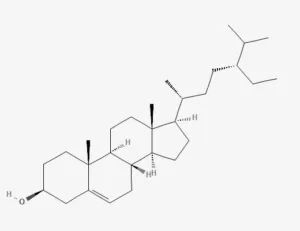
C29H50O · 15.7% of the lipophilic extract and the only standardisation marker the trade uses
PubChem CID 222284 · structure image: PubChem, public domain
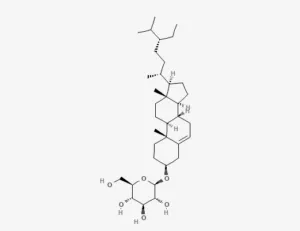
C35H60O6 · β-sitosterol 3-O-glucoside, isolated from this bark
PubChem CID 5742590 · structure image: PubChem, public domain
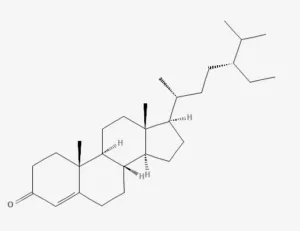
C29H48O · stigmast-4-en-3-one, about 2% of the extract
PubChem CID 5484202 · structure image: PubChem, public domain
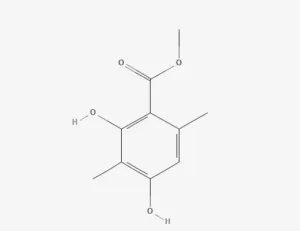
C10H12O4 · androgen receptor antagonist, IC50 3 µM in a reporter assay
PubChem CID 78435 · structure image: PubChem, public domain
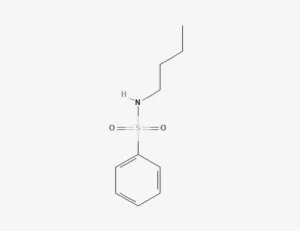
C10H15NO2S · the second antiandrogen from the bark, IC50 10 µM
PubChem CID 19241 · structure image: PubChem, public domain
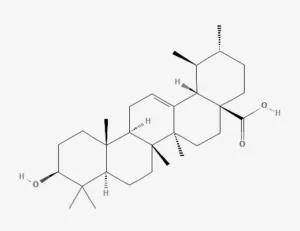
C30H48O3 · pentacyclic triterpene acid, 2.9% of the extract
PubChem CID 64945 · structure image: PubChem, public domain
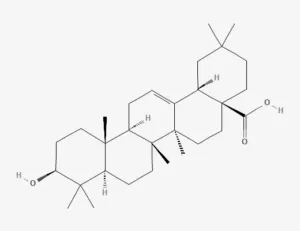
C30H48O3 · the ursolic acid isomer, present as derivatives
PubChem CID 10494 · structure image: PubChem, public domain
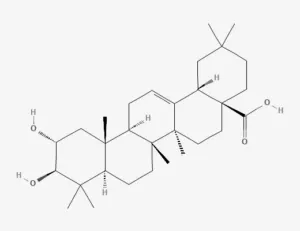
C30H48O4 · with epimaslinic acid at 0.8%
PubChem CID 73659 · structure image: PubChem, public domain
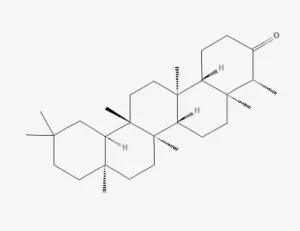
C30H50O · friedelane triterpene ketone, 1.4%
PubChem CID 91472 · structure image: PubChem, public domain
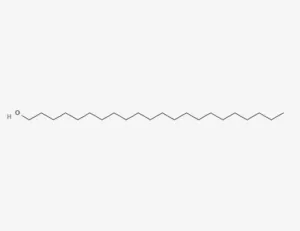
C22H46O · long-chain aliphatic alcohol, 0.6%, the second historical marker
PubChem CID 12620 · structure image: PubChem, public domain
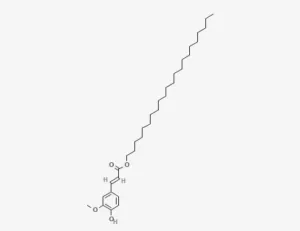
C32H54O4 · the trans-ferulate ester of docosanol, assayed by HPLC
PubChem CID 14238616 · structure image: PubChem, public domain
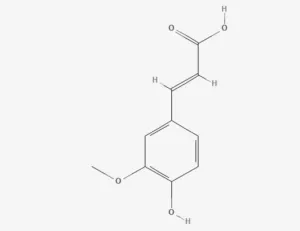
C10H10O4 · the acid half of the ferulate esters
PubChem CID 445858 · structure image: PubChem, public domain
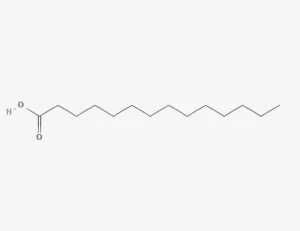
C14H28O2 · one of the C12–C24 fatty acids making up 62% of the extract
PubChem CID 11005 · structure image: PubChem, public domain
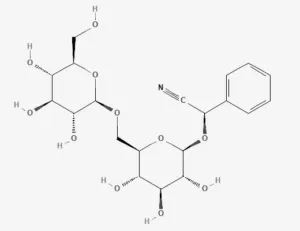
C20H27NO11 · capped at 10 mg/kg by Australian law; Schedule 10 above that
PubChem CID 656516 · structure image: PubChem, public domain
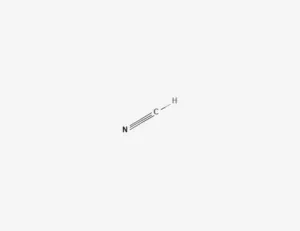
CHN · the almond smell of the cut wood; Schedule 4 above 10 mg/kg
PubChem CID 768 · structure image: PubChem, public domain
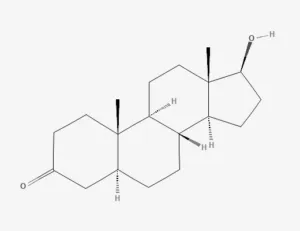
C19H30O2 · the androgen the bark compounds compete against
PubChem CID 10635 · structure image: PubChem, public domain
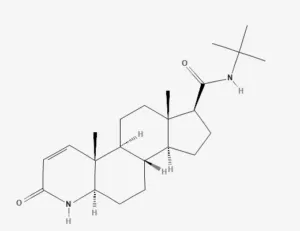
C23H36N2O2 · the 5α-reductase inhibitor the extract is 60,000-fold weaker than
PubChem CID 57363 · structure image: PubChem, public domain
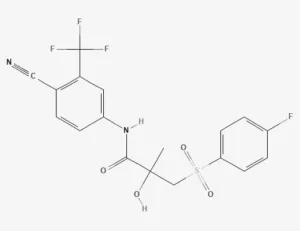
C18H14F4N2O4S · prescription antiandrogen, IC50 1 µM in the same comparison
PubChem CID 2375 · structure image: PubChem, public domain
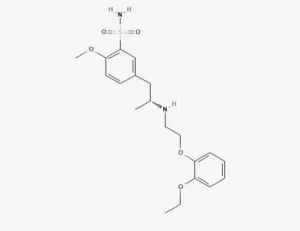
C20H28N2O5S · the alpha blocker pygeum has never been trialled against
PubChem CID 129211 · structure image: PubChem, public domain
Thirteen bark constituents, the two cyanogenic substances Australian law caps in the medicine, the androgen they compete with, and the three prescription medicines this bark is measured against. Every CID was checked against PubChem on 28/09/2026; the depictions are PubChem’s own (US National Library of Medicine, public domain).
Two compounds in that list are doing something the others are not. In 2006 a group at Marburg fractionated a dichloromethane extract of the stem bark by activity and pulled out atraric acid, methyl 2,4-dihydroxy-3,6-dimethylbenzoate, a small phenolic ester also found in oakmoss lichen, and N-butylbenzenesulfonamide (NBBS) (PMID 16773539; PMID 16783690). Evidence suggests Both turned out to be antagonists of the human androgen receptor in reporter assays. Section 7 has the numbers and the caveat.
The industrial standardisation marker is β-sitosterol, and the method is old. One commercially traded bark extract is standardised to not less than 13% β-sitosterol by a spectrophotometric method involving saponification and a colorimetric reaction with sulfuric acid, read at 510 nm, with total sterols expressed as β-sitosterol and confirmed by gas chromatography against the United States Pharmacopeia pygeum extract monograph (PMID 39125867). Attested A spectrophotometric total-sterol number reported as one compound is an approximation, and it is the number the whole market runs on.
The individual constituents have their own small literatures. β-Sitosterol-3-O-glucoside (daucosterol) and β-amyrin were isolated from this species and tested for cytotoxicity in 2016 (PMID 28852726). Evidence suggests A 2022 GC–MS and LC–TOF–MS profile of the bark identified chlorogenic acid, catechin and naringenin alongside the sterols (PMID 35487926). Evidence suggests A 2025 comparison of bark, leaf and other African species reported phenolic and flavonoid contents and antioxidant activity (PMID 40563299). Evidence suggests
7. Pharmacology, and the gap underneath it
Three mechanistic stories are told about this bark. They are of unequal quality and the EMA assessment report separates them properly, which is one reason it is worth reading in the original.
Anti-inflammatory
The phytosterols, β-sitosterol in front, inhibit prostaglandin formation, and a lipophilic bark extract inhibited synthesis of 5-lipoxygenase metabolites in stimulated human polymorphonuclear cells, significantly for 5-HETE at 1 µg/mL and for leukotriene B4 at 3 µg/mL (EMA/HMPC assessment report). Mechanism A 2024 study from the extract manufacturer Euromed exposed human peripheral blood mononuclear cells from four donors to a standardised bark extract under lipopolysaccharide stimulation and found a statistically significant fall in interleukin-6 in three of the four donors, with IL-27 and TNF-α down at all concentrations in all donors (PMID 39125867). Evidence suggests All four authors of that paper are employees of the company that makes the extract, and the paper declares no conflict of interest and no external funding. That is the published record; readers can weigh it themselves.
Anti-androgenic
A methylene-chloride extract standardised to 13% sterols inhibited 5α-reductase from rat prostate cells with an IC50 of 0.78 mg/mL and placental aromatase at 0.98 mg/mL. An earlier study using human prostatic 5α-reductase got an IC50 of 63 µg/mL, against 1 ng/mL for finasteride (EMA/HMPC assessment report). Mechanism The gap there is roughly sixty thousand-fold, and it is the honest measure of what a crude lipid extract does to that enzyme compared with the drug designed for it.
The atraric acid and NBBS work is better. Both compounds inhibit ligand-activated human androgen receptor transactivation, block the receptor’s translocation to the nucleus, suppress endogenous prostate-specific antigen expression in LNCaP and C4-2 cells, and inhibit growth of androgen-dependent and androgen-independent prostate cancer lines while sparing PC-3 and CV1 cells, which lack the receptor (PMID 19771394; PMID 20965230). Evidence suggests Their selectivity has a measured ceiling, and the papers state it. At the concentrations that give 90% androgen-receptor inhibition, neither compound moves the glucocorticoid receptor, thyroid hormone receptor β, either oestrogen receptor or the PR-A isoform of the progesterone receptor; at higher concentrations both inhibit the PR-B isoform, and atraric acid acquires oestrogenic activity at 100 µM (PMID 19771394; PMID 20965230). Evidence suggests Receptor-specific, in this literature, means specific within a dose range. In reporter assays 10 µM atraric acid repressed androgen-mediated transactivation by about 90%, with 50% inhibition still at 1 µM and none at 0.1 µM.
Bladder
The animal bladder work is the largest body of preclinical evidence on this plant and it is more consistent than the prostate work. Lipophilic bark extract given by gavage prevented or reversed the contractile dysfunction that follows partial bladder outlet obstruction in rabbits, dose-dependently at 1, 10 and 100 mg/kg/day; restored citrate synthase and calcium-ATPase activities; reduced bladder weight in obstructed animals from 8.8 g to 4.2 g against placebo; normalised myosin heavy chain isoform ratios; and protected the bladder against ischaemia–reperfusion injury at a dose the authors described as clinically relevant, 3.0 mg/kg/day (EMA/HMPC assessment report). Evidence suggests In rats with dihydrotestosterone-driven urethral obstruction it significantly reduced micturition frequency and normalised urethral opening pressure and voiding volume. The EMA’s reading is that the benefit on lower urinary tract symptoms is ascribed to a protective action on the bladder rather than on the gland, and the animal data support that reading better than they support anything about the prostate.
Now the hole. The EMA assessment report has two sections on pharmacokinetics, one preclinical and one clinical. Both say “no data available”. There are no human pharmacokinetic data for any preparation of this bark (EMA/HMPC assessment report). Attested Nobody knows what fraction of β-sitosterol, atraric acid, NBBS or docosyl ferulate gets absorbed from a 75 mg soft-extract capsule, what blood concentration it reaches, how long it stays or what it turns into. Every mechanism above is a statement about a dish or an animal, and the bridge to a man in Cardwell taking one capsule after dinner has never been built.
8. The clinical evidence, graded honestly
There is a Cochrane review, and it is the single most cited thing about this plant. It is also twenty-four years old, and the trials in it are older than that.
Wilt and Ishani’s review, Cochrane Database CD001044, included 18 randomised controlled trials in 1,562 men. Seventeen were double blinded. One of the eighteen reported a method of concealing treatment allocation. Mean study duration was 64 days, with a range of 30 to 122. Daily doses ran from 75 to 200 mg of extract. Six studies with 474 participants between them could be pooled for the main outcome. In that pooled analysis pygeum bark produced an effect size of −0.8 standard deviations on the combined outcome of urologic symptoms and flow measures, with a 95% confidence interval from −1.4 to −0.3; men taking it were more likely to report overall symptom improvement, relative risk 2.1 (95% CI 1.4 to 3.1); nocturia fell by 19%, residual urine volume by 24%, and peak urine flow rose by 23%. Adverse effects were mild and comparable to placebo, and the drop-out rate was 13% against 11% on placebo (PMID 11869585; PMID 11099686). Evidence suggests
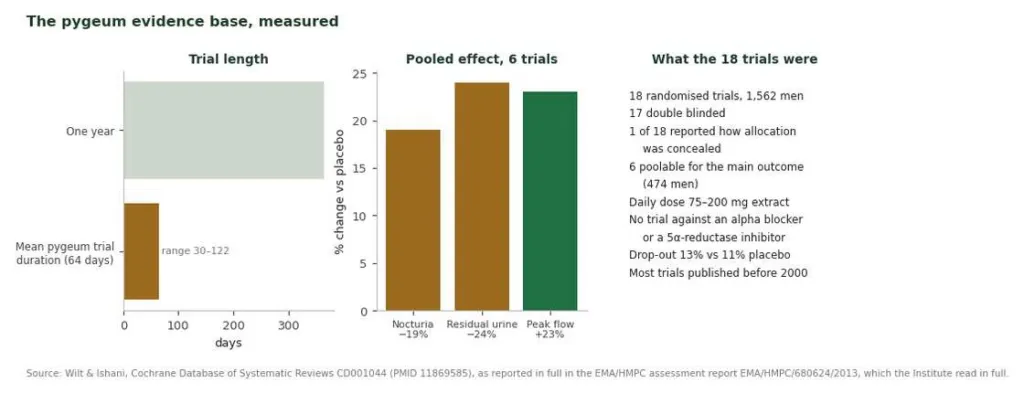
No trial in that review compared pygeum with an alpha blocker or a 5α-reductase inhibitor, which are the two drug classes a man with these symptoms would actually be offered. The review’s own conclusion was that the preparations “may be a useful treatment option”, that the studies were small, short, used varied preparations and rarely reported standardised validated efficacy measures, and that further placebo-controlled and active-comparator trials of adequate size and duration were needed. That was written in 2002. The EMA’s assessors, reading the same body of work in 2016, used the phrase “in many cases final conclusions were not at all clear” about the twelve trials of the specific chloroform extract they were assessing (EMA/HMPC assessment report). Attested
The largest single trial is Chatelain 1999, and it was a dose-comparison rather than a placebo study: 235 men randomised to 50 mg twice daily or 100 mg once daily, 209 completing a two-month double-blind phase, followed by a ten-month open phase on 100 mg daily. Both regimens performed alike: International Prostate Symptom Score down 38% and 35%, quality of life up 28% in both arms, maximum flow up 1.63 and 2.02 mL/s. After twelve months on the open extension the IPSS had fallen from 16 to 9 and half the patients were below 8 (EMA/HMPC assessment report). Evidence suggests Without a placebo arm past two months, the twelve-month figure cannot be separated from regression, expectation and the natural fluctuation of these symptoms, and the EMA assessors said as much: the placebo effect in micturition complaints is large, and two months is short.
One observational dataset deserves mention because it is the least flattering and the most realistic. The TRIUMPH study followed 2,351 newly presenting men with lower urinary tract symptoms across six European countries for a year in ordinary practice. Significant improvement was seen in 43% of those on pygeum phytotherapy, against 57% on finasteride and 68% on alpha blockers (EMA/HMPC assessment report). Evidence suggests Less than half. Better than nothing, and clearly behind both drug classes.
A 2023 review of BPH phytotherapy states the current guideline position without hedging: none of the phytotherapies discussed, pygeum included, forms part of the recommended treatment algorithm in either the European or the American urological guidelines, and for pygeum specifically “there is a lack of contemporary evidence for its efficacy” (PMID 36902686). Attested The most recent original work the Institute could find in this space is preclinical: a 2026 preclinical characterisation of a multi-plant BPH mixture containing Pygeum africanum, in cells and animals (PMID 41754167). Evidence suggests
9. The Australian trial, and what it can and cannot carry
Australia has its own trial on this, and it is the evidence behind the one Australian label that may name the disease.
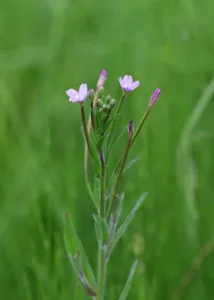
Coulson and colleagues ran a phase II randomised, double-blind, placebo-controlled trial of the herbal formulation ProstateEZE Max in 57 otherwise healthy men aged 40 to 80 with medically diagnosed benign prostatic hypertrophy, 32 on active treatment and 25 on matched placebo, one capsule a day for three months. Each capsule contained Cucurbita pepo seed oil 160 mg, Epilobium parviflorum extract equivalent to 500 mg dry herb, lycopene 2.1 mg, Prunus africana equivalent to 15 g dry stem standardised to β-sitosterol, and Serenoa repens equivalent to 660 mg. Total IPSS fell by a median 36% in the active group against 8% on placebo (p<0.05); daytime frequency fell from 7.0 to 5.9 voids a day, 15.6%, with no significant change on placebo (p<0.03); and night-time frequency fell from 2.9 to 1.8, a 39.3% reduction, against 2.8 to 2.6 on placebo, 7% (p<0.004) (PMID 23642948; EMA/HMPC assessment report). Evidence suggests
The nocturia figure is where the Australian label wording comes from, and the label is drafted narrowly enough to match it. A 39% reduction in getting up at night, in men who already have the diagnosis, from a five-ingredient capsule, in a three-month phase II trial of 57 people. That is what is being claimed, and within its own bounds it is a real result.
What it cannot carry is anything about pygeum on its own. Five actives went in together and the trial cannot apportion the effect between them. The bark could be doing all of it, some of it or none of it. The EMA assessment report lists the same trial under combination products for exactly that reason (EMA/HMPC assessment report). Attested A reader who buys a single-herb pygeum capsule on the strength of this trial has bought something that was not tested.
One small pharmacognostic discrepancy is worth recording because it goes to how carefully these formulations get described in print. The European assessment report, setting out the capsule used in that trial, gives the Serenoa repens component as “equivalent to 660 mg of dry leaf per capsule” (EMA/HMPC assessment report); the trial paper is paywalled and the Institute has not read it in full, so that wording is quoted from the assessment report and not from the paper itself. The ARTG public summary for the product declares Serenoa repens seed extract soft concentrate 44 mg, equivalent to 660 mg dry (ARTG 367190). Attested Saw palmetto’s medicinal part is the fruit, and the leaf has no standing as a drug at all. The register and the paper disagree about which organ of the plant was in the capsule. The register is the regulatory record.
10. The prostate cancer claim, and where it comes from
Search pygeum in English and a large fraction of what comes back will tell a reader, with varying degrees of circumlocution, that it fights prostate cancer. It does not say that on any Australian label, and it cannot: serious diseases including cancer are restricted representations under the Therapeutic Goods Advertising Code and cannot be advertised for a listed medicine (TGA restricted and prohibited representations). Attested The claim travels on blogs, supplement listicles and overseas retail pages instead, along the same route this series followed for soursop.
The claim has a real origin and it is worth naming, because the honest answer is more interesting than a flat denial.
First, the ethnobotany. The bark is used against cancers in Kenyan and Ugandan traditional practice, and the surveys record that (PMID 28286531; PMID 38654751). Traditional That is evidence of practice.
Second, the cell work, which is genuinely substantial. Ethanolic extracts inhibit growth of PC-3 and LNCaP prostate cancer lines, induce apoptosis and downregulate oestrogen receptor α and protein kinase C α. Atraric acid and NBBS are described by the group that isolated them as the first natural, complete and specific androgen receptor antagonists, and both suppress PSA expression in prostate cancer lines; the inhibition of LNCaP invasiveness through extracellular matrix is reported for atraric acid, not for NBBS (PMID 19771394; PMID 20965230). Evidence suggests A root extract of a micropropagated plant induced apoptosis in PC-3 cells through caspase-3 activation (PMID 35116070). Evidence suggests A 2026 study found the bark methanolic extract selectively toxic to hormonally insensitive C4-2 cells at 0.025 mg/mL compared with primary prostate epithelial cells, with apoptosis as the mechanism (PMID 41731495). Evidence suggests In transgenic mice bred to develop prostate adenocarcinoma, animals fed a 30% ethanolic extract had a prostate cancer incidence of 35% against 62.5% in casein-fed controls, p=0.034 (EMA/HMPC assessment report). Evidence suggests
Third, what is missing. There is not one human trial of pygeum in prostate cancer. Not a phase I, not a case series with an outcome, nothing. The EMA monograph does not mention cancer as an indication and the assessment report records that tests on carcinogenicity have not been performed and that adequate tests on genotoxicity and reproductive toxicity have not been performed either (EMA/HMPC EU herbal monograph). Attested A Polish product marketed between 1987 and 2003 carried the flat contraindication that it “cannot be used in patients with diagnosed prostate cancer”, and the WHO monograph frames the indication as applying “in cases where diagnosis of prostate cancer is negative” (EMA/HMPC assessment report). Attested The regulatory tradition around this plant treats a cancer diagnosis as a reason to stop, not a reason to start.
The reason that matters more than usual here is that prostate cancer and benign prostatic hyperplasia produce overlapping symptoms. A man who reads that pygeum treats prostate cancer, starts taking it, finds his night-time waking improves, and puts off investigation, has used a cell-culture finding to delay a diagnosis. The Australian label wording, “associated with medically diagnosed benign prostatic hypertrophy”, exists to prevent precisely that, and it only works if somebody reads it.
11. Safety, toxicity and what has not been tested
By the standards of the plants in this series, pygeum bark is gentle. The EMA monograph lists, under undesirable effects, “rarely: digestive disorders (nausea, constipation or diarrhoea)”, and nothing else. Contraindication: hypersensitivity to the active substance. Interactions: none reported. Overdose: no case reported. Adverse events, serious adverse events and deaths: not reported (EMA/HMPC EU herbal monograph; EMA/HMPC assessment report). Attested In the Cochrane trials the adverse-effect rate matched placebo.
One line in the European monograph deserves more attention than it usually gets. Under duration of use it says that long-term use is possible, and it sets no maximum period at all; the only accompanying instruction is to seek assessment if complaints worsen or the listed warning symptoms appear (EMA/HMPC EU herbal monograph). Attested The clinical file underneath that has a mean study duration of sixty-four days and a longest controlled phase of two months. The licensed duration of use for this bark therefore runs indefinitely on evidence that runs for about nine weeks, and nothing in the safety literature covers years of continuous use because nothing in the safety literature is longer than months.
The animal toxicology is reassuring in the range that matters and unpleasant far above it. Single oral doses of the chloroform extract up to 8 g/kg were tolerated by rats and 6 g/kg by mice with no mortality. Six months of 375 mg/kg/day in dogs and 750 mg/kg/day in rats produced no haematological, biochemical or pathological effect. Eleven months at 600 mg/kg in rats, nothing. At 1 g/kg/day for eight weeks, no clinical or pathological toxicity but moderate rises in alanine aminotransferase and blood urea nitrogen. At 3.3 g/kg daily for six days, 50% mortality, with hepatocellular degeneration and necrosis, diffuse nephrosis, myocardial degeneration, lymphocytic necrosis and neuronal degeneration. The target organs are liver, kidney and heart (EMA/HMPC assessment report). Evidence suggests A 2019 rat study revisited the kidney, skeletal muscle and myocardium as target sites; the Institute has queued its full text and has not read it, and makes no claim from it (PMID 30691591).
Those numbers are worth converting, because a toxicology ladder in grams per kilogram means nothing to a reader holding a 75 mg capsule. A 70 kg man on the European daily dose of 100 mg is taking about 1.4 mg/kg. The lowest animal dose at which anything at all moved — the alanine aminotransferase and blood urea nitrogen rises at 1 g/kg/day in rats — is therefore around seven hundred times the human dose on a body-weight basis, and the 3.3 g/kg dose that killed half the animals is around two thousand three hundred times it. Body-weight scaling flatters those margins: converting a rat dose to a human one on body surface area divides it by roughly six, which brings the first biochemical signal down to something closer to a hundredfold. A hundredfold is still a comfortable margin, and it is the Institute’s own arithmetic rather than a figure any regulator has published. Mechanism
Pregnancy, lactation and fertility. The European monograph’s section on these reads, in full: “No fertility data available. Pregnancy and lactation not relevant.” (EMA/HMPC EU herbal monograph) Attested The second sentence is an administrative statement about an indication that exists only in adult men, and it is read wrongly often enough to be worth separating out: it does not mean the bark has been looked at in pregnancy and found harmless. It means nobody has looked, because nobody proposes it there. Where a woman is taking a pygeum-containing product anyway, there is no human dataset of any kind to consult. The animal reproductive work amounts to fertility in male rats and rabbits at up to 80 mg/kg/day, in assays the assessors themselves noted did not follow international standards, and the EMA records that adequate reproductive toxicity testing has not been done (EMA/HMPC assessment report). Attested An extract carrying two androgen-receptor antagonists, one of which turns oestrogenic at high concentration, is a plausible reason for caution while a couple is trying to conceive, and no human data speak to it either way. Mechanism
Genotoxicity is the unsettled part. The Ames test in Salmonella TA98 was consistently negative. The in vitro micronucleus test and the alkaline Comet assay in human lymphocytes gave both positive and negative results across studies; in one the extract alone was not genotoxic and actually reduced the effect of mitomycin C. A later review by the same group suggested positive results in those cellular tests with plant extracts are sometimes artefactual (EMA/HMPC assessment report). Attested The EMA’s conclusion was that the use of the extract is accepted as safe while recording that adequate genotoxicity and reproductive toxicity tests have not been done, and that carcinogenicity has not been tested at all.
What the absence of reported interactions actually means. The EMA monograph says “none reported”, and the assessment report says drug interactions from clinical trials or case studies have not been reported so far (EMA/HMPC assessment report). Attested That is a statement about the literature, not a clearance. There is no pharmacokinetic study, no cytochrome P450 panel and no transporter work on this extract that the Institute could find. An extract that is 62% free fatty acids and 15% phytosterols is being taken by men who are frequently also on an alpha blocker, a statin, an anticoagulant or a 5α-reductase inhibitor, and nobody has looked. The honest label for this is untested. Mechanism
What a PSA test will show. Atraric acid and N-butylbenzenesulfonamide suppress expression of the endogenous prostate-specific antigen gene in LNCaP and C4-2 cells, which is one of the results the whole anti-androgenic story rests on (PMID 19771394; PMID 20965230). Evidence suggests Serum PSA has never been measured in a man taking this bark. It is not an endpoint in the Cochrane trials, not in Chatelain, not in the Australian combination trial, and the European assessment report contains no PSA data anywhere in its thirty-seven pages (EMA/HMPC assessment report). Attested So the question of whether 75 or 100 mg a day of a 200-to-1 lipid extract shifts a PSA reading is not answered in either direction, and the cell work is the only reason to ask it. PSA is the measurement that decides whether a man with these symptoms gets investigated for cancer, and an untested effect on a screening test is a different kind of risk from an adverse reaction: it would not be felt by the man taking it. Whoever interprets the result should know the supplement is in the picture. Mechanism
The nettle in the room. Two of the four Australian products contain 100 micrograms of selenium as selenomethionine per dose and carry the compulsory warning that selenium is toxic in high doses and that 150 micrograms a day from supplements should not be exceeded (ARTG 406073). Attested A man taking one of those alongside a separate multivitamin is the realistic overdose risk in this category, and it has nothing to do with the African tree.
12. The Australian regulatory position, read from the instruments
Prunus africana is a permitted ingredient in Australian listed medicines. It is item 4189 of Schedule 1 to the Therapeutic Goods (Permissible Ingredients) Determination (No. 2) 2026, with the roles A (active), E (excipient) and H (homoeopathic), and it carries two requirements (Permissible Ingredients Determination, item 4189): Attested
Amygdalin and hydrocyanic acid are mandatory components of Prunus africana.
The concentration of amygdalin in the medicine must not be more than 10 mg/kg.
The concentration of hydrocyanic acid in the medicine must not be more than 10 mg/kg.
“Mandatory components” here is regulatory language meaning the Commonwealth has decided these two substances are inherent to the plant and must be accounted for, not that a manufacturer must add them. Every Prunus species on the permitted list carries the same pair of caps, because the genus is cyanogenic: the almond smell in the leaves and the cyanide smell in the fresh-cut wood are the chemistry the caps are written against.
The 10 mg/kg figure is not arbitrary, and tracing it is the most satisfying piece of regulatory reading in this file. In the Therapeutic Goods (Poisons Standard—June 2026) Instrument 2026, amygdalin for therapeutic use is in Schedule 10 — substances of such danger to health as to warrant prohibition of supply and use, except in preparations containing 10 mg/kg or less. Hydrocyanic acid for therapeutic use is in Schedule 4, prescription only, except in preparations containing 10 mg/kg or less (Poisons Standard, June 2026). Attested The Permissible Ingredients Determination has simply carried the Poisons Standard thresholds across as a condition of use. Stay under them and the bark is an unscheduled permitted ingredient; go over and the medicine becomes either prescription-only or prohibited.
For comparison, the same Poisons Standard puts wild cherry bark — the instrument gives the common name only, and in the herbal trade that bark is Prunus serotina, with a long cough-medicine history — in Schedule 10 for therapeutic use unless it contains 10 mg/kg or less of both amygdalin and hydrocyanic acid (Poisons Standard, June 2026). Attested Australian law treats cyanogenic Prunus barks as a single class of risk and draws one line across all of them.
Two further Australian facts belong on the record. Pygeum is not a controlled substance and nothing in the Office of Drug Control’s remit touches it; import is a therapeutic-goods and biosecurity question, not a narcotics one. And the TGA’s published list of section 14 consents carries one against Caruso’s Prostate Eze Max: a consent to supply the medicine while non-compliant with a standard, reference CON-1429, effective from 17/11/2025 until 01/10/2026 (ARTG 367190). Attested That published entry does not state which standard or in what respect, so the Institute makes no inference about it beyond recording that the consent exists and what the register says. A section 14 consent is a routine administrative mechanism and its existence is not a safety finding.
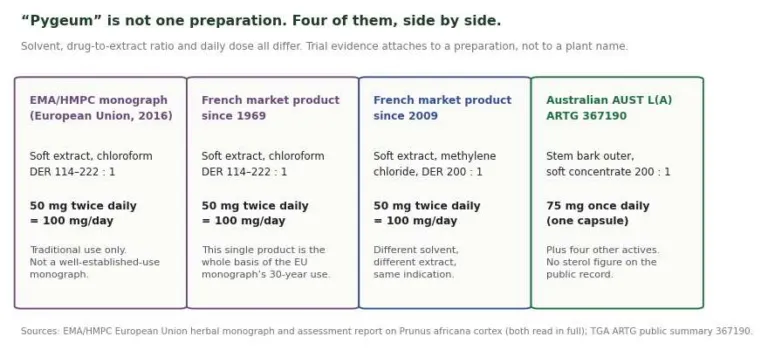
Overseas, for contrast and labelled as overseas: the European Union herbal monograph on Prunus africana cortex, EMA/HMPC/680626/2013, adopted 12 July 2016, is a traditional use monograph and the well-established-use column is empty throughout (EMA/HMPC EU herbal monograph). Attested It covers one preparation only, a chloroform soft extract at drug-to-extract ratio 114–222 to 1, stabilised with 1.2% ethanol, dosed at 50 mg twice daily, oral, adults and elderly men, with no relevant use in women or anyone under 18. None of that is Australian law and none of it governs an Australian product.
13. Quality, identity and the gap on the label
Three things make a pygeum product meaningful, and an Australian buyer can verify none of them from the pack.
Species. There is one commercial species. That sounds like a low bar, but it is bark, a tissue with almost no diagnostic macroscopic character once it is cut, dried and powdered. The field characters that separate Prunus africana from its congeners are leaf, flower and the extrafloral nectaries on the leaf margin, and none of them survive into a drum of bark chips. Identity in this material is a laboratory question: DNA barcoding, microscopy of the powdered drug, or chromatographic fingerprinting against authenticated reference bark.
Plant part. The register says outer stem bark for entry 367190 and simply stem bark for the other three (ARTG 496533). Attested The pharmacopoeial definition is stem and branch bark. The modern laboratory literature freely uses root and leaf, which have different chemistry (PMID 41731495; PMID 35116070). Evidence suggests A product declaring “Prunus africana” with no organ named tells the buyer nothing.
Extract. This is the one that matters most and it is the one that is missing. Three of the four Australian entries declare 75 mg of extract equivalent to 15 g of dry plant, a ratio of about 200 to 1; the fourth declares 20 mg equivalent to 4 g, the same ratio at a fifth of the dose (ARTG 496533). Attested Not one of the four public summaries states a β-sitosterol content, a total sterol content, a triterpene content, or an extraction solvent. The EMA monograph’s entire clinical file belongs to a chloroform extract at 114–222 to 1; the French product from 2009 is methylene chloride at 200 to 1; the traded extract described in the 2024 cytokine paper is standardised to not less than 13% β-sitosterol by a USP-referenced gas chromatographic method (PMID 39125867). Attested None of those specifications appears on an Australian public record, so an Australian buyer cannot tell whether the capsule in their hand resembles anything that was ever put in a trial.
Published comparisons of retail pygeum products against authenticated bark do exist. The one the Institute is aware of is Thompson, Katz and Sheehan’s chemical comparison of Prunus africana bark and marketed pygeum products in the Journal of Pharmaceutical and Biomedical Analysis in 2019 (PMID 30316061), and a 2023 UPLC–MS/MS method for quantifying β-sitosterol and ferulic acid in pygeum extract in bulk and in pharmaceutical preparations (PMID 36097799). Both are paywalled, both are queued through the Institute’s library, and neither has been read in full. No number and no finding from either is asserted anywhere in this review. When the full texts arrive the quality section will be revised and the revision will say so. Unsourced
What can be said without them is structural. A 200-to-1 lipid extract of a wild-harvested bark, from a species whose sterol content in the raw material is about 0.05%, standardised on a colorimetric total-sterol assay, with no marker declared on the label and no compendial identity test published for the finished product, is a category where variation between brands is the expected state of affairs rather than a scandal. Mechanism The same gap between a standardised traded raw material and what an Australian listing actually declares runs through the Institute’s review of Indian barberry.
14. CITES, the wild harvest, and what the buyer is never told
This is the part of the file that has no Australian regulatory home at all, and the part a reader is least likely to have heard.
Prunus africana is listed in Appendix II of the Convention on International Trade in Endangered Species of Wild Fauna and Flora. The EMA assessment report states the listing and the reason in one sentence, “owing to overexploitation and other factors”, and the peer-reviewed literature states that all exports are subject to a CITES export permit (EMA/HMPC assessment report; PMID 28286531). Attested An Appendix II listing means the species is not yet threatened with extinction but may become so unless trade is controlled, and that exporting states must issue permits backed by a finding that the export will not be detrimental to the survival of the species.
The Institute could not open cites.org or EUR-Lex from its network on 28/09/2026, both having refused automated retrieval, and therefore does not assert from its own reading the date of the listing, the current text of the annotation governing which parts and derivatives are covered, or any range-state quota figure. Those are checkable facts and a reader who needs them should go to the CITES appendices and the relevant EU regulations directly. What the Institute read in full and can state is the listing itself and its stated cause. Unsourced
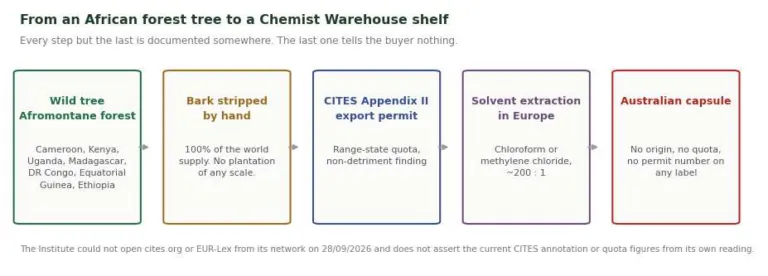
The biology is what makes this hard. Bark is phloem. Strip it from a standing trunk and the tree either recovers over years or dies, depending on how much was taken and how it was cut. There is no way to harvest this drug without injuring the individual tree, which is the difference between pygeum and a fruit, a leaf or a seed crop. Overexploitation and illegal logging together have driven the species into vulnerable status across its range, and the reviews say so plainly (PMID 38654751; PMID 28286531). Attested Wild harvest of a southern African medicinal plant under permit is a file this series has opened once before, for devil’s claw.
The response has been propagation science rather than plantation economics. Seed propagation is difficult: the flowering cycle is long and the seeds are recalcitrant. A 2020 Korean and Ugandan collaboration published a micropropagation protocol from nodal segment explants achieving 100% axillary shoot initiation on woody plant medium with 1.0 mg/L benzylaminopurine, 75% root initiation with 1.5 mg/L indole-3-acetic acid, and 98% survival after acclimatisation, with genetic fidelity confirmed by RAPD and matching photosynthetic performance to the maternal plant (PMID 33324427). Evidence suggests That is a solved laboratory problem. Whether it has been scaled to supply the market is a different question and the Institute has no data on it.
Two papers are the standard references on the political economy of this trade: Cunningham, Anoncho and Sunderland’s account of power, policy and the Prunus africana bark trade from 1972 to 2015, and Stewart’s earlier study of the species as an over-exploited medicinal tree (PMID 26631758; PMID 14522426). Both are queued through the Institute’s library and neither has been read in full, so nothing in this section rests on either. Unsourced Their existence is recorded so a reader can go to them.
What sustainable sourcing would have to look like is not mysterious. Bark cut in vertical strips from opposing quarters of the trunk on a rotation long enough for the phloem to close; a quota tied to a population inventory rather than to demand; chain of custody from the harvest coupe to the extraction plant; and a marker on the finished pack that lets a buyer trace it. One traded extract advertises CITES certification and sustainable sourcing in its own scientific literature (PMID 39125867). Attested No Australian pack carries an origin, a permit number or a harvest year, and there is no Australian legal requirement that it should. A buyer who wants to know which forest their capsule came out of has no way to find out.
15. Discussion: conclusions, hypotheses and research still required
What this review supports
The bark of Prunus africana, taken as a lipophilic extract at roughly 75 to 100 mg a day, produces a modest improvement in lower urinary tract symptoms in men with benign prostatic hyperplasia over six to twelve weeks. Nocturia falls by about a fifth, residual urine volume by about a quarter, peak flow rises by about a quarter, and the pooled effect size across six poolable trials is −0.8 standard deviations with a confidence interval that does not cross zero. Evidence suggests It is well tolerated; digestive upset is the only reported adverse effect and it is rare.
The trials carrying that conclusion are small, short, mostly pre-2000, used varied preparations, rarely used validated symptom scales, and in 17 of 18 cases did not report how allocation was concealed. No trial has ever compared it with an alpha blocker or a 5α-reductase inhibitor. In ordinary European practice fewer than half the men put on it improved significantly, against two-thirds on an alpha blocker. Evidence suggests Neither the European nor the American urological guidelines include it in a treatment algorithm. Attested
In Australia one product may say it relieves night-time urinary frequency in medically diagnosed benign prostatic hypertrophy, on the strength of one 57-person three-month phase II trial of a five-plant combination. Evidence suggests Three other products containing the same bark are expressly forbidden from referring to the condition at all. Attested The bark is a permitted ingredient under item 4189 of the Permissible Ingredients Determination, capped at 10 mg/kg for each of amygdalin and hydrocyanic acid, thresholds carried over from Schedule 10 and Schedule 4 of the Poisons Standard. Attested It is not itself scheduled.
There is no evidence in humans that pygeum treats prostate cancer, and no trial of any kind in that disease. Attested The regulatory tradition around the plant treats a positive cancer diagnosis as a reason not to use it.
What remains hypothesis
That the clinical benefit is primarily a bladder effect rather than a prostate effect is a hypothesis the animal data support better than they support the alternative, and it has never been tested in a human trial designed to distinguish them. Mechanism It is testable: a trial with urodynamic endpoints and prostate volume measured separately would separate the two.
That atraric acid and N-butylbenzenesulfonamide contribute to the clinical effect is a hypothesis with good molecular pharmacology behind it and no bridge to human exposure. Mechanism Neither compound is a standardisation marker for any commercial extract, neither has been measured in human plasma, and the reporter-assay concentrations at which they work sit in a range that a 75 mg oral dose of a 200-to-1 extract may or may not reach.
That variation between retail pygeum products is wide is a hypothesis the Institute considers likely on structural grounds (wild-harvested bark, a colorimetric standardisation assay, no declared marker, no finished-product identity test in the public record), and it is a hypothesis this review deliberately does not evidence, because the two papers that would evidence it are queued and unread. Unsourced
What research would move this forward
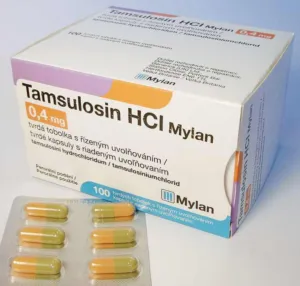
Clinical medicine. One adequately powered, twelve-month, three-arm randomised trial of a defined pygeum extract against tamsulosin and against placebo, with the International Prostate Symptom Score as the primary endpoint and urodynamics, prostate volume and serum PSA as secondary. The PSA arm of that would be cheap and is overdue on its own: a bark whose isolated constituents switch off the PSA gene in culture has never had the number measured in a man. That single trial would settle most of what is unsettled about this plant, and it has been the obvious next step since 2002.
Pharmacokinetics. A first-in-class human pharmacokinetic study of a standardised bark extract, measuring β-sitosterol, atraric acid, N-butylbenzenesulfonamide and docosyl ferulate in plasma after a single and a repeated oral dose. This is the single largest hole in the file. Without it no mechanism can be connected to any outcome and no interaction risk can be estimated.
Drug interactions. A cytochrome P450 and transporter panel on a defined extract, given the population taking it. Men with lower urinary tract symptoms in their sixties and seventies are commonly on antihypertensives, statins and anticoagulants, and “no interactions reported” in a literature with no interaction studies in it is not a safety statement.
Analytical pharmacognosy and quality. A compendial identity and assay method for the finished product as well as for the raw bark: a validated HPLC or UPLC–MS/MS assay for β-sitosterol, ursolic acid and docosyl ferulate with published system suitability, plus a DNA barcoding protocol that works on a solvent extract. Then an Australian market survey: buy every pygeum-containing product on sale here, assay it against authenticated reference bark, and publish the spread. That is a piece of work the Institute is equipped to do and it would be the first of its kind in this country.
Toxicology. The genotoxicity question is open and the EMA said so. A properly conducted in vitro micronucleus and Comet assay package on a defined extract, with attention to the artefact problem that muddied the earlier results, and a reproductive toxicity study to international guideline standard.
Botany and conservation science. Population inventories in the range states tied to actual export volumes; a published, peer-reviewed bark-regrowth study measuring phloem closure against strip width, rotation length and trunk quadrant; and scale-up economics for the existing micropropagation protocol. A plantation supply for this species is a solved biological problem waiting on an unsolved commercial one.
Regulatory science. Whether the Australian assessed-listed pathway should require an extract specification on the public summary is a live question, and this plant is the case study for it. Three products declare the same 15 g equivalent and none of them declares a sterol content. A specification requirement would cost sponsors little and would let a buyer, a pharmacist or a herbalist connect a pack to a trial for the first time.
Ethnobotany and history. The African medicinal record for this bark is compressed into three sentences in the European monograph that certifies its traditional use. A proper ethnobotanical and historical study of how the bark was prepared and used in the range states before 1966, in the range states’ own languages and sources, is overdue and would stand on its own.
About the Australian Institute of Pharmacognosy and this series
The Australian Institute of Pharmacognosy is a clinic and research laboratory in Cardwell, far north Queensland, studying medicinal plants and natural products to the same evidentiary standard as any other branch of pharmacology: traditional knowledge taken seriously, and tested honestly. Visit the Institute at australian-pharmacognosy.org.
Series: AIP Literature Reviews and Critical Analyses (evidence reviews). Previous: Indian barberry (Berberis aristata) · devil’s claw (Harpagophytum procumbens) · turmeric (Curcuma longa) · sour jujube seed (Ziziphus jujuba) · soursop (Annona muricata) · umckaloabo (Pelargonium sidoides) · Syrian rue (Peganum harmala). Follow the series for a new evidence review each morning.
Corrections: if you find an error or a source we have missed, write to the Institute at our contact form. We would rather correct a claim than repeat it.
About the images and the evidence. All 26 PubMed identifiers cited in this review were verified against PubMed on 28/09/2026 and are hyperlinked to their records. Sixteen of the cited papers were read in full text from open-access sources and are held in the Institute’s library. Papers whose full text is behind a paywall were queued through the Institute’s library on 28/09/2026 and are cited here only for facts also carried in a full text the Institute holds, principally the European Medicines Agency’s assessment report on Prunus africana cortex, which the Institute read in full; where no such corroboration exists, the text says the paper has not been read and asserts nothing from it. Every Australian regulatory statement was read from the Commonwealth’s own instrument or from the regulator’s own publication: the Permissible Ingredients Determination, the Poisons Standard and the four ARTG public summaries. Botanical nomenclature was checked against the International Plant Names Index and Australian occurrence data against the Atlas of Living Australia. Every chemical structure was checked against PubChem and is linked by CID. Photographs are Creative Commons or public domain, credited and licence-linked individually. The two figures marked as the Institute’s own were drawn from the sources printed on them. Where the Institute could not open a source, and the CITES appendices and EUR-Lex both refused automated retrieval on 28/09/2026, the text says so and makes no claim.
Head of Education and Research
Australian Institute of Pharmacognosy
Cardwell QLD, Australia
australian-pharmacognosy.org · our contact form
Suggested citation: Ridley T. Pygeum (Prunus africana (Hook.f.) Kalkman): the evidence and the tree: the four Australian products, the fat-soluble bark chemistry, the eighteen short randomised trials, the missing human pharmacokinetics, the prostate-cancer claim, the Australian regulatory position and the CITES wild-bark supply chain. AIP Literature Review and Critical Analysis LR-10. Cardwell (QLD): Australian Institute of Pharmacognosy; 2026.
Educational content only; not medical, legal or regulatory advice. Australian regulatory information reflects the Permissible Ingredients Determination, the Poisons Standard, the ARTG and TGA publications as read on 28/09/2026 and may change. European, African, Korean and United States material is cited as overseas material and does not govern Australian therapeutic goods law. Products are named only where a public ARTG record exists, and statements about them are confined to what that record says; no product is advertised, endorsed or recommended. Material drawn from Commonwealth sources is © Commonwealth of Australia and appears here as short extracts for the purpose of reporting, criticism and review.
References
39 references: tap to open
Listed in order of first citation. All 26 PMIDs were verified against PubMed on 28/09/2026; every regulatory, legislative, taxonomic and biodiversity record was read from its own source. The CITES appendices and EUR-Lex both refused automated retrieval from the Institute’s network on 28/09/2026 and are not cited as read.
- Therapeutic Goods Administration. ARTG public summary, entry 367190, “Caruso’s Prostate Eze Max”, Medicine Assessed Listed, sponsor Caruso’s Natural Health Pty Ltd (PO Box 310, Horsley Park NSW 2175), ARTG start date 26/05/2021, formulation effective date 10/10/2023, status Active. Public summary PDF generated and read 28/09/2026. Specific indication: “For the relief of nocturia (night-time urinary frequency) associated with medically diagnosed benign prostatic hypertrophy.” No permitted indications, no indication requirements and no warnings on record. Actives per soft capsule: Cucurbita pepo seed oil fixed 160 mg; Epilobium parviflorum herb extract dry concentrate 125 mg (equivalent 500 mg dry); lycopene 2.1 mg; Prunus africana stem bark outer extract soft concentrate 75 mg (equivalent 15 g dry); Serenoa repens seed extract soft concentrate 44 mg (equivalent 660 mg dry). Related information on the entry records a section 14 consent, CON-1429, dated 17/11/2025, “consent to supply while noncompliant with standards”, effective 17/11/2025 to 01/10/2026; the register does not state the standard concerned. https://www.tga.gov.au/resources/artg/367190
- European Medicines Agency, Committee on Herbal Medicinal Products. European Union herbal monograph on Prunus africana (Hook f.) Kalkm., cortex. EMA/HMPC/680626/2013, final, adopted 12 July 2016. Read in full from the Institute’s holding on 28/09/2026. Traditional-use monograph; the well-established-use column is empty throughout. Preparation: soft extract, DER 114–222:1, extraction solvent chloroform, stabilised by 1.2% ethanol >99.9%, solid oral dosage forms. Single dose 50 mg, daily dose 100 mg, adults and elderly; no relevant use in children, adolescents under 18 or women. Contraindication: hypersensitivity. Interactions: none reported. Undesirable effects: rarely, digestive disorders (nausea, constipation or diarrhoea). Overdose: none reported. Preclinical safety: tests on carcinogenicity have not been performed; adequate tests on genotoxicity and reproductive toxicity have not been performed. Material complies with European Pharmacopoeia monograph 1886. https://www.ema.europa.eu/en/documents/herbal-monograph/final-european-union-herbal-monograph-prunus-africana-hook-f-kalkm-cortex_en.pdf
- European Medicines Agency, Committee on Herbal Medicinal Products. Assessment report on Prunus africana (Hook f.) Kalkm., cortex. EMA/HMPC/680624/2013, final, 12 July 2016; rapporteur I. Chinou, peer reviewer G. Calapai. 37 pages, read in full from the Institute’s holding on 28/09/2026. Source for: the botanical description and organoleptic characters of the drug; the vernacular name list; the CITES Appendix II listing and its stated cause; the extract composition figures (β-sitosterol 15.7%, docosanol 0.6%, tetracosanol 0.5%, fatty acids 62.3%, sitostenone 2.0%, ursolic acid 2.9%, friedelin 1.4%, 2α-hydroxyursolic acid 0.5%, epimaslinic acid 0.8%, phytosterols ~0.05% and triterpene acids ~14% of the bark); the 5α-reductase and aromatase IC50 values and the finasteride comparison; the 5-lipoxygenase data; the rabbit and rat bladder-obstruction experiments; the TRAMP mouse figures; the absence of any pharmacokinetic data, preclinical or clinical; the single-dose, repeat-dose, genotoxicity and fertility toxicology; the market history of the French product since 1969; the ESCOP, WHO and PDR indications; the Cochrane and Ishani meta-analysis figures; the Chatelain 1999 dose-comparison; the TRIUMPH real-world figures; the Coulson 2013 combination trial figures; the Polish product contraindication in diagnosed prostate cancer; and the assessors’ own comments on trial duration, size and the placebo effect in micturition complaints. https://www.ema.europa.eu/en/documents/herbal-report/final-assessment-report-prunus-africana-hook-f-kalkm-cortex_en.pdf
- Therapeutic Goods (Permissible Ingredients) Determination (No. 2) 2026 (Cth), F2026L00707, made 05/06/2026, authorised version registered 11/06/2026. Schedule 1 read in full from the Federal Register of Legislation on 28/09/2026: item 4189 PRUNUS AFRICANA, roles A, E, H, with the requirements “Amygdalin and hydrocyanic acid are mandatory components of Prunus africana”, “The concentration of amygdalin in the medicine must not be more than 10 mg/kg” and “The concentration of hydrocyanic acid in the medicine must not be more than 10 mg/kg”. Items 4190–4203 carry equivalent requirements for the other permitted Prunus species. https://www.legislation.gov.au/F2026L00707/asmade
- Therapeutic Goods (Poisons Standard—June 2026) Instrument 2026 (Cth), F2026L00633, registered 28/05/2026. Full text searched on 28/09/2026: no entry for Prunus africana, Pygeum or pygeum under any name. Schedule 4 (prescription only medicines) includes “HYDROCYANIC ACID for therapeutic use except in preparations containing 10 mg/kg or less of hydrocyanic acid”, and also lists TAMSULOSIN and FINASTERIDE, the two comparator medicines named in this review, in Schedule 4 without qualification. Schedule 10 (substances of such danger to health as to warrant prohibition of supply and use) includes “AMYGDALIN for therapeutic use except in preparations containing 10 mg/kg or less of amygdalin” and “WILD CHERRY BARK for therapeutic use except in preparations containing (a) 10 mg/kg or less of amygdalin; and (b) 10 mg/kg or less of hydrocyanic acid”. https://www.legislation.gov.au/F2026L00633/asmade
- Papaioannou M, Schleich S, Roell D, Schubert U, Tanner T, Claessens F, et al. NBBS isolated from Pygeum africanum bark exhibits androgen antagonistic activity, inhibits AR nuclear translocation and prostate cancer cell growth. Invest New Drugs. 2010 Dec;28(6):729-43. PMID 19771394. DOI 10.1007/s10637-009-9304-y.
- Roell D, Baniahmad A. The natural compounds atraric acid and N-butylbenzene-sulfonamide as antagonists of the human androgen receptor and inhibitors of prostate cancer cell growth. Mol Cell Endocrinol. 2011 Jan 30;332(1-2):1-8. PMID 20965230. DOI 10.1016/j.mce.2010.09.013.
- Therapeutic Goods Administration. ARTG public summary, entry 406073, “Prostate Plus”, listed medicine, sponsor Nature’s Care Manufacture Pty Limited, ARTG start date 10/03/2023, formulation effective 03/07/2024, status Active. Read 28/09/2026. Permitted indications only, including “relieve urinary frequency at night time” and “maintain/support prostate health”; indication requirements state that the product presentation “must not imply or refer to serious genitourinary conditions like Benign Prostatic Hypertrophy, erectile dysfunction or hormone therapy”. Actives include Prunus africana stem bark extract dry concentrate 75 mg (equivalent 15 g dry), Serenoa repens fruit extract 165 mg, Urtica dioica root extract 125 mg, Cucurbita pepo seed oil 160 mg, Lycopersicon esculentum fruit extract 35 mg and selenomethionine 248.4 micrograms (equivalent 100 micrograms selenium), with the compulsory selenium warning. https://www.tga.gov.au/resources/artg/406073
- Therapeutic Goods Administration. ARTG public summary, entry 403978, “Prostate Plus Ultra Max Capsule”, listed medicine, sponsor Nature’s Care Manufacture Pty Limited, ARTG start date 30/01/2023, formulation effective 03/07/2024, status Active. Read 28/09/2026. Formulation and permitted indications identical to entry 406073. https://www.tga.gov.au/resources/artg/403978
- Therapeutic Goods Administration. ARTG public summary, entry 496533, “Biogency Prostate Care”, listed medicine, sponsor Biogency Pty Ltd, ARTG start date 03/07/2025, status Active. Read 28/09/2026. Film coated tablet. Actives: Prunus africana stem bark extract dry concentrate 20 mg (equivalent 4 g dry); Serenoa repens fruit extract dry concentrate 300 mg (equivalent 3 g dry); selenomethionine 50 micrograms; zinc glycinate monohydrate 24.82 mg. Permitted indications only; the same prohibition on referring to benign prostatic hypertrophy applies. https://www.tga.gov.au/resources/artg/496533
- International Plant Names Index. Prunus africana (Hook.f.) Kalkman, Rosaceae, record 729417-1, published in Blumea 13: 33 (1965); basionym recorded as Pygeum africanum Hook.f.; publishing author Cornelis Kalkman (1928–1998), basionym author Joseph Dalton Hooker (1817–1911). Queried 28/09/2026. https://www.ipni.org/n/729417-1
- Asuzu PC, Croston V, Rivera Y, Aryee ANA, Besong SA, Miletti-González KE. Assessment of cytotoxic effects of Prunus Africana extracts on prostate cancer C4-2 cells in vitro. BMC Complement Med Ther. 2026 Feb 23;26(1). PMID 41731495. DOI 10.1186/s12906-026-05293-7.
- Komakech R, Yim NH, Shim KS, Jung H, Byun JE, Lee J, et al. Root Extract of a Micropropagated Prunus africana Medicinal Plant Induced Apoptosis in Human Prostate Cancer Cells (PC-3) via Caspase-3 Activation. Evid Based Complement Alternat Med. 2022;2022:8232851. PMID 35116070. DOI 10.1155/2022/8232851.
- Nantongo JS, Eilu G, Geburek T, Schueler S, Konrad H. Detection of Self Incompatibility Genotypes in Prunus africana: Characterization, Evolution and Spatial Analysis. PLoS One. 2016;11(6):e0155638. PMID 27348423. DOI 10.1371/journal.pone.0155638.
- Atlas of Living Australia. Occurrence searches run against the biocache web service on 28/09/2026 for Prunus africana and for Pygeum africanum: zero records for either name. A control query for Berberis aristata returned 42 records on the same service the same day, confirming the query was working. There is no vouchered Australian occurrence of this species. https://biocache.ala.org.au/occurrences/search?q=taxon_name%3A%22Prunus+africana%22
- Ndung'u JK, Nguta JM, Mapenay IM, Moriasi GA. A Comprehensive Review of Ethnomedicinal Uses, Phytochemistry, Pharmacology, and Toxicity of Prunus africana (Hook. F.) Kalkman from Africa. Scientifica (Cairo). 2024;2024:8862996. PMID 38654751. DOI 10.1155/2024/8862996.
- Komakech R, Kang Y, Lee JH, Omujal F. A Review of the Potential of Phytochemicals from Prunus africana (Hook f.) Kalkman Stem Bark for Chemoprevention and Chemotherapy of Prostate Cancer. Evid Based Complement Alternat Med. 2017;2017:3014019. PMID 28286531. DOI 10.1155/2017/3014019.
- Ngai DN, Kibiti CM, Ngugi MP. Cognitive enhancing effects and anticholinesterase activity of stem bark and leaf extracts of Prunus africana. Heliyon. 2022 Dec;8(12):e12289. PMID 36593834. DOI 10.1016/j.heliyon.2022.e12289.
- Hanbisa S, Tadesse WT, Abula T. Evaluation of Wound Healing Activity of 80% Methanol Stem-Bark Extract and Solvent Fractions of Prunus africana (Hook.f.) Kalkman (Rosaceae) in Mice. J Exp Pharmacol. 2023;15:349-365. PMID 37701854. DOI 10.2147/JEP.S426233.
- Komakech R, Shim KS, Yim NH, Song JH, Yang S, Choi G, et al. GC-MS and LC-TOF-MS profiles, toxicity, and macrophage-dependent in vitro anti-osteoporosis activity of Prunus africana (Hook f.) Kalkman Bark. Sci Rep. 2022 Apr 29;12(1):7044. PMID 35487926. DOI 10.1038/s41598-022-10629-7.
- Schleich S, Papaioannou M, Baniahmad A, Matusch R. Activity-guided isolation of an antiandrogenic compound of Pygeum africanum. Planta Med. 2006 May;72(6):547-51. PMID 16773539. DOI 10.1055/s-2006-941472.
- Schleich S, Papaioannou M, Baniahmad A, Matusch R. Extracts from Pygeum africanum and other ethnobotanical species with antiandrogenic activity. Planta Med. 2006 Jul;72(9):807-13. PMID 16783690. DOI 10.1055/s-2006-946638.
- Villar A, Silva-Fuentes F, Mulà A, Zangara A. Anti-Inflammatory Potential of Pygeum africanum Bark Extract: An In Vitro Study of Cytokine Release by Lipopolysaccharide-Stimulated Human Peripheral Blood Mononuclear Cells. Int J Mol Sci. 2024 Jul 30;25(15). PMID 39125867. DOI 10.3390/ijms25158298.
- Maiyo F, Moodley R, Singh M. PHYTOCHEMISTRY, CYTOTOXICITY AND APOPTOSIS STUDIES OF B-SITOSTEROL-3-O-GLUCOSIDE AND Β -AMYRIN FROM PRUNUS AFRICANA. Afr J Tradit Complement Altern Med. 2016;13(4):105-112. PMID 28852726. DOI 10.21010/ajtcam.v13i4.15.
- Karim MR, Miletti-Gonzalez KE, Aryee ANA, Besong SA. Phytochemical Analysis and Antioxidant Activities of Prunus africana Bark, Leea indica and Paullinia pinnata Leaf Extracts. Antioxidants (Basel). 2025 May 30;14(6). PMID 40563299. DOI 10.3390/antiox14060666.
- Wilt T, Ishani A, Mac Donald R, Rutks I, Stark G. Pygeum africanum for benign prostatic hyperplasia. Cochrane Database Syst Rev. 2002;1998(1):CD001044. PMID 11869585. DOI 10.1002/14651858.CD001044.
- Ishani A, MacDonald R, Nelson D, Rutks I, Wilt TJ. Pygeum africanum for the treatment of patients with benign prostatic hyperplasia: a systematic review and quantitative meta-analysis. Am J Med. 2000 Dec 01;109(8):654-64. PMID 11099686. DOI 10.1016/s0002-9343(00)00604-5.
- Antoniou V, Gauhar V, Modi S, Somani BK. Role of Phytotherapy in the Management of BPH: A Summary of the Literature. J Clin Med. 2023 Feb 28;12(5). PMID 36902686. DOI 10.3390/jcm12051899.
- Amante C, De Soricellis C, Sellitto MR, Falcone G, Luccheo L, Luccheo G, et al. A Multi-Target Phytotherapeutic Approach to Benign Prostatic Hyperplasia: Preclinical Characterization of a PhytoBPH-Mix. Nutrients. 2026 Feb 16;18(4). PMID 41754167. DOI 10.3390/nu18040650.
- Coulson S, Rao A, Beck SL, Steels E, Gramotnev H, Vitetta L. A phase II randomised double-blind placebo-controlled clinical trial investigating the efficacy and safety of ProstateEZE Max: a herbal medicine preparation for the management of symptoms of benign prostatic hypertrophy. Complement Ther Med. 2013 Jun;21(3):172-9. PMID 23642948. DOI 10.1016/j.ctim.2013.01.007.
- Therapeutic Goods Administration. Restricted and prohibited representations in advertising, under the Therapeutic Goods Advertising Code. Read 28/09/2026. Serious forms of disease, including cancer, are restricted representations and may not be used in advertising therapeutic goods without approval. https://www.tga.gov.au/products/regulations-all-products/advertising/applying-advertising-code/restricted-and-prohibited-representations-advertising
- Duborija-Kovacevic N, Tomic Z. Kidney, skeletal muscle and myocardium as potential target sites of Pygeum africanum toxicity in Wistar rats. Rev Int Androl. 2019;17(1):8-14. PMID 30691591. DOI 10.1016/j.androl.2017.12.006.
- Thompson RQ, Katz D, Sheehan B. Chemical comparison of Prunus africana bark and pygeum products marketed for prostate health. J Pharm Biomed Anal. 2019 Jan 30;163:162-169. PMID 30316061. DOI 10.1016/j.jpba.2018.10.004.
- Samir H, Mahgoub S, Badr JM, El-Gendy A, Hadad GM, Ibrahim EA. A UPLC- MS/MS Method to Quantify β-Sitosterol and Ferulic Acid of Pygeum Africanum Extract in Bulk and Pharmaceutical Preparation. J Chromatogr Sci. 2023 Aug 19;61(7):619-624. PMID 36097799. DOI 10.1093/chromsci/bmac077.
- Komakech R, Kim YG, Kim WJ, Omujal F, Yang S, Moon BC, et al. A Micropropagation Protocol for the Endangered Medicinal Tree Prunus africana (Hook f.) Kalkman: Genetic Fidelity and Physiological Parameter Assessment. Front Plant Sci. 2020;11:548003. PMID 33324427. DOI 10.3389/fpls.2020.548003.
- Cunningham A, Anoncho VF, Sunderland T. Power, policy and the Prunus africana bark trade, 1972-2015. J Ethnopharmacol. 2016 Feb 03;178:323-33. PMID 26631758. DOI 10.1016/j.jep.2015.11.042.
- Stewart KM. The African cherry (Prunus africana): can lessons be learned from an over-exploited medicinal tree?. J Ethnopharmacol. 2003 Nov;89(1):3-13. PMID 14522426. DOI 10.1016/j.jep.2003.08.002.
- Therapeutic Goods Administration. Listed complementary medicines and assessed listed medicines. Read 28/09/2026. An ordinary listed medicine (AUST L) is assessed for safety and quality but its efficacy evidence is not evaluated by the TGA before marketing, and it may carry only indications drawn from the permitted indications list. An assessed listed medicine (AUST L(A)) has had its efficacy evidence for a specific indication evaluated by the TGA before listing. https://www.tga.gov.au/products/medicines/listed-medicines/overview/listed-complementary-medicines
- Chemical records and structure depictions: PubChem, US National Library of Medicine, public domain. CIDs cited in the text: 222284, 5742590, 5484202, 78435, 19241, 64945, 10494, 73659, 91472, 12620, 14238616, 445858, 11005, 656516, 768, 10635, 57363, 2375, 129211.
Image credits
- Prunus africana 5Dsr 2540.jpg, SAplants. CC BY-SA 4.0. Resized and re-encoded for the web by AIP; no other changes.
- Prunus africana MS 3588.jpg, Marco Schmidt [1]. CC BY-SA 2.5. Resized and re-encoded for the web by AIP; no other changes.
- Red stinkwood – US Botanic Gardens – Stierch.jpg, Sarah Stierch. CC BY 4.0. Resized and re-encoded for the web by AIP; no other changes.
- Prunus africana 6zz.jpg, Photo by David J. Stang. CC BY-SA 4.0. Resized and re-encoded for the web by AIP; no other changes.
- Prunus africana 1DS-II 0040.jpg, SAplants. CC BY-SA 4.0. Resized and re-encoded for the web by AIP; no other changes.
- Prunus africana 1DS-II 0038.jpg, SAplants. CC BY-SA 4.0. Resized and re-encoded for the web by AIP; no other changes.
- Prunus africana 1DS-II 0042.jpg, SAplants. CC BY-SA 4.0. Resized and re-encoded for the web by AIP; no other changes.
- Prunus africana 5Dsr 2547.jpg, SAplants. CC BY-SA 4.0. Resized and re-encoded for the web by AIP; no other changes.
- Prunus africana nectaries.jpg, Superruss at English Wikipedia. CC BY-SA 3.0. Resized and re-encoded for the web by AIP; no other changes.
- Prunus africana à São Tomé (4).jpg, Ji-Elle. CC BY-SA 4.0. Resized and re-encoded for the web by AIP; no other changes.
- African cherry (Prunus africana) 1.jpg, (c) Rosemary Harrison, some rights reserved (CC BY-SA). CC BY-SA 4.0. Resized and re-encoded for the web by AIP; no other changes.
- Tropical rain forest Mount Cameroon.jpg, Atabong Armstrong. CC BY-SA 4.0. Resized and re-encoded for the web by AIP; no other changes.
- Mount Cameroon forest reserve Buea.jpg, Atabong Armstrong. CC BY-SA 4.0. Resized and re-encoded for the web by AIP; no other changes.
- Forest floor of Mount Cameroon National Park.jpg, Adesolive. CC0. Resized and re-encoded for the web by AIP; no other changes.
- KAKA – General view of Kakamega Forest National Reserve, Kenya, 2012.jpg, Josep M. Gracia. CC BY-SA 4.0. Resized and re-encoded for the web by AIP; no other changes.
- 063 Mist rising from the Bwindi Impenetrable Forest National Park Photo by Giles Laurent.jpg, Giles Laurent. CC BY-SA 4.0. Resized and re-encoded for the web by AIP; no other changes.
- Mount Cameroon and Bioko Montane Forests Ecoregion.png, Z3lvs. CC BY-SA 4.0. Resized and re-encoded for the web by AIP; no other changes.
- Benign prostatic hyperplasia.jpg, Unknown authorUnknown author Illustrator. Public domain. Resized and re-encoded for the web by AIP; no other changes.
- Serenoa repens (Marina di Ginosa).jpg, Asia. CC BY-SA 4.0. Resized and re-encoded for the web by AIP; no other changes.
- Cucurbita pepo styrian Hull-less group – oil pumpkin compose.jpg, Eibe (left) Wolf32at (right) montage: RoRo. CC BY-SA 3.0. Resized and re-encoded for the web by AIP; no other changes.
- Epilobium parviflorum kz18.jpg, Krzysztof Ziarnek, Kenraiz. CC BY-SA 4.0. Resized and re-encoded for the web by AIP; no other changes.
- Illustration Urtica dioica0.jpg, author not named on the file page. Public domain. Resized and re-encoded for the web by AIP; no other changes.
- Tamsulosin 0,4 mg tbl.jpg, Tomino de WS. CC BY-SA 4.0. Resized and re-encoded for the web by AIP; no other changes.
- Garlic oil capsules.jpg, Salil Kumar Mukherjee. CC BY-SA 4.0. Resized and re-encoded for the web by AIP; no other changes.
- Chemical structure depictions (β-sitosterol, daucosterol, sitostenone, atraric acid, N-butylbenzenesulfonamide, ursolic acid, oleanolic acid, maslinic acid, friedelin, 1-docosanol, docosyl ferulate, trans-ferulic acid, myristic acid, amygdalin, hydrocyanic acid, dihydrotestosterone, finasteride, bicalutamide, tamsulosin): PubChem, US National Library of Medicine. Public domain. Background whitened and cropped by AIP.
- Figures 1–5 (the four Australian labels, the evidence base measured, the androgen-receptor potencies, the four preparations compared, and the supply chain): Australian Institute of Pharmacognosy, 2026, CC BY 4.0, drawn from the sources printed in each figure.
The Institute sets and publishes its own monographs. The catalogue is in Publications.