

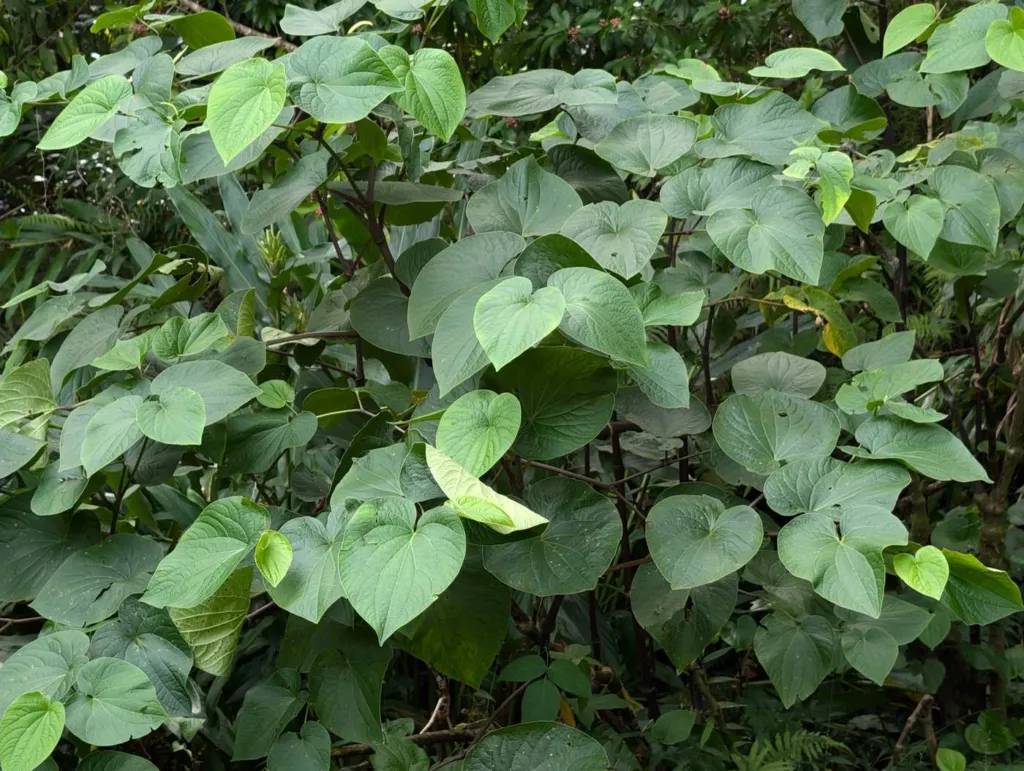
Cover: Piper methysticum at Kaneohe, O‘ahu, Hawai‘i. Photo: Damien Wallace · CC0 1.0 · iNaturalist
For centuries Pacific peoples have kneaded the root of a sterile pepper shrub in cold water and shared it from a wooden bowl to welcome guests, install chiefs and mark births, marriages and deaths. Traditional Australians imported more than 51 tonnes of it in the second quarter of 2026, as root powder for the bowl and as capsules on pharmacy shelves, under three different sets of rules. Attested Trials suggest standardised extracts ease anxiety a little more than placebo in the short term; the effect is small, and the longest trial found none. Evidence suggests
This is AIP Literature Review and Critical Analysis AIP-LR-PIPMET in the Australian Institute of Pharmacognosy’s series of literature reviews and critical analyses. It covers Piper methysticum G.Forst. as Australians meet it in October 2026: identity, botany and Australian status; Pacific ceremonial and social tradition; noble and tudei cultivars, and root against aerial parts and solvent extracts; the kavalactone and flavokavain chemistry with structures; pharmacology; what the anxiety trials and systematic reviews do and do not show; safety and interactions, with the liver reports set in proportion; the three Australian regimes (food imports under Office of Drug Control permits, the traveller’s allowance, and TGA medicine rules) with the Poisons Standard and the Northern Territory’s own law; quality and adulteration; and how to read a kava label.
This article is educational. It is not medical, legal or regulatory advice, and it is not an advertisement. No product is named, recommended or discouraged.
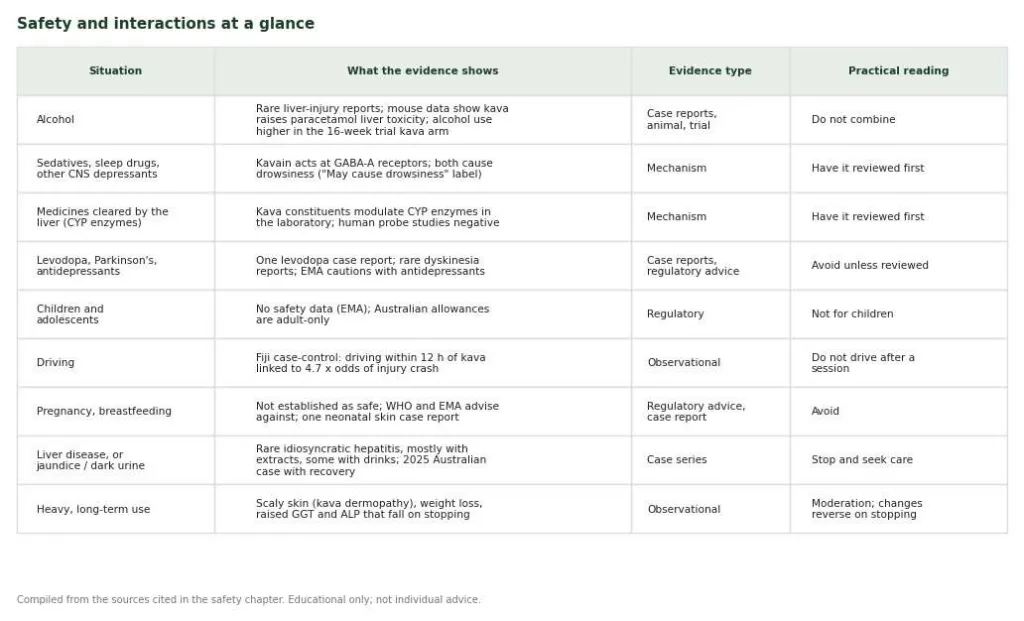
1. Alcohol, sedatives and medicines. Kava causes drowsiness and acts on the same receptor family as alcohol and benzodiazepines. Do not combine it with alcohol, and have it reviewed first if you take sedatives, sleep medicines, antidepressants, levodopa or other regular prescription medicines, or have Parkinson’s disease. Mechanism
2. The liver. Serious liver injury is rare but documented, including a 2025 Australian case. Avoid kava with liver disease or heavy drinking; stop and seek care the same day if you notice yellow skin or eyes, or dark urine. Evidence suggests
3. Driving. In Fiji, driving within 12 hours of drinking kava was linked to 4.7 times the odds of an injury crash. Do not drive after a session. Evidence suggests
4. Pregnancy, breastfeeding and children. Safety is not established. Avoid. Attested
5. Large single sessions. A New South Wales case of acute kidney injury followed 15 cups of kava tea at a party; very heavy use also affects the skin and liver. Evidence suggests
6. Northern Territory. Possession, supply and cultivation are controlled under the Territory’s own Act, and the ODC advises that the traveller’s 4 kg allowance does not extend there. Attested
Emergency: call Triple Zero (000). For a suspected poisoning or overdose, call the Poisons Information Centre on 13 11 26 (24 hours, Australia-wide). Report suspected side effects to the TGA. Before taking any botanical drug, consult a degree-qualified herbalist with competencies and adequate training in pharmacognosy.
| Botanical name | Piper methysticum G.Forst., Piperaceae (pepper family); named by Georg Forster in 1777 Attested §2 |
| Common names | Kava, ‘ava (Samoa), yaqona (Fiji), ‘awa (Hawai‘i), sakau (Pohnpei); dozens more in Vanuatu and PNG Attested §2 |
| Part used | Peeled root and rhizome (rootstock). Leaves and stems are excluded from Australian food and medicine Attested §2 |
| In Australia | Not native; no wild records. Imports 51,015 kg in Q2 2026; 728,977 kg since December 2021 Attested §1 |
| Who uses it | Wastewater markers at all 54 plants tested (2023–24); higher in regional areas, peaking at weekends Evidence suggests §1 |
| Tradition | Cold-water drink shared at ceremonies, welcomes and daily gatherings across the Pacific Traditional §4 |
| Cultivars | Noble (daily drinking), two-day (tudei) and wild; noble has less flavokavain B. Australia accepts noble only Confirmed §5 |
| Chemistry | Six kavalactones make up about 96% of the total; flavokavains; pipermethystine in leaves and stem peelings Confirmed §6 |
| Pharmacology | Kavain enhances GABAA receptors outside the benzodiazepine site; CYP modulation in vitro Mechanism §7 |
| Anxiety | Small benefit over placebo in pooled trials; longest water-extract trial found none Evidence suggests §8 |
| Liver | Rare, idiosyncratic injury, mostly with solvent extracts in Europe; rare cases with drinks Evidence suggests §9 |
| Safety | Avoid with alcohol, sedatives, liver disease, pregnancy, breastfeeding and in children; do not drive after drinking Evidence suggests §9 |
| As food | ODC permit per consignment (20 kg+, cargo only); Std 2.6.3: noble root, cold water, no additives; two warnings Attested §10 |
| Travellers | Adults 18+ may carry up to 4 kg of root, dried kava or cold-water drink; ODC: not into the NT Attested §10 |
| As medicine | AUST L only: root or rhizome, dried or aqueous; 125 mg kavalactones a unit, 250 mg a day; S4 otherwise Attested §10 |
| Emergency | Triple Zero (000); Poisons Information Centre 13 11 26 Attested §9 |
- Confirmed Established in humans by trial, or an unambiguous analytical or chemical fact.
- Evidence suggests Real published data, but preclinical, observational, small, inconsistent or not independently replicated.
- Mechanism A plausible mechanistic or pharmacological inference about how something works, short of a measured outcome.
- Traditional Historical, ethnobotanical or ceremonial use. Evidence of practice. Efficacy is a separate question.
- Attested A documentary fact attested in a named record: legislation, a regulator’s register or report, a trade statistic, a biodiversity database or a published text. It states what the record says.
- Unsourced A statement the Institute could not trace to a source it was able to open and read, flagged so no reader mistakes it for a sourced claim.
Every PubMed ID (PMID) below links to its record and was checked against PubMed in October 2026, and every paper cited by PMID was read in full text. Trial reports the Institute could not open in full (the Sarris trials of 2009, 2013 and 2020) are described through systematic and narrative reviews read in full, and have been requested through the Institute’s library; recent papers it could not yet read in full are named as requested and not described. Every compound was checked against PubChem and is linked by CID. Every Australian regulatory statement was read from the regulator’s or the legislature’s own document in October 2026. European, US and Pacific-nation material is overseas and does not govern Australia.
The plant and the people. Kava is the root of Piper methysticum, a sterile Pacific shrub kept alive by cuttings for centuries and shared as a cold-water drink at ceremonies and gatherings. Australia imported 51 tonnes in the second quarter of 2026, and wastewater shows it is drunk in every State and Territory. Traditional
Three ways in. Root powder and kava drinks are food, imported under Office of Drug Control permits and limited to noble root with no additives. Travellers aged 18 and over may carry up to 4 kg. Tablets, capsules and teabags are TGA-listed medicines limited to root or rhizome, water-based, 250 mg kavalactones a day. FSANZ places shelf-stable drinks and kava extracts outside the food standard, and kava posted from overseas fits neither import route. Attested
The liver story. Europe withdrew kava medicines in 2002 after rare, serious liver injuries, mostly with acetone and ethanol extracts. Later analysis found rare cases with traditional drinks too, and no single cause has been proved. Heavy drinking causes reversible liver-test and skin changes. Evidence suggests
Anxiety. Trials show a small short-term benefit over placebo with extracts, and the longest trial of the water-based kind permitted here found none. Evidence suggests
Before you buy. Keep it away from alcohol, sedatives, pregnancy, children and the car. Read the label against Chapter 12, and consult a degree-qualified herbalist with competencies and adequate training in pharmacognosy before using kava as a medicine.
 Chapter 1What Australians are buying
 Chapter 2Identity and taxonomy
 Chapter 3Botany and Australian status
 Chapter 4Traditional use
 Chapter 5Noble and tudei kava
 Chapter 6Phytochemistry
 Chapter 7Pharmacology
 Chapter 8Kava and anxiety
 Chapter 9Safety and interactions
 Chapter 10In Australia: the three regimes
 Chapter 11Quality and adulteration
 Chapter 12Reading a kava label
 Chapter 13Discussion and research agenda
1. What Australians are buying, and why now
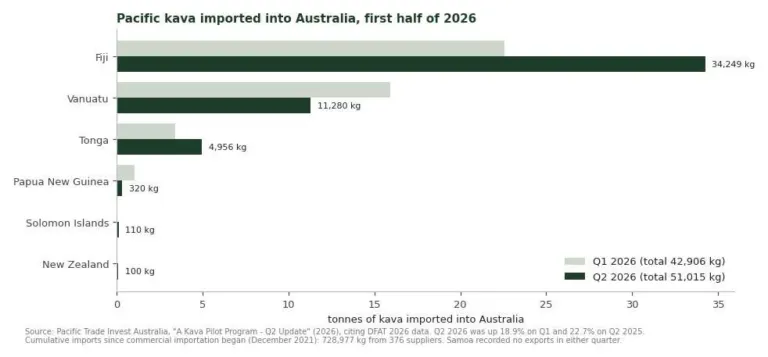
Kava has become an ordinary Australian purchase. In the second quarter of 2026, 51,015 kg of Pacific kava was imported, 18.9% more than in the first quarter and 22.7% more than in the same quarter of 2025 (PTI Q2 2026 kava update). Attested Fiji supplied 34,249 kg of it and had its strongest quarter on record; Vanuatu, Tonga, Papua New Guinea, the Solomon Islands and New Zealand supplied the rest (PTI Q2 2026 kava update). Attested Since commercial importation opened on 1 December 2021, 728,977 kg has come in from 376 Pacific suppliers (PTI Q2 2026 kava update). Attested For scale, Food Standards Australia New Zealand (FSANZ) counted 415.6 tonnes imported between December 2021 and October 2024 (FSANZ kava risk statement, 2025), and 93.9 tonnes arrived in the first half of 2026 alone (PTI Q2 2026 kava update). Attested
Where does it go? The Commonwealth’s evaluation of the import pilot heard from government officers and importers that kava is now sold online through company websites, through individual sellers on eBay and Facebook Marketplace, in specialty shops and in mainstream grocery chains (Kava Pilot evaluation, final report). Attested The same report records kava bars opening as social spaces in Queensland and Canberra, and stakeholders who were unsure where kava may lawfully be served (Kava Pilot evaluation, final report). Attested Kava medicines are sold over the counter in pharmacies (PMID 42768433), Attested and an Institute search of the Australian Register of Therapeutic Goods (ARTG) for “piper methysticum” in October 2026 returned 24 entries (ARTG search). Attested
The first national measure of how much of this is drunk or swallowed came from sewage. Lorato Makanye and colleagues in Adelaide analysed wastewater from 54 treatment plants covering about 56% of the population between December 2023 and December 2024. Kava markers were detected at every plant. Loads were on average higher in regional areas than in capital cities, the highest capital-city loads were in New South Wales and the Northern Territory, and the human metabolite p-OH-7,8-dihydrokavain peaked on Sundays (PMID 42768433). Evidence suggests The authors read the weekly rhythm as most consistent with social, weekend use, while noting that it does not rule out daily use as a supplement (PMID 42768433). Attested
Much of the kava that comes in goes into a bowl, and the drink has travelled with the people who made it. The pilot evaluation heard that Pacific Islander communities in Australia drink kava at weddings, funerals and social gatherings, that families felt their cultural connections strengthened, and that some people use it as an alternative to alcohol (Kava Pilot evaluation, final report). Attested
So what is a buyer in Brisbane, Blacktown or Bundaberg actually holding? It depends on the door the product came through. A bag of noble root powder is a food, imported under a permit from the Office of Drug Control (ODC) and governed by the Food Standards Code. A kilogram in a returning traveller’s suitcase is a personal import under a separate Customs approval. A capsule with an AUST L number is a listed medicine under the Therapeutic Goods Administration (TGA), with its own limits on plant part, preparation and dose. Public information often blurs the three, and it still recycles the liver scare of the early 2000s without saying which products it involved. This review sets out the plant and its people, the chemistry, what the anxiety trials do and do not show, the safety record in proportion, and then the three regimes side by side. Traditional use is tagged as tradition, trial evidence as trial evidence, and the two are kept apart throughout.
2. Identity and taxonomy
Kava is Piper methysticum G.Forst., a member of the pepper family, Piperaceae (EMA/HMPC assessment report 2017). Attested Georg Forster, a naturalist on James Cook’s second voyage aboard the Resolution (1772–1775), described the plant and gave it its scientific name in 1777; the epithet is usually rendered “intoxicating pepper” (PMID 21284704). Attested Black pepper (Piper nigrum) and betel (Piper betle) are relatives in the same genus.
The common names are many, and every one of them belongs to a people. Kava in Tonga, ‘ava in Samoa, yaqona in Fiji, ‘awa in Hawai‘i, sakau on Pohnpei, seka on Kosrae, wati among the Kolepom of New Guinea; Vanuatu alone has at least 30 local names and Papua New Guinea at least 37 (Nelson 2011, kava profile). Attested Australian food law uses the botanical definition: “kava means plants of the species Piper methysticum” (Food Standards Code, Standard 2.6.3). Attested
Root, rootstock, peelings and leaves
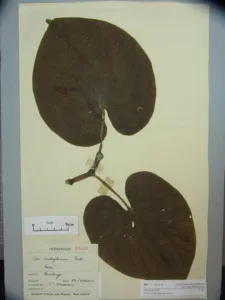
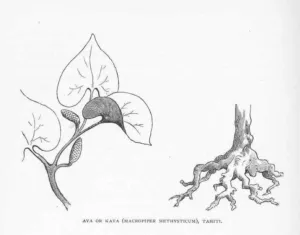
The part that matters is underground. The drink, the food and the medicine all come from the root and the rhizome, the short underground stem that growers call the stump or rootstock. Pacific growers have long kept leaves and stems out of the bowl, and a Hawai‘i extension profile states plainly that aerial parts should never be used in beverages (Nelson 2011, kava profile). Attested Australian law now draws the same line in every regime. The food standard accepts only the peeled root or peeled rootstock of a noble variety (Food Standards Code, Standard 2.6.3), and a listed medicine may use only root or rhizome (Permissible Ingredients Determination, item 3932). Attested Chapter 6 explains the chemistry behind that line.
3. Botany, origin and Australian status
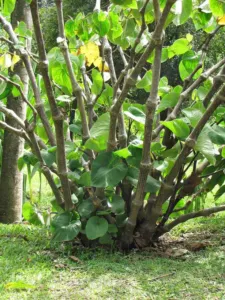
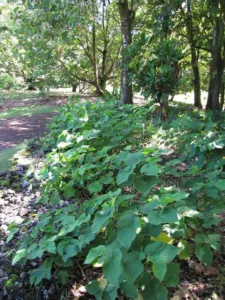
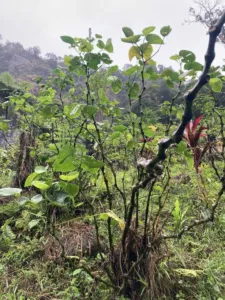
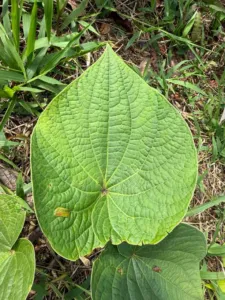
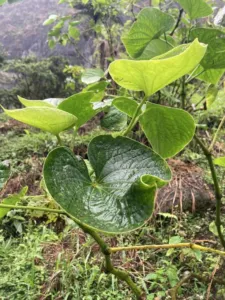
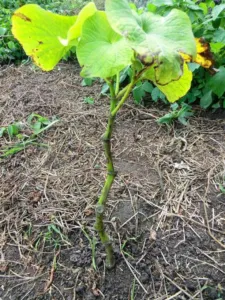
Kava is a shrub 1.2 to 3.6 m tall, with green to dark purple stems swollen at the nodes and alternate heart-shaped leaves 13 to 20 cm long (Nelson 2011, kava profile). Attested Its flowers sit on narrow spikes, male and female on different plants, and they are sterile: kava sets no viable seed (Nelson 2011, kava profile). Confirmed Every kava plant alive today was grown from a stem cutting, carried and replanted by people.
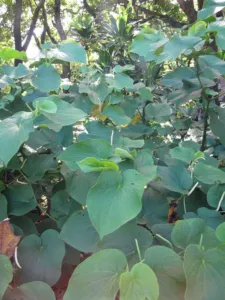
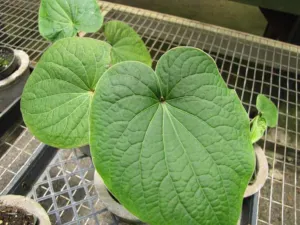
That fact has shaped the plant’s genetics. Nelson’s propagation profile cites Vincent Lebot and colleagues’ view that kava originated in Melanesia, and that all cultivars may trace back to a single ancestral plant in northern Vanuatu, still the centre of the species’ diversity in form and chemistry (Nelson 2011, kava profile). Evidence suggests Voyagers carried it east to Fiji, Tonga, Samoa and Hawai‘i and north into Micronesia, and the Pacific islands still grow most of the world’s crop (Nelson 2011, kava profile). Attested Because kava cannot breed, each named cultivar is a clone selected and kept by growers over centuries. FSANZ notes more than 200 varieties (FSANZ kava risk statement, 2025). Attested That clonal history is the origin of the noble and two-day cultivars in Chapter 5.
Is kava in Australia?
Only as an import. An Institute search of the Atlas of Living Australia in October 2026 found no species page for Piper methysticum, and iNaturalist held no Australian observations of it (ALA and iNaturalist searches). Attested The plant is not native, and the Institute found no record of it as a naturalised weed. In the Northern Territory, cultivating kava is an offence under the Kava Management Act 1998, which counts more than four plants as a trafficable quantity (NT Kava Management Act 1998). Attested
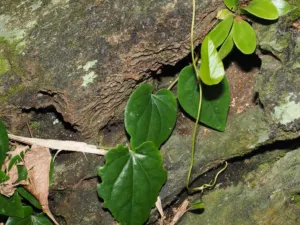
Kava does have native relatives near the Institute. North Queensland’s wet tropics are home to several Piper species, among them the climbing pepper Piper hederaceum and Piper mestonii, both recorded on iNaturalist within 150 km of Cardwell (iNaturalist). Attested None of them is kava, and none is a substitute for it; they appear in this review only as banners.
4. Traditional use: the bowl, the circle and the cup
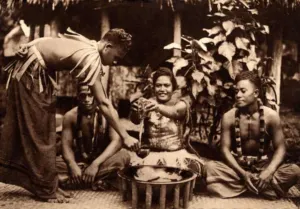
For Pacific peoples kava is a social and ceremonial drink with deep roots. The most formal ceremonies mark the welcome or installation of royalty, the reception of heads of state and honoured guests, and the meetings of chiefs; birth, marriage and death are often accompanied by kava (Nelson 2011, kava profile). Traditional Some cultivars were reserved for medicine, for a particular chiefly rank or for a particular role in a ceremony (Nelson 2011, kava profile). Traditional Away from formal occasions, kava is drunk every day at home and in kava bars across the islands (Lebot et al. 2019). Traditional FSANZ, in its own risk assessment, describes the drink as consumed for more than 1,000 years and as an integral part of the evolving cultural practice of many Pacific peoples, often regarded as an icon of national or ethno-cultural identity (FSANZ Proposal P1057). Attested
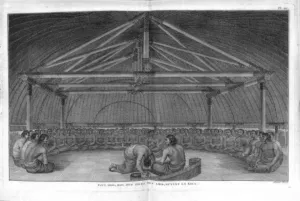
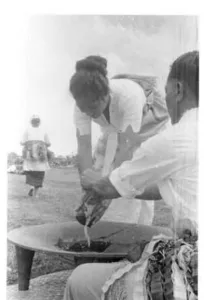
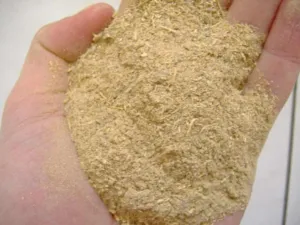
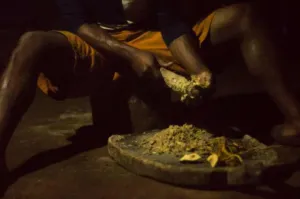
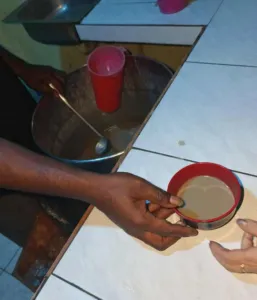
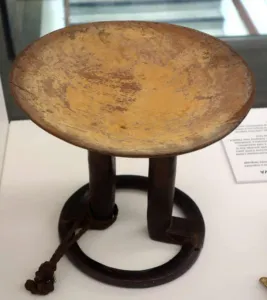
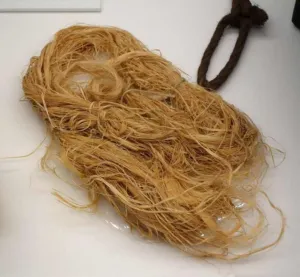
Preparation is simple and has changed little. Fresh root and stump were traditionally chewed, pounded with a stone or abraded with rough coral, and dried root is ground to a powder (Nelson 2011, kava profile). Traditional The pulp is kneaded in cold water in a bowl and pressed through a cloth or fibre strainer, and the grey-brown liquid is served in a cup (Lebot et al. 2019). Traditional In the Pacific only water is used, or sometimes water and coconut milk (EMA/HMPC assessment report 2017). Attested Drinkers describe relaxation and calm, and the drink is taken to ease conversation (FSANZ kava risk statement, 2025). Traditional That detail of preparation matters later. The kavalactones dissolve poorly in water (EMA/HMPC assessment report 2017), so the drink is a suspension of fine root particles, and what a drinker receives differs in amount and mix from what a solvent extract delivers. Evidence suggests
Kava in Australia before the pilot
Kava came to some Aboriginal communities in Arnhem Land in the Northern Territory in 1982 (PMID 12948361), as a commodity imported in the early 1980s (PMID 40560778), and was taken up in some communities as an alternative to alcohol. Attested Heavy use there, measured in hundreds of grams of powder a week, produced the health findings in Chapter 9 and the Territory law in Chapter 10. Commercial importation then stopped in 2007, and for twelve years travellers could bring in up to 2 kg (FSANZ kava risk statement, 2025; PMID 42768433). Attested That history is part of the Australian story and deserves the same careful reading as the Pacific one.
Herbal practitioners in Europe adopted the root as a medicine in the nineteenth and twentieth centuries. Older British references record kava rhizome as a sedative and muscle relaxant, given in anxiety- and stress-related states and formerly as a urinary antiseptic (EMA/HMPC assessment report 2017). Traditional Until 2002 a standardised acetone extract was an authorised medicine in Germany (EMA/HMPC assessment report 2017). Attested
5. Noble and tudei kava: why the cultivar matters
Vanuatu growers sort their cultivars into groups. Noble varieties are the ones drunk every day and valued for a pleasant effect. Two-day varieties (tudei in Bislama) are named for an effect that lasts a long time and brings nausea and a hangover; the wild form, Piper methysticum var. wichmannii, is a third group (Lebot et al. 2019). Traditional DNA marker studies show the three groups are genetically distinct (Lebot et al. 2019). Confirmed Vanuatu’s Kava Act prohibits the sale or export of tudei and wild kava except on request from a person outside Vanuatu, as FSANZ summarises it; that is overseas law (FSANZ kava risk statement, 2025). Attested
The groups differ in chemistry. In 2019 Lebot and colleagues measured six kavalactones and three flavokavains in acetone extracts of 174 varieties (Lebot et al. 2019). Confirmed Noble varieties had a low flavokavain-to-kavalactone ratio (0.13) and a high kavain-to-flavokavain B ratio (7.31). Two-day and wichmannii varieties had higher flavokavain ratios (0.36 and 0.21) and lower kavain-to-flavokavain B ratios (1.5 and 1.7) (Lebot et al. 2019). Confirmed Earlier work had already shown that noble kava from Vanuatu contains substantially less flavokavain B and more kavain than non-noble kava, a finding the European Medicines Agency (EMA) assessment repeats (EMA/HMPC assessment report 2017). Confirmed
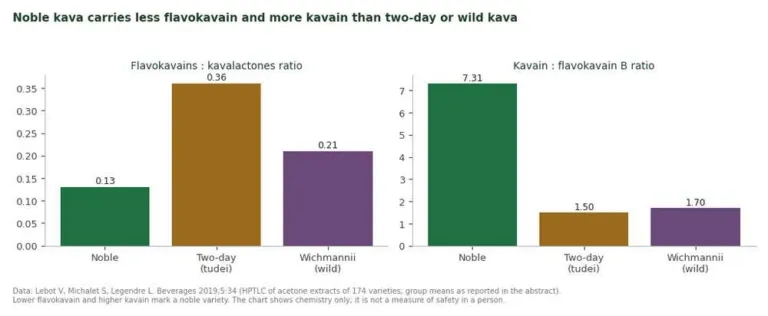
Why should a buyer in Australia care? Flavokavain B is the constituent most often named in laboratory work on kava and the liver (Chapters 7 and 9), and Australian food law accepts only noble kava. Since 23 March 2022 the Food Standards Code has defined “kava root” as the peeled root or peeled rootstock of a noble variety named in the Codex regional standard for kava beverages, CXS 336R-2020 (Food Standards Code, Standard 2.6.3). Attested FSANZ’s risk statement lists 71 noble cultivars with a history of safe use as a drink, from Vanuatu (28), Fiji (13), Hawai‘i (13), Tonga (7), Samoa (5), the Solomon Islands (3), Papua New Guinea and the Federated States of Micronesia (FSANZ kava risk statement, 2025). Attested Biosecurity conditions for commercial imports allow noble root only (ODC, importing kava as a food). Attested Whether the noble-only rule protects the liver in people is a reasonable hypothesis drawn from the chemistry and from Pacific experience. No trial has tested it. Mechanism
6. Phytochemistry: kavalactones, flavokavains and what the solvent changes
The active constituents of kava root are the kavalactones (also called kavapyrones), a family of styryl-pyrone compounds. At least 18 have been isolated from the rhizome, together making up 3–20% of its dry weight depending on plant age and cultivar, and six account for roughly 96% of the total: kavain, 5,6-dihydrokavain, yangonin, desmethoxyyangonin, methysticin and dihydromethysticin (EMA/HMPC assessment report 2017). Confirmed The rest of the dried rhizome is starch (about 43%), fibre (20%), sugars, protein and minerals (EMA/HMPC assessment report 2017). Confirmed
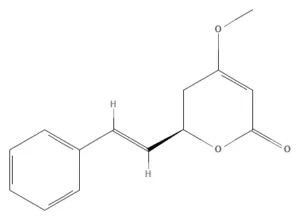
C14H14O3 · the leading kavalactone in noble kava
PubChem CID 5281565 · structure image: PubChem, public domain
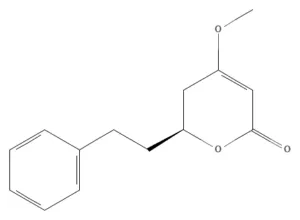
C14H16O3 · higher in two-day chemotypes
PubChem CID 10220256 · structure image: PubChem, public domain
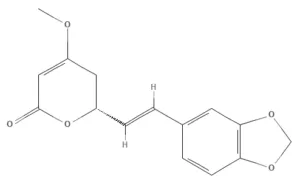
C15H14O5 · methylenedioxy kavalactone
PubChem CID 5281567 · structure image: PubChem, public domain
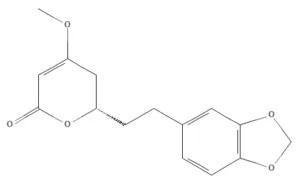
C15H16O5 · higher in two-day chemotypes
PubChem CID 88308 · structure image: PubChem, public domain
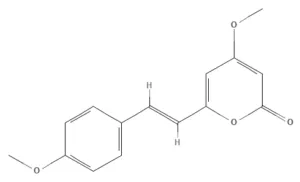
C15H14O4 · fully unsaturated pyrone
PubChem CID 5281575 · structure image: PubChem, public domain
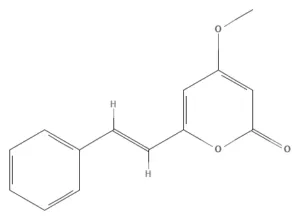
C14H12O3 · the sixth major kavalactone
PubChem CID 5273621 · structure image: PubChem, public domain
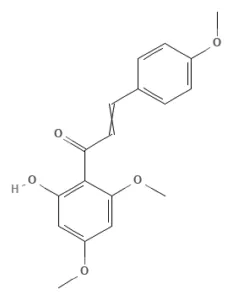
C18H18O5 · chalcone
PubChem CID 235736 · structure image: PubChem, public domain
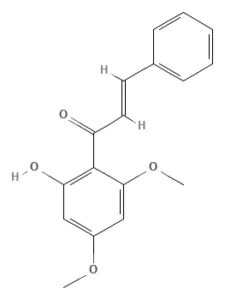
C17H16O4 · chalcone; higher in two-day and wild kava
PubChem CID 5356121 · structure image: PubChem, public domain
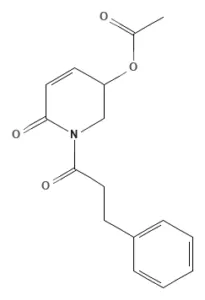
C16H17NO4 · alkaloid of leaves and stem peelings
PubChem CID 194391 · structure image: PubChem, public domain
The six major kavalactones, the two main flavokavains and the leaf alkaloid pipermethystine. Every CID was checked against PubChem in October 2026; the depictions are PubChem’s own (US National Library of Medicine, public domain), background whitened and cropped by the Institute.
Within the root, kavalactones are most concentrated in the bark, and younger roots are richer than older ones (EMA/HMPC assessment report 2017). Confirmed The six major kavalactones are poorly soluble in water and dissolve readily in ethanol and acetone (EMA/HMPC assessment report 2017). Confirmed Their relative proportions give each cultivar a six-digit “chemotype” code, ranked from most to least abundant; the most appreciated noble varieties fall in chemotypes beginning with kavain, and two-day varieties carry more dihydrokavain and dihydromethysticin (Lebot et al. 2019). Confirmed When the South Australian wastewater team analysed an instant kava root powder and two brands of kava capsules bought in Adelaide in July 2024, dihydrokavain and kavain were the two most abundant kavalactones in all three (PMID 42768433). Confirmed
Two other groups of compounds matter for safety. The chalcones flavokavain A, B and C are present in the root, at higher levels in two-day and wild varieties (Lebot et al. 2019). Confirmed The piperidine alkaloid pipermethystine is found in the leaves (about 0.2%) and in stem peelings (traces up to 0.85%), and was not detected in root samples or root extracts from the German market (EMA/HMPC assessment report 2017). Confirmed FSANZ notes that little toxicological data exist for these minor compounds, and that they have been suggested as a risk when kava is made from leaves, stems or bark, or from non-noble plants (FSANZ kava risk statement, 2025). Attested Those observations are the chemical basis for Australia’s root-only, noble-only rules.
Root, water and solvent
Solvent choice changes what ends up in a product. The EMA assessment notes that the extraction solvent and the ratio of solvent to plant material can have considerable influence on composition, and it cites an ethanolic extract that contained 0.62 mg flavokavain A, 0.34 mg flavokavain B and 0.14 mg flavokavain C per 100 mg of extract (EMA/HMPC assessment report 2017). Confirmed FSANZ lists three variables that set how much kavalactone, alkaloid and flavokavain leaves the plant: the extraction method, the variety and the plant organ (FSANZ kava risk statement, 2025). Attested A cold-water drink, a dried-root capsule and an ethanol tincture of the same plant are, chemically, three different things. Mechanism Validated UHPLC methods can now measure kavalactones and flavokavains together in one run (PMID 30934989), so a product’s chemistry can be checked in an ordinary laboratory. Confirmed
7. Pharmacology: how kava acts
Kava’s calming effect has been traced to the receptor. In 2016, Han Chow Chua and colleagues showed that kavain enhances the function of human GABAA receptors expressed in frog eggs, most strongly at the α4β2δ subtype (PMID 27332705). Mechanism The benzodiazepine blocker flumazenil did not stop the effect, so kavain does not act through the benzodiazepine binding site; a mutation known to reduce anaesthetic sensitivity also reduced it (PMID 27332705). Mechanism The authors describe this as the first direct experimental evidence that a single kavalactone acts on GABAA receptors (PMID 27332705). Attested
Other kavalactones reach other targets. A 2020 review collects laboratory reports of dihydrokavain inhibiting glycine receptors, methysticin blocking sodium channels in hippocampal neurons, several kavalactones affecting serotonin 5-HT1A signalling, and kava extract enhancing binding of the GABA agonist muscimol in the hippocampus and amygdala (PMID 33027883). Mechanism Together these are plausible routes to the muscle relaxation and calm that drinkers describe. None has been measured in a living human brain at drinking doses. Mechanism
Metabolism and the liver enzymes
Kava and its constituents modulate liver enzymes of the cytochrome P450 (CYP) family in laboratory systems, which makes interactions with medicines cleared by those enzymes mechanistically plausible (PMID 33027883). Mechanism FSANZ cites the same in-vitro inhibition and advises caution with alcohol, medicines (particularly benzodiazepines, opioids, barbiturates and paracetamol) and other herbal preparations (FSANZ kava risk statement, 2025). Attested The EMA assessment, reading human probe-drug studies that used differing preparations or single compounds, found no modulation of human CYP enzymes (EMA/HMPC assessment report 2017). Attested One of the studies it cites reports a narrower result. Bill Gurley and colleagues gave 12 healthy volunteers a kava root extract supplying 138 mg kavalactones a day for 28 days. Activity of CYP1A2, CYP2D6 and CYP3A4/5 did not change, but CYP2E1 activity fell by about 40%, with no rise in liver enzymes; the authors caution that higher doses may behave differently (PMID 15900287). Evidence suggests CYP2E1 is one of the enzymes that metabolises alcohol and paracetamol, so this finding bears on the cautions in Chapter 9, though its clinical size is unknown. Mechanism The laboratory and human results therefore only partly agree, and the size of any effect in people at ordinary doses is not settled. Two 2026 laboratory papers on CYP2B6 and on extract profiles have been requested through the Institute’s library and are not described here until they have been read in full.
Clinical reports of interactions are few. A review cited by the EMA found three case reports: coma in a person also taking the benzodiazepine alprazolam, reduced effect of levodopa in a person with Parkinson’s disease taking 300 mg kava extract a day for ten days, and muscle breakdown (rhabdomyolysis) after a single kava dose taken with caffeine; its authors judged the evidence for true interactions poor (EMA/HMPC assessment report 2017). Attested Single case reports cannot establish cause, but they show where care is warranted.
A mouse study gives the clearest laboratory signal of a harmful combination. Kava alone at 500 mg/kg bodyweight, given for 14 weeks, caused no liver injury, but three days of kava before paracetamol (acetaminophen) increased liver enzyme release and the severity of liver lesions (PMID 25185080). Evidence suggests The flavokavains A and B reproduced that effect; the kavalactone dihydromethysticin did not (PMID 25185080). Evidence suggests The authors suggest a herb–drug interaction may underlie the rare human cases. That is a hypothesis drawn from animals. Mechanism
8. Kava and anxiety: what the trials and reviews show
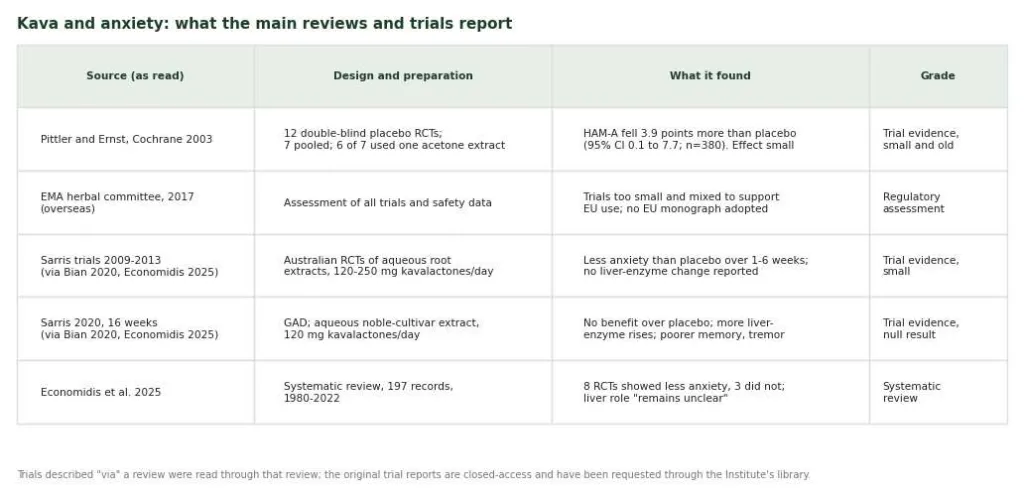
Anxiety is the use that brought kava into Western medicine, and it has the most trials. The Cochrane review by Max Pittler and Edzard Ernst found 12 double-blind, placebo-controlled randomised trials that met its inclusion criteria (PMID 12535473). Confirmed Seven could be pooled on the Hamilton Anxiety (HAM-A) scale: kava reduced the score by 3.9 points more than placebo (95% confidence interval 0.1 to 7.7; 380 participants) (PMID 12535473). Confirmed Adverse events were mild, transient and infrequent (PMID 12535473). Confirmed The reviewers concluded that kava extract is an effective symptomatic treatment for anxiety, with a small effect that lacked robustness and rested on a relatively small sample, and asked for rigorous larger trials and long-term safety studies (PMID 12535473). Attested
Two features of that evidence deserve attention. All but one of the pooled trials used the same acetone extract, WS 1490, standardised to 70% kavalactones (PMID 12535473). Attested An extract of that kind cannot be used in an Australian listed medicine, which for oral use may contain only dried root or rhizome or aqueous preparations of it (Permissible Ingredients Determination, item 3932). Attested And the confidence interval runs from almost no effect (0.1 points) to a moderate one (7.7 points), so the true size of the benefit is uncertain. Confirmed The EMA’s critique adds that many trials enrolled mixed anxiety populations, were short, and differed in extract, dose and dose reporting (EMA/HMPC assessment report 2017). Attested
The Australian trials of water-based extracts
Australian researchers led by Jerome Sarris then tested water-based extracts of noble root, the kind a Pacific drinker would recognise. The Institute could not read these trial reports in full (they are closed-access and have been requested through its library), so they are described here through two reviews read in full. A three-week crossover trial in 60 adults with persistent anxiety, at 250 mg kavalactones a day, found kava a safe and effective anxiolytic with possible antidepressant effects (PMID 40560778). Evidence suggests A six-week randomised trial in 58 adults with generalised anxiety disorder (GAD), at 120–240 mg a day, suggested a moderate short-term effect, with no differences in liver function and no addiction or withdrawal (PMID 40560778; PMID 33027883). Evidence suggests
The longest trial gave a different answer. In a 16-week double-blind trial in people with diagnosed GAD, using a water-based extract of a noble cultivar at 120 mg kavalactones a day, kava was not effective; the kava group had more frequent rises in liver enzymes from as early as two weeks, along with poorer memory and tremor (PMID 40560778; PMID 33027883). Evidence suggests Bian and colleagues observe that the kava group also reported more alcohol use, and that this extract contained 4.35% flavokavains A and B, unusual for a water-based product (PMID 33027883). Evidence suggests The three Sarris trials used three different preparations, so their different outcomes may partly reflect what was in the tablets (PMID 33027883). Mechanism
The widest recent look is the 2025 systematic review by George Economidis and colleagues at the National Drug and Alcohol Research Centre in Sydney, funded by the Commonwealth. Of the randomised trials it included, eight found less anxiety with kava than placebo and three did not; it concluded that kava’s role in anxiety reduction, and in liver toxicity, “remains unclear” (PMID 40560778). Attested
What this adds up to
The fair summary is a modest one. Short courses of standardised kava extract reduce anxiety scores a little more than placebo in most trials. Evidence suggests The effect is small, most of the pooled data came from one solvent extract that an Australian listed medicine cannot contain, and the one long trial of the water-based kind permitted here found no benefit. Evidence suggests No adequately powered trial has established kava as a replacement for established treatments for anxiety disorders. On the Institute’s reading, the evidence supports describing kava as a traditional relaxant with small, inconsistent trial effects on anxiety, and it supports no stronger claim. Evidence suggests Anyone living with an anxiety disorder deserves a proper assessment. A degree-qualified herbalist with competencies and adequate training in pharmacognosy can say where kava might sit alongside other care and where it should not.
Driving studies belong to this picture. Single medicinal doses in controlled studies have not shown impairment, including a 180 mg kavalactone dose tested by Sarris and colleagues (PMID 33027883). Evidence suggests Drinking sessions are another matter, as the next chapter shows.
9. Safety and interactions
Most of the evidence on harm comes from three settings: concentrated extracts sold as medicines in Europe around 2000, very heavy drinking in a few communities, and a small number of case reports. In the trials, adverse events were mild and infrequent (PMID 12535473). Confirmed FSANZ’s 2025 risk statement concludes that kava root, or a cold-water drink of it, consumed in line with historical preparation and drinking practice does not itself pose a significant risk to public health (FSANZ kava risk statement, 2025). Attested The points below cover the situations where the evidence asks for care.
The liver reports of the early 2000s, in proportion
In the late 1990s and early 2000s, cases of serious liver injury were reported in Europe among people taking kava medicines. Up to July 2002 the World Health Organization identified 93 cases of suspected hepatotoxicity worldwide, including six liver transplants and three deaths; eight were coded as probably and 53 as possibly related to kava (EMA/HMPC assessment report 2017). Attested The same EMA report gives 14 transplants and seven deaths for that WHO count in another section, so the totals should be read with that inconsistency in mind (EMA/HMPC assessment report 2017). Attested A UK expert working group reviewed 110 cases of adverse liver reactions, nine of them fatal (EMA/HMPC assessment report 2017). Attested Germany’s regulator revoked kava marketing authorisations in 2002, and products were withdrawn in the Czech Republic, France, Spain, the UK, Hungary and Portugal (EMA/HMPC assessment report 2017). Attested All of this is overseas.
Three questions put those numbers in proportion: preparation, cultivar and quality. On preparation, the products involved were mostly concentrated extracts made with acetone or ethanol at 60% or above, designed to pull out kavalactones; the four Swiss cases followed an acetone extract (EMA/HMPC assessment report 2017). Attested In 2015 a German court cancelled the revocation of the authorisations for ethanolic preparations, and when the EMA’s herbal committee assessed kava in 2017 it found the benefit–risk balance for oral use in anxiety unfavourable and adopted no European Union herbal monograph (EMA/HMPC assessment report 2017). Attested On cultivar and quality, Rolf Teschke and colleagues pointed to poor raw material, including stem peelings and possibly mould toxins, before any extract was made (PMID 21801196; PMID 21284704). Mechanism Other candidates have been flavokavain B, pipermethystine and interactions with other drugs or alcohol (PMID 33027883). Mechanism FSANZ lists the same four proposals: extraction method, drug interactions, non-noble varieties and contamination with aflatoxin-producing fungi (FSANZ kava risk statement, 2025). Attested No single culprit has been proved.
The tidy story of a “Pacific kava paradox”, with injury from Western solvent extracts and none from traditional drinks, did not survive closer reading. Teschke, Sarris and Isaac Schweitzer revisited it in 2012: cases analysed by the WHO and later reports showed that traditional aqueous preparations used in New Caledonia, Australia, the USA and Germany may also be hepatotoxic (PMID 21801196). Evidence suggests A German traveller who drank 2–3 litres of traditional kava at ceremonies in Samoa developed toxic hepatitis that resolved within 36 days (EMA/HMPC assessment report 2017). Evidence suggests Most case reports with probable causality involved daily overdose or prolonged treatment (PMID 40560778). Evidence suggests The injury is generally considered idiosyncratic: rare, unpredictable, not clearly dose-related, with onset from one week to twelve months (EMA/HMPC assessment report 2017). Evidence suggests The proportion matters. Against more than 700 tonnes of root imported into Australia since December 2021, few Australian liver cases have been published, and those that have involved high intakes, other medicines or both. Published case reports are not a count of all cases: the TGA’s Database of Adverse Event Notifications was not analysed for this review, and an Australian denominator for liver injury per tonne or per drinker does not yet exist. Mechanism
Australia had its share. On 16/08/2002 the TGA recalled certain batches of one kava product found to be adulterated (EMA/HMPC assessment report 2017). Attested An Australian case of fatal liver failure was reported in a 56-year-old woman who had taken a naturopath-supplied tablet labelled as 60 mg of kavalactones with passionflower and skullcap, one tablet three times a day (180 mg kavalactones a day), for three to four months (EMA/HMPC assessment report 2017). Evidence suggests A 2025 report from Geelong, Victoria, describes a 46-year-old man who took 10 g of kava a day for five weeks to help him sleep and developed a marked rise in liver enzymes (ALT 1,546 U/L). His liver biopsy showed patches of cell death, and the updated RUCAM causality score was 7, “probable” (PMID 41477654). Evidence suggests He was also taking sertraline and naltrexone, had started paracetamol after his symptoms began, and had a past history of alcohol misuse; his enzymes fell after kava was stopped and did not rise again (PMID 41477654). Evidence suggests The report does not state the form of kava he took. A second Australian case, published in Pathology in 2026, has been requested through the Institute’s library and is not described here until it has been read. The comparison with other herbs in this series is useful: turmeric, black cohosh and ashwagandha also carry rare, idiosyncratic liver reports that regulators have weighed against wide use.
What liver signs to watch for
The clinical trials were not designed or powered to detect rare reactions: of more than 8,000 trial participants, only 509 had their liver function assessed (EMA/HMPC assessment report 2017). Attested The EMA records existing liver disease and alcohol abuse as contraindications (EMA/HMPC assessment report 2017), and anyone with either should leave kava alone. Attested Anyone who develops yellow skin or eyes, dark urine, pale stools, unusual tiredness or weakness, loss of appetite, unexplained weight loss or pain under the right ribs while using kava should stop and seek medical care the same day; the EMA lists these as possible signs of liver damage, and liver function tests will show whether the liver is affected (EMA/HMPC assessment report 2017). Attested Confusion, marked drowsiness or vomiting alongside those signs is an emergency: call Triple Zero (000).
Animal carcinogenicity
The US National Toxicology Program gave a kava product to rats and mice by gavage for up to two years. Liver cells enlarged (hepatocellular hypertrophy), increasing with dose, at doses up to 1 g/kg; there was no increase in liver cancer in rats, but male mice showed a dose-related increase in hepatoblastoma, and female mice an increase in combined hepatocellular adenoma and carcinoma at the low and mid doses, though not at the high dose (PMID 21871523). Evidence suggests The International Agency for Research on Cancer classed kava extract as possibly carcinogenic to humans, Group 2B, on the strength of the animal evidence; that is an overseas classification (IARC Monographs vol. 108). Attested Bian and colleagues note that the NTP test material was described as a yellow powder, likely ground kava with no preparation details reported, which complicates its relevance to any product on sale (PMID 33027883). Evidence suggests
Alcohol, sedatives and other depressants
Kava acts on the same receptor family as alcohol, benzodiazepines and many sleeping tablets (Chapter 7), and the Food Standards Code requires every kava food to say “May cause drowsiness” (Food Standards Code, Standard 2.6.3). Mechanism FSANZ notes that kava taken with alcohol intensifies alcohol’s effects on thinking (FSANZ kava risk statement, 2025). Attested Combining the two adds sedation and, on the mouse and trial evidence, may add load on the liver (PMID 25185080; PMID 33027883). Evidence suggests Bian and colleagues call kava alcohol tinctures a questionable practice for that reason (PMID 33027883). Mechanism The same caution applies to benzodiazepines, opioids, barbiturates, sedating antihistamines, antipsychotics, other sleep aids and other herbs taken for sleep, such as sour jujube seed. Mechanism
Medicines cleared by the liver
Given the in-vitro CYP findings and the case reports in Chapter 7, people on regular prescription medicines, especially those with a narrow margin between dose and harm, should have kava reviewed before they start it. Mechanism So should anyone facing surgery and anaesthesia, for the added sedation. Mechanism Paracetamol deserves particular mention because both the mouse study and the FSANZ caution name it (PMID 25185080; FSANZ kava risk statement, 2025). Evidence suggests
Driving
A population-based case–control study on Viti Levu, Fiji, compared drivers in serious-injury crashes with drivers stopped in road surveys. After adjustment, driving within 12 hours of drinking kava was associated with 4.7 times the odds of crash involvement (95% CI 1.90 to 11.63); 23% of crash drivers and 4% of controls reported kava in that window (PMID 26930404). Evidence suggests The authors recommend that road-safety strategies advise against driving after kava (PMID 26930404). Attested Observational data cannot prove cause, but the signal is clear enough: after a kava session, do not drive, ride or operate machinery until the effect has fully worn off. Evidence suggests
Pregnancy and breastfeeding
Safety in pregnancy and breastfeeding has not been established. The WHO monograph contraindicated use in pregnancy, and the EMA assessment concluded that kava preparations should be contraindicated in pregnancy and lactation (EMA/HMPC assessment report 2017). Attested FSANZ found no information on which to assess kava drinks in pregnant or breastfeeding women, adolescents or children, and states that these groups should not consume kava (FSANZ kava risk statement, 2025). Attested A 2024 US report described a woman who took a kava–kratom product throughout pregnancy and developed a scaly skin rash; her newborn had a similar rash that cleared by day 22 (PMID 38839731). Evidence suggests The baby was also exposed to kratom and buprenorphine, so kava’s role cannot be separated. Australian listed medicines over 25 mg kavalactones a dose must say they are not recommended in pregnancy or breastfeeding (Permissible Ingredients Determination, item 3932). Attested Avoid kava while pregnant and while breastfeeding.
Children and adolescents
There are no safety data for children or adolescents in the EMA assessment or the FSANZ statement (EMA/HMPC assessment report 2017; FSANZ kava risk statement, 2025). Attested The traveller’s allowance applies only to people aged 18 and over (Customs (Kava) Approval 2019), and in the Northern Territory nobody under 18 may possess kava (NT Kava Management Act 1998). Attested Elsewhere, the pilot evaluation noted that because kava is sold as an unlicensed food there is no age limit on buying it (Kava Pilot evaluation, final report). Attested Kava is not for children.
Movement effects, Parkinson’s disease and antidepressants
Older European references collected in the EMA assessment report rare movement effects with kava extracts: extrapyramidal effects in four patients, and dyskinesia and choreoathetosis of the limbs, trunk, neck and face; their frequency cannot be estimated (EMA/HMPC assessment report 2017). Attested With the levodopa case report in Chapter 7, this is reason for people with Parkinson’s disease, or anyone taking levodopa or other dopamine-acting medicines, to avoid kava unless it has been reviewed. Mechanism The same assessment records endogenous depression as a contraindication, on the stated ground that it raises liver risk in combination with antidepressants, and it advises against combining kava with beta-blockers, antidepressants and migraine medicines, citing a secondary handbook (EMA/HMPC assessment report 2017). Attested The trials behind those cautions have not been identified, so the Institute reports them as regulatory advice.
Heavy use, the skin and the kidneys
Very heavy drinking produces a recognisable pattern. In Arnhem Land users averaging 118 g of powder a week, 48% had raised gamma-glutamyl transferase (GGT) and 37% raised alkaline phosphatase (ALP), the ALP rising with the quantity drunk, while the transaminase ALT and bilirubin stayed normal; the changes began to reverse within one to two weeks of stopping (EMA/HMPC assessment report 2017). Evidence suggests Users drinking 310 to 440 g a week were about 20% underweight, with markedly raised GGT and lowered albumin and plasma protein (EMA/HMPC assessment report 2017). Evidence suggests Heavy drinkers in the Pacific and in Australia develop a dry, scaly skin known as kava dermopathy, (EMA/HMPC assessment report 2017; PMID 40560778). Evidence suggests The EMA report notes that it has been attributed to niacin deficiency (EMA/HMPC assessment report 2017), and a 2024 case report states that this explanation was later shown to be unlikely (PMID 38839731). Attested FSANZ describes it as the most commonly observed effect of ongoing high-quantity drinking, with dry, flaky skin and yellowing of skin and nails, reversible once drinking stops, and gives the liver changes as returning to normal within one to two months (FSANZ kava risk statement, 2025). Attested An Arnhem Land case–control study found no significant link between kava and pneumonia (adjusted OR 1.98, 95% CI 0.63 to 6.23) and no dose–response (PMID 12948361). Evidence suggests
One Australian case adds the kidney to the watch list. A previously well 18-year-old in New South Wales drank 15 cups of kava tea at a party, made from powder bought at a local health food store, and developed acute kidney injury; a biopsy showed acute tubulo-interstitial nephritis, and he recovered fully within two weeks on corticosteroids (PMID 40343400). Evidence suggests He was also bradycardic with a prolonged QT interval, his liver tests were normal, and analysis of the powder found four kavalactones and no other substances (PMID 40343400). Evidence suggests A single case cannot set a risk, but it shows what a very large single session can do. Mechanism The pilot evaluation named young people, pregnant women, people with chronic illness and Aboriginal and Torres Strait Islander communities as groups to watch as use grows (Kava Pilot evaluation, final report). Attested Moderation is what the food label itself asks for (Food Standards Code, Standard 2.6.3). Attested
Before taking any botanical drug, including kava, consult a degree-qualified herbalist with competencies and adequate training in pharmacognosy, particularly if you take prescription medicines, drink alcohol regularly, have liver or kidney disease, are pregnant or breastfeeding, or are about to have surgery. In an emergency call Triple Zero (000). For a suspected poisoning call the Poisons Information Centre on 13 11 26. Report suspected side effects to the TGA (TGA, reporting adverse events).
10. In Australia: food, traveller and medicine rules
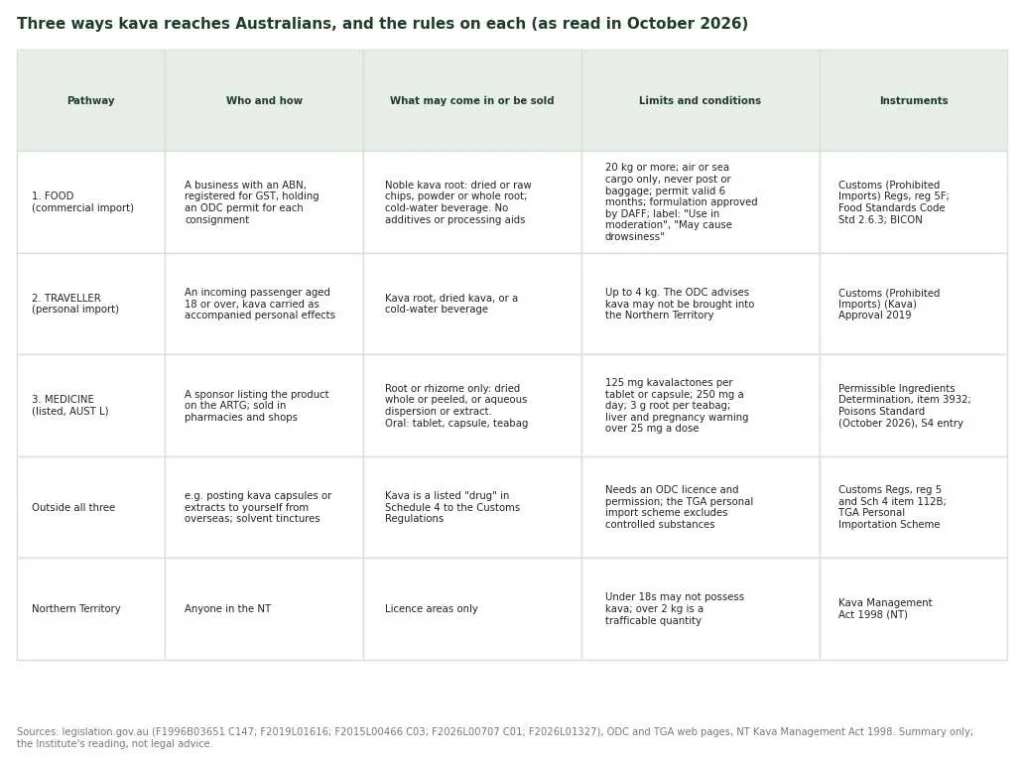
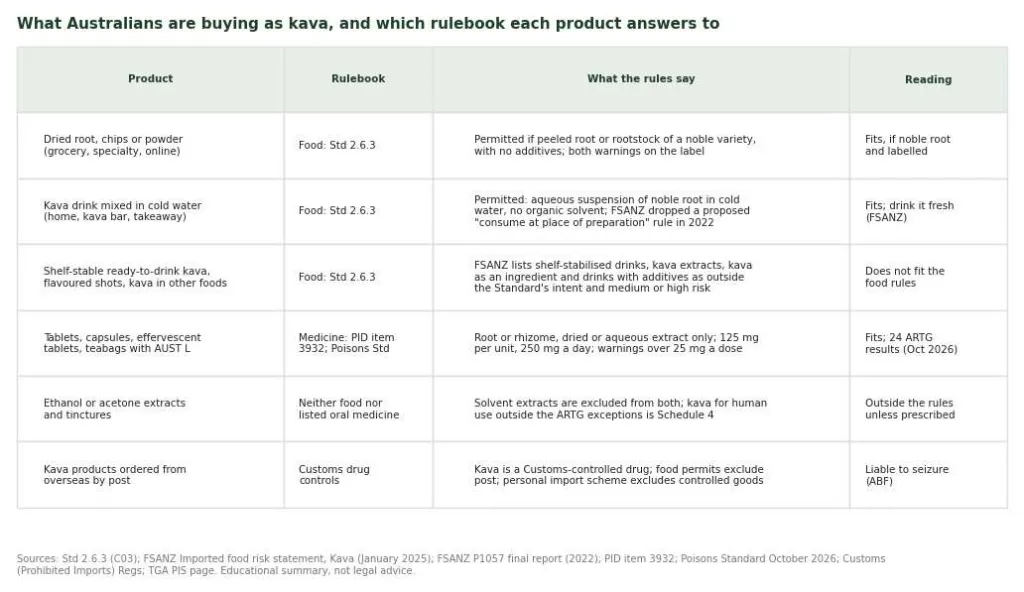
Three regimes govern the kava Australians buy. Kava sold as food comes in under an ODC import permit and must meet the Food Standards Code. Kava carried by travellers comes in under a separate Customs approval with its own limit. Kava sold as a medicine is regulated by the TGA through the Permissible Ingredients Determination and the Poisons Standard. The Northern Territory adds its own Act. Figure 5 sets the three side by side, and Figure 6 maps the products on the shelf to the rulebook each one answers to. Every figure below was read from the instrument or the regulator’s own page in October 2026.
The common root: kava is a Customs-controlled drug
All three regimes start from the same point. “Kava” is listed in Schedule 4 to the Customs (Prohibited Imports) Regulations 1956 (item 112B), and the Regulations define it broadly as any plant or part of a plant of Piper methysticum or a preparation obtained from it (Customs (Prohibited Imports) Regulations 1956). Attested Importing a listed drug is prohibited unless the importer holds an ODC licence and permission, or the import falls under a specific exemption or approval (reg 5) (Customs (Prohibited Imports) Regulations 1956). Attested The food permit and the traveller approval are two such routes.
1. Kava as food: the ODC permit and Standard 2.6.3
Kava imported for food is prohibited under regulation 5F unless the importer holds an ODC permission, produces it to Customs, and imports by a means other than post (Customs (Prohibited Imports) Regulations 1956). Attested A permission may be granted only to a business registered for GST with an ABN, importing the kava to sell it (Customs (Prohibited Imports) Regulations 1956). Attested The ODC adds the operating conditions: a permit for each consignment, valid for six months; applications for 20 kg or more; a kava formulation approved by the Department of Agriculture, Fisheries and Forestry (DAFF); and air or sea cargo only, never international mail or a traveller’s baggage (ODC, importing kava as a food). Attested Biosecurity rules allow only dried or raw noble root, as chips, powder or whole root, and kava beverages made with cold water only (ODC, importing kava as a food). Attested Permits cannot be issued after the goods arrive, and the Australian Border Force may seize kava imported without one (ODC, importing kava as a food). Attested
The Regulations define a “kava food product” as a food mentioned in section 2.6.3—3 of the Food Standards Code (Customs (Prohibited Imports) Regulations 1956). Attested That section allows exactly two foods: a beverage obtained by the aqueous suspension of kava root using cold water only and no organic solvent, and dried or raw kava root (Food Standards Code, Standard 2.6.3). Attested “Kava root” means the peeled root or peeled rootstock of a noble variety named in Codex standard CXS 336R-2020 (Food Standards Code, Standard 2.6.3). Attested Both foods must carry the warning statements “Use in moderation” and “May cause drowsiness”, and since 23 March 2022 they may not contain any substance used as a food additive or processing aid (Food Standards Code, Standard 2.6.3). Attested The current text is compilation No. 3, in force from that date (Food Standards Code, Standard 2.6.3). Attested
Those two rules came from an urgent FSANZ review, Proposal P1057, raised when commercial imports opened in December 2021. FSANZ first proposed that kava drinks be made only for immediate consumption at the place of preparation, then dropped the idea after submitters showed that takeaway kava is common and consistent with Pacific practice; the ban on additives and processing aids went ahead (FSANZ Proposal P1057). Attested FSANZ’s 2025 risk statement spells out what falls outside the Standard’s intent and rates it a potential medium or high risk: drinks from non-noble varieties or aerial parts, shelf-stabilised ready-to-drink kava, herbal extracts of kava, kava used as an ingredient in other foods, and drinks containing additives or processing aids (FSANZ kava risk statement, 2025). Attested It also advises that a kava drink be consumed soon after it is made, because it spoils readily (FSANZ kava risk statement, 2025). Attested On the Institute’s reading, a shelf-stable, flavoured or preserved kava drink sold as a food in Australia is the product to ask questions of. Mechanism New Zealand did not adopt the 2022 amendment, so the noble-only and no-additive rules apply in Australia and not across the Tasman; that is overseas law (FSANZ kava risk statement, 2025). Attested
2. Travellers: the 4 kg allowance
The Customs (Prohibited Imports) (Kava) Approval 2019, in force since 17 December 2019, approves the import of kava by a person aged 18 or over, as accompanied personal effects on a ship or aircraft, up to 4 kilograms, in one of three forms: kava root, dried kava, or a beverage made by suspending kava root in cold water only (Customs (Kava) Approval 2019). Attested The ODC describes the allowance as up to 4 kg of kava powder in accompanied baggage, and advises that restrictions in the Northern Territory mean kava may not be brought into that jurisdiction (ODC, travelling with kava). Attested The 4 kg limit was phase 1 of the Kava Pilot, raising the earlier 2 kg allowance (ODC, Kava pilot). Attested It is a personal allowance: the pilot evaluation recorded importers’ concern that some travellers were reselling kava for profit (Kava Pilot evaluation, final report). Attested
The traveller approval covers baggage. Kava capsules, tablets or extracts ordered from an overseas website and posted to a home address sit outside it, and outside the food permit, which excludes post (Customs (Prohibited Imports) Regulations 1956; ODC, importing kava as a food). Attested The TGA’s Personal Importation Scheme does not help, because it excludes any import that contains a controlled substance or is prohibited under Customs rules, and the TGA warns that people ordering herbal or dietary supplements from overseas should check for controlled substances, since prohibited imports are seized (TGA, Personal Importation Scheme). Attested On the Institute’s reading, such a parcel needs an ODC licence and permission under regulation 5. Mechanism
3. Kava as a medicine: the TGA rules
Kava may be an active ingredient in a listed (AUST L) medicine under item 3932 of the Permissible Ingredients Determination; the Institute read the compilation in force from 17 September 2026 (Permissible Ingredients Determination, item 3932). Attested Oral use is allowed only as a tablet, capsule or teabag. The maximum daily dose is 250 mg kavalactones, no tablet or capsule may hold more than 125 mg, and a teabag may hold no more than 3 g of dried whole or peeled root or rhizome (Permissible Ingredients Determination, item 3932). Attested The plant part must be root or rhizome, and an oral medicine may contain only dried whole or peeled root or rhizome, or aqueous dispersions or aqueous extracts of it (Permissible Ingredients Determination, item 3932). Attested Oral medicines with more than 25 mg kavalactones a dose must carry a warning that the product is not for prolonged use, that it is not recommended in pregnancy or breastfeeding, and that it may harm the liver (Permissible Ingredients Determination, item 3932). Attested In practice these rules keep the acetone and ethanol extracts behind the European reports out of Australian listed medicines. Attested
The Poisons Standard of October 2026 lists Piper methysticum (kava) in Schedule 4, prescription only, “in preparations for human use except when included on the Register” in one of three forms: oral tablets, capsules or teabags labelled with a maximum daily dose of 250 mg kavalactones or less, within the per-unit limits above and carrying the required advisory statements; topical preparations for the rectum, vagina or throat made from dried root or rhizome or its aqueous dispersions or extracts; and dermal preparations (Poisons Standard, October 2026). Attested Food is exempt from the Poisons Standard under Appendix A, item 11 (Poisons Standard, October 2026). Attested A kava drink, root powder or a conforming ARTG-listed product therefore sits outside Schedule 4. On the Institute’s reading, the entry catches kava preparations for human use that fall outside both routes, such as a solvent tincture. Mechanism FSANZ records the history: before 2007 whole or peeled kava rhizome was exempt from scheduling, and the national scheduling committee removed the exemption in 2008, a position reaffirmed in 2009 and by the Advisory Committee on Medicines Scheduling in 2016 (FSANZ kava risk statement, 2025). Attested
After the pilot: interim arrangements
Commercial importation of kava as a food began on 1 December 2021 as phase 2 of the Kava Pilot (ODC, Kava pilot). Attested The pilot period ended on 31 December 2023. The ODC states that the Government will decide on future imports, that no date is set for a decision, and that pilot arrangements remain in place until then (ODC, Kava pilot). Attested The rules above are therefore interim, though they have now run for close to three years past the pilot’s end. The Institute found no open TGA, FSANZ or ODC consultation on kava in October 2026.
The Northern Territory
The Northern Territory regulates kava under its own Kava Management Act 1998, which exists to prohibit and regulate the cultivation, manufacture, possession and supply of kava (NT Kava Management Act 1998). Attested Nobody under 18 may possess kava anywhere in the Territory, and outside a declared licence area an adult may not possess kava unless under a licence; more than 2 kg (or more than four plants) is a trafficable quantity and 25 kg or more a commercial quantity (NT Kava Management Act 1998). Attested The Act does not apply to kava in a product listed or registered under the Therapeutic Goods Act 1989, nor to an adult’s 2 kg or less carried into Australia as an incoming passenger in personal baggage (s 4) (NT Kava Management Act 1998). Attested The ODC nonetheless advises that kava may not be brought into the Territory (ODC, travelling with kava), and a traveller bound for Darwin should read that advice and the Act together. Attested The wastewater study found kava markers in the Territory at levels higher than most other jurisdictions, which its authors suggest may reflect online purchase or illicit supply (PMID 42768433). Evidence suggests The States and the ACT regulate kava through their general food and poisons laws.
11. Quality and adulteration
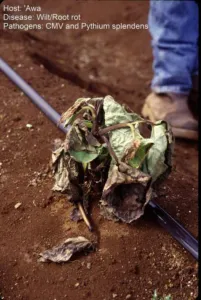
Because demand for root runs ahead of supply, stem peelings have been mixed into commercial kava; they contain pipermethystine and other compounds absent from root (EMA/HMPC assessment report 2017). Attested Two-day kava has been traded as noble. Unsourced Poor drying lets mould grow, and Teschke and colleagues proposed mould toxins as a contributor to liver cases (PMID 21801196). Mechanism FSANZ lists the supply-chain risks: contamination with parts other than peeled root, rhizome or basal stem, non-noble varieties, and spoilage by bacteria or mycotoxin-producing moulds anywhere from farm to bowl (FSANZ kava risk statement, 2025). Attested The pilot evaluation found that some Pacific Islander community members and importers in Australia were concerned about quality checks on imported kava (Kava Pilot evaluation, final report). Attested
The producers are acting on it. FSANZ notes that Vanuatu, Fiji, Samoa and Tonga have developed national export standards for kava under a program funded by the Australian and New Zealand governments (FSANZ kava risk statement, 2025). Attested Vanuatu’s national database of export testing shows colorimetric absorbance values, used as a screen for non-noble material, falling from 0.72 to 0.48 between 2016 and 2024, a sign of stronger quality control, and the same group validated a two-hour oven method for moisture (PMID 42433391). Evidence suggests HPTLC can sort noble from two-day kava by its flavokavain-to-kavalactone profile, at about 50 minutes for 20 samples (Lebot et al. 2019), and UHPLC can quantify both groups of compounds (PMID 30934989). Confirmed
Finished products, and a warning from the United States
Finished products vary. A US study of 25 commercially available kava products found high variation in chemical content and in cytotoxicity to a cultured human lung cancer cell line (A549) (PMID 25365244). Evidence suggests That study is overseas and predates current Australian rules, but its lesson travels: the same word on a label can cover very different contents.
A newer overseas problem shows why. In the United States, where kava is sold as concentrated extracts and ready-to-drink beverages, often marketed as an alternative to alcohol, kava-related reports to poison centres fell after a 2002 regulator advisory and have risen since 2011, reaching 203 in 2025 (PMID 41926333). Attested Reports involving kava combined with kratom, a plant with opioid-like effects, rose to 30% of kava reports (61) in 2025, and the share of serious clinical outcomes rose to 32%, against 12% in 2000 (PMID 41926333). Evidence suggests Kratom (Mitragyna speciosa) is a different plant, listed in Schedule 9 of the Australian Poisons Standard (Poisons Standard, October 2026), Attested and these are US data that do not describe the Australian market. A 2026 US analysis of unlabelled kratom alkaloids in products marketed as kava has been requested through the Institute’s library. The lesson for an Australian buyer is simple: a product sold as kava should contain kava and nothing undeclared. Mechanism
12. How to read a kava label
Start by working out which kind of product you hold, because the rules differ.
A food or drink (root, chips, powder, or a drink made with cold water) has no AUST L number and makes no health claims. Its label must say “Use in moderation” and “May cause drowsiness”, or the warnings must accompany it if it is sold unpackaged (Food Standards Code, Standard 2.6.3; FSANZ kava risk statement, 2025). Attested The ingredient should be noble kava root or rootstock, a drink should be made with cold water only and no solvent, and the ingredient list should show no food additives (Food Standards Code, Standard 2.6.3). Attested The Code does not require a kavalactone figure on a food; where a seller gives one, it helps you compare.
A medicine (tablet, capsule or teabag) should show an AUST L number, which you can check on the TGA’s ARTG search (ARTG search). Attested Look for the kavalactone content per tablet or capsule (125 mg or less), a daily maximum of 250 mg or less, root or rhizome as the plant part, dried root or an aqueous extract as the form, and the liver and pregnancy warning on products over 25 mg a dose (Permissible Ingredients Determination, item 3932). Attested A product that names leaves, stems, an ethanol or acetone extract, or a dose above those limits does not fit the listed-medicine rules.
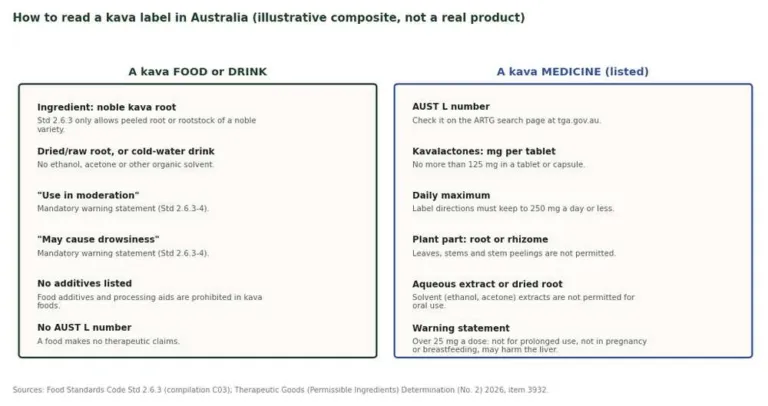
Three further checks are worth the few seconds. Add up kava from every source, because a drink and a capsule on the same day both count. Read the other ingredients in blends, since combinations with other sedating herbs add to drowsiness. And treat products ordered from overseas with care: they may not meet any of the Australian rules in Chapter 10, and they may be seized at the border. Attested
Before taking kava as a medicine, consult a degree-qualified herbalist with competencies and adequate training in pharmacognosy, who can weigh it against your medicines, your liver and your circumstances.
Discussion: conclusions, hypotheses and research still required
What the evidence supports
Kava is a sterile, clonally propagated Pacific crop whose root contains about 18 kavalactones, six of which make up roughly 96% of the total, and whose cultivars fall into genetically and chemically distinct noble, two-day and wild groups. Confirmed Its ceremonial and social use is old and continuing, in the Pacific and in Australia’s Pacific communities. Traditional Australian imports reached 51 tonnes in the second quarter of 2026, and wastewater shows kava use in every State and Territory, higher in regional areas and peaking at weekends. Attested Short courses of standardised extract reduce anxiety scores a little more than placebo in most trials, with small effects, and the longest trial of a water-based extract found no benefit. Evidence suggests Serious liver injury is rare, unpredictable and not confined to solvent extracts; heavy drinking raises GGT and ALP reversibly and causes a scaly skin rash, kava dermopathy, that clears on stopping. Evidence suggests Driving after kava is associated with a large excess of injury crashes in Fiji. Evidence suggests Australian law permits noble root as a food prepared with cold water and free of additives, root-only water-based listed medicines within kavalactone limits, and a 4 kg allowance for adult travellers, with separate rules in the Northern Territory. Attested
What we can reasonably hypothesise
That the noble-only rule reduces liver risk is plausible, given the lower flavokavain B content of noble cultivars and the mouse data on flavokavains and paracetamol, but it has not been tested in people. Mechanism That the Sarris trials diverged because of differences in composition, including flavokavain content, is a hypothesis the published data allow and do not prove. Mechanism That some historic liver cases reflect raw-material quality (stem peelings, mould) more than extraction solvent is a reasonable reading of the case analyses. Mechanism That the weekend peak in wastewater reflects social drinking of root powder more than supplement use is the authors’ reading and fits the trade data, but sewage cannot tell a capsule from a bowl. Mechanism And a bowl of noble kava and a capsule of 60 mg kavalactones very probably deliver different exposures, so evidence from one should be carried to the other with caution. Mechanism
Research still required
- Clinical research. A pre-registered, adequately powered trial of a fully characterised aqueous noble-root extract in GAD, reporting kavalactone and flavokavain content, alcohol intake and liver enzymes at fixed time points, with an arm allowing direct comparison with an established treatment.
- Pharmacovigilance and epidemiology. An Australian surveillance study that records product type (food, listed medicine, overseas purchase), cultivar, preparation, amount and co-exposures for every liver or kidney case reported to the TGA or a poisons centre, and a cohort of regular Pacific diaspora drinkers with baseline and follow-up liver function. Wastewater monitoring should continue so the effect of any post-pilot decision can be measured.
- Toxicology. Human-relevant models (primary human hepatocytes, liver organoids) testing flavokavain B, pipermethystine and mycotoxins alone and with paracetamol and ethanol, at concentrations achievable from drinks and listed medicines; and a look at the renal finding in the New South Wales case.
- Quality analysis and market surveillance. A survey of Australian kava foods, ready-to-drink products and listed medicines by HPTLC or UHPLC for kavalactone content, flavokavain ratio (noble status), pipermethystine (stem and leaf contamination), moisture, aflatoxins and undeclared substances such as kratom alkaloids, set against the label and the Standard 2.6.3 additive prohibition.
- Road safety. An Australian study of kava use among drivers, and objective measurement of impairment after realistic drinking sessions.
- Ethnobotany and botany. Documentation, led by and credited to Pacific communities, of how Australian diaspora groups identify, prepare and share kava, and a voucher-backed chemical survey of north Queensland’s native Piper species, which have barely been studied.
- Regulatory science. A published Commonwealth decision on post-pilot import arrangements, and consistent public wording across the food, customs and medicine instruments so a buyer can understand one plant in one set of words.
About the Australian Institute of Pharmacognosy and this series
The Australian Institute of Pharmacognosy is a clinic and research laboratory in Cardwell, far north Queensland, studying medicinal plants and natural products to the same evidentiary standard as any other branch of pharmacology: traditional knowledge taken seriously, and tested honestly. Visit the Institute at australian-pharmacognosy.org.
Series: AIP Literature Reviews and Critical Analyses (evidence reviews). Related reviews: sour jujube seed (Ziziphus jujuba) is another calming herb with a long traditional record; ashwagandha (Withania somnifera), turmeric (Curcuma longa) and black cohosh (Actaea racemosa) show how rare liver reports are weighed for widely used herbs; and andrographis (Andrographis paniculata) shows the TGA’s permitted-ingredient rules at work. Earlier reviews: echinacea (Echinacea purpurea) · sangre de grado (Croton lechleri) · Greek mountain tea (Sideritis scardica) · sutherlandia (Lessertia frutescens) · pygeum (Prunus africana) · Indian barberry (Berberis aristata) · devil’s claw (Harpagophytum procumbens) · soursop (Annona muricata) · umckaloabo (Pelargonium sidoides). Follow the series for a new evidence review each morning.
Corrections: if you find an error or a source we have missed, write to the Institute at our contact form. We would rather correct a claim than repeat it.
About the images and the evidence. Every photograph is reproduced under the licence stated in its caption and in the image credits; the figures were drawn by the Institute from the sources printed in each. The Institute thanks the Pacific growers, communities and researchers whose published work this review draws on.
Head of Education and Research
Australian Institute of Pharmacognosy
Cardwell QLD, Australia
australian-pharmacognosy.org · our contact form
Suggested citation: Ridley T. Kava (Piper methysticum G.Forst.) in Australia: Pacific tradition, noble and tudei cultivars, the anxiety evidence, safety and interactions, and the food, traveller and medicine rules. AIP Literature Review and Critical Analysis AIP-LR-PIPMET. Cardwell (QLD): Australian Institute of Pharmacognosy; 2026.
Educational content only; not medical, legal or regulatory advice. Australian regulatory information reflects the Customs (Prohibited Imports) Regulations and Kava Approval, the Food Standards Code and FSANZ publications, the Permissible Ingredients Determination, the Poisons Standard, Office of Drug Control and TGA guidance, the ARTG and the Northern Territory Kava Management Act as read in October 2026 and may change; the Commonwealth’s post-pilot decision on kava imports was pending when read. European, US, New Zealand, Pacific-nation and IARC material is described as overseas material and does not govern Australian law. No product is advertised, endorsed or recommended. Material drawn from Commonwealth and Northern Territory sources is © Commonwealth of Australia or © Northern Territory of Australia and appears here as short extracts for the purpose of reporting, criticism and review.
References
42 references: tap to open
Listed in order of first citation. All 19 PMIDs were verified against PubMed in October 2026 and read in full text; every regulatory, legislative, taxonomic and biodiversity record was read from its own source. Trial reports that could not be read in full (Sarris et al. 2009, 2013 and 2020) were requested through the Institute’s library and are described through the reviews named in the text. Also requested and not cited for their content: Asare-Doku et al. 2025 (early impact of the import change); Hong et al. 2026 (Pathology, hepatic harm case); Abid et al. 2026 (Med J Aust, acute kava dermopathy); Marshall et al. 2026 (kratom alkaloids in products marketed as kava); Daniels et al. 2026 and Wang et al. 2026 (CYP450 and CYP2B6 in vitro).
- Pacific Trade Invest Australia. A Kava Pilot Program – Q2 Update (Pacific kava exports to Australia, Q2 2026; data source DFAT 2026). Read by the Institute in October 2026. https://pacifictradeinvest.com/media/zw4h3trp/kava-one-pager-2026-q2_final.pdf
- Food Standards Australia New Zealand. Imported food risk statement: Kava (Piper methysticum) as a food. Compiled January 2025 (dated 15.01.2025). Read in full by the Institute in October 2026. https://www.foodstandards.gov.au/sites/default/files/2025-01/Kava%20risk%20advice%202025.pdf
- Asare-Doku W, Settumba Stolk S, Peacock A, et al. Monitoring and Evaluation of the Kava Pilot Program: Final Report. National Drug and Alcohol Research Centre, UNSW, and Ninti One, for the Office of Drug Control; 2023. Read in full by the Institute in October 2026. https://www.odc.gov.au/sites/default/files/2023-12/monitoring-evaluation-kava-pilot-program.pdf
- Makanye L, Keller EL, Gerber C, Simpson BS. Evaluating the Pattern of Kava (Piper methysticum) Consumption in Australia by Wastewater-Based Epidemiology. Drug Alcohol Rev. 2026 Sep;45(6):e70263. PMID 42768433. DOI 10.1111/dar.70263.
- Therapeutic Goods Administration. Australian Register of Therapeutic Goods, public search for “piper methysticum”: 24 results. Searched by the Institute in October 2026. https://www.tga.gov.au/resources/artg?keywords=piper%20methysticum
- European Medicines Agency, Committee on Herbal Medicinal Products. Assessment report on Piper methysticum G. Forst., rhizoma. Final. EMA/HMPC/450589/2016, 21 November 2017. Rapporteur C. Purdel. Read in full by the Institute. Overseas regulatory document; it does not govern Australian products. https://www.ema.europa.eu/en/documents/herbal-report/final-assessment-report-piper-methysticum-g-forst-rhizoma_en.pdf
- Teschke R, Sarris J, Glass X, Schulze J. Kava, the anxiolytic herb: back to basics to prevent liver injury?. Br J Clin Pharmacol. 2011 Mar;71(3):445-8. PMID 21284704. DOI 10.1111/j.1365-2125.2010.03775.x.
- Nelson SC. Farm and Forestry Production and Marketing Profile for Kava (Piper methysticum). In: Elevitch CR, editor. Specialty Crops for Pacific Island Agroforestry. Holualoa (HI): Permanent Agriculture Resources; 2011. Read in full by the Institute. http://agroforestry.net/scps
- Food Standards Australia New Zealand. Australia New Zealand Food Standards Code – Standard 2.6.3 – Kava, F2015L00466, compilation No. 3 (F2022C00387), in force from 23 March 2022, still the latest compilation when read. Read by the Institute in October 2026. https://www.legislation.gov.au/F2015L00466/latest/text
- Therapeutic Goods (Permissible Ingredients) Determination (No. 2) 2026 (Cth), F2026L00707, compilation No. 1 (F2026C00940, in force from 17 September 2026), Schedule 1, item 3932, PIPER METHYSTICUM. Read by the Institute in October 2026. https://www.legislation.gov.au/F2026L00707/latest/text
- Atlas of Living Australia species search and iNaturalist observation search for Piper methysticum in Australia: no species page and no Australian observations returned. Searched by the Institute in October 2026. https://www.ala.org.au/
- Northern Territory of Australia. Kava Management Act 1998, reprint REPK001, as in force at 1 July 2021 and listed as in force on NT Legislation when checked in October 2026, ss 3, 4, 9, 10, 13. Read by the Institute in October 2026. https://legislation.nt.gov.au/en/Legislation/KAVA-MANAGEMENT-ACT-1998
- iNaturalist. Research-grade observations of Piper within 150 km of Cardwell, Queensland, including Piper hederaceum and Piper mestonii. Searched by the Institute in October 2026. https://www.inaturalist.org/observations?taxon_name=Piper&lat=-17.9&lng=145.9&radius=150
- Lebot V, Michalet S, Legendre L. Kavalactones and flavokavins profiles contribute to quality assessment of kava (Piper methysticum G. Forst.), the traditional beverage of the Pacific. Beverages. 2019;5(2):34. DOI 10.3390/beverages5020034. Read in full by the Institute. https://www.mdpi.com/2306-5710/5/2/34
- Food Standards Australia New Zealand. Final consideration report – Proposal P1057: Review of the kava standard (urgent proposal; variation approved 7 March 2022), report dated 23 March 2022. Read by the Institute in October 2026. https://www.foodstandards.gov.au/food-standards-code/proposals/Proposal-P1057-Review-of-the-kava-standard
- Clough AR, Wang Z, Bailie RS, Burns CB, Currie BJ. Case-control study of the association between kava use and pneumonia in eastern Arnhem and Aboriginal communities (Northern Territory, Australia). Epidemiol Infect. 2003 Aug;131(1):627-35. PMID 12948361. DOI 10.1017/s0950268803008628.
- Economidis G, Lynch M, Taylor S, Asare-Doku W, Macpherson G, Degenhardt L, et al. Global Perspectives on Kava: A Narrative Systematic Review of the Health Effects, Economic and Social Impacts and Policy Considerations. Drug Alcohol Rev. 2025 Sep;44(6):1601-1640. PMID 40560778. DOI 10.1111/dar.14080.
- Office of Drug Control. Importing kava into Australia for use as a food. Read by the Institute in October 2026. https://www.odc.gov.au/kava/importing-kava-australia-use-food
- Tang Y, Fields C. A UHPLC-UV Method Development and Validation for Determining Kavalactones and Flavokavains in Piper methysticum (Kava). Molecules. 2019 Mar 30;24(7). PMID 30934989. DOI 10.3390/molecules24071245.
- Chua HC, Christensen ET, Hoestgaard-Jensen K, Hartiadi LY, Ramzan I, Jensen AA, et al. Kavain, the Major Constituent of the Anxiolytic Kava Extract, Potentiates GABAA Receptors: Functional Characteristics and Molecular Mechanism. PLoS One. 2016;11(6):e0157700. PMID 27332705. DOI 10.1371/journal.pone.0157700.
- Bian T, Corral P, Wang Y, Botello J, Kingston R, Daniels T, et al. Kava as a Clinical Nutrient: Promises and Challenges. Nutrients. 2020 Oct 05;12(10). PMID 33027883. DOI 10.3390/nu12103044.
- Gurley BJ, Gardner SF, Hubbard MA, Williams DK, Gentry WB, Khan IA, et al. In vivo effects of goldenseal, kava kava, black cohosh, and valerian on human cytochrome P450 1A2, 2D6, 2E1, and 3A4/5 phenotypes. Clin Pharmacol Ther. 2005 May;77(5):415-26. PMID 15900287. DOI 10.1016/j.clpt.2005.01.009.
- Narayanapillai SC, Leitzman P, O'Sullivan MG, Xing C. Flavokawains a and B in kava, not dihydromethysticin, potentiate acetaminophen-induced hepatotoxicity in C57BL/6 mice. Chem Res Toxicol. 2014 Oct 20;27(10):1871-6. PMID 25185080. DOI 10.1021/tx5003194.
- Pittler MH, Ernst E. Kava extract for treating anxiety. Cochrane Database Syst Rev. 2003;2003(1):CD003383. PMID 12535473. DOI 10.1002/14651858.CD003383.
- Teschke R, Sarris J, Schweitzer I. Kava hepatotoxicity in traditional and modern use: the presumed Pacific kava paradox hypothesis revisited. Br J Clin Pharmacol. 2012 Feb;73(2):170-4. PMID 21801196. DOI 10.1111/j.1365-2125.2011.04070.x.
- Withanage S, Cosgrave C, Zafir S, Flanagan E, Te P, Hall S. Kava Herb-Induced Liver Injury as Verified by the Updated RUCAM. Case Rep Gastrointest Med. 2025;2025:3914876. PMID 41477654. DOI 10.1155/crgm/3914876.
- Behl M, Nyska A, Chhabra RS, Travlos GS, Fomby LM, Sparrow BR, et al. Liver toxicity and carcinogenicity in F344/N rats and B6C3F1 mice exposed to Kava Kava. Food Chem Toxicol. 2011 Nov;49(11):2820-9. PMID 21871523. DOI 10.1016/j.fct.2011.07.067.
- International Agency for Research on Cancer. Some Drugs and Herbal Products. IARC Monographs on the Evaluation of Carcinogenic Risks to Humans, Volume 108. Lyon: IARC; 2016 (kava extract, Group 2B). Read by the Institute. Overseas classification. https://publications.iarc.who.int/Book-And-Report-Series/Iarc-Monographs-On-The-Identification-Of-Carcinogenic-Hazards-To-Humans/Some-Drugs-And-Herbal-Products-2015
- Wainiqolo I, Kafoa B, Kool B, Robinson E, Herman J, McCaig E, et al. Driving following Kava Use and Road Traffic Injuries: A Population-Based Case-Control Study in Fiji (TRIP 14). PLoS One. 2016;11(3):e0149719. PMID 26930404. DOI 10.1371/journal.pone.0149719.
- Spungen HH, Mody K, Micetic B, Wade C, Kang AM. Neonatal and Maternal Ichthyosiform Dermopathy in Association with Kava Use during Pregnancy. J Med Toxicol. 2024 Jul 11;20(3):308-313. PMID 38839731. DOI 10.1007/s13181-024-01016-x.
- Customs (Prohibited Imports) (Kava) Approval 2019 (Cth), F2019L01616, made 13 December 2019, commenced 17 December 2019, s 4. Read by the Institute in October 2026. https://www.legislation.gov.au/F2019L01616/latest/text
- Brotherton K, Chacko B. Case Report: Something Is Brewing. Nephrology (Carlton). 2025 May;30(5):e70051. PMID 40343400. DOI 10.1111/nep.70051.
- Therapeutic Goods Administration. Reporting adverse events for consumers. Read by the Institute in October 2026. https://www.tga.gov.au/safety/reporting-problems/reporting-adverse-events-consumers
- Customs (Prohibited Imports) Regulations 1956 (Cth), compilation No. 147 (13 July 2026): reg 5 (importation of drugs), reg 5F (importation of kava as food) and Schedule 4, item 112B (kava); definitions of “drug”, “kava” and “kava food product”. Read by the Institute in October 2026. https://www.legislation.gov.au/F1996B03651/latest/text
- Office of Drug Control. Travelling with kava for personal use. Read by the Institute in October 2026. https://www.odc.gov.au/kava/travelling-kava-personal-use
- Office of Drug Control. Kava pilot (phases 1 and 2). Read by the Institute in October 2026. https://www.odc.gov.au/about-us/reviews-and-reforms/kava-pilot-phases-1-and-2
- Therapeutic Goods Administration. Personal Importation Scheme. Web page, last updated 8 September 2026. Read in full by the Institute in October 2026. https://www.tga.gov.au/products/unapproved-therapeutic-goods/personal-importation-scheme
- Therapeutic Goods (Poisons Standard—October 2026) Instrument 2026 (Cth), F2026L01327: Schedule 4 entry for PIPER METHYSTICUM (kava); Appendix A, item 11 (food); Schedule 9 entry for MITRAGYNA SPECIOSA. Full text read by the Institute in October 2026. https://www.legislation.gov.au/F2026L01327/asmade/text
- Tari D, Tabi H, Botleng J, Kelep R, Regenvanu L, Tangaras C, et al. Improved quality control and moisture determination in dry kava (Piper methysticum) from Vanuatu: a practical oven-drying approach. PeerJ. 2026;14:e21102. PMID 42433391. DOI 10.7717/peerj.21102.
- Martin AC, Johnston E, Xing C, Hegeman AD. Measuring the chemical and cytotoxic variability of commercially available kava (Piper methysticum G. Forster). PLoS One. 2014;9(11):e111572. PMID 25365244. DOI 10.1371/journal.pone.0111572.
- Towers EB, Williams IL, Holstege CP, Farah R. Increase in Poison Center Reports Linked to Kratom-Containing Kava Products – National Poison Data System, United States, 2000-2025. MMWR Morb Mortal Wkly Rep. 2026 Apr 02;75(12):157-163. PMID 41926333. DOI 10.15585/mmwr.mm7512a1.
- Chemical records and structure depictions: PubChem, US National Library of Medicine, public domain. CIDs cited in the text: 5281565, 10220256, 5281567, 88308, 5281575, 5273621, 235736, 5356121, 194391.
Image credits
- Starr-091104-8925-Piper methysticum-habit-Kahanu Gardens NTBG Kaeleku Hana-Maui (24988332075).jpg, Forest and Kim Starr. CC BY 3.0 us. Wikimedia Commons. Resized and re-encoded for the web by AIP; no other changes.
- Starr-090623-1660-Piper methysticum-leaves stems and nodes-Kaeleku-Maui (24873765761).jpg, Forest and Kim Starr. CC BY 3.0 us. Wikimedia Commons. Resized and re-encoded for the web by AIP; no other changes.
- Starr-091104-8927-Piper methysticum-leaves and flower spikes-Kahanu Gardens NTBG Kaeleku Hana-Maui (24620712229).jpg, Forest and Kim Starr. CC BY 3.0 us. Wikimedia Commons. Resized and re-encoded for the web by AIP; no other changes.
- Starr-120522-6578-Piper methysticum-in pots-Iao Tropical Gardens of Maui-Maui (25025700352).jpg, Forest and Kim Starr. CC BY 3.0 us. Wikimedia Commons. Resized and re-encoded for the web by AIP; no other changes.
- Piper methysticum G.Forst. (AM AK13029).jpg, Auckland War Memorial Museum Tāmaki Paenga Hira, herbarium specimen AK13029 (collector T. F. Cheeseman). CC BY 4.0. Wikimedia Commons. Resized and re-encoded for the web by AIP; no other changes.
- Yaqona-bundle-Fiji-2010.jpg, Hsz282. Public domain. Wikimedia Commons. Resized and re-encoded for the web by AIP; no other changes.
- Kava-powder-from-vanuatu-ready-to-mix-with-water.jpg, Ib0ga. CC BY-SA 3.0. Wikimedia Commons. Resized and re-encoded for the web by AIP; no other changes.
- Stone ground kava.jpg, mike hawkins. Public domain. Wikimedia Commons. Resized and re-encoded for the web by AIP; no other changes.
- Fijian kava ceremony.jpg, Jaejay77. CC BY-SA 4.0. Wikimedia Commons. Resized and re-encoded for the web by AIP; no other changes.
- Samoan 'ava ceremony, c. 1900-1930 unknown photographer.jpg, Unknown photographer. Public domain. Wikimedia Commons. Resized and re-encoded for the web by AIP; no other changes.
- Cartes et figures du troisième voyage de Cook, 1785 Poulaho, roi des Isles des Amis, Buvant la Kava (19385369910).jpg, Fondo Antiguo de la Biblioteca de la Universidad de Sevilla from Sevilla, España. CC BY 2.0. Wikimedia Commons. Resized and re-encoded for the web by AIP; no other changes.
- Kava bowl, 1 of 2, Fiji – Canterbury Museum – Christchurch, NZ – DSC02202.jpg, Daderot. Public domain. Wikimedia Commons. Resized and re-encoded for the web by AIP; no other changes.
- Kava strainer, Samoa, made of Hibiscus tiliaceus – Canterbury Museum – Christchurch, NZ – DSC02204.jpg, Daderot. Public domain. Wikimedia Commons. Resized and re-encoded for the web by AIP; no other changes.
- FMIB 47324 Ava or Kava (Macropiper methysticum), Tahiti.jpeg, Robert Taylor Pritchett. Public domain. Wikimedia Commons. Resized and re-encoded for the web by AIP; no other changes.
- Kava at Niuafoʻou, 1971 (13).jpg, Wendy Pond. CC BY-SA 3.0. Wikimedia Commons. Resized and re-encoded for the web by AIP; no other changes.
- Root rot awa.jpg, Scot Nelson. CC0. Wikimedia Commons. Resized and re-encoded for the web by AIP; no other changes.
- Kavadrink.jpg, Sheminghui.WU. CC BY-SA 4.0. Wikimedia Commons. Resized and re-encoded for the web by AIP; no other changes.
- iNaturalist observation 393106059, photo 720500505: Piper methysticum, Ra, FJ-W, FJ, 2026-08-21, photo by Laura Fernández Winzer. CC BY 4.0. iNaturalist. Resized and re-encoded for the web by AIP; no other changes.
- iNaturalist observation 393106059, photo 720500711: Piper methysticum, Ra, FJ-W, FJ, 2026-08-21, photo by Laura Fernández Winzer. CC BY 4.0. iNaturalist. Resized and re-encoded for the web by AIP; no other changes.
- iNaturalist observation 396030580, photo 726230674: Piper methysticum, Fiji, FJ, 2026-08-30, photo by russnamitz. CC0 1.0. iNaturalist. Resized and re-encoded for the web by AIP; no other changes.
- iNaturalist observation 185970226, photo 324892337: Piper methysticum, Tafea, VU, 2013-08-31, photo by Dominik Maximilián Ramík. CC BY 4.0. iNaturalist. Resized and re-encoded for the web by AIP; no other changes.
- iNaturalist observation 251825205, photo 450667118: Piper methysticum, Kaneohe, HI 96744, USA, 2024-11-15, photo by Damien Wallace. CC0 1.0. iNaturalist. Resized and re-encoded for the web by AIP; no other changes.
- iNaturalist observation 404583106, photo 742992633: Piper hederaceum, Etty Bay QLD 4858, Australia, 2026-09-23, photo by Lucas Christofides. CC BY 4.0. iNaturalist. Resized and re-encoded for the web by AIP; no other changes.
- iNaturalist observation 244184021, photo 435538692: Piper mestonii, Wooroonooran QLD 4860, Australia, 2024-09-26, photo by Evert Materman. CC BY-SA 4.0. iNaturalist. Resized and re-encoded for the web by AIP; no other changes.
- Chemical structure depictions (kavain, dihydrokavain, methysticin, dihydromethysticin, yangonin, desmethoxyyangonin, flavokavain A, flavokavain B, pipermethystine): PubChem, US National Library of Medicine. Public domain.
- Figures 1–7 (kava imports by country, noble and two-day chemotypes, the anxiety evidence table, the safety table, the three Australian regimes, the products-and-rulebooks table and the illustrative label guide): Australian Institute of Pharmacognosy, 2026, CC BY 4.0, drawn from the sources printed in each figure.
The Institute sets and publishes its own monographs. The catalogue is in Publications.