

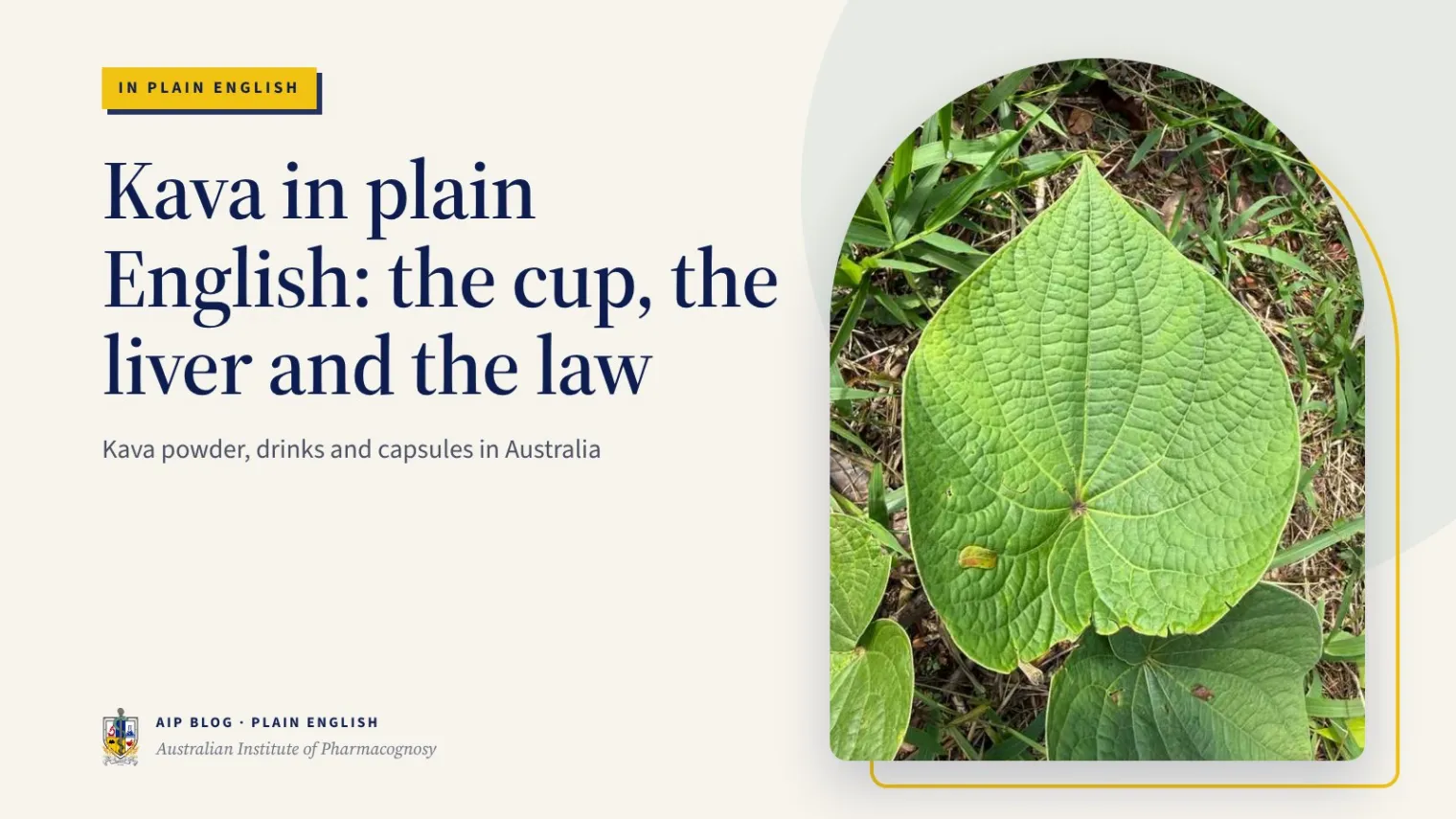
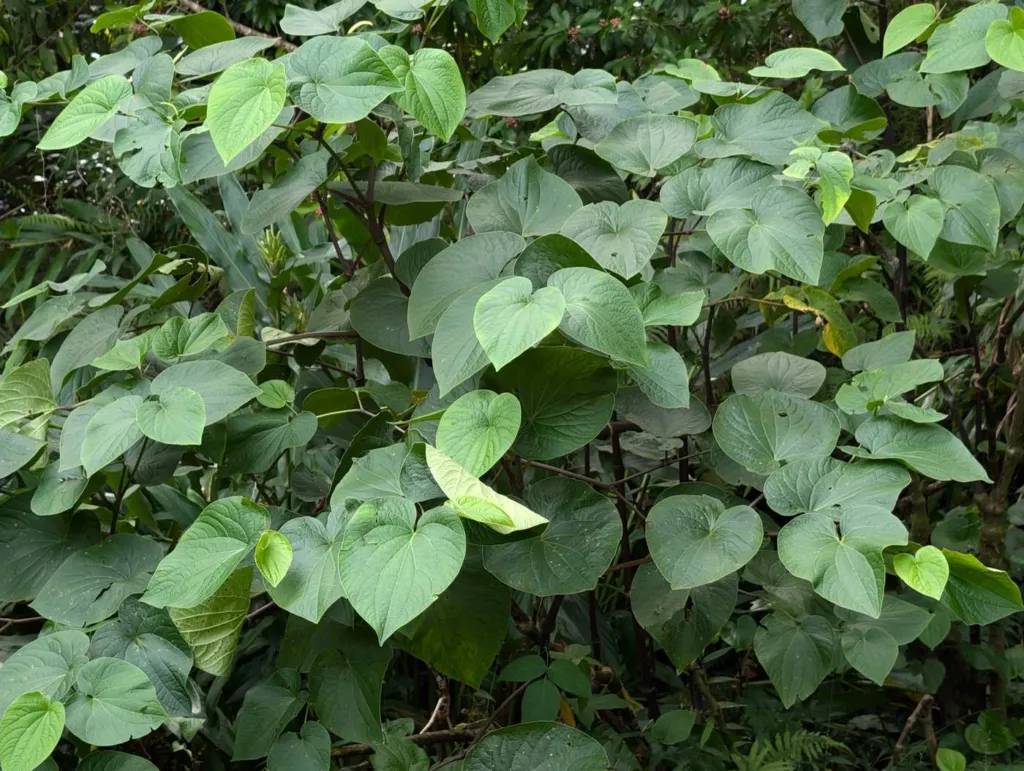
Photo: Damien Wallace · CC0 1.0 · iNaturalist
On a warm evening in a Bundaberg backyard, somebody works a cloth bag of grey-brown powder through a tub of cold water, and a coconut-shell cup starts round the circle. Across town, somebody else turns a bottle of capsules over at the chemist.
Same root, different door, and the door decides what is in it, and how much of the old liver scare and the anxiety trials applies to it.
Educational only; no preparation or dosing detail. Legal passages reflect Australian rules as read in October 2026 and are no substitute for legal advice.
Emergency: call Triple Zero (000). Suspected poisoning or overdose: Poisons Information Centre, 13 11 26, 24 hours, Australia-wide. Report suspected side effects to the TGA.
Alcohol, sedatives and medicines. Kava causes drowsiness and acts on the same receptor family as alcohol and benzodiazepines. Never combine it with alcohol. Have it reviewed first if you take sedatives, sleep medicines, antidepressants, levodopa or other regular prescription medicines, have Parkinson’s disease, or are due for surgery and anaesthesia.
The liver. Serious injury is rare but documented, including an Australian case in 2025. Avoid kava with liver disease or heavy drinking. Yellow skin or eyes, dark urine, pale stools, unusual tiredness or weakness, loss of appetite, unexplained weight loss or pain under the right ribs: stop and get medical care the same day. With confusion, marked drowsiness or vomiting as well, call 000.
Driving. In Fiji, driving within 12 hours of kava was linked to 4.7 times the odds of an injury crash. After a session, do not drive, ride or operate machinery until the effect has fully worn off; the 12 hours was only the study’s window.
Pregnancy, breastfeeding and children. Safety is not established. Avoid.
Big sessions. A young New South Wales man developed acute kidney injury after 15 cups of kava tea at a party; very heavy use also affects the skin and the liver. With kidney disease, have kava reviewed before using it.
Northern Territory. Controlled under the Territory’s own Act; the Office of Drug Control advises that the traveller’s allowance does not extend there.
Before taking any herbal medicine, kava included, consult a degree-qualified herbalist with competencies and adequate training in pharmacognosy.
- One Pacific root, sold as powder, drinks and capsules, each under different rules.
- For anxiety, a small, brief effect at best, and none in the longest test of the water-based extract allowed here.
- Liver harm is rare, unpredictable and real. Yellow eyes or dark urine: stop, and get care that day.
- Keep it away from alcohol, sedatives and the car; avoid it in pregnancy, breastfeeding and childhood.
- Leaves, stems, solvent extracts and overseas mail-order parcels sit outside the rules.
Root, the right root, and cold water
One name, three different things.
Only the underground part belongs in the bowl: the root and the knobbly stump above it. Leaves and stem peel carry an alkaloid the root lacks, so growers leave them out and so does Australian law.
Vanuatu growers call their everyday kava “noble”. “Two-day” kava, tudei in Bislama, is named for an effect that lingers, with nausea and a hangover. Noble kava holds less of a compound that laboratory liver studies keep returning to, and Australia accepts noble root only. That this spares anyone’s liver is a sensible guess nobody has tested in people.
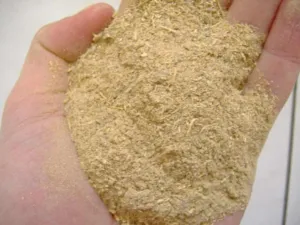
The calming compounds barely dissolve in water, so the traditional drink is fine root dust hanging in cold water, while alcohol and acetone, a solvent, pull far more out. So a bowl, a capsule and a tincture end up chemically unlike each other.
Look for peeled noble root on the bag, leave leaf and stem products on the shelf, and know that an alcohol tincture or solvent extract falls outside the Australian rules and is the kind of product behind most of Europe’s liver cases.
A small calm, and a long trial that found none
The evidence is thinner than the reputation.
Pool the European anxiety trials and people on kava extract scored a little lower on an anxiety rating than people on a dummy pill. The gain was small and uncertain, and all but one of those trials used the same acetone extract, a kind barred from kava medicines sold here.
Australian researchers then tested water-based noble root extracts. Two short trials, which the Institute could read only through reviews, looked promising. The longest, about four months, found no benefit, and its kava group had more liver-enzyme rises, tremor and poorer memory, though that group also reported more drinking.
If anxiety is shaping your days, get a proper assessment. The herbalist in the red box can say whether kava has any place in your plan.
The liver story, at its real size
Rare and unpredictable, which is different from harmless.
Around 2000 Europe saw a run of serious liver injuries in people taking kava medicines, some ending in transplants or death, and the medicines were withdrawn. Most were strong acetone or alcohol extracts, so for a while the solvent took the blame. Then rare cases surfaced after traditional water drinks too, Australia included. No single cause has been proved. The harm is thought to strike unpredictably, is not clearly tied to the amount, and can appear a week or many months in.
One Australian woman died of liver failure after months of naturopath-supplied tablets combining kava with other herbs. In 2025 a Geelong man taking kava daily for sleep developed liver injury rated probably due to kava; he was also on two prescription medicines, had begun paracetamol once unwell, and had a history of heavy drinking. His liver settled after the kava stopped.
Against hundreds of tonnes imported, few Australian cases have reached print, mostly with big intakes, other medicines or both. Printed cases are not a full tally, though, and nobody yet knows the Australian rate.
Nobody yet knows the Australian rate.
Alcohol stacks the drowsiness and may load the liver too. In mice, a few days of kava made paracetamol’s liver damage worse, an animal result unproven in people, though Australia’s food regulator also urges caution with that pairing.
With liver disease or heavy drinking, leave kava alone. Otherwise keep it apart from alcohol, ask the herbalist in the red box before pairing it with paracetamol or a regular prescription, and know the signs in the red box. Stop, and get care that day.
Three doors in, and what each label should show
Rules as the Institute read them, October 2026.
Food. Peeled noble root, dried or raw, or a drink made with cold water and nothing added. Its label warns “Use in moderation” and “May cause drowsiness”, makes no health claims and has no AUST L number.
Travellers. Adults 18 and over may bring home up to 4 kg in their luggage, as root, dried kava or a cold-water drink, for personal use. The Office of Drug Control says that allowance does not reach the Northern Territory.
Medicine. A TGA-listed tablet, capsule or teabag, with an AUST L number. Root only, dried or water-extracted, with a daily limit on the pack and a liver and pregnancy warning on stronger ones. Leaves, stems or a solvent extract on the label mean it does not fit.
Kava bought online from abroad and posted home fits none of the three and can be seized. The Territory has its own Act, and nobody under 18 may have kava there. All of it is interim: the import pilot ended at the end of 2023, and the Government has not yet decided what follows.
Know your kava’s door and check its label. A cup and a capsule in one day both count. Heading to Darwin? Read the Territory’s rules first.

Carried by hand, shared from the bowl
Kava has never once grown from seed.
Across the Pacific the root is worked through water in a wooden bowl and handed round in a shell. It greets guests, seats chiefs and marks births, weddings and funerals. Its flowers never set seed, so every plant alive grew from a carried and planted stem cutting.
Pacific families brought the bowl to Australia. Since 2021 it has reached supermarkets and Queensland kava bars,. Families told the pilot review that kava strengthens cultural ties; some drink it instead of alcohol.
If a Pacific family passes you the cup, you hold a plant carried across an ocean by hand. Take it in moderation, in good company, and let someone else drive home.
The short version of Dr Thomas Ridley’s evidence review. The trials, cases and rules are set out in full here:
Kava (Piper methysticum): Australian rules, safety, evidence
- Dr Luke Iggulden, Chief Scientific Officer — Senior author. Commissioned the Explainer series, set its direction and approved it
- Jesse Kirby — Took notes from the kava review in his own shorthand, then wrote this edition from them with the review shut: chose the five things a kava buyer needs, the order, the backyard opening and every sentence, and reworded the safety box without losing any of its warnings
- Zoe Bennett — Wrote the page title and the search description and set the labels, pitched at the backyard bowl and the capsule bottle, the two ways readers will meet kava when the page is shared
- Theo Karras — Picked the cover shrub and the five section banners, from the kava leaf to the Fijian beach ceremony, checked each by eye against its alt text, and left out the review’s label diagram because it prints doses and section numbers
- Leah Bianchi — Built the page: the red safety box, the one-minute card, the pull quote, the five what-this-means cards and the card back to the review, laid out to read on a phone
Contributors
- Dr Thomas Ridley — Wrote AIP Literature Review AIP-LR-PIPMET, the evidence review this page retells
Image credits. Cover, kava at Kaneohe, Hawai‘i: Damien Wallace, CC0 1.0, via iNaturalist. Fijian kava ceremony: Jaejay77, CC BY-SA 4.0, via Wikimedia Commons. Kava leaf, Fiji: russnamitz, CC0 1.0, via iNaturalist. Kava cup, Vanuatu: Sheminghui.WU, CC BY-SA 4.0, via Wikimedia Commons. Kava powder, Vanuatu: Ib0ga, CC BY-SA 3.0, via Wikimedia Commons. Root bundle, Fiji: Hsz282, public domain, via Wikimedia Commons. All resized for the web by AIP; no other changes.
AIP Explainers are the plain-language editions of the Institute’s technical articles, published alongside the original. Everything on this page is carried by the full review, where the evidence, the references and the regulatory sources are set out. Regulatory information was read in October 2026 and may change; the Commonwealth’s decision on kava imports after the pilot was still pending. Spotted an error? Write to our contact form. We would rather correct a claim than repeat it.
Jesse Kirby
Head of Community Outreach
Australian Institute of Pharmacognosy
Cardwell QLD, Australia
australian-pharmacognosy.org · our contact form
The Institute sets and publishes its own monographs. The catalogue is in Publications.