

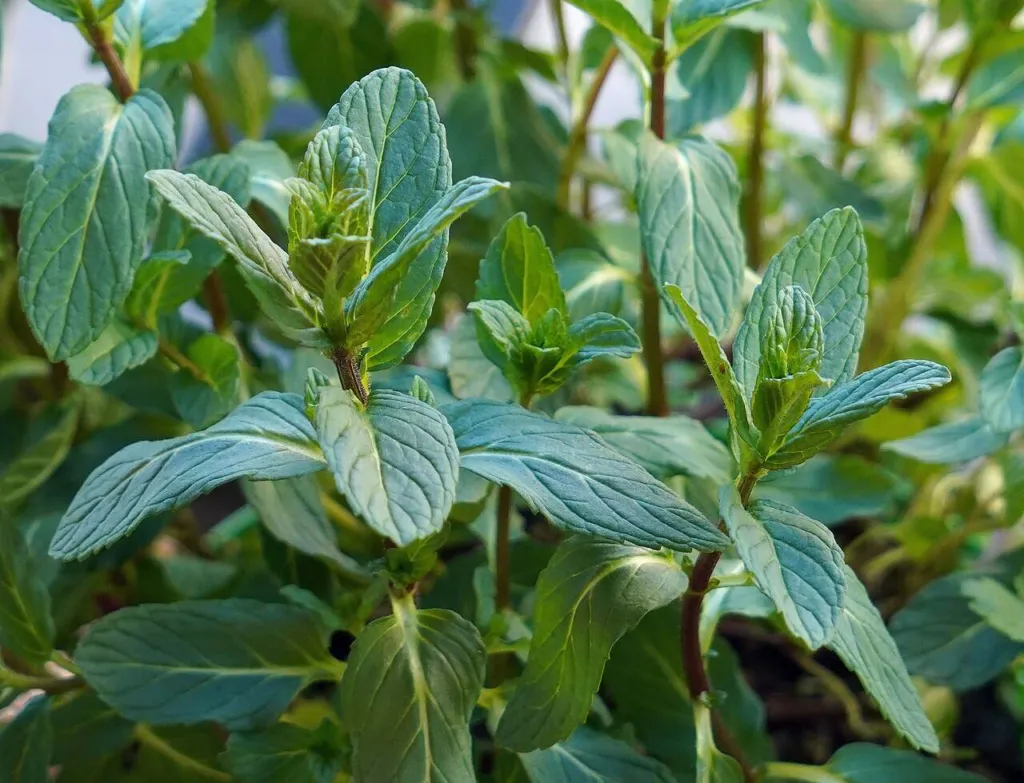
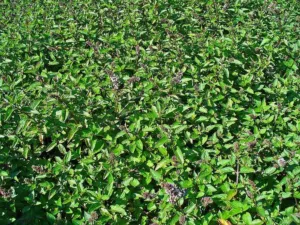
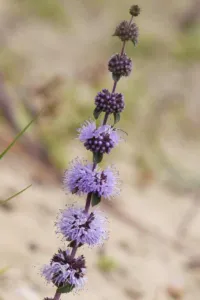
Cover: spearmint leaves, Mentha spicata. Photo: Commonists · CC BY-SA 4.0 · Wikimedia Commons
“Two cups of spearmint tea a day” has become standard advice on social media for polycystic ovary syndrome, unwanted facial hair and “hormonal” acne. The idea rests on two small studies, of 21 and 42 women, that ran for five and thirty days and found lower free testosterone. Evidence suggests Neither looked at acne, and the one that scored hair growth found no change. Evidence suggests
This is AIP-LR-MENSPI in the Australian Institute of Pharmacognosy’s series of literature reviews and critical analyses. It reads Mentha spicata L., the spearmint of the teapot and the kitchen garden, from the plant outward: how it differs from peppermint, where it grows in Australia, its traditional uses, its chemistry, the animal work behind the hormone idea, each human trial and its limits, why a blood test result is a different thing from clearer skin, safety and interactions, its place in Australian law, and the research that would settle the question. Spearmint deserves a fair hearing; it is a pleasant, ancient and widely used plant with a genuinely interesting research record.
This article is educational. It is not medical, legal or regulatory advice, it is not an advertisement, and nothing in it is a recommendation to buy or take spearmint or any product containing it. No product or sponsor is named. The Institute has no commercial interest in any spearmint product.
Hair growth that is new, severe or worsening quickly, or a deepening voice, needs prompt medical investigation before any tea: the 2023 international guideline asks for androgen-secreting tumours to be ruled out (chapter 9). Attested
As a tea, spearmint has a long culinary record and no serious adverse effects were reported in the human studies reviewed here. The trials are discussed in chapter 9. Evidence suggests
Pregnancy, breastfeeding and trying to conceive. There are no human safety studies. Using spearmint for a hormonal purpose at these times is not supported by evidence. Mechanism
Hormonal medicines. If you take the pill, spironolactone, cyproterone or metformin, spearmint has not been studied alongside them. Keep whoever prescribes them informed. Mechanism
Reflux. Mint oils can relax the valve at the top of the stomach and worsen heartburn in some people. Evidence suggests
Essential oil is a different product: concentrated, not a drink, and dangerous if a child swallows it. Pennyroyal (Mentha pulegium) is a different plant; its oil is a Schedule 6 poison. Attested
Emergency: call Triple Zero (000). For a suspected poisoning, call the Poisons Information Centre on 13 11 26 (24 hours, Australia-wide).
| Plant | Mentha spicata L., Lamiaceae; leaf. One parent of peppermint, a different plant Attested §1 |
| In Australia | Introduced; naturalised in most states, including Queensland Attested §2 |
| Traditional use | Food and tea; digestive complaints, colds, headache; folk use against female hair growth Traditional §3 |
| Chemistry | Oil: carvone, limonene. Tea: rosmarinic acid and related phenolics Confirmed §4 |
| Animal work | Lower testosterone in rats at high doses; better ovaries in rat PCOS models Evidence suggests §5 |
| Human androgen trials | Two small tea studies (21 and 42 women, 5 and 30 days): free testosterone fell Evidence suggests §6 |
| Hair (hirsutism) | Self-rated hair improved; clinician-scored hair unchanged at 30 days Evidence suggests §6 |
| Acne | Never tested for spearmint tea Attested §7 |
| PMOS (formerly PCOS) | Renamed in 2026; spearmint is not in the 2023 international guideline Attested §7 |
| Safety | Tea well tolerated in short trials; no human pregnancy data; may worsen reflux Evidence suggests §9 |
| Australian law | Unscheduled; permitted ingredient in listed medicines, menthol limits apply Attested §10 |
| Quality | “Mint” may be another species; oil and phenolic content vary widely Confirmed §11 |
- Confirmed Established in humans by trial, or an unambiguous analytical, chemical or botanical fact.
- Evidence suggests Real published data, but preclinical, observational, small, short or not yet independently replicated.
- Mechanism A plausible mechanistic, pharmacological or practical inference, short of a measured outcome.
- Traditional Historical, culinary or ethnobotanical use. Evidence of practice, not of efficacy.
- Attested A documentary fact read from a named source: a law, a register entry, a guideline, a database record.
- Unsourced A claim we could not trace to a source we could open. Kept visible so the reader can weigh it.
Every PMID was checked against PubMed in November 2026, and every paper cited by PMID was read in full text. Papers the Institute could not open in full were requested through its library and are not cited. Every compound was checked against PubChem and is linked by CID. Australian regulatory statements were read from the regulator’s or the legislature’s own documents in November 2026. Overseas regulatory material is labelled as overseas and does not govern Australian law.
The plant. Spearmint (Mentha spicata) is the mint of mint tea and the kitchen garden, one parent of peppermint, and naturalised across much of Australia. Its oil is mostly carvone; a cup of tea is mostly rosmarinic acid and related phenolics. Confirmed
The trials. Two small studies found that women with hirsutism or PCOS who drank spearmint tea twice a day had lower free testosterone after five or thirty days. In the only randomised trial, 42 women for 30 days, the women rated their hair problem as better, but the clinician-scored hair measure did not change. Evidence suggests
What was never tested. Acne, use beyond 30 days, cycles, fertility, weight and metabolic health for spearmint alone, and concentrated extracts for hormones. A lower blood androgen level and clearer skin are separate outcomes, and only the first was measured. Attested
Safety. As a tea it was well tolerated in the trials. There are no human pregnancy data, it may aggravate reflux, and it has not been studied alongside the pill, spironolactone or metformin. Evidence suggests
In Australia. Spearmint is unscheduled and a permitted ingredient in listed medicines. No listed medicine on the register carries a PCOS, PMOS, hirsutism or acne indication for it, and an AUST L number is not a TGA finding that a product works. The evidence for spearmint tea in PMOS is small and short-term, and it has been studied alongside guideline care, never in place of it. Attested
 Chapter 1Spearmint and peppermint
 Chapter 2The plant in Australia
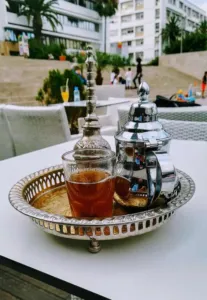 Chapter 3Food and folk medicine
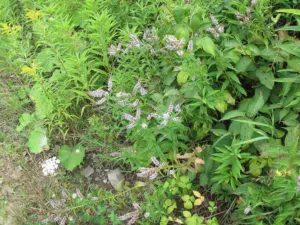 Chapter 4The chemistry
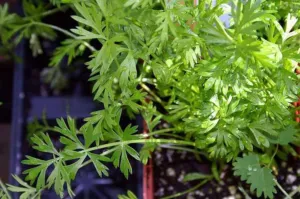 Chapter 5The animal and laboratory work
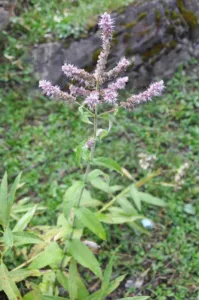 Chapter 6The human trials
 Chapter 7Marker, hair, acne, diagnosis
 Chapter 8Extracts, oils and the stomach
 Chapter 9Safety and interactions
 Chapter 10In Australia
 Chapter 11Quality and identity
 Chapter 12Discussion and research agenda
1. Spearmint, peppermint and the plant in the teabag
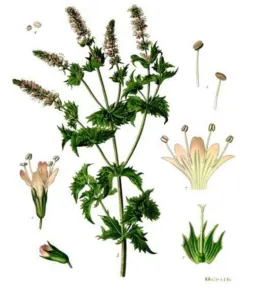
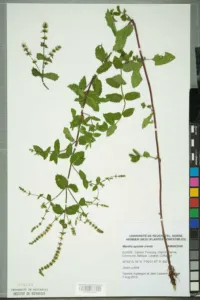
Spearmint is Mentha spicata L., a perennial mint of the family Lamiaceae, the same family as rosemary, sage and thyme. The leaf is the medicinal and culinary part. The name is old and has gathered a long list of synonyms; Mentha viridis (L.) L. is the one most likely to turn up in older European and North African literature, and the 2022 review by El Menyiy and colleagues uses it throughout (PMID 35463088). Attested The Australian Plant Census accepts Mentha spicata L. as the current name (Australian Plant Census). Attested
Peppermint is a different plant. Mentha × piperita L. is a hybrid, and the European Medicines Agency’s herbal committee records the accepted view that its parents are spearmint and water mint, Mentha aquatica L. (EMA/HMPC assessment report on peppermint, 2020). Attested The same report notes that one of the oldest surviving specimens of the hybrid sits in the herbarium of the English botanist John Ray (1628–1705). Attested So spearmint is one parent of peppermint, and the two share a family resemblance and a shelf at the supermarket. Their chemistry differs in ways that matter to anyone reading a trial (chapter 4): peppermint oil is dominated by menthol and menthone (EMA/HMPC assessment report on peppermint, 2020), spearmint oil by carvone (PMID 35463088). Confirmed
That difference is why this review keeps the two apart. Nearly everything European regulators have written about mint leaf concerns peppermint, and the trend on social media is about spearmint. When a post says “mint tea”, it is worth checking which plant is in the bag. We found no study of peppermint tea and androgens in women at all. Attested
The names people actually use
Spearmint is also sold as garden mint, common mint, green mint and, in Arabic-speaking and North African kitchens, as the mint of mint tea. The Atlas of Living Australia lists garden mint and spear mint among its common names (Atlas of Living Australia). Attested The word “mint” on its own is a culinary label and tells the reader very little about species. A garden “mint” in a Cardwell backyard may be spearmint, peppermint, apple mint or one of many named cultivars and hybrids. Mechanism
2. The living plant, and where it grows in Australia
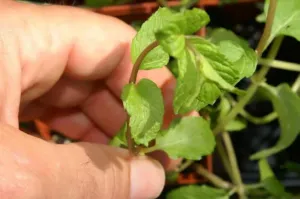
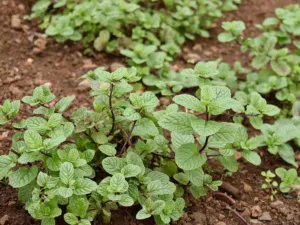
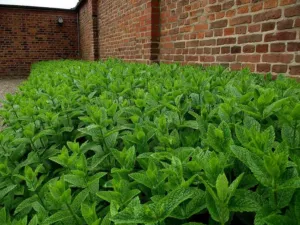
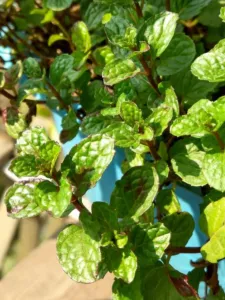
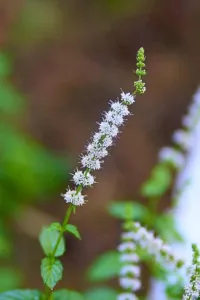
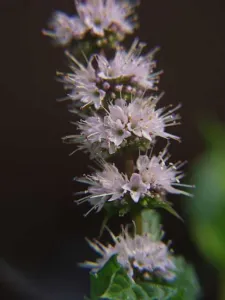
El Menyiy and colleagues describe spearmint as a creeping, rhizomatous perennial, 30 to 100 cm tall, hairless to hairy, with a strong smell (PMID 35463088). Attested The leaves sit almost directly on the stem, without the clear leaf stalk that peppermint shows, and the flowers are carried in narrow, interrupted spikes at the tips of the shoots. Anyone who has grown it knows the other trait: it spreads by runners and will take over a garden bed if it is left alone. Mechanism
Status in Australia
Spearmint is not native to Australia. The Australian Plant Census records it as naturalised in Western Australia, South Australia, Queensland, New South Wales, Victoria, on Lord Howe Island and Norfolk Island, formerly naturalised in the Australian Capital Territory and doubtfully naturalised in Tasmania (Australian Plant Census). Attested The Census also notes that two forms of the species are recognised as distinct taxa in South Australia. Attested
The Atlas of Living Australia held 675 occurrence records for Mentha spicata when we queried it in November 2026: 211 from Victoria, 134 from New South Wales, 87 from South Australia, 53 from the ACT, 47 from Tasmania, 22 from Western Australia and 6 from Queensland, with the remainder from New Zealand or without a state (Atlas of Living Australia). Attested Those counts reflect where people collect and photograph plants as much as where the plant grows; spearmint is in thousands of Queensland gardens and pots that never reach a herbarium. Mechanism Mentha spicata is not named as prohibited or restricted matter in Queensland’s Biosecurity Act 2014 or Biosecurity Regulation 2016, both searched in full (Biosecurity Act 2014 (Qld); Biosecurity Regulation 2016 (Qld)). Attested Local councils can still manage garden escapes along creeks as local weeds. Mechanism
3. Food and folk medicine
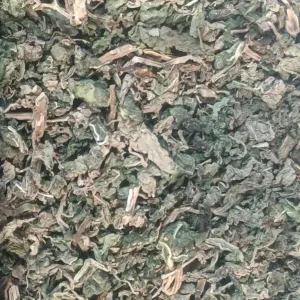
Spearmint has a long and ordinary history as food. It flavours lamb, yoghurt, salads and sauces, and it is the mint in Maghrebi and Middle Eastern sweet mint tea. That everyday use matters for safety: people have drunk spearmint infusions daily, in large numbers, for a very long time. Traditional Long use tells us that harm at kitchen doses is uncommon enough to escape notice; it does not tell us that the tea changes anything in the body. Mechanism
The medicinal record is mostly digestive. El Menyiy and colleagues collect ethnobotanical surveys, largely from Morocco, in which leaf infusions and decoctions are used for throat complaints, stomach and intestinal upsets, flatulence, colds, headache and tiredness, and as a tonic (PMID 35463088). Traditional Some of the same surveys record use for diabetes, respiratory complaints and skin disease. Traditional Grant and Ramasamy, writing in 2012, note that spearmint tea has long been thought to lower testosterone and is used in Middle Eastern regions as a home remedy for unwanted hair growth in women (PMID 23843810). Traditional That last reputation is the seed of the modern trend, and it is the one with the thinnest written history. We could not trace it to a named historical source earlier than the modern clinical papers. Unsourced
European herbal regulators have assessed peppermint leaf for indigestion and flatulence on the basis of long-standing use, and their reasoning rests on the antispasmodic and carminative actions of the oil (EMA/HMPC assessment report on peppermint, 2020). Attested Spearmint has no equivalent European assessment. Its digestive use is real as a practice. It has been tested far less than peppermint’s, and the peppermint conclusions cannot be transferred to it without evidence. Mechanism
4. The chemistry: carvone, limonene and rosmarinic acid
Two quite different families of compounds come out of a spearmint leaf, and which family dominates depends on how the leaf is prepared.
The essential oil
Steam distillation gives the essential oil. In spearmint it is dominated by carvone, with limonene usually second. A 2024 analysis of Mediterranean spearmint from Northern Cyprus found carvone at 67.8% and limonene at 10.6% of the oil (PMID 38731461). Confirmed Across published samples El Menyiy and colleagues report carvone as the chief component in most populations, above 50% in oils from Hungary, Iran, Bangladesh, Serbia, the Czech Republic and Pakistan, with smaller amounts of carveol, dihydrocarvone, 1,8-cineole, pulegone, menthone and other terpenes (PMID 35463088). Confirmed The same review records chemotypes in which carvone is minor, including a landrace with linalool at up to 58%. Confirmed “Spearmint oil” is a family of oils.
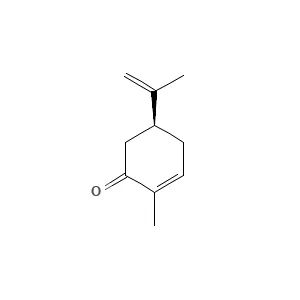
Carvone exists as two mirror-image forms. Spearmint makes mostly (R)-(−)-carvone, also called L-carvone, which smells of spearmint; caraway and dill make (S)-(+)-carvone, D-carvone, which smells of caraway. Confirmed The two have the same formula and the same bonds, and the nose tells them apart. Australian law lists them separately: L-carvone and D-carvone are separate entries in the Permissible Ingredients Determination, each permitted only as an excipient (Permissible Ingredients Determination No. 3 2026). Attested
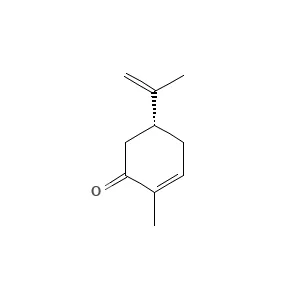
C10H14O · L-carvone, the main compound of spearmint oil
PubChem CID 439570 · structure image: PubChem, public domain
C10H14O · D-carvone, its mirror image, from caraway and dill
PubChem CID 16724 · structure image: PubChem, public domain
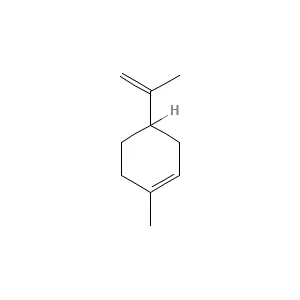
C10H16 · usually the second compound of the oil
PubChem CID 22311 · structure image: PubChem, public domain
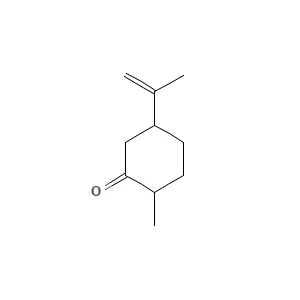
C10H16O · a minor oil compound, dominant in some chemotypes
PubChem CID 24473 · structure image: PubChem, public domain
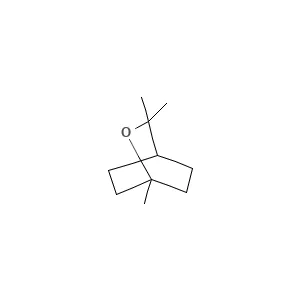
C10H18O · a minor oil compound
PubChem CID 2758 · structure image: PubChem, public domain
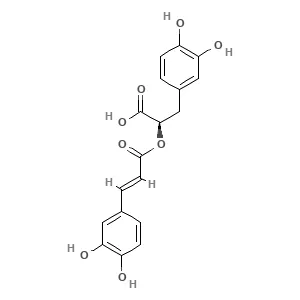
C18H16O8 · the main phenolic in the water extract, and in the cup
PubChem CID 5281792 · structure image: PubChem, public domain
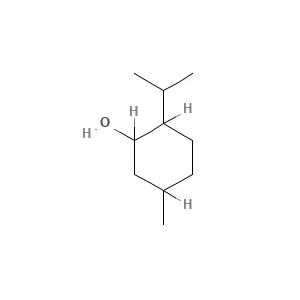
C10H20O · peppermint’s main compound; minor in spearmint
PubChem CID 1254 · structure image: PubChem, public domain
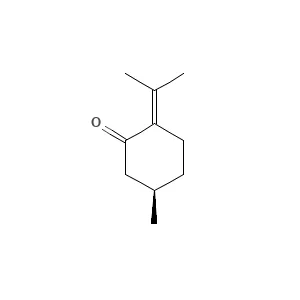
C10H16O · the toxic compound of pennyroyal; traces in some spearmint oils
PubChem CID 442495 · structure image: PubChem, public domain
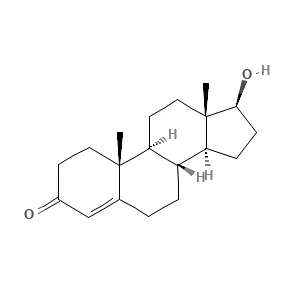
C19H28O2 · the androgen measured in the trials
PubChem CID 6013 · structure image: PubChem, public domain
Five oil compounds, the main phenolic of the tea, two compounds for comparison and the hormone the trials measured. Every CID was checked against PubChem in November 2026; the depictions are PubChem’s own (US National Library of Medicine, public domain).
What is in the cup
A teabag brewed in hot water carries little of that oil. The cup is dominated by water-soluble phenolics. El Menyiy and colleagues report that in polar extracts of spearmint leaf, rosmarinic acid and its derivatives made up about 88% of the phenolics detected, followed by salvianolic acids (PMID 35463088). Confirmed Rosmarinic acid is the marker used to standardise the commercial spearmint extracts tested in memory trials; one such extract contained at least 14.5% rosmarinic acid and 24% total polyphenols (PMID 29314866). Confirmed The content of a home-brewed cup is not standardised. It depends on the plant’s variety, growing conditions, harvest, drying and storage, and on how long the tea is steeped. Mechanism
That matters for the hormone question because no one knows which compound, if any, is responsible for the androgen changes. The tea trials gave infusions; the animal PCOS studies mostly gave essential oil or alcoholic extracts (chapter 5). An effect seen with an oil dosed at hundreds of milligrams per kilogram may say little about a cup of tea, and the reverse. Mechanism
Menthol, pulegone and a regulatory oddity
Spearmint oil usually contains little menthol, the cooling compound of peppermint. The commercial oil used in one rat study was certified by its maker at 57.02% carvone, 24.63% limonene, 2.7% pulegone, 1.8% menthol and 0.34% cineole (PMID 29399556). Confirmed Australian law nonetheless names menthol as a “mandatory component” of both Mentha spicata and spearmint oil, and caps internal-use medicines at 1 g of menthol in the maximum daily dose (Permissible Ingredients Determination No. 3 2026). Attested Pulegone, present in small amounts in some spearmint oils, is the compound the Poisons Standard controls: pennyroyal oil and d-pulegone are Schedule 6 poisons above 4% d-pulegone (Poisons Standard, October 2026; chapter 9). Attested
5. Where the hormone idea comes from: the animal and laboratory work
The “anti-androgen” reputation has two roots: the folk use for female hair growth (chapter 3) and a set of rat studies, several of them from Iran.
Male rats given spearmint tea
The study most often quoted is a 2004 experiment by Akdoğan and colleagues in which male rats drank spearmint or peppermint tea for 30 days. The European Medicines Agency’s assessment report summarises it: groups of 12 rats received 20 g/L peppermint tea, 20 g/L spearmint tea or 40 g/L spearmint tea as their drinking water; FSH and LH rose and total testosterone fell against controls, and testicular biopsy scores differed without reaching significance (EMA/HMPC assessment report on peppermint, 2020). Evidence suggests Twenty grams of dried leaf per litre is a strong brew, and the rats drank it in place of water every day. Mechanism The same group reported mild liver changes in rats given strong peppermint tea and slight kidney changes, again more marked with peppermint than spearmint (EMA/HMPC assessment report on peppermint, 2020). Evidence suggests
A later Iranian study gave male rats a spearmint extract at 10, 20 or 40 mg/kg by mouth for 45 days (PMID 25386406). Evidence suggests Sperm counts, sperm motility and serum testosterone drifted downward, but none of the changes was statistically significant, and the number and growth of offspring sired by treated males did not differ from controls. Evidence suggests The authors concluded that spearmint had no significant toxic effect on male fertility at those doses and cautioned that higher doses might. Evidence suggests
Female rats with induced PCOS
Laboratory “PCOS” is usually made by giving rats letrozole, an aromatase inhibitor, which raises androgens and produces cystic ovaries. In a 2017 study, spearmint essential oil at 150 or 300 mg/kg reduced body weight, testosterone, ovarian cysts and atretic follicles and increased mature (Graafian) follicles in letrozole-treated rats (PMID 29399556). Evidence suggests A 2020 study gave a combination of spearmint and flaxseed extracts to rats with induced PCOS and reported higher progesterone, lower testosterone and oestradiol, and better ovarian histology than in untreated PCOS rats (PMID 32197626). Evidence suggests Flaxseed contributes lignans with their own hormonal activity, so that result cannot be credited to spearmint alone. Mechanism
How it might work
The mechanism is unknown. Grant and Ramasamy’s summary table describes the human finding as a fall in free testosterone with a rise in LH, FSH and oestradiol (PMID 23843810). Evidence suggests Ghanbarian and colleagues suggest that spearmint may speed androgen metabolism by inducing the liver enzyme CYP3A4, shifting the balance towards oestrogen, which in turn raises sex hormone-binding globulin and binds more testosterone in its inactive form (PMID 38715699). Mechanism That chain is plausible, and nobody has measured it in people drinking spearmint tea. The rise in LH alongside a fall in testosterone could equally point to an effect at the ovary or testis, since the pituitary usually raises LH when testosterone falls. Mechanism A 2018 laboratory screen of culinary essential oils for androgen-receptor activity is the kind of work that could settle part of this; we have queued it and not yet read it in full. Unsourced
All of this is useful for designing a human trial. None of it shows that a cup of tea does the same thing in a woman. Rats drinking 20 g/L tea as their only fluid, or dosed with essential oil at 300 mg/kg, receive far more of the plant per kilogram than a person drinking two cups a day. Mechanism
6. The human trials, read closely
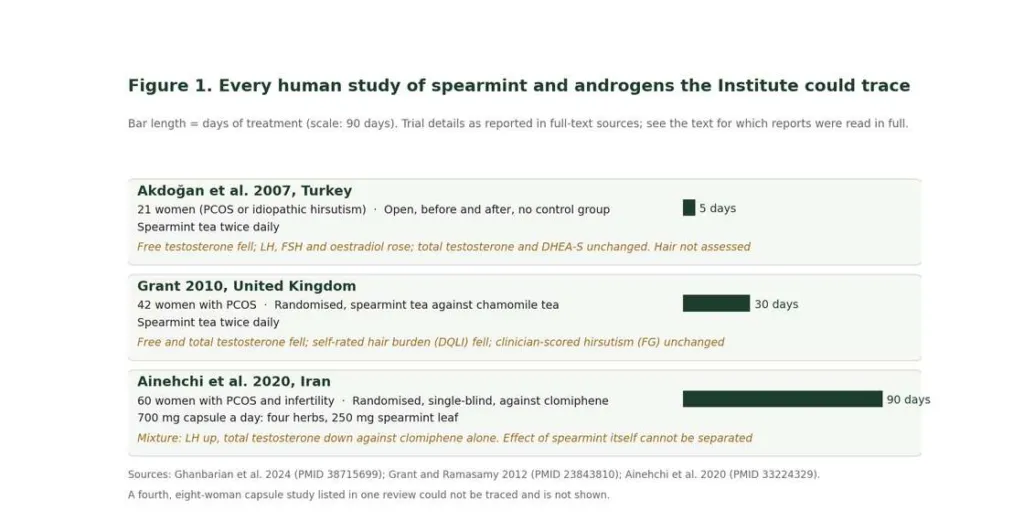
The “two cups a day” advice traces back to two small studies in women, published in 2007 and 2010. A third, larger trial tested a four-herb capsule that included spearmint. Figure 1 sets them side by side.
Akdoğan and colleagues, Turkey, 2007
Twenty-one women aged 18 to 40, some with hirsutism from PCOS and some with idiopathic hirsutism (excess hair growth without a hormonal cause found), drank spearmint tea twice a day for five days in the follicular phase of the menstrual cycle (PMID 38715699). Evidence suggests There was no control group; each woman was compared with herself before and after. After five days free testosterone was lower, by about 30% according to Ghanbarian and colleagues, while LH, FSH and oestradiol rose; total testosterone and DHEA-S did not change significantly (PMID 38715699; PMID 23843810). Evidence suggests
Five days is too short to see any change in hair, and the study did not try. Evidence suggests Timing the tea to the follicular phase reduces one source of noise. Without a control group, though, a fall in a hormone that varies from day to day and cycle to cycle is hard to interpret, and some of the movement could be ordinary variation or regression towards the mean. Mechanism
Grant, United Kingdom, 2010
Forty-two women with PCOS were randomised to drink spearmint tea or chamomile tea, twice a day, for 30 days (PMID 23843810; PMID 38715699). Evidence suggests Chamomile was chosen as a control believed to have no endocrine effect. Free and total testosterone fell in the spearmint group, by about 24% and 29% according to the 2024 review (PMID 38715699). Evidence suggests The two reviews disagree about the pituitary hormones: Grant and Ramasamy’s text says the trial reduced “gonadotropins and androgens”, while their summary table, which pools both tea studies, lists LH and FSH as rising (PMID 23843810). Attested Until the primary report is read, the direction of LH and FSH in this trial is unsettled. Unsourced The women’s own rating of their hair problem, on the Dermatology Quality of Life Index, improved. The clinician-scored measure of hirsutism, the modified Ferriman–Gallwey (FG) score, did not change (PMID 38715699). Evidence suggests Ghanbarian and colleagues report that no adverse effects were recorded in either tea study. Evidence suggests
This is the only randomised trial of spearmint tea in PCOS that we found. It is small, it is short, and its hair results split along exactly the line that matters: the measure the women filled in moved, and the measure an assessor scored did not. Evidence suggests Spearmint and chamomile taste nothing alike, so participants knew which tea they were drinking. The 2024 review describes the trial as double-blind and dates it to 2008; both look like transcription errors, since the trial was published in 2010 and a taste-blinded comparison of two familiar herbal teas is very hard to achieve. Mechanism Self-rated outcomes are the ones most open to expectation when participants know their allocation. Mechanism
Ainehchi and colleagues, Iran, 2020
The largest trial to include spearmint did not test spearmint alone. Sixty women with PCOS and infertility were randomised, single-blind, to clomiphene, to a 700 mg daily capsule of four powdered herbs, or to both, for three months (PMID 33224329). Evidence suggests Each capsule held 250 mg spearmint leaf, 200 mg ginger rhizome, 150 mg cinnamon bark and 100 mg orange (Citrus sinensis) peel. Attested After adjustment for baseline, the herb-only group showed higher LH, a higher LH:FSH ratio and slightly lower total testosterone than the clomiphene group, and the combined group showed lower free testosterone (PMID 33224329). Evidence suggests The authors concluded that the mixture with clomiphene improved free testosterone, insulin resistance, lipids and clinical features. Evidence suggests The trial shows that a herbal mixture containing spearmint is worth further study alongside fertility treatment. It cannot tell anyone what spearmint contributed, and it used a capsule of powdered leaf, a different exposure from a teabag. Mechanism
A fourth study that could not be traced
The 2024 review also tabulates an eight-woman, three-month study in which a 50 mg spearmint capsule and a 50 mg green tea capsule were taken daily, with a 25 to 50% fall in FG score reported (PMID 38715699). Unsourced The review cites it to a 2022 paper by Moore in the Asian Journal of Medical Principles and Clinical Practice. We could not find that paper in PubMed or open it anywhere else, so we have not read it and give it no weight. Unsourced
What the trials add up to
Two small studies of spearmint tea, 21 and 42 women, five and thirty days, found lower free testosterone in women with hirsutism or PCOS. Evidence suggests One of them measured clinician-scored hair growth and found no change. Evidence suggests Both point the same way on blood markers, and both are too short and too small to say anything about the outcomes women care about. Evidence suggests that spearmint tea can lower circulating androgens for a few weeks. It has not been shown to reduce hair growth, clear skin, regulate cycles or improve fertility. Evidence suggests
7. A blood marker, a hair, a pimple and a diagnosis
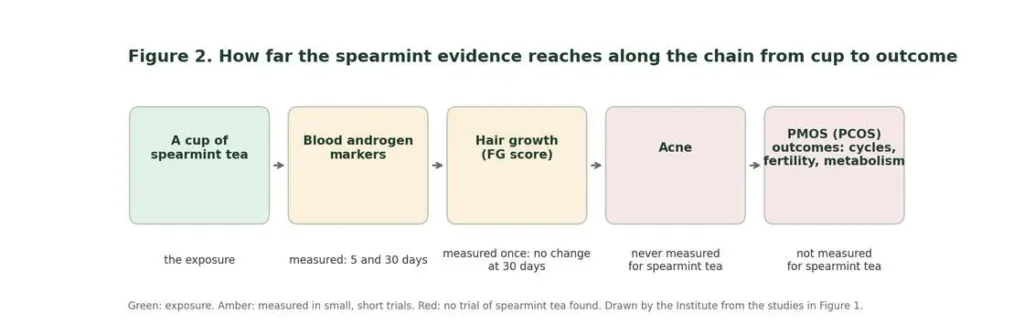
The trend promises three things: lower testosterone, less unwanted hair and clearer “hormonal” skin. The research measured the first, glanced at the second and never looked at the third. Figure 2 shows how far along that chain the evidence reaches.
Why a marker is a different measurement from an outcome
A fall in free testosterone is a change in a number on a blood test. Hair grows in long cycles, and the 2023 international PCOS guideline only judges whether hirsutism treatment has worked after at least six months of the combined oral contraceptive pill or cosmetic therapy before it suggests adding an anti-androgen (PMID 37580037). Attested Against that yardstick a 30-day trial is too short by a factor of six to show an effect on hair, whatever the blood test says. Mechanism The guideline also notes that acne or female-pattern hair loss on their own, without hirsutism, are relatively weak predictors of high androgens in the blood. Attested Many people with acne have normal androgen levels, so a tea that lowers androgens would not be expected to help everyone with acne even if it worked. Mechanism
Acne: never tested
We found no trial of spearmint tea, or of any oral spearmint preparation, with acne as an outcome. Attested PubMed lists one acne trial involving spearmint, which tested a lotion of barberry root extract combined with spearmint essential oil applied to the skin against a topical antibiotic; we could not open its full text and it tells us nothing about drinking tea. Unsourced A 2026 review of beverages and skin health discusses spearmint; it is behind a paywall, has been requested, and is not used here. Unsourced The “spearmint for hormonal acne” claim is an extrapolation from the androgen data. It may prove right or wrong. Today it is untested. Mechanism
PCOS has a new name, and a broader definition
In 2026 polycystic ovary syndrome was formally renamed polyendocrine metabolic ovarian syndrome (PMOS) after a 14-year international consensus process (PMID 42833694). Attested The new name reflects what the evidence has shown for years: the condition is a lifelong endocrine and metabolic disorder in which the ovarian changes are one feature, with real long-term effects on metabolic, cardiovascular and mental health (PMID 42833694). Attested Clinicians are being asked to say “PMOS, formerly polycystic ovary syndrome” for now, and this review does the same where it can. Most of the literature, and most social media posts, still say PCOS.
The 2023 guideline was developed under the leadership of the Monash Centre for Health Research and Implementation in Melbourne and puts prevalence at 10 to 13% of women worldwide, about one woman in eight to ten (PMID 37580037). Confirmed It recommends the combined oral contraceptive pill for hirsutism and irregular cycles, metformin for metabolic features, and anti-androgens with effective contraception where the pill has not worked or cannot be used (PMID 37580037). Attested The guideline does not mention spearmint. Attested Its only discussion of a complementary product is inositol, which it calls an option based on individual preferences, with limited clinical benefit, and it asks that women have access to unconflicted, evidence-based information about complementary therapies (PMID 37580037). Attested This review is written with that request in mind.
Seen against that picture, the spearmint trials answer a narrow question. They show a short-term change in one hormone panel. They do not touch insulin resistance, weight, cycle regularity, fertility, mood or long-term cardiovascular risk, which are the outcomes that shape a PMOS diagnosis. Evidence suggests
8. The other human evidence: extracts, oils and the stomach
Spearmint has been tested in people for things other than hormones, and those trials matter here for two reasons: they show what concentrated spearmint products are, and they carry most of the human safety data.
Standardised leaf extracts
A 90-day trial randomised 90 adults with age-associated memory impairment to 900 mg, 600 mg or no spearmint extract a day, as two capsules with breakfast (PMID 29314866). Evidence suggests The extract was a dried aqueous extract of spearmint aerial parts with at least 14.5% rosmarinic acid. The 900 mg group improved on a working-memory measure. Evidence suggests Three people withdrew for adverse events; one case of heartburn in the 600 mg group was judged probably related to the product and the rest were judged unrelated. Evidence suggests The authors disclose that they received funding from, or were employees of, the company that makes the extract. Attested That disclosure does not invalidate the result. It does mean the trial needs independent replication. Mechanism This trial measured no sex hormones, so it cannot reassure or alarm anyone about androgens in a person taking 900 mg a day. Evidence suggests
Spearmint oil for nausea
In an Iranian randomised, double-blind trial, people on chemotherapy took capsules containing two drops of spearmint or peppermint essential oil every four hours alongside their usual anti-nausea drugs; fifty treatment courses were analysed per group (PMID 23390455). Evidence suggests The number of vomiting episodes and the intensity of nausea in the first 24 hours fell with either oil compared with the control group, and no adverse effects were reported. Evidence suggests It is one trial and needs repeating. It fits the old digestive reputation of the mints. Traditional
Indigestion and wind
The digestive tradition is strongest for peppermint, where European regulators accept long-standing use for indigestion and flatulence (EMA/HMPC assessment report on peppermint, 2020). Attested For spearmint the clinical record is thin, and we found no trial of plain spearmint tea for indigestion that we could read in full. Attested Its carminative use rests on tradition and on the shared chemistry of mint oils. Traditional
9. Safety and interactions
Spearmint tea is drunk every day across North Africa, the Middle East and beyond Traditional, and none of the human studies in this review reported a serious adverse effect from it. Evidence suggests The questions worth asking are about dose, form, pregnancy, reflux and what else a person is taking.
When hair growth needs investigating first
Hair growth that is new, severe or getting quickly worse is a reason for prompt medical investigation before any tea. The 2023 international guideline says new-onset severe or worsening hyperandrogenism, including hirsutism, needs further investigation to rule out androgen-secreting tumours and ovarian hyperthecosis, and that the time of onset and rapid progression of symptoms are critical clues (PMID 37580037). Attested The same applies to a deepening voice, enlarging clitoris or increasing muscle bulk. Mechanism The guideline also lists other conditions that can look like PCOS, including congenital adrenal hyperplasia and Cushing’s syndrome (PMID 37580037). Attested A tea that lowers a blood marker could blur the picture while one of these goes unrecognised. Mechanism
Teenagers
We found no spearmint trial designed for adolescents. Attested The guideline treats PCOS diagnosis in adolescence with particular care and suggests that girls with features of the condition who do not meet the criteria be reassessed by eight years after their first period (PMID 37580037). Attested A teenager with irregular periods, unwanted hair or persistent acne deserves a proper assessment, and a social media label is no substitute for one. Mechanism
Tea against concentrates
No adverse effects were reported in either tea study, at two cups a day for five or thirty days (PMID 38715699). Evidence suggests The four-herb capsule trial, which included 250 mg of powdered spearmint leaf a day, recorded no side effects in any group over 12 weeks (PMID 33224329). Evidence suggests In the 90-day extract trial, at up to 900 mg a day of a concentrated extract, one case of heartburn was judged probably related (PMID 29314866). Evidence suggests Long-term use of either has not been studied in women with PMOS: the longest human exposure to spearmint alone that we found is 90 days. Attested The essential oil is a different product again. It is concentrated, it can contain small amounts of pulegone, and it is used in medicines in Australia only within the menthol limits set by law (Permissible Ingredients Determination No. 3 2026). Attested An oil sold for diffusers or massage is not a drink. Mechanism
The animal data at high doses
In rats, the clearest effects came at doses far above kitchen use. Strong spearmint tea given as the only drinking water lowered testosterone in males (EMA/HMPC assessment report on peppermint, 2020). Evidence suggests Ninety days of a spearmint and moringa leaf tea blend at the highest dose tested, 2,237 mg/kg a day, raised serum AST, CK and LDH in both sexes, with minor liver, kidney and pancreas lesions and no major organ damage (PMID 36518443). Evidence suggests The same blend given to pregnant rats at up to that dose produced no maternal toxicity, fetotoxicity or malformations; the authors estimated the no-observed-adverse-effect level at above 2,237 mg/kg a day (PMID 36518396). Evidence suggests Both studies used a blend with another plant, so they are reassuring about the blend and only indirectly about spearmint. Mechanism
Pregnancy and breastfeeding
There are no human studies of spearmint tea or extract in pregnancy. Attested For peppermint leaf, the European herbal committee concluded that, without adequate reproductive toxicity data, use during pregnancy and lactation cannot be recommended (EMA/HMPC assessment report on peppermint, 2020). Attested Spearmint has less data than peppermint, and the reason people take it for PMOS is that it may change sex hormones, which are exactly the hormones of early pregnancy. Mechanism Culinary amounts in food are a different matter from a daily therapeutic routine. A woman trying to conceive, pregnant or breastfeeding who wants to use spearmint tea for a hormonal purpose should first consult a degree-qualified herbalist with competencies and adequate training in pharmacognosy. Mechanism
Reflux and heartburn
Peppermint oil taken by mouth relaxes the lower oesophageal sphincter and lets stomach contents reflux, an effect documented in the 1960s and accepted by European regulators as the likely cause of heartburn with peppermint oil (EMA/HMPC assessment report on peppermint, 2020). Attested Spearmint has not been studied this way. Its oil is chemically different, but the heartburn case in the extract trial suggests the effect may be shared. Evidence suggests People with reflux who notice that mint makes it worse should take the hint. Mechanism
Adding to other anti-androgen treatment
Many women with PMOS take the combined pill, spironolactone, cyproterone or metformin. No study has looked at spearmint alongside any of them. Attested If spearmint lowers free testosterone, it could add a little to a drug doing the same; the size of any such effect is unknown and, given the trial data, probably modest. Mechanism The more practical risks are different: a woman may attribute a change in her skin or cycle to the tea when it belongs to a medicine, or stop a medicine that works because a tea seems more natural. Mechanism Anyone on prescribed hormonal treatment who adds spearmint should tell the person who prescribed it, and the point of doing so is to keep both treatments visible. Mechanism
Men, allergy and children
The rat data in males point to lower testosterone at high intakes, and the one extract study measuring fertility found no significant effect at modest doses (EMA/HMPC assessment report on peppermint, 2020; PMID 25386406). Evidence suggests No study has looked at testosterone in men drinking spearmint tea. Attested Allergy to mint is possible, as with any plant. Mechanism Essential oils, including spearmint oil, are concentrated and can be dangerous if a child swallows them; keep bottles out of reach. Mechanism In a suspected poisoning call the Poisons Information Centre on 13 11 26, and in an emergency call 000. Attested
10. In Australia: food, medicine and the law
Not scheduled
Mentha spicata and spearmint oil have no entry in the Poisons Standard (October 2026). Attested Under that instrument, pennyroyal oil and d-pulegone are in Schedule 6, with exceptions for small child-resistant packs and for preparations with 4% or less of d-pulegone (Poisons Standard, October 2026). Attested Office of Drug Control controlled-substance import permits are not required for unscheduled plant material; imported plant material is a biosecurity question for the Department of Agriculture, Fisheries and Forestry, and we do not assess individual cases. Mechanism
As a medicine ingredient
The Therapeutic Goods (Permissible Ingredients) Determination (No. 3) 2026 permits Mentha spicata (item 3263) and spearmint oil (item 4706) as active ingredients, excipients and homoeopathic ingredients in listed medicines, and terpeneless spearmint oil (item 4707) as a flavour or fragrance only (Permissible Ingredients Determination No. 3 2026). Attested The conditions on items 3263 and 4706 are about menthol: for skin products, no use on damaged skin or in the eye, total menthol no higher than 25%, and graded warnings above 1% and 5%; for internal use, no more than 1 g of menthol in the maximum daily dose (Permissible Ingredients Determination No. 3 2026). Attested There is no warning statement about pregnancy or hormones attached to spearmint. Attested
A keyword search of the Australian Register of Therapeutic Goods for “spearmint” in November 2026 returned 41 entries, all medicines (ARTG search, spearmint). Attested The ones we read were antacid tablets and nicotine gum flavoured with spearmint, sports rubs, multivitamins and a bottled essential oil. A search for “Mentha spicata” returned 13 entries, among them essential oil blends, multivitamins, a cough remedy and a memory product (ARTG search, Mentha spicata). Attested No plain spearmint tea appeared in either search. Attested
Reading a label
One entry shows how the hormone trend meets the register. It is a seven-ingredient capsule listed in May 2025, containing spearmint leaf dry extract 60 mg (equivalent to 600 mg dried leaf) alongside green tea, licorice root, black seed, white peony root, fenugreek seed and vitamin D (ARTG public summary 489708). Attested Its indications on the register include “maintain/support female healthy hormonal balance” and traditional Chinese medicine claims about menstrual regularity and period pain; it carries no indication for PCOS, PMOS, hirsutism or acne. Attested Like every listed medicine, its indications were chosen from the TGA’s permitted list and were not evaluated by the TGA when it was listed; the sponsor certifies that it holds the evidence (TGA, listed complementary medicines). Attested An AUST L number tells you that a product is on the register and meets the safety and quality rules for listed medicines. It is not a TGA finding that the product works for anything. Attested
Reading a social post
A spearmint tea sold as a beverage is a food. It is not on the ARTG and cannot be lawfully advertised as treating a disease. Mechanism The claims on social media come from people posting about the product. A useful test when reading one: does it name a trial, the number of women in it and how long it ran? If it says spearmint “balances hormones”, “cures PCOS” or “clears hormonal acne”, it has gone well past the evidence in chapter 6. Mechanism Suspected side effects from a herbal medicine can be reported directly to the TGA by consumers (TGA, reporting side effects). Attested
11. Quality, identity and adulteration
The quality questions for spearmint are ordinary ones for a cheap, high-volume leaf, and they shape what a cup contains.
Identity. “Mint tea” may be spearmint, peppermint, a blend, or another Mentha species. The androgen studies used spearmint. A product that names the binomial, Mentha spicata, and the part used, leaf, is easier to rely on than one that says “mint”. Mechanism A garden plant picked as “mint” could in principle be pennyroyal; pennyroyal is unlikely in a commercial teabag, and a pulegone-rich oil is easy to detect analytically. Mechanism
Chemotype and harvest. Where carvone is the main component of spearmint oil, published samples range from about 35% to nearly 80% carvone; other samples carry very little, and some are dominated by linalool, piperitenone oxide or cis-carvone oxide (PMID 35463088; PMID 38731461). Confirmed Rosmarinic acid is not stated on tea packets; the one product in this review with a stated content was an extract concentrated to at least 14.5% (PMID 29314866). Confirmed A cup brewed from one brand may differ several-fold from another. Mechanism
Contaminants. One survey of spearmint leaf from north-west India, summarised by El Menyiy and colleagues, measured trace and heavy metals including mercury (PMID 35463088). Evidence suggests Australian listed medicines must meet TGA quality requirements; teas sold as food are covered by the Food Standards Code contaminant limits, and we have not tested any Australian spearmint tea. Mechanism
Tea, powder, extract and oil. The tea trials used infusions; the fertility trial used powdered leaf; the memory trials used a hot-water extract concentrated to 14.5% rosmarinic acid; the animal PCOS studies used essential oil or alcoholic extracts. These are four different exposures, and results from one do not carry automatically to another. Mechanism
12. Discussion: conclusions, hypotheses and research still required
What we know
Spearmint (Mentha spicata) is a distinct species from peppermint, with a carvone-dominated essential oil and a rosmarinic acid-rich water extract. Confirmed It is naturalised in most Australian states, unscheduled, and a permitted ingredient in listed medicines subject to menthol limits. Attested In two small, short studies of women with hirsutism or PCOS, two cups a day lowered free testosterone; in the one randomised trial, total testosterone also fell and the women’s own rating of hair improved while the clinician-scored hirsutism measure did not change over 30 days. Evidence suggests No adverse effects were reported in those studies. Evidence suggests There is no trial of spearmint for acne, none longer than 30 days for tea in PMOS, and none measuring cycles, fertility or metabolic outcomes for spearmint alone. Attested
What we can reasonably hypothesise
- That the androgen effect is real but modest, and that its source is the water-soluble fraction of the leaf, since the human effect was seen with tea, which carries little oil. Mechanism
- That any effect on hirsutism, if it exists, would need at least six months to show on a clinician-scored measure, by analogy with the guideline’s timeframe for drug therapy. Mechanism
- That women whose acne is driven by high androgens are the only acne group in which a benefit is plausible, and that women with acne and normal androgens would see none. Mechanism
- That the rise in LH seen alongside falling testosterone points to an action at the ovary or on androgen metabolism, with the pituitary responding to the change. Mechanism
What research is still required
- Medicine and clinical research. A pragmatic, adequately powered randomised trial in women with PMOS, run for at least six months, comparing spearmint tea of known composition against a mint-flavoured placebo tea with matched taste, with clinician-scored FG, standardised acne lesion counts and grading, cycle regularity, free and total testosterone, SHBG, LH and FSH, and metabolic markers. An Australian trial could recruit through existing PMOS research networks. Ethics approval and trial registration are prerequisites.
- Clinical research, acne. A separate trial in adult women with acne, stratified by measured androgen levels, to test the acne claim directly.
- Pharmacology. Human pharmacokinetic work identifying which spearmint compounds or metabolites reach the blood after tea, and in vitro work on androgen-receptor binding, 5-alpha-reductase and CYP3A4 induction by those compounds at those concentrations.
- Phytochemistry and quality analysis. An HPLC survey of rosmarinic acid and related phenolics, and a GC-MS survey of oil composition including pulegone, in spearmint teas on Australian supermarket shelves, with voucher specimens to confirm species identity.
- Toxicology. A reproductive and developmental toxicity study of spearmint leaf alone, at doses scaled to tea and extract use, to replace the blend data now relied on.
- Interaction studies. Observational data from women taking spearmint alongside the combined pill, spironolactone or metformin, to see whether hormone or side-effect profiles differ.
- Regulatory science. Clarification of the menthol “mandatory component” condition attached to Mentha spicata in the Permissible Ingredients Determination, which sits oddly with an oil that is typically low in menthol.
- Ethnobotany and history. Primary-source work on when and where spearmint first acquired its reputation for reducing female hair growth, which we could not trace beyond modern clinical papers.
Spearmint is a pleasant tea with a long, safe culinary history and an interesting, unfinished line of hormonal research. Before taking spearmint or any botanical drug for a health purpose, consult a degree-qualified herbalist with competencies and adequate training in pharmacognosy, and tell them about every medicine you take.
About the Australian Institute of Pharmacognosy and this series
The Australian Institute of Pharmacognosy is a clinic and research laboratory in Cardwell, far north Queensland, studying medicinal plants and natural products to the same evidentiary standard as any other branch of pharmacology: traditional knowledge taken seriously, and tested honestly. Visit the Institute at australian-pharmacognosy.org.
Series: AIP Literature Reviews and Critical Analyses (evidence reviews). Earlier reviews in the series include ashwagandha (Withania somnifera), which explains how listed medicines and AUST L numbers work in more detail; pygeum (Prunus africana), another plant studied for its effects on androgen-sensitive tissue; and Indian barberry (Berberis aristata), a source of berberine. Follow the series for a new evidence review each morning.
Corrections: if you find an error or a source we have missed, write to the Institute at our contact form. We would rather correct a claim than repeat it.
About the images and the evidence. All photographs are from Wikimedia Commons under the licences named in each caption and in the image credits. Chemical structures are PubChem depictions, public domain. Figures 1 and 2 were drawn by the Institute from the sources named on each figure. The Institute read the full text of every paper cited by PubMed ID; papers that could not be read in full were requested through the Institute’s library and are not cited. Statements that could not be traced to a source the Institute could open are marked unsourced.
Head of Education and Research
Australian Institute of Pharmacognosy
Cardwell QLD, Australia
australian-pharmacognosy.org · our contact form
Suggested citation: Ridley T. Spearmint (Mentha spicata L.): the tea, the PCOS and hirsutism trials, the untested acne claim, and the Australian regulatory position. AIP Literature Review and Critical Analysis AIP-LR-MENSPI. Cardwell (QLD): Australian Institute of Pharmacognosy; 2026.
Educational content only; not medical, legal or regulatory advice. Australian regulatory information reflects the Permissible Ingredients Determination, the Poisons Standard, Queensland biosecurity law, the ARTG and TGA publications as read in November 2026 and may change. European material is cited as overseas material and does not govern Australian law. No product or sponsor is named, and no product is advertised, endorsed or recommended. Material drawn from Commonwealth sources is © Commonwealth of Australia and appears here as short extracts for the purpose of reporting, criticism and review.
References
27 references: tap to open
Listed in order of first citation. All 14 PMIDs were verified against PubMed in November 2026 and read in full text; every regulatory, legislative, taxonomic and biodiversity record was read from its own source. Two primary trial reports central to this review, Akdoğan M and colleagues, “Effect of spearmint (Mentha spicata Labiatae) teas on androgen levels in women with hirsutism” (Phytotherapy Research, 2007) and Grant P, “Spearmint herbal tea has significant anti-androgen effects in polycystic ovarian syndrome. A randomized controlled trial” (Phytotherapy Research, 2010), were requested through the Institute’s library and had not been received; they are described only through the full-text reviews cited and are not themselves cited as evidence. Other papers mentioned as unread in the text were handled the same way.
- El Menyiy N, Mrabti HN, El Omari N, Bakili AE, Bakrim S, Mekkaoui M, et al. Medicinal Uses, Phytochemistry, Pharmacology, and Toxicology of Mentha spicata. Evid Based Complement Alternat Med. 2022;2022:7990508. doi:10.1155/2022/7990508. PMID 35463088. Read in full. Synonyms, botanical description, ethnomedicinal uses, essential oil chemotypes and carvone ranges, phenolic composition of polar extracts, trace metals.
- Grant P, Ramasamy S. An update on plant derived anti-androgens. Int J Endocrinol Metab. 2012;10(2):497-502. doi:10.5812/ijem.3644. PMID 23843810. Read in full. Written by the author of the 2010 trial; source for the folk reputation and the descriptions of the 2007 and 2010 tea studies.
- İsfendiyaroğlu H, Hanoğlu A, Yiğit Hanoğlu D, Alkaş FB, Başer KHC, Özkum Yavuz D. Chemical Characterization of the Essential Oil Compositions of Mentha spicata and M. longifolia ssp. cyprica from the Mediterranean Basin and Multivariate Statistical Analyses. Molecules. 2024;29(9). doi:10.3390/molecules29091970. PMID 38731461. Read in full. Carvone and limonene percentages in Mediterranean spearmint oil.
- Herrlinger KA, Nieman KM, Sanoshy KD, Fonseca BA, Lasrado JA, Schild AL, et al. Spearmint Extract Improves Working Memory in Men and Women with Age-Associated Memory Impairment. J Altern Complement Med. 2018;24(1):37-47. doi:10.1089/acm.2016.0379. PMID 29314866. Read in full. 90-day extract trial: dose, standardisation, adverse events, funding disclosure.
- Sadeghi Ataabadi M, Alaee S, Bagheri MJ, Bahmanpoor S. Role of Essential Oil of Mentha Spicata (Spearmint) in Addressing Reverse Hormonal and Folliculogenesis Disturbances in a Polycystic Ovarian Syndrome in a Rat Model. Adv Pharm Bull. 2017;7(4):651-654. doi:10.15171/apb.2017.078. PMID 29399556. Read in full. Essential oil composition from the maker’s data sheet; letrozole PCOS rat model results.
- Nozhat F, Alaee S, Behzadi K, Azadi Chegini N. Evaluation of possible toxic effects of spearmint (Mentha spicata) on the reproductive system, fertility and number of offspring in adult male rats. Avicenna J Phytomed. 2014;4(6):420-9. PMID 25386406. Read in full. Male rat reproductive and fertility study.
- Mehraban M, Jelodar G, Rahmanifar F. A combination of spearmint and flaxseed extract improved endocrine and histomorphology of ovary in experimental PCOS. J Ovarian Res. 2020;13(1):32. doi:10.1186/s13048-020-00633-8. PMID 32197626. Read in full. Spearmint and flaxseed combination in a rat PCOS model.
- Ghanbarian R, Ranjbai M, Babaeian M, Mazaheri M. A Narrative Review of Herbal Remedies for Managing Hirsutism. Int J Prev Med. 2024;15:17. doi:10.4103/ijpvm.ijpvm_62_23. PMID 38715699. Read in full. Source for the design, size, duration and results of the 2007 and 2010 tea studies, the CYP3A4/SHBG hypothesis, and the untraced capsule study.
- Ainehchi N, Khaki A, Ouladsahebmadarek E, Hammadeh M, Farzadi L, Farshbaf-Khalili A, et al. The effect of clomiphene citrate, herbal mixture, and herbal mixture along with clomiphene citrate on clinical and para-clinical parameters in infertile women with polycystic ovary syndrome: a randomized controlled clinical trial. Arch Med Sci. 2020;16(6):1304-1318. doi:10.5114/aoms.2020.93271. PMID 33224329. Read in full. Four-herb capsule trial in women with PCOS and infertility.
- Teede HJ, Tay CT, Laven J, Dokras A, Moran LJ, Piltonen TT, et al. Recommendations from the 2023 International Evidence-based Guideline for the Assessment and Management of Polycystic Ovary Syndrome†. Hum Reprod. 2023;38(9):1655-1679. doi:10.1093/humrep/dead156. PMID 37580037. Read in full. Prevalence, diagnosis and treatment recommendations, including hirsutism, anti-androgens and inositol.
- Mills G. Polyendocrine metabolic ovarian syndrome: a new name to support better treatment. CMAJ. 2026;198(34):E1341-E1342. doi:10.1503/cmaj.261239. PMID 42833694. Read in full. The renaming of PCOS as polyendocrine metabolic ovarian syndrome (PMOS).
- Tayarani-Najaran Z, Talasaz-Firoozi E, Nasiri R, Jalali N, Hassanzadeh M. Antiemetic activity of volatile oil from Mentha spicata and Mentha × piperita in chemotherapy-induced nausea and vomiting. Ecancermedicalscience. 2013;7:290. doi:10.3332/ecancer.2013.290. PMID 23390455. Read in full. Spearmint and peppermint oil capsules in chemotherapy-induced nausea and vomiting.
- Musa AH, Hagos AD, Dimsu GG, Eshetu EM, Tola MA, Admas A, et al. Subchronic toxicity study of herbal tea of Moringa stenopetala (Baker f.) Cudof. and Mentha spicata L. leaves formulation in Wistar albino rats. Toxicol Rep. 2022;9:797-805. doi:10.1016/j.toxrep.2022.03.043. PMID 36518443. Read in full. 90-day toxicity of a spearmint and moringa leaf tea blend in rats.
- Musa AH, Gebru G, Debella A, Makonnen E, Asefa M, Woldekidan S, et al. Prenatal developmental toxicity study of herbal tea of Moringa stenopetala and Mentha spicata leaves formulation in Wistar rats. Toxicol Rep. 2022;9:1853-1862. doi:10.1016/j.toxrep.2022.10.002. PMID 36518396. Read in full. Prenatal developmental toxicity of the same blend in rats.
- Australian Plant Census, via the National Species List. Mentha spicata L., APC distribution “WA (naturalised), SA (naturalised), Qld (naturalised), NSW (naturalised), LHI (naturalised), NI (naturalised), ACT (formerly naturalised), Vic (naturalised), Tas (doubtfully naturalised)”, and the comment that two forms are recognised as distinct taxa in South Australia. Read November 2026. https://id.biodiversity.org.au/taxon/apni/51775042
- European Medicines Agency, Committee on Herbal Medicinal Products. Assessment report on Mentha x piperita L., folium and aetheroleum. EMA/HMPC/522409/2013, final revision 1, 15 January 2020. Read in full November 2026. Overseas regulatory material; it does not govern Australian law. Source for: peppermint as the hybrid of spearmint and water mint, and the John Ray specimen; the summaries of the Akdogan et al. rat studies of spearmint and peppermint tea on testosterone, LH, FSH, liver and kidney (2003, 2004); peppermint oil relaxing the lower oesophageal sphincter (Sigmund and McNally 1969) and heartburn; and the conclusion that peppermint leaf use in pregnancy and lactation cannot be recommended for lack of reproductive toxicity data. https://www.ema.europa.eu/en/medicines/herbal/menthae-piperitae-folium
- Atlas of Living Australia. Occurrence search for Mentha spicata run against the biocache web service in November 2026: 675 records (Vic 211, NSW 134, SA 87, ACT 53, Tas 47, WA 22, Qld 6; the remainder from New Zealand or without a state); common names as listed on the species page. https://biocache.ala.org.au/occurrences/search?q=taxon_name%3A%22Mentha+spicata%22
- Biosecurity Act 2014 (Qld), current as at 27 April 2026, Schedules 1 and 2 (prohibited and restricted matter). Full text searched November 2026: no entry for Mentha or spearmint. https://www.legislation.qld.gov.au/view/html/inforce/current/act-2014-007
- Biosecurity Regulation 2016 (Qld), current reprint. Full text searched November 2026: no entry for Mentha or spearmint. https://www.legislation.qld.gov.au/view/html/inforce/current/sl-2016-0075
- Therapeutic Goods (Permissible Ingredients) Determination (No. 3) 2026 (Cth), F2026L01382, registered and in force 13/10/2026. Schedule 1 read November 2026: item 3263 MENTHA SPICATA and item 4706 SPEARMINT OIL (roles A, E, H; menthol a mandatory component; topical menthol limits and warnings; internal use no more than 1 g menthol in the maximum recommended daily dose); item 4707 SPEARMINT OIL TERPENELESS (excipient, flavour or fragrance only); separate entries for D-CARVONE and L-CARVONE (excipient only); item 3262 MENTHA PULEGIUM with pulegone conditions. https://www.legislation.gov.au/F2026L01382/asmade
- Therapeutic Goods (Poisons Standard—October 2026) Instrument 2026 (Cth), F2026L01327, in force from 30/09/2026. Full text searched November 2026 for spearmint, Mentha, carvone and pulegone: no entry for Mentha spicata, spearmint or carvone; PENNYROYAL OIL and D-PULEGONE in Schedule 6, with exceptions for 15 mL child-resistant packs with restricted-flow inserts and for preparations containing 4% or less of d-pulegone. https://www.legislation.gov.au/F2026L01327/asmade
- Therapeutic Goods Administration. Australian Register of Therapeutic Goods, keyword search “spearmint”, read November 2026: 41 entries, all medicines. Products are not named in this review. https://www.tga.gov.au/resources/artg?keywords=spearmint
- Therapeutic Goods Administration. Australian Register of Therapeutic Goods, keyword search “mentha spicata”, read November 2026: 13 entries. https://www.tga.gov.au/resources/artg?keywords=mentha%20spicata
- Therapeutic Goods Administration. ARTG public summary, entry 489708, a listed medicine (ARTG start date 23/05/2025), generated and read November 2026: capsule containing Mentha spicata leaf dry extract 60 mg (equivalent to 600 mg dry leaf) with Camellia sinensis, Glycyrrhiza glabra, Nigella sativa, Paeonia lactiflora, Trigonella foenum-graecum and colecalciferol; permitted indications and warnings as quoted. The product is identified here by its public ARTG number only. https://www.tga.gov.au/resources/artg/489708
- Therapeutic Goods Administration. Listed complementary medicines. Read November 2026. Listed medicines carry an AUST L number; their therapeutic indications are not evaluated by the TGA at the time of listing, and sponsors certify that they hold the evidence for them. https://www.tga.gov.au/products/medicines/listed-medicines/overview/listed-complementary-medicines
- Therapeutic Goods Administration. Reporting adverse events for consumers. Read November 2026. https://www.tga.gov.au/safety/report-problem/report-adverse-event-or-safety-problem/reporting-adverse-events-consumers
- PubChem, US National Library of Medicine. Compound records checked November 2026: (R)-(−)-Carvone CID 439570, (S)-(+)-Carvone CID 16724, Limonene CID 22311, Dihydrocarvone CID 24473, 1,8-Cineole CID 2758, Rosmarinic acid CID 5281792, Menthol CID 1254, Pulegone CID 442495, Testosterone CID 6013.
Image credits
- Mint leaves (Mentha spicata).jpg, Commonists. CC BY-SA 4.0. Resized and re-encoded for the web by AIP; no other changes.
- Spearmint (Mentha spicata) in Athens (8-11-2023).jpg, George E. Koronaios. CC BY-SA 2.0. Resized and re-encoded for the web by AIP; no other changes.
- Spearmint leaves.jpg, Finbar.concaig. CC BY-SA 4.0. Resized and re-encoded for the web by AIP; no other changes.
- Mentha spicata 7zz.jpg, David J. Stang. CC BY-SA 4.0. Resized and re-encoded for the web by AIP; no other changes.
- Mentha spicata The Best 0zz.jpg, David J. Stang. CC BY-SA 4.0. Resized and re-encoded for the web by AIP; no other changes.
- Mentha spicata flowers.jpg, Valugi. CC BY-SA 3.0. Resized and re-encoded for the web by AIP; no other changes.
- Mentha spicata, 2021-07-05, Beechview, 02.jpg, Cbaile19. CC0. Resized and re-encoded for the web by AIP; no other changes.
- Mentha viridis – Köhler–s Medizinal-Pflanzen-096.jpg, Franz Eugen Köhler, Köhler's Medizinal-Pflanzen. Public domain. Resized and re-encoded for the web by AIP; no other changes.
- Neuchâtel Herbarium – Mentha spicata – NEU000100347.jpg, Neuchâtel Herbarium. CC BY-SA 3.0. Resized and re-encoded for the web by AIP; no other changes.
- Mentha x piperita 001.JPG, H. Zell. CC BY-SA 3.0. Resized and re-encoded for the web by AIP; no other changes.
- Field of Mentha x piperita 03.jpg, Rillke. CC BY-SA 3.0. Resized and re-encoded for the web by AIP; no other changes.
- Mentha pulegium kz05.jpg, Krzysztof Ziarnek, Kenraiz. CC BY-SA 4.0. Resized and re-encoded for the web by AIP; no other changes.
- Moroccan mint tea on a traditional tray.jpg, Munfarid1. CC BY-SA 4.0. Resized and re-encoded for the web by AIP; no other changes.
- Dried mint leaves tea.jpg, Fumikas Sagisavas. CC0. Resized and re-encoded for the web by AIP; no other changes.
- Carum carvi 1zz.jpg, David J. Stang. CC BY-SA 4.0. Resized and re-encoded for the web by AIP; no other changes.
- Siwa spearmint 01.JPG, Michael Hermann. CC BY-SA 4.0. Resized and re-encoded for the web by AIP; no other changes.
- Spearmint in Bangladesh 07.jpg, কামরুল ইসলাম শাহীন. CC BY-SA 4.0. Resized and re-encoded for the web by AIP; no other changes.
- Mentha spicata Spearmint ვირის პიტნა.JPG, Lazaregagnidze. CC BY-SA 4.0. Resized and re-encoded for the web by AIP; no other changes.
- Lamiaceae Mentha spicata 1.jpg, NasserHalaweh. CC BY-SA 4.0. Resized and re-encoded for the web by AIP; no other changes.
- Mentha spicata 15-p.bot-mentha.spic-11.jpg, Ayotte, Gilles, 1948-. CC BY-SA 4.0. Resized and re-encoded for the web by AIP; no other changes.
- Chemical structure depictions ((R)-(−)-Carvone, (S)-(+)-Carvone, Limonene, Dihydrocarvone, 1,8-Cineole, Rosmarinic acid, Menthol, Pulegone, Testosterone): PubChem, US National Library of Medicine. Public domain. Background whitened by AIP.
- Figures 1 and 2 (the human studies of spearmint and androgens; how far the evidence reaches from cup to outcome): Australian Institute of Pharmacognosy, 2026, CC BY 4.0, drawn from the sources printed in each figure.
The Institute sets and publishes its own monographs. The catalogue is in Publications.