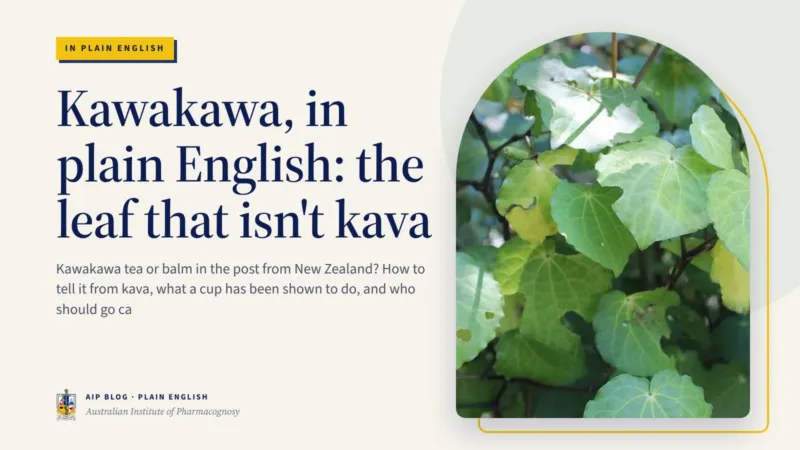
Kawakawa, in plain English: the leaf that isn’t kava
Kawakawa tea or balm in the post from New Zealand? How to tell it from kava, what a cup has been shown to do, and who should go carefully.
Department
Outreach articles from the Australian Institute of Pharmacognosy about its work, its publications and how readers can follow and support its research.
Kawakawa tea or balm in the post from New Zealand? How to tell it from kava, what a cup has been shown to do, and who should go carefully.

Gotu kola grows wild in Australian lawns and sells as a memory herb. What it does, what the trials found, and the rare liver signs to know.
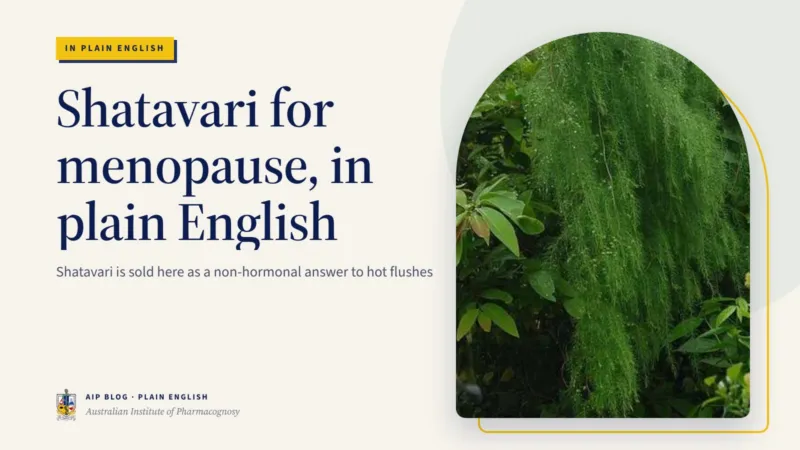
Shatavari is sold here as a non-hormonal answer to hot flushes. What its small trials show, what the label means, and who should ask first.
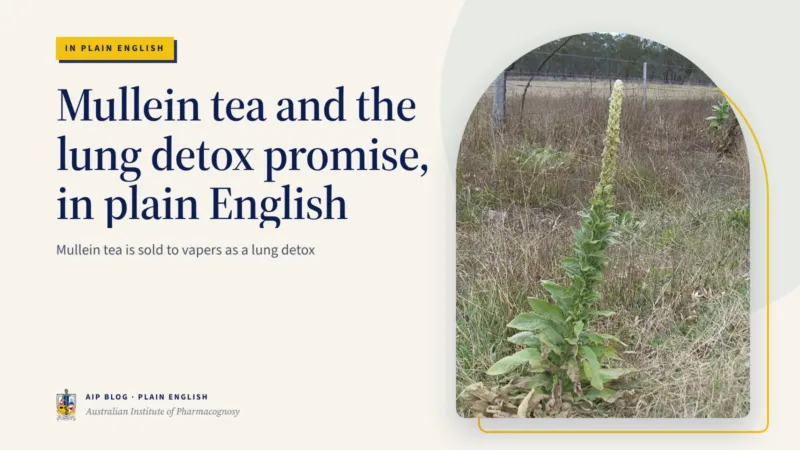
Mullein tea is sold to vapers as a lung detox. What the woolly weed can do for a sore throat, what it can't do for lungs, and how to quit.
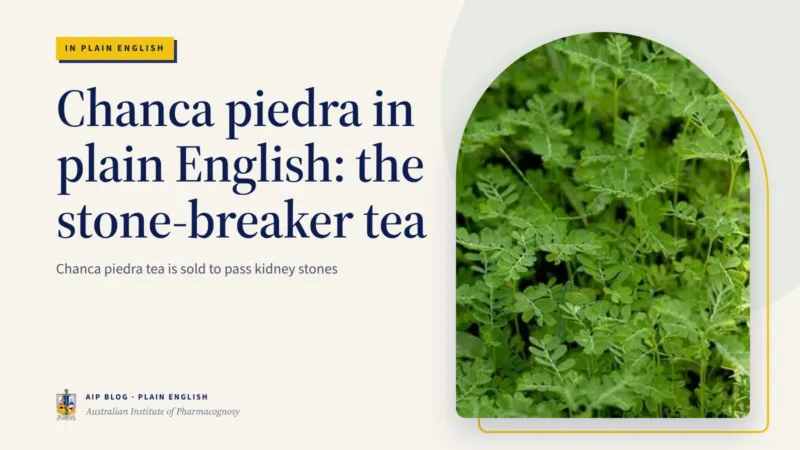
Chanca piedra tea is sold to pass kidney stones. What it does to crystals, what happened in people, and who should hold off.
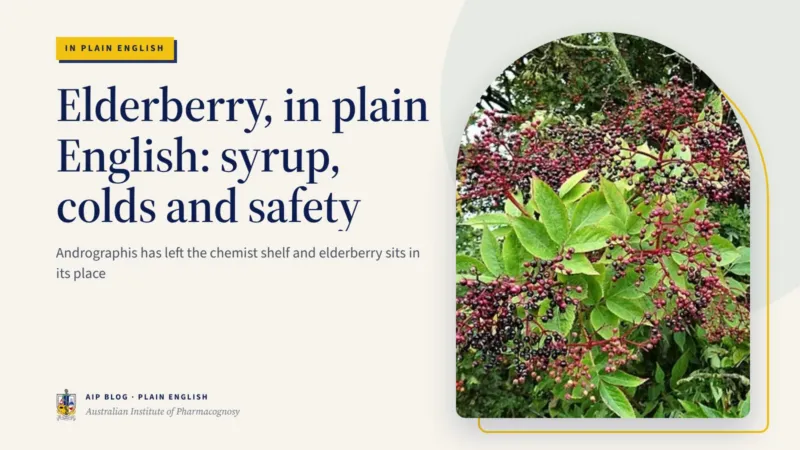
Andrographis has left the chemist shelf and elderberry sits in its place. Which part is food, what the cold trials found, who should wait.
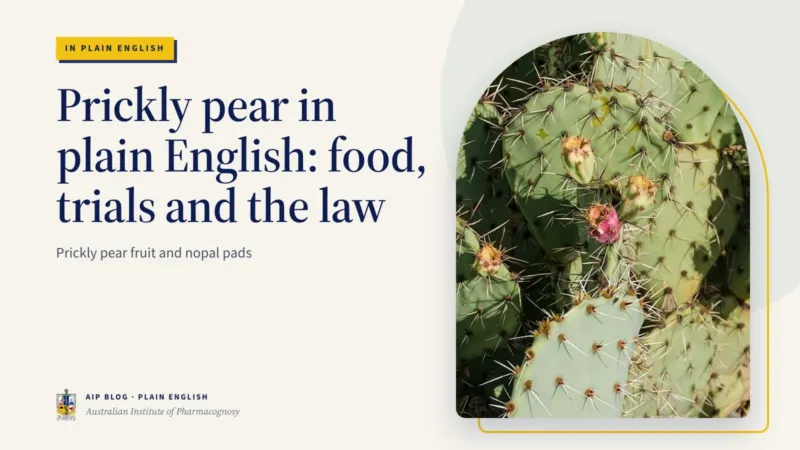
Prickly pear fruit and nopal pads: what people eat, what the small blood-sugar trials showed, the bristles, and the one pear Queensland leaves undeclared.
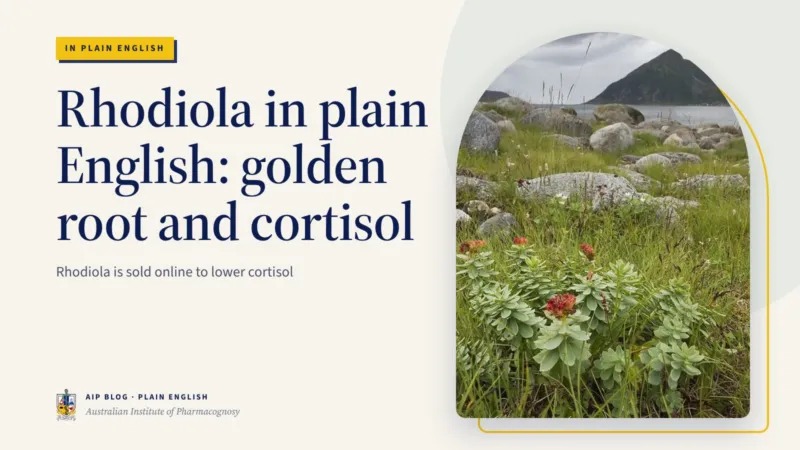
Rhodiola is sold online to lower cortisol. What people's hormone levels actually did, where it may help, and how to read the label.
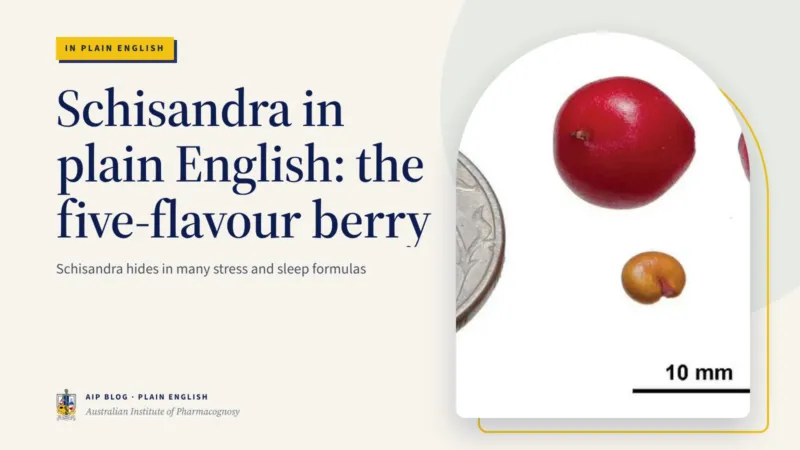
Schisandra hides in many stress and sleep formulas. What the berry is, what the trials found, and which medicines it can affect.
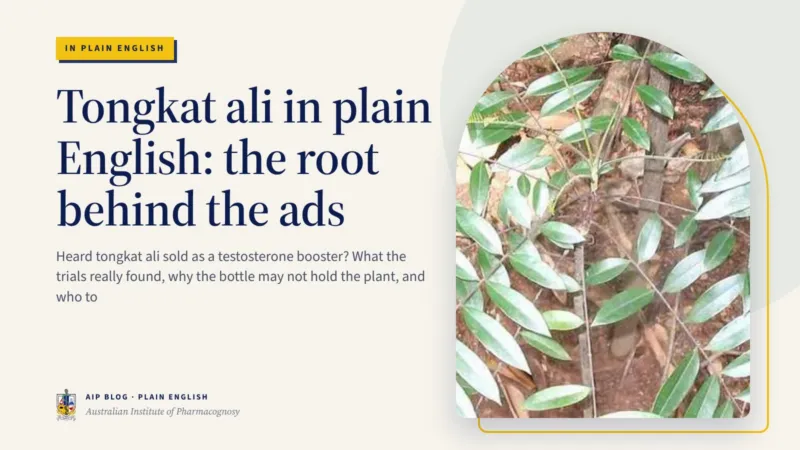
Heard tongkat ali sold as a testosterone booster? What the trials really found, why the bottle may not hold the plant, and who to ask.
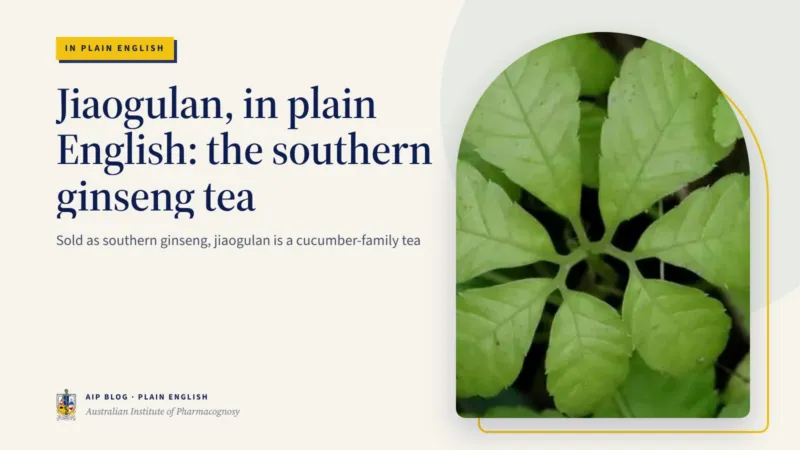
Sold as southern ginseng, jiaogulan is a cucumber-family tea. What it shares with ginseng, what trials show, and a caution on diabetes tablets.
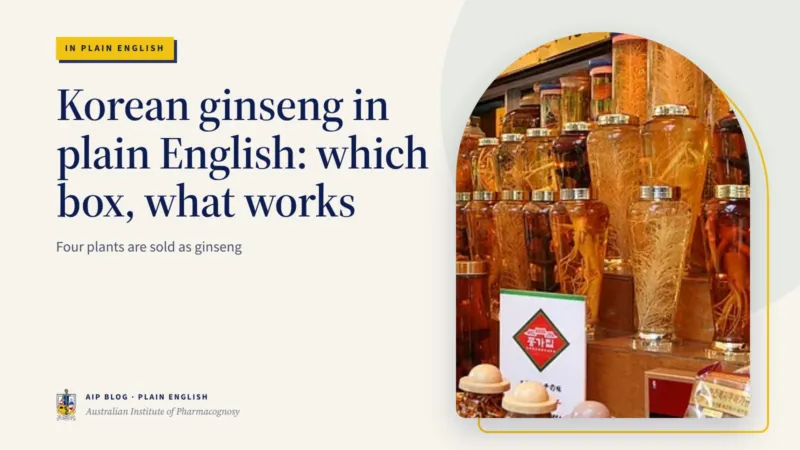
Four plants are sold as ginseng. How to read the label, why red and white root differ, what trials found, and which medicines to check.