

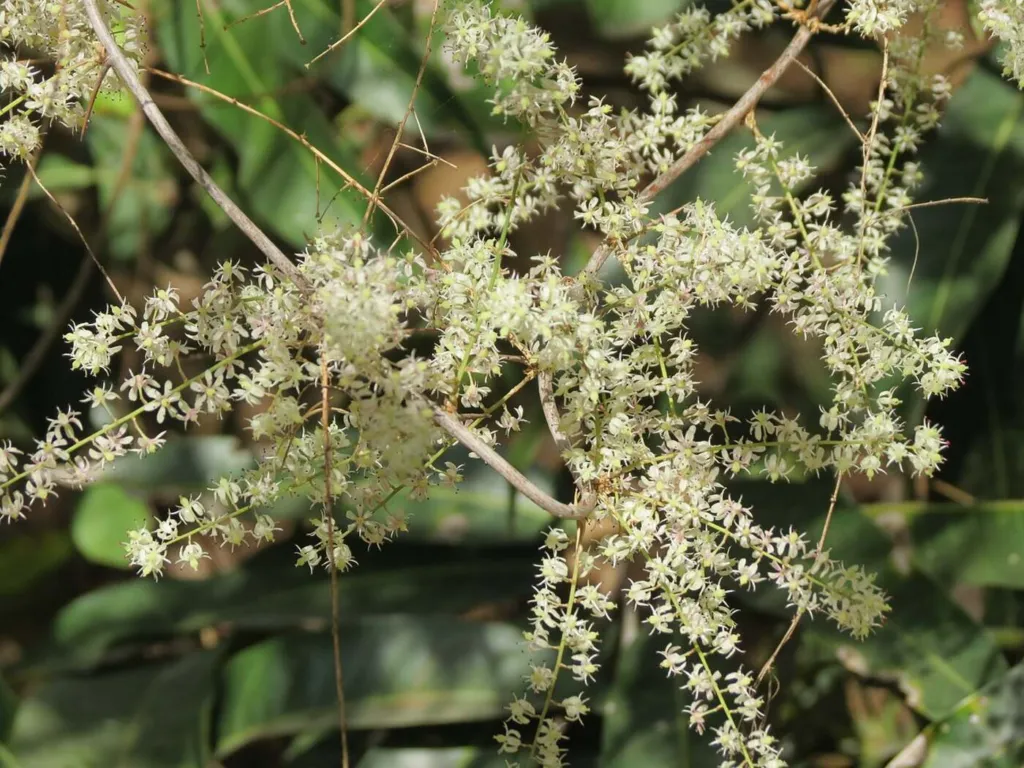
Photo: Forestowlet · CC0 · Wikimedia Commons
Three in the morning, the fan on high, the sheet kicked off, sleep gone again. Next day the chemist has a box promising non-hormonal help with hot flushes, and the herb on the front is shatavari.
Indian women have used this root for generations, and the plant grows wild in north Queensland. The research behind the box is real and recent. It’s also small, and the companies selling the extract paid for or supplied nearly all of it. Before it goes in your basket, here’s what that adds up to.
For learning only: no personal advice, and no dose or preparation. Passages on the rules are the Institute’s reading of Australian regulation in November 2026, and no substitute for legal advice.
Unwell after a herbal product? Phone 000 in an emergency, or the Poisons Information Centre on 13 11 26 (24 hours, Australia-wide). Report suspected side effects to the TGA.
Ask first if you are: pregnant (no human safety data) or breastfeeding (too little known); someone with a history of breast cancer, endometriosis, fibroids or another hormone-sensitive condition (excluded from the trials; oestrogen rose in several); on glucose-lowering medicine (it lowered blood sugar in animals; monitor glucose when starting or stopping); on hormone therapy, the pill, tamoxifen, an aromatase inhibitor or a prolactin-lowering drug, or with a prolactin or pituitary disorder (never tested together; tell your prescriber); on diuretics, lithium or another narrow-margin drug cleared by the kidneys (no data); allergic to garden asparagus; or under 18.
Blends with ashwagandha (withania) carry the TGA’s 7 July 2026 alert: liver injury is very rare but can be severe, and anyone who has or has had liver problems should avoid it. Stop at once if you notice yellow skin or eyes, dark urine, nausea, vomiting, unusual tiredness, weakness, abdominal pain or loss of appetite.
Before taking any botanical drug, consult a degree-qualified herbalist with competencies and adequate training in pharmacognosy.
- Shatavari is the root of a climbing asparagus and an old Ayurvedic women’s herb.
- Small, maker-backed trials found symptoms eased more than on dummy capsules. Promising, not proven.
- “Non-hormonal” means no hormone in the capsule. It may still shift your own.
- Pregnant, on diabetes or hormone medicine, or past hormone-sensitive cancer? Read the red box.
- AUST L means listed. The TGA hasn’t checked that it works.
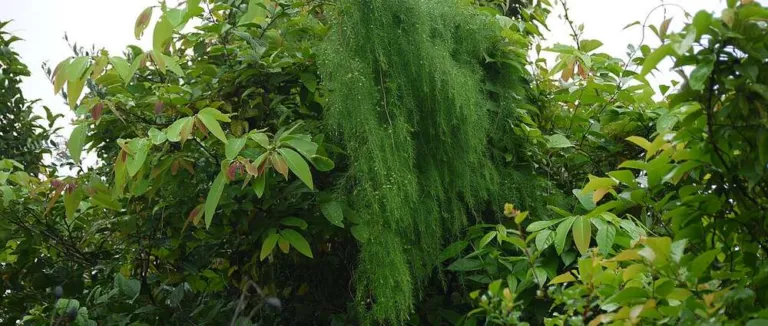
A cousin of the asparagus in your crisper
An old medicine, and a neighbour.
Dig one up and there’s the medicine: a fat bundle of pale roots under a prickly vine. It’s close kin to the spears you steam for dinner, and it grows wild across the Territory, Western Australia and Queensland.
In Ayurveda, India’s traditional medicine, it’s the herb of a woman’s whole life, periods to the change. That’s why researchers tried it, though a custom can’t prove it cools a flush.
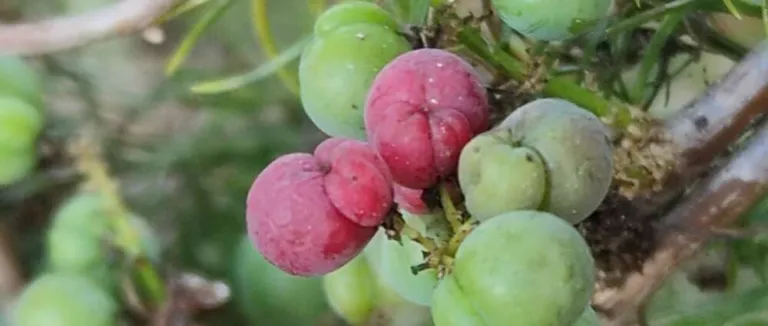
React to garden asparagus? Nobody has tested the root, so ask first. Growing it up north? Birds spread the berries; check with your council.
What the trials found, and who paid for them
A real signal, heard in a small room.
Since 2024, women with menopause symptoms have taken a shatavari extract or a look-alike dummy, not knowing which. In every trial our reviewer read, symptoms eased more on the herb, and side effects were few and mild.
The groups were small and most lasted about two months, so nobody knows if relief holds. Each used a named commercial extract, and its maker funded the work or donated the capsules. That doesn’t make the results wrong, but no outside team has repeated one yet. In some, the dummy group barely improved, which flatters the herb. In one, the summary claimed adding ashwagandha helped; the paper’s own table showed no difference.
Promising, not proven.
If it helps you, that fits the trials. If it doesn’t, you’ve done nothing wrong. Proving it needs bigger, longer trials by people with nothing to sell.
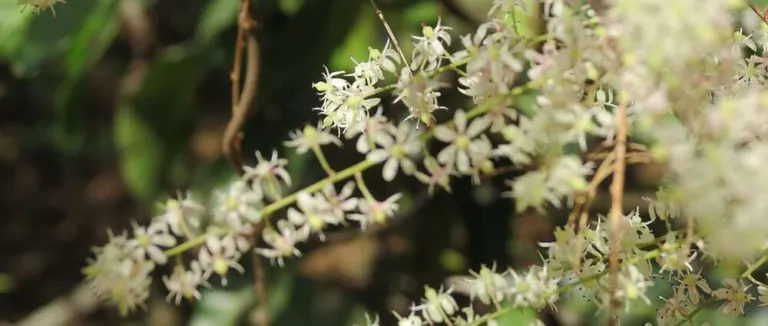
“Non-hormonal” describes the capsule
What your body does with it is another matter.
The word is accurate: no hormone inside, just a root extract. It can’t promise your hormones are left alone. In some trials, oestrogen rose and FSH fell. (FSH is the brain’s signal to the ovaries.) Others saw no clear shift. The results don’t agree, and none was built to study hormones.
The “phytoestrogen” tag rests mostly on computer models, which show a key might fit, never that it turns. And diosgenin, a root compound factories make hormone drugs from, isn’t converted into hormones by your body.
Told to avoid oestrogen? Don’t read “non-hormonal” as a yes. Women like you were kept out of the trials, so there’s no evidence either way.
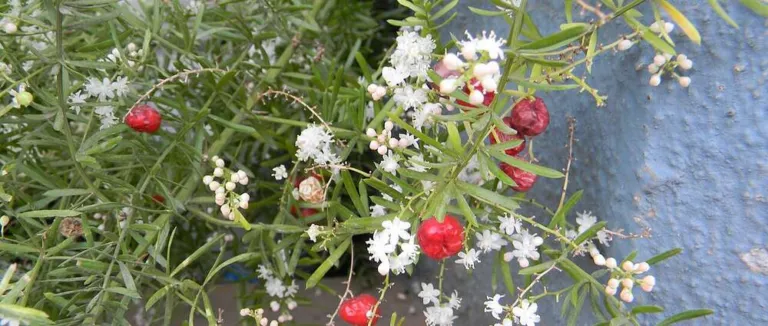
Who should stop and ask first
Short trials miss rare harms.
Where trials checked liver, kidney and thyroid blood tests, nothing went wrong, but trials this small and short can’t catch a rare harm. In rats the root lowered blood sugar. Ashwagandha blends carry that herb’s liver warning; shatavari itself showed none in trials.
If anything in the red box is you, take it to the herbalist named there, and tell whoever prescribes your medicines.
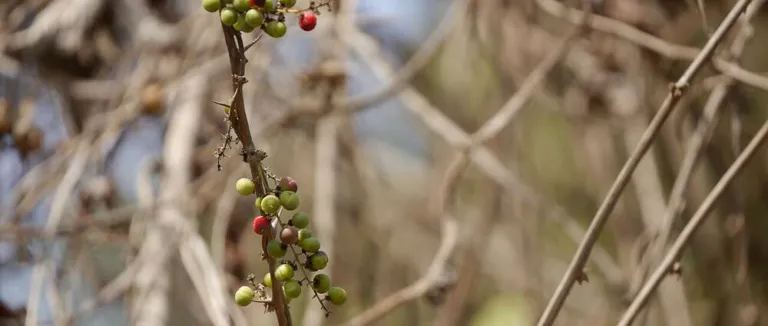
What the box can and can’t tell you
A listing is the seller’s own promise.
AUST L means a listed medicine: low-risk ingredients, modest claims from an approved menu, and the company certifying its own evidence. The TGA doesn’t test whether it works, and has made no finding that it eases hot flushes.
Nor can a label show if you’re getting what the trial women got. Ground up, one asparagus root looks like another, so you trust the maker’s testing. Bought from overseas, it’s had no Australian listing check.
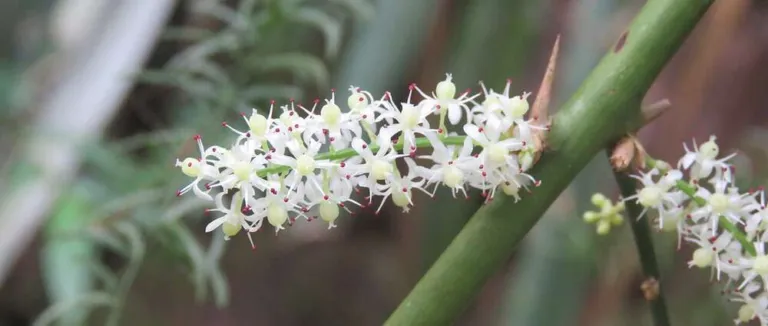
Somewhere in a north Queensland vine thicket, the same plant whose root is sold from Kerala to Nepal comes into flower, tiny white stars on a thorny stem.
Pick a brand that says where its root was grown and how it was tested.
The short version of Dr Thomas Ridley’s review, with every source:
- Dr Luke Iggulden, Chief Scientific Officer — Senior author. Commissioned the Explainer series, set its direction and approved it
- Jesse Kirby — Wrote this edition from his own notes with the review closed: chose the five questions a woman at the chemist would ask, set their order, wrote every sentence and the red safety box, and reviewed the finished page
- Zoe Bennett — Wrote the page title, the search description and the labels, and framed the page for sharing around the non-hormonal box a reader has already seen on the shelf
- Theo Karras — Chose the flowering cover, the five section banners and the Queensland berries from the review’s licensed set, opened each one and rewrote its alt text to describe what is actually in the frame
- Leah Bianchi — Built the page: hero, safety box, one-minute card, one pull quote, five what-this-means cards and the card back to the review, checked to read cleanly on a phone
Contributors
- Dr Thomas Ridley — Wrote the literature review this page retells, and checks the science here
Image credits. Asparagus racemosus: Forestowlet, CC0 (cover and one banner); Dinesh Valke from Thane, India, CC BY-SA 2.0 (two banners); Vinayaraj, CC BY-SA 4.0; Neha.Vindhya, CC BY-SA 3.0; all via Wikimedia Commons. Fruit at Grahams Creek, Queensland: Tony van Kampen, CC BY 4.0, via iNaturalist. All images are reused, with their licences, from the parent review.
AIP Explainers are the plain-language editions of the Institute’s technical articles, published alongside the original. Everything on this page is carried by the full review, where the trials, the references and the regulatory sources are set out. Regulatory information was read in November 2026 and may change. Spotted an error? Write to our contact form. We would rather correct a claim than repeat it.
Jesse Kirby
Head of Community Outreach
Australian Institute of Pharmacognosy
Cardwell QLD, Australia
australian-pharmacognosy.org · our contact form
The Institute sets and publishes its own monographs. The catalogue is in Publications.