

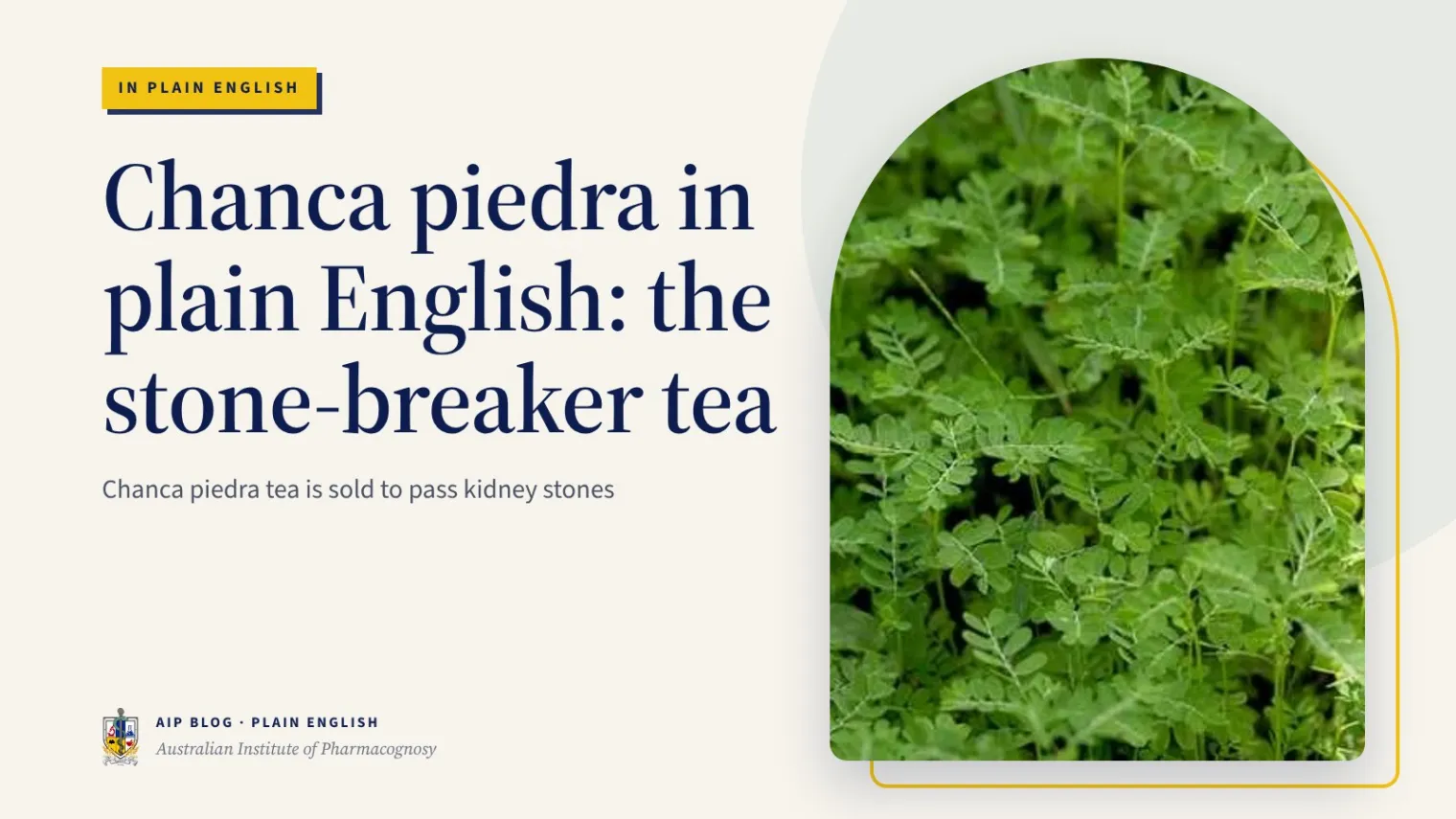
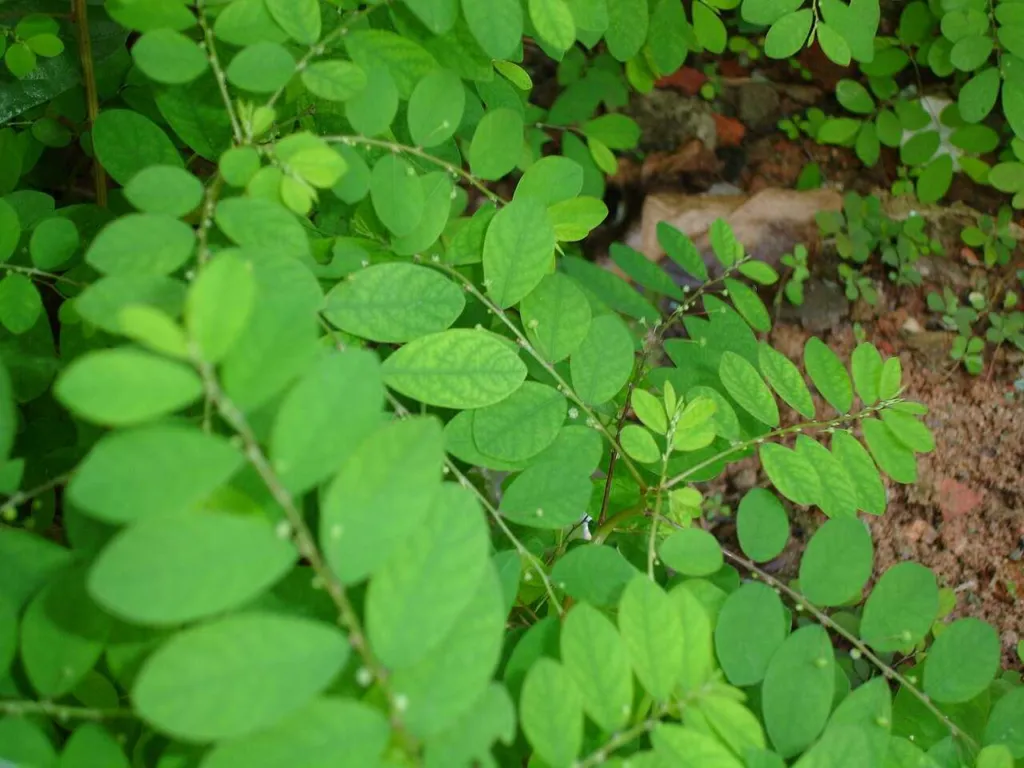
Cover: quebra-pedra, Brazil. Photo: Toluaye · Public domain · Wikimedia Commons
If you have ever had a kidney stone, you remember the night it moved. So when a friend swears by a bitter green tea from Peru called chanca piedra, “the stone breaker”, you listen.
Amazon and Brazilian families have trusted this little weed with that pain for generations. Up here, where a Cardwell summer sweats the water out of you, stones are a real worry. The tea earns part of its name. Here is which part.
Educational only: no medical, legal or regulatory advice, and no preparation or dosing detail. Legal passages are the Institute’s published reading of Australian rules in October 2026, not legal advice.
Fever or chills with pain in your side or back can mean a blocked, infected kidney. That is an emergency: phone Triple Zero (000) or go to the nearest emergency department.
Severe pain in the side, vomiting, being unable to pass urine, or blood you can see in your urine all need urgent medical care. A stone needs a diagnosis, and no herb should hold that up.
Suspected poisoning or overdose: phone the Poisons Information Centre on 13 11 26, 24 hours, anywhere in Australia.
Suspected side effects from any medicine, herbal ones included, can be reported to the TGA.
Before taking any botanical drug, consult a degree-qualified herbalist with competencies and adequate training in pharmacognosy.
- The tea you buy may hold a different plant, or no chanca piedra at all.
- On the bench and in rats it keeps crystals small and slows stones down. In those tests it dissolved none.
- The largest trial against a dummy capsule found no overall difference.
- On blood pressure, diabetes or fluid tablets, on lithium, or pregnant: don’t add it yourself.
- Fever with side pain is an emergency: 000.
The weed in the packet may not be the weed on the label
One name, several plants.
Peru says chanca piedra, Brazil quebra-pedra, Barbados seed-under-leaf, for the tiny fruits hanging under each sprig. Close cousins share the look and the names.
The best-known cousin is bhumi amla, the liver herb of Ayurveda. For decades the one name covered both, so some older work labelled chanca piedra is really bhumi amla. Only a lens and a botanical key, or DNA, separates them.
When Brazilian scientists ran DNA checks on quebra-pedra teas from four sellers, only one seller had the right plant, and even its bags were mostly a pea-family weed. The rest were cousins, one with alfalfa mixed in. We found no such check on what Australians buy online.
The real plant is barely on record in Australia. Its look-alikes are common, from Brisbane lawn edges to roadsides across the north, and none can be named by eye.
Leave the sprig on your lawn edge alone; a resemblance is no identification. If you buy the tea, ask the seller how they know which plant is in it.
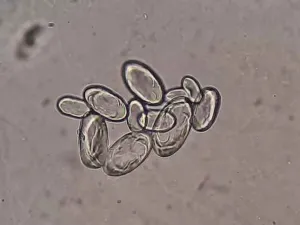
On the lab bench it tames crystals
Where the “breaker” name runs ahead of the evidence.
Most kidney stones are calcium oxalate, a mineral that drops out of urine as crystals that grow, snag together and lodge.
Stirred into human urine by a Brazilian team, the extract let crystals form, but small, apart and in a less clingy shape, where untreated urine grew big lumps. Kidney cells in a dish stopped swallowing crystals too, and a cell that swallows them is injured, and dead cells can seed a new stone.
In rats, the tea slowed a growing bladder stone when given from the start. Given later, it left stones smoother and less spiky, but still growing and still inside.
The plant shaped stones and slowed them. Nobody saw it dissolve one.
The old name promises more than the science found. If it helps, our best guess is that it keeps crystals small enough to wash out. That is still untested.
A label promising to dissolve the stone you already have is claiming more than anyone has shown. Rats and dishes can’t tell you what a cup will do.
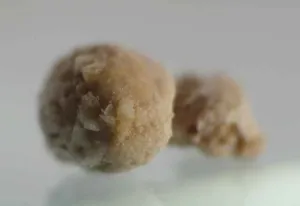
In people, small hopeful signs and one flat result
Encouraging, and short of proof.
Human studies are few and small. The larger proper trial gave 69 stone formers the extract or a dummy capsule, and passing stones and pain came out the same. A drop in urine calcium among high-calcium people is a lead, no more.
In Italy, people whose stones were shattered by shock waves had fewer fragments left after taking the plant than those not given it. In São Paulo, adults who drank the tea for three months ended with fewer stones on their scans.
But São Paulo had no dummy group, and small stones often pass on their own; about half of those already in the tube to the bladder do. Most drinkers there had belly pain and some passed blood, which moving stones would explain, though nobody could check.
Our reading: a sensible lab story, steady small signals, and no proper large trial showing it stops stones returning or helps them pass. Most well-loved stone remedies sit there too.
Some labels mention the liver. Two recent short trials found liver tests no better than on a dummy capsule.
Had a stone? Get it diagnosed, and drink plenty through a hot northern summer. With hepatitis B or another liver disease, this tea replaces neither your antiviral medicine nor your liver checks.
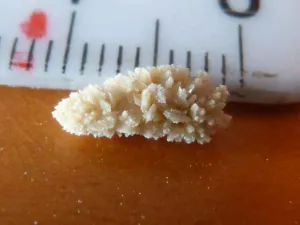
Who should go carefully
Safe enough in short trials, with some open questions.
In small, short trials, adults’ blood tests stayed normal. That comfort only stretches so far.
Animal and small human studies describe it raising urine flow and lowering blood pressure and blood sugar. Whether that clashes with medicines is unknown, so on tablets for blood pressure, diabetes or fluid, or on lithium, don’t start it on your own.
On present evidence, avoid it in pregnancy. There is no safety information in pregnant women at all, and in Barbados its cousin bhumi amla has a traditional use for ending a pregnancy. That alone is reason enough to stay clear. Breastfeeding is a question for the qualified herbalist named in the red box.
Nobody has studied children, people with weak or single kidneys, infections or a blocking stone, the people a moving stone endangers most. A child who may have a stone needs a diagnosis first.
Pain while drinking it may be a stone shifting, and that can turn serious fast. Fever with side pain means 000, not another cup.
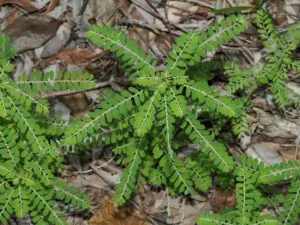
On an Australian shelf
Its cousin is on the shelf. The plant itself is not.
Most herbal products in Australian shops carry an AUST L number and may use only ingredients on a national approved list. In October 2026 that list had bhumi amla, not true chanca piedra. One bhumi amla product is sold as Stonebreaker, barred from hinting at kidney disease. We found none with the real plant.
It has no poisons schedule, and a qualified herbalist may make it up for one person after a consultation.
Otherwise people import it: up to three months’ supply per order, for yourself or close family, never to sell or pass on, maybe with border clearance. The regulator does not assess it.
A tea sold as a stone dissolver is making a medical claim, however it is packed. Importing? Check the agriculture department’s border rules first. Or ask a qualified herbalist, who can tell you what is in the jar.
This page is the short version of Dr Thomas Ridley’s review for the Institute. The studies, the law and every source are there:
- Dr Luke Iggulden, Chief Scientific Officer — Senior author. Commissioned the Explainer series, set its direction and approved it
- Jesse Kirby — Took notes from the review, shut it, and wrote this edition from those notes: chose the five questions a reader holding a packet would ask, the order, the pull quote and every sentence, and rewrote the red box without softening any warning
- Zoe Bennett — Wrote the page title, the search description and the labels, pitched at someone who has had a stone and been told about the tea, which is how it will be shared
- Theo Karras — Picked the Brazilian cover, the five section banners and the Brisbane look-alike figure from the review’s licensed photographs, checked each by eye and wrote alt text that describes what is actually in the frame
- Leah Bianchi — Built the page: the red emergency box, the one-minute card, the pull quote, the five reader cards and the card back to the review, and checked that it reads cleanly on a phone
Contributors
- Dr Thomas Ridley — Wrote the evidence review this page retells, AIP-LR-PHYNIR
Image credits. Cover: Toluaye, public domain, via Wikimedia Commons. Peru garden: Kristi Denby/Archivo Centro Takiwasi, CC BY-SA 4.0, via Wikimedia Commons. Crystals in urine: Ajay Kumar Chaurasiya, CC BY-SA 4.0, via Wikimedia Commons. Small stone: Jacek Proszyk, CC0, via Wikimedia Commons. Kidney stone: Tsester, CC0, via Wikimedia Commons. Brisbane look-alike: Scott W. Gavins, CC BY 4.0, iNaturalist. Darwin weed: Thomas Mesaglio, CC BY 4.0, iNaturalist. All resized and re-encoded for the web by AIP; no other changes. No photograph shows a product, and no product is endorsed.
AIP Explainers are the plain-language editions of the Institute’s technical articles, published alongside the original. Everything on this page is carried by the full review, where the evidence, the references and the regulatory sources are set out. Overseas studies are overseas material and do not govern Australia. Regulatory information was read in October 2026 and may change. Spotted an error? Write to our contact form. We would rather correct a claim than repeat it.
Jesse Kirby
Head of Community Outreach
Australian Institute of Pharmacognosy
Cardwell QLD, Australia
australian-pharmacognosy.org · our contact form
The Institute sets and publishes its own monographs. The catalogue is in Publications.