

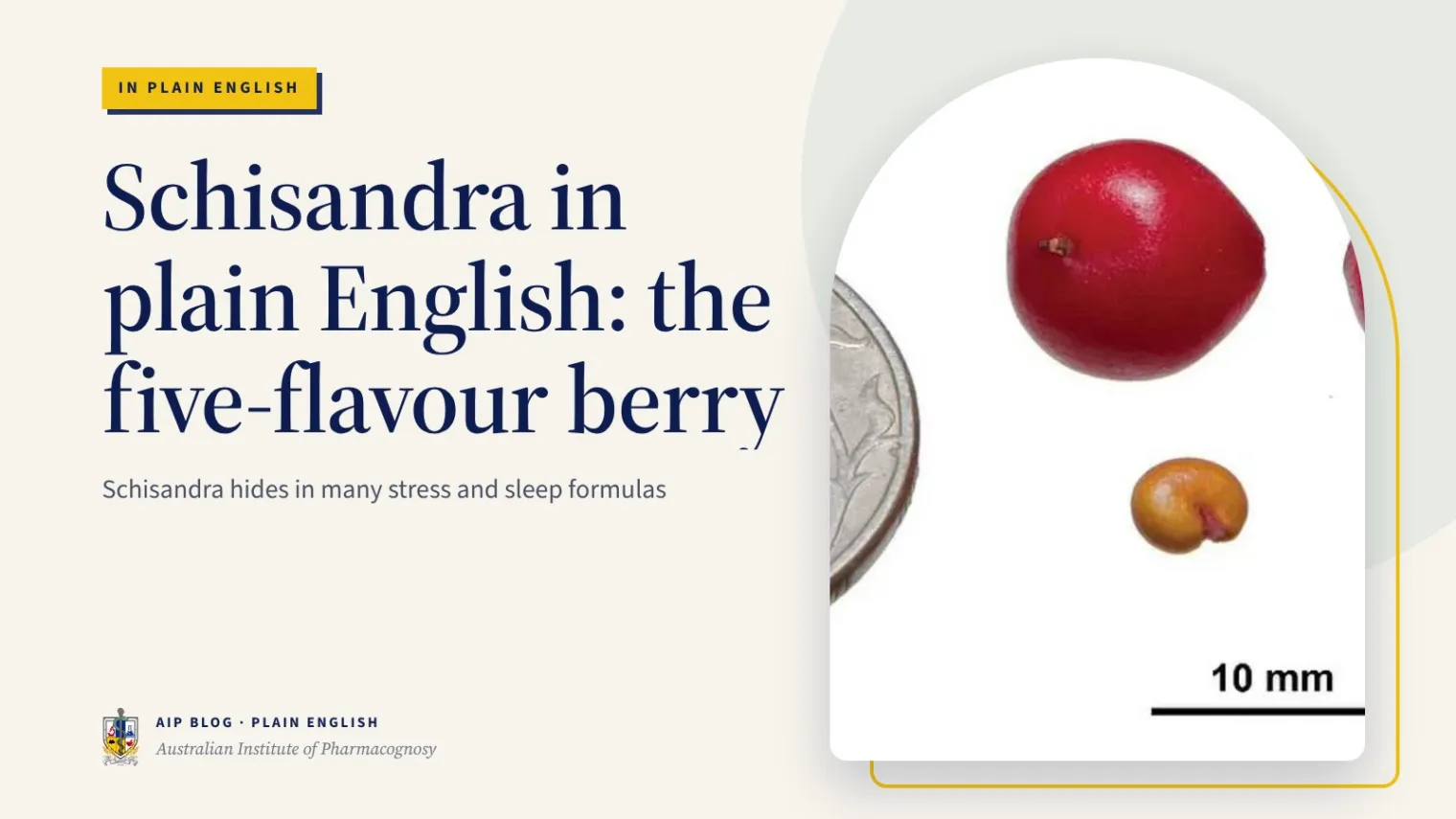
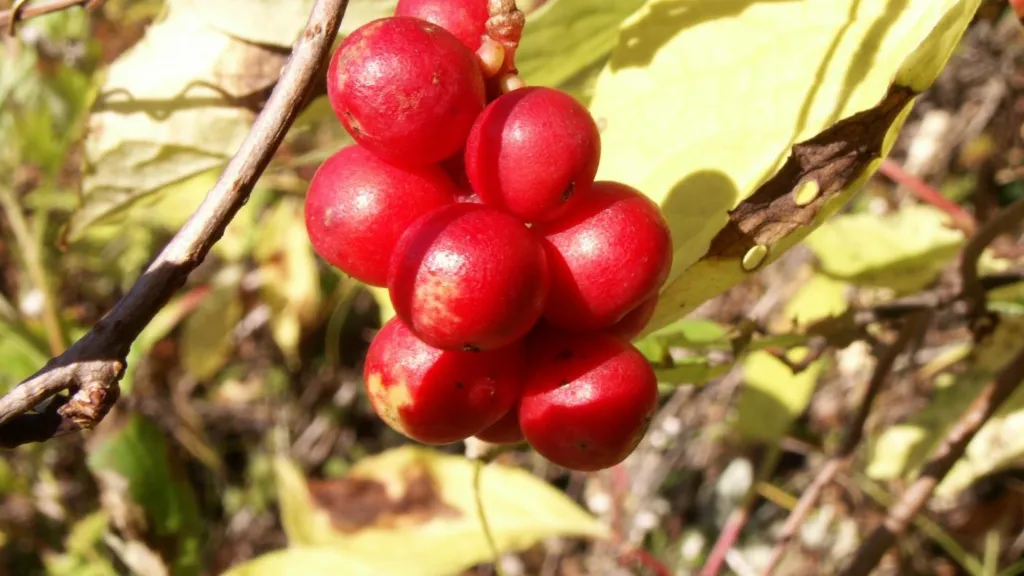
Photo: Lev Baranchuk-Chervonny, Sakhalin Island · Wikimedia Commons · CC BY-SA 3.0
In the small print on stress or sleep tablets sits a word most people skim past: schisandra. It’s a sour red berry, and some Australians may be taking it without knowing.
Short trials found few side effects. But in volunteers a cousin of this berry more than doubled a transplant drug’s blood level, and the register entries we checked carry no warning about it.
Educational only: no medical advice, dosing or preparation detail. Legal passages are our reading of Australian rules, October 2026, not legal advice.
Emergency: 000. Poisoning advice, Australia-wide: the Poisons Information Centre, 13 11 26.
On tacrolimus, ciclosporin, sirolimus or everolimus after a transplant, a sedative such as midazolam, or another medicine where a small change in blood level matters? Don’t start or stop schisandra unless your prescriber and pharmacist both know; it can shift how much of the drug stays in your blood.
Before surgery or sedation, tell the anaesthetist or the doctor doing the procedure about any concentrated schisandra product.
Pregnancy, breastfeeding, children: we found no human safety information, and old reports on the womb point in opposite directions. Get individual advice first.
Before taking any herbal medicine, consult a degree-qualified herbalist with competencies and adequate training in pharmacognosy.
- A sour red berry from north-east Asia, in many Australian formulas.
- Its lignans sit mostly in the seed.
- A related species more than doubled a transplant drug’s blood level in volunteers.
- On a medicine where small dose changes matter? Tell your prescriber and pharmacist.
- Proof it helps is thin: one small single-herb trial.
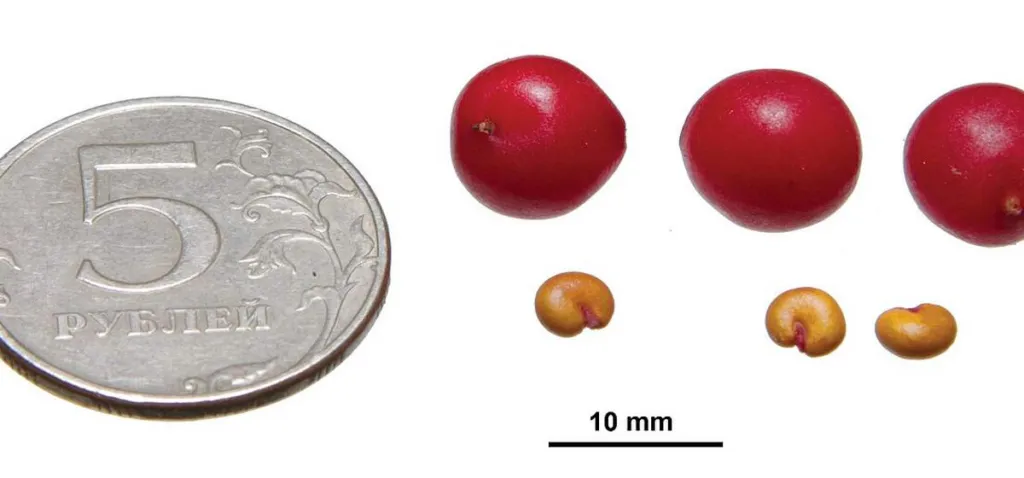
Two vines, one name, and most of it in the seed
What the label won’t tell you.
The vine grows in cold forests from northern China to Japan and Russia’s far east; Koreans call the fruit omija. It probably wouldn’t fruit near Cardwell, so ours comes in dried.
The Chinese name, wu wei zi, covers two look-alike species. Only the northern Schisandra chinensis is allowed in Australian listed medicines; the southern Schisandra sphenanthera is not, yet most drug studies below used it.
Most of its effects come from plant chemicals called lignans, mostly in the small seed. So a seed tincture and a syrup made without crushing the seeds are, in practice, different medicines. A label’s grams-of-dried-berry figure says nothing about how much lignan is inside.
Look for Schisandra chinensis; if no species is named, ask the supplier. Any AUST L number can be checked on the TGA website.
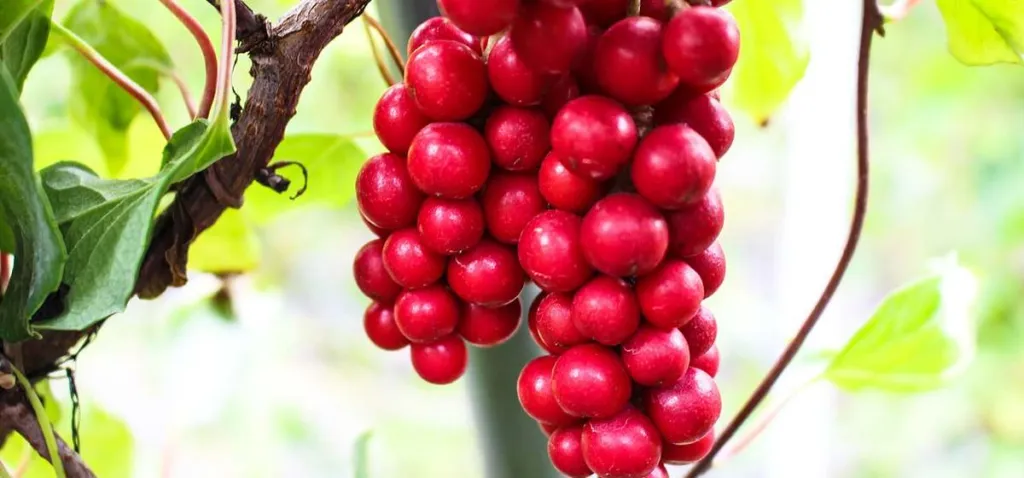
Where the berry meets your prescriptions
The firmest evidence concerns other medicines.
An enzyme in your liver and gut wall clears many prescription drugs. Schisandra’s lignans slow it, so a drug builds up.
Volunteers took a southern-berry extract for about a fortnight, then tacrolimus, the drug that stops a body rejecting a new kidney or liver. Their levels more than doubled; half had heartburn and burning hands and feet for some hours. The sedative midazolam more than doubled too, and they slept hours longer.
Chinese transplant clinics add that extract on purpose, to stretch a costly drug, and watch the levels. In Australia the same rise would be an accident. Too much tacrolimus harms kidneys and nerves.
In Australia the same rise would be an accident.
The northern berry sold here hasn’t been tested as directly. Our cautious reading: assume a similar effect, especially from a concentrated, seed-rich product.
Short trials logged few side effects, but were too small to catch rare ones. A Polish chart review linked four cases to schisandra taken with antidepressants, among them confusion in a woman of 79 and a fall in blood platelets; cause unproven, but worth watching.
On a transplant drug, a sedative, or anything where small dose changes matter? Talk to your prescriber and pharmacist before starting or stopping.
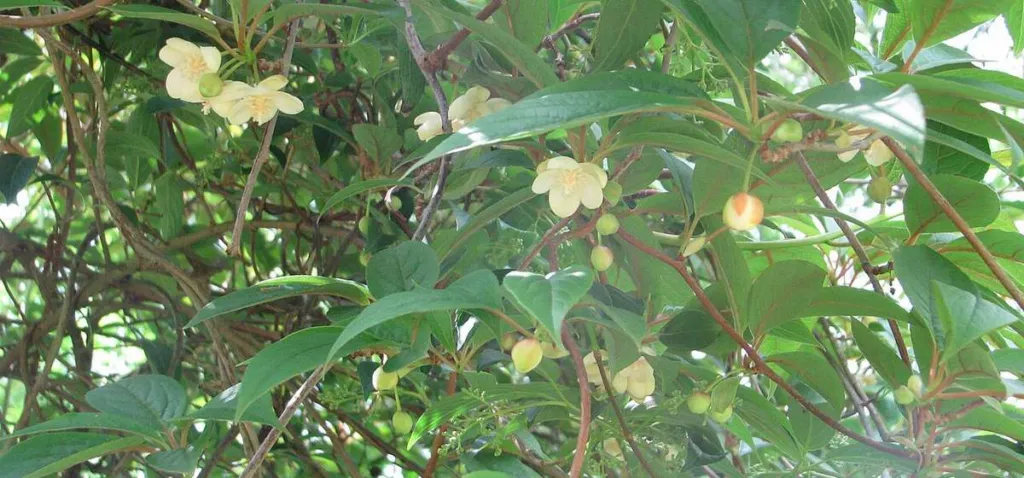
The honest answer on whether it works
Long used, lightly tested.
People in China, Korea and Russia have long taken it for coughs, tiredness and poor sleep, and it is counted among the “adaptogens”, plants said to help the body cope with stress. Long use shows how a plant is valued; trials show whether it helps.
Most trials mixed it with other plants, hiding the berry’s own effect. One small Korean trial tested it alone against a dummy pill: older women gained thigh strength; grip, walking and muscle mass didn’t change. It needs repeating.
Its liver reputation leans on mice and on a lab-made drug derived from one of its compounds. That drug improves a liver enzyme reading, yet in one study the liver itself looked no better under the microscope. One menopause trial exists; we are still reading it in full, so we make no claim either way yet.
The evidence is too thin to confirm it helps with anything yet, and no trial used a product sold in Australia.
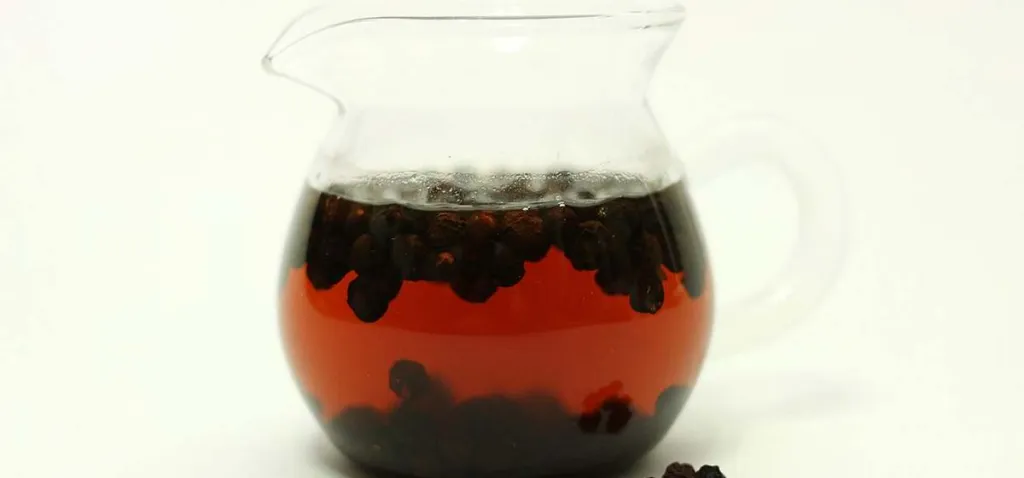
Five tastes, a jar of syrup and a hunter’s pocket
Elsewhere, it is food.
Wu wei zi means five-flavour fruit. Chinese tradition says the flesh is sweet and sour, the seed hot and bitter, and the whole berry salty.
Korean kitchens turn fresh berries into a slow sugar syrup for ruby-red omija tea. Russian hunters, the story goes, ate them for stamina and sharper night sight.
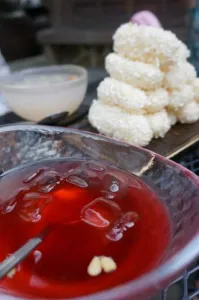
Tea berries with no health claim sit on the food side; capsules sold for tiredness are likely a therapeutic good. On regular medicines? Tell your pharmacist about the tea too.
The short version of Dr Thomas Ridley’s evidence review. Every study and reference is here:
- Dr Luke Iggulden, Chief Scientific Officer — Senior author. Commissioned the Explainer series, set its direction and approved it
- Jesse Kirby — Took his own notes from Dr Ridley’s review, then wrote this edition from them with the review closed: chose the four things a reader needs, built the page around the tub in the bathroom cabinet, and carried the interaction cautions over at full strength
- Zoe Bennett — Wrote the page title, the search description and the labels, and framed the share around a word people skim past on a formula they already take
- Theo Karras — Picked the Sakhalin cover, the four section banners and the omija tea photograph, opened each one to check it by eye, and wrote alt text to what is really in the frame, correcting a fresh-berry photo the review captions as dried
- Leah Bianchi — Built the page: the red safety box, the one-minute card, the pull quote, the four what-this-means cards and the card back to the review, and checked that the banners and tea photo sit right on a phone
Contributors
- Dr Thomas Ridley — Wrote the evidence review this page retells, and checks the science
Image credits. Cover: Schisandra chinensis in fruit, Sakhalin Island, Lev Baranchuk-Chervonny, CC BY-SA 3.0. Berries and seeds with coin: Vladimir Kosolapov, CC BY 3.0. Ripe berries on the vine: ally j, CC0. Vine in flower, Small Dole, England: peganum, CC BY-SA 2.0. Omija tea in a glass jug: Hyeon-Jeong Suk, CC BY 2.0. Omija tea with puffed rice sweets: Chad Jimison, CC0. All via Wikimedia Commons, reused from the parent review.
AIP Explainers retell the Institute’s technical articles in plain English and sit beside them. Everything on this page comes from the full review, which sets out the studies, the references and the Australian register entries. Regulatory material was read in October 2026 and may change. Found an error? Write to our contact form. We would rather correct a claim than repeat it.
Jesse Kirby
Head of Community Outreach
Australian Institute of Pharmacognosy
Cardwell QLD, Australia
australian-pharmacognosy.org · our contact form
The Institute sets and publishes its own monographs. The catalogue is in Publications.