
Echinacea angustifolia root
Echinacea angustifolia root is the dried root and rhizome of the narrow-leaved coneflower, a low prairie perennial of the central Great Plains of ...
Department
Articles from the Education and Research department of the Australian Institute of Pharmacognosy: monographs, literature reviews and evidence summaries.
Echinacea angustifolia root is the dried root and rhizome of the narrow-leaved coneflower, a low prairie perennial of the central Great Plains of ...
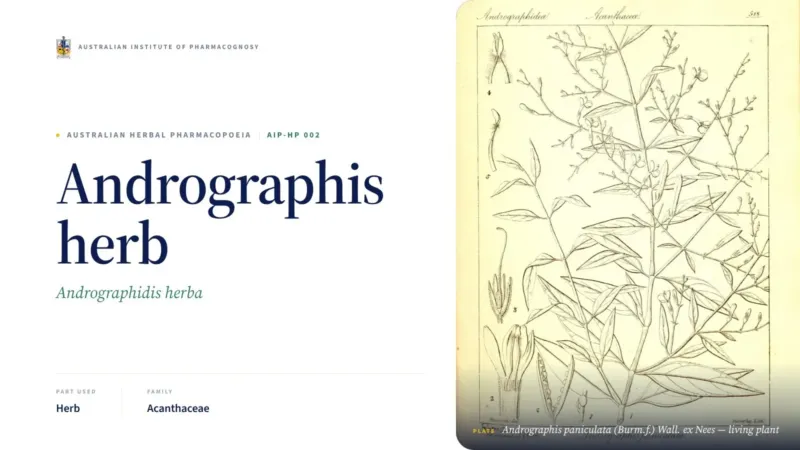
Andrographis is the dried aerial part of a bitter annual herb of the acanthus family, native to southern India and Sri Lanka and grown across tropical ...

Black cohosh is the dried rhizome and root of Actaea racemosa, a tall woodland perennial of eastern North America, still traded under its older name ...

Golden seal is the dried rhizome and root of Hydrastis canadensis, a small woodland perennial of eastern North America and the only species in its genus.
Devil's claw, grapple plant (Harpagophytum procumbens): what the trials show for back and knee pain, the horse-sport rule, and its Australian status.
Turmeric and curcumin (Curcuma longa): why the spice and the capsule differ, the rare liver injury cases, and Australia's mandatory label warning.
Sour jujube seed, suan zao ren (Ziziphus jujuba var. spinosa): what the sleep trials tested, and why none of the 103 Australian listings contains it alone.
Soursop, graviola (Annona muricata): what the leaf tea is used for, what the one human cancer trial actually measured, annonacin, and the Australian law.
Umckaloabo, African geranium (Pelargonium sidoides): what Cochrane and the 2026 Swiss trial found, the liver reports, and the Australian ARTG record.
Andrographis, kalmegh (Andrographis paniculata): what cold and flu trials show, the TGA's 287 anaphylaxis reports, and Australia's listed-medicine review.
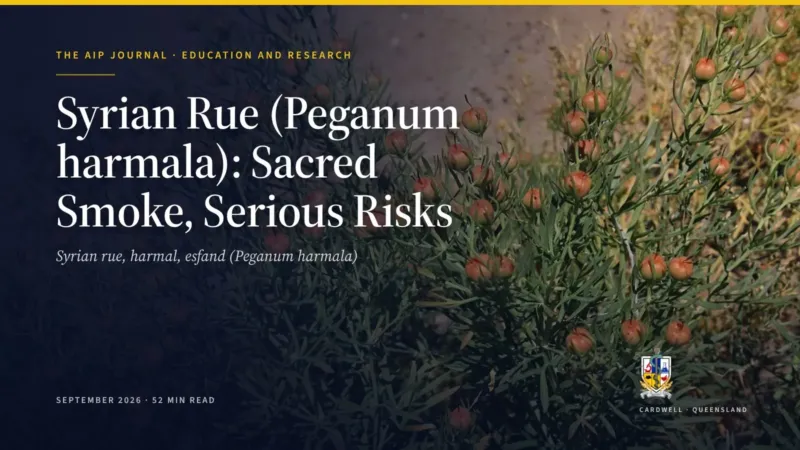
Syrian rue, harmal, esfand (Peganum harmala): what harmine and harmaline do, the documented poisonings, and why they are Schedule 9 in Australia.
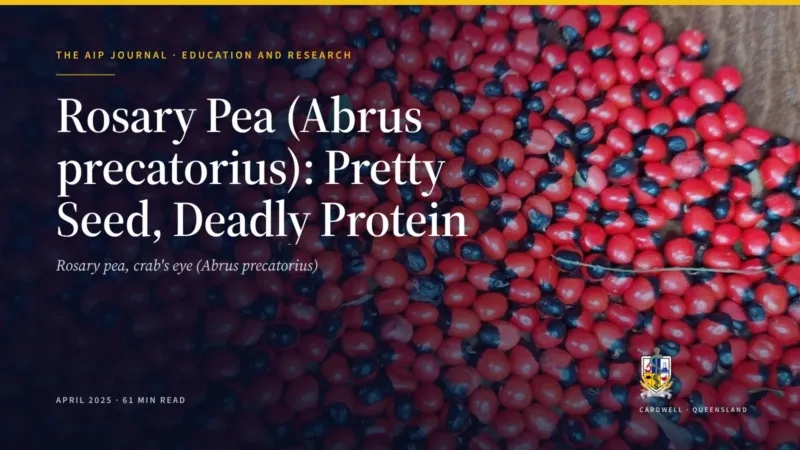
Rosary pea, crab's eye (Abrus precatorius): what abrin does, the poisonings on record, how to tell the seed from look-alikes, and Australian law.