
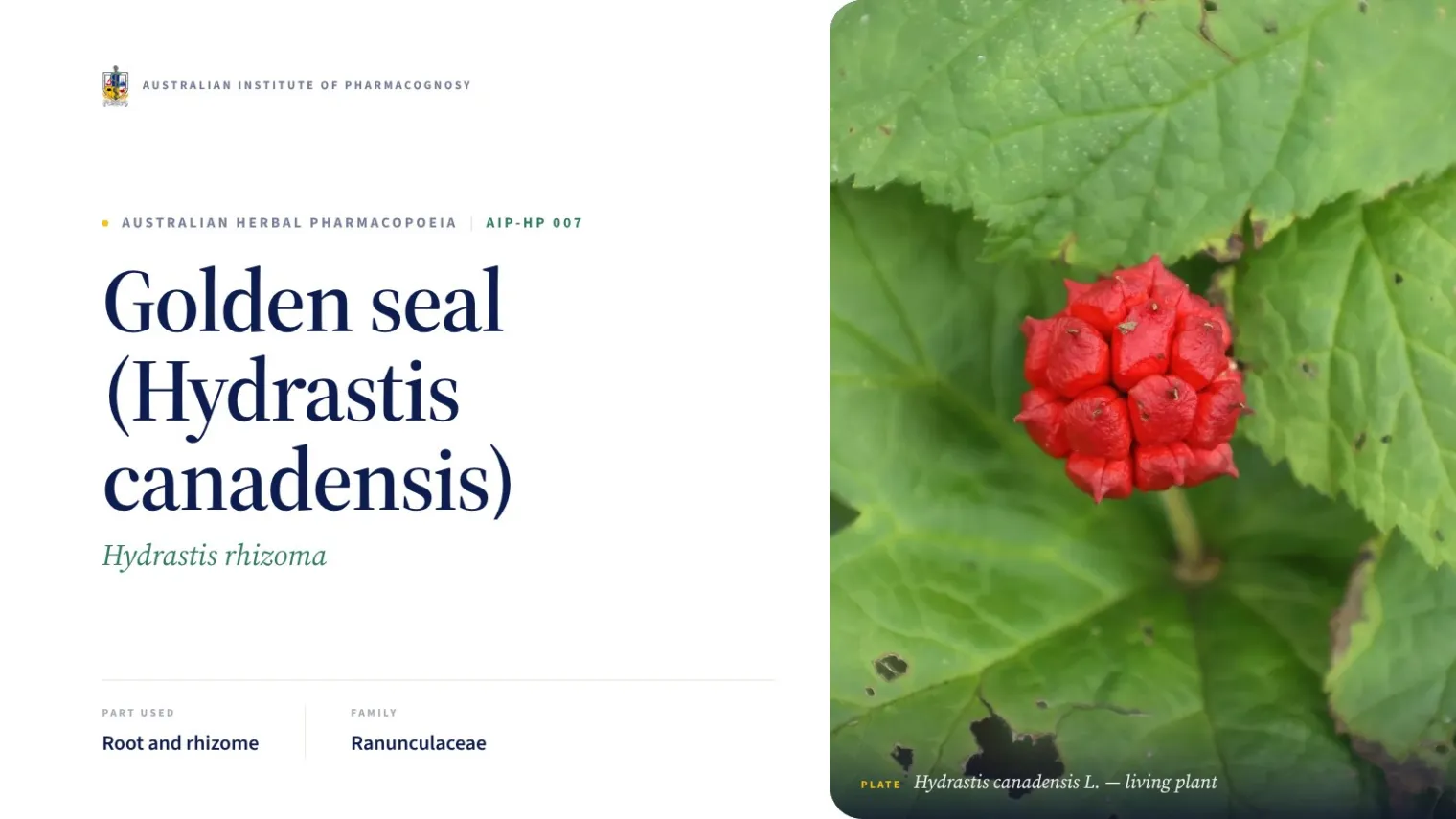
Golden seal (cultivated) root and rhizome (Hydrastis canadensis L.), Ranunculaceae
Australian Herbal Pharmacopoeia (working title), Monograph AIP-PH-HYDCAN (formerly AIP-HP 007)
Status: version 1.0, live at https://www.australian-pharmacognosy.org/pharmacopoeia/hydrastis-canadensis/, all reviews and the pre-publication final test on record. Published at first draft under the CEO’s order. Botanical, QA, Medicine and layout reviews are on record (20.3); Librarian audit and Legal review to come.
Date: 2026. Next review: on sign-off, then three-yearly or sooner if a major trial, safety signal or new pharmacopoeial text appears.
Prepared by: the Australian Institute of Pharmacognosy, Far North Queensland, Australia. Every author and contributor is named at the end of the monograph.
Contributors: Dr Thomas Ridley (library and literature search, full-text retrieval, registry and regulatory instrument search, synthesis, drafting, figure sourcing and placement, AIP schematics and charts, reference verification). Technical reviews by Botanical, QA and Medicine are assigned and pending; their credit lines follow once each has reviewed. Dr Luke Iggulden, Chief Scientific Officer, is senior author: he set the scope of the series in the CEO directive and made the research possible.
0. Free teaser
0.1 Identity card
| Monograph | AIP-PH-HYDCAN (formerly AIP-HP 007), Golden seal (cultivated) root and rhizome. Version 1.0, 23/09/2026. Next review: on sign-off |
| Accepted name | Hydrastis canadensis L., Ranunculaceae, subfamily Hydrastidoideae Raf., order Ranunculales. First published in Linnaeus, Systema Naturae ed. 10, 2: 1088 (7 June 1759) (IPNI 305699-2) [2]. Accepted in the World Checklist of Vascular Plants release of 16/09/2026, read in September 2026 through ChecklistBank dataset 2000 [1] |
| Synonyms | Hydrastis trifolia Raf.; Warneria canadensis Mill., W. diphylla Raf. and W. tinctoria Raf. (all three illegitimate) [1]. The genus name is attributed Hydrastis J.Ellis ex L. [1]. "Yellow root" and Xanthorhiza simplicissima appear as a "synonym" in Barnes and colleagues [9]; WCVP treats Xanthorhiza simplicissima Marshall as a separate accepted species, so that entry is a shared common name, not a nomenclatural synonym (section 1) |
| Drug name | Hydrastis rhizoma, goldenseal rhizome: whole or cut, dried rhizome and root (Ph. Eur. 8.0, monograph 01/2011:1831) [3]. MediHerb and the TGA both label the part "root and rhizome" [6,14] |
| Common names | Golden seal, goldenseal, orange-root, orangeroot, yellow puccoon, yellow root, ground raspberry, Indian dye (English); hydraste du Canada (French); Kanadische Gelbwurzel, Goldsiegel, Kanadische Orangenwurzel (German); guldsegl (Danish) [7,9,10] |
| Pharmacopoeial status | Ph. Eur.: yes; monograph 01/2011:1831 Goldenseal rhizome, read in the library’s Ph. Eur. 8.0 [3]; also 01/2012:2500 Hydrastis canadensis for homoeopathic preparations [4]. Barnes and colleagues also, record entries in the BHC 1992, BHP 1996, BP 2007, Martindale 35th edn, Ph. Eur. 2007, USP29/NF24 and the American Herbal Pharmacopoeia [9]. WHO Monographs on Selected Medicinal Plants vols 1-4: no entry. EMA/HMPC: no EU herbal monograph found |
| Australian status | Permitted as an ingredient in listed medicines: 11 ARTG entries name hydrastis canadensis, including MediHerb Golden Seal (423693), MediHerb Sinus Forte (450186) and Nature’s Sunshine Golden Seal (25442), all in the Listed Medicines approval area [6,15,16]. Every indication on those entries is a "traditionally used in Western herbal medicine" claim [6,15]. No poison schedule is recorded on any of the three ARTG public summaries read [6,15,16]. Not native to Australia and no Atlas of Living Australia occurrence record (queried in September 2026) [13]. CITES Appendix II since 18/09/1997 [7], so imported material is a regulated wildlife specimen under Part 13A of the Environment Protection and Biodiversity Conservation Act 1999 (Cth) [10,25] |
| Assay markers | Hydrastine (C21H21NO6, Mr 383.4): minimum 2.5 per cent of the dried drug. Berberine (C20H18NO4, Mr 336.4): minimum 3.0 per cent of the dried drug. Both by the Ph. Eur. 1831 liquid-chromatographic assay at 235 nm [3] |
| Identity marker | Hydrastine. It is the alkaloid that separates golden seal from every other yellow berberine-bearing root in trade (Coptis, Berberis, Mahonia, Chelidonium, Rumex) [9,14,20,21] |
| Purity limits | Loss on drying maximum 10.0 per cent; total ash maximum 8.0 per cent; ash insoluble in hydrochloric acid maximum 4.0 per cent (Ph. Eur. 1831) [3]; foreign matter maximum 2.0 per cent m/m by the Ph. Eur. general default for herbal drugs, monograph 1433, since 1831 sets none [3a]. No extractive limit exists in either text (section 10.2) |
| Evidence snapshot | Pharmacokinetic interaction with CYP3A and CYP2D6 substrates: Tier A, 4 crossover studies in healthy volunteers, moderate certainty, and the interaction is a harm, not a use. Interaction with metformin: Tier B, 2 crossover studies. Every therapeutic use: digestive, catarrhal, infective, menstrual, topical: Tier T, traditional use only; no controlled trial of golden seal for any condition was found in PubMed, ClinicalTrials.gov or the WHO ICTRP on 23/09/2026. Antibacterial, anti-virulence, lipid-lowering, wound-healing: Tier P, preclinical only. Masking a urine drug screen: unsupported; rejected by the reference texts, no study either way [7] |
| Main safety point | Golden seal is a clinically significant enzyme inhibitor. Fourteen to twenty-eight days of a standardised extract cut CYP2D6 activity by about 40-50 per cent and CYP3A activity by about 40-60 per cent in healthy volunteers, and raised midazolam exposure by 40-60 per cent [30,31,32,36]. It is contraindicated in pregnancy and lactation on the ARTG entries, in the MediHerb guide and in the reference texts [6,9,14,15]. Two-year feeding in rodents produced liver tumours at doses far above human use [41] |
| Suggested citation | Ridley T, Iggulden L. Hydrastis rhizoma (golden seal (cultivated) root and rhizome, Hydrastis canadensis L.). Australian Herbal Pharmacopoeia monograph AIP-PH-HYDCAN (v1.0). Cardwell (QLD): Australian Institute of Pharmacognosy; 2026. DOI to be assigned |
| Compiler and review | Compiled by Dr Thomas Ridley (Education and Research). Technical review: Dr Fiona MacAllister (Botanical, sections 1-5 and the adulterant part of 10) reviewed in 2026; Dr Hana Suzuki (Botanical QA, sections 6-10 and figures F6, F7, F8) reviewed in 2026; Dr Eleanor Whitcombe (Medicine, sections 12, 13 and 15) reviewed in 2026; Dr Thomas Ridley (Education and Research, evidence and citation audit) reviewed in 2026; Jesse Kirby (Community Outreach, layout and figures) reviewed in 2026. Published: 2026. Last modified: 2026. Version 1.0 |
| Provenance | Original AIP data: none. Every limit, method, measurement, assay figure and trial result in this monograph comes from the cited pharmacopoeias, regulators, reference works and papers; sections 4, 5, 8, 9 and 10 are marked "AIP bench data pending" |
| Canonical URL | /pharmacopoeia/hydrastis-canadensis/ |
0.2 Summary
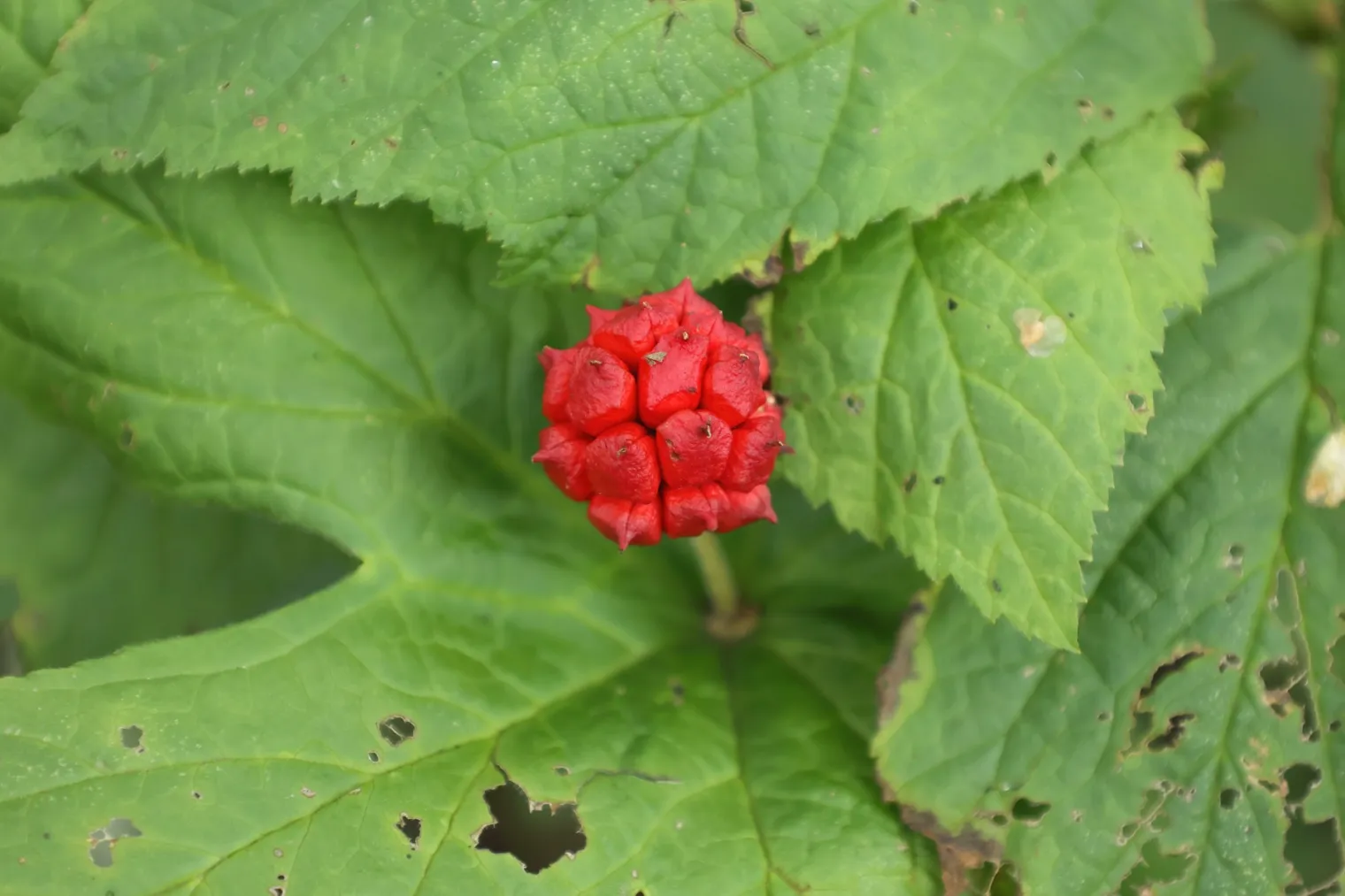
Golden seal is the dried rhizome and root of Hydrastis canadensis, a small woodland perennial of eastern North America and the only species in its genus. The European Pharmacopoeia carries a full quality monograph for it: a knotty rhizome about 5 cm long with a ring of 12 to 20 separated xylem bundles, a greenish-yellow powder with abundant starch and orange-brown granular masses, a two-band thin-layer fingerprint of berberine and hydrastine under UV 365 nm, and a liquid-chromatographic assay requiring at least 2.5 per cent hydrastine and 3.0 per cent berberine on the dried drug. Hydrastine is the character that separates real golden seal from the cheaper yellow berberine roots (Coptis, Berberis, Mahonia) that are substituted for it, and substitution is common enough that the Australian manufacturer publishes its own chromatographic comparison of the species. The plant is IUCN Vulnerable and on CITES Appendix II, which is why the Australian practitioner range is labelled cultivated. The therapeutic evidence is thin and old: the long tradition of use for catarrh, digestive complaints and uterine bleeding sits on Eclectic practice, and no controlled trial of golden seal for any of it was found. The best human evidence is about harm: four crossover studies show that golden seal inhibits CYP3A and CYP2D6 enough to change the exposure of co-administered drugs. Anyone considering golden seal should consult a degree-qualified herbalist with competencies and adequate training in pharmacognosy.
0.3 Contents and extent (draft)
| Section | Approx. pages |
|---|---|
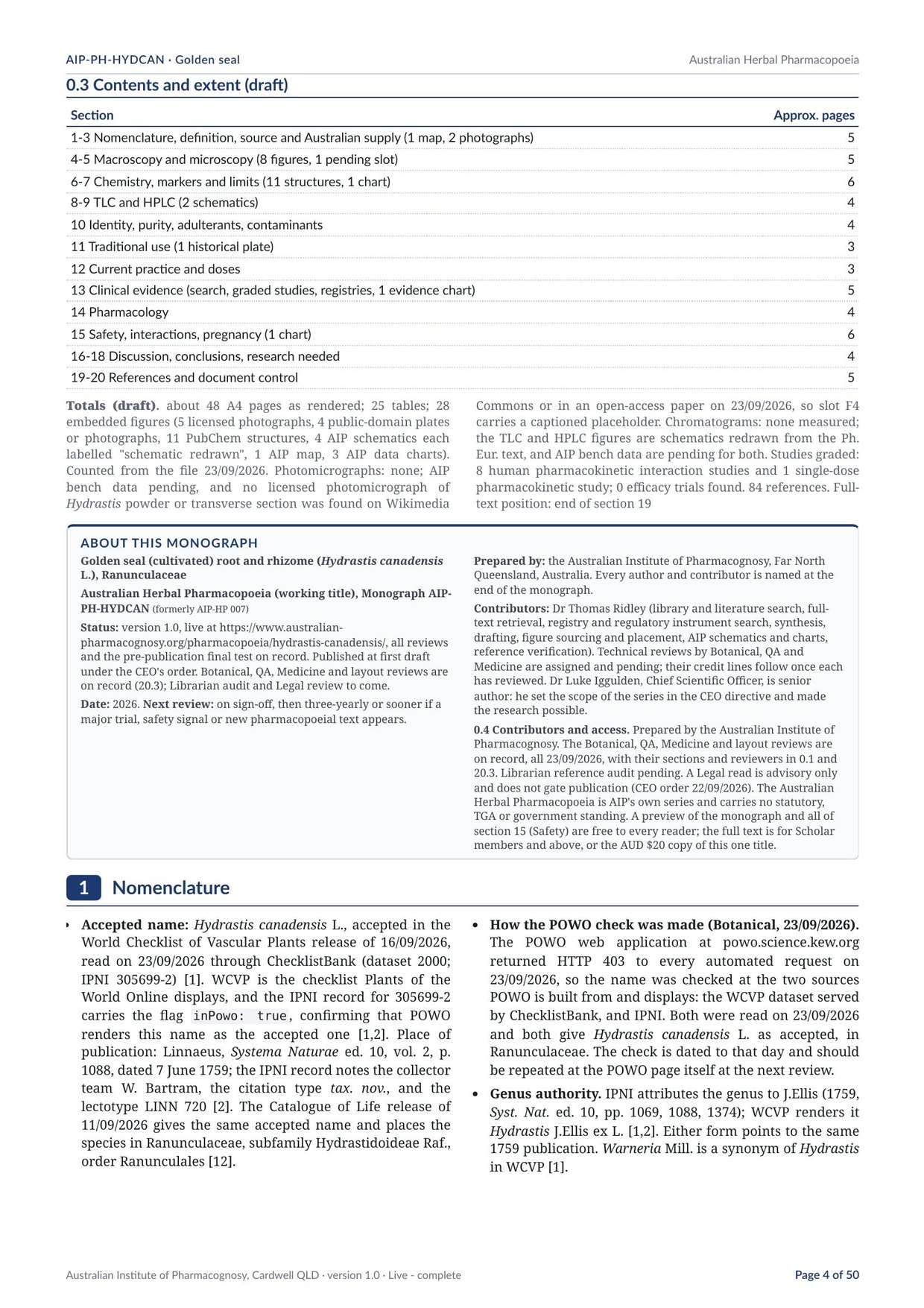
| 1-3 Nomenclature, definition, source and Australian supply (1 map, 2 photographs) | 5 |
| 4-5 Macroscopy and microscopy (8 figures, 1 pending slot) | 5 |
| 6-7 Chemistry, markers and limits (11 structures, 1 chart) | 6 |
| 8-9 TLC and HPLC (2 schematics) | 4 |
| 10 Identity, purity, adulterants, contaminants | 4 |
| 11 Traditional use (1 historical plate) | 3 |
| 12 Current practice and doses | 3 |
| 13 Clinical evidence (search, graded studies, registries, 1 evidence chart) | 5 |
| 14 Pharmacology | 4 |
| 15 Safety, interactions, pregnancy (1 chart) | 6 |
| 16-18 Discussion, conclusions, research needed | 4 |
| 19-20 References and document control | 5 |
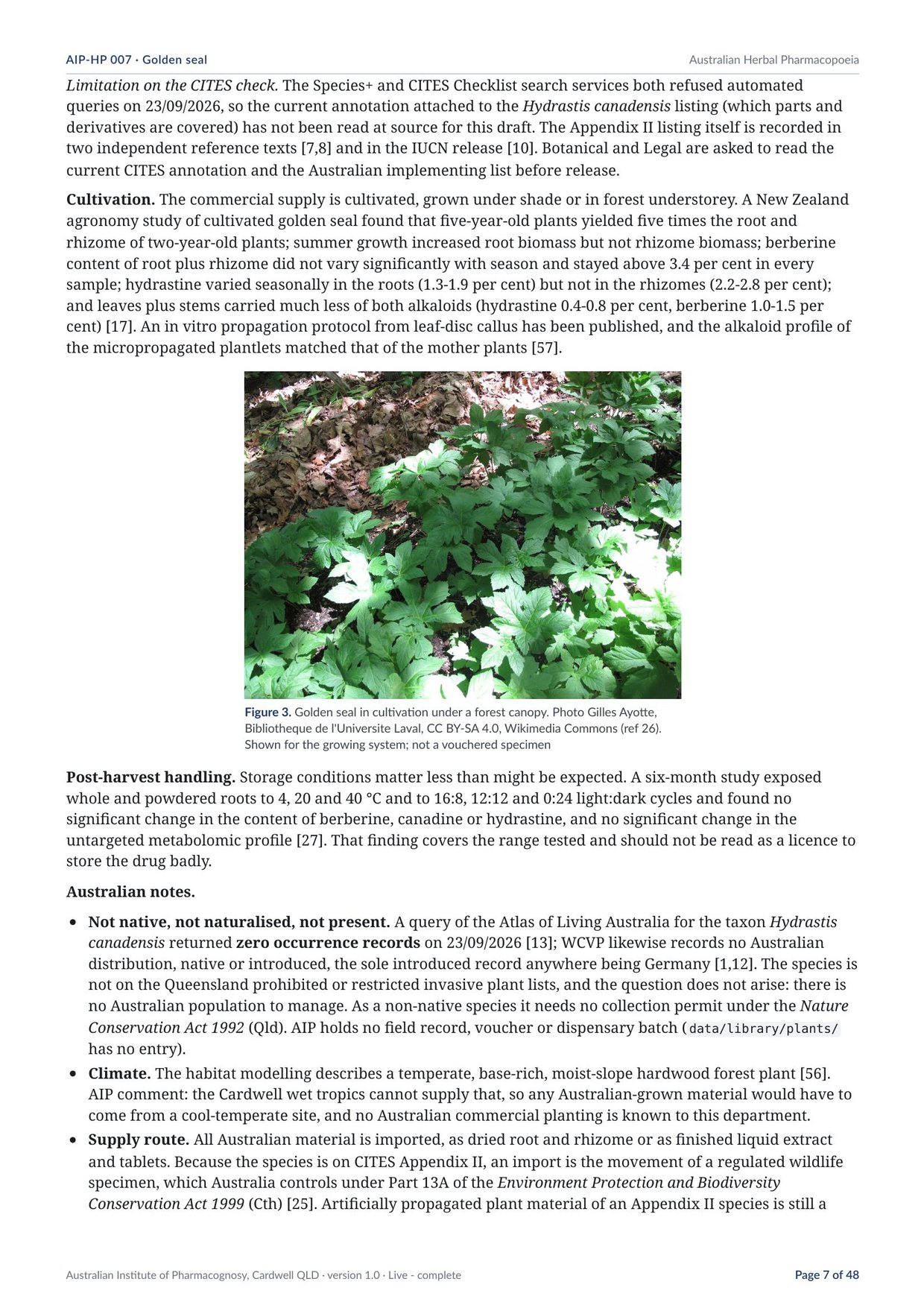
| Totals (draft) | about 48 A4 pages as rendered; 25 tables; 28 embedded figures (5 licensed photographs, 4 public-domain plates or photographs, 11 PubChem structures, 4 AIP schematics each labelled "schematic redrawn", 1 AIP map, 3 AIP data charts). Counted from the file 23/09/2026. Photomicrographs: none; AIP bench data pending, and no licensed photomicrograph of Hydrastis powder or transverse section was found on Wikimedia Commons or in an open-access paper in September 2026, so slot F4 carries a captioned placeholder. Chromatograms: none measured; the TLC and HPLC figures are schematics redrawn from the Ph. Eur. text, and AIP bench data are pending for both. Studies graded: 8 human pharmacokinetic interaction studies and 1 single-dose pharmacokinetic study; 0 efficacy trials found. 84 references. Full-text position: end of section 19 |
0.4 Contributors and access
Prepared by the Australian Institute of Pharmacognosy. The Botanical, QA, Medicine and layout reviews are on record, all 23/09/2026, with their sections and reviewers in 0.1 and 20.3. Librarian reference audit pending. A Legal read is advisory only and does not gate publication (CEO order 22/09/2026). The Australian Herbal Pharmacopoeia is AIP’s own series and carries no statutory, TGA or government standing. A preview of the monograph and all of section 15 (Safety) are free to every reader; the full text is for Scholar members and above, or the AUD $20 copy of this one title.
Free to every reader. The safety section of every monograph is open to everyone, signed in or not. In an emergency call 000. For poisoning, call the Poisons Information Centre on 13 11 26.
15. Safety
15.1 Adverse effects
There is a lack of clinical safety and toxicity data for golden seal [9]. No adverse effect was reported from the herb itself in the four healthy-volunteer interaction studies, which between them exposed about 60 people to standardised extract for 14 to 28 days [30,31,32,33].
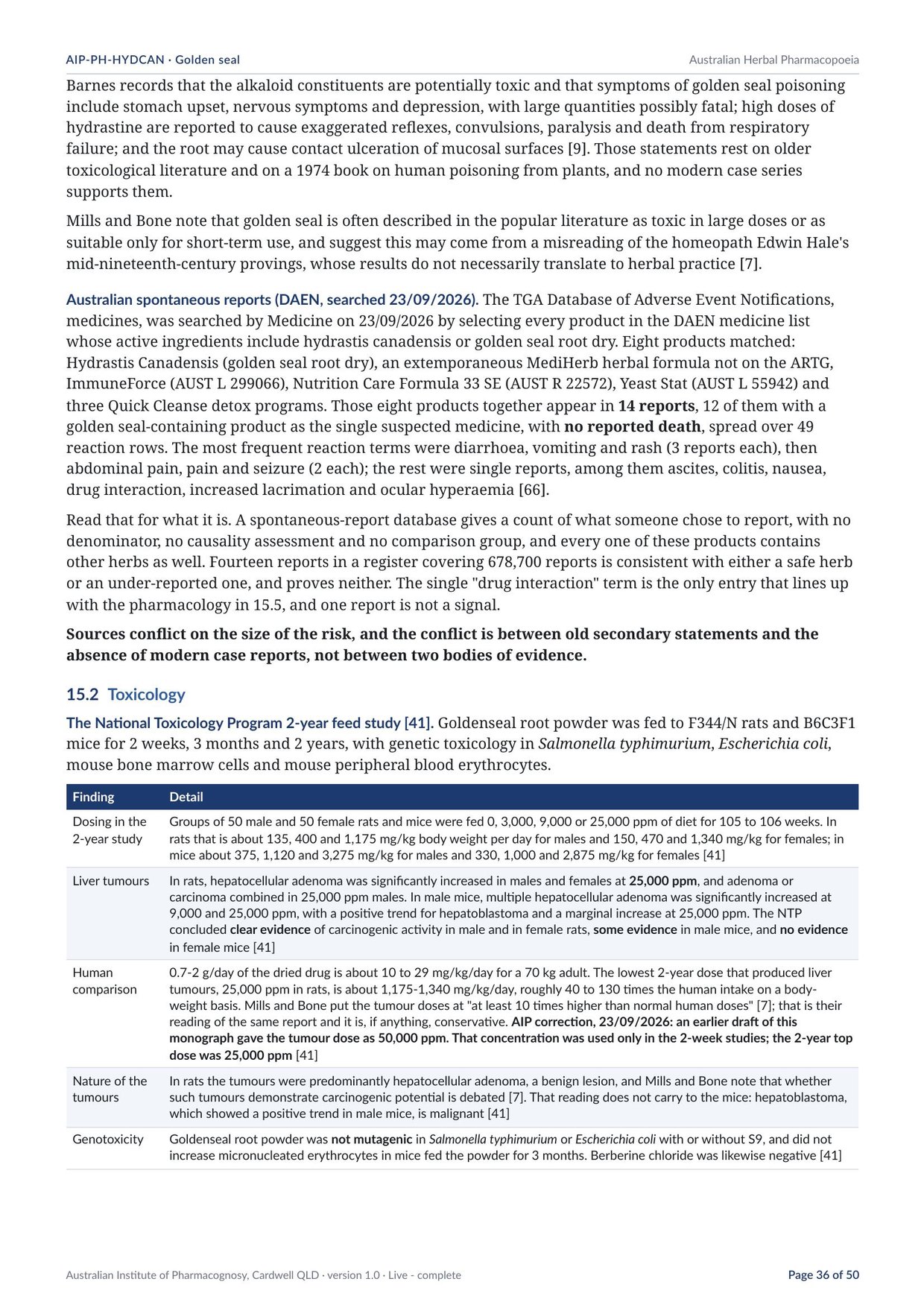
Barnes records that the alkaloid constituents are potentially toxic and that symptoms of golden seal poisoning include stomach upset, nervous symptoms and depression, with large quantities possibly fatal; high doses of hydrastine are reported to cause exaggerated reflexes, convulsions, paralysis and death from respiratory failure; and the root may cause contact ulceration of mucosal surfaces [9]. Those statements rest on older toxicological literature and on a 1974 book on human poisoning from plants, and no modern case series supports them.
Mills and Bone note that golden seal is often described in the popular literature as toxic in large doses or as suitable only for short-term use, and suggest this may come from a misreading of the homeopath Edwin Hale’s mid-nineteenth-century provings, whose results do not necessarily translate to herbal practice [7].
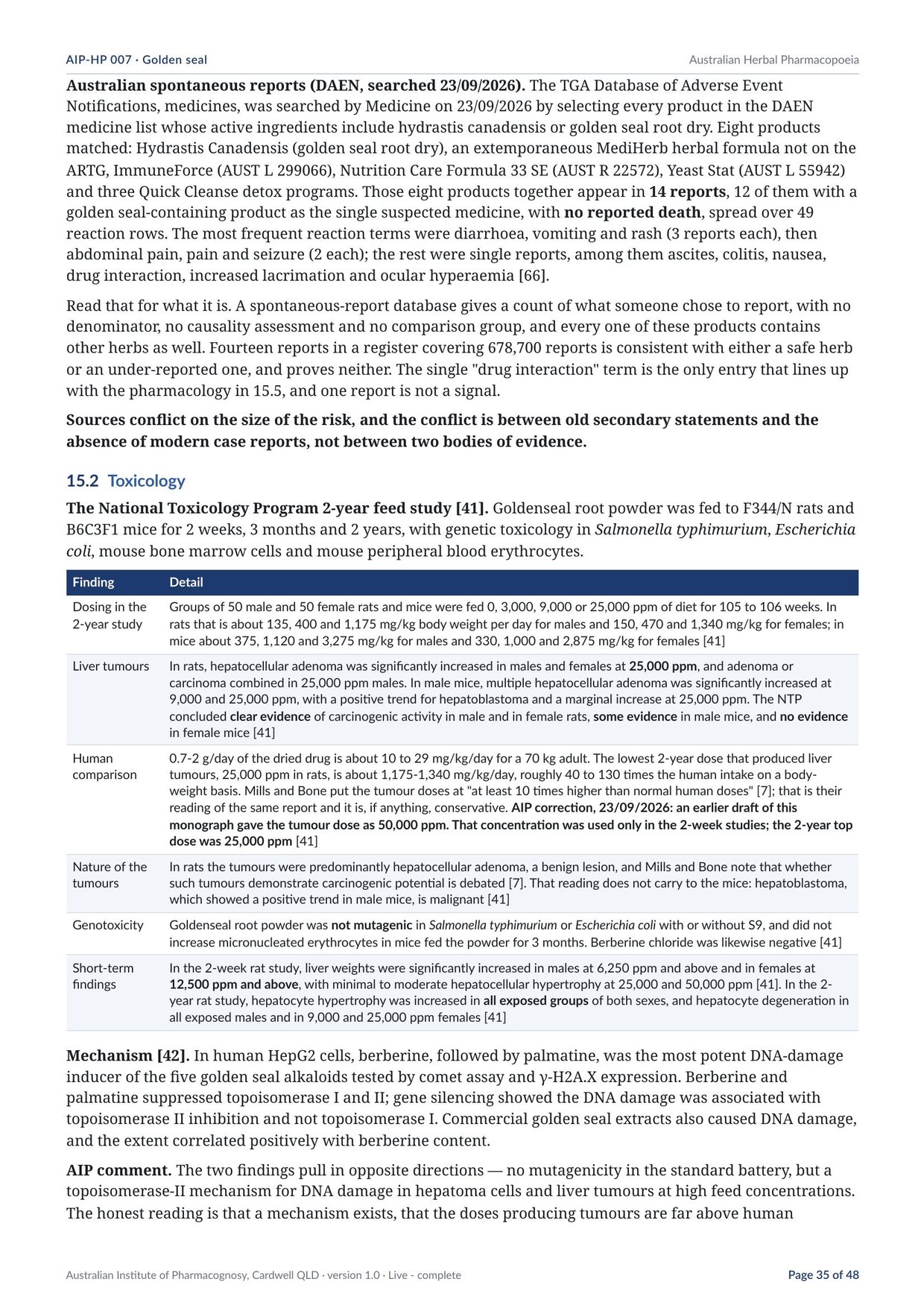
Australian spontaneous reports (DAEN, searched in September 2026). The TGA Database of Adverse Event Notifications, medicines, was searched by Medicine in September 2026 by selecting every product in the DAEN medicine list whose active ingredients include hydrastis canadensis or golden seal root dry. Eight products matched: Hydrastis Canadensis (golden seal root dry), an extemporaneous MediHerb herbal formula not on the ARTG, ImmuneForce (AUST L 299066), Nutrition Care Formula 33 SE (AUST R 22572), Yeast Stat (AUST L 55942) and three Quick Cleanse detox programs. Those eight products together appear in 14 reports, 12 of them with a golden seal-containing product as the single suspected medicine, with no reported death, spread over 49 reaction rows. The most frequent reaction terms were diarrhoea, vomiting and rash (3 reports each), then abdominal pain, pain and seizure (2 each); the rest were single reports, among them ascites, colitis, nausea, drug interaction, increased lacrimation and ocular hyperaemia [66].
Read that for what it is. A spontaneous-report database gives a count of what someone chose to report, with no denominator, no causality assessment and no comparison group, and every one of these products contains other herbs as well. Fourteen reports in a register covering 678,700 reports is consistent with either a safe herb or an under-reported one, and proves neither. The single "drug interaction" term is the only entry that lines up with the pharmacology in 15.5, and one report is not a signal.
Sources conflict on the size of the risk, and the conflict is between old secondary statements and the absence of modern case reports, not between two bodies of evidence.
15.2 Toxicology
The National Toxicology Program 2-year feed study [41]. Goldenseal root powder was fed to F344/N rats and B6C3F1 mice for 2 weeks, 3 months and 2 years, with genetic toxicology in Salmonella typhimurium, Escherichia coli, mouse bone marrow cells and mouse peripheral blood erythrocytes.
| Finding | Detail |
|---|---|
| Dosing in the 2-year study | Groups of 50 male and 50 female rats and mice were fed 0, 3,000, 9,000 or 25,000 ppm of diet for 105 to 106 weeks. In rats that is about 135, 400 and 1,175 mg/kg body weight per day for males and 150, 470 and 1,340 mg/kg for females; in mice about 375, 1,120 and 3,275 mg/kg for males and 330, 1,000 and 2,875 mg/kg for females [41] |
| Liver tumours | In rats, hepatocellular adenoma was significantly increased in males and females at 25,000 ppm, and adenoma or carcinoma combined in 25,000 ppm males. In male mice, multiple hepatocellular adenoma was significantly increased at 9,000 and 25,000 ppm, with a positive trend for hepatoblastoma and a marginal increase at 25,000 ppm. The NTP concluded clear evidence of carcinogenic activity in male and in female rats, some evidence in male mice, and no evidence in female mice [41] |
| Human comparison | 0.7-2 g/day of the dried drug is about 10 to 29 mg/kg/day for a 70 kg adult. The lowest 2-year dose that produced liver tumours, 25,000 ppm in rats, is about 1,175-1,340 mg/kg/day, roughly 40 to 130 times the human intake on a body-weight basis. Mills and Bone put the tumour doses at "at least 10 times higher than normal human doses" [7]; that is their reading of the same report and it is, if anything, conservative. AIP correction, 23/09/2026: an earlier draft of this monograph gave the tumour dose as 50,000 ppm. That concentration was used only in the 2-week studies; the 2-year top dose was 25,000 ppm [41] |
| Nature of the tumours | In rats the tumours were predominantly hepatocellular adenoma, a benign lesion, and Mills and Bone note that whether such tumours demonstrate carcinogenic potential is debated [7]. That reading does not carry to the mice: hepatoblastoma, which showed a positive trend in male mice, is malignant [41] |
| Genotoxicity | Goldenseal root powder was not mutagenic in Salmonella typhimurium or Escherichia coli with or without S9, and did not increase micronucleated erythrocytes in mice fed the powder for 3 months. Berberine chloride was likewise negative [41] |
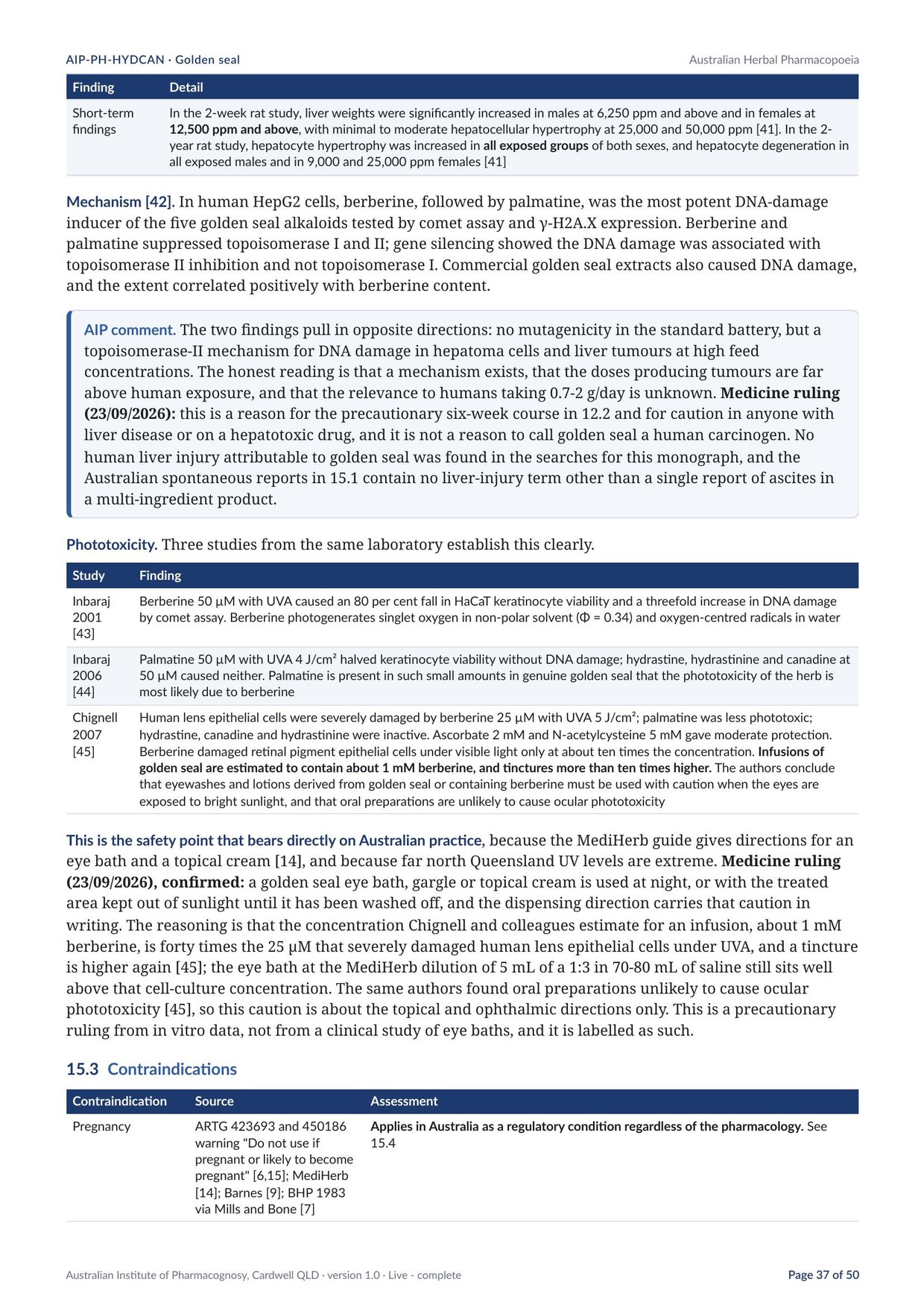
| Short-term findings | In the 2-week rat study, liver weights were significantly increased in males at 6,250 ppm and above and in females at 12,500 ppm and above, with minimal to moderate hepatocellular hypertrophy at 25,000 and 50,000 ppm [41]. In the 2-year rat study, hepatocyte hypertrophy was increased in all exposed groups of both sexes, and hepatocyte degeneration in all exposed males and in 9,000 and 25,000 ppm females [41] |
Mechanism [42]. In human HepG2 cells, berberine, followed by palmatine, was the most potent DNA-damage inducer of the five golden seal alkaloids tested by comet assay and γ-H2A.X expression. Berberine and palmatine suppressed topoisomerase I and II; gene silencing showed the DNA damage was associated with topoisomerase II inhibition and not topoisomerase I. Commercial golden seal extracts also caused DNA damage, and the extent correlated positively with berberine content.
AIP comment. The two findings pull in opposite directions: no mutagenicity in the standard battery, but a topoisomerase-II mechanism for DNA damage in hepatoma cells and liver tumours at high feed concentrations. The honest reading is that a mechanism exists, that the doses producing tumours are far above human exposure, and that the relevance to humans taking 0.7-2 g/day is unknown. Medicine ruling (23/09/2026): this is a reason for the precautionary six-week course in 12.2 and for caution in anyone with liver disease or on a hepatotoxic drug, and it is not a reason to call golden seal a human carcinogen. No human liver injury attributable to golden seal was found in the searches for this monograph, and the Australian spontaneous reports in 15.1 contain no liver-injury term other than a single report of ascites in a multi-ingredient product.
Phototoxicity. Three studies from the same laboratory establish this clearly.
| Study | Finding |
|---|---|
| Inbaraj 2001 [43] | Berberine 50 µM with UVA caused an 80 per cent fall in HaCaT keratinocyte viability and a threefold increase in DNA damage by comet assay. Berberine photogenerates singlet oxygen in non-polar solvent (Φ = 0.34) and oxygen-centred radicals in water |
| Inbaraj 2006 [44] | Palmatine 50 µM with UVA 4 J/cm² halved keratinocyte viability without DNA damage; hydrastine, hydrastinine and canadine at 50 µM caused neither. Palmatine is present in such small amounts in genuine golden seal that the phototoxicity of the herb is most likely due to berberine |
| Chignell 2007 [45] | Human lens epithelial cells were severely damaged by berberine 25 µM with UVA 5 J/cm²; palmatine was less phototoxic; hydrastine, canadine and hydrastinine were inactive. Ascorbate 2 mM and N-acetylcysteine 5 mM gave moderate protection. Berberine damaged retinal pigment epithelial cells under visible light only at about ten times the concentration. Infusions of golden seal are estimated to contain about 1 mM berberine, and tinctures more than ten times higher. The authors conclude that eyewashes and lotions derived from golden seal or containing berberine must be used with caution when the eyes are exposed to bright sunlight, and that oral preparations are unlikely to cause ocular phototoxicity |
This is the safety point that bears directly on Australian practice, because the MediHerb guide gives directions for an eye bath and a topical cream [14], and because far north Queensland UV levels are extreme. Medicine ruling (23/09/2026), confirmed: a golden seal eye bath, gargle or topical cream is used at night, or with the treated area kept out of sunlight until it has been washed off, and the dispensing direction carries that caution in writing. The reasoning is that the concentration Chignell and colleagues estimate for an infusion, about 1 mM berberine, is forty times the 25 µM that severely damaged human lens epithelial cells under UVA, and a tincture is higher again [45]; the eye bath at the MediHerb dilution of 5 mL of a 1:3 in 70-80 mL of saline still sits well above that cell-culture concentration. The same authors found oral preparations unlikely to cause ocular phototoxicity [45], so this caution is about the topical and ophthalmic directions only. This is a precautionary ruling from in vitro data, not from a clinical study of eye baths, and it is labelled as such.
15.3 Contraindications
| Contraindication | Source | Assessment |
|---|---|---|
| Pregnancy | ARTG 423693 and 450186 warning "Do not use if pregnant or likely to become pregnant" [6,15]; MediHerb [14]; Barnes [9]; BHP 1983 via Mills and Bone [7] | Applies in Australia as a regulatory condition regardless of the pharmacology. See 15.4 |
| Lactation | MediHerb [14]; Barnes [9] | Applies |
| Neonatal jaundice; jaundiced neonates | MediHerb [14]; Mills and Bone [7] | Berberine is thought to cause severe acute haemolysis and neonatal jaundice in babies with glucose-6-phosphate dehydrogenase deficiency, though a 2001 review questioned the causal relationship for Coptis [7] |
| Within 7 days of general anaesthesia | MediHerb [14] | Medicine ruling 23/09/2026: confirmed and adopted. Midazolam, the probe drug in three of the interaction studies, is itself an anaesthetic premedicant, and its exposure rose 40 to 62 per cent after 6 to 14 days of golden seal [31,36]. Fentanyl, alfentanil and midazolam are CYP3A substrates and codeine, tramadol and oxycodone depend on CYP2D6. Seven days is a practical margin rather than a measured washout: inhibition was still present at the end of 14- and 28-day courses and no study has measured how fast it resolves [30,31,32,36] |
| Raised blood pressure | Barnes [9], citing older reference works; BHP 1983 via Mills and Bone [7] | Mills and Bone state that this contraindication "is unjustified on current information", noting that an Eclectic text described golden seal as increasing arterial tension and valued it for that [7]. The sources disagree; this monograph records the disagreement. Medicine ruling 23/09/2026: AIP does not carry raised blood pressure as an absolute contraindication. No human study has measured blood pressure on golden seal, so the older texts rest on animal and Eclectic observation that points both ways, and neither direction has been shown in people. What does apply to this group is the interaction: many antihypertensives, including amlodipine, felodipine, nifedipine and verapamil, are CYP3A substrates, and metoprolol, carvedilol and nebivolol are CYP2D6 substrates, so golden seal is avoided alongside them on interaction grounds, which is a different and better-evidenced reason [30,31,32,36] |
| Neonates and very young children | Mills and Bone [7] | Treatment should be avoided until further information becomes available |
15.4 Pregnancy and lactation
Mills and Bone assign Category C to berberine-containing plants: plants that have caused or are associated with a substantial risk of causing harmful effects on the fetus or neonate without causing malformations, on the basis of the presence of berberine and related alkaloids. On that basis they consider golden seal best avoided during pregnancy, except for short-term use to assist labour [7]. Hydrastine 500 mg induced labour when taken orally by pregnant women [7].
The animal data are more reassuring than the classification suggests.
- A reproductive screening test gave female rats 65 times the human dose of golden seal by gavage on gestation days 1-8 or 8-15. There was no increase in pre- or post-implantation loss, no change in fetal body weight, and no difference in external or internal malformations. The same extract was toxic to gestation-day-10.5 embryos cultured in rat serum for 26 h. The authors concluded that poor absorption from the small intestine probably explains the discrepancy, that serum concentrations from oral treatment are unlikely to reach the in vitro lowest-observed-effect level, and that golden seal at the prescribed human dose is unlikely to be absorbed enough to be unsafe in pregnancy: while stating that pharmacokinetic studies are needed to confirm it [46].
- A reduction in average fetal body weight per litter was seen in the offspring of mice fed golden seal root powder at 7.7 g/kg/day from days 6 to 17, with no significant developmental toxicity below that dose and increased maternal liver weight above 2 g/kg/day without histopathological lesions [7].
- Mills and Bone offer an alternative mechanism for the pregnancy concern: berberine displaces bilirubin from protein binding, with about a tenfold greater effect than phenylbutazone in vitro, and chronic administration to rats reduced bilirubin serum protein binding. That, rather than any uterine-contracting effect, may be what the contraindication is really about [7].
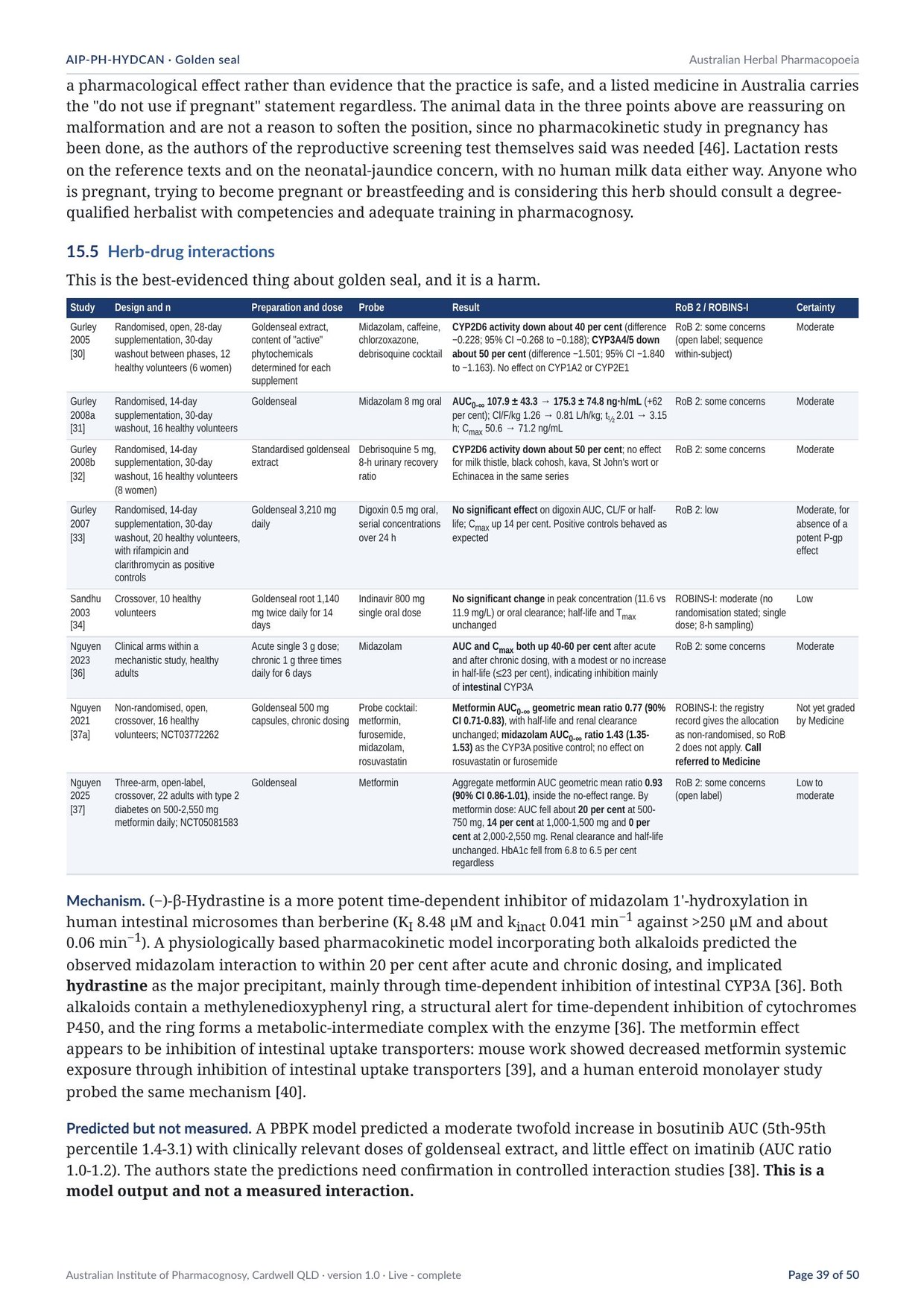
AIP position, confirmed by Medicine 23/09/2026. The contraindication stands, for three reasons that have nothing to do with which mechanism is right: the Australian ARTG entries carry it as a condition of listing [6,15], the manufacturer’s own guide carries it [14], and the reference texts carry it [7,9]. The wording AIP uses is: golden seal is not used in pregnancy or during breastfeeding. No qualifier about labour is added. Mills and Bone’s exception for short-term use to assist labour [7] is recorded here as what their text says, and AIP does not adopt it: the only human observation behind it is that 500 mg of hydrastine induced labour [7], which is an account of a pharmacological effect rather than evidence that the practice is safe, and a listed medicine in Australia carries the "do not use if pregnant" statement regardless. The animal data in the three points above are reassuring on malformation and are not a reason to soften the position, since no pharmacokinetic study in pregnancy has been done, as the authors of the reproductive screening test themselves said was needed [46]. Lactation rests on the reference texts and on the neonatal-jaundice concern, with no human milk data either way. Anyone who is pregnant, trying to become pregnant or breastfeeding and is considering this herb should consult a degree-qualified herbalist with competencies and adequate training in pharmacognosy.
15.5 Herb-drug interactions
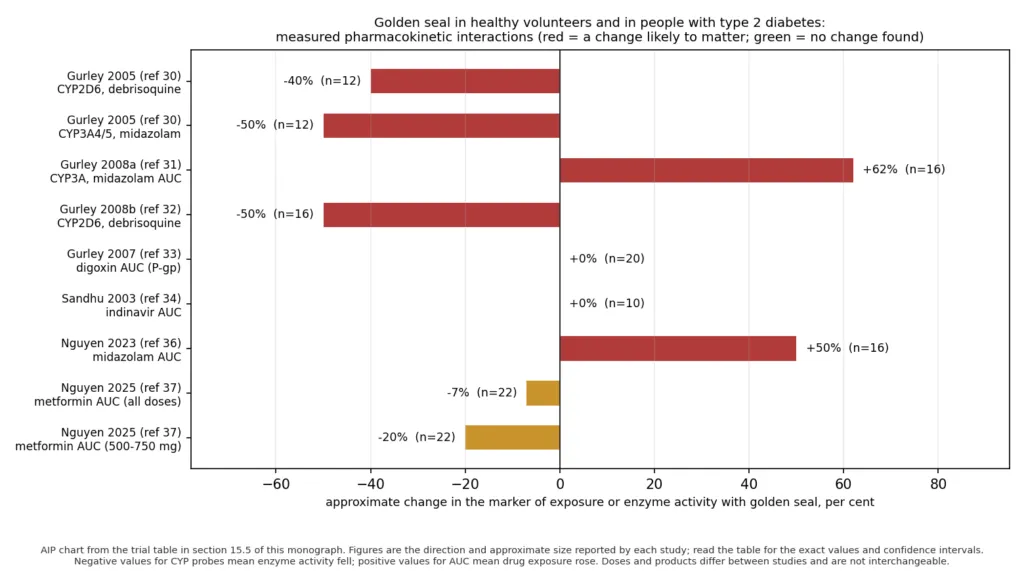
This is the best-evidenced thing about golden seal, and it is a harm.
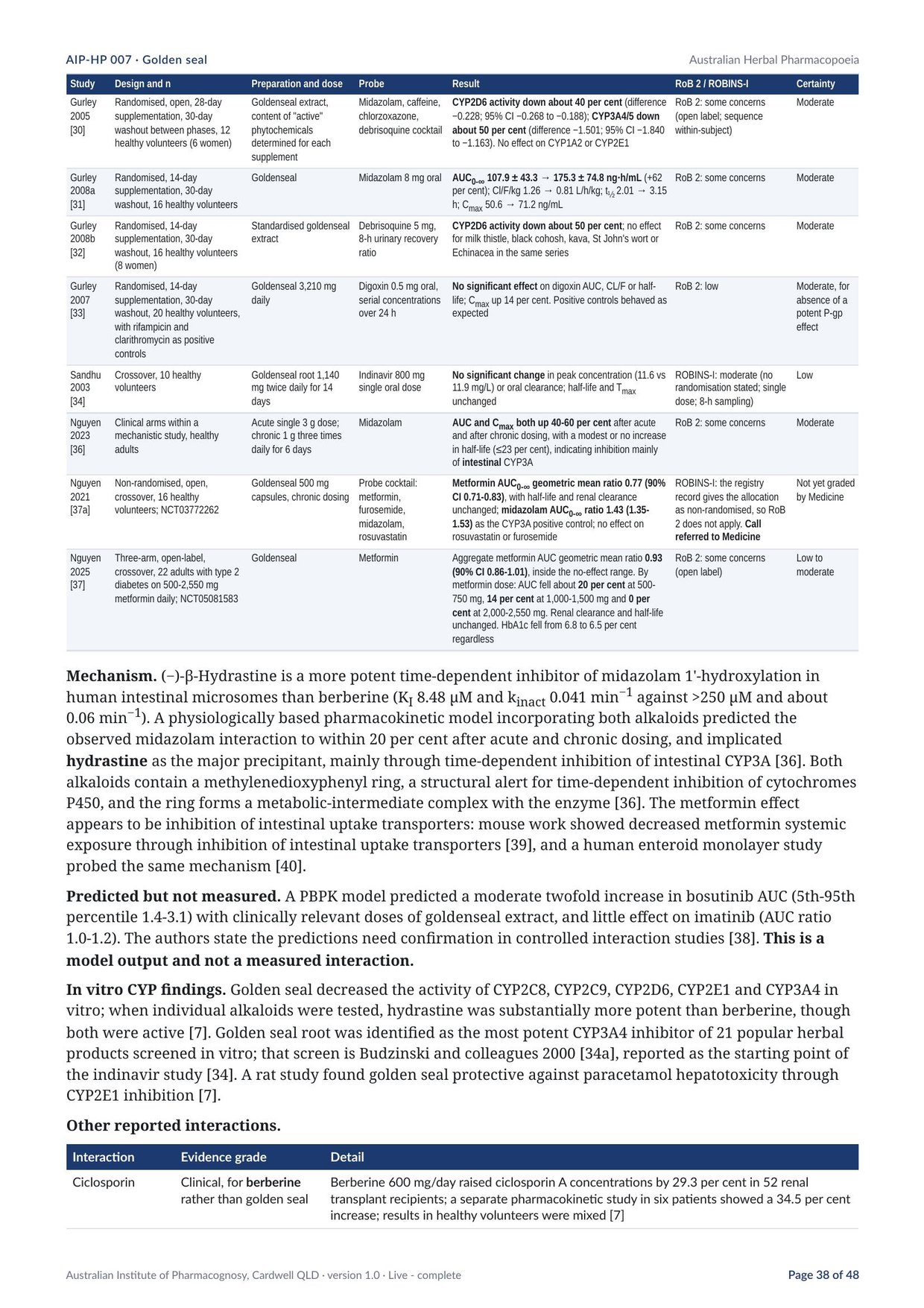
| Study | Design and n | Preparation and dose | Probe | Result | RoB 2 / ROBINS-I | Certainty |
|---|---|---|---|---|---|---|
| Gurley 2005 [30] | Randomised, open, 28-day supplementation, 30-day washout between phases, 12 healthy volunteers (6 women) | Goldenseal extract, content of "active" phytochemicals determined for each supplement | Midazolam, caffeine, chlorzoxazone, debrisoquine cocktail | CYP2D6 activity down about 40 per cent (difference −0.228; 95% CI −0.268 to −0.188); CYP3A4/5 down about 50 per cent (difference −1.501; 95% CI −1.840 to −1.163). No effect on CYP1A2 or CYP2E1 | RoB 2: some concerns (open label; sequence within-subject) | Moderate |
| Gurley 2008a [31] | Randomised, 14-day supplementation, 30-day washout, 16 healthy volunteers | Goldenseal | Midazolam 8 mg oral | AUC0-∞ 107.9 ± 43.3 → 175.3 ± 74.8 ng·h/mL (+62 per cent); Cl/F/kg 1.26 → 0.81 L/h/kg; t½ 2.01 → 3.15 h; Cmax 50.6 → 71.2 ng/mL | RoB 2: some concerns | Moderate |
| Gurley 2008b [32] | Randomised, 14-day supplementation, 30-day washout, 16 healthy volunteers (8 women) | Standardised goldenseal extract | Debrisoquine 5 mg, 8-h urinary recovery ratio | CYP2D6 activity down about 50 per cent; no effect for milk thistle, black cohosh, kava, St John’s wort or Echinacea in the same series | RoB 2: some concerns | Moderate |
| Gurley 2007 [33] | Randomised, 14-day supplementation, 30-day washout, 20 healthy volunteers, with rifampicin and clarithromycin as positive controls | Goldenseal 3,210 mg daily | Digoxin 0.5 mg oral, serial concentrations over 24 h | No significant effect on digoxin AUC, CL/F or half-life; Cmax up 14 per cent. Positive controls behaved as expected | RoB 2: low | Moderate, for absence of a potent P-gp effect |
| Sandhu 2003 [34] | Crossover, 10 healthy volunteers | Goldenseal root 1,140 mg twice daily for 14 days | Indinavir 800 mg single oral dose | No significant change in peak concentration (11.6 vs 11.9 mg/L) or oral clearance; half-life and Tmax unchanged | ROBINS-I: moderate (no randomisation stated; single dose; 8-h sampling) | Low |
| Nguyen 2023 [36] | Clinical arms within a mechanistic study, healthy adults | Acute single 3 g dose; chronic 1 g three times daily for 6 days | Midazolam | AUC and Cmax both up 40-60 per cent after acute and after chronic dosing, with a modest or no increase in half-life (≤23 per cent), indicating inhibition mainly of intestinal CYP3A | RoB 2: some concerns | Moderate |
| Nguyen 2021 [37a] | Non-randomised, open, crossover, 16 healthy volunteers; NCT03772262 | Goldenseal 500 mg capsules, chronic dosing | Probe cocktail: metformin, furosemide, midazolam, rosuvastatin | Metformin AUC0-∞ geometric mean ratio 0.77 (90% CI 0.71-0.83), with half-life and renal clearance unchanged; midazolam AUC0-∞ ratio 1.43 (1.35-1.53) as the CYP3A positive control; no effect on rosuvastatin or furosemide | ROBINS-I: the registry record gives the allocation as non-randomised, so RoB 2 does not apply. Call referred to Medicine | Not yet graded by Medicine |
| Nguyen 2025 [37] | Three-arm, open-label, crossover, 22 adults with type 2 diabetes on 500-2,550 mg metformin daily; NCT05081583 | Goldenseal | Metformin | Aggregate metformin AUC geometric mean ratio 0.93 (90% CI 0.86-1.01), inside the no-effect range. By metformin dose: AUC fell about 20 per cent at 500-750 mg, 14 per cent at 1,000-1,500 mg and 0 per cent at 2,000-2,550 mg. Renal clearance and half-life unchanged. HbA1c fell from 6.8 to 6.5 per cent regardless | RoB 2: some concerns (open label) | Low to moderate |
Mechanism. (−)-β-Hydrastine is a more potent time-dependent inhibitor of midazolam 1′-hydroxylation in human intestinal microsomes than berberine (KI 8.48 µM and kinact 0.041 min−1 against >250 µM and about 0.06 min−1). A physiologically based pharmacokinetic model incorporating both alkaloids predicted the observed midazolam interaction to within 20 per cent after acute and chronic dosing, and implicated hydrastine as the major precipitant, mainly through time-dependent inhibition of intestinal CYP3A [36]. Both alkaloids contain a methylenedioxyphenyl ring, a structural alert for time-dependent inhibition of cytochromes P450, and the ring forms a metabolic-intermediate complex with the enzyme [36]. The metformin effect appears to be inhibition of intestinal uptake transporters: mouse work showed decreased metformin systemic exposure through inhibition of intestinal uptake transporters [39], and a human enteroid monolayer study probed the same mechanism [40].
Predicted but not measured. A PBPK model predicted a moderate twofold increase in bosutinib AUC (5th-95th percentile 1.4-3.1) with clinically relevant doses of goldenseal extract, and little effect on imatinib (AUC ratio 1.0-1.2). The authors state the predictions need confirmation in controlled interaction studies [38]. This is a model output and not a measured interaction.
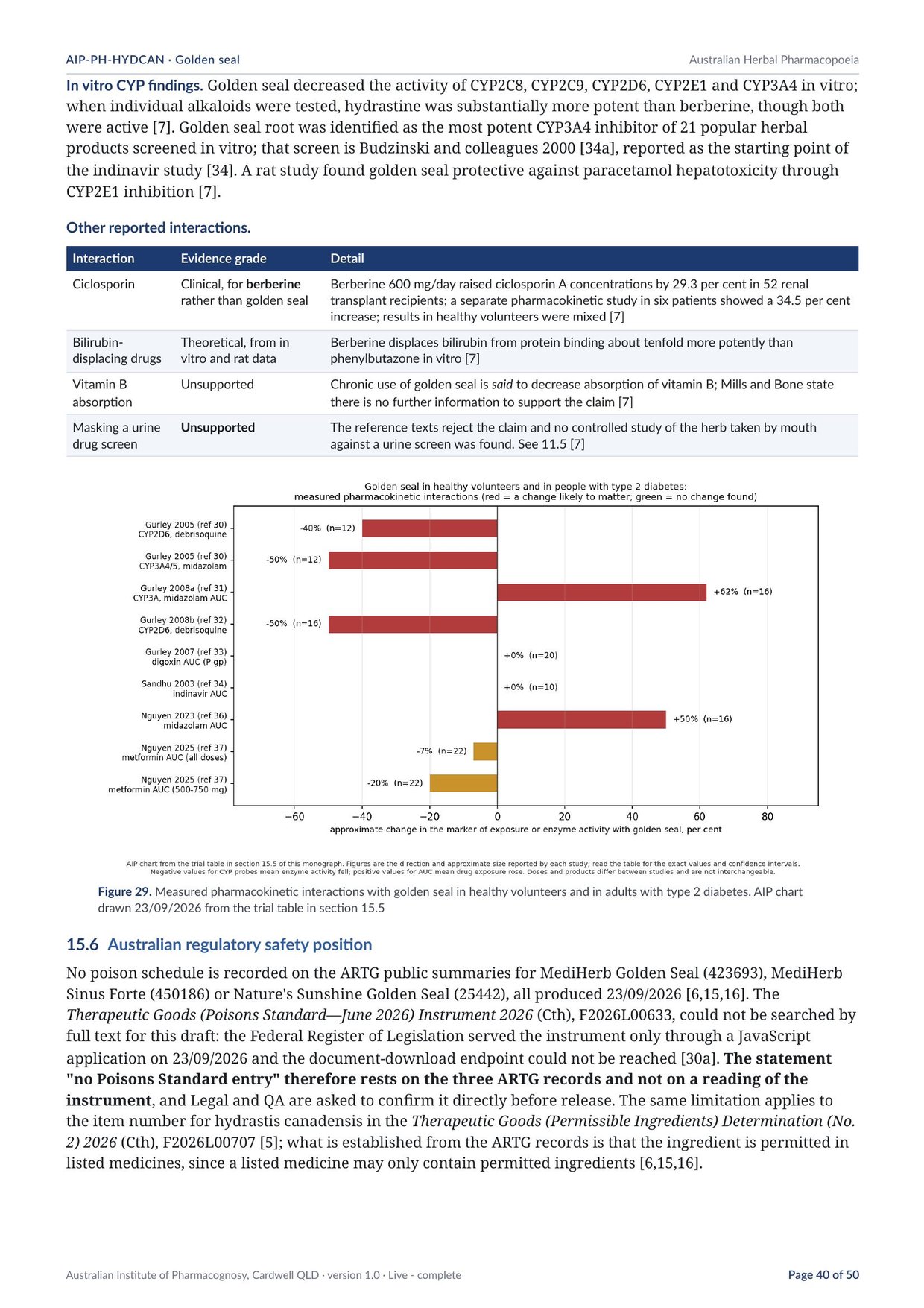
In vitro CYP findings. Golden seal decreased the activity of CYP2C8, CYP2C9, CYP2D6, CYP2E1 and CYP3A4 in vitro; when individual alkaloids were tested, hydrastine was substantially more potent than berberine, though both were active [7]. Golden seal root was identified as the most potent CYP3A4 inhibitor of 21 popular herbal products screened in vitro; that screen is Budzinski and colleagues 2000 [34a], reported as the starting point of the indinavir study [34]. A rat study found golden seal protective against paracetamol hepatotoxicity through CYP2E1 inhibition [7].
Other reported interactions.
| Interaction | Evidence grade | Detail |
|---|---|---|
| Ciclosporin | Clinical, for berberine rather than golden seal | Berberine 600 mg/day raised ciclosporin A concentrations by 29.3 per cent in 52 renal transplant recipients; a separate pharmacokinetic study in six patients showed a 34.5 per cent increase; results in healthy volunteers were mixed [7] |
| Bilirubin-displacing drugs | Theoretical, from in vitro and rat data | Berberine displaces bilirubin from protein binding about tenfold more potently than phenylbutazone in vitro [7] |
| Vitamin B absorption | Unsupported | Chronic use of golden seal is said to decrease absorption of vitamin B; Mills and Bone state there is no further information to support the claim [7] |
| Masking a urine drug screen | Unsupported | The reference texts reject the claim and no controlled study of the herb taken by mouth against a urine screen was found. See 11.5 [7] |
15.6 Australian regulatory safety position
No poison schedule is recorded on the ARTG public summaries for MediHerb Golden Seal (423693), MediHerb Sinus Forte (450186) or Nature’s Sunshine Golden Seal (25442), all produced 23/09/2026 [6,15,16]. The Therapeutic Goods (Poisons Standard—June 2026) Instrument 2026 (Cth), F2026L00633, could not be searched by full text for this draft: the Federal Register of Legislation served the instrument only through a JavaScript application on 23/09/2026 and the document-download endpoint could not be reached [30a]. The statement "no Poisons Standard entry" therefore rests on the three ARTG records and not on a reading of the instrument, and Legal and QA are asked to confirm it directly before release. The same limitation applies to the item number for hydrastis canadensis in the Therapeutic Goods (Permissible Ingredients) Determination (No. 2) 2026 (Cth), F2026L00707 [5]; what is established from the ARTG records is that the ingredient is permitted in listed medicines, since a listed medicine may only contain permitted ingredients [6,15,16].
Database of Adverse Event Notifications, medicines, searched in September 2026 by Medicine. The DAEN medicines search is now delivered as an embedded report and cannot be queried as a data service; the search was run interactively. Every product in the DAEN medicine list whose active ingredients include hydrastis canadensis or golden seal root dry was selected, eight products in all. The result is 14 reports, 12 with a golden seal-containing product as the single suspected medicine, no reported death, over 49 reaction rows. The reaction terms are set out in 15.1 [66]. Inclusion in the DAEN does not mean the event was caused by the medicine, and all but one of the eight products contain other herbs.
TGA safety alerts. The TGA website was searched in September 2026 for "goldenseal", "golden seal" and "hydrastis". Each search returned no matching result, so no TGA safety alert, recall, product defect correction or safety advisory naming golden seal was found [66a]. That is a website search and not a search of an alerts register; if the TGA publishes alerts that its site search does not index, they would not appear here.
15.7 Referral
Golden seal is a practitioner-only medicine in its Australian liquid and tablet forms [6,14,15], it is contraindicated in pregnancy and lactation, and it changes the blood levels of common prescription medicines. Anyone taking prescription medicine who is considering golden seal should consult a degree-qualified herbalist with competencies and adequate training in pharmacognosy before starting it.
Inside the typeset monograph
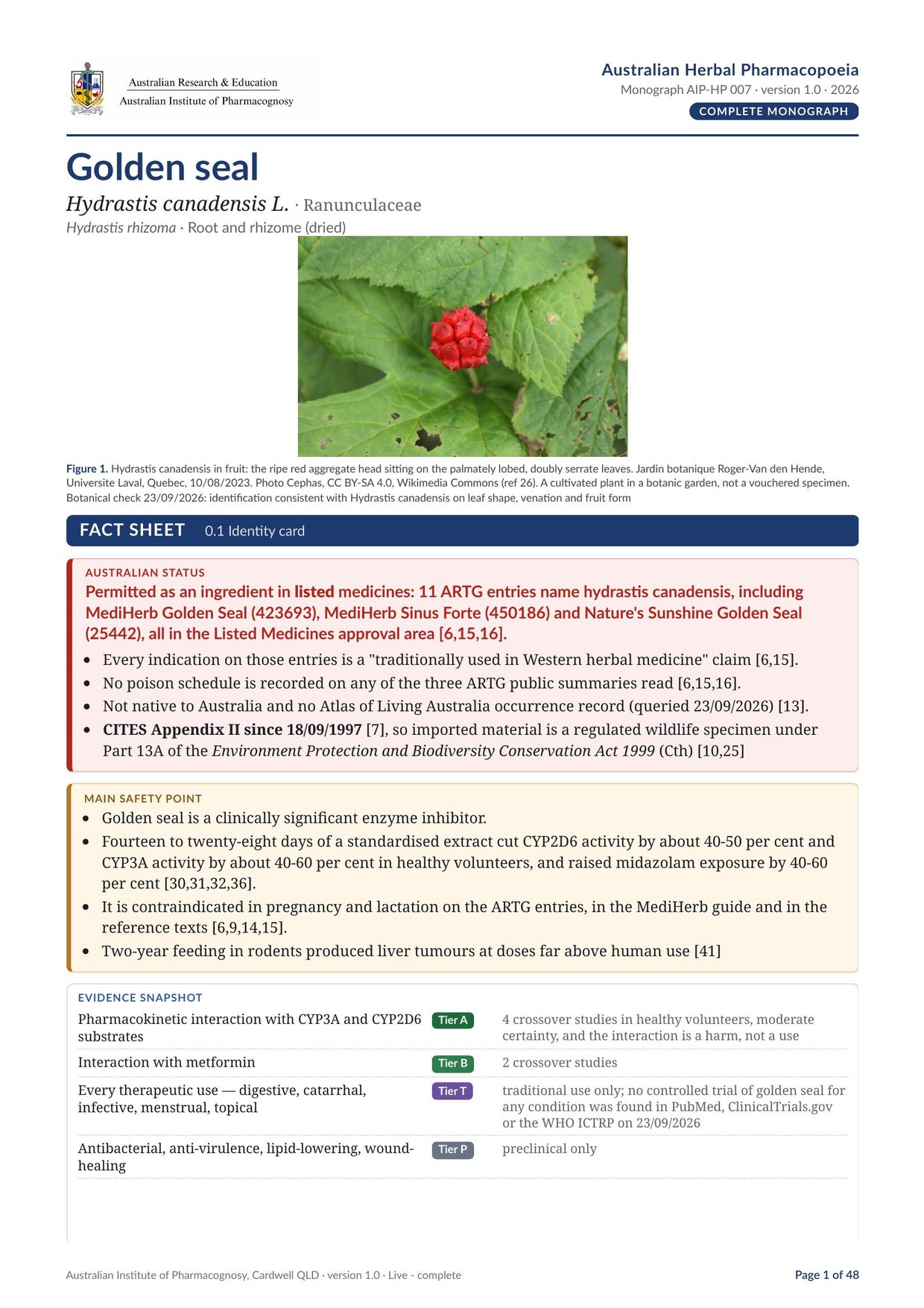



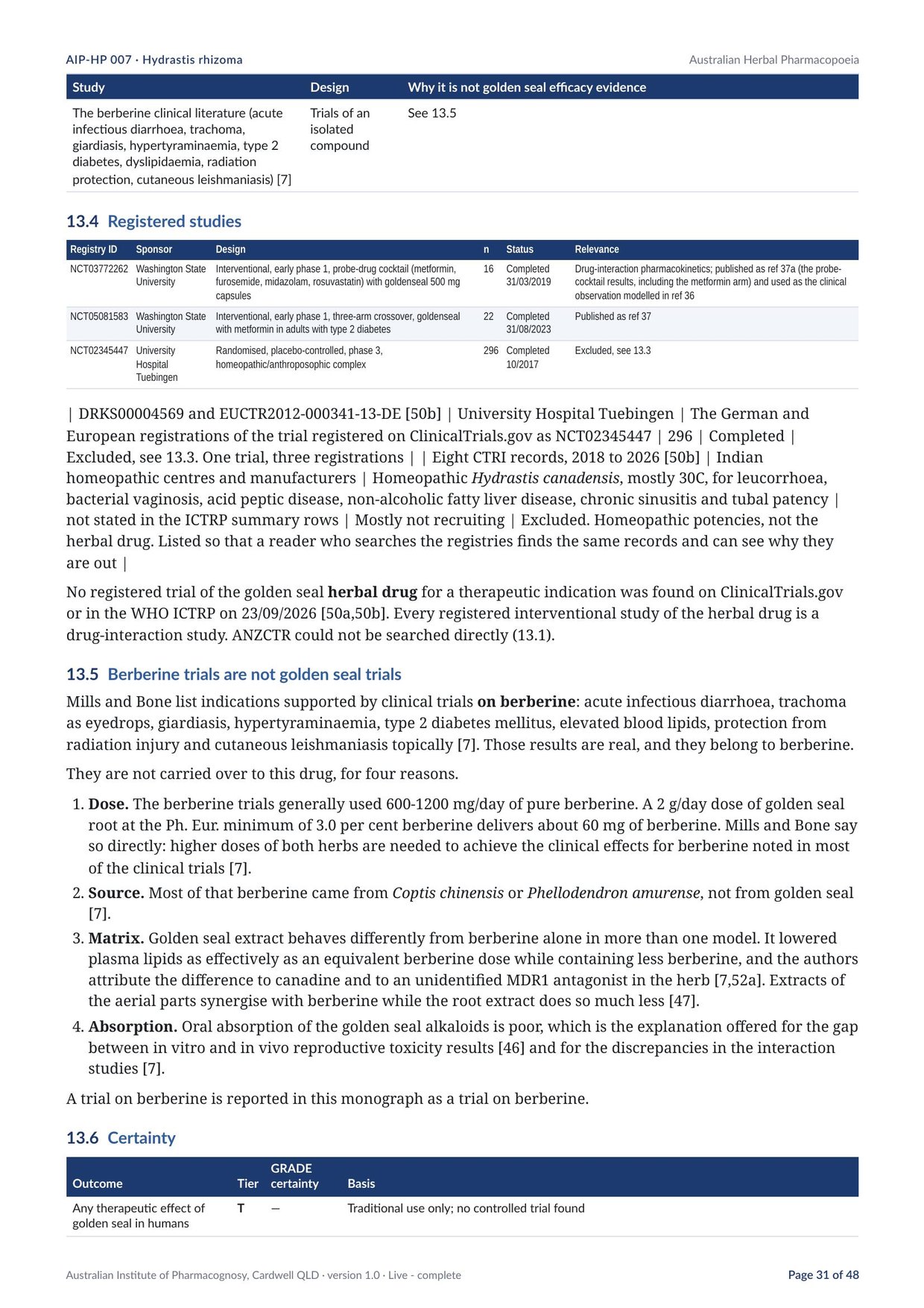
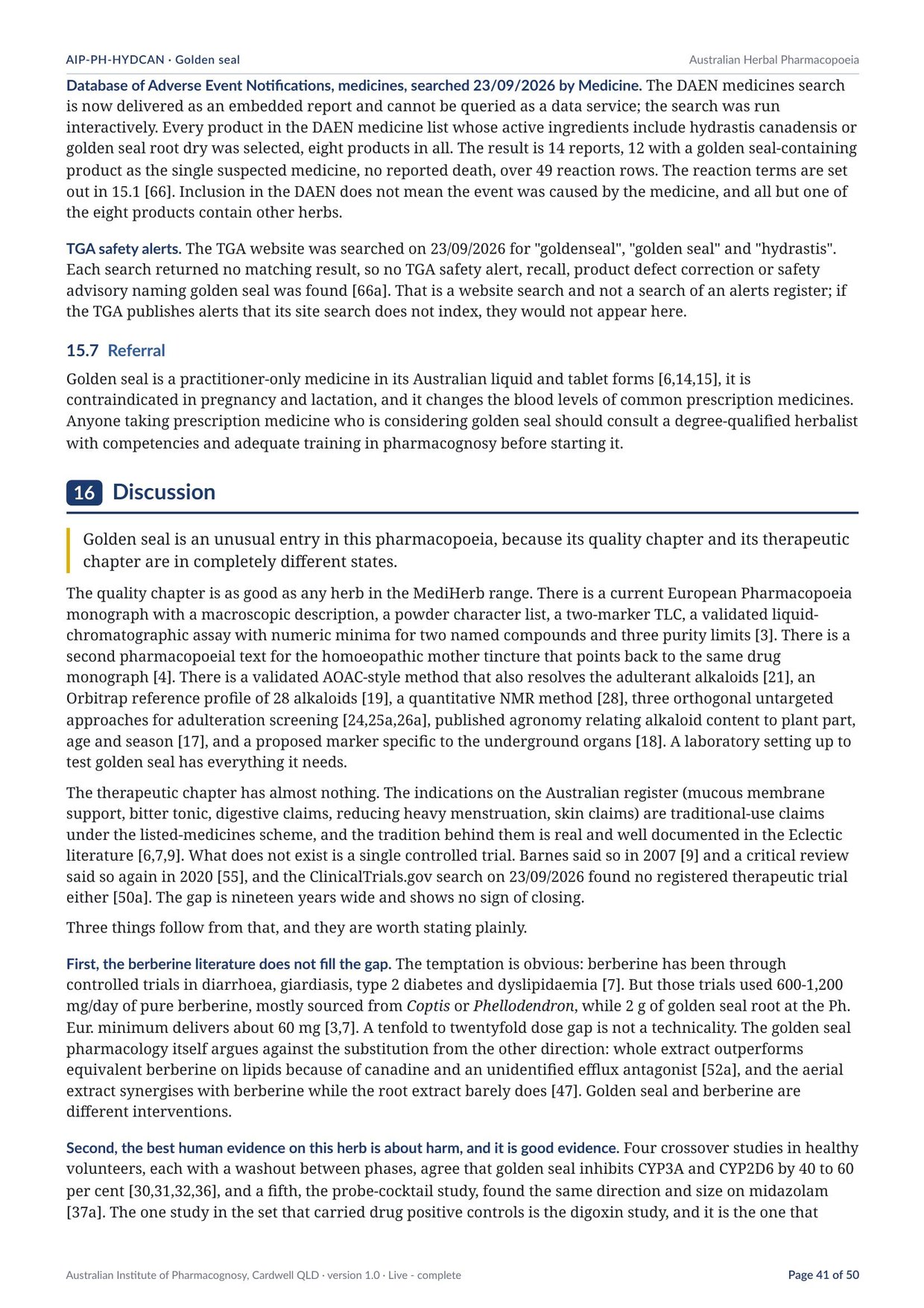
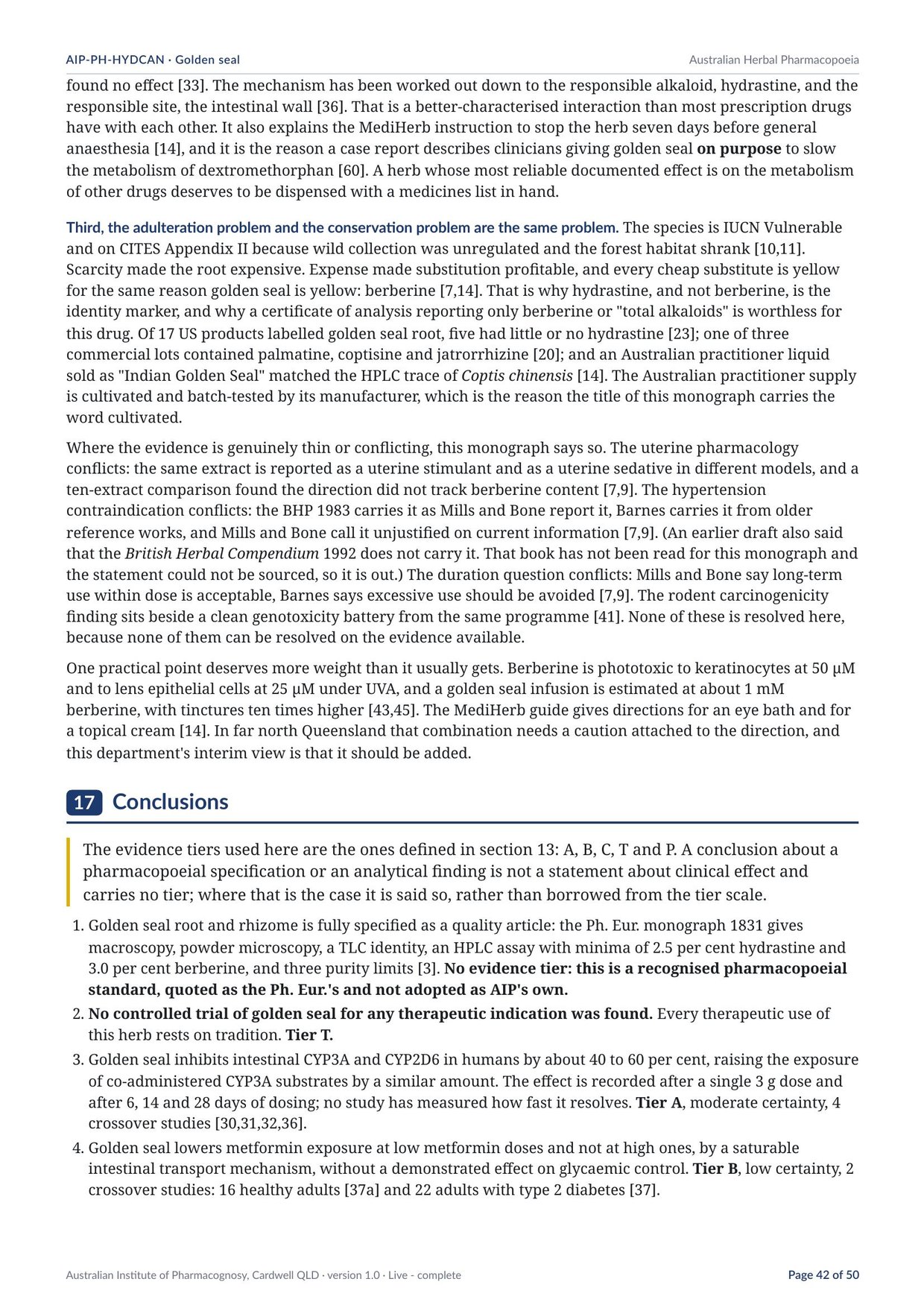
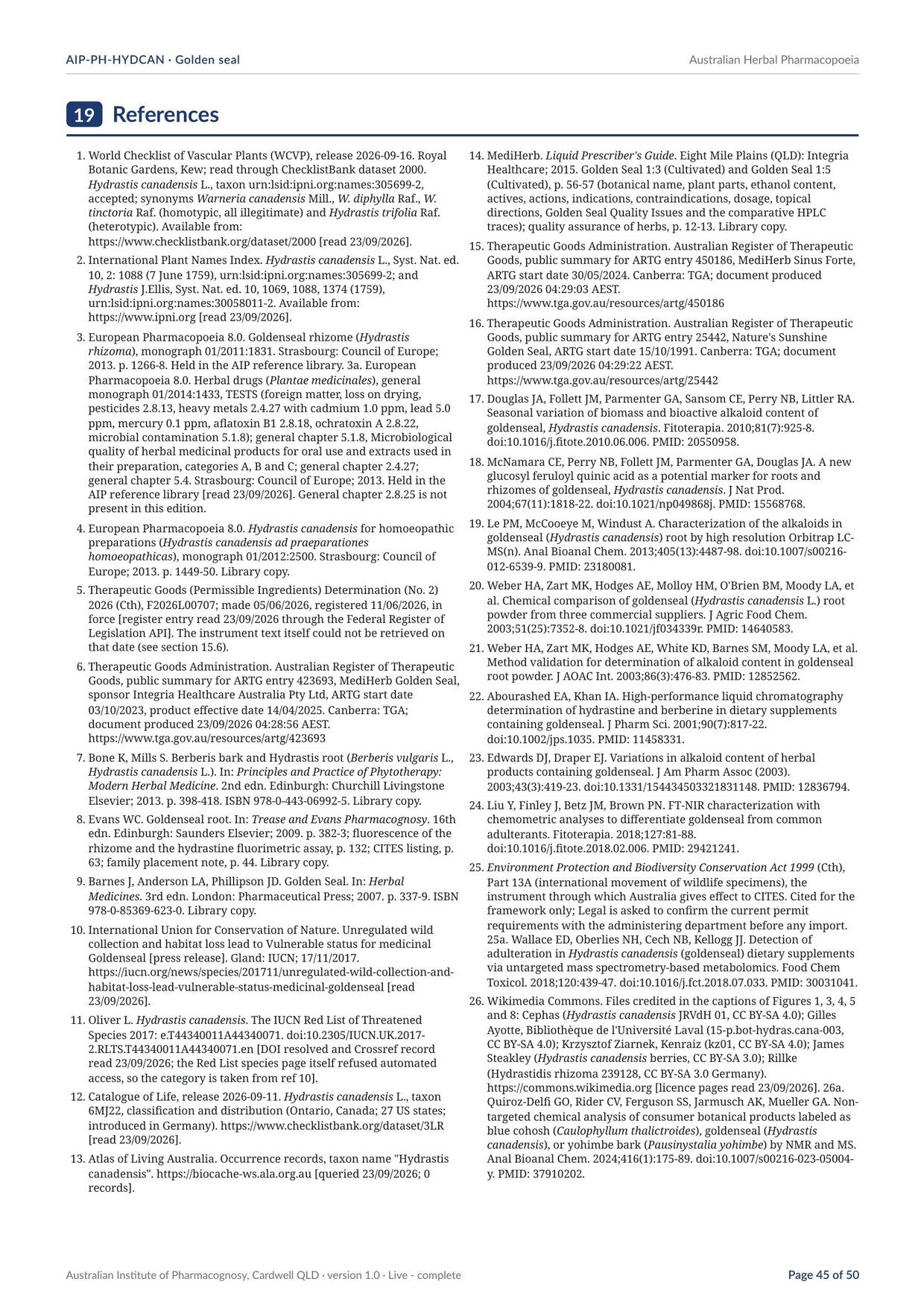
Tap a page to open it big enough to read.
14 pages read at full size, the safety section among them. The pages shown small are in the full monograph.
- 50 pages, read in the AIP Reader
- Version 1.0
- Licence personal, for life, one screen at a time
AUD $20this monograph in full, in the AIP Reader
The preview and the safety section are free, with no account and no sign-in. The microscopy, the chemistry, the TLC and HPLC fingerprints and the rest read in the AIP Reader, on this AUD $20 licence or a Scholar membership.
46 more pages follow · 22,800 words, 26 figures, 19 tables
Still to come in this monograph
- 1. Nomenclature
- 2. Definition
- 3. Source and Australian supply
- 3.1 Where it must be grown: origin, climate and chemistry
- 4. Macroscopy
- 5. Microscopy
- 6. Chemistry
- 7. Named markers and assay limits
- 8. TLC fingerprint
- 9. HPLC fingerprint and assay
- 10. Identity, purity, adulterants and contaminants
- 11. Traditional use
- 12. Current practice: use, preparations and doses
- 13. Clinical evidence
- 14. Pharmacology
- 16. Discussion
- 17. Conclusions
- 18. Research still needed
- 19. References
- 20. Document control
The rest of this monograph reads in the AIP Reader: every page in your name, always the current version, on a Scholar membership or the AUD $20 copy of this one title.
Checking your membership…
Report an error or submit evidence
If something in this monograph is wrong, out of date or missing, tell us and show us the evidence. Every report is logged under the AIP Evidence Charter and assessed on the evidence alone; the outcome is kept on the record, and an upheld report is corrected with a dated notice on this page.
Open the report form
The typeset edition of this monograph, set for print with the plates and chromatograms at full size, is $20 AUD in Publications.