

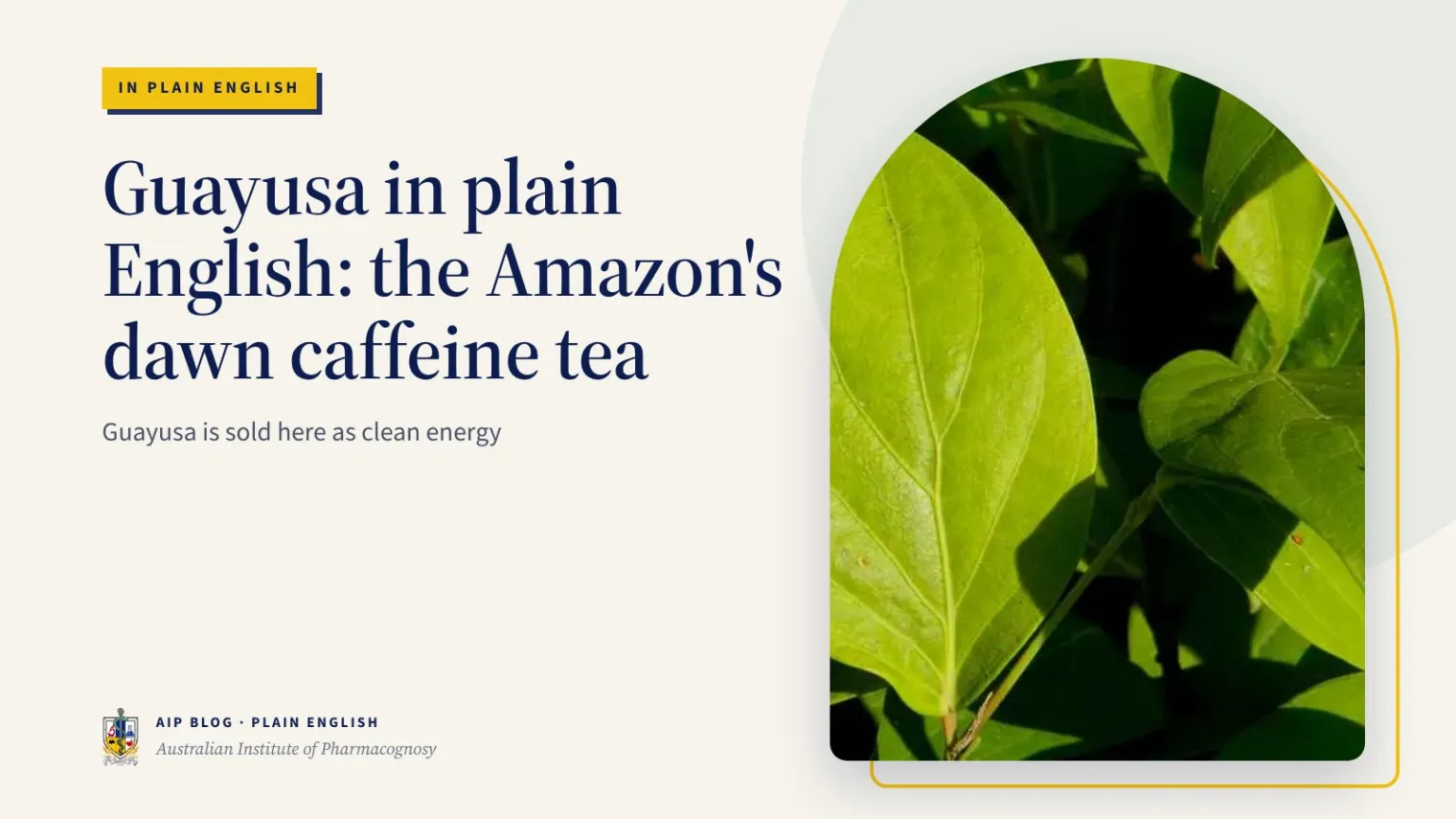
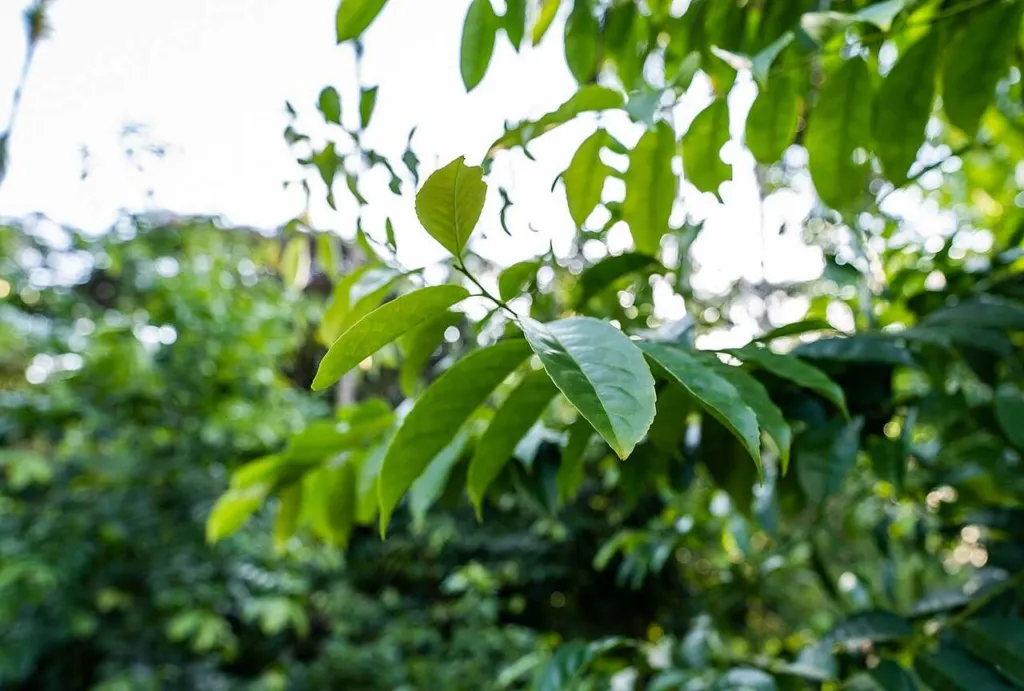
Photo: S.Freidank, via Wikimedia Commons · CC BY-SA 4.0
On a Cardwell morning the kettle goes on: coffee or tea. Lately a third jar has turned up online, “clean energy” and “no crash” on the front. Inside are the dried leaves of guayusa, an Amazon holly loaded with caffeine.
The packet won’t say how much caffeine reaches your mug, or whether those slogans were ever tested. If you count your coffees, are expecting, or take a regular medicine, those gaps are yours.
Educational only: no advice, no preparation or dosing detail. Legal passages are our reading of Australian rules in October 2026.
Count it. Every cup joins your daily caffeine with coffee, tea, cola, energy drinks, guarana and caffeinated supplements. On our reading of the food rules, plain leaf tea need not state its caffeine.
Pregnancy and breastfeeding. The TGA’s required warning for caffeinated medicines: more than 200 mg of caffeine a day is not recommended while pregnant or breastfeeding. Nobody has measured an ordinary cup, so a guayusa cup cannot be reliably counted against that figure. There are no guayusa-specific data.
Medicines. Fluvoxamine, ciprofloxacin and some others, the contraceptive pill among them, slow caffeine clearance; caffeine can raise clozapine levels; a sudden change in caffeine can shift lithium levels. On these, or with heart rhythm problems, high blood pressure, anxiety or poor sleep, treat guayusa as strong coffee.
Children. A strong brew or any extract is not a children’s drink in Australia; about 3 mg of caffeine per kilogram a day is linked to anxiety in children. Extracts concentrate the caffeine to about 20% and have not been assessed for sale as food here.
Emergency: racing or irregular heartbeat, chest pain, repeated vomiting, confusion or a seizure after a lot of caffeine: 000. Suspected overdose or poisoning: Poisons Information Centre 13 11 26, 24 hours, Australia-wide. Report suspected side effects to the TGA.
Before taking any botanical drug, consult a degree-qualified herbalist with competencies and adequate training in pharmacognosy, and tell them every medicine and caffeine source you use.
- A caffeine drink: count each cup with your coffee.
- Nobody has measured an ordinary cup, and the label need not say.
- “Clean energy” and “no crash” were never tested.
- Pregnant, pouring for a child, or on a regular medicine: read the red box.
- Leaf tea is a normal food here; extract drinks are not yet cleared as food.
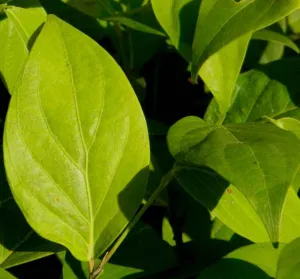
A holly loaded with caffeine
What you are brewing.
Guayusa is a tall evergreen of the western Amazon, mostly Ecuador, and a cousin of yerba mate. Only the leaf is brewed.
Its draw is caffeine. Reported levels put it near the top of any leaf on record, above mate. Strength swings with the tree, the leaf’s age and the brewing, and we found nobody who has measured a normal cup.
Some sellers claim theanine, the calming amino acid in ordinary tea. No analysis we read found any.
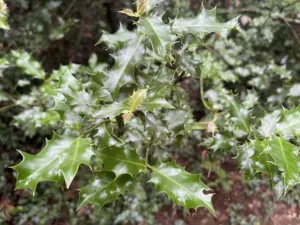
Whole dried leaves are leathery, glossy and finely toothed. Once powdered or blended, nobody can tell by eye what is in the bag.
Put guayusa in the same column as your coffee. Whole leaf is easier to trust than powder.
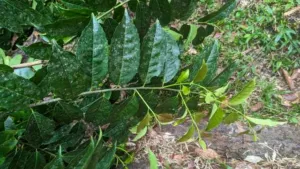
Clean energy and no crash, put to the test
What coffee drinkers already know.
Only four small studies have tried guayusa on people, each using one company’s concentrated extract and each funded at least partly by that company. None tested the brewed tea, daily use or sleep.
They found what caffeine does: sharper attention, quicker reactions, blood pressure nudged up, jitters at bigger doses. In the one study that checked, guayusa caffeine was absorbed and cleared like the factory kind.
The slogans fared worse. Nobody has defined “clean energy”. “No crash” was never checked; no study followed people into the evening. “No jitters” failed in one trial. The gentler-adrenaline idea rests on one study of a dozen men, and the gap faded under the researchers’ own stricter maths.
Lab and rat findings have never been tested in people. A pleasant, slightly bitter cup, then, and the same caffeine as coffee. The evidence goes that far and stops.
The evidence goes that far and stops.
Read “smooth lift, no slump” as advertising, and expect what a coffee gives you.
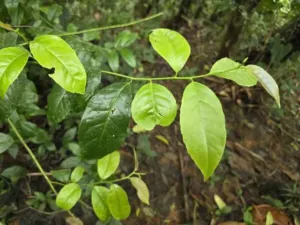
Treat it like a strong coffee
As far as anyone knows, its risks are caffeine’s.
We found no published report of harm from guayusa itself. Caffeine adds up, though: your flat white, a cola and the guayusa share one tally. Taken in large amounts, caffeine has caused irregular heartbeats, seizures and psychosis, and rarely death; the warning signs are in the red box.
Nobody has studied it in pregnancy. Two Kichwa growers told researchers it can be drunk in pregnancy, and children start when they like; that is custom, and says nothing about safe amounts.
Fluvoxamine and ciprofloxacin make caffeine pile up. Caffeine can lift clozapine levels; one man on a steady dose suffered life-threatening clozapine poisoning after taking up energy drinks heavily. On lithium, a sudden drop in caffeine can raise lithium levels.
Count it, drink it early, and keep it steady on lithium. On any regular medicine, take the packet to the herbalist named in the red box.
Where it sits on an Australian shelf
A tea in the cupboard, an extract at the gate.
On our October 2026 reading of the food regulator’s views, the leaf brewed as tea is a normal food, with no safety concern raised for that use. Extracts, and bottled drinks made from them, are novel foods nobody has assessed, so they cannot yet be lawfully sold as food. Concentrated extract sold loose, outside a labelled medicine, falls under the poisons rules for caffeine.
It is not allowed in listed medicines, where its cousin mate sits under caffeine caps and warnings. Sold with a claim to treat illness, it falls into medicines law, unassessed.
Commercially packed, fully dried, seed-free leaf tea can come home from a trip in modest amounts for your own use. Seeds and live plants face far stricter biosecurity.
Be wary of extract drinks, powders and claims to treat illness. Not legal advice.

The family pot before sunrise
How a Kichwa day began.
In Ecuador’s Napo province, a Kichwa household has traditionally woken hours before first light. The pot of leaves goes on the fire and everyone draws close. Elders tell stories, chores are shared out, dreams are read for meaning. One grower recalled grandmothers’ pots, left on the coals all night until the brew ran black and bitter. A brew like that is far stronger than any tea bag.
Left on the coals all night until the brew ran black and bitter.
What looks like a healer’s grave in the Bolivian highlands, about fifteen centuries old, held bundles of the leaf, far from anywhere it grows.
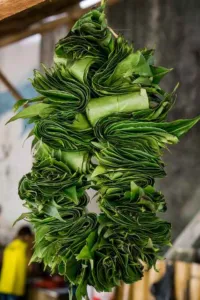
Since export began in 2010, growers report steadier money, and a pull toward single-crop plots where, they say, the tree does poorly. The dawn pot still goes on, sometimes now as a festival for visitors.
When you buy, ask which growers’ group it came from, and whether the people on the packet agreed to their story’s use and share in the money. Fair questions, not legal requirements.
The short version of Dr Thomas Ridley’s evidence review:
- Dr Luke Iggulden, Chief Scientific Officer — Senior author. Commissioned the Explainer series, set its direction and approved it
- Jesse Kirby — Wrote this edition from his own notes with the review shut: chose the five things a reader needs, opened it at a Cardwell kettle, cut it to a short read and rewrote the safety box at its full strength
- Zoe Bennett — Set the title, the search line and the labels around the “clean energy” promise shoppers meet on the packet, which is the hook the page will be shared on
- Theo Karras — Picked the cover and the five banners for how they survive a wide crop, chose the drying-string photograph for the closing story, and wrote alt text to what each frame actually shows
- Leah Bianchi — Built the page: the red safety box, the one-minute card, the two pull quotes, the five what-this-means cards and the card back to the review, with the narrow figure sized to read on a phone
Contributors
- Dr Thomas Ridley — Wrote evidence review AIP-LR-ILEGUA, the article this page retells
Image credits. Cover: S.Freidank, CC BY-SA 4.0. Leaf close-up: Pisofrix, CC BY-SA 4.0. Napo River: Gabriel Gaona, CC BY-SA 4.0. Leaves drying: Wambra, CC BY-SA 4.0. All via Wikimedia Commons. Guayusa in Loreto: Tom Field; in Pastaza: Alan Rockefeller; English holly in Victoria: Dylan Wishart; all CC BY 4.0 via iNaturalist. Resized for the web by AIP; no other changes.
AIP Explainers are the plain-language editions of the Institute’s technical articles, published alongside the original. Everything on this page is carried by the full article, where the evidence, the references and the regulatory sources are set out. Regulatory information was read in October 2026 and may change. Spotted an error? Write to our contact form. We would rather correct a claim than repeat it.
Jesse Kirby
Head of Community Outreach
Australian Institute of Pharmacognosy
Cardwell QLD, Australia
australian-pharmacognosy.org · our contact form
The Institute sets and publishes its own monographs. The catalogue is in Publications.