

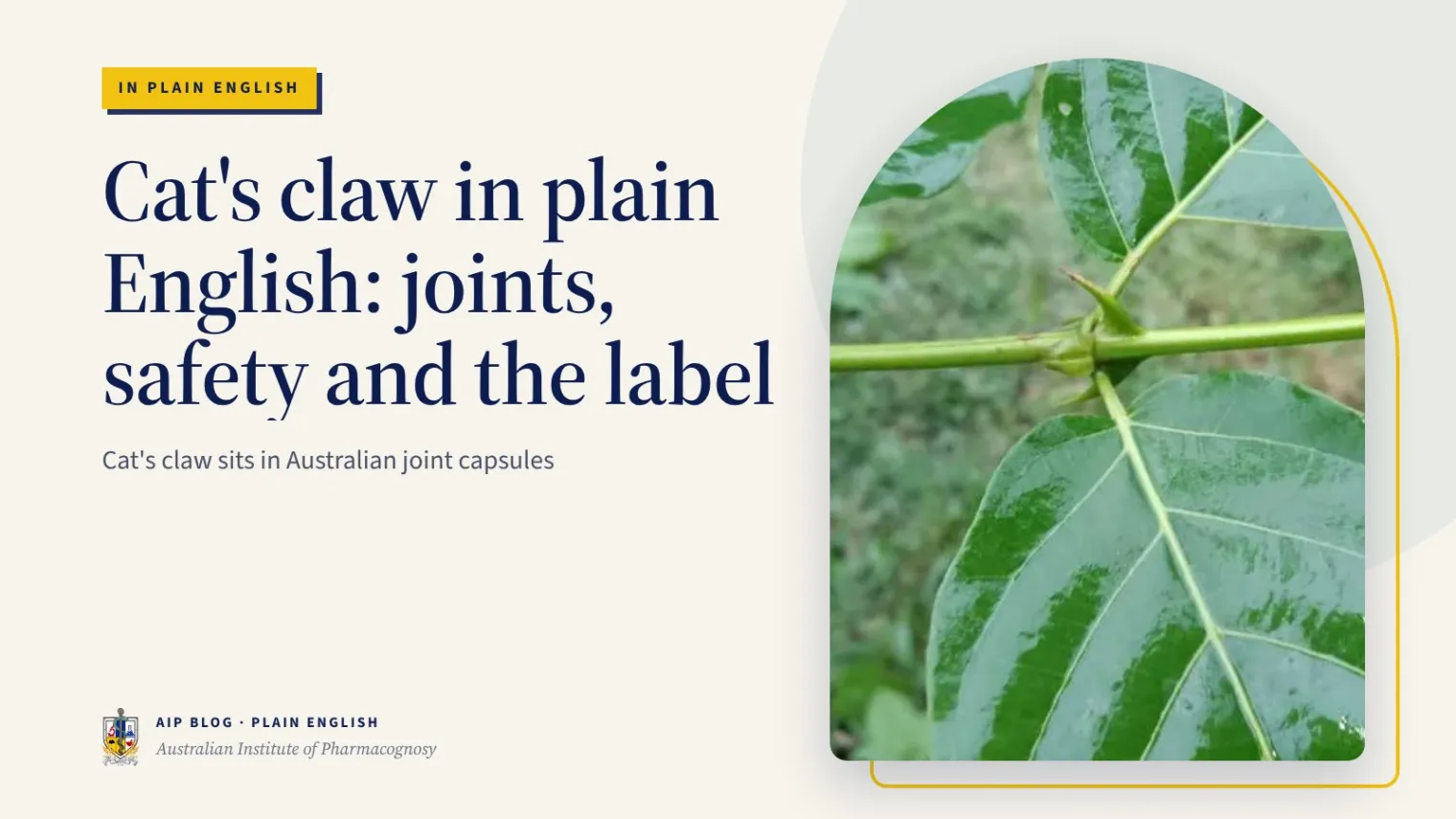
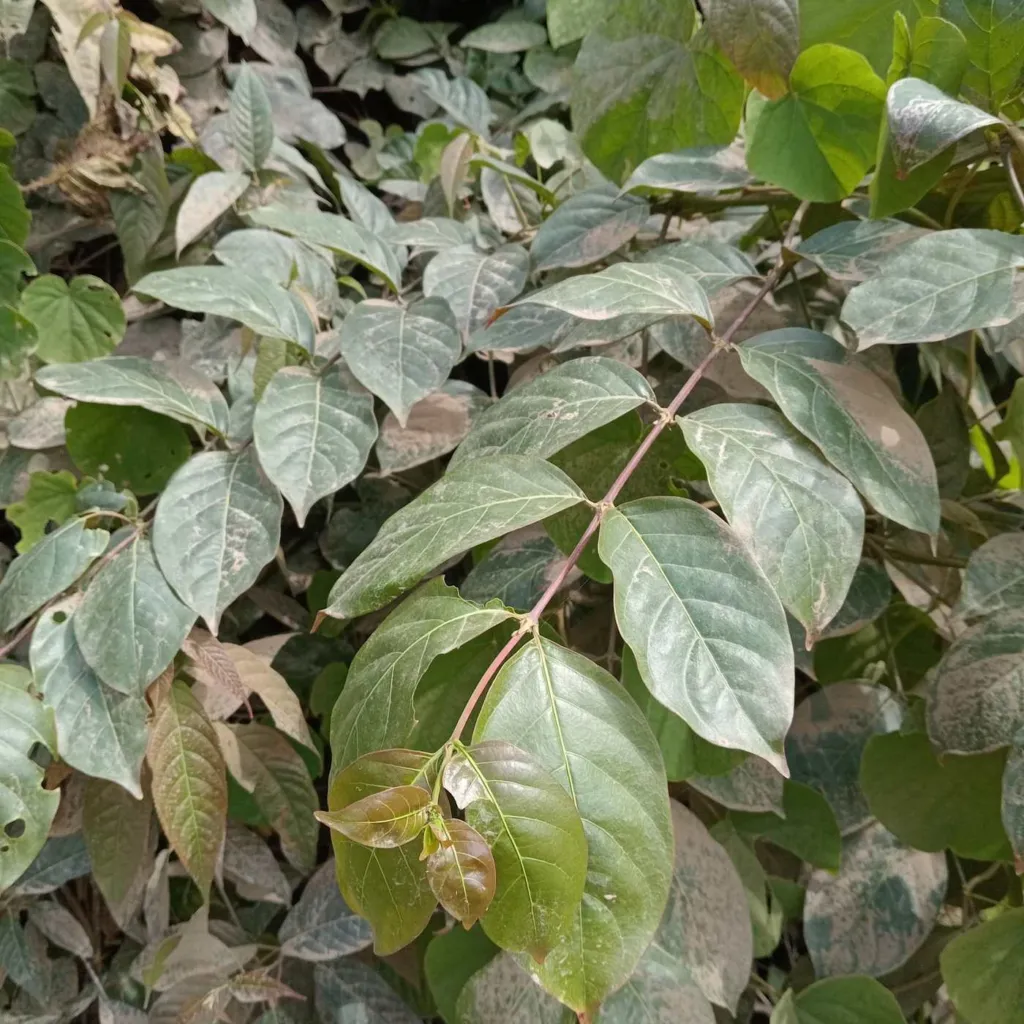
Cover: the vine in leaf in Peru’s central forest. Photo: Alfredo Gutierrez Dipaz via iNaturalist (CC BY 4.0)
At the chemist, on the back of a tub of joint capsules, it may be there in the small print under the glucosamine: cat’s claw. Down at a Queensland creek you might meet another cat’s claw, a yellow-flowered creeper strangling the trees.
Same nickname, different plants. The one in the capsule is bark from a hooked Amazon vine that the Asháninka people of Peru have boiled for sore joints for generations. Will it help your joints, is it safe beside your other tablets, and what is really in the tub? The box answers little of that.
For education. It isn’t medical, legal or regulatory advice, and it gives no preparation or dosing detail. Legal passages are the Institute’s published reading of Australian rules as at October 2026; overseas material is named as overseas.
In an emergency phone 000. For a suspected poisoning or overdose, including a child who has swallowed tablets, phone the Poisons Information Centre on 13 11 26 (24 hours, Australia-wide) and follow its advice.
Stop taking it and seek care for passing less urine, swelling, unusual tiredness, yellowing of the skin or eyes, fainting, a very slow pulse or confusion.
Avoid it in pregnancy, while breastfeeding, when trying to conceive, and in children and teenagers.
Get individual advice before starting if you have an autoimmune disease or a transplant, take immunosuppressants, blood thinners, blood-pressure, HIV or Parkinson’s medicines or several regular medicines, have a blood cancer or any cancer treatment (tell your oncology team), or have surgery coming up.
Buy only products entered on the ARTG (look for an AUST L number), keep tablets out of children’s reach, and report a suspected side effect to the TGA.
Before taking any herbal medicine, consult a degree-qualified herbalist with competencies and adequate training in pharmacognosy.
- “Cat’s claw” names several plants. The herbal one is bark from an Amazon vine; the Queensland creeper is a declared weed.
- The bark comes in two chemical types of very uneven strength, so two tubs can differ a lot.
- The best evidence is one small, careful trial in rheumatoid arthritis, never repeated: fewer painful joints, no less swelling.
- Pregnant, breastfeeding, hoping for a baby, or buying for a child: leave it. On regular medicines, get advice first.
- Check the box for an AUST L number and Uncaria tomentosa in full.
Four plants answer to the same nickname
Hooks are common in nature, so the name travels.
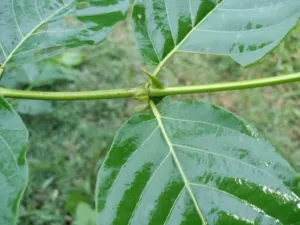
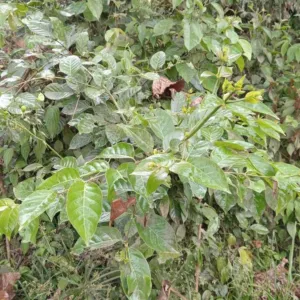
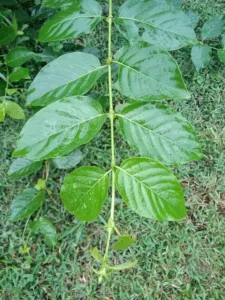
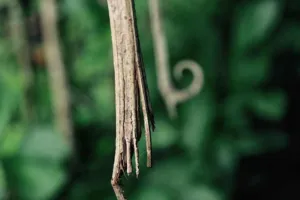
The herbal cat’s claw grows where the Andes tip down into the Amazon, a woody vine that climbs on paired, down-curved thorns. A near twin from the same forests is sold under the identical name, and even traders struggle to tell the two apart. China’s hooked cousin, gou teng, is its own medicine.
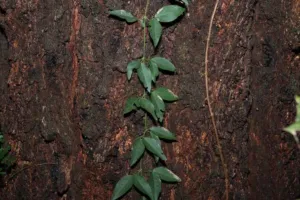
Then the strangers. Cat’s claw creeper, with big yellow trumpets, smothers Queensland bush and rainforest and is a restricted weed: it may not be sold, handed on or let loose. Around Cardwell and Cairns, native Uncaria vines carry the same paired hooks; no herbal tradition is known for them, and this page is not about them.
On a label, look for Uncaria tomentosa written out; “cat’s claw” or “Uncaria” on its own leaves the plant unnamed. If the yellow-trumpet creeper is on your fence, don’t give cuttings away.
The honest score on sore joints
A promising start, then two decades of quiet.
For rheumatoid arthritis, the autoimmune kind, one small, properly run trial stands up. Everyone stayed on their usual drugs; some got a dummy pill. People given an extract of root from one chemical type had fewer painful and tender joints, while their swelling and their blood tests for inflammation did not change. Nobody has repeated it since 2002. It may have eased pain more than it slowed the disease, a guess still waiting for a test.
For wear-and-tear knees, every trial used the twin species. One small trial found less pain on movement; two blends after it either failed to beat a dummy pill or never had one to beat.
Nothing in people supports it for cancer, HIV, dementia or a stronger immune system. Europe’s medicines regulator would not write an official monograph on evidence that slim, though it saw no safety worry at the doses tradition used.
With rheumatoid arthritis, the encouraging result came with everyone still on their prescribed drugs, so that is the only setting it speaks to. For knees, the trials belong to a species other than the one in Australian tablets.
Gentle for most, and a short list who should ask first
The trials were quiet. A handful of single cases mark out who needs care.
In the trials, complaints ran about level with the dummy pills, mostly an unsettled stomach. Nothing is recorded on overdose in people.
Pregnancy is the clearest stop. Its safety there has never been shown. Peruvian custom used strong root brews to prevent pregnancy and kept the plant from expectant mothers and children, and an animal report found lower female hormones in rats given it. None of that proves harm in a human pregnancy. All of it points one way.
Two women developed kidney inflammation on products containing it and improved after stopping; one also needed steroid treatment. The products were never tested and both women had other possible causes, so the cases are a warning sign without being proof. A third woman’s liver tests rose sharply on an unnamed product and settled once she stopped.
With other medicines, lab work shows it slows a liver enzyme that clears many common prescriptions. Single cases lean the same way: one woman’s HIV drug levels several times too high until it was stopped (her liver disease may also explain that), and a Parkinson’s tremor that worsened within days. A review also cites one case of serotonin syndrome, a drug reaction that needs urgent care. In animals some of its alkaloids lower blood pressure, so anyone on pressure tablets should keep checking their readings. Leukaemia cells in a dish survived better with it added. Untested in people, it still calls for care.
An unlabelled overseas “cat’s claw” blend was linked to a serious hospital admission with delirium and a very slow heart rhythm. What it held was never identified.
Pregnant, nursing or buying for a child: leave it. With an immune condition, a transplant or a cancer, or on regular medicines, see the herbalist described in the red box first, and bring the label plus a list of everything you take.
What the box will and won’t tell you
A free public record sits behind every AUST L number.
On our reading as at October 2026, cat’s claw is legal here as a listed medicine and sits outside the national poisons list. Listed means the company certifies it holds evidence for approved claims; the TGA doesn’t test each product’s effectiveness first. Put the AUST L number into the register search on the TGA website to see the company, each ingredient with its plant part and amount, and the claims it may make.
The record is silent on chemistry. The bark comes in two chemical types, and its alkaloids, the strong-acting nitrogen compounds, can vary about a hundredfold between harvests. Some extracts are made rich in them, others almost free. “TOA-free” on a label rests on one 1998 cell experiment and has never been tested in people.
On our reading the knee-trial species can’t be the active ingredient of a listed medicine here, and the single-herb tablets we looked at may not mention rheumatoid arthritis. The one disease with an encouraging trial is the one the label may not name.
The one disease with an encouraging trial is the one the label may not name.
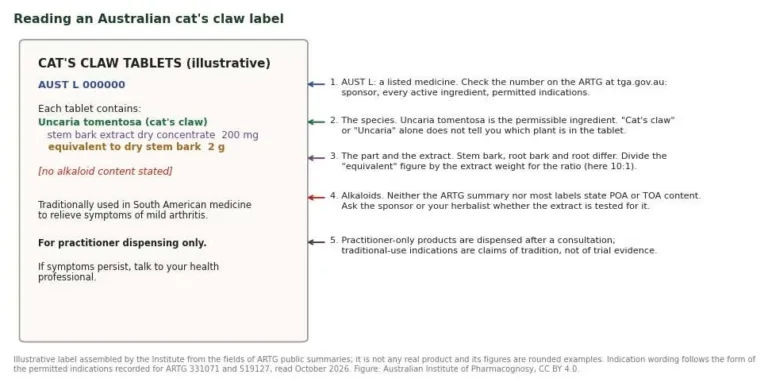
No AUST L or AUST R number means it hasn’t been entered on the register for sale here; pass it by. Then ask the company what the record leaves blank: which chemical type, which country, wild or farmed.
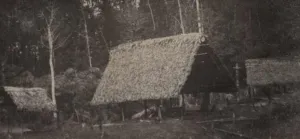
The people who found it
Every tablet begins as a strip of bark on a vine somebody cut.
The Asháninka of Peru’s central forest call the vine they prize most savéntaro, “potent plant” in one recent review’s translation, and have boiled its bitter bark for aching joints, bad stomachs and wounds as far back as the region’s written records reach. Claims of two thousand years have no dated evidence we could find. Field reports say their healers pick vines of one chemical type only. If so, they were sorting the two kinds generations before a laboratory could.
In the mid-1990s the bark boomed, with hundreds of tonnes a year leaving Peru. One Yanesha community cut only part of its vines on a long rotation, each stem a metre up so it would sprout again. Whether the people whose knowledge started all this share in what the bark now earns, no record we read can say.
Somebody once stood at a vine with a blade and chose where to cut it. Ask the company where your bark grew, and whether the vine was left to grow back.
This page is the short version of Dr Thomas Ridley’s evidence review AIP-LR-UNCTOM. The trials, the chemistry, the safety record and every source are in the full article:
- Dr Luke Iggulden, Chief Scientific Officer — Senior author. Commissioned the Explainer series, set its direction and approved it
- Jesse Kirby — Read the evidence review, wrote notes in his own shorthand, then wrote this edition with the review shut: chose the five things a buyer of a joint-care tub needs, set the order, wrote every sentence, and rebuilt the red box so the emergency numbers lead and no warning is lost
- Zoe Bennett — Wrote the page title, the search line and the labels around the person reading the back of a joint-capsule tub, and set how the page will be shared
- Theo Karras — Picked the Satipo cover, the five section banners and the creeper and label figures from the review’s licensed set, opened each one to check it matched its section, and rewrote the alt text from what is in frame
- Leah Bianchi — Built the page: the red safety box, the one-minute card, the pull quote, the five what-this-means cards and the card back to the full review, laid out to read cleanly on a phone
Contributors
- Dr Thomas Ridley — Wrote evidence review AIP-LR-UNCTOM, the article this page retells
Image credits. Cover and Uncaria guianensis at Satipo: Alfredo Gutierrez Dipaz, CC BY 4.0, iNaturalist. Thorns and young stem, French Guiana: Guillaume Delaitre, CC BY 4.0, iNaturalist. Bark and thorn: Kristi Denby/Archivo Centro Takiwasi, CC BY-SA 4.0, Wikimedia Commons. Cat’s claw creeper, Queensland: Greg Tasney, CC BY-SA 4.0, iNaturalist. Asháninka settlement, about 1888: Charles Kroehle, public domain, Wikimedia Commons. Label figure: Australian Institute of Pharmacognosy, CC BY 4.0.
AIP Explainers are the plain-language editions of the Institute’s technical articles, published alongside the original. Everything on this page is carried by the full article, where the evidence, the references and the regulatory sources are set out. Regulatory information was read in October 2026 and may change; it is the Institute’s published reading, not legal advice. Spotted an error? Write to our contact form. We would rather correct a claim than repeat it.
Jesse Kirby
Head of Community Outreach
Australian Institute of Pharmacognosy
Cardwell QLD, Australia
australian-pharmacognosy.org · our contact form
The Institute sets and publishes its own monographs. The catalogue is in Publications.