

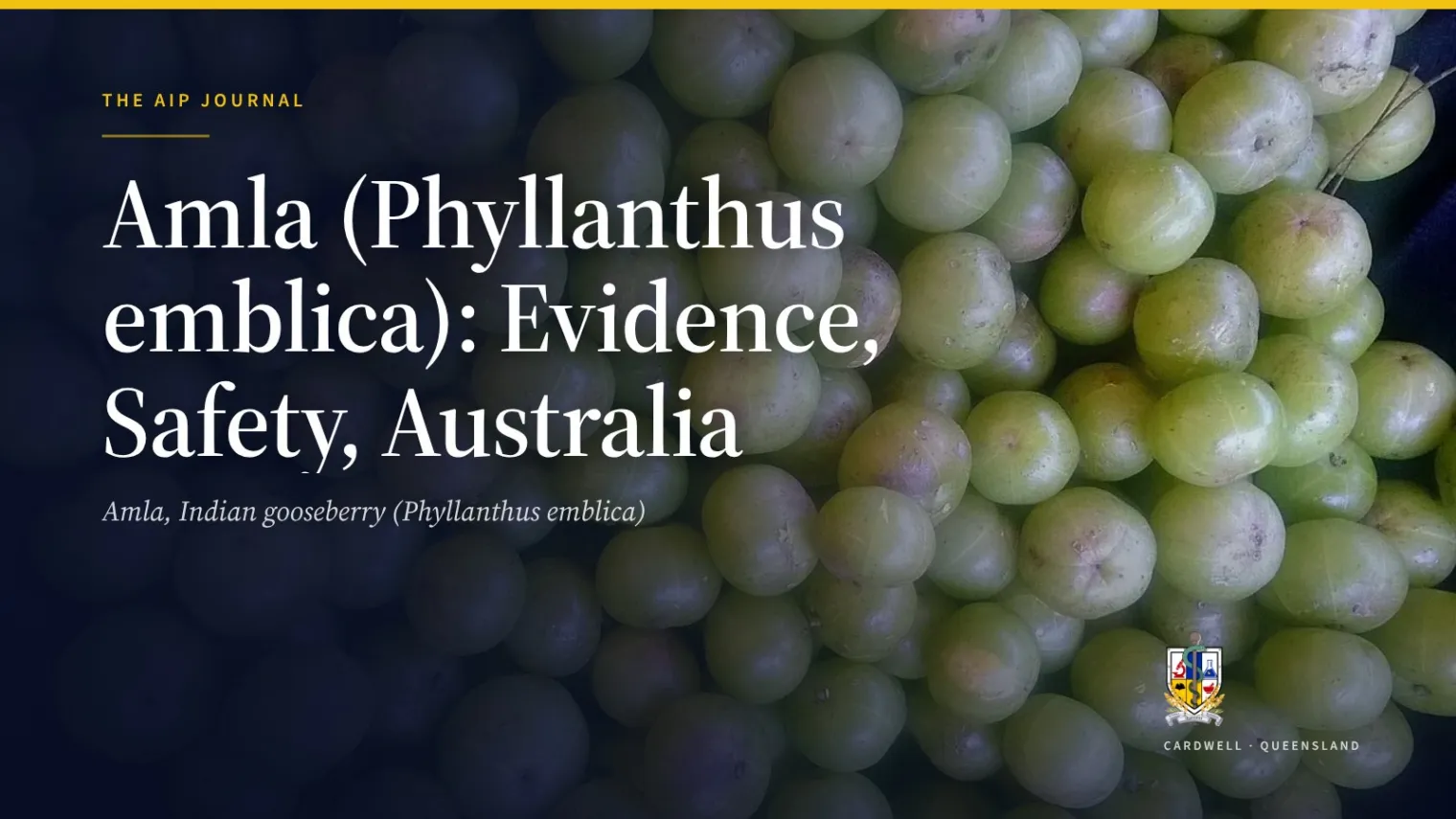
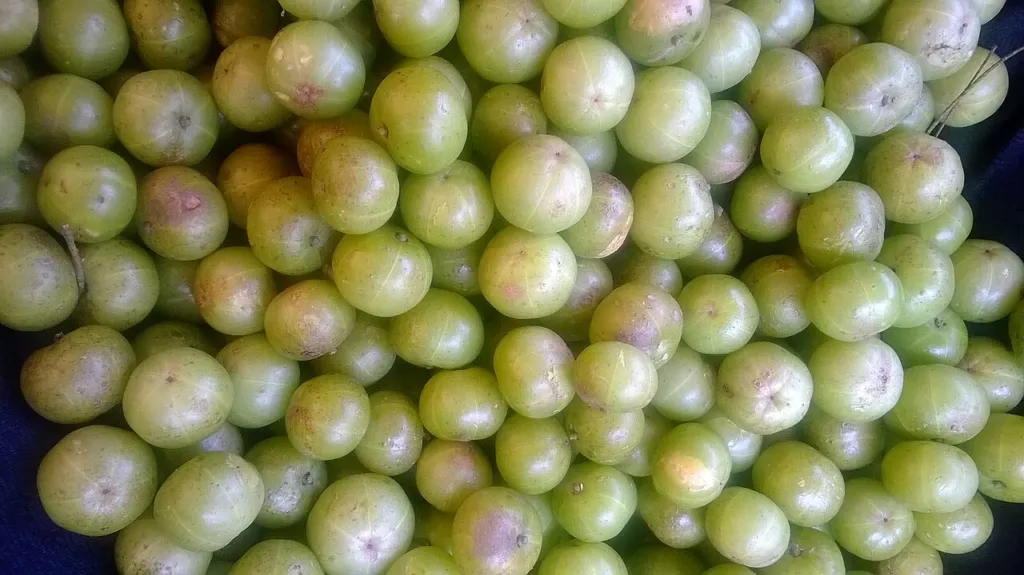
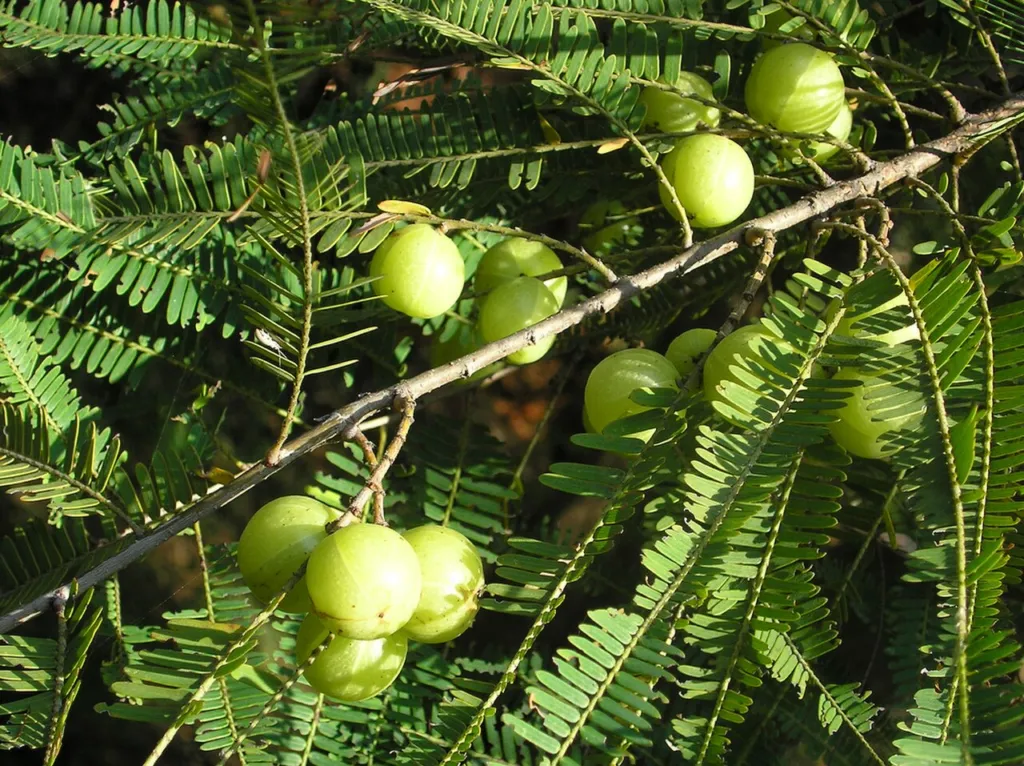
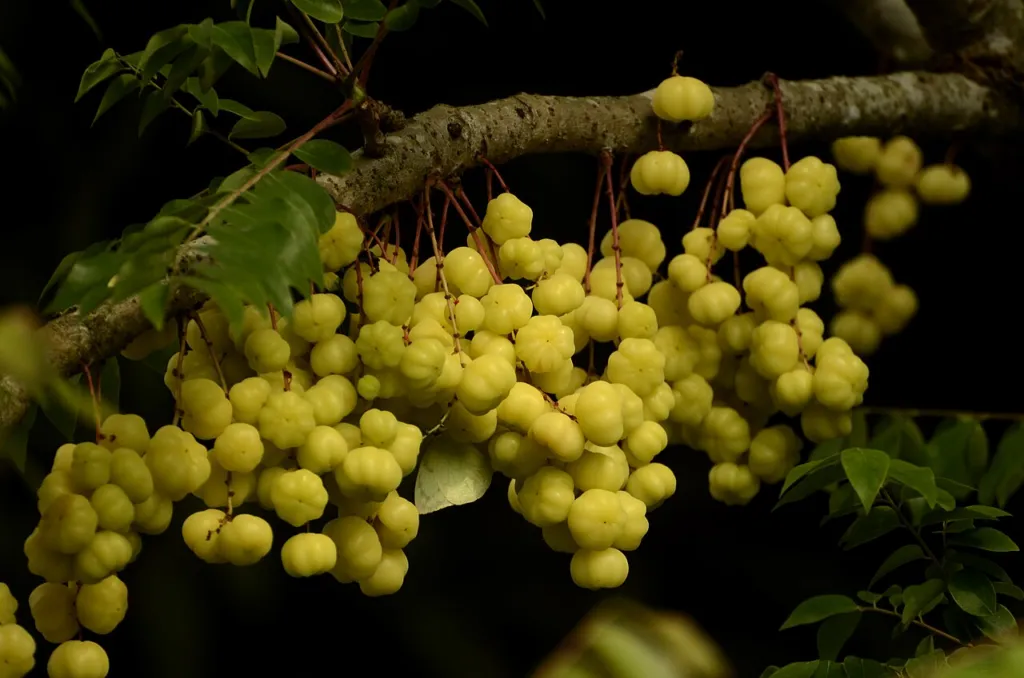
Cover: amla fruit on the branch, Panchkhal valley, Nepal. Photo: Krish Dulal · CC BY-SA 4.0 · Wikimedia Commons
Bite into a fresh amla and the first thing that happens is your mouth puckers. The fruit is sour, then astringent, and a sip of water afterwards tastes oddly sweet. In Ayurveda that sequence of tastes is part of the fruit’s character Traditional, and the astringency has a chemical explanation: amla is packed with hydrolysable tannins and gallic acid Confirmed (Brown 2023, PMID 37296402 [1]).
Amla, the Indian gooseberry, is one of the three fruits of triphala and the base of the herbal jam chyawanprash. It also has a small but real clinical literature, including two 2023 meta-analyses of randomised trials on blood lipids and inflammatory markers. This evidence review from the Australian Institute of Pharmacognosy introduces the tree and its fruit, sets out its place in Ayurveda, and then reads the trials in full: who was studied, which extract, what dose, for how long, and who paid. It closes with safety, Australian regulation, product quality and the research that would settle the open questions.
This article is educational. It is not medical advice and it does not recommend any product or dose. Before taking any botanical drug, consult a degree-qualified herbalist with competencies and adequate training in pharmacognosy.
Amla is a food fruit with a mild adverse-effect record in trials: indigestion or a looser stool are the usual complaints Evidence suggests (Acampado 2023, PMID 39678212 [2]; Health Canada 2025 [3]). The points worth knowing before using concentrated products are these. Some extracts reduced platelet aggregation in small studies, so additive effects with antiplatelet or anticoagulant medicines are possible Mechanism (Khanna 2015, PMID 25756303 [4]). Trials ran in people with type 2 diabetes who were taking metformin, so effects on glucose-lowering treatment deserve watching Mechanism (Usharani 2013, PMID 23935377 [5]). Some imported multi-ingredient Ayurvedic products, mostly ones made with metals or minerals, have contained lead, mercury or arsenic Confirmed (Saper 2008, PMID 18728265 [6]; TGA 2025 [7]).
If someone is unwell after taking any herbal product, call Triple Zero (000) in an emergency or the Poisons Information Centre on 13 11 26 (24 hours, Australia-wide). Details are in §8.
| The plant | Phyllanthus emblica L., syn. Emblica officinalis Gaertn. (Phyllanthaceae). Amla, amalaki, Indian gooseberry, emblic myrobalan. A deciduous tree of South and South-East Asia. Confirmed §1, §2 |
| Part used | The fruit, fresh or dried, as powder, juice, preserve or extract. Confirmed §2 |
| Traditional role | A rasayana (rejuvenative) in Ayurveda, one of the three fruits of triphala, and the base of chyawanprash. Traditional §4 |
| Chemistry | Hydrolysable tannins (emblicanins A and B, chebulagic acid, corilagin, pedunculagin, punigluconin), gallic and ellagic acid, flavonoids, pectin and ascorbic acid. Confirmed §5 |
| Best human evidence | Two 2023 meta-analyses of small randomised trials found lower LDL cholesterol and, in one, lower hsCRP with fruit extracts over 2 to 12 weeks. Trials were small, mostly industry-supplied and heterogeneous. Evidence suggests §7 |
| Safety | Mild digestive effects in trials; possible additive effects with antiplatelet, anticoagulant and glucose-lowering medicines; no safety data for extracts in pregnancy, breastfeeding or children; product quality matters most in imported multi-ingredient products. Evidence suggests §8 |
| Australian status | Sold as a food. The fruit extract appears as an ingredient in multi-ingredient listed (AUST L) medicines on the ARTG. Confirmed §9 |
- Confirmed: established in humans by trial, or an unambiguous analytical or regulatory fact.
- Evidence suggests: real published data that are preclinical, observational, small or not yet replicated.
- Mechanism: a plausible pharmacological inference. It describes how something might work and makes no claim about outcomes.
- Traditional: historical, ethnobotanical or ritual use, which is evidence of practice. It says nothing about efficacy.
- Attested: a documentary fact found in a named text or record, such as a name in a pharmacopoeia.
Every PubMed ID (PMID) links to its PubMed record and was checked against PubMed in November 2026; every compound was checked against PubChem the same month. We cite only papers we have read in full. Where a claim is widely repeated and we could not trace it to a source we have read, it is marked unsourced.
Amla is the sour, pale green fruit of Phyllanthus emblica, a small deciduous tree native from India and Sri Lanka through South-East Asia to southern China Confirmed (Brown 2023, PMID 37296402 [1]). It is a different plant from Phyllanthus niruri, the small herb sold as chanca piedra, even though both sit in the same genus.
In Ayurveda amla is a rasayana, a rejuvenative, and one of the three fruits of triphala Traditional (Peterson 2017, PMID 28696777 [8]). Health Canada’s 2025 product monograph accepts traditional Ayurvedic claims for it as a rejuvenative tonic, a digestive tonic and a mild laxative Attested (Health Canada 2025 [3]). That is an overseas regulator recording a tradition; it is not trial evidence and it does not apply here.
The fruit is rich in hydrolysable tannins and gallic acid. How much vitamin C it holds is reported very differently from one source to the next, and we treat the popular figures with caution Evidence suggests.
The clinical picture is modest and consistent in direction. Across nine small randomised trials (535 people), LDL cholesterol was on average about 0.4 mmol/L lower and hsCRP about 1.7 mg/L lower with fruit extracts than with placebo over 2 to 12 weeks, with wide uncertainty and no effect on blood pressure Evidence suggests (Brown 2023, PMID 37296402 [1]). Most trials used branded aqueous extracts supplied by their makers, ran in India, and enrolled 12 to 150 people. No trial measured heart attacks, strokes or deaths.
Amla was well tolerated in those trials. The safety questions sit with concentrated extracts taken alongside antiplatelet, anticoagulant or diabetes medicines, and with the quality of imported multi-ingredient products Evidence suggests. In Australia it is a food, and its extract appears in several listed medicines Confirmed (ARTG 328695 [9]).
 Chapter 1Names, identity and the other Phyllanthus
 Chapter 2The tree and its fruit
 Chapter 3Where amla grows, and where it grows here
 Chapter 4Amalaki in Ayurveda: triphala, chyawanprash and the kitchen
 Chapter 5What is in the fruit: tannins, gallic acid and the vitamin C question
 Chapter 6How amla might act: pharmacology
 Chapter 7The clinical trials and the 2023 meta-analyses
 Chapter 8Safety and interactions
 Chapter 9In Australia: food, listed medicines and the label
 Chapter 10Quality, identity and adulteration
 DiscussionDiscussion: conclusions, hypotheses and research still required
Also: About AIP · References · Image credits
Names, identity and the other Phyllanthus
The accepted name is Phyllanthus emblica L. Older pharmacopoeias and much of the clinical literature use Emblica officinalis Gaertn., and Brown and colleagues give the two as synonyms Confirmed (Brown 2023, PMID 37296402 [1]). The two names refer to the same plant, and a reader searching PubMed needs both. Current classification places it in Phyllanthaceae (the family split from Euphorbiaceae is standard modern taxonomy, not traced here to a source we have read); older sources, Peterson and colleagues among them, still give Euphorbiaceae, the spurge family Confirmed (Peterson 2017, PMID 28696777 [8]).
The common names are many. Health Canada’s monograph lists amalaki, amla, emblic, emblic myrobalan, Indian gooseberry and myrobalan Attested (Health Canada 2025 [3]). Amalaki is the Sanskrit name and amla the Hindi Attested (Brown 2023, PMID 37296402 [1]). In Telugu it is usiri, in Tamil and Malayalam nellikkai or nelli, and in Chinese it is 餘甘子 (yúgānzǐ), roughly “lingering-sweet fruit” (regional names unsourced; they are given here as they appear on labelled specimen photographs and in common use).
“Myrobalan” causes trouble. In the trade it is applied to several astringent fruits, including the two Terminalia species that join amla in triphala. Health Canada uses “emblic myrobalan” to pin amla down Attested (Health Canada 2025 [3]). If a label says only “myrobalan”, it could mean any of them.
Amla and chanca piedra are two different plants
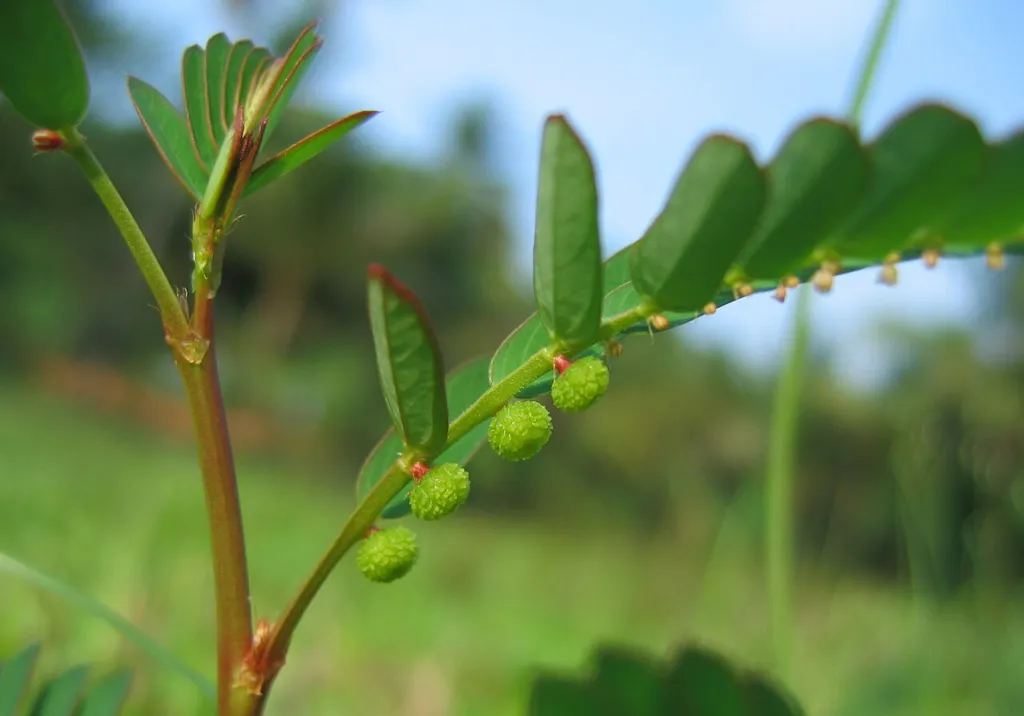
The Institute has already reviewed chanca piedra, Phyllanthus niruri, and the shared genus name invites confusion. P. niruri is a small annual herb, usually under half a metre tall, with tiny fruit capsules hanging beneath its leaflets; it is used whole, as dried aerial parts, chiefly for kidney stones in South American and Indian traditions. P. emblica is a tree, and the part used is a fleshy fruit the size of a large marble. The chemistry overlaps at the level of tannin classes and gallic acid, but the species, the part and the traditional uses differ, and evidence for one cannot be transferred to the other Confirmed.
A third plant, the Otaheite gooseberry Phyllanthus acidus, is grown in some tropical gardens (Australian distribution unsourced) and has small, ribbed, pale yellow fruit carried in clusters on the old wood. It is also sour, and it is sometimes sold under “gooseberry” names. It is a separate species, and nothing in this review applies to it.
The tree and its fruit
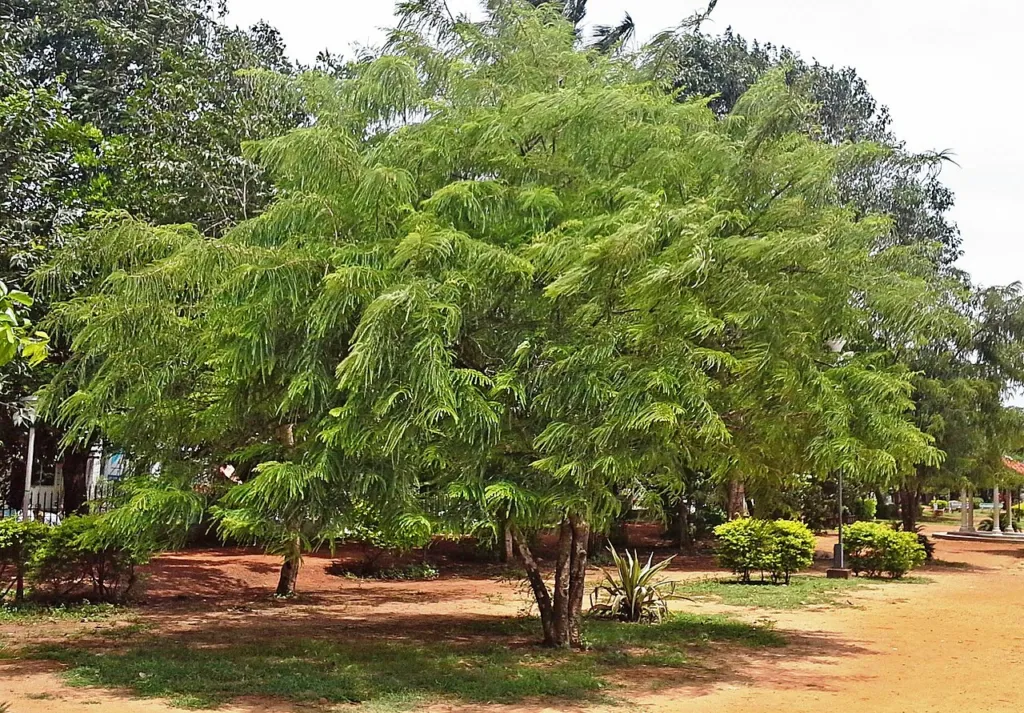
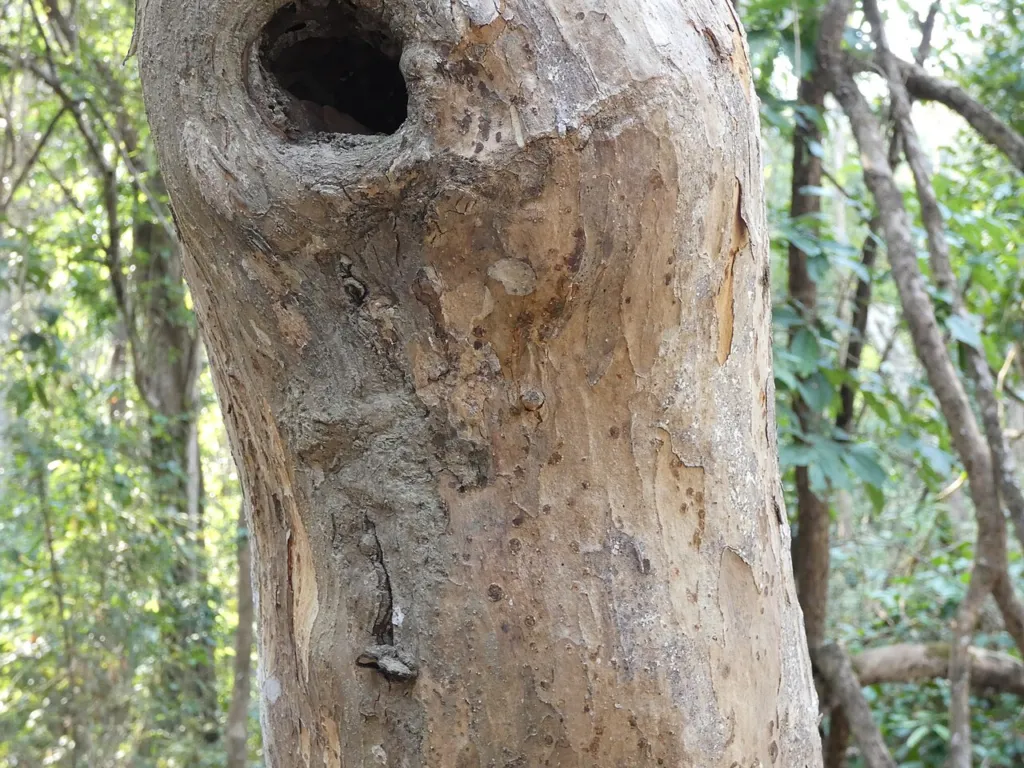
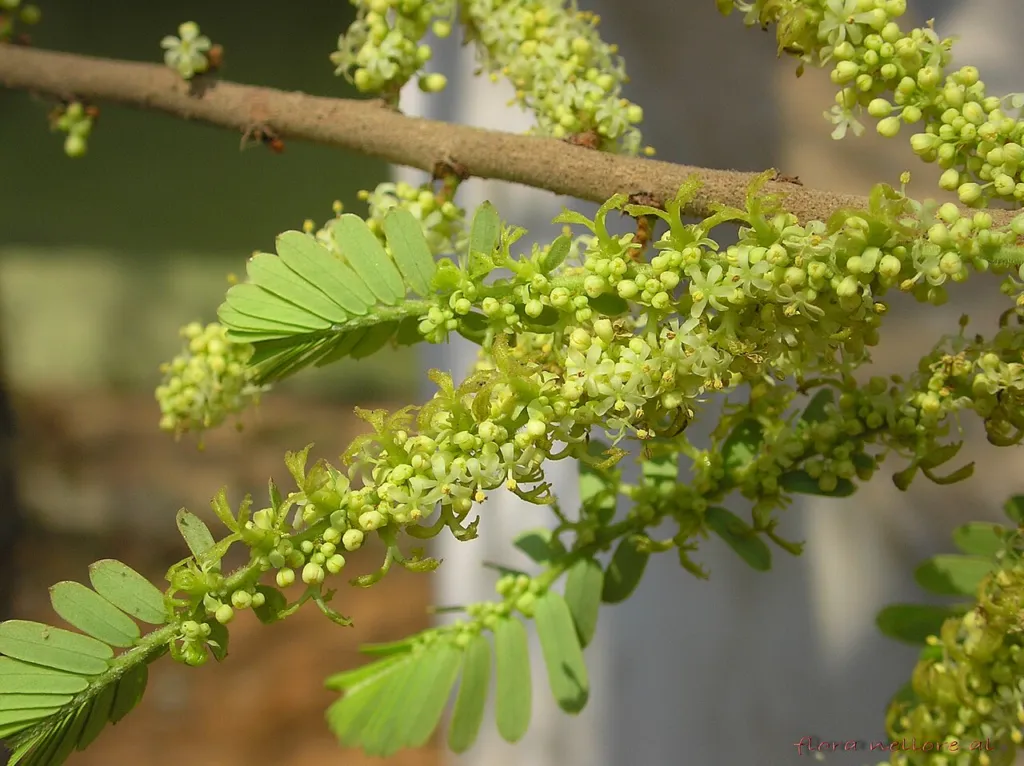
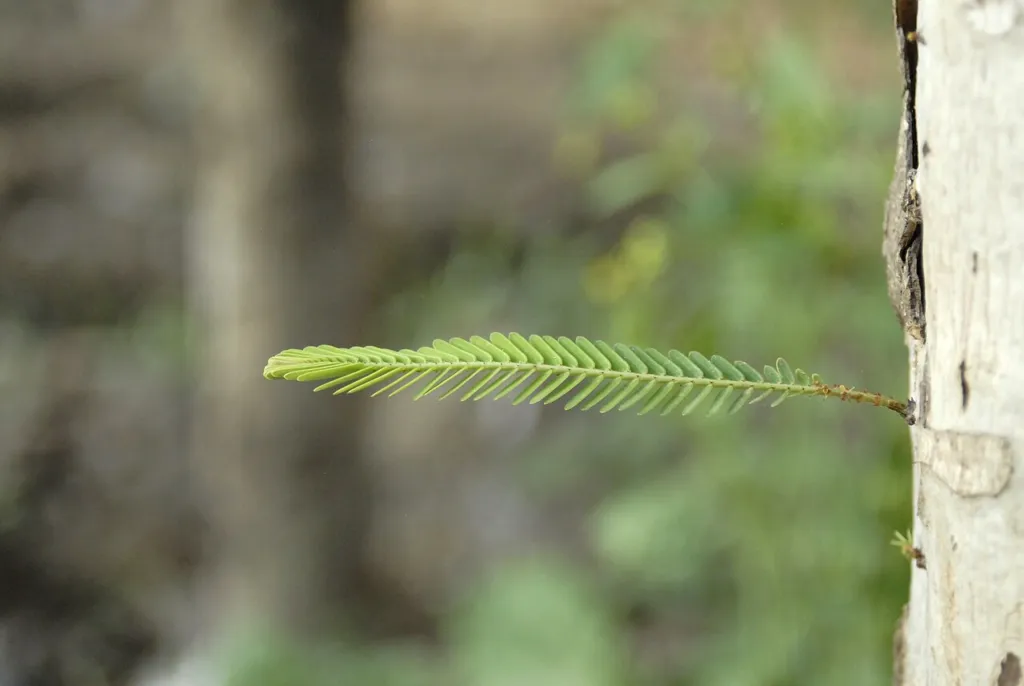
Phyllanthus emblica is a deciduous tree that reaches 5 to 25 metres Confirmed (Brown 2023, PMID 37296402 [1]); in cultivation it is usually kept much smaller (unsourced). The bark is grey and flakes in patches. The leaves are the first thing a botanist notices: small, narrow and set close together in two flat rows along slender side shoots, so that each shoot looks like a single feathery compound leaf. Those shoots drop as a unit in the dry season, which is why the tree can look bare and twiggy for part of the year (botanical description from the photographs shown here; leaf-shoot habit unsourced in the literature we read).
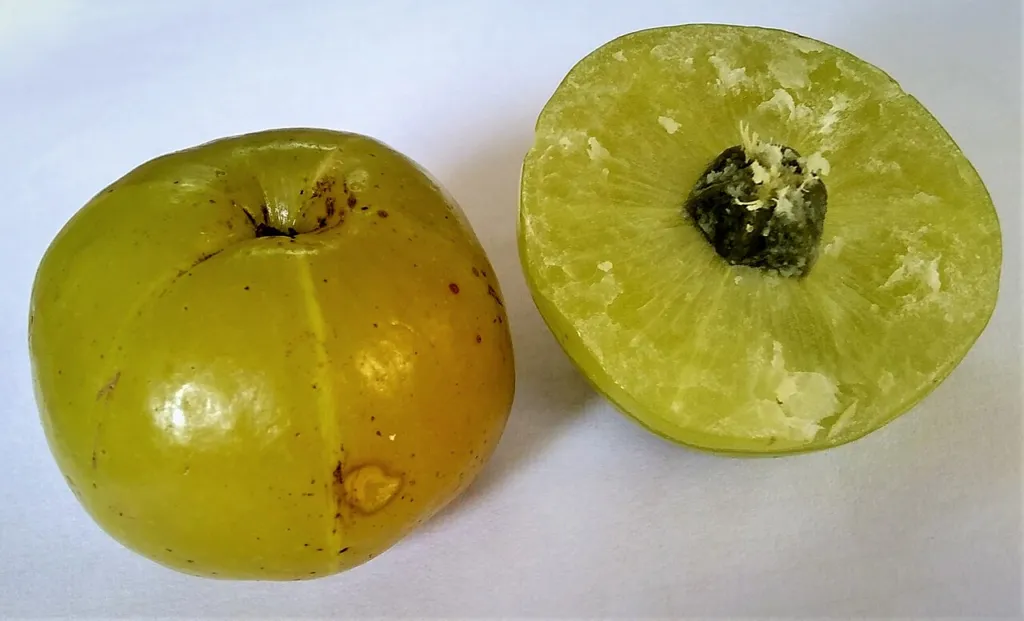
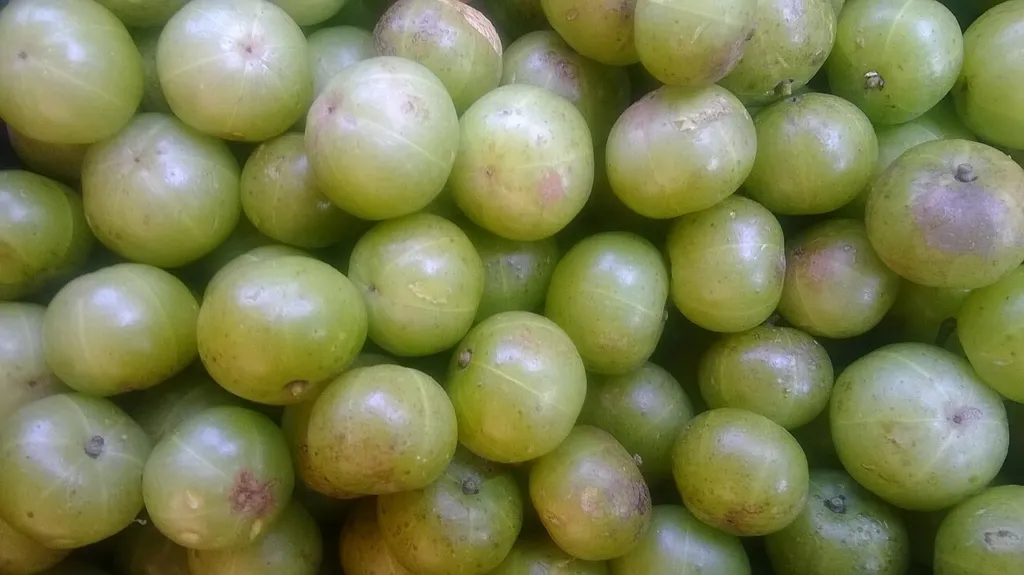
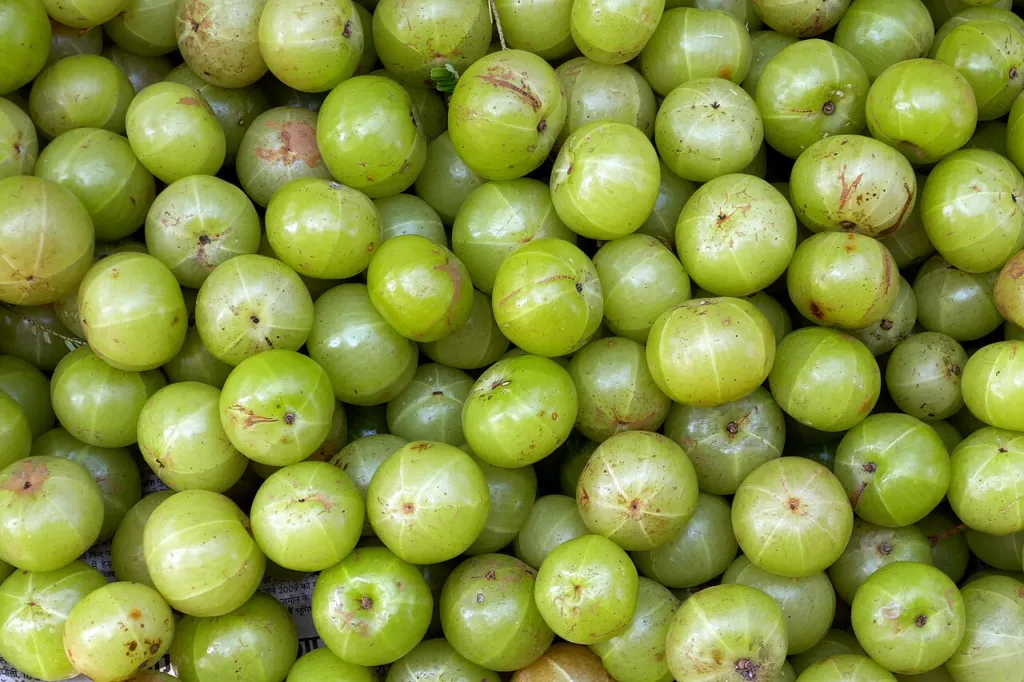
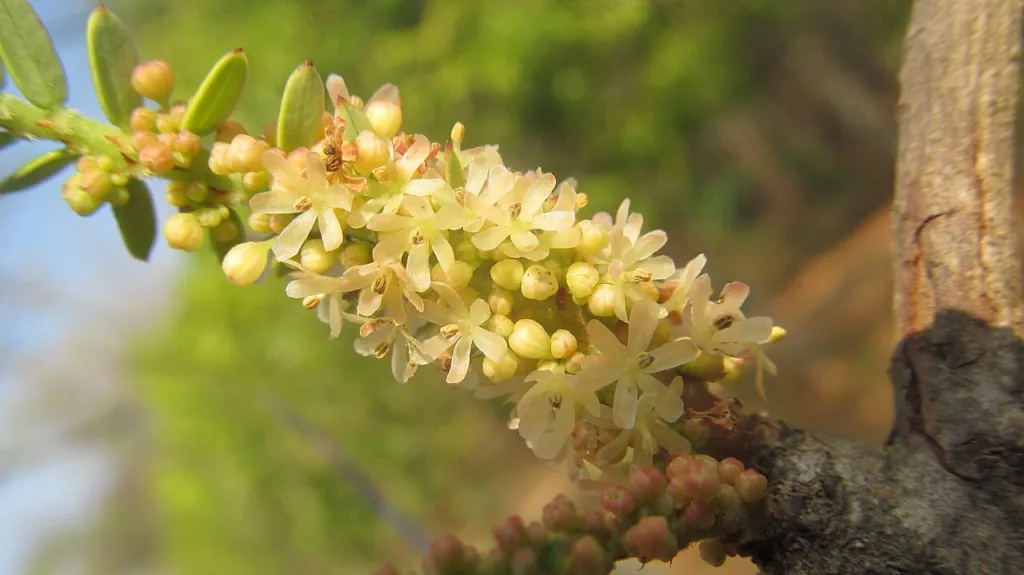
The flowers are tiny, greenish yellow and clustered where the leafy shoots join the branch, as the photograph below shows. The fruit that follows is smooth, nearly round and 2 to 5 cm across, pale green when young and turning yellowish as it ripens Confirmed (Brown 2023, PMID 37296402 [1]). Six faint lines run from top to bottom across the skin, and if you cut the fruit you find translucent flesh wrapped round a hard, six-ribbed stone, as the cross-section above shows (description from the photographs; unsourced in the literature we read).
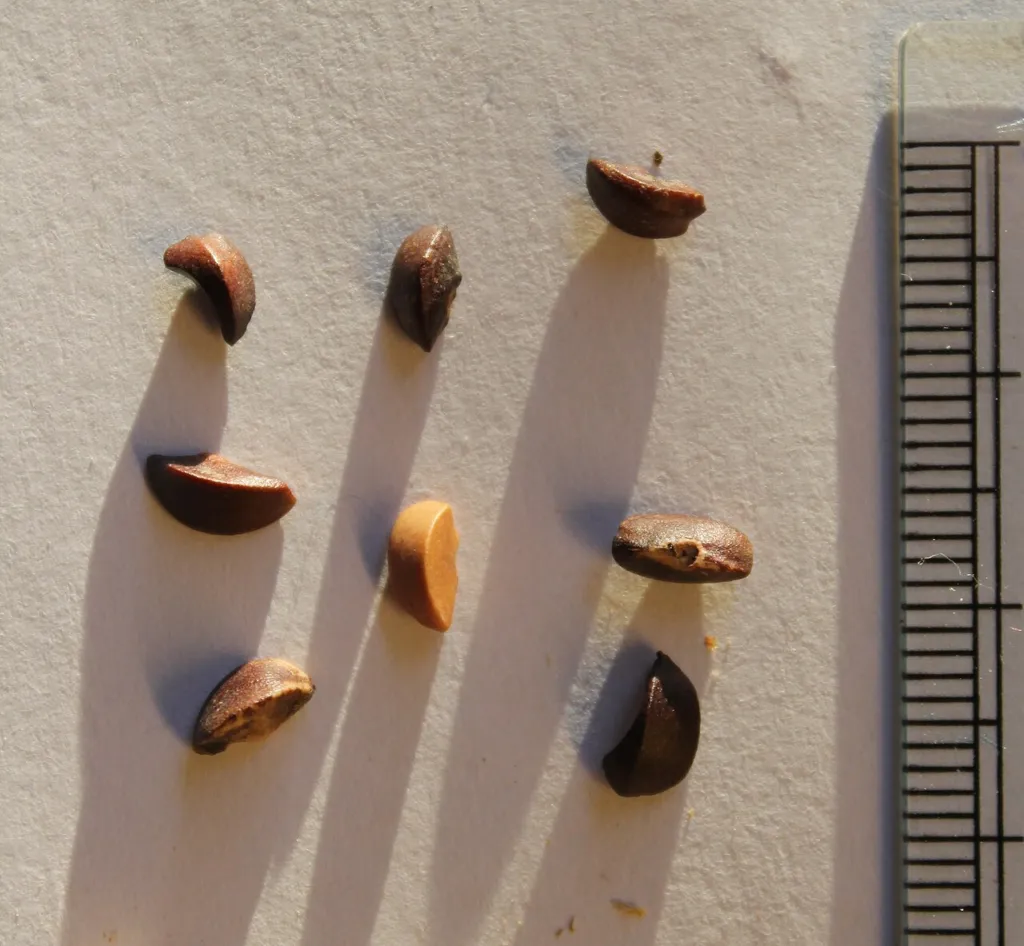
The part of the plant that matters here is the fruit. The trials in §7 almost all used fruit pulp extracts; one used powdered dried fruit, and one used an extract of the whole fruit including the stone Evidence suggests (Brown 2023, PMID 37296402 [1]; Upadya 2019, PMID 30670010 [10]). That detail turns out to matter when results are compared.
Where amla grows, and where it grows here
The native range runs across the Indian subcontinent, Nepal and Sri Lanka, and through South-East Asia to southern China Confirmed (Brown 2023, PMID 37296402 [1]). It grows wild in dry deciduous forest and is planted around villages, temples and farms for its fruit. In India it is a familiar roadside and orchard tree, and the fruit appears in markets from late autumn into winter (seasonal timing unsourced).
The native range given by Brown and colleagues does not include Australia Confirmed (Brown 2023, PMID 37296402 [1]). It is grown as a backyard fruit tree in tropical and subtropical gardens, and subtropical fruit-tree nurseries here sell it (Institute web check of Australian sellers, November 2026; no seller is named or endorsed). We found no record of it as a naturalised plant or as a declared weed in Queensland, but we did not complete a search of every state and territory weed list, so treat that as unverified. Gardeners should not confuse it with the Otaheite gooseberry P. acidus described in §1.
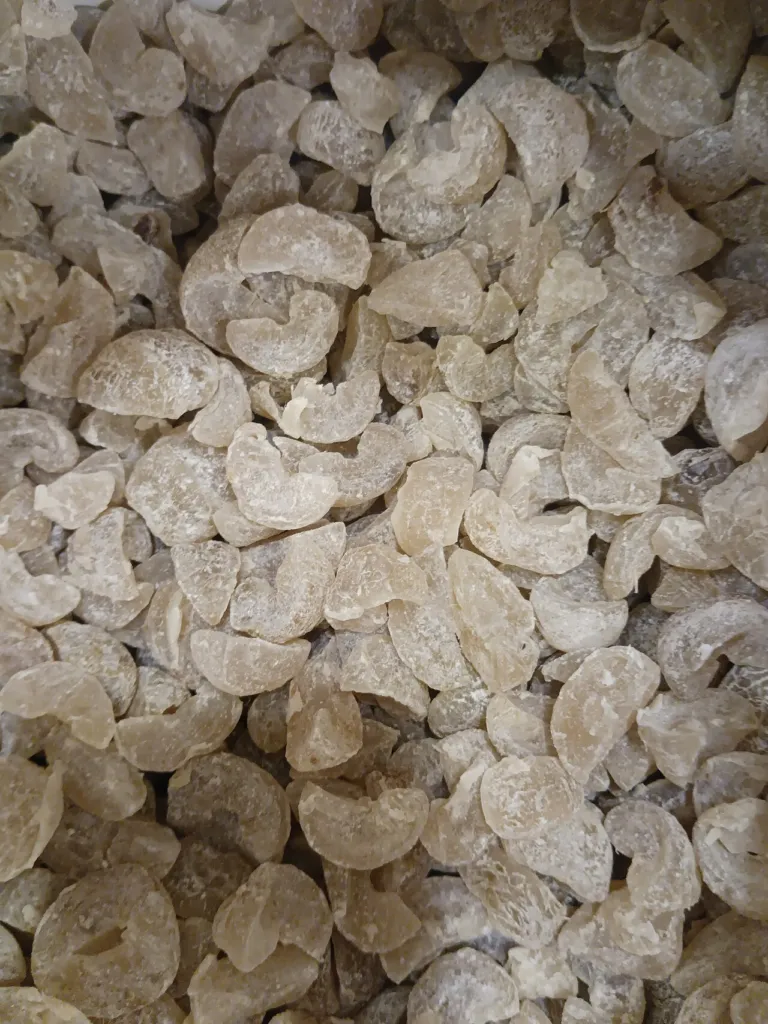
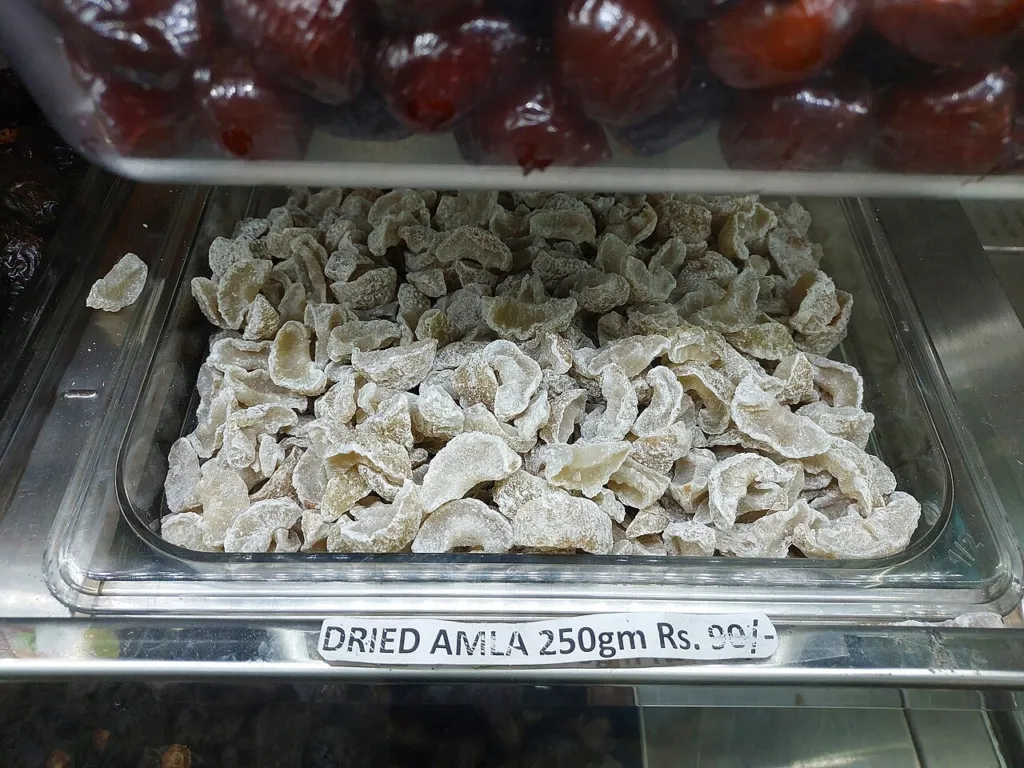
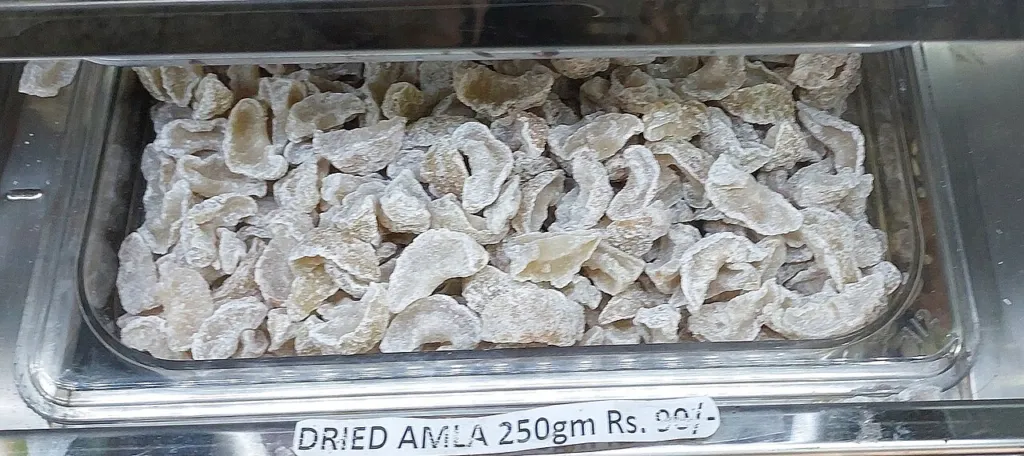
Most of the amla sold in Australia is imported as dried fruit, powder, juice, preserves and pickles, and it reaches shelves through Indian and South Asian grocers and online sellers (Institute web check of Australian sellers, November 2026). Dried fruit and other plant products for human consumption enter under biosecurity import conditions published in the Department of Agriculture, Fisheries and Forestry’s BICON system; some dried fruits can only be imported with seeds removed or with a permit Confirmed (DAFF [11]).
Amalaki in Ayurveda: triphala, chyawanprash and the kitchen
Ayurveda classes amla as a rasayana, a medicine for vitality and longevity, and it is the first of the three fruits in triphala Traditional (Peterson 2017, PMID 28696777 [8]). Triphala combines amalaki (P. emblica), bibhitaki (Terminalia bellirica) and haritaki (Terminalia chebula), generally in equal proportions Traditional (Peterson 2017, PMID 28696777 [8]). Peterson and colleagues describe triphala as tridoshic, meaning it is considered suitable for all three constitutional types, and note that the formula carries five of the six Ayurvedic tastes, everything except salty Traditional (Peterson 2017, PMID 28696777 [8]). Amla supplies much of the sour.
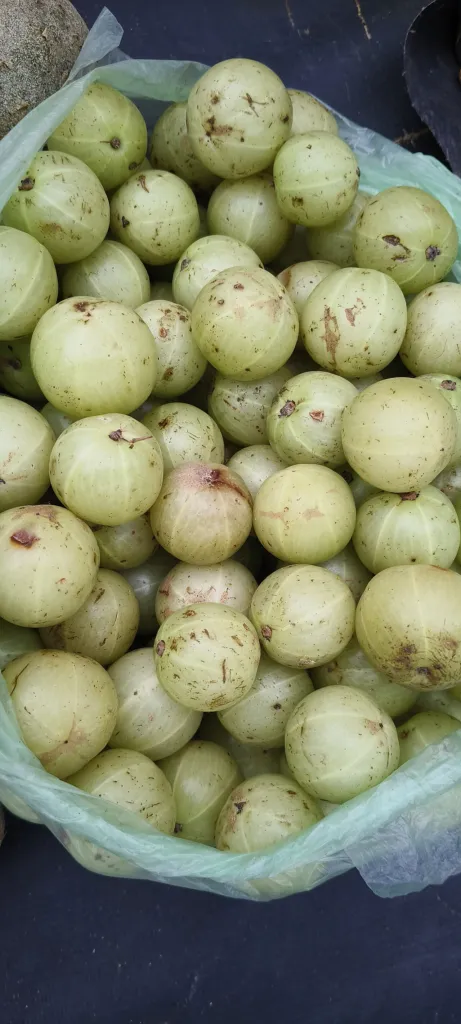
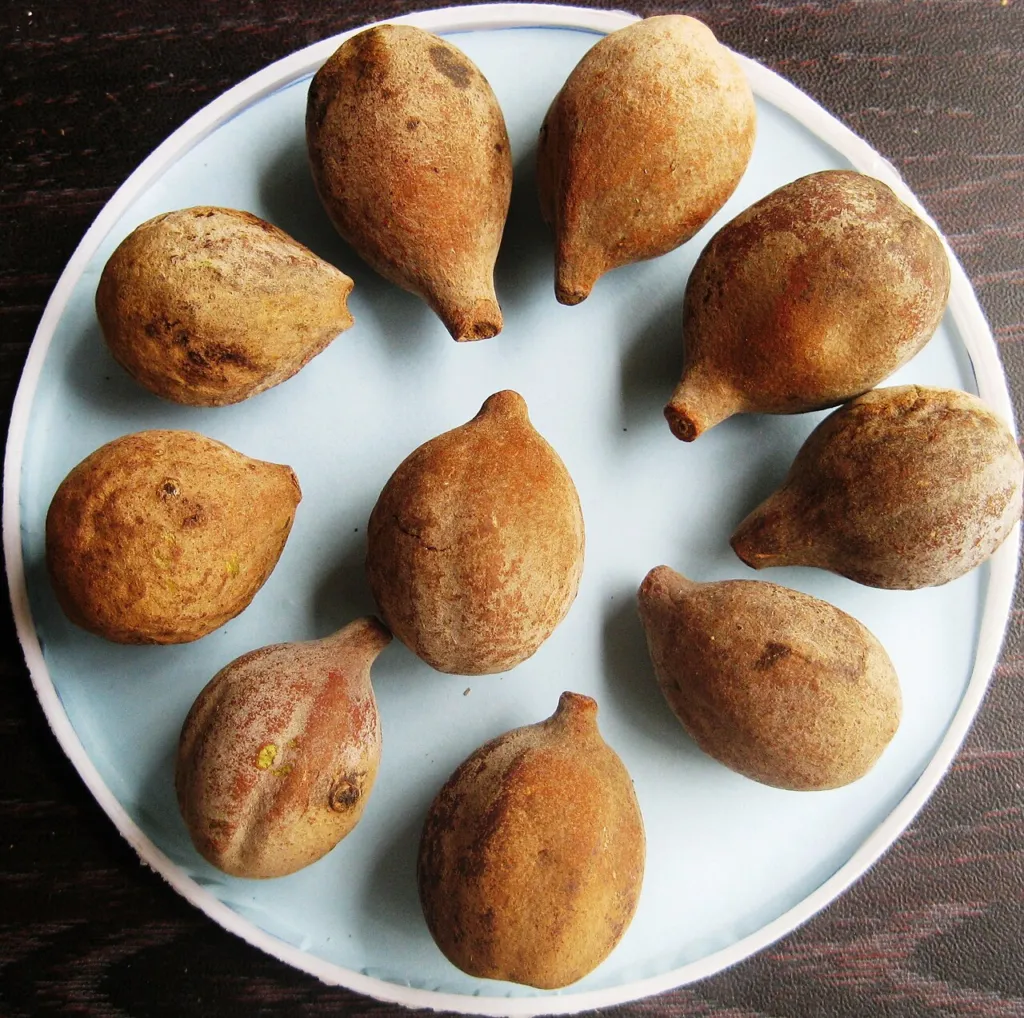
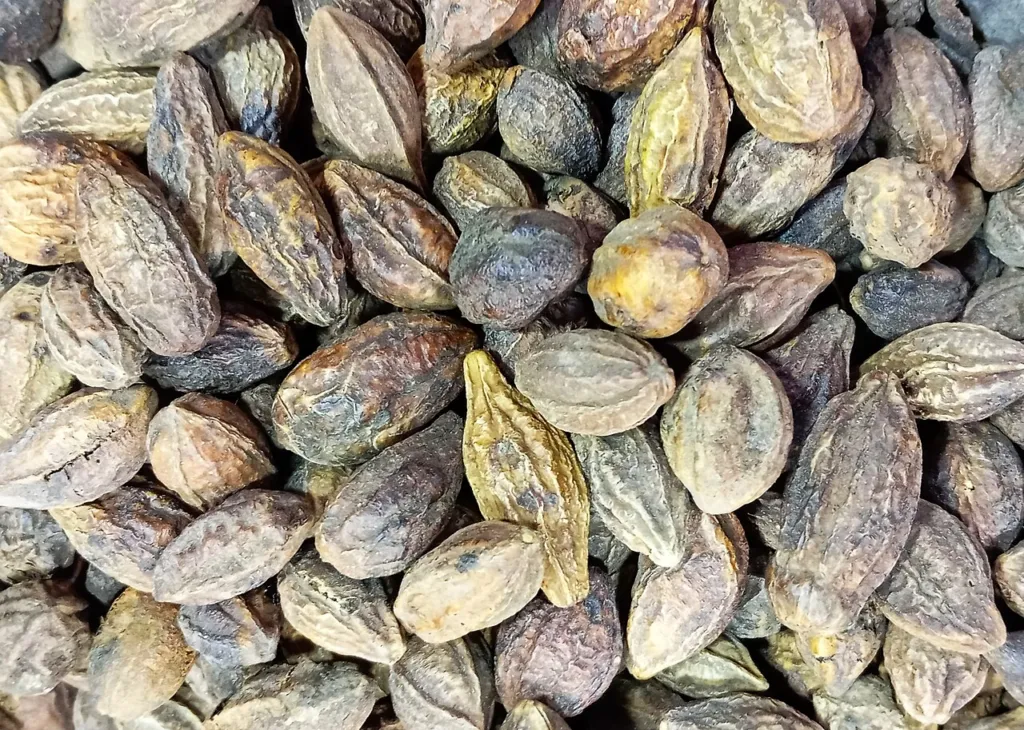
Health Canada’s natural health product monograph records the uses that Ayurvedic sources attribute to the dried fruit: a rasayana or rejuvenative tonic, relief of heartburn and indigestion associated with amlapitta (hyperacidity), a digestive tonic, a mild laxative and an eye tonic Attested (Health Canada 2025 [3]). Its sources include the Ayurvedic Pharmacopoeia of India. The monograph adds a practical note that the laxative effect is mild and its mode of action unclear Attested (Health Canada 2025 [3]). These are traditional claims accepted for labelling in Canada on the basis of documented use; they say nothing about whether the fruit works for those purposes Traditional.
Anaemia, pandu in Ayurveda, is another traditional use, and it has been tested in a small way. In an open randomised trial at Jamnagar, 25 people with iron-deficiency anaemia took either Amalaki Rasayana (2 g three times a day with honey and ghee) or ferrous fumarate with folic acid for 45 days Evidence suggests (Layeeq 2015, PMID 27313416 [12]). Symptoms such as pallor and fatigue improved in both groups, with no statistical difference between them in symptom relief. On the iron measures the iron tablets did significantly better: serum iron, total iron-binding capacity and transferrin saturation differed between the groups in favour of the standard treatment, and the authors concluded that Amalaki Rasayana was not as effective as the iron and folic acid control Evidence suggests (Layeeq 2015, PMID 27313416 [12]). With 25 participants, 23 of whom completed, and no blinding, the study is a starting point and no more. It does show that the tradition treats amla as a friend of the blood, which is worth holding next to the iron-tannin question in §8.
Chyawanprash and the kitchen
Chyawanprash is a thick, dark, sweet-sour jam eaten by the spoonful in many Indian households, especially in winter. It is made on a base of amla pulp cooked with ghee, sugar or jaggery, honey and a long list of other herbs and spices Traditional. We have requested the full text of a published review of its composition and clinical literature and have not yet read it, so the recipe details here are unsourced, and we make no claim about what chyawanprash does.
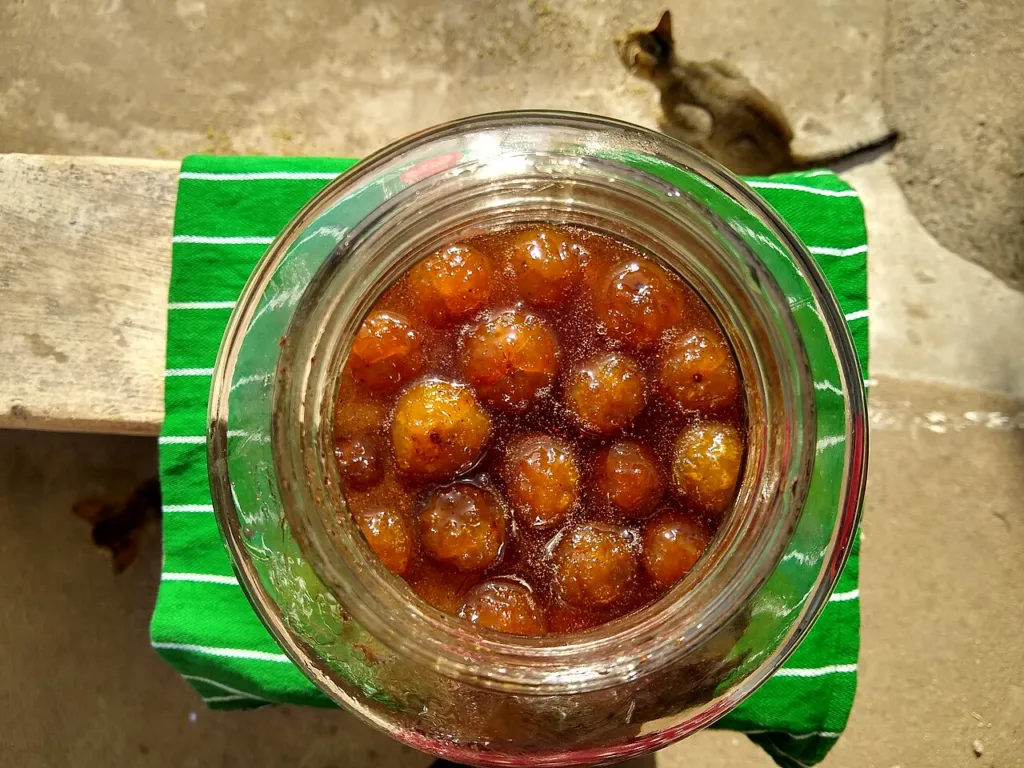
In the kitchen amla is eaten raw with salt and chilli, pickled in oil, candied, juiced and preserved whole in syrup as murabba Traditional. The photographer who uploaded the murabba below described it as a grandparents’ special dish. That is how most of the world meets this fruit: as food, often made at home, long before anyone thinks of it as medicine.
What is in the fruit: tannins, gallic acid and the vitamin C question
Amla fruit is a polyphenol-rich food. The constituent classes reported in the clinical reviews are hydrolysable tannins (chebulinic acid, chebulagic acid, corilagin, punigluconin, pedunculagin and emblicanins A and B), simple phenolics (gallic acid, ellagic acid, pyrogallol), flavonoids (quercetin, kaempferol, rutin), pectin, organic acids and ascorbic acid Confirmed (Brown 2023, PMID 37296402 [1]). Hydrolysable tannins are esters of a sugar, usually glucose, with gallic acid or with its dimer hexahydroxydiphenic acid, which closes into ellagic acid when the tannin breaks down Confirmed.
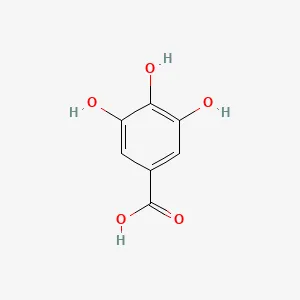
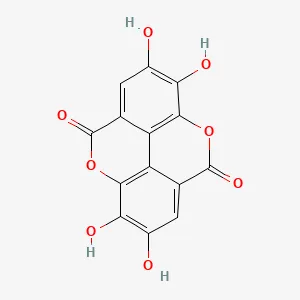
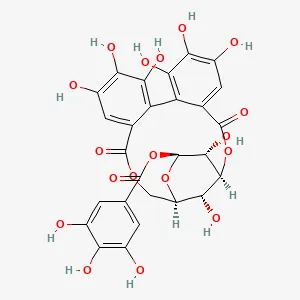
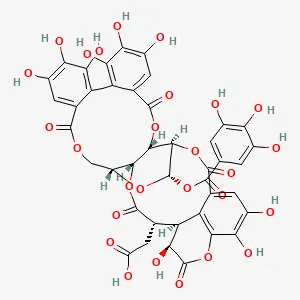
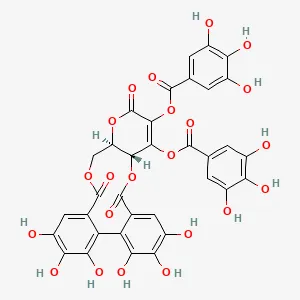
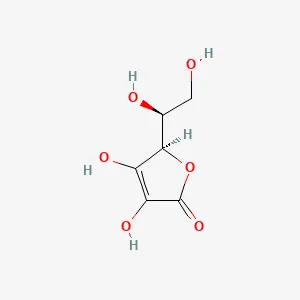
These molecules explain the taste. Tannins bind salivary proteins, which is the dry, rough feeling of astringency, and the simple acids give the sourness Mechanism. They also explain why amla, haritaki and bibhitaki work together in triphala chemistry: chebulagic and chebulinic acids are shared between amla and the Terminalia fruits (shared occurrence reported in analytical work we have requested but not yet read in full; treat as unsourced here).
The vitamin C question
Amla is often called the richest natural source of vitamin C, and figures of several hundred milligrams per 100 g of fresh fruit are repeated widely. The 2023 meta-analysis by Brown and colleagues gives 470 to 680 mg per 100 g, citing a secondary source, and states that ascorbic acid accounts for roughly 45 to 70% of the fruit’s antioxidant activity Evidence suggests (Brown 2023, PMID 37296402 [1]). Other clinical authors write that amla was traditionally believed to be an important source of vitamin C and that the fruit was later shown to contain low-molecular-weight hydrolysable tannins, the emblicanins, to which much of its antioxidant activity has been attributed Evidence suggests (Khanna 2015, PMID 25756303 [4]).
Those two statements pull in different directions, and the disagreement is old. Part of it is analytical. Common vitamin C assays measure reducing power, and gallic acid and tannins are strong reducing agents, so a crude assay can over-read ascorbic acid in a tannin-rich fruit Mechanism. Part of it is processing: ascorbic acid degrades with heat and storage, while the tannins are more stable, so a dried powder or a cooked preserve may hold far less vitamin C than the fresh fruit (inference from general food chemistry; we have not read amla-specific stability data). Two analytical papers that tackle this directly, one revisiting ascorbic acid and tannins in the fruit and one comparing the fruit with an Ayurvedic preparation, are on request through the Institute’s library access and are not cited here because we have not yet read them in full.
For a reader in Australia the practical point is simple. A label that promises a vitamin C content from “amla” should state how it was measured, and a product that adds ascorbic acid should say so separately. Without that, the number on the jar tells you very little Evidence suggests.
Branded extracts are different materials
The trials in §7 mostly used proprietary extracts, and they are chemically different from each other and from the dried fruit you can buy at a grocer. One extract was an aqueous extract of the edible fruit standardised by HPLC to not less than 60% low-molecular-weight hydrolysable tannins, with emblicanin A, emblicanin B, pedunculagin and punigluconin named as the bioactives Confirmed (Usharani 2013, PMID 23935377 [5]). Another was an ethyl acetate extract of fresh whole fruit, stone included, standardised to at least 35% polyphenols, 8% triterpenoids and 10% oil, which the authors say also contains omega-3 fatty acids Confirmed (Upadya 2019, PMID 30670010 [10]). A third was a water extract of fruit pulp treated with pectinase and spray-dried Confirmed (Kapoor 2020, PMID 31890983 [13]). Calling all three “amla” in a pooled analysis is convenient, and it is also one reason the results vary so much.
How amla might act: pharmacology
Most of what is said about how amla acts comes from cell and animal work, summarised in the clinical papers as background. Brown and colleagues list three proposed lipid mechanisms: reduced cholesterol absorption in the gut, inhibition of the liver enzyme HMG-CoA reductase (the target of statins), and increased activity of lecithin-cholesterol acyltransferase, which moves cholesterol onto HDL Mechanism (Brown 2023, PMID 37296402 [1]). Acampado and colleagues add increased LDL-receptor expression on liver cells, reduced PCSK9 expression and activation of PPAR-α, the receptor targeted by fibrates Mechanism (Acampado 2023, PMID 39678212 [2]).
These are hypotheses about a mixture. The Upadya trial measured coenzyme Q10, which statins lower because they block the same pathway that makes it, and found only minor changes with their extract; the authors suggest their extract may act on cholesterol synthesis at a step other than HMG-CoA reductase Mechanism (Upadya 2019, PMID 30670010 [10]). A dietary tannin also has to survive digestion. Large ellagitannins are poorly absorbed, and gut bacteria convert ellagic acid to smaller metabolites called urolithins, so the compound in the capsule may be some way removed from the compound that reaches the liver Mechanism (general ellagitannin pharmacology; no amla-specific source read). We know of no human pharmacokinetic study that tracks amla tannins through this process.
Endothelial function and oxidative stress
Two trials from one Hyderabad group measured endothelial function using a reflection index from digital plethysmography after a salbutamol challenge, along with blood nitric oxide, glutathione and malondialdehyde Evidence suggests (Usharani 2013, PMID 23935377 [5]; Usharani 2019, PMID 31060549 [14]). A healthier endothelium releases more nitric oxide and stiffens less, so a falling reflection index is read as improvement. Both trials reported improvement in reflection index and in these oxidative-stress markers with the extract compared with placebo Evidence suggests. They are surrogate measures, and the reflection index is a less common method than flow-mediated dilation, which makes comparison with other cardiovascular trials harder.
Platelets
In an open-label study at Ohio State University, 15 overweight or class-1 obese adults took 500 mg of a standardised aqueous extract twice daily for 12 weeks Evidence suggests (Khanna 2015, PMID 25756303 [4]). Platelet aggregation induced by ADP and by collagen fell compared with baseline in the 12 people who had platelet testing, Evidence suggests (Khanna 2015, PMID 25756303 [4]). There was no placebo group. A Japanese crossover trial using a different extract found no difference between amla and placebo in platelet aggregation measured by a filtration method Evidence suggests (Kapoor 2020, PMID 31890983 [13]). The platelet signal is real enough to take seriously for interactions in §8 and too thin to call an effect.
The clinical trials and the 2023 meta-analyses
We read both 2023 meta-analyses that are open access and each trial they relied on that is open access, in full. A third 2023 meta-analysis, by Setayesh and colleagues in Diabetes & Metabolic Syndrome, covers lipids, glucose and C-reactive protein; its full text is on request and we have not used its results. The glucose evidence in this chapter is therefore thinner than it may be in that paper, and we say so plainly.
Brown and colleagues, 2023: nine trials, 535 people
This review searched four databases to April 2021 and included randomised trials in adults taking any single-ingredient form of amla fruit, with a placebo or usual-care control Confirmed (Brown 2023, PMID 37296402 [1]). Nine trials met the criteria, with 535 participants in total. Seven were from India, one from Japan and one from Iran. Doses ran from 500 to 1500 mg a day for 14 to 84 days. Eight trials used aqueous fruit extracts; one used dried fruit powder Confirmed (Brown 2023, PMID 37296402 [1]). The review was funded by a Michael Smith Foundation for Health Research scholar award (a British Columbia health-research funder), and the authors declared no competing interests Confirmed (Brown 2023, PMID 37296402 [1]).
| Outcome | Mean difference vs placebo | 95% CI | I² | Prediction interval |
|---|---|---|---|---|
| LDL cholesterol | −15.08 mg/dL (−0.39 mmol/L) | −0.66 to −0.12 mmol/L | 77% | −1.25 to +0.47 mmol/L |
| Triglycerides | −22.35 mg/dL (−0.25 mmol/L) | −0.45 to −0.06 mmol/L | 62% | −0.83 to +0.32 mmol/L |
| VLDL cholesterol | −5.43 mg/dL (−0.14 mmol/L) | significant | 44% | not reported (fixed effect) |
| HDL cholesterol | +2.09 mg/dL (+0.05 mmol/L) | not significant | 86% | −0.21 to +0.32 mmol/L |
| hsCRP | −1.70 mg/L | −2.06 to −1.33 mg/L | 0% | not reported (fixed effect) |
| Systolic blood pressure | −2.75 mmHg | −10.41 to +4.90 mmHg | 96% | −30.93 to +25.43 mmHg |
Table: pooled results from Brown and colleagues (Brown 2023, PMID 37296402 [1]), converted by the Institute to Australian units (cholesterol ÷ 38.67, triglycerides ÷ 88.57). Diastolic blood pressure was also not significantly changed.
Read the last column first. A prediction interval estimates the range in which the true effect of a new, similar trial would fall. For LDL it runs from a fall of 1.25 mmol/L to a rise of 0.47 mmol/L, and for triglycerides it also crosses zero Evidence suggests (Brown 2023, PMID 37296402 [1]). The average effect favours amla; the trials disagree with each other so much that the next trial could show nothing. The hsCRP result is tighter, with no heterogeneity, but it rests on fewer trials and on an inflammatory marker, which is not a clinical event Evidence suggests.
The authors name their own limits clearly. Three of the nine trials had 12 or 13 participants. Crossover trials were analysed as if they were parallel trials because paired data were not reported. One trial was at high risk of bias and the other eight had “some concerns”. No funnel plot or Egger test was possible with so few trials, and the authors note that commercial interest may limit publication of non-significant results Evidence suggests (Brown 2023, PMID 37296402 [1]). They conclude that the effects “should be interpreted with caution” Evidence suggests (Brown 2023, PMID 37296402 [1]).
Acampado and colleagues, 2023: four trials in dyslipidaemia
This Philippine review limited itself to adults with dyslipidaemia taking an amla extract tablet or capsule against placebo, searched to January 2022, and found four Indian trials published from 2008 to 2019 with 227 participants Confirmed (Acampado 2023, PMID 39678212 [2]). All used 500 mg twice daily for 12 weeks. Pooled, total cholesterol fell by 21.23 mg/dL (0.55 mmol/L), LDL by 25.12 mg/dL (0.65 mmol/L) and HDL rose by 4.74 mg/dL (0.12 mmol/L); triglycerides did not change significantly Evidence suggests (Acampado 2023, PMID 39678212 [2]). Heterogeneity was high for every outcome (I² 72 to 93%), and the authors grade the certainty of evidence as low Evidence suggests (Acampado 2023, PMID 39678212 [2]).
Two details in this paper are worth knowing. The effects are labelled standardised mean differences but reported in mg/dL, which suggests they are ordinary mean differences mislabelled. And the review’s own table shows that one of the four trials compared amla with diet and exercise alone, with no placebo, although the review describes its comparisons as placebo-controlled Evidence suggests (Acampado 2023, PMID 39678212 [2]). Neither point overturns the direction of the result. Both are reasons to read the numbers as approximate.
The trials underneath
The pooled numbers come from a small group of studies, and three of them supply much of the weight in the lipid analyses. We read each in full.
| Trial | Who | What and how long | Main findings | Industry role |
|---|---|---|---|---|
| Upadya 2019 (Upadya 2019, PMID 30670010 [10]) | 98 adults with dyslipidaemia, multicentre, southern India | Ethyl acetate extract of whole fruit (incl. stone), 500 mg twice daily, 12 weeks | Lower total and LDL cholesterol, VLDL and triglycerides vs placebo; 4 mild adverse events | Sponsored by the extract maker, which supplied capsules and the sealed randomisation envelopes |
| Usharani 2013 (Usharani 2013, PMID 23935377 [5]) | 80 adults with type 2 diabetes on metformin, Hyderabad; 20 per arm | Aqueous extract (≥60% hydrolysable tannins) 250 or 500 mg twice daily, atorvastatin 10 mg, or placebo, 12 weeks | Improved reflection index, oxidative-stress markers, lipids, hsCRP and HbA1c vs placebo; dyspepsia in 3 on the higher dose | Extract, atorvastatin, placebo and biomarker kits supplied by the extract maker |
| Usharani 2019 (Usharani 2019, PMID 31060549 [14]) | 59 adults with metabolic syndrome and endothelial dysfunction, Hyderabad | Same aqueous extract, 250 or 500 mg twice daily, or placebo, 12 weeks | Improved reflection index, oxidative-stress markers, hsCRP and lipids vs placebo; dyspepsia in 4 | Capsules and biomarker kits supplied by the extract maker |
| Kapoor 2020 (Kapoor 2020, PMID 31890983 [13]) | 15 healthy adults randomised, 13 completed, Japan; crossover | Pectinase-treated water extract, 500 mg a day, 4 weeks per period | HDL significantly higher at 2 weeks; no difference vs placebo in platelet aggregation | First author affiliated with the extract maker |
| Khanna 2015 (Khanna 2015, PMID 25756303 [4]) | 15 overweight or obese adults, Ohio, USA | Aqueous extract, 500 mg twice daily, 12 weeks; no placebo | Lower LDL, total/HDL ratio, hsCRP and platelet aggregation vs baseline | US public funding plus partial funding and product from the extract maker |
Laid out this way the pattern is plain. The trials are short, most are small, most use one of three branded extracts, and in every one the maker supplied the product, funded the work or employed the authors. That is common in botanical research, where there is often no other funder, and it does not mean the results are wrong Evidence suggests. It does mean the field lacks an independent, adequately powered trial, and positive results from small industry-supported trials have a known tendency to shrink when larger independent trials follow (a general observation about the trial literature; no amla trial has yet tested it).
Glucose and HbA1c
The glycaemic evidence we have read in full is limited. In the 2013 Hyderabad trial, people with type 2 diabetes already taking metformin had lower HbA1c after 12 weeks on the extract than on placebo Evidence suggests (Usharani 2013, PMID 23935377 [5]). It was a secondary outcome in a trial of 20 people per arm designed to measure endothelial function. The Japanese crossover trial in healthy adults reported a change in fasting glucose during the amla period and no significant change in HbA1c, with all values staying in the normal range Evidence suggests (Kapoor 2020, PMID 31890983 [13]). That is not enough to say whether amla changes blood glucose in a clinically meaningful way, and we make no such claim.
Blood pressure
Brown and colleagues pooled five trials for blood pressure and found no significant effect, with extreme heterogeneity Evidence suggests (Brown 2023, PMID 37296402 [1]). As they summarise it, an Iranian trial of 81 people with uncontrolled hypertension taking 500 mg of dried fruit powder three times a day for 8 weeks reported lower systolic and diastolic pressure, while a 150-person Indian trial of an aqueous extract added to amlodipine or enalapril found no change in blood pressure, lipids or hsCRP Evidence suggests (Brown 2023, PMID 37296402 [1]). That larger null trial is worth noting: it is the biggest in the set.
What the trials do not tell us
No trial ran longer than 12 weeks. None measured cardiovascular events, diabetes outcomes or mortality. None compared a dried-fruit food dose with a branded extract head to head, and none was run in Australia. The 2013 Hyderabad trial included a 10 mg atorvastatin arm, and both it and the extract arms improved; with 20 people per arm, the trial could not show whether one did better than the other Evidence suggests (Usharani 2013, PMID 23935377 [5]). The Institute’s review of berberine covers a botanical with a larger lipid trial literature, and the contrast in trial size is instructive.
Safety and interactions
Amla has been eaten as food across South Asia for a very long time, and the clinical trials reported few adverse effects. In the four dyslipidaemia trials pooled by Acampado and colleagues, the events in amla groups were seven reports of dyspepsia, all mild, with no withdrawals and no deaths Evidence suggests (Acampado 2023, PMID 39678212 [2]). Brown and colleagues found no trial in which an adverse event was serious enough to stop participation Evidence suggests (Brown 2023, PMID 37296402 [1]). Health Canada lists a laxative effect as a known adverse reaction and advises against laxative use with fever or undiagnosed gut trouble Attested (Health Canada 2025 [3]). Those are the effects people actually notice: some indigestion, and a looser stool.
Antiplatelet and anticoagulant medicines
Because one open-label study found reduced platelet aggregation with a concentrated extract Evidence suggests (Khanna 2015, PMID 25756303 [4]), it is reasonable to expect a possible additive effect with aspirin, clopidogrel and other antiplatelet drugs, and with anticoagulants such as warfarin or the direct oral anticoagulants Mechanism. A pharmacodynamic interaction study of an amla extract with clopidogrel and aspirin in people with type 2 diabetes has been published; its full text is on request and we do not report its findings here. The practical step is the ordinary one: anyone on these medicines who plans to take a concentrated amla extract, especially before surgery or dental work, should say so to whoever manages the medicine and to their herbalist Mechanism.
Blood-glucose-lowering medicines
Trials enrolled people taking metformin and reported lower HbA1c with the extract Evidence suggests (Usharani 2013, PMID 23935377 [5]). None reported hypoglycaemia. Even so, adding any agent that may lower glucose to sulfonylureas or insulin warrants closer glucose monitoring, and that applies to concentrated amla products Mechanism.
Iron, tannins and timing
Polyphenol-rich drinks reduce absorption of non-haem iron from a meal. In a classic radio-iron study, beverages carrying 100 to 400 mg of polyphenols per serving cut iron absorption from a bread meal by 60 to 90%, and black tea by 79 to 94% Confirmed (Hurrell 1999, PMID 10999016 [15]). Amla is a tannin-rich fruit, so the same concern applies in principle Mechanism. It is complicated by ascorbic acid, which enhances non-haem iron absorption and can offset polyphenol inhibition, a point the same paper discusses Mechanism (Hurrell 1999, PMID 10999016 [15]). Nobody we have read has measured iron absorption with amla itself, and the Ayurvedic tradition uses it in anaemia (§4). For someone being treated for iron deficiency, the cautious course is to take iron supplements apart from concentrated amla products and tannin-rich teas Mechanism. Health Canada advises taking amla products a few hours away from other medicines and health products, which covers this Attested (Health Canada 2025 [3]).
Pregnancy and breastfeeding
There are no adequate human safety data on concentrated amla extracts in pregnancy or breastfeeding. Health Canada attaches a caution for breastfeeding to all amla products and a caution for pregnancy to products providing more than 3 g a day Attested (Health Canada 2025 [3]). Amla eaten in ordinary food amounts is a different exposure from a standardised extract. In pregnancy and breastfeeding the sensible line is food use only unless a degree-qualified herbalist with competencies and adequate training in pharmacognosy advises otherwise.
Children
There are no paediatric trials of concentrated amla products. The nine randomised trials pooled by Brown and colleagues all recruited adults aged 20 to 74 Evidence suggests (Brown 2023, PMID 37296402 [1]), and Health Canada sets its amla doses for adults 18 years and older only Attested (Health Canada 2025 [3]). Amla eaten as fruit, pickle or preserve is ordinary food for children across South Asia Traditional. Concentrated extracts are a separate matter, and for a child the choice of product and amount belongs with a degree-qualified herbalist with competencies and adequate training in pharmacognosy. The more serious paediatric risk is product quality: the TGA warns that children and pregnant women are at greater risk of lead poisoning from contaminated Ayurvedic medicines Confirmed (TGA 2025 [7]), so multi-ingredient formulas and anything containing a bhasma or other metal preparation should be kept away from children (§9). If a child swallows a herbal medicine not meant for them, call the Poisons Information Centre on 13 11 26, or 000 if the child is drowsy, fitting or having trouble breathing.
Heavy metals in imported Ayurvedic products
This is the safety issue with the best evidence, and it concerns some kinds of product much more than others. In a study of Ayurvedic medicines bought online in 2005, 193 products were analysed and 20.7% contained detectable lead, mercury or arsenic Confirmed (Saper 2008, PMID 18728265 [6]). Products made by the rasa shastra method, which deliberately combines herbs with metals and minerals, were more likely to contain metals (40.6% vs 17.1%) and had far higher median mercury. US-made and Indian-made products had similar rates, and three-quarters of the metal-containing products claimed Good Manufacturing Practice Confirmed (Saper 2008, PMID 18728265 [6]).
In Australia the TGA continues to receive reports of lead poisoning linked to imported or unregistered Ayurvedic medicines. Its safety advisory of 10 September 2025 names products in which state health laboratories found lead, mercury and arsenic, and notes that pregnant women and children are at particular risk Confirmed (TGA 2025 [7]). None of the named products is sold as an amla product. Amla is, however, a common ingredient in multi-ingredient Ayurvedic formulas, so a formula with amla on the label is not thereby a plain fruit product. The TGA also reports intercepting products containing Schedule 10 ingredients such as calamus (Acorus calamus) and neem (Azadirachta indica; the TGA notes that debitterised neem seed oil is regulated differently) Confirmed (TGA 2025 [7]).
The Institute’s turmeric review sets out how a whole-food herb and a concentrated extract can carry different risk profiles, and the same logic holds here. Dried amla, triphala powder and a branded extract capsule are three different exposures.
If anyone is unwell after taking a herbal product, call 000 in an emergency or the Poisons Information Centre on 13 11 26. Adverse reactions to medicines, including herbal medicines, can be reported to the TGA.
In Australia: food, listed medicines and the label
In Australia amla reaches people through two regulatory doors, and which one applies depends on how the product is presented.
As a food
Dried amla, amla powder, juice, candy, pickles and murabba are sold as foods. As foods they fall under the Australia New Zealand Food Standards Code, and the only health claims a food label may make are those permitted under Standard 1.2.7; a food label cannot claim to treat or prevent a disease Confirmed. When imported, they also meet biosecurity conditions in BICON Confirmed (DAFF [11]). A packet of dried amla on a grocer’s shelf is regulated as fruit.
As an ingredient in listed medicines
Amla fruit extract appears in medicines listed on the Australian Register of Therapeutic Goods. Two public summaries we read show it as “Phyllanthus emblica fruit extract dry concentrate”. In ARTG 328695, a listed medicine with an ARTG start date of 16/01/2020, each capsule contains 10 mg of extract equivalent to 100 mg of fresh fruit Confirmed (ARTG 328695 [9]). In ARTG 373379, listed from 24/08/2021, each tablet contains 100 mg of extract equivalent to 500 mg of dried fruit, alongside several other herbs Confirmed (ARTG 373379 [16]). Both are multi-ingredient products, and their indications belong to the whole formula. Those summaries were produced by the TGA in 2021 and 2023; the ARTG’s live search would not load for us when we checked in November 2026, so their current status is unverified, and ARTG search results also showed other active listed medicines containing amla that we did not open.
Listed medicines (AUST L) are low-risk medicines. Their ingredients must come from the list the TGA permits for listed medicines, and sponsors certify that they hold evidence for their indications, which the TGA does not evaluate before listing Confirmed. The presence of amla extract in active listed medicines indicates that it is accepted as a herbal ingredient for listing. We could not open the TGA’s ingredient database to confirm the exact entry and any conditions on it when we read it in November 2026, so treat the details as unverified.
Scheduling and controlled-substance rules
We found no entry for Phyllanthus emblica, Emblica officinalis or amla in the Poisons Standard, but we could not run a full-text search of the current instrument when we checked in November 2026, so this is unverified. Amla is not a narcotic or psychotropic substance, and Office of Drug Control import permits do not apply to it Confirmed.
How to read an amla label
A few things on a label tell you most of what you need to know:
- AUST L or AUST R number. A medicine with one is on the ARTG. The TGA advises that products without one may not meet Australian standards Confirmed (TGA 2025 [7]).
- The ingredient line. “Fruit extract dry concentrate” with an “equivalent to” figure tells you the extract ratio. 100 mg of extract equivalent to 500 mg of dried fruit is a 5:1 concentrate Confirmed (ARTG 373379 [16]).
- Single herb or formula. Triphala and chyawanprash contain other herbs. Read the whole list.
- Metal ingredients. Words such as bhasma, rasa, naga bhasma (lead), shuddha parada (mercury) or hingula (cinnabar) signal a mineral or metal preparation; the TGA advisory lists these as signs of likely heavy-metal content Confirmed (TGA 2025 [7]).
- Vitamin C claims. Check whether vitamin C is from the fruit or added, and how it was measured (§5).
None of this is a recommendation to use amla for any condition. The label tells you what is in the product. Whether it suits you is a question for a degree-qualified herbalist with competencies and adequate training in pharmacognosy.
Quality, identity and adulteration
Amla is easy to recognise as a fresh fruit, and much harder once dried and powdered. The questions a quality analyst asks of amla powder are the usual ones for a dried herbal material: is it the right fruit, is it clean, and how much of the characteristic chemistry survived processing Confirmed.
Identity. Whole and sliced dried fruit carries the six-segment structure and the hard stone, which helps. Powder needs microscopy and chemical profiling. Because chebulagic and chebulinic acids also occur in the Terminalia fruits, a tannin profile has to be read as a pattern of several markers, never as one compound (pattern-matching approach; the published comparative method is on request and not yet read). The confusion with “myrobalan” names described in §1 is a real labelling risk Evidence suggests.
Whole fruit or pulp. Some products include the stone and seeds, and some do not. The whole-fruit ethyl acetate extract in the Upadya trial contained oil and omega-3 fatty acids that a pulp extract would not Confirmed (Upadya 2019, PMID 30670010 [10]). A label that says “fruit” may mean either.
Heat and storage. Sun-drying, oven-drying, boiling for preserves and long storage all change the balance of ascorbic acid and tannins (general food chemistry; amla-specific stability data not read).
Contaminants. Imported dried plant materials can carry pesticide residues, moulds and storage pests, which is why biosecurity conditions apply Confirmed (DAFF [11]). Heavy metals are the documented issue for some multi-ingredient Ayurvedic medicines, especially those made with metals by design Confirmed (Saper 2008, PMID 18728265 [6]). We have not read a survey of heavy metals in single-ingredient amla powder sold in Australia, and we know of none.
Standardised extracts. The branded extracts in the trials are standardised to different marker groups: hydrolysable tannins by HPLC in one, total polyphenols, triterpenoids and oil in another Confirmed (Usharani 2013, PMID 23935377 [5]; Upadya 2019, PMID 30670010 [10]). Products that say “standardised” without naming the marker and the method tell you little.
Discussion: conclusions, hypotheses and research still required
What the evidence supports
Confirmed Phyllanthus emblica is a South and South-East Asian fruit tree, distinct from P. niruri, whose fruit is rich in hydrolysable tannins and gallic acid. Traditional It holds a central place in Ayurveda as a rasayana and as one of the three fruits of triphala, and Health Canada records those traditional uses for labelling. Evidence suggests Small randomised trials of branded fruit extracts, pooled in two 2023 meta-analyses, show lower LDL cholesterol and hsCRP over 2 to 12 weeks, with no effect on blood pressure, high heterogeneity, low certainty and heavy industry involvement (Brown 2023, PMID 37296402 [1]; Acampado 2023, PMID 39678212 [2]). Evidence suggests Amla was well tolerated in those trials. Confirmed Some imported multi-ingredient Ayurvedic medicines, particularly metal-based ones, have contained toxic metals, and the TGA continues to warn about them (Saper 2008, PMID 18728265 [6]; TGA 2025 [7]).
Hypotheses worth keeping alive
Mechanism The lipid effect, if it holds, may come from more than one mechanism at once, and the whole-fruit extract that changed lipids without much effect on coenzyme Q10 hints at a route other than HMG-CoA reductase. Mechanism The tannins may act largely through their gut metabolites, which would make the gut microbiome part of the dose and could explain some of the scatter between trials. Mechanism The vitamin C dispute may be mostly a methods artefact, with reducing tannins inflating crude ascorbic acid assays. Mechanism The pairing of a tannin-rich fruit with ascorbic acid in one food may leave its net effect on iron absorption close to neutral, which would fit its traditional use in anaemia. Each of these is testable, and none is established.
Where research should begin
- Botany and quality analysis: build a vouchered reference set for amla fruit, pulp and stone, alongside Terminalia chebula, T. bellirica and Phyllanthus acidus, with macroscopy, microscopy and an HPLC tannin fingerprint that separates them.
- Phytochemistry: measure ascorbic acid by a specific HPLC method against reducing-power assays in fresh fruit, sun-dried fruit, retail powder and murabba, to settle what the vitamin C figures mean for products sold here.
- Market quality survey: test single-ingredient amla powders and triphala sold in Australian grocers and online for identity, heavy metals, pesticide residues and microbial load, and publish the results by product type.
- Pharmacology: follow amla ellagitannins and their urolithin metabolites in human volunteers, so that trial doses can be related to what reaches the blood.
- Clinical research: an independent, adequately powered, placebo-controlled trial of at least six months comparing dried fruit at a food dose with a standardised extract, with LDL cholesterol as the primary outcome and pre-registered secondary outcomes for HbA1c and hsCRP. Any such study needs ethics approval and full public registration.
- Interactions: a formal pharmacodynamic study of a concentrated extract with low-dose aspirin, clopidogrel and a direct oral anticoagulant, and an iron-absorption study with amla taken alongside a test meal.
- Regulatory science: record the TGA ingredient entry and any conditions for Phyllanthus emblica and keep the ARTG picture of amla-containing listed medicines current.
We would also like to read the full texts we have requested: the Setayesh meta-analysis, the antiplatelet interaction study and the vitamin C analyses. If any of them changes the picture, this review should be revised to say so.
Amla is a good fruit with a long and honourable place in Indian medicine and Indian kitchens. The modern evidence is promising in a small way, and the open questions are clear enough that a careful research group could answer several of them. Before taking any botanical drug, consult a degree-qualified herbalist with competencies and adequate training in pharmacognosy.
About AIP and this series
The Australian Institute of Pharmacognosy (AIP) is based in Cardwell, in the wet tropics of far north Queensland. Pharmacognosy is the study of medicines and poisons that come from natural sources: how a plant is identified, what it contains, and what that chemistry does in the body. More about the Institute is at australian-pharmacognosy.org.
This Literature Review and Critical Analysis series is part of our education and research work. Each review follows the same structure and grades every claim by the evidence behind it, so you can see what is tradition, what is laboratory or animal work, and what has actually been tested in people. The full series is on the Institute blog; follow the series there.
Nothing in this series is an offer of treatment, a product or a service, and nothing in it is a reason to use a plant. If you find an error, or a source we have missed, write to the Institute at our contact form and the Secretary will pass it to the author.
References
Show all 16 references (every PMID links to PubMed)
Every paper below was read in full by the Institute. PMIDs were checked against PubMed in November 2026 and compound identifiers against PubChem the same month. Listed in order of first citation. Papers mentioned in the text as requested but not yet read are deliberately not listed.
- Brown PDS, Ketter N, Vis-Dunbar M, Sakakibara BM. Clinical effects of Emblica officinalis fruit consumption on cardiovascular disease risk factors: a systematic review and meta-analysis. BMC Complement Med Ther. 2023;23(1):190. PMID 37296402. DOI 10.1186/s12906-023-03997-8.
- Acampado LRT, Chiu HHC, Larrazabal RB Jr, Arcellana AES, Añonuevo-Cruz MCS. The efficacy and safety of Emblica officinalis aqueous fruit extract among adult patients with dyslipidemia: a systematic review and meta-analysis. Acta Med Philipp. 2023;57(5):90-95. PMID 39678212. DOI 10.47895/amp.vi0.5047.
- Health Canada, Natural and Non-prescription Health Products Directorate. Natural health product monograph: Amla, Phyllanthus emblica. Ottawa: Health Canada; dated 28 March 2025. Overseas regulatory document; it does not apply in Australia. Read by the Institute in November 2026. Source.
- Khanna S, Das A, Spieldenner J, Rink C, Roy S. Supplementation of a standardized extract from Phyllanthus emblica improves cardiovascular risk factors and platelet aggregation in overweight/class-1 obese adults. J Med Food. 2015;18(4):415-20. PMID 25756303. DOI 10.1089/jmf.2014.0178.
- Usharani P, Fatima N, Muralidhar N. Effects of Phyllanthus emblica extract on endothelial dysfunction and biomarkers of oxidative stress in patients with type 2 diabetes mellitus: a randomized, double-blind, controlled study. Diabetes Metab Syndr Obes. 2013;6:275-84. PMID 23935377. DOI 10.2147/DMSO.S46341.
- Saper RB, Phillips RS, Sehgal A, Khouri N, Davis RB, Paquin J, et al. Lead, mercury, and arsenic in US- and Indian-manufactured Ayurvedic medicines sold via the Internet. JAMA. 2008;300(8):915-23. PMID 18728265. DOI 10.1001/jama.300.8.915.
- Therapeutic Goods Administration. Imported Ayurvedic products found to contain dangerous heavy metals. Safety advisory, published 10 September 2025. Canberra: TGA. Read by the Institute in November 2026. Source.
- Peterson CT, Denniston K, Chopra D. Therapeutic uses of Triphala in Ayurvedic medicine. J Altern Complement Med. 2017;23(8):607-614. PMID 28696777. DOI 10.1089/acm.2017.0083.
- Therapeutic Goods Administration. Public summary for ARTG entry 328695 (listed medicine; ARTG start date 16/01/2020). Summary produced by the TGA on 31/08/2021. Read by the Institute in November 2026. Source.
- Upadya H, Prabhu S, Prasad A, Subramanian D, Gupta S, Goel A. A randomized, double blind, placebo controlled, multicenter clinical trial to assess the efficacy and safety of Emblica officinalis extract in patients with dyslipidemia. BMC Complement Altern Med. 2019;19(1):27. PMID 30670010. DOI 10.1186/s12906-019-2430-y.
- Australian Government Department of Agriculture, Fisheries and Forestry. Importing plant products for human consumption. Read by the Institute in November 2026. Source.
- Layeeq S, Thakar AB. Clinical efficacy of Amalaki Rasayana in the management of Pandu (iron deficiency anemia). Ayu. 2015;36(3):290-7. PMID 27313416. DOI 10.4103/0974-8520.182761.
- Kapoor MP, Suzuki K, Derek T, Ozeki M, Okubo T. Clinical evaluation of Emblica officinalis Gaertn (amla) in healthy human subjects: health benefits and safety results from a randomized, double-blind, crossover placebo-controlled study. Contemp Clin Trials Commun. 2020;17:100499. PMID 31890983. DOI 10.1016/j.conctc.2019.100499.
- Usharani P, Merugu PL, Nutalapati C. Evaluation of the effects of a standardized aqueous extract of Phyllanthus emblica fruits on endothelial dysfunction, oxidative stress, systemic inflammation and lipid profile in subjects with metabolic syndrome: a randomised, double blind, placebo controlled clinical study. BMC Complement Altern Med. 2019;19(1):97. PMID 31060549. DOI 10.1186/s12906-019-2509-5.
- Hurrell RF, Reddy M, Cook JD. Inhibition of non-haem iron absorption in man by polyphenolic-containing beverages. Br J Nutr. 1999;81(4):289-95. PMID 10999016. DOI 10.1017/S0007114599000537.
- Therapeutic Goods Administration. Public summary for ARTG entry 373379 (listed medicine; ARTG start date 24/08/2021). Summary produced by the TGA on 30/06/2023. Read by the Institute in November 2026. Source.
Chemical structures: PubChem, National Center for Biotechnology Information, CIDs 370, 5281855, 73568, 442674, 119058016 and 54670067.
Image credits
- Phyllanthus emblica fruit 01.jpg: Krish Dulal. CC BY-SA 4.0.
- Phyllanthus emblica – whole and cross section.jpg: Salil Kumar Mukherjee. CC BY-SA 4.0.
- Phyllanthus niruri closeup.jpg: Vinayaraj. CC BY-SA 3.0.
- Phyllanthus acidus fruits JEG9349.jpg: PJeganathan. CC BY-SA 4.0.
- Amla tree (Phyllanthus emblica) at Vivekananda Park in Kakinada.jpg: Adityamadhav83. CC BY 4.0.
- Flowers of Phyllanthus emblica L. – Flickr – lalithamba.jpg: Lalithamba from India. CC BY 2.0.
- Leaves of Indian gooseberry(Phyllanthus emblica).jpg: Arjot. CC BY-SA 4.0.
- Phyllanthus emblica seeds, by Omar Hoftun.jpg: Omar hoftun. CC BY-SA 4.0.
- Phyllanthus emblica 266048603.jpg: luluchouette. CC BY 4.0.
- Buddha statue holding a myrobalan.jpg: Mx. Granger. CC0.
- Gooseberry ( Phyllanthus emblica).jpg: Kuttykrishnan Photos. CC0.
- Bahera (Terminalia bellirica) fruits.jpg: Salil Kumar Mukherjee. CC BY-SA 4.0.
- Haritaki (Terminalia chebula) fruits 01.jpg: Salil Kumar Mukherjee. CC BY-SA 4.0.
- Amle ka Murabba – Gujarat – SHAILI 023.jpg: Shaili Sharma. CC BY-SA 4.0.
- Phyllanthus emblica fruit 02.jpg: Krish Dulal. CC BY-SA 4.0.
- Fruits of Phyllanthus emblica L. – Flickr – lalithamba.jpg: Lalithamba from India. CC BY 2.0.
- Fruits de Phyllanthus emblica à Pushkar (Rajasthan) (2).jpg: Ji-Elle. CC BY-SA 4.0.
- DRY AMLA.jpg: Ranjithkumar Murugesan. CC0.
- Dried amla.jpg: Vis M. CC BY-SA 4.0.
- Dried gooseberry.jpg: Vis M. CC BY-SA 4.0.
- Phyllanthus emblica (Indian Gooseberry) Flowers.jpg: Haneeshkm. CC BY-SA 4.0.
- Chemical structure images: PubChem (NCBI), public domain, linked by CID in each caption.
Every substantive claim in this review is graded by the kind of evidence behind it. We would rather tell you a claim is unsourced than repeat it.
Dr Thomas Ridley
Head of Education and Research
Australian Institute of Pharmacognosy
Cardwell QLD, Australia
australian-pharmacognosy.org · our contact form
Suggested citation: Ridley T. Amla, Indian gooseberry (Phyllanthus emblica L.): an evidence review. AIP Literature Review and Critical Analysis AIP-LR-PHYEMB. Cardwell (QLD): Australian Institute of Pharmacognosy; 2026.
Series: Institute blog, all evidence reviews · Related: chanca piedra (Phyllanthus niruri)
Educational content only; not medical, legal or regulatory advice. Regulatory information reflects TGA, ARTG and biosecurity sources as read in November 2026 and may change.
The Institute sets and publishes its own monographs. The catalogue is in Publications.