

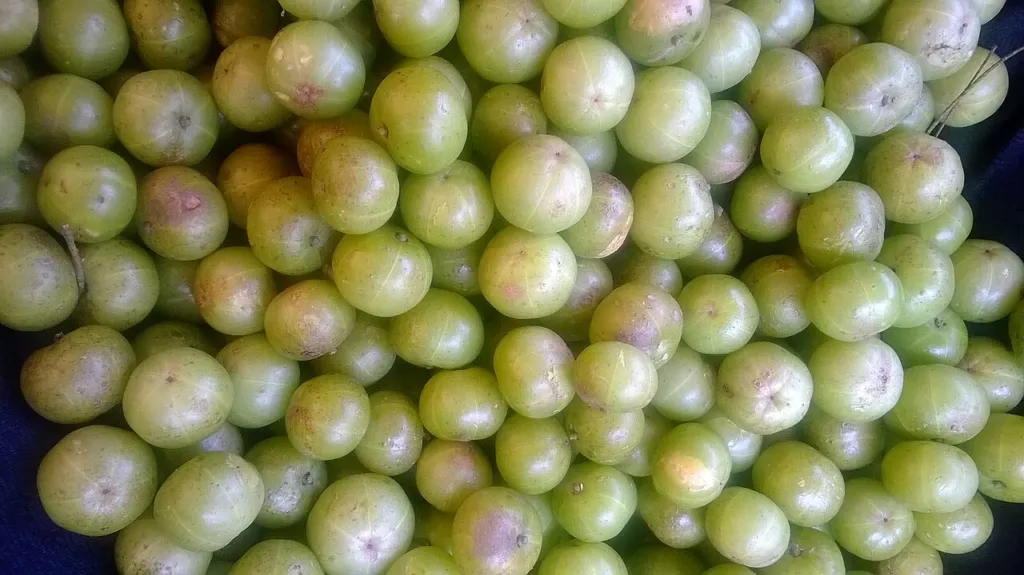
Photo: Krish Dulal, Nepal · CC BY-SA 4.0 · Wikimedia Commons
One bite of fresh amla is a shock. Sour, then dry, as though your tongue has turned to felt. Then a sip of water tastes sweet.
You may already own some: in a tub of triphala powder, a spoonful of chyawanprash, a capsule for cholesterol. The studies are small, and the main risk lies in some imported multi-herb jars, not the fruit.
Educational only, with no medical advice or doses. Legal lines are the Institute’s November 2026 reading, not legal advice.
In an emergency phone 000 (Triple Zero). Otherwise phone the Poisons Information Centre on 13 11 26, open 24 hours, Australia-wide, and follow its advice.
A child who has swallowed a herbal medicine not meant for them: phone 13 11 26, or 000 if the child is drowsy, fitting or having trouble breathing.
Keep multi-herb Ayurvedic formulas, and anything labelled bhasma or rasa (a metal or mineral preparation), away from children. Bad reactions to any medicine, herbal ones included, can be reported to the TGA.
Before taking any botanical drug, consult a degree-qualified herbalist with competencies and adequate training in pharmacognosy.
- A sour South Asian fruit, long eaten as food and central to Ayurveda.
- Small, short, maker-backed trials suggest slightly lower bad cholesterol. None looked at heart attacks.
- In the trials it was gentle: some mild indigestion, softer stools.
- The real risk is some imported multi-herb Ayurvedic medicines carrying lead, mercury or arsenic.
- Taking medicines, pregnant, or buying for a child? Ask before taking a concentrate.
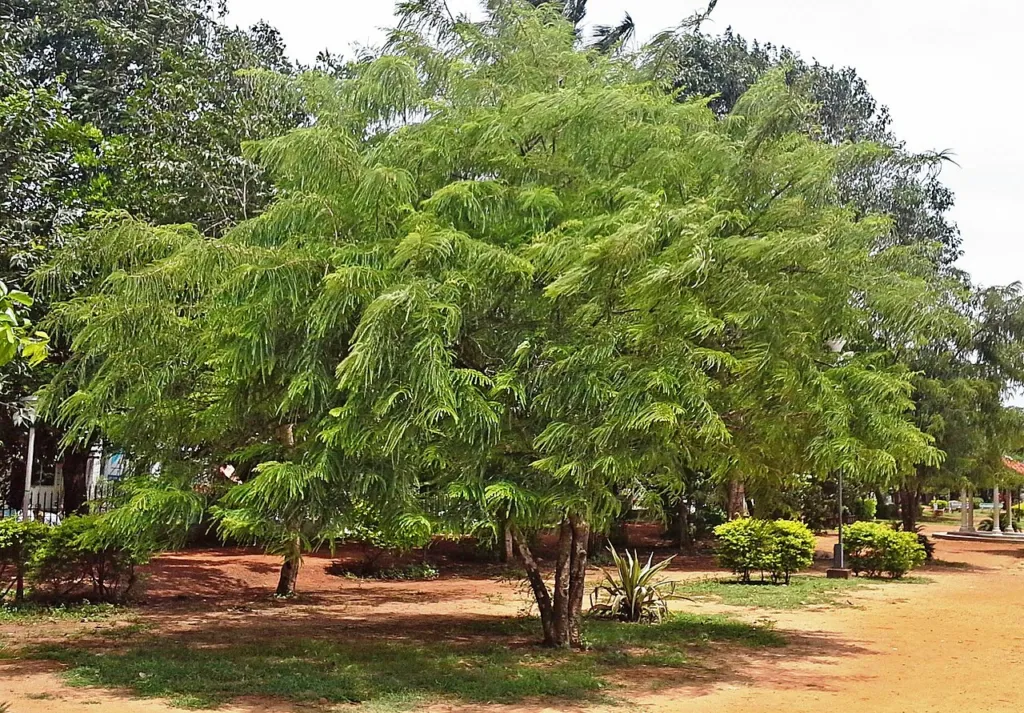
A sour little fruit with a long kitchen history
Long before it was a capsule, it was a pickle.
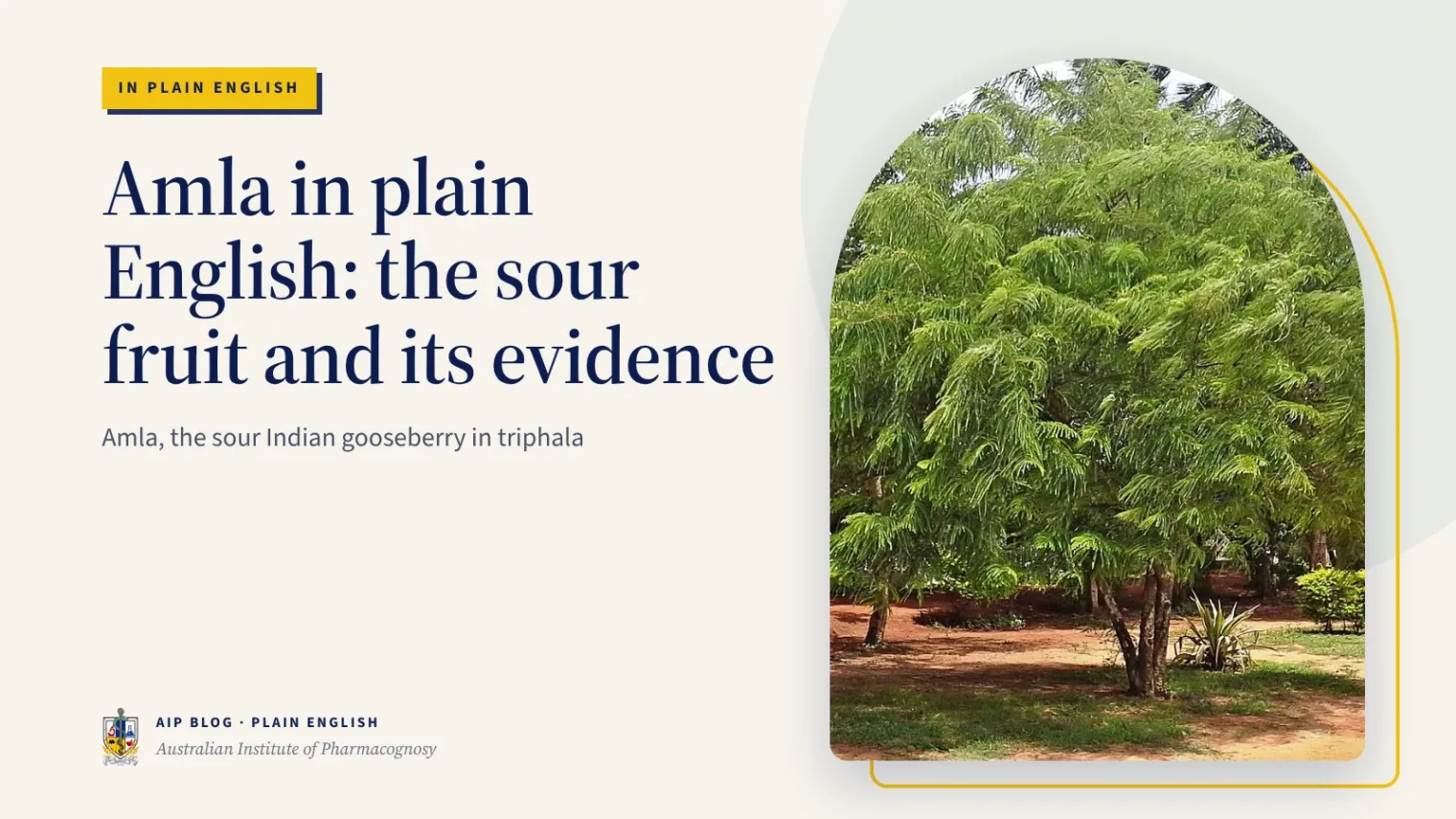
Amla, or Indian gooseberry, is a pale green fruit the size of a big marble, its flesh wrapped round a hard ribbed stone. Across South Asia people eat it with salt and chilli, pickle it or simmer it in syrup. Ayurveda, India’s traditional medicine, counts it a tonic for long life, and it is one of triphala’s three fruits.
Watch for two lookalikes. Chanca piedra, a little herb used for kidney stones, is a cousin; nothing known about one carries over. Otaheite gooseberry, with ribbed yellow fruit in bunches, is another plant again. Sellers also stretch “myrobalan” over several puckering fruits.
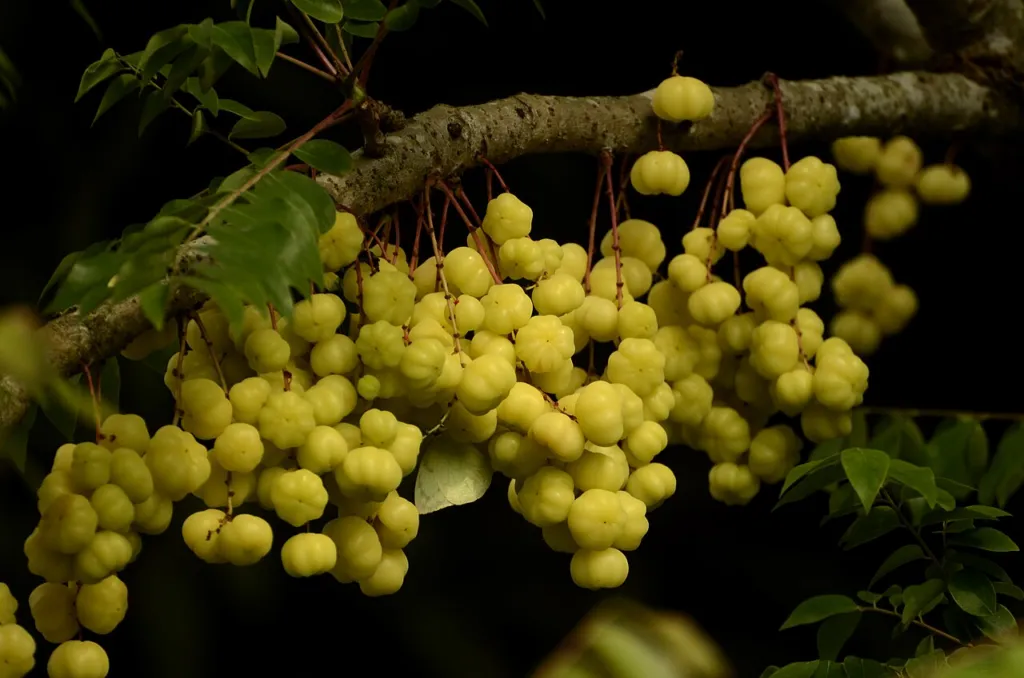
Look for amla, Indian gooseberry or emblic myrobalan on the label.
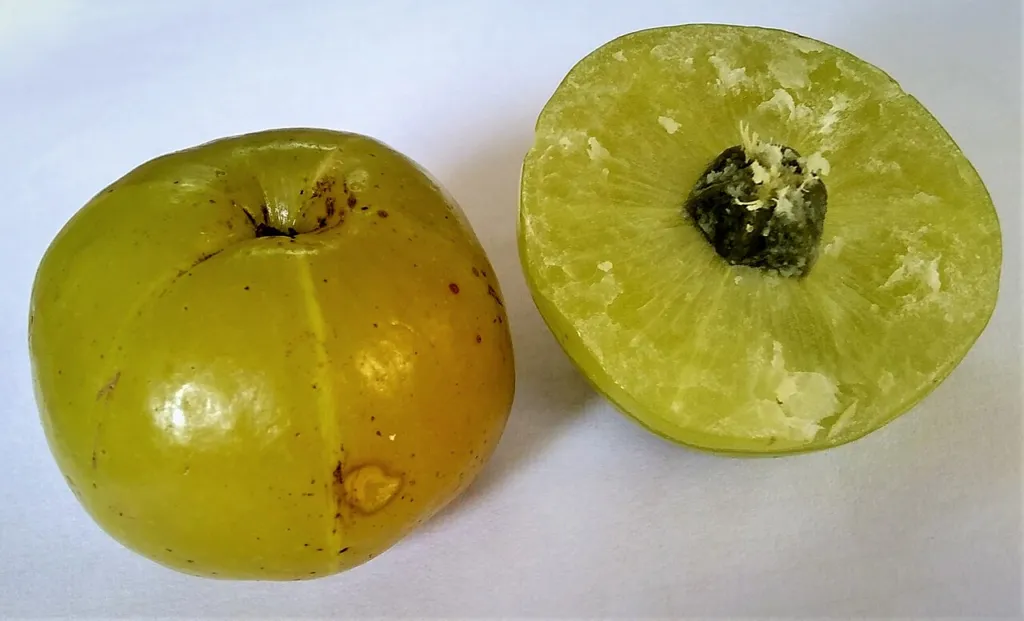
The cholesterol studies are small, short and hopeful
Encouraging, and a long way from settled.
Two 2023 reviews pooled the amla extract trials. On average, people taking it had somewhat lower LDL, the so-called bad cholesterol, than those who did not. One review also saw a fall in CRP, a blood sign of inflammation. Blood pressure didn’t shift.
The trials were few, mostly tiny, none longer than about three months. In every trial checked in full, the extract’s maker supplied it, paid for the work or employed the researchers. That is common in herbal research and doesn’t make the results wrong. No independent team has yet run a trial big enough to be sure. A better number on a blood test is a hopeful sign. It is still a step short of a longer life.
Results scattered so widely that a fresh trial could show nothing, and nobody counted heart attacks, strokes or deaths. One review urged caution; the other rated its certainty low.
A better number on a blood test is a hopeful sign. It is still a step short of a longer life.
Treat cholesterol promises on an amla pack as hopeful at most; one brand’s extract says little about another.
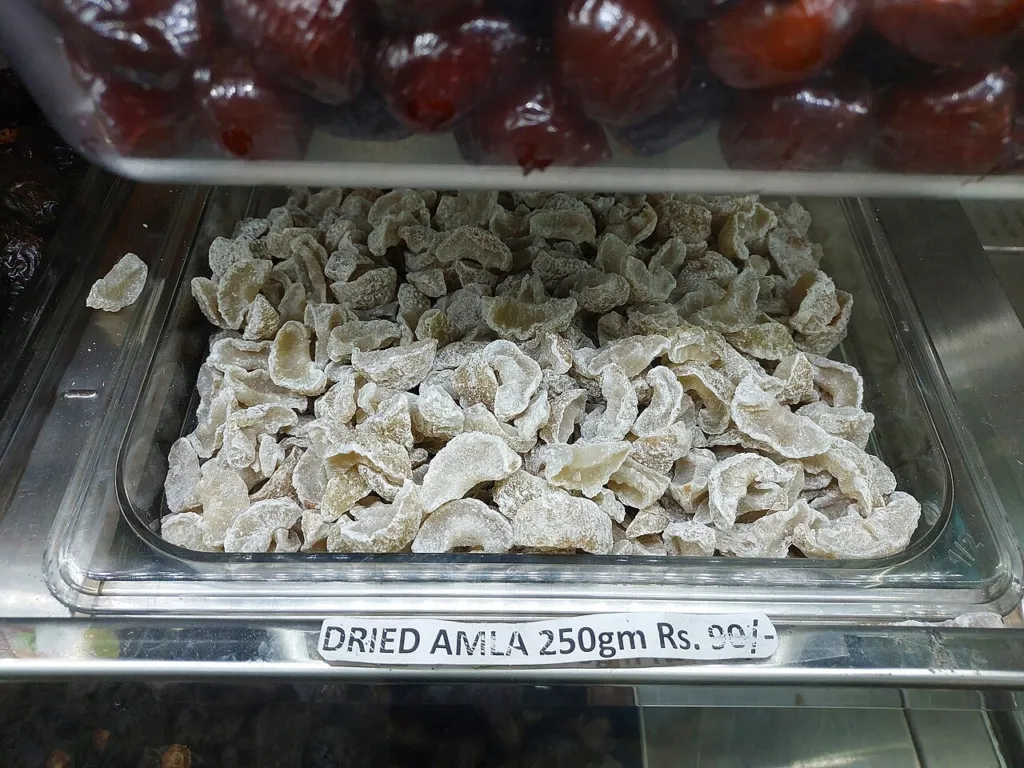
The fruit is gentle. Some jars are not
Where the real risk sits.
Nobody in the amla trials quit over a side effect. The hazard sits with some imported Ayurvedic medicines that blend many ingredients. When researchers tested ones bought online in 2005, about one in five held lead, mercury or arsenic, worst of all those made with metals on purpose.
The TGA, Australia’s medicines regulator, still gets lead-poisoning reports from imported or unregistered Ayurvedic medicines, and says pregnant women and children face the greatest risk. None it named is sold as amla, but amla goes into many such blends. Its name on the front of a box says nothing about what else is inside.
As a food, amla’s label may not claim to treat or prevent a disease. Some low-risk listed medicines (AUST L) contain it too; the TGA doesn’t check their evidence before sale.
Its name on the front of a box says nothing about what else is inside.
Turn the box over. Look for an AUST L or AUST R number, and read every ingredient. Bhasma or rasa means a metal or mineral preparation: keep it well away from children.
Medicines, pregnancy and small children
Where a gentle fruit needs a second thought.
Blood thinners. In one small study without a dummy pill, an extract made platelets, the cells that start a clot, less sticky; another trial saw no difference. On aspirin, clopidogrel, warfarin or another blood thinner, tell your prescriber and your herbalist, above all before an operation or dental work.
Diabetes medicines. On insulin or a sulfonylurea tablet, watch your sugar more closely if you add a concentrate. It might lower it, though no trial reported a low.
Iron. Tannins may cut the iron you absorb, as strong tea does; nobody has measured it with amla. Take iron tablets a few hours apart from concentrated amla.
Pregnancy, breastfeeding and children. There is no good safety information on extracts, and no trials in children. Health Canada flags breastfeeding on every amla product. While pregnant or breastfeeding, keep to amla as food unless your herbalist advises otherwise.
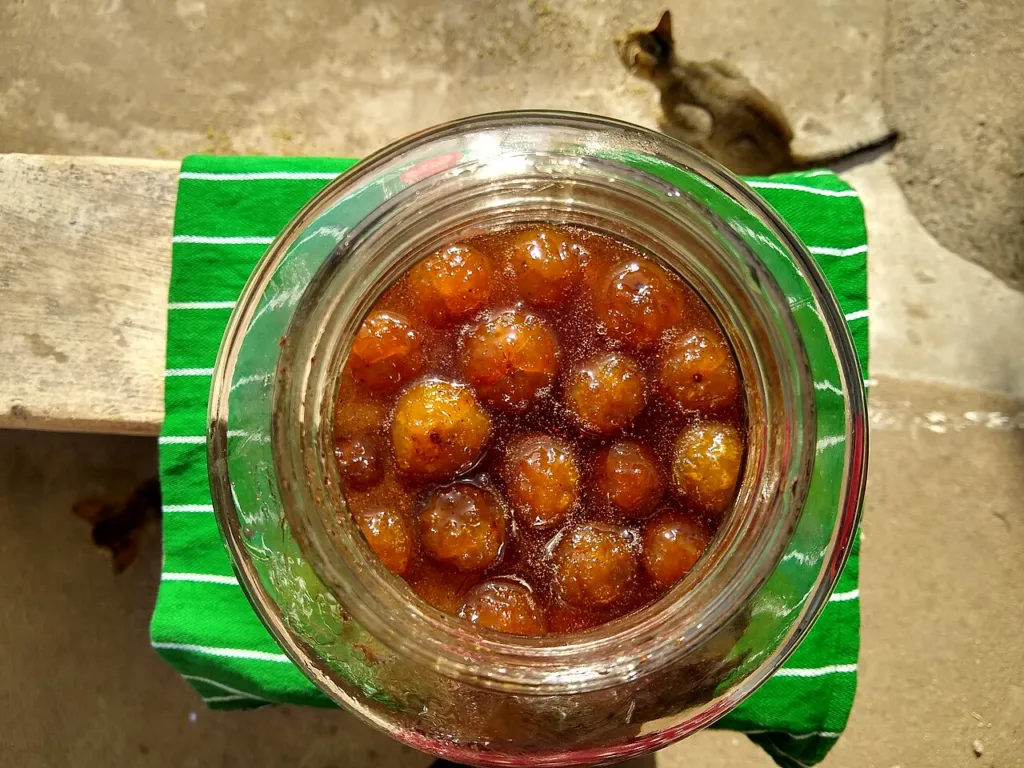
The photographer behind the jar above said amle ka murabba, whole amla in syrup, brings back their grandparents. Most of the world meets amla that way, long before any capsule.
Enjoy amla as food. Pregnant, breastfeeding, choosing for a child, or on any of these medicines? Ask the herbalist named in the red box before taking a concentrate.
Dr Thomas Ridley’s full evidence review, with every source:
- Dr Luke Iggulden, Chief Scientific Officer — Senior author. Commissioned the Explainer series, set its direction and approved it
- Jesse Kirby — Wrote this edition from his own notes with the review closed: chose the four things a reader needs, the order and every sentence, and reset the safety box without softening it
- Zoe Bennett — Wrote the title, search description and labels, pitched at the reader who already has triphala or chyawanprash in the cupboard, which is how the page will be shared
- Theo Karras — Picked the cover heap and four section banners from the review’s own photographs, fetched them at full width, checked each by eye, wrote the alt text, and dropped one shot whose caption did not match what it shows
- Leah Bianchi — Built the page: the red safety box, the one-minute card, two pull quotes, the four what-this-means cards and the card back to the full review, checked to read on a phone
Contributors
- Dr Thomas Ridley — Wrote the evidence review this page retells, and checks the science
Image credits. All photographs via Wikimedia Commons, as used in the parent review. Cover, amla fruit, Panchkhal valley, Nepal: Krish Dulal, CC BY-SA 4.0. Amla tree, Kakinada: Adityamadhav83, CC BY 4.0. Whole and cut fruit: Salil Kumar Mukherjee, CC BY-SA 4.0. Otaheite gooseberry: PJeganathan, CC BY-SA 4.0. Dried amla: Vis M, CC BY-SA 4.0. Amle ka murabba, Gujarat: Shaili Sharma, CC BY-SA 4.0.
AIP Explainers are the plain-language editions of the Institute’s technical articles, published alongside the original. Everything on this page is carried by the full review, where the trials, the references and the regulatory sources are set out. Regulatory information was read in November 2026 and may change. Spotted an error? Write to our contact form. We would rather correct a claim than repeat it.
Jesse Kirby
Head of Community Outreach
Australian Institute of Pharmacognosy
Cardwell QLD, Australia
australian-pharmacognosy.org · our contact form
The Institute sets and publishes its own monographs. The catalogue is in Publications.