

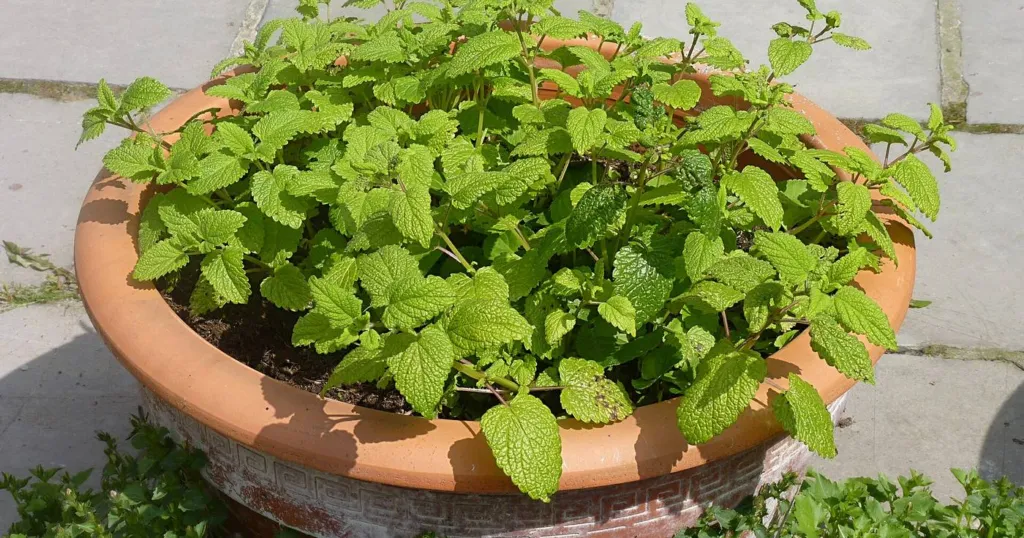
Photo: Jamain, licensed CC BY-SA 3.0, from Wikimedia Commons
A pot of lemon balm by the back door is a gardener’s friend: brush past it and your hand smells of lemon.
Late in 2025, short clips began selling its tea as a “natural Ozempic”, a backyard stand-in for a costly prescription medicine. Here is where things stand.
Educational only; not medical or legal advice. Australian rules as read in November 2026.
If someone becomes unwell after taking any herbal product, phone 000 in an emergency, or the Poisons Information Centre on 13 11 26 (24 hours, Australia-wide) and follow its advice.
Lemon balm can make you drowsy. Take care with driving and machinery, and with alcohol, sleeping tablets and other sedatives.
Keep essential oils, melissa oil included, out of reach of children. Tinctures made with alcohol are best avoided for children and in pregnancy.
Never swap a prescribed GLP-1 medicine for a herbal tea without the prescriber being involved.
Before taking any botanical drug, consult a degree-qualified herbalist with competencies and adequate training in pharmacognosy, above all if you take prescription medicines, have a thyroid condition, or are pregnant or breastfeeding.
- We found no study of lemon balm and GLP-1, the hormone those medicines use.
- The trials that weighed people found no weight change.
- Small trials of strong extracts hint at calmer moods and better sleep.
- Gentle for most, but it can make you drowsy.
- An AUST L number means it is listed. The TGA has not checked that it works.
A slimming tea that nobody had tested
The claim, and the record.
The clips started overseas: brew a mug, add lemon, and it supposedly kills hunger. Dietitians in the news found no convincing evidence, and Australian supplement shops ran the same line. That is our own reading of the coverage.
Ozempic is semaglutide, a prescription-only medicine. It acts on the receptor for GLP-1, a hormone your gut sends out after you eat. Our author searched for studies linking lemon balm to that hormone and found none. Nobody has measured it. Where people were weighed, their weight did not change.
Nobody has measured it. Where people were weighed, their weight did not change.
Much of the slimming research came from one Korean lab’s extract in mice, and journals have withdrawn two of those papers over duplicated images. We found no slimming use in the old herbals, and the idea that calm might curb stress eating is untested.
Bought lemon balm to lose weight? You have bought a pleasant tea. Never trade a GLP-1 medicine for it without your prescriber.
Where lemon balm has earned its place
Calm, sleep and digestion, for centuries.
In the 1650s the herbalist Nicholas Culpeper wrote that balm gladdens the heart and helps digestion. Europe’s medicines regulator accepts it for mild stress, sleep, wind and bloating on the strength of long use, a judgement about history rather than trials.
Small trials of strong extracts mostly found people felt calmer under stress and rated their sleep better. In Melbourne, a Swinburne team hid it in drinks and yoghurt and mood or thinking mostly improved, though some doses had costs. Pooled trials showed modest falls in cholesterol. But the groups were small, the products varied and were often maker-funded, and most were stronger than a cup. Nobody has measured what reaches a home brew.
An evening cup has a long tradition behind it; expect something mild.
Gentle for most, with a few cautions
Who should pause first.
Trials found no serious reactions, and minor complaints were as common on dummy pills. Formal safety testing is thin; the reassurance comes from long use. Avoid it if the leaf gives you an allergy.
Drowsiness is the caution most people need. It may dull your driving, and with sleeping tablets, sedating antihistamines or alcohol we would expect more sleepiness, though this is unstudied. Tell the surgical team before an operation.
Drowsiness is the caution most people need.
Thyroid is an open question. Lab and animal work found the leaf can interfere with a thyroid-driving hormone; whether that matters in people is unknown. On insulin or a sulfonylurea diabetes tablet, keep up your sugar checks when you start a strong extract; the risk looks low but is unstudied.
Pregnancy, breastfeeding and children under twelve lack the data, so the regulator does not recommend it there. That is missing data, not a finding of harm. The essential oil can sensitise skin, needs diluting, and should never be swallowed without guidance from someone trained in it.
On sedatives or insulin, with a thyroid condition, pregnant or breastfeeding? See the qualified herbalist in the safety box before it becomes daily.
Check the leaf, then check the label
Lookalikes and labels.
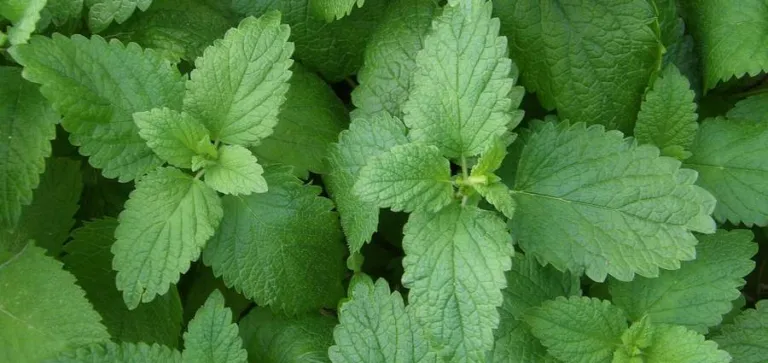
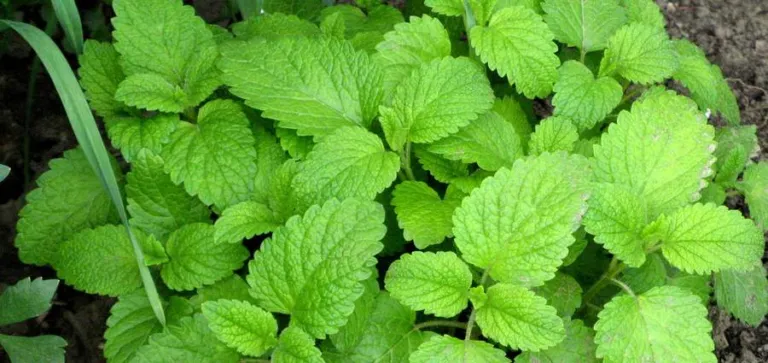
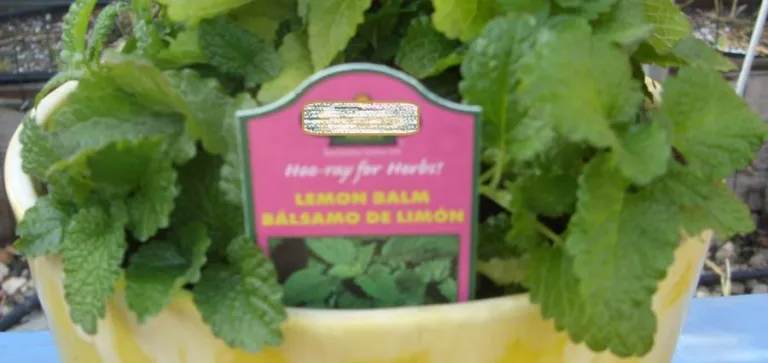
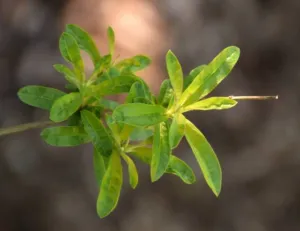
Lemon balm has square stems and broad leaves set in pairs, with rounded teeth and a quilted surface. Lemon verbena, the usual mix-up, has narrow, pointed leaves in threes or fours. A “lemon tea” may be lemongrass or lemon myrtle, which this research does not cover.
An AUST L number means a listed product on the register, made from low-risk ingredients. The TGA does not check that it works before sale; the company holds its own evidence. Loose tea is sold as food.
Think a herbal-Ozempic ad is misleading? Report it to the TGA. Then enjoy the lemony cup lemon balm has always been.
Dr Thomas Ridley’s full review, with every trial and reference:
- Dr Luke Iggulden, Chief Scientific Officer — Senior author. Commissioned the Explainer series, set its direction and approved it
- Jesse Kirby — Took shorthand notes from the review, then closed it and wrote this page from them: chose the four things a reader needs, set the order, wrote every sentence and carried the safety points across at full strength
- Zoe Bennett — Wrote the page title, the search description and the labels around the viral clip a reader may have been sent, which is how the page will travel when it is shared
- Theo Karras — Picked the terracotta-bowl cover, the four section banners and the balm and verbena pair, opened each photograph to check it, and rewrote the two alt texts that did not match the crop
- Leah Bianchi — Built the page: the safety box, the one-minute card, two pull quotes, the four what-this-means cards, the side-by-side leaf figures and the card back to the review, checked for reading on a phone
Contributors
- Dr Thomas Ridley — Wrote Literature Review AIP-LR-MELOFF, the article this page retells
Image credits. All photographs via Wikimedia Commons, cropped and resized for the web: cover, Jamain (CC BY-SA 3.0); tea and fresh leaves, Andrea_44 (CC BY 2.0); foliage, Broly0 (CC0); planter, Marlene Bertrand (CC BY-SA 4.0); paired leaves, H. Zell (CC BY-SA 3.0); lemon verbena, Krzysztof Golik (CC BY-SA 4.0).
AIP Explainers are the plain-language editions of the Institute’s technical articles, published alongside the original. Everything on this page is carried by the full review, where the trials, the references and the regulatory sources are set out. Regulatory information was read in November 2026 and may change. Spotted an error? Write to our contact form. We would rather correct a claim than repeat it.
Jesse Kirby
Head of Community Outreach
Australian Institute of Pharmacognosy
Cardwell QLD, Australia
australian-pharmacognosy.org · our contact form
The Institute sets and publishes its own monographs. The catalogue is in Publications.