

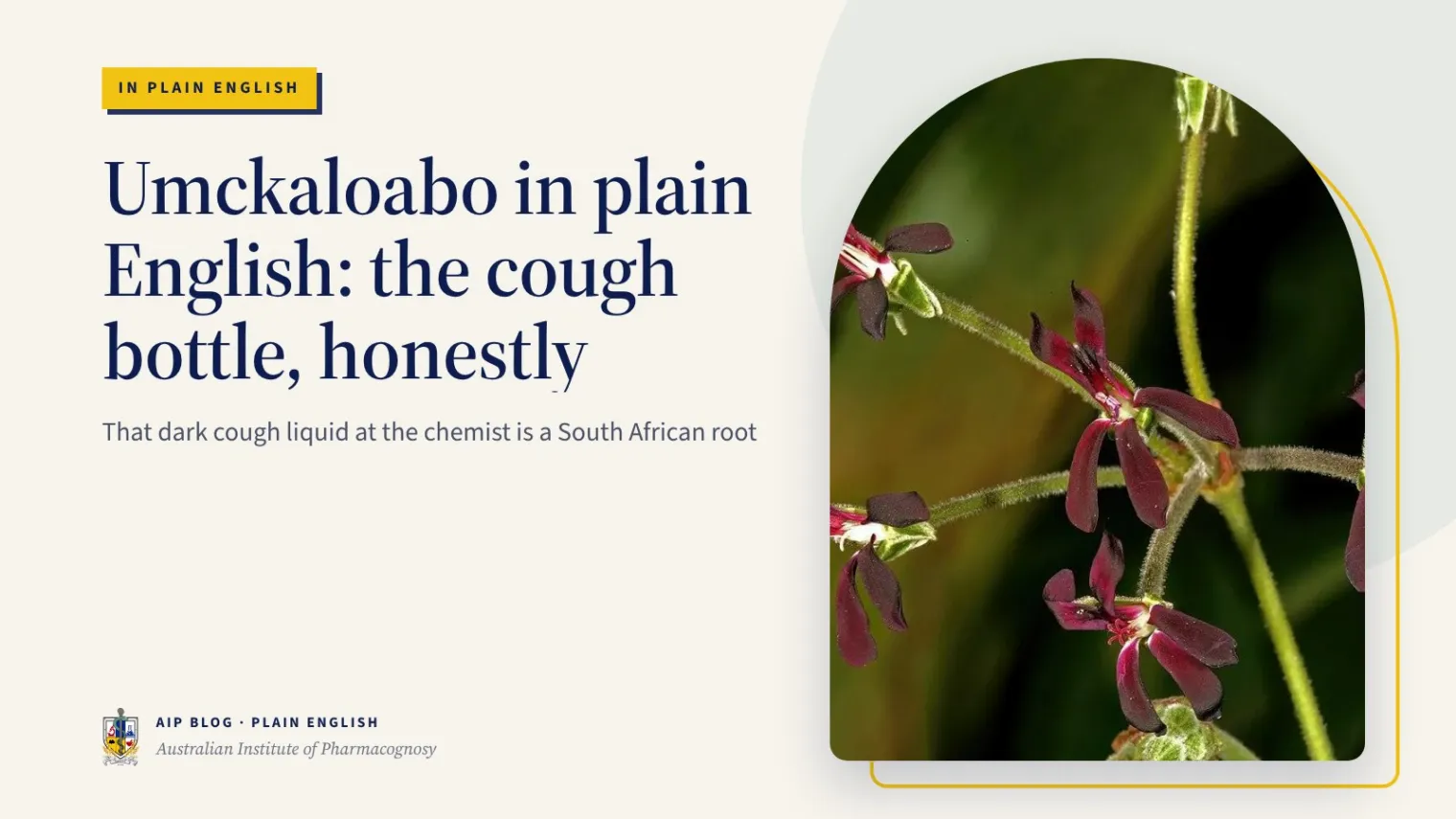
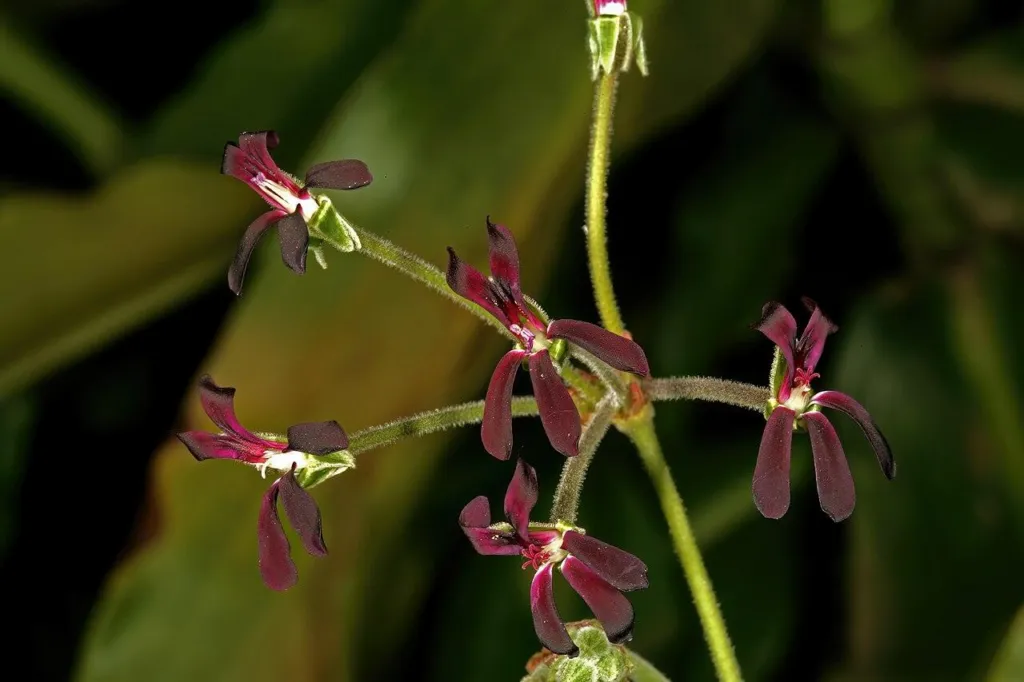
Cover photo: SAplants, via Wikimedia Commons · CC BY-SA 4.0
It’s August, the cough has moved onto your chest, and on the chemist’s shelf sits a squat brown bottle of something dark. Kaloba, says the front. Hardly anyone who buys it knows what’s inside.
It’s the root of a black-flowered geranium cousin from southern African grassland. Few herbal medicines here were checked for whether they work before sale, and this is one. It also brings shaky trials, a liver warning with a twist, and a community that took on a patent.
Educational only: no medical or legal advice, no preparation or dosing detail. Australian rules as the Institute read them in September 2026; they can change. We have no tie to any company named.
Phone 000 straight away for difficult or noisy breathing, blue or grey lips, someone who can’t finish a sentence, a swelling throat or tongue, wheeze, a hoarse voice, dizziness or collapse.
Swallowed too much, a child got into the bottle, or any poisons question: phone the Poisons Information Centre on 13 11 26, 24 hours, Australia-wide, and follow its advice.
Get assessed instead of treating from the shelf for breathlessness, chest pain, blood coughed up, a high or lasting fever, drowsiness or confusion, or a cough past three weeks, especially with weight loss or night sweats. Likewise a cough in a baby, or in anyone frail, elderly, pregnant or immune-suppressed, or with asthma, COPD, bronchiectasis or heart failure. In a young child, also a whooping or barking cough, poor feeding, or skin sucking in at the ribs or throat.
Stop and get checked if the cough is still there after a week of use, or worse at any point. Stop at once at any sign of liver trouble: yellow skin or eyes, dark urine, pale stools, a lasting itch, pain under the right ribs, or unexplained nausea, poor appetite and heavy tiredness.
Reacted to a pelargonium product before? Avoid them all. Not advised under three years (tablets not under six), or in pregnancy or breastfeeding.
Before taking any herbal medicine, consult a degree-qualified herbalist with competencies and adequate training in pharmacognosy.
- Warning signs in the red box, or no better after a week: get assessed, don’t buy.
- The liquid eased bronchitis a little in weak trials; an independent Swiss trial this year found no clear benefit over usual care.
- Nothing shows it clears the infection itself.
- Know the allergy and liver signs; ask first if you bleed easily.
- Look for AUST R and a number cleared for sale here.
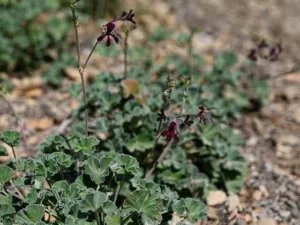
Does it help? A little, maybe, as the liquid
Three honest answers, one of them new.
In several trials one liquid root extract helped acute bronchitis ease a bit sooner and feel a bit milder, in adults and children. The tablets didn’t show the same benefit.
The Cochrane reviewers, an independent group who weigh up medical trials for a living, graded that work low quality. Most of it tested one maker’s extract, and they suspected unflattering results had gone unpublished. Then in April 2026 a Swiss team with no tie to the maker tried it in ordinary GP clinics. Patients got better no faster, and fewer took antibiotics, but not by enough to be sure it was real. Side effects, all mild, were more common on the root. With no dummy pill the book isn’t closed, but it came up empty.
Nothing shows the root gets rid of the germ itself.
Nothing shows the root gets rid of the germ itself.
Hope for a modest easing, if anything. A website promising it fights infection or boosts immunity is claiming more than the Australian register does. Still coughing a week in, or worse at any point? Stop and get assessed.
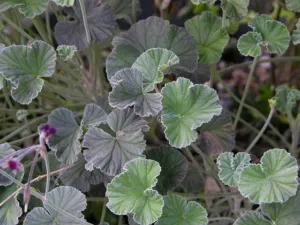
Side effects worth knowing by name
Mostly a queasy stomach. Two rarer problems need plain words.
The usual complaint is a mildly upset stomach, likely from the root’s tannins, the mouth-puckering compounds. Allergic reactions are on record too, from rash and hives to shock needing emergency treatment, at a rate nobody knows.
Liver injury has been reported, and Europe added a warning. Yet when independent assessors scored the cases one by one, none came out as a probable link, though Germany’s regulator rated three probable. Both hold: a regulator can warn without proof, and no study yet is big enough to rule out a rare reaction.
Its coumarins share a family name with warfarin but aren’t built like it, and in rats didn’t alter it; nobody has tested the pair in people. Even so, nosebleeds and bleeding gums turn up slightly more than on dummy pills, and the trials turned away anyone prone to bleeding. The people with most reason to ask were never tested.
The limits for under-threes and pregnancy are there because safety was never shown: a gap in the record, not a reassurance. The liquid contains alcohol, and the Australian bottle’s cap isn’t child-resistant.
On a blood thinner or other regular medicines, bleeding easily or facing surgery? Liver disease in your past, pregnant, or buying for a toddler? Talk it over first with the herbalist named in the red box, and keep the bottle up high.
What you can check in the aisle
Two letters and a number beat the front of the pack.
Most herbal products at the chemist are listed, AUST L: the company vouches for itself; the regulator doesn’t check it works first. Both pelargonium products on sale in Australia are registered, AUST R, so the Therapeutic Goods Administration weighed safety, quality and effectiveness beforehand.
The liquid is approved for acute bronchitis and acute sinusitis, the tablets only for the cough of acute bronchitis. Two other entries, named simply Pelargonium syrup and tablets, are export-only and may not be sold here.
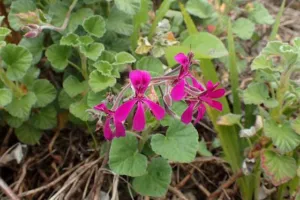
At approval in 2011 a committee member raised the chance of its pink cousin, above, being swapped in for it. The minutes don’t say any bottle on sale falls short. The committee wanted a fresh look if the evidence moved. It has; a review is the regulator’s call.
Turn the box over: AUST R, the full plant name, the word root. Trust the number over the name. Avoiding alcohol, or had liver trouble? Check the alcohol.

A sick mechanic, a healer, and a hearing in Munich
Whose medicine this was before it had a brand.
People in the Eastern Cape and Lesotho boiled this root for coughs, chest illness including tuberculosis, and dysentery long before any chemist stocked it. That shows what they did; on its own it doesn’t show the root cures anything.
In 1897 Charles Stevens, a British mechanic with tuberculosis, sailed south for the mountain air. A healer gave him a root brew. He went home believing himself cured and sold it without ever naming the plant. Europe only identified it in 1977.
Much later a German maker patented its way of extracting the root. A community near Alice fought it, saying their knowledge had been taken without fair return, and members travelled to Munich for the 2010 hearing. The patent was revoked on ordinary patent grounds. The question they had travelled to ask stayed open.
The question they had travelled to ask stayed open.
Digging the tuber kills the plant. The register lists a bottle’s glycerol, and nothing on who first knew the root.
Ask the seller: farmed or wild-dug, and if wild, under whose permit and what deal with the people there? A supplier with an answer has done the work.
The short version of Dr Thomas Ridley’s AIP Literature Review and Critical Analysis LR No. 4, which has every trial, warning and register entry:
- Jesse Kirby — Took notes from the review, shut it, and wrote this page from them: chose to lead with the cough rather than the herb, built the four sections and wrote every sentence, and reworded the red box without loosening any of it
- Zoe Bennett — Wrote the page title, the search line and the labels around the brown bottle a reader has probably already seen at the chemist, which is the hook it will be shared on
- Theo Karras — Picked the maroon-flower cover and the four banners from the review’s licensed set, put the pink cousin beside the register section so the identity point can be seen, and wrote each alt text after looking at the photograph
- Leah Bianchi — Built the page: the red box ordered emergency-first, the one-minute card, the two pull quotes, the four what-this-means cards and the card back to the review, all checked for reading on a phone
- Dr Luke Iggulden, Chief Scientific Officer — Senior author. Authorised the research this edition retells, as lead researcher
Contributors
- Dr Thomas Ridley — Wrote AIP Literature Review and Critical Analysis LR No. 4, the article this page retells
Image credits. Cover: SAplants, CC BY-SA 4.0. Flowering plants and Pelargonium reniforme: Krzysztof Ziarnek, Kenraiz, CC BY-SA 4.0. Leaves: Derek Ramsey (Ram-Man), Chanticleer Garden, CC BY-SA 3.0. Tyhume valley near Alice: Lysippos, CC BY-SA 3.0. All via Wikimedia Commons, resized for the web; the same photographs and licences as the full review.
AIP Explainers are the plain-language editions of the Institute’s technical articles, published alongside the original. Everything on this page is carried by the full article, where the evidence, the references and the regulatory sources are set out. Regulatory information was read in September 2026 and may change. Products are named only because they appear on the public register; naming one is not a recommendation, and this page is not an advertisement. Spotted an error? Write to our contact form. We would rather correct a claim than repeat it.
Jesse Kirby
Head of Community Outreach
Australian Institute of Pharmacognosy
Cardwell QLD, Australia
australian-pharmacognosy.org · our contact form
The Institute sets and publishes its own monographs. The catalogue is in Publications.