

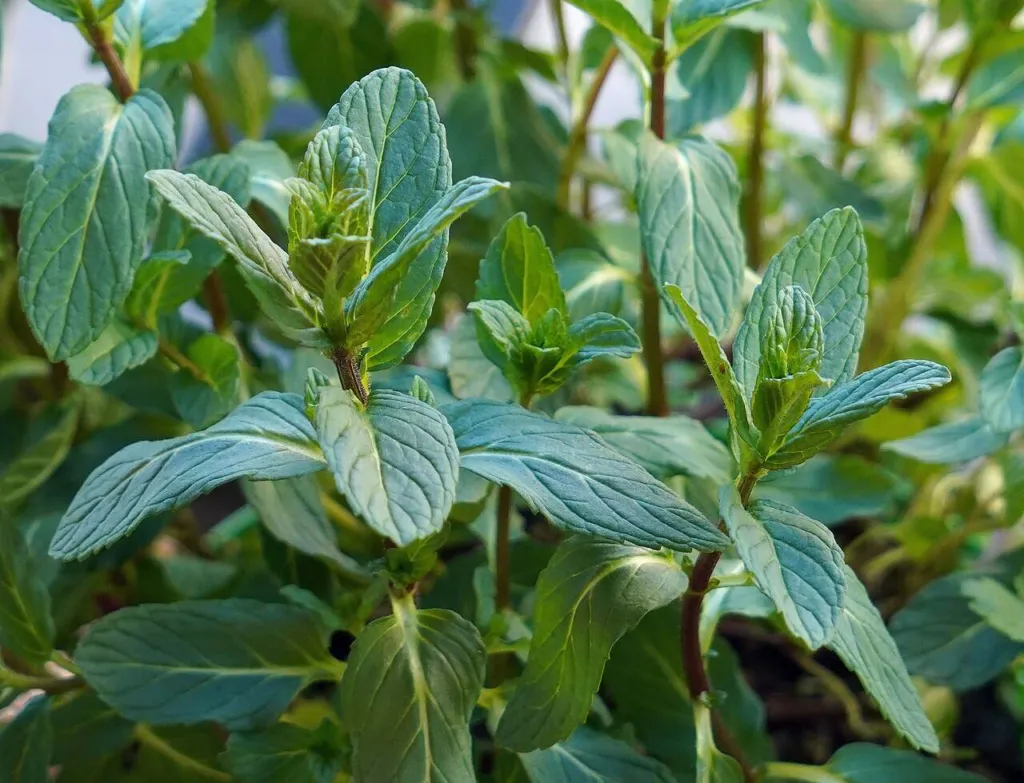
Cover, young spearmint shoots. Photo: Commonists, via Wikimedia Commons · CC BY-SA 4.0
It grows in a pot by the back step and goes in the lamb on Sunday. Lately it has fans online: two mugs a day, they promise, for PCOS, for dark hairs along the jaw, for spots that flare before a period.
If that mug is yours, here is the straight version. Women have tried it in two small, short studies, and their blood tests shifted. Nobody has shown it changes a chin, or tested it on acne at all.
Educational only, with no dosing or preparation detail. Legal lines are our reading of Australian rules in November 2026, not legal advice.
Emergency: phone Triple Zero, 000. Suspected poisoning: phone the Poisons Information Centre on 13 11 26, 24 hours, Australia-wide, and follow its advice.
Hair that is new, severe or worsening fast, or a deepening voice, needs prompt medical investigation before any tea, to rule out a hormone-making tumour.
Pregnant, breastfeeding or trying to conceive: there are no human safety studies, and hormonal use at these times has no evidence behind it.
On metformin, spironolactone, cyproterone or the pill: never studied together with spearmint. Keep whoever prescribes them informed.
Reflux: mint can relax the valve at the top of the stomach and worsen heartburn in some people.
Spearmint essential oil is concentrated, no drink, and dangerous if a child swallows it. Pennyroyal is a different plant; its oil is a scheduled poison in Australia.
Before taking spearmint or any herb for a health purpose, consult a degree-qualified herbalist with competencies and adequate training in pharmacognosy.
- Two small, short studies: women’s free testosterone fell on spearmint tea.
- Hair: women felt better about it; an assessor saw no change in a month.
- Acne: never tested.
- Mild as a drink; unstudied in pregnancy, with hormone medicines, or long term.
- Check the packet says spearmint.
Where the two-mug idea came from
A home remedy, some rats, and two small groups of women.
Spearmint is the sweet mint of Moroccan tea, and in parts of the Middle East it is a home remedy for unwanted hair in women. We found nothing on paper about that custom older than the recent medical studies.
Male rats drinking strong spearmint tea instead of water made less testosterone, the main male-type hormone, which women make too in smaller amounts. Size for size, they swallowed far more of the plant than anyone with a couple of mugs.
Then women: about twenty in Turkey for under a week, with no comparison group, and roughly forty with PCOS (now renamed PMOS) in Britain for a month, against chamomile. Both saw free testosterone fall, the share of the hormone loose in the blood and able to act.
Anyone calling the tea proven has gone too far. Ask any post: which trial, how many women, how long?
A blood test is not a mirror
What moved, and what didn’t.
In the British trial the women rated their hair troubles as easing. A trained assessor scored the hair itself, and that score sat still. The teas taste nothing alike, so the women probably knew which they had, and a question about feelings is the easiest for hope to tilt. The blood test moved; the mirror, as far as anyone has measured, did not.
The blood test moved; the mirror, as far as anyone has measured, did not.
Hair is slow: the international PCOS guideline waits at least half a year to judge whether the pill has helped. Acne has never been tested, and plenty of people with breakouts have normal hormones. The skin claim may yet prove right. Today it is untested.
Keep the care that works for you. Spearmint has only been tried beside proper treatment, never in its place, and nothing here says it will help your skin.
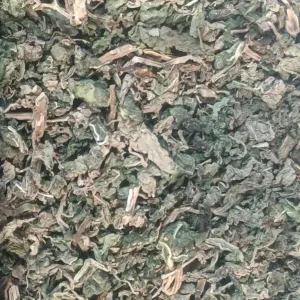
Make sure it’s spearmint in the cup
One word on the box, a whole family in it.
Peppermint is spearmint’s offspring, crossed with water mint. Spearmint smells of carvone, a sweet rye-bread note; caraway makes the same molecule in mirror image. The hormone studies used spearmint, and a box that only says “mint” could hold several kinds.
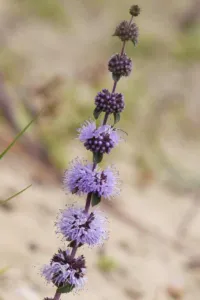
Pennyroyal is the cousin to keep out of the pot. It rarely reaches a shop teabag, but garden “mint” could, in principle, be it.
Sold as tea, spearmint is a food and cannot lawfully be advertised to treat a disease. An AUST L number on capsules shows the product meets the national register’s safety and quality rules. It does not show that the TGA, the regulator, found it works.
Buy tea that names spearmint, or Mentha spicata, and says leaf. Keep essential oil up high; a child who swallows it is in danger.
Who should hold off, and who to tell
Gentle in the cup, with real exceptions.
No side effects were reported in the tea trials, but nobody has studied spearmint alone past about three months.
New, heavy or fast-spreading hair, a lower voice, extra muscle or an enlarging clitoris need a medical work-up first; a tea that nudges a blood test could blur the picture while a tumour or look-alike goes unnoticed.
No spearmint trial has been designed for teenagers, and a hashtag is no assessment. In pregnancy, breastfeeding or while trying for a baby, the tea’s whole appeal is shifting sex hormones, the ones an early pregnancy runs on. Mint in a salad is different.
With medicines, the likelier trouble is crediting the tea for their work, or dropping one that helps. Tell the person who prescribes for you.
Spearmint runs underground until it owns the bed, and it has had a long, safe life in the kitchen. Its hormone story is small, honest and still being written.
Make the pot if you love the taste. If you want more from it, take that hope, and a list of everything you take, to the herbalist in the red box.
Dr Thomas Ridley’s full evidence review:
- Dr Luke Iggulden, Chief Scientific Officer — Senior author. Commissioned the Explainer series, set its direction and approved it
- Jesse Kirby — Took his own notes from Dr Ridley’s review and wrote this edition from them with the review shut: chose the four questions a woman holding the mug would ask, cut a draft twice its length down to a short read, and rewrote the safety box in plain words at full strength
- Zoe Bennett — Wrote the page title, the search line and the labels, and framed the share around the two-mugs-a-day posts readers have already seen in their feeds
- Theo Karras — Chose the cover and the four section banners from the review’s own photographs, opened every one to check it matched its alt text, and pulled a photograph of mint lollies that the review captions as fresh spearmint
- Leah Bianchi — Built the page: the red safety box, the one-minute card, the pull quote, the pennyroyal figure, the four what-this-means cards and the card back to the review. Checked it at phone width and dropped a five-box diagram whose labels could not be read on a phone
Contributors
- Dr Thomas Ridley — Wrote the evidence review this page retells, AIP-LR-MENSPI
Image credits. All photographs via Wikimedia Commons, resized for the web by AIP. Spearmint leaves (cover): Commonists, CC BY-SA 4.0. Mint tea on a tray: Munfarid1, CC BY-SA 4.0. Spearmint sprig: David J. Stang, CC BY-SA 4.0. Dried mint leaf: Fumikas Sagisavas, CC0. Spearmint in flower, Athens: George E. Koronaios, CC BY-SA 2.0. Pennyroyal (Mentha pulegium): Krzysztof Ziarnek, Kenraiz, CC BY-SA 4.0.
AIP Explainers are the plain-language editions of the Institute’s technical articles, published alongside the original. Everything on this page is carried by the full article, where the evidence, the references and the regulatory sources are set out. Regulatory information was read in November 2026 and may change. Spotted an error? Write to our contact form. We would rather correct a claim than repeat it.
Jesse Kirby
Head of Community Outreach
Australian Institute of Pharmacognosy
Cardwell QLD, Australia
australian-pharmacognosy.org · our contact form
The Institute sets and publishes its own monographs. The catalogue is in Publications.