
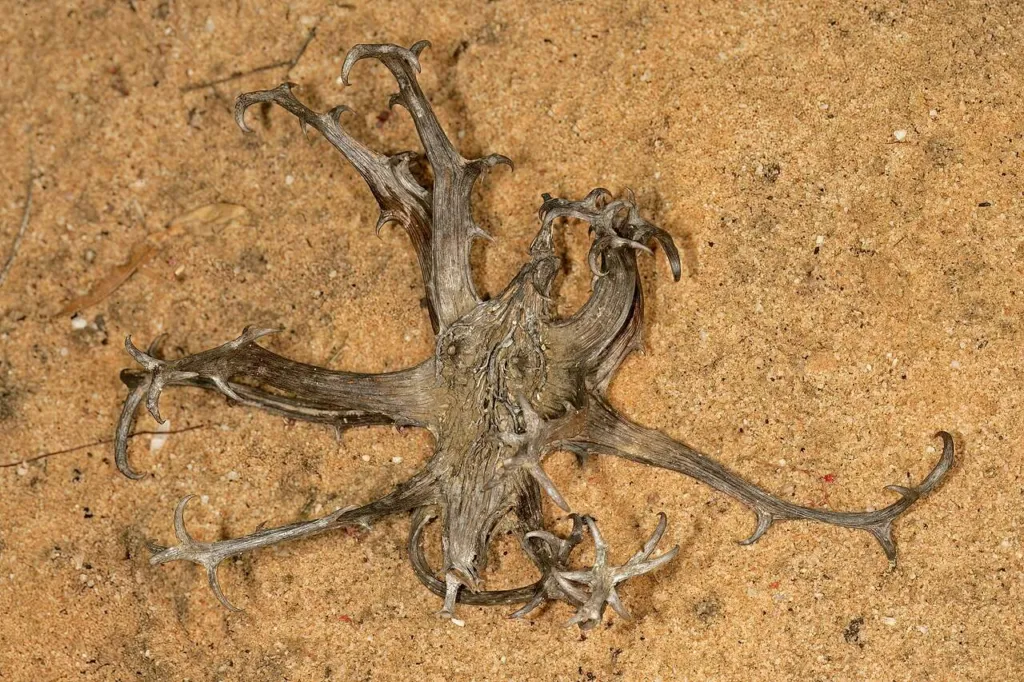
Photo: SAplants, CC BY-SA 4.0, via Commons
Pick up a joint-care box at a chemist in Cardwell and turn it over. Down the list of herbs, under a drawing of a hooked woody claw, sits devil’s claw. The same name is on a tub in the feed shed.
Both hold a bitter root, dug by hand out of southern African sand. Whether it does anything for your back is an awkward question, and the figure that would settle it is not on the box.
Educational only: no advice, no preparation or dosing detail. Legal passages are the Institute’s reading of Australian rules at 23/09/2026.
Call 000 or go to an emergency department if back pain comes with new saddle-area numbness, new trouble passing urine, loss of bladder or bowel control, or worsening leg weakness — that can mean pressure on the spinal nerves. One hot, swollen, painful joint, especially with fever, needs emergency assessment the same day; it can be infected.
Black or tarry stool, vomiting blood or what looks like coffee grounds, or sudden severe abdominal pain: call 000. Back pain with fever, unexplained weight loss or a cancer history needs prompt medical assessment. None of this is a job for a herb. Suspected poisoning or overdose: Poisons Information Centre, 13 11 26, 24 hours, Australia-wide.
A severe allergic reaction to the plant — anaphylaxis — has been reported, very rarely. A swelling face, or sudden collapse, after a dose is a medical emergency: call 000. Rash or hives: stop taking it and get seen.
Do not take it with an active stomach or duodenal ulcer, or if you are allergic to the plant. Gallstones: get assessed first. Not recommended in pregnancy, breastfeeding or under 18 — safety has never been established. On warfarin or another blood thinner, tell the prescriber and the pharmacist before you start or stop. On a diabetes or a blood-pressure medicine, mention it to whoever manages that. Joint symptoms no better after four weeks, or worsening, need looking at again. Report a suspected side effect to the TGA; keep the product and its AUST L number.
Before taking any botanical drug, consult a degree-qualified herbalist with competencies and adequate training in pharmacognosy.
- The medicine is a Kalahari plant’s dried side roots. The claw on the packet is its fruit.
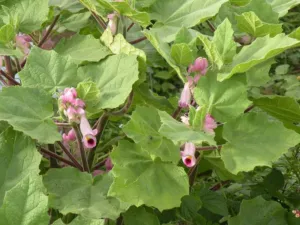
- Australia’s own devil’s claw is an unrelated northern weed.
- Weak evidence of modest relief during a back-pain flare, and only tested over weeks. Worn knees and hips, weaker.
- Mostly a mildly upset stomach, though severe allergic reactions happen rarely. Off the list with an active ulcer, in pregnancy, breastfeeding, under 18. On a blood thinner, ask before you start it.
- Horse that competes? Treat it as a medication.
Two plants, one name, one medicine
Only one of them ever ends up in a capsule.
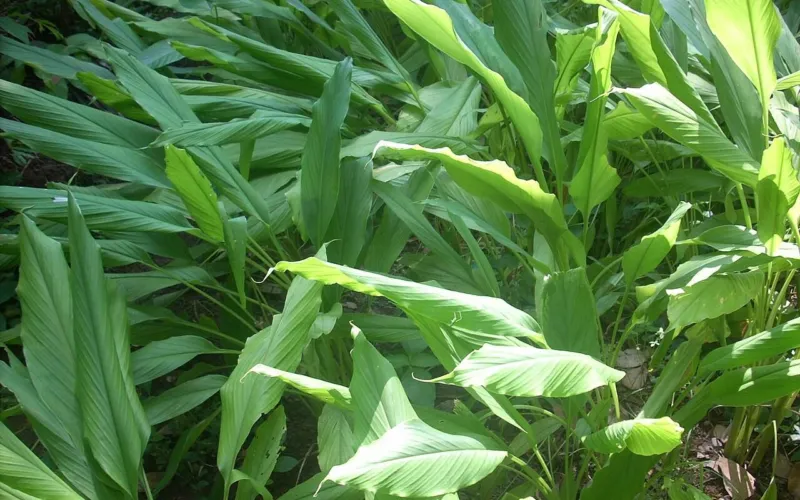
Ask a grazier in the Territory what devil’s claw is and you get an earful about a weed: a Central American plant whose hooked pods ride the north on cattle and tyres. Nothing to do with the capsule.
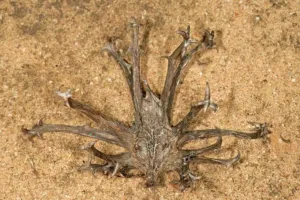
The medicine lies flat on Kalahari sand under trumpet flowers and sets a hard woody fruit armed with hooks. That fruit is what the packet draws; what goes inside was dug from underneath — side roots, sliced, sun-dried, ferociously bitter. One compound in that bitterness, harpagoside, is the marker everybody measures the root by.
Handed seed of the northern weed? Nothing here applies. On a product, look for the African plant named in full, and root or tuber as the part.
What the trials actually found
A small field, short studies, one grade that decides it.
The best-reported study took people whose long-standing back pain had flared, gave them a water-based extract or a dummy for a month, and counted who came through a week without reaching for a rescue painkiller. More managed that on the herb than on the dummy — but only a handful of people in any group managed it at all, and an earlier run of the same design missed the target it had set itself in advance. Reviewers pooling the two cleanest trials said the extract may beat a dummy for short-term pain and may cut how often the rescue painkiller is needed, then graded that evidence low quality.
Low quality means the finding could turn over the day somebody runs a bigger, cleaner trial.
Worn knees and hips are thinner again. The largest study there ran the root against another weak drug instead of a dummy, and the two came out level — a tie with a weak rival tells you very little. Studies with no comparison group at all tend to look rosier: people sign up when the pain is at its worst, and from there it has nowhere to go but down. No trial has ever run longer than about four months, so past that nothing is known either way. AIP makes no therapeutic claim — a possible modest benefit, nowhere near proven.
If it takes the edge off a flare, that is real. Shelf-talkers call it a natural anti-inflammatory; measured in volunteers it did not act like one. That cuts both ways, so don’t read it as gentler on your stomach either. Nothing shifted in a month? Get the pain looked at.
Who should leave it alone
Gentle in the trials, wrong for some people.
In the trials it was tolerated well: a mildly upset stomach, about as often as on the dummy. Those trials ran weeks; people take this for months, and the long run is unstudied.
Loose bowels, nausea and stomach pain get reported, with headache, dizziness and allergic reactions — rash, hives, a swollen face. Germany’s regulator has logged very rare severe allergic collapse and very rare jumps in blood sugar, and gut bleeding has been reported. Weighing that against a benefit nobody has proven, one independent French drug bulletin says the root is best avoided.
Pregnancy has a reason beyond the missing data: an old southern African use for bringing on labour, and one laboratory study that made rat womb muscle contract hard. No proof about a human pregnancy, and it points the same way as the custom.
Warfarin is the one people ask about: one report of bruising, some test-tube work, and a European assessment that an interaction is possible and has not been proven — which is a long way from ruled out.
Two more cabinets are worth a word. In animals the root lowered blood sugar and lowered blood pressure, so in theory it could add to tablets for diabetes or high blood pressure. The few human reports point the other way — one case of blood pressure going up, and very rare reports of blood sugar going up. Which way it goes in a person is simply not known, which is a reason to watch your readings after starting or stopping and no reason to assume anything.
Nobody has tested the root alongside anti-inflammatory tablets, aspirin or blood thinners. AIP reads the ulcer rule and the reports of gut bleeding as grounds for extra care with that combination, and says plainly that this is reasoning from what is known, not a finding.
An active stomach ulcer, a pregnancy, breastfeeding, under 18: off the list, no argument. On warfarin or another blood thinner, don’t start or stop it without telling the prescriber and the pharmacist first, so your clotting can be kept an eye on. Anything else on your script? Take the whole list to a herbalist with a degree and real pharmacognosy training.
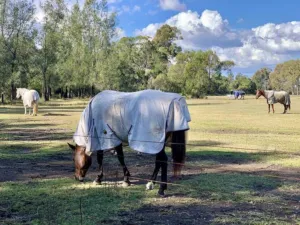
If there is a horse in this
In competition it counts as a medication.
Fed to horses for stiff joints for years, and sold here in feed tubs. AIP found no controlled trial of it for lameness or worn joints in horses — that question is wide open.
The rules are not open. On this year’s international equestrian list the root’s marker is a controlled medication, described as a painkiller: usable in training on veterinary advice, and out of the horse before it competes. The same body warns that supplements can carry banned substances never listed on the label, and a contaminated tub is no defence: the risk sits with the horse’s responsible person. Australian racing is run separately again: its rules name no herb at all, and catch any painkiller or anti-inflammatory outright. The international list of detection times has no entry for the marker, so there is no published figure for how long it takes to clear a horse.
Competing or racing? Log it like a drug, and ask your veterinarian and the stewards for detection advice before entries close. A paddock horse is a different question.
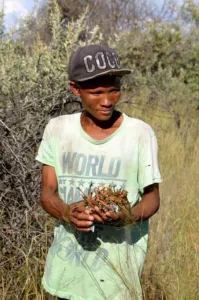
The box, and the hands that dug it
One figure would let you check the box.
Here it is legal and freely sold, permitted in listed medicines — the low-risk shelf with an AUST L number. That number says the ingredients are allowed and the factory meets standards. It does not mean the TGA checked that it works; for these it doesn’t. Turn a box over for the plant named in full, the part used, and the marker per day’s dose. That last is what lets you hold your box against the trials, and the two Australian summaries AIP read did not carry it.
That full name is worth reading, because there are two African species in this trade. The medicine is Harpagophytum procumbens; a close relative, H. zeyheri, is dug and sold right beside it. Europe accepts either as the drug. The Australian permitted-ingredient list names only the first and has no entry for the second. When supplements sold in the United States were DNA-tested, every sample held the relative and most held none of the medicine at all. That is overseas market data, reported second-hand; AIP has seen nothing equivalent for Australia and makes no claim either way about what sits on a shelf here.
Almost all of it is dug by hand on communal land in Namibia, by people for whom the harvest covers a crop failure. San and Khoikhoi people used the bitter tuber long before Europe bought any — a record of what people did, no evidence that it eases pain, and Europe’s regulator does not pretend otherwise. The rules there keep the plant alive: dig after it has seeded, take the side roots, leave the anchor root, fill the hole back in.
You will never meet the person who dug it. Ask a seller which country it came from and whether it was gathered under permit. One who knows will tell you. One who doesn’t has told you something too.
The short version of Dr Thomas Ridley’s evidence review. Every trial and source is there:
- Jesse Kirby — Wrote this edition from his own notes with the evidence review shut: chose the five things a buyer needs, set the running order, wrote every sentence, and rebuilt the red box so the emergency signs come first without dropping one of them
- Zoe Bennett — Wrote the page title, the search line and the labels, pitched at the person already holding a joint-care box or a feed tub, and set how the page will be shared
- Theo Karras — Picked the cover fruit and the five section banners, opened each photograph to check it against what its section says, and wrote the alt text from what is actually in frame
- Leah Bianchi — Built the page: the red safety box, the one-minute card, the pull quote, the five what-this-means cards and the card back to the review, laid out to hold together on a phone
Contributors
- Dr Thomas Ridley — Wrote AIP Literature Review LR-8, the evidence review this page retells
Research authorised by
- Dr Luke Iggulden, Chief Scientific Officer and lead researcher — Commissioned the Explainer series, set its direction and approved it
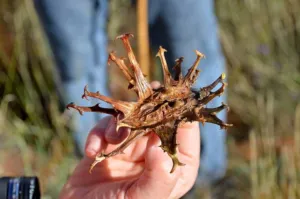
Image credits. Devil’s claw fruit, on the cover and on the safety banner: SAplants, CC BY-SA 4.0. Fruit held in the hand, and the San harvester near Buitepos: Olga Ernst & Hp. Baumeler, CC BY-SA 4.0. Martynia annua in flower, the Australian weed that shares the name: Ajtjohnsingh, CC BY-SA 4.0. Horses grazing at Corinda, Brisbane: Kgbo, CC BY-SA 4.0. All via Wikimedia Commons. No image implies that any person shown is connected with any product or rule discussed on this page.
AIP Explainers are the plain-language editions of the Institute’s technical articles, published beside the original. Everything on this page is carried by the full evidence review, where the trials, the sources and the regulatory records are set out. Australian regulatory material was read on 23/09/2026 and may change; European, Namibian and equestrian material is overseas and does not govern Australian law. Spotted an error? Write to our contact form. We would rather correct a claim than repeat it.
Jesse Kirby
Head of Community Outreach
Australian Institute of Pharmacognosy
Cardwell QLD, Australia
australian-pharmacognosy.org · our contact form