
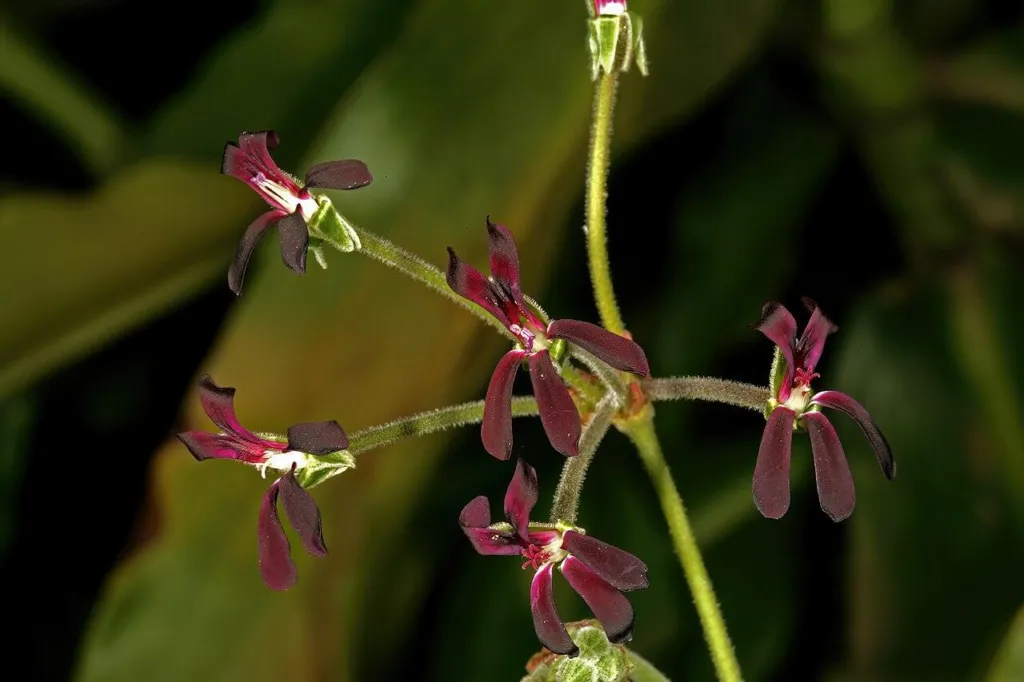
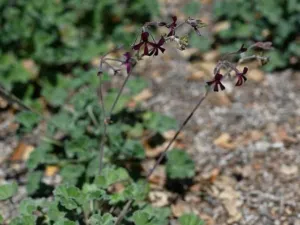
Photo: SAplants · CC BY-SA 4.0 · Wikimedia Commons
In August the chemist’s cough shelf is crowded, and on it sits a small brown bottle of dark liquid that plenty of us buy without asking what is inside. It’s the root of a low, black-flowered geranium dug from the grasslands of South Africa and Lesotho.
The label leaves out a sick man’s voyage, a patent a village took to Munich and beat, and trials that still haven’t settled whether it helps. Here is what they found.
Educational only: not medical, legal or regulatory advice, nor a recommendation to buy, prepare or take any product named. Australian rules as read on 20/09/2026.
Ring 000 straight away for:
- difficult or noisy breathing, or blue or grey lips or face
- someone who can’t speak a full sentence
- a swelling throat or tongue, wheeze or a hoarse voice
- dizziness or collapse
Ring the Poisons Information Centre on 13 11 26 (24 hours, Australia-wide) for a swallowed overdose, a child’s accidental dose, or any poisons question.
These need assessing, and no cough bottle answers them:
- breathlessness, fast or laboured breathing, chest pain or coughing up blood
- a high or lasting fever, drowsiness or confusion
- a cough past three weeks, or with weight loss or drenching night sweats
- a cough in a baby, or in anyone frail, elderly, pregnant, with a weakened immune system, or with asthma, a long-term lung disease or heart failure
- in a young child: a whooping or barking cough, poor feeding, or breathing that sucks in at the ribs or the base of the throat
Already taking it? Stop and get checked if the cough is still there after a week or worsens at any point. Stop straight away and get checked at a rash, hives or swelling, or any sign of liver trouble:
- yellow skin or yellow whites of the eyes
- dark urine or pale stools
- an itch that won’t go, or pain under the right ribs
- nausea, no appetite and heavy tiredness you can’t explain
- A root extract from a black-flowered African geranium. The brand sold here was assessed before sale.
- Trials suggest the liquid eases a bronchitis cough a little sooner, on low-quality evidence. A 2026 independent trial found no clear benefit.
- Nothing shows it kills the infection.
- Still coughing after a week, or worse at any point: stop and get assessed.
- Digging the root kills the plant.
A black flower behind a brown bottle
What is in there, and a pink look-alike.
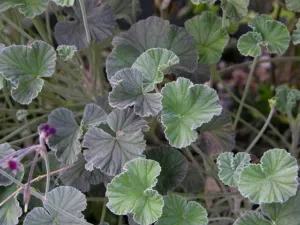
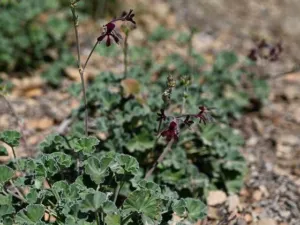
The plant sits flat to the ground, a rosette of soft, heart-shaped leaves grey enough to look silver in the sun, with flowers a maroon so deep they photograph black. The medicine is the swollen root that carries it through grass fires, and taking it kills the plant.
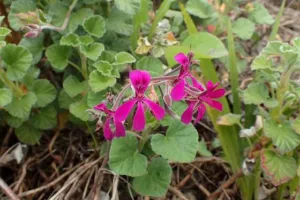
A cousin with pink to magenta flowers and much the same chemistry grows in the same country. Dried and broken up, the two roots look alike, and the European rules for this herb accept either.
Here the brand is Kaloba, liquid or tablet, both AUST R: safety, quality and effect were assessed before sale. Most herbal products are AUST L; the TGA doesn’t check first whether they work. We name it because it’s on the public register; we have no tie to its makers.
Turn the bottle over for AUST R, Pelargonium sidoides named in full, and the word root. Two register entries, a pelargonium syrup and tablets, are export-only and must not be sold here; a name alone won’t identify them. Trust the number on the pack.
A small, shaky yes, then a no
Some help, maybe, on shaky evidence.
Nearly all the research uses one extract, much of it in its maker’s hands. Those trials suggest it shortens and softens the cough of acute bronchitis, a chest infection that in a well adult settles by itself within three weeks. The tablets didn’t do as well. The most careful independent review rated the evidence low quality and suspected unhelpful results had gone unpublished.
In April 2026 an independent Swiss trial set it against ordinary care. It made no clear difference to how long symptoms lasted or to antibiotic use. Patients knew what they were taking, so the question isn’t closed. Still, it is the biggest independent test, and it didn’t repeat the result.
Nothing shows it clears the infection; the trials measured symptoms.
Expect a small effect at most, perhaps none. A website saying it fights infection, boosts immunity or helps with COVID-19 claims more than it’s registered for here.
The cough matters more than the herb
Most of the risk sits with the illness.
Serious chest illnesses can start out looking like a passing cold.
Feeling better in the first week is exactly how a serious chest illness gets missed.
The herb itself mostly brings a mildly upset stomach. Allergic reactions happen, including anaphylaxis, the kind that can kill, and nobody knows how often. Liver injury has been reported and is warned of. When independent experts scored the reported cases one by one, none reached a probable link. German regulators rated three probable and a link at least possible overall, and the warning stands.
Nosebleeds and bleeding gums turn up a little more often on it than on a dummy pill. Its chemicals aren’t shaped like the blood thinner warfarin, and rats on it showed no change in warfarin. Nobody has tested the pair in people, and people who bleed easily were kept out of the trials.
European rules advise against it under age three, allow only the liquid under six, and advise against it in pregnancy and breastfeeding, as safety there hasn’t been shown. The Australian liquid’s cap isn’t child-resistant, and nobody knows what a big swallowed dose does. Liquids can contain alcohol; check the label.
Keep the bottle up high. Had an allergic reaction to it before? Don’t take it again. First, consult a degree-qualified herbalist with competencies and adequate training in pharmacognosy, above all if you take a blood thinner, bleed easily, have surgery coming, have had liver trouble or take medicines that are hard on the liver, or are pregnant, breastfeeding or buying for a small child.

A sick man’s cure, and a village in Munich
Southern Africa knew it long before Europe did.
Southern Africans boiled these roots for coughs and chest complaints, tuberculosis among them, which shows use and not cure. In 1897 Charles Henry Stevens, a British mechanic with tuberculosis, sailed to South Africa for the dry air. A local healer gave him a boiled root. Believing himself cured, he went home and sold it as “Stevens’ Consumption Cure”, never saying what the plant was. Munich researchers identified it only in 1977.
A German maker’s European patent on the extract was opposed by three extract companies and by a community near Alice in the Eastern Cape, with the African Centre for Biosafety, who said such patents took southern African knowledge and gave too little back. The patent fell in 2010 on ordinary patent law, leaving unsettled what is owed to the people who knew the plant first.
The community won the case and did not win the argument.
Ask whoever sells it whether the root was farmed or dug wild, and if wild, under whose permit and what goes back. The glycerol in a bottle of Kaloba is on the public record. The people whose knowledge is in it aren’t on there at all.
This page is the short version of AIP Monograph No. 4 by Dr Thomas Ridley:
- Jesse Kirby — wrote the words, retelling the monograph as the questions a buyer at the cough shelf would ask, from what is in the bottle to where the root was dug
- Zoe Bennett — set the title and the search description around the brown bottle on the cough shelf, sized for how the page shows in search results
- Theo Karras — picked the dark-flowered cover, the silver-leaf and stony-ground banners, the pink-flowered cousin for the look-alike figure, and the Tyhume valley near Alice for the story
- Leah Bianchi — built the page: the red box with the warning signs set as short lists, the one-minute card, the pull quotes and the what-this-means cards, and checked it on a phone
Contributors
- Dr Thomas Ridley — wrote AIP Monograph No. 4, the article this page retells
Direction and oversight
- Dr Luke Iggulden — Commissioned the Explainer series, sets its direction and approves each page before it is published
Image credits. Cover: Pelargonium sidoides in flower, SAplants, CC BY-SA 4.0. Leaves: Derek Ramsey (Ram-Man), Chanticleer Garden, CC BY-SA 3.0. Pelargonium reniforme and the P. sidoides flower banners (kz02, kz03): Krzysztof Ziarnek, Kenraiz, CC BY-SA 4.0. Tyhume valley, Eastern Cape: Lysippos, CC BY-SA 3.0. All via Wikimedia Commons, resized for the web by AIP with no other changes.
AIP Explainers are the plain-language editions of the Institute’s technical articles, published alongside the original. Everything here is carried by the full article, where the references, the evidence and the regulatory sources are set out. The legal content is the Institute’s published reading, not advice; regulatory information was read on 20/09/2026 and may change. European rules are quoted as overseas material and do not govern Australian supply. Found an error? Write to our contact form. We would rather correct a claim than repeat it.
Jesse Kirby
Head of Community Outreach
Australian Institute of Pharmacognosy
Cardwell QLD, Australia
australian-pharmacognosy.org · our contact form