

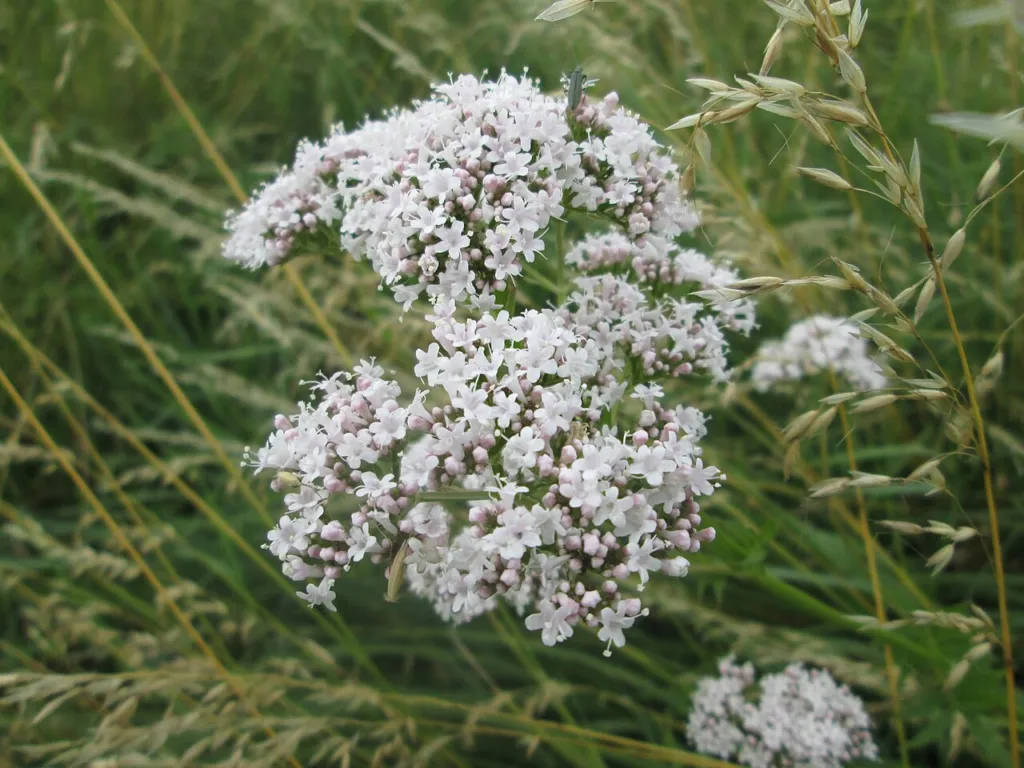
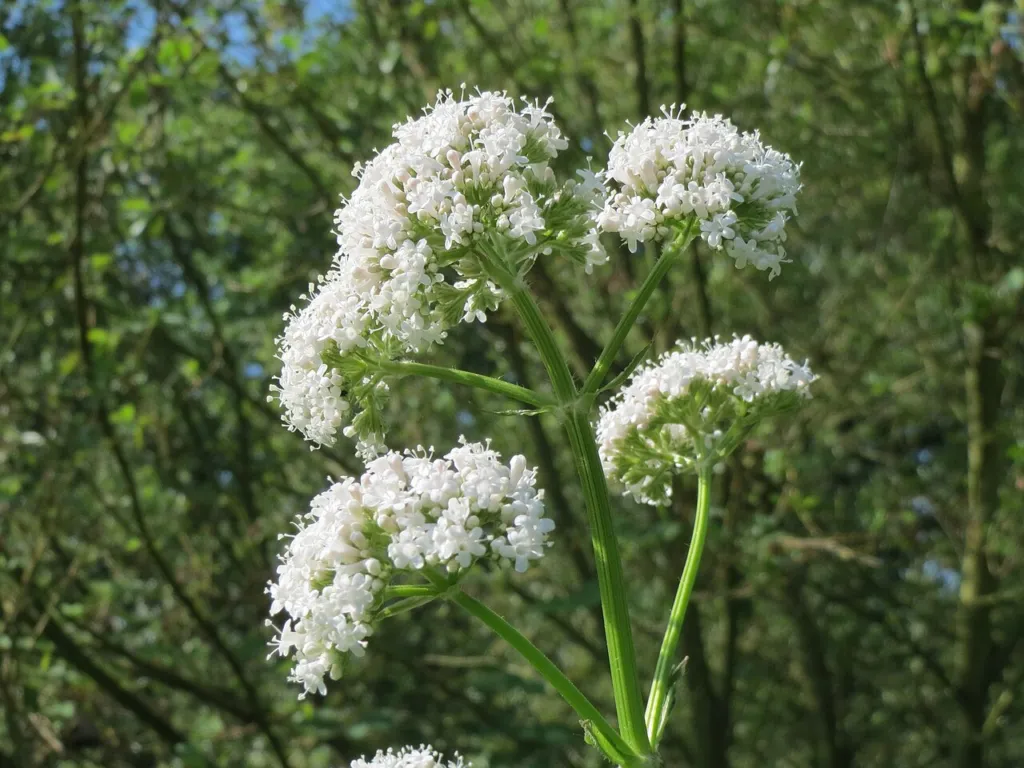
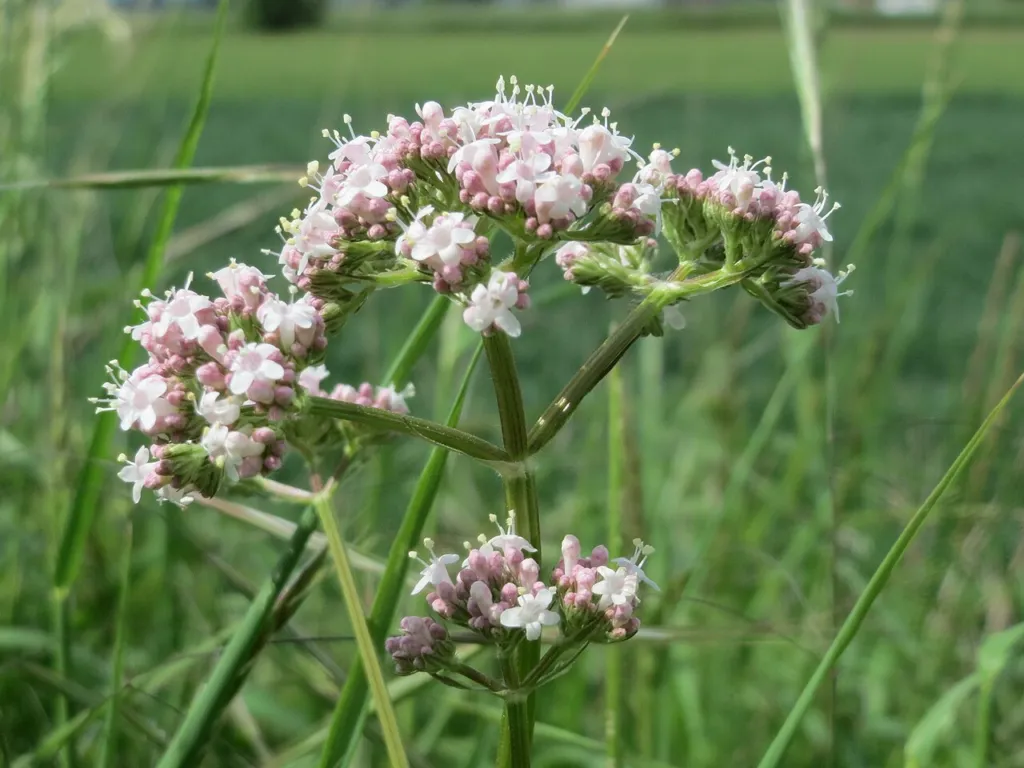
Cover: valerian in flower in the Hockenheimer Rheinbogen reserve, Baden-Württemberg, Germany. Photo: AnRo0002 · CC0 · Wikimedia Commons
Valerian root that has been dried badly, or kept too long, gives off a sharp smell of old cheese and damp socks, and European households put up with it for something like a thousand years because they believed the root helped them sleep. Traditional Today it sits on Australian pharmacy and supermarket shelves as a listed medicine, and every oral product listed since 01/03/2023 has had to say, in so many words, that in rare cases valerian may harm the liver. Confirmed
This review reads that shelf slowly. It describes the plant and the root, keeps the long European tradition apart from the trial record, and explains why two valerian products can be chemically quite different. It then goes through the human sleep and anxiety trials, how big they were and what they did and did not show, and puts the TGA liver warning in proportion: what the Australian reports contained, how often another ingredient was the likelier cause, and why the regulator acted anyway. It is Literature Review and Critical Analysis AIP-LR-VALOFF from the Australian Institute of Pharmacognosy, written for shoppers, students and practitioners who want the evidence laid out with its grades showing.
This article is educational and is not medical advice. Nothing in it is a recommendation to start, stop or change any medicine, and it gives no individual dosing.
Drowsiness. Valerian is sold to help sleep, so expect it to add to the effect of alcohol, sleeping tablets, benzodiazepines, opioids, sedating antihistamines and other sedative herbs. The EMA monograph advises that it may impair driving and the use of machines. (EMA/HMPC monograph, 2016; ref. 3) Mechanism
Pregnancy, breastfeeding and children. Safety has not been established, and the EMA does not recommend use in pregnancy, while breastfeeding, or in children under 12. (EMA/HMPC monograph, 2016; ref. 3) Confirmed
Before surgery. Tell the surgical and anaesthetic team about any valerian, especially long-term nightly use; a case of withdrawal-like illness after abrupt stopping around surgery is on record. See §9.
Before taking any botanical medicine, consult a degree-qualified herbalist with competencies and adequate training in pharmacognosy. If someone is unwell after taking valerian, call Triple Zero (000) in an emergency, or the Poisons Information Centre on 13 11 26 (24 hours, Australia-wide).
| The plant | Valeriana officinalis L., common valerian (Caprifoliaceae, formerly Valerianaceae). A tall perennial of damp European meadows and woodland edges. Confirmed §1 |
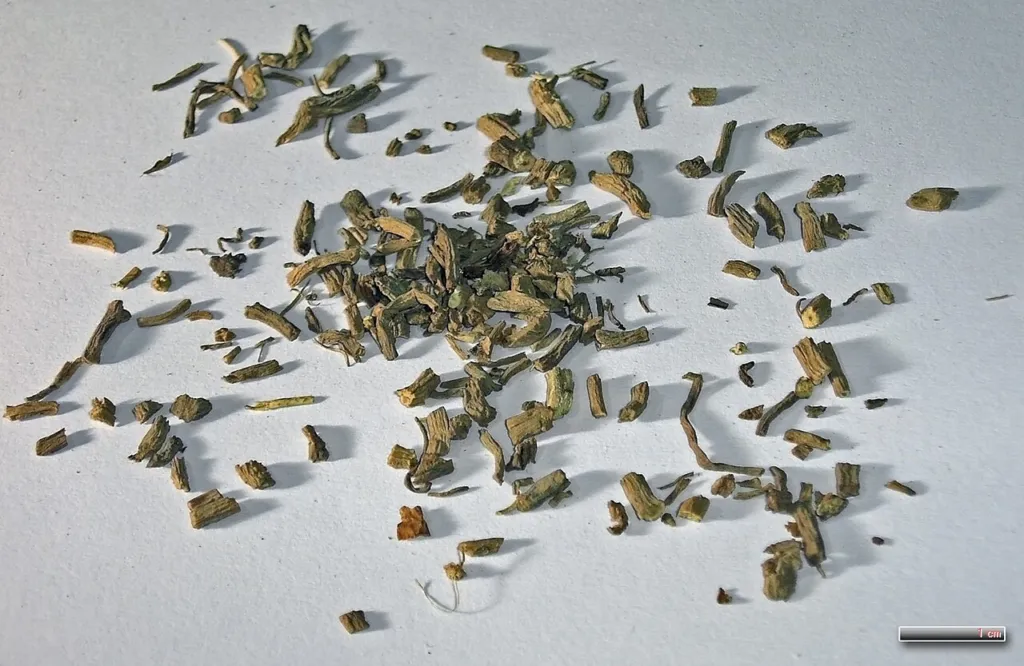
| Part used | The dried underground parts: rhizome, roots and stolons. Confirmed §2 |
| Traditional role | Used in Europe as a calming and sleep-promoting herb from at least the medieval period, with earlier Greek and Roman references to phu. Traditional §4 |
| Chemistry | Valerenic acid and its derivatives, the unstable valepotriates and their breakdown products, and a variable volatile oil. Which of them reach a product depends on the solvent. Confirmed §5 |
| Main pharmacology | Valerenic acid acts on GABAA receptors that contain β2 or β3 subunits, shown in cell and animal studies. Mechanism §6 |
| Sleep evidence | Dozens of small, mixed trials. Pooled analyses lean towards a modest improvement in self-rated sleep quality; objective sleep measures mostly show no difference from placebo. Evidence suggests §7 |
| Anxiety evidence | Small trials with inconsistent results and strong signs of publication bias. Evidence suggests §8 |
| Liver | Rare, unpredictable liver injury has been reported. Sixteen Australian reports reached the TGA between 1983 and 2021, and in three of them valerian was the only active ingredient. Confirmed §9 |
| Interactions | Additive drowsiness with alcohol and sedative medicines is the plausible concern; the limited human enzyme studies found little effect on drug metabolism. Mechanism §9 |
| Australian status | A permitted ingredient in AUST L listed medicines; not in the Poisons Standard. Oral products carry a mandatory liver warning. Confirmed §10 |
- Confirmed established in humans by trial, or an unambiguous analytical, chemical or documentary fact (a regulator’s published decision counts here).
- Evidence suggests real published data that is small, preclinical, observational, inconsistent or not yet replicated.
- Mechanism a plausible mechanism or pharmacological inference, which is a different thing from an observed outcome.
- Traditional historical or traditional use. Evidence of practice, not of efficacy.
- Attested a textual or documentary fact attested in a named edition or record.
Every PubMed ID links to its PubMed record and was checked against PubMed in October 2026; every compound was checked against PubChem and is linked by its CID. We cite only papers we have read in full. Several relevant papers could not yet be obtained in full text; they are listed at the end of the references and nothing in the article rests on them.
The human trials are numerous, small and mixed. Pooling them gives a modest signal for people’s own rating of their sleep, with clear signs that small negative studies went unpublished. Trials that measured sleep objectively, in a sleep laboratory or with wrist sensors, mostly found no difference from placebo. A large internet trial in Norway found a small benefit on secondary questions and none on its main outcome. The fairest summary is that valerian may help some people feel they slept better, and that the size of that help is uncertain. Evidence suggests
The liver warning rests on rare, unpredictable cases. The TGA had 16 Australian reports between 1983 and 2021; in ten, the product also contained an ingredient already known to injure the liver, and in three valerian was the only active ingredient. No pattern by dose or duration was found. The regulator judged the risk very rare but serious enough to name on the label, so that people who do react stop early. Confirmed
In Australia valerian is a permitted ingredient in AUST L listed medicines, which the TGA does not assess individually before they reach the shelf. It is not a scheduled poison. The warning is there to help people notice early liver symptoms, and it carries no finding that valerian is generally harmful. Confirmed
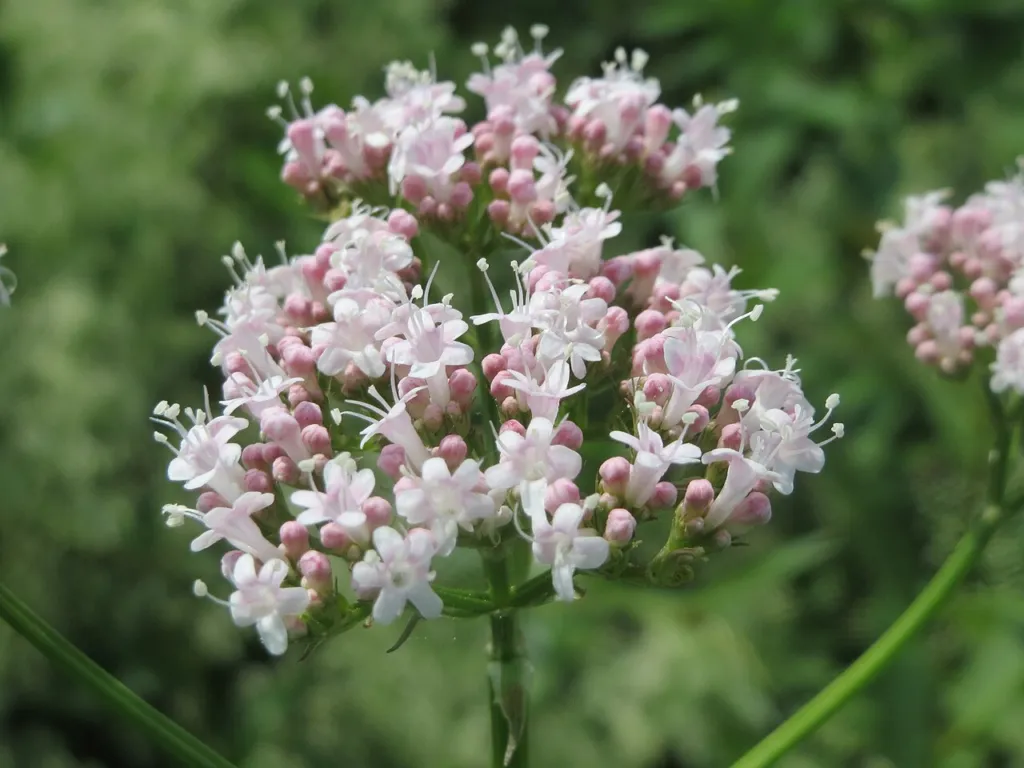 Chapter 1Names, identity and taxonomy
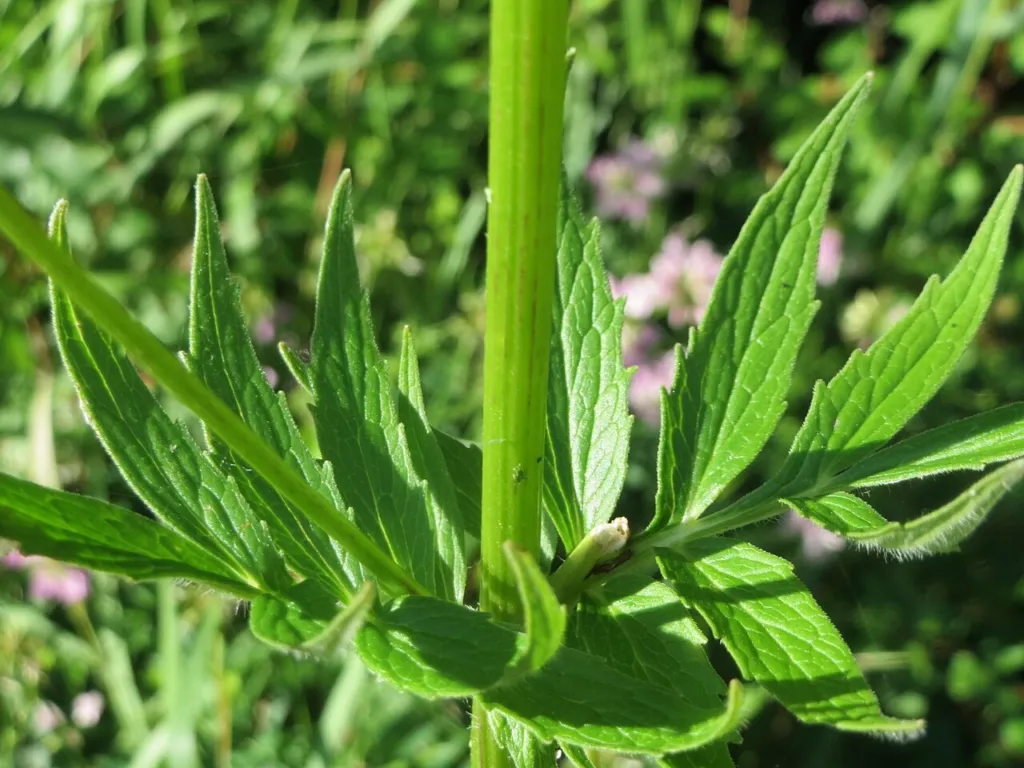 Chapter 2The plant and the root: botanical description
 Chapter 3Where valerian grows, and its status in Australia
 Chapter 4Traditional and historical use in Europe
 Chapter 5Phytochemistry: valerenic acids, valepotriates and the volatile oil
 Chapter 6Pharmacology: what the laboratory work shows
 Chapter 7Clinical evidence for sleep
 Chapter 8Clinical evidence for anxiety and other uses
 Chapter 9Safety and interactions
 Chapter 10In Australia: AUST L listing and the label warning
 Chapter 11Quality, adulteration and why extracts differ
 Chapter 12Discussion: conclusions, hypotheses and research still required
Also: About AIP · References · Image credits
Chapter 1Names, identity and taxonomy
The species was named by Linnaeus, and the name has been stable since: Valeriana officinalis L. The epithet officinalis marks it as a plant of the apothecary’s shop, and the root is the drug, called Valerianae radix in European pharmacopoeial usage. (EMA/HMPC monograph, 2016; ref. 3) Attested
Older books put valerian in its own family, Valerianaceae, and the American Herbal Pharmacopoeia monograph of 1999 still does. (American Herbal Pharmacopoeia, 1999; ref. 4) Current classifications fold that family into the honeysuckle family, Caprifoliaceae, as the subfamily Valerianoideae, and that is the placement used here. Both names refer to the same plant, so a reader who meets “Valerianaceae” in an older paper is reading the older classification. Confirmed
Valerian is a variable species. The AHP records diploid, tetraploid and octoploid populations and three subspecies (officinalis, collina and sambucifolia), all of which, along with the closely related V. repens, have been accepted as source material for medicine in Europe. (American Herbal Pharmacopoeia, 1999; ref. 4) Confirmed That variability matters later: a “valerian” product may come from more than one chemical race of the same species.
| Field | Detail |
|---|---|
| Accepted name | Valeriana officinalis L., treated in the broad sense (s.l.) by the AHP. Confirmed |
| Family | Caprifoliaceae, subfamily Valerianoideae; formerly Valerianaceae. |
| English names | Valerian, common valerian; older names include all-heal and garden heliotrope. The medieval Salernitan vocabulary Alphita treats valeriana, amantilla and fu as the same drug. (American Herbal Pharmacopoeia, 1999; ref. 4) Attested |
| European names | Baldrian (German), valériane (French), valeriana (Italian), valeriaan (Dutch), as listed in the EMA monograph. (EMA/HMPC monograph, 2016; ref. 3) Attested |
| Drug | Valerianae radix: the dried underground parts. The AHP defines valerian as the fragments or whole fresh or dried rhizomes, roots and stolons, with at least 0.5% volatile oil in whole material. (American Herbal Pharmacopoeia, 1999; ref. 4) Confirmed |
| Easily confused | Red valerian, Centranthus ruber (now also listed as Valeriana rubra in the Australian Plant Name Index), a garden plant and weed with no standing as the medicinal drug (APNI, Valeriana rubra; ref. 5); Indian valerian (V. jatamansi, syn. V. wallichii) and Mexican valerian (V. edulis), which are chemically different (see §5). |
Chapter 2The plant and the root: botanical description
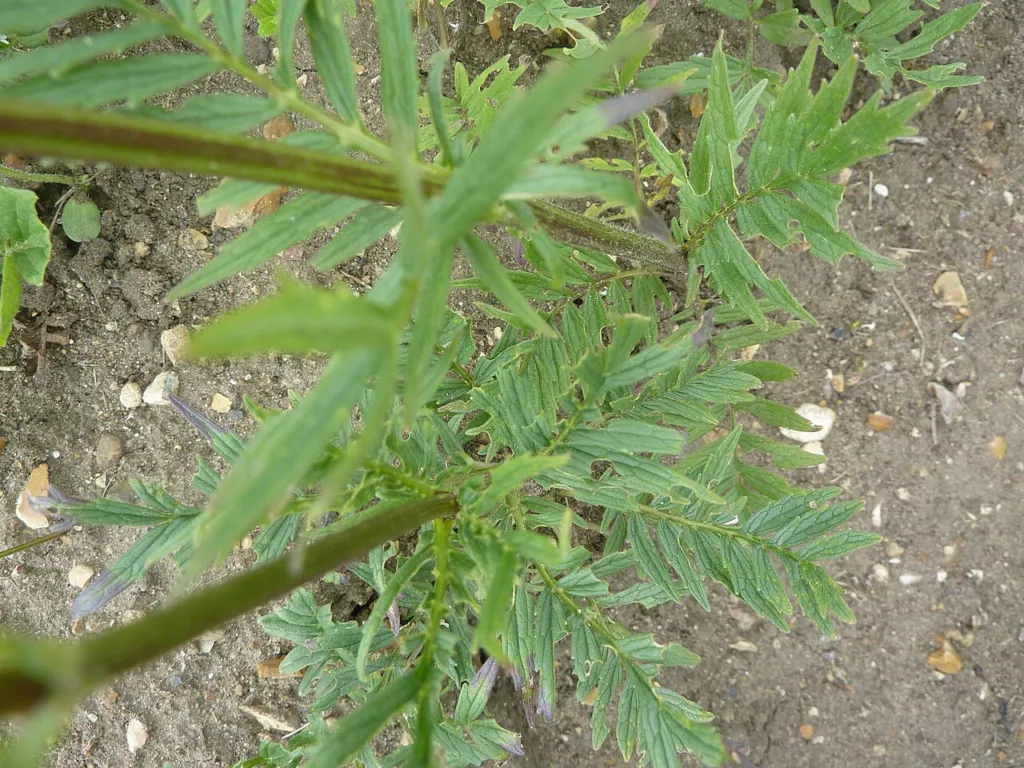
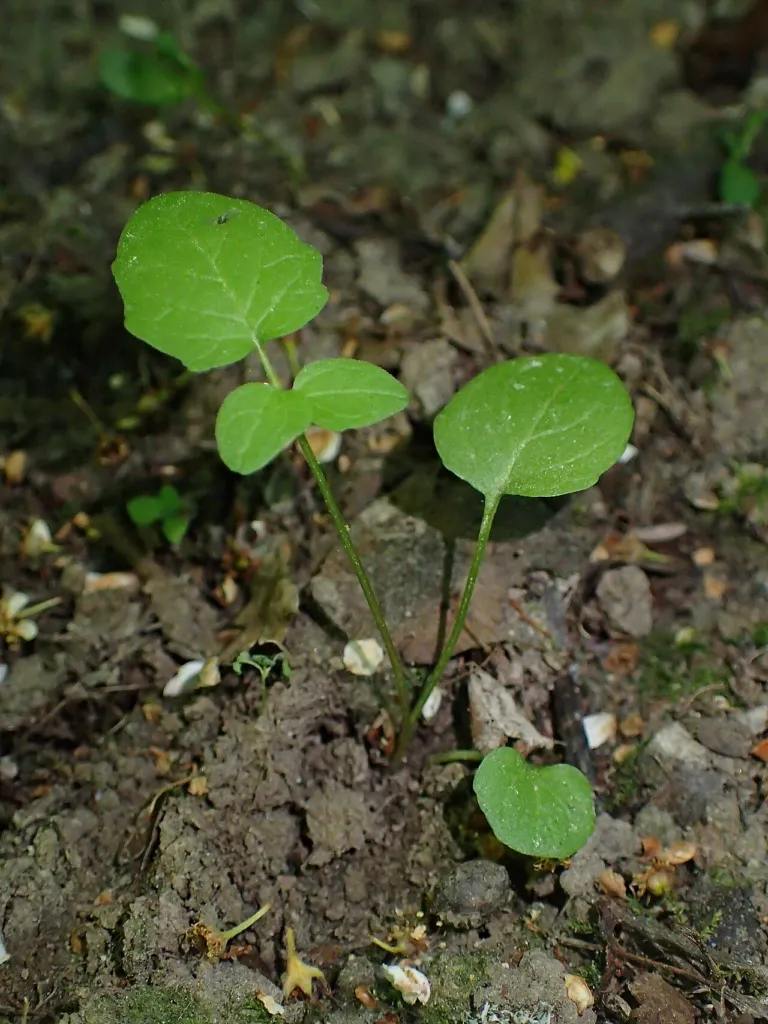
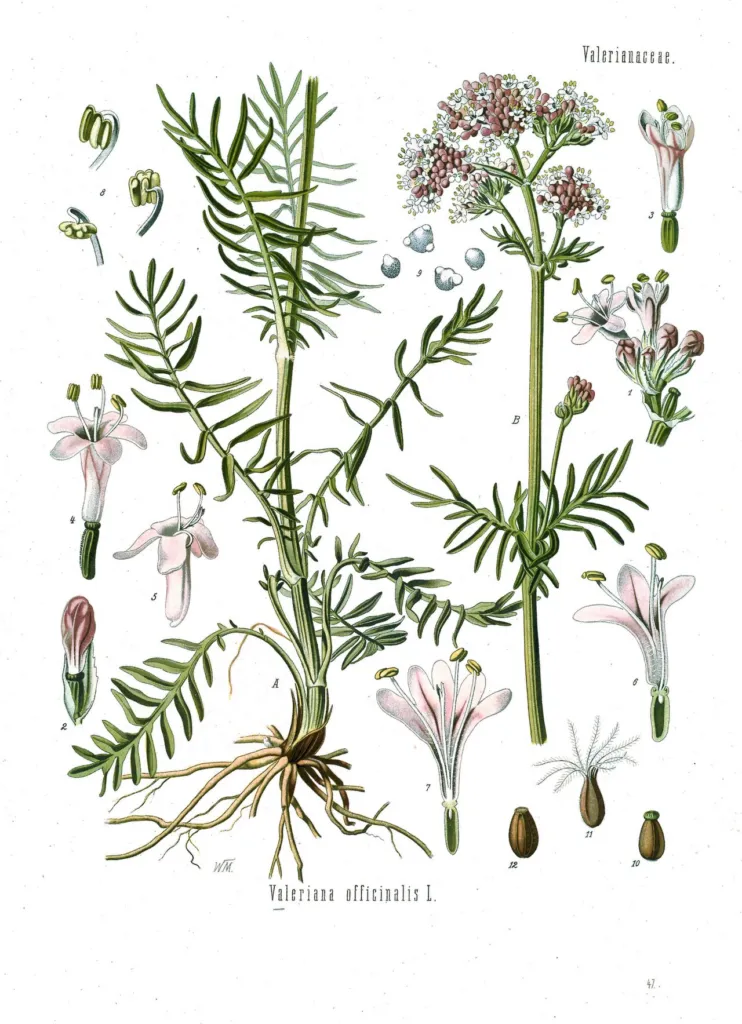
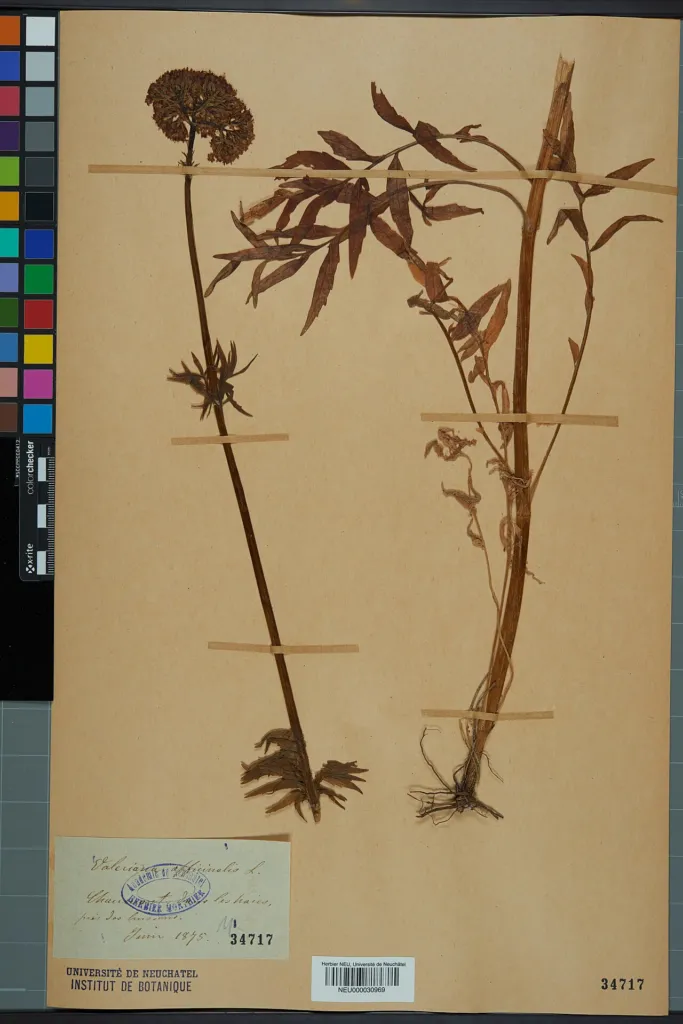
Valerian is a herbaceous perennial that grows from a short, upright rhizome. In its first year it makes a rosette of leaves; in later years it sends up a single hollow, grooved stem that can reach about a metre and a half. The leaves are opposite and pinnately divided into 11 to 21 lance-shaped leaflets, the lower ones on stalks and the upper ones almost clasping the stem. (American Herbal Pharmacopoeia, 1999; ref. 4) Confirmed
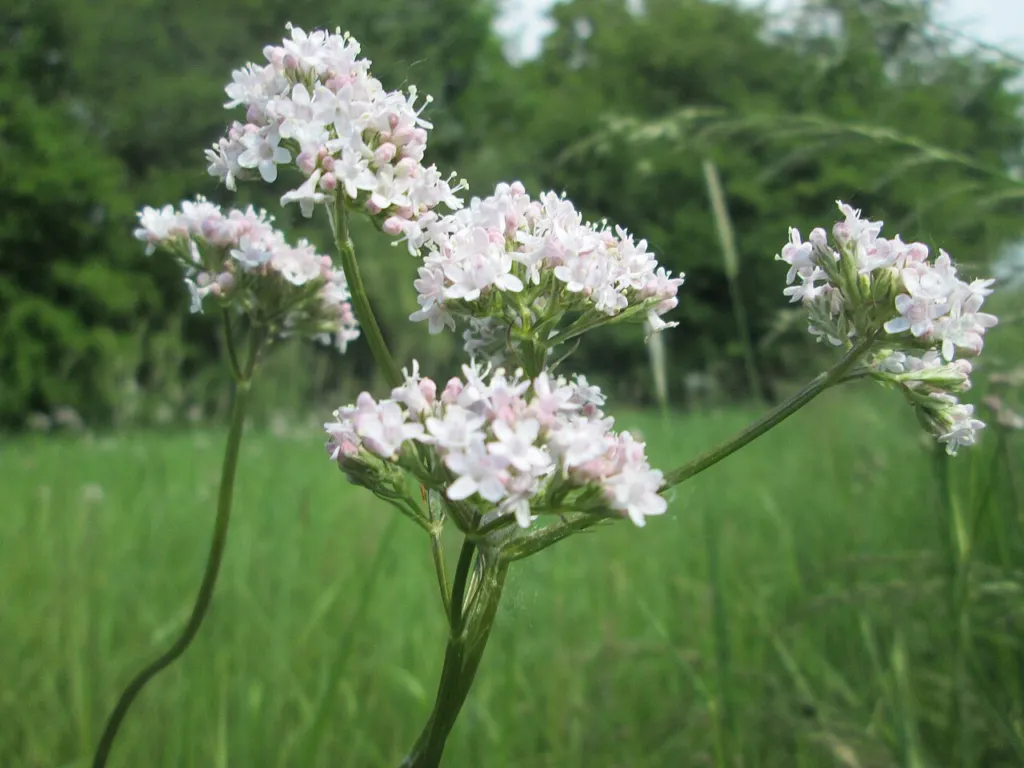
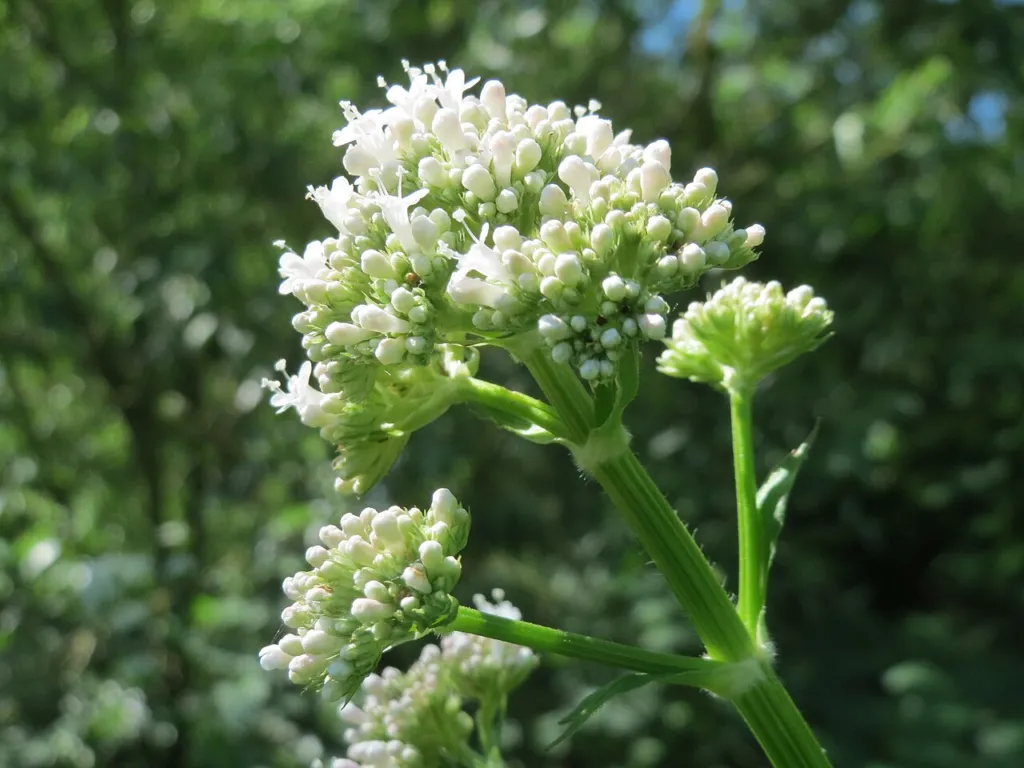
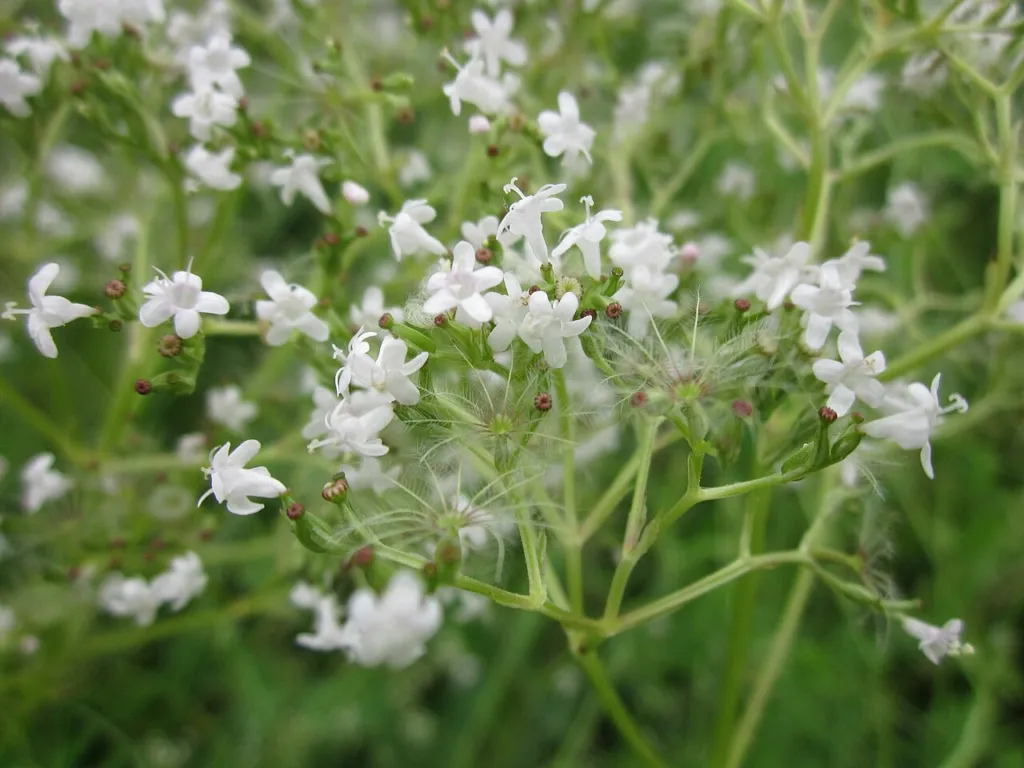
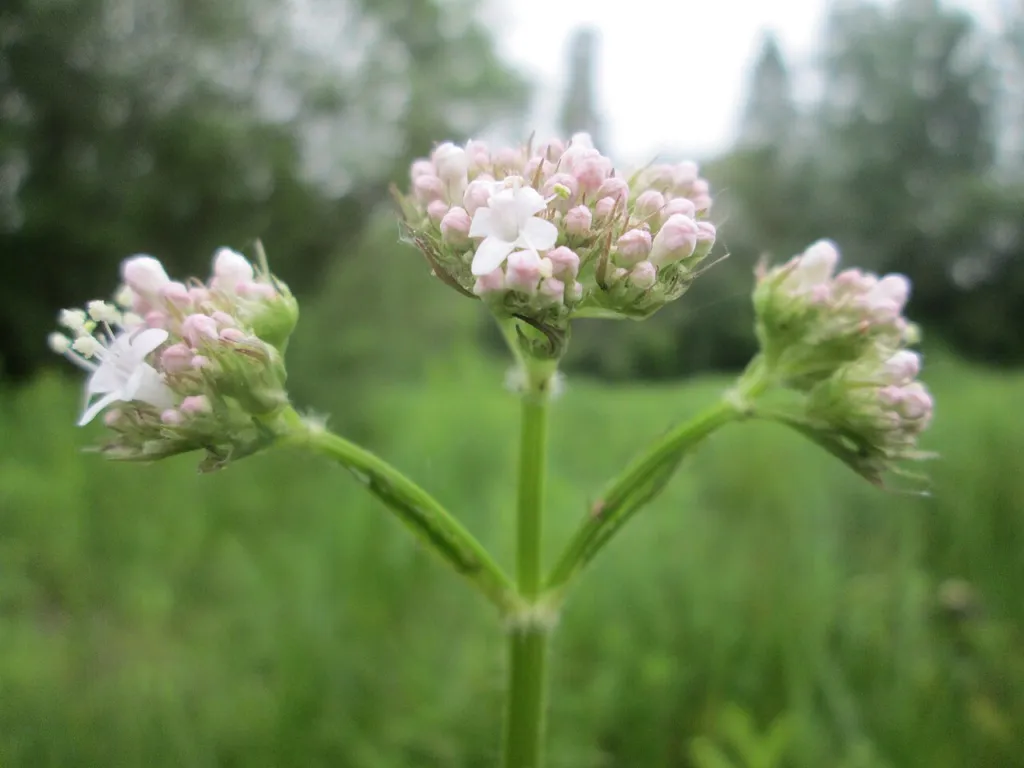
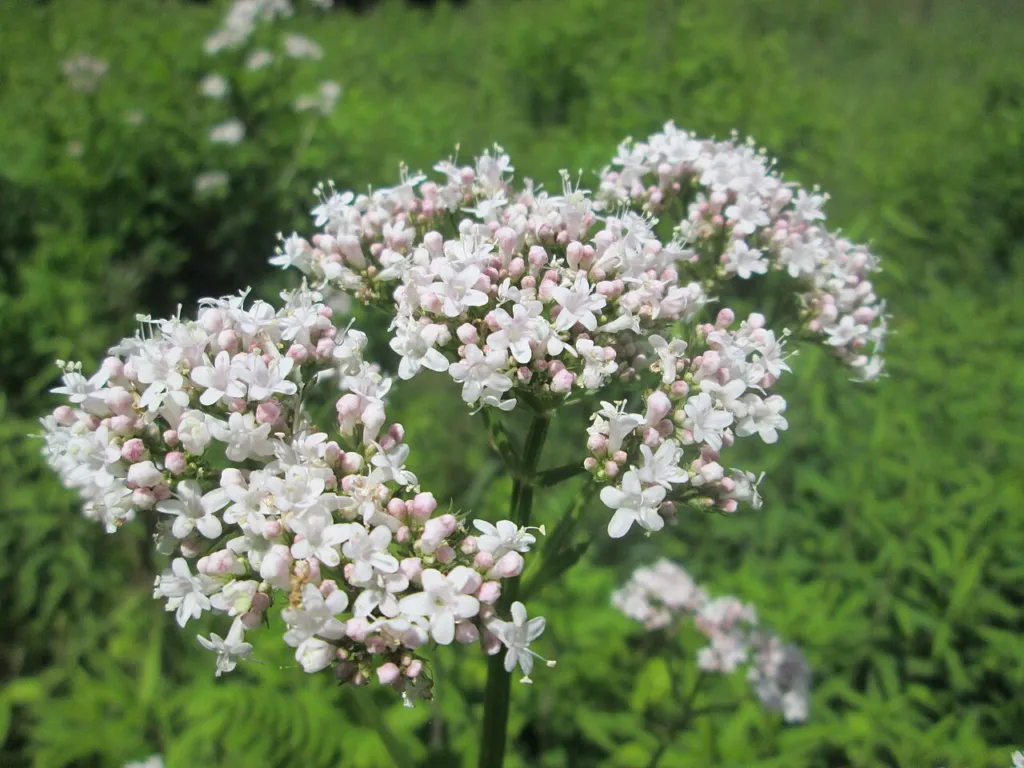
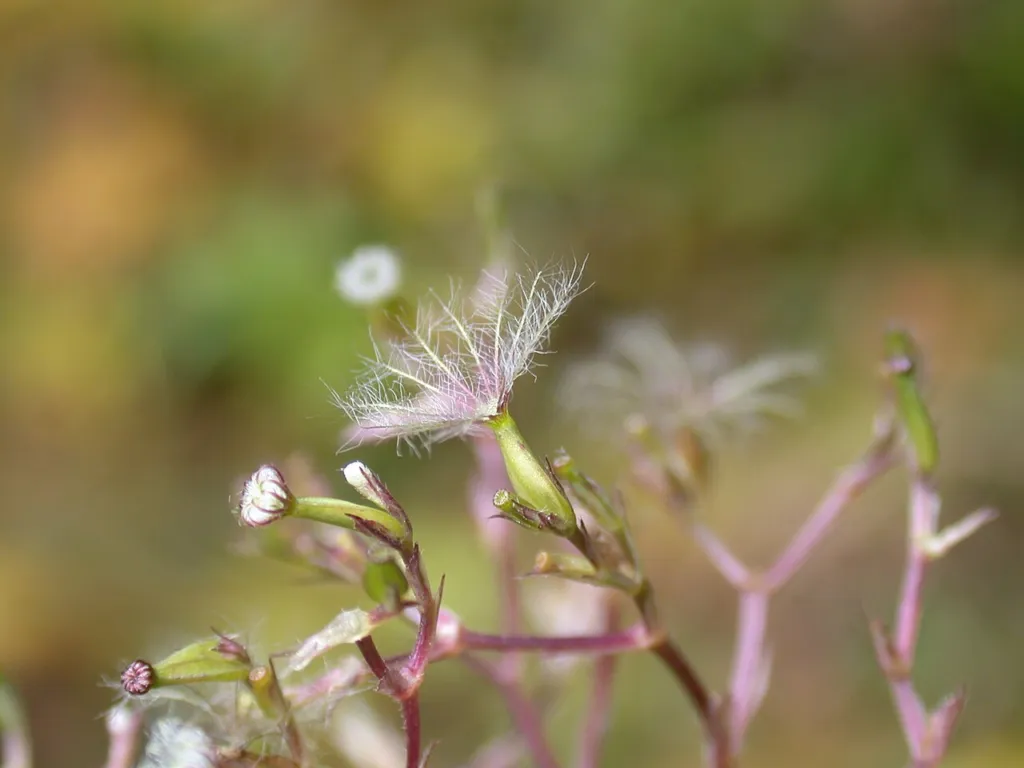
In early summer the stem ends in a branched, rounded head of many small funnel-shaped flowers, white to pale pink and strongly scented. Each flower has three stamens and an inferior ovary with only one fertile chamber. After flowering the calyx unrolls into a feathery pappus, and the small single-seeded fruit drifts on the wind like a miniature dandelion clock. (American Herbal Pharmacopoeia, 1999; ref. 4) Confirmed
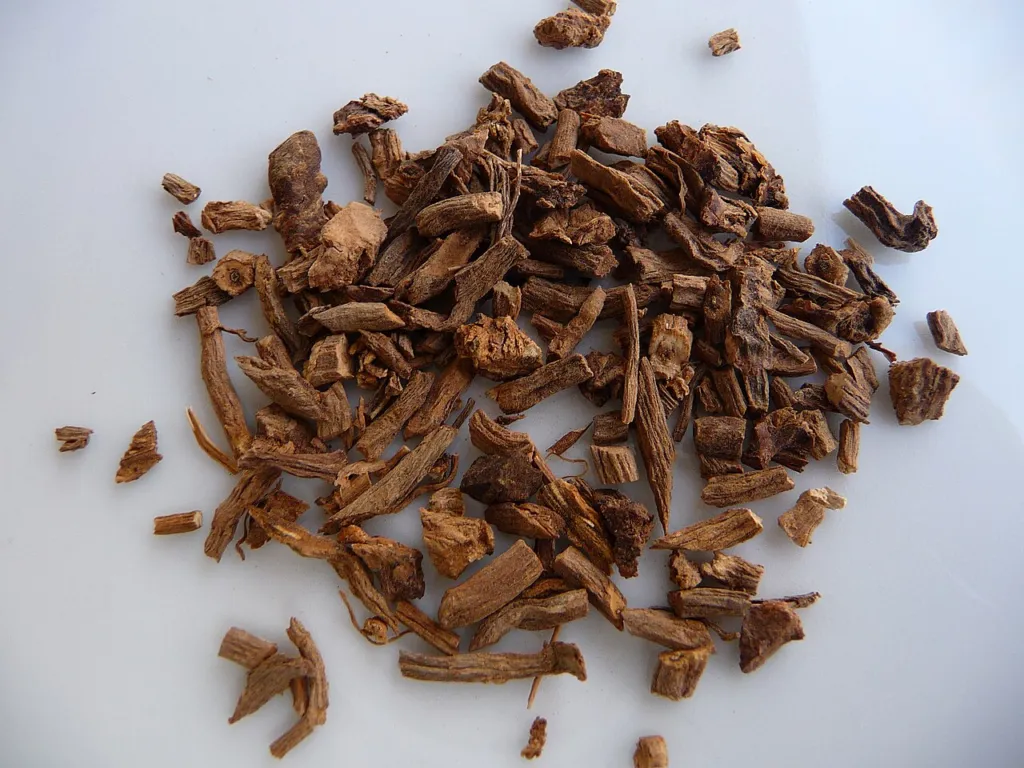
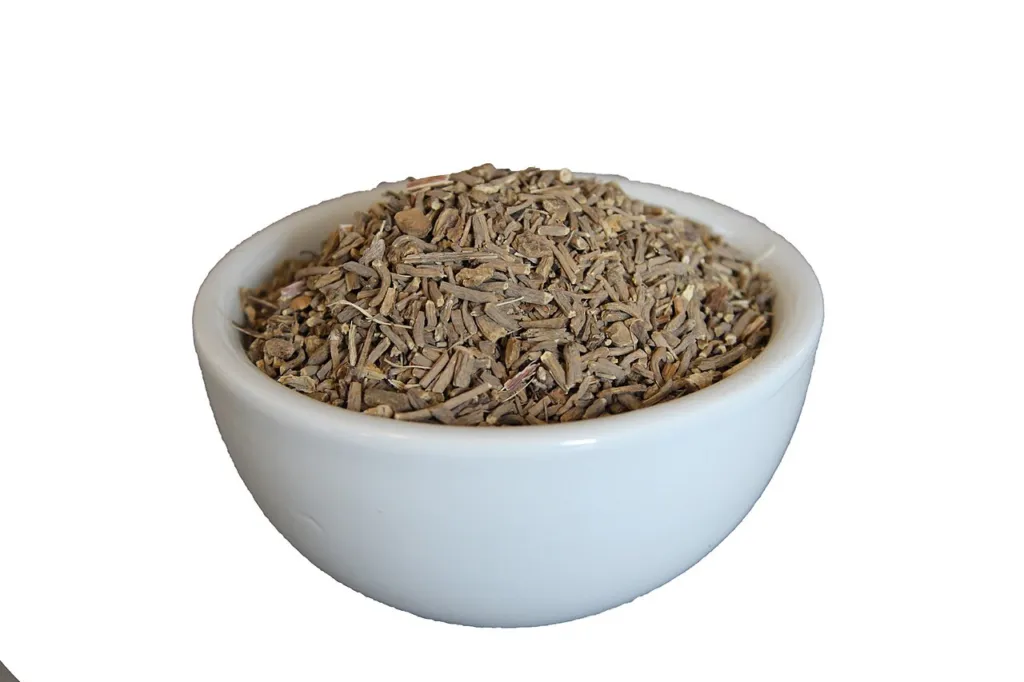
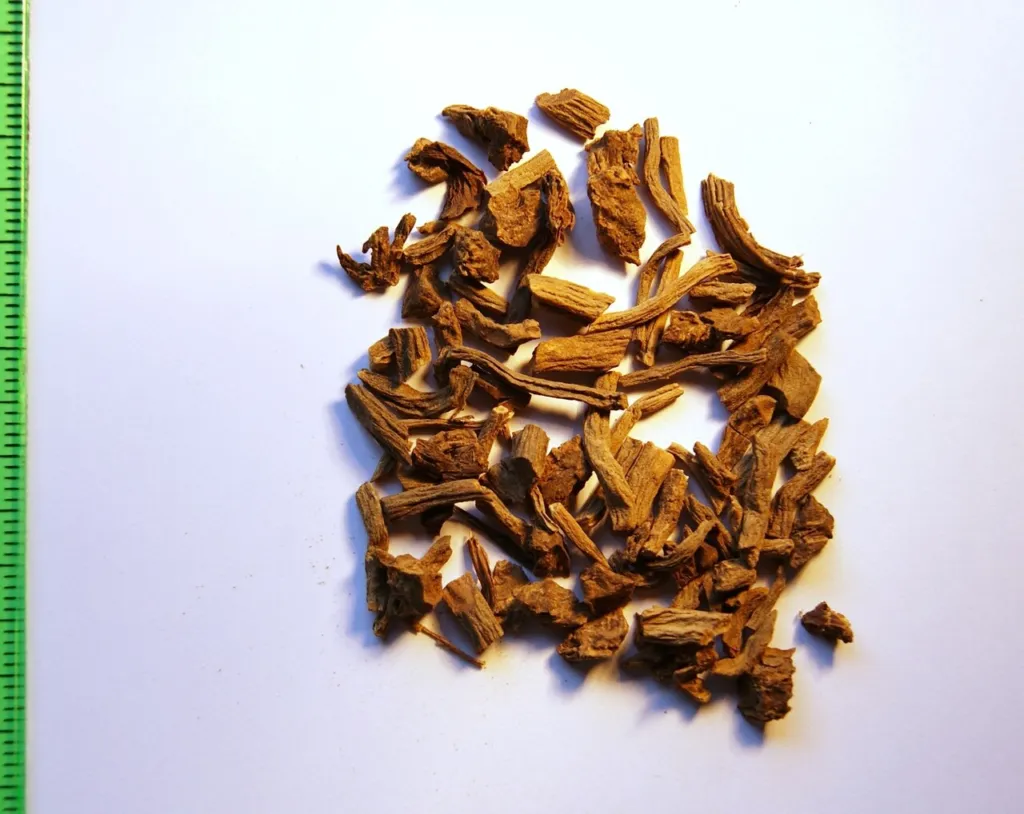
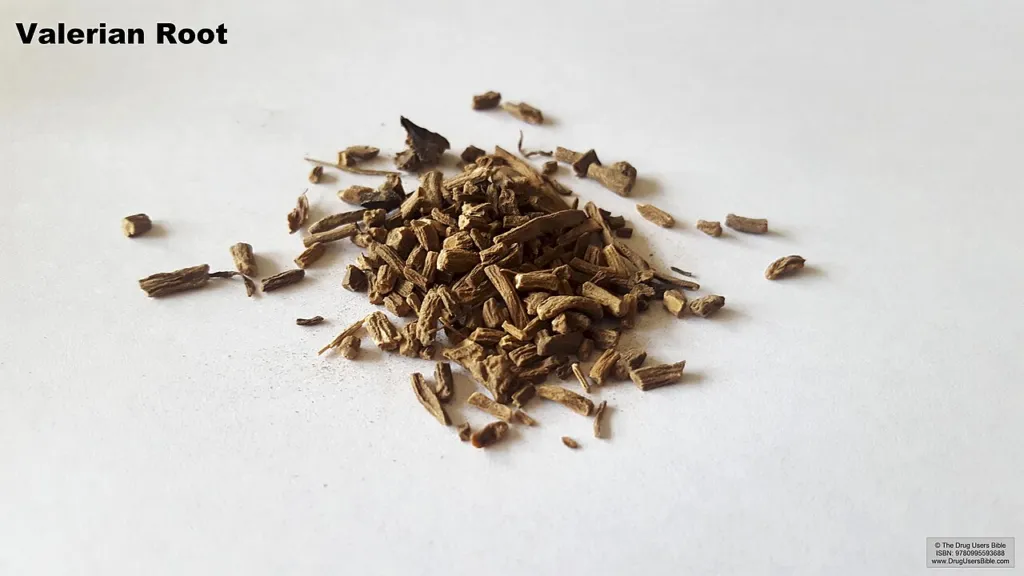
The drug comes from underground. The dried rhizome is up to about 5 cm long and 3 cm across, yellow-brown to dark brown, and ringed with stem and leaf scars. Around it sit many brittle rootlets, roughly 1 to 3 mm thick and up to 10 cm long, which hold most of the volatile oil, and pale stolons with prominent nodes. (American Herbal Pharmacopoeia, 1999; ref. 4) Confirmed
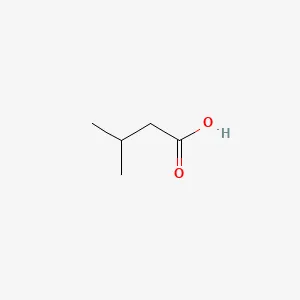
The smell surprises people. Properly dried valerian has only a faint aroma. The strong, sour smell that most of us associate with the herb develops as the root ages or when it is dried badly, because enzymes split the valepotriate esters and release isovaleric acid. (American Herbal Pharmacopoeia, 1999; ref. 4) Confirmed A jar that smells powerfully of valerian is telling you something about its age and handling.
Chapter 3Where valerian grows, and its status in Australia
Valerian grows wild through most of Europe, becoming rare in the south, in damp or dry meadows, scrub and open woodland. It is cultivated, and it has naturalised in North America. (American Herbal Pharmacopoeia, 1999; ref. 4) Confirmed Commercial supply comes mainly from cultivation; the AHP lists Britain, Belgium, eastern Europe, France and Germany among the growing countries, and notes that harvest time, soil and altitude all change the oil content of the root. (American Herbal Pharmacopoeia, 1999; ref. 4) Confirmed
Australia is a different story. When we searched the Atlas of Living Australia in October 2026, it held no occurrence records under the name Valeriana officinalis, and the name did not appear among the Valeriana entries in the national species index. (Atlas of Living Australia; ref. 6) Confirmed The plant is known here in cultivation: the Royal Botanic Gardens Victoria lists a verified accession growing in the herb bed at Melbourne Gardens, planted in December 1999. (RBG Victoria living collection; ref. 7) Confirmed We found nothing in either source to suggest it has escaped to grow wild in any state. Absence from the Atlas means absence from the record; it does not prove that no garden escape exists anywhere. Evidence suggests
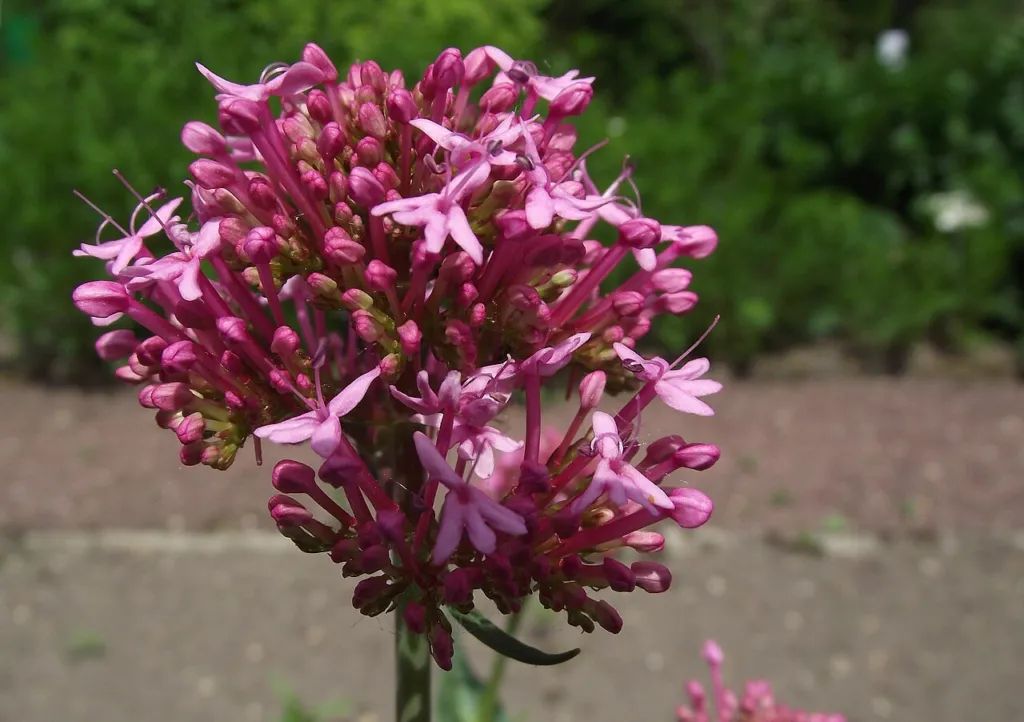
The valerian that Australians do see growing wild is usually a different plant. Red valerian, Centranthus ruber, has bright crimson to pink flowers and grows on old walls, roadsides and coastal cliffs. The Atlas held about 1,100 records of it, nearly all Australian and mostly from South Australia, Victoria, Tasmania, the ACT and New South Wales. (Atlas of Living Australia; ref. 6) Confirmed The Australian Plant Name Index now also carries it as Valeriana rubra. (APNI, Valeriana rubra; ref. 5) It belongs to the same subfamily. Its roots are not the drug that goes into a valerian tablet.
Valerian is a cool-climate plant. Growers in the wet tropics around Cardwell would be working against it; the Institute has not grown it and has no local field observations to report.
Chapter 4Traditional and historical use in Europe
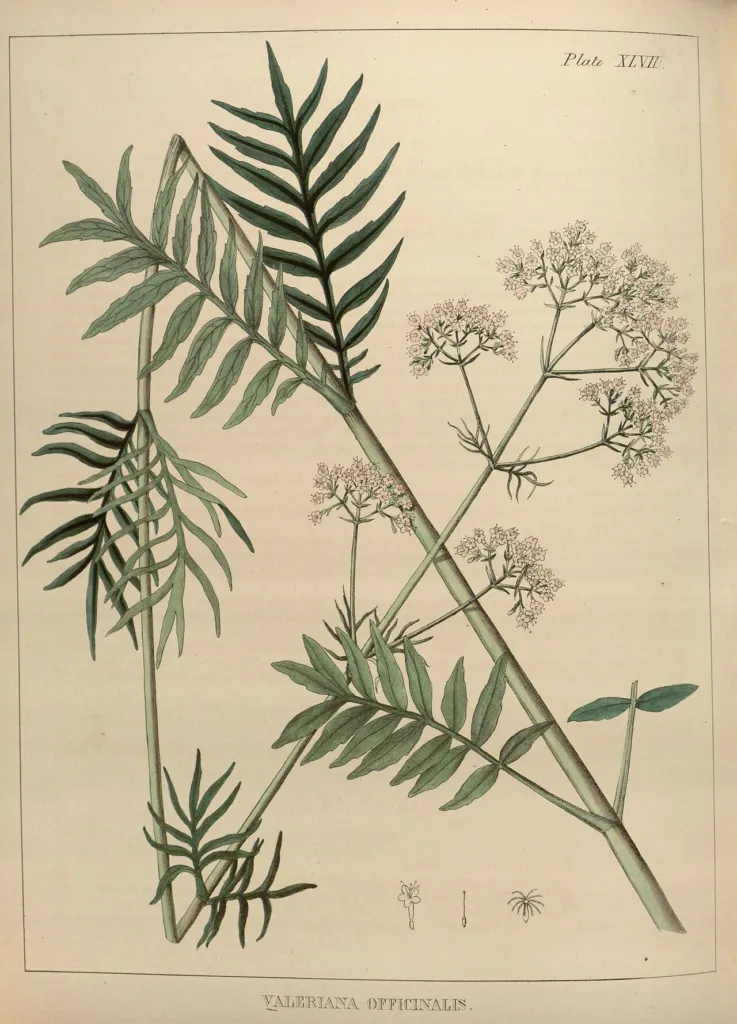
The written record is long and patchy. The AHP summarises it this way: Dioscorides, in the first century, described several kinds of valerian under the name phu, and Galen in the second century is reported to have written of its sedative effect. The word “valerian” appears around the ninth and tenth centuries, and by the eleventh century the root was an entry in domestic books of home remedies. (American Herbal Pharmacopoeia, 1999; ref. 4) Attested These are reports at second hand, through the AHP’s own sources; we have not checked them against critical editions of the Greek texts, and the identity of ancient phu with our species is uncertain. Attested
Its use against nervous complaints grew in the sixteenth and seventeenth centuries. The AHP recounts that Fabius Columna described treating his own epilepsy with valerian in the late 1500s, and later relapsed, and that further case reports followed. (American Herbal Pharmacopoeia, 1999; ref. 4) Traditional By the eighteenth and nineteenth centuries valerian was a standard European and American remedy for “hysteria”, nervous irritability, restlessness and sleeplessness. The Eclectic physicians in the United States used it widely, and it was listed in the British Pharmacopoeia of 1867 and in the United States Pharmacopeia from 1820 to 1936. (American Herbal Pharmacopoeia, 1999; ref. 4) Attested
The tradition was never uniform. The same AHP history notes that older European writers credited valerian with antispasmodic, worm-expelling, diuretic, sweating and menstruation-promoting actions, and that some physicians, William Woodville in 1810 among them, doubted it did as much as its admirers claimed. (American Herbal Pharmacopoeia, 1999; ref. 4) Traditional The emphasis on sleep is a modern narrowing; Shinjyo and colleagues point out that its diuretic, carminative and menstrual-stimulant uses were once valued more. (Shinjyo et al. 2020, PMID 33086877; ref. 8) Traditional
This chapter records what people did and wrote. It is evidence of practice. Whether the root does what the tradition says is a separate question, and the trials in §7 and §8 are where that question is tested.
Chapter 5Phytochemistry: valerenic acids, valepotriates and the volatile oil
Valerian chemistry is easier to follow in three groups, because each behaves differently in the field, the drying shed and the extraction vessel.
5.1 Valerenic acid and its relatives
Valerenic acid is a sesquiterpene acid, and with acetoxyvalerenic acid and hydroxyvalerenic acid it is the marker group used to standardise most commercial extracts. The AHP reports that good-quality root contains 0.5% or more valerenic acid, and that hydroxyvalerenic acid forms from acetoxyvalerenic acid as the herb ages or is stored badly, so a high hydroxy content signals poor handling. (American Herbal Pharmacopoeia, 1999; ref. 4) Confirmed These acids are characteristic of V. officinalis. The AHP notes that Indian and Mexican valerian reportedly lack them (American Herbal Pharmacopoeia, 1999; ref. 4), and Shinjyo and colleagues make the same point in comparing species. (Shinjyo et al. 2020, PMID 33086877; ref. 8) Confirmed
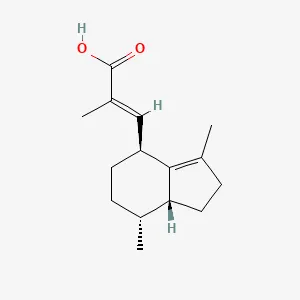
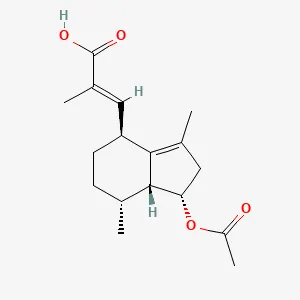
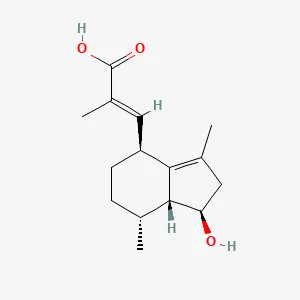
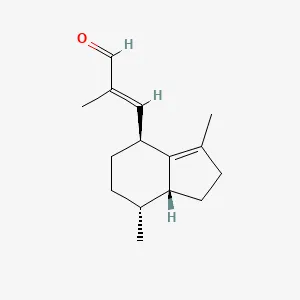
5.2 The valepotriates
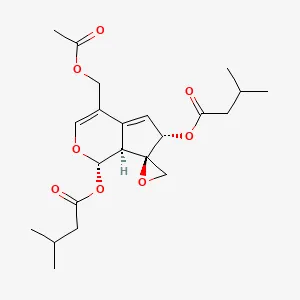
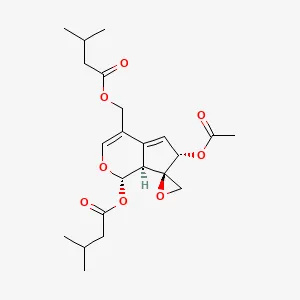
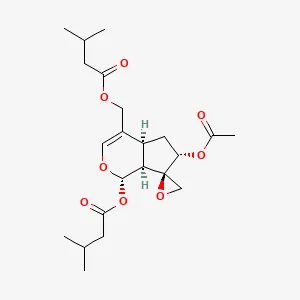
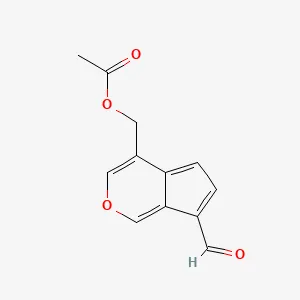
The valepotriates are iridoid esters with an epoxide ring: valtrate makes up most of them, with isovaltrate, acevaltrate and didrovaltrate. Reported levels in European root run from about 0.5% to 2%, although most European supplies average 0.4% to 0.6%; Mexican valerian can carry up to 8% and some other species more. (American Herbal Pharmacopoeia, 1999; ref. 4) Confirmed They are fragile. They break down quickly in acid, in humidity and above 40 °C, giving baldrinal and homobaldrinal, and the AHP notes they are typically absent from commercial preparations. (American Herbal Pharmacopoeia, 1999; ref. 4) Confirmed
The epoxide group makes valepotriates alkylating agents. They are cytotoxic in cell culture, partly by reacting with thiol-containing enzymes, and there is a laboratory literature on their mutagenic potential. The AHP sets this against their instability and near absence from finished products. (American Herbal Pharmacopoeia, 1999; ref. 4) Mechanism No human harm has been shown from these laboratory findings. The AHP describes a simple colour test that can confirm whether a powdered product contains valepotriates, for exactly this reason. (American Herbal Pharmacopoeia, 1999; ref. 4) Confirmed
5.3 The volatile oil and the rest
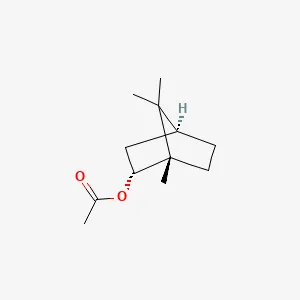
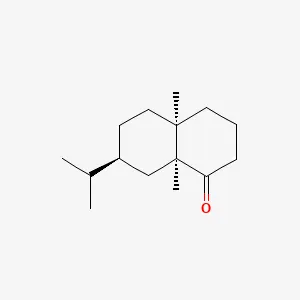
The volatile oil sits in the outer tissue of the rootlets. Reported content runs from about 0.1% to around 2%, depending on source, harvest and handling, and its make-up varies widely, with more than 150 compounds reported, including bornyl acetate, bornyl isovalerate and the ketone valeranone. (American Herbal Pharmacopoeia, 1999; ref. 4) Confirmed Free isovaleric acid, the source of the smell, comes mostly from breakdown of the valepotriates. The root also contains small amounts of alkaloids (valerianine, actinidine), lignans such as pinoresinol, and amino acids including GABA and glutamine. (American Herbal Pharmacopoeia, 1999; ref. 4) Confirmed
5.4 Why the solvent decides the product
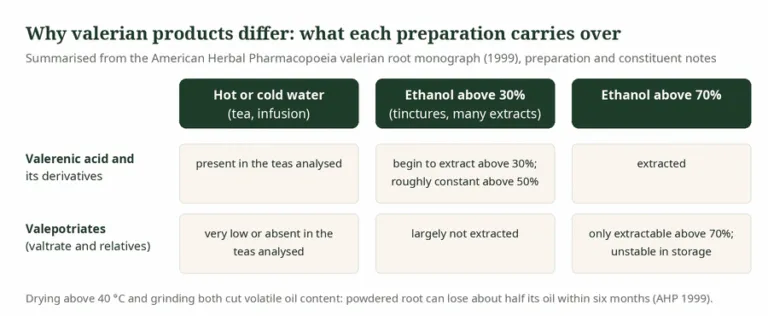
The AHP’s preparation notes are the plainest guide to why valerian products differ. Valerenic acid derivatives begin to come out in alcohol above about 30% and extract fairly constantly above 50%. Valepotriates extract only above about 70% alcohol. Teas made from the root contained valerenic acids and very little or no valepotriate in the samples analysed. (American Herbal Pharmacopoeia, 1999; ref. 4) Confirmed In one study cited by the AHP, drying at 50 °C instead of 20 °C halved the volatile oil, and powdered root can lose half its oil within six months. (American Herbal Pharmacopoeia, 1999; ref. 4) Confirmed
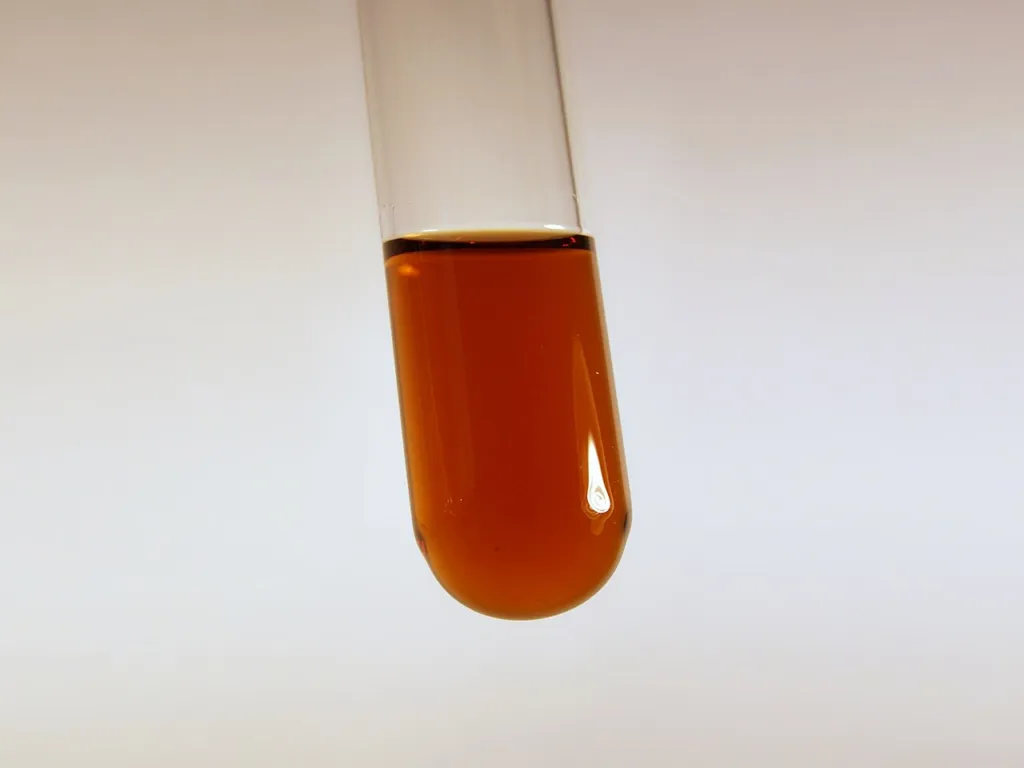
A capsule of powdered root, a cup of tea, a 60% tincture and a dry extract standardised to valerenic acid are therefore four chemically different things that share a name. When a trial reports that “valerian” worked or failed, the first question is which of these it tested.
Chapter 6Pharmacology: what the laboratory work shows
Most of what we know about how valerian might act comes from cells, isolated receptors and rodents. That work is useful for forming hypotheses. It does not tell us what happens in a person who swallows a tablet.
6.1 Valerenic acid and the GABAA receptor
The strongest mechanistic thread concerns valerenic acid. In receptors expressed in frog oocytes, valerenic acid increases chloride currents through GABAA receptors that contain β2 or β3 subunits, and has little effect on those containing β1. In mice valerenic acid raised the seizure threshold and did not reduce movement at doses up to 30 mg/kg, and the authors summarise earlier mouse studies in which it reduced anxiety-like behaviour without sedation. (Khom et al. 2016, PMID 27190170; ref. 9) Mechanism The receptor family is the one that benzodiazepines act on, but the binding site and subunit preference differ, so the comparison with benzodiazepines is loose.
The obvious gap is between the dish and the body. Concentrations used in receptor studies are not matched against measured blood or brain levels after normal oral doses, and the EMA notes that pharmacokinetic data on valerian preparations are lacking. (EMA/HMPC monograph, 2016; ref. 3) Evidence suggests The EMA’s own conclusion is that the sedative effect of ethanol-water extracts cannot be attributed with certainty to any known constituent. (EMA/HMPC monograph, 2016; ref. 3) Confirmed
6.2 Other proposed actions
The AHP reviews several other leads from the 1980s and 1990s: weak inhibition of GABA transaminase by valerenic acids at millimolar concentrations; GABA and glutamine present in aqueous extracts, the first of which does not cross the blood-brain barrier; partial displacement of ligands at adenosine receptors and melatonin binding sites by extracts at high concentrations; and no binding at benzodiazepine sites in one rat study. (American Herbal Pharmacopoeia, 1999; ref. 4) Mechanism In mice, an ethanolic extract lengthened barbiturate-induced sleep and was anticonvulsant against picrotoxin, without the overt sedation diazepam produced. (American Herbal Pharmacopoeia, 1999; ref. 4) Evidence suggests
Shinjyo and colleagues argue that valerian has more than one active group and more than one mechanism, and that the valepotriates may contribute, because Mexican and Indian valerian, which lack valerenic acids but contain valepotriates, also showed sleep effects in small trials. (Shinjyo et al. 2020, PMID 33086877; ref. 8) Mechanism That is a reasonable hypothesis. It sits awkwardly with the chemistry in §5, since valepotriates are mostly absent from the extracts sold, and it needs testing with characterised products.
Chapter 7Clinical evidence for sleep
Sleep is where valerian has been tested most, and where the results are hardest to summarise in one line. The trials are many and mostly small; they used different preparations, doses, durations and outcome measures; and many were run decades ago to standards that would not pass a journal today.
7.1 The pooled analyses
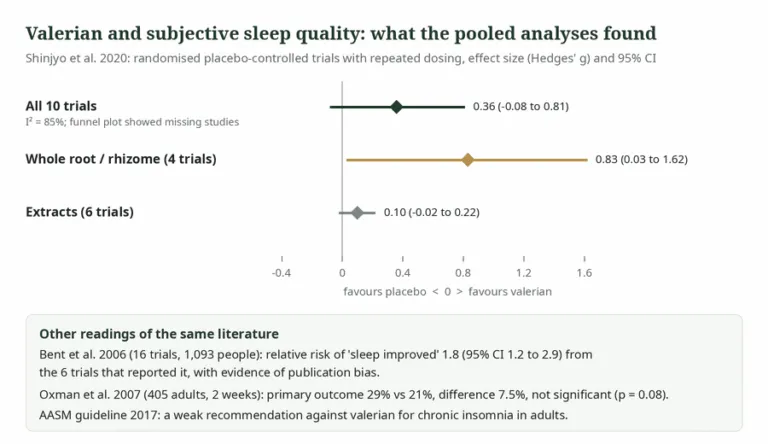
Bent and colleagues pooled the randomised placebo-controlled trials available in 2006: 16 trials with 1,093 participants. Eight had fewer than 25 people, the average quality score was 3.4 out of 5, doses ranged from 225 to 1,215 mg of extract a day, and only two trials said their extract was standardised to valerenic acids. (Bent et al. 2006, PMID 17145239; ref. 10) Confirmed Six trials reported whether sleep improved or not. Pooled, people taking valerian were about 80% more likely to report better sleep (relative risk 1.8, 95% CI 1.2 to 2.9). The funnel plot and its statistical test pointed to publication bias, meaning small negative trials were probably missing. (Bent et al. 2006, PMID 17145239; ref. 10) Evidence suggests Of seven trials that used a visual analogue scale for sleep quality, five found no significant difference from placebo. (Bent et al. 2006, PMID 17145239; ref. 10) Evidence suggests
Shinjyo, Waddell and Green revisited the field in 2020 with 60 studies, 36 of them randomised trials of valerian alone. Their pooled estimate for subjective sleep quality after repeated dosing, from ten placebo-controlled trials, was a standardised effect of 0.36 with a 95% confidence interval from −0.08 to 0.81, so the interval crossed zero. Heterogeneity was very high (I² of 85%) and the funnel plot again suggested missing studies. (Shinjyo et al. 2020, PMID 33086877; ref. 8) Evidence suggests
Their most interesting finding came from splitting that analysis. Four trials of whole dried root or rhizome gave a pooled effect of 0.83 (0.03 to 1.62); six trials of extracts gave 0.10 (−0.02 to 0.22). (Shinjyo et al. 2020, PMID 33086877; ref. 8) Evidence suggests The authors read this as support for whole root. With four small trials on one side, it is better read as a hypothesis worth a properly designed head-to-head trial, which we return to in §12.
7.2 Three trials worth reading closely
Norway, 2007. Oxman and colleagues recruited 405 adults with insomnia through a national television programme and ran the whole trial over the internet. After two weeks of keeping a sleep diary without treatment, participants took valerian (three tablets nightly, equivalent to 3.6 g of root) or placebo for two weeks. On the primary outcome, a meaningful improvement in self-rated sleep quality, 29% improved on valerian and 21% on placebo; the difference of 7.5 percentage points was not statistically significant (p = 0.08). On the end-of-trial global question, 5.5% more of the valerian group said their sleep was better (p = 0.04). There were no serious adverse events and no meaningful difference in minor ones. The authors concluded that valerian appears safe, with modest benefits at most. (Oxman et al. 2007, PMID 17940604; ref. 11) Confirmed
Seattle, 2009. Taibi and colleagues studied 16 older women with insomnia in a crossover trial, using a sleep laboratory, home wrist actigraphy and diaries. A standardised extract (300 mg, 0.8% valerenic acid) or placebo was taken 30 minutes before bed for two weeks. Neither a single dose nor two weeks of nightly use changed sleep latency, time awake after sleep onset, sleep efficiency or self-rated quality compared with placebo. Compared with their own baseline, time awake after sleep onset rose by about 18 minutes after two weeks on valerian. Side effects were minor and no different from placebo. (Taibi et al. 2009, PMID 18482867; ref. 13) Confirmed Sixteen people is a small trial, and one product at one dose, but the measurement here was much more careful than in most earlier work.
Bengaluru, 2024. Chandra Shekhar and colleagues randomised 80 adults with mild insomnia to an extract standardised to 2% total valerenic acid or placebo for eight weeks; 72 completed. They reported significant improvements in the Pittsburgh Sleep Quality Index and in wrist-actigraphy sleep latency, total sleep time and efficiency. (Chandra Shekhar et al. 2024, PMID 37899385; ref. 14) Evidence suggests The study was funded by the company that makes the extract. That does not make the result wrong. It does mean it needs replicating by an independent group before it shifts the overall picture.
7.3 What the guideline writers concluded
The American Academy of Sleep Medicine’s 2017 guideline on drug treatment of chronic insomnia made a weak recommendation that clinicians not use valerian for sleep onset or sleep maintenance insomnia in adults. The task force rated the evidence low quality, found at most a small improvement in laboratory-measured time to fall asleep that fell below its threshold of clinical significance, and noted limited information on harms. (Sateia et al. 2017 (AASM), PMID 27998379; ref. 12) Confirmed This is an overseas guideline aimed at chronic insomnia, a clinical condition; it says nothing about whether valerian helps an occasional poor night, which is how many Australians use it.
The European regulator reads the same literature more favourably. The EMA lists a dry ethanol-water extract (40% to 70% ethanol) under “well-established use” for relief of mild nervous tension and sleep disorders, stating that controlled studies have shown improved sleep latency and sleep quality, and puts the dried root itself, with the teas and tinctures made from it, under “traditional use” to aid sleep. (EMA/HMPC monograph, 2016; ref. 3) Confirmed The difference between these two bodies is partly the question each was asking, chronic insomnia in one case and mild symptoms in the other, and partly a judgement about trials of uneven quality.
7.4 Reading it fairly
Put together, the trials support a modest and inconsistent improvement in how well people feel they slept, with signs that small negative trials went unpublished, a hint that whole root may do better than extracts, and little effect on objective sleep measures. Evidence suggests They do not show that valerian works like a prescription hypnotic, and they do not show it is useless; the uncertainty is real. One practical point comes from Bent’s review: in six trials that reported it, valerian caused no more next-morning sleepiness than placebo. (Bent et al. 2006, PMID 17145239; ref. 10) Evidence suggests For a product people take at night and then drive to work on, that matters.
Valerian is often combined with hops (Humulus lupulus), lemon balm or passionflower. Shinjyo’s review found hops to be the commonest partner and every one of the seven hops-combination reports positive on some sleep measure, though meta-analysis was not possible. (Shinjyo et al. 2020, PMID 33086877; ref. 8) Evidence suggests A 2025 feasibility trial of a valerian-hops extract in 40 people with occasional insomnia found an extra 21.7 minutes of sleep a night on fitness-tracker data, with no change in daytime cognition; it was funded by the manufacturer and several authors were employees. (Schicktanz et al. 2025, PMID 40462685; ref. 15) Evidence suggests Combination products are their own question, and a result for one formula cannot be transferred to valerian alone.
Chapter 8Clinical evidence for anxiety and other uses
Anxiety is the other traditional indication, and the evidence is thinner. Shinjyo and colleagues found seven studies of anxiety and a positive result in six, mostly small and short. They included reduced anxiety before dental surgery after a single dose, lower premenstrual anxiety, and lower anxiety scores in people taking the HIV drug efavirenz. (Shinjyo et al. 2020, PMID 33086877; ref. 8) Evidence suggests Their pooled analysis of seven trials showed significant publication bias and extreme heterogeneity (I² of 93%), with extracts giving highly variable results. An internet-based trial in volunteers with non-clinical anxiety found no difference from placebo. (Shinjyo et al. 2020, PMID 33086877; ref. 8) Evidence suggests
That internet trial, by Jacobs and colleagues, is described in both of the reviews we read in full. Valerian, kava and placebo produced similar falls in anxiety and insomnia scores, and diarrhoea was reported by 18% on valerian against 8% on placebo, the only adverse event to differ significantly in Bent’s set of trials. (Bent et al. 2006, PMID 17145239; ref. 10) (Shinjyo et al. 2020, PMID 33086877; ref. 8) Evidence suggests The Cochrane review of valerian for anxiety disorders, which we have not yet been able to read in full, is listed at the end of the references and is not relied on here.
Shinjyo’s review also gathers single small trials of valerian for menopausal hot flushes, period pain, obsessive-compulsive symptoms, cognition after heart surgery and restless legs. (Shinjyo et al. 2020, PMID 33086877; ref. 8) Evidence suggests Each is one or two trials, often from one research group and not yet repeated elsewhere. They are reasons for further study and say nothing settled about any of those conditions.
One finding cuts against the calm reputation. Shinjyo notes reports of paradoxical stimulation, agitation and restlessness, in a minority of people, and one trial in which a high dose of a valerian and lemon balm combination increased anxiety while a lower dose reduced it. (Shinjyo et al. 2020, PMID 33086877; ref. 8) Evidence suggests The AHP likewise records palpitations and nervousness in sensitive individuals in the older literature. (American Herbal Pharmacopoeia, 1999; ref. 4) Evidence suggests
Chapter 9Safety and interactions
In clinical trials valerian has been well tolerated. Shinjyo’s review counted no serious adverse events across 60 studies with 6,894 participants, and the side effects that did appear (dizziness, drowsiness, stomach upset, vivid dreams) showed no clear link to treatment. (Shinjyo et al. 2020, PMID 33086877; ref. 8) Evidence suggests Trials of a few weeks cannot detect rare reactions, though, and the rare reaction that matters for valerian is liver injury.
9.1 The liver: what the Australian reports showed
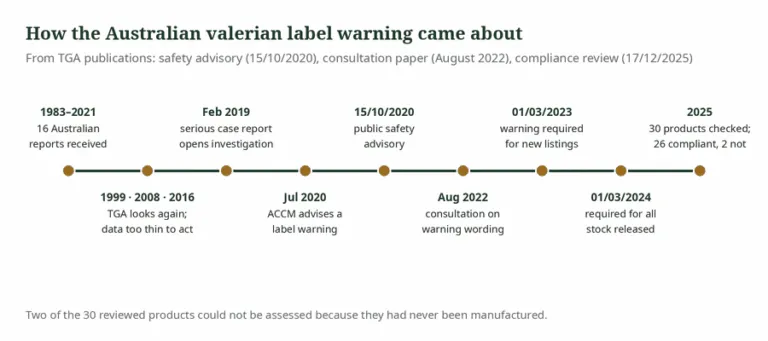
In February 2019 the TGA received a report of serious drug-induced liver injury after valerian and opened an investigation. It had looked at valerian and hepatitis in 1999, 2008 and 2016 and each time found too little data to act. (TGA consultation paper, August 2022; ref. 16) Confirmed
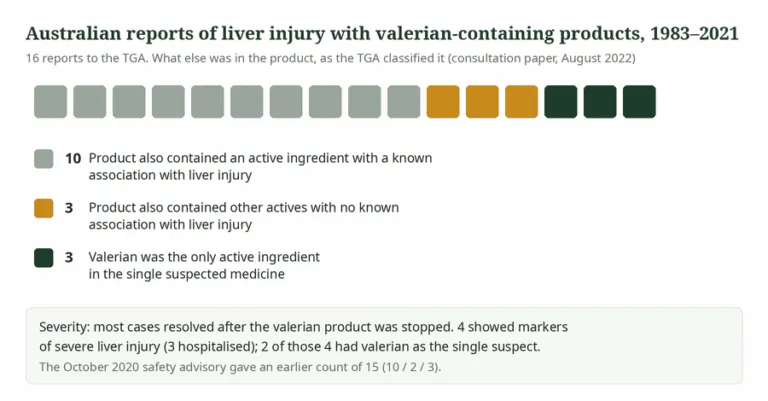
Its 2022 consultation paper set out the Australian record: between 1983 and 2021 the TGA had received 16 reports of liver injury in people taking valerian-containing products. In ten, the product also contained an ingredient already known to cause liver injury. In three, the other active ingredients had no known link to liver injury. In three, valerian was the only active ingredient in the single suspected medicine. Most cases resolved after the product was stopped. Four showed markers of severe injury and three of those were hospitalised; two of the four severe cases had valerian as the single suspect. (TGA consultation paper, August 2022; ref. 16) Confirmed
The October 2020 safety advisory gave an earlier count of 15, with the same broad split (ten with other likely culprits, two where the other ingredients were unlikely causes, three valerian alone), and described the injury as very rare. (TGA safety advisory, 15/10/2020; ref. 17) Confirmed Sixteen reports over 38 years, for an ingredient in about a hundred listed products, is a small number. Spontaneous reports cannot give a rate, because nobody knows how many people took valerian in that time, and voluntary reporting systems are generally understood to miss many events (a general point; we cite no figure for herbal medicines here). Evidence suggests
Overseas, the TGA found 15 published case reports, five with valerian as the sole suspect, and 57 cases held by other regulators, 27 with valerian as the single suspected medicine. Doses, preparations and durations varied, both short and long use were represented, and no trend by dose or duration emerged. The TGA described the injury as idiosyncratic, meaning unpredictable and not simply a matter of taking too much, with an unknown mechanism. It also noted that the United States LiverTox database regards valerian as a probable rare cause of clinically apparent liver injury. (TGA consultation paper, August 2022; ref. 16) Confirmed
One of the published cases is a useful example of how carefully these are judged. The Spanish Liver Toxicity Registry analysed 521 drug-induced liver injury cases from 1994 to 2006; 13 were linked to herbal products or supplements, and one of the 13 involved valerian, a 55-year-old man with jaundice and a cholestatic pattern on biopsy who was hospitalised. Using the CIOMS/RUCAM causality scale, the registry rated that case as definite. (García-Cortés et al. 2008, PMID 19159172; ref. 18) Confirmed Green tea (Camellia sinensis, three cases), cascara (Rhamnus purshianus, two) and soy isoflavone products (two) each accounted for more of the herbal cases in that registry than valerian did. (García-Cortés et al. 2008, PMID 19159172; ref. 18) Confirmed
The older literature points the same way with a caveat. The AHP describes early reports of liver injury with combination products that also contained skullcap, at a time when skullcap in trade was often adulterated with germander (Teucrium chamaedrys), a known liver toxin, and four later cases in products without skullcap. Its authors thought the reaction idiosyncratic. (American Herbal Pharmacopoeia, 1999; ref. 4) Evidence suggests This history is one reason the TGA’s breakdown of co-ingredients matters: in ten of the sixteen Australian reports, something other than valerian was already a plausible cause.
9.2 Why there is a warning anyway
The TGA’s advisory committee on complementary medicines considered the reports in July 2020. Members agreed that although adverse events were unlikely, liver injury was serious enough to justify risk mitigation, and recommended a label warning in line with warnings already required for other ingredients associated with serious liver injury. (TGA consultation paper, August 2022; ref. 16) Confirmed The reasoning in the consultation paper was practical: the reports suggested that harm could be reduced if people stopped the product and sought medical attention as soon as symptoms appeared, so the label lists the symptoms. The warning applies only to oral products, because the reports involved oral forms. (TGA consultation paper, August 2022; ref. 16) Confirmed No study has looked at valerian in people with existing liver disease or in people already taking other medicines or herbs with a known liver risk. Since the reaction cannot be predicted, those people have the most to gain from mentioning valerian to whoever manages their liver condition or their other medicines, and from knowing the symptoms on the label. That is a precaution reasoned from the TGA record. No trial has tested it. Mechanism
Read that way, the warning carries no message that valerian is dangerous for most people. It is an early-detection notice for a rare, unpredictable reaction. Other listed ingredients carry similar statements; the Institute’s reviews of ashwagandha and black cohosh look at two of them, and the kava review covers a herb whose liver history led to much tighter Australian controls.
9.3 Sedatives, alcohol and driving
The most predictable interaction is additive drowsiness. The AHP reviews animal studies in which valerian extracts prolonged barbiturate-induced sleep, sometimes several-fold. (American Herbal Pharmacopoeia, 1999; ref. 4) Evidence suggests No good human study measures valerian together with benzodiazepines, z-drugs, opioids, sedating antihistamines or other sedative herbs, so caution rests on pharmacological reasoning. Mechanism
With alcohol, the AHP describes a placebo-controlled study of a valerian and lemon balm combination in 54 people that found no impairment of reaction time or concentration and no increase in the impairment caused by alcohol, and another study in which a higher valerian dose produced a slight but significant slowing of vigilance and complex information processing. (American Herbal Pharmacopoeia, 1999; ref. 4) Evidence suggests Shinjyo’s review lists six single-dose studies in which standardised extracts did not impair cognitive or psychomotor performance. (Shinjyo et al. 2020, PMID 33086877; ref. 8) Evidence suggests The EMA nevertheless states that valerian may impair the ability to drive and use machines and that affected people should not drive. (EMA/HMPC monograph, 2016; ref. 3) Confirmed The sensible reading is that most people are not impaired the next morning, some are, and the first nights on a new product are not the time to find out behind the wheel.
9.4 Drug metabolism
Shinjyo’s review summarises two human studies of liver enzymes. One found a modest increase in the peak concentration of a CYP3A4 probe drug with no change in other measures and no effect on CYP2D6; the other found no change in CYP1A2, CYP2D6, CYP2E1 or CYP3A4/5 activity. (Shinjyo et al. 2020, PMID 33086877; ref. 8) Evidence suggests On that limited evidence valerian is unlikely to cause major enzyme-based interactions, and the EMA lists no reported interactions. (EMA/HMPC monograph, 2016; ref. 3) Evidence suggests Those studies used particular products in healthy volunteers, so they do not cover every preparation or every patient.
9.5 Pregnancy, breastfeeding and children
The EMA states that safety in pregnancy and lactation has not been established and that use is not recommended, and it does not recommend use under 12 years for lack of data. (EMA/HMPC monograph, 2016; ref. 3) Confirmed The AHP found no specific lactation data. (American Herbal Pharmacopoeia, 1999; ref. 4) Confirmed Absence of evidence of harm is all that exists here, and it is a weak basis for using a medicine in pregnancy.
9.6 Stopping, and surgery
A single published case is often cited. The AHP describes a man with heart disease who had taken large doses of valerian several times a day for years, stopped on admission for a lung biopsy, and during the admission developed delirium and high-output heart failure, which began after a dose of naloxone and which the treating doctors linked to valerian withdrawal because it settled with a benzodiazepine. He resumed valerian afterwards and remained stable. (American Herbal Pharmacopoeia, 1999; ref. 4) Evidence suggests One case cannot establish a withdrawal syndrome, and the patient had several other medicines and illnesses. It is enough to make two practical points: long-term nightly users should tell their surgical and anaesthetic team, and heavy long-term users may do better to taper than to stop abruptly before planned surgery. That second point is an inference from this one case, and no study has tested it. Mechanism Perioperative reviews that make specific recommendations on timing are listed among the papers we have not yet read in full.
9.7 Other effects and overdose
The EMA lists nausea and abdominal cramps, of unknown frequency, as the recognised undesirable effects. It records that about 20 g of root caused fatigue, abdominal cramp, chest tightness, light-headedness, hand tremor and dilated pupils, which resolved within 24 hours. (EMA/HMPC monograph, 2016; ref. 3) Confirmed Headache and stomach upset appear in older trial reports. (American Herbal Pharmacopoeia, 1999; ref. 4) Evidence suggests The only contraindication the EMA lists for oral use is hypersensitivity to valerian. (EMA/HMPC monograph, 2016; ref. 3) Confirmed
A large or accidental dose, especially in a child or taken together with alcohol or other sedatives, should be discussed with the Poisons Information Centre on 13 11 26 (24 hours, Australia-wide). Call Triple Zero (000) at once if the person is hard to wake, confused, or has trouble breathing or chest pain.
Chapter 10In Australia: AUST L listing and the label warning
Valerian reaches Australian shelves as a listed complementary medicine, with an AUST L number on the label. Listed medicines are lower-risk, non-prescription products that may contain only pre-approved, low-risk ingredients and make only low-level health claims. The TGA does not assess them individually before supply; the sponsor self-certifies that the product meets the safety, quality and efficacy requirements, and the TGA can check any listed medicine once it is on the market. (TGA, Listed medicines; ref. 19) Confirmed An AUST L number means the product is on the Register as a listed medicine. It says nothing about whether the TGA has evaluated the evidence that it works.
Three valerian ingredient names are permitted in listed medicines: Valeriana officinalis, valerian dry and valerian powder. (TGA compliance review, updated 17/12/2025; ref. 2) Confirmed In July 2022 there were 101 listed medicines on the Australian Register of Therapeutic Goods containing at least one of them, 96 of them for oral use. (TGA consultation paper, August 2022; ref. 16) Confirmed Until the warning, valerian was permitted without restriction on dose, concentration or type of preparation. (TGA safety advisory, 15/10/2020; ref. 17) Confirmed
10.1 The warning, word for word
Since 01/03/2023, oral medicines containing valerian as an active ingredient must carry this statement, which applies to medicines listed on or after that date and to any medicine released for supply from 01/03/2024: “In rare cases, valerian may harm the liver. Stop use and see a doctor if you have yellowing skin/eyes or unusual: fatigue, nausea, appetite loss, abdominal pain, dark urine or itching.” (Permissible Ingredients Determination (No. 2) 2026; ref. 1) (TGA compliance review, updated 17/12/2025; ref. 2) Confirmed The wording put out for consultation in 2022 was longer and began “WARNING: Valerian may harm the liver in some people”; the final text added “in rare cases”. (TGA consultation paper, August 2022; ref. 16) (TGA compliance review, updated 17/12/2025; ref. 2) Confirmed
In 2025, after the transition period ended, the TGA reviewed 30 listed valerian medicines. All 30 sponsors responded; 26 products (86%) complied, two could not be assessed because they had never been manufactured, and two were missing the warning. A recall was considered, but no stock remained on the market, and future batches were corrected. The TGA last updated its report of the review on 17/12/2025. (TGA compliance review, updated 17/12/2025; ref. 2) Confirmed
One loose end confuses people. The October 2020 advisory page still says the investigation “is ongoing” and that no label warnings are required. (TGA safety advisory, 15/10/2020; ref. 17) Confirmed Those sentences were true when published and have since been overtaken by the 2023 warning requirement. The consultation paper and compliance review record what happened next.
10.2 Scheduling, import and the recent labelling attention
Valerian is not a scheduled substance. We searched the full text of the current Poisons Standard (the October 2026 instrument, made 28/09/2026) and found no entry for valerian, Valeriana, valerenic acid or the valepotriates. (Poisons Standard, October 2026; ref. 20) Confirmed It is not a controlled drug, so the Office of Drug Control’s import permits do not apply to it; bringing in plant material or medicines from overseas is governed by the general biosecurity and personal-importation rules, which we have not reviewed for this article.
Herbal labels have drawn attention through 2026. Andrographis had carried an allergy warning on listed medicines since 2020; after reports of anaphylaxis continued, the TGA removed it from the list of permitted ingredients for new listed medicines from 17/09/2026, judging the risk could not be managed within the listed-medicine pathway. (TGA decision notice, 18/09/2026; ref. 21) Confirmed The Institute’s andrographis review covers that decision. Valerian sits at the earlier stage: the ingredient stays permitted, with a warning to help people spot a rare reaction early, and nothing in the TGA’s published record proposes going further. (TGA compliance review, updated 17/12/2025; ref. 2) Confirmed
10.3 Choosing and using a product
Products on the shelf range from teas and powdered root to tinctures and standardised dry extracts, alone or with hops, passionflower, lemon balm, magnesium or other ingredients. The chemistry in §5 means they cannot be assumed equivalent, and the trials in §7 were run on specific preparations. Before taking any botanical medicine, consult a degree-qualified herbalist with competencies and adequate training in pharmacognosy, who can weigh the preparation, the person’s other medicines and their liver history. Nothing in this article is a recommendation of any product or dose.
Chapter 11Quality, adulteration and why extracts differ
Quality standards for valerian are built around the volatile oil and valerenic acid. The AHP requires at least 0.5% volatile oil in whole material and 0.3% in powdered material, and reports that high-quality root carries 1.0% to 1.5% oil, at least 30% extractable matter and at least 0.5% valerenic acid. It sets out identity tests by thin-layer chromatography, an HPLC assay for valerenic acids, and a simple colour test that shows whether valepotriates are present. (American Herbal Pharmacopoeia, 1999; ref. 4) Confirmed The EMA monograph refers to the European Pharmacopoeia monograph for the herbal substance. (EMA/HMPC monograph, 2016; ref. 3) Confirmed
Adulteration seems less of a problem for valerian than for many herbs, at least in the record the AHP reviewed. It mentions other Valeriana species and an unidentified member of the carrot family in European trade, and said adulteration was uncommon in the American market in 1999. (American Herbal Pharmacopoeia, 1999; ref. 4) Evidence suggests Indian and Mexican valerian share the common name and the valepotriates and reportedly lack valerenic acid, so where species substitution is a concern, a valerenic acid assay separates them from V. officinalis. (American Herbal Pharmacopoeia, 1999; ref. 4) (Shinjyo et al. 2020, PMID 33086877; ref. 8) Confirmed We did not find a recent Australian market survey of valerian product quality. That is a gap.
Storage matters as much as source. Volatile oil is lost with heat and grinding, hydroxyvalerenic acid builds up as the material ages, and valepotriates decompose. (American Herbal Pharmacopoeia, 1999; ref. 4) Confirmed A valerian product is closer to a perishable food than a stable mineral supplement, and the date on the packet and the storage conditions in the shop are part of its quality.
Chapter 12Discussion: conclusions, hypotheses and research still required
What the evidence supports
Valerian root has a long, documented European history as a calming and sleep remedy. Traditional Its chemistry is well characterised, and the differences between teas, tinctures, powdered root and standardised extracts follow directly from that chemistry and from storage. Confirmed Valerenic acid modulates β2- and β3-containing GABAA receptors in laboratory systems. Mechanism In people, the pooled trials show a modest, inconsistent improvement in self-rated sleep quality, little effect on objective sleep, high heterogeneity and signs of publication bias, with good short-term tolerability and no excess next-morning sleepiness in most studies. Evidence suggests Liver injury is rare, unpredictable and well documented enough for the TGA to require a warning; most Australian cases involved other ingredients as well, and three involved valerian alone. Confirmed
What we can reasonably hypothesise
These are hypotheses, offered for testing, and none of them is a finding.
Preparation explains much of the scatter. If Shinjyo’s whole-root subgroup reflects something real, the inconsistency between trials may come partly from testing chemically different products under one name. Mechanism
The people who benefit may be a subgroup. Shinjyo suggests valerian may suit insomnia with an anxious component. (Shinjyo et al. 2020, PMID 33086877; ref. 8) Trials enrolling people by sleep complaint alone could dilute an effect concentrated in that group. Mechanism
The liver reaction may be immune-mediated. No trend by dose or duration, and recovery on stopping, fit an idiosyncratic pattern. (TGA consultation paper, August 2022; ref. 16) Whether valerian-associated cases share the immune features seen with some other herbal liver injuries is unknown. Mechanism
What research is still required
Clinical research. An adequately powered, preregistered randomised trial comparing a characterised whole-root preparation, a standardised ethanol-water extract and placebo, run by investigators independent of any manufacturer, with both validated self-report scales and objective measures (actigraphy at minimum), and at least four weeks of treatment with follow-up after stopping to look for rebound. A separate trial in people with insomnia plus anxiety would test the subgroup hypothesis.
Phytochemistry and quality analysis. An Australian market survey: HPLC for valerenic acid, acetoxyvalerenic acid and hydroxyvalerenic acid, the valepotriate colour test or an HPLC equivalent, and volatile oil content across products bought from pharmacies, supermarkets and online, matched against label claims and use-by dates. This is the work most within reach of a pharmacognosy laboratory and would tell shoppers whether the products they buy resemble those tested in trials.
Pharmacokinetics. Measured plasma levels of valerenic acid after realistic oral doses of each common preparation, so that receptor concentrations in laboratory work can be compared with what people actually reach.
Toxicology and pharmacovigilance. A structured re-assessment of the Australian and overseas valerian liver cases using RUCAM, with product analysis where samples survive, to separate valerian from co-ingredients and contaminants; and mechanistic work on whether valerian or its breakdown products cause injury in human liver cell models.
Interactions. A controlled human study of valerian with a commonly co-prescribed sedative (for example a benzodiazepine) on psychomotor and driving-simulator measures, since the current caution rests on inference.
Regulatory science. Linking DAEN reports to ARTG product composition, so that future reviews can say which preparation types, doses and combinations are involved, and checking how well consumers understand the “in rare cases” wording.
History and textual studies. Collation of the classical and medieval sources on phu and valerian against critical editions, to replace the second-hand chain this article relies on in §4.
Botany. Voucher-backed trials. Few valerian trials state the subspecies or chemotype of the plant used, and a deposited herbarium voucher for each trial batch would let later workers check what was tested.
About AIP
The Australian Institute of Pharmacognosy, in Cardwell, far north Queensland, studies medicinal plants and the medicines made from them. Its literature reviews grade every substantive claim by the evidence behind it, cite only sources the authors have read in full, and say plainly when a claim is unsourced. Visit the Institute at australian-pharmacognosy.org and follow the series there.
If you find an error, or a source we have missed, please write to the Institute at our contact form; corrections are read by the Secretary and passed to the author.
Dr Thomas Ridley
Head of Education and Research
Australian Institute of Pharmacognosy
Cardwell QLD, Australia
australian-pharmacognosy.org · our contact form
Suggested citation: Ridley T. Valerian (Valeriana officinalis L.): sleep evidence, liver safety and the Australian label warning. Literature Review and Critical Analysis AIP-LR-VALOFF. Cardwell (QLD): Australian Institute of Pharmacognosy; 2026.
Educational content only; not medical, legal or regulatory advice. Regulatory information reflects TGA publications and the Poisons Standard as read in October 2026 and may change.
References
Show all 21 references (every PMID links to PubMed)
Every PMID was checked against PubMed in October 2026, and every source below was read in full. Listed in order of first citation.
- Commonwealth of Australia. Therapeutic Goods (Permissible Ingredients) Determination (No. 2) 2026 (F2026L00707), made 5 June 2026. Entries for Valeriana officinalis, valerian dry and valerian powder (warning statement VALER, required when the medicine is for oral use). Federal Register of Legislation. legislation.gov.au. Read by the Institute in October 2026.
- Therapeutic Goods Administration. Listed medicines containing Valeriana officinalis requiring warning statements. Canberra: TGA; first published 17 December 2024, last updated 17 December 2025. tga.gov.au. Read by the Institute in October 2026.
- Committee on Herbal Medicinal Products (HMPC). European Union herbal monograph on Valeriana officinalis L., radix. EMA/HMPC/150848/2015, Corr. 1. London: European Medicines Agency; adopted 2 February 2016. ema.europa.eu. Overseas regulatory document; it does not govern Australian products.
- Upton R, editor. Valerian root, Valeriana officinalis: analytical, quality control, and therapeutic monograph. Santa Cruz (CA): American Herbal Pharmacopoeia; April 1999. Copy held in the Institute library and read in full.
- Australian Plant Name Index (APNI). Valeriana rubra (red valerian; syn. Centranthus ruber). Canberra: Centre for Australian National Biodiversity Research. id.biodiversity.org.au. Read by the Institute in October 2026.
- Atlas of Living Australia. Occurrence and species-name searches for Valeriana officinalis and Centranthus ruber (biocache web service). ala.org.au. Searched by the Institute in October 2026.
- Royal Botanic Gardens Victoria. Living Collection Census: Valeriana officinalis, accession RBGM 980912, Melbourne Gardens, Herb bed. data.rbg.vic.gov.au. Read by the Institute in October 2026.
- Shinjyo N, Waddell G, Green J. Valerian root in treating sleep problems and associated disorders: a systematic review and meta-analysis. J Evid Based Integr Med. 2020;25:2515690X20967323. PMID 33086877. DOI 10.1177/2515690X20967323. Full text: PMC7585905.
- Khom S, Hintersteiner J, Luger D, Haider M, Pototschnig G, Mihovilovic MD, et al. Analysis of β-subunit-dependent GABAA receptor modulation and behavioral effects of valerenic acid derivatives. J Pharmacol Exp Ther. 2016;357(3):580-90. PMID 27190170. DOI 10.1124/jpet.116.232983.
- Bent S, Padula A, Moore D, Patterson M, Mehling W. Valerian for sleep: a systematic review and meta-analysis. Am J Med. 2006;119(12):1005-12. PMID 17145239. DOI 10.1016/j.amjmed.2006.02.026. Full text: PMC4394901.
- Oxman AD, Flottorp S, Håvelsrud K, Fretheim A, Odgaard-Jensen J, Austvoll-Dahlgren A, et al. A televised, web-based randomised trial of an herbal remedy (valerian) for insomnia. PLoS One. 2007;2(10):e1040. PMID 17940604. DOI 10.1371/journal.pone.0001040.
- Sateia MJ, Buysse DJ, Krystal AD, Neubauer DN, Heald JL. Clinical practice guideline for the pharmacologic treatment of chronic insomnia in adults: an American Academy of Sleep Medicine clinical practice guideline. J Clin Sleep Med. 2017;13(2):307-349. PMID 27998379. DOI 10.5664/jcsm.6470. Overseas guideline.
- Taibi DM, Vitiello MV, Barsness S, Elmer GW, Anderson GD, Landis CA. A randomized clinical trial of valerian fails to improve self-reported, polysomnographic, and actigraphic sleep in older women with insomnia. Sleep Med. 2009;10(3):319-28. PMID 18482867. DOI 10.1016/j.sleep.2008.02.001. Full text: PMC2709274.
- Chandra Shekhar H, Joshua L, Thomas JV. Standardized extract of Valeriana officinalis improves overall sleep quality in human subjects with sleep complaints: a randomized, double-blind, placebo-controlled, clinical study. Adv Ther. 2024;41(1):246-261. PMID 37899385. DOI 10.1007/s12325-023-02708-6.
- Schicktanz N, Gerhards C, Schlitt T, Aerni A, Müggler E, de Quervain D, et al. Effects of a valerian-hops extract combination (Ze 91019) on sleep duration and daytime cognitive and psychological parameters in occasional insomnia: a randomized controlled feasibility trial. Brain Behav. 2025;15(6):e70600. PMID 40462685. DOI 10.1002/brb3.70600.
- Therapeutic Goods Administration. Proposed changes to requirements for listed medicine ingredients: annual low-negligible risk changes 2022–2023. Consultation paper, version 1.0. Canberra: TGA; August 2022. Section 2, “Liver injury associated with Valeriana officinalis“, pp. 8–9. consultations.tga.gov.au. Read in full by the Institute in October 2026.
- Therapeutic Goods Administration. Valerian (Valeriana officinalis): safety advisory, potential for liver injury. Canberra: TGA; published 15 October 2020. tga.gov.au. Read by the Institute in October 2026.
- García-Cortés M, Borraz Y, Lucena MI, Peláez G, Salmerón J, Diago M, et al. Liver injury induced by “natural remedies”: an analysis of cases submitted to the Spanish Liver Toxicity Registry [in Spanish]. Rev Esp Enferm Dig. 2008;100(11):688-95. PMID 19159172. DOI 10.4321/s1130-01082008001100004.
- Therapeutic Goods Administration. Listed medicines (web page). Canberra: TGA. tga.gov.au. Read by the Institute in October 2026.
- Commonwealth of Australia. Therapeutic Goods (Poisons Standard—October 2026) Instrument 2026 (F2026L01327), made 28 September 2026. Federal Register of Legislation. legislation.gov.au. Full text searched by the Institute in October 2026.
- Therapeutic Goods Administration. High-moderate risk changes to permissible ingredients: Andrographis paniculata 2026 (regulatory decision notice). Canberra: TGA; published 18 September 2026. tga.gov.au. Read by the Institute in September 2026.
Requested in full text, not yet read, and not relied on in this article: Fernández-San-Martín MI et al., Sleep Med 2010 (PMID 20347389); Leach MJ, Page AT, Sleep Med Rev 2015 (PMID 25644982); Miyasaka LS et al., Cochrane review of valerian for anxiety disorders, 2006 (PMID 17054208); Taibi DM et al., Sleep Med Rev 2007 (PMID 17517355); Hoban CL et al., Australian spontaneous reports for echinacea, valerian, black cohosh and ginkgo, J Integr Med 2019 (PMID 31113761); Kia YH et al., Intern Med J 2016 (PMID 26813905); Donovan JL et al., Drug Metab Dispos 2004 (PMID 15328251); Garges HP et al., JAMA 1998 (PMID 9820254); Cohen DL, Del Toro Y, J Clin Gastroenterol 2008 (PMID 18431248); Vassiliadis T et al., Sleep Med 2009 (PMID 19138557); Ang-Lee MK et al., JAMA 2001 (PMID 11448284); Kuhlmann J et al., Pharmacopsychiatry 1999 (PMID 10599933); Thomas K et al., Accid Anal Prev 2016 (PMID 27110643); Jacobs BP et al., Medicine (Baltimore) 2005 (PMID 16010204); Morin CM et al., Sleep 2005 (PMID 16335333); Yao M et al., J Ethnopharmacol 2007 (PMID 17611059). Where this article mentions the Jacobs and Morin trials or the Garges case, it reports them as described in a source we did read in full, and cites that source.
Image credits
- 20180617Valeriana officinalis1.jpg · AnRo0002 · CC0.
- 20160620Valeriana officinalis3.jpg · AnRo0002 · CC0.
- 20160701Valeriana officinalis3.jpg · AnRo0002 · CC0.
- Valeriana officinalis (Valerianaceae) leaves.JPG · Magnus Manske · CC BY-SA 3.0.
- Valeriana officinalis fruit pappus.jpg · MurielBendel · CC BY-SA 4.0.
- Valeriana officinalis kz01.jpg · Krzysztof Ziarnek, Kenraiz · CC BY-SA 4.0.
- Valeriana officinalis – Köhler–s Medizinal-Pflanzen-143 clean.jpg · Franz Eugen Köhler, Köhler's Medizinal-Pflanzen · Public domain.
- 20140618Valeriana officinalis2.jpg · AnRo0002 · CC0.
- Centranthus ruber (12).1.jpg · Rillke · CC BY-SA 3.0.
- 20190525Valeriana officinalis1.jpg · AnRo0002 · CC0.
- Illustrations of medical botany (Plate XLVII) BHL5878559.jpg · Carson, Joseph; Colen, J. H.; Robert P. Smith. · Public domain.
- Baldrianwurzel getrocknet.JPG · 3268zauber · CC BY-SA 3.0.
- Radix Valerianae by Danny S. – 001.JPG · Danny Steven S. · CC BY-SA 3.0.
- 20150617Valeriana officinalis1.jpg · AnRo0002 · CC0.
- 20130614Valeriana officinalis4.jpg · AnRo0002 · CC0.
- 20190614Valeriana officinalis2.jpg · AnRo0002 · CC0.
- 20200621Valeriana officinalis3.jpg · AnRo0002 · CC0.
- Radix valerianae.jpg · Fallaner · CC BY-SA 4.0.
- Valerianae radix 143.jpg · Rillke · CC BY-SA 3.0 de.
- Valerianae tinctura by Danny S. – 001.JPG · Danny Steven S. · CC BY-SA 3.0.
- Valerian Root.jpg · DMTrott · CC BY-SA 4.0.
- 20160518Valeriana officinalis1.jpg · AnRo0002 · CC0.
- Neuchâtel Herbarium – Valeriana officinalis – NEU000030969.jpg · Neuchâtel Herbarium · CC BY-SA 3.0.
- valerian-extraction-what-carries-over.png · Australian Institute of Pharmacognosy, data diagram drawn from the sources cited in its caption · CC BY 4.0.
- valerian-sleep-pooled-evidence.png · Australian Institute of Pharmacognosy, data diagram drawn from the sources cited in its caption · CC BY 4.0.
- tga-valerian-liver-reports-1983-2021.png · Australian Institute of Pharmacognosy, data diagram drawn from the sources cited in its caption · CC BY 4.0.
- tga-valerian-warning-timeline.png · Australian Institute of Pharmacognosy, data diagram drawn from the sources cited in its caption · CC BY 4.0.
- Chemical structures · PubChem, National Center for Biotechnology Information (US National Library of Medicine) · public domain; each linked by CID in its caption.
The Institute sets and publishes its own monographs. The catalogue is in Publications.