

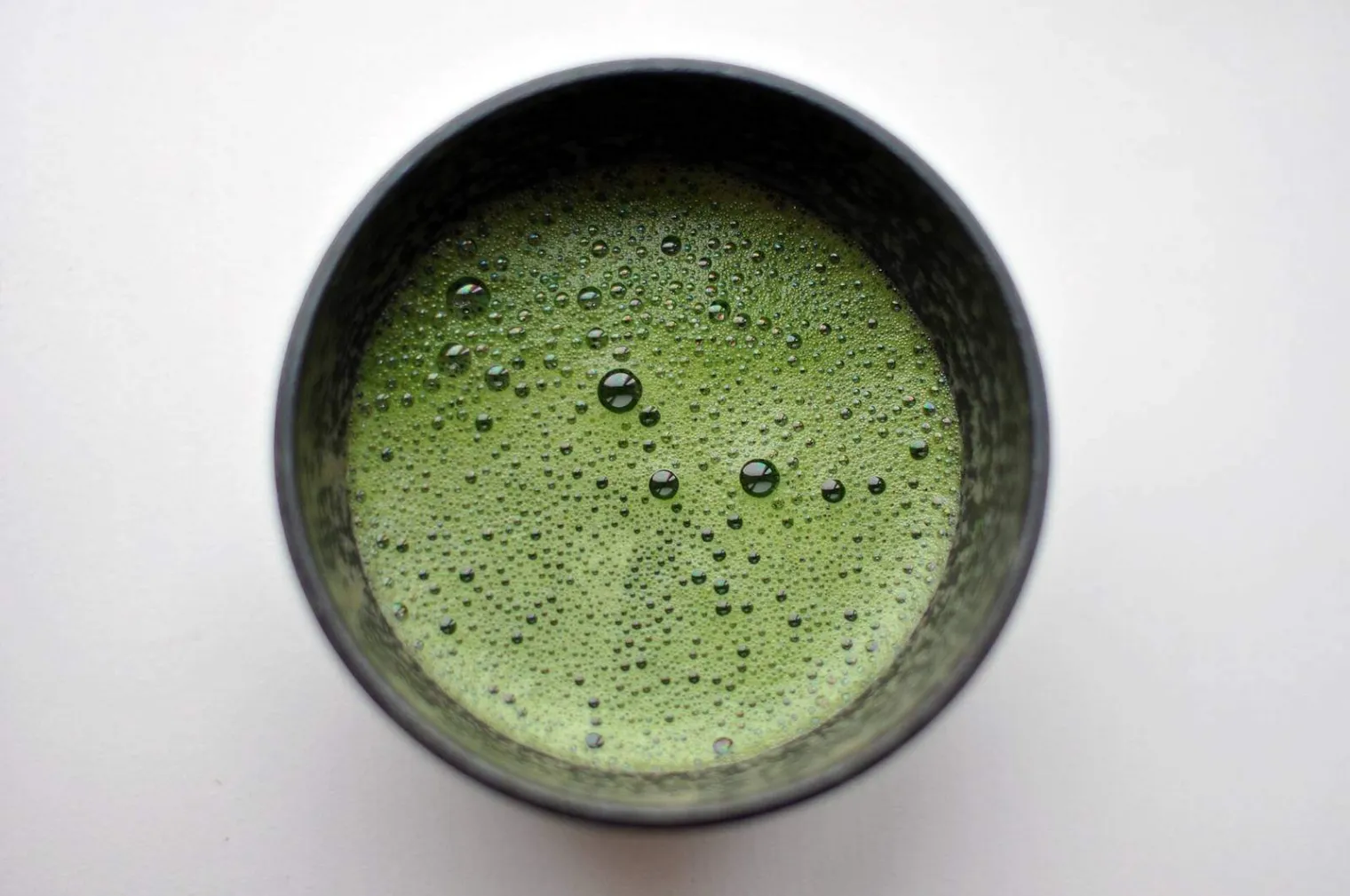
Photo: cyclonebill · CC BY-SA 2.0 · Wikimedia Commons
A green tin sits on plenty of kitchen shelves now, and matcha lattes fill café boards up and down the coast.
At the chemist, the same bush fills capsules sold for weight loss. Powder and pill come off one leaf, but the law now treats them apart.
Educational only; no dosing or preparation detail. Legal content is the Institute’s reading of Australian rules in November 2026, not legal advice.
Stop any green tea product and get prompt medical care if you notice yellowing of the skin or eyes, dark urine, pale stools, unusual tiredness, nausea, loss of appetite, belly pain or itching, even months after starting. Concentrated green tea extracts have been linked to rare but serious liver injury, including transplants, one of them in Australia.
Emergency: phone 000. Poisoning advice: the Poisons Information Centre on 13 11 26, 24 hours, Australia-wide.
Caffeine from every source counts together. Food Standards Australia New Zealand’s guide: adults up to 400 mg a day (200 mg in one serving); pregnancy or breastfeeding up to 200 mg a day; under-18s up to 3 mg per kilogram of body weight per serving.
Green tea sharply lowers blood levels of the heart medicine nadolol.
Before taking any botanical drug, consult a degree-qualified herbalist with competencies and adequate training in pharmacognosy.
- Shaded green tea leaf, ground fine: you drink all of it.
- The lift is mostly caffeine, and it adds to your coffee.
- Small gains in focus, cholesterol and blood pressure; no real weight loss.
- Nearly all the rare liver injuries trace to concentrated extract.
- On nadolol or warfarin? See the medicines section.
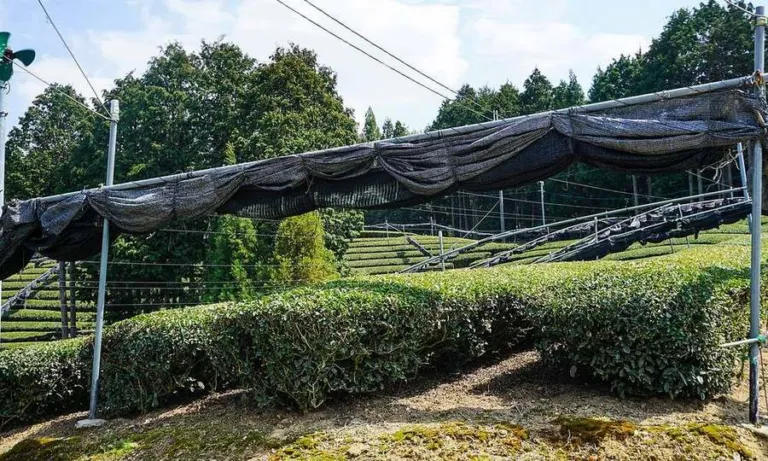
A shaded leaf, ground to dust, and its caffeine
What is actually in the bowl.
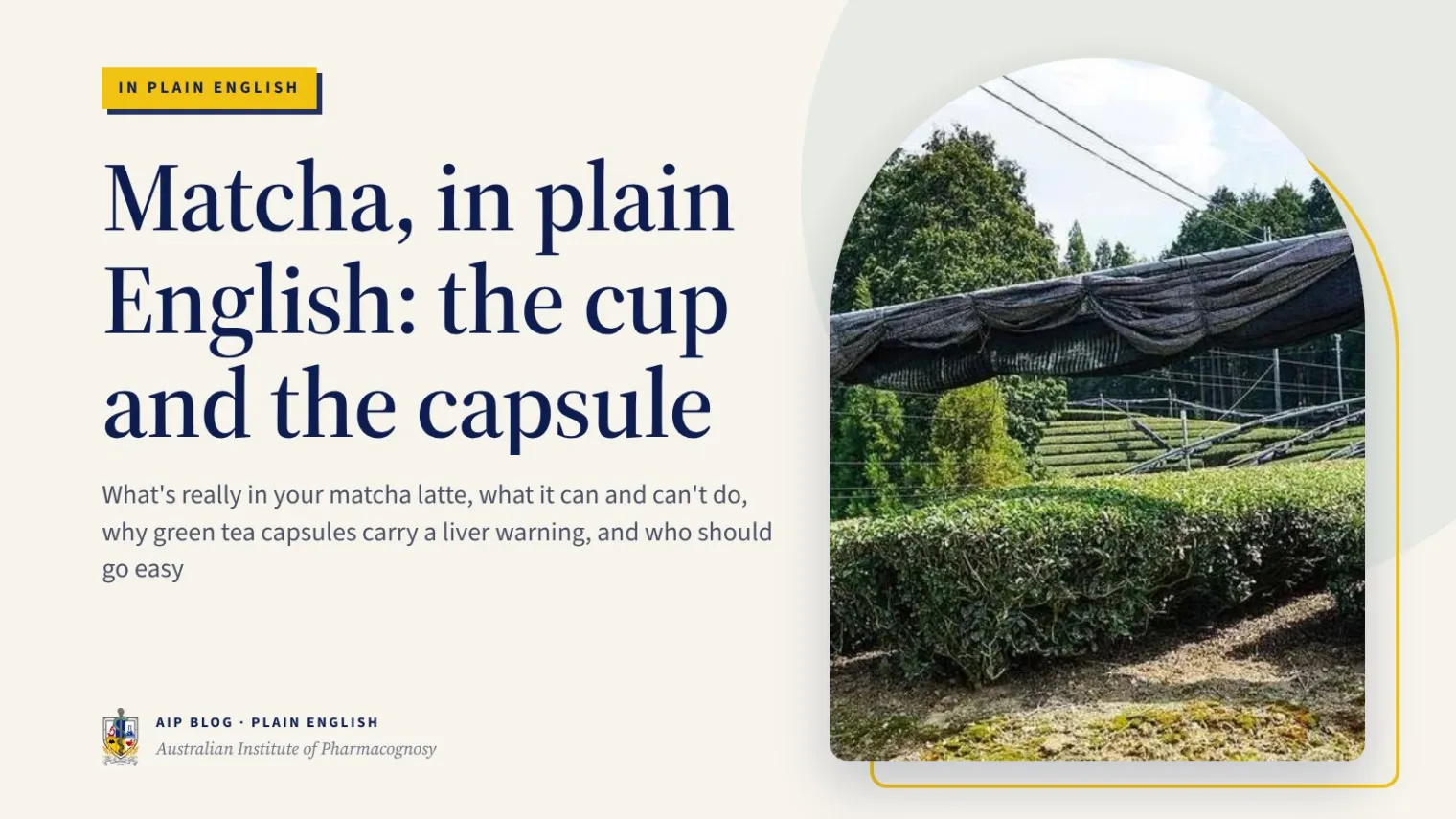
Growers cover the tea hedges for weeks before harvest. Out of the sun, the young leaves turn deep green and gain theanine, an amino acid with a savoury taste, plus extra caffeine. The leaf is milled so fine it hangs in water, and you swallow all of it, where a teabag leaves most of the leaf in the pot.
Online, theanine gets the credit for “calm focus”. What most people feel is caffeine. By our rough sum a café serve sits near a mug of instant coffee, more if the powder is heaped, though we found no survey of Australian serves. Two big lattes, a coffee and a gym drink can take an adult past the daily guide. The guide halves in pregnancy and breastfeeding; caffeine reaches the baby. Children hit their limit fastest. Too much shows as jitters, shaky hands and broken sleep.
Count matcha as coffee. Keep it out of the evening and out of children’s cups.
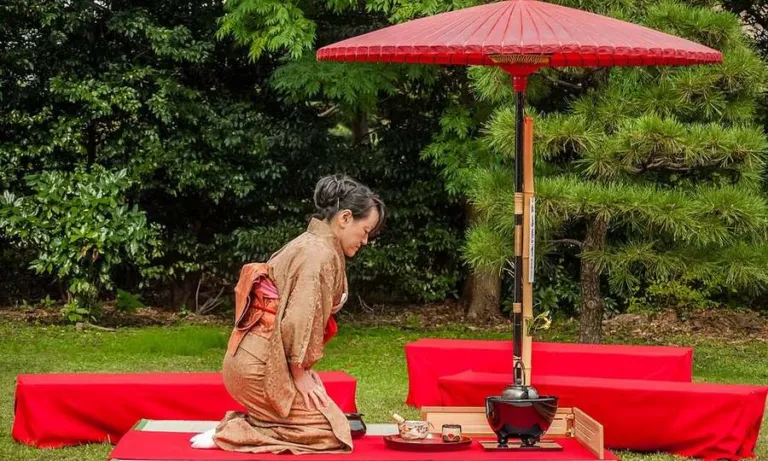
Small, real effects, and some empty promises
What the trials show.
Caffeine with theanine sharpens attention a little in short lab studies. Matcha’s own trials are few and small, and in one, five of six authors worked for the supplier. Pooled green tea trials show cholesterol and blood pressure easing slightly, too little to feel. No trial reported heart attacks or strokes.
Outside Japan, green tea made no real difference to weight. Cancer studies contradict each other. We found no trial where a café matcha lowered cortisol, the stress hormone, and “detox” has no defined meaning in pharmacology.
Drink it because you love it, and leave the weight loss to something else.
Enjoy it for itself, and never swap a prescribed medicine for it.
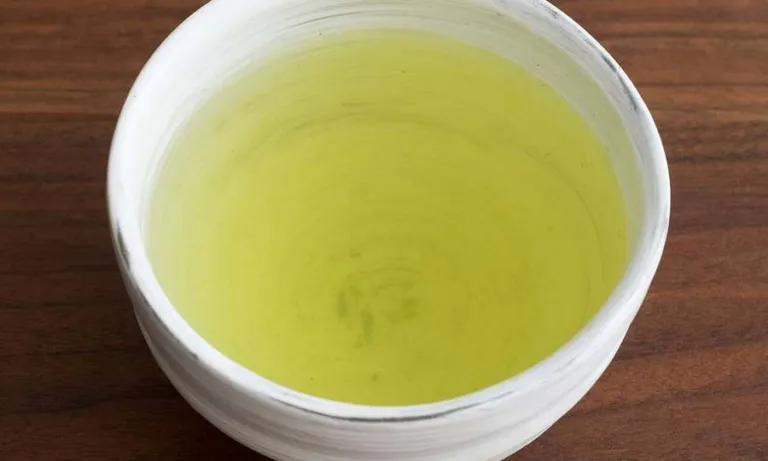
One leaf, two very different products
Where the liver injuries came from.
Brewed green tea has a long, reassuring record. The trouble is concentrated extract, often in “fat burner” blends that may not name green tea on the front. Rarely it injures the liver badly enough to need a transplant. In a large US registry most people affected shared one immune gene type, bigger doses add to the risk, and extract taken on an empty stomach reaches several times the blood level.
We found no case series blaming matcha drinks. Our reading, inferred rather than studied, is that a cup carries low risk of the brewed-tea kind: low, not nil, since a handful of hepatitis cases have followed ordinary tea. Australian medicines with green tea must now warn about the liver and say take with food, unless they hold only a low-dose water extract, and since 1 October 2026 other strong extract powders for swallowing fall under the national poisons rules. Your latte is food, and these rules leave it alone.
Check the whole label: a fat burner can hide green tea well past its front panel.
On a weight-loss supplement? Check every ingredient for green tea or Camellia sinensis, and never take it fasting. Liver disease, heavy drinking or a past reaction: steer clear.

A heart tablet, a blood thinner and your iron
Where a tea habit pushes back.
One strong cup of green tea taken with nadolol, a beta-blocker, left about a third as much of the drug in volunteers’ blood, and tea drunk an hour ahead still cut it by about half. Nobody has tested matcha in people; assume it does the same. Matcha carries vitamin K, which can work against warfarin, so keep your intake steady. Tea chemicals can also hold back some iron from plant foods; the usual advice for people short of iron is tea between meals, which we couldn’t find tested in any trial.
Caffeine is cleared by the liver, and some medicines slow that down, among them the antidepressant fluvoxamine and the antibiotic ciprofloxacin. On those, your usual matcha can hit much harder.
On nadolol, warfarin or a medicine that slows caffeine, ask your pharmacist or the herbalist in the red box before a matcha habit starts or stops.
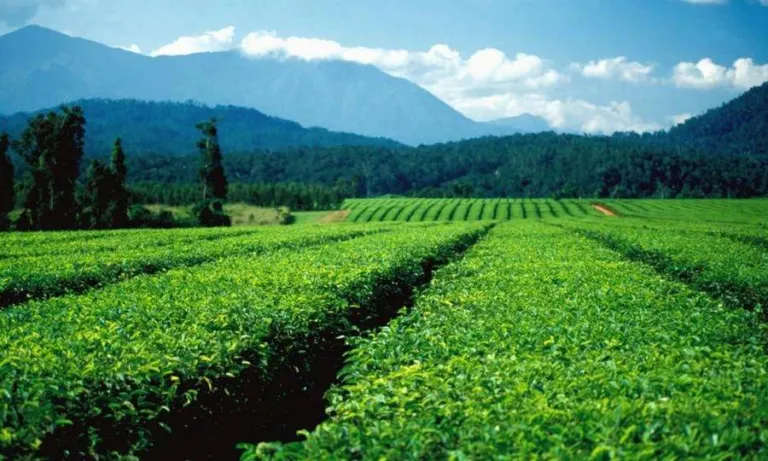
The tea bushes the rainforest kept
A tea story from our own coast.
In 1886 the Cutten brothers planted tea and coffee at Bingil Bay, up past Mission Beach. The tea failed for want of pickers, and cyclones later wrecked the estate. In the 1950s Alan Maruff, an Innisfail doctor, found their bushes gone wild under the canopy and grew seedlings behind his surgery. Those plants began Nerada, on the Tableland.
On the road up to the Tableland, remember the tea garden the scrub swallowed, and the doctor who found it again.
This page is the short version of Dr Thomas Ridley’s literature review. Every trial, regulator’s decision and source sits in the full article:
- Dr Luke Iggulden, Chief Scientific Officer — Senior author. Commissioned the Explainer series, set its direction and approved it
- Jesse Kirby — Wrote this edition from his own notes with the review shut: chose the five things a matcha drinker needs, set the order, wrote every sentence, cut the draft to length and kept the liver warning, the caffeine guides and the nadolol caution at full strength
- Zoe Bennett — Wrote the title, the search description and the labels, framed on the cup versus the capsule, the split a café drinker will recognise when the page is shared
- Theo Karras — Picked the whisked-bowl cover and the five section banners from the review’s licensed photographs, checked each by eye and wrote alt text that says what is actually in the frame
- Leah Bianchi — Built the page: the red safety box with the caffeine guides, the one-minute card, the two pull quotes, the five what-this-means cards and the card back to the review, laid out to read cleanly on a phone
Contributors
- Dr Thomas Ridley — Wrote Literature Review AIP-LR-CAMSIN, the article this page retells
Image credits. All photographs via Wikimedia Commons, as used in the parent review. Cover, whisked matcha: cyclonebill, CC BY-SA 2.0. Tea under shade cloth: Westermeierw, CC BY-SA 4.0. Tea ceremony: Ermell, CC BY-SA 4.0. Uji sencha: Difference engine, CC BY-SA 4.0. Iced matcha: Andy Li, CC0. Nerada tea plantation, Atherton Tableland, 1986: Ron Gale, CC BY 3.0 AU.
AIP Explainers are the plain-language editions of the Institute’s technical articles, published alongside the original. Everything on this page is carried by the full article, where the evidence, the references and the regulatory sources are set out. Regulatory information was read in November 2026 and may change. Spotted an error? Write to our contact form. We would rather correct a claim than repeat it.
Jesse Kirby
Head of Community Outreach
Australian Institute of Pharmacognosy
Cardwell QLD, Australia
australian-pharmacognosy.org · our contact form
The Institute sets and publishes its own monographs. The catalogue is in Publications.