

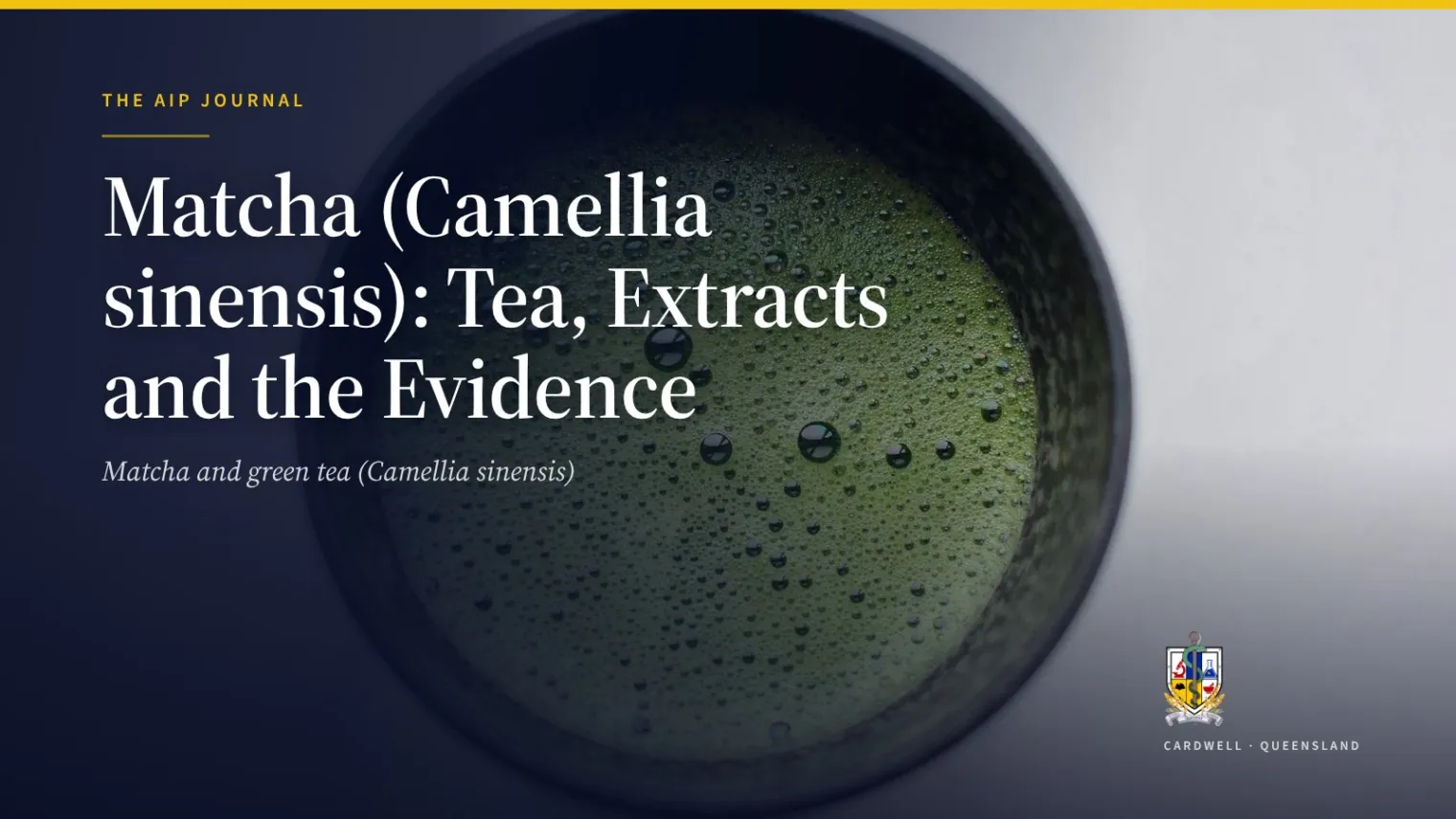
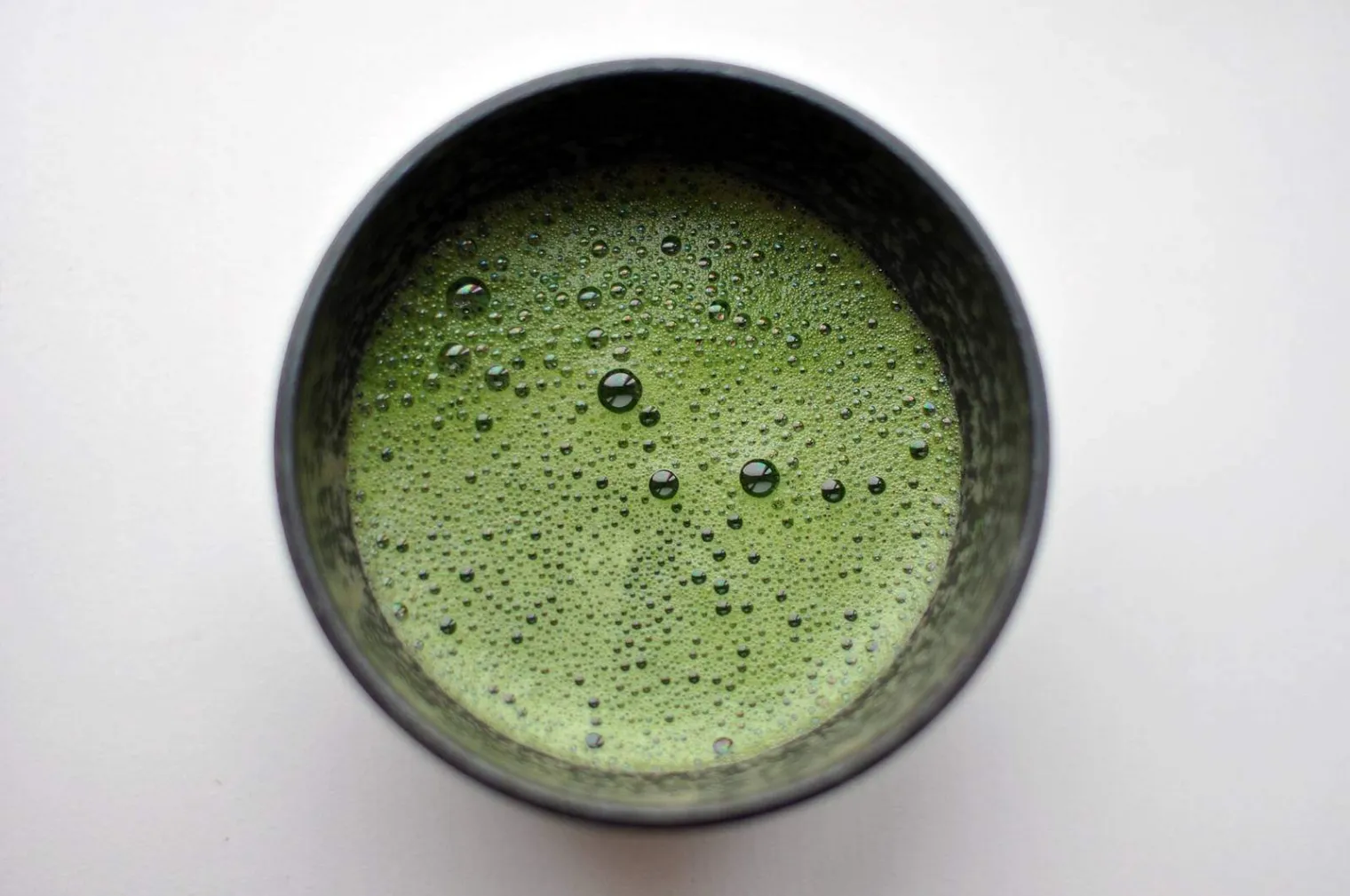
Cover: matcha whisked in a bowl. Photo: cyclonebill from Copenhagen, Denmark · CC BY-SA 2.0 · Wikimedia Commons
A bowl of matcha is a whole tea leaf, ground to dust and drunk entire. The bushes are covered for weeks before picking, the leaf turns a deep green, and the powder that comes off the stone mill carries the caffeine, the amino acid L-theanine and the catechins of the leaf all at once Confirmed (PMID 33375458 [1]). Australians are drinking a great deal more of it: Japanese green tea exports to Australia rose 131% in the first eight months of 2025 compared with a year earlier ([2]).
This is an AIP Literature Review and Critical Analysis of matcha and green tea, Camellia sinensis (L.) Kuntze, family Theaceae. We set three things side by side that are often blurred together on social media and on supplement shelves: the whisked powder, ordinary brewed green tea, and concentrated green tea extract sold in capsules for weight loss or ‘stress’. They come from the same leaf. They do not deliver the same amounts of anything, and Australian law now treats them differently. We have read the trials, the liver-injury case series, the drug-interaction studies and the Therapeutic Goods Administration’s own decision papers, and we grade every claim by the evidence behind it.
This article is educational. It is not medical advice, and nothing in it is a recommendation to take any product or dose.
Tea and matcha as drinks are foods regulated under the Food Standards Code. The caffeine in them counts toward Food Standards Australia New Zealand’s guidance: up to 400 mg a day for adults (no more than 200 mg in one serving), up to 200 mg a day in pregnancy or breastfeeding, and up to 3 mg per kilogram of body weight per serving for under-18s Confirmed ([3]).
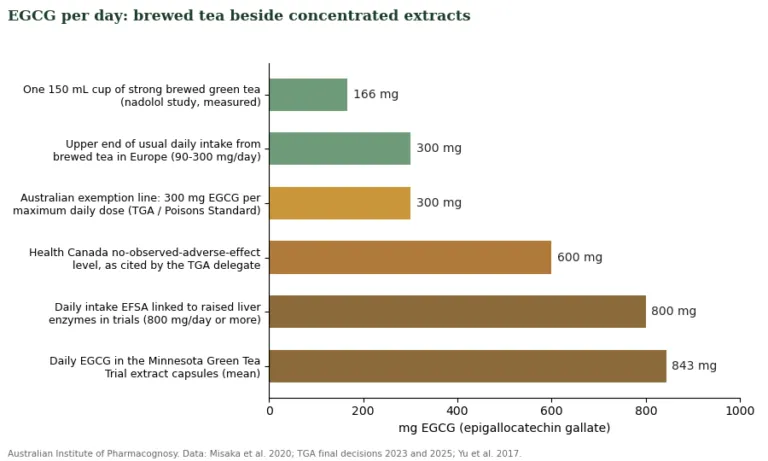
Concentrated green tea extracts have been linked to rare but serious liver injury, including transplants, one of them in Australia Confirmed ([4]; PMID 32892374 [5]). Oral listed medicines containing C. sinensis must now carry a liver warning and a ‘take with food’ statement unless the ingredient is an aqueous extract giving 300 mg of epigallocatechin gallate (EGCG) a day or less ([6]). Since 1 October 2026 other oral green tea extracts giving more than 300 mg EGCG a day, such as bulk food-additive powders, are in Schedule 5 of the Poisons Standard ([4]).
Stop any green tea product and get prompt medical care if you notice yellowing of the skin or eyes, dark urine, pale stools, unusual tiredness, nausea, loss of appetite, abdominal pain or itching ([7]; [4]). Green tea sharply lowers blood levels of the beta-blocker nadolol Confirmed (PMID 32320490 [8]). In an emergency call 000; for poisoning advice call the Poisons Information Centre on 13 11 26. Before taking any botanical drug, consult a degree-qualified herbalist with competencies and adequate training in pharmacognosy.
| Plant | Camellia sinensis (L.) Kuntze, Theaceae; matcha is made from shade-grown leaf processed as tencha and stone-ground Confirmed §1, §5 |
| What is in it | Catechins (EGCG the largest), caffeine, L-theanine, chlorophyll; shading raises theanine and caffeine and lowers some catechins (PMID 36430647 [9]) Confirmed §6 |
| Caffeine per gram of matcha | Published analyses mostly about 14 to 44 mg/g, with wide variation between products and laboratories (PMID 38672839 [10]) Evidence suggests §6 |
| Alertness and calm | Theanine with caffeine has small, consistent effects on attention in short trials; matcha-specific trials are few and mostly industry-linked Evidence suggests §8 |
| Weight loss | Outside Japan, green tea preparations made no meaningful difference to body weight in a Cochrane review (PMID 23235664 [11]) Confirmed §8 |
| Cholesterol and blood pressure | Small falls in LDL cholesterol and blood pressure in pooled trials (PMID 32434539 [12]; PMID 32028419 [13]) Evidence suggests §8 |
| Liver | Rare idiosyncratic injury with concentrated extracts, strongly associated with HLA-B*35:01; brewed tea has a long record of safe use (PMID 32892374 [5]) Confirmed §9 |
| Interactions | Nadolol exposure cut by about two-thirds when taken with a cup of strong green tea (PMID 32320490 [8]) Confirmed; caffeine interactions Evidence suggests §9 |
| Australian law | Food when drunk as tea; listed-medicine warnings since 2024; Schedule 5 for other high-EGCG oral extracts from 1 October 2026 ([4]) Confirmed §10 |
| ‘Ceremonial grade’ | A trade description. Higher grades carry more theanine and caffeine and fewer catechins (PMID 40508306 [14]) Evidence suggests §11 |
- Confirmed: established in humans by trial, or an unambiguous analytical, chemical or legal fact.
- Evidence suggests: real published data, but preclinical, observational, small, or not yet replicated in people.
- Mechanism: a plausible pharmacological inference, not an outcome.
- Traditional: historical or ethnobotanical use. Evidence of practice, not of efficacy.
- Attested: a documentary fact attested in a named source. A textual reading, not a claim about what a plant does.
Every PubMed ID (PMID) links to its PubMed record and was checked against PubMed in November 2026; we cite only papers we read in full. Every compound links to its PubChem record. Where a claim is widely repeated but we could not trace it to a primary source, it is marked unsourced and left as such.
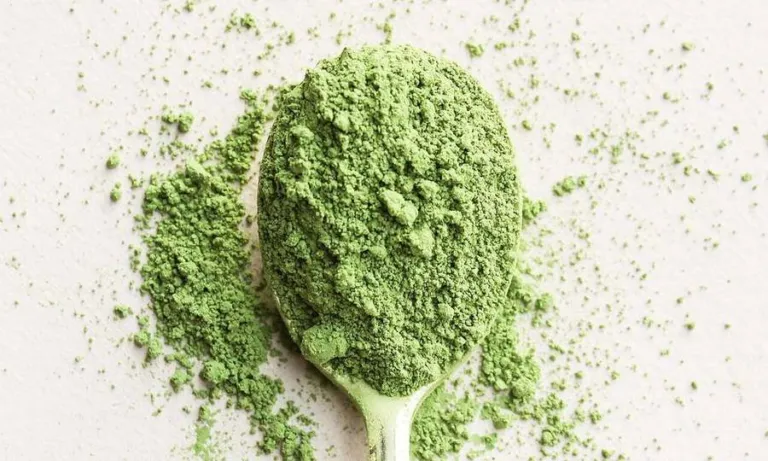
Matcha is green tea in its most concentrated everyday form. Because you drink the powdered leaf, a serve carries more of everything than a cup of brewed leaf tea of the same weight. The bushes are shaded before harvest, which pushes up theanine, caffeine and chlorophyll and lowers some of the catechins Confirmed (PMID 36430647 [9]; PMID 40508306 [14]). Caffeine is the main active constituent for most people, and published analyses of matcha range widely, from roughly 14 to 44 mg per gram Evidence suggests (PMID 38672839 [10]; PMID 33375458 [1]).
The human evidence is real but modest. Theanine and caffeine together sharpen attention a little in short laboratory trials Evidence suggests. Green tea in pooled trials lowers LDL cholesterol by about 0.12 mmol/L and blood pressure by about 1 mmHg Evidence suggests (PMID 32434539 [12]; PMID 32028419 [13]). It does not reliably cause weight loss in Western trials Confirmed (PMID 23235664 [11]). The ‘cortisol’ and ‘detox’ claims circulating online are not supported by the trials we found.
Safety depends on form. Tea as a drink has an old and reassuring record. Concentrated extracts, especially in multi-ingredient weight-loss products and taken on an empty stomach, account for nearly all the rare serious liver injuries; susceptibility looks immune-mediated and linked to the gene variant HLA-B*35:01 Confirmed (PMID 32892374 [5]; PMID 32140423 [15]). Australia responded with label warnings on listed medicines and, from 1 October 2026, a Schedule 5 entry for other high-dose extracts Confirmed ([6]; [4]).
Two practical points stand out. Anyone taking nadolol should know that green tea cuts its absorption sharply Confirmed (PMID 32320490 [8]), and caffeine adds up across coffee, tea, matcha and supplements, so pregnant women in particular should count it Confirmed ([3]). Matcha is a good drink with a long history. The capsule is a different product and deserves different care.
 1 · Identity and taxonomy
 2 · Botany and cultivation: the shade that makes matcha
 3 · Distribution, and tea in far north Queensland
 4 · Traditional and historical use
 5 · From leaf to powder: tencha, the stone mill and the whisk
 6 · Phytochemistry: catechins, theanine and caffeine
 7 · Pharmacology: what the compounds do
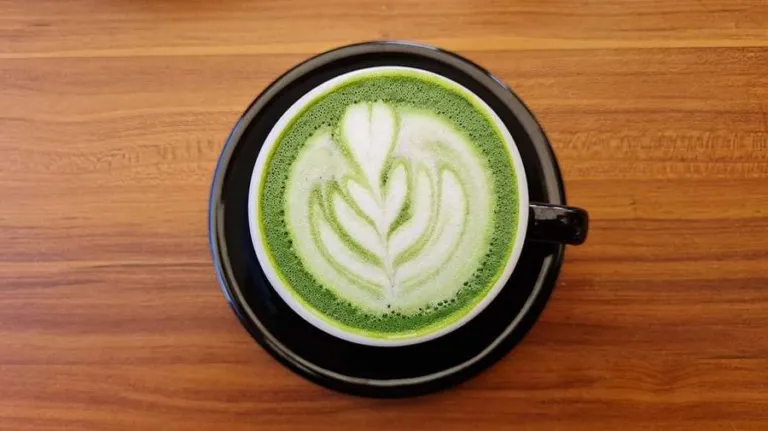 8 · Clinical evidence: alertness, stress, weight and the heart
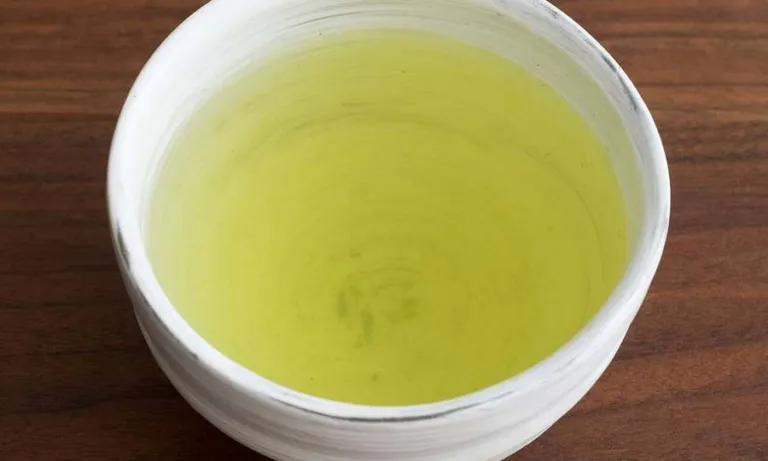 9 · Safety and interactions
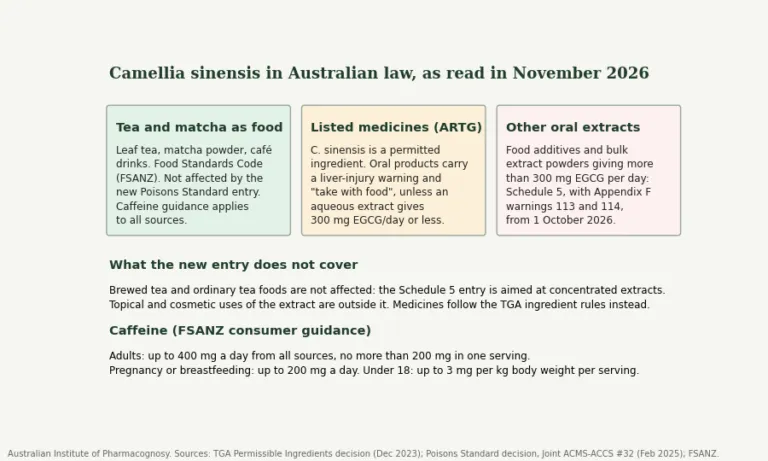 10 · Australian regulatory status
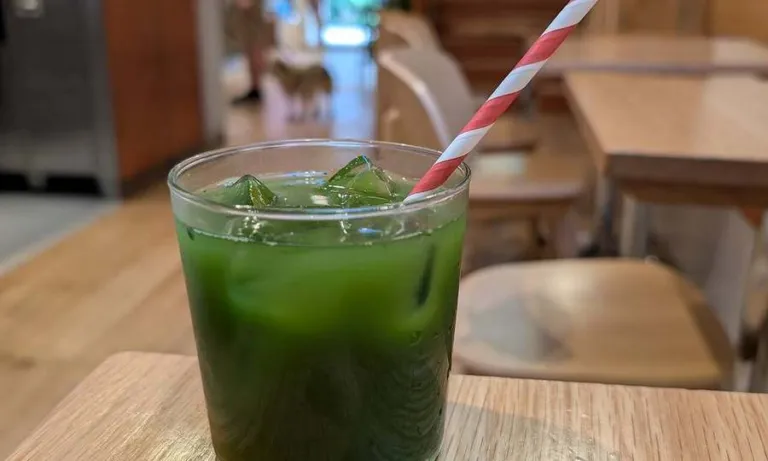 11 · Quality, grades, adulteration and reading the label
 Discussion: conclusions, hypotheses and research still required
1. Identity and taxonomy
Tea is Camellia sinensis (L.) Kuntze, a member of the Theaceae, the camellia family. Linnaeus placed it in its own genus, Thea, and the name survives in ‘theine’, the old word for the caffeine of tea, and in the family name itself. Two varieties matter commercially: the small-leaved, cold-tolerant var. sinensis, the Chinese and Japanese tea bush, and the large-leaved var. assamica of Assam and the wet tropics Confirmed (standard botanical account, not separately referenced here). Matcha is a powdered Japanese green tea made from tencha, the shaded leaf that is later milled Confirmed (PMID 33375458 [1]).
Green, white, oolong and black teas are all the same species. The difference is processing. Green tea is heated soon after picking, by steaming in Japan and pan-firing in much of China, which stops the leaf’s own polyphenol oxidase enzymes from oxidising the catechins. Black tea is rolled and left to oxidise, so most of its catechins are turned into theaflavins and thearubigins Confirmed, and its catechin content is far lower than green tea’s (PMID 33375458 [1]). The European Medicines Agency’s herbal committee names the green drug Camelliae sinensis non fermentatum folium, the ‘unfermented leaf’ Attested ([16]).
| Accepted name | Camellia sinensis (L.) Kuntze Confirmed |
| Family | Theaceae Confirmed |
| Historical synonyms | Thea sinensis L.; Thea bohea L.; Thea viridis L. Confirmed |
| Common names | Tea, green tea; matcha (抹茶, ‘ground tea’) for the powder; tencha (碾茶) for the shaded, dried leaf before milling Confirmed |
| Part used | Young leaf and bud. Matcha: whole leaf lamina, destemmed and deveined, then stone-ground (PMID 33375458 [1]) Confirmed |
| Drug name in the EU | Camelliae sinensis non fermentatum folium (overseas, for reference) ([16]) Attested |
2. Botany and cultivation: the shade that makes matcha
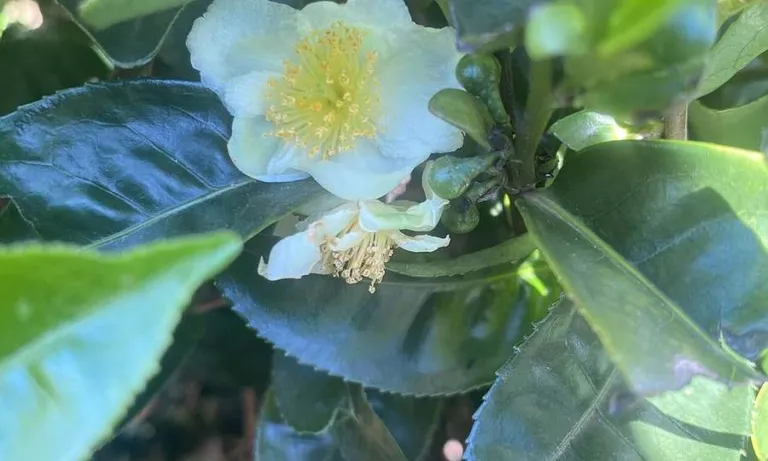
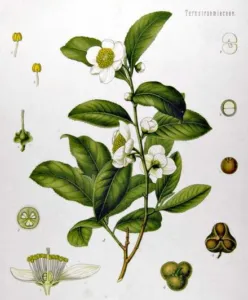
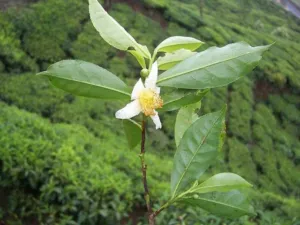
Left alone, C. sinensis is a small evergreen tree of up to about ten metres. In cultivation it is kept as a waist-high hedge so the flush of young shoots can be picked by hand or by machine. The leaves are leathery, glossy and finely toothed. Flowers are white, about three centimetres across, with a boss of yellow stamens, and the fruit is a woody capsule of one to three large, oily seeds Confirmed (standard botanical account, not separately referenced here).
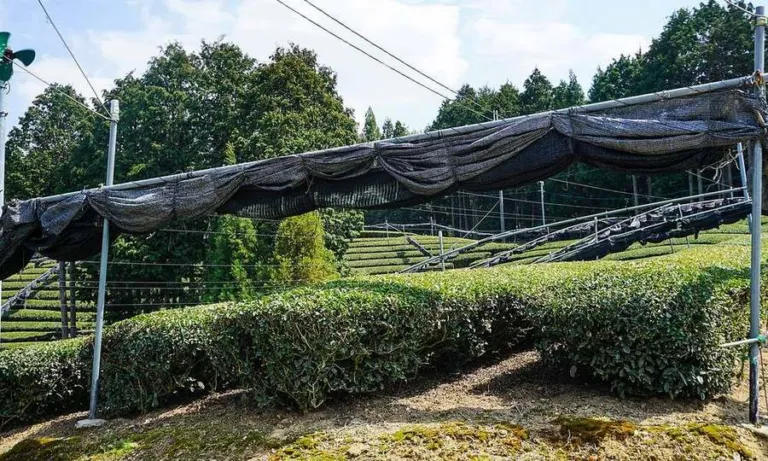
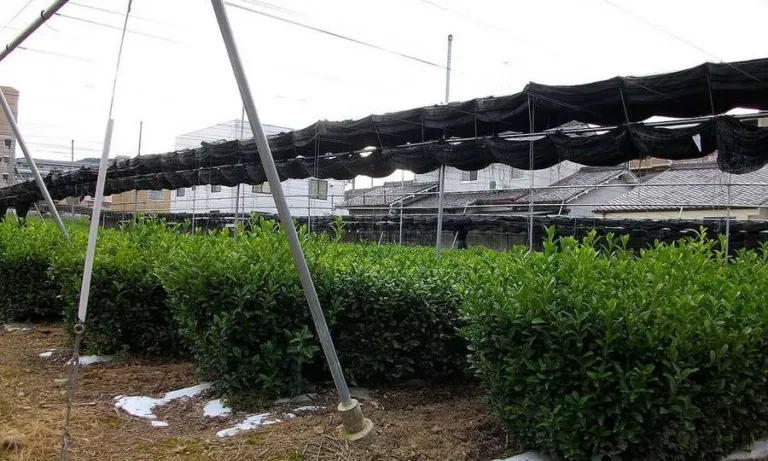
Matcha begins with light. Before the spring harvest the bushes are covered, traditionally with bamboo mats and now often with synthetic shade netting, to keep direct sun off the leaves Traditional (PMID 33375458 [1]). A 2022 Chinese field study of Fuding white tea bushes grown for matcha under 85% and 95% shade found darker leaves, more chlorophyll and carotenoid, more theanine and caffeine, and less epicatechin and epigallocatechin than leaf grown in the open; after fifteen days at 85% shade, chlorophyll b was 1.4 times higher than in the open-air controls Confirmed (PMID 36430647 [9]). Under shade, theanine is not broken down as it is in sunlit leaf, so the amino acid stays in the leaf and the tea tastes sweeter and more savoury, the flavour Japanese tea makers call umami Mechanism (PMID 33375458 [1]; PMID 38672839 [10]).
The same chemistry explains why grades differ. The first spring flush, picked young, carries the most theanine and caffeine; later and older leaves carry more catechins and taste more bitter Evidence suggests (PMID 40508306 [14]). We come back to this in §11, because it bears directly on what ‘ceremonial’ and ‘culinary’ mean on a café menu.
3. Distribution, and tea in far north Queensland
Tea is native to the borderlands of south-west China, north-east India and northern Myanmar and is now grown across subtropical and tropical Asia, East Africa, Sri Lanka, Turkey, Iran and South America Confirmed (standard botanical account, not separately referenced here). The best-known matcha districts of Japan are Uji near Kyoto and Nishio in Aichi (unsourced here; widely stated in trade and travel literature).
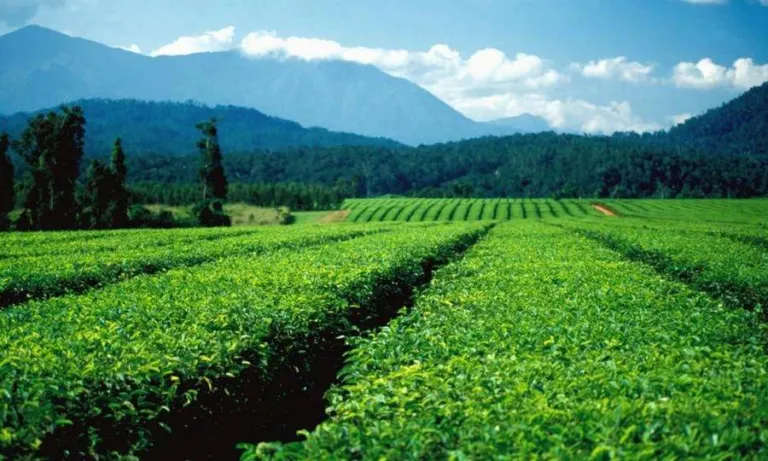
The Australian story starts close to the Institute. In 1886 four brothers, James, Leonard, Sidney and Herbert Cutten, took up land at Bingil Bay, north of Mission Beach, and planted coffee and tea. The tea failed for lack of labour for the constant picking, the coffee did well for a time, and cyclones in 1890, 1911 and above all March 1918 destroyed the estate Attested ([17]). In the 1950s an Innisfail doctor, Alan Maruff, found the old Cutten tea bushes growing wild in the rainforest, raised seedlings from them behind his surgery, and used them to start the Nerada plantation, which later supplied seed to new plantations in Papua New Guinea Attested ([17]). Tea has been grown commercially on the Atherton Tableland since then, though we could not confirm current production. As far as we can find, almost none of the matcha sold in Australian cafés is grown here; the boom is supplied mainly from Japan and China (our reading of trade reporting; we found no published Australian production figures for powdered green tea, so treat this as unsourced).
Camellia sinensis is not, as far as we could find, listed as a declared weed or restricted plant in Queensland, and leaf tea is an ordinary food import (unsourced; we found no biosecurity listing for the species, which is not the same as a statement from the regulator). The current demand has outrun supply. SBS reported in October 2025 that a May 2025 Kyoto auction set a record price for tencha of 8,235 yen per kilogram, with heat and labour shortages in Japan blamed, and that Australian café owners expected prices to keep rising Evidence suggests ([2]).
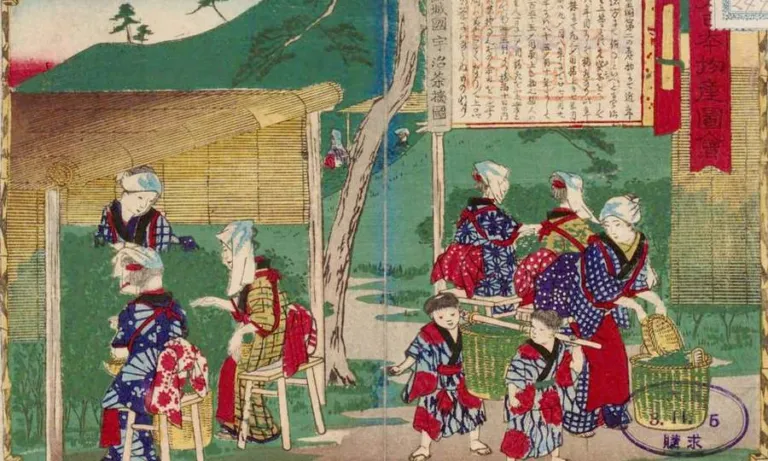
4. Traditional and historical use
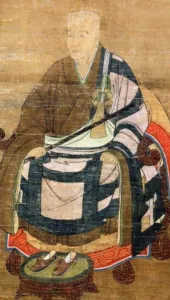
Powdered tea is older in China than in Japan. Under the Song dynasty (960-1279), tea was steamed, pressed and dried, then ground and whipped with hot water in a bowl, the method that Japanese visitors to Chan (Zen) monasteries brought home Traditional. The monk Myōan Eisai (1141-1215) is credited with bringing tea seed and the whisked-tea method back from China in 1191 and with writing Kissa Yōjōki, ‘Drinking Tea for Health’, in 1211, which presents tea as a tonic for the heart and for keeping monks awake through meditation Traditional. We have not collated a critical edition of the text for this review, so these attributions are reported from standard histories and are unsourced here.
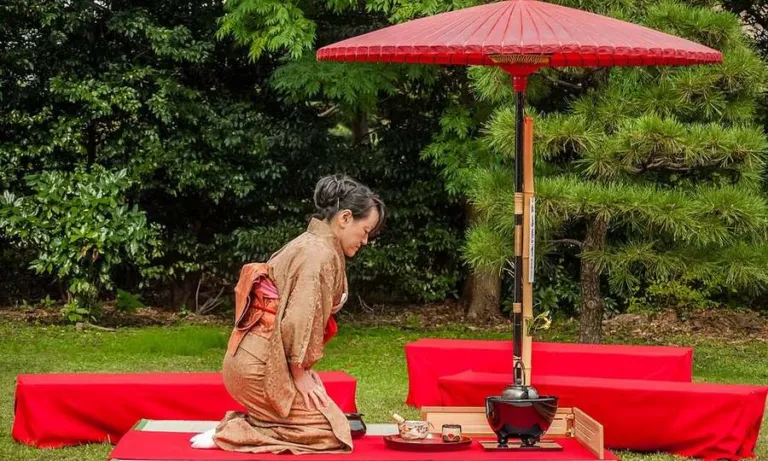
From the monasteries the drink moved into the warrior and merchant classes, and by the sixteenth century it had become chanoyu, the tea ceremony shaped by Sen no Rikyū, in which matcha is whisked with a bamboo whisk in a hand-thrown bowl Traditional. Through all of this the uses claimed for tea were the ones people still recognise: wakefulness, clear-headedness, relief of fatigue and help with digestion after heavy food Traditional. The European Medicines Agency’s committee accepted one of them, the relief of fatigue and sensation of weakness, as a traditional-use indication for green tea leaf on the strength of long-standing use; that is a regulatory judgement of plausibility and safety, not a finding from trials, and it is an overseas decision that does not apply in Australia Attested ([16]).
The recent claims are different in kind. ‘Matcha lowers cortisol’, ‘matcha detoxes’ and ‘matcha burns fat’ come from social media, and we test each of them in §8. ‘Detox’ in particular has no defined pharmacological meaning, and we found no human trial that measured one.
5. From leaf to powder: tencha, the stone mill and the whisk
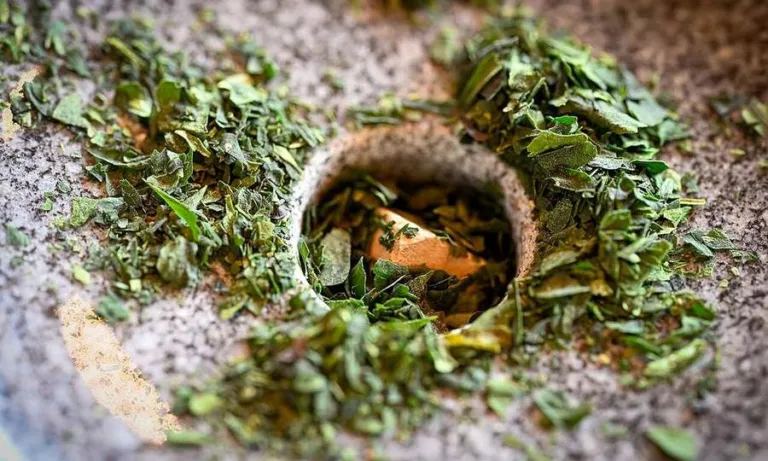
As the process is usually described (we cite no primary source for the steps, so treat the detail as unsourced), the shaded leaf is steamed soon after picking to stop oxidation, dried flat without the rolling that gives sencha its needle shape, and stripped of stems and veins, leaving flakes called tencha Traditional. Tencha is milled, traditionally between stones, into a powder fine enough to stay suspended in water; matcha is defined as powdered tea of the tencha type Confirmed (PMID 33375458 [1]). Lower grades are milled faster by other methods Evidence suggests (PMID 40508306 [14]).
Grinding matters for what reaches the cup. A brewed leaf tea leaves most of its insoluble matter, and some of its catechins and caffeine, in the pot. Matcha is drunk whole, so the fibre, chlorophyll, protein and fat-soluble pigments of the leaf are swallowed too. One review cites work showing that drinks made from powdered tea carry more polyphenol than infusions of the same leaf Evidence suggests (PMID 33375458 [1]). Only about 30 to 40% of the leaf’s dry matter is water-soluble in any case Confirmed (PMID 38672839 [10]).

6. Phytochemistry: catechins, theanine and caffeine
Catechins (flavan-3-ols)
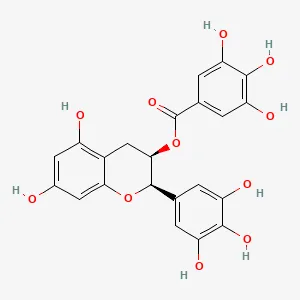
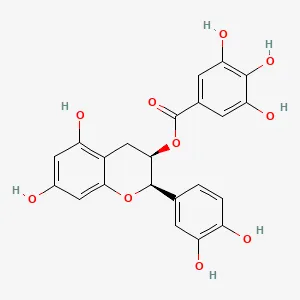
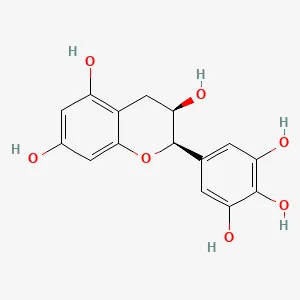
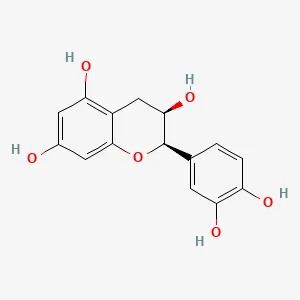
The catechins are the polyphenols of green tea. Four dominate: (−)-epigallocatechin gallate, EGCG (PubChem CID 65064), (−)-epicatechin gallate, ECG (CID 107905), (−)-epigallocatechin, EGC (CID 72277) and (−)-epicatechin, EC (CID 72276). EGCG is the most abundant and the one regulators use as the marker Confirmed ([4]). The ‘gallate’ catechins carry an extra galloyl ester, the part of the molecule thought to give EGCG most of its protein-binding behaviour Mechanism. Catechins are why green tea is astringent, why it binds iron (§9) and why concentrated extracts behave so differently from the drink.
Caffeine
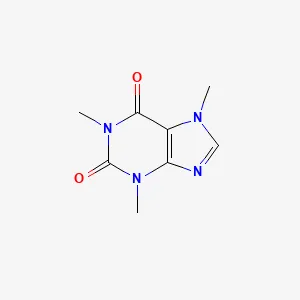
Caffeine, 1,3,7-trimethylxanthine (CID 2519), is the compound most people actually feel. Here the numbers are less tidy than social media suggests. A 2020 review summarised published values of 11.3 to 24.7 mg/g for green leaf teas and 18.9 to 44.4 mg/g for matcha Evidence suggests (PMID 33375458 [1]). A Czech analysis cited by a 2024 Polish study found 14.4 to 34.1 mg/g, while the Polish group’s own HPLC measurement of one commercial matcha came out at only 2.2 mg/g Evidence suggests (PMID 38672839 [10]). Shading and early picking raise caffeine, and higher grades carry more of it than food-grade powder Evidence suggests (PMID 40508306 [14]; PMID 36430647 [9]).
By simple arithmetic, a café serve made with two grams of powder at 14 to 44 mg/g would contain roughly 30 to 90 mg of caffeine, about the same as a cup of instant coffee (the TGA’s own label wording puts a cup of instant coffee at about 80 mg) Evidence suggests ([6]). The two-gram serve is our illustration; we found no published survey of Australian café serve sizes, so the real figure for any given drink is unsourced and may be higher if extra powder is used.
L-theanine
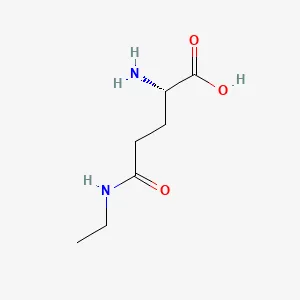
L-theanine, γ-glutamylethylamide (CID 439378), is an unusual non-protein amino acid characteristic of tea Confirmed (PMID 30308973 [18]). It gives shaded tea its savoury taste and is the compound most often credited with matcha’s ‘calm alertness’. Reported contents vary even more than caffeine: one study cited in the 2020 review measured 44.65 mg/g in matcha powder, another only 6.1 mg/L in a prepared drink Evidence suggests (PMID 33375458 [1]). Matcha is rich in theanine and caffeine and relatively low in catechins compared with ordinary green tea, according to the Japanese group that has studied it most Evidence suggests (PMID 30308973 [18]).
Pigments, fibre and the rest
Because the leaf is eaten whole, matcha also supplies chlorophyll (one cited analysis found 5.65 mg/g in tencha leaf against 4.33 mg/g in conventional green tea), carotenoids, vitamin K, insoluble fibre and small amounts of protein and fat Evidence suggests (PMID 33375458 [1]) (PMID 33256220 [19]) (PMID 38672839 [10]). Gallic acid was the leading phenolic acid in the 2024 Polish analysis, which also detected rutin, quercetin, myricetin and kaempferol Confirmed (PMID 38672839 [10]). The amla fruit we reviewed earlier is another plant whose activity is attributed largely to its gallotannins and other polyphenols; readers who want the comparison will find it in our amla review.
7. Pharmacology: what the compounds do
Caffeine is an adenosine receptor antagonist: it blocks the adenosine A2A receptor, which promotes the release of excitatory neurotransmitters Confirmed (PMID 34067795 [20]). Adenosine builds up during waking hours and promotes sleepiness, which is why blocking it delays fatigue and sharpens reaction time Mechanism. Caffeine is metabolised in the liver, largely by the enzyme CYP1A2 (standard pharmacology, not separately referenced here), and the TGA requires oral medicines giving more than 80 mg of caffeine a day to carry the statement ‘Caffeine interacts with enzyme CYP1A2 in the liver’ Confirmed ([6]).
L-theanine crosses into the brain. In human studies it has been associated with increased alpha-wave activity on EEG, which researchers read as relaxed wakefulness, and a Japanese review reports that one study saw alpha waves at 50 mg of theanine only in highly anxious participants Evidence suggests (PMID 34067795 [20]). In mice under social stress, matcha samples high in theanine and arginine and low in caffeine and EGCG relative to theanine suppressed stress-induced enlargement of the adrenal glands; caffeine and EGCG worked against the effect Evidence suggests (PMID 30308973 [18]). That ratio idea is the basis of most ‘calming matcha’ claims, and so far it rests mostly on mouse work and one small human trial (§8) Mechanism.
EGCG and the other catechins are extensively studied in the laboratory as antioxidants and as modulators of enzymes and cell signalling. Their oral bioavailability is low and highly variable: in a 2020 crossover study, EGCG taken fasting gave the highest plasma concentrations, while taking it with breakfast or in a food matrix gave lower but steadier exposure Confirmed (PMID 32438698 [21]). The United States Pharmacopeia review gives the scale of the effect: plasma EGCG exposure was about 3.9 times higher, and in another study five times higher, when extract was taken on an empty stomach Confirmed (PMID 32140423 [15]). That single fact sits behind much of the safety story in §9.
Catechins also act on transporters in the gut wall. EGCG inhibits OATP1A2, the uptake transporter that carries the beta-blocker nadolol into intestinal cells, which explains the large interaction described in §9 Mechanism (PMID 32320490 [8]). Their galloyl groups bind non-haem iron in the gut and reduce its absorption Mechanism (PMID 42613905 [22]).
8. Clinical evidence: alertness, stress, weight and the heart
Alertness and attention
The best-supported effect of matcha is the obvious one: caffeine, taken with theanine, makes people a little more alert. Combination trials of the two compounds show small gains in attention-switching and accuracy over a few hours; these findings are widely summarised, but the main meta-analysis is not open access and we have queued it for full reading before citing it, so we grade the claim Evidence suggests here. Matcha-specific trials are few. In a Japanese randomised trial in 51 adults aged 50 to 69 who reported some decline in cognitive function, nine capsules a day containing a total of about 2 g of matcha for 12 weeks were compared with caffeine alone and with placebo; the authors report that matcha improved some measures of attention and work performance under mild psychological stress compared with caffeine alone Evidence suggests (PMID 34067795 [20]). Five of the six authors were employees of the company that supplied the matcha, which the paper declares Evidence suggests (PMID 34067795 [20]).
A second Japanese trial gave 61 older adults 3 g of matcha or placebo a day for 12 weeks. There was no significant difference between groups in the primary cognitive scores (MoCA and MMSE); a subgroup analysis in women found an improvement on MoCA, which is a finding to test, not a conclusion Evidence suggests (PMID 33256220 [19]). A handful of small, short, mostly Japanese trials does not yet add up to ‘matcha improves memory’.
Stress, sleep and the ‘cortisol’ claim
In a double-blind trial in 39 university students starting an 11-week placement in hospitals and pharmacies, those given a high-theanine ‘test’ matcha (3 g a day suspended in 500 mL of water) reported lower anxiety than those given a ‘placebo’ matcha chosen for its higher caffeine and catechin content; salivary α-amylase, a marker of sympathetic arousal, was also measured Evidence suggests (PMID 30308973 [18]). Pure L-theanine at 200 mg a night for four weeks reduced scores for depression, trait anxiety and poor sleep in a 30-person crossover trial in healthy Japanese adults Evidence suggests (PMID 31623400 [23]); the theanine came from its manufacturer, two of whose staff were co-authors.
We found no trial in which matcha as drunk in Australian cafés lowered blood or salivary cortisol. The ‘cortisol’ claim appears to be extrapolated from the theanine and mouse adrenal work above. A café matcha with 60 mg or more of caffeine is, if anything, a mild stimulant, and the human trials that show calming effects used specially chosen low-caffeine matcha or isolated theanine Evidence suggests.
Weight and metabolism
This is where the claims and the evidence part company. The Cochrane review of green tea preparations for weight loss found that in six trials conducted outside Japan, the mean difference in weight loss was 0.04 kg, statistically and practically nothing; trials in Japan reported losses of 0.2 to 3.5 kg but were too different to pool Confirmed (PMID 23235664 [11]). The reviewers judged the effect small and not clinically important. A short-term study cited in a 2026 paper found that 3 g of matcha a day for three weeks increased fat oxidation during moderate-intensity exercise in women without changing total energy expenditure Evidence suggests (PMID 41686841 [24]), which is consistent with a modest caffeine effect and not with ‘fat burning’ in the everyday sense.
Cholesterol and blood pressure
Pooled trials show small favourable changes. A 2020 meta-analysis of 31 trials found that green tea lowered total cholesterol by 4.66 mg/dL (about 0.12 mmol/L) and LDL cholesterol by 4.55 mg/dL (about 0.12 mmol/L), with no effect on HDL Evidence suggests (PMID 32434539 [12]). A companion meta-analysis found reductions of about 1.2 mmHg in both systolic and diastolic blood pressure Evidence suggests (PMID 32028419 [13]). The 2013 Cochrane review found larger effects for green tea on LDL cholesterol (−0.64 mmol/L) and blood pressure, but from few trials and unstable on sensitivity analysis; no trial reported heart attacks or strokes Evidence suggests (PMID 23780706 [25]). These are real effects of the size a dietary habit can produce. They are not a reason to replace any prescribed treatment.
Cancer
The 2020 Cochrane review of green tea and cancer, covering more than 1.1 million people in observational studies plus the randomised trials, concluded that the results were inconsistent and gave limited evidence of benefit; for some cancers cohort and case-control studies pointed in opposite directions Confirmed (PMID 32118296 [26]). We grade any cancer-prevention claim for matcha as unsupported by the evidence available.
9. Safety and interactions
Green tea drunk as a beverage is one of the most widely consumed drinks in the world and has a long record of safe use. Australia’s regulator says so directly: the TGA’s 2018 advisory states that ‘the majority of C. sinensis use (including green tea in beverage form) is unlikely to cause harm’ Confirmed ([7]). The safety questions concern dose, form and a small number of susceptible people.
The liver: what the case series show
Since the early 2000s, regulators and hepatologists have reported liver injury in people taking concentrated green tea extracts, mostly in weight-loss and ‘fat-burner’ products. The TGA’s 2018 advisory recorded 20 Australian adverse event reports involving C. sinensis products and liver injury; all but one involved concentrated extracts, 17 involved several suspect products or multi-ingredient products, and in three the only suspected product contained C. sinensis as its sole active ingredient Confirmed ([7]). The TGA delegate’s 2025 decision notes that ingestion of concentrated extracts has led to liver transplants, including at least one case in Australia Confirmed ([4]).
The clearest picture comes from the United States Drug-Induced Liver Injury Network (DILIN), an NIH-funded prospective registry. Of the cases that underwent formal causality assessment, 40 (3%) were attributed to green tea products, against 202 to other dietary supplements and 1,142 to conventional drugs Confirmed (PMID 32892374 [5]). The injury was hepatocellular in 95% of green tea cases, with very high transaminases. Patients were 17 to 69 years old (median 40), 74% were women, and symptoms began a median of 72 days after starting the product (range 15 to 448). The course was severe in 35%, three patients (8%) needed a liver transplant, and chronic injury was rare (3%) Confirmed (PMID 32892374 [5]). The multi-ingredient products among them had a median of 11.5 active ingredients, and only 22% had ‘green tea’ in their commercial names Confirmed (PMID 32892374 [5]). An earlier DILIN analysis found catechins present in many implicated supplements even when green tea was not on the label Evidence suggests (PMID 23625293 [27]). Anyone choosing a weight-loss supplement should read the full ingredient list.
Why some people and not others
DILIN typed its patients’ immune genes. The HLA class I allele HLA-B*35:01 was found in 72% of green tea cases, against 15% of cases due to other supplements, 12% due to drugs and about 11% of population controls Confirmed (PMID 32892374 [5]). That pattern points to an idiosyncratic, immune-mediated reaction in a genetically susceptible minority. Laboratory work supports it: EGCG can prime T-cells from human donors and generate EGCG-responsive CD4+ T-cell clones in vitro Evidence suggests (PMID 38055372 [28]). Variation in catechin-metabolising enzymes may add to risk; in the Minnesota trial, changes in liver enzyme ratios differed modestly by COMT genotype Evidence suggests (PMID 36178169 [29]). The TGA describes the injury as having ‘both an intrinsic dose dependent aspect, as well as a dose independent idiosyncratic aspect’ Confirmed ([6]).
Dose, and the empty stomach
The dose-dependent part is shown by the largest randomised trial. In the Minnesota Green Tea Trial, 1,075 healthy postmenopausal women took green tea extract capsules or placebo for 12 months; the active capsules gave a mean of 843 mg of EGCG and 1,315 mg of total catechins a day Confirmed (PMID 28765194 [30]). ALT rose on average by 5.4 U/L more than in the placebo group, and 5.1% of women taking the extract developed moderate or more severe liver test abnormalities, an odds ratio of 7.0; ALT returned to normal when the capsules stopped and rose again on rechallenge Confirmed (PMID 28765194 [30]). EFSA’s conclusion, quoted by the TGA, is that 800 mg of EGCG a day or more taken as a supplement raises transaminases in trials Confirmed ([4]). Health Canada’s no-observed-adverse-effect level of 600 mg EGCG a day and recommended maximum of 300 mg a day, also cited by the TGA delegate, frame the Australian 300 mg line Confirmed ([4]).
Fasting magnifies exposure. Taking extract on an empty stomach raised plasma EGCG several-fold in human studies Confirmed, and in dog studies reviewed by the USP, fed dogs showed no treatment-related harm at EGCG doses up to 500 mg/kg a day while fasted dogs given a green tea preparation suffered serious toxicity, including deaths, at 150 mg/kg a day and above Evidence suggests (PMID 32140423 [15]). The USP added ‘Do not take on an empty stomach’ to its monograph for powdered decaffeinated green tea extract, and Australian listed medicines must now say ‘To be taken with food’ Confirmed (PMID 32140423 [15]; [6]). Weight-loss users who take extract capsules before breakfast, or while fasting, are the group the warnings are written for.
Where does matcha sit? Because the whole leaf is swallowed, a matcha serve delivers more catechin per gram of leaf than an infusion does, but it is still a food-sized amount of a food-form leaf, taken usually with milk and often with food. We found no published case series attributing liver injury to matcha drinks, and the TGA’s 2023 decision treats products consistent with a brewed cup of green tea as low risk Evidence suggests ([6]). A small number of hepatitis case reports after green tea infusion exist in the literature reviewed by the USP Evidence suggests (PMID 32140423 [15]). Our reading is that the risk of matcha as a drink is low and of the same kind as brewed green tea; that is an inference from the evidence on brewed tea and extracts, not a direct study of matcha Mechanism.
The liver story has a parallel in kava, where traditional water-based drinks were used safely for generations and the serious reports clustered around concentrated solvent extracts; we set out that history in our kava review. The lesson in both cases is that a traditional preparation and a modern concentrate of the same plant are different medicines.
Caffeine
Caffeine is the commonest reason a matcha habit causes trouble. The EMA herbal committee lists restlessness, tremor and heightened reflexes as signs of overdose, above about 300 mg of caffeine or five cups of tea, and advises against tea at bedtime because it disturbs sleep Attested ([16]). FSANZ’s guidance of no more than 400 mg a day for adults and 200 mg a day in pregnancy and breastfeeding counts caffeine from all sources together, so two large matcha lattes, a coffee and a pre-workout drink can exceed it Confirmed ([3]). Caffeine crosses the placenta and enters breast milk Confirmed ([16]). Children reach the limit quickly. FSANZ’s figure for under-18s is 3 mg per kilogram of body weight per serving Confirmed ([3]), which is about 90 mg for a 30 kg child, and on the published range of roughly 14 to 44 mg of caffeine per gram Evidence suggests (PMID 38672839 [10]), a 2 g serve of matcha could hold anywhere from about 28 to 88 mg. Caffeine also builds up when its clearance is slowed. The TGA’s caffeine statement for medicines names the liver enzyme CYP1A2 Confirmed ([6]), and medicines that inhibit that enzyme, such as fluvoxamine and ciprofloxacin, are generally held to raise caffeine levels (standard pharmacology, not separately referenced here); anyone taking them may notice a usual amount of matcha more strongly.
Iron
Tea catechins bind non-haem iron, the form in plant foods and supplements, and reduce its absorption when tea is drunk with a meal Mechanism. Studies have reported lower iron absorption and lower ferritin with green tea catechins, though in a small eight-week trial of 400 mg EGCG a day in women with obesity, iron indices did not change significantly Evidence suggests (PMID 42613905 [22]). For people with iron-deficiency anaemia, vegetarians and vegans, and pregnant women, the usual practical response is to drink tea between meals, an approach we could not trace to a trial that tested it directly (unsourced).
Medicine interactions
Nadolol. This interaction is large and well documented. The Fukushima group first showed that two weeks of green tea drinking cut plasma nadolol by 85% in healthy volunteers, as summarised in their later paper Confirmed (PMID 32320490 [8]). In that 2020 crossover study, a single 150 mL cup of strong brewed green tea (about 166 mg of EGCG) taken with a 30 mg dose of nadolol reduced nadolol exposure (AUC) to 37% of the value with water; drinking the tea an hour before the tablet still reduced it to 54% Confirmed (PMID 32320490 [8]). The likely mechanism is EGCG blocking OATP1A2, the transporter that carries nadolol in from the gut Mechanism (PMID 32320490 [8]). A 2026 rat study found no significant change in nadolol exposure with matcha, a result that may reflect species differences in transporters and does not override the human data Evidence suggests (PMID 41686841 [24]). People who take nadolol, and anyone prescribing or dispensing it, should know about this.
Other medicines. The EMA monograph notes that caffeine-containing preparations reduce the action of sedatives and increase the side effects of sympathomimetic drugs Attested ([16]). Green tea catechins are reported to change the absorption of other drugs that rely on gut uptake transporters, as with nadolol; we have not yet read the wider review literature in full, so we do not list those drugs here (unsourced). Warfarin. Because matcha is the whole leaf, it carries the leaf’s vitamin K, a fat-soluble nutrient that a brewed infusion largely leaves behind with the spent leaf Evidence suggests (PMID 33256220 [19]). Green tea leaf vitamin K can oppose warfarin and lower the INR, especially when intake changes Mechanism (PMID 41686841 [24]). For people on warfarin, the usual approach with any vitamin K food applies: keep intake steady from week to week and avoid sudden large changes Mechanism. Anyone on regular medicines should check interactions with a pharmacist, or consult a degree-qualified herbalist with competencies and adequate training in pharmacognosy, before starting a concentrated extract.
Who should be cautious
The EMA herbal committee lists gastric and duodenal ulcer, cardiovascular disorders such as hypertension and arrhythmia, and hyperthyroidism as contraindications for green tea used as a traditional medicine, and does not recommend medicinal use in pregnancy, breastfeeding or under 18 for lack of data Attested ([16]). Those are overseas regulatory positions for medicinal products. For green tea extracts, the Australian label warnings apply to everyone, and people with existing liver disease, heavy alcohol use or a past reaction to a green tea product have the most reason to avoid them Mechanism.
10. Australian regulatory status
Green tea is a live regulatory subject in Australia. The rules changed twice in two years, and this chapter draws only on the regulators’ own documents.
Tea and matcha as food
Leaf tea, matcha powder and café drinks are foods under the Australia New Zealand Food Standards Code, administered by FSANZ and the state food authorities. The TGA does not regulate green tea in food, and its 2023 decision states that brewed green tea ‘has not been identified as a safety concern’ Confirmed ([6]). FSANZ has banned the retail sale of pure and highly concentrated caffeine foods (5% or more caffeine in a solid or semi-solid food, 1% or more in a liquid); caffeine naturally present in tea, coffee and cocoa is outside that ban Confirmed ([3]).
Listed medicines
Camellia sinensis is a permitted ingredient for listed (AUST L) medicines on the Australian Register of Therapeutic Goods Confirmed ([7]). In 2018 the TGA counted about 267 listed medicines containing it, most as a concentrated extract, often for weight management Confirmed ([7]). Under the Permissible Ingredients Determination, as amended from 1 March 2024 with a transition to 1 March 2025, oral medicines containing C. sinensis must carry the warning ‘In rare cases, Camellia sinensis may harm the liver’, with the list of symptoms of liver injury, and the statement ‘To be taken with food’ Confirmed ([6]). The warning is not required where the ingredient is an aqueous extract giving 300 mg or less of EGCG per maximum recommended daily dose, or where tea is used only in a flavour excipient at no more than 5% of the medicine Confirmed ([6]). Existing rules on caffeine in medicines continue: no more than 400 mg a day, no more than 100 mg in any three hours, and statements about caffeine content and pregnancy Confirmed ([6]).
The Poisons Standard
In November 2022 the joint scheduling committees considered a proposal to put green tea extract in Schedule 2 unless warning-labelled. The delegate’s interim decision in February 2023 was not to schedule it; after further consultation from 1 March to 12 April 2024, the final decision of February 2025 set that aside and created a new Schedule 5 entry Confirmed ([4]). It reads: ‘CAMELLIA SINENSIS EXTRACT (GREEN TEA EXTRACT) for oral use except: in preparations for human therapeutic use when compliant with the required advisory statements for medicine labels, or in preparations containing 300 mg or less of epigallocatechin-3-gallate per maximum recommended daily dose.’ Confirmed ([4]) Scheduled products must carry Appendix F warning statements 113, which lists the symptoms of liver injury and tells the user to stop the product, and 114, ‘To be taken with food’. The implementation date was 1 October 2026 Confirmed ([4]).
What the entry does and does not cover matters for the matcha debate. The delegate excluded foods ‘per se’, including brewed tea, so a matcha latte is untouched; topical and cosmetic uses are excluded; listed medicines stay under the TGA’s ingredient rules. The entry is aimed at bulk extract powders and food additives that can deliver more than 300 mg of EGCG a day, which the delegate found ‘presents a risk to public health’ Confirmed ([4]). The reasoning is explicit that the long history of tea drinking ‘is a reasonable indicator of the safety of this substance’ and that the risk lies with concentrated extracts Confirmed ([4]). No part of the tea plant is controlled by the Office of Drug Control, and nothing in this article concerns a prohibited substance.
Overseas, for comparison
Overseas rules do not apply in Australia, but they show where the line has been drawn elsewhere. The European Union limits EGCG in food supplements to less than 800 mg per daily portion, with mandatory labelling of EGCG content and a warning against reaching 800 mg a day; the United States Pharmacopeia carries an ’empty stomach’ caution in its extract monograph; Health Canada recommends a maximum of 300 mg EGCG a day in supplemented foods Attested ([6]; PMID 32140423 [15]; [4]).
11. Quality, grades, adulteration and reading the label
‘Ceremonial’, ‘premium’ and ‘culinary’
These are trade words. We found no Australian or Japanese legal definition of ‘ceremonial grade’ (unsourced; absence of a definition is hard to prove, and we would welcome correction). A 2025 Italian study compared three Japanese grades, first grade, fourth grade and food grade, by HPTLC and NMR. Amino acids, theanine above all, and caffeine fell steadily from first grade to food grade, while polyphenols rose Evidence suggests (PMID 40508306 [14]). Higher grades are hand-picked young buds and leaves from the first spring harvest and are milled slowly; lower grades include older leaves and faster milling and are sold for baking and smoothies Evidence suggests (PMID 40508306 [14]).
Two consequences follow for café drinkers. A ‘ceremonial’ matcha will usually give more caffeine per gram than a culinary one Evidence suggests (PMID 40508306 [14]). And because older leaf carries more catechins, cheap culinary powder is not ‘weaker’ in every respect; it is more bitter and more astringent. Colour is the simplest quality check. The green comes from chlorophyll, which shading raises (PMID 33375458 [1]), so bright, deep green suggests young shaded leaf and fresh stock, and olive or yellowish powder suggests older leaf or long storage Mechanism.
Adulteration and contaminants
Shortages invite substitution. Trade reporting in Australia notes that Chinese matcha of a similar grade sells for a fraction of the Japanese price Evidence suggests ([2]); Australian law requires country-of-origin labelling on most packaged food Confirmed, and origin says nothing by itself about quality. The USP review notes that extraction can concentrate pesticide residues and toxic elements, and that pyrrolizidine alkaloids, liver toxins from weeds harvested with the tea, have been found at low levels in green tea infusions in Europe Evidence suggests (PMID 32140423 [15]). A whole-leaf powder cannot leave insoluble contaminants in the pot, so the purity of the source matters more for matcha than for brewed tea Mechanism. We found no published Australian market survey of matcha identity, colourants or contaminants.
Reading an Australian label
For a tin or bag of matcha sold as food, look for the country of origin, the harvest or best-before date, and whether it is 100% matcha or a ‘latte mix’ with sugar, milk powder or flavours. For a supplement, the AUST L number shows it is a listed medicine; check whether green tea or Camellia sinensis appears anywhere in the ingredient list, including inside proprietary blends, and whether the liver and ‘take with food’ warnings are printed Confirmed ([6]). Products that do not state their EGCG content cannot tell you whether you are near the 300 mg line, and the TGA does not require sponsors to declare it Confirmed ([6]).
Discussion: conclusions, hypotheses and research still required
What the evidence supports
Matcha is shade-grown green tea leaf eaten whole. Shading raises theanine, caffeine and chlorophyll and lowers some catechins Confirmed (PMID 36430647 [9]), and higher grades carry more theanine and caffeine Evidence suggests (PMID 40508306 [14]). Caffeine is the main active ingredient for most drinkers. Theanine with caffeine produces small improvements in attention Evidence suggests. Green tea produces small reductions in LDL cholesterol and blood pressure Evidence suggests (PMID 32434539 [12]; PMID 32028419 [13]; PMID 23780706 [25]), and no meaningful weight loss in Western trials Confirmed (PMID 23235664 [11]). Concentrated extracts cause rare idiosyncratic liver injury strongly associated with HLA-B*35:01 Confirmed (PMID 32892374 [5]), and doses of 800 mg EGCG a day or more raise liver enzymes in trials Confirmed (PMID 28765194 [30]; [4]). Green tea lowers nadolol exposure to roughly a third Confirmed (PMID 32320490 [8]). Australian law now separates the drink from high-dose extracts Confirmed ([6]; [4]).
Hypotheses worth testing
We think three ideas deserve study, and we label them as hypotheses. First, the ‘calm alertness’ of matcha may depend on the theanine-to-caffeine ratio of the particular powder, so that high-grade matcha and food-grade matcha have measurably different effects on mood and arousal Mechanism (PMID 30308973 [18]; PMID 40508306 [14]). Second, because matcha is usually drunk with milk and often with food, its EGCG exposure per gram of leaf may be lower than its catechin content suggests; milk proteins bind polyphenols, and fed-state dosing lowers EGCG peaks Mechanism (PMID 32438698 [21]). Third, the nadolol interaction probably extends to matcha in humans at café doses, since a single cup of strong brewed tea was enough; the negative rat result is more likely a species effect than reassurance Mechanism (PMID 32320490 [8]; PMID 41686841 [24]).
Where research should begin
- Quality analysis. An Australian market survey of matcha sold in supermarkets and cafés: HPLC for EGCG, other catechins, caffeine and theanine per gram and per serve, colour and chlorophyll, and screening for added colourants, heavy metals, pesticide residues and pyrrolizidine alkaloids. Results expressed per typical serve would answer the question shoppers actually ask.
- Clinical pharmacology. A small crossover pharmacokinetic study of nadolol with a standard café matcha (and with matcha in milk) in healthy volunteers, under ethics approval, to settle whether the brewed-tea interaction applies at real-world matcha doses.
- Clinical research. An independent, pre-registered randomised trial comparing high-theanine and food-grade matcha against caffeine-matched placebo on attention, anxiety and sleep, with cortisol measured properly (diurnal salivary profile), so the online ‘cortisol’ claim is tested and not assumed.
- Toxicology and pharmacovigilance. An analysis of Australian adverse event reports for C. sinensis products before and after the 2024 label changes and the 2026 Schedule 5 entry, by product type, EGCG dose, fasting use and co-ingredients, to see whether the warnings are working.
- Regulatory science. A case for mandatory declaration of EGCG per daily dose on listed medicines and extract powders, since neither consumers nor practitioners can apply a 300 mg threshold to a product that does not state its EGCG content.
- History and ethnobotany. Collation of Kissa Yōjōki from a critical edition, and a record of what is known of the Cutten tea bushes at Bingil Bay and their descendants on the Tablelands, including whether any original plants survive and whether a voucher specimen exists.
About AIP and this series
The Australian Institute of Pharmacognosy (AIP) is based in Cardwell, in the wet tropics of far north Queensland. Pharmacognosy is the study of medicines and poisons that come from natural sources: how a plant is identified, what it contains, and what that chemistry does in the body.
This literature review series is part of our education and research work. Each review follows the same structure and grades every claim by the evidence behind it, so you can see what is tradition, what is laboratory or animal work, and what has actually been tested in people.
Nothing in this series is an offer of treatment, a product or a service, and nothing in it is a reason to use a plant. If you find an error, or a source we have missed, we would like to hear about it.
Visit the Institute at australian-pharmacognosy.org · Series: all literature reviews and critical analyses · Related: kava, amla, buchu · Follow the series for the next review.
Corrections and missing sources: write to the Institute at our contact form; the Secretary passes every message to the author.
References
Show all 30 references (every PMID links to PubMed)
Every PMID was checked against PubMed in November 2026 and every paper cited was read in full; chemical identifiers were checked against PubChem the same month. Regulatory documents were read in November 2026 and may change. Listed in order of first citation.
- Kochman J, Jakubczyk K, Antoniewicz J, Mruk H, Janda K. Health benefits and chemical composition of matcha green tea: a review. Molecules. 2020;26(1):85. PMID 33375458. DOI 10.3390/molecules26010085.
- Gong N, Liu M. The $27 million reason Aussie matcha fanatics could face a shake-up. SBS News, 25 October 2025 (export figures attributed to the Japanese Tea Export Promotion Council). Read by the Institute in November 2026. Source.
- Food Standards Australia New Zealand. Caffeine powders and high caffeine content foods (consumer guidance, page updated 25 February 2025). Read by the Institute in November 2026. Source.
- Therapeutic Goods Administration. Notice of final decision to amend the current Poisons Standard: Camellia sinensis extract (green tea extract), Joint ACMS-ACCS #32. February 2025; implementation date 1 October 2026. Read by the Institute in November 2026. Source.
- Hoofnagle JH, Bonkovsky HL, Phillips EJ, Li YJ, Ahmad J, Barnhart H, et al. HLA-B*35:01 and green tea-induced liver injury. Hepatology. 2021;73(6):2484-2493. PMID 32892374. DOI 10.1002/hep.31538.
- Therapeutic Goods Administration. Final decisions: proposed low-negligible risk changes to the Permissible Ingredients Determination 2023-2024, V1.0, December 2023 (section 2, green tea extract and the risk of liver injury). Read by the Institute in November 2026. Source.
- Therapeutic Goods Administration. Camellia sinensis (green tea) extract: safety advisory, potential risk of harm to the liver. Published 5 June 2018. Read by the Institute in November 2026. Source.
- Misaka S, Abe O, Ono T, Ono Y, Ogata H, Miura I, et al. Effects of single green tea ingestion on pharmacokinetics of nadolol in healthy volunteers. Br J Clin Pharmacol. 2020;86(11):2314-2318. PMID 32320490. DOI 10.1111/bcp.14315.
- Chen X, Ye K, Xu Y, Zhao Y, Zhao D. Effect of shading on the morphological, physiological, and biochemical characteristics as well as the transcriptome of matcha green tea. Int J Mol Sci. 2022;23(22):14169. PMID 36430647. DOI 10.3390/ijms232214169.
- Kika J, Jakubczyk K, Ligenza A, Maciejewska-Markiewicz D, Szymczykowska K, Janda-Milczarek K, et al. Matcha green tea: chemical composition, phenolic acids, caffeine and fatty acid profile. Foods. 2024;13(8):1167. PMID 38672839. DOI 10.3390/foods13081167.
- Jurgens TM, Whelan AM, Killian L, Doucette S, Kirk S, Foy E. Green tea for weight loss and weight maintenance in overweight or obese adults. Cochrane Database Syst Rev. 2012;12:CD008650. PMID 23235664. DOI 10.1002/14651858.CD008650.pub2.
- Xu R, Yang K, Li S, Dai M, Chen G. Effect of green tea consumption on blood lipids: a systematic review and meta-analysis of randomized controlled trials. Nutr J. 2020;19(1):48. PMID 32434539. DOI 10.1186/s12937-020-00557-5.
- Xu R, Yang K, Ding J, Chen G. Effect of green tea supplementation on blood pressure: a systematic review and meta-analysis of randomized controlled trials. Medicine (Baltimore). 2020;99(6):e19047. PMID 32028419. DOI 10.1097/MD.0000000000019047.
- Toniolo C, Patriarca A, De Vita D, Santi L, Sciubba F, et al. A comparative multianalytical approach to the characterization of different grades of matcha tea (Camellia sinensis (L.) Kuntze). Plants (Basel). 2025;14(11):1631. PMID 40508306. DOI 10.3390/plants14111631.
- Oketch-Rabah HA, Roe AL, Rider CV, Bonkovsky HL, Giancaspro GI, Navarro V, et al. United States Pharmacopeia (USP) comprehensive review of the hepatotoxicity of green tea extracts. Toxicol Rep. 2020;7:386-402. PMID 32140423. DOI 10.1016/j.toxrep.2020.02.008.
- European Medicines Agency, Committee on Herbal Medicinal Products. Community herbal monograph on Camellia sinensis (L.) Kuntze, non fermentatum folium. EMA/HMPC/283630/2012, adopted 12 November 2013. Overseas document; does not apply in Australia. Source.
- Miller S. The coffee barons of Bingil Bay and their legacy of tea. State Library of Queensland blog, 3 July 2012. Read by the Institute in November 2026. Source.
- Unno K, Furushima D, Hamamoto S, Iguchi K, Yamada H, Morita A, et al. Stress-reducing function of matcha green tea in animal experiments and clinical trials. Nutrients. 2018;10(10):1468. PMID 30308973. DOI 10.3390/nu10101468.
- Sakurai K, Shen C, Ezaki Y, Inamura N, Fukushima Y, Masuoka N, et al. Effects of matcha green tea powder on cognitive functions of community-dwelling elderly individuals. Nutrients. 2020;12(12):3639. PMID 33256220. DOI 10.3390/nu12123639.
- Baba Y, Inagaki S, Nakagawa S, Kobayashi M, Kaneko T, Takihara T. Effects of daily matcha and caffeine intake on mild acute psychological stress-related cognitive function in middle-aged and older adults: a randomized placebo-controlled study. Nutrients. 2021;13(5):1700. PMID 34067795. DOI 10.3390/nu13051700.
- Andreu-Fernández V, Almeida Toledano L, Pizarro N, Navarro-Tapia E, Gómez-Roig MD, de la Torre R, et al. Bioavailability of epigallocatechin gallate administered with different nutritional strategies in healthy volunteers. Antioxidants (Basel). 2020;9(5):440. PMID 32438698. DOI 10.3390/antiox9050440.
- Aguree S, Turi KN, Handt AR, Kohut M, Reddy MB. Effect of epigallocatechin gallate supplementation on inflammation, iron status, and metabolomic profiles in women with obesity: a pilot randomized controlled trial. Mol Nutr Food Res. 2026;70(16):e70575. PMID 42613905. DOI 10.1002/mnfr.70575.
- Hidese S, Ogawa S, Ota M, Ishida I, Yasukawa Z, Ozeki M, et al. Effects of L-theanine administration on stress-related symptoms and cognitive functions in healthy adults: a randomized controlled trial. Nutrients. 2019;11(10):2362. PMID 31623400. DOI 10.3390/nu11102362.
- Mashaqbeh ET, El-Elimat T, Alshogran OY, Hamzeh I, Obeidat ZM, Al Sharie AH, et al. Effects of matcha green tea on the pharmacokinetics of nadolol in rats. PLoS One. 2026;21(2):e0342857. PMID 41686841. DOI 10.1371/journal.pone.0342857.
- Hartley L, Flowers N, Holmes J, Clarke A, Stranges S, Hooper L, et al. Green and black tea for the primary prevention of cardiovascular disease. Cochrane Database Syst Rev. 2013;(6):CD009934. PMID 23780706. DOI 10.1002/14651858.CD009934.pub2.
- Filippini T, Malavolti M, Borrelli F, Izzo AA, Fairweather-Tait SJ, Horneber M, et al. Green tea (Camellia sinensis) for the prevention of cancer. Cochrane Database Syst Rev. 2020;3:CD005004. PMID 32118296. DOI 10.1002/14651858.CD005004.pub3.
- Navarro VJ, Bonkovsky HL, Hwang SI, Vega M, Barnhart H, Serrano J. Catechins in dietary supplements and hepatotoxicity. Dig Dis Sci. 2013;58(9):2682-2690. PMID 23625293. DOI 10.1007/s10620-013-2687-9.
- Line J, Ali SE, Grice S, Rao T, Naisbitt DJ. Investigating the immune basis of green tea extract induced liver injury in healthy donors expressing HLA-B*35:01. Chem Res Toxicol. 2023;36(12):1872-1875. PMID 38055372. DOI 10.1021/acs.chemrestox.3c00253.
- Acosta L, Byham-Gray L, Kurzer M, Samavat H. Hepatotoxicity with high-dose green tea extract: effect of catechol-O-methyltransferase and uridine 5′-diphospho-glucuronosyltransferase 1A4 genotypes. J Diet Suppl. 2023;20(6):850-869. PMID 36178169. DOI 10.1080/19390211.2022.2128501.
- Yu Z, Samavat H, Dostal AM, Wang R, Torkelson CJ, Yang CS, et al. Effect of green tea supplements on liver enzyme elevation: results from a randomized intervention study in the United States. Cancer Prev Res (Phila). 2017;10(10):571-579. PMID 28765194. DOI 10.1158/1940-6207.CAPR-17-0160.
Image credits
- Cover and §-banners as captioned. Matcha (6328677556).jpg: matcha whisked in a bowl. cyclonebill from Copenhagen, Denmark · CC BY-SA 2.0 · Wikimedia Commons.
- Tea flower from a tea farm: Camellia sinensis flower from a tea farm.jpg. Brian Oballa · CC0 · Wikimedia Commons.
- Botanical plate of the tea plant: Camellia sinensis – Köhler–s Medizinal-Pflanzen-025.jpg. Franz Eugen Köhler, Köhler's Medizinal-Pflanzen (1887) · Public domain · Wikimedia Commons.
- Tea bushes under shade cloth: Tee-beschatet-gross.jpg. Westermeierw · CC BY-SA 4.0 · Wikimedia Commons.
- Tea flower with leaves: Camellia sinensis flower tea.JPG. Paul Munhoven · CC BY-SA 3.0 · Wikimedia Commons.
- Nerada tea plantation at Glen Allyn, Atherton Tableland, 1986 (State Library of Queensland): Nerada Tea Plantation at Glen Allyn on the Atherton Tableland, 1986.jpg. Ron Gale · CC BY 3.0 au · Wikimedia Commons.
- Hiroshige, tea picking at Uji: Uji Chatsumi Zu.jpg. 廣重 (Hiroshige) · Public domain · Wikimedia Commons.
- Portrait of the monk Eisai, Kennin-ji: Myoan-Eisai-Kennin-ji-Portrait.png. Unknown artist · Public domain · Wikimedia Commons.
- Tencha on a stone mill, Uji: Tencha on traditional stone mill in Uji Japan.jpg. Derjochenmeyer · CC BY-SA 4.0 · Wikimedia Commons.
- Bamboo tea whisk (chasen): Chasen-top oblique-fs PNr°0500.jpg. D-Kuru · CC BY-SA 4.0 · Wikimedia Commons.
- Scoop of matcha powder: Matcha Scoop.jpg. Evanhoever · CC BY-SA 4.0 · Wikimedia Commons.
- Japanese tea ceremony: Japan tea ceremony 1165.jpg. Ermell · CC BY-SA 4.0 · Wikimedia Commons.
- Matcha latte: Matcha tea latte with rosetta latte art.jpg. Irvan Ary Maulana · CC BY-SA 4.0 · Wikimedia Commons.
- Uji sencha, first infusion: 2018 Uji lightly steamed sencha – first infusion.jpg. Difference engine · CC BY-SA 4.0 · Wikimedia Commons.
- Tea plants at Kowata, Uji: Tea plant in Kowata, Uji, Kyoto.jpg. おいでやす千年の都 · CC0 · Wikimedia Commons.
- Iced matcha drink: Iced Matcha Tea (small) – GAIL's Bakery 2026-05-23.jpg. Andy Li · CC0 · Wikimedia Commons.
- Structure of EGCG: PubChem CID 65064, image rendered by PubChem (US National Library of Medicine), public-domain government data.
- Structure of ECG: PubChem CID 107905, image rendered by PubChem (US National Library of Medicine), public-domain government data.
- Structure of EGC: PubChem CID 72277, image rendered by PubChem (US National Library of Medicine), public-domain government data.
- Structure of EC: PubChem CID 72276, image rendered by PubChem (US National Library of Medicine), public-domain government data.
- Structure of caffeine: PubChem CID 2519, image rendered by PubChem (US National Library of Medicine), public-domain government data.
- Structure of L-theanine: PubChem CID 439378, image rendered by PubChem (US National Library of Medicine), public-domain government data.
- Both charts (EGCG amounts; Camellia sinensis in Australian law): drawn by the Australian Institute of Pharmacognosy from the cited sources, free to reuse with attribution.
Head of Education and Research
Australian Institute of Pharmacognosy
Cardwell QLD, Australia
australian-pharmacognosy.org · our contact form
Suggested citation: Ridley T. Matcha (Camellia sinensis): tea, extracts and the evidence. AIP Literature Review and Critical Analysis AIP-LR-CAMSIN. Cardwell QLD: Australian Institute of Pharmacognosy; 2026. Available from: australian-pharmacognosy.org [cited 2026 Nov].
The Institute sets and publishes its own monographs. The catalogue is in Publications.