

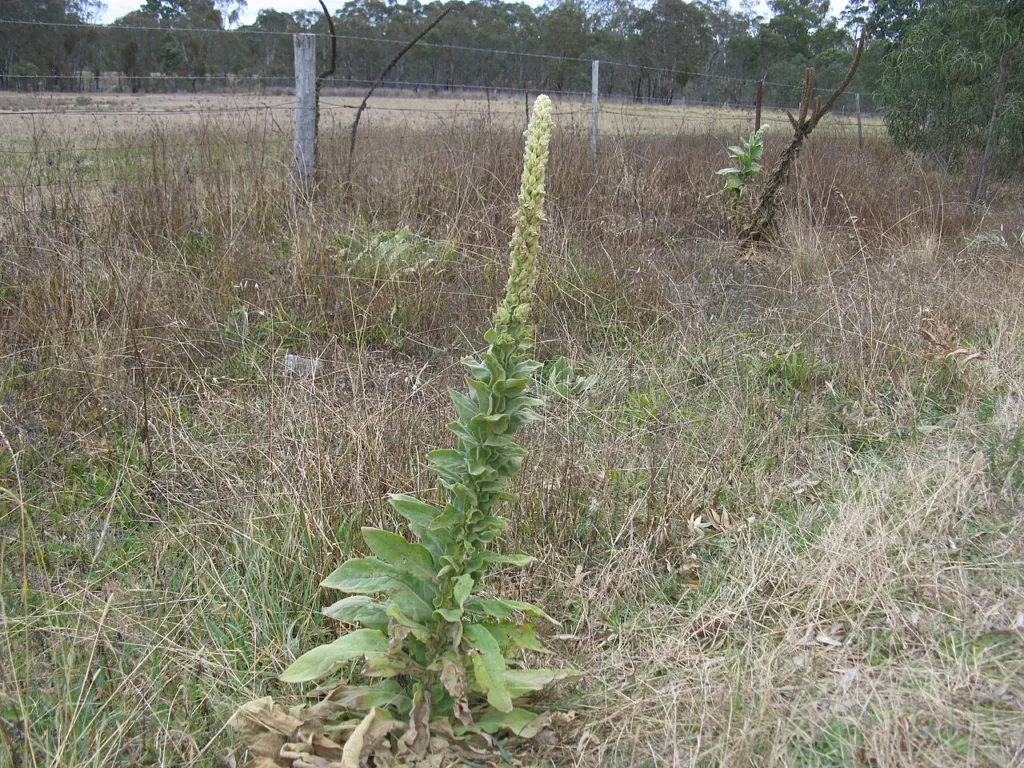
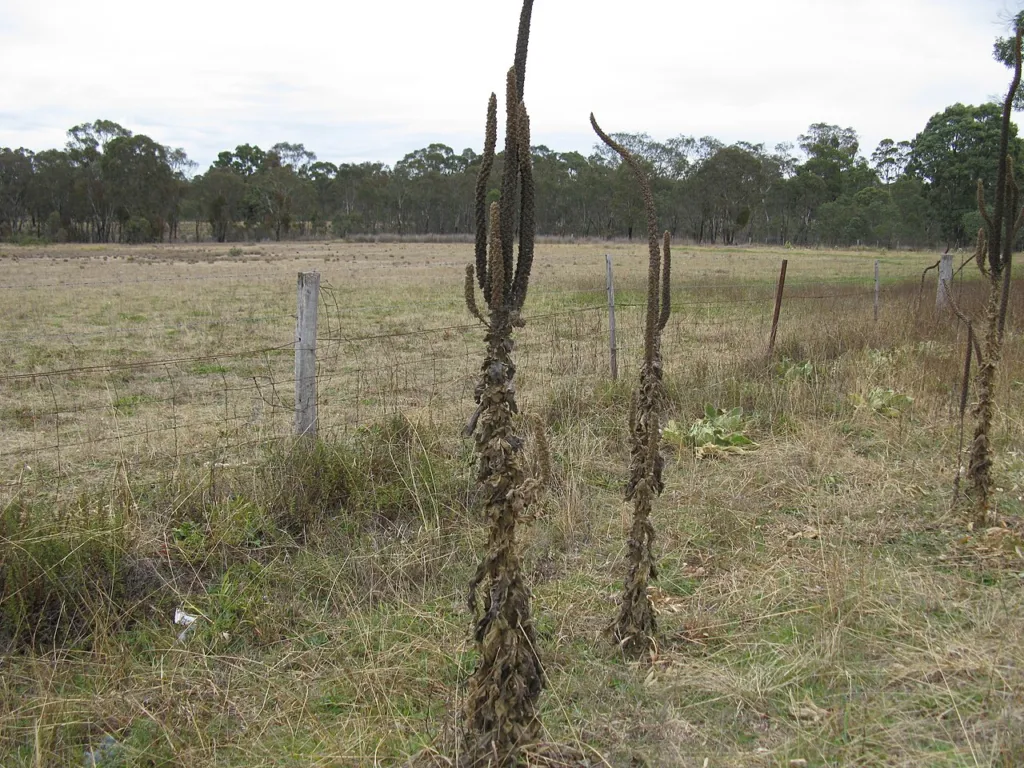
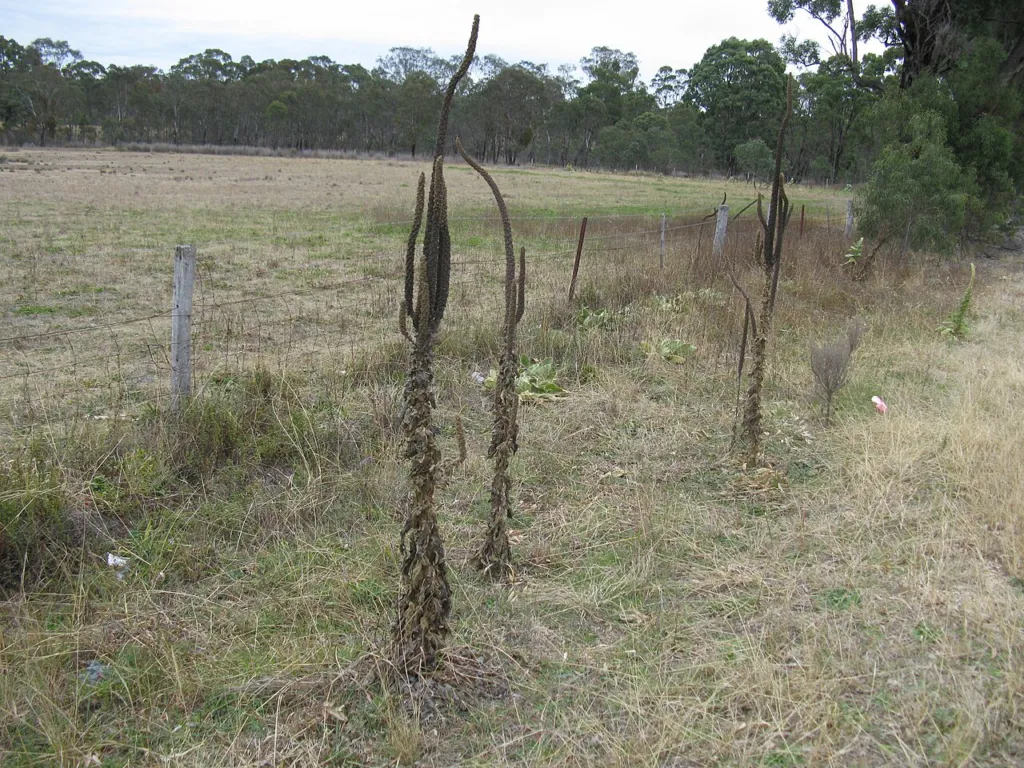
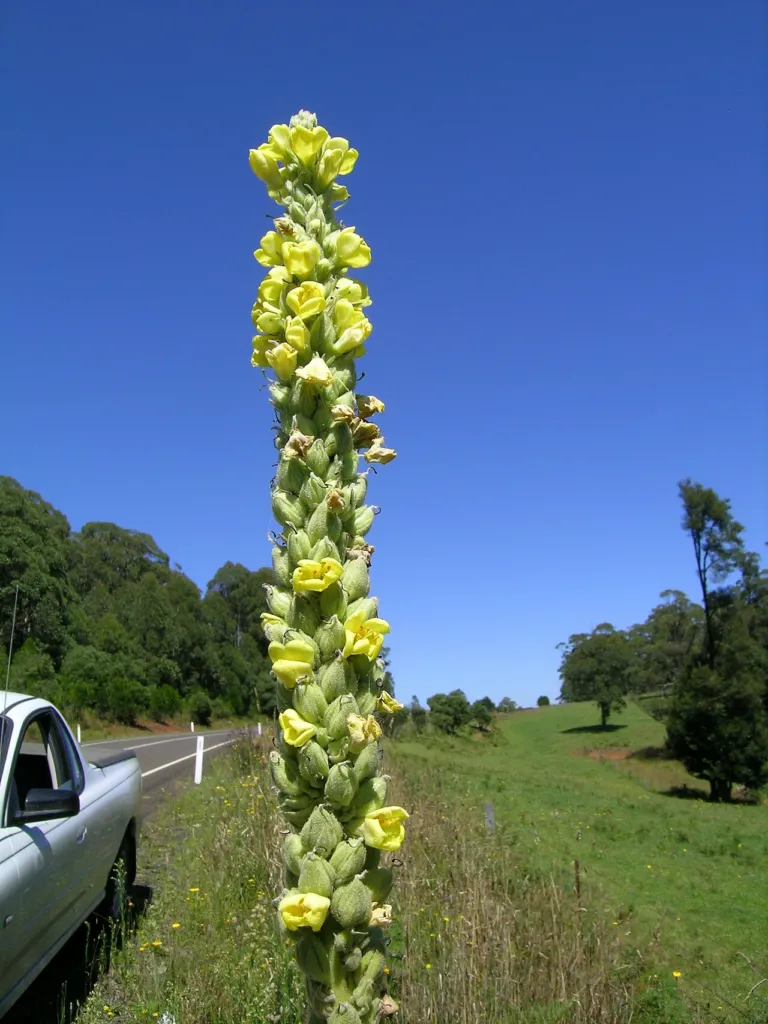
Cover: great mullein in flower beside a fenced paddock near South West Rocks, New South Wales. Photo: Harry Rose (South West Rocks, NSW) · CC BY 2.0 · Wikimedia Commons
If you have driven through the paddocks of south-eastern Australia in summer, you have almost certainly passed great mullein: a felted grey rosette in its first year, then a single yellow-flowered spike taller than a person Confirmed[13]. Europeans have brewed its flowers and leaves for coughs and sore throats since at least the sixteenth century Traditional[1,6]. Today it is being sold to Australians as a ‘lung detox’ tea for smokers and people who vape, and that claim has run a long way ahead of the evidence.
This review sets the two stories side by side. It covers what the plant is and where it grows here, what tradition records, what chemists have found in it, what the laboratory, animal and human studies show, and where the gaps are. It then turns to safety, to what Australian law allows a seller to say, and to what actually helps someone stop smoking or vaping. Every study cited was read in full text; where only a review described a trial, that is said in the text.
This article is educational. It is not medical advice, and nothing in it is a recommendation to use mullein for any condition.
Mullein is unscheduled: neither Verbascum nor mullein appears in the Poisons Standard (June 2026 edition) Confirmed[22]. It is sold here as a herbal tea (a food) and in at least four listed medicines on the ARTG Confirmed[19].
European regulators judged the flower tea acceptably safe at traditional doses for adults and adolescents over 12, and did not recommend it in pregnancy, breastfeeding or for children under 12 because the data are missing Confirmed[1,3]. Strain any leaf tea through fine cloth or paper to remove the leaf hairs Traditional[6]. The seeds are a separate matter and are not for eating (traditionally a fish poison) Traditional[1].
Smoking any plant material produces carbon monoxide and tar Evidence suggests[17,18]. Mullein is no quit-smoking or quit-vaping treatment; Quitline 13 7848 is free and confidential Confirmed[23]. For breathing difficulty call 000. For a suspected poisoning, call the Poisons Information Centre on 13 11 26.
| Plant | Verbascum thapsus L., great or common mullein; family Scrophulariaceae Confirmed §1 |
| Parts used | Flowers (the European pharmacopoeial drug) and leaves; seeds are not used as medicine Confirmed §1 |
| In Australia | Naturalised weed of roadsides and pastures across southern and eastern Australia; an environmental weed in Victoria Confirmed §3 |
| Traditional use | Coughs, sore throats and chest complaints; flower oil for earache; much else Traditional §4 |
| Main constituents | Mucilage polysaccharides, iridoid glycosides (aucubin, catalpol), verbascoside, flavonoids, triterpene saponins Confirmed §5 |
| Laboratory work | Antiviral, antibacterial and anti-inflammatory activity in cells and animals Evidence suggests §6 |
| Human trials | None of mullein tea for cough, lung function or ‘detox’; three child ear-pain trials of mixed herbal oils; one topical wound trial Confirmed §7 |
| ‘Lung detox’ | No trial tests it; the lungs clear themselves by mucociliary clearance and cough Confirmed §8 |
| Safety | Flower tea well tolerated at traditional doses; limited data in pregnancy, lactation and children Confirmed §9 |
| Law | Unscheduled; food teas may not make therapeutic claims; listed medicines carry traditional-use indications only Confirmed §10 |
| Quitting | Quitline 13 7848; pharmacist or prescriber for nicotine products Confirmed §10 |
- Confirmed established in humans by trial, or by unambiguous analytical, chemical, regulatory or botanical record.
- Evidence suggests real published data, but preclinical, observational, small, or not yet replicated in humans.
- Mechanism a plausible mechanistic or pharmacological inference, not an outcome.
- Traditional historical, ethnobotanical or ritual use. Evidence of practice, not of efficacy.
- Attested a documentary fact attested in a named edition or record. A textual reading, not a claim about what a plant does.
Every PubMed ID (PMID) links to its PubMed record and was checked against PubMed in October 2026; every chemical record was checked against PubChem. Studies were read in full text. Where a claim is widely repeated but could not be traced to a primary source, it is marked unsourced and left as such.
Great mullein is a European plant that has made itself at home on Australian roadsides. Its flowers and leaves have a long written record as a soothing cough and sore-throat remedy in Europe and North America Traditional[1,6,7]. The European Medicines Agency accepts that tradition for one narrow purpose, relief of sore throat with a dry cough and cold, and says plainly that this rests on long-standing use with no clinical trials behind it Confirmed[1,2].
The chemistry is well described: slippery mucilage, iridoid glycosides such as aucubin, the phenylethanoid verbascoside, flavonoids and small amounts of saponins Confirmed[1,9]. In cells and animals, extracts and some of these compounds show antiviral, antibacterial and anti-inflammatory activity Evidence suggests[1,8,9,10]. None of that has been tested as mullein tea in people with a cough.
No published trial has tested mullein for lung function, for recovery after smoking or vaping, or for ‘detox’ of any kind. The healthy lung clears itself with a moving carpet of cilia and mucus, and smoking and vaping damage that system Confirmed[14,15]. Stopping is what lets it recover; a tea cannot do that work for you Mechanism[16]. The ear-drop trials often quoted for mullein used a mixture of four or more herbs in oil, so they say little about mullein itself Confirmed[4].
As a strained tea, mullein has a good safety record at traditional doses Confirmed[1,2]. Smoking it is another thing: any burning leaf makes carbon monoxide and tar Evidence suggests[18]. Sellers of food teas may not claim to treat or relieve a disease or condition in Australia Confirmed[20]. If you are trying to quit, Quitline 13 7848 is the free, evidence-based service Confirmed[23]. If you want to use mullein for a cough, consult a degree-qualified herbalist with competencies and adequate training in pharmacognosy.
 1 · Identity, names and taxonomy
 2 · Botany
 3 · Distribution and its status in Australia
 4 · Traditional and historical use
 5 · Phytochemistry
 6 · Pharmacology
 7 · Clinical evidence in people
 8 · The ‘lung detox’ claim, smoking and vaping
 9 · Safety and interactions
 10 · In Australia
 11 · Quality, identity and adulteration
 D · Discussion
1. Identity, names and taxonomy
The plant in this review is Verbascum thapsus L., great mullein or common mullein, in the figwort family, Scrophulariaceae Confirmed[1,13]. The family takes its name from Scrophularia, the figworts, which were once used for scrofula, tuberculosis of the neck glands Traditional[6].
Its English names describe the plant well. McCarthy and O’Mahony list candlewick plant, torches, Our Lady’s flannel, shepherd’s staff and beggar’s stalk, and trace ‘bullock’s lungwort’ and ‘cow’s lungwort’ to the plant’s old use for coughing cattle Traditional[6]. The Australian weed fact sheet adds Aaron’s rod, hag taper, flannel leaf, velvet plant and wild tobacco Confirmed[13].
Which mullein is the medicine?
This matters more than it sounds. The European Pharmacopoeia’s mullein flower is the dried corolla and stamens of three species, V. thapsus, V. densiflorum Bertol. (often sold under its old name V. thapsiforme Schrad.) and V. phlomoides L. Confirmed[1]. European practice has favoured the flowers of the last two, which are scarce in Britain and absent from the United States, while North American herbalism grew up around the naturalised V. thapsus Confirmed[1]. The European assessors also complain that many studies never say which species they used Confirmed[1]. When this review reports a finding, it names the species where the source does.
The leaf is a separate drug with its own history. The British Herbal Pharmacopoeia of 1983 covered the leaves and stems of great mullein and the 1996 edition the leaf alone Attested[1]. It is worth checking which part a tea contains, because the European regulatory assessment, and most of the chemistry below, is about the flower Confirmed[1].
2. Botany: what you are looking at
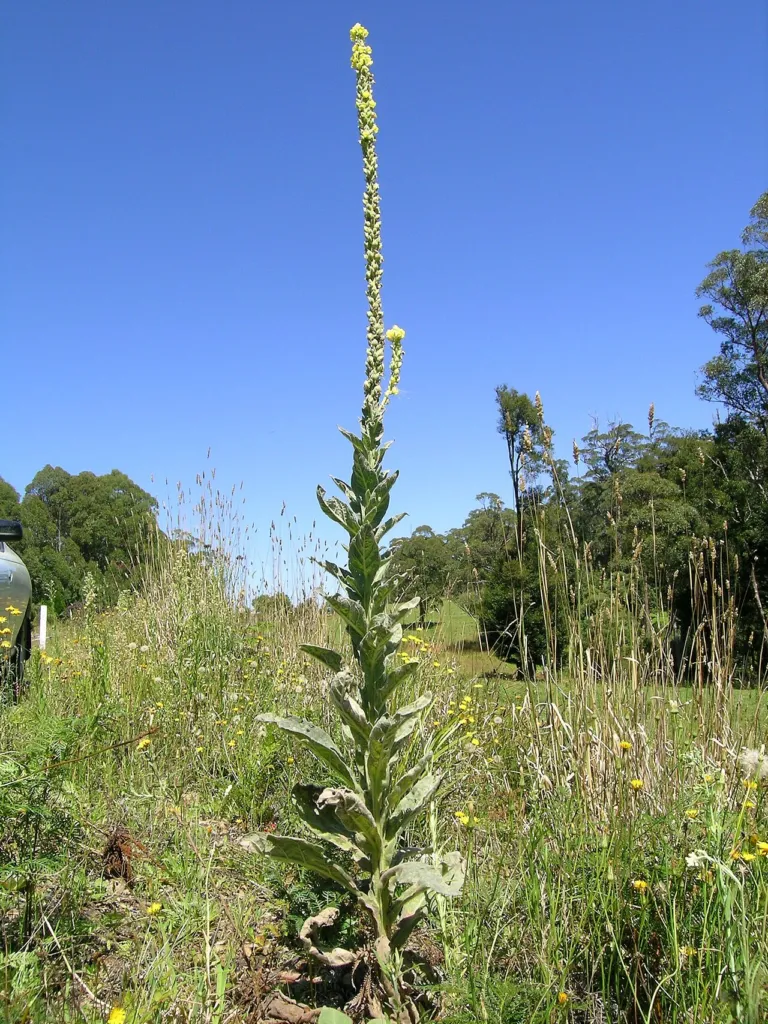
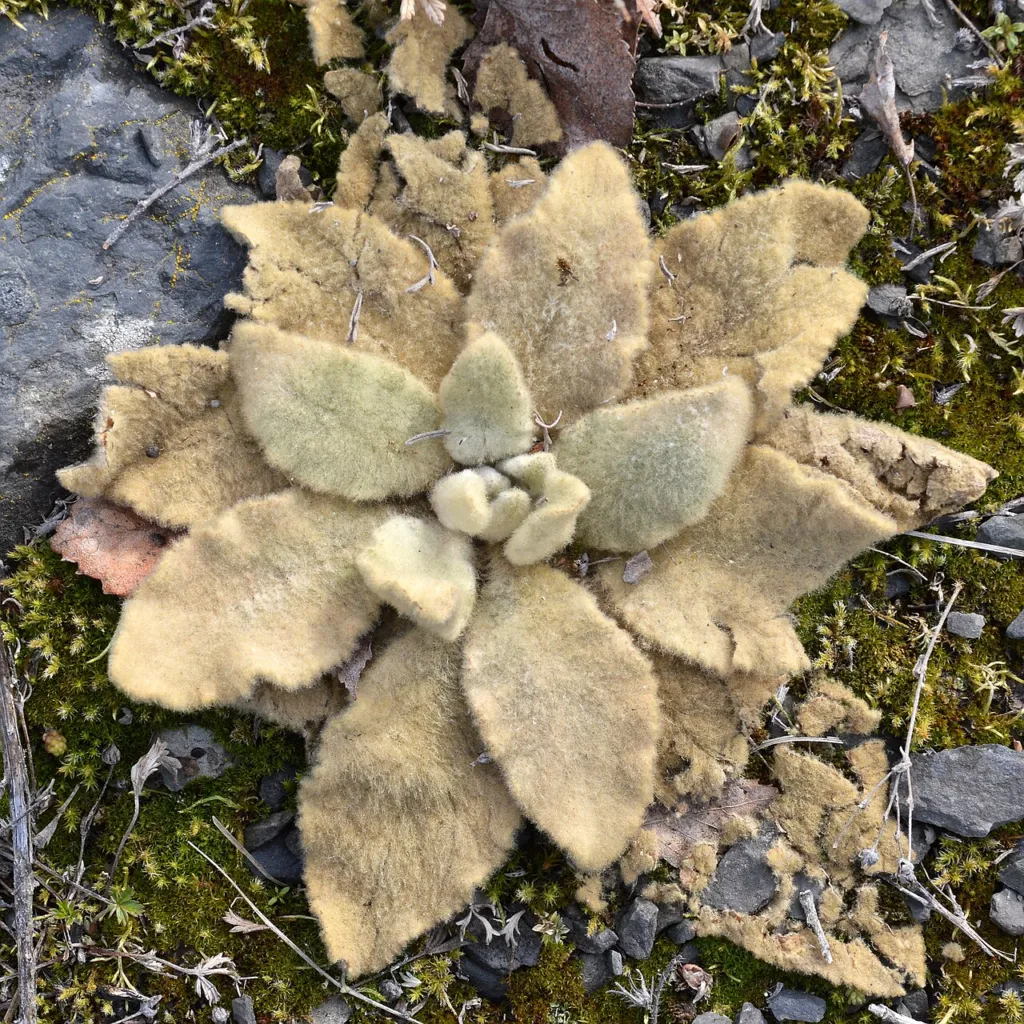
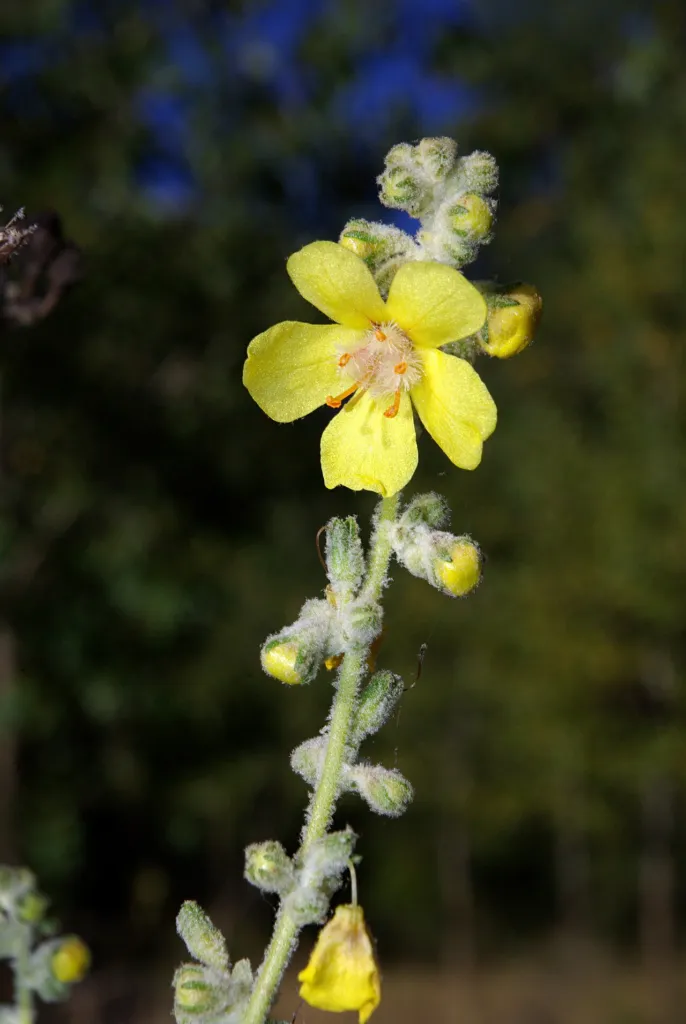
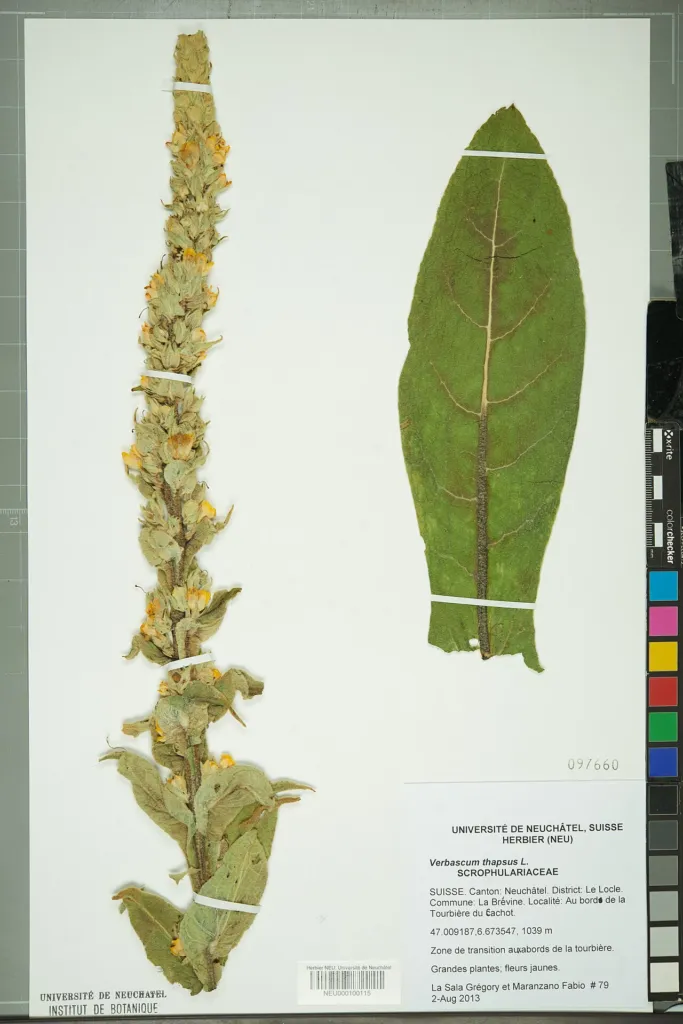
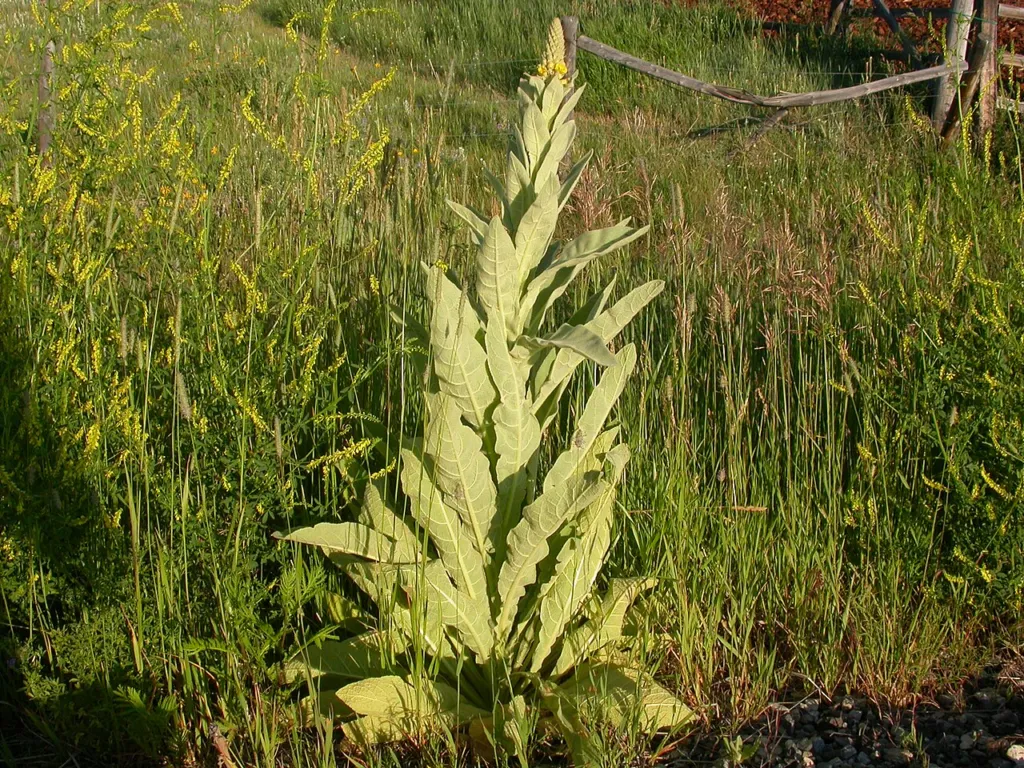
Great mullein is a short-lived herb, usually biennial. In its first year it makes a flat rosette of leaves up to 60 cm across; in its second it sends up a single stout stem, usually 1 to 2 m tall and occasionally 3 m Confirmed[13]. It flowers once and dies, and a single plant can set seed without a partner Confirmed[12].
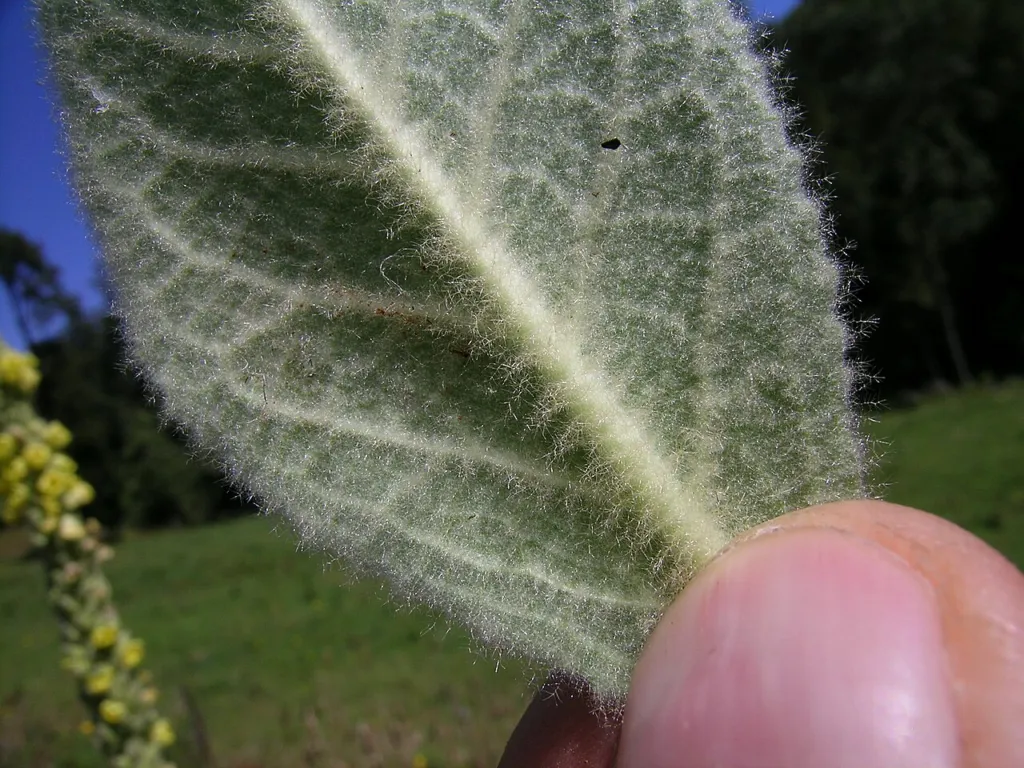
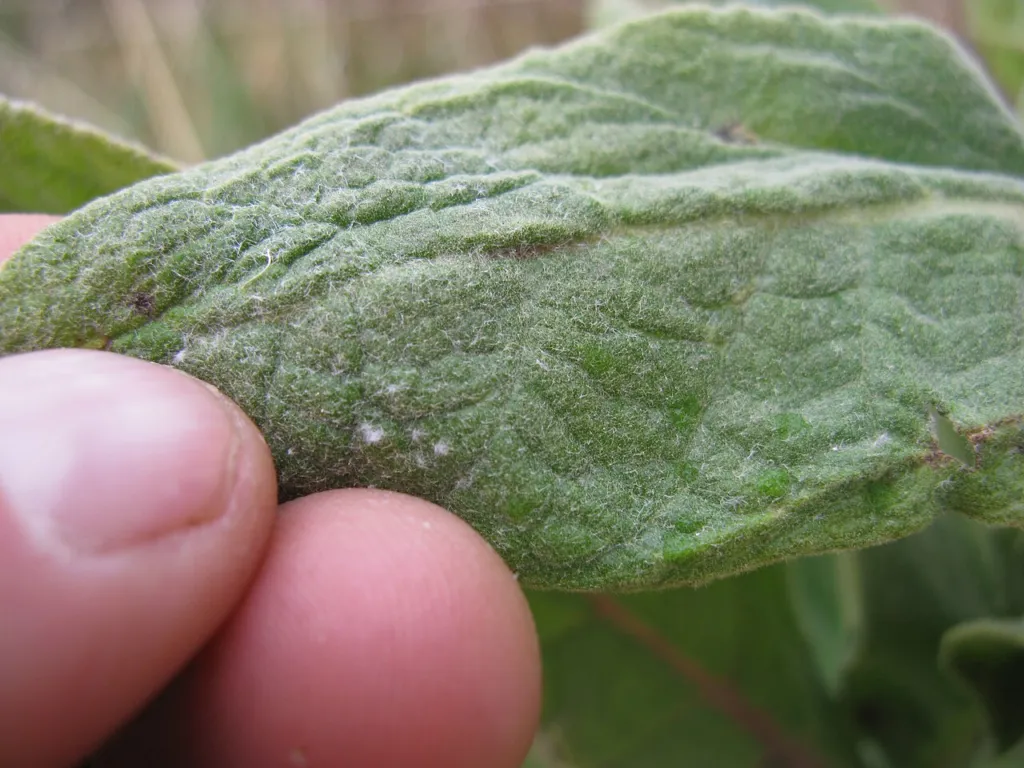
The leaves are what most people remember. They are greyish-green and densely covered in tiny branched, star-shaped (stellate) hairs that give them the feel of flannel Confirmed[13]. Rosette leaves run 8 to 50 cm long. Up the stem the leaves become stalkless and smaller, and their bases run down the stem as ‘wings’ Confirmed[13].
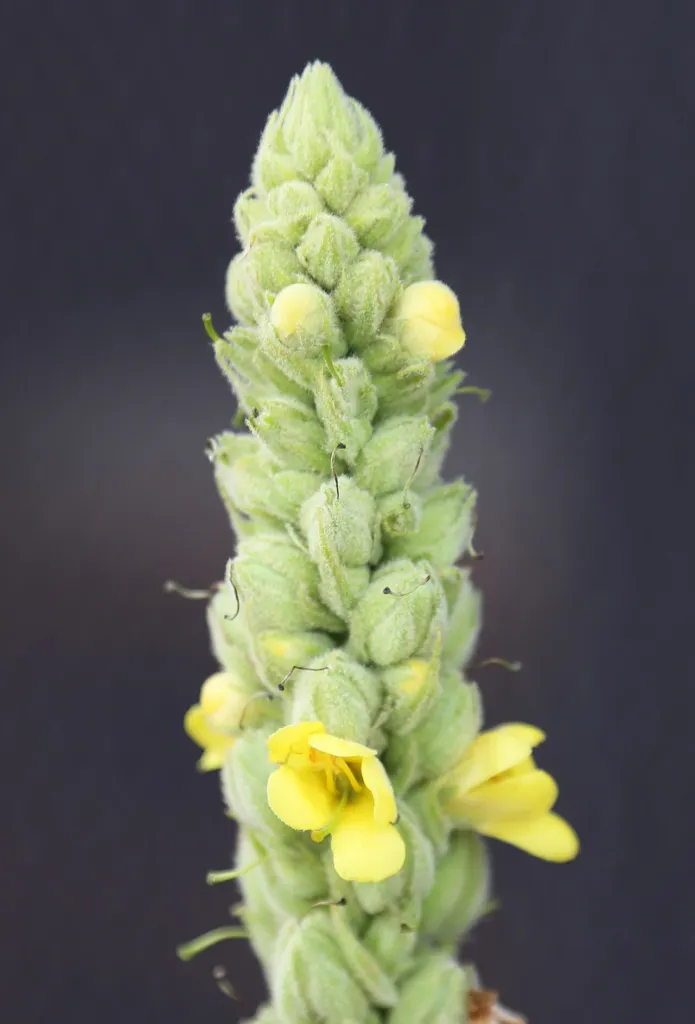
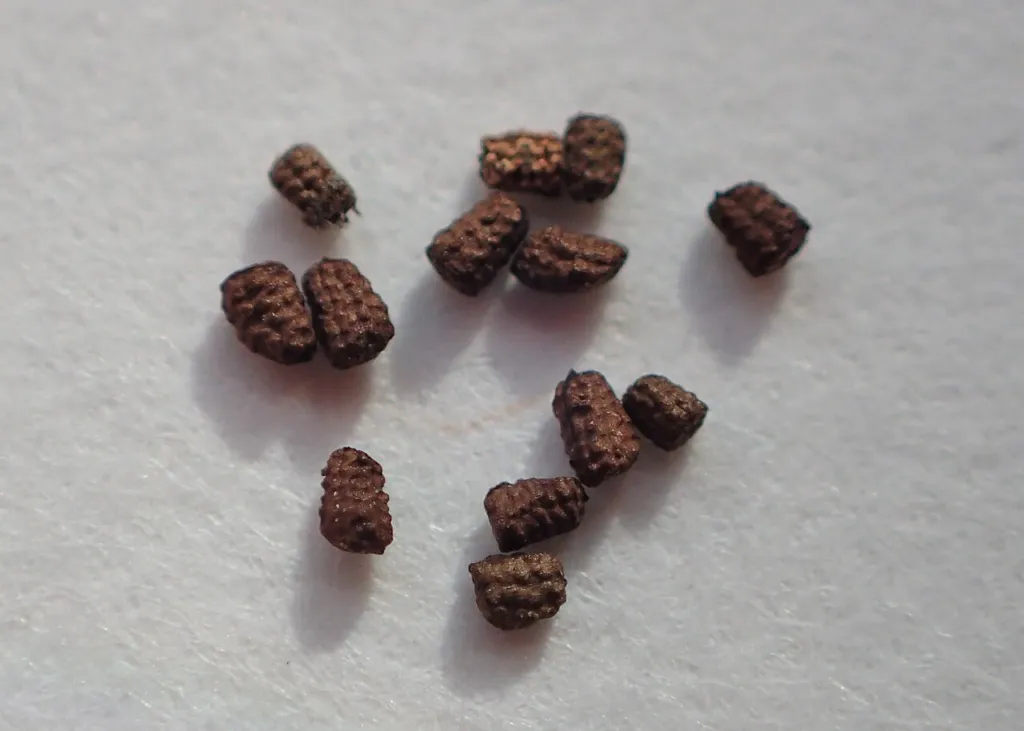
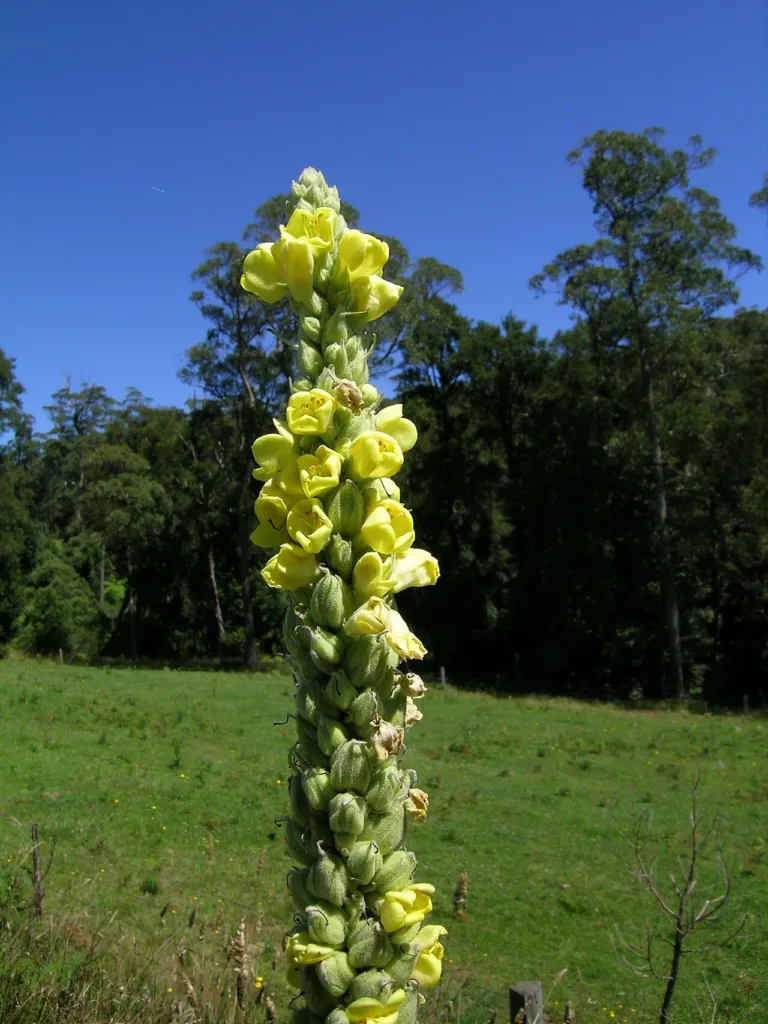
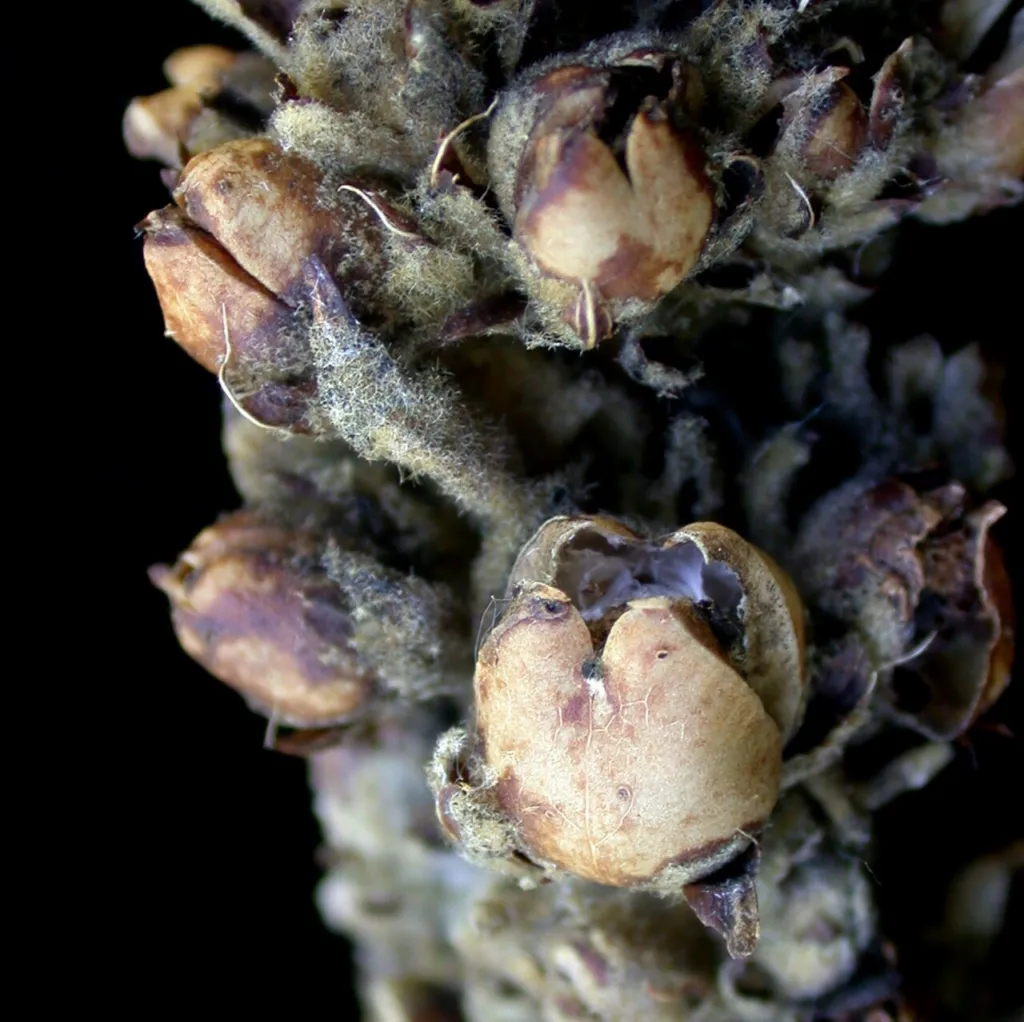
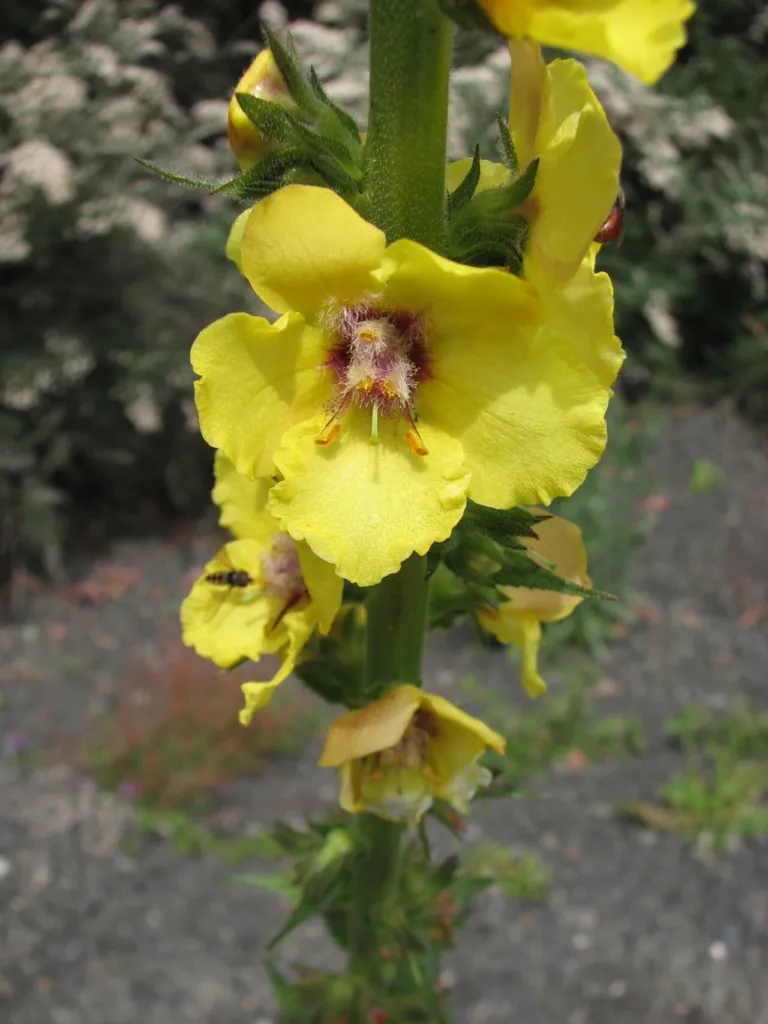
The flowers are yellow, 12 to 30 mm across, with five petals, packed into a dense spike 20 to 100 cm long. In Australia they appear mainly from spring to early autumn Confirmed[13]. The fruit is a hairy capsule 7 to 10 mm long holding many tiny seeds about 1 mm long Confirmed[13].
A plant this conspicuous is easy to identify in flower. In the rosette stage there is less to go on, and three other naturalised mulleins are covered in the safety chapter Confirmed[13].
3. Distribution and its status in Australia
Great mullein is native to Europe and to western and central Asia, from the boreal zone south to the Mediterranean Confirmed[12,13]. It has naturalised widely: across North America, in New Zealand, Hawaii, southern South America and parts of tropical Asia Confirmed[13]. Ecologists study it as a model invader; a German and New Zealand transplant experiment found that introduced populations have already shifted in how they respond to soil microbes Evidence suggests[12].
Where it grows in Australia
The Weeds of Australia fact sheet records it as widely naturalised in southern and eastern Australia: south-eastern Queensland, New South Wales, the ACT, Victoria, Tasmania, south-eastern South Australia and coastal south-western Western Australia, as well as Norfolk Island Confirmed[13]. It is a weed of pastures, roadsides, railways, disturbed ground, waste areas and stony river beds Confirmed[13]. The Queensland record is for the south-east only, so it is no plant of the wet tropics around Cardwell, where this Institute is based Confirmed[13].
Its weed status differs by state. The fact sheet lists it as an environmental weed in Victoria and a minor or potential environmental weed in New South Wales, the ACT and Queensland, and records Victorian control declarations in several regions Confirmed[13]. Those declarations are made under state law and change over time, so anyone managing land should check the current position with their state agriculture department or local council. Where a council treats roadside mullein as a weed, it may be sprayed Mechanism. That fact comes back in the safety chapter.
4. Traditional and historical use
Mullein’s written record in European medicine is long and consistent. The European Medicines Agency’s assessors traced it through German, Polish, British and American handbooks: Lonicerus in 1564 praised it as an expectorant and fever remedy, and Madaus (1938), Hager’s Handbuch, Wichtl and the British Herbal Compendium all record its use for catarrh of the upper airways, coughs and colds Traditional[1]. The 1918 Dispensatory of the United States listed mullein flowers as official Attested[1]. Germany’s Commission E monograph of 1990 gave catarrh of the respiratory tract as its use Attested[1].
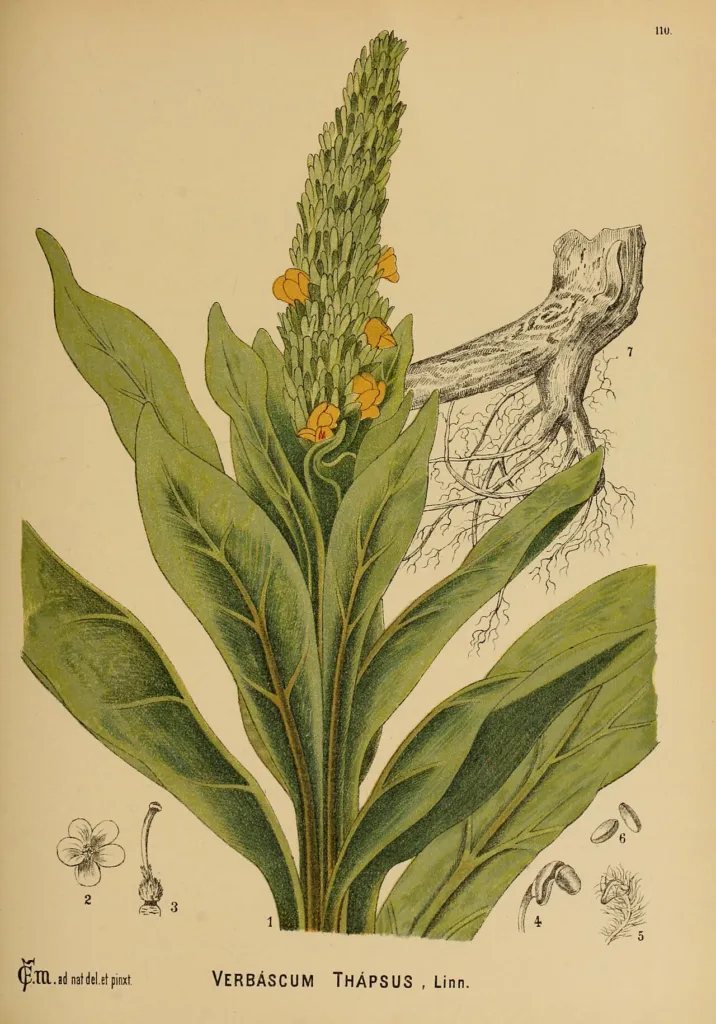
Ireland: a remedy for consumption
In Ireland, mullein was a leading folk remedy for tuberculosis, grown on a large scale and sold in Dublin’s best chemist shops until antimycobacterial drugs arrived Traditional[6]. McCarthy and O’Mahony report a nineteenth-century Dublin physician who described it as ‘a trusted popular remedy in Ireland’ and saw improvement in six of seven tuberculosis patients given it Traditional[6]. Six of seven is a case series with no comparison group, and tuberculosis waxes and wanes on its own Mechanism. Culpeper recommended it for a persistent cough and inflamed throats, and Mrs Grieve called it ‘a remedy of the greatest antiquity for coughs’ Traditional[6].
Spain, the Americas and the pipe
A survey of Spanish folk medicine found mullein used for hoarseness, tonsillitis, colds, coughs, asthma and bronchitis, taken as infusions, macerations and syrups, alone or with mint, mallow, coltsfoot, thyme and honey Traditional[7]. In Spain the best-established use is for haemorrhoids, by sitz bath or poultice; ear and eye inflammations, wounds and skin eruptions also appear Traditional[7]. King’s American Dispensatory recommended it for ‘protracted cough’ Traditional[6]. The dried leaves were also smoked in a pipe to ease an irritated airway Traditional[17].
Some uses have nothing to do with medicine. The dried stems were dipped in suet or wax to make torches Traditional[1], which explains names such as candlewick, hag taper and torches Confirmed[6,13]. The seeds were used mainly as a fish poison Traditional[1]. Flower oil, made by steeping the flowers in olive oil, has a European reputation as an earache remedy Traditional[6].
What the European regulator accepted
In 2018 the European Medicines Agency’s herbal committee adopted a traditional-use monograph for mullein flower. Its single indication is relief of sore throat with a dry cough and cold, in adults and adolescents over 12, as a tea of 1.5 to 2 g of flower in 150 mL of boiling water three or four times a day Confirmed[1,3]. The committee concluded that the traditional use was mainly as a demulcent, a substance that coats and soothes an irritated surface Confirmed[1]. It accepted the claim ‘exclusively based upon long-standing use’, and a 2024 periodic review found no new data that would change it Confirmed[1,2]. This is European law and does not apply in Australia; it is cited here because it is the most careful public review of the plant that exists.
5. Phytochemistry
Mullein’s chemistry has been worked out mostly on the flowers of the European pharmacopoeial species and, more recently, on V. thapsus leaf. The European assessment report collects the flower data; the figures below come from it unless another source is named Confirmed[1].
Mucilage: the soothing part
The flowers contain 2 to 3% water-soluble acidic polysaccharides, chiefly a highly branched arabinogalactan with a β-1,6-linked galactan backbone (molecular weight about 70,000), plus neutral arabinogalactan and xyloglucan Confirmed[1]. These swell in water. The European Pharmacopoeia tests this directly with a swelling index, minimum 9; the Swiss pharmacopoeia asks for 12 Confirmed[1]. This mucilage is the most likely basis for the tea’s soothing effect on a raw throat Mechanism[1,7].
Iridoid glycosides
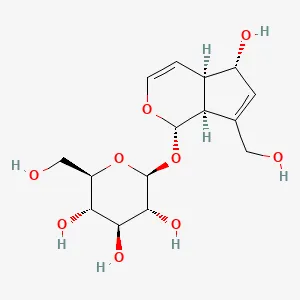
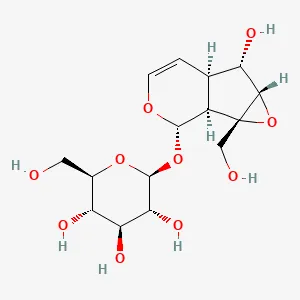
Flowers contain iridoid glycosides at 0.13% (V. densiflorum) to 0.56% (V. phlomoides), including aucubin, catalpol and their 6-xylosyl derivatives Confirmed[1]. EFSA’s literature review put the maximum reported iridoid content in aerial parts or flowers of V. thapsus and its relatives at about 0.6%, and noted a report that V. thapsus leaves contain less aucubin than catalpol Confirmed[11].
Aucubin has a chemical quirk that matters for safety. In acid, or when gut and liver enzymes strip off its sugar, it opens to a reactive dialdehyde that binds proteins Mechanism[11]. Its oral bioavailability in animals is about 20% Evidence suggests[11].
Phenylethanoid glycosides
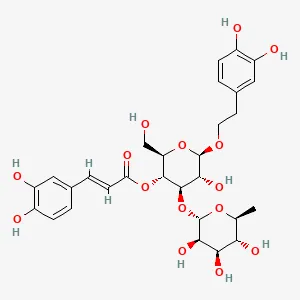
Verbascoside (also called acteoside) is a caffeic-acid ester of a phenylethanoid glycoside that is widespread in flowering plants Confirmed[10]. It makes up about 0.6% of V. densiflorum flower and only traces in V. phlomoides flower Confirmed[1]. In an aqueous extract of V. thapsus leaf, Calabrese and colleagues identified six phenylethanoid glycosides by HPLC, with verbascoside the largest, followed by isoverbascoside, martynoside, forsythoside B, samioside and echinacoside; total phenolics were 124 mg gallic acid equivalent per gram of extract ConfirmedPMID 34500824.
Flavonoids, saponins and the rest
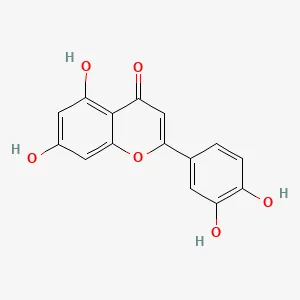
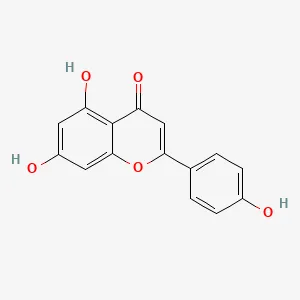
Flower flavonoids total 0.22 to 0.57% depending on species and include glycosides of luteolin and apigenin, quercetin derivatives, tamarixetin 7-rutinoside and diosmin; in V. thapsus flower, 6-hydroxyluteolin 7-glucoside and 3′-methylquercetin have been reported Confirmed[1].
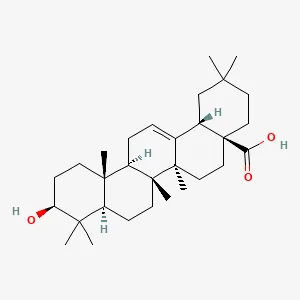
Triterpene saponins of the oleanane type are present in small amounts. Four, named thapsuins A and B and hydroxythapsuins A and B, were isolated from V. thapsus flower, and verbascosaponin from V. phlomoides Confirmed[1]. The only quoted content figure (0.007% in V. phlomoides flower) comes from a 1980 paper whose method the assessors considered unreliable; the haemolytic index of the flower saponins is about 350 Confirmed[1]. Saponins burst red cells in a test tube, which is how they are measured Confirmed[1], and herbal writers credit them with mullein’s expectorant action Mechanism[17]. The flowers also contain phytosterols, oleanolic acid, phenolic acids including caffeic, ferulic and rosmarinic acids, fixed oil and carotenoids Confirmed[1].
6. Pharmacology: the laboratory and animal work
Most of what is known about mullein’s activity comes from cell cultures and rodents. These studies are useful for generating ideas, and they are easy to over-read, so each is reported with the conditions it was run under.
Antiviral work in cell culture
A freeze-dried infusion of V. densiflorum flower reduced the titre of several influenza A strains, an influenza B strain and fowl plague virus in cell culture, and inactivated herpes simplex virus type 1 directly at 300 μg/mL Evidence suggests[1]. A 1% decoction of V. thapsus flower reduced the titre of an influenza A2 virus, and the flower infusion enhanced the effect of amantadine derivatives against an avian influenza strain in chicken embryo cells Evidence suggests[1]. These are reported here as the European assessors summarised them; the original 1979 to 2000 papers were not available to us in full text.
In a screen of 41 Nepalese medicinal plants, a methanolic extract of V. thapsus was among the three most active against influenza A virus in canine kidney cells, with an IC50 below 6.25 μg/mL at non-cytotoxic concentrations Evidence suggestsPMID 18955262. Activity in a cell dish at a defined concentration says nothing yet about what a cup of tea delivers to an infected airway Mechanism.
Antibacterial work
Turker and Camper reported that mullein flower oil and aqueous leaf extracts inhibited Klebsiella pneumoniae, Escherichia coli, Pseudomonas aeruginosa and Staphylococcus aureus in plate assays, the Klebsiella result rivalling the erythromycin control Evidence suggests[1,6]. As above, this comes through two reviews that read the paper. Activity against Mycobacterium, the old tuberculosis link, had not been tested when McCarthy and O’Mahony wrote Confirmed[6].
Anti-inflammatory work
In mouse macrophages (RAW 264.7) and human chondrocytes stimulated into an inflammatory state, an aqueous V. thapsus leaf extract lowered gene expression of inflammatory cytokines, inducible nitric oxide synthase, COX-2 and matrix-degrading enzymes, outperforming the devil’s claw extract used as a positive control on most markers Evidence suggestsPMID 34500824.
Verbascoside has the larger literature. In cells it inhibits release of arachidonic acid and histamine from mast cells, competitively inhibits calcium-dependent phospholipase A2, damps NF-κB and AP-1 signalling in human keratinocytes, and lowers IL-1β, IL-6 and IL-8 in a lung epithelial cell model of acute injury Evidence suggestsPMID 40724000. In rats, oral verbascoside at 150 mg/kg cut carrageenan paw swelling by 94% at three hours Evidence suggests[1]. Aucubin given orally at 100 mg/kg reduced the same swelling by about a third Evidence suggests[1]. Those doses are far above anything a tea could supply: 2 g of V. densiflorum flower at 0.6% verbascoside holds about 12 mg in total Mechanism[1].
Does it move mucus?
Only one experiment tests the expectorant tradition directly, and it was negative. A water extract of mullein flower had no effect on mucociliary transport across isolated frog oesophagus, where fennel and anise preparations increased it Evidence suggests[1]. The assessors pointed out that the model ignores viscosity and other physical effects, and that saponins might act another way Confirmed[1]. The European committee’s own conclusion was that experimental support for the indication is ‘very limited’ Confirmed[1].
No pharmacokinetic data exist for mullein preparations in people Confirmed[1].
7. Clinical evidence in people
For a plant used this widely, the human evidence is thin. The European assessors searched for clinical studies of mullein flower and found none; their 2024 periodic review, covering 2017 to 2024, found 20 new references and judged none relevant to the monograph Confirmed[1,2]. Our own search of PubMed and Europe PMC in October 2026 found no trial of mullein tea, or any oral mullein preparation, for cough, sore throat, lung function, smoking or vaping Confirmed.
The ear-drop trials
The trials most often cited for mullein are three studies in children with ear pain from acute otitis media, reported in 2001 and 2003 Confirmed[4]. A Cochrane review prepared at Bond University on the Gold Coast summarised them; this account follows that review, since the primary papers were not available to us in full text.
All three compared anaesthetic ear drops (amethocaine, phenazone and glycerine) with ‘naturopathic’ drops containing garlic (Allium sativum), mullein, calendula and St John’s wort in olive oil; the later two added lavender and vitamin E Confirmed[4]. The first trial enrolled 110 children aged 6 to 18; the second and third each enrolled 90 children aged 5 to 18, the third with oral amoxicillin in both arms Confirmed[4]. Pain fell steeply in every group. The herbal drops came out ahead at some time points, for example 30 minutes after the first dose in the first trial Evidence suggests[4].
The Cochrane reviewers were not persuaded. None of the three trials described allocation concealment, ran an intention-to-treat analysis or reported a power calculation, and when two were pooled the results were too inconsistent to show that the herbal drops beat the anaesthetic ones Confirmed[4]. Their plain-language summary: no strong evidence that herbal ear drops were effective Confirmed[4]. And with four or more herbs in each drop, no trial could isolate mullein Confirmed[4]. These were ear drops; they tell us nothing about a tea for the chest Mechanism.
A topical wound trial
The only randomised trial of a mullein-only preparation we found is topical. In Iran, Taleb and Saeedi randomised 100 first-time mothers with an episiotomy to an ethanolic V. thapsus flower-extract cream or a placebo cream twice daily for ten days, analysing 93 Evidence suggestsPMID 34103042. Healing scores (REEDA) were similar on days 1 and 3 and significantly better with mullein on day 10 (p = 0.01); no itching, irritation or infection was reported with the mullein cream Evidence suggestsPMID 34103042. It is a single small trial in one hospital, with a voucher specimen lodged, which is good practice ConfirmedPMID 34103042. It is relevant to mullein’s traditional use on wounds and has no bearing on the lungs Mechanism.
Where that leaves the cough claim
The cough and sore-throat use rests on tradition and on a plausible demulcent mechanism Traditional[1]. It is a reasonable traditional claim and an untested clinical one. The ‘lung detox’ claim has neither a tradition of that name nor a trial behind it.
8. The ‘lung detox’ claim, smoking and vaping
‘Detox’ has no fixed meaning in physiology, which is part of its appeal in marketing. The lungs already have a cleaning system, and how that system works decides what a tea could possibly add.
How the lungs clear themselves
The airways are lined with cells carrying cilia, tiny hairs that beat 10 to 20 times a second under a thin layer of mucus. Together they move the mucus, with whatever it has trapped, up towards the throat at about 5.5 mm a minute in the trachea ConfirmedPMID 39293852. This is mucociliary clearance. Coughing clears what the cilia cannot keep up with Mechanism.
Smoke damages that system. A systematic review of 16 studies found impaired nasal mucociliary clearance in smokers in 15 of them, with the same pattern for passive smoking, bidi, hookah and electronic cigarettes; the authors attributed it to cilia toxicity, thickened mucus, depleted airway surface liquid and inflammation Evidence suggestsPMID 33542766. In cultured human nasal cells, repeated exposure to nicotine-free vape aerosol cut cilia beat frequency by 53% after 60 sessions and weakened the barrier between cells; cilia function recovered within 48 hours once exposure stopped Evidence suggestsPMID 41661298. That was a laboratory model, and it points the same way as the human data: removing the exposure is what lets clearance recover MechanismPMID 41661298.
What a cup of mullein tea can and cannot reach
A tea is swallowed. On the way down, its mucilage coats the throat, which is a reasonable explanation for why a warm mullein infusion feels soothing on a raw, coughing throat Mechanism[1,7]. Beyond the throat it enters the gut, and nobody has measured whether any mullein constituent reaches the airway lining in a meaningful amount Confirmed[1]. No study has shown that mullein clears tar, nicotine, vape residue or anything else from human lungs Confirmed. Products sold on that promise are selling an idea.
Smoking mullein
Mullein leaf turns up in herbal smoking blends, sometimes marketed as a way off tobacco. Burning plant matter is chemistry of its own. A Korean study of a tobacco-free herbal cigarette made from Artemisia found tar and toxic aromatic amines in the mainstream smoke and more carbon monoxide than a tobacco cigarette of the same tar yield Evidence suggestsPMID 25874032. A review of herbal cigarettes notes that the compounds credited for mullein’s soothing action, mucilage and saponins, are large polar molecules unlikely to survive into smoke at all MechanismPMID 36570239. The same review found claims that herbal cigarettes treat respiratory disease or help people quit, with no studies to support them Evidence suggestsPMID 36570239. Smoking any plant is no lung remedy.
9. Safety and interactions
Mullein has a calm safety profile, and the honest summary is that the data are reassuring for the strained tea and sparse for everything else.
The tea
After reviewing market experience in several European countries, the European committee concluded that mullein flower ‘can be regarded as safe at traditionally used doses’ Confirmed[1]. The WHO global database held one spontaneous report of hepatitis with single-ingredient mullein up to November 2017, which the assessors judged insufficient to list as an adverse effect, and the 2024 review of EudraVigilance and VigiBase found no new safety signal Confirmed[1,2]. No interactions with medicines are documented Confirmed[1]. Mucilage can in principle slow the absorption of a medicine swallowed at the same time, so separating the two by a couple of hours is a sensible precaution Mechanism; this is a general caution for mucilage-rich herbs, and no study of mullein itself was found (unsourced for mullein).
Hypersensitivity to the plant is the only listed contraindication Confirmed[1,3]. The monograph also flags breathlessness, fever or purulent sputum during use as reasons for prompt clinical assessment, and the same applies to symptoms lasting longer than a week Confirmed[1,3].
Leaf hairs
The fine hairs on the leaf can irritate the throat, and traditional instructions call for straining a leaf decoction to remove them TraditionalPMID 20953419. A coffee filter or fine cloth does the job; a tea strainer may not Mechanism.
Ear oil
The ear-drop trials described in section 7 were confined to acute otitis media with an intact eardrum; the Cochrane review covered only ear infection without perforation Confirmed[4]. Oil drops of any kind should stay out of an ear that is discharging, has a known or possible perforated eardrum, or has grommets, and ear pain with high fever, swelling or redness behind the ear, or a drowsy or very unwell child, calls for prompt clinical assessment the same day Mechanism; this is a general clinical caution, and no study of mullein oil itself was found (unsourced for mullein).
Seeds and saponins
The seeds are a different part with a different history: they were used to stun fish Traditional[1]. No modern toxicology of the seeds was found in the sources reviewed, and the human toxicity of eating them is unsourced. The practical advice is simple: use flowers or leaves, and keep the seed capsules out of the tea.
Pregnancy, breastfeeding and children
No reproductive, developmental or paediatric safety studies exist for mullein Confirmed[1]. On that basis the European committee does not recommend it during pregnancy or breastfeeding, or by mouth in children under 12 Confirmed[1,3]. This reflects missing data; no harm has been reported in the sources reviewed Confirmed[1].
Aucubin and the genotoxicity question
The European assessment noted that genotoxicity has not been tested for mullein flower, which is why the plant is in the EU’s monograph but not its ‘list entry’ Confirmed[1]. EFSA’s 2021 opinion on a mullein tincture for animal feed went further: in the absence of experimental data, it judged it likely that aucubin, through its reactive breakdown product, could damage DNA, and declined to conclude on safety for long-lived animals Evidence suggestsPMID 34335922. That is a precautionary inference from chemical reactivity, untested in any genotoxicity assay of mullein MechanismPMID 34335922. It is an argument for doing the tests, and for moderate use.
Look-alikes, wild harvest and roadsides
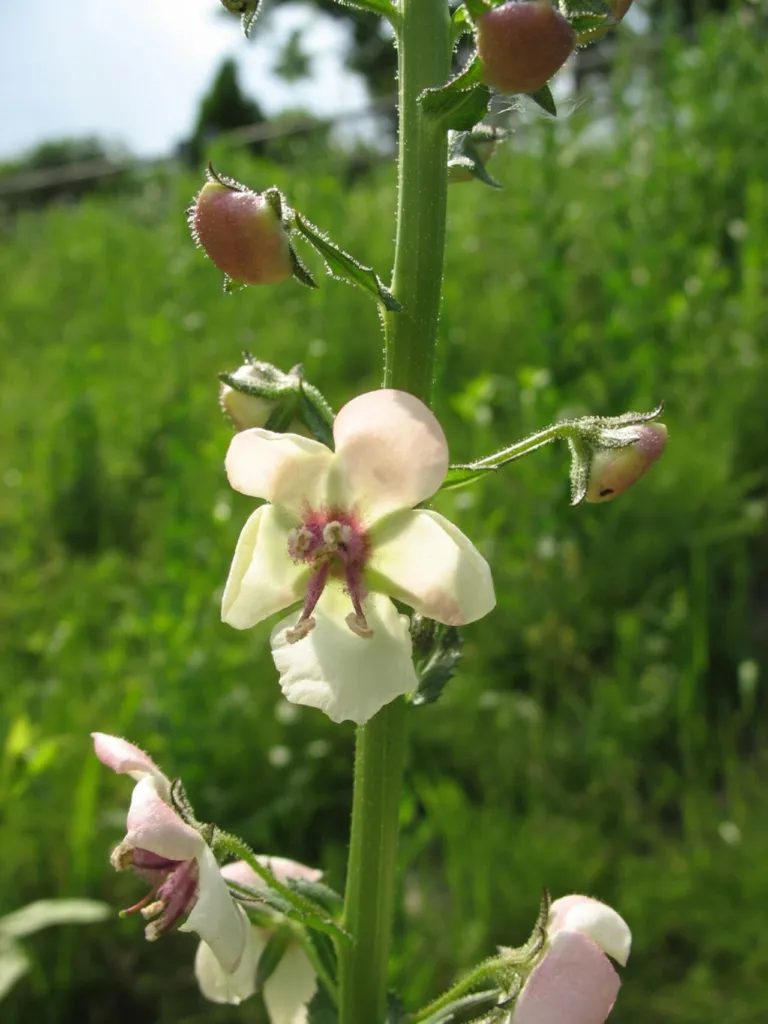
Three other mulleins are naturalised in Australia. Twiggy mullein (V. virgatum) has dark green, sparsely sticky-haired leaves and is more often branched; moth mullein (V. blattaria) is hairless or nearly so with toothed rosette leaves and long flower stalks; Cretan mullein (V. creticum) has wrinkled leaves and four stamens Confirmed[13]. Great mullein’s grey felt of star-shaped hairs is the easiest single feature Confirmed[13]. A rosette without flowers carries less information, and other hairy rosettes grow in the same paddocks Mechanism.
Where it grows matters as much as what it is. Mullein favours roadsides, railways and disturbed ground, and those sites can carry vehicle-derived contaminants and herbicide spray Mechanism[13]. Plant material for tea should come from a known clean source or a reputable supplier, never a council verge.
If someone has eaten seeds or a large quantity of plant, or has any reaction, call the Poisons Information Centre on 13 11 26. For difficulty breathing, call 000.
10. In Australia: regulation, claims and quitting
Scheduling and listing
Neither Verbascum nor mullein appears anywhere in the Poisons Standard (June 2026), so it is unscheduled Confirmed[22]. Mullein reaches Australians in two legal forms. Loose and bagged teas are sold as food. Medicines containing it are listed medicines on the Australian Register of Therapeutic Goods (ARTG), and an ARTG search read in October 2026 returned at least four: three capsules and an oral liquid, the oldest dating from 2008 Confirmed[19].
A listed medicine may only make claims drawn from the TGA’s list of permitted indications, and may not be advertised for anything else Confirmed[19]. The mullein listings carry traditional indications worded ‘traditionally used in Western herbal medicine to’ relieve cough, relieve dry unproductive cough, act as an expectorant, soothe throat irritation, relieve symptoms of the common cold, support lung health or act as a lung tonic Confirmed[19]. Each comes with a requirement that the product must not imply or refer to serious respiratory disease such as asthma, pneumonia or COPD Confirmed[19]. None of the four listings carries any indication about smoking, vaping, quitting or detoxification Confirmed[19].
What a ‘lung detox’ tea can say
Teas sold as food are governed by the Food Standards Code. Standard 1.2.7, section 1.2.7—8, says a claim about a food must not refer to the prevention, diagnosis, cure or alleviation of a disease, disorder or condition, and must not compare the food with a therapeutic good Confirmed[20]. In this Institute’s reading, telling buyers that a tea clears smoke or vape damage from the lungs is a claim to alleviate a condition, which is the kind of claim that section excludes. Enforcement belongs to state food regulators and, for misleading claims generally, the ACCC; this is an educational reading, not legal advice.
Vaping in Australia and how to quit
Since 1 July 2024, vapes for smoking cessation and nicotine dependence can be sold only through participating pharmacies, including vapes without nicotine Confirmed[21]. Since 1 October 2024, pharmacists may supply vapes of 20 mg/mL nicotine or less to adults without a prescription, subject to conditions and state and territory law; higher strengths and anyone under 18 need a prescription Confirmed[21].
Mullein has no role here. It contains no nicotine, does nothing for withdrawal that any study has shown, and no Australian listing claims otherwise Confirmed[1,19]. Quitline, on 13 7848, is a free, confidential, evidence-based telephone counselling service that helps people stop smoking, vaping or both Confirmed[23]. The TGA points pharmacists to professional guidelines for smoking-cessation support Confirmed[21].
When a cough needs assessment
A cough that lasts more than a week, or comes with breathlessness, fever or purulent sputum, needs prompt clinical assessment and should not be self-treated with tea Confirmed[1,3]. For anyone who wants to use mullein for an ordinary cough or sore throat, consult a degree-qualified herbalist with competencies and adequate training in pharmacognosy.
11. Quality, identity and adulteration
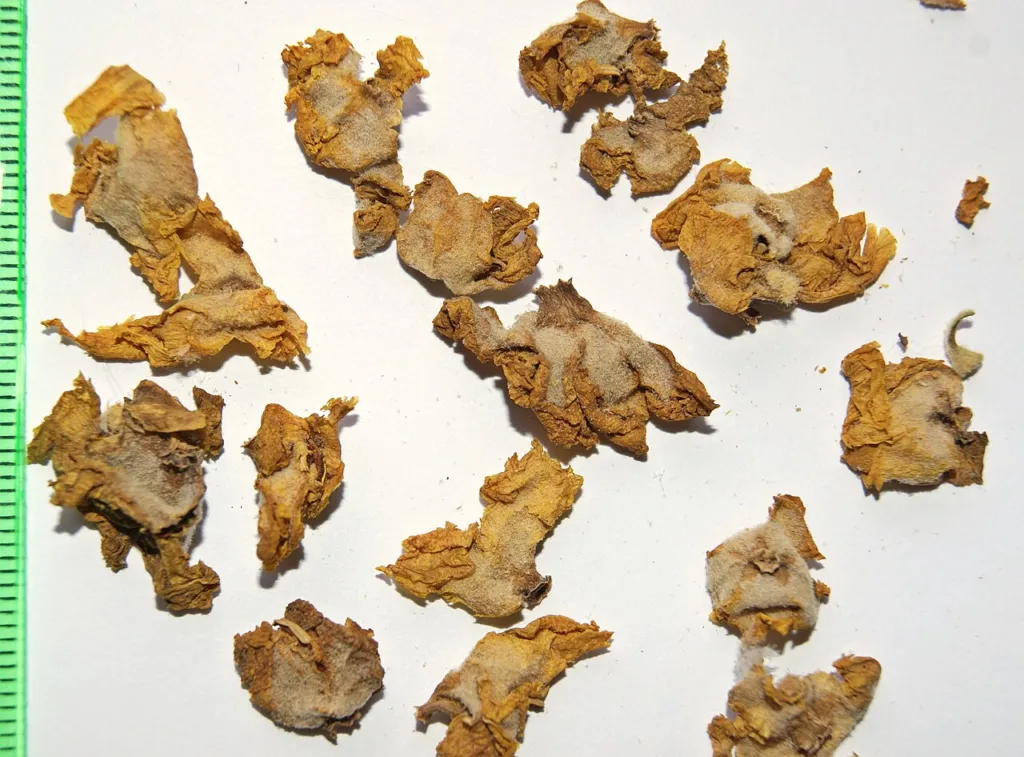
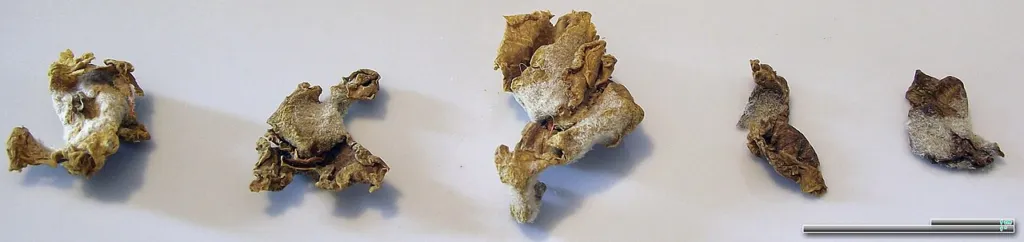
Mullein flower has a pharmacopoeial standard in Europe. The European Pharmacopoeia monograph defines the drug as the dried corolla and androecium of the three species, with a swelling index of at least 9 Confirmed[1]. German pharmacopoeial quality allows no more than 5% calyces and discoloured brown corollas Confirmed[1]. Commercial flower comes mainly from cultivated plants imported from Egypt, Bulgaria and Russia Confirmed[1]. Browning is the obvious quality sign: the fresh corolla is bright yellow and browns with poor drying or age Confirmed[1].
Leaf on the Australian tea market has no equivalent Australian standard. No survey of mullein products sold in Australia was found in the literature Confirmed. The risks are predictable: substitution with other Verbascum species, leaf sold as ‘mullein’ without saying whether it is leaf or flower, stalks and capsules in the cut material, and wild-collected material from contaminated sites Mechanism[1,13].
The tests that would sort this out are ordinary pharmacognosy. Microscopy shows the branched stellate hairs of V. thapsus leaf; a swelling index measures the mucilage that does the soothing; and thin-layer or liquid chromatography for verbascoside and aucubin can confirm a Verbascum profile Mechanism[1,9]. For leaf collected near roads, heavy-metal and herbicide-residue testing would answer the contamination question Mechanism.
Discussion: conclusions, hypotheses and research still required
What the evidence supports
Great mullein is a well-characterised European plant, naturalised across southern and eastern Australia Confirmed[13]. Its use for coughs, sore throats and catarrh is documented across four centuries of European and North American writing Traditional[1,6,7]. Its flowers contain mucilage, iridoid glycosides, verbascoside, flavonoids and small amounts of saponins Confirmed[1]. Extracts and isolated constituents show antiviral, antibacterial and anti-inflammatory activity in cells and animals Evidence suggests[1,8,9,10]. The flower tea has a good safety record at traditional doses Confirmed[1,2].
There is no clinical trial of mullein taken by mouth for any respiratory outcome Confirmed[1,2]. The paediatric ear-drop trials tested a multi-herb oil and were judged low in quality Confirmed[4]. One small trial supports a topical flower cream for episiotomy healing Evidence suggestsPMID 34103042. Nothing supports ‘lung detox’, smoking mullein, or using it to quit vaping Confirmed[1,17,18].
Hypotheses and musings
Hypothesis one: the soothing effect of mullein tea on a sore throat is a local demulcent action of the arabinogalactan mucilage, and would be lost if the mucilage were removed Mechanism[1]. That is testable.
Hypothesis two: the expectorant reputation owes something to saponins acting on the stomach lining and triggering a reflex increase in airway secretion, a mechanism often proposed for saponin expectorants (unsourced here) Mechanism. The flower saponin content is so low and so poorly measured that this may not hold for mullein at all Confirmed[1].
Hypothesis three: some of the anti-inflammatory activity seen with verbascoside could reach the throat lining during drinking, though the doses in animal work exceed a tea by more than tenfold Mechanism[1,10].
A musing on history: the Irish tuberculosis tradition and the cattle names suggest a remedy chosen for chronic chest disease, with demulcent comfort as the felt benefit Traditional[6]. Whether anything in the plant touches mycobacteria is still unknown Confirmed[6].
Where research should begin
- Clinical research: a randomised, placebo-controlled trial of standardised mullein flower tea for acute cough with sore throat in adults, using validated cough and throat-pain scores, with ethics approval and trial registration. A mucilage-depleted arm would test hypothesis one.
- Pharmacology: a cough-reflex model (citric-acid challenge) comparing whole tea, isolated mucilage and a mucilage-free fraction, and a measurement of verbascoside and aucubin in saliva and throat swabs after drinking.
- Toxicology: standard genotoxicity tests (bacterial reverse mutation and in vitro micronucleus) on mullein flower and leaf infusions, which would settle the European committee’s and EFSA’s open question; a seed toxicology study, since seed toxicity is presently unsourced.
- Quality analysis: a market survey of mullein teas and listed products sold in Australia: species identity by microscopy and DNA barcoding, leaf or flower declaration, swelling index, verbascoside and aucubin by HPLC, and heavy metals and herbicide residues.
- Botany: vouchered Australian collections of the four naturalised mulleins with rosette-stage identification notes, so wild material can be checked.
- Regulatory science: a review of how ‘lung detox’ and vaping-related claims on food teas sit against Standard 1.2.7 and the Therapeutic Goods Advertising Code, for the regulators who enforce them.
- Smoking cessation research: a survey of Australians who buy herbal ‘lung cleanse’ products, to learn whether they delay calling Quitline or using approved therapies.
About AIP and this series
The Australian Institute of Pharmacognosy is a clinic and research laboratory in Cardwell, far north Queensland, studying medicinal plants and natural products to the same evidentiary standard as any other branch of pharmacology: traditional knowledge taken seriously, and tested honestly. The Literature Review and Critical Analysis series examines a single plant in each review, reads the primary evidence in full, and separates tradition, laboratory findings and human trials so readers can see what each one supports.
More of the Institute’s work is at australian-pharmacognosy.org. Follow the series there for the next review.
Corrections. If you find an error of fact or a missing study, write to the Institute at our contact form; the Secretary passes every correction to the author.
Head of Education and Research
Australian Institute of Pharmacognosy
Cardwell QLD, Australia
australian-pharmacognosy.org · our contact form
Suggested citation. Ridley T. Mullein (Verbascum thapsus): lung detox claims and evidence. Australian Institute of Pharmacognosy, Literature Review and Critical Analysis AIP-LR-VERTHA. 2026. Available from the Institute’s Journal [viewed October 2026].
References
23 references — tap to open
- European Medicines Agency, Committee on Herbal Medicinal Products. Assessment report on Verbascum thapsus L., V. densiflorum Bertol. (V. thapsiforme Schrad) and V. phlomoides L., flos. EMA/HMPC/611531/2016, final, 27 March 2018. Overseas regulatory document; does not apply in Australia. Read in full, October 2026. EMA PDF
- European Medicines Agency, HMPC. Addendum to assessment report on Verbascum thapsus L.; V. densiflorum Bertol.; V. phlomoides L., flos (periodic review 2017–2024). EMA/HMPC/438161/2024, adopted 20 November 2024. Read in full, October 2026. EMA PDF
- European Medicines Agency, HMPC. European Union herbal monograph on Verbascum thapsus L., V. densiflorum Bertol. (V. thapsiforme Schrad) and V. phlomoides L., flos. EMA/HMPC/611537/2016, Rev. 1, 2018. Read October 2026. EMA PDF
- Foxlee R, Johansson AC, Wejfalk J, Dawkins J, Dooley L, Del Mar C. Topical analgesia for acute otitis media. Cochrane Database Syst Rev. 2006;(3):CD005657 (full text as updated 2011). doi:10.1002/14651858.CD005657.pub2. PMID 16856108. Source used here for the Sarrell 2001 and 2003 trials.
- Taleb S, Saeedi M. The effect of the Verbascum thapsus on episiotomy wound healing in nulliparous women: a randomized controlled trial. BMC Complement Med Ther. 2021;21(1):166. doi:10.1186/s12906-021-03339-6. PMID 34103042.
- McCarthy E, O’Mahony JM. What’s in a name? Can mullein weed beat TB where modern drugs are failing? Evid Based Complement Alternat Med. 2011;2011:239237. doi:10.1155/2011/239237. PMID 20953419.
- Blanco-Salas J, Hortigón-Vinagre MP, Morales-Jadán D, Ruiz-Téllez T. Searching for scientific explanations for the uses of Spanish folk medicine: a review on the case of mullein (Verbascum, Scrophulariaceae). Biology (Basel). 2021;10(7):618. doi:10.3390/biology10070618. PMID 34356473.
- Rajbhandari M, Mentel R, Jha PK, et al. Antiviral activity of some plants used in Nepalese traditional medicine. Evid Based Complement Alternat Med. 2009;6(4):517-522. doi:10.1093/ecam/nem156. PMID 18955262.
- Calabrese G, Zappalà A, Dolcimascolo A, Acquaviva R, Parenti R, Malfa GA. Phytochemical analysis and anti-inflammatory and anti-osteoarthritic bioactive potential of Verbascum thapsus L. (Scrophulariaceae) leaf extract evaluated in two in vitro models of inflammation and osteoarthritis. Molecules. 2021;26(17):5392. doi:10.3390/molecules26175392. PMID 34500824.
- Marčetić M, Bufan B, Drobac M, et al. Multifaceted biological properties of verbascoside/acteoside: antimicrobial, cytotoxic, anti-inflammatory, and immunomodulatory effects. Antibiotics (Basel). 2025;14(7):697. doi:10.3390/antibiotics14070697. PMID 40724000.
- EFSA Panel on Additives and Products or Substances used in Animal Feed (FEEDAP). Safety of a feed additive consisting of a tincture derived from Verbascum thapsus L. (great mullein tincture) for use in all animal species. EFSA J. 2021;19(7):e06711. doi:10.2903/j.efsa.2021.6711. PMID 34335922. Overseas regulatory opinion.
- Dieskau J, Bruelheide H, Gutknecht J, Erfmeier A. Biogeographic differences in plant-soil biota relationships contribute to the exotic range expansion of Verbascum thapsus. Ecol Evol. 2020;10(23):13057-13070. doi:10.1002/ece3.6894. PMID 33304516.
- Weeds of Australia (Lucidcentral key, Queensland Government edition). Fact sheet: Verbascum thapsus. Read October 2026. Fact sheet
- Sher AC, Stacy MR, Reynolds SD, Chiang T. In vivo detection of pulmonary mucociliary clearance: present challenges and future directions. Eur Respir Rev. 2024;33(173):240073. doi:10.1183/16000617.0073-2024. PMID 39293852.
- Prasetyo A, Sadhana U, Budiman J. Nasal mucociliary clearance in smokers: a systematic review. Int Arch Otorhinolaryngol. 2021;25(1):e160-e169. doi:10.1055/s-0040-1702965. PMID 33542766.
- Suryadinata R, Bennett-Wood V, McKinnon M, Vandeleur M, Robinson P. Repetitive exposure to nicotine-free vaping impairs airway defences and delays recovery. Lung. 2026;204(1):8. doi:10.1007/s00408-026-00869-z. PMID 41661298.
- Abdel Rahman RT, Kamal N, Mediani A, Farag MA. How do herbal cigarettes compare to tobacco? A comprehensive review of their sensory characters, phytochemicals, and functional properties. ACS Omega. 2022;7(50):45797-45809. doi:10.1021/acsomega.2c04708. PMID 36570239.
- Bak JH, Lee SM, Lim HB. Safety assessment of mainstream smoke of herbal cigarette. Toxicol Res. 2015;31(1):41-48. doi:10.5487/TR.2015.31.1.041. PMID 25874032.
- Therapeutic Goods Administration. Australian Register of Therapeutic Goods public summaries for the listed medicines ARTG 149278, 496132, 508187 and 527331, each containing Verbascum thapsus. Read October 2026. ARTG 149278 · ARTG 496132 · ARTG 508187 · ARTG 527331
- Australia New Zealand Food Standards Code, Standard 1.2.7 Nutrition, health and related claims, section 1.2.7—8 (F2015L00394, compilation of 13 August 2025). Read October 2026. Federal Register of Legislation
- Therapeutic Goods Administration. Vapes: information for pharmacists. Last updated 6 November 2025. Read October 2026. TGA
- Therapeutic Goods (Poisons Standard—June 2026) Instrument 2026 (F2026L00633). Searched in full for Verbascum and mullein, October 2026. Federal Register of Legislation
- Quit (Cancer Council Victoria). About Quitline 13 7848. Read October 2026. quit.org.au
Every PMID was checked against PubMed in October 2026. Studies were read in full text. Where a primary paper was not available in full text, the review that described it is cited instead and the text says so. Chemical structures link to their PubChem records.
Image credits
- Verbascum thapsus plant4 (16378774575) — Harry Rose (South West Rocks, NSW) — CC BY 2.0 — Wikimedia Commons
- Verbascum thapsus leaf surface1 (16377052521) — Harry Rose (South West Rocks, NSW) — CC BY 2.0 — Wikimedia Commons
- Verbascum thapsus flowerhead1 – Flickr – Macleay Grass Man — Harry Rose (Dungog, NSW) — CC BY 2.0 — Wikimedia Commons
- American medicinal plants (Plate 110) (6025978262) — Charles Frederick Millspaugh — Public domain — Wikimedia Commons
- Verbascum thapsus 15-p.bot-verba.thaps-10 — Gilles Ayotte — CC BY-SA 4.0 — Wikimedia Commons
- Verbascum thapsus flowerhead2 – Flickr – Macleay Grass Man — Harry Rose (Dungog, NSW) — CC BY 2.0 — Wikimedia Commons
- Verbascum virgatum — Melburnian — CC BY 3.0 — Wikimedia Commons
- Verbascum blattaria 1 — Sphl — CC BY-SA 3.0 — Wikimedia Commons
- Verbascum thapsus plant2 (16378773055) — Harry Rose (South West Rocks, NSW) — CC BY 2.0 — Wikimedia Commons
- Great Mullein (Verbascum thapsus) – Oslo, Norway 2021-03-25 — Ryan Hodnett — CC BY-SA 4.0 — Wikimedia Commons
- Verbascum thapsus plant5 (16192550169) — Harry Rose (South West Rocks, NSW) — CC BY 2.0 — Wikimedia Commons
- Verbasci flos by Danny S. – 001 — Danny Steven S. — CC BY-SA 3.0 — Wikimedia Commons
- Verbasci flos dried — Rillke — CC BY-SA 3.0 — Wikimedia Commons
- Mullein Verbascum thapsus flowers close — Jane S. Richardson (talk · contribs) — CC BY 4.0 — Wikimedia Commons
- Verbascum thapsus 01 by-dpc — David Perez — CC BY 3.0 — Wikimedia Commons
- Verbascum thapsus leaf1 (15758777033) — Harry Rose (South West Rocks, NSW) — CC BY 2.0 — Wikimedia Commons
- Verbascum thapsus kz04 — Krzysztof Ziarnek (Kenraiz) — CC BY-SA 4.0 — Wikimedia Commons
- Verbascum thapsus plant6 (16377050211) — Harry Rose (South West Rocks, NSW) — CC BY 2.0 — Wikimedia Commons
- Neuchâtel Herbarium – Verbascum thapsus – NEU000100115 — Neuchâtel Herbarium — CC BY-SA 3.0 — Wikimedia Commons
- Verbascum thapsus (5242160050) — Matt Lavin — CC BY-SA 2.0 — Wikimedia Commons
- Chemical structures (aucubin, catalpol, verbascoside, luteolin, apigenin, oleanolic acid) — PubChem, National Center for Biotechnology Information — public domain — PubChem
The Institute sets and publishes its own monographs. The catalogue is in Publications.