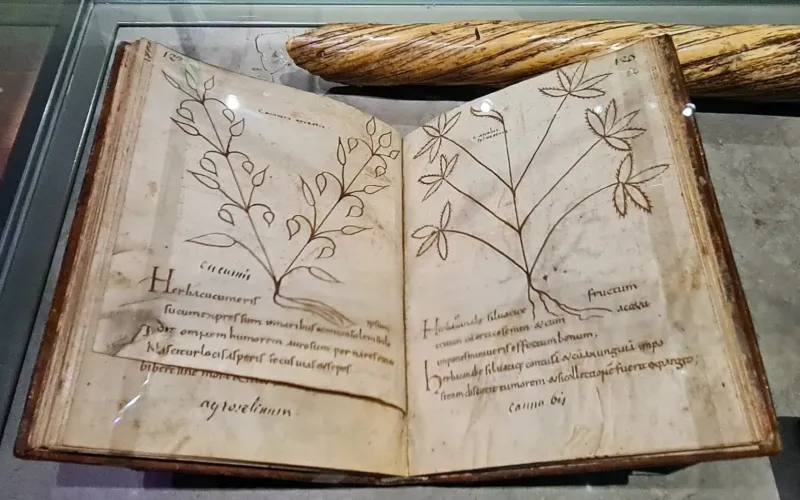

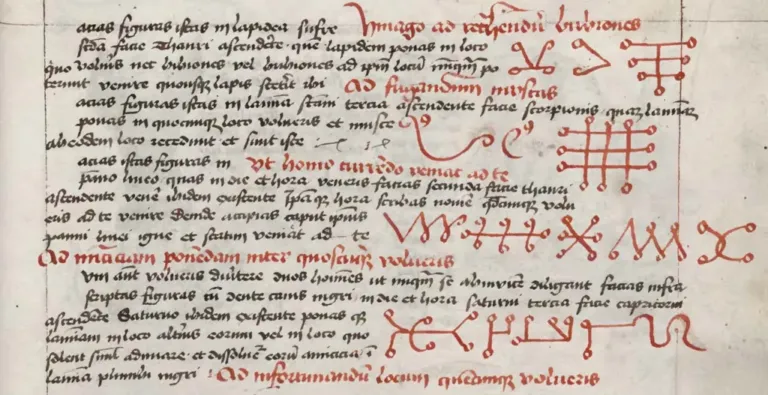
Cover image: a fifteenth-century Latin Picatrix. Public domain · Wikimedia Commons
The nutmeg in your spice cupboard is on a medieval list of magic plants, beside opium, mandrake and henbane. So are saffron and frankincense.
The book is the Picatrix. Whoever compiled it knew a poison when they saw one, and also set down a snakebite remedy that damages kidneys and causes cancer. Anyone reading old herb lore faces the same job: telling the two apart.
Educational only, not medical advice. Nothing here suggests obtaining, preparing, burning or taking any plant named. Several are poisonous, some are controlled, and some are prohibited from use in medicines in Australia.
For snakebite in Australia, call 000 immediately. Apply a pressure immobilisation bandage, keep the person still, and do not apply, take or burn any plant. Antivenom is the only treatment.
For suspected poisoning by any plant, call the Poisons Information Centre on 13 11 26 — 24 hours a day, anywhere in Australia — or 000 in an emergency. What they tell you governs.
- A learned medieval book of magic.
- Its usual method is burning; nobody brews a tea.
- It is right most often where the body answers fast.
- On love and favour it is mostly symbolism.
- Its snakebite remedy, birthwort, damages kidneys and causes cancer.
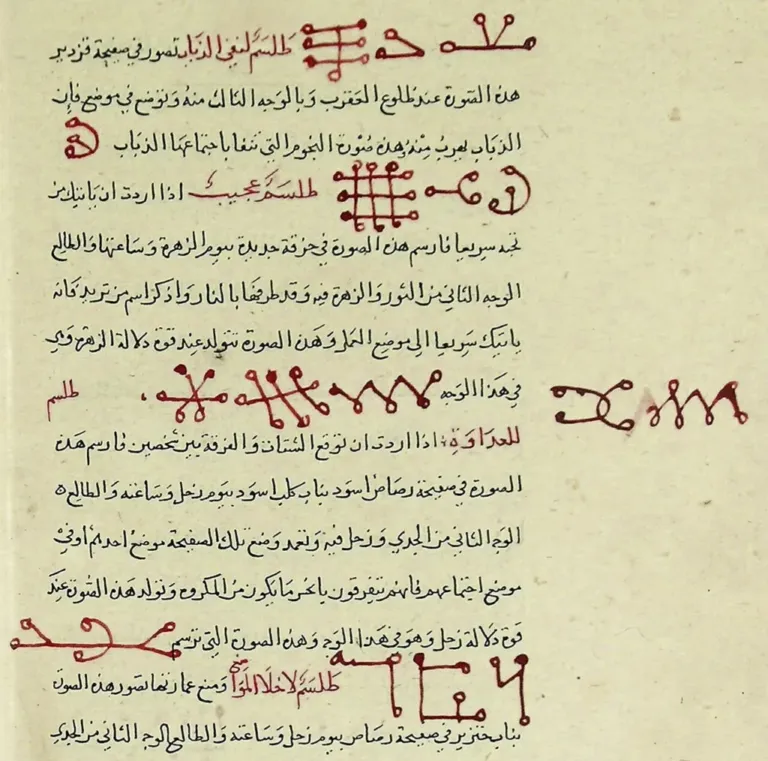
Sorted by nose and tongue
The planets are drawer labels.
This is a scholar’s book, built on a theory of how the heavens act on matter. Village folklore it isn’t. Saturn gets the bitter and foul, hemlock and opium among them. Mars gets the hot and biting. Venus gets the sweet-smelling. As astrology it looks random. As taste and smell it sorts itself.
Names are the catch. Black and white hellebore are two plants with two different poisons under one old name, and more than a dozen of the book’s names are still unidentified or disputed.
An old name is never an identification. When a label says “used since ancient times”, ask which plant.
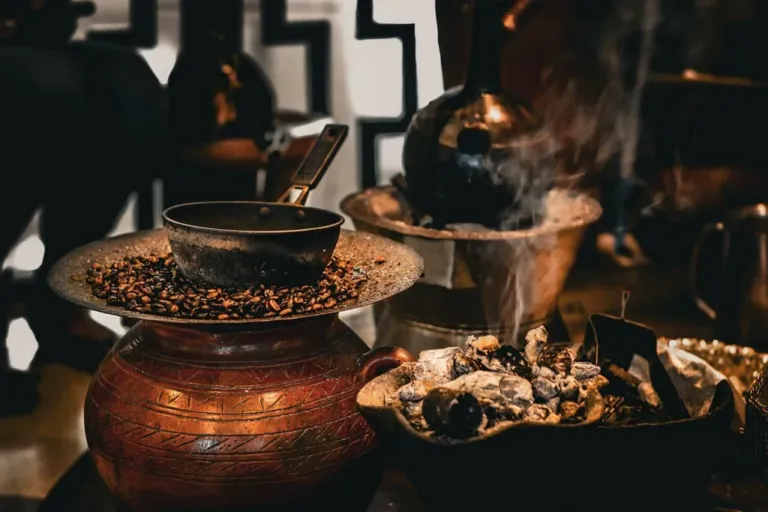
Smoke, not tea
Burned at the right hour.
Frankincense, myrrh and mastic recur. Most of that smoke is better understood as mood and setting than as a drug.
Some of it is a drug. Henbane and opium go on the fire, and cannabis turns up in one incense. Heating a poisonous or mind-altering plant changes the safety question, and what is known about swallowing a plant can’t be assumed to carry across to its smoke, in either direction.
Incense can change how a room feels. Burning a poisonous plant is its own risk, never a safe version of eating it.
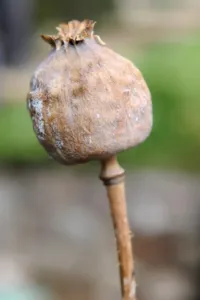
It knew a poison. Its love magic had no chemistry.
Most often right where the body answers fast.
On sleep, delirium, poison and death, the book and modern pharmacology mostly agree. Opium, mandrake, henbane and deadly nightshade really do sedate, intoxicate or poison. Poison hemlock paralyses, and aconite poisoning can throw the heart out of rhythm. Nutmeg does intoxicate in reported cases, though how has never been established in humans, and the experience is plain poisoning.
On love and favour the agreement thins out. Rose and saffron smell lovely; chemistry grants a pleasant smell, not a love charm. None of it is clinical evidence: the book records what was done, not that anything worked.
It knew a poison. Its snakebite remedy was one.
If anyone has swallowed any plant on this page, in any amount, call 13 11 26 now, or 000 in an emergency. Don’t wait for symptoms or judge the amount. For whether a herb could help you, consult a degree-qualified herbalist with competencies and adequate training in pharmacognosy.
The most dangerous sentence in the book
A right warning beside a dangerous false remedy.
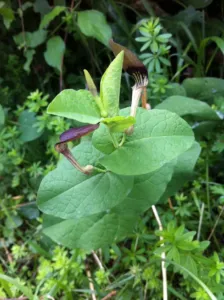
The book puts round birthwort into a charm against adders. Birthwort’s acids poison the kidneys and cause cancer; kidney failure and cancer of the urinary tract are on the human record. Against snakebite it has never been shown to do anything useful in a person. For exactly that reason birthwort — the whole Aristolochia group of plants — is prohibited from use in medicines in Australia today.
Medieval Latin has no standing on a bush track outside Cardwell. One book can keep a correct warning about poisons beside a dangerous false remedy.
For snakebite in Australia: call 000 immediately, apply a pressure immobilisation bandage, keep the person still, and do not apply, take or burn any plant. Antivenom is the only treatment.
This page is the short version. The whole essay is here.
Picatrix Herbs: Magic, Poison and Pharmacology — AIP Grimoire Herbal No. 1
- Jesse Kirby — rewrote the essay for someone with nutmeg in the cupboard, and picked the four things they need from a book of magic
- Zoe Bennett — wrote the title and the search description, and the nutmeg-and-opium line it will be shared on
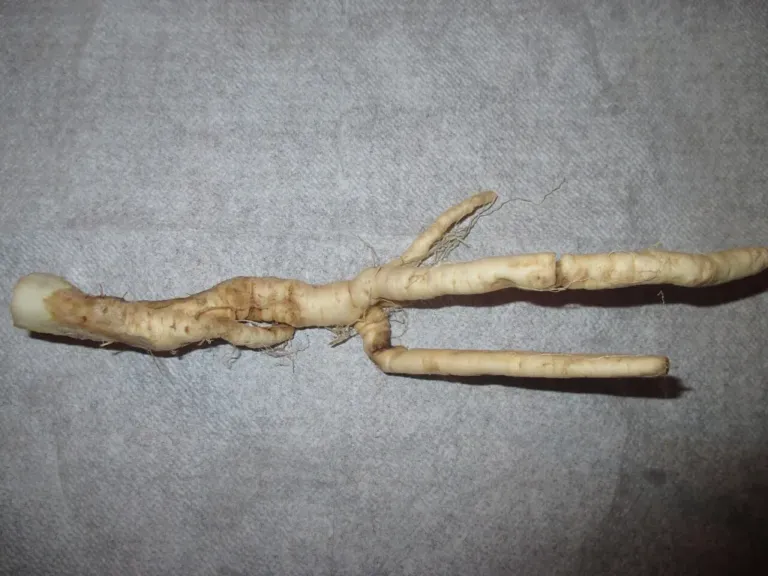
- Theo Karras — chose the manuscript cover, cropped the four section banners and added the mandrake root as the one in-body photograph
- Leah Bianchi — built the page: the snakebite callout, the one-minute card, the pull quote, and the phone layout
Contributors
- Ambrose Fenwick — Head of History and Philosophy; wrote the original essay every claim on this page is taken from
- Dr Eleanor Whitcombe — Clinical and safety review of this edition; restored the 000 line to the poisoning repeat and the risk of death to the poison group
- Geoffrey Larkin — Legal and regulatory review of this edition; checked the prohibition wording and the image licences against the essay
Direction and oversight
- Dr Luke Iggulden — Commissioned the Explainer series, set its direction and approved it
Image credits. Latin Picatrix, Kraków Jagiellonian Library MS 793, and Arabic Picatrix, Hamidiye MS 852 — public domain. Incense at an Ethiopian and Eritrean coffee ceremony — ProtoplasmaKid; opium poppy capsule — Niccolò Caranti; round birthwort — MurielBendel; mandrake root — D arckangel; all CC BY-SA 4.0, via Wikimedia Commons. The section banners are cropped, and the cropped CC BY-SA banners are shared under the same licence as the originals.
AIP Explainers are the plain-language editions of the Institute’s technical articles, published alongside the original. Every claim here is carried by the full essay, where the sources, the evidence grades and the manuscripts are set out. The Australian regulatory position was read on 20/09/2026 and may change; it is the Institute’s published reading and not advice. Found an error? Write to our contact form — we would rather correct a claim than repeat it.
Jesse Kirby
Head of Community Outreach
Australian Institute of Pharmacognosy
Cardwell QLD, Australia
australian-pharmacognosy.org · our contact form