

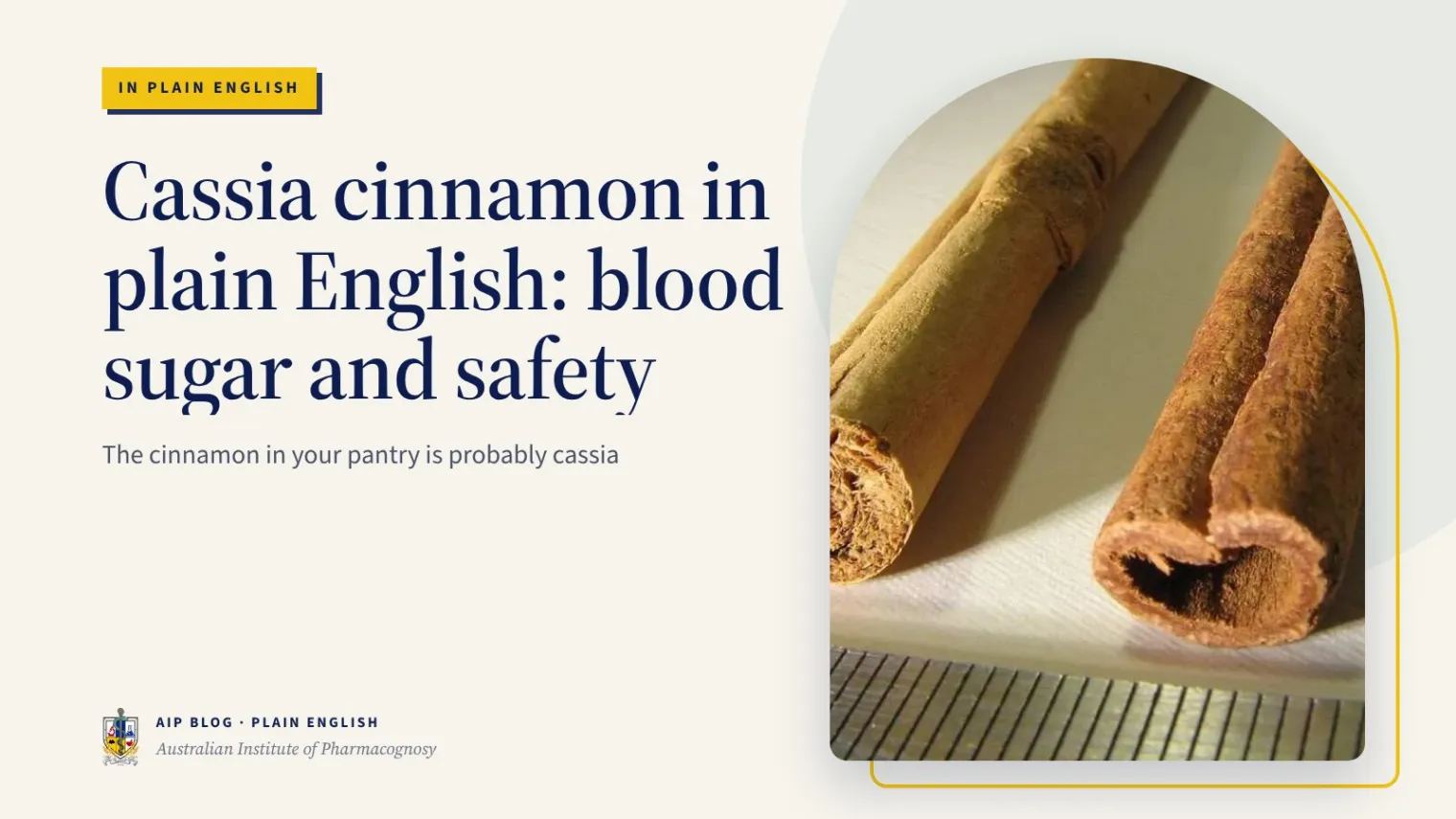
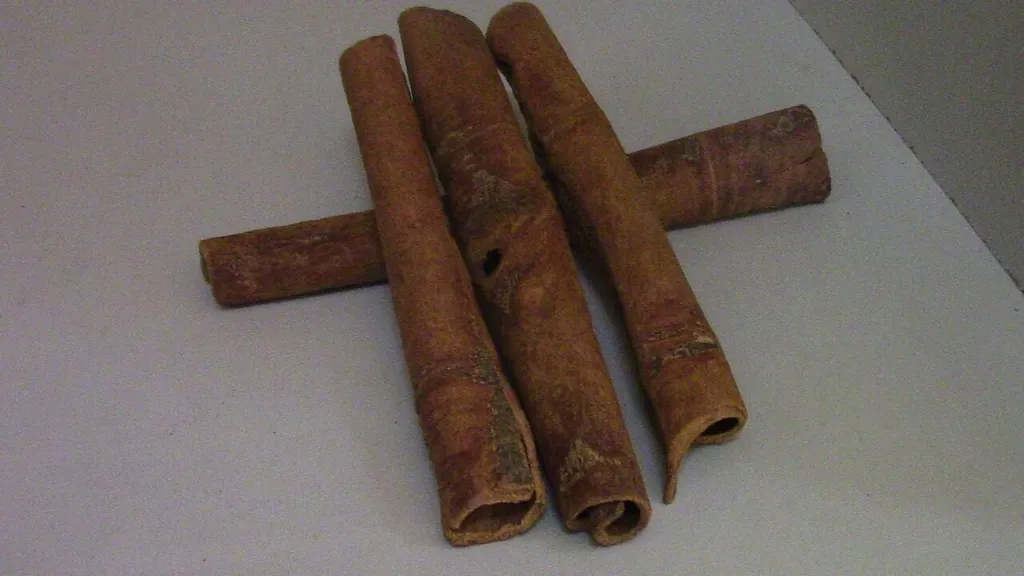
Photo: NanaYawBotar, via Wikimedia Commons · CC BY-SA 4.0
On the spice shelf there is a little jar that says cinnamon and nothing more. It goes on porridge and over a flat white.
Lately the same jar is being sold online as a fat burner and a cheap stand-in for weight-loss jabs. A pinch at breakfast is one thing. A heaped spoon every morning for months is another, and then it matters which bark you bought.
Educational only: no advice, and no preparation or dosing detail. Legal passages are the Institute’s reading of Australian rules in November 2026, not legal advice.
An emergency, or the person is drowsy, can’t swallow safely or is unconscious: phone 000 (Triple Zero). Otherwise phone the Poisons Information Centre on 13 11 26, 24 hours, Australia-wide, and follow its advice.
Dry powder gulped for a dare can be breathed in, causing choking and inflamed lungs. Cassia oil and cinnamon bark oil are concentrated, scheduled poisons above low strengths: never take them by the dropper, and keep oils and capsules out of children’s reach.
Taking cassia regularly and you get yellow skin or eyes, dark urine, pale stools, or nausea or pain under the right ribs that won’t settle: stop it and have your liver checked promptly.
Allergic to cinnamon or to Peru balsam: avoid medicinal cinnamon.
On insulin or a sulfonylurea and you turn shaky, sweaty or confused: follow your own low blood sugar plan.
Before taking any herbal medicine for blood sugar or weight, consult a degree-qualified herbalist with competencies and adequate training in pharmacognosy.
- Plain “cinnamon” is most likely cassia.
- Cassia carries coumarin, hard on the liver in a few susceptible people. Cooking sprinkles stay well under the European safe line; a daily teaspoon goes over, and a strong batch gets there on much less.
- Blood sugar: a modest fall in fasting sugar in type 2 diabetes, on weak trials.
- No “nature’s Ozempic”: its effect on weight is very small.
- On diabetes medicines? Keep them, keep monitoring, tell your care team.
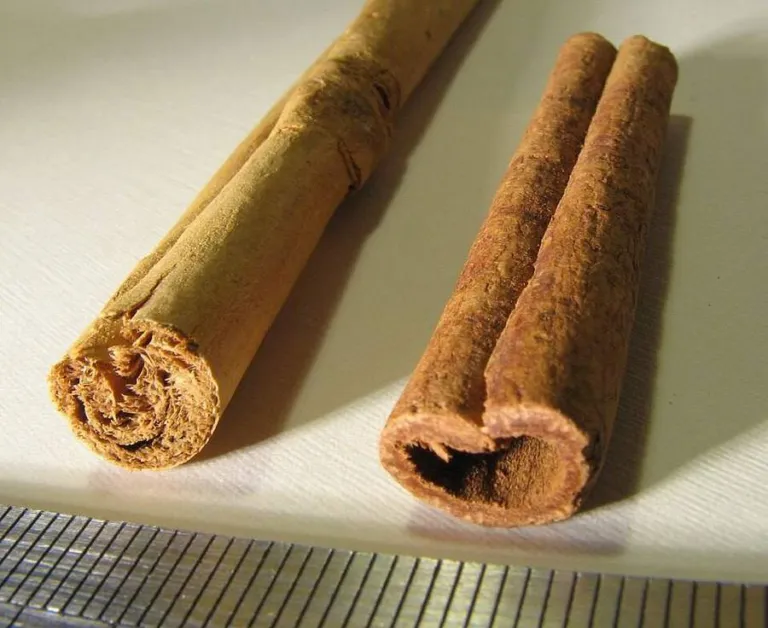
Two barks wear the same name
Look at the stick. Read the label.
The fine, dearer one is Ceylon, from Sri Lanka. The cheaper, hotter bark from China, Indonesia and Vietnam is cassia, and it fills most Australian supermarket jars and most blood sugar capsules.
A whole stick tells you which. Ceylon rolls paper-thin inner bark into many fragile layers. Cassia keeps its thick bark and dries into one hard curl. Ground, they look identical; only the label or a lab test can say.
Ceylon, Sri Lankan or true cinnamon on the label means the Sri Lankan bark. Chinese, Saigon or Indonesian, or the word cassia, mean the other. Plain “cinnamon”? Treat it as cassia.
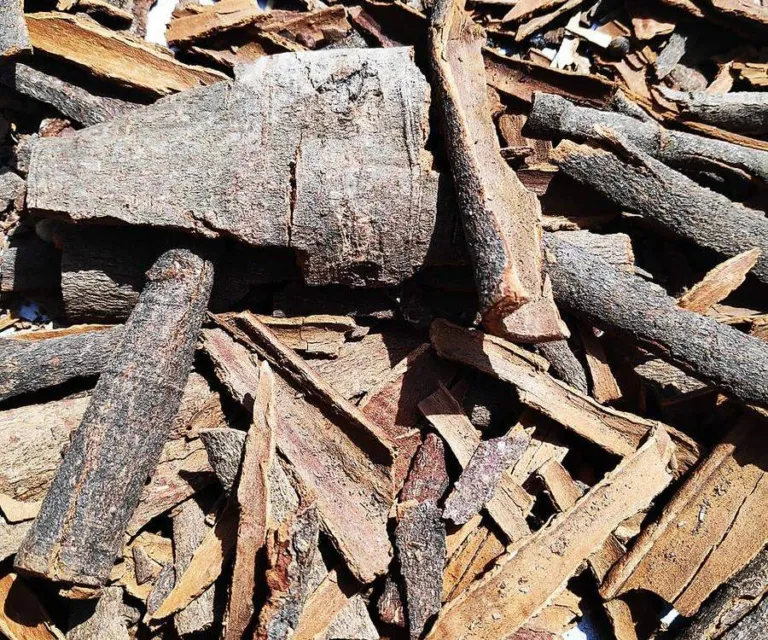
The hay-sweet smell that asks for a little care
A sprinkle and a daily spoonful are different exposures.
Coumarin smells of fresh-cut hay. Cassia holds plenty, Ceylon very little, and cassia swings widely from batch to batch with no label to tell you where your jar sits.
In a few sensitive people, some weeks of coumarin can upset the liver; in bad cases that means hepatitis, an inflamed liver, with yellowing skin. It usually clears once the coumarin stops. If you have liver disease or take medicines that load the liver, take more care with concentrated cassia. European food-safety bodies set a daily intake they regard as safe, and a level teaspoon of ordinary cassia every day takes an average adult past it, and a strong batch can do it on a fraction of that. A dusting on toast or in a curry uses a small slice of that allowance. The worry is months of large daily amounts.
From 1993 pure coumarin was prescribed here for lymphoedema, a swelling of the limbs. Ten liver injuries were reported, two of them fatal, and about three years later the medicine was withdrawn. Those doses dwarfed anything in food.
The worry is months of large daily amounts.
Enjoy it in your cooking. For a daily spoonful, Ceylon takes most of the coumarin question away. Children reach the limit on far less. European herbal regulators don’t recommend medicinal cinnamon in pregnancy, breastfeeding or under eighteen, and we found no trials in pregnancy or breastfeeding. Cooking is another matter.
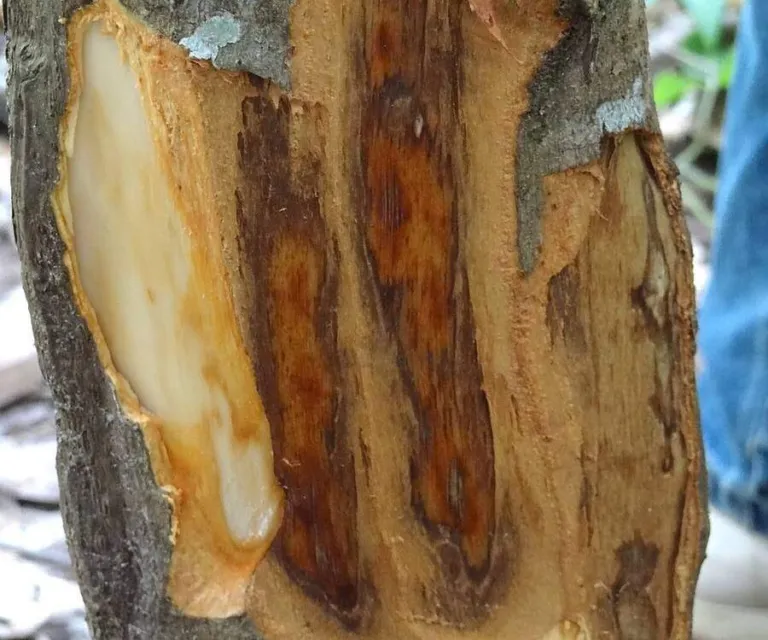
Blood sugar: a small, uncertain help
Real, modest, on shaky trials.
Pool the trials of cinnamon, mostly cassia, in type 2 diabetes and fasting blood sugar probably comes down a bit. The three-month blood test that predicts complications barely shifts, if at all. The trials were short, small and loosely run, and reviewers rate the certainty low to very low. No trial measured complications.
Ideas about how it works come from cells and rodents, not people.
In Chinese medicine the bark has been a warming herb for about two millennia, one part of a formula matched to a pattern of cold, not a lone capsule for blood sugar. Tales of ancient texts prescribing it for diabetes trace back to nothing we could find.
Don’t drop a prescribed medicine for it. Add a cinnamon supplement to metformin, insulin, a sulfonylurea or a GLP-1 medicine and any effect stacks on theirs; we found no study of those pairings. Keep monitoring as you have been advised, and tell your care team.
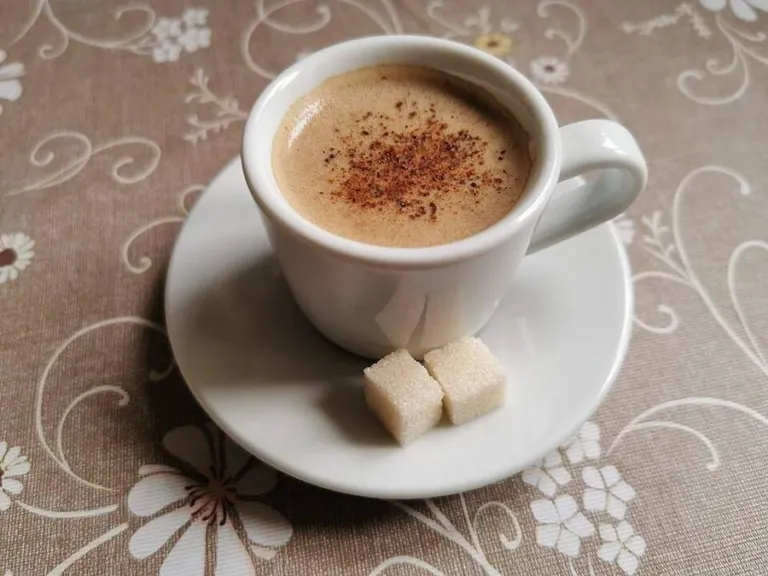
Your morning coffee is no weight-loss jab
Different routes, very different sizes.
Ozempic and Wegovy carry semaglutide, a built copy of the gut hormone GLP-1. It locks onto that hormone’s receptor, and in its main weight trial people lost about 15 per cent of their body weight.
We found nothing showing cinnamon latching onto that receptor. One small study saw the body’s own GLP-1 rise in healthy adults after a single cinnamon rice pudding, a long way from a weekly drug. On weight the trials show tiny changes, and more spoons bring no extra benefit, only more coumarin.
Have cinnamon on your flat white for the taste. For weight or blood sugar, the red box says who to ask.
The short version of Dr Thomas Ridley’s full review, where every trial, figure and regulation is set out:
- Dr Luke Iggulden, Chief Scientific Officer — Senior author. Commissioned the Explainer series, set its direction and approved it
- Jesse Kirby — Read the review, took his own notes, wrote every sentence from them with the review closed, then checked each claim back against it; chose the four things a pantry cook needs, the order, the headings, and rewrote the safety box without softening a word of it
- Zoe Bennett — Wrote the page title, the search line and the labels, and framed how it will be shared around the plain cinnamon jar and the coffee trend people have already seen in their feeds
- Theo Karras — Picked the cassia-stick cover and four section banners from the review’s licensed photographs, matched each to its Commons file and licence, and wrote the alt text to what each one shows
- Leah Bianchi — Assembled the page: the red safety box, the one-minute card, the pull quote, the four what-this-means cards and the card back to the review, checked to read on a phone
Contributors
- Dr Thomas Ridley — Wrote Literature Review AIP-LR-CINCAS, the article this page retells
Image credits. All photographs via Wikimedia Commons, resized by the Institute. Cover, cassia sticks: NanaYawBotar, CC BY-SA 4.0. Ceylon and cassia sticks compared: Antti Vähä-Sipilä, CC BY-SA 1.0 fi. Cassia bark, Nepal: Gaurav Dhwaj Khadka, CC BY-SA 4.0. Bark stripped from a cassia tree, Zanzibar: Adam Jones, CC BY-SA 2.0. Coffee with cinnamon: Flamel123, CC BY-SA 4.0.
AIP Explainers are the plain-language editions of the Institute’s technical articles, published alongside the original. Everything on this page is carried by the full review, where the evidence, the references and the regulatory sources are set out. Regulatory information was read in November 2026 and may change. Spotted an error? Write to our contact form. We would rather correct a claim than repeat it.
Jesse Kirby
Head of Community Outreach
Australian Institute of Pharmacognosy
Cardwell QLD, Australia
australian-pharmacognosy.org · our contact form
The Institute sets and publishes its own monographs. The catalogue is in Publications.