

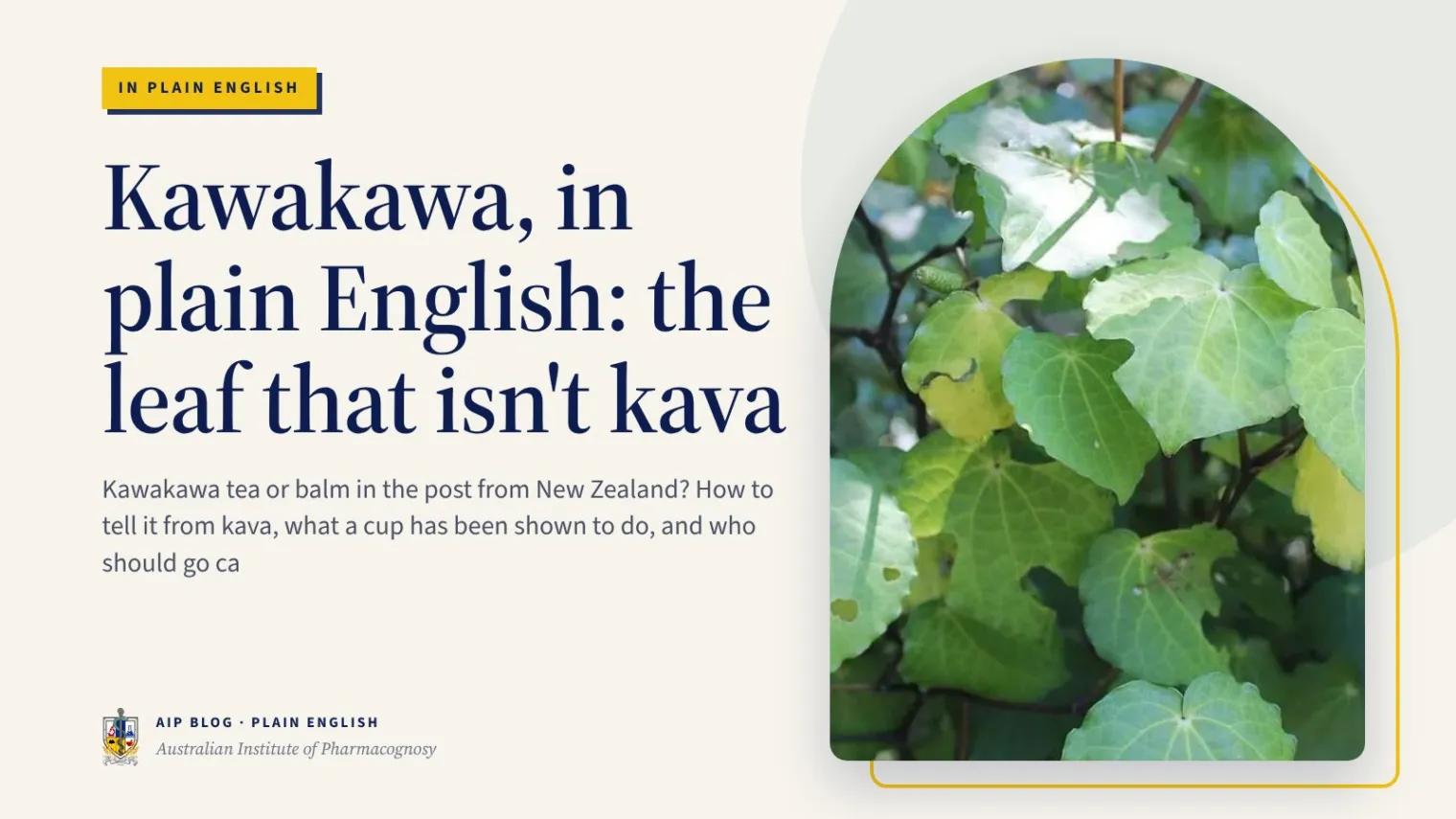
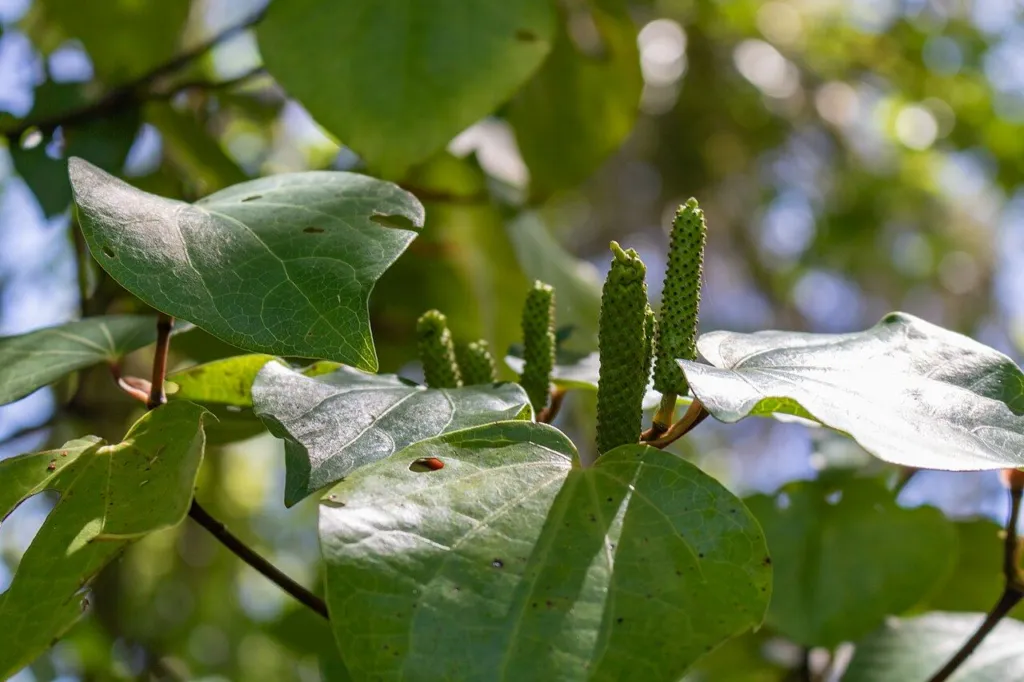
Photo: Bjankuloski06 · CC BY 4.0 · Wikimedia Commons
Rub a leaf from a certain New Zealand shrub and you get pepper, with nutmeg somewhere behind it. Across the Tasman those leaves go into teapots, baths and skin balms, and into the wreaths mourners wear at a tangi.
Here it mostly turns up in a padded envelope: tea or balm ordered online. Its name sounds like kava, a plant our law treats very differently. And it already grows wild on Australian soil.
Educational only; no dosing or preparation detail. Legal content is our reading of Australian rules, November 2026, not legal advice.
Unwell after swallowing any plant material, or swallowed a large amount: phone the Poisons Information Centre on 13 11 26, 24 hours, Australia-wide. In an emergency phone 000.
Safety data cover single cups in healthy adults only: none for pregnancy, breastfeeding or children, and no study with any medicine.
Kava is a different, controlled plant; kawakawa labels read Piper excelsum or Macropiper excelsum. Report suspected side effects to the TGA.
Before using kawakawa as a medicine, especially in pregnancy, with children or alongside prescribed medicines, consult a degree-qualified herbalist with competencies and adequate training in pharmacognosy.
- Māori medicine’s leading plant, and native to Lord Howe and Norfolk.
- Kava is another plant: read the Latin name.
- One strong cup softened insulin spikes in healthy volunteers. No traditional use has been trialled.
- No sign of harm from long use; pregnancy and medicines are untested.
- Legal to buy and drink; seeds and plants enter on conditions.
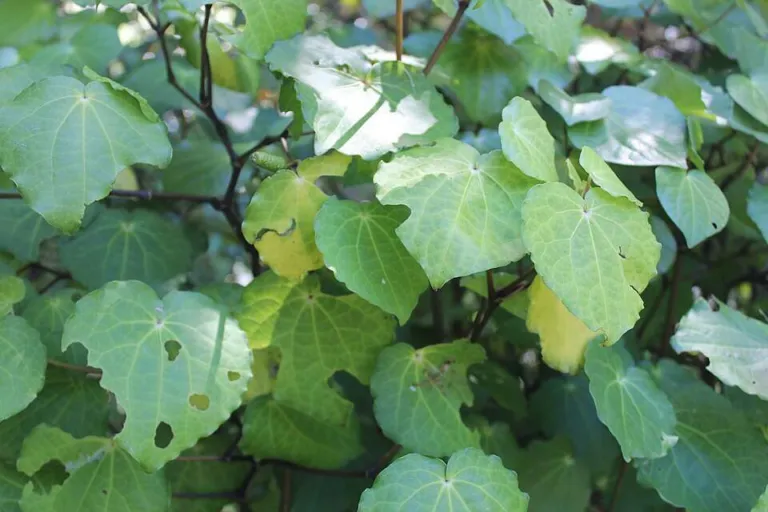
Kawakawa or kava? Read the pack
Pepper-family cousins, kept apart by chemistry and law.
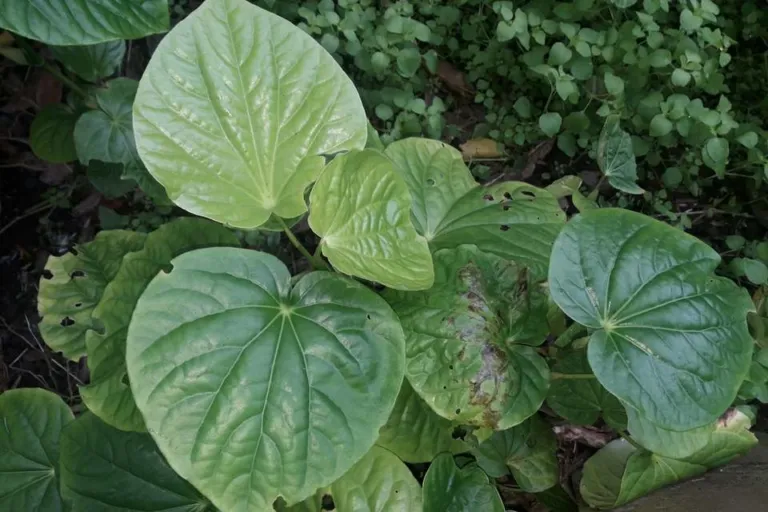
Kawakawa is a bushy shrub whose wide, shiny leaves are nearly all nibbled into lace by a green caterpillar, the kawakawa looper. Kava, a relative, has lookalike leaves, but people drink its root. Kawakawa is the leaf, brewed hot. Chemists found none of kava’s working substances in kawakawa leaf; the root hasn’t been checked.
So safety doesn’t carry across. Kava’s rare liver risk belongs to kava root, and kawakawa’s clean record says nothing about kava. Kava sold as medicine outside tight limits is controlled, its import policed; kawakawa sits on no poisons list.
Whole leaf shows its shape, holes and peppery smell; powdered leaf doesn’t, so read the label. Piper methysticum is kava. Piper excelsum, or the old name Macropiper, is kawakawa. “Māori kava” alone is too vague: ask the seller.
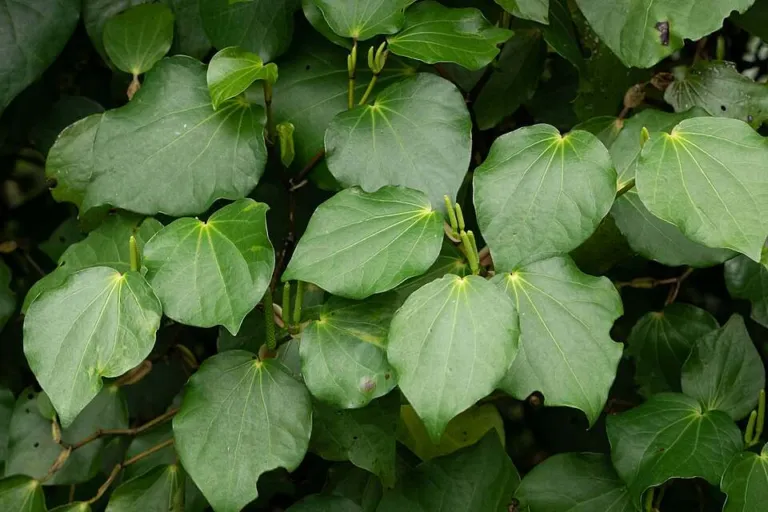
Generations of use, and one cup in a laboratory
Practice and proof, kept in separate jars.
Written accounts of Māori use, from the 1840s on, keep returning to the mouth and the skin: root chewed or ripe fruit pressed on a bad tooth, washes and dressings for wounds and rashes, tea for a sore stomach. None of it has been tested in a trial.
One leaf compound, kin to black pepper’s heat, leaves the mouth tingling and a little numb, which might explain the toothache use. Might: nobody has tried kawakawa on a sore tooth.
The only human research is from one Auckland team. Healthy volunteers drank a strong cup before a sweet breakfast, and the tea took the edge off their insulin spike an hour later. A blood-sugar benefit in the small first study vanished in the larger one. Inflammation results were mixed.
One cup, healthy people, a few hours. Daily drinking, people with diabetes and the balms are untested. Tea-bag and fresh leaf also differ chemically.
One cup, healthy people, a few hours.
Enjoy a much-loved traditional tea with one promising early result. Anyone selling it as a cure is claiming more than has been shown.
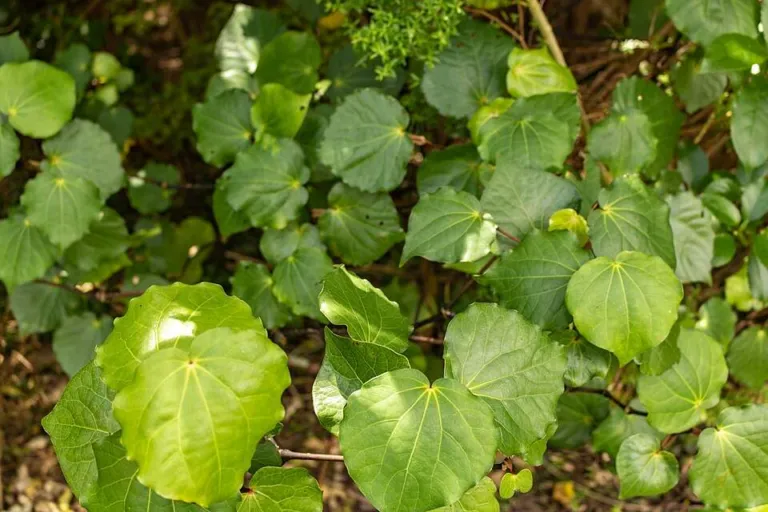
Who should ask before the kettle goes on
A quiet record, with honest gaps.
Generations of use show no evidence of harm; a month-long rat study reportedly found none. Reassuring, within limits: long use can miss rare reactions, slow ones, or effects on an unborn baby. We found no reports of serious harm.
People ask about the nutmeg compounds, since a lot of nutmeg can make you ill. A cup holds around a hundredth of the levels linked to trouble. Whether this compound family can harm genes is an open laboratory question, at strengths far beyond tea. Strong concentrated extracts have never been studied; don’t make a habit of them.
- Pregnant or breastfeeding. No information exists. Beyond the odd cup, leave it be unless the herbalist in the red box advises otherwise.
- Children. Never studied, and a small body takes more from each cup. Adult-strength tea and extracts need advice first.
- On diabetes medicine. Nobody knows if a regular cup adds to your tablets. Ask that herbalist, and keep checking your sugars.
- On warfarin, digoxin, ciclosporin or some epilepsy medicines. Pepper’s hot compound, which kawakawa carries, raises uptake of some substances. Untested with medicines: skip concentrated extracts.
- Using a balm. Patch-test it first.
Studies cover only healthy adults having one cup. Beyond that, ask the herbalist in the red box.
Buying it, bringing it home, and whose leaf it is
The rules as we read them in November 2026.
Kawakawa is legal to buy, keep and drink here. The TGA allows it in low-risk “listed” medicines; an AUST L number means the ingredient is allowed and the company vouches for its own evidence, and the TGA has not checked that it works. A plain tea making no health claim is sold as food. Declare dried leaf as plant material on arrival. Check the federal BICON system before ordering seed or plants, and expect conditions.
To Māori, kawakawa is a taonga, a treasure, and the knowledge around it is theirs. The leaf in your cup almost certainly grew in New Zealand. Yet on Lord Howe and Norfolk a larger-leaved island form grows wild as a native plant. Strictly, it is one of ours.
Ask your seller where the leaf came from and who agreed to its picking. Thinking of growing it? Our review doesn’t recommend that; ask Biosecurity Queensland first. And if you ever walk Mount Pitt on Norfolk, look down for the leaves full of holes.
Dr Thomas Ridley’s full review, with every source:
- Dr Luke Iggulden, Chief Scientific Officer — Senior author. Commissioned the Explainer series, set its direction and approved it
- Jesse Kirby — Wrote this edition from his own notes with Dr Ridley’s review closed: chose the four things a reader needs, the order, the headings and every sentence, and boiled the safety and legal box down without losing any of it
- Zoe Bennett — Wrote the page title, the search description and the labels around the tea or balm that turns up in the post from New Zealand, since that is how most readers will meet kawakawa and how the page will be shared
- Theo Karras — Picked the hero and the four section banners from the review’s licensed photographs, matched each to its section, checked each image by eye and wrote alt text to describe what it shows
- Leah Bianchi — Built the page: the safety box, the one-minute card, the pull quote, the who-should-ask list, the four what-this-means cards and the card back to the review, and checked that each reads cleanly on a phone
Contributors
- Dr Thomas Ridley — Wrote the literature review this page retells
Image credits. Photographs of Piper excelsum reused from the parent review, resized for the web: Bjankuloski06 (CC BY 4.0, cover and woodland), Tim McNamara (CC BY 4.0, holed leaves) and Judi Lapsley Miller (CC BY 4.0, fruiting spikes), via Wikimedia Commons; naturewatchwidow (CC BY 4.0, Norfolk Island), via iNaturalist.
AIP Explainers are the plain-language editions of the Institute’s technical articles, published alongside the original. Everything on this page is carried by the full review, where the evidence, the references and the regulatory sources are set out. Regulatory information was read in November 2026 and may change. Spotted an error? Write to our contact form. We would rather correct a claim than repeat it.
Jesse Kirby
Head of Community Outreach
Australian Institute of Pharmacognosy
Cardwell QLD, Australia
australian-pharmacognosy.org · our contact form
The Institute sets and publishes its own monographs. The catalogue is in Publications.