

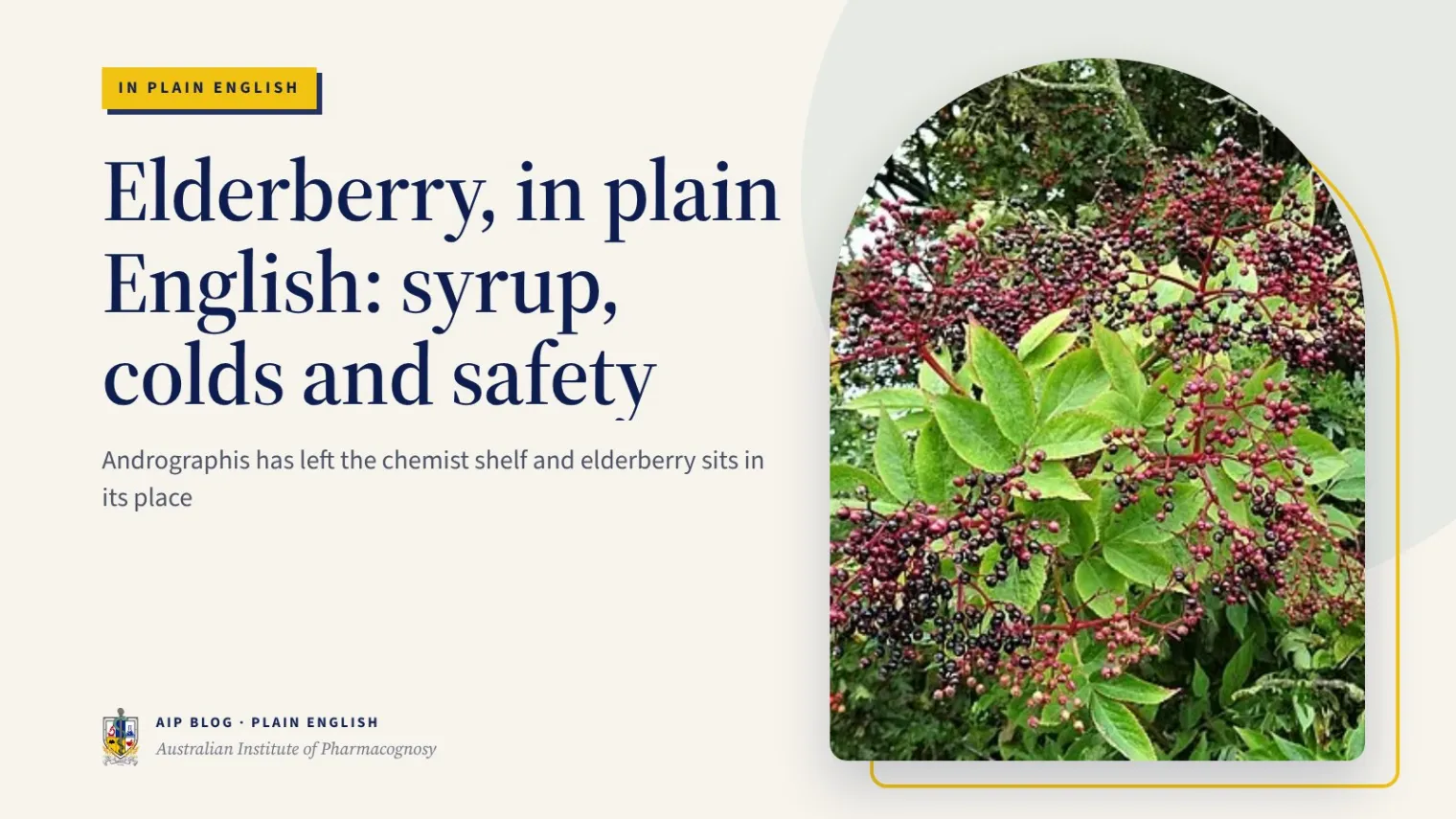
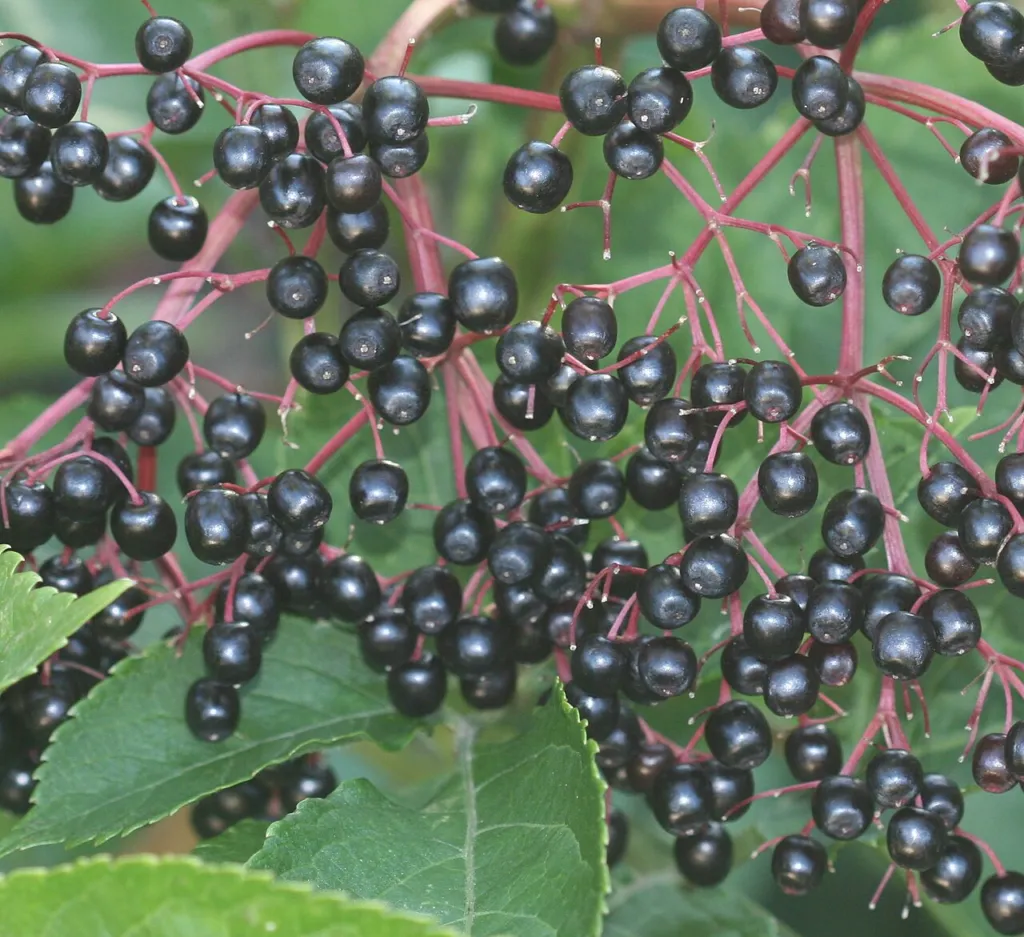
Photo: S. Rae (Flickr) · CC BY 2.0 · Wikimedia Commons
At the chemist this spring there is a gap on the cold-and-flu shelf. The andrographis tablets are going, after the regulator took the herb off its list in September over severe allergic reactions. Beside the gap sit the elderberry syrups and gummies.
Some shoppers will also spot elder fruiting by a creek and think of making their own. The bottle and the bush are different things, and the trials behind the bottle are small and divided.
Educational only: no advice, no product endorsed, no dosing. Rules as the Institute read them in October 2026; not legal advice.
In an emergency phone 000. For advice, phone the Poisons Information Centre on 13 11 26, open 24 hours, Australia-wide, and follow what they tell you.
Raw elder from a garden or roadside is not for eating, and nothing should be made from the leaves or bark. Leaves, bark, stems, roots and green berries, eaten raw, have caused nausea, vomiting and diarrhoea, sometimes severe.
There is no reliable safety information for elderberry in pregnancy, while breastfeeding, in autoimmune illness, or for people taking medicines that damp down the immune system. Anyone allergic to elder should not take it.
Before taking any herbal medicine, consult a degree-qualified herbalist with competencies and adequate training in pharmacognosy.
- Only ripe, dark berries, cooked or extracted. Raw leaves, bark and unripe berries are not food.
- Elderberry might shorten a cold a little. For flu it is unproven.
- The immune “overdrive” scare has no evidence behind it, though studies are few.
- Pregnancy, breastfeeding, immune-suppressing medicines: no data.
- A listing number means legally sold, not checked to work.
A bedtime mug, and what the trials made of it
Old habit, few studies, one clear miss.
In Georgian England the berries were cooked down with sugar into a dark syrup, a spoonful stirred into hot water when a cold came on. The habit is real, but a habit cannot show the colds got shorter.
Small early flu studies, mostly maker-funded, said patients recovered days sooner. A careful, independent American trial in emergency departments, with the same syrup, found no difference. On the Gold Coast, travellers flying overseas on elderberry caught no clearly fewer colds than those on dummy pills, though theirs looked shorter and milder. Very few fell ill, and the paper led with a result it had not registered.
Elderberry might take the edge off a cold. For flu, it is unproven.
The strictest review rated all of it low to very low certainty. Nor is it a straight swap for andrographis.
Expect a small effect on a cold at most, and maybe none. It does not stand in for an antiviral medicine for flu.
Only the ripe, cooked berry belongs in the jar
Raw, the rest of the bush makes people sick.
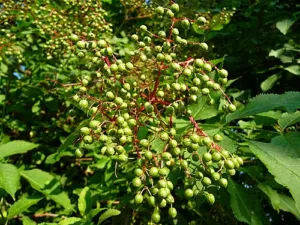
Green berries, leaves, stalks, bark and roots hold sugars that give off cyanide once the plant is crushed or digested. Eaten raw, they upset the stomach badly.
Ripe black fruit carries far less, and is cooked, pressed or extracted. Heat drives off much of the cyanide, though only partly: some of those sugars survive, and gut bacteria can still crack them. Safe product needs ripe fruit, stripped of stalks and leaves, properly processed.
No leaf or bark tea, and no raw or green berries. If someone has and feels unwell, phone 000 in an emergency, or 13 11 26 for advice.
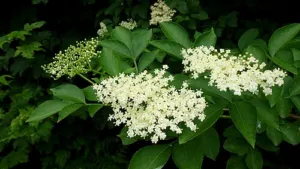
The bush by the creek may not be the one in the bottle
Not every wild elder is the same plant.
European elder escaped from gardens and now runs wild through much of the east, north Queensland included.
Look for a shrub or small tree: flat plates of tiny cream flowers, paired leaves cut into toothed leaflets, and small glossy berries, near-black when ripe, on reddening stalks.
We also have native elders, one with yellow fruit. Nothing on this page applies to them. Dwarf elder, a European relative, has fruit that is not food.
Leave the picking alone: a roadside “elderberry” could be European elder, a native or another plant.
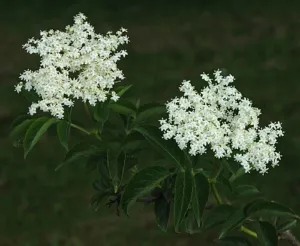
Who should ask first, and the scare to set aside
The real gaps are quieter than the alarm.
In 2020 word spread that elderberry could tip the immune system into a dangerous overreaction. A review went looking and found no study tying it to such harm, though the evidence is thin. Nor does anything show it prevents or treats COVID.
No proper studies cover pregnancy or breastfeeding. For anyone with an autoimmune illness, or on drugs that hold the immune system down after a transplant, nothing shows it harms them and nothing shows it is safe.
Nothing shows it harms them and nothing shows it is safe.
Data on children are very thin. In sensitive people, rare itch, hives or rash have been reported. Check the label for other actives: honey must never go to a baby under 12 months, as it can carry infant botulism, and willow bark is for adults only, and not for late pregnancy or anyone allergic to aspirin.
Pregnant, breastfeeding, on prescription medicines, or buying for a child? Talk first to the herbalist named in the red box.
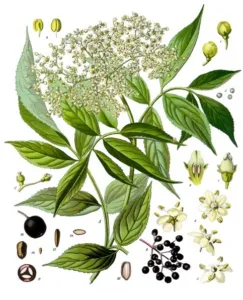
What the box in the chemist does and does not tell you
A promise about the factory and the label.
The maker of a listed elderberry medicine picks from approved ingredients and claims, and vouches that it holds the evidence. The regulator does not check that it works before it reaches the shelf. The listing number means legal and made to Australian quality rules, not that the pack matches a trial extract. Cordials and gummies sold as food cannot claim to treat or prevent illness.
Read the active ingredients and report any side effect to the medicines regulator. And if a hot dark mug at bedtime is how your family has always met winter: only the ripe berry belongs in it, never a guessed-at bush.
The short version of Dr Thomas Ridley’s review. Every trial and reference is in the full one:
- Dr Luke Iggulden, Chief Scientific Officer — Senior author. Commissioned the Explainer series, set its direction and approved it
- Jesse Kirby — Took his own notes on the review, shut it, and wrote this edition from them: chose the five things a shopper needs, the order they come in and every sentence, and reworded the safety box without softening any of it
- Zoe Bennett — Wrote the page title, the search line and the labels, pitched at the person standing at the gap the andrographis tablets left on the chemist shelf, which is how the page will be shared
- Theo Karras — Picked the black-fruit cover and the five section banners from the review’s own licensed set, ending on the old Köhler plate for the chemist-box section, checked each by eye on a contact sheet and wrote alt text that says what is really in the frame
- Leah Bianchi — Built the page: the red safety box, the one-minute card, the two pull quotes, the five what-this-means cards and the card back to the review, laid out to read cleanly on a phone
Contributors
- Dr Thomas Ridley — Wrote the evidence review this page retells, and checks the science in it
Image credits. All images are from the parent review’s licensed set, via Wikimedia Commons. Cover: S. Rae, CC BY 2.0. Ripe berries: Rosser1954, CC BY-SA 4.0. Green berries: 3268zauber, CC BY-SA 3.0. Elder in flower: Jonathan Billinger, CC BY-SA 2.0. Flower heads: Wouter Hagens, CC BY-SA 3.0. Botanical plate: Franz Eugen Köhler, Köhler’s Medizinal-Pflanzen, public domain.
AIP Explainers are the plain-language editions of the Institute’s technical articles, published alongside the original. Everything on this page is carried by the full review, where the evidence, the references and the regulatory sources are set out. Regulatory information was read in October 2026 and may change. Spotted an error? Write to our contact form. We would rather correct a claim than repeat it.
Jesse Kirby
Head of Community Outreach
Australian Institute of Pharmacognosy
Cardwell QLD, Australia
australian-pharmacognosy.org · our contact form
The Institute sets and publishes its own monographs. The catalogue is in Publications.