

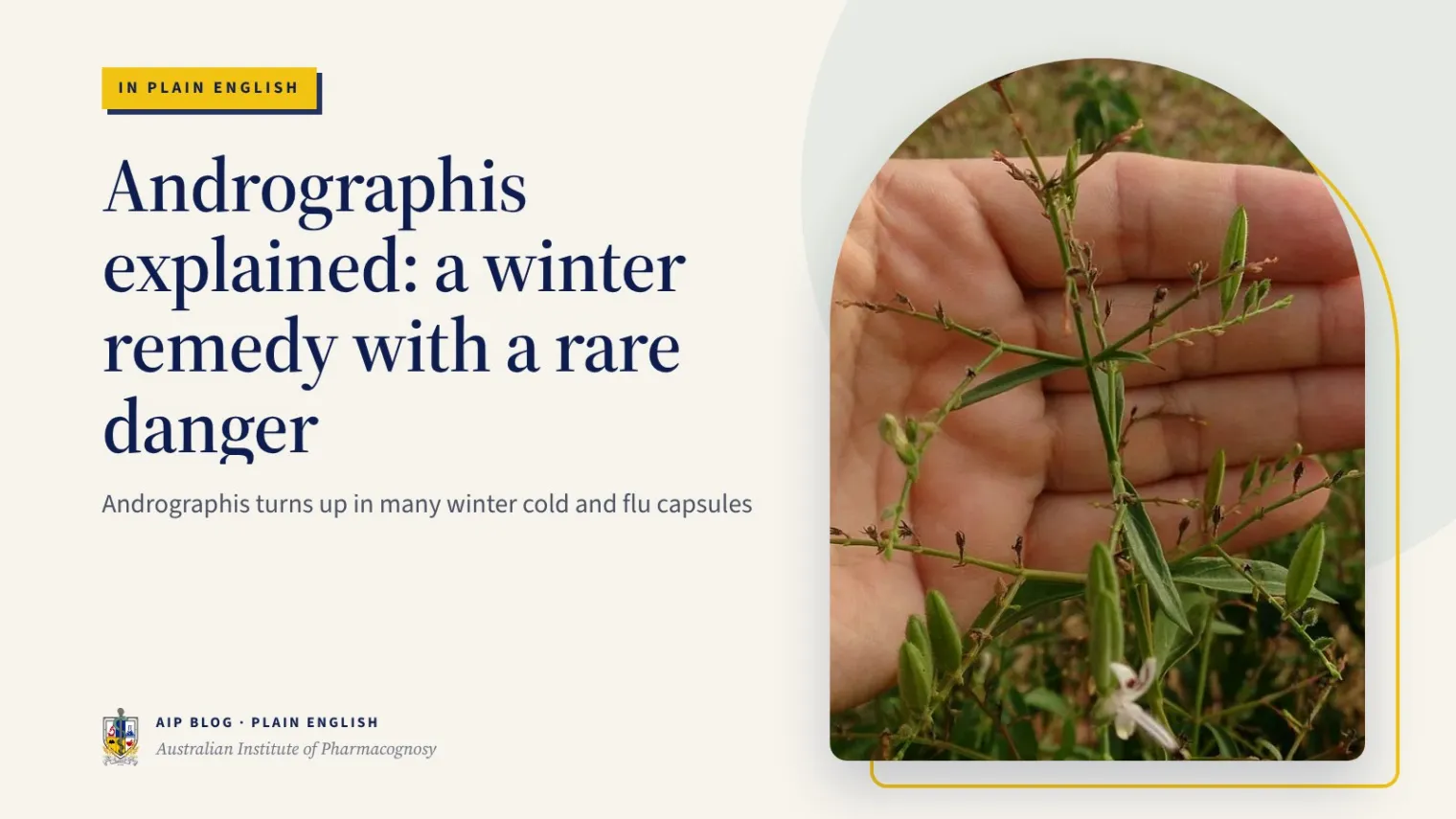
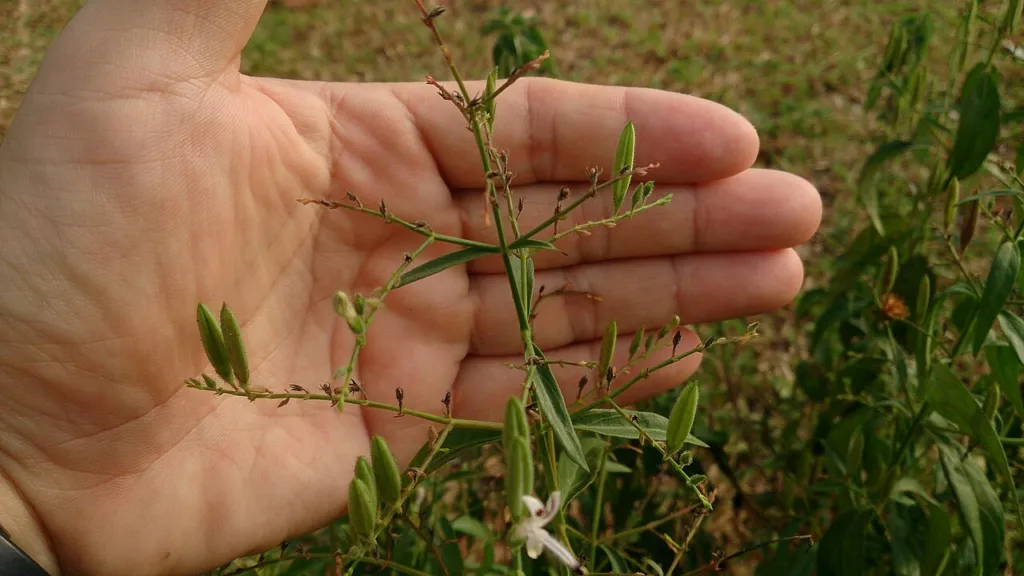
Photo: Mokkie, Wikimedia Commons · CC BY-SA 3.0
Plenty of Australian bathroom cabinets hold a half-finished box of winter capsules. Turn yours over. If it lists andrographis, or king of bitters, the national regulator has proposed taking that herb off the self-serve shelf.
A few people who take it have a violent allergic reaction, usually within the half-hour, often with no allergy history, sometimes from a product they’d used before without trouble. One Australian has died. It is rare, and nobody can say beforehand who it will be.
Educational only: not medical, legal or regulatory advice. No doses, no recipes.
Ring 000 (Triple Zero) at once for: hard or noisy breathing; a swollen tongue; a swollen or tight throat; wheeze or a cough that won’t stop; a hoarse voice or trouble talking; dizziness that won’t pass, or collapse; a young child going pale and floppy; stomach pain or vomiting.
Follow ASCIA’s anaphylaxis first aid, and any ASCIA Action Plan the person has. Lay them flat; don’t let them stand or walk. If breathing is hard, sit them with legs out straight. Hold a small child flat, not upright. Unconscious or pregnant: recovery position, on the left side if pregnant. Use an adrenaline auto-injector if there is one; more may be given after 5 minutes if there is no response. Start CPR if they are unresponsive or not breathing normally. If in doubt, give adrenaline.
Milder signs (rash, hives, itch, flushing, puffy lips or eyes): stop the product at once and get medical advice promptly. Mild reactions have been followed by severe ones.
Poisons Information Centre: 13 11 26, 24 hours, Australia-wide.
Before taking any botanical drug, consult a degree-qualified herbalist with competencies and adequate training in pharmacognosy.
- A fiercely bitter herb in many winter cold and flu capsules.
- It can cause anaphylaxis, a fast, severe allergic reaction: rare, once fatal, hard to see coming.
- Label warnings didn’t cut reports. The TGA proposed pulling it from low-risk shelf medicines; undecided as at September 2026.
- It may ease a cold or sore throat a little, on weak trials.
- Reacted before, or a severe allergy history? Avoid it. Trouble breathing: 000.
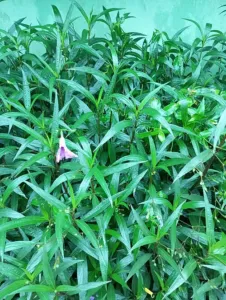
Minutes, and usually no warning
Why nobody sees them coming.
Since 2005 the TGA has logged close to three hundred reports of severe allergic reaction to andrographis products; one, reported in 2024, was fatal. Its tentative guess, with big data gaps, is one reaction per thousand to ten thousand packs.
Most reactions began within half an hour. For most it was a first dose, or a product they’d used before without trouble. Over half had no allergy history, and most landed in hospital.
For most it was a first dose, or a product they’d used before without trouble.
Echinacea, in most of these capsules, was the first suspect; the TGA ruled it out as the main cause. No preparation, traditional ones included, is known to escape the risk. A lab study hints the bitter compounds may trip allergy cells even on first contact; that is from cells in a dish, unproven in people.
Earlier easy use proves nothing about this winter’s box. Reacted to any andrographis product? Avoid them all, and echinacea if it was in the mix. Any severe allergy history? The TGA says avoid both.
Why a sticker on the box didn’t help
Labels were tried twice.
Packs have warned of allergic reactions since 2020; in 2024 one brand put a bold warning on its front. Its reports the next year were no lower.
A reaction outruns any label, and most people hit had no allergy history to warn them. A cold, ibuprofen-type painkillers, alcohol and hard exercise all make reactions likelier or worse, and an early flush can look like the cold, so people may keep dosing.
In April 2026 the TGA proposed removing it from listed (AUST L) medicines, the low-risk self-serve kind; as at September 2026 nothing was decided or recalled. Medicine a practitioner makes up for one patient sits outside that review, and the TGA hasn’t said what it will do there. That is the Institute’s reading, not legal advice.
The TGA’s advice covers the box you have: stop at the first allergic sign and get medical help. Take care with ibuprofen, drink and hard exercise around a dose. Anyone can report a reaction to the TGA.
Does it work, and who should say no
Small gain, rare danger.
Dozens of trials hint it eases a cold or sore throat a little, though most were small, poorly run or tied to sellers, so even that is unsettled; COVID-19 results are mixed.
The Institute would also keep it from anyone far from fast emergency care, common in rural Queensland. Skip it, as a precaution, while pregnant, breastfeeding or trying to conceive; no human safety data exist. Children and teens may miss early signs, so only with a qualified practitioner. Lab tests hint it may affect clotting: take care on blood thinners or with a bleeding disorder, and have warfarin or immunosuppressants reviewed first.
If you use it at all, do it on purpose, with a trained practitioner who checks your allergies and medicines and plans the first dose near emergency care. The red box says who.

A weed by the channel, and an honest voice from 1868
It grows close to home.
Look for a knee-high plant with square stems, slim leaves and tiny white flowers spotted purple; dried, it is easily mistaken for other herbs sold as chiretta. From India and Sri Lanka, it now grows wild in Queensland as an environmental weed, on the Institute’s Cardwell land too.
In 1868 an editor named Waring, compiling India’s pharmacopoeia, listed it as a bitter tonic, then noted that in one set of recoveries other remedies had been given too, and doubted the plant’s share of the credit. The careful answer still sounds like his.
In a Queensland garden, no specific state rule bars it as at September 2026, though the general biosecurity duty means taking reasonable steps against a plant you know, or ought reasonably to know, is a risk, and councils may add rules.
The full review by Dr Thomas Ridley, every source included:
- Jesse Kirby — wrote this edition fresh from notes on the review, picked the four things a reader with a winter box in the cupboard needs, and told the Cardwell and 1868 story
- Zoe Bennett — set the page title and search description around the cupboard box a reader will recognise, and chose the labels it will be found and shared under
- Theo Karras — chose the cover sprig and the four section banners from the review’s licensed photographs, moving from the flowering plant to the Hinchinbrook Channel at Cardwell for the closing story
- Leah Bianchi — built the page: the red first-aid box, the one-minute card, the pull quote and the what-this-means cards, and checked the first-aid steps read in order on a phone
- Dr Luke Iggulden, Chief Scientific Officer — Senior author. Authorised the research this edition retells, as lead researcher
Contributors
- Dr Thomas Ridley — wrote AIP Literature Review and Critical Analysis LR No. 3, the article this page retells
Image credits. Photographs of Andrographis paniculata via Wikimedia Commons: cover, Mokkie, CC BY-SA 3.0; flowering plant, Grace789, CC BY-SA 4.0; shoot, H. Zell, CC BY-SA 3.0; Maharashtra, Jenis Patel, CC BY-SA 4.0. Hinchinbrook Channel, Cardwell: Torbenbrinker, CC BY-SA 4.0. Photographs are shown cropped to fit the page; the originals are unaltered on Wikimedia Commons.
AIP Explainers are the plain-language editions of the Institute’s technical articles, published alongside the original. Everything here is carried by the full article, where the references, the evidence and the regulatory sources are set out. The legal content is the Institute’s published reading, not advice; regulatory information was read in September 2026 and may change. Found an error? Write to our contact form. We would rather correct a claim than repeat it.
Jesse Kirby
Head of Community Outreach
Australian Institute of Pharmacognosy
Cardwell QLD, Australia
australian-pharmacognosy.org · our contact form
The Institute sets and publishes its own monographs. The catalogue is in Publications.