

Rhodiola root (Rhodiola rosea L.), Crassulaceae
Australian Herbal Pharmacopoeia (working title) · Monograph AIP-PH-RHOROS (formerly AIP-HP 010) · Version 1.0 draft
Date: 2026
Status: working draft, published while in build. Not a statutory standard.
Prepared by: the Australian Institute of Pharmacognosy, Far North Queensland, Australia. Every author and contributor is named at the end of the monograph.
0. Free-teaser block
0.1 Identity card
| Monograph number | AIP-PH-RHOROS (formerly AIP-HP 010) (MediHerb A–Z list No. 128) |
| Title | Rhodiola root (Rhodiola rosea L.), Rhodiolae roseae rhizoma et radix |
| Version / year | 1.0 draft, 2026. Next review 2029, or sooner if a large trial reports or the Ph. Eur. monograph is revised |
| Accepted binomial | Rhodiola rosea L., Species Plantarum 2: 1035 (1753). Accepted; nomenclatural status established. Checked against Plants of the World Online (Kew) — the World Checklist of Vascular Plants dataset that POWO serves, version 2026-09-16, doi:10.48580/d4dz — by Education on 23/09/2026 and again at botanical review on 28/09/2026 [1]; re-checked in October 2026 against the GBIF backbone, still accepted (see 1) [2] |
| Family | Crassulaceae (APG IV). Order Saxifragales [2] |
| Plant part | Dried rhizome and root. The trade calls it "root"; the bulk of the drug is rhizome, underground stem with irregular secondary thickening [4] |
| Latin drug name | Rhodiolae roseae rhizoma et radix (EMA/HMPC form) [3]. Also written Rhodiolae roseae radix et rhizoma |
| Principal synonyms | 65 synonyms in the World Checklist of Vascular Plants that Plants of the World Online serves, among them Sedum rosea (L.) Scop., Sedum rhodiola Vill., Rhodiola arctica Boriss., Rhodiola iremelica Boriss., Rhodiola elongata (Ledeb.) Fisch. & C.A.Mey., Rhodiola scopolii A.Kern. ex Simonk., Rhodiola roanensis (Britton) Britton and Sedum roanense Britton [1]. MediHerb’s label carries "Rhodiola rosea (Sedum roseum)" [10]; "Sedum roseum" written without an authority is ambiguous. Sedum roseum (L.) Scop. is the same name as Sedum rosea (L.) Scop., based on Rhodiola rosea L.; Sedum roseum Steven is a later, unrelated name and belongs to Phedimus stevenianus, a different plant (see 1) |
| Common names | English: roseroot, rose root, golden root, Arctic root, king’s crown. German: Rosenwurz. Norwegian/Danish/Swedish: rosenrot, rosenrod. Russian: золотой корень (zolotoy koren, golden root), родиола розовая. Chinese trade name Hong Jing Tian (紅景天) is listed for R. rosea in two Western texts [5,6], but in the Chinese Pharmacopoeia it names the root and rhizome of R. crenulata [21,22] |
| Pharmacopoeial status elsewhere | EMA/HMPC: yes — EU herbal monograph, traditional use, revision 1 adopted 20/03/2024 [3]. Ph. Eur.: monograph 07/2024:2893, Rhodiola root and rhizome [65]. The edition in force has not been read here; its two minimum contents are quoted in 7 at one remove, through the paper that reports them [65], and nothing else is taken from it (see 0.3). BHP 1996: no. USP–NF: yes, dietary-supplement monographs on the powdered drug, the powdered extract, capsules and tablets; only their public definitions have been read, and the two minimum contents for the powder are quoted in 7 [78]. A USP reference standard for Rhodiola rosea root and rhizome also exists and served as a comparator in one market study [17]. Whether the USP Herbal Medicines Compendium carries a monograph is not confirmed, because the Compendium refused access in 2026 (see 20.5). WHO: no. Ayurvedic Pharmacopoeia of India: no. Barnes recorded "Pharmacopoeial and other monographs: none" in 2007 [6] |
| Australian status | Poisons Standard: not scheduled. Rhodiola, salidroside and rosavin appear in no Schedule and no Appendix of the Therapeutic Goods (Poisons Standard, June 2026) Instrument 2026, searched in September 2026 [12]. Permissible Ingredients Determination: item 4321 RHODIOLA ROSEA, purpose A (active) only, not permitted as an excipient or a homoeopathic preparation, with two specific requirements: "Only for use in oral medicines" and "Only available for use when the plant preparation is dry root powder, dry root powder as an aqueous extract or dry root powder as a hydroethanolic extract with no more than 70% ethanol v/v" [11]. No other Rhodiola species is a permissible ingredient. ARTG: 118 entries for the keyword "rhodiola" on 23/09/2026, including MediHerb Rhodiola and Ginseng Complex (511686) and MediHerb Rhodiola & Schisandra (495585), both Integria Healthcare Australia Pty Ltd [13,14,15]. Not native to Australia. Not a declared weed in Queensland. No occurrence record from Australia in the Atlas of Living Australia (searched in September 2026; the Rhodiola records it does hold are herbarium sheets, none with an Australian locality, see 3) [2]. CITES Appendix II since February 2023, every Rhodiola species, so imported root, powder and bulk extract need CITES paperwork under Part 13A of the Environment Protection and Biodiversity Conservation Act 1999 (Cth) [20,21] |
| Named markers | Total rosavins (rosavin CID 9823887 + rosarin CID 10320370 + rosin CID 5280656), species-specific identity and assay marker. Salidroside (rhodioloside, CID 159278), genus-level assay marker, not species-specific. Compound records, formulae, molecular weights and structures from PubChem [60]. No AIP limit is set in this version; see 7 |
| Evidence snapshot | Stress-related fatigue syndrome: Tier B, 1 RCT (n = 60), low certainty. Mild to moderate depression: Tier C, 2 RCTs (n = 89; n = 57), very low certainty: the larger is at high risk of bias and the smaller found no difference from placebo. Fatigue and mental performance in healthy and non-clinical people: Tier C, 6 RCTs, very low certainty, and one of the six favoured placebo. Burnout, chronic fatigue, mild anxiety: Tier C, open-label only. Endurance performance in healthy young people: Tier C, very low certainty. A 2025 meta-analysis of 26 RCTs reports a small positive effect on VO₂max and time to exhaustion, but its pool mixes R. rosea with R. crenulata, compound products and isolated salidroside, so it cannot be read as a result for this drug alone. Both tiers were lowered at the second evidence audit in 2026 and confirmed at C by Medicine in 2026. Life-stress symptoms and attention or mental speed as outcomes in their own right: Tier C, open-label only. Adaptogen / general stress resistance: Tier T. Altitude sickness, cancer, cardioprotection for R. rosea: Tier P |
| Suggested citation | Ridley T, Iggulden L. Rhodiolae roseae rhizoma et radix (rhodiola root, Rhodiola rosea L.). AIP-PH-RHOROS, version 1.0 draft. Cardwell: Australian Institute of Pharmacognosy; 2026. DOI to be assigned |
| Provenance | Original AIP data: none. Every analytical figure, limit, method and trial result in this monograph belongs to the source cited beside it. Sections 4, 5, 7, 8, 9 and 10 carry AIP bench data pending: AIP has not yet vouchered a sample, cut a section, run a plate or run a chromatogram for this drug. Figures F1–F3c, F7, F8, F10n and F10p are licensed third-party images; F5 and F9–F13 are AIP drawings from cited data. The author, date, subject and licence of every third-party image are at refs 57, 58, 59 and 62 and in the figure manifest held with this monograph |
| Compiler and review | Compiled by Dr Thomas Ridley (Education and Research). Technical review on record: Dr Fiona MacAllister (Botanical, sections 1-5, the adulterant species in 10.3, and figures F1-F5 and F9), reviewed in 2026; Dr Hana Suzuki (QA, sections 6-10, and figures F6-F8), reviewed in 2026; Dr Thomas Ridley (Education and Research, independent evidence and citation audit of the references, the graded evidence and the figure licences, first to eighth passes), reviewed in 2026; Jesse Kirby (Community Outreach, whole-document layout, figure placement, captions and credit lines), reviewed in 2026; Dr Eleanor Whitcombe (Medicine, sections 12, 13 and 15, and figures F10, F10b, F10c, F10g-F10p and F13), reviewed in 2026. Medicine’s check of 14 and 16-18 against the graded evidence, reviewed in 2026. Still to come: the QA second read of 4-5, History and Philosophy on 11, and the Librarian’s check of 19. Published: not yet. Last modified: 2026. Version 1.0 draft |
| Canonical URL | /pharmacopoeia/rhodiola-rosea/ (on publication) |
0.2 Summary
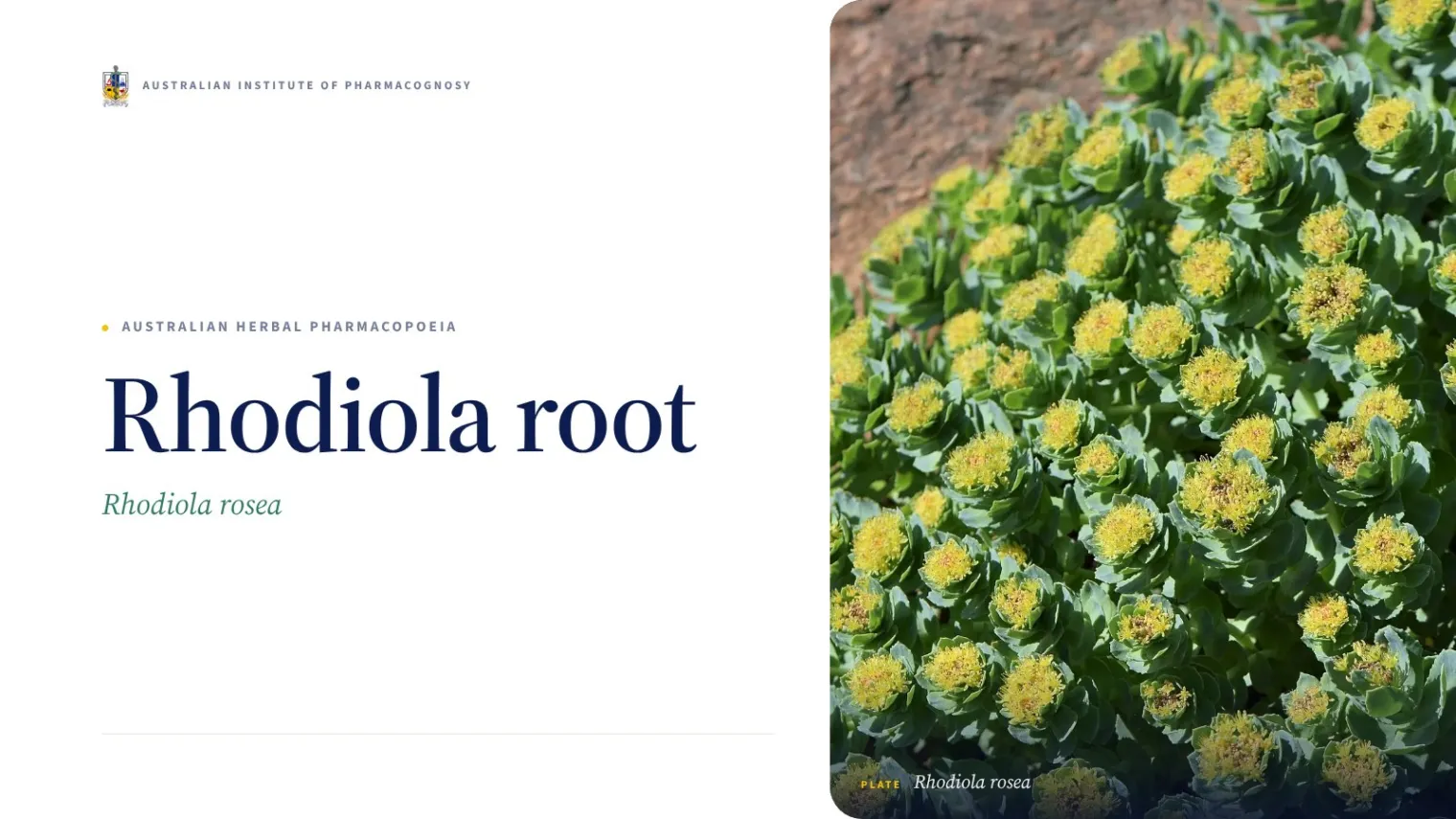
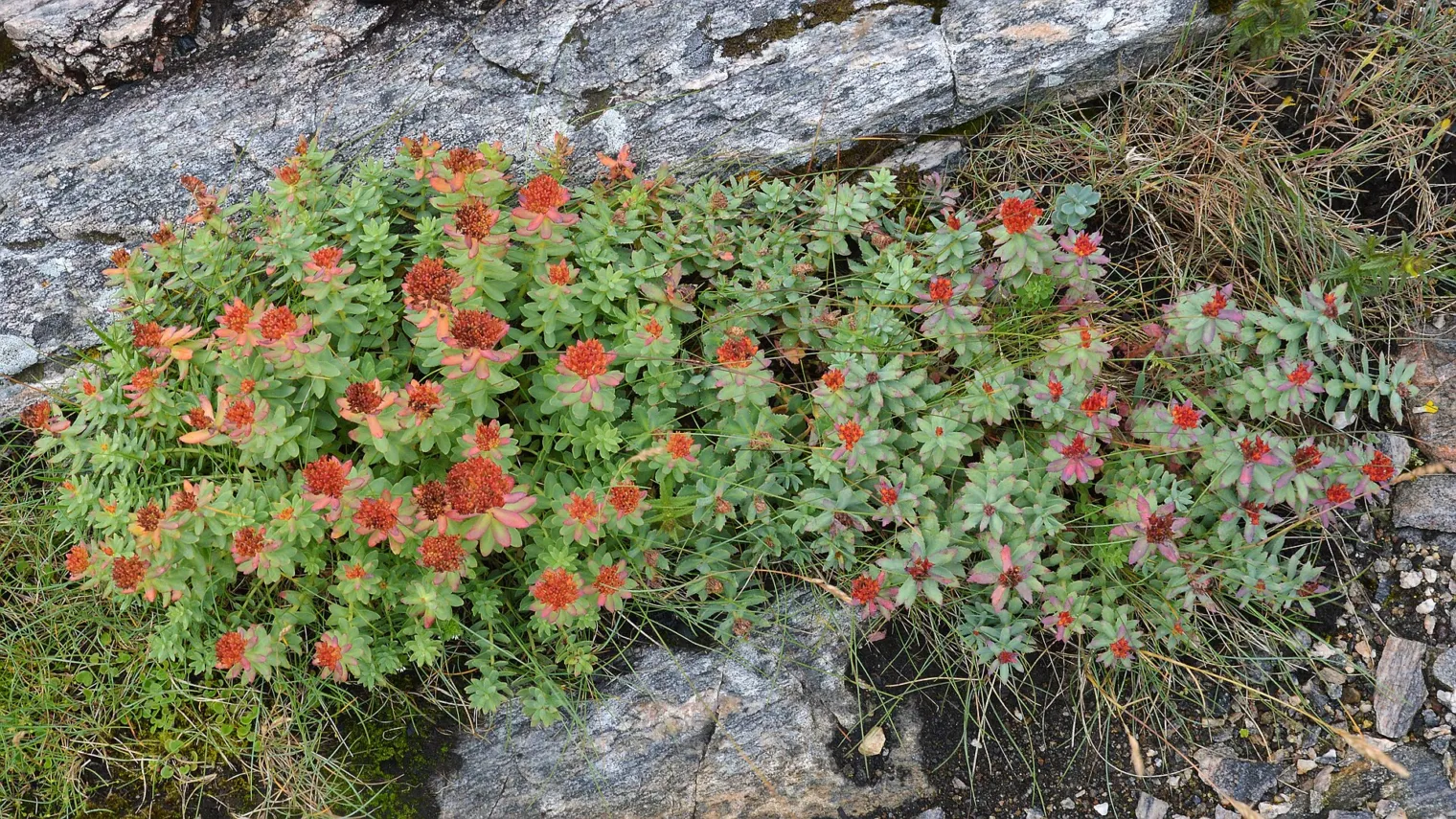
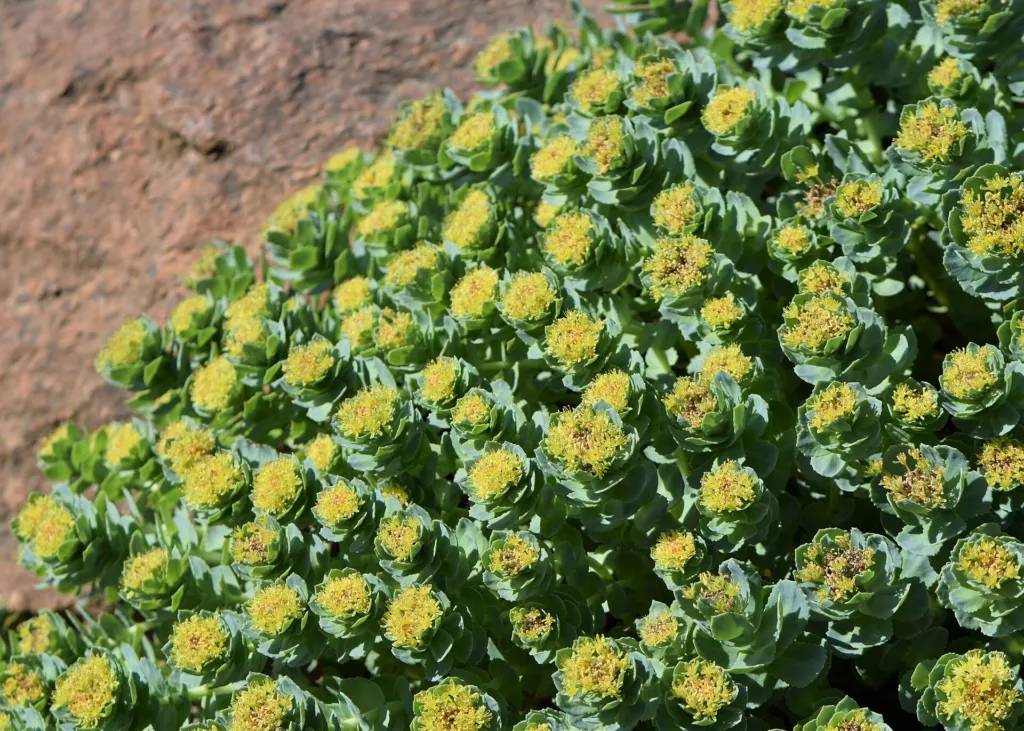
Rhodiola is the dried underground organ of Rhodiola rosea, a small dioecious succulent of Arctic and alpine rock, sea-cliff and scree across the Northern Hemisphere. The drug is mostly rhizome rather than true root, and its freshly cut surface smells of roses, which is where both the botanical and the common names come from. Identity rests on three cinnamyl alcohol glycosides (rosavin, rosarin and rosin, collectively the rosavins) which are found in this species and not in the Rhodiola species that share the trade with it. Salidroside occurs across the whole genus and cannot authenticate the species on its own. Substitution with R. crenulata and other congeners is documented by DNA barcoding and by chromatography, and a 2026 market survey found one product whose salidroside ran fifteen times its rosavins, which the authors read as undeclared synthetic salidroside or another species. In Australia the drug is unscheduled, but the Permissible Ingredients Determination allows it only as an active in oral medicines, and only as dry root powder or an aqueous or hydroethanolic extract of that powder at no more than 70 per cent ethanol. Every Rhodiola species has been in CITES Appendix II since February 2023, so imported material needs wildlife-trade paperwork as well as biosecurity clearance. The human evidence is thinner than the reputation. One small randomised trial in diagnosed fatigue syndrome carries the case at low certainty. The two depression trials disagree: one reports benefit with a doubtful placebo response, and the other found no difference from placebo. A 2025 meta-analysis of sports trials reports a small gain in endurance, but it pools other Rhodiola species and combination products with this one. The best-run trial in healthy shift workers found fatigue worse on rhodiola than on placebo. Everything else is open-label, preclinical, or tradition. The safety record is reassuring at the doses studied, with headache, nervousness, insomnia, dizziness and gastrointestinal upset reported and no serious event attributed. The open question is a pharmacokinetic one: this drug inhibits CYP3A4 and P-glycoprotein strongly in vitro, and the human study that looked for it found only a small CYP2C9 signal. Anyone considering rhodiola, in any form, should consult a degree-qualified herbalist with competencies and adequate training in pharmacognosy.
Free to every reader. The safety section of every monograph is open to everyone, signed in or not. In an emergency call 000. For poisoning, call the Poisons Information Centre on 13 11 26.
15. Safety
15.1 Adverse effects
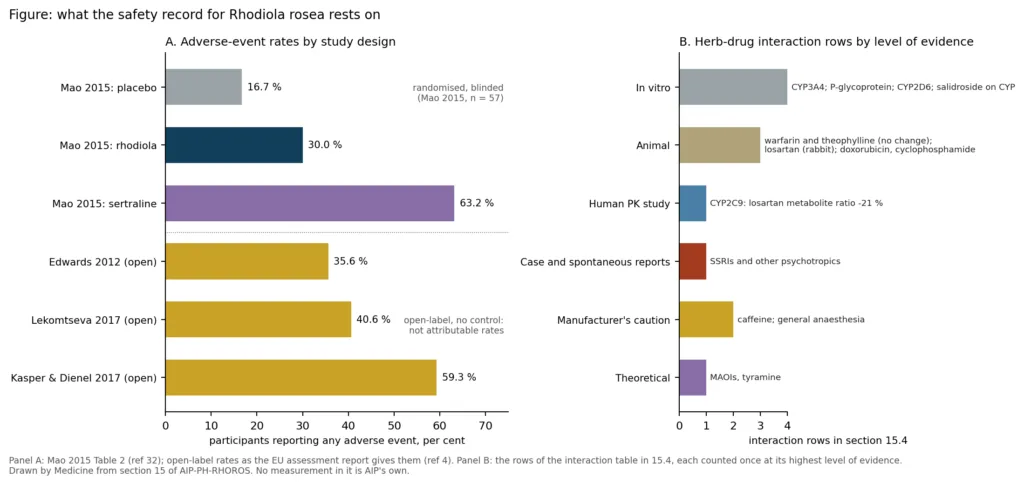
From controlled trials. Olsson reported no adverse event in either arm over 28 days [4]. Darbinyan 2007 reported no serious side effect in any of three arms over six weeks [4]. Shevtsov reported one case of hypersalivation, in the placebo group, and none in either verum group [4]. Spasov 2000a reported none [4] — and that is the assessment report’s label for a separate 660 mg study in 60 students, which the assessor set aside for want of any preparation detail and which is therefore not one of the fifteen trials in 13.2; the 100 mg trial in that table (Spasov 2000, trial 6) has no adverse-event line in the assessment report at all, so none is claimed for it here. De Bock reported one headache in a placebo subject in phase I and, in phase II, one moderate headache and one case of insomnia on active treatment against one minor headache on placebo [4]. Mao reported nervousness in two and dizziness in two of the twenty in the rhodiola arm, with nervousness also in two on placebo and two on sertraline; 30.0 per cent of the rhodiola arm reported any adverse event against 16.7 per cent on placebo and 63.2 per cent on sertraline (p = 0.012), and nobody stopped rhodiola or placebo for an adverse event [32]. Cropley reported one treatment-emergent event each in four of forty randomised to treatment, two of which were symptoms of the condition under study and two related to a concurrent unrelated condition [4]. Ishaque’s review of eleven studies and 446 subjects found five adverse events mentioned in three studies: a minor and a serious headache in two subjects on 200 mg/day for four weeks, and three on placebo (a minor headache, insomnia and hypersalivation) [45]. Ishaque contradicts itself on the insomnia case. Its adverse-effects paragraph puts it on placebo, while its own account of the De Bock trial puts "a minor headache and another had insomnia during long term supplementation of R. rosea" [45], which agrees with the assessment report’s De Bock line above [4]. This monograph follows the trial account for De Bock and does not settle Ishaque’s count of five. Braun and Cohen read the same review as two events on active treatment, not considered serious because headache occurred on placebo as well [5]. The five athlete trials (13.2, rows 16–20) add little: Dai and colleagues did not record adverse events systematically and say so [70]; Dou and colleagues report no serious supplement-related event in 96 players [71] and no adverse event at all in 24 [72], without describing how events were collected; Wang J and colleagues do not mention adverse events [75]; Marcos-Frutos and colleagues report no side effects in either condition [76]. Four gave 2.4 g/day of one maker’s rhodiola (Beijing Tong Ren Tang) for four weeks to healthy young men, which may not be one product, since Wang J 2025 names only the maker and states a salidroside content that differs from the capsule label in Dai 2026 (13.2); the fifth gave 1,200 mg/day of an extract for four days at a time. A combination trial reported in October 2026 (13.1) is the only blinded study here to stop anyone for a possible product effect: of 29 adults randomised to a morning capsule of ashwagandha 600 mg with R. rosea extract 300 mg, two men withdrew, one with mild diarrhoea after three days and one with moderate dizziness and mild muscle weakness after two; both resolved within 48 hours of stopping, neither needed medical care, and no such event occurred in the 29 who took the same morning capsule with an evening product [79]. With two herbs in the capsule the events cannot be assigned to rhodiola; dizziness is already on the rhodiola list above.
From open-label studies, where the rates are much higher and uncontrolled. Edwards: 54 events in 36 of 101 subjects (35.6 per cent), most often nervous-system (17 patients, 18 events) and gastrointestinal (10 patients, 10 events); no serious event; two withdrew (dizziness; abdominal distension), both assessed as unlikely related [4]. Kasper and Dienel: 145 events in 70 of 118 (59.3 per cent), 40.7 per cent mild, 46.9 per cent moderate, 12.4 per cent severe; most common nervous-system 27.1 per cent, infections 27.1 per cent, gastrointestinal 12.7 per cent, skin 4.2 per cent; a causal relationship rated "possible" in 10.9 per cent: head pressure, light-headedness, nausea, feeling irritated, eye swelling; four withdrew for adverse events [4]. Lekomtseva: 44 events in 41 of 101 (40.6 per cent), largest groups nervous-system (9), gastrointestinal (8) and infections (7); 32 of 44 assessed as unrelated and the remaining 12 as unlikely related; none withdrew [4]. An uncontrolled event rate is not an attributable rate, and the EMA assessor’s reading is that most of these were not drug-related.
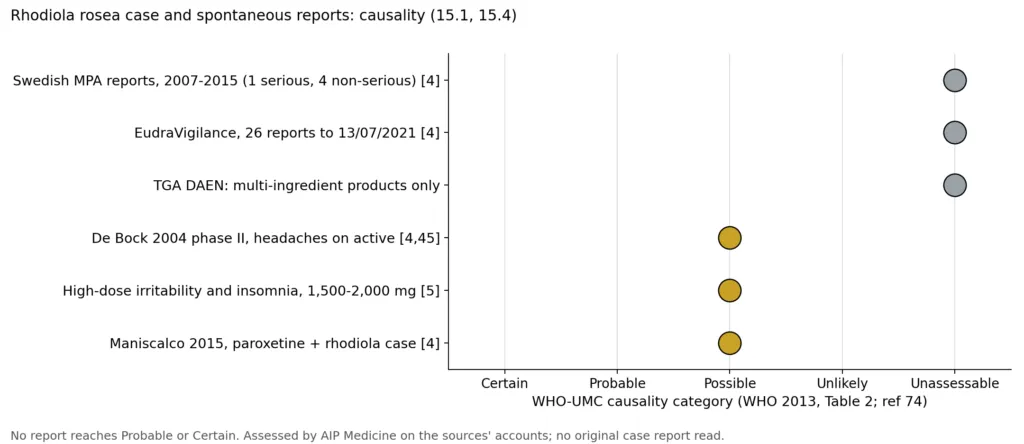
From pharmacovigilance. The Swedish Medical Products Agency received, for Rhodiola over 2007–2015, one serious report (asthenia, dizziness, fatigue, headache, learning disorder, memory impairment, nausea) and four non-serious (anxiety, pruritus, tremor, headache, nausea, malaise) [4]. EudraVigilance, accessed 13/07/2021, held 26 reports related to R. rosea, of which six concerned Rhodiola products alone with no concomitant medication; the events were primarily nervous-system (headache, nervousness, insomnia, dizziness) and gastrointestinal (nausea, vomiting); no new safety issue was identified [4]. TGA Database of Adverse Event Notifications (DAEN) – medicines, searched by Medicine in September 2026. The medicine dimension of DAEN was filtered on "Rhodiola". Rhodiola rosea appears in DAEN only as one active ingredient among many in multi-ingredient listed complementary medicines, never as a single-ingredient medicine. The products returned included 123Diet Drops (AUST L 371892, twelve actives), Blackmores Alive Women’s Multivitamin (over fifty actives), Endorfix (not on the ARTG), Energy & Skin Radiance (AUST L 414384), Ethical Nutrients Mega Magnesium Energy & Stress (AUST L 380938), Happy Calm (AUST L 374581) and Happy Mammoth Hormone Harmony (AUST L 387339, 446811 and 521386). The consequence matters more than any count: not one report in DAEN can be attributed to rhodiola rather than to the other ingredients of the product, because no reported product contains rhodiola alone. The per-product case counts were not retrievable from this workstation – the DAEN search is now an embedded Power BI report and the per-medicine selection did not complete in a headless session – so no case number is quoted here, and that residual gap stays on the list in section 20. For scale, the whole database held 678,905 reports at the date of search. No TGA safety alert, safety advisory or recall for Rhodiola rosea was found on 23/09/2026 or on 27/09/2026. A further attempt on 28/09/2026 at the Medicine review did not get through: the regulator’s site search was behind an automated-traffic challenge that day and returned no result set, so the September 2026 check is the last one actually completed and the position is reported as at that date. 06/10/2026: the site search was again behind the challenge. A web search restricted to the regulator’s domain returned no safety alert, advisory or recall for rhodiola; what it did return were ARTG cancellations that the TGA files under cancellations by sponsors (section 30(1)(c) of the Therapeutic Goods Act 1989), among them three earlier MediHerb Rhodiola and Ginseng entries (ARTG 283709 and 226470, June 2020; ARTG 351314, 18/08/2025), sponsor Integria Healthcare Australia Pty Ltd. None of the three is an entry this monograph cites as current (12). A sponsor’s own cancellation is a commercial or regulatory step and carries no safety finding. 07/10/2026, at the fourth Medicine review: the site search was behind the same challenge; a domain-restricted web search again returned no safety alert, advisory or recall for rhodiola, only sponsor cancellation notices and the regulator’s general alert and recall pages. 16/10/2026, at the seventh Medicine review: the same challenge, and the same result from the domain-restricted search: ARTG entries and a sponsor cancellation, and no safety alert, advisory or recall.
The undesirable effects in the EU monograph, which is the regulatory consensus statement: nervous system disorders, headache; gastrointestinal disorders, nausea, abdominal pain, diarrhoea; skin and subcutaneous tissue disorders, skin rash, itching. Frequency not known in every case [3]. The assessment report’s own recommended wording adds nervousness, insomnia, dizziness and vomiting [4].
At high doses. Braun and Cohen record that increased irritability and insomnia have been reported within several days in some people taking 1,500–2,000 mg standardised to 2 per cent rosavin [5].
Causality and grade for 15.1. The case and spontaneous reports above are assessed against the WHO–Uppsala Monitoring Centre categories [74], on what the source gives for each; none of the individual reports has been read in its original form. The Swedish serious report and the EudraVigilance reports: unassessable, because the assessment report gives no timing, dose, product or outcome for any single case [4]. The DAEN reports: unassessable for rhodiola, because every product named contains other actives. The headaches on active treatment in De Bock’s four-week phase: possible, because headache occurred on placebo in the same trial [4,45]. The high-dose irritability and insomnia: possible, with no case detail given [5]. Grade for 15.1: the profile rests on small, short controlled trials (blinded arms of about 6 to 40 participants, given anything from a single dose to 12 weeks of treatment), on uncontrolled studies, and on spontaneous reports in which rhodiola cannot be separated from co-ingredients. It supports the EU monograph’s frequency "not known" [3] and no estimate of a rate.
15.2 Toxicology
| Study | Finding |
|---|---|
| Single-dose CNS toxicity, mice, SHR-5 100 and 500 mg/kg i.p., Irwin method (unpublished) | No sign of toxicity [4] |
| Cytotoxicity of powdered underground organs, L1210 and V79 (unpublished) | Very low cytotoxic potential [4] |
| 90-day oral, rats, SHR-5 1.0–3.4 g/kg (unpublished) | No change in body-weight development, behaviour or appearance; no other parameter examined [4] |
| 90-day oral, piglets, SHR-5 0.142–1.43 g/kg (unpublished) | No change in haematology, glucose, triglyceride, creatine kinase, urea or protein; a rise in hepatic transaminases attributed to maturation [4] |
| Ames test, ethanol 68 % V/V extract, MHRA public assessment report | No mutagenic effect up to a cytotoxic 3,160 µg/plate, with and without metabolic activation [4] |
| Genotoxicity battery for salidroside (bacterial reverse mutation, chromosomal aberration, mouse micronucleus) | Not genotoxic under the conditions tested. The assessment report records this from the abstract only, and says so; no full text was available to the assessor and none has been read here [4] |
| Reproductive and developmental toxicity; carcinogenicity; local tolerance | No data [3,4] |
Much of the repeat-dose work is unpublished company data reported at second hand in the assessment report, and this monograph says so rather than presenting it as a literature finding. The consequence is on the record: because published genotoxicity data are missing, the HMPC could not support a European Union List Entry for this drug [4].
15.3 Contraindications
- Hypersensitivity to the active substance. The only contraindication in the EU monograph [3]. Grade: regulatory consensus.
- Bipolar states. Braun and Cohen: "While the administration of rhodiola may be beneficial in monopolar depression, use is not recommended for bipolar states" [5]. Grade: theoretical, on the stimulant and monoamine profile. AIP has found no case report.
- Children and adolescents under 18. Not recommended, because no safety data from clinical trials in that age group exist; the EU monograph says so explicitly, and the assessment report notes that although registered products are permitted in adolescents in some member states, the monograph could not cover them [3,4]. Barnes goes further: "Given the intended uses of R. rosea, it is not suitable for use in children" [6]. Grade: regulatory consensus, resting on the absence of data.
15.4 Herb–drug interactions
| Interaction | Evidence | Grade | Practice position |
|---|---|---|---|
| CYP3A4 substrates | Hellum and colleagues tested six Norwegian clones against cDNA-baculovirus-expressed CYP3A4: potent inhibition, IC₅₀ 1.7–3.1 µg/mL, unrelated to the clones’ constituent content [4,48] | In vitro | Take seriously in principle; see the human study below before assuming a clinical effect |
| P-glycoprotein substrates | Same study, ³H-digoxin transport in Caco-2 cells: IC₅₀ 16.7–51.7 µg/mL [4,48] | In vitro | As above |
| CYP2C9 substrates | Human study. Thu and colleagues gave 13 healthy volunteers probe drugs (caffeine, losartan, omeprazole, dextromethorphan, midazolam) with and without 14 days of 290 mg Rhodiola extract, and found a 21 per cent fall in the EXP-3174 : losartan ratio at four hours, indicating reduced CYP2C9 activity. No effect on CYP1A2, CYP2C19, CYP2D6 or CYP3A4 [4,49]. Thu and colleagues separately showed non-competitive CYP2C9 inhibition in vitro, IC₅₀ 19.2 µg/mL [4,50] | Pharmacokinetic study in humans | The EMA assessor: "the clinical relevance is unclear. Relevant interactions have not been reported from post-marketing experience and do not pose a risk based on current knowledge" [4] |
| CYP2D6 substrates | Xu and colleagues (2013), as reported in the assessment report: rhodiosin IC₅₀ 0.761 µM and rhodionin IC₅₀ 0.42 µM, non-competitive, on isolated constituents in vitro [4]. The human probe study found no CYP2D6 effect [49] | In vitro, not confirmed in people | Watch, do not act on |
| Warfarin; theophylline | Rats given 50 mg/kg SHR-5 for three days then a single dose: no change in any pharmacokinetic parameter, and no change in warfarin’s anticoagulant activity [4] | Animal, negative | Reassuring rather than prohibitive |
| Losartan | Rabbit crossover, poorly characterised preparation: almost 2-fold rise in losartan AUC, no significant change in the active metabolite EXP3174 [4]. Braun and Cohen read this as probable CYP3A4 inhibition and advise "Avoid — until further research is available" [5] | Animal | Conservative position warranted |
| SSRIs and other antidepressants | Maniscalco and colleagues report a 68-year-old on paroxetine 20 mg/day who started a Rhodiola product at 400 mg/day and developed a vegetative syndrome, restlessness and trembling after 15 days, interpreted by the authors as a serotonergic syndrome; the authors excluded pharmacokinetic interaction and proposed paroxetine’s CYP2D6 inhibition causing rhodiola overdose [4]. That account does not hold together as the assessment report prints it, because a rise in rhodiola exposure from CYP2D6 inhibition is itself a pharmacokinetic interaction; the case report has not been read here and has been requested. Causality, WHO–UMC [74], on the assessment report’s account: possible. The time relationship is reasonable, paroxetine alone could explain the symptoms, and no dechallenge or rechallenge is recorded. EudraVigilance holds single-drug co-reports with sertraline (agitation, insomnia, memory impairment), paroxetine (one case of apallic syndrome, restlessness, serotonin syndrome and tremor; one of nausea, suicidal ideation, tremor), duloxetine, amitriptyline and etanercept [4]. Woron and Siwek’s analysis of 147 herb-with-psychotropic adverse-event cases lists Rhodiola co-reports with escitalopram, trazodone, fluoxetine with mirtazapine, paroxetine, duloxetine, duloxetine with sertraline, haloperidol, olanzapine, quetiapine with sulpiride, risperidone, diazepam, alprazolam and clonazepam, with no preparation, posology or duration recorded [4] | Case reports and spontaneous reports, with a plausible mechanism | The one interaction area that deserves real caution in practice. The signal is weak in each individual report and consistent in type across them |
| Doxorubicin (Adriamycin); cyclophosphamide | Braun and Cohen report rodent work in which a R. rosea extract reduced the rise in transaminases with doxorubicin without reducing its antitumour effect, and increased cyclophosphamide’s antitumour activity while reducing its hepatotoxicity (Udintsev 1992; Udintsev and Schakhov 1991, both read only as Braun and Cohen report them) [5] | Animal, at one remove | Braun and Cohen: a beneficial interaction is "theoretically" possible "under clinical supervision". Nothing here supports adding rhodiola to chemotherapy; anyone on cytotoxic treatment needs the oncology team and the prescribing herbalist each to know what the other is giving |
| MAOI antidepressants; tyramine-rich foods | In-vitro MAO-A inhibition [5] | Theoretical | Braun and Cohen raise the tyramine question; no case has been reported |
| Caffeine | MediHerb: "Best not used in combination with caffeine" [10] | Manufacturer’s caution, no published basis found | Record and observe |
| General anaesthesia | MediHerb: "Discontinue 7 days prior to general anaesthesia" [10] | Manufacturer’s caution | Record and observe |
| Salidroside on CYP, new preclinical work | Klaskova and colleagues examined salidroside’s effect on rat and human cytochrome P450 metabolic activity in preclinical models [51] | In vitro / animal | Cited for completeness |
The EU monograph’s own interaction statement is "No clinically relevant interactions have been observed" [3]. That statement is a regulatory conclusion about a registered traditional product at 144–400 mg/day, reached after the assessor weighed everything above [4]. It is not a finding that no interaction exists, and this monograph does not present it as one.
15.5 Pregnancy and lactation
No data published. Safety in pregnancy and lactation has not been established, and in the absence of data the EU monograph does not recommend use during pregnancy or lactation [3,4]. No fertility data are available. There are no reproductive or developmental toxicity studies at all [4]. Braun and Cohen say the same [5]. MediHerb’s label says professional supervision is suggested in pregnancy and lactation [10]. The library copy of Mills, Dugoua and Perri, Herbal Medicines in Pregnancy and Lactation, contains no entry for this drug [checked in September 2026]. Ishaque and colleagues add that no dosage recommendation can be made for pregnant or lactating women until safety studies are done [45]. Practice runs ahead of the data here. Mills and Bone print a one-week postnatal-depression formula containing 20 mL of Rhodiola 2:1 (with Panax ginseng, St John’s wort, liquorice and Withania), without discussing breastfeeding [9, p. 300]; that is expert practice in a population that is often lactating, and it is not safety evidence. Grade for the whole of 15.5: no human data; regulatory consensus (do not recommend) and manufacturer’s caution (professional supervision). The honest position is that nobody knows, and the absence of reproductive toxicity data is itself the finding.
15.6 Children, older people, overdose, driving
Children and adolescents: not recommended under 18; no data [3,6]. Older people: the EU monograph’s posology covers adults and elderly at the same dose [3]; the only study weighted to older people is the uncontrolled combination trial in 120 adults aged 50–89 [5]. Overdose: no case of overdose has been reported [3,4]. Driving and machinery: no study has been performed [3]. Grade for 15.6: no human data in any of the four groups; the positions are the EU monograph’s regulatory consensus [3,4].
15.7 Referral
Nobody should self-prescribe this drug alongside an antidepressant, an anticoagulant or any medicine with a narrow therapeutic index on the strength of a retail label. Anyone considering rhodiola, and particularly anyone already taking prescribed medicines, should consult a degree-qualified herbalist with competencies and adequate training in pharmacognosy.
96 more pages follow · 47,934 words, 61 figures, 29 tables
Still to come in this monograph
- 1. Nomenclature
- 2. Definition
- 3. Source and Australian supply
- 3.1 Where it must be grown: origin, climate and chemistry
- 4. Macroscopy
- 5. Microscopy
- 6. Chemistry
- 7. Named markers and assay limits
- 8. TLC fingerprint
- 9. HPLC fingerprint
- 10. Identity, purity, adulterants and contaminants
- 11. Traditional use
- 12. Current practice: use, preparations and doses
- 13. Clinical evidence
- 14. Pharmacology
- 16. Discussion
- 17. Conclusions
- 18. Research still needed
- 19. References
- 20. Document control
The rest of this monograph is open to members. One membership covers every members’ feature on the site.
Checking your membership…
The Institute sets and publishes its own monographs. The catalogue is in Publications.