

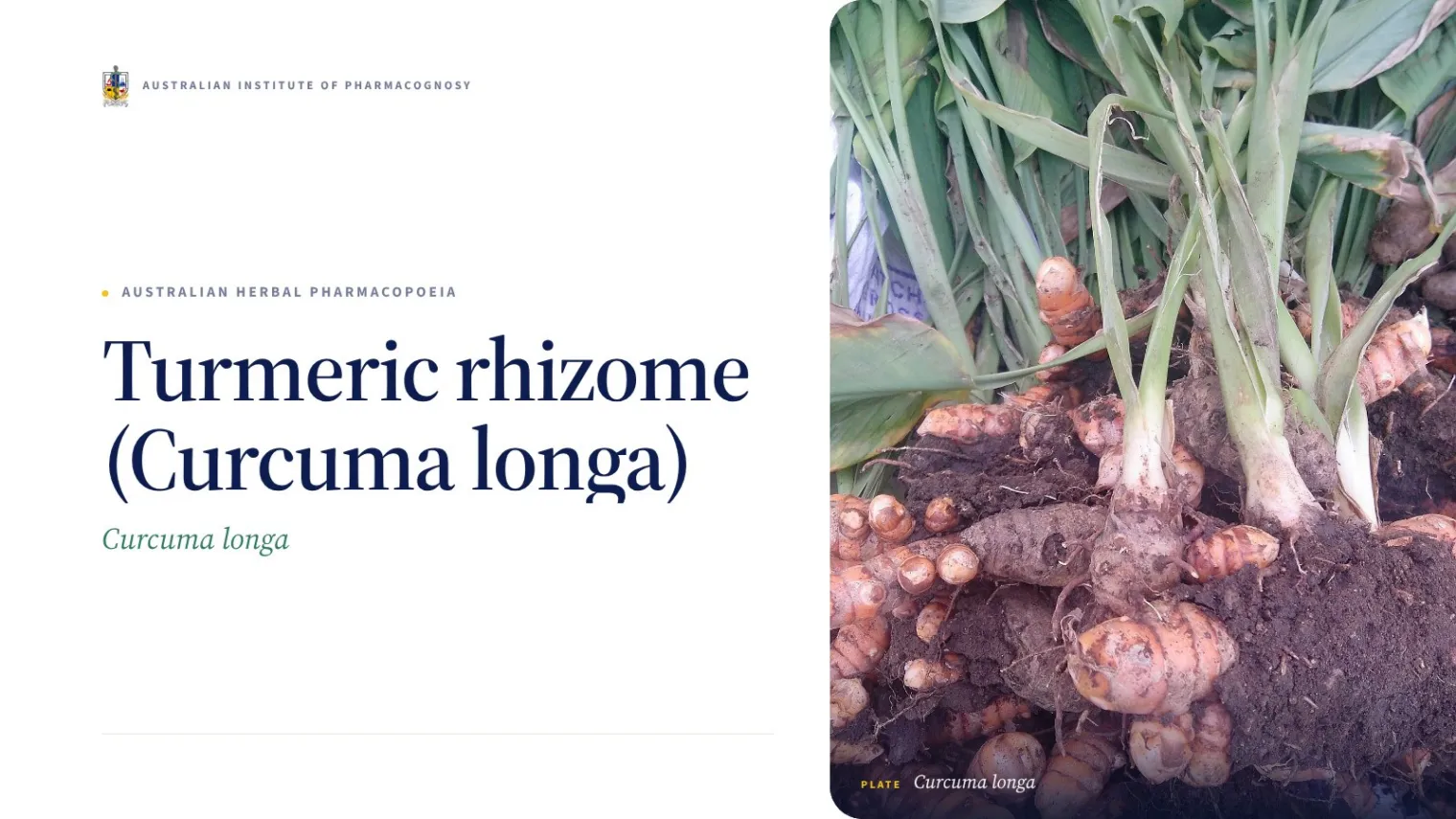
Turmeric rhizome (Curcuma longa L.), Zingiberaceae
Australian Herbal Pharmacopoeia (working title) · Monograph AIP-PH-CURLON (formerly AIP-HP 014) · Version 1.0 draft
Date: 2026
Status: working draft, published while in build. Not a statutory standard.
Prepared by: the Australian Institute of Pharmacognosy, Far North Queensland, Australia. Every author and contributor is named at the end of the monograph.

0. Free-teaser block
0.1 Identity card
| Monograph number | AIP-PH-CURLON (formerly AIP-HP 014) (MediHerb A–Z list No. 153) |
| Title | Turmeric rhizome (Curcuma longa L.), Curcumae longae rhizoma |
| Version / year | 1.0 draft, 2026. Next review 2029, or sooner if the Permissible Ingredients Determination changes item 1647, if the Ph. Eur. revises monograph 2543, or if a large controlled trial reports |
| Accepted binomial | Curcuma longa L., Species Plantarum 1: 2 (1753). Accepted. IPNI urn:lsid:ipni.org:names:796451-1. Checked against IPNI and the Kew World Checklist of Vascular Plants (WCVP, DOI 10.48580/d4dz) on September 2026, October 2026, October 2026 and October 2026 [1,2]; see 1.1 for the release read on each date. Name, authority, place of publication, accepted status and the full synonymy agreed on every date |
| Family | Zingiberaceae Martinov (APG IV). Order Zingiberales [1,2] |
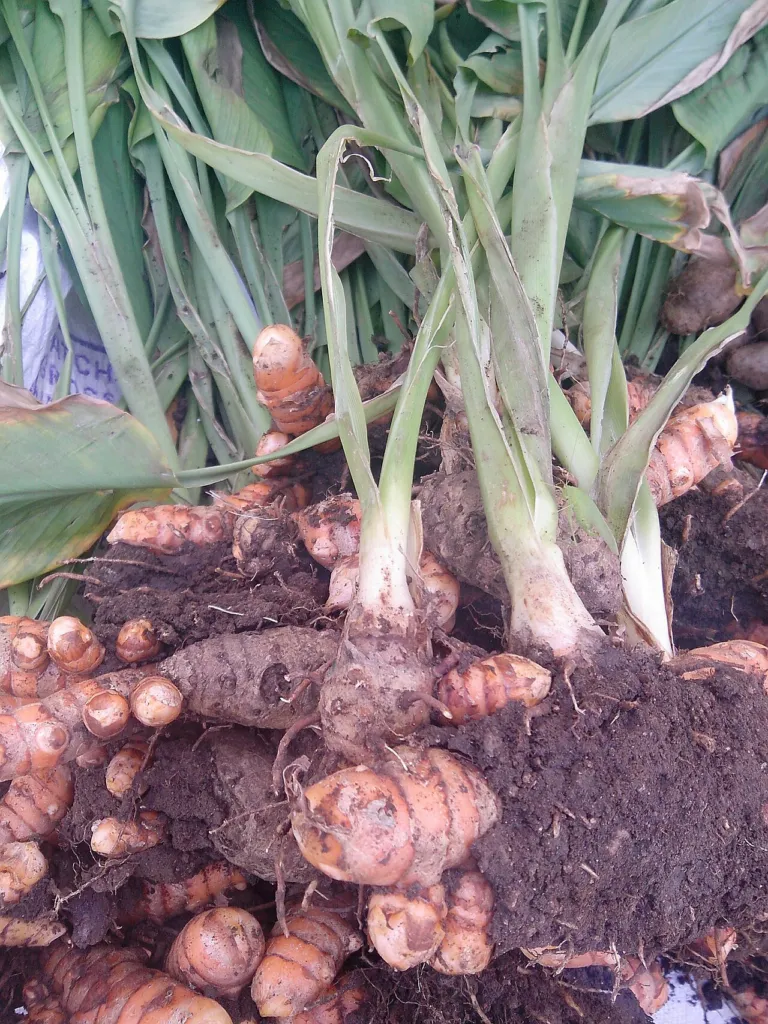
| Plant part | The rhizome, cured by boiling or steaming, then dried, with the roots and the outer surface removed. Curing is part of the definition of the drug in Ph. Eur. 8.0 monograph 2543 and in the Ayurvedic Pharmacopoeia of India, and uncured dried rhizome is a different article [3,4] |
| Latin drug name | Curcumae longae rhizoma (Ph. Eur. 2543; EMA/HMPC). Rhizoma Curcumae Longae in the WHO monograph. Haridrā in the Ayurvedic Pharmacopoeia of India. Jianghuang (薑黃) in the Chinese materia medica [3,4,5,6] |
| Principal synonyms | Homotypic: Kua domestica Medik., Stissera curcuma Giseke. Heterotypic: Curcuma domestica Valeton (the name MediHerb prints as the botanical synonym and the name several trials use), Amomum curcuma Jacq., Amomum latifolium Lam., Curcuma brog Valeton, Curcuma ochrorhiza Valeton, Curcuma soloensis Valeton, Curcuma tinctoria Guibourt, C. longa var. vanaharidra Velay. & al. [1]. The TGA uses Curcuma longa [7] |
| Common names | English: turmeric, Indian saffron, common turmeric [5,6]. Hindi/Urdu: haldi, haldar; Sanskrit: haridrā, rajanī, niśā; Tamil: manjal; Telugu: pasupu; Bengali: halud; Kannada: arishina; Malayalam: manjal [4,5]. Chinese: jianghuang [6]. Indonesian/Malay: kunyit, koenjet; Thai: khamin chan; Vietnamese: nghệ; Japanese: ukon; German: Kurkumawurzelstock, Gelbwurzel; French: rhizome de curcuma, safran des Indes [5,6,8] |
| Pharmacopoeial status elsewhere | Ph. Eur.: yes, monograph 2543, Turmeric rhizome, first published 04/2013; the library copy is the 8th Edition (2013, in force 01/01/2014) and every Ph. Eur. figure in this monograph is quoted from that edition and flagged for QA to re-check against the edition now in force [3]. Ph. Eur. also carries 1441, Turmeric, Javanese (Curcuma xanthorrhiza), whose identification includes a limit test for C. longa [3]. EMA/HMPC: yes, European Union herbal monograph on Curcuma longa L., rhizoma, EMA/HMPC/329755/2017, adopted 25/09/2018, traditional use only, no well-established-use column [8]. WHO: yes, Rhizoma Curcumae Longae, WHO Monographs on Selected Medicinal Plants vol. 1, 1999, pp. 115–124 [5]. Ayurvedic Pharmacopoeia of India: yes, Part I, Haridrā (rhizome), monograph 30 [4]. Chinese Pharmacopoeia: yes, as Jianghuang [5,6]. Indian Pharmacopoeia: official in the 2nd edition (1966), dropped from the 3rd (1985) [6]. USP–NF: yes, four monographs — Turmeric and Powdered Turmeric (each not less than 3.0 per cent curcuminoids on the anhydrous basis), Powdered Turmeric Extract (not less than 20 per cent curcuminoids, dried basis) and Curcuminoids (not less than 95.0 per cent total curcuminoids, of which curcumin 70–80, demethoxycurcumin 15–25 and bisdemethoxycurcumin 2.5–6.5 per cent). AIP does not hold the USP–NF text; these definitions and limits are quoted as the USP’s own expert committee reports them in its 2026 review, and QA must read them in the USP–NF itself before any of them is used as a specification [19]. BP: AIP holds no current BP. Under the Therapeutic Goods Act 1989 the definition of the BP takes in its online updates, which consist of the Ph. Eur. supplements, so for Australian purposes Ph. Eur. 2543 reaches the BP route as well (section 10.2) [40]. Commission E (Germany): yes, a positive monograph, 1985, for dyspeptic conditions [5,6] |
| Australian status | Permissible Ingredients Determination: yes, with conditions that are unusually specific. Therapeutic Goods (Permissible Ingredients) Determination (No. 2) 2026 (Cth), F2026L00707, Schedule 1 item 1647 CURCUMA LONGA, purposes A (active), E (excipient), H (homoeopathic). Any oral medicine using it as an active must carry the CURC label warning: "In very rare cases, Curcuma species may harm the liver. Stop use and see a doctor if you have yellowing skin/eyes or unusual: fatigue, nausea, appetite loss, abdominal pain, dark urine, or itching." The same item caps the daily dose of curcumin ((1E,6E)-1,7-bis(4-hydroxy-3-methoxyphenyl)-1,6-heptadiene-3,5-dione) in the medicine at 36 mg for children 2–3 years, 48 mg for 4–11 years and 123 mg for 12–17 years, and bars the ingredient entirely below 2 years of age. Items 1646 C. aromatica, 1648 C. zanthorrhiza, 1649 C. zedoaria and 1650 CURCUMIN carry the same conditions [9]. Poisons Standard: not scheduled. The full text of the Therapeutic Goods (Poisons Standard, June 2026) Instrument 2026 (Cth), F2026L00633, was searched in September 2026 for "curcuma", "curcumin" and "turmeric": no entry in any Schedule or Appendix [10]. ARTG: 531 entries returned for the keyword "curcuma longa" on 27/09/2026 and 71 for "turmeric", among them MediHerb Curcuma Forte (ARTG 407525, Integria Healthcare Australia, 12/04/2023), MediHerb Turmeric Forte Tablet (314237, 14/02/2019, with Trigonella foenum-graecum), MediHerb Vitanox (377571), Mediherb PulmaCo (392873) and MediHerb Boswellia Complex (517947) [11]. Introduced and cultivated, listed for Queensland only as "doubtfully naturalised", and not a declared or restricted weed in Queensland. The Australian Plant Census accepts C. longa with the distribution "Qld (doubtfully naturalised)". The Atlas of Living Australia holds 45 Australian occurrence records (Queensland 38, New South Wales 5, Northern Territory 2), 44 of them with no establishment status, so they do not between them establish a self-sustaining wild population [12,37] |
| Named markers | Curcumin (diferuloylmethane), CID 969516, C₂₁H₂₀O₆, M_r 368.4, the assay marker. Ph. Eur. 2543 assays "dicinnamoyl methane derivatives, expressed as curcumin", minimum 2.0 per cent on the anhydrous drug, by absorbance at 425 nm with a specific absorbance of 1607 [3]. WHO sets not less than 3.0 per cent total curcuminoids [5]. Demethoxycurcumin, CID 5469424, C₂₀H₁₈O₅, and bisdemethoxycurcumin, CID 5315472, C₁₉H₁₆O₄, the other two curcuminoids; their ratio to curcumin is the identity marker that matters commercially, because a normal 60–80 : 15–27 : 5–15 profile is what a synthetic-curcumin adulterant is blended to imitate [13]. Essential oil, minimum 25 mL/kg on the anhydrous drug (Ph. Eur. 2543) or 4 per cent v/w (API, WHO) [3,4,5]. ar-Turmerone, CID 160512, and the α- and β-turmerones, CIDs 14632996 and 196216, the sesquiterpene ketones that dominate the oil. Bisdemethoxycurcumin doubles as the discriminating marker against C. zanthorrhiza, and xanthorrhizol, CID 93135, against C. longa, in the reciprocal Ph. Eur. limit tests [3]. AIP has set no limit of its own; see section 7 |
| Evidence snapshot | Knee osteoarthritis pain, bioavailability-enhanced curcuminoid preparation against placebo: Tier B, 7 trials, n = 913 across the pain network, WOMAC pain mean difference −2.47 (95% CI −3.27 to −1.67 network, −3.25 to −1.68 pairwise), a 29.7 per cent change from baseline that clears the authors’ pre-specified 20 per cent minimum clinically important difference, GRADE certainty low for the direct estimate and very low for the network estimate [14]. Knee osteoarthritis function: Tier B [14]. Knee osteoarthritis stiffness: no preparation beat placebo [14]. Curcuminoid extract against an NSAID or paracetamol in knee osteoarthritis: Tier B, 5 trials, n = 763, no significant difference either way, and one double-blind trial of 367 patients met its pre-set non-inferiority margin against ibuprofen at 4 weeks [14,41]. Curcuminoid extract added to diclofenac: Tier A for a small effect, 2 trials, n = 235, an extra 0.68 points of WOMAC pain relief on a 20-point scale, below the minimum clinically important difference; the tier rests on the direct estimate, and the network estimate for the same comparison (−0.68, 95% CI −1.75 to 0.39) is graded low and does not reach significance [14]. Dyspepsia: Tier C, one 1989 three-arm trial of 116 patients that the EMA assessor criticised for unreported protocol and unreported blinding, plus a Tier T registered traditional indication in the EU [5,8]. Peptic ulcer, rheumatoid arthritis, postoperative inflammation, gallbladder contraction: Tier C each, small and old [5,8]. Everything else, the anticancer, neuroprotective, hepatoprotective and antimicrobial literature, is Tier P. No benefit of clinical importance reaches Tier A |
| Suggested citation | Ridley T, Iggulden L. Turmeric rhizome (Curcuma longa L.), Curcumae longae rhizoma. AIP-PH-CURLON, version 1.0 draft. Cardwell: Australian Institute of Pharmacognosy; 2026. DOI to be assigned |
| Provenance | Original AIP data: none. Every analytical figure, limit, method and trial result in this monograph belongs to the source cited beside it. Sections 4, 5, 7, 8, 9 and 10 carry AIP bench data pending: AIP has not vouchered a sample of this drug, cut a section, run a plate or run a chromatogram. Twenty-five figures are licensed, public-domain or CC-licensed third-party photographs, plates, printed pages and journal figures (F1–F1e, F2–F2c, F3–F3f except F3a, F4, F6n, F6o, F7b, F8–F8c, F10e, F11, F16 and F18), every licence checked at the file or article page in September 2026 or October 2026; the twelve constituent structures F6 to F6l are PubChem depictions, public domain, credited with the CID in each caption; F3a, F5 and F7 are AIP drawings redrawn from cited published descriptions and printed tables; F6m, F9, F10, F10b, F10c, F10d, F14, F17, F19 and F20 are AIP charts drawn from published tabulated data or from this monograph’s own graded evidence and review record |
| Compiler and review | Compiled by Dr Thomas Ridley (Education and Research). Technical review: Dr Fiona MacAllister (Botanical, sections 1-5 and the adulterant species in 10), reviewed in 2026; Dr Hana Suzuki (QA, sections 6-10), reviewed in 2026; Dr Eleanor Whitcombe (Medicine, sections 12, 13, 15), reviewed in 2026. Visual layout and figures (placement, captions, source and licence lines, the figure manifest and the designed PDF): Jesse Kirby (Community Outreach), reviewed in 2026. Independent evidence and citation audit (sections 11–14 and 16–20, every reference, and the figure sources and licences): Dr Thomas Ridley (Education and Research), reviewed in 2026, first to twelfth audits — the compiler’s own audit, so it is not a second pair of eyes on the sections he drafted; the Librarian’s independent reference audit is still outstanding. Published: 2026, as a working document refreshed as each review lands. Last modified: 2026. Version 1.0 draft |
| Canonical URL | /pharmacopoeia/curcuma-longa/ (on publication) |
0.2 Summary
Turmeric is the cured, dried rhizome of Curcuma longa, a sterile cultigen that has been carried by human hands out of tropical South Asia and grown across the tropics for thousands of years. India grows about 80 per cent of the world crop. Of all the herbs in the MediHerb range, this is the one with the largest modern research literature and one of the weakest returns on it. The chemistry is well characterised: two to nine per cent curcuminoids, of which curcumin is the majority, and an essential oil dominated by turmerones. The pharmacology is enormous and largely in vitro, and a 2017 medicinal-chemistry analysis showed why that literature needs reading with care, because curcumin behaves in assays as an interference compound and no double-blind placebo-controlled trial of curcumin itself had at that point produced a conclusive positive result. The clinical picture as it stands in 2026 is narrower than the volume of publication suggests. A 2025 network meta-analysis of seventeen randomised trials in knee osteoarthritis found that every turmeric preparation beat placebo for pain, that the bioavailability-enhanced curcuminoid preparations cleared the minimum clinically important difference, and that the certainty of the evidence for every comparison against placebo was low to very low. No preparation improved joint stiffness. For dyspepsia, the European registration rests on tradition, and the one supporting trial is from 1989 and poorly reported. Two problems dominate the quality side. The first is adulteration: a 2026 scoping review of 2,235 commercial samples found one in five non-authentic, and when the analysis was restricted to validated methods, supplements came out worse than spice at 27.1 per cent, mostly through undeclared synthetic curcumin. The second is liver injury. Australia now requires a liver warning on the label of every oral listed medicine containing this ingredient, caps the curcumin dose for children and bars it below two years of age, which makes the Australian requirement one of the strictest in the world. Anyone considering turmeric as a medicine, particularly at extract doses, should consult a degree-qualified herbalist with competencies and adequate training in pharmacognosy.
Free to every reader. The safety section of every monograph is open to everyone, signed in or not. In an emergency call 000. For poisoning, call the Poisons Information Centre on 13 11 26.
15. Safety
15.1 Overall position
Read this first. Turmeric and curcumin in medicinal dosage forms carry a rare risk of liver injury that the TGA has investigated and acted on. Among the Australian reports were two severe cases with no other likely contributing ingredient, one of them fatal, and the risk appears higher with bioavailability-enhanced products and at higher doses. It is set out in 15.3. Any oral Australian listed medicine with this ingredient as an active must carry the CURC liver warning on its label, and the ingredient is barred below two years of age [9,24]. Concentrated preparations may also raise INR in someone on warfarin or another vitamin K antagonist, at turmeric intakes of a few grams a day (15.6). Everything after this paragraph is read against those two facts.
At dietary and traditional doses of the whole rhizome, turmeric is a well-tolerated drug with a long record of use. Mills and Bone’s summary assessment is that no adverse effects from ingestion are expected within the recommended dosage [6]. Numerous clinical trials of turmeric and curcuminoid products have reported no organ toxicity and no serious adverse events [19]. The TGA’s own position is that the risk of liver injury does not appear to relate to turmeric consumed in typical dietary amounts as a food [24].
Two things have changed that picture at the concentrated-extract end, and both are recent enough that older textbook entries do not carry them: the liver-injury signal, and the regulatory response to it.
15.2 Adverse effects from trials
In the knee-osteoarthritis network, gastrointestinal symptoms were the commonest adverse event, at 6.54 per cent with bioavailability-enhanced preparations and 6.06 per cent with polysaccharide preparations; the polysaccharide group had the highest overall adverse-event rate at 30.30 per cent, most of it miscellaneous symptoms. The events were mild and none led to serious consequences, and the authors note that inconsistent adverse-event definitions across trials limit how far the numbers can be trusted [14].
The EMA monograph lists mild dry mouth, flatulence and gastric irritation, frequency not known [8]; in one irritable-bowel trial cited in its assessment report, about a quarter of patients reported dry mouth and flatulence [8]. In the one formal non-inferiority trial against ibuprofen, abdominal pain or discomfort was less frequent on the turmeric extract than on ibuprofen (p = 0.046), and one extract patient against seven ibuprofen patients withdrew because of adverse events [41]. Other reported effects: frequent bowel movements and mild gastric discomfort, particularly at the high curcumin doses used in recent trials; two of 19 patients on 2,500 mg/day of curcumin reported gastric irritation; mild nausea, diarrhoea, headache, tiredness and sleepiness in the turmeric arm of Thamlikitkul 1989, at similar rates to placebo; localised itchiness after topical application; scalp itching in 1 of 62 patients in an 18-month study of topical curcumin [6,8]. Phase I dose-escalation studies of curcuminoids found single oral doses up to 12 g/day tolerated [6]. Turmeric oil at 1.8 and 3 mL/day for one and two months caused no toxic effects in nine healthy volunteers apart from one allergic reaction [6].
Allergic contact dermatitis is reported but rare; a 2001 review of the literature concluded that allergic reactions to turmeric are rare, and patch-test reactions occurred mainly in people regularly exposed or with existing fingertip dermatitis [5,6].
One finding with a practical edge: eleven healthy volunteers who took turmeric rhizome for four weeks, providing 55 mg/day of oxalate, had significantly higher urinary oxalate than a cinnamon comparison and a control, which may raise kidney-stone risk [6].
Hair loss occurred in rats fed turmeric at 10 per cent of the diet, and Mills and Bone note that turmeric has traditional use as a topical depilatory, so they advise care in patients complaining of hair loss [6].
15.3 Liver injury: what is known, and what Australia did about it
This is the material change in the drug’s safety profile since the standard textbooks were written.
The Australian signal. The TGA published a safety alert on 15/08/2023. It had received 18 reports of liver problems in consumers taking products containing Curcuma longa or curcumin up to 29/06/2023. Nine of those had enough information to suggest liver injury that may have been caused by the product. Of those nine, four involved no other ingredient likely to have contributed. Two of the four were severe, including one with a fatal outcome. The remaining five involved products with other potentially hepatotoxic ingredients. The TGA completed a safety investigation and concluded there is a rare risk of liver injury from C. longa and curcumin in medicinal dosage forms; that the risk may be higher for products with enhanced absorption or bioavailability and at higher doses; and that people with existing or previous liver problems may be more likely to be affected. The alert notes there are over 600 listed medicines in the ARTG containing these Curcuma species or curcumin [24].
The regulatory response. The proposed label warning and dose restrictions were consulted on and the final changes commenced 01/03/2024, with a twelve-month transition ending 01/03/2025. In the instrument now in force, item 1647 CURCUMA LONGA requires, on any oral medicine using it as an active, the label statement quoted in full in the identity card, and caps the daily curcumin dose at 36 mg (2–3 years), 48 mg (4–11 years) and 123 mg (12–17 years), with the ingredient not permitted below 2 years of age. Items 1646 C. aromatica, 1648 C. zanthorrhiza, 1649 C. zedoaria and 1650 CURCUMIN carry the same requirements; item 1650 also restricts curcumin’s excipient use to a colour in topical and oral medicines [9].

The international picture, which is consistent. Italy introduced mandatory label warnings on Curcuma food supplements in 2019 and strengthened them in 2022. ANSES in France reported more than 100 nutrivigilance reports including hepatitis and recommended keeping supplement-derived curcumin below 153 mg/day for a 60 kg adult, with particular concern for bioavailability-enhanced formulations. Health Canada has updated its monograph for concentrated turmeric extracts and curcuminoids: extracts standardised to 75 per cent curcuminoids or more are not to exceed 1,500 mg of curcuminoids a day (500 mg a single dose), absorption-enhanced forms fall outside the monograph and need their own evidence, and liver cautions and stop-use advice are required (an overseas position, not Australian law). The NIH LiverTox database now scores turmeric’s likelihood of causing clinically apparent liver injury as ‘A’, its highest category, meaning a well-documented cause. In 2026 the United States Pharmacopeia’s Dietary Supplement Admission Evaluation and Labeling Expert Committee recommended adding a liver caution to the USP turmeric and curcuminoid monographs, advising users to stop the product and seek advice if abdominal pain, dark urine or jaundice appear [19].
The clinical picture of the injury. Predominantly hepatocellular, with ALT and AST often above 1,000 U/L; histology ranging from acute hepatitis and interface hepatitis to autoimmune-like features and cholestasis, with some cases meeting criteria for drug-induced autoimmune hepatitis. Typical latency one to four months. Most cases resolve within one to three months of stopping, and positive rechallenge has confirmed causality in several. Acute liver failure requiring transplantation has occurred, rarely. The proposed mechanism is idiosyncratic and immune-mediated, and a strong genetic association with the HLA-B*35:01 allele has emerged. Piperine, included to enhance curcumin absorption, was implicated in many of the reported cases [19].
What the case literature does not show. Published case reports often involve concomitant medicines or supplements, product analysis is usually absent, and rodent toxicology shows hepatotoxicity only at high doses [19]. Contamination has been considered as an explanation and judged unlikely in UK surveys [19]. So this is a rare idiosyncratic reaction in susceptible people rather than a dose-dependent toxicity in everyone, and the evidence suggests genetic susceptibility rather than establishing it.
The Australian pharmacovigilance count. Akhtar and colleagues searched the TGA’s Database of Adverse Event Notifications for "curcumin" and report 100 adverse-event reports for 01/01/1971 to 15/09/2025, including events related to turmeric, with gastrointestinal effects most frequent and diarrhoea the commonest single event [19]. That count is theirs, from their own query, and is reported as such. Two further figures from the same query belong beside it. Of that curcumin set, at least ten reports were liver-related: jaundice in four, abnormal liver function tests in three, hepatomegaly in one, and acute hepatic failure and cholestatic hepatitis in one each, the acute hepatic failure in a male patient with a fatal outcome. A separate DAEN search on ‘Curcuma longa’ returned 332 reports, 274 of them attached to a single suspected medicine, including one death; products appearing under both terms are counted in both sets [19].
AIP’s own checks on the Australian material, 27/09/2026. The TGA safety alert page was opened and read in full at Medicine review, and again unchanged in October 2026 and October 2026, and every figure quoted above was taken from it directly: 18 reports to 29 June 2023, nine with enough information, four with no other contributing ingredient, two of those severe including one fatal, the remaining five with other potentially hepatotoxic ingredients, and over 600 listed medicines in the ARTG [24]. Item 1647 of the Permissible Ingredients Determination was read in the authorised text of F2026L00707 the same day, and the CURC statement and the three paediatric caps quoted in this monograph are verbatim from it [9]. Note what the Determination does not do: there is no adult curcumin cap in Australian law. The caps at 36, 48 and 123 mg a day apply to children only.
The DAEN was attempted by AIP and could not be queried. The Database of Adverse Event Notifications is served as a Power Apps portal whose data endpoints answer HTTP 301 to anything without a live browser session, and no request AIP made on 27/09/2026 returned data. AIP therefore states no DAEN count of its own, and the figure above stays attributed to Akhtar and colleagues. A DAEN query run by a person with a browser belongs in version 1.1.
15.4 Toxicology
LD₅₀ values recorded by Mills and Bone, all indicating low acute toxicity: turmeric petroleum ether extract, oral, rats, 12.2 g/kg; turmeric oleoresin, oral, mice and rats, > 10 g/kg; turmeric oil, oral, rats, > 5 g/kg; turmeric essential oil, dermal, rabbits, > 5 g/kg [6].
No toxic effects were seen with turmeric powder at 2.5 g/kg or 30 per cent of the diet, ethanol extract at 0.3 to 3 g/kg, or curcumin at 1 to 5 g/kg given orally to mice, rats, guinea pigs and monkeys; nor in chronic studies of turmeric powder at 0.1 to 10 per cent of the diet and 500 mg/kg/day for up to 52 weeks, a hydroalcoholic extract at 4 mg/kg/day for 4 weeks, a petroleum-ether extract at 1 and 2 g/kg for 4 weeks, or curcumin at 0.1 to 2 per cent of the diet or 400 to 800 mg/kg for 8 to 13 weeks [6].
Against that: turmeric extract at 0.05 to 0.25 per cent of the diet and turmeric powder at 0.2 to 5 per cent caused some hepatotoxicity in mice fed for 14 days or longer, and the mouse is probably a susceptible species for turmeric-induced toxicity [6]. Pigs fed turmeric oleoresin at 296 and 1,551 mg/kg/day for 102 to 109 days showed thyroid enlargement, pericholangitis and epithelial changes in kidney and bladder [6]. Rats fed turmeric at 10 per cent of the diet gained less weight: over 8 weeks in one study, put down to lower food intake from the changed taste, and over 4 to 7 weeks in another, with hair loss and no apparent fall in food intake [6]. The USP review adds that repeat-dose studies established NOAELs at the highest doses tested, 1,000 to 2,000 mg/kg bw/day, with isolated reversible findings of gastric erosion at 100 mg/kg bw/day and mild fatty degeneration of the liver at 250 mg/kg bw/day [19]. JECFA set an acceptable daily intake for curcumin of 0 to 3 mg/kg bw, later supported by EFSA [19].
Mutagenicity: turmeric powder, ethanol extract, oleoresin and curcumin were not mutagenic in the Ames test, and turmeric powder and curcumin were not mutagenic in vivo after oral administration; one study found a turmeric ethanol extract mutagenic in the Ames test where another did not; a methanol extract caused chromosomal damage in mice after intraperitoneal administration at about 6 g/kg [5,6]. The WHO monograph’s summary is that the drug is not mutagenic in vitro [5].
15.5 Contraindications
| Contraindication or caution | Who carries it, and as what | Grade |
|---|---|---|
| Obstruction of the biliary tract | Contraindication in Commission E (as reported by Mills and Bone) and in the WHO monograph [5,6]. The EMA lists it as a special warning (use not recommended), not as a contraindication [8] | Regulatory and pharmacopoeial position with a pharmacological basis (choleretic and gallbladder-contracting activity, 14.3 and 13.2.5); no case data |
| Gallstones, cholangitis, liver disease and other biliary disease | EMA special warning: use not recommended [8]. Commission E and WHO: gallstones only with prior qualified advice [5,6] | Same as above |
| Existing or previous liver problems | TGA advises avoiding Curcuma-containing medicines and supplements as a precaution [24] | Regulator’s precaution, based on pharmacovigilance and case series (15.3) |
| Hypersensitivity | Contraindication in the EMA monograph and the WHO monograph [5,8]; allergic contact dermatitis reported but rare [5,6] | Case reports and patch-test series |
| Children under 2 years | Not permitted in an Australian listed medicine [9]. The EMA does not recommend use under 18 for lack of data [8] | Australian law; for the EMA, absence of data |
15.6 Interactions
| Interaction | Grade | Evidence |
|---|---|---|
| Vitamin K antagonists: warfarin, fluindione | Clinical, from case reports, with a regulatory warning behind it | A 56-year-old woman on fluindione went from an INR of 2 to 3 up to 6.5 after turmeric infusions at 2.5 g/day for five days, resolving on withdrawal; warfarin-treated patients have presented with INR above 10 after starting turmeric or curcumin supplements. New Zealand’s Medsafe issued a warning in 2018 that concentrated turmeric and curcumin preparations may potentiate warfarin, while noting it does not apply to turmeric used as a food (an overseas regulator’s position, not Australian law) [19] |
| Antiplatelet medicines and other anticoagulants | Theoretical to pharmacodynamic | Mills and Bone advise that doses above 15 g/day should not be prescribed long term or with antiplatelet or anticoagulant medication; antiplatelet activity is demonstrated in vitro and in vivo, mainly for curcumin [6]. The case reports in the row above sit an order of magnitude below 15 g/day, so the Mills and Bone figure should not be read as a safe threshold in anyone anticoagulated |
| Tacrolimus and other calcineurin inhibitors | Clinical case reports, animal support | A liver transplant recipient taking about 75 g/day of turmeric for 10 days developed markedly raised tacrolimus concentrations and acute kidney injury, attributed to CYP3A inhibition; a renal transplant patient at 10 g/day for four days showed no significant effect. Turmeric juice raised tacrolimus exposure in rats. The reading is that large intakes can raise exposure and ordinary dietary amounts appear not to [19] |
| OATP1B1 and OATP1B3 substrates | Mechanistic, in vitro with preclinical support | Curcumin and curcumin-O-glucuronide are substrates and inhibitors of the hepatic uptake transporters OATP1B1 and OATP1B3; the evidence for curcumin-O-sulfate is indirect. No clinical consequence has been demonstrated, and it is listed here as a mechanism to watch, not an established interaction [19] |
| P-glycoprotein substrates | Pharmacokinetic study, conflicting | Curcumin inhibits P-gp in Caco-2 and in rats, and inhibits P-gp in vitro with an IC₅₀ of 50–100 µM. Yet a randomised open-label trial in 12 healthy volunteers found 6 days of curcumin 300 mg/day reduced the bioavailability of a single 50 mg dose of the P-gp substrate talinolol, the opposite of what P-gp inhibition predicts [6,8] |
| CYP3A4 and CYP2C9 substrates | In vitro and animal | Curcumin reduces CYP3A4 activity in Caco-2 and in rats [6]. In vitro it is a potent inhibitor of CYP2C9 and CYP3A4 and a moderate inhibitor of CYP2B6, CYP1A2 and CYP2D6, IC₅₀ 4.3 to 50.3 µM; the EMA assessor judged an interaction unlikely at traditional doses because the curcumin delivered is far below the concentrations at which these effects appear [8]. The tacrolimus case above is the clinical signal at very large intakes |
| CYP1A2 and CYP2A6 substrates | Human probe study | Curcumin 1,000 mg/day for 14 days in 16 healthy men reduced CYP1A2 activity by 28.6 per cent (p < 0.0001) and increased CYP2A6 by 48.9 per cent (p < 0.0001) on the caffeine probe [6] |
| Midazolam, flurbiprofen, paracetamol | Human study, negative | 4 g curcuminoids with 24 mg piperine in a randomised placebo-controlled crossover produced no effect on the metabolism of any of the three, indicating a clinically significant interaction is unlikely at that exposure [8] |
| Norfloxacin | Animal | Curcumin 60 mg/kg/day orally for 3 days increased norfloxacin bioavailability in rabbits [6] |
| Iron absorption | Human study, negative | Turmeric 0.5 g dry powder (50 mg polyphenols) added to a rice-based test meal did not inhibit iron absorption in a randomised crossover in healthy Thai women, despite its polyphenol content [6] |
| Other hepatotoxic medicines and supplements | Clinical, from case reports | Most published cases of turmeric-associated liver injury involved concomitant medicines or supplements [19] |
| Piperine | Clinical, from case reports | Piperine, added to enhance absorption, was implicated in many of the reported liver-injury cases [19] |
The EMA’s monograph states "none reported" for interactions [8], which reflects the traditional-use dossier rather than the wider literature and should not be read as an all-clear.
15.7 Pregnancy, lactation, children and older people
Pregnancy. Mills and Bone assign Category A — no proven increase in malformation or other harmful effects despite consumption by a large number of women as an item of diet — and note that turmeric decoction is traditionally used in Ayurveda for vomiting of pregnancy and that Indonesian and Fijian traditions give it at parturition [6]. Against that: turmeric extract at 100 and 200 mg/kg/day given orally to mice during the first week of pregnancy reduced implantations and pups delivered at term, though without teratogenic effect; very high doses (15 g/kg) of other Curcuma species used in TCM prevented implantation or caused abortion in mice; and turmeric decoction and extract stimulated isolated uteri of mice and guinea pigs and uterine fistulae in rabbits [6]. No reproductive toxicity or teratogenicity was seen in rats fed turmeric at 50 mg/kg/day for 52 weeks or in rats and rabbits fed curcumin at 600 and 1,600 mg/kg/day from days 6 to 15 post-coitus [6]. Orally administered turmeric was not teratogenic in mice or rats [5]. The EMA’s position is different and more cautious: safety in pregnancy and lactation has not been established and use is not recommended in the absence of sufficient data [8]. WHO says the same of pregnancy and advises against use as a precaution [5]. The honest reading is that dietary quantities carry a long and reassuring human record and concentrated extracts do not, and the EMA is speaking about medicinal products while Mills and Bone are speaking about the food. Grade: long human dietary exposure without a recorded signal, which is observational and uncontrolled; no human data at all for concentrated extracts; animal data mixed and at high doses (Tier P).
Lactation. Mills and Bone consider turmeric compatible with breastfeeding, and note the Fijian use to promote lactation [6]. WHO says excretion into breast milk and effects on the newborn have not been established and advises against use during lactation except on qualified advice [5]. The EMA does not recommend use [8]. Grade: no human data on transfer to milk or effects on the infant; the textbook position rests on dietary and traditional use.
Fertility. Care is advised in women wishing to conceive, on the implantation data above [6]. Subcutaneous injection of an alcohol extract into immature male rats for 10 days decreased testis weight and testosterone; a 90-day oral study of a concentrated ethanolic extract at 100 mg/kg/day in mice increased sperm motility and organ weights and decreased red and white cell counts, without spermatotoxic effect [6].
Children. Not permitted below 2 years in an Australian listed medicine; curcumin capped at 36, 48 and 123 mg/day for the three paediatric bands [9]. The EMA does not recommend use under 18 [8]. Mills and Bone say no information is available but adverse effects are not expected [6]; WHO says safety and effectiveness in children have not been established [5]. Grade: Australian law, plus an absence of paediatric trial data.
Older people. No specific data. The EMA’s posology makes no distinction between adults and the elderly [8].
15.8 Overdose and phototoxicity
No incidents of overdose found in the published literature [6]. Single oral doses of curcuminoids up to 12 g/day were tolerated in phase I studies [6]. Patients applying turmeric or curcumin topically should avoid excessive sun exposure, because curcumin is phototoxic in vitro [6].
15.9 Practical safety summary for dispensing
- Whole dried rhizome at 1 to 4 g/day is the form and the dose with the deepest safety record.
- A concentrated curcuminoid extract, particularly one with piperine or another absorption enhancer, is a different risk proposition, and that is the form the liver-injury cases cluster around.
- Ask about liver disease, past or present, before dispensing either, and do not dispense to someone with it.
- Ask about biliary obstruction and gallstones.
- Ask about warfarin and other vitamin K antagonists, about antiplatelet medicines, and about tacrolimus or another calcineurin inhibitor. If a vitamin K antagonist is in use, treat turmeric at any medicinal dose as an interaction worth monitoring INR for: the published cases sit at a few grams a day, not at the 15 g/day Mills and Bone name.
- Review at four to six weeks rather than repeating indefinitely; the reported latency to liver injury is one to four months.
- Tell the person what to watch for, in the TGA’s own terms: yellowing of the skin or eyes, dark urine, nausea, vomiting, unusual tiredness, weakness, stomach or abdominal pain, loss of appetite, and the itching the CURC label statement adds. Tell them to stop the product immediately and seek medical advice if any appear, which is the TGA’s own instruction [9,24]. AIP adds liver function tests the same week, and same-day medical assessment for jaundice or dark urine. Jaundice with confusion, drowsiness, or easy bleeding or bruising can mean acute liver failure, which is an emergency: call 000.
- Buy from a supplier who can show a certificate of analysis with a curcuminoid profile, and treat a relative curcumin content above about 85 per cent of total curcuminoids as a reason to ask questions.
Where a referral is needed: consult a degree-qualified herbalist with competencies and adequate training in pharmacognosy.
68 more pages follow · 33,859 words, 47 figures, 30 tables
Still to come in this monograph
- 1. Nomenclature
- 2. Definition
- 3. Source and Australian supply
- 4. Macroscopy
- 5. Microscopy
- 6. Chemistry
- 7. Named markers and assay limits
- 8. TLC fingerprint
- 9. HPLC fingerprint
- 10. Identity, purity, adulterants and contaminants
- 11. Traditional use
- 12. Current practice: use, preparations and doses
- 13. Clinical evidence
- 14. Pharmacology
- 16. Discussion
- 17. Conclusions
- 18. Research still needed
- 19. References
- 20. Document control
The rest of this monograph is open to members. One membership covers every members’ feature on the site.
Checking your membership…
The Institute sets and publishes its own monographs. The catalogue is in Publications.