

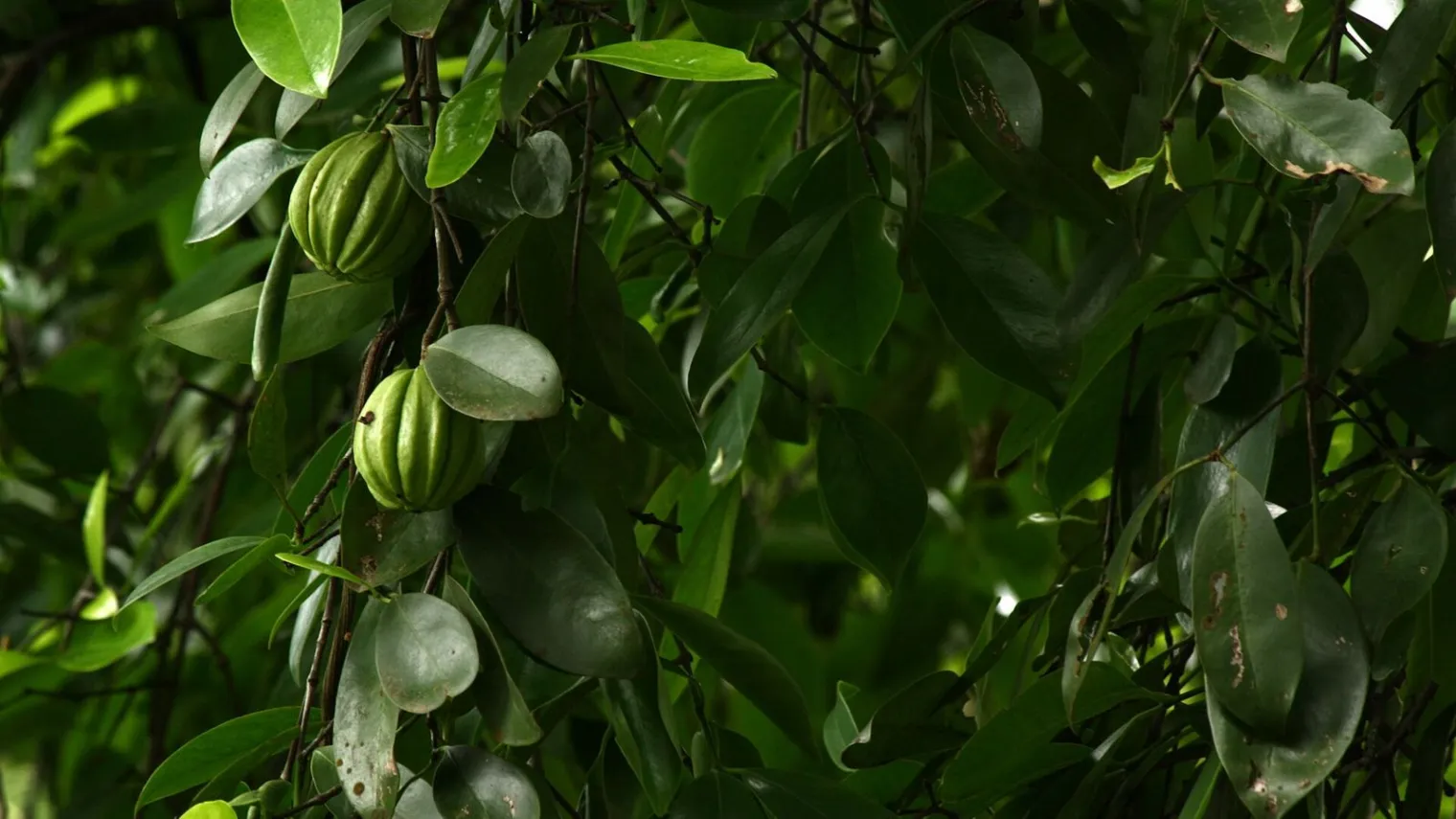
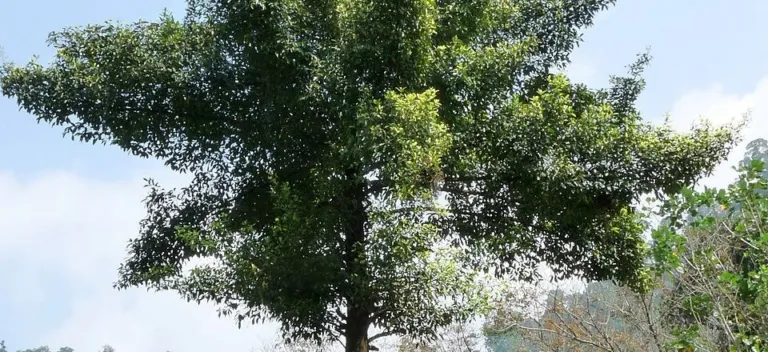
Cover: fruit of Garcinia gummi-gutta on the tree, Kottayam, Kerala. Photo: Swati Sidhu · CC BY-SA 4.0 · Wikimedia Commons
In Kerala the fruit is called kudampuli, and its smoked black rind goes into fish curry the way a squeeze of lime goes into a stir-fry here Traditional (recorded by the Kerala photographers credited under Image credits; Chuah and colleagues describe culinary use across Asian countries [10]). In Australian pharmacies the same fruit, under an old botanical name, is sold in capsules for weight management, and since 1 March 2025 new listings of those capsules have had to carry a warning that in very rare cases the ingredient may harm the liver Attested [2]. This review sets the two lives of the plant side by side.
This is a Literature Review and Critical Analysis from the Australian Institute of Pharmacognosy. It covers the plant and its tangled names, how the rind is used as a food, the chemistry of hydroxycitric acid (HCA), what the laboratory work shows about how it might act, what the randomised trials and meta-analyses actually found, and a proportionate account of the liver reports and other safety signals. It then sets out what the Therapeutic Goods Administration (TGA) decided and why, what the label warning means and does not mean, and why garcinia is not a stand-in for prescribed GLP-1 medicines. Every claim is graded, and culinary and traditional use are kept apart from clinical evidence throughout.
This article is educational. It is not medical advice, and nothing in it is a recommendation to take, stop or change any medicine or supplement.
The label warning. Listed medicines containing Garcinia gummi-gutta, Garcinia quaesita, hydroxycitric acid or its salts must carry a warning that in very rare cases the ingredient may harm the liver, and must tell the user to stop and get medical attention for yellowing skin or eyes, or unusual fatigue, nausea, loss of appetite, abdominal pain, dark urine or itching. The rule applies to products listed from 1 March 2025 and to all stock released for supply from 1 March 2026 Attested [2]. See §8.
Who should not use it. These medicines may not be directed for use in children or in pregnant or breastfeeding women Attested [2]. The TGA advises people who have, or have had, liver problems to avoid them Attested [1]. Reported interactions involve antidepressants that raise serotonin, montelukast and, on weaker evidence, statins Evidence suggests [11] [13]. See §7.
Scheduling. We found no entry for garcinia or hydroxycitric acid in the Poisons Standard when we searched in November 2026; both are permitted ingredients for listed (AUST L) medicines Attested [2]. The fruit rind sold in grocery stores as a cooking ingredient is a food.
If someone is unwell after taking any herbal product: call Triple Zero (000) in an emergency, or the Poisons Information Centre on 13 11 26 (24 hours, Australia-wide).
| Names | Malabar tamarind, brindleberry, kudampuli (Malayalam). Sold as “garcinia cambogia”, from the former name Garcinia cambogia Attested [5] § |
| Botanical name | Garcinia gummi-gutta (L.) N. Robson, family Clusiaceae Attested [5] § |
| Part used | Fruit rind, defined by the TGA as “fruit peel”: the exocarp and mesocarp Attested [2] § |
| Native range | South and Southeast Asia; the photographs here are from Kerala and Tamil Nadu Evidence suggests [5] § |
| In Australia | A handful of herbarium specimens from Queensland; no evidence we could find of naturalisation; dried rind sold as a food Evidence suggests [17] § |
| Food use | Dried rind used as a souring condiment in Asian cooking Traditional [10]; smoked and added to fish curry in Kerala (photographers’ records, Image credits) § |
| Main chemistry | (−)-Hydroxycitric acid, about 30% of the dried pericarp, and its lactone Evidence suggests [5] § |
| Mechanism | HCA competitively inhibits ATP-citrate lyase in the laboratory; appetite effects are proposed Mechanism [4] § |
| Human evidence | Meta-analysis of 9 short trials: about 0.9 kg more weight lost than placebo, roughly 1% of body weight; the two best trials found no difference Confirmed [3] § |
| Safety | Rare, sometimes severe, idiosyncratic liver injury; serotonin toxicity and mania in case reports Evidence suggests [5] [6] [12] § |
| Australian status | Permitted ingredient in listed medicines, with a compulsory liver warning; no Poisons Standard entry found Attested [2] § |
| Quality | HCA and its lactone interconvert, extracts are standardised to different figures, and other Garcinia species are sometimes substituted Evidence suggests [5] § |
- Confirmed established in humans by trial, or an unambiguous analytical, chemical or legal fact.
- Evidence suggests real published data, but preclinical, observational, small, or not yet replicated in humans.
- Mechanism a plausible mechanistic or pharmacological inference, not an outcome.
- Traditional historical, culinary or ethnobotanical use: evidence of practice, not of efficacy.
- Attested a documentary fact attested in a named source, such as a regulator’s published decision or a label requirement.
A claim we could not trace to a source we have read is marked unsourced in the text.
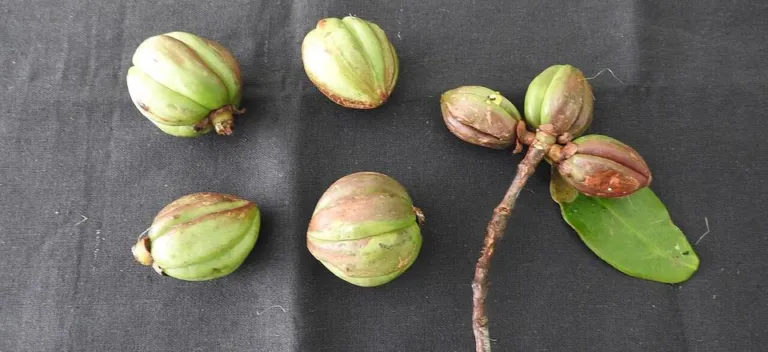
Garcinia gummi-gutta is a tropical tree of South and Southeast Asia Evidence suggests [5] whose ribbed, pumpkin-shaped fruit gives a sour rind. The dried rind has been used for centuries in Asian cooking as a souring condiment Traditional [10]; in Kerala it is smoked and goes into fish curry. Its main acid, (−)-hydroxycitric acid, is citric acid with one extra hydroxyl group Confirmed [18], and in the laboratory it blocks the enzyme that supplies building blocks for fat synthesis Mechanism [4].
As a weight-loss supplement the evidence is thin. The most cited meta-analysis pooled nine short trials and found about 0.88 kg more weight lost than with placebo, around 1% of body weight, with wide variation between trials; when only the two best-conducted trials were pooled, the difference disappeared Confirmed [3]. Later reviews describe the same mixed picture Evidence suggests [4] [11].
The safety question is the liver. A small number of people, most of them young or middle-aged women in the published series, have developed severe hepatitis weeks to months after starting garcinia products, a few needing transplants Evidence suggests [5] [6]. Many of those products also contained green tea extract or other botanicals, which makes the cause hard to pin down. The US Drug-Induced Liver Injury Network found an immune marker, HLA-B*35:01, far more often in these patients, which points to an individual susceptibility Evidence suggests [6]. The TGA treats the risk as very rare, below about 1 in 10,000 users Attested [2].
In Australia, listed garcinia medicines must now say so on the label, may only use the fruit peel, and may not be directed for children or for use in pregnancy or breastfeeding Attested [2]. Listed medicines are checked for safety and quality before listing, but the TGA does not evaluate their efficacy Attested [16]. GLP-1 medicines such as semaglutide are prescription medicines tested in large trials; garcinia has never been compared with them, and the trial data give no reason to treat it as a substitute Evidence suggests [3] [15].
If you are considering any botanical drug for weight, consult a degree-qualified herbalist with competencies and adequate training in pharmacognosy, and stop at once and get medical attention if you notice yellow eyes or skin, dark urine or unusual tiredness.
1. Names and identity: one fruit, several labels
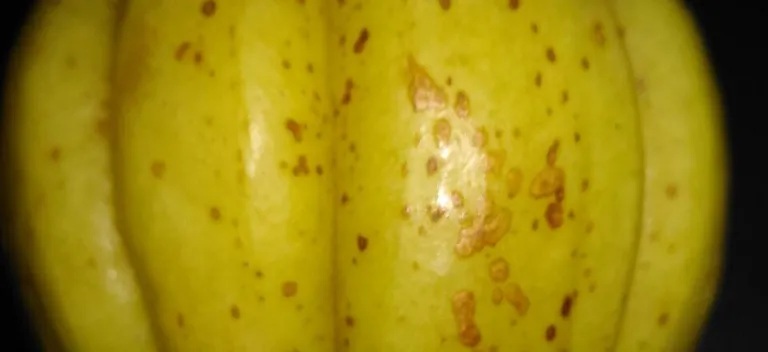
The plant on the capsule label and the plant in the curry are the same species, Garcinia gummi-gutta (L.) N. Robson, of the mangosteen family, Clusiaceae Attested [5]. For most of the twentieth century it was known as Garcinia cambogia, and the supplement trade kept the old name after botanists folded it into G. gummi-gutta. The 2025 review by van Breemen and colleagues for the United States Pharmacopeia puts it plainly: G. gummi-gutta, “commonly known by its former botanical name Garcinia cambogia” Attested [5]. The TGA uses both, writing “Garcinia gummi-gutta (Garcinia cambogia)” in its safety advisory Attested [1].
The common names travel with the cooking. In Malayalam the fruit is kudampuli, often glossed as “pot tamarind” because it is kept in pots and used like tamarind, and the photographers who documented it for Wikimedia Commons in Kerala record that name Attested (see Image credits). In English it is Malabar tamarind or brindleberry Attested [11] [12]; the Bostock review of mania case reports files it under brindleberry Attested [12]. In Sri Lanka the souring rind is called goraka (unsourced in the papers we read in full; the name is in common culinary use).
Related species and the word “gamboge”
Garcinia is a large genus. Andueza and colleagues put it at more than 300 species across Asia and Africa Attested [4], and several of them produce hydroxycitric acid. The USP review notes that G. indica (kokum) and G. atroviridis are sometimes substituted in commerce for G. gummi-gutta, and all three contain HCA Evidence suggests [5]. The TGA’s ingredient list includes a second species by name, Garcinia quaesita, a Sri Lankan relative whose rind also contains HCA, and it carries the same warning Attested [1] [2].
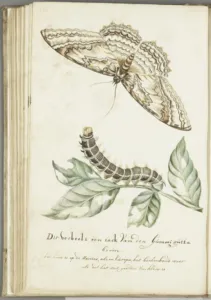
The species epithet gummi-gutta is Latin for “drop of gum”, a reference to the yellow resin that oozes from cut Garcinia bark. The painter’s pigment gamboge comes from that kind of resin, mostly from other species of the genus (unsourced in the papers we read in full). The name has caused confusion for centuries. The Dutch brush drawing below, made around 1763 and labelled as a branch of the “gummi-gutta” tree, shows a leafy Garcinia shoot with a moth and its caterpillar; from the leaves alone nobody can say which species the artist had in front of him Attested.
For a shopper the practical point is short. “Garcinia cambogia”, “garcinia”, “HCA”, “hydroxycitrate”, “Malabar tamarind extract” and “brindleberry” on a label all point to the same group of ingredients, and in Australia all of them now carry the same liver warning when sold as listed medicines Attested [2].
2. The tree, its fruit, and its place in Australia
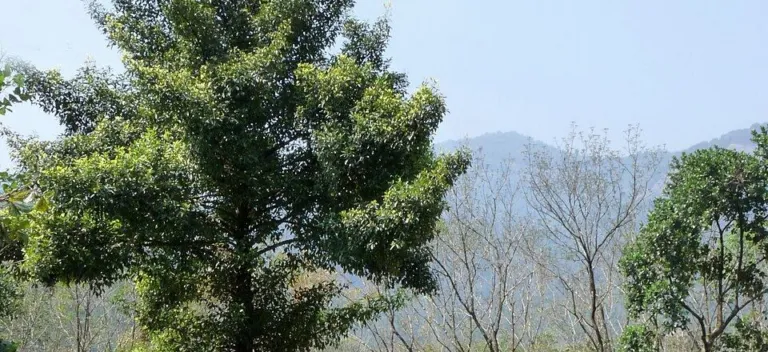
Garcinia gummi-gutta is an evergreen tree with glossy, dark, opposite leaves and a dense crown. The USP review describes it as native to South and Southeast Asia Evidence suggests [5]. The photographs used in this review were taken at Wayanad and Kottayam in Kerala and at the Botanical Survey of India garden at Yercaud in Tamil Nadu Attested.
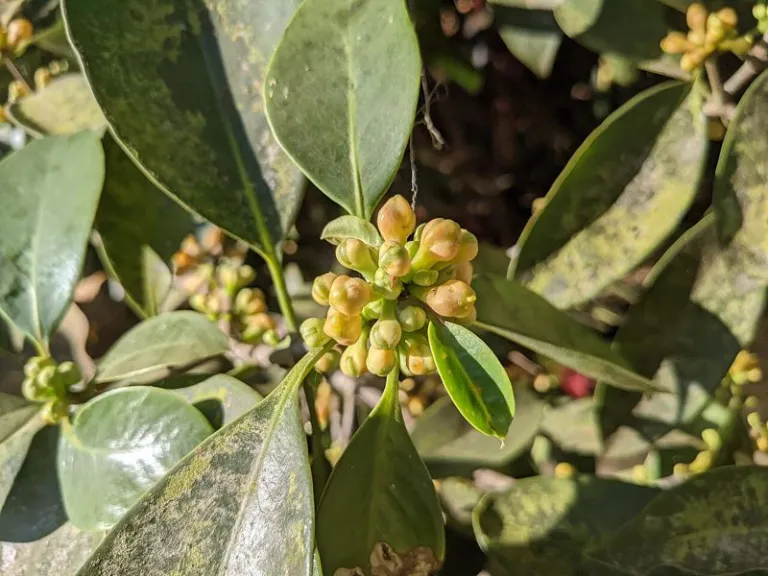
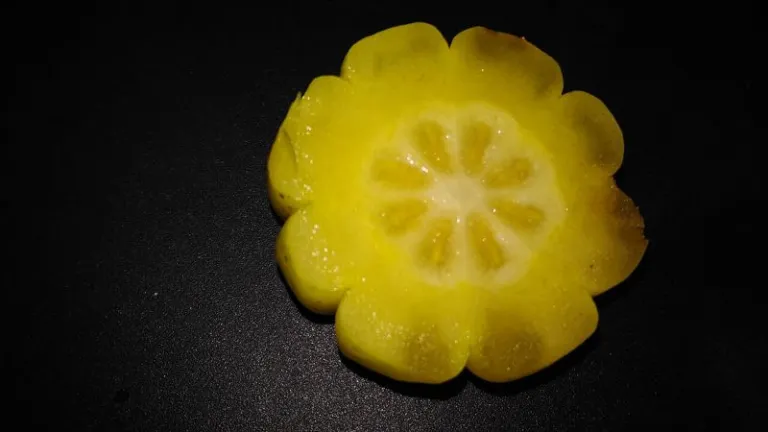
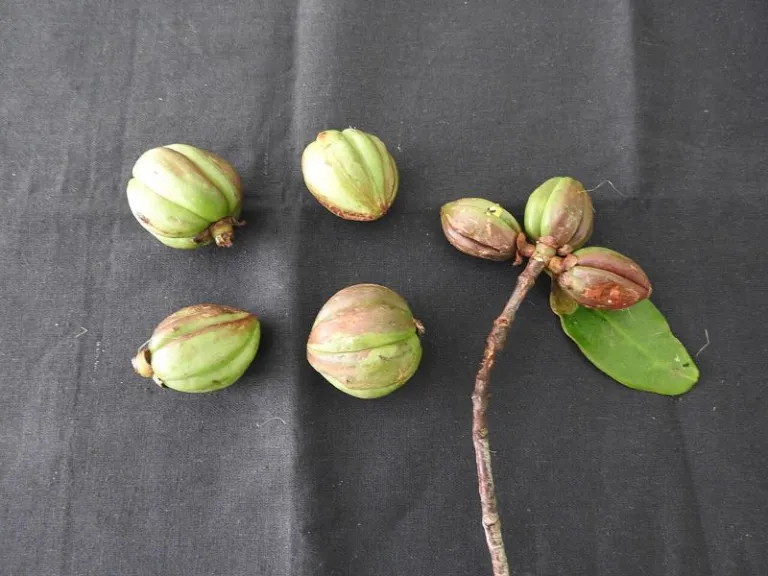
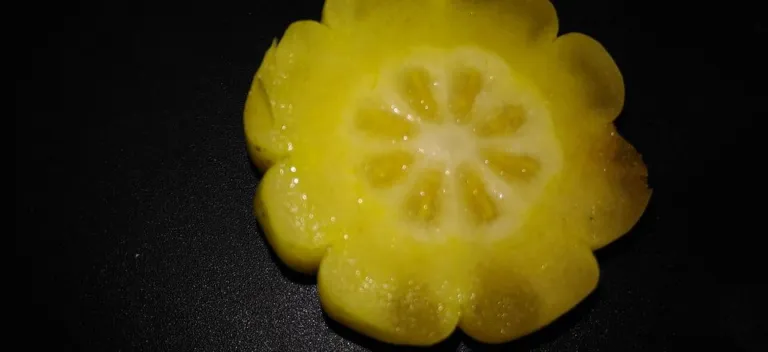
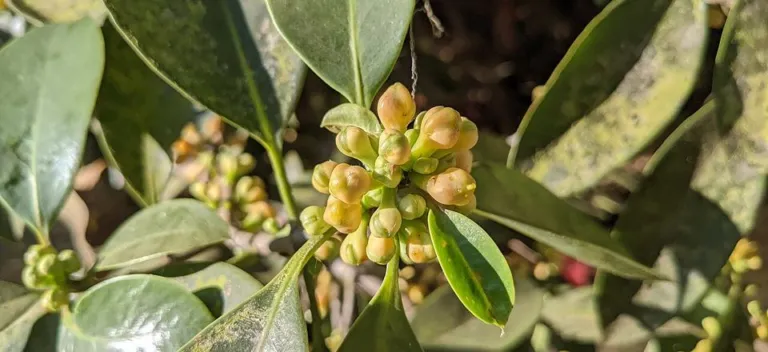
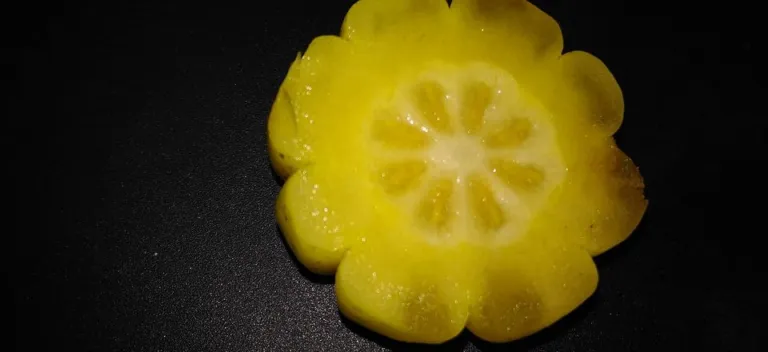
The photograph below shows male flowers, small and fleshy, clustered along the twig; Garcinia species commonly carry male and female flowers on separate trees, which is why not every tree in a garden bears fruit (unsourced for this species in the papers we read in full). Its Kerala photographer describes the fruit as looking like a small pumpkin, green to pale yellow Attested; cut across, it shows a few large seeds bedded in pulp. The sour, fleshy rind around them is the part that matters, in the kitchen and in the capsule Attested [2].
The TGA has fixed the anatomy in law. Its December 2024 decision changed the permitted plant part from “rind of the fruit” to “fruit peel”, and stated that fruit peel includes the exocarp and the mesocarp of the fruit, which it treats as the same thing as the rind Attested [2]. That is the outer skin and the fleshy layer beneath it, which is the material that is dried for cooking.
Australian status
Garcinia is a tree of the wet tropics, and parts of far north Queensland have the climate for it. The Atlas of Living Australia holds 13 occurrence records filed under Garcinia gummi-gutta or Garcinia cambogia, as read in November 2026. Seven of them are herbarium specimens recorded from Queensland, all held by the Australian Tropical Herbarium in Cairns; the rest are specimens collected in India, Sri Lanka and Indonesia Evidence suggests [17]. We found nothing suggesting the tree has naturalised here or is a declared weed in any state, though we did not check every state list (unsourced). The Australian context for this plant is overwhelmingly the capsule on the pharmacy shelf and the packet of dried rind in an Indian or Sri Lankan grocery.
Queensland’s rainforests also hold native Garcinia species (unsourced in the documents we read in full). Nothing in the literature we reviewed suggests any of them is a source of supplement HCA.
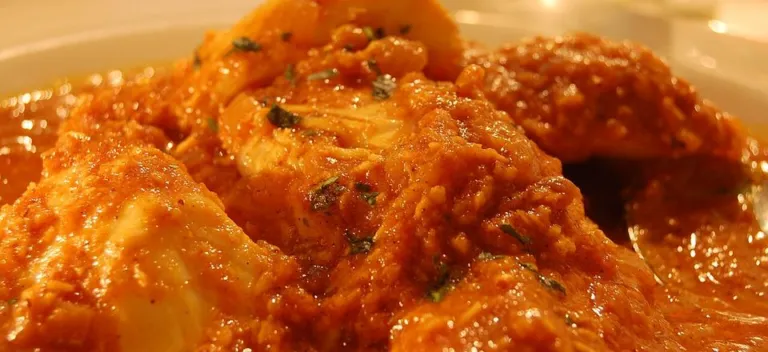
3. Kudampuli in the kitchen: a food first
Long before anyone put it in a capsule, garcinia was a sour ingredient. Chuah and colleagues, in their 2012 toxicity review, describe it as “used for centuries in Asian countries for culinary purposes as a condiment and flavoring agent in place of tamarind or lemon, and to make meals more filling” Traditional [10]. The USP review adds that the fruit has been used as a food, as a food preservative and in Ayurvedic medicine Traditional [5].
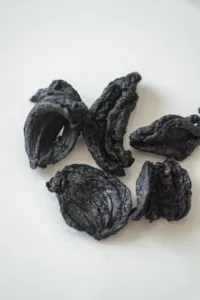
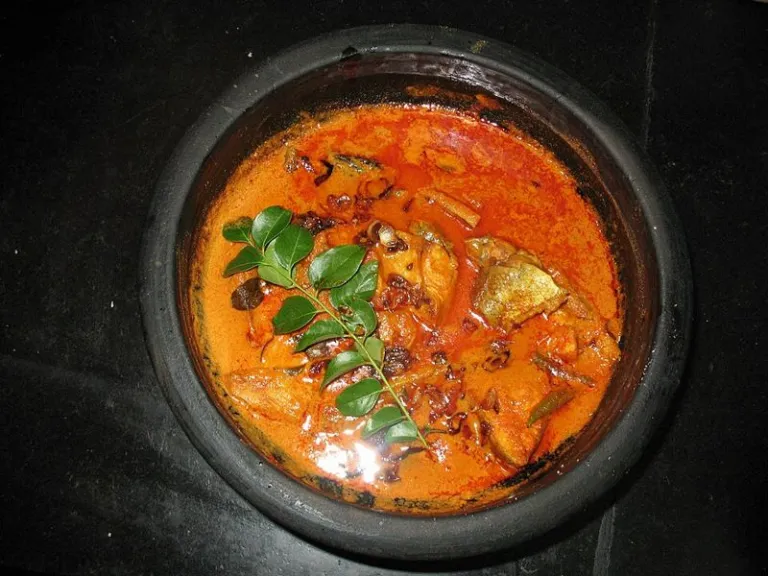
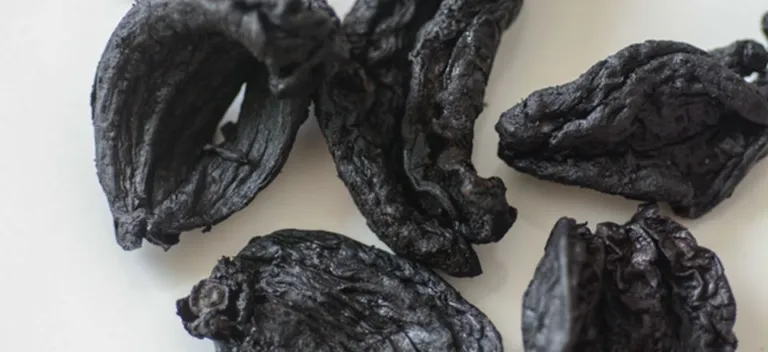
In Kerala the rind is split from the fruit, sun-dried and smoked over a wood fire until it turns black and leathery. A few pieces, soaked and torn, go into meen curry, the coastal fish curry cooked in a clay pot, where they give a deep, smoky sourness that holds up through long simmering. The photographer of the dried rind below notes it is “used popularly in Kerala recipes, especially fish curry” Traditional. In Sri Lankan cooking goraka is used the same way in fish ambul thiyal, a dry sour fish curry (unsourced in the papers we read in full).
Rivas García and colleagues record traditional medicinal uses of the fruit for constipation, oedema and irregular menstruation Traditional [11]. Those uses are evidence of practice. No trial we found tested them, and they are a separate question from weight loss.
A curry made with a few pieces of rind and a capsule standardised to 50 to 60% HCA taken two or three times a day deliver very different amounts of one acid. The USP review cites an Indian Council of Medical Research figure of 2.4 g a day of dried fruit rind, which it equates to 240 to 480 mg of extract Attested [5], while the United States Pharmacopeia (an overseas standard) defines garcinia extract as containing at least 40% hydroxycitrate Attested [5]. No study we read measured how much HCA a person eating Kerala food takes in from the rind, so the comparison cannot be made exactly. The long culinary record tells us the cooked rind is a familiar food. It tells us nothing about a concentrated extract taken daily for months Mechanism.
The point matters for the safety chapter. The liver reports that follow come from concentrated supplements, many of them blends Evidence suggests [4] [5]. We found no case report linking ordinary culinary use of the rind to liver injury in the literature we read (a gap in the record, which proves nothing either way about safety).
4. Phytochemistry: an acid, its lactone, and the rest
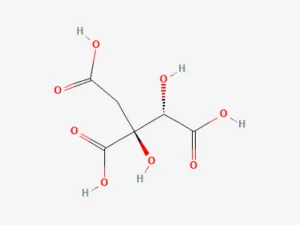
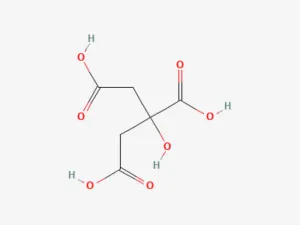
The chemistry of garcinia is dominated by one small molecule. (−)-Hydroxycitric acid (HCA) is a six-carbon tricarboxylic acid, formula C6H8O8, molecular weight 208.12, PubChem CID 185620 (PubChem title “garcinia acid”, the (2S,3S) isomer; the record without stereochemistry is CID 123908) Confirmed [18]. It is citric acid (C6H8O7, CID 311) with one extra hydroxyl group on the carbon next to the central one Confirmed [18]. That small change lets it sit in the binding site of an enzyme built for citrate, which is the basis of the pharmacology in chapter 5 Mechanism [4].
HCA is present in the pericarp at approximately 30% (w/w) Evidence suggests [5]; Andueza and colleagues give 20 to 30% of the dry weight of the rind Evidence suggests [4]. The figure varies with the source, the season and the drying, and few independent analyses are available.
The lactone problem
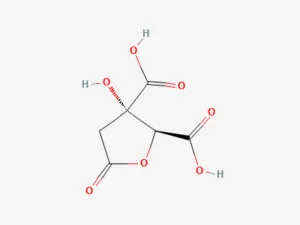
HCA readily closes into a five-membered ring, the lactone known as garcinia lactone (CID 9991606; IUPAC (2S,3S)-3-hydroxy-5-oxooxolane-2,3-dicarboxylic acid) Confirmed [18]. The USP review describes the free acid as the active form and the lactone as inactive, and notes that commercial extracts often add calcium, sodium or potassium to form the hydroxycitrate salt and stop the ring closing Evidence suggests [5]. One extract used in rat studies contained 41.2% (−)-HCA by weight with a free-to-lactone ratio of 36.6 to 63.4 Evidence suggests [10]. In other words, much of the HCA in that material was in the form described as inactive.
This explains why labels quote different numbers. A rind powder, a free-acid extract and a calcium-potassium salt can all claim a percentage of “HCA”, and the figure depends on whether the lactone was counted and whether the salt was included in the weight. The United States Pharmacopeia (overseas; not an Australian standard) defines dried garcinia rind as containing at least 12% of HCA plus lactone, and garcinia extract as containing at least 40% hydroxycitrate Attested [5]. Australian listed medicines must meet the TGA’s ingredient requirements and their own specifications; we did not find a published Australian monograph for HCA content (unsourced).
Benzophenones and other constituents
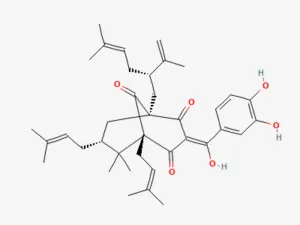
The genus also makes polyisoprenylated benzophenones, large fat-soluble molecules of which garcinol (CID 5281560, C38H50O6) is the best known Confirmed [18]. Andueza and colleagues list garcinol, isogarcinol, mangostin and xanthochymol among compounds isolated from Garcinia species Evidence suggests [4]. These come mostly from other species and other plant parts, and we found no data in the papers we read on how much, if any, reaches a water-extracted HCA supplement. They sit in the background of the garcinia story; the supplement trade sells HCA.
5. Pharmacology: citrate lyase, appetite, and the liver
The mechanism usually offered for garcinia comes from biochemistry in the 1970s and from cell work since. HCA is a competitive inhibitor of ATP-citrate lyase, the enzyme in the cell’s cytoplasm that splits citrate into oxaloacetate and acetyl-CoA Mechanism [4]. That acetyl-CoA is the starting material for fatty acids and cholesterol, so blocking the enzyme limits how much carbohydrate the liver can turn into fat Mechanism [4] [5].
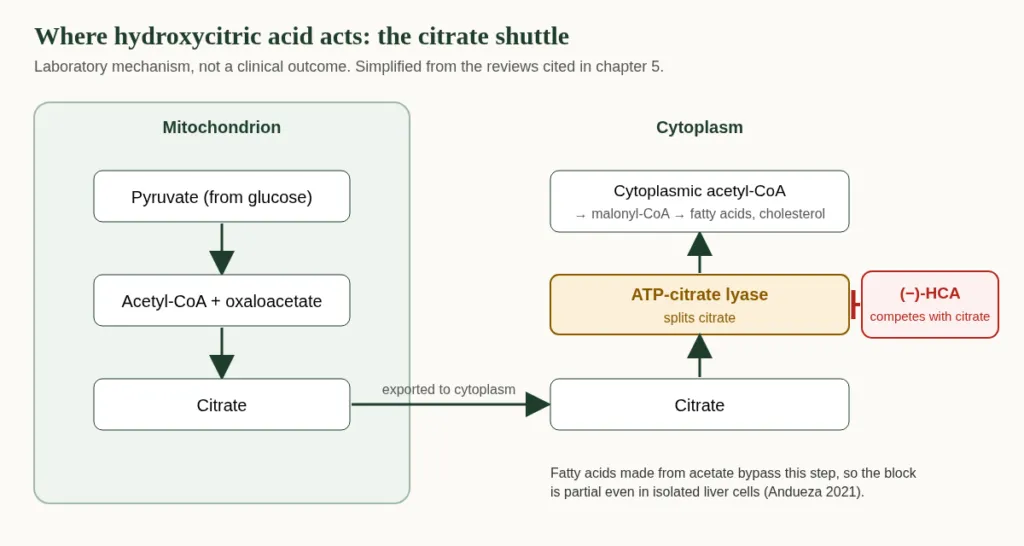
The block has limits that are often left out of the marketing. In isolated liver cells HCA inhibits fatty acid synthesis from glucose but not from acetate, so fat synthesis carries on from other acetyl-CoA sources Evidence suggests [4]. The enzyme step also matters most on a high-carbohydrate diet Mechanism [4]. A partial block in one route, in a person eating a mixed diet, is a modest lever. Andueza and colleagues add that HCA has been linked in animal work to more fat oxidation, more glycogen storage in the liver and higher energy expenditure, though one rat study they cite did not support the idea that more fat oxidation in the liver suppressed food intake Evidence suggests [4].
The same enzyme is the target of a cholesterol-lowering medicine, bempedoic acid, which is converted in the liver into an ATP-citrate lyase inhibitor (unsourced in the papers we read in full). The parallel shows that inhibiting this step can change human lipid metabolism when the drug reaches the liver in adequate amounts. It says nothing about whether a garcinia capsule does.
Appetite and serotonin
The second proposed mechanism is appetite. Reviews state that HCA increases satiety through effects on serotonin Mechanism [11]. The primary work behind that statement includes a study titled “Effect of hydroxycitric acid on serotonin release from isolated rat brain cortex” (2001) and studies of a branded calcium-potassium HCA salt by the same research group, which we have ordered and not yet read in full. Andueza and colleagues, and Rivas García and colleagues, go further and describe HCA as acting like a selective serotonin reuptake inhibitor Mechanism [4] [11]. On the evidence we could read, that description rests on animal brain tissue and on case reports, and it is a hypothesis. It is still worth taking seriously, because the case reports in chapter 7 look like serotonin excess.
Drug-metabolising enzymes and other pathways
Rivas García and colleagues report a laboratory study in which garcinia extract moderately inhibited the liver enzyme CYP2B6, an effect that seemed to come from constituents other than HCA. They conclude an interaction with CYP2B6 substrates such as bupropion is possible in practice, with no human study yet to confirm it Evidence suggests [11]. Di Giacomo and colleagues examined liver cells exposed to garcinia with and without the asthma medicine montelukast. Garcinia alone had low toxicity; the combination sharply reduced cell survival, raised reactive oxygen species and altered Nrf2, a regulator of the cell’s antioxidant defences Evidence suggests [13].
Animal toxicology
The animal data pull in two directions. A 90-day study in healthy Sprague-Dawley rats given a 60% HCA extract found no changes in blood counts or clinical chemistry, while obesity-prone mice fed a high-fat diet with 1% garcinia extract for 112 days developed liver fibrosis, inflammation and oxidative stress Evidence suggests [5]. The USP review attributes the contrast to the species and the diet Evidence suggests [5]. High-dose feeding studies in Zucker obese rats suppressed fat accumulation and were toxic to the testis, apparently by interfering with a sterol needed for sperm development Evidence suggests [10]. A garcinia extract was negative in the Ames test for mutagenicity, while HCA at the highest dose tested raised micronuclei in mouse red cells Evidence suggests [5]. These findings do not translate directly into human risk, and none of them explains the human liver cases.
6. Clinical evidence: what the weight-loss trials found
Garcinia has been tested in people for more than 25 years, mostly in small, short trials funded or supplied by manufacturers. The strongest summary we could read in full is the 2011 systematic review and meta-analysis by Onakpoya and colleagues at the University of Exeter, published open access in the Journal of Obesity Confirmed [3].
They found 23 potentially eligible trials and included 12 randomised, placebo-controlled trials of garcinia or HCA used on its own; trials combining HCA with other ingredients were excluded. Nine trials had data that could be pooled. The pooled result was a mean difference of −0.88 kg (95% CI −1.75 to −0.00) in favour of HCA, with P = 0.05, which the authors equate to about 1% of body weight Confirmed [3]. Heterogeneity was considerable: the trials differed in dose, duration and diet Confirmed [3].
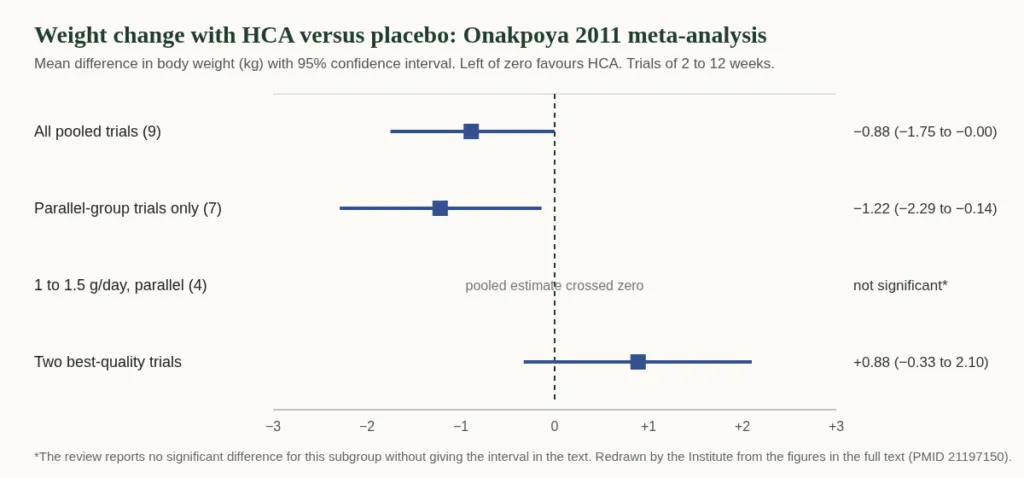
The sensitivity analyses are the part that deserves the reader’s attention. Restricting the pool to seven parallel-group trials gave −1.22 kg (−2.29 to −0.14). Restricting it to trials using 1 to 1.5 g of HCA a day removed the significant difference. Pooling only the two trials with good methodological quality gave +0.88 kg (−0.33 to 2.10), a non-significant result pointing, if anywhere, the other way Confirmed [3]. One of those two was the 1998 trial by Heymsfield and colleagues in JAMA, with 135 participants over 12 weeks; in the review’s quality table it scored 5 on the Jadad scale, the top mark Attested [3]. It found no significant difference in weight or fat mass between HCA and placebo Confirmed [3].
The authors’ own conclusion is careful: the trials “suggest that Garcinia extracts/HCA can cause short-term weight loss. The magnitude of the effect is small, and the clinical relevance is uncertain” Attested [3]. Gastrointestinal adverse events were twice as common with HCA as with placebo in one trial; otherwise adverse events were similar between groups Confirmed [3].
Later reviews
Andueza and colleagues reviewed the intervention studies again in 2021, including combinations. They found statistically significant weight loss in some trials and none in others, with differences in design, product and dose, and concluded that garcinia supplements “could be effective in short-term weight loss, although the data are not conclusive” Evidence suggests [4]. They also note that most studies told participants to take the supplement about half an hour before meals, and that some saw changes in waist circumference, blood lipids or glucose whether or not weight changed Evidence suggests [4]. Rivas García and colleagues, summarising that work in 2024, count 12 of 20 human studies reporting a significant reduction in body weight Evidence suggests [11].
A 2020 dose-response meta-analysis by Golzarand and colleagues and several individual trials, including the Japanese visceral-fat trials of Hayamizu and colleagues, are not open access; we have ordered them and will read them in full before this review is revised. We have not cited their results.
What the trials can and cannot carry
Three features limit every one of these studies. They were short, mostly 8 to 12 weeks, so they say nothing about whether any loss is kept. Many were small. And many products in shops are blends: green tea extract, caffeine, chromium, glucomannan and other botanicals sit alongside the garcinia, and a trial of HCA alone does not describe them Evidence suggests [3] [4]. Weight loss of under a kilogram in three months against placebo, with the best trials finding nothing, is a weak basis for a weight-management claim Confirmed [3].
Semaglutide and other GLP-1 receptor agonists are prescription-only medicines in Australia, and registered medicines are assessed by the TGA for quality, safety and efficacy before supply Attested [15] [16]. From 1 October 2024 pharmacists may no longer compound copies of them Attested [15]. We have not yet read the semaglutide weight trials in full, so we give no figures for them here. No trial has compared garcinia with a GLP-1 medicine. The evidence gives no support for using garcinia in place of a prescribed medicine, and anyone already taking a GLP-1 medicine and thinking of adding garcinia should know about the liver and interaction signals in chapter 7 Evidence suggests [3] [5].
7. Safety and interactions
In the trials garcinia looked well tolerated. Headache, rash, colds and gastrointestinal symptoms were the adverse events reported, and in most trials they were no more frequent than with placebo Confirmed [3]. A review by Chuah and colleagues collected the trial data and the animal work and reported a no-observed-adverse-effect level of up to 2,800 mg a day from earlier assessments Evidence suggests [10]. Trials of a few hundred people over a few weeks cannot detect a reaction that affects fewer than one person in ten thousand. That is where the case reports come in.
Liver injury: what has been reported
In 2016 Lunsford and colleagues reported what they described as the first known case of fulminant liver failure associated with a G. cambogia supplement, in which garcinia was the only apparent risk factor and the patient needed a transplant; the authors could not test the product for contaminants and wrote that a case report rarely offers indisputable proof Evidence suggests [8]. Since then the reports have accumulated. The 2025 USP review identified more than 200 adverse events of liver injury in pharmacovigilance databases and 34 published case reports, with one death and nine liver transplants; 17 of those cases had formal causality scores (CIOMS/RUCAM) in the possible to highly probable range, and in one case the injury recurred when garcinia was taken again Evidence suggests [5].
The best-characterised series comes from the US Drug-Induced Liver Injury Network (DILIN). Among 1,418 patients enrolled from 2004 to 2018, Vuppalanchi and colleagues identified 22 cases adjudicated with high confidence: garcinia alone in five, with green tea in 16 and with ashwagandha in one Evidence suggests [6]. The patients were aged 17 to 54, mostly women who were overweight but not obese. Injury appeared 13 to 223 days after starting (median 51 days), was hepatocellular with jaundice, and 91% were admitted to hospital. One patient died and one needed a transplant Evidence suggests [6]. The authors could not tell garcinia injury and green tea extract injury apart clinically Evidence suggests [6].
In Italy, the national phytovigilance system collected eight reports of liver injury with garcinia products between March 2002 and March 2022, all in women and mostly severe; causality was probable in three and possible in five Evidence suggests [13]. A 2020 case report describes a 26-year-old woman who developed subacute liver failure after seven months of a regimen including 1,800 mg of garcinia (900 mg HCA) daily with green tea extract and coffee extract, and who went on to need a liver transplant Evidence suggests [9].
Australia has its own case. In 2016 the Medical Journal of Australia reported a 26-year-old man who presented with jaundice after six weeks of fatigue. Ten weeks before presenting he had taken, for one week, a whey protein powder and a weight-loss supplement containing 70% Garcinia cambogia. He progressed to submassive hepatic necrosis and received a liver transplant two months after presentation Evidence suggests [7]. The protein powder also contained green tea extract, green coffee extract, African mango and guarana; testing of both products for heavy metals and pharmaceuticals found nothing unexpected; and the authors scored the combination as a probable cause without being able to name a single agent Evidence suggests [7].
How rare, and who is susceptible
The TGA’s final decision adopted the LiverTox estimate that hepatic reactions to garcinia are “unknown but likely uncommon, possibly in less than 1 in 10,000 persons”, and under the CIOMS frequency bands changed its warning from “rare” to “very rare” Attested [2]. That is a judgement on limited data. Nobody knows how many Australians take garcinia, and spontaneous reports undercount; the TGA notes that one published Australian transplant case was never reported to it Attested [2]. The 2016 case report states that its authors did make an adverse event notification Attested [7]; the public documents do not say whether these are the same case.
For scale, a US national survey of 9,685 adults found 20 users of garcinia products among them, against 236 users of turmeric products Evidence suggests [14]. The garcinia exposure base is small, which is one reason a handful of severe cases attracts attention.
The most interesting finding is genetic. In the DILIN series the immune-system gene variant HLA-B*35:01 was present in 55% of garcinia cases, against 19% of other supplement cases and 12% of conventional drug cases Evidence suggests [6]. The same variant is strongly linked to green tea extract liver injury Evidence suggests [6]. This points to an immune-mediated, idiosyncratic reaction in a susceptible minority, which fits the unpredictable timing and the absence of a clear dose effect Mechanism [5] [6]. Other proposed mechanisms include oxidative stress and inflammation in liver cells, and energy failure in hepatocytes from interference with acetyl-CoA metabolism Mechanism [5].
The multi-ingredient problem
Most published cases involve blends. Andueza and colleagues tabulated 21 published cases of toxic effects (liver injury, and also pancreatitis, serotonin toxicity and psychosis) and found that 16 followed products with ingredients besides garcinia; one brand family they discuss, Hydroxycut (an overseas brand), includes polyherbal products with up to 20 substances Evidence suggests [4]. Green tea extract, itself a recognised cause of liver injury, is the most frequent companion Evidence suggests [6] [7]. The TGA’s safety advisory acknowledged that older literature reports mostly involved additional ingredients, but found that more recent cases implicate garcinia or HCA as the only suspected ingredient Attested [1]. A careful reading supports both points: blends make attribution hard, and garcinia-only cases with good causality scores exist Evidence suggests [5] [6].
Serotonin toxicity and mania
Rivas García and colleagues describe a 35-year-old woman taking escitalopram, a selective serotonin reuptake inhibitor (SSRI), who developed tremor, flushing and sweating after two to three months of a 60% HCA garcinia supplement, and was diagnosed with serotonin syndrome; she had not told her prescriber about the supplement Evidence suggests [11]. Bostock and colleagues’ systematic review of mania associated with herbal medicines found four case reports involving garcinia (two of mania, one of manic psychosis, one of hypomania) in people taking it for weight loss Evidence suggests [12]. Andueza and colleagues note that some of these people had a psychiatric history or were taking SSRIs, and that causality has not been established Evidence suggests [4].
Interactions
| Medicine or product | What is known |
|---|---|
| Antidepressants and other serotonergic drugs | Case reports of serotonin toxicity with an SSRI, and of mania Evidence suggests [4] [11] [12]. The same concern extends by mechanism to SNRIs, tramadol and triptans Mechanism. Avoid combining without informed advice. |
| Diabetes medicines (insulin, sulfonylureas, others) | Some garcinia trials reported lower blood glucose Evidence suggests [4]. An additive effect is plausible Mechanism, and one case of diabetic ketoacidosis with pancreatitis in an insulin-treated woman taking garcinia has been reported Evidence suggests [4]. The concern is additive lowering of blood glucose, which is why this pairing is flagged. |
| Statins | Rhabdomyolysis has been reported with weight-loss products containing garcinia; Rivas García and colleagues advise against combining with statins Evidence suggests [11]. The evidence is case-level. |
| Montelukast | A case of liver failure after adding garcinia and bitter orange products to long-term montelukast, and cell work showing combined toxicity Evidence suggests [11] [13]. |
| CYP2B6 substrates (for example bupropion) | Moderate CYP2B6 inhibition by garcinia extract in vitro; no human data Evidence suggests [11]. |
| Other liver-active products (green tea extract, other weight-loss blends) | Most published liver cases involved blends with green tea extract Evidence suggests [4] [6]. Combining several liver-active products adds uncertainty Mechanism. |
Existing liver disease
The TGA advises people who have, or have had, liver problems to avoid garcinia medicines Attested [1]. No study has measured the risk in people with existing liver disease; the advice is precautionary, and it follows from the idiosyncratic pattern of the reported injuries Mechanism [5] [6].
Pregnancy, breastfeeding and children
Listed garcinia medicines may not be directed for children or for pregnant or breastfeeding women, and the TGA kept that restriction because there is “continued absence of evidence of safe use in pregnant or lactating women” Attested [2]. Andueza and colleagues add a mechanistic reason for caution: HCA affects the synthesis of fatty acids and cholesterol, and through them steroid hormones Mechanism [4]. Rat reproductive studies of a branded HCA salt reported no effects on fertility or offspring Evidence suggests [10], which is reassuring as far as it goes. Culinary use of the rind is a separate matter, with a long history in Asian cooking Traditional [10].
The TGA’s message is practical: liver injury is rare but can be severe, and “the risks are reduced if you recognise the early signs and stop taking the medicine or herbal supplement” Attested [1]. The signs on the label are yellowing of the skin or eyes, dark urine, nausea, vomiting, unusual tiredness, weakness, abdominal pain, loss of appetite and itching Attested [1] [2]. Because injury can begin months after starting Evidence suggests [6], a product that has been taken without trouble for some weeks is not proof against it. Anyone with these symptoms should stop the product and get medical attention promptly, taking the packet with them. In an emergency call 000; for poisons advice call 13 11 26.
8. In Australia: the AUST L pathway and the new warning
Garcinia capsules on Australian shelves are almost all listed medicines, marked AUST L. A listed medicine may only contain ingredients from the TGA’s list of permitted ingredients, at the strengths and with the conditions the TGA sets, and its sponsor must hold evidence for any claim it makes. The TGA checks the ingredients for quality and safety; it does not evaluate a listed medicine’s efficacy before it reaches the shelf Attested [16]. In August 2024 the TGA counted more than 50 listed medicines on the Australian Register of Therapeutic Goods (ARTG) containing garcinia or HCA ingredients Attested [1].
What the TGA did, and when
On 8 August 2024 the TGA published a safety advisory on medicines containing Garcinia gummi-gutta or HCA. It said it had become aware of an increasing number of liver injury cases in the scientific literature, that five published cases had ended in liver transplantation, one of them Australian, and that it had received a small number of possible liver injury reports itself, most with limited information Attested [1]. Its investigation concluded that “there may be a rare risk of liver injury” Attested [1].
The TGA then consulted, from 2 August to 13 September 2024, on a label warning. It received four submissions: an industry body and a clinical professional organisation supported the change, and two industry representatives gave mixed support Attested [2]. One respondent argued from a search of the TGA’s Database of Adverse Event Notifications (DAEN) that only 12 of 32 garcinia reports concerned listed medicines and that there had been none for the 50 listed products since March 2022; the TGA answered that spontaneous reporting undercounts, that the published Australian transplant case had not been reported to it, and that the literature with causality assessment gave a strong body of evidence Attested [2]. Another argued that contamination or adulteration might explain the cases; the TGA said its review found insufficient evidence for widespread quality problems, given cases over several years from different regions with no clusters Attested [2].
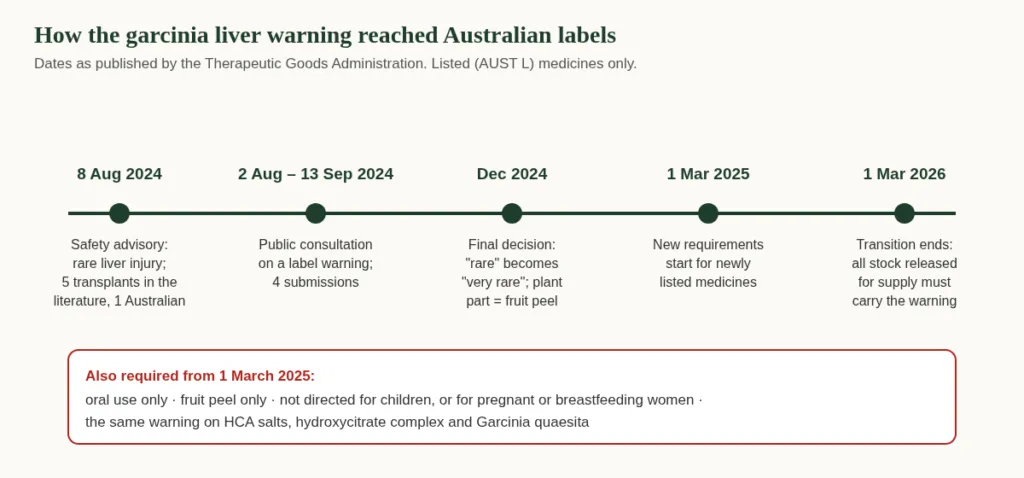
The final decision, published in December 2024, kept the proposal with one change of wording. For a medicine listed on or after 1 March 2025, or released for supply on or after 1 March 2026, the requirements for Garcinia gummi-gutta are Attested [2]:
- oral use only;
- the plant part limited to fruit peel (exocarp and mesocarp);
- a label statement that reads, in part, “In very rare cases, Garcinia gummi-gutta may harm the liver”, and goes on to tell the user to stop and get medical attention for yellowing skin or eyes, or unusual fatigue, nausea, appetite loss, abdominal pain, dark urine or itching;
- no directions for use in children, or in pregnant or lactating women.
Matching warnings now apply to calcium, potassium and sodium hydroxycitrate, hydroxycitrate complex, hydroxycitric acid and Garcinia quaesita Attested [2]. Where a product contains several ingredients that each need a liver warning, such as green tea, turmeric or valerian, the decision lets the sponsor state a combined warning once Attested [2]. The twelve-month transition ended on 1 March 2026, so any garcinia medicine released for supply since then should carry the statement Attested [2]. In 2024 the US Pharmacopeia added a similar cautionary statement to its garcinia monographs; that is an overseas standard and does not apply here Attested [5].
What the warning means, and what it does not
The warning means the TGA judged that garcinia can, very rarely, injure the liver, and that the risk is acceptable for a self-selected medicine if people know the early signs and stop. It does not mean every product is dangerous, that the TGA has found a contaminated batch, or that garcinia has been banned. It does not say anything about whether garcinia helps with weight: listing is not an efficacy assessment Attested [16]. The DAEN counts are another place where context matters. The USP review reports that the DAEN attributed two deaths and 71 adverse event reactions to garcinia between 1971 and July 2025, with garcinia the only suspected product in four cases Evidence suggests [5]. A DAEN entry is a report of suspicion; it does not establish that the product caused the event.
Online and overseas products
The TGA notes that some reports of liver damage involved products bought online from overseas, which it does not regulate for quality or safety, and that an AUST L or AUST R number on the label shows a product is on the ARTG Attested [1]. Dried kudampuli rind bought as a cooking ingredient is a food, outside the therapeutic goods framework. Anyone importing dried plant material should check the Department of Agriculture’s biosecurity import conditions (BICON) first.
Not an alternative to GLP-1 medicines
GLP-1 receptor agonists are prescription-only medicines, and the TGA has acted against compounded copies Attested [15]. Searching for a “natural Ozempic” is understandable when a medicine is costly or scarce. The garcinia trials show at best a small, short-lived difference from placebo Confirmed [3], and no trial has tested garcinia against, or alongside, a GLP-1 medicine. Using it as a substitute would mean giving up a medicine with large-trial evidence for a supplement without it.
9. Quality and adulteration
Garcinia raises three quality questions. The first is identity. Other HCA-bearing species, G. indica and G. atroviridis, are sometimes substituted for G. gummi-gutta Evidence suggests [5], and the TGA itself lists G. quaesita as a separate ingredient Attested [2]. For dried rind, which looks much the same across species, identity rests on documented sourcing and, ideally, on a voucher specimen and a chemical fingerprint.
The second is strength. Because HCA and its lactone interconvert, and because extracts are sold as free acid, as salts or as mixtures, “60% HCA” on one label and “50% HCA” on another are hard to compare Evidence suggests [5]. The extract used in one set of rat studies held most of its HCA as lactone Evidence suggests [10]. Analytical methods need to measure both forms and state the basis.
The third is adulteration. Weight-loss products are among the most frequently adulterated supplements sold in the United States, and the USP review raises the possibility that some garcinia cases involved undeclared additives Evidence suggests [5]. The Australian transplant case is a useful counterweight: both products were tested for heavy metals and pharmaceuticals and nothing unexpected was found Evidence suggests [7]. The TGA’s view, after its review, was that quality problems are unlikely to explain the pattern of cases Attested [2]. Listed medicines must be manufactured under good manufacturing practice, which the TGA presents as an assurance that the product contains what the label says Attested [1].
Most published case reports did not include any chemical analysis of the product taken; the USP review names this as a major limitation of the DILIN series Evidence suggests [5]. Until more cases are matched with laboratory testing of the actual capsules, the question of whether the injury follows HCA, another rind constituent, a co-ingredient or a contaminant will stay partly open.
Discussion: conclusions, hypotheses and research still required
What we know
Garcinia gummi-gutta is a South and Southeast Asian tree whose sour fruit rind is a long-established food in the region Traditional [5] [10]. The rind is rich in (−)-hydroxycitric acid, which readily forms an inactive lactone Evidence suggests [5]. HCA inhibits ATP-citrate lyase in the laboratory Mechanism [4]. In randomised trials, garcinia or HCA alone produced, at most, a small short-term difference in weight from placebo, of the order of 1 kg over two to twelve weeks, and the two best-conducted trials found none Confirmed [3]. A rare, idiosyncratic, sometimes severe hepatocellular liver injury has been reported with garcinia products, including garcinia-only products, with transplants and a death; in Australia this has led to a compulsory label warning, a restriction to fruit peel and to oral use, and a bar on directions for children and for pregnant or breastfeeding women Evidence suggests [5] [6] Attested [2].
What we can reasonably hypothesise
- The over-representation of HLA-B*35:01 in garcinia and green tea liver injury suggests a shared immune mechanism, which would explain why the injury is unpredictable, why it can begin months after starting, and why products combining the two appear often in the case literature Mechanism [6]. This is a hypothesis drawn from one series of 22 patients.
- The serotonergic case reports may reflect a real pharmacodynamic interaction with SSRIs and similar drugs; the animal data on serotonin release make it plausible, but the human link has not been tested Mechanism [4] [11] [12].
- The small weight effect seen in some trials, if real, may owe more to appetite than to the block on fat synthesis, which is partial and diet-dependent Mechanism [4]. Neither route has been shown to produce lasting weight change in people.
- Culinary use of the cooked rind probably delivers much less HCA, in a different matrix, than daily standardised extracts, which could explain why the case literature concerns supplements. No study has measured this Mechanism.
What research is still required
- Pharmacovigilance and clinical research: an Australian case series linking DAEN reports to hospital records and, where possible, to retained product, with RUCAM scoring done the same way for every case; and HLA-B*35:01 typing in any new Australian case, since the allele frequency differs between populations.
- Quality analysis: an HPLC method that measures free HCA, its lactone and the salts separately, applied to a market survey of AUST L garcinia products and to imported online products, reported against label claims. Screening the same samples for green tea catechins, synephrine and undeclared pharmaceuticals would show how often “garcinia” products contain more than garcinia.
- Botany and authentication: vouchered reference material of G. gummi-gutta, G. quaesita, G. indica and G. atroviridis rind, with DNA barcodes and chemical fingerprints, so that dried rind and extracts can be identified to species. The Queensland herbarium specimens are a starting point for local reference material.
- Dietary exposure: measurement of HCA in cooked Kerala and Sri Lankan dishes and an estimate of daily intake in communities that cook with the rind, to compare food exposure with supplement exposure.
- Pharmacology and toxicology: human studies of whether HCA alters serotonin handling at supplement doses; in vitro work on garcinia with green tea catechins in HLA-typed immune cell models; and confirmation in people of the CYP2B6 signal before any interaction advice is firmed up.
- Clinical trials: if garcinia is to keep a weight-management claim, a registered, independently funded, adequately powered trial of at least six months, using a characterised product and reporting liver function, would settle what the short trials could not. Such a trial would need ethics approval and careful liver monitoring.
- Regulatory science: publication of the evidence held by sponsors for current garcinia listings, and an evaluation, once the warning has been on shelves for a few years, of whether reporting and outcomes have changed.
Garcinia is a good example of a food plant whose concentrated extract behaves differently from the food. The rind deserves its place in the kitchen. The capsule deserves a clear label, honest expectations, and attention to the first signs of trouble. Before taking any botanical drug for weight, consult a degree-qualified herbalist with competencies and adequate training in pharmacognosy.
About AIP and this series
The Australian Institute of Pharmacognosy (AIP) is based in Cardwell, in the wet tropics of far north Queensland. Pharmacognosy is the study of medicines and poisons that come from natural sources: how a plant is identified, what it contains, and what that chemistry does in the body.
The Literature Review and Critical Analysis series is part of the Institute’s education and research work. Each review follows the same structure and grades every claim by the evidence behind it, so you can see what is tradition, what is laboratory or animal work, and what has actually been tested in people.
Nothing in this series is an offer of treatment, a product or a service, and nothing in it is a reason to use a plant. If you find an error, or a source we have missed, we would like to hear about it.
Visit the Institute at australian-pharmacognosy.org. Series: all Literature Reviews and Critical Analyses · related: lemon balm and weight loss · kava · valerian. Follow the series for the next review.
Corrections. If you find an error, please write to the Institute at our contact form; the Secretary passes every correction to the author.
Head of Education and Research
Australian Institute of Pharmacognosy
Cardwell QLD, Australia
australian-pharmacognosy.org · our contact form
Suggested citation. Ridley T. Garcinia (Garcinia gummi-gutta): weight loss and safety. Literature Review and Critical Analysis AIP-LR-GARGUM. Cardwell (QLD): Australian Institute of Pharmacognosy; 2026. Available from: https://www.australian-pharmacognosy.org/blog/garcinia-gummi-gutta-weight-loss-evidence/ [cited 2026 Nov].
References
19 references, tap to open
Every PMID was checked against PubMed in November 2026, and the Institute read the full text of every paper and document listed here. Papers that are not open access, and that we have not yet read in full, are not cited; they have been ordered and are named at the end of the list so that readers know they exist.
- Therapeutic Goods Administration. Medicines containing Garcinia gummi-gutta (Garcinia cambogia) or hydroxycitric acid (HCA): safety advisory, potential for rare cases of liver injury. Published 8 August 2024. TGA safety alert. Read in full, November 2026.
- Therapeutic Goods Administration. Final decisions: proposed low-negligible risk changes to the Permissible Ingredients Determination 2024-25, V1.0, December 2024; section 2, Garcinia species, hydroxycitric acid, hydroxycitrate complex and salts, and risk of liver injury. TGA consultation hub (PDF). Read in full, November 2026.
- Onakpoya I, Hung SK, Perry R, Wider B, Ernst E. The use of Garcinia extract (hydroxycitric acid) as a weight loss supplement: a systematic review and meta-analysis of randomised clinical trials. J Obes. 2011;2011:509038. doi:10.1155/2011/509038. PMID 21197150. Full text read (open access).
- Andueza N, Giner RM, Portillo MP. Risks associated with the use of Garcinia as a nutritional complement to lose weight. Nutrients. 2021;13(2):450. doi:10.3390/nu13020450. PMID 33572973. Full text read (open access).
- van Breemen RB, Roe AL, Akhtar N, et al. Hepatotoxicity of dietary supplements containing Garcinia gummi-gutta (L.) N. Robson. Pharm Biol. 2025;63(1):912-924. doi:10.1080/13880209.2025.2591467. PMID 41262061. Full text read (open access).
- Vuppalanchi R, Bonkovsky HL, Ahmad J, Barnhart H, Durazo F, Fontana RJ, et al. Garcinia cambogia, either alone or in combination with green tea, causes moderate to severe liver injury. Clin Gastroenterol Hepatol. 2022;20(6):e1416-e1425. doi:10.1016/j.cgh.2021.08.015. PMID 34400337. Full text read (author manuscript, PMC9004424).
- Smith RJ, Bertilone C, Robertson AG. Fulminant liver failure and transplantation after use of dietary supplements. Med J Aust. 2016;204(1):30-32. doi:10.5694/mja15.00816. PMID 26763816. Full text read (MJA).
- Lunsford KE, Bodzin AS, Reino DC, Wang HL, Busuttil RW. Dangerous dietary supplements: Garcinia cambogia-associated hepatic failure requiring transplantation. World J Gastroenterol. 2016;22(45):10071-10076. doi:10.3748/wjg.v22.i45.10071. PMID 28018115. Full text read (open access).
- Ferreira V, Mathieu A, Soucy G, Giard JM, Erard-Poinsot D. Acute severe liver injury related to long-term Garcinia cambogia intake. ACG Case Rep J. 2020;7(8):e00429. doi:10.14309/crj.0000000000000429. PMID 32821764. Full text read (open access).
- Chuah LO, Yeap SK, Ho WY, Beh BK, Alitheen NB. In vitro and in vivo toxicity of garcinia or hydroxycitric acid: a review. Evid Based Complement Alternat Med. 2012;2012:197920. doi:10.1155/2012/197920. PMID 22924054. Full text read (open access).
- Rivas García F, García Sierra JA, Valverde-Merino MI, Zarzuelo Romero MJ, et al. Dietary supplements for weight loss and drug interactions. Pharmaceuticals (Basel). 2024;17(12):1658. doi:10.3390/ph17121658. PMID 39770500. Full text read (open access).
- Bostock E, Kirkby K, Garry M, Taylor B, Hawrelak JA. Mania associated with herbal medicines, other than cannabis: a systematic review and quality assessment of case reports. Front Psychiatry. 2018;9:280. doi:10.3389/fpsyt.2018.00280. PMID 30034348. Full text read (open access).
- Di Giacomo S, Di Sotto A, Percaccio E, Scuotto E, Battistelli C, Mazzanti G, et al. Interaction of Garcinia cambogia (Gaertn.) Desr. and drugs as a possible mechanism of liver injury: the case of montelukast. Antioxidants (Basel). 2023;12(9):1771. doi:10.3390/antiox12091771. PMID 37760074. Full text read (open access).
- Likhitsup A, Chen VL, Fontana RJ. Estimated exposure to 6 potentially hepatotoxic botanicals in US adults. JAMA Netw Open. 2024;7(8):e2425822. doi:10.1001/jamanetworkopen.2024.25822. PMID 39102266. Full text read (open access).
- Therapeutic Goods Administration. Update on the glucagon-like peptide-1 receptor agonists (GLP-1 RAs) pharmacy compounding changes. Published 18 June 2024. TGA media release. Read in full, November 2026.
- Therapeutic Goods Administration. How we regulate medicines (listed and registered medicines; AUST L and AUST R). TGA consumer information. Read November 2026.
- Atlas of Living Australia. Occurrence records for Garcinia gummi-gutta and Garcinia cambogia (raw scientific name search), 13 records. ALA biocache. Read November 2026.
- PubChem compound records: (−)-hydroxycitric acid (garcinia acid), CID 185620; hydroxycitric acid without defined stereochemistry, CID 123908; citric acid, CID 311; garcinia lactone (hydroxycitric acid lactone), CID 9991606; garcinol, CID 5281560. National Library of Medicine. Read November 2026.
- Ordered, not yet read in full, and not cited above: Heymsfield SB et al., JAMA 1998 (PMID 9820262; described here only as reported in reference 3); Golzarand M et al., Complement Ther Med 2020 (PMID 32951714); Semwal RB et al., Fitoterapia 2015 (PMID 25732350); Crescioli G et al., Intern Emerg Med 2018 (PMID 29802521); Lopez AM et al., J Med Toxicol 2014 (PMID 24699886; described here only as reported in reference 11); Hendrickson BP et al., Prim Care Companion CNS Disord 2016 (PMID 27486540); Hayamizu K et al., Curr Ther Res Clin Exp 2003 (PMID 24944404); Ohia SE et al., Res Commun Mol Pathol Pharmacol 2001 (PMID 11758650) and Mol Cell Biochem 2002 (PMID 12349913); Anilkumar AT et al., Biofactors 2023 (PMID 36785888). These will be read before this review is revised.
Image credits
- Cover: fruit on the tree, Kottayam, Kerala. Photo: Swati Sidhu · CC BY-SA 4.0 · Wikimedia Commons
- Chapter 1 banner: whole fruit. Photo: Vijayanrajapuram · CC BY-SA 4.0 · Wikimedia Commons
- Chapter 1 figure: “Branch of the gummi-gutta tree”, Cornelis Markée, c. 1763. KITLV collection, Leiden · 37A101 · Cornelis Markée, c. 1763 · public domain by age; scan released as public domain · Public domain · Wikimedia Commons
- Chapter 2 banner: tree at Aanakkulam. Photo: Jeevan Jose, Kerala, India · CC BY-SA 4.0 · Wikimedia Commons
- Chapter 2 figure and chapter 5 banner: male flowers, Wayanad. Photo: Vinayaraj · CC BY-SA 4.0 · Wikimedia Commons
- Chapter 2 figure and discussion banner: fruit in cross-section. Photo: Vijayanrajapuram · CC BY-SA 4.0 · Wikimedia Commons
- Chapter 2 figure and chapter 7 banner: tree at Yercaud. Photo: Yercaud-elango · CC BY-SA 4.0 · Wikimedia Commons
- Chapter 3 banner: Kerala fish curry. Photo: stu_spivack · CC BY-SA 2.0 · Wikimedia Commons
- Chapter 3 figure and chapter 9 banner: dried kudampuli. Photo: Nags Viswanathan · CC BY 4.0 · Wikimedia Commons
- Chapter 3 figure: meen curry in a clay pot. Photo: Kalakki at Malayalam Wikipedia · CC BY-SA 2.5 · Wikimedia Commons
- Chapter 4 banner: fruit cross-section. Photo: Vijayanrajapuram · CC BY-SA 4.0 · Wikimedia Commons
- Chapter 4 structures: (−)-hydroxycitric acid (CID 185620), citric acid (CID 311), garcinia lactone (CID 9991606) and garcinol (CID 5281560), 2D depictions from PubChem, National Library of Medicine; public domain under the NLM web policies
- Chapter 6 banner: sapling, Wayanad. Photo: Shyamal · CC BY-SA 4.0 · Wikimedia Commons
- Chapter 8 banner: tree at Aanakkulam. Photo: Jeevan Jose, Kerala, India · CC BY-SA 4.0 · Wikimedia Commons
- Diagrams (citrate lyase mechanism, meta-analysis chart, TGA timeline): drawn by the Australian Institute of Pharmacognosy from the sources cited in each caption; CC BY 4.0
The Institute sets and publishes its own monographs. The catalogue is in Publications.