

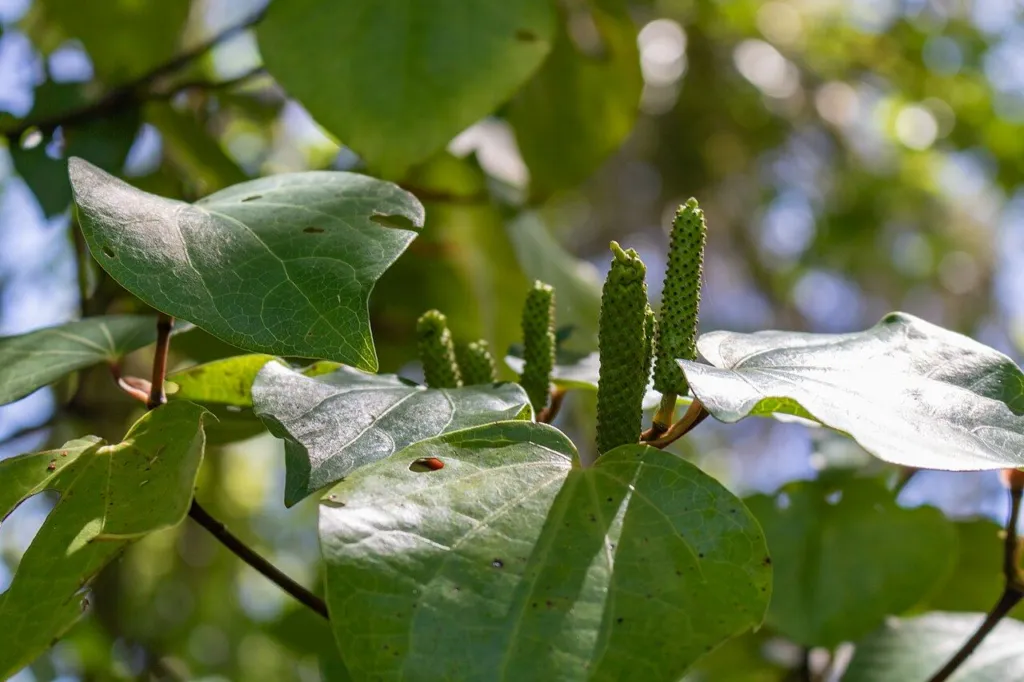
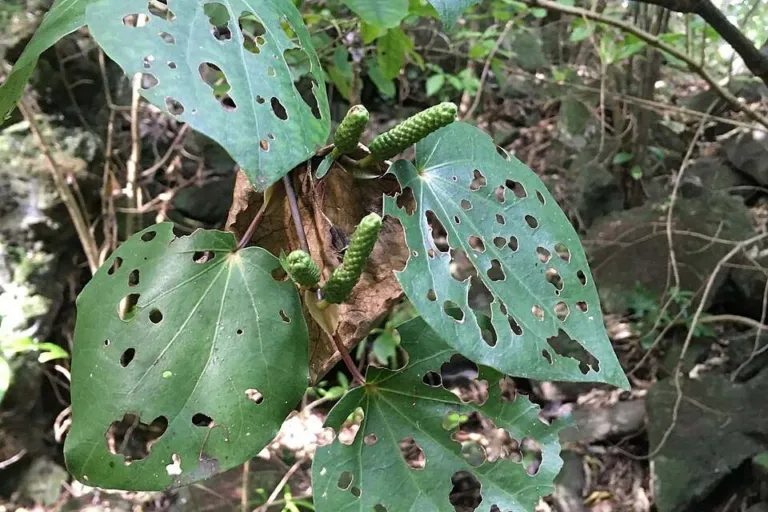
Cover: kawakawa (Piper excelsum) leaves and fruiting spikes, Brookfield Stream Reserve, Albany, Auckland. Photo: Bjankuloski06 · CC BY 4.0 · Wikimedia Commons
Across the Tasman, kawakawa is the plant New Zealanders reach for first: a leaf tea, a skin wash, a wreath at a tangi, and a plant described in the rongoā literature as a universal remedy Traditional [4]. In Australia it is almost unknown, apart from balms and teas bought online, and its name is easily mistaken for kava. It also grows wild on two Australian islands Confirmed [8].
This review introduces kawakawa properly. It covers the plant and its place in rongoā Māori, with the cultural care that goes with it; how it differs from kava; what the chemistry and the small body of human research show, with traditional use kept separate from clinical evidence; its safety and possible interactions; and where it stands under Australian law. Every substantive claim carries an evidence tag. Where we could not read a source in full, we say so.
This article is educational. It is not medical advice, and nothing in it is a recommendation to use kawakawa for any condition.
Kawakawa (Piper excelsum) is not listed in the Poisons Standard and is a permitted ingredient in listed medicines [11] [10]. It is a different plant from kava (Piper methysticum), which is Schedule 4 in therapeutic preparations outside set limits and is import-controlled; check the botanical name on any label (§5). Human safety data for kawakawa are limited to single cups of tea in healthy adults; there are no data in pregnancy, breastfeeding or children, and no interaction studies (§9). Kawakawa seed is on Australia’s Permitted Seeds List under its synonym Macropiper excelsum; imports remain subject to BICON conditions [15]. If someone is unwell after swallowing any plant material, call the Poisons Information Centre on 13 11 26, or 000 in an emergency.
| What it is | Piper excelsum G.Forst., Piperaceae; syn. Macropiper excelsum Confirmed §1 |
| Australian native? | Yes, on Lord Howe and Norfolk Islands (subsp. psittacorum) Confirmed §3 |
| Traditional use | Leaf, bark, root and fruit for toothache, wounds, skin, stomach and urinary complaints; mourning wreaths Traditional §4 |
| Relation to kava | Same genus, different species; no kavalactones reported in the leaf Confirmed §5 |
| Chemistry | 64 compounds identified in the leaf: amides (pellitorine, piperine), lignans, myristicin and elemicin, vitexin-type flavones Confirmed §6 |
| Pharmacology | Cell and mechanism studies only: TRP channels, glucose and fat uptake, inflammatory genes Mechanism §7 |
| Human evidence | Two small single-dose tea studies in healthy adults: smaller insulin rise after a meal Evidence suggests §8 |
| Safety | No toxicity signal from traditional use or a 28-day rat study; no pregnancy or interaction data Evidence suggests §9 |
| Australian law | Not in the Poisons Standard; permitted listed-medicine ingredient; three ARTG listings Confirmed §10 |
| Quality | No pharmacopoeial standard; chemistry varies widely between products Evidence suggests §11 |
- Confirmed established in humans by trial, or an unambiguous analytical, chemical or regulatory fact read at source.
- Evidence suggests real published data, but preclinical, observational, small, or not yet replicated in humans.
- Mechanism a plausible mechanistic or pharmacological inference, not an outcome.
- Traditional historical, ethnobotanical or ritual use. Evidence of practice, not of efficacy.
- Attested a documentary fact attested in a named source, such as a register, a report or a historical record.
Every PubMed ID (PMID) links to its PubMed record and was checked against PubMed in November 2026; every chemical record was checked against PubChem. Where a claim is widely repeated but could not be traced to a primary source, it is marked unsourced and left as such.
Kawakawa is a pepper-family shrub of New Zealand forests and the leading plant of rongoā Māori, used as a leaf tea, a wash and a poultice for toothache, wounds, skin complaints and stomach upsets Traditional [7]. It is a different species from kava. Its leaf contains no kavalactones in the published chemistry, and Australian law treats the two quite differently Confirmed [1] [11].
Modern chemistry has identified 64 compounds in the leaf, led by pepper-type amides, with myristicin and elemicin (the nutmeg compounds), lignans and flavones Confirmed [1]. Two small studies found that a strong cup of the tea blunted the insulin rise after a sugary breakfast in healthy adults; the glucose result did not hold up in the larger study Evidence suggests [2]. No trial has tested any traditional use.
Safety data are limited. Traditional use and a 28-day rat study raise no concern, and the nutmeg compounds in a cup are around one per cent of the amounts linked to toxic effects Evidence suggests [1] [2]. Nothing is known about pregnancy, breastfeeding, children or interactions with medicines.
In Australia kawakawa is native to Lord Howe and Norfolk Islands, is a permitted listed-medicine ingredient, is absent from the Poisons Standard, and its seed is on the Permitted Seeds List under the name Macropiper excelsum Confirmed [8] [10] [11] [15]. Anyone considering it as a medicine should consult a degree-qualified herbalist with competencies and adequate training in pharmacognosy.
 1 · Names and taxonomy
 2 · The plant
 3 · Where it grows
 4 · Rongoā Māori
 5 · Kawakawa and kava
 6 · Chemistry
 7 · Pharmacology
 8 · Human studies
 9 · Safety and interactions
 10 · Australian law
 11 · Quality
 Discussion
1. Names, identity and taxonomy
Kawakawa is Piper excelsum G.Forst., a member of the pepper family, Piperaceae. Georg Forster published the name in 1786, and for much of the twentieth century it was filed under the segregate genus Macropiper as Macropiper excelsum (G.Forst.) Miq. Most older chemistry papers, and the Australian therapeutic-goods paperwork, still use the Macropiper name. The Australian Plant Census now accepts Piper excelsum and lists Macropiper excelsum as a nomenclatural synonym Confirmed [8]. A reader searching the literature needs both names, and a buyer reading a label needs to know they mean the same plant.
The Māori names recorded in Manaaki Whenua Landcare Research’s plant-use database are kawakawa and kawa for the plant, and tākawa for the fruit Attested [7]. English-language sources sometimes add “pepper tree” or, less helpfully, “Māori kava”. The second name is the source of a confusion this review spends a whole chapter untangling (§5). A popular derivation of kawakawa from kawa, “bitter”, circulates widely; we could not trace it to a primary linguistic source, so it stays unsourced here.
Subspecies, and why they matter to Australians
The species is divided into subspecies. New Zealand botanist Peter de Lange made the current combinations in 2012, and the Australian Plant Census follows him [8]. The typical subspecies, subsp. excelsum, is the familiar kawakawa of the New Zealand mainland. Subspecies psittacorum (Endl.) de Lange is the larger-leaved island form; its basionym, Piper psittacorum Endl., was published in 1833 in Endlicher’s Prodromus Florae Norfolkicae, a flora of Norfolk Island Attested [8]. Two further subspecies, subsp. delangei and subsp. peltatum, are recognised in New Zealand. The older varietal name Piper excelsum var. majus Cheeseman is treated as a synonym of subsp. psittacorum [8].
That island subspecies is the reason this review cannot call kawakawa a foreign plant. The Australian Plant Census gives its distribution in Australia as LHI and NI: Lord Howe Island and Norfolk Island Confirmed [8]. Kawakawa is part of the native flora of two Australian islands, a fact that almost never reaches the Australian mainland, where the plant is known, if at all, from imported balms and teas (§3).
| Accepted name | Piper excelsum G.Forst. (Piperaceae) Confirmed [8] |
| Main synonym | Macropiper excelsum (G.Forst.) Miq.; the TGA ingredient name is MACROPIPER EXCELSUM VAR EXCELSUM Confirmed [10] |
| Subspecies in Australia | subsp. psittacorum (Endl.) de Lange, native to Lord Howe Island and Norfolk Island Confirmed [8] |
| Māori names | kawakawa, kawa; tākawa (fruit) Attested [7] |
| Part used | Leaf, above all; historically also bark, root and fruit Traditional [7] |
| Not to be confused with | Kava, Piper methysticum G.Forst., a different species with different chemistry and different Australian law (§5) |
2. The plant
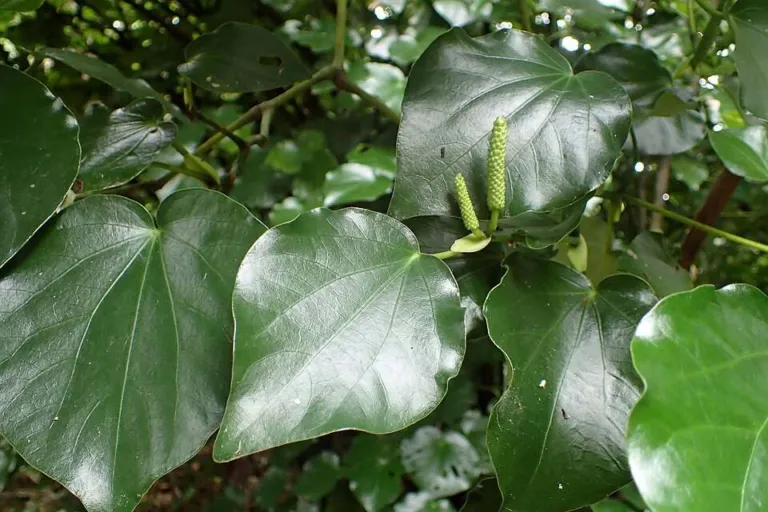
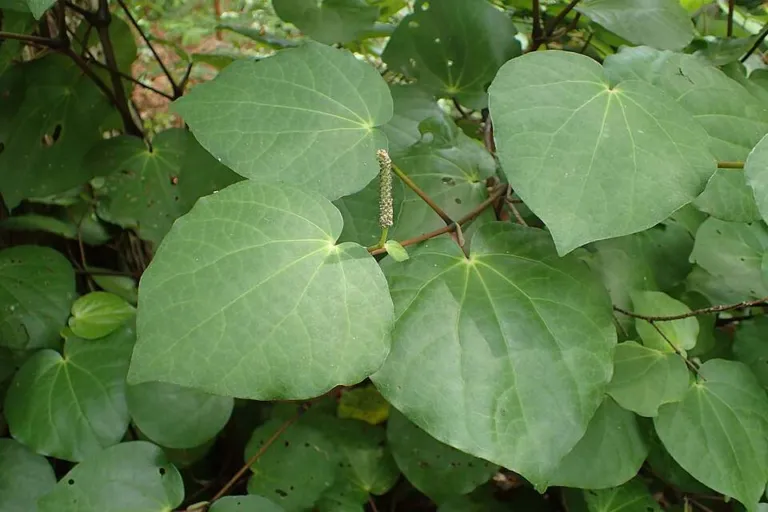
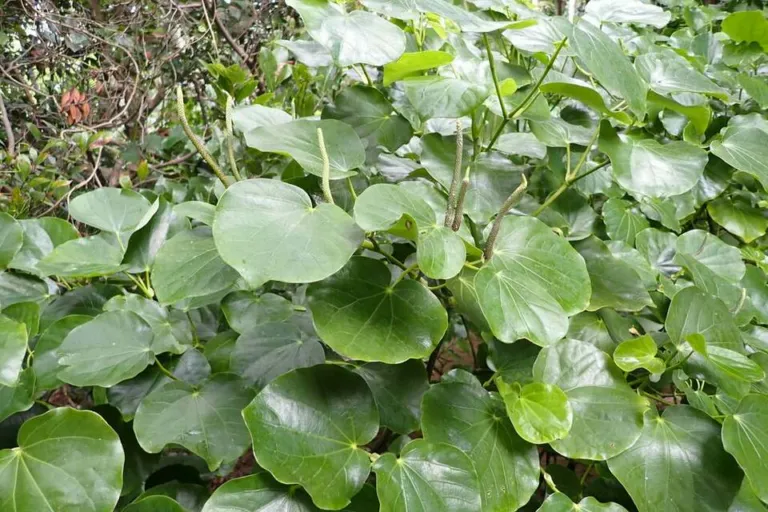
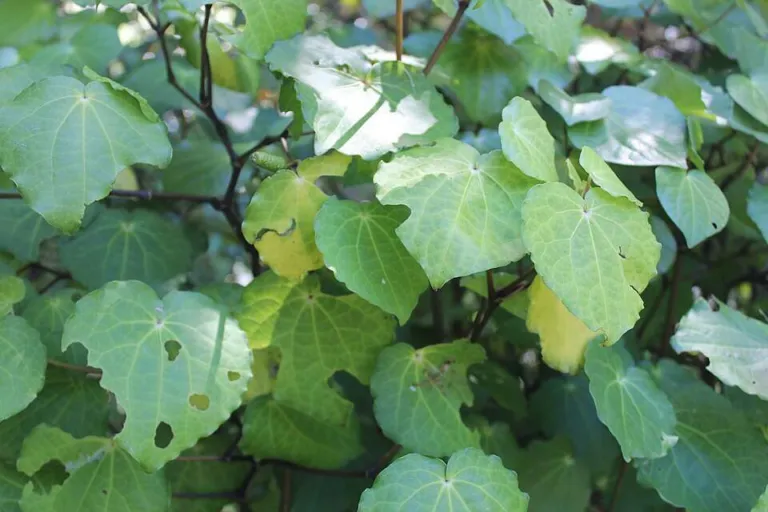
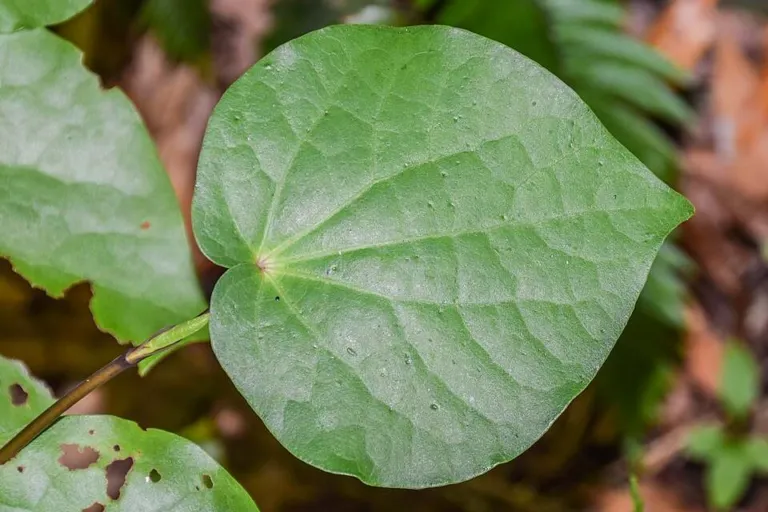
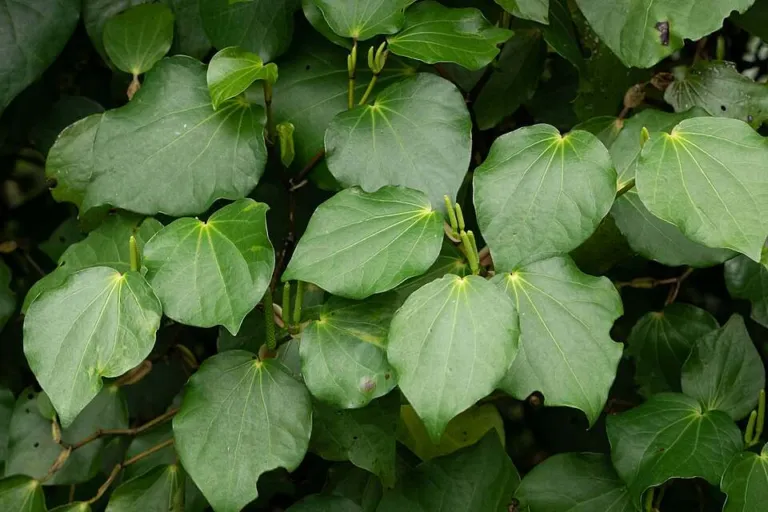
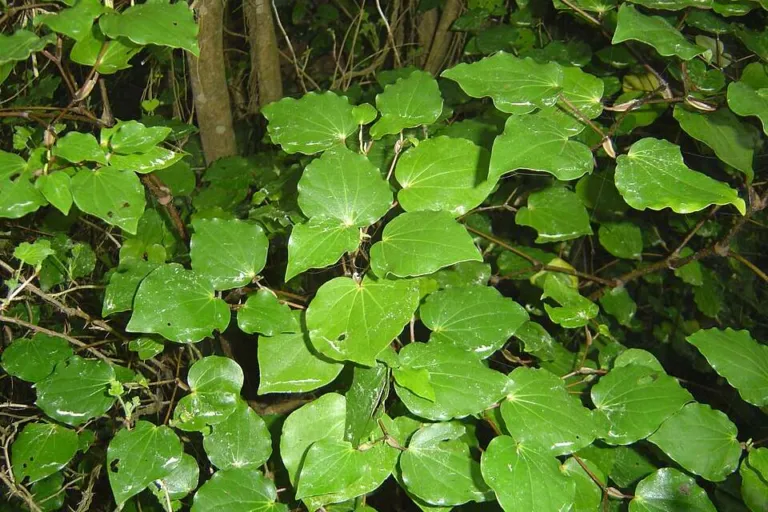
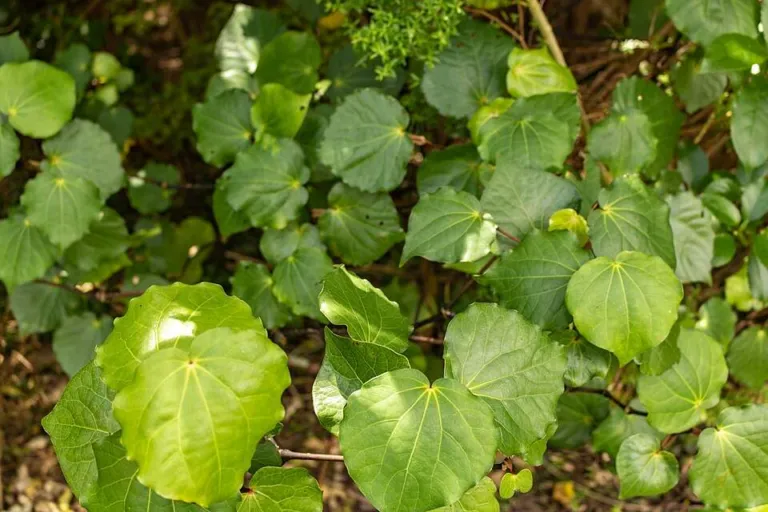
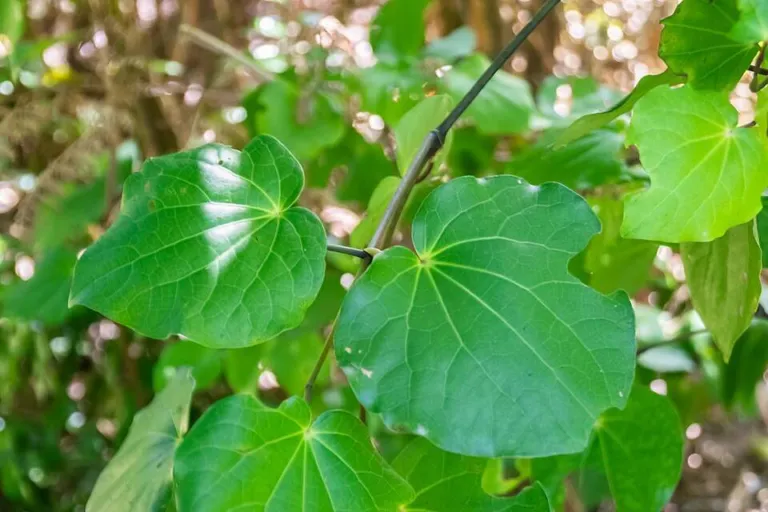
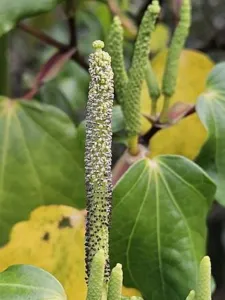
Kawakawa is an aromatic shrub or small tree of forest understorey and margins. Koia and Shepherd describe it as a small tree with heart-shaped leaves and green-yellow, rod-shaped fruiting spikes Confirmed [4]. The stems are jointed and swollen at the nodes, as in many peppers, and the leaves are broad, glossy, net-veined and pungent when crushed. In shade they are dark green; in the open they turn yellow-green.
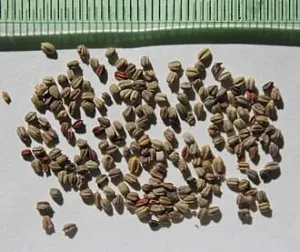
The flowers are tiny and packed onto upright spikes. After flowering the spikes thicken into fleshy, yellow to orange fruiting heads. The fruit, tākawa, was eaten. Colenso recorded in 1880 that the ripe pulp was eaten and the seeds discarded, and Taylor in 1855 compared the green fruit to Jamaica long pepper Traditional [7]. A cluster of small dark seeds sits inside each fruiting spike.
The looper and the holes in the leaves
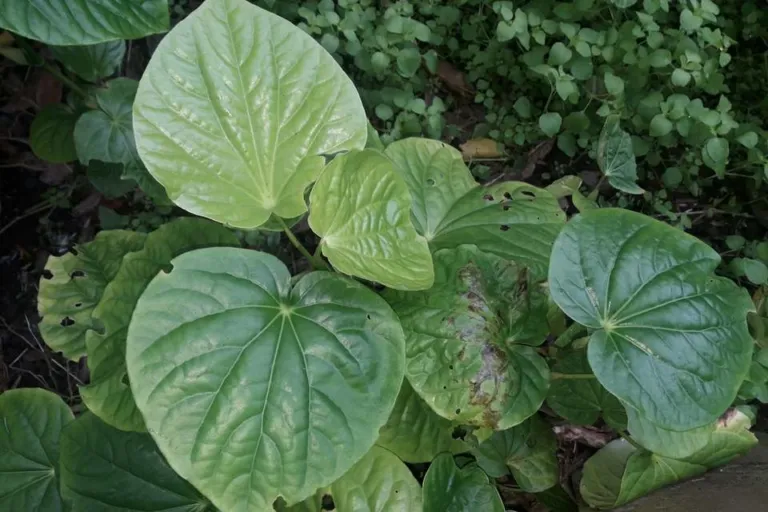
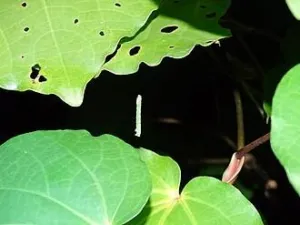
Almost every wild kawakawa bush has leaves peppered with round holes. They are made by the caterpillar of the kawakawa looper moth, Cleora scriptaria, which feeds on the plant. The University of Auckland chemists who mapped kawakawa’s chemistry noted that field and laboratory experiments found no effect of earlier looper feeding on how palatable the leaves were to later caterpillars, and that nobody has yet tested whether this grazing changes the leaf’s flavour or pharmacology Evidence suggests [1]. It is a small question with a practical edge, because wild-harvested and cultivated leaf will differ in how much they have been eaten (§11).
3. Where it grows, including Australia
In New Zealand kawakawa is common from Te Paki in the far north to Ōkārito on the West Coast and Banks Peninsula on the east. It is a plant of coastal and lowland forest, often a major understorey species, preferring semi-shade and free-draining but permanently moist soil. It tolerates heavy shade and does not tolerate frost Confirmed [4]. Those habitat notes come from Koia and Shepherd’s review, which drew on the New Zealand Plant Conservation Network.
Australian status: native on two islands
The Australian Plant Census records Piper excelsum in Australia with the distribution “LHI, NI”, carried by subsp. psittacorum Confirmed [8]. The Atlas of Living Australia holds herbarium and observation records of the subspecies from Lord Howe Island, which is part of New South Wales, and from Norfolk Island, an external territory [9]. So the plant this review introduces to Australian readers is already, in strict botanical terms, an Australian native. It is absent from the mainland flora, and we found no record of it naturalising on the mainland.
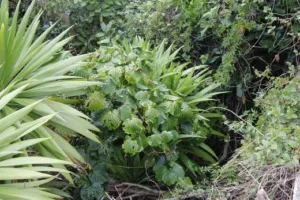
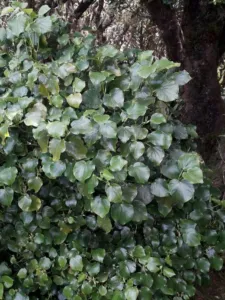
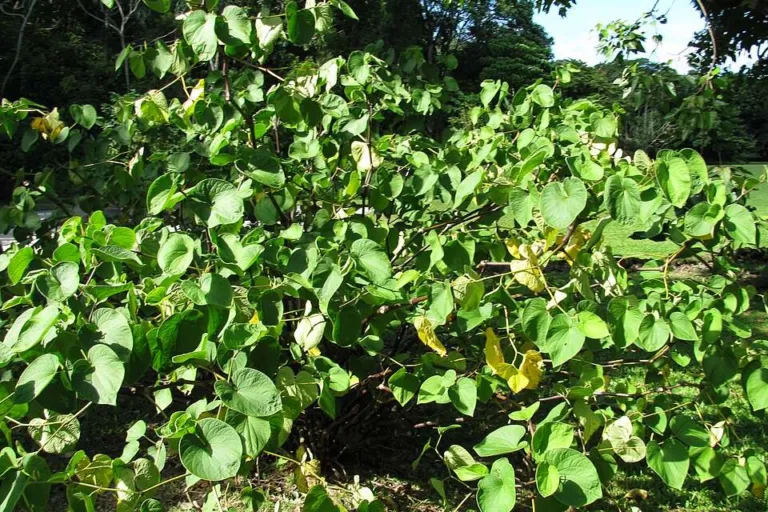
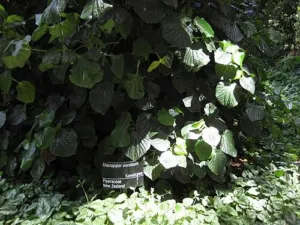
On the mainland kawakawa is a garden and botanic-garden plant. Royal Botanic Gardens Victoria has grown it in Melbourne, as the photograph below shows. Whether it would survive in the wet tropics around Cardwell is an open horticultural question: it likes shade and moisture, which we have, and it dislikes frost, which we do not have, but its natural range is temperate and we know of no trial planting in north Queensland. This review does not recommend planting it. Anyone thinking of growing it should start with nursery stock already in Australia or seed imported under BICON conditions (§10), and should check its status with Biosecurity Queensland first; we did not check the Queensland weed lists for this species for this review.
4. Kawakawa in rongoā Māori
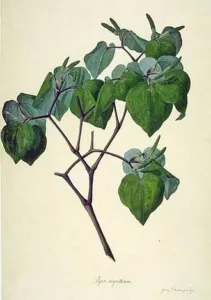
Rongoā Māori is the traditional healing system of the Māori people of Aotearoa New Zealand, and plant medicine, rākau rongoā, is one part of it [4]. Kawakawa sits near its centre. The Auckland chemists open their paper by calling the plant a taonga, a treasure, of great cultural importance to Māori Traditional [1]. Koia and Shepherd call it a universal rongoā, with leaves and bark used across a long list of conditions Traditional [4].
We write as an Australian institute about another people’s medicine, and that sets limits. This chapter reports what is written down and published. It does not teach anyone how to prepare rongoā, and it does not treat the written record as the whole of the tradition. Much of rongoā is held by practitioners (kairongoā) and passed on in person, and the published sources are mostly the observations of nineteenth- and early twentieth-century writers, many of them outsiders themselves.
What the historical record says
Manaaki Whenua Landcare Research’s Rauropi Whakaoranga database gathers the written record of Māori plant use, source by source. Its kawakawa entry is unusually long [7]. Read in order, it gives a consistent picture Traditional:
| Use | Recorded uses, with the writer and year cited in the database [7] |
|---|---|
| Leaves and bark | Poultice for neuralgia, toothache and swelling; decoction for stomach pain and gonorrhoea; used for wounds and in steam baths (Taylor 1870). Lotion for bruises (O’Carroll 1884). Skin disorders and wounds (Kerry-Nicholls 1886). Decoction for wounds and skin complaints, infusion for boils, chewed leaves for toothache (Goldie 1904; Best 1906). Juice of roasted leaves as a dressing for bad wounds (Cowan 1930). Bath for scabies, hakihaki (Smith 1940). Decoction as a tonic and for kidney trouble, and with ongaonga bark for eczema (Adams 1945). Infusion for chest troubles (Collier 1959). |
| Root | Bitter root for urinary complaints (Polack 1840). Chewed for toothache (O’Carroll 1884; Makereti 1938) and for toothache and dysentery (Goldie 1904; Best 1906). |
| Fruit | Ripe and unripe fruit described as stronger than the leaf (Baber 1887); ripe tākawa applied to a sore tooth (Kora 1941). |
| Food and drink | Leaves as a tea substitute (Dieffenbach 1843); settlers brewed a tea and a beer from the leaves (Taylor 1855); berries eaten (Colenso 1868; Best 1942); leaves used to flavour food in the hāngī (Best 1942). |
| Mourning and ceremony | Pare kawakawa, head wreaths of kawakawa, worn in mourning (Te Rangi Hīroa 1949, among others); branches used in ceremonies (Best 1942). |
| Garden | Green leaves and twigs burnt between kūmara rows, the smoke used against pests (Colenso 1868; later sources). |
Two threads run through that list. One is pain and the mouth: toothache, chewed root, leaf held against a sore tooth. The other is the skin and wounds: baths, lotions, poultices and dressings. Koia and Shepherd add that contemporary rongoā practitioners use kawakawa leaves in blends for people with type 2 diabetes, mate huka, to help with symptoms such as tiredness, skin infections and urinary infections Traditional [4]. Each of these is evidence of practice. None of it is a clinical trial, and this review keeps the two apart.
The cultural care that goes with it
Koia and Shepherd set out the principles that should govern any research harvest of rākau rongoā: harvesting and water extraction done under the direction of a kairongoā or a Māori elder (kaumātua); a karakia to acknowledge and thank Tāne Mahuta before harvest; care for others’ needs and for the forest; gentle footsteps; picking by hand from the east side of the plant; never harvesting in rain; and taking leaves during the growing season Traditional [4]. Those are the authors’ account, citing Kerridge (2014), and they are a fair starting point for anyone outside the tradition.
The wider question of who controls taonga species and the knowledge about them has been argued in New Zealand for decades. In July 2011 the Waitangi Tribunal released its report on the Wai 262 claim, Ko Aotearoa Tēnei, often called the flora and fauna claim. News coverage of the release reported that the claim concerned the Crown’s protection of Māori relationships with native plants and animals and with cultural knowledge, and that the Tribunal asked the Ministry of Health and the Department of Conservation to recognise rongoā Attested [19]. We have not read the full report for this review and say no more about its findings.
The practical point for Australian readers is simple. We know of no Australian commercial crop, so kawakawa products sold here are almost certainly made from New Zealand leaf. The recent research in §6 and §8 was done with Māori partners: Wakatū Incorporation in Te Tauihu harvested the leaves and co-funded the work, and the authors thank the whānau and kaimahi who collected “these taonga species” Attested [1] [2]. That is a reasonable model, and a buyer who cares about it can ask a supplier where the leaf came from and on whose terms.
5. Kawakawa and kava: same genus, different plants
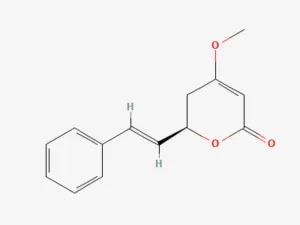
Kava is Piper methysticum G.Forst., a sterile cultivated pepper of the western Pacific propagated only from cuttings. Its drug is the peeled root and rootstock, drunk as a cold-water preparation, and its active constituents are the kavalactones such as kavain. The Institute reviewed kava in detail in its evidence review of kava and the Australian rules. Kawakawa shares the genus, the heart-shaped leaf and part of a name. Almost everything else differs.
The chemistry difference is the one that matters most. The most complete chemical map of kawakawa leaf, 64 compounds identified by mass spectrometry, contains amides, lignans, phenylpropanoids, flavonoids and simple alkaloids, and no kavalactone appears in the list Confirmed [1]. That is a statement about the leaf; nobody has published a full profile of kawakawa root. On the evidence we have, kawakawa tea is a different preparation from kava, with different constituents, and the safety record of one cannot be transferred to the other in either direction.
| Kawakawa | Kava | |
|---|---|---|
| Species | Piper excelsum G.Forst. | Piper methysticum G.Forst. |
| Part used | Leaf (historically also bark, root, fruit) | Peeled root and rootstock |
| Main constituents | Amides (pellitorine, fagaramide, piperine analogues), lignans (diayangambin), phenylpropanoids (myristicin, elemicin), flavone glycosides (vitexin) [1] | Kavalactones (kavain, methysticin, yangonin and others); flavokavains |
| Usual preparation | Hot-water leaf tea; topical balm; wash | Cold-water suspension of root; tablets, capsules |
| Poisons Standard (October 2026) | No entry [11] | Schedule 4 for human-use preparations, except listed products within set limits [11] |
| Listed medicines | Permitted ingredient, purposes A and H, no specific conditions [10] | Permitted with conditions: oral use only as tablet, capsule or tea bag; at most 250 mg kavalactones a day [10] |
| Import | Ordinary biosecurity import conditions; no drug permit | Controlled drug import; Office of Drug Control permits; 4 kg traveller exemption except in the Northern Territory [18] [17] |
Structure: PubChem, CID 5281565 · public domain (US NLM)
Structure: PubChem, CID 638024 · public domain (US NLM)
In law the gap is wide. In Australia kava is a scheduled substance when supplied in therapeutic preparations: the October 2026 Poisons Standard places Piper methysticum in Schedule 4 for human use, with exceptions for registered or listed tablets, capsules and tea bags within kavalactone limits, and for topical and dermal products Confirmed [11]. Its import is controlled under the Customs (Prohibited Imports) Regulations 1956 [18], and the Office of Drug Control administers the permits and the 4 kg personal allowance [17]. Kawakawa has none of this. The same Poisons Standard has no entry for Piper excelsum, Macropiper or kawakawa Confirmed [11]. That absence describes kawakawa’s legal position; it is not a safety assessment.
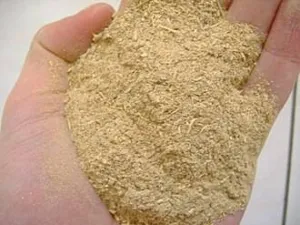
For a shopper the rule of thumb is to read the binomial. A product labelled Piper methysticum is kava, with kava’s rules, kava’s benefits and kava’s rare liver risk. A product labelled Piper excelsum or Macropiper excelsum is kawakawa. A product labelled only “Māori kava” or “kava-kava leaf” tells you too little, and a reputable supplier will tell you which plant it contains.
6. Chemistry of the leaf
Two earlier studies, by Obst and colleagues in 2017 and by Butts and colleagues in 2019, reported 24 and 21 compound features respectively in kawakawa extracts, without absolute amounts [1]. We have not read those two papers in full, and we report them only as the Auckland group describes them. The work that defines the subject now is Jayaprakash and colleagues’ 2022 study at the Liggins Institute, University of Auckland, which we have read in full [1].
They analysed hot-water extracts, made to mimic tea, and methanol extracts of leaf from eight sources: two commercial dried leaf products from the North Island, and fresh leaf harvested by Wakatū Incorporation at several sites in Te Tauihu, at the top of the South Island, across 2020 and 2021. Nine compounds were confirmed against authentic standards. Identities were assigned to 64 features in total, including isomers, and 58 of them had not been reported from the species before Confirmed [1]. This is the “more than 60 compounds” figure that appears in New Zealand press coverage.
The main classes
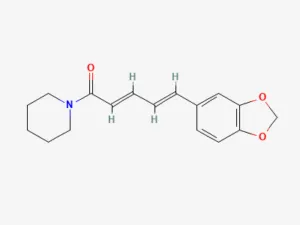
Amides dominate. Forty-six features were amides built from a cinnamoyl, methylenedioxycinnamoyl or fatty-acid part joined to an amine such as piperidine, pyrrolidine or isobutylamine Confirmed [1]. Piperine, the pungent principle of black pepper, is among them. So are pellitorine, the tingling amide also known from pellitory root, and fagaramide. The authors suggest that the same enzymes that make piperine in black pepper make this family in kawakawa Mechanism [1].
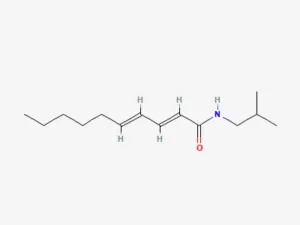
Structure: PubChem, CID 5318516 · public domain (US NLM)
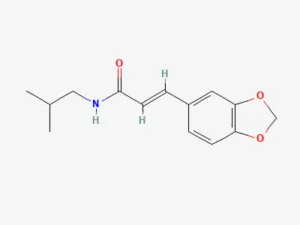
Structure: PubChem, CID 5281772 · public domain (US NLM)
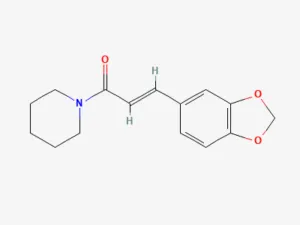
Structure: PubChem, CID 641115 · public domain (US NLM)
The lignans include diayangambin, first isolated from kawakawa by Russell and Fenemore in 1973, with its isomers yangambin and epiyangambin, and magnolin Confirmed [1] [4]. The phenylpropanoids are myristicin and elemicin, the same compounds that give nutmeg and mace their character. The flavonoids are mainly flavone C-glycosides of the vitexin type, which dominate the hot-water tea Confirmed [1] [4]. The simple alkaloids include trigonelline and, a first for the pepper family, the catecholamine dopamine Confirmed [1].
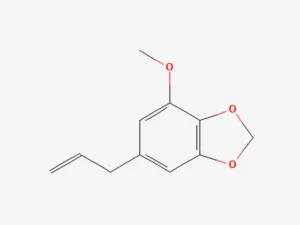
Structure: PubChem, CID 4276 · public domain (US NLM)
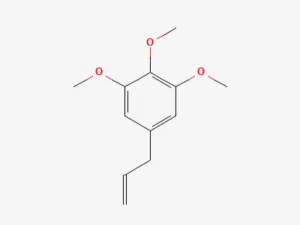
Structure: PubChem, CID 10248 · public domain (US NLM)
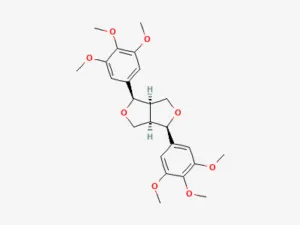
Structure: PubChem, CID 167452 · public domain (US NLM)
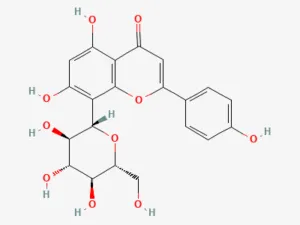
Structure: PubChem, CID 5280441 · public domain (US NLM)
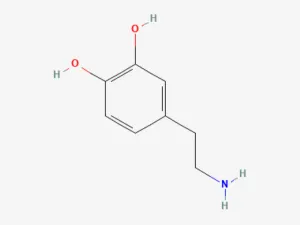
Structure: PubChem, CID 681 · public domain (US NLM)
How much is in a cup
The study measured amounts. In hot-water extracts, commercial dried leaf carried about 5.3 µmol of myristicin and 9.3 µmol of elemicin per gram, against 0.9 and 5.3 µmol per gram in fresh Te Tauihu leaf. The pattern reversed for the amides: fresh leaf yielded about 43 µmol of pellitorine per gram, more than forty times the commercial sample’s 1.0 µmol Confirmed [1]. Ilepcimide, a compound used as an antiepileptic medicine in China under the name antiepilepsirine, was estimated at about 5.7 µmol per gram, using fagaramide as a stand-in standard Evidence suggests [1].
On the authors’ figures, a gram of leaf infused in 250 mL of hot water releases up to 5.5 µmol of myristicin and 9.0 µmol of elemicin, about 1.1 mg and 1.9 mg [1]. The human trials used 4 g of dried leaf per cup (§8). Scaled up in proportion, which is our arithmetic and assumes extraction stays linear, that cup would release roughly 4 mg of myristicin and 7.5 mg of elemicin Mechanism.
Variation by source, season and drying
The study’s biggest surprise was variation. Commercial dried leaf clustered together and was richer in phenylpropanoids and flavonoids; fresh leaf was richer in amides, alkaloids and lignans; and fresh leaf from different sites and months differed more than the authors expected. Leaf from Mohua (Golden Bay) collected in spring was especially rich in phenylpropanoids and alkaloids Evidence suggests [1]. They could not say whether the cause was processing, genetics or environment, and they called for a study designed to separate them.
Drying matters too. A 2026 study of the volatile fraction found myristicin to be the most abundant volatile in fresh kawakawa leaf, and reported that both thermal drying and freeze-drying reduced key volatiles, including terpenes and aldehydes linked to its sweet, floral and fruity notes Evidence suggests [5]. The leaf in a tea bag and the leaf on the bush are chemically different materials, and any future quality standard has to say which one it describes.
7. Pharmacology: what the laboratory suggests
Kawakawa has very little pharmacology of its own. Most of what is written about how it might work is inferred from what its individual constituents do in other settings. That is a reasonable way to generate hypotheses and a poor way to predict what a cup of tea does, and every claim in this chapter carries a Mechanism or Evidence-suggests chip for that reason.
Pellitorine, TRP channels and the toothache tradition
Pellitorine activates the TRPV1 and TRPA1 ion channels, the receptors behind the heat of chilli and the sting of mustard, and has a numbing, tingling effect in the mouth Mechanism [1]. The Auckland group suggest it may contribute to the use of kawakawa for toothache in rongoā Mechanism [1]. Pellitorine at the levels measured in fresh leaf is a plausible source of the tingling a chewed leaf produces. Plausible is as far as the evidence goes: no study has tested kawakawa for dental pain.
Amides, glucose and fat uptake
Kawakawa amides, including dihydropiperlonguminine and pellitorine, altered glucose and fatty acid uptake in Caco-2 cells, a laboratory model of the gut lining, in the 2017 study by Obst and colleagues as cited by the Auckland group Evidence suggests [1] [2]. Pellitorine has also reduced lipid accumulation in cell studies at nanomolar concentrations Evidence suggests [1]. Vitexin and isovitexin, abundant in the tea, have glucose-related effects in animal and cell models of diabetes; Koia and Shepherd review that literature and map possible pathways in liver and muscle Mechanism [4]. These findings are the rationale for the human glucose studies in §8.
Inflammation
Solvent extracts of kawakawa leaf reduced the expression of the inflammatory signals IL-6 and NF-κB in human cell lines, as summarised in the Auckland chemistry paper Evidence suggests [1]. Myristicin and diayangambin have anti-inflammatory and immunomodulatory activity in separate laboratory studies cited by Ramzan and colleagues Mechanism [2]. These fit the traditional use for skin, wounds and swelling. They do not show that a balm or a wash reduces inflammation in a person.
Dopamine and the stomach
The detection of dopamine in kawakawa led the chemists to suggest that gut dopamine receptors might explain why kawakawa tea is used for upset stomachs Mechanism [1]. We treat this as a hypothesis worth testing and nothing more. The paper does not report how much dopamine reaches the gut wall from a cup, and the stated concentration needs independent confirmation before anyone builds on it.
We found no published animal study of kawakawa leaf for pain, wound healing or skin conditions, and no study of a topical kawakawa product in people. Our PubMed searches for this review, run in November 2026, returned none.
8. The human studies
For a plant with this much traditional use, the human research is very small. Four peer-reviewed papers exist, all from the same University of Auckland group, all in healthy volunteers, all of a single cup of tea. We have read three of them in full. They are careful pieces of work and they are a start.
BOKA-T and TOAST: tea before a high-glycaemic breakfast
Ramzan and colleagues ran two randomised crossover studies, registered with the Australian New Zealand Clinical Trials Registry and approved by New Zealand health and disability ethics committees Confirmed [2]. In BOKA-T, six healthy men took water, a 1 g tea or a 4 g tea (dried leaf in 250 mL of water at 75 to 80 °C) a week apart, each followed by a high-glycaemic breakfast. In TOAST, 30 healthy adults (15 men, 15 women) took water or the 4 g tea, 48 hours apart. One participant withdrew and three men were excluded for raised fasting glucose, leaving 26 in the analysis [2].
| Study | BOKA-T (pilot) | TOAST (follow-up) |
| Design | Three-arm randomised crossover | Two-arm randomised crossover |
| Participants | 6 healthy men, BMI 18 to 25 | 30 healthy adults recruited, 26 analysed |
| Tea | 1 g or 4 g dried leaf in 250 mL | 4 g dried leaf in 250 mL |
| Glucose | Lower at 60 min after 4 g tea | No difference at any time point; no difference in area under the curve |
| Insulin | Smaller rise at 60 min after both teas | Smaller rise at 60 min after 4 g tea (p = 0.01); no difference in area under the curve |
| Insulin sensitivity (Matsuda index) | No significant difference | Higher after tea (median difference 0.46, p = 0.05) |
| Blood fats | Treatment effects on all lipids | Smaller triglyceride rise after tea; area under the curve not significant (p = 0.08) |
Read plainly, the 4 g tea blunted the insulin peak an hour after a sugary breakfast in both studies. The glucose result did not replicate in the larger study, and none of the areas under the curve differed. The insulin-sensitivity result sits exactly at p = 0.05 Evidence suggests [2]. The authors are candid about the limits: healthy, lean volunteers only, a single dose, and no measure of what happens with regular drinking or in people with insulin resistance. They call for longer studies in people with metabolic disease [2].
Inflammation markers in the same volunteers
Tautuiaki and colleagues went back to blood samples from the TOAST volunteers and measured microRNAs and inflammatory genes over two hours Confirmed [3]. Nine circulating microRNAs differed after tea compared with water. The expression of the inflammatory genes IL-6 and IL-8 in white blood cells fell. Plasma IL-6 protein, however, rose over the two hours after tea, and C-reactive protein expression did not change Evidence suggests [3]. The authors read the overall pattern as anti-inflammatory; they also note that the study was a pilot, was not powered to look at sex differences, measured only targeted genes, and that small changes in plasma microRNAs are hard to interpret. We read it as an exploratory biomarker study that generates hypotheses and does not show an anti-inflammatory effect in people.
Metabolism of the tea
In BOKA-T the investigators observed that kawakawa metabolites were cleared within 24 hours, an observation reported as unpublished at the time and used to set TOAST’s 48-hour washout Evidence suggests [2]. A later paper from the group, published in Molecular Nutrition & Food Research in 2024 (doi:10.1002/mnfr.202300583), reports on the human metabolism and excretion of kawakawa leaf chemicals. The full text was not available to us when this review was written, so under the Institute’s rule we do not report its results; the paper is listed in the references as identified and not yet read.
What has not been studied
There are no controlled trials of kawakawa for any clinical outcome: not toothache, skin conditions, wounds, digestive complaints, diabetes, or anything else on the traditional list. There are no studies of repeated daily use, of topical products, or of anyone other than healthy adults. The New Zealand government’s High-Value Nutrition National Science Challenge funded the chemistry under a project to develop a kawakawa functional beverage, co-funded by Wakatū Incorporation, and one author declared a role with Wakatū’s research company Attested [1] [2]. Industry co-funding is normal for this kind of research and the papers disclose it; it is still worth knowing.
9. Safety and interactions
Kawakawa leaf has a long record of use as a tea and wash, and the Auckland chemists state that there is no evidence of toxicity from its traditional use by Māori Traditional [1]. Long use is reassuring and it is also limited evidence: it would not detect rare reactions, effects that build up slowly, or effects in pregnancy. The formal data sit on top of that record and are small.
What the formal data show
Butts and colleagues tested a commercial kawakawa tea in rats for 28 days at daily doses equivalent to up to four cups for an adult woman and found no adverse effects, as described by Ramzan and colleagues; the original paper is on our reading list and we have not read it in full Evidence suggests [2]. The two human glucose studies, which enrolled 36 healthy adults for single 4 g cups, describe no adverse effects, though they were not designed to look for them [2]. Jayaprakash and colleagues compared their measured amounts with published toxicity estimates: myristicin and elemicin from a 1 g cup came to under 1 per cent of the amounts associated with toxic or psychoactive effects, and pellitorine from a gram of leaf powder to about 3 per cent of an animal no-observed-adverse-effect level scaled to a 70 kg adult. Their figure for pellitorine from kawakawa tea, 173 µmol against 1561 µmol, is about 11 per cent of that level, the narrowest of their margins Evidence suggests [1]. They also note that New Zealand adults already take in similar amounts of elemicin and myristicin from carrots [1].
Myristicin and elemicin in context
Myristicin is the constituent people ask about, because of nutmeg. Nutmeg taken in large amounts has caused intoxication, and its phenylpropanoids, myristicin and elemicin among them, are the compounds usually discussed [1]. The amounts in kawakawa tea are milligrams. Jayaprakash and colleagues cite an estimate that psychopharmacological effects in humans begin at roughly 31 to 36 µmol per kilogram per day of myristicin, about 420 to 480 mg for a 70 kg adult Evidence suggests [1]. Even the 4 g cup, at about 4 mg on our scaling in §6, sits around one per cent of that.
Genotoxicity is a separate and open question for this whole class of compounds. Some alkenylbenzenes, estragole and methyleugenol, are genotoxic carcinogens in rodents. In a 2025 cell study, elemicin caused a weak but statistically significant rise in micronuclei at high concentrations (100 and 500 µM) without metabolic activation, while myristicin was negative up to 100 µM; the authors concluded that standard cell tests are poor at judging this class and that the potential of myristicin and elemicin is still under discussion Evidence suggests [6]. The concentrations tested are far above anything a cup of tea would put into the blood. The finding is a reason for regulators to keep watching the class, and a reason not to make a habit of very concentrated extracts until someone has studied them.
A live Australian development sits nearby. On 2 November 2026 the TGA opened a consultation on proposed changes to the Permissible Ingredients Determination that include the use of Myristica fragrans (nutmeg) during pregnancy and lactation, closing on 14 December 2026 Confirmed [14]. The consultation is about nutmeg and does not mention kawakawa. The link is chemical: myristicin and elemicin are shared constituents, and any reasoning the TGA applies to nutmeg in pregnancy will be read by anyone thinking about kawakawa in pregnancy.
- Pregnancy and breastfeeding. No human safety data exist for kawakawa in pregnancy or lactation. In the absence of data, the usual precaution applies, and it is reasonable to avoid medicinal amounts, meaning anything beyond an occasional cup of tea, during pregnancy and while breastfeeding unless a degree-qualified herbalist with competencies and adequate training in pharmacognosy advises otherwise Mechanism. Nothing is known about whether kawakawa constituents pass into breast milk. One historical source records crushed leaves rubbed on the breast to wean infants (Best 1929) Traditional [7].
- Diabetes medicines. A single 4 g cup blunted the insulin rise after a meal in healthy people [2]. Whether regular tea adds to the effect of glucose-lowering medicines has not been studied. The possibility is a Mechanism-level concern, and people on those medicines who want to drink kawakawa tea regularly should discuss it with a degree-qualified herbalist with competencies and adequate training in pharmacognosy, and keep monitoring their blood glucose as usual Mechanism.
- Medicines absorbed through the gut. Piperine increases the absorption of some other compounds, curcumin being the best-known example [1]. Kawakawa contains piperine and many piperine-like amides. No interaction study of kawakawa with any medicine has been published, and whether its amides change drug absorption or metabolism is unknown Mechanism. The question matters most for medicines with a narrow margin between an effective and a harmful dose, such as warfarin, digoxin, ciclosporin and some antiepileptic medicines, and for anyone taking those it is sensible to avoid concentrated kawakawa extracts until data exist. The leaf also contains ilepcimide, an antiepileptic medicine in China (§6); whether it is absorbed from tea in active amounts has not been studied Mechanism.
- Children. No studies in children. The trials enrolled adults only [2]. A child’s smaller body weight means a cup delivers proportionally more of each constituent per kilogram, so adult tea strengths and concentrated extracts are not appropriate for young children without advice Mechanism.
- Skin products. No published data on irritation or allergy from kawakawa balms were found. A patch test on a small area before wider use is ordinary sense with any new topical product Evidence suggests.
- Kava confusion. Kava’s rare liver toxicity belongs to kava root (§5). It does not transfer to kawakawa leaf, and kawakawa’s safety record does not transfer to kava.
We found no case reports of serious harm from kawakawa in PubMed when searching for this review. Suspected side effects from any medicine, including a herbal one, can be reported to the TGA, and anyone who has swallowed a large amount of any plant material, or who is unwell after doing so, should call the Poisons Information Centre on 13 11 26, or 000 in an emergency.
10. Australian regulatory status and availability
Therapeutic goods
Kawakawa is a permitted ingredient for listed medicines. The Therapeutic Goods (Permissible Ingredients) Determination (No. 3) 2026 includes MACROPIPER EXCELSUM VAR EXCELSUM at Schedule 1, item 3144, for use as an active ingredient or a homoeopathic preparation ingredient, with no specific requirements attached Confirmed [10]. Kava’s entry in the same instrument, by contrast, carries mandatory kavalactone limits and dose-form restrictions [10].
When we searched the Australian Register of Therapeutic Goods in November 2026, three medicines containing the ingredient appeared, all from one sponsor: a kawakawa balm (ARTG 423871), a kawakawa gut product combining kawakawa with ginger, peppermint and honey (ARTG 455526), and a herbal throat spray (ARTG 462254). All three public summaries show listed medicines with active status, each containing Macropiper excelsum var. excelsum leaf as an active ingredient Confirmed [12]. The TGA describes listed medicines as low-risk products that can contain only low-risk ingredients and make only low-level health claims; they are not individually assessed by the TGA before supply, and the sponsor self-certifies that the product meets the safety, quality and efficacy requirements Confirmed [13]. An AUST L number on a kawakawa product therefore tells you the ingredient is permitted and the sponsor has certified holding evidence for its indications. It does not mean the TGA has evaluated whether the product works.
Teas, foods and online imports
Most kawakawa reaching Australians comes as dried leaf tea bought online from New Zealand. Sold as a food, with no health claim, a tea falls under the food rules. We did not find a Food Standards Australia New Zealand record of a novel-food view on kawakawa when searching for this review. In New Zealand, the Auckland chemists record that food approval for kawakawa covers dried leaf as an infusion or as part of a seasoning Attested [1]; that is New Zealand’s position, it is overseas, and it does not apply here directly. A tea or balm sold in Australia with a therapeutic claim, such as relief of a named symptom, is a therapeutic good: unless an exemption applies it needs to be on the ARTG, and its advertising must comply with the TGA’s advertising rules.
Biosecurity: seed, plants and fresh leaf
Start with seed. The Permitted Seeds List, effective 5 November 2025, lists eleven Piper species in chapter 5, including kava and black pepper, and lists kawakawa in chapter 4 under its synonym Macropiper excelsum Confirmed [15]. The list states that subordinate taxa such as subspecies, and accepted synonyms where the department approves them, are also permitted Confirmed [15]. Seed of a permitted species can be imported under the conditions published in BICON; a species not on the list cannot be imported until conditions are developed or a permit is granted Confirmed [16]. We did not retrieve the BICON case for kawakawa seed, or for live plants or fresh leaf, for this review; anyone considering importing either should check BICON first and expect conditions. Travellers bringing dried leaf home should declare it on arrival as plant material.
Poisons and controlled-substance law
Kawakawa has no entry in the October 2026 Poisons Standard and no listing in the drug schedules of the Customs import regulations, where kava appears Confirmed [11] [18]. It is lawful to buy, possess and drink in Australia. The law’s interest begins when a product makes a therapeutic claim (TGA) or when living material crosses the border (biosecurity).
| Poisons Standard (October 2026) | No entry Confirmed [11] |
| Permissible Ingredients Determination (No. 3) 2026 | Item 3144, MACROPIPER EXCELSUM VAR EXCELSUM, purposes A and H, no specific requirements Confirmed [10] |
| ARTG (searched November 2026) | Three listed medicines from one sponsor: balm, gut product, throat spray Confirmed [12] |
| Seed import | On the Permitted Seeds List as Macropiper excelsum; import under BICON conditions Confirmed [15] [16] |
| Native status | Native to Lord Howe Island and Norfolk Island (subsp. psittacorum) Confirmed [8] |
| Food status | No FSANZ novel-food record located; New Zealand allows leaf infusion and seasoning (overseas) Attested [1] |
11. Quality, identity and adulteration
No pharmacopoeial standard for kawakawa leaf exists that we could find: no British, European or United States monograph, and no Australian or New Zealand one. Quality is in the hands of each supplier, and the published chemistry shows how far products can drift.
The Auckland work found commercial dried leaf richer in phenylpropanoids and flavonoids and poorer in amides than fresh leaf, with pellitorine more than forty times lower in the commercial sample Evidence suggests [1]. Thermal drying alters the volatile profile [5]. Season and site move the chemistry as well [1]. Two kawakawa teas on the same shelf may therefore differ several-fold in the compounds thought to matter, and the label will not tell you.
Identity
Whole dried leaf is fairly easy to recognise: broad, heart-based, net-veined, often holed by loopers, with a peppery, nutmeg-like smell. Cut and powdered leaf is harder. The obvious substitution risk in Australia is with other heart-leaved Piper species sold as herbs, and with kava, which shares a trade name. A practical identity test should combine leaf microscopy with a chromatographic fingerprint. The quantified markers from the Auckland study, pellitorine, fagaramide, myristicin, elemicin, diayangambin and vitexin, are obvious candidates for an HPLC or HPTLC method, and the absence of kavalactones would separate kawakawa from kava Mechanism [1].
| Question | What a supplier could reasonably show |
|---|---|
| Identity | Leaf macroscopy; microscopy of powdered leaf (no published reference description found); HPTLC fingerprint against authenticated leaf |
| Markers | Pellitorine and fagaramide (amides), myristicin and elemicin (phenylpropanoids), diayangambin (lignan), vitexin (flavone glycoside) |
| Exclusion test | Kavalactones (kavain, yangonin) absent; their presence suggests kava |
| Contaminants | Ordinary botanical limits: moisture, microbial load, heavy metals, pesticide residues; no kawakawa-specific limits exist |
| Records worth asking for | Harvest region and season; wild or cultivated; drying method; certificate of analysis |
The Institute has not tested any kawakawa product. The table above is a proposal for what a quality specification could contain.
Discussion: conclusions, hypotheses and research still required
What the evidence supports
Kawakawa is Piper excelsum, a pepper distinct from kava in species, part used, chemistry and Australian law Confirmed [8] [1] [11]. Its leaf is chemically rich, dominated by amides, with lignans, phenylpropanoids, flavone glycosides and simple alkaloids, and the profile varies a great deal with source, season and drying Confirmed [1] [5]. It has a long, well-documented place in rongoā Māori for pain, the mouth, the skin and wounds Traditional [7] [4]. A single 4 g cup of the tea blunted the post-meal insulin rise in healthy adults in two small studies Evidence suggests [2]. On the measured amounts, the phenylpropanoids in a cup are a small fraction of the levels associated with toxicity Evidence suggests [1]. In Australia kawakawa is a native of Lord Howe and Norfolk Islands, a permitted ingredient in listed medicines, absent from the Poisons Standard, and on the Permitted Seeds List under its older name Confirmed [8] [10] [11] [15].
Hypotheses, clearly labelled
Pellitorine and related amides acting on TRP channels may explain the numbing used for toothache Mechanism. Vitexin-type flavones and the amides may underlie the insulin result, through gut glucose handling or insulin sensitivity Mechanism. The anti-inflammatory gene changes in white blood cells may reflect a real effect, or may be noise in a small pilot; the rise in plasma IL-6 argues for caution Mechanism. The island subspecies psittacorum, larger-leaved and growing on Australian soil, may differ chemically from mainland New Zealand kawakawa; nobody has analysed it Mechanism. Our own guess, which is only that, is that fresh-leaf preparations used in rongoā, rich in amides, behave differently from commercial dried tea, rich in phenylpropanoids, and that the human studies so far describe the second more than the first.
Where research should begin
- Botany and taxonomy: vouchered collections of subsp. psittacorum from Lord Howe and Norfolk Islands, lodged in Australian herbaria, with leaf anatomy described for identification of powdered material.
- Phytochemistry: a quantitative comparison of subsp. psittacorum with subsp. excelsum, using the Auckland markers; and a designed study separating genotype, site, season, herbivory and drying as causes of variation.
- Quality analysis: a validated HPTLC or HPLC identity and assay method (pellitorine, myristicin, elemicin, vitexin, diayangambin, with kavalactones as an exclusion test), then a market survey of kawakawa teas and balms sold to Australians.
- Pharmacology: a test of whether kawakawa leaf extracts or their amides change the absorption or metabolism of common medicines in gut-cell and liver-enzyme models, given the piperine precedent.
- Clinical research: an ethics-approved randomised trial of daily kawakawa tea over several weeks in adults with insulin resistance, with glucose, insulin and safety outcomes; and a small, carefully designed study of a topical preparation for a defined skin complaint, co-designed with rongoā practitioners.
- Toxicology: repeated-dose data on concentrated extracts, which are where myristicin and elemicin exposure could become meaningful, and reproductive toxicity data, since none exist.
- Ethnobotany and ethics: research on rongoā kawakawa led by Māori researchers and practitioners, on Māori terms, with benefit-sharing agreed before commercial use; Australian work on the island subspecies should involve the Lord Howe and Norfolk Island communities.
- Regulatory science: a check of the BICON cases for kawakawa seed, live plants and fresh leaf, and of Queensland weed lists, before any Australian cultivation is proposed.
Kawakawa deserves to be better known in Australia: it is our neighbour’s best-loved medicinal plant, and it grows wild on two of our own islands. The evidence for its traditional uses is mostly the evidence of long practice, and the clinical science has only begun. Anyone considering kawakawa as a medicine, especially in pregnancy, with children, or alongside prescribed medicines, should consult a degree-qualified herbalist with competencies and adequate training in pharmacognosy.
About AIP and this series
The Australian Institute of Pharmacognosy is a clinic and research laboratory in Cardwell, far north Queensland, studying medicinal plants and natural products to the same evidentiary standard as any other branch of pharmacology: traditional knowledge taken seriously, and tested honestly. Literature Reviews and Critical Analyses grade every substantive claim by the kind of evidence behind it. We would rather tell you a claim is unsourced than repeat it.
More from the Institute: australian-pharmacognosy.org · the Journal · related reviews: Kava (Piper methysticum): Australian rules, safety, evidence, Guayusa (Ilex guayusa), Rosella (Hibiscus sabdariffa). Follow the series on the Journal for the next review.
Found an error, or a source we have missed? Write to the Institute at our contact form and the Secretary will pass it to the author. Corrections are made openly.
Head of Education and Research
Australian Institute of Pharmacognosy
Cardwell QLD, Australia
australian-pharmacognosy.org · our contact form
Ridley T. Kawakawa (Piper excelsum G.Forst.): an evidence-graded introduction. AIP Literature Review and Critical Analysis AIP-LR-PIPEXC. Cardwell (QLD): Australian Institute of Pharmacognosy; 2026.
Educational content only; not medical, legal or regulatory advice. Regulatory information reflects the instruments and registers as read in November 2026 and may change.
References
19 references, tap to open
- Jayaprakash R, Ramzan F, Miles-Chan JL, Foster M, Mithen RF, Pook C. Exploring the chemical space of kawakawa leaf (Piper excelsum). Nutrients. 2022;14(23):5168. doi:10.3390/nu14235168. PMID 36501198. Open access; read in full.
- Ramzan F, Jayaprakash R, Pook C, Foster M, Miles-Chan JL, Mithen R. Acute effects of kawakawa (Piper excelsum) intake on postprandial glycemic and insulinaemic response in a healthy population. Nutrients. 2022;14(8):1638. doi:10.3390/nu14081638. PMID 35458200. Open access; read in full.
- Tautuiaki S, Gojer J, Jayaprakash R, Sharma P, Pook C, Foster M, Miles-Chan J, Mithen R, Ramzan F. Anti-inflammatory effects of kawakawa (Piper excelsum): an integrative mRNA-miRNA approach. Food Sci Nutr. 2024;12(11):8858-8869. doi:10.1002/fsn3.4450. PMID 39619950. Open access; read in full.
- Koia JH, Shepherd P. The potential of anti-diabetic rākau rongoā (Māori herbal medicine) to treat type 2 diabetes mellitus (T2DM) mate huka: a review. Front Pharmacol. 2020;11:935. doi:10.3389/fphar.2020.00935. PMID 32694996. Open access; read in full.
- Ham EE, Subbaraj A, Deb-Choudhury S, Burrow K, Morton JD, Torrico DD, O’Connor C, Smith K, Realini CE. Effect of thermal and freeze-drying on the volatile composition of mountain horopito (Pseudowintera colorata) and kawakawa (Piper excelsum). J Food Sci. 2026;91(8):e71380. doi:10.1111/1750-3841.71380. PMID 42629607. Open access; read in full.
- Eisenreich A, Wittek L, Sagmeister M, Kruse M, Krüger J, Sachse B, Menz J, Götz ME, Schäfer B. Comparative analysis of estragole, methyleugenol, myristicin, and elemicin regarding micronucleus formation in V79 cells. Molecules. 2025;30(4):806. doi:10.3390/molecules30040806. PMID 40005118. Open access; read in full.
- Manaaki Whenua Landcare Research. Rauropi Whakaoranga (Māori plant use database): Macropiper excelsum, kawakawa. Database record. Read November 2026. Historical sources as cited in the record.
- Council of Heads of Australasian Herbaria. Australian Plant Census: Piper excelsum G.Forst. and Piper excelsum subsp. psittacorum (Endl.) de Lange, APC Dist. LHI, NI. APC version published 02/11/2026. Read November 2026.
- Atlas of Living Australia. Occurrence records for Piper excelsum subsp. psittacorum (Lord Howe Island, Norfolk Island). Read November 2026.
- Therapeutic Goods (Permissible Ingredients) Determination (No. 3) 2026 (Cth). Federal Register of Legislation F2026L01382. Schedule 1, item 3144 (MACROPIPER EXCELSUM VAR EXCELSUM, purposes A, H) and item 3937 (PIPER METHYSTICUM). Read November 2026.
- Therapeutic Goods (Poisons Standard—October 2026) Instrument 2026 (Cth). Federal Register of Legislation F2026L01327, in force from 30/09/2026. Schedule 4 entry PIPER METHYSTICUM; searched for Piper excelsum, Macropiper and kawakawa (no entry). Read November 2026.
- Therapeutic Goods Administration. Australian Register of Therapeutic Goods, public summaries: ARTG 423871, ARTG 455526, ARTG 462254. Searched November 2026.
- Therapeutic Goods Administration. Listed medicines. Read November 2026.
- Therapeutic Goods Administration. Consultation: 2026-2027 proposed changes to the Permissible Ingredients Determination, low-negligible risk. Opened 2 November 2026, closes 14 December 2026. Consultation page read November 2026; consultation document not read.
- Department of Agriculture, Fisheries and Forestry. Permitted Seeds List, chapters 4 (genera H to M) and 5 (genera N to P), effective 5 November 2025. Read November 2026.
- Department of Agriculture, Fisheries and Forestry. Importing seeds for sowing. Read November 2026.
- Office of Drug Control. Kava. Read by the Institute in September 2026.
- Customs (Prohibited Imports) Regulations 1956 (Cth), regulation 5, Schedule 4 item 112B, and regulation 5F. Read by the Institute in September 2026.
- Radio New Zealand. Wai 262 report presented at marae ceremony. 2 July 2011. Read November 2026.
Identified but not read in full (so not relied on for any finding in this review): Jayaprakash R, et al. Human metabolism and excretion of kawakawa (Piper excelsum) leaf chemicals. Mol Nutr Food Res. 2024;68(6):e2300583. PMID 38389156. Butts CA, et al. Composition and safety evaluation of tea from New Zealand kawakawa (Piper excelsum). J Ethnopharmacol. 2019;232:110-118. PMID 30572092 (its findings are reported here only as described in references 1 and 2). Obst K, et al. Sensory active piperine analogues from Macropiper excelsum. Phytochemistry. 2017;135:181-190. PMID 28065397 (as described in references 1 and 2). Lei J, et al. Cytotoxic amides from fruits of kawakawa, Macropiper excelsum. Planta Med. 2015;81:1163-8. PMID 26039266. McIntosh B, Barnes J. Rokoā (Rongoā) Māori in primary care: supporting safe use alongside prescribed medicines. J Prim Health Care. 2026;18(3):298-301. PMID 42778170.
Every PMID was checked against PubMed in November 2026.
Image credits
Photographs were resized and recompressed for the web; no other changes were made.
- Kawakawa leaves and fruits, Brookfield Stream Reserve.jpg · Bjankuloski06 · CC BY 4.0
- Macropiper excelsum kz3.jpg · Krzysztof Ziarnek, Kenraiz · CC BY-SA 4.0
- Macropiper excelsum kz9.jpg · Krzysztof Ziarnek, Kenraiz · CC BY-SA 4.0
- Piper excelsum flower spikes 20250701 153036.jpg · Prosperosity · CC0
- Piper excelsum seeds, by Omar Hoftun.jpg · Omar hoftun · CC BY-SA 4.0
- Cleora scriptaria larva2 by Mark Tutty.jpg · Mark Tutty · CC BY-SA 4.0
- Piper psittacorum (Lord Howe Island NSW 2898, Australia) · Leon Perrie · CC BY 4.0 · iNaturalist
- Piper excelsum (Norfolk Island (Mt Pitt), NF) · Stella Fish · CC BY 4.0 · iNaturalist
- Piper psittacorum (Lord Howe Island, Lord Howe Island, AU-NS, AU) · naturewatchwidow · CC BY 4.0 · iNaturalist
- Gardenology.org-IMG 0084 rbgm10dec.jpg · Raffi Kojian · CC BY-SA 3.0
- Kawakawa leaves with predation.jpg · Tim McNamara · CC BY 4.0
- MacropiperExcelsum.jpg · Sydney Parkinson · Public domain
- Starr-091104-1009-Piper methysticum-habit-Kahanu Gardens NTBG Kaeleku Hana-Maui (24619724509).jpg · Forest and Kim Starr · CC BY 3.0 us
- Kava-powder-from-vanuatu-ready-to-mix-with-water.jpg · Ib0ga · CC BY-SA 3.0
- Leaf of Macropiper excelsum.jpg · Krzysztof Golik · CC BY-SA 4.0
- Kawakawa.jpg · Judi Lapsley Miller · CC BY 4.0
- Kawakawa leaves.jpg · Alan Liefting at English Wikipedia · Public domain
- Kawakawa, Brookfield Park.jpg · Bjankuloski06 · CC BY 4.0
- Piper psittacorum (Norfolk Island (Mt Pitt), NF) · naturewatchwidow · CC BY 4.0 · iNaturalist
- Kawakawa Piper excelsum at Withiel Thomas.jpg · Samuel Brown · CC BY 4.0
- Piper excelsum in Abel Tasman NP (2).jpg · Krzysztof Golik · CC BY-SA 4.0
- Chemical structure depictions: PubChem, US National Library of Medicine (CIDs as captioned), public domain.
The Institute sets and publishes its own monographs. The catalogue is in Publications.