

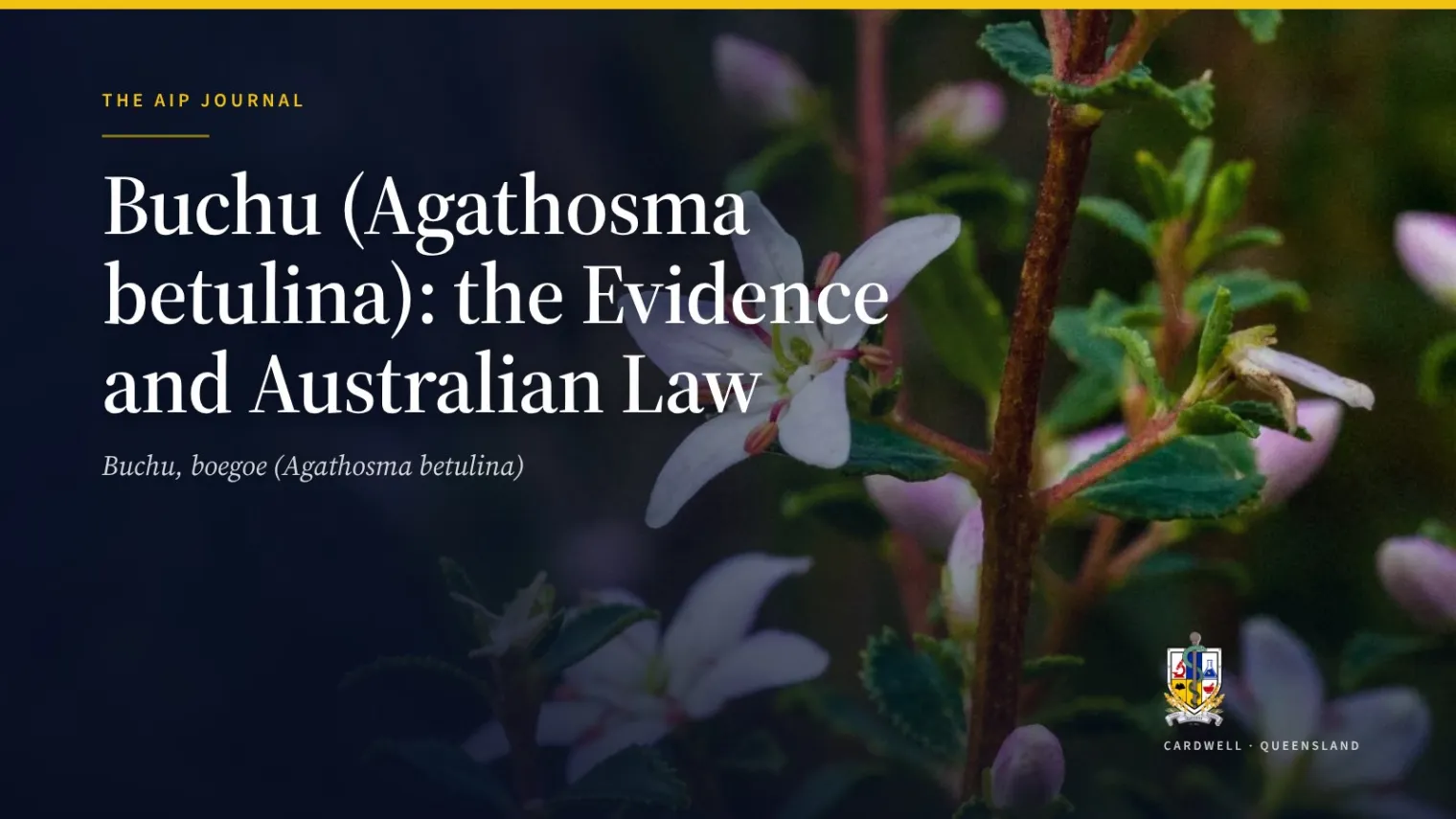
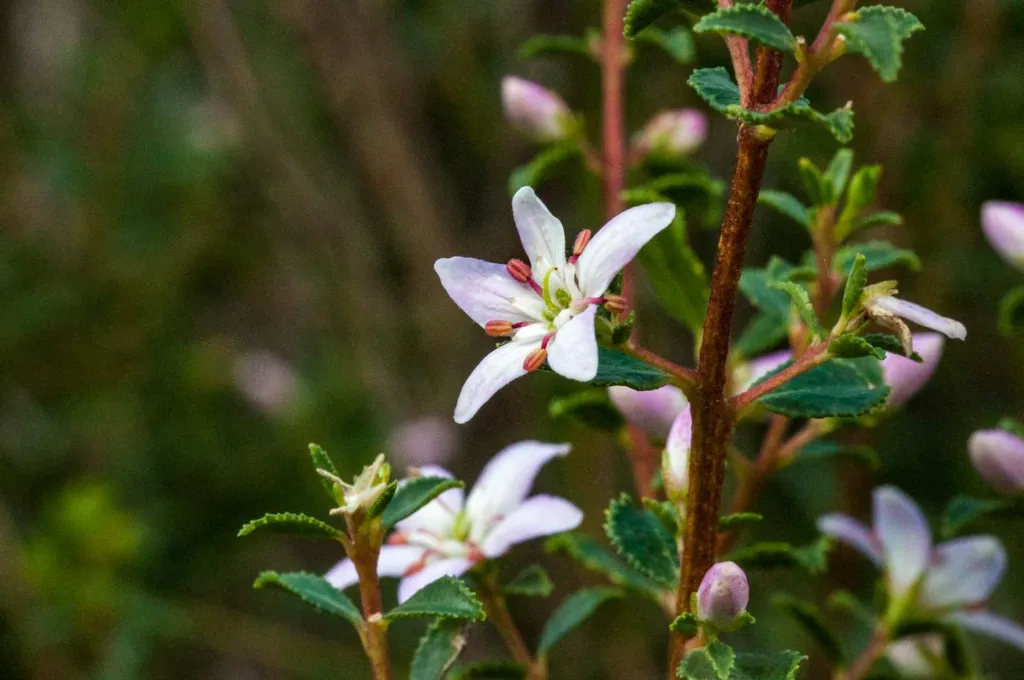
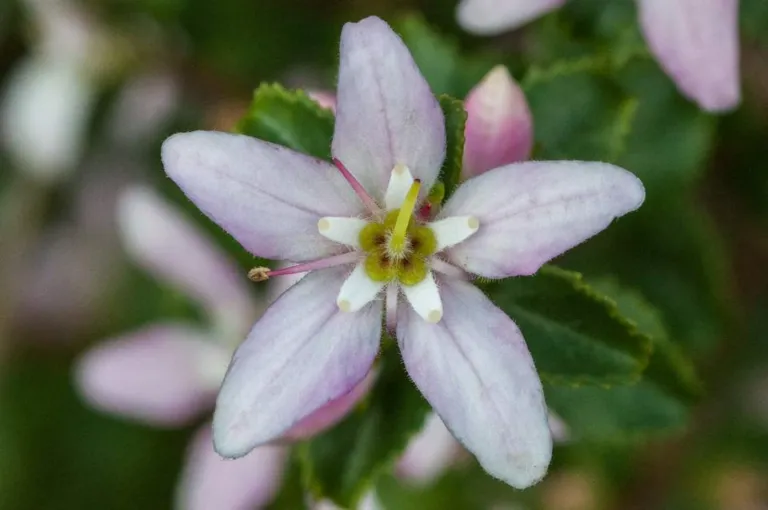
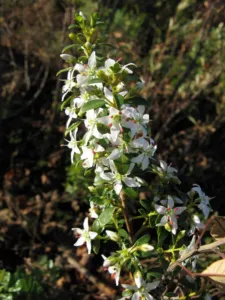
Cover: round buchu in flower on the Uitkyk river walk, Cederberg, Western Cape. Photo: Margriet B. · CC BY-SA 4.0 · Wikimedia Commons
Crush a leaf of round buchu and the smell is blackcurrant, mint and something sharper underneath. The Khoi and San of the south-western Cape were using the leaves to perfume and anoint the body, and as medicine, long before any European wrote the word down Traditional [1]. By 1865 an extract of the same leaf was the best-selling patent medicine in the United States Attested [1]. No controlled trial of buchu taken by mouth has ever been published Confirmed [1].
Most Australians have never heard of buchu. Those who meet it now usually meet it as a line on the label of an imported “kidney” or “bladder” blend bought online, or as a flavour and fragrance oil. This review introduces the plant properly: where it grows, who used it first and how, how it travelled into the British and American pharmacopoeias and out again, what chemists have found in the leaf, what the laboratory and animal studies show, and how little has been tested in people. It gives the one piece of chemistry a buyer most needs to understand, the difference in pulegone between Agathosma betulina and its look-alike A. crenulata, and it sets out where buchu stands under Australian law as read in October 2026.
This article is educational. It is not medical advice, and nothing in it is a recommendation to take buchu for any condition.
Status. Buchu leaf is not scheduled in the Poisons Standard and is a permitted ingredient in listed medicines. Its constituent d-pulegone is Schedule 6 in preparations containing more than 4 per cent, and the Permissible Ingredients Determination caps pulegone at 4 per cent of any listed medicine containing A. betulina Confirmed [16, 17].
Who should take particular care. Pregnancy and breastfeeding, children, liver disease, kidney disease, and anyone taking diuretics or lithium. The concentrated essential oil is a different material from the leaf and is not for internal use. See Safety and interactions.
A urinary infection is not a self-treatment problem. Burning or stinging that has not settled within a day or two, fever, pain in the back or side, blood in the urine, any urinary symptom in pregnancy, and any urinary symptom in a child all need prompt clinical assessment and a urine test. Before taking any botanical drug, consult a degree-qualified herbalist with competencies and adequate training in pharmacognosy.
If someone is unwell after swallowing buchu oil or any herbal product: call Triple Zero (000) in an emergency, or the Poisons Information Centre on 13 11 26 (24 hours, Australia-wide).
| Plant | Agathosma betulina (P.J.Bergius) Pillans, Rutaceae (the citrus family). Round buchu, boegoe. Older name Barosma betulina. Confirmed §1 |
| Where it grows | Endemic to the mountain fynbos of the south-western Cape, South Africa. Not native or naturalised in Australia. Confirmed §2 |
| Part used | The dried leaf; commercially also the steam-distilled leaf oil. Confirmed §4 |
| Traditional use | Khoi and San: perfume, anointing, ritual and medicine. Later Western use for the bladder and urinary tract, and digestion. Traditional §3 |
| Main constituents | Essential oil with isomenthone, menthone, limonene, diosphenol, pulegone and a blackcurrant-smelling sulfur compound; flavonoids rutin, diosmin, hesperidin. Confirmed §5 |
| Laboratory and animal work | Weak antimicrobial activity in the dish; anti-inflammatory and analgesic signals; metabolic effects in rats from one group. Evidence suggests §7 |
| Human evidence | No published controlled trial of oral buchu; none registered. Confirmed §8 |
| The species question | A. crenulata oil can carry roughly 50 per cent pulegone against about 3 per cent in A. betulina. Confirmed §6 |
| Australian law | Herb unscheduled; pulegone capped at 4 per cent of the medicine; leaf oil allowed only as a flavour or fragrance excipient. Confirmed §10 |
- Confirmed: established in humans by trial, or an unambiguous analytical, chemical or legal fact.
- Evidence suggests: real published data, but laboratory, animal, observational, small or not yet replicated in people.
- Mechanism: a plausible pharmacological inference from the chemistry, not an observed outcome.
- Traditional: historical, ethnobotanical or ritual use. Evidence of practice, not of efficacy.
- Attested: a documentary fact attested in a named historical or official source.
Every PubMed ID (PMID) links to its PubMed record and was checked against PubMed in October 2026; every chemical structure links to its PubChem record. Where a claim is widely repeated but could not be traced to a primary source, it is marked unsourced and left that way.
Buchu is the leaf of a small aromatic shrub that grows wild only in the mountains of the south-western Cape. The Khoi and San used several fragrant plants under that name, for scent, ritual and medicine, and the knowledge is theirs Traditional [1]. Settlers carried it to Europe; it entered the Dublin Pharmacopoeia in 1826 and the United States Pharmacopeia in 1842, then left both the American and British official books in the twentieth century as antibiotics arrived Attested [1].
The leaf oil is well characterised chemically, and that is where most of the modern trade sits: flavour and fragrance Confirmed [1, 2]. The pharmacology is thin. Extracts inhibit bacteria in the dish only at milligram-per-millilitre concentrations, far from anything used in practice, and the water and alcohol extracts that people actually take showed no effect on E. coli at all Evidence suggests [1]. Animal studies of a by-product called “buchu water” report effects on blood sugar, weight and blood pressure, but come from one research group and remain unreplicated Evidence suggests [1].
No controlled trial of buchu taken by mouth has been published, and none is registered Confirmed [1]. The traditional urinary use is a record of practice, which is worth keeping, and it is not evidence that buchu treats infection Traditional.
The one thing a buyer most needs to know is chemical. A. betulina oil carries a few per cent of pulegone, a compound toxic to the liver in large doses. Its close relative A. crenulata, sold under the same common name, can carry around half its oil as pulegone Confirmed [1, 2]. Australia deals with this neatly: pulegone must be present in a listed medicine containing A. betulina, and capped at 4 per cent Confirmed [16]. A water infusion carries far less of the oil than a tincture or the neat oil Mechanism [1].
 1 · Names and identity
 2 · The plant and where it grows
 3 · Khoi and San heritage, and the road to the pharmacopoeias
 4 · From leaf to oil: the modern trade
 5 · What is in the leaf
 6 · Two buchus: species, chemotype and pulegone
 7 · In the laboratory and in animals
 8 · In people: the clinical evidence
 9 · Safety and interactions
 10 · Buchu in Australia
 11 · Quality, substitution and adulteration
 D · Discussion and research still required
1. Names and identity
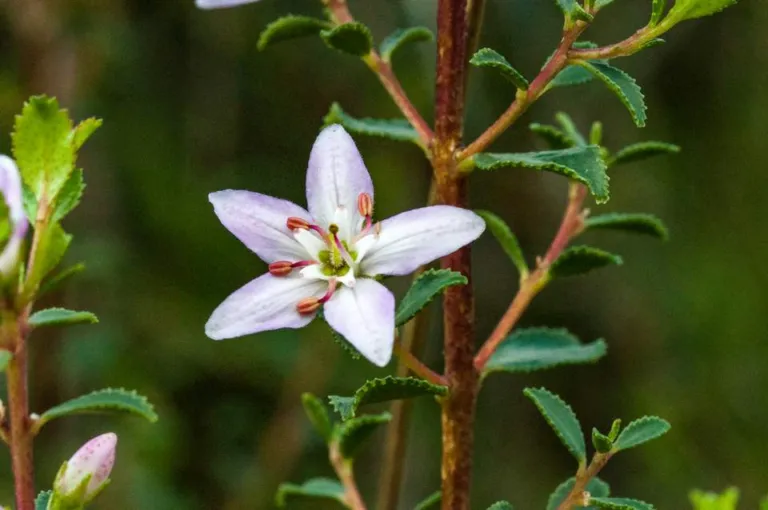
The accepted name is Agathosma betulina (P.J.Bergius) Pillans, in the citrus family, Rutaceae. Bergius described the plant in 1767 as Hartogia betulina; Pillans moved it to Agathosma in 1950 Confirmed [27]. For most of the nineteenth and twentieth centuries it was Barosma betulina, and that is the name in the old pharmacopoeias, in many herbal texts still in print, and behind the Latin drug name Barosmae folium Attested [13, 27]. The epithet betulina is Latin for birch-like.
The common names are buchu, round buchu, short buchu and, in Afrikaans, boegoe. The settler records spell the word a dozen ways: boggoa, bucku, bookoo, buku and more, all attempts to write a Khoekhoe word Attested [1]. That word did not name one species. The Khoi and San applied it to a range of aromatic plants used for anointing and scenting the body, which is why so many unrelated shrubs carry it today Traditional [1, 13].
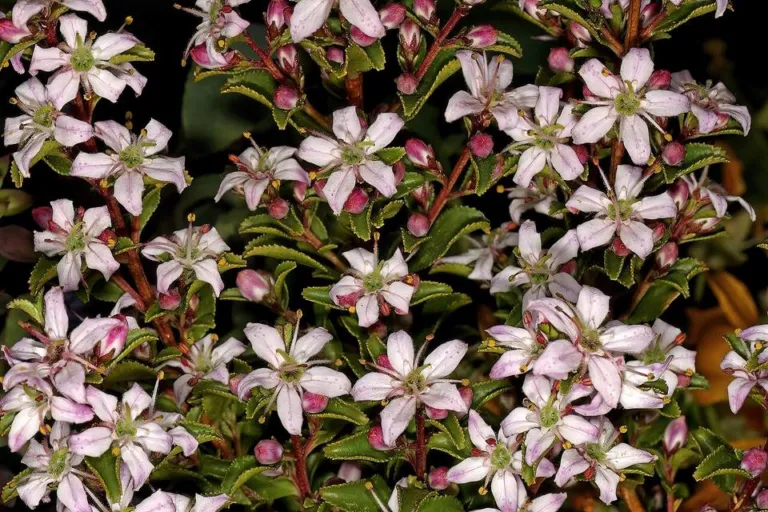
This matters more than it might seem. “Buchu” on a label, without a binomial, does not identify a plant. Two species dominate commerce: A. betulina, round buchu, and A. crenulata (L.) Pillans, oval buchu. A third, A. serratifolia, long buchu, was compendial in the nineteenth century Confirmed [15, 27]. The two main species share the same small part of the Cape and hybridise where they are grown together Evidence suggests [13]. The old synonymy adds a trap of its own: Diosma crenata G.Lodd. is a synonym of A. betulina, while Diosma crenulata L. is the basionym of the other species, so a nineteenth-century author writing “Diosma crenata” without an authority leaves the reader guessing which plant was in the jar Confirmed [27].
| Name | What it refers to |
|---|---|
| Agathosma betulina (P.J.Bergius) Pillans | Round or short buchu. The accepted name of the subject of this review. Confirmed |
| Barosma betulina (P.J.Bergius) Bartl. & H.L.Wendl. | Homotypic synonym; the pharmacopoeial name of the 1800s and 1900s. Confirmed |
| Agathosma crenulata (L.) Pillans | Oval buchu: a separate species, traded under the same common name. Confirmed |
| Agathosma serratifolia (Curtis) Spreeth | Long buchu: a third species, compendial in the nineteenth century. Confirmed |
| “Wild buchu”, “anise buchu” | Usually Diosma species or other Agathosma; substitutes when true buchu could not be obtained. Attested |
Names were checked against the Kew World Checklist of Vascular Plants and the International Plant Names Index by the Institute in September and October 2026 [27].
2. The plant and where it grows
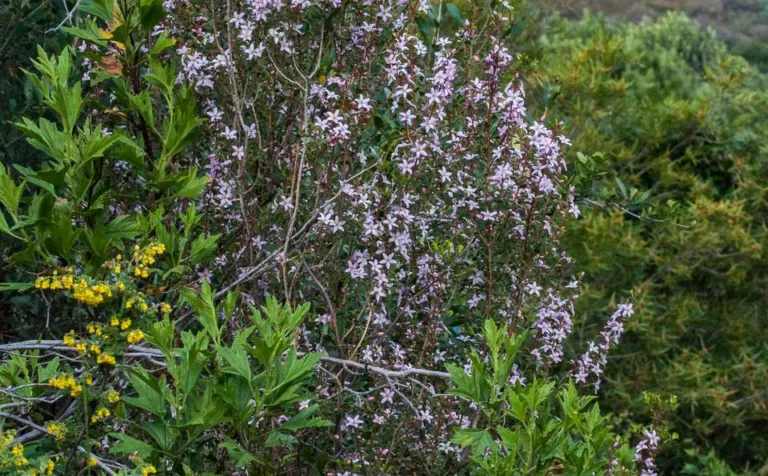
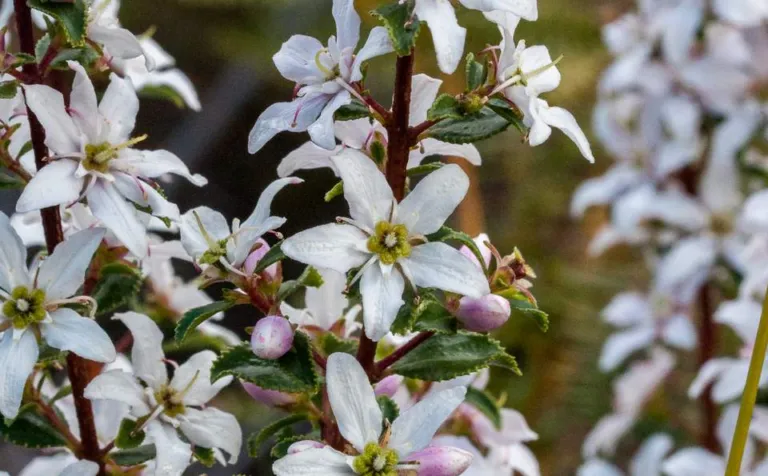
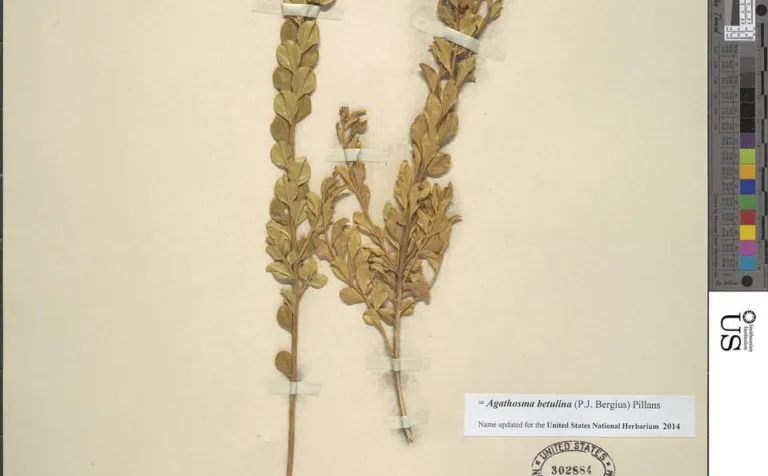
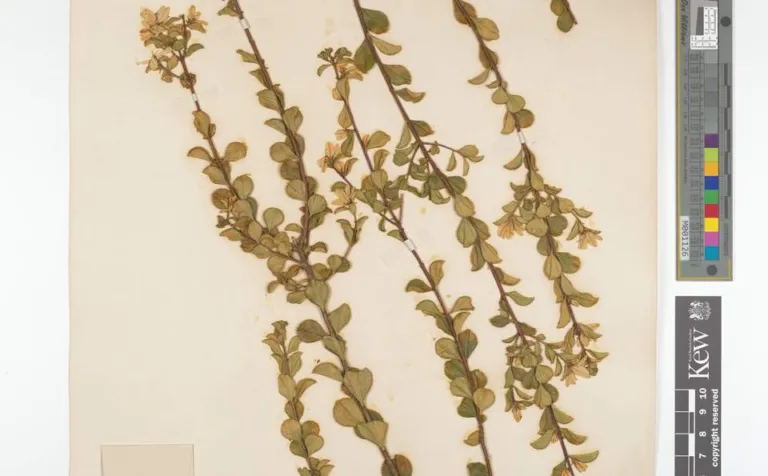
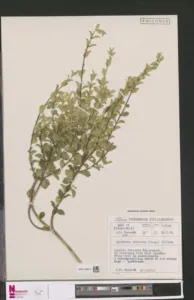
Round buchu is a low fynbos shrub that can reach about two metres [13], though wild plants are often much smaller: the 1971 collector of the herbarium specimen below recorded one at half a metre on the sheet’s label Confirmed. The leaves are opposite, leathery, roughly 12 to 20 mm long, rounded to rhomboid with a recurved tip and a finely toothed margin, and an oil gland sits at the base of each tooth. Held up to the light the blade is dotted with translucent oil cavities, a character of the whole citrus family Confirmed [15]. The flowers have five whitish petals and the brown fruit has five carpels Confirmed [13].
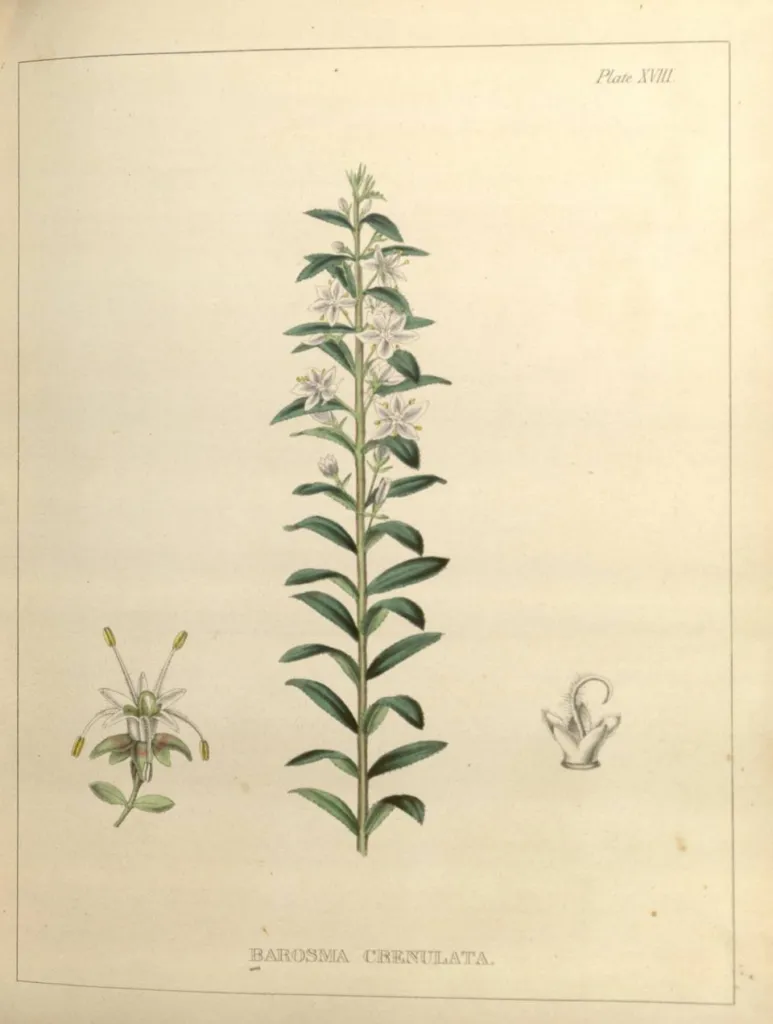
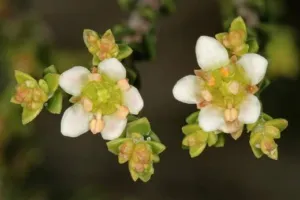
Leaf shape is the field check. Mills and Bone separate the species by the ratio of leaf length to width: round buchu is short and broad, oval buchu (A. crenulata) is longer and narrower, and long buchu (A. serratifolia), 12 to 40 mm long and only 4 to 10 mm wide, is narrower again Confirmed [13, 15]. The ratio fails for hybrids, and at that point only analysis of the oil will tell them apart Evidence suggests [13]. The smell confirms the genus and not the species: both commercial buchus carry the blackcurrant sulfur note Confirmed [2, 15].
Fynbos, sand and fire
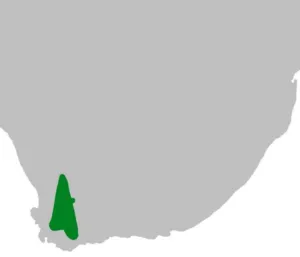
A. betulina is endemic to the south-western Cape and grows wild nowhere else, in lower-elevation mountain fynbos; the 2026 study below collected it in the Cederberg, at Citrusdal and in the Groot Winterhoek Confirmed [3, 27]. This is fynbos country: winter rain, long dry summers, full sun, acid sands weathered from sandstone, and periodic fire. Soil at three wild harvest sites studied in 2025 was strongly acid (pH in potassium chloride 3.7 to 4.4) and low in nitrogen and phosphorus Confirmed [3].
The chemistry follows the place. Mnisi and colleagues sampled wild plants from three Western Cape sites in January 2025 and ran untargeted liquid chromatography with high-resolution mass spectrometry. The three populations separated cleanly on their metabolite profiles, with rutin differing about two-and-a-half-fold and diosmin nearly four-fold between sites, and the one site that had burnt the year before standing out on several compounds Evidence suggests [3]. The authors say themselves that their design, one pooled sample per site, cannot establish which environmental factor caused the differences. What it shows is that two lots of correctly named leaf from the same province can differ materially Evidence suggests [3].
In Australia
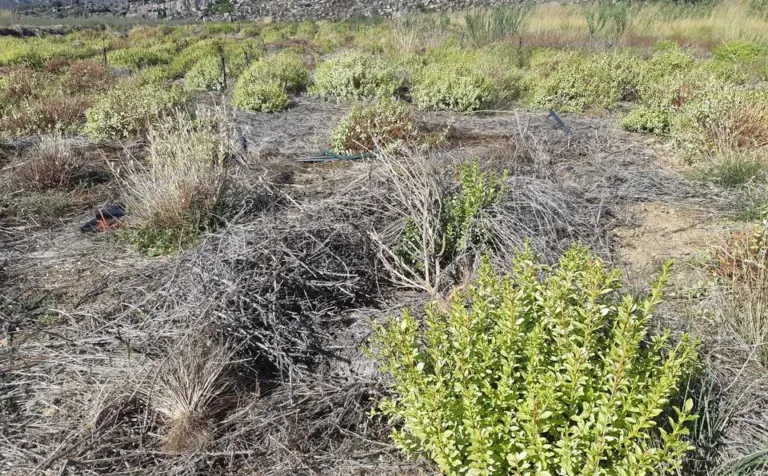
Buchu is not native to Australia and is not naturalised here. The Atlas of Living Australia held no occurrence record of Agathosma betulina when the Institute searched it in September 2026, and the species is not a declared weed under Queensland’s Biosecurity Act 2014 Confirmed [25]. No Australian commercial production was found. All buchu sold here is imported. The wet tropics around Cardwell, with summer rain and heavy soils, are about as far from fynbos conditions as an Australian climate gets; the Mediterranean-climate south-west of Western Australia and parts of South Australia are nearer the mark. Any introduction would need a weed-risk assessment first, and buying cultivated South African material supports the growers who took pressure off the wild stands Mechanism.
3. Khoi and San heritage, and the road to the pharmacopoeias
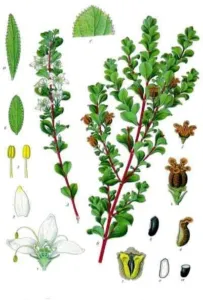
The first thing to say about the history of buchu is whose it is. Knowledge of the plant and its uses belonged to the Khoi and San peoples of the Cape long before any written record, probably by centuries, and Brendler and Abdel-Tawab, whose 2022 review is the most thorough modern account, state plainly that this traditional knowledge “is owned by the Khoisan and should be attributed and respected as such” Attested [1]. The Institute adopts that position. Everything in this chapter comes from material already published; nothing here is new knowledge taken from any community.
What the Khoi and San used it for
The Digital Bleek and Lloyd archive, the nineteenth-century record of San language and life, lists buchu in everyday, spiritual and medicinal settings Attested [1]. Several fragrant species went by the name, and they were used in dance and ritual, to anoint and beautify the body, as perfume and as medicine Traditional [1]. The powdered dried leaf, sometimes mixed with fat, was rubbed on the skin. The medicinal uses recorded in the later literature are kidney and urinary complaints, colds, stomach ailments, rheumatism, gout and fever; on the outside, a wash for infected wounds and a compress for bruises and sprains. Preparations included a water infusion, a tincture in brandy and an infusion in vinegar Traditional [1].
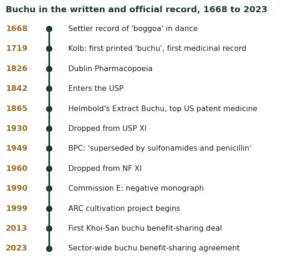
The settler record fills in the edges. An early settler’s account of 1668 describes “boggoa” leaves in dance. Kolb, in 1719, printed the word buchu for the first time and recorded medicinal use. Sparrman, in 1784, wrote that one prized kind was so valued that a thimbleful of the powder was paid for with a lamb Attested [1]. Latrobe, in 1818, described buchu brandy: leaves steeped in brandy or vinegar and stood in the sun, used on bruises and sores and taken in warm water for “inward hurts” Attested [1].
Into the pharmacopoeias
European interest came through the Cape trade. By the 1820s a London pharmacist and wholesaler, Richard Reece, had built a range of buchu preparations; his 1827 advertisement offered them for “morbid irritability of the bladder, prostate gland, spasmodic stricture” and a list of other complaints Attested [1]. The Dublin Pharmacopoeia of 1826 carried buchu, the Edinburgh dispensatory followed in 1830, the Dispensatory of the United States in 1833 and the United States Pharmacopeia itself in 1842 Attested [1]. Over the following decades it entered official books from Sweden and Norway to Spain and Portugal, though by 1899 it was still not official in Austria, Germany, Hungary, Italy, Russia or Switzerland; the 1898 British Pharmacopoeia carried an infusion and a strengthened tincture Attested [1].
The use it was given in Western medicine was almost entirely urinary and somewhat digestive. The American Eclectic physicians, as Mills and Bone summarise them, treated it as an aromatic stimulant and tonic that improved appetite, eased nausea and flatulence, and acted as a diuretic, and used it mainly for chronic irritation and catarrh of the bladder and urethra Traditional [13]. The pattern held for two centuries: the urinary tract, chronic complaints, symptom relief Traditional [1, 13].
Helmbold, and the long way out
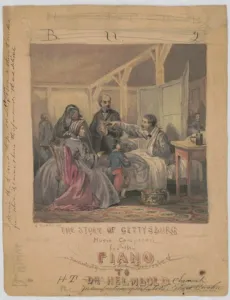
The loudest chapter in buchu’s history was commercial. Henry T. Helmbold started selling “Helmbold’s Extract Buchu” in 1846 as a cure for, among other things, “diabetes, gravel, brick-dust deposits, irritations of the bladder”. By 1865 it was the best-selling patent medicine in the United States; in 1869 to 1871 he spent about US$500,000 a year on newspaper advertising and had his own postage stamp Attested [1]. Brendler and Abdel-Tawab conclude that buchu’s huge American success “can thus only be attributed to the marketing practices” of the patent-medicine makers Attested [1]. A good deal of what reads today as traditional authority for buchu started life as nineteenth-century advertising copy.
The decline was orderly. Buchu and its fluid extract were dismissed from the United States Pharmacopeia at the eleventh revision in 1930; the National Formulary carried the leaf and its elixirs until it dropped them in 1960 Attested [1]. The 1949 British Pharmaceutical Codex still listed buchu infusions and tincture but noted that it “is now superseded by sulfonamides and penicillin”; it was gone from the British Pharmacopoeia by 1992 Attested [1]. The British Herbal Pharmacopoeia kept it through all three editions from 1971 Attested [1]. In 1990 the German Commission E published a negative monograph: “since the claimed effectiveness has not been documented”, it could not recommend buchu leaf, except as a flavour in tea mixtures Attested [1]. That judgement, made by people who knew the tradition well, still stands.
One part of the brief for this review asked about buchu as a traditional emmenagogue, a herb used to bring on menstruation. The Institute could not trace that use for buchu to a primary or review source it has read. It is repeated online and is marked here as unsourced. The documented emmenagogue and abortifacient history belongs to pennyroyal, a quite different plant whose oil is mostly pulegone (§9) Attested [14].
4. From leaf to oil: the modern trade
Today buchu is mostly a flavour and fragrance material. Brendler and Abdel-Tawab put it directly: buchu “is currently primarily used in the fragrance and flavour industry due to its sulphur-containing compounds and sensory properties” Attested [1]. The compound that matters, 8-mercapto-p-menthan-3-one, was isolated in 1971 and gives the oil its blackcurrant note Confirmed [1]; European food-safety assessors have reviewed it as a flavouring in its own right Confirmed [26]. The commercial route is simple: the plants are cut by hand, dried, and steam-distilled, and the oil is separated from the water Confirmed [2]. The water left behind, “buchu water”, carries some dissolved constituents and is sold as a product too, and it is the material behind the rat studies in §7 Confirmed [1].
Wild harvest, cultivation and conservation
Demand for buchu oil rose sharply from about 1990. Cultivation proved difficult, prices climbed, and wild stands were harvested unsustainably. In 1999 the Agricultural Research Council of South Africa began a project to cultivate buchu commercially “to prevent it from becoming extinct” Attested [1]. Growers followed: by 2008 one company had 82 hectares carrying about 3.5 million plants Attested [1]. Cultivated stands brought their own problems, among them Phytophthora root rot; a survey of Western Cape plantations identified seven Phytophthora taxa from diseased plants, five of them pathogenic to buchu seedlings in tests Evidence suggests [9].
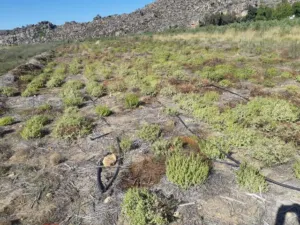
Wild harvest has not stopped. In the Western Cape the provincial conservation agency, CapeNature, assesses the resource and issues harvesting permits on a three-yearly cycle, harvesting is not allowed in protected areas, and the majority of supply now comes from cultivation Attested [22]. Leaving the province is regulated separately: CapeNature states that “a permit is required for the export of any indigenous flora species” under section 70 of the Nature Conservation Ordinance Attested [23]. These are South African rules and they bind the exporter. An Australian buyer can reasonably ask whether a supplier holds them. The Institute could not confirm a current Red List category for A. betulina when it checked in September 2026, and leaves the question open here.
Benefit-sharing
Because the knowledge of buchu is Khoi and San knowledge, South African law now requires that its commercial use share benefits with them. In August 2013 the National Khoi-San Council and the San Council signed an agreement with a buchu processor, Cape Kingdom Nutraceuticals, under the National Environmental Management: Biodiversity Act 10 of 2004, giving the communities 3 per cent of profits from the company’s buchu products Attested [20]. At the end of 2023 a sector-wide agreement followed, involving the Khoi-San, the Association of Buchu Growers, the international fragrance and flavour industry bodies and the South African environment department, combining money with non-monetary benefits Attested [21]. Registered traditional-knowledge holders now receive a percentage of profits from industry partners Attested [22]. For an Australian buyer this is a fair question to put to a supplier: was the material covered by a South African bioprospecting and benefit-sharing permit?
5. What is in the leaf
Two chemistries live in a buchu leaf and they are easily confused. The essential oil, about 1 to 3.5 per cent of the dried leaf, is what the flavour industry buys and what the toxicology is about Confirmed [13, 14]. The non-volatile fraction, flavonoid glycosides and phenolic acids, is most of what a water or alcohol extract actually contains, and it has been studied far less. A practitioner’s alcoholic extract of the leaf and a bottle of buchu oil are different materials.
The essential oil
More than 120 compounds have been identified in the oil Confirmed [1, 15]. The best public specification comes from the European Food Safety Authority’s assessment of buchu leaf oil as a feed flavouring, which analysed six commercial South African batches. Five named constituents made up about 71 per cent of the oil on average Confirmed [2]:
| Constituent | Mean, % of oil (six batches) | Range | PubChem |
|---|---|---|---|
| Isomenthone | 24.4 | 20.3 to 26.2 | CID 6432469 |
| d-Limonene | 18.6 | 16.9 to 20.7 | CID 440917 |
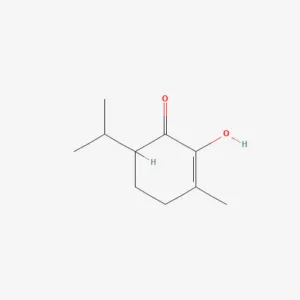
| Diosphenol (2-hydroxypiperitone) | 13.6 | 10.4 to 20.8 | CID 79023 |
| Menthone (p-menthan-3-one) | 9.3 | 7.4 to 10.2 | CID 26447 |
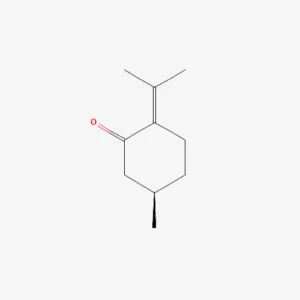
| Pulegone | 5.0 | 2.1 to 7.8 | CID 442495 |
| Pseudo-diosphenol | 11.6 | 9.0 to 15.2 | isomer of diosphenol |
| Isopulegone | 3.6 | 3.1 to 4.4 | CID 10534862 |
| cis-8-Mercapto-p-menthan-3-one | 1.9 | 1.3 to 3.0 | CID 61982 |
| Menthofuran | 0.28 | 0.22 to 0.37 | CID 329983 |
| Methyleugenol | 0.12 | 0.09 to 0.17 | CID 7127 |
Figures are per cent of gas-chromatographic peak area from the EFSA assessment, read in full Confirmed [2]. Four of the six batches fell below the proposed specification for limonene, and one went above it for diosphenol, which tells you the trade specification is still loose Confirmed [2].
Diosphenol is the compound the genus is known for. Most of the other monoterpenes in buchu oil turn up in many plants, mint among them, but on Moolla and Viljoen’s reading, as reported by Brendler and Abdel-Tawab, Agathosma is the only genus that produces diosphenol Evidence suggests [1]. It was isolated from the oil as a crystalline “stearoptene” in 1881, and the diuretic action of the drug has been ascribed to it Attested [1, 15]. That ascription has never been tested. The sulfur compound gives the smell; pulegone, menthofuran and methyleugenol set the safety questions in §9.
genus marker · CID 79023
Structure: PubChem (NCBI) · public domain
safety marker · CID 442495
Structure: PubChem (NCBI) · public domain
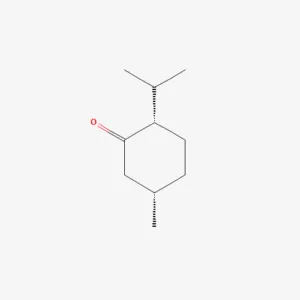
main oil component · CID 6432469
Structure: PubChem (NCBI) · public domain
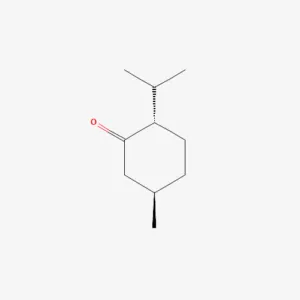
oil component · CID 26447
Structure: PubChem (NCBI) · public domain
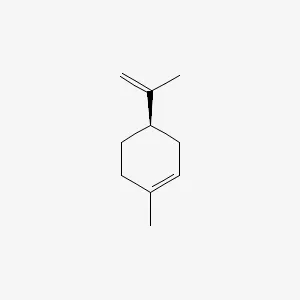
oil component · CID 440917
Structure: PubChem (NCBI) · public domain
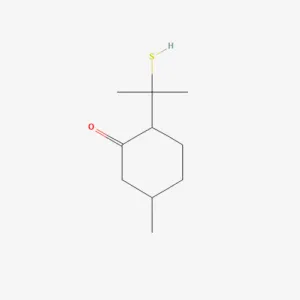
blackcurrant note · CID 61982
Structure: PubChem (NCBI) · public domain
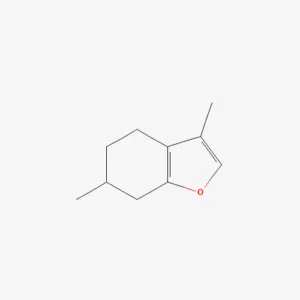
pulegone metabolite, also in the oil · CID 329983
Structure: PubChem (NCBI) · public domain
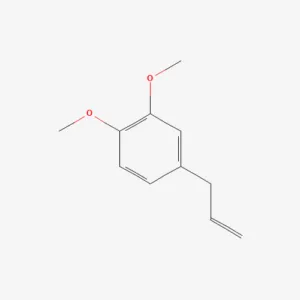
trace constituent · CID 7127
Structure: PubChem (NCBI) · public domain
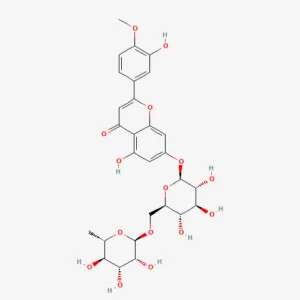
flavonoid · CID 5281613
Structure: PubChem (NCBI) · public domain
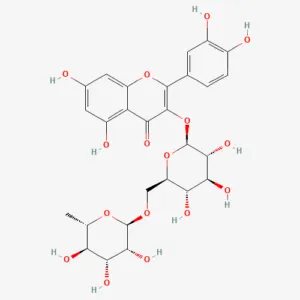
flavonoid · CID 5280805
Structure: PubChem (NCBI) · public domain
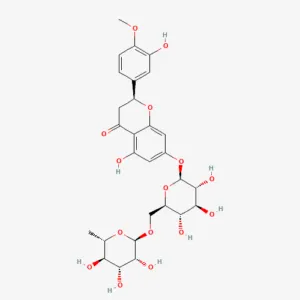
flavonoid · CID 10621
Structure: PubChem (NCBI) · public domain
Structures above are PubChem depictions, linked by compound ID; each CID was checked against PubChem in October 2026 Confirmed.
The non-volatile constituents
The principal flavonoids are diosmin and rutin, with hesperidin, quercetin and its glycosides Confirmed [1, 13, 14]. A 2026 study using high-resolution mass spectrometry identified 32 compounds in wild A. betulina leaf, including chlorogenic acid, which had previously been reported in A. crenulata and not in this species, and nine iridoid glycosides Evidence suggests [3]. The iridoid identifications were made from mass and fragment data without isolating the compounds, and the authors present them as tentative. They need confirming before anyone builds on them Evidence suggests [3].
One habit in the buchu literature deserves a flag here. Diosmin and hesperidin are also the flavonoids sold, in purified form, as vein and haemorrhoid medicines in Europe. The leaf carries them in quantities nobody has related to a human effect, so the evidence for the purified drugs cannot be carried across to a buchu tea Mechanism. Product copy that borrows it for buchu is reaching past the data.
6. Two buchus: species, chemotype and pulegone
If a reader keeps one fact from this review, it should be this one. Pulegone is a monoterpene ketone that the liver turns into reactive metabolites; in large doses it is a liver toxin, and it is the main constituent of pennyroyal oil (§9) Confirmed [2, 14]. The two commercial buchus differ enormously in how much of it they carry.
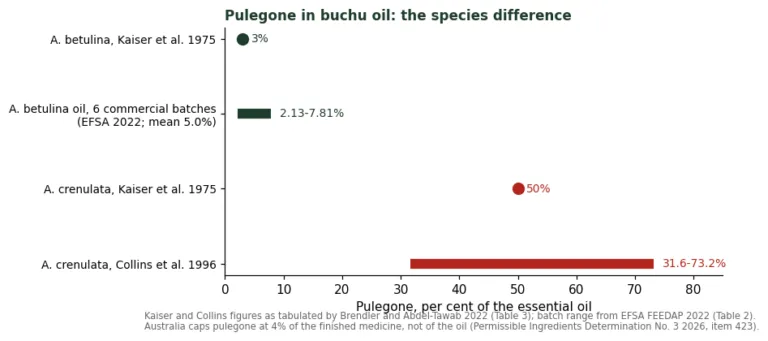
In Kaiser and colleagues’ 1975 analysis, as tabulated in the 2022 review, A. betulina oil held about 3 per cent pulegone and A. crenulata oil about 50 per cent Confirmed [1]. Collins and colleagues in 1996 measured A. crenulata at 31.6 to 73.2 per cent Confirmed [1]. Six commercial batches of A. betulina leaf oil assessed by EFSA in 2022 ran from 2.1 to 7.8 per cent Confirmed [2]. Brendler and Abdel-Tawab’s practical conclusion is that A. betulina “should be preferred over A. crenulata, because of the lower amounts of the hepatotoxic pulegone, inherent to both species” Attested [1]. Mills and Bone go further and regard A. crenulata as unsuitable for therapeutic use Attested [13].
Chemotypes and hybrids
Within A. betulina itself there are two chemotypes. Collins and colleagues described a diosphenol type, with more than 12 per cent diosphenol and more than 10 per cent pseudo-diosphenol, and an isomenthone type, with more than 31 per cent isomenthone and almost no diosphenol Confirmed [1]. Mills and Bone judge the diosphenol chemotype “probably preferable for therapeutic use” Attested [13]. Nothing on an ordinary certificate of analysis says which one is in the bag.
Hybrids are the bigger worry. Where the two species are cultivated together they cross freely, the leaf-shape test stops working, and the pulegone content of hybrid oil “varies enormously”; Mills and Bone say that hybrid material is not generally acceptable for that reason Evidence suggests [13]. Brendler and Abdel-Tawab point out that it was cultivation outside the natural habitat that created the hybrids in the first place Attested [1]. So the order of questions for any buchu product runs: which species, is it hybrid, which chemotype, and how much pulegone. Section 11 returns to how those can be answered.
7. In the laboratory and in animals
Everything in this chapter was done in a dish, in cells or in rodents. None of it has been shown to happen in a person, and several of the concentrations used could never be reached in the body. A further problem runs through all of it: most of the extracts were not chemically characterised, so a reader cannot tell what was actually tested. Current best-practice guidance for extract research asks for the plant material, the extraction and the chemical profile to be described so a study can be repeated Confirmed [12]; very little of the buchu literature meets it Evidence suggests [1].
Antimicrobial activity
This is the action the urinary tradition assumes, and it is the weakest. A 1:1 methanol and dichloromethane extract of A. betulina and A. crenulata inhibited Staphylococcus aureus, Bacillus cereus, Klebsiella pneumoniae and Candida albicans at 2 to 4 mg/mL, concentrations the 2022 review judges far away from those applied in practice Evidence suggests [1]. The essential oils were weaker still, and an older study found no activity at all against Enterococcus hirae or Pseudomonas aeruginosa Evidence suggests [1, 13]. The decisive result is the plainest: water and ethanol extracts of A. betulina, the forms people actually drink, had no effect on the growth of Escherichia coli, the commonest cause of bladder infection Evidence suggests [1].
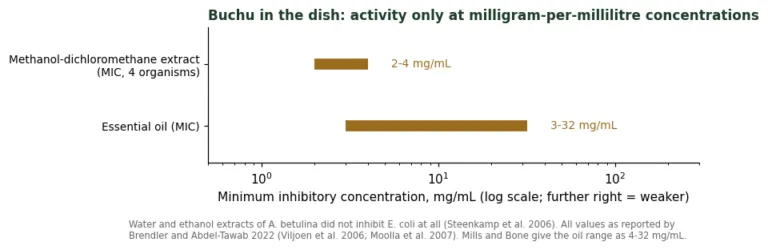
Three points follow. The best-performing extract corresponds to no traditional preparation and no medicine. The preparations people use showed nothing against the organism that matters most. And because none of the extracts was characterised, nobody can say which constituents were responsible Evidence suggests [1]. One experiment points the other way and deserves following up: Viljoen and colleagues, as Mills and Bone report, passed a water extract through simulated gastric and intestinal fluids and found its antimicrobial activity doubled Evidence suggests [13]. Doubling a very weak effect does not make it a clinical one, and whether any buchu constituent reaches the bladder at an active concentration has never been measured Mechanism.
Anti-inflammatory and pain studies
A. betulina essential oil inhibited 5-lipoxygenase, an enzyme in the inflammatory cascade, with a half-maximal concentration of about 50 µg/mL; two other Agathosma species did better Evidence suggests [1]. An ethanolic extract at 250 µg/mL inhibited cyclo-oxygenase-1 by 98 per cent and cyclo-oxygenase-2 by 25 per cent, at a single concentration Evidence suggests [1]. In mice given 200 mg/kg of an ethanolic extract, the formalin test showed 55 per cent inhibition of the early pain phase and 45 per cent of the late inflammatory phase, against 84 and 81 per cent for aspirin at half that dose Evidence suggests [5]. Silver nanoparticles made with the extract did better in the same paper, which is a result about silver nanoparticles Evidence suggests [5].
Antioxidant studies
Antioxidant tests gave moderate radical scavenging in some assays and little in others, at concentrations such as 4 mg/mL that Brendler and Abdel-Tawab describe as “far away from being of relevance for practical application” Evidence suggests [1]. A leaf containing rutin, quercetin glycosides and hesperidin would be expected to scavenge radicals in a test tube; that tells us little about buchu in particular Mechanism.
“Buchu water” and metabolism
The most striking animal results come from one South African group working on buchu water, the aqueous by-product of oil distillation, back-extracted with ethanol. In rats it lowered blood glucose in streptozotocin diabetes, limited fat gain on a high-fat diet, and brought diet-raised blood pressure back to control values; in cells it raised glucose uptake and damped inflammatory signalling Evidence suggests [1]. The species in the extract was given only as “presumably” A. betulina and A. crenulata, and no quantitative analysis was done Evidence suggests [1]. The flavonoid concentrations in what the rats drank were in the nanogram range, far too low to explain a direct effect, and the authors fell back on an untested gut-microbiome hypothesis Evidence suggests [1]. The review authors call the results difficult to comprehend and note that no other group has replicated them Attested [1]. The rats’ intake was scaled to a 70 kg person drinking 250 mL a day, which at least makes a human trial practical Evidence suggests [1].
Computational papers modelling buchu oil constituents docking to diabetes-related enzymes are also in circulation; the Institute has not read them and they are unsourced here. Docking generates hypotheses about binding and is no evidence of an effect in a cell or a person Mechanism.
8. In people: the clinical evidence
There is no published randomised controlled trial of buchu taken by mouth, for any condition Confirmed [1]. The Institute searched PubMed, ClinicalTrials.gov, the Australian New Zealand Clinical Trials Registry, the WHO International Clinical Trials Registry Platform and ISRCTN for “buchu”, “Agathosma” and “Barosma” in September and October 2026, and repeated the PubMed and ClinicalTrials.gov searches in October 2026; none found a completed or registered trial of buchu on its own Confirmed. The 2022 review reached the same answer: “urgently needed clinical trials have not been conducted” Attested [1].
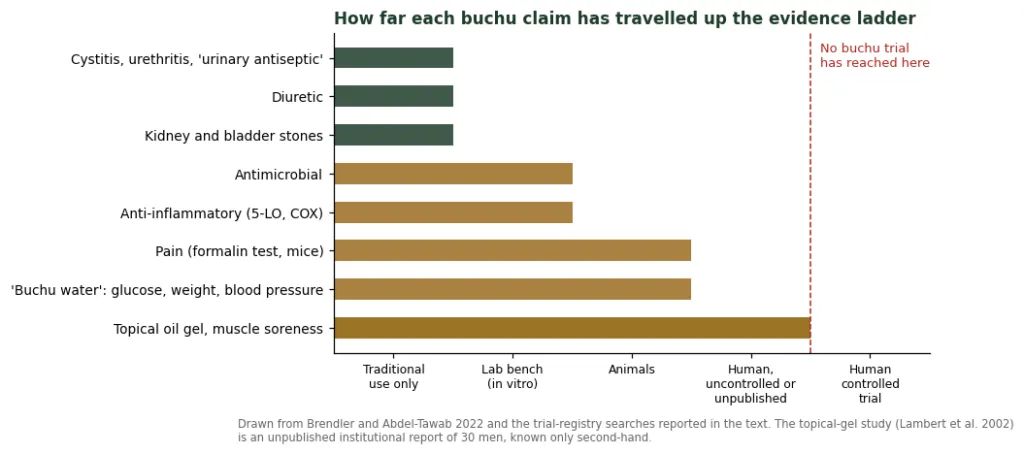
What does exist is thin and indirect:
- A topical gel. A 2002 double-blind, placebo-controlled study of a gel containing buchu oil in 30 men with exercise-induced muscle soreness reported less swelling and pain. It is an unpublished institutional report from a South African sports-science unit, known only through later reviews; the gel was never characterised and the report has no journal record Evidence suggests [1, 13].
- A multivitamin. A 16-week randomised trial at Swinburne University in Melbourne tested a commercial multivitamin whose men’s tablet listed 10 mg of buchu among about fifty ingredients. It reported the product as well tolerated. Ten milligrams is a tiny fraction of any practitioner dose, and no outcome can be pinned on one ingredient in fifty Confirmed [8].
- Overactive bladder. A 2013 review of herbal supplements for overactive bladder lists buchu among herbs in use and states that no clinical studies of buchu for the condition have been done Confirmed [7].
- A case report. A two-year-old girl given a tea of buchu, couch grass, marshmallow and plantain for a suspected urinary infection passed large volumes of very dilute urine; two days later she returned with a febrile infection that had been missed. The authors suggest the diuresis diluted the urine enough to mask the dipstick test. Buchu cannot be singled out from four herbs, but the lesson stands for any “flushing” tea given to a small child Evidence suggests [6].
The online picture runs well ahead of this. Brendler and Abdel-Tawab list the claims attached to buchu products sold over the counter and on the internet, from “blood pressure support” and “digestive support” to “supports body’s health against bacteria in the urinary tract” and “support kidney health”, and report a 2014 study that found buchu among ten plants commonly claimed online to benefit kidney disease Attested [1]. None of those claims rests on a human study of buchu Confirmed [1].
What the absence means
An absence of trials leaves a gap in the record. Buchu has three hundred years of recorded urinary use on two continents, and that history is a reasonable reason to test it Traditional. It does not, by itself, show that buchu prevents or treats bladder infection, and the laboratory evidence makes a direct antibacterial action unlikely at ordinary doses Evidence suggests [1]. A practitioner who uses buchu today is working from tradition and from the aromatic, mildly diuretic character the texts describe, and should say so to the patient Traditional [13].
9. Safety and interactions
The safety picture for buchu leaf is calm. Mills and Bone found no reports of poisoning in the published literature, and note only occasional stomach upset when it is taken on an empty stomach; Barnes and colleagues record no documented side effects and attribute possible irritation of the gut and kidneys to the volatile oil Evidence suggests [13, 14]. The questions worth asking come from one constituent, pulegone, and from what happens when the wrong species, or a concentrated oil, is used.
Pulegone and the liver
Pulegone is converted in the human liver, by the enzymes CYP2E1, CYP1A2 and CYP2C19, to menthofuran and then to reactive metabolites. Glutathione, the liver’s main defence against reactive compounds, mops them up. When glutathione is depleted, damage follows: in rats whose glutathione had been lowered experimentally, pulegone’s liver toxicity rose roughly ten-fold Evidence suggests [2]. In human liver slices from different donors, the toxicity of pulegone and menthofuran varied substantially from person to person Evidence suggests [4]. In a two-year US National Toxicology Program study, high oral doses caused liver tumours in mice and bladder tumours in female rats, and the International Agency for Research on Cancer classifies pulegone as possibly carcinogenic to humans, Group 2B Evidence suggests [11]. European assessors read the mechanism as tissue damage and regeneration driven by reactive metabolites once glutathione runs out, which implies a threshold dose below which the effect does not occur Mechanism [2, 11]. The no-observed-adverse-effect level in a 14-week rat study was 9.375 mg/kg body weight a day Confirmed [2].
Set those numbers against buchu leaf and the margin depends almost entirely on the species. Take the upper end of the dried-leaf range in the standard practitioner texts, about 6 g a day, and a typical oil yield of 2 per cent Confirmed [13, 14]. That is roughly 120 mg of oil. At the mean pulegone level of the commercial A. betulina batches, 5 per cent, it comes to about 6 mg of pulegone a day, around 0.09 mg/kg for a 70 kg adult and some 110-fold below the rat no-effect level Mechanism [2]. Substitute A. crenulata at 50 per cent pulegone and the same leaf delivers about 60 mg a day, roughly 0.86 mg/kg and only about eleven-fold below that level Mechanism [1, 2]. Standard safety practice looks for a hundred-fold margin over an animal no-effect level. The arithmetic is the Institute’s; it is an illustration of why identity matters, and it is not a dosing guide.
Tea, tincture and essential oil
Pulegone is listed in PubChem as practically insoluble in water and miscible with alcohol Confirmed [29]. Brendler and Abdel-Tawab conclude from this that the pulegone caution does not apply to water extracts Attested [1]. The Institute reads the evidence a little more cautiously. The “buchu water” used in the rat studies, an aqueous product, still contained about 74 mg/L of pulegone Confirmed [1]. A hot-water infusion carries much less of the oil than an alcoholic tincture, and far less than the neat oil, but less is a different thing from none Mechanism.
The neat essential oil is a concentrated material in its own right. EFSA’s assessors concluded that buchu leaf oil should be treated as irritant to skin and eyes and as a skin and respiratory sensitiser, and that exposure to its trace methyleugenol, a rodent carcinogen, should be kept low for people handling it Confirmed [2]. Buchu oil sold for perfumery or aromatherapy is not a food or a medicine and should not be swallowed. A bottle of neat oil also keeps company with a different Australian rule: a preparation containing more than 4 per cent d-pulegone is a Schedule 6 poison Confirmed [17].
Pregnancy and breastfeeding
The texts disagree, and the disagreement is instructive. The British Herbal Compendium of 1992, as cited by Mills and Bone, treats buchu as contraindicated in pregnancy; Barnes and colleagues advise avoiding it in pregnancy and lactation because its safety has not been established and its oil is irritant and potentially toxic Attested [13, 14]. Mills and Bone classify buchu as category B2 and argue that the contraindication belongs to pulegone-rich substitutes such as A. crenulata Attested [13]. Their argument is sound in principle and cannot be acted on in practice, because nothing on an ordinary label tells a buyer which species or chemotype is in the bottle. The Institute’s reading is to avoid buchu in pregnancy, and to avoid it while breastfeeding unless a degree-qualified herbalist with pharmacognosy training has chosen a defined product Mechanism.
The reason pulegone and pregnancy are linked at all is pennyroyal. Pennyroyal oil is 60 to 90 per cent pulegone, has a long history of use to bring on abortion, and has caused deaths with liver and kidney damage at the doses taken for that purpose Confirmed [14]. Those cases involved millilitres of neat oil, orders of magnitude more pulegone than any buchu leaf preparation carries, and they are not evidence about buchu itself. They explain why the caution exists.
Children
The Institute found no published study of buchu’s safety or efficacy in children Mechanism. A child takes in more pulegone per kilogram of body weight than an adult from the same amount of leaf, so the margin worked out above shrinks Mechanism. The toddler case in §8 is the practical warning: a diuretic tea can hide a urinary infection in a small child, and any urinary symptom in a child needs a urine test and prompt clinical assessment Evidence suggests [6]. Keep the neat oil out of reach of children. If a child swallows buchu oil, call the Poisons Information Centre on 13 11 26 straight away, or 000 if the child is drowsy, vomiting repeatedly or having trouble breathing.
Liver disease
Because the liver both activates pulegone and, through glutathione, detoxifies it, people with liver disease are the group with the least reserve Mechanism [2]. There are no studies of buchu in liver disease, and the Institute’s reading is to avoid it Mechanism.
Kidney disease and urinary infection
Buchu is sold as a “kidney” herb, yet there is no information on its use in people with kidney disease. Barnes and colleagues record a statement that it should be avoided in kidney infection, while noting that the scientific basis is unclear, and attribute renal irritation to the volatile oil Attested [14]. In chronic kidney disease the Institute’s view is simple: there is no safety data, so buchu should not be used without a degree-qualified herbalist with competencies and adequate training in pharmacognosy who is working alongside the person’s existing care Mechanism.
A suspected urinary tract infection needs prompt assessment, for a plain reason. A bladder infection that is not treated can spread to the kidneys, and in pregnancy, in men, in older people and in children the stakes are higher Confirmed. The toddler case in §8 shows a second way herbal “flushing” can go wrong: a diuretic tea dilutes the urine and can hide an infection from the first test Evidence suggests [6]. Fever, pain in the back or side, vomiting or blood in the urine call for same-day care; in an emergency, call 000. This is a medical problem first.
Interactions
| Combination | What is known | Grade |
|---|---|---|
| Diuretics (frusemide, thiazides, indapamide, spironolactone) | Listed as an interaction by Spiteri [24]. Assumed mechanism is added fluid and salt loss. Buchu’s own diuretic effect has never been measured in people. One 1998 Australian adverse-event report records low sodium and potassium in an older woman taking indapamide with a fluid-retention formula containing buchu; causality was not assessed [19]. | Mechanism |
| Lithium | Listed as a caution by Spiteri [24]. Lithium is cleared by the kidney and its level rises when fluid and sodium are lost, so any herb taken for a diuretic effect deserves care. No buchu-specific data. | Mechanism |
| Paracetamol, heavy alcohol use, fasting | All lower liver glutathione, which pulegone’s detoxification depends on [2]. A reason to keep exposure low in those situations. | Mechanism |
| Medicines cleared by CYP2A6 | Menthofuran, a pulegone metabolite, irreversibly inhibits human CYP2A6 [2]. Unlikely to matter at leaf doses; never studied. | Mechanism |
| Other medicines | None documented. Barnes and colleagues advise considering interactions with medicines of similar or opposing effect [14]. | Attested |
What Australians have reported
When the Institute searched the TGA’s Database of Adverse Event Notifications in October 2026, 21 reports from 1998 to 2022 named a medicine containing buchu (searched as Agathosma and Barosma), with no deaths Confirmed [19]. Every product was a multi-ingredient formula, most of them multivitamins listing forty or more actives, and ten reports carried a gastrointestinal term such as nausea or abdominal pain Confirmed [19]. One 1999 report of hepatitis listed eight suspected products, greater celandine among them, so buchu cannot be singled out Confirmed [19]. The TGA states that a report does not mean the medicine caused the event. The signal is very weak, and it fits the textbook record of occasional stomach upset Evidence suggests [19].
10. Buchu in Australia
The Institute checked the Poisons Standard and the Permissible Ingredients Determination in October 2026 and the Australian Register of Therapeutic Goods in September 2026, before drafting this review. Australia’s position on buchu turns out to be clear and well targeted.
Scheduling
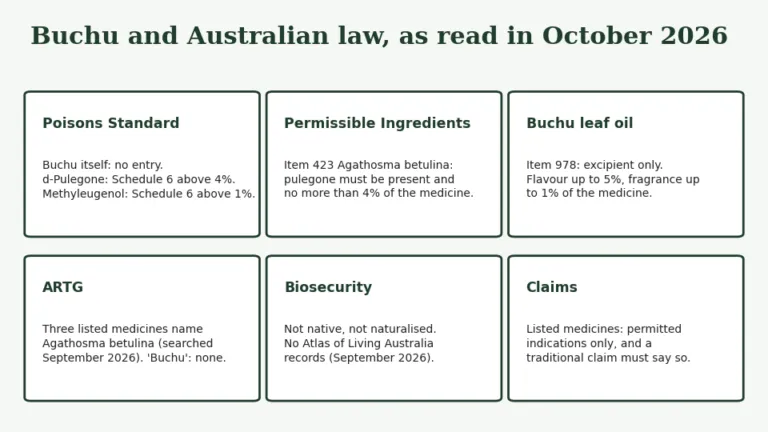
The Poisons Standard October 2026 has no entry for Agathosma, Barosma, buchu or diosphenol Confirmed [17]. Two constituents are scheduled in their own right: d-pulegone is Schedule 6 except in preparations containing 4 per cent or less, and methyleugenol is Schedule 6 except at 1 per cent or less Confirmed [17]. Buchu leaf is not a controlled drug, so the Office of Drug Control has no role in importing it Confirmed [17].
Listed medicines
The Therapeutic Goods (Permissible Ingredients) Determination (No. 3) 2026, in force from 16 October 2026, carries four buchu entries Confirmed [16]:
| Entry | Permitted as | Condition |
|---|---|---|
| Item 423, AGATHOSMA BETULINA | Active, excipient, homoeopathic | “Pulegone is a mandatory component of Agathosma betulina. The concentration of pulegone in the medicine must be no more than 4%.” Confirmed |
| Item 977, BUCHU LEAF DRY | Active, homoeopathic | None stated Confirmed |
| Item 978, BUCHU LEAF OIL | Excipient only | Flavour no more than 5 per cent, fragrance no more than 1 per cent of the medicine Confirmed |
| Item 979, BUCHU LEAF POWDER | Active, excipient, homoeopathic | None stated Confirmed |
That pulegone condition is unusual. It sets a ceiling on a toxic constituent and, by making pulegone a mandatory component, quietly requires that the plant material actually be buchu. The Institute knows of no other country with an enforceable numeric pulegone limit for buchu medicines Mechanism. It also means buchu oil cannot be the active ingredient of an Australian listed medicine Confirmed [16]. Which plants the three BUCHU LEAF entries admit is not stated in the Determination Confirmed [16].
A search of the ARTG in September 2026 returned three current listed medicines naming Agathosma betulina, all combinations: MediHerb UriCo Phytosynergist (ARTG 347190), Mediherb Cranberry Complex (ARTG 239333) and MALE UP&GO (ARTG 477152) Confirmed [18]. A search for “buchu” returned none, so a shopper searching the register by the common name will miss all three Confirmed [18].
What a product can lawfully claim
A listed medicine may only carry indications drawn from the TGA’s list of permitted indications, and where an indication rests on evidence of traditional use it must say so, for example “traditionally used in Western herbal medicine” Confirmed [28]. The claims attached to buchu products overseas, such as “support kidney health” or protection “against bacteria in the urinary tract” [1], would need to fit that framework and the Therapeutic Goods Advertising Code before they could be made to Australians. A claim to treat kidney disease or cure an infection sits outside what a listed medicine can say Confirmed [28].
Products bought from overseas websites and shipped to an Australian address for personal use have not been assessed by the TGA, whatever their label says, and the label claims were written for another country’s rules Confirmed [18]. Dried leaf imported in bulk is an imported plant product and falls under the Department of Agriculture’s import conditions, which importers check in the BICON database; the Institute could not read the current conditions through an automated session in September 2026 and does not quote them here Confirmed.
Getting advice
Anyone considering buchu, especially with a urinary complaint, a kidney condition, a pregnancy or a list of current medicines, should consult a degree-qualified herbalist with competencies and adequate training in pharmacognosy, who can judge whether a defined product is appropriate and recognise when a symptom needs urgent assessment instead.
11. Quality, substitution and adulteration
Buchu has one of the longer substitution lists in herbal commerce, and the reason goes back to its name. When the Khoi and San word covered any aromatic dusting herb, the trade inherited a category in place of a species Traditional [13]. Mills and Bone list A. crenulata and hybrids, long buchu, other Agathosma species, and plants from other genera and families, including Empleurum, Diosma (“wild buchu”), Adenandra and even myrtle, among the materials sold as buchu Attested [13].
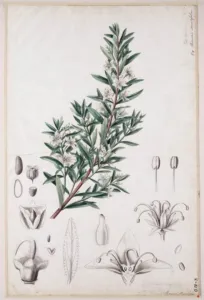
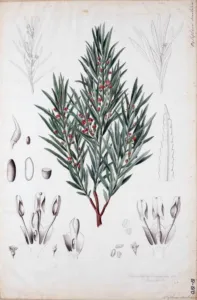
How common is it? The only market survey found is from the United States. Raman and colleagues examined 27 commercial buchu raw materials and products by microscopy and high-performance thin-layer chromatography against vouchered reference material and, as tabulated in a later review, found 10 authentic and 17 adulterated Evidence suggests [10]. No equivalent survey of the Australian market has been published Confirmed.
What a careful buyer, practitioner or manufacturer can ask a supplier, in order of how much each answer changes the material:
- Which species, with its authority: Agathosma betulina (P.J.Bergius) Pillans, and not simply “buchu”.
- Is any of it hybrid material? If the grower farms both species, what keeps them apart?
- Which chemotype, shown by a gas chromatogram with diosphenol and isomenthone values?
- How much pulegone, as a number, in the raw material and in the finished product, given the Australian 4 per cent cap [16]?
- Wild-harvested or cultivated, from where, and under which harvest, export and benefit-sharing permits [20, 22, 23]?
- Harvest year and drying method. The Institute found no published study of how drying and storage affect the oil, and that is itself a research gap.
Contaminants are covered by the default pharmacopoeial standards for herbal materials; buchu left the British and United States pharmacopoeias during the twentieth century, so no current compendial buchu standard applies Attested [1]. Pesticide residues are a fair question for a cultivated crop that fights root rot Evidence suggests [9].
Discussion: conclusions, hypotheses and research still required
What the evidence supports
Buchu is a real medicinal plant with a real history. Its use by the Khoi and San is well attested and their ownership of that knowledge is now recognised in South African benefit-sharing law Attested [1, 20, 21]. Its passage through the Western pharmacopoeias, and out again, is documented edition by edition Attested [1]. The chemistry of the leaf oil is well described, and the difference in pulegone between A. betulina and A. crenulata is large, consistent across studies and the single most useful fact for anyone buying it Confirmed [1, 2]. Australian regulation reflects that fact with a mandatory, capped pulegone requirement Confirmed [16].
On efficacy the honest statement is short. There is no controlled human evidence for any oral use Confirmed [1]. The laboratory antimicrobial activity is weak and absent in the preparations people take Evidence suggests [1]. The anti-inflammatory, analgesic and metabolic findings are preliminary and, for buchu water, unreplicated Evidence suggests [1, 5]. On safety, correctly identified A. betulina leaf has a quiet record, and the risks that do exist come from pulegone-rich substitutes, concentrated oils and from using a herb in place of prompt treatment for an infection Evidence suggests [2, 6, 13, 14].
Hypotheses worth testing
- Urinary concentration. Some buchu constituents, or their metabolites, may be excreted in urine at concentrations that matter locally even though plasma levels are low. This is untested, and it is the one route by which a urinary action could plausibly work Mechanism.
- Anti-adhesion. Buchu extracts prevented bacterial biofilm formation in one unpublished thesis reported in the 2022 review [1]. If confirmed with characterised extracts, an effect on bacterial adhesion would fit a symptomatic, chronic urinary use better than killing bacteria does Mechanism.
- Symptom relief. The traditional use was largely for irritable, chronic bladder symptoms. A mild diuretic and aromatic effect could ease symptoms without touching infection. Nobody has measured either Traditional.
- Chemotype. If any activity is real, the diosphenol and isomenthone chemotypes may differ in it, as Mills and Bone suggest [13]. Diosphenol is unique to the genus and has never been tested on its own in a relevant model Mechanism.
Where research should begin
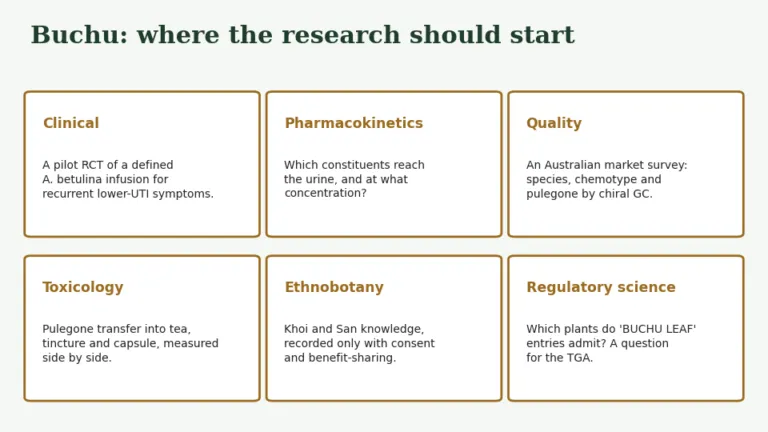
- Quality analysis. An Australian market survey: buy the buchu leaf, extracts and blends sold here, voucher them, and run microscopy, HPTLC and chiral gas chromatography for species, chemotype, pulegone content and the pulegone isomer. It is the cheapest study on this list and the most useful to Australian consumers.
- Pharmacokinetics. A small human study measuring which buchu constituents and metabolites appear in urine after a defined infusion, and at what concentration, followed by testing those concentrations against urinary pathogens and their adhesion.
- Clinical research. If the first two give a reason, a pilot randomised, placebo-controlled trial of a chemically defined A. betulina infusion for recurrent lower urinary tract symptoms in adults without active infection, reported to the CONSORT herbal extension, with ethics approval and prospective registration. Never as a substitute for treating an established infection.
- Toxicology. Measured transfer of pulegone, menthofuran and methyleugenol into a hot-water infusion, a 60 per cent ethanol extract and a capsule from the same batch, so that the tea-versus-tincture question rests on data.
- Pharmacology. Replication of the buchu-water metabolic findings by an independent group, with the extract chemically characterised to current best-practice guidance [12].
- Ethnobotany and history. Primary-source work on the settler and Khoi and San records, done only with community consent and under benefit-sharing terms; and a check of whether buchu was ever recorded as an emmenagogue, which this review could not source.
- Regulatory science. Clarification from the TGA of which species the BUCHU LEAF entries admit, and how the item 423 pulegone limit is tested in practice.
About the Australian Institute of Pharmacognosy
The Australian Institute of Pharmacognosy is a clinic and research laboratory in Cardwell, far north Queensland, studying medicinal plants and natural products to the same evidentiary standard as any other branch of pharmacology: traditional knowledge taken seriously, and tested honestly. The Literature Review and Critical Analysis series grades what is known about one plant at a time. More at australian-pharmacognosy.org. Corrections and comments are welcome at our contact form.
Head of Education and Research
Australian Institute of Pharmacognosy
Cardwell QLD, Australia
australian-pharmacognosy.org · our contact form
References
29 references (tap to open)
- Brendler T, Abdel-Tawab M. Buchu (Agathosma betulina and A. crenulata): rightfully forgotten or underutilized? Front Pharmacol. 2022;13:813142. doi:10.3389/fphar.2022.813142. PMID 35197854. Open access; read in full.
- EFSA Panel on Additives and Products or Substances used in Animal Feed (FEEDAP); Bampidis V, Azimonti G, Bastos ML, et al. Safety and efficacy of a feed additive consisting of an essential oil from the leaves of Agathosma betulina (P.J. Bergius) Pillans (buchu leaf oil) for use in all animal species (FEFANA asbl). EFSA J. 2022;20(3):e07160. doi:10.2903/j.efsa.2022.7160. PMID 35281638. Read in full.
- Mnisi NH, Gunununu RP, Dukashe L, et al. Geographic influence on secondary metabolite profiles in leaves of the endemic Agathosma betulina (P.J. Bergius) Pillans. in the Western Cape Province, South Africa. Int J Mol Sci. 2026;27(10):4486. doi:10.3390/ijms27104486. PMID 42196464. Read in full.
- Zárybnický T, Matoušková P, Lancošová B, et al. Inter-individual variability in acute toxicity of R-pulegone and R-menthofuran in human liver slices and their influence on miRNA expression changes in comparison to acetaminophen. Int J Mol Sci. 2018;19(6):1805. doi:10.3390/ijms19061805. PMID 29921785.
- Chiguvare H, Oyedeji OO, Matewu R, et al. Synthesis of silver nanoparticles using buchu plant extracts and their analgesic properties. Molecules. 2016;21(6):774. doi:10.3390/molecules21060774. PMID 27314316.
- Ding J, Perera L. Polyuria and ‘watery wee’ in a toddler. BMJ Case Rep. 2012;2012:bcr2012007831. doi:10.1136/bcr-2012-007831. PMID 23239780.
- Chughtai B, Kavaler E, Lee R, et al. Use of herbal supplements for overactive bladder. Rev Urol. 2013;15(3):93-96. PMID 24223020.
- Sarris J, Cox KH, Camfield DA, et al. Participant experiences from chronic administration of a multivitamin versus placebo on subjective health and wellbeing: a double-blind qualitative analysis of a randomised controlled trial. Nutr J. 2012;11:110. doi:10.1186/1475-2891-11-110. PMID 23241329.
- Bezuidenhout CM, Denman S, Kirk SA, et al. Phytophthora taxa associated with cultivated Agathosma, with emphasis on the P. citricola complex and P. capensis sp. nov. Persoonia. 2010;25:32-49. doi:10.3767/003158510X538371. PMID 21339965.
- Ichim MC, Häser A, Nick P. Microscopic authentication of commercial herbal products in the globalized market: potential and limitations. Front Pharmacol. 2020;11:876. doi:10.3389/fphar.2020.00876. PMID 32581819. Cited for its tabulation of Raman V, et al. S Afr J Bot 2015;100:122-131.
- IARC Working Group on the Evaluation of Carcinogenic Risks to Humans. Some Drugs and Herbal Products. IARC Monographs vol. 108. Lyon: IARC; 2016. Pulegone, pp. 141-154. PMID 29905444.
- Heinrich M, Jalil B, Abdel-Tawab M, et al. Best practice in the chemical characterisation of extracts used in pharmacological and toxicological research: the ConPhyMP guidelines. Front Pharmacol. 2022;13:953205. doi:10.3389/fphar.2022.953205. PMID 36176427.
- Mills S, Bone K. Principles and Practice of Phytotherapy: Modern Herbal Medicine. 2nd edn. Edinburgh: Churchill Livingstone Elsevier; 2013. Buchu, pp. 449-453.
- Barnes J, Anderson LA, Phillipson JD. Herbal Medicines. 3rd edn. London: Pharmaceutical Press; 2007. Buchu, pp. 100-101; Pennyroyal, pp. 470-471.
- Evans WC. Trease and Evans Pharmacognosy. 16th edn. Edinburgh: Saunders Elsevier; 2009. Buchu leaf, p. 281.
- Therapeutic Goods (Permissible Ingredients) Determination (No. 3) 2026 (Cth), F2026L01382. Schedule 1 items 423, 977, 978 and 979. Read October 2026. legislation.gov.au
- Therapeutic Goods (Poisons Standard—October 2026) Instrument 2026 (Cth), F2026L01327. Entries for d-PULEGONE and METHYLEUGENOL; no entry for Agathosma, Barosma or buchu. Read October 2026. legislation.gov.au
- Therapeutic Goods Administration. Australian Register of Therapeutic Goods, public search for “agathosma” and “buchu”. Searched September 2026. tga.gov.au
- Therapeutic Goods Administration. Database of Adverse Event Notifications, medicines, searches for “Agathosma” and “Barosma”. Searched October 2026. daen.tga.gov.au
- Natural Justice. Natural Justice legally supports the National Khoi-San Council in historic benefit sharing agreement. 22 August 2013. Read October 2026. naturaljustice.org
- International Fragrance Association. A blueprint for sustainable sourcing: IFRA and IOFI review landmark buchu project with BMZ and GIZ in Berlin. 2026. Read October 2026. ifrafragrance.org
- Baard CB. Buchu (Agathosma spp). People and Plants International. Read October 2026. peopleandplants.org
- CapeNature. Protected and endangered plants: permits. Read October 2026. capenature.co.za
- Spiteri M. Herbal Monographs including Herbal Medicinal Products and Food Supplements. Msida: Department of Pharmacy, University of Malta; 2011. Buchu, p. 23.
- Atlas of Living Australia. Occurrence search, Agathosma betulina. Searched September 2026: no records. ala.org.au
- EFSA FEEDAP Panel; Bampidis V, Azimonti G, Bastos ML, et al. Safety and efficacy of 8-mercapto-p-menthan-3-one and p-menth-1-ene-8-thiol belonging to chemical group 20 when used as flavourings for all animal species. EFSA J. 2019;17(1):e05530. doi:10.2903/j.efsa.2019.5530. PMID 32626076.
- Royal Botanic Gardens, Kew. World Checklist of Vascular Plants, and International Plant Names Index record 770863-1, Agathosma betulina (P.J.Bergius) Pillans. Read September and October 2026. ipni.org
- Department of Health and Aged Care. Explanatory Statement, Therapeutic Goods (Permissible Indications) Determination No. 1 of 2018, F2018L00215: permitted indications and the mandatory traditional context qualifier. Read October 2026. legislation.gov.au
- National Center for Biotechnology Information. PubChem compound summary, CID 442495, (R)-(+)-pulegone: solubility. Read October 2026. pubchem.ncbi.nlm.nih.gov
Every PMID was checked against PubMed in October 2026. Findings from older primary studies (Kaiser, Collins, Viljoen, Moolla, Steenkamp, Lambert and others) are cited through the open-access review that reports them [1], which was read in full; those primaries are named by author and year in the text.
Image credits
- Cover and chapter 1, 5 and 9 banners: A. betulina, Cederberg, August 2018: Margriet B. · CC BY-SA 4.0 · MargrietB 1 to 5
- Chapter 2 banner: whole plant in flower: Margriet B. · CC BY-SA 4.0 · Wikimedia Commons
- Range map: Millaray.pena · CC BY-SA 4.0 · Wikimedia Commons
- Herbarium sheet, Spreeth 104, 1971: Naturalis Biodiversity Center, WAG.1548270 · CC0 1.0 · GBIF
- Köhler’s Medizinal-Pflanzen plate 20, 1897: Franz Eugen Köhler · Public domain · Wikimedia Commons
- Helmbold sheet music, 1864: James Fuller Queen; Library of Congress · Public domain · Wikimedia Commons
- Buchu plantation, Groot Winterhoek (two views): Discott · CC BY-SA 4.0 · Wikimedia Commons
- Oval buchu, A. crenulata, in flower: SAplants · CC BY-SA 4.0 · Wikimedia Commons
- A. crenulata, Helderberg: JonRichfield · CC BY-SA 3.0 · Wikimedia Commons
- Herbarium sheet, Schlechter 7919, 1896: Smithsonian Institution, US National Herbarium, US 302884 · CC0 1.0 · GBIF
- Herbarium sheet, Stephens 7116, 1911: Royal Botanic Gardens, Kew, K005101295 · CC BY 4.0 · GBIF
- Carson, Illustrations of Medical Botany, 1847, Plate XVIII: Joseph Carson; J. H. Colen; Biodiversity Heritage Library · Public domain · Wikimedia Commons
- Long buchu, A. serratifolia, watercolour, 1881: P.J.M. Pas, University of Amsterdam · Public domain · Wikimedia Commons
- Diosma oppositifolia: SAplants · CC BY-SA 4.0 · Wikimedia Commons
- Empleurum unicapsulare, watercolour, 1881: P.J.M. Pas, University of Amsterdam · Public domain · Wikimedia Commons
- Chemical structures (11): PubChem, National Center for Biotechnology Information · Public domain · PubChem
- Timeline, pulegone chart, laboratory-concentration chart, evidence chart and the two diagram banners: drawn by the Australian Institute of Pharmacognosy from the published data cited in each caption.
- Photographs were resized for the page and are otherwise unaltered; banner photographs are cropped by the page layout.
The Institute sets and publishes its own monographs. The catalogue is in Publications.