

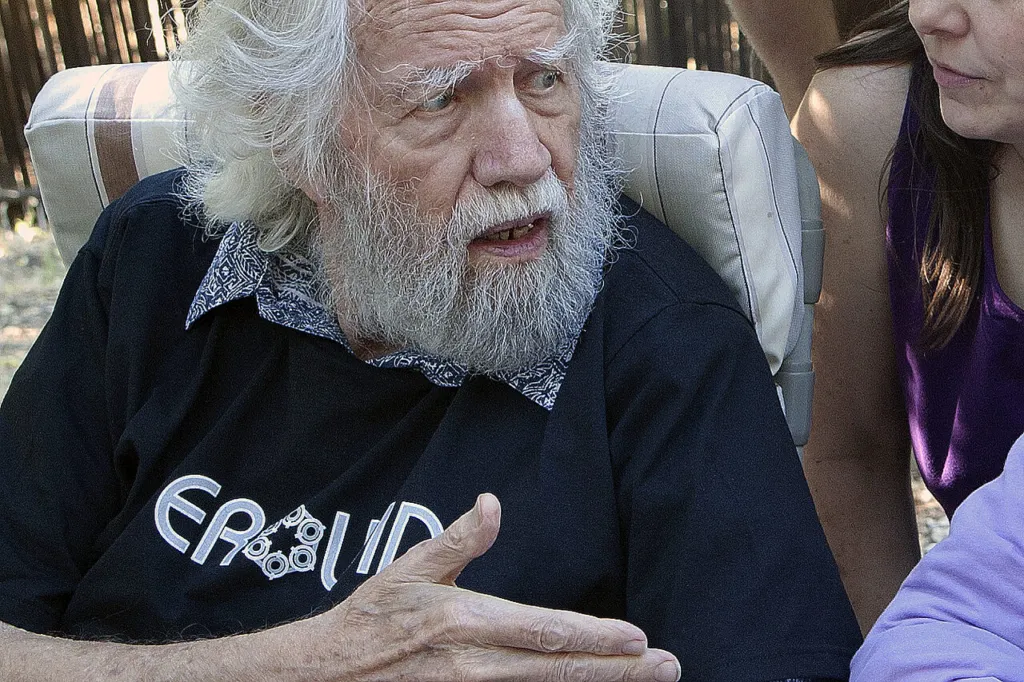
Cover: Sasha Shulgin at the Farm, Lafayette, California, July 2009. Photo: Jon Hanna · CC BY-SA 3.0 · Wikimedia Commons
On 2 April 1960 a research chemist at Dow Chemical swallowed between 350 and 400 milligrams of mescaline sulfate in the company of a friend. He was 34. Years later he summed the day up in one line: “I learned there was a great deal inside me.”[1, 2] He spent the next 54 years finding out how much, with a pencil, a bench, a notebook and a small group of friends who trusted him.
This Journal essay honours Alexander Theodore Shulgin, known to everyone who loved him as Sasha. It covers his life from a Berkeley childhood to his death in the same hills, the laboratory he built behind his house in Lafayette, the papers he wrote, the course he taught at San Francisco State University in 1987, and the medicines now coming out of the families of molecules he drew. Dr Iggulden chose the subject and the title. “Dirty pictures” was Shulgin’s own name for the chemical structures he sketched on the bottles in his lab.[3, 4, 5] “Warts and all” is ours, and it describes the way he lectured: every tangent, joke and half-finished thought left in, because his wife Ann kept the tape running and the recordings were later transcribed almost word for word.[6]
A pharmacognosy institute has its own reason to care. Shulgin started from plants. His first serious papers came out of peyote’s mescaline and the essential oils of nutmeg, parsley and dill, and one of his last books catalogued the simple isoquinolines of the cactus family.[7, 8, 9, 10] He read the spice rack as a chemist would and asked what the body might make of it.
This article is educational history. It is not medical, legal or regulatory advice. It gives no dosing guidance, no routes and no methods of making anything. The only amounts mentioned are historical or are the doses used in published clinical studies, and none is a recommendation. Nothing in it encourages anyone to obtain or use a controlled substance.
1. Almost every compound named here is prohibited. Mescaline, DOM, MDA, MDMA, 2C-B and their relatives sit in Schedule 9 of the Poisons Standard, and in Queensland they are dangerous drugs under the Drugs Misuse Act 1986 and the Drugs Misuse Regulation 1987. Possessing, supplying, producing or trafficking them is a criminal offence. Confirmed
2. The one medical door is narrow. Since 1 July 2023 MDMA has been Schedule 8 only when prescribed by a psychiatrist approved under the TGA’s Authorised Prescriber Scheme, with ethics committee approval, for post-traumatic stress disorder (psilocybin has a matching pathway for treatment-resistant depression). Every other use remains Schedule 9.[11, 12] Confirmed
3. Street products are a different thing from trial medicines. Tablets and powders sold as one drug are often another, and the trials described in section 9 used pharmaceutical-grade drug, screened patients, and trained therapists in the room for the whole session. Confirmed
4. Interactions can kill. MDMA and its relatives taken with antidepressants (above all MAOIs, which include the harmala alkaloids in Syrian rue and ayahuasca brews), lithium or stimulants can cause serotonin toxicity. Overheating, and dangerously low blood sodium from drinking too much water, are well-documented causes of serious harm. Trial participants came off their psychiatric medicines under supervision before dosing.[13, 14, 15] Confirmed
Emergency: call Triple Zero (000). For a suspected poisoning or overdose, call the Poisons Information Centre on 13 11 26 (24 hours, Australia-wide). None of the controlled compounds or plants in this article should be taken outside a lawful prescription or approved trial. For any botanical medicine, consult a degree-qualified herbalist with competencies and adequate training in pharmacognosy.
1. A Berkeley boy, a Harvard scholarship and a glass of orange juice
Shulgin was born in Berkeley, California, on 17 June 1925. Both parents taught in the public schools of Alameda County. His father, Theodore Stevens Shulgin, had been born in Chelyabinsk in Russia; his mother, Henrietta Aten, came from Illinois.[16] He went to Harvard on a scholarship at 16 to read organic chemistry, and left during his second year, in 1943, to join the United States Navy.[2, 1]
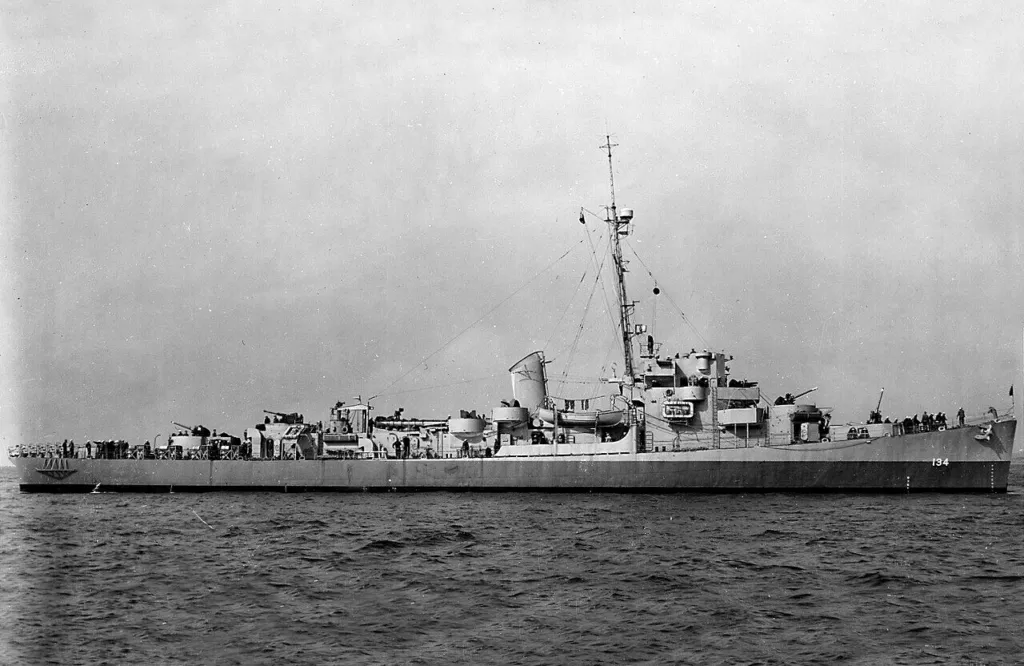
The Navy gave him the story he told for the rest of his life. In 1944, serving on the destroyer escort USS Pope, he needed surgery for an infected thumb. A nurse handed him a glass of orange juice with crystals sitting undissolved at the bottom. He assumed they were a sedative and was unconscious before the anaesthetic arrived. When he woke he found out the crystals were sugar.[16] He took two things from it. The mind can do a great deal with an expectation and nothing else, and any honest test of a drug has to account for that. Both ideas run through everything he later wrote about method.
After the war he went home to Berkeley and finished a PhD in biochemistry at the University of California in 1955, then did postdoctoral work in psychiatry and pharmacology at the University of California, San Francisco. He spent a short time as director of research at Bio-Rad Laboratories before Dow Chemical hired him as a senior research chemist.[2, 1, 16]
2. Dow, a snail killer, and the spice rack
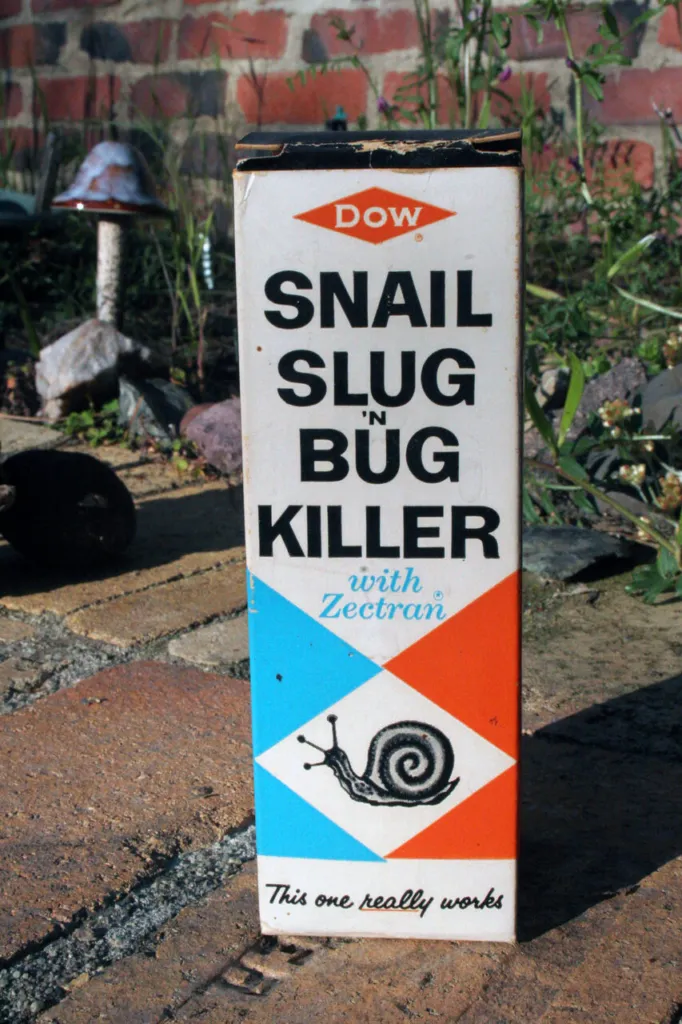
At Dow he made mexacarbate, sold as Zectran, which the company marketed as the first biodegradable pesticide. The patent earned Dow a good deal of money and earned Shulgin something he valued more: the freedom to chase his own questions on company time.[2, 1] He kept a box of the snail bait at home for decades, which tells you something about his sense of humour.
The mescaline day in April 1960 changed the direction of that freedom. Through the early 1960s he published short, careful papers on molecules built around mescaline’s shape. In Experientia in 1963 he described psychoactive compounds related to mescaline; in Nature in 1964 he reported MMDA, 3-methoxy-4,5-methylenedioxyamphetamine.[7, 17] His teenage son Ted helped him in the lab around the time DOM was first made in 1963, a compound roughly a hundred times as potent as mescaline by weight.[16]
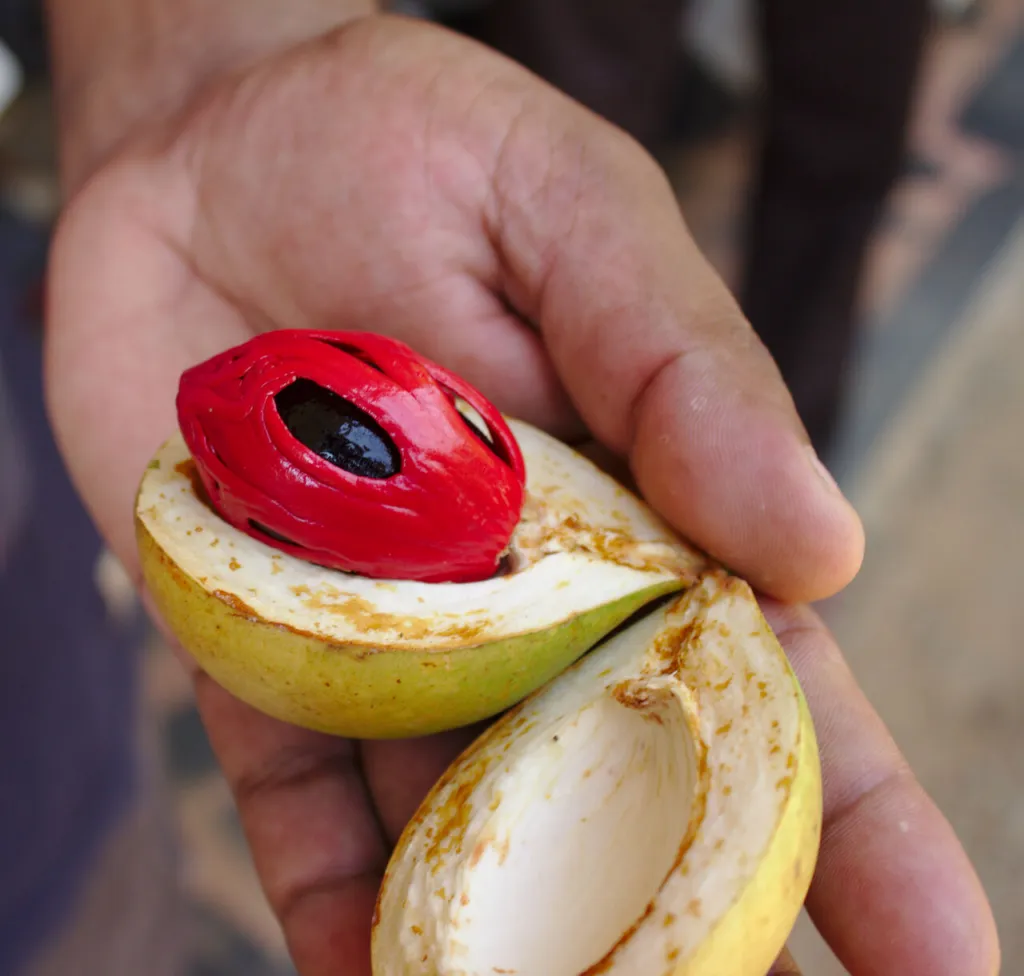
Then he turned to the kitchen. Nutmeg had a long folk reputation as an intoxicant, and its essential oil is rich in myristicin, an aromatic ether whose carbon skeleton sits very close to MMDA. In a 1966 letter to Nature Shulgin put the idea on paper: the body might be able to add an amine to myristicin and turn a spice into something psychoactive.[8] Mechanism A year later, with the physician Thornton Sargent, he did the same exercise for apiole from parsley and dillapiole from dill.[9] This is pharmacognosy in its purest form: start from a plant constituent, follow the chemistry, and ask what it does in a living body. Nobody has shown that the conversion he proposed explains nutmeg poisoning in people, and the question is still open. Unproven
In 1967 Shulgin, Sargent and the Chilean psychiatrist Claudio Naranjo published one of the first evaluations of MDA as an adjunct to psychotherapy.[18] In 1969 the same three wrote up the structure-activity relationships of what they called one-ring psychotomimetics, again in Nature.[19] Read now, that paper is the plan for the next 30 years of his life. By then he had already gone. Dow had grown uncomfortable having its name on the work, and he left the company in December 1966 to work for himself, spending about two years studying neurology at the UCSF School of Medicine before setting up on his own.[16, 2]
3. The Farm
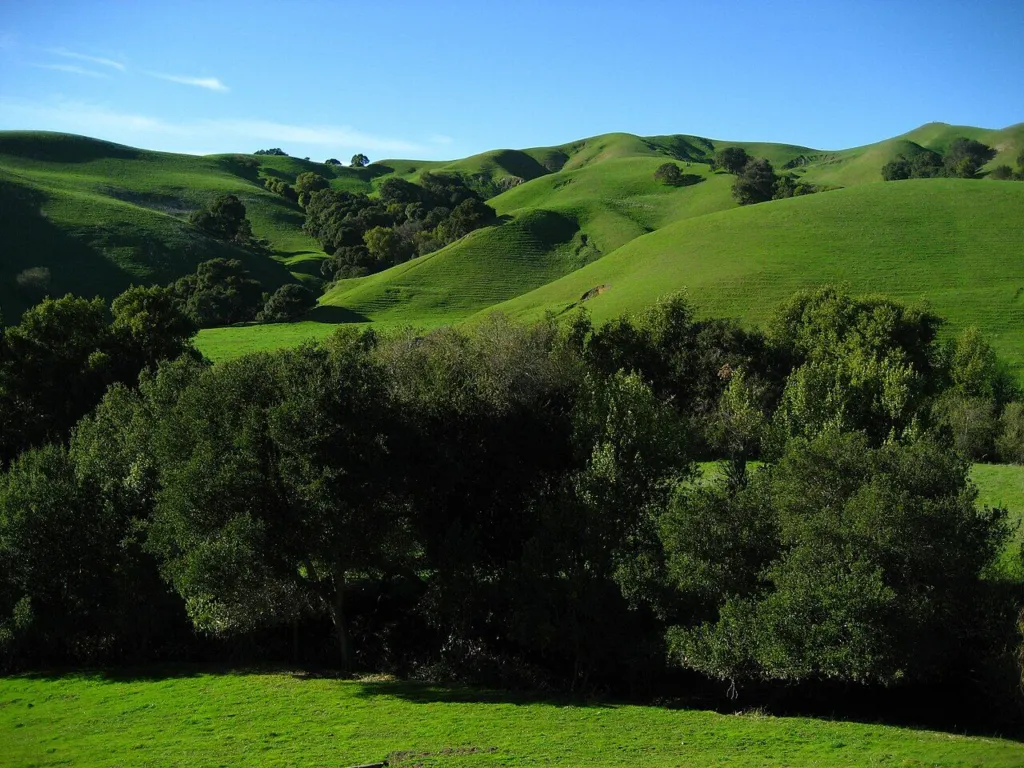
Shulgin set up a laboratory on the family property in Lafayette, in the dry hills of Contra Costa County east of Berkeley. Everyone who knew it called the place the Farm. The lab was a modest outbuilding behind the house, crowded with glassware, reagent bottles and notebooks, and it was where he did nearly all of his independent work from the late 1960s until illness stopped him.[1, 4] He told an interviewer late in life why it existed: “That’s why I have a laboratory out there, to make things that haven’t been made before.”[4]
The Farm was licensed. Shulgin did consulting, forensic analysis and expert-witness work, and through a friendship with Bob Sager, head of the Drug Enforcement Administration’s Western Laboratory, he held a DEA Schedule I licence for analytical work.[1, 16] In 1988 he published a reference manual on the federal Controlled Substances Act, reissued in 1992 as Controlled Substances: Chemical and Legal Guide to Federal Drug Laws, a book that lawyers, chemists and the agency’s own staff used for years.[20] The same government that later raided him had once relied on him and given him awards.
He also taught. Over the years he lectured at the University of California at Berkeley and San Francisco, at San Francisco General Hospital and at San Francisco State University.[1, 16] Section 7 is about how he did it.
4. Dirty pictures
Walk into the Farm and you would have seen rows of brown and amber bottles, each with a molecule drawn on the label in Shulgin’s hand. He called them his dirty pictures, and the 2010 documentary about him by the director Etienne Sauret took that name for its title.[3, 4, 5] The joke has a serious side. A structure diagram is the chemist’s whole language. Shulgin could look at a ring with three methoxy groups and see a family of possible relatives, each one a single change away, and he drew them so he could think with them.
The method was patient and repetitive. He would make a new compound, purify it, and taste it himself first, beginning with an amount far below anything he expected to be active and stepping up slowly over many separate days. Only once he knew what it did would he share it with a small research group of friends, among them Myron and Jean Stolaroff and his long-time colleague Peyton Jacob III.[16, 21] Each person wrote notes. To compare them he devised what became known as the Shulgin Rating Scale, a plus-sign shorthand running from “nothing at all” to the rare, unrepeatable peak he called plus four.[1, 21]
It would not pass a university ethics committee today, and we are not recommending it. What deserves honouring is the record-keeping: written records of every trial, slow escalation, honest reporting of the compounds that did nothing or made people feel unwell, and a refusal to rush. Over roughly four decades the result was more than 200 new psychoactive compounds described in the open literature, with their chemistry and their effects side by side.[5, 21, 22] Attested
5. MDMA, and setting the record straight
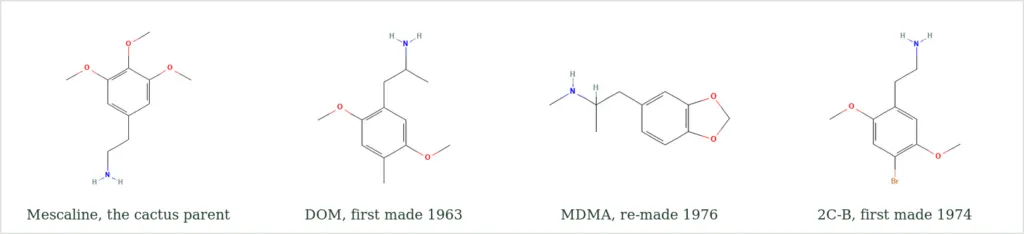
The popular story makes Shulgin the inventor of MDMA. He was not, and he never claimed to be. The German company Merck made it in 1912. US military research looked at MDA and its relatives as possible “truth drugs” between the 1940s and 1960s.[23, 24] Ulrich Benzenhöfer and Torsten Passie went through Shulgin’s own publications and his laboratory notebook for a 2010 paper in Addiction. They found that he synthesised MDMA in 1965 and did not try it. In the mid-1970s he heard about its unusual effect from others, made it again, and tested it himself in September 1976, which his notebook confirms.[23] Confirmed
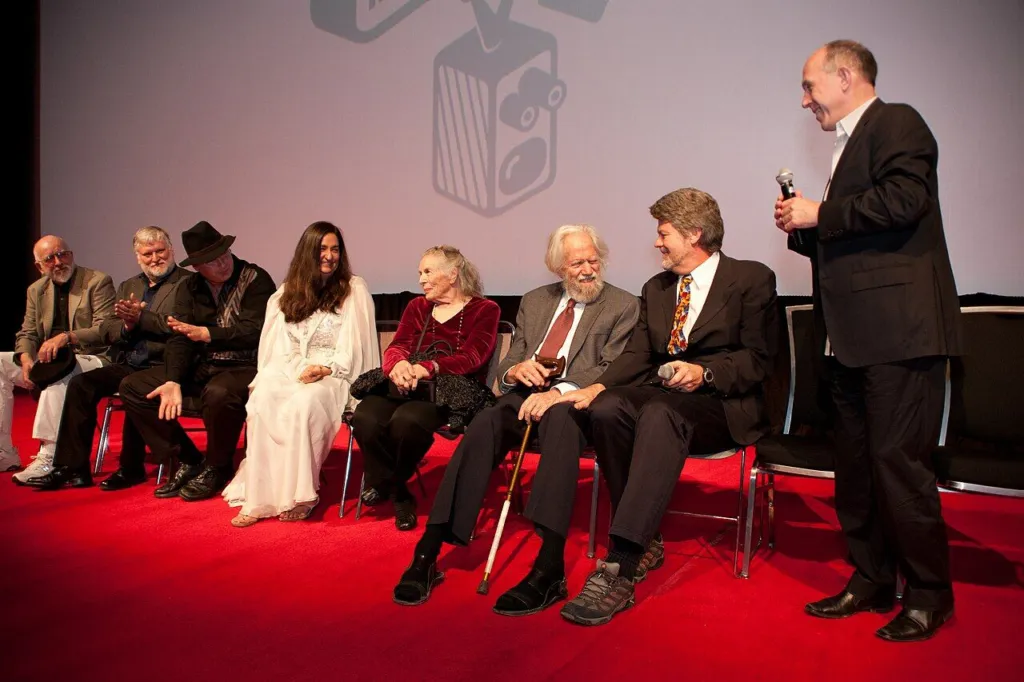
In 1977 he gave some to Leo Zeff, a Bay Area psychologist, who was struck enough by it to introduce it to other psychotherapists, who used it as an adjunct to talking therapy until the DEA made it illegal in 1985. In 1978 Shulgin and the Purdue medicinal chemist David Nichols published the first paper on its effects in humans.[23, 25] Benzenhöfer and Passie conclude that the “father of MDMA” title is wrong and that his real role was larger in a quieter way: he was the scientist who recognised what it might do for therapy and handed it to someone who could test that.[23] Nichols later coined the word “entactogen”, meaning “touching within”, for MDMA and its closest relatives.[26, 27]
6. Ann, and two books written in the open
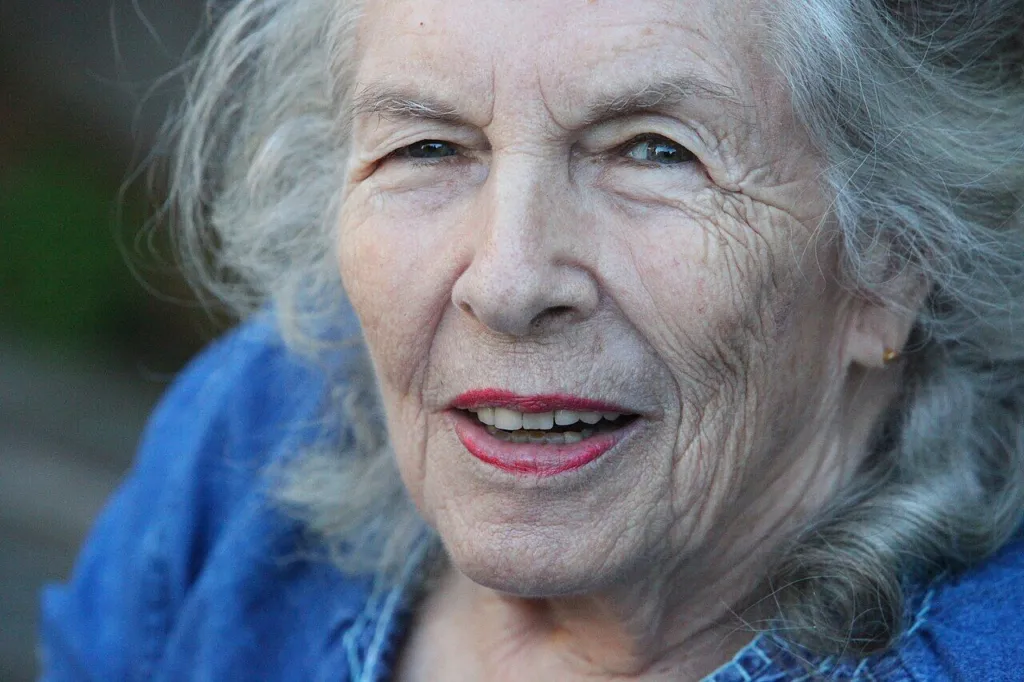
His first wife, Nina, died of a stroke in 1977. In the autumn of 1978 he met Ann Perry, born in Wellington, New Zealand, in 1931, and they married in 1981.[2, 1, 28] Ann became his partner in every sense. She sat in the research group, wrote up her own experiences with a novelist’s ear, worked as a lay therapist with MDMA before it was banned, and recorded his 1987 lectures on cassette.[28, 6]
Together they wrote PiHKAL: A Chemical Love Story (1991) and TiHKAL: The Continuation (1997), both published by their own small press, Transform Press. Each book has two halves. The first is a fictionalised memoir of their lives and their love affair, told by two narrators. The second is a catalogue of compounds, 179 phenethylamines in PiHKAL and 55 tryptamines in TiHKAL, each with its chemistry, the amounts tried, the duration and the notes from the people who tried it.[21, 22]
Putting all of that in print was a deliberate choice. Shulgin believed that knowledge about the mind belonged to everyone, and that a result hidden in a filing cabinet does nobody any good. The authorities read it differently. A DEA spokesman called the books “pretty much cookbooks on how to make illegal drugs”, and in 1994, three years after PiHKAL came out, agents raided the Farm. He was fined US$25,000 for holding anonymous samples that were not part of a pending case, and he surrendered his licence rather than accept the restrictions offered with it.[16, 1] He kept writing. The Simple Plant Isoquinolines, written with Ann’s daughter Wendy Perry, appeared in 2002, and The Shulgin Index, with Tania Manning and Paul Daley, in 2011.[10, 29]
Ann outlived him by eight years. She died at their home in Lafayette on 9 July 2022, aged 91.[28]
7. Warts and all: the teacher
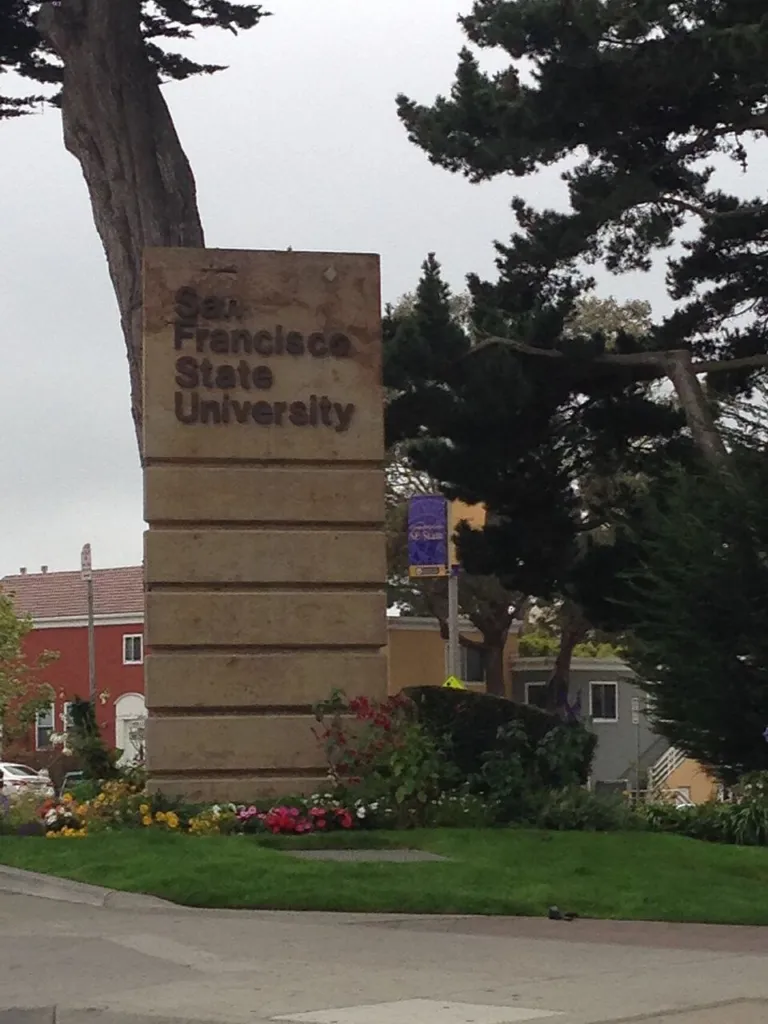
In 1987 Shulgin taught a semester-long introductory course on drugs and pharmacology at San Francisco State University. Ann sat in with a cassette recorder. More than thirty years later Transform Press digitised and transcribed the tapes and published them in 2021 as The Nature of Drugs, Volume One, with a second volume after it.[6]
Volume One covers lectures one to eight: where drugs come from, the history of American drug enforcement, the anatomy of the nervous system, the routes by which a drug can enter the body, the kinds of action a drug can have, memory and states of consciousness, and how research is done.[6] That is a standard first-year syllabus. The way he delivered it was anything but standard.
Dr Iggulden, who directed this essay, read Volume One and came away struck by the humility of it. Here was a man of formidable intellect who had walked away from a secure corporate career, and in front of a room of undergraduates he never set himself above them. He did not tell students they were wrong. He took the question, turned it over, found the part of it that was interesting, and built the answer from there. Reviewers of the book saw the same thing. Ryan Greendyk, writing for Lucid News, describes a lecturer who asked students to put their pens down and listen to the “music” of the talk, who kept returning to the same themes from new angles, and who wove their questions together with stories from his own life.[30]
The stories ranged a long way. He told the class about his Navy days, about Franz Mesmer and animal magnetism, and about the power of belief to make a body sick or well, a thread that runs straight back to the glass of orange juice on the USS Pope.[30] On method he was blunt: one failed experiment can disprove a claim, and no number of successful ones can prove it. His advice to anyone doing research, as Greendyk records it, was not to fall in love with the hypothesis.[30]
“Do not fall in love with the hypothesis.”Alexander Shulgin, San Francisco State University, 1987, as recorded in The Nature of Drugs and quoted in Lucid News[30]
That is what “warts and all” means here. The transcripts keep the digressions, the jokes and the occasional wrong turn that a polished textbook would have cut. What survives is the sound of a very clever man thinking out loud in front of people he respected, which is why so many readers say they can hear his voice on the page.[6, 30] It is a model for anyone who teaches pharmacology, this writer included.
8. The quiet work nobody filmed
The psychedelic books made Shulgin famous. A large part of his working life went into science that drew no attention at all, and much of it has helped people in ways that have nothing to do with altered states.
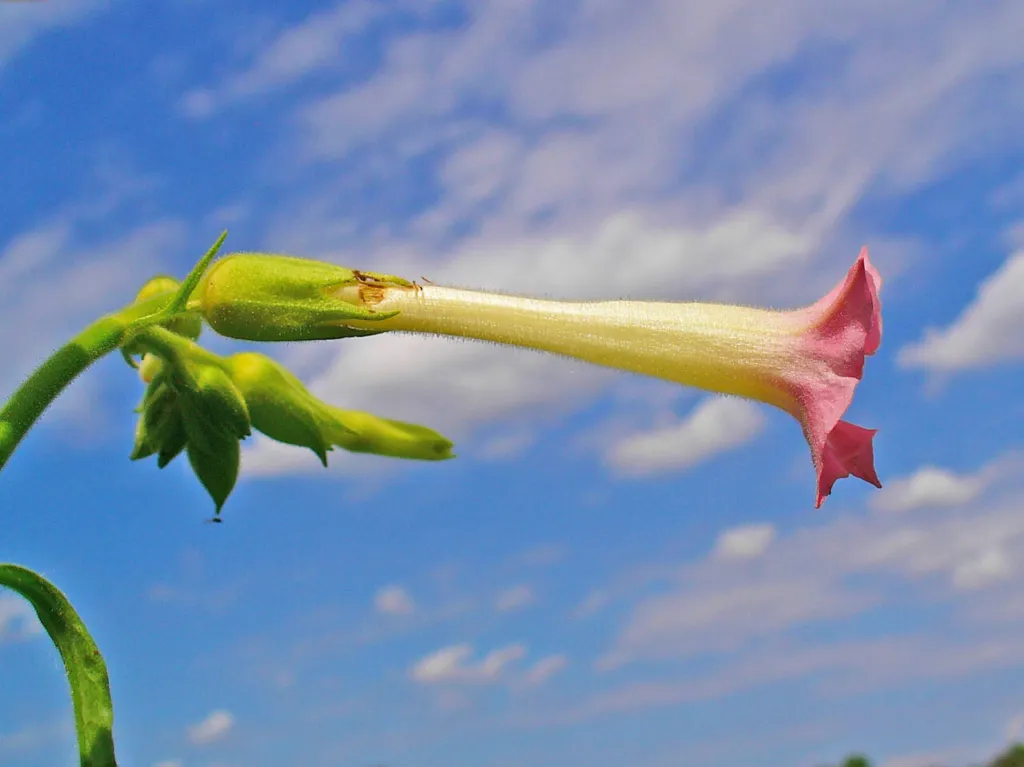
With Peyton Jacob III and the clinical pharmacologist Neal Benowitz at the University of California, San Francisco, he spent years on nicotine metabolism. Their group synthesised trans-3′-hydroxycotinine, a major nicotine metabolite, worked out the stereochemistry of how humans make it, and helped develop the urine tests that still tell researchers whether someone is smoking or using other tobacco.[31, 32, 33] Confirmed Smoking-cessation research leans on that kind of measurement every day.
He helped build tools for brain science. Radioactively labelled versions of DOI and 2C-I, two of his phenethylamines, were used in 1987 and 1990 to map where serotonin 5-HT2 receptors sit in the rat brain.[34, 35] DOI is still one of the standard reference compounds in 5-HT2A receptor research, and laboratories studying everything from depression to inflammation use it.[36] Mechanism
He kept extending the map. In 1968 he made Ariadne (4C-D), a relative of DOM without hallucinogenic effects that went on to clinical testing, an early sign that his families of molecules could hold medicines as well as experiences.[16] In 1980 he and M. F. Carter described DIPT and 5-MeO-DIPT, two orally active tryptamines.[37] In 1999 he co-authored early work showing how the beta-keto amphetamines, methylone among them, act on monoamine transporters, and in 2012, well into his eighties, his name was on a Neuropsychopharmacology paper on mephedrone and methylone.[38, 39] And he never left the plants behind. In 2008 he was a co-author on a paper reporting MDMA-like compounds in cacti.[40]
9. The medicines arriving now
Shulgin died believing that the compounds he had described would one day be studied properly as medicines. In several cases that is now happening, and the evidence varies a lot in strength. We have labelled it accordingly.
Australia moved first. On 3 February 2023 the TGA announced that from 1 July 2023 authorised psychiatrists could prescribe MDMA for post-traumatic stress disorder and psilocybin for treatment-resistant depression, making Australia the first country to recognise either as a medicine in this way.[11] Confirmed
MDMA for PTSD. Two phase 3 trials sponsored by the Multidisciplinary Association for Psychedelic Studies set the pace. In the first, 90 people with severe PTSD received three sessions of manualised therapy with either MDMA or placebo. Symptom scores on the Clinician-Administered PTSD Scale fell by an average of 24.4 points with MDMA and 13.9 with placebo, an effect size of 0.91.[15] The second trial, in 104 people with moderate to severe PTSD, found falls of 23.7 and 14.8 points, an effect size of 0.7, with no deaths and no serious adverse events, although severe adverse events were more common with MDMA (5 of 53 participants) than with placebo (2 of 51).[41] Confirmed Overseas, the United States Food and Drug Administration declined to approve the treatment on 9 August 2024 and asked for a further phase 3 trial, citing among other things the difficulty of keeping participants blind to whether they had received the drug.[42] Closer to home, a 2025 overview by Australian researchers, published in the Australian and New Zealand Journal of Psychiatry, pulled together 14 systematic reviews. It found large average benefits but rated the certainty of the evidence low to very low, because of risk of bias, indirectness and imprecision. It also found that adverse events had mostly been reported spontaneously rather than collected systematically, and that long-term safety data were lacking.[43] Meta-analyses are still arriving in 2026.[44] The honest summary: the evidence suggests real benefit for some people with PTSD, and we have not yet confirmed how large or durable it is. Evidence suggests
Methylone. A close cousin of MDMA from the beta-keto family Shulgin helped describe.[38] In a phase 2 trial published in JAMA Psychiatry in May 2026, 65 adults with PTSD took four weekly doses of methylone (coded TSND-201) or placebo, with no psychotherapy. The methylone group improved by about 9.6 points more on the PTSD scale than placebo. The trial ran at 16 sites in the United States, the United Kingdom and Ireland and was sponsored by Transcend Therapeutics, the company developing the drug. The paper’s conflict-of-interest statement discloses that five of its eight authors are full-time employees with equity in the company and that three are co-inventors on related patents.[45] Evidence suggests
2C-B. The compound Shulgin called one of his favourites finally had its first controlled human study in 2023.[46] At Maastricht University, 22 healthy volunteers with previous psychedelic experience took 20 mg of 2C-B, 15 mg of psilocybin, or placebo. 2C-B produced a genuine psychedelic state of moderate depth that wore off within about six hours, shorter than psilocybin.[46] The same group published brain-imaging comparisons in 2026.[47] This is healthy-volunteer pharmacology. No trial has yet tested 2C-B as a treatment. Unproven
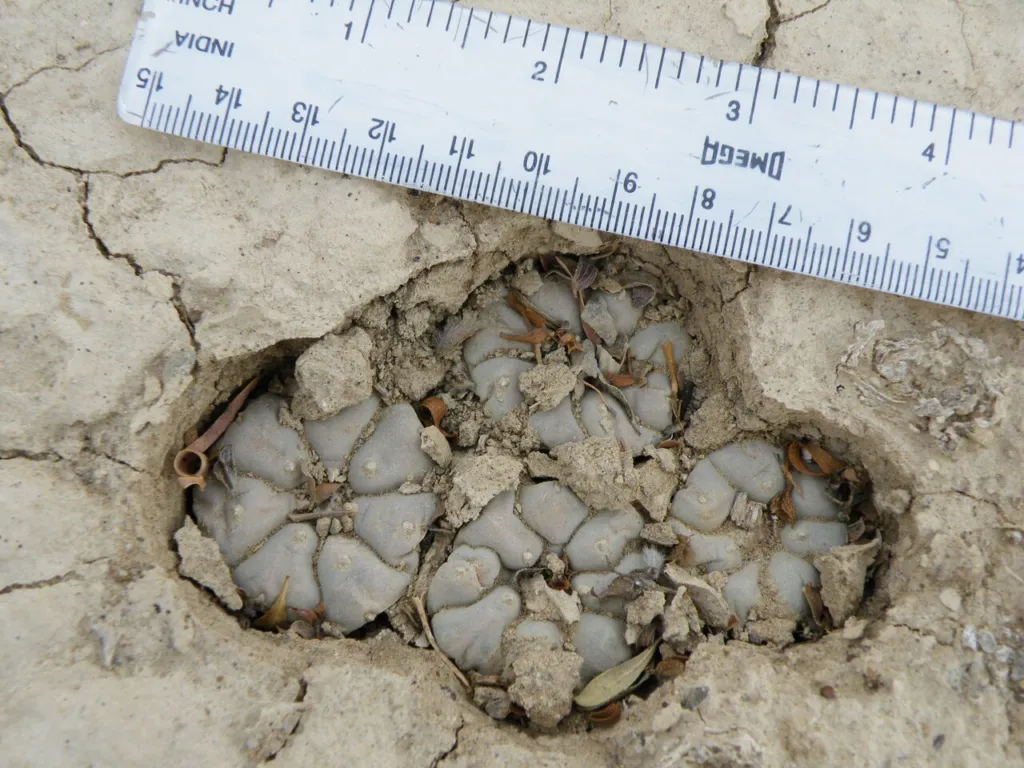
Mescaline. The cactus alkaloid where it all began got its first modern dose-finding study in 2024, when researchers in Basel gave 16 healthy volunteers doses from 100 to 800 mg under double-blind conditions and measured blood levels and effects for 30 hours. Effects lasted from about six to fourteen hours depending on dose. Blood pressure and heart rate rose, and nausea and vomiting were common at the highest dose.[48] Again, this lays the groundwork for therapeutic trials and is not one itself. Unproven
DOI and inflammation. In animal models, low doses of DOI and related 5-HT2A agonists reduce markers of inflammation in airways and blood vessels, work led by Charles Nichols at Louisiana State University.[36] None of it has been tested in people. Mechanism
We cannot count the people Shulgin’s work has helped. Some of them are the therapy patients of the late 1970s and early 1980s whom Leo Zeff and his colleagues treated; some are the trial participants of the last decade; some are smokers whose quit attempts were measured with tests his group helped build. The trials can count some of them. The rest show up only in letters, interviews and the books themselves.
10. The last years, and what is left in the hills
Shulgin had an aortic valve replaced in April 2008, at 82. A stroke followed in November 2010 and another that December. Liver cancer was confirmed early in 2014. He died at home in Lafayette at five in the afternoon on 2 June 2014, aged 88, with his family around him.[2, 1] His son Ted had died in 2011.[16]
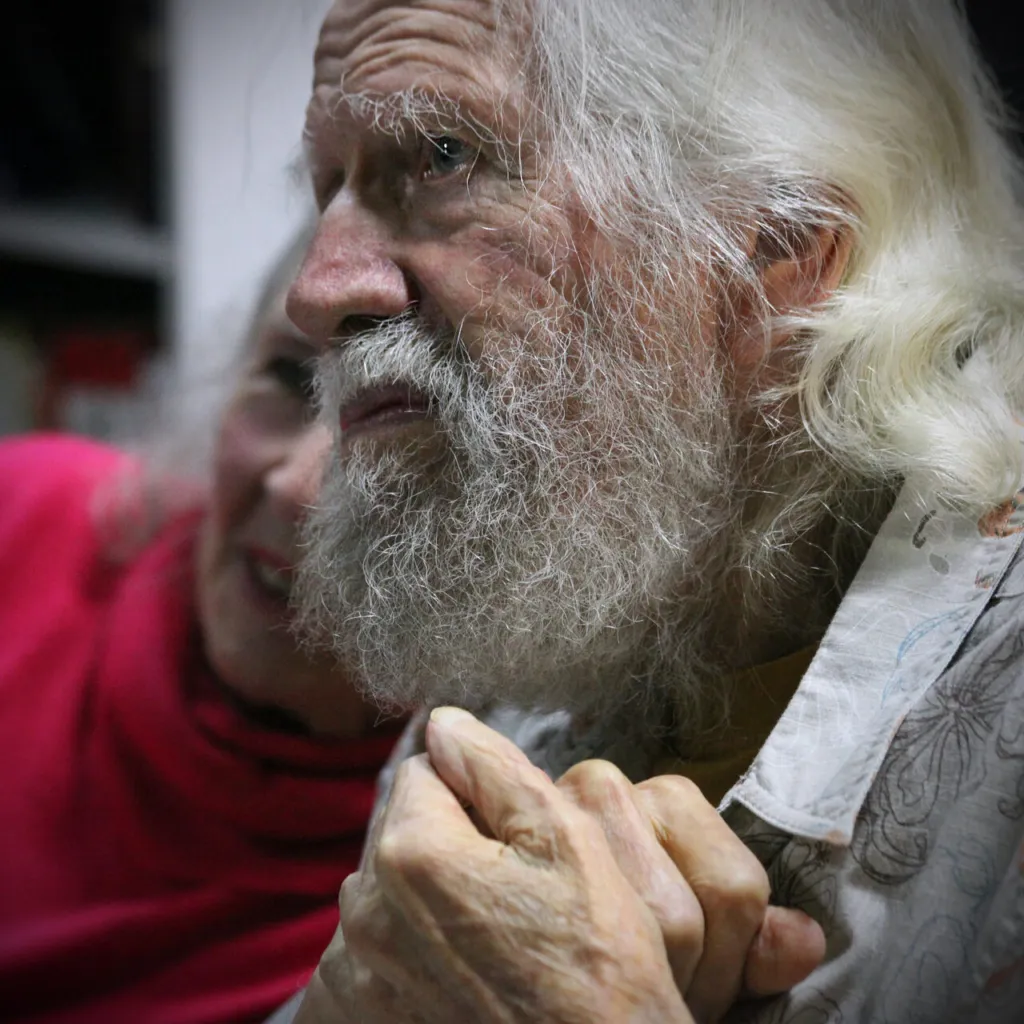
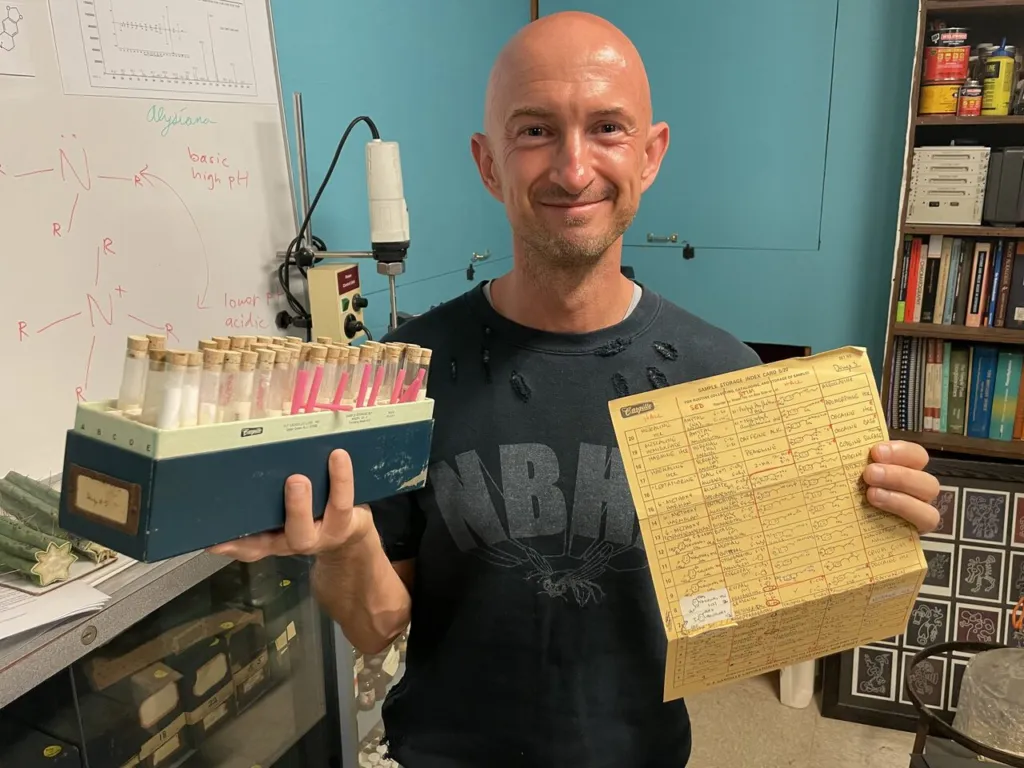
The Alexander Shulgin Research Institute, set up by his family and colleagues, looks after his archive and continues his work.[1] The lab is still there, as the 2025 photograph in section 4 shows, with racks of labelled vials and molecules still drawn in marker on the whiteboard. The dirty pictures outlasted the man who drew them, and some of them are on their way into clinics on the other side of the Pacific, including Australia’s authorised psychiatric clinics.
About the Australian Institute of Pharmacognosy
The Australian Institute of Pharmacognosy studies medicinal plants and the molecules that come from them, holding traditional knowledge and modern pharmacology to the same standard of evidence. Our head office is in Cardwell, far north Queensland. Journal essays in the history of pharmacology sit beside our literature reviews and the Australian Herbal Pharmacopoeia. This essay is a living document: it is reviewed regularly and will be updated as the research it describes moves on.
Suggested citation: Ridley T. Dirty Pictures, Warts & All: Alexander “Sasha” Shulgin, 1925–2014. AIP Journal. Cardwell (QLD): Australian Institute of Pharmacognosy; 2026.
Educational content only; not medical, legal or regulatory advice. Australian scheduling reflects the Poisons Standard and TGA publications as read in October 2026 and may change. United States material, including FDA and DEA actions, is described as overseas material and does not govern Australian law. No product, seller or sponsor is named or endorsed.
References
48 references: tap to open
Listed in order of first citation. Every PMID was checked against PubMed in October 2026, and every web source was read from its own page on that date. Book citations are to the published editions.
- Alexander Shulgin Research Institute. Alexander T. Shulgin. Read by the Institute in October 2026. https://www.shulginresearch.net/about/sasha_shulgin/
- Transform Press. Biography of Alexander Shulgin (aka Sasha Shulgin). Read by the Institute in October 2026. https://transformpress.com/?p=249
- Ito R. Weekend Weirdness: SXSW trailer and review, Dirty Pictures. /Film. 2010. Records that “dirty pictures” is what Shulgin called the structure drawings on his bottles. slashfilm.com
- Interview Magazine. Love and Other Drugs (on the documentary Dirty Pictures). Read by the Institute in October 2026. https://interviewmagazine.com/culture/love-and-other-drugs
- Sauret E (director). Dirty Pictures [documentary film, 86 min]. United States; 2010. Festival listing: Mountainfilm.
- Shulgin A. The Nature of Drugs: History, Pharmacology, and Social Impact. Volume One. Lectures given at San Francisco State University in 1987, recorded and transcribed by Ann Shulgin. Berkeley (CA): Transform Press; 2021. ISBN 978-0-9995472-1-2. Publisher’s page: transformpress.com
- Shulgin AT. Psychotomimetic agents related to mescaline. Experientia. 1963;19:127-8. PMID 13988773.
- Shulgin AT. Possible implication of myristicin as a psychotropic substance. Nature. 1966;210:380-4. PMID 5336379.
- Shulgin AT, Sargent T. Psychotropic phenylisopropylamines derived from apiole and dillapiole. Nature. 1967;215:1494-5. PMID 4861200.
- Shulgin A, Perry W. The Simple Plant Isoquinolines. Berkeley (CA): Transform Press; 2002.
- Therapeutic Goods Administration. Change to classification of psilocybin and MDMA to enable prescribing by authorised psychiatrists [media release]. 3 February 2023. tga.gov.au
- Therapeutic Goods Administration. Understanding the changes to MDMA and psilocybin access. Read by the Institute in October 2026. tga.gov.au
- Green AR, Mechan AO, Elliott JM, O’Shea E, Colado MI. The pharmacology and clinical pharmacology of 3,4-methylenedioxymethamphetamine (MDMA, “ecstasy”). Pharmacol Rev. 2003;55(3):463-508. PMID 12869661. DOI 10.1124/pr.55.3.3.
- Garcia MR, Gomes NGM, Dias-da-Silva D. Rare but relevant: MDMA and hyponatraemia. Addiction. 2026;121(3):713-8. PMID 41360080. DOI 10.1111/add.70255.
- Mitchell JM, Bogenschutz M, Lilienstein A, Harrison C, Kleiman S, Parker-Guilbert K, et al. MDMA-assisted therapy for severe PTSD: a randomized, double-blind, placebo-controlled phase 3 study. Nat Med. 2021;27(6):1025-33. PMID 33972795. DOI 10.1038/s41591-021-01336-3.
- Wikipedia contributors. Alexander Shulgin. Read by the Institute in October 2026; used only for family dates, the 1944 USS Pope episode and the DOM and 2C-B dates, each checked against the Transform Press and Shulgin Research Institute biographies where they overlap. https://en.wikipedia.org/wiki/Alexander_Shulgin
- Shulgin AT. 3-Methoxy-4,5-methylenedioxy amphetamine, a new psychotomimetic agent. Nature. 1964;201:1120-1. PMID 14152788.
- Naranjo C, Shulgin AT, Sargent T. Evaluation of 3,4-methylenedioxyamphetamine (MDA) as an adjunct to psychotherapy. Med Pharmacol Exp Int J Exp Med. 1967;17(4):359-64. PMID 5631047.
- Shulgin AT, Sargent T, Naranjo C. Structure-activity relationships of one-ring psychotomimetics. Nature. 1969;221:537-41. PMID 5789297.
- Shulgin AT. The Controlled Substances Act: A Resource Manual of the Current Status of the Federal Drug Laws. Lafayette (CA): the author; 1988. 2nd ed. as Controlled Substances: Chemical and Legal Guide to Federal Drug Laws. Berkeley (CA): Ronin Publishing; 1992.
- Shulgin A, Shulgin A. PiHKAL: A Chemical Love Story. Berkeley (CA): Transform Press; 1991.
- Shulgin A, Shulgin A. TiHKAL: The Continuation. Berkeley (CA): Transform Press; 1997.
- Benzenhöfer U, Passie T. Rediscovering MDMA (ecstasy): the role of the American chemist Alexander T. Shulgin. Addiction. 2010;105(8):1355-61. PMID 20653618. DOI 10.1111/j.1360-0443.2010.02948.x.
- Passie T, Benzenhöfer U. MDA, MDMA, and other “mescaline-like” substances in the US military’s search for a truth drug (1940s to 1960s). Drug Test Anal. 2018;10(1):72-80. PMID 28851034.
- Shulgin AT. The background and chemistry of MDMA. J Psychoactive Drugs. 1986;18(4):291-304. PMID 2880943. DOI 10.1080/02791072.1986.10472361.
- Nichols DE. Differences between the mechanism of action of MDMA, MBDB, and the classic hallucinogens. Identification of a new therapeutic class: entactogens. J Psychoactive Drugs. 1986;18(4):305-13. PMID 2880944.
- Nichols DE. Entactogens: how the name for a novel class of psychoactive agents originated. Front Psychiatry. 2022;13:863088. PMID 35401275.
- Multidisciplinary Association for Psychedelic Studies. In Memoriam: Ann Shulgin, Forerunner of Today’s Psychedelic Re-Emergence, Dies at 91. 2022. maps.org
- Shulgin A, Manning T, Daley PF. The Shulgin Index, Volume One: Psychedelic Phenethylamines and Related Compounds. Berkeley (CA): Transform Press; 2011.
- Greendyk R. On drugs, freedom, and human nature: a course with Alexander Shulgin [review of The Nature of Drugs, Vol. 1]. Lucid News. Read by the Institute in October 2026. lucid.news
- Jacob P 3rd, Benowitz NL, Shulgin AT. Recent studies of nicotine metabolism in humans. Pharmacol Biochem Behav. 1988;30(1):249-53. PMID 3174750.
- Jacob P 3rd, Shulgin AT, Benowitz NL. Synthesis of (3′R,5′S)-trans-3′-hydroxycotinine, a major metabolite of nicotine. J Med Chem. 1990;33(7):1888-91. PMID 2362266.
- Jacob P 3rd, Yu L, Shulgin AT, Benowitz NL. Minor tobacco alkaloids as biomarkers for tobacco use: comparison of users of cigarettes, smokeless tobacco, cigars, and pipes. Am J Public Health. 1999;89(5):731-6. PMID 10224986.
- McKenna DJ, Mathis CA, Shulgin AT, Sargent T 3rd, Saavedra JM. Autoradiographic localization of binding sites for 125I-DOI, a new psychotomimetic radioligand, in the rat brain. Eur J Pharmacol. 1987;137(2-3):289-90. PMID 3609149.
- Johnson MP, Mathis CA, Shulgin AT, Hoffman AJ, Nichols DE. [125I]-2-(2,5-dimethoxy-4-iodophenyl)aminoethane ([125I]-2C-I) as a label for the 5-HT2 receptor in rat frontal cortex. Pharmacol Biochem Behav. 1990;35(1):211-7. PMID 2315361.
- Flanagan TW, Nichols CD. Psychedelics as anti-inflammatory agents. Int Rev Psychiatry. 2018;30(4):363-75. PMID 30102081.
- Shulgin AT, Carter MF. N,N-Diisopropyltryptamine (DIPT) and 5-methoxy-N,N-diisopropyltryptamine (5-MeO-DIPT). Two orally active tryptamine analogs with CNS activity. Commun Psychopharmacol. 1980;4(5):363-9. PMID 6949674.
- Cozzi NV, Sievert MK, Shulgin AT, Jacob P 3rd, Ruoho AE. Inhibition of plasma membrane monoamine transporters by beta-ketoamphetamines. Eur J Pharmacol. 1999;381(1):63-9. PMID 10528135.
- Baumann MH, Ayestas MA Jr, Partilla JS, Sink JR, Shulgin AT, Daley PF, et al. The designer methcathinone analogs, mephedrone and methylone, are substrates for monoamine transporters in brain tissue. Neuropsychopharmacology. 2012;37(5):1192-203. PMID 22169943.
- Bruhn JG, El-Seedi HR, Stephanson N, Beck O, Shulgin AT. Ecstasy analogues found in cacti. J Psychoactive Drugs. 2008;40(2):219-22. PMID 18720674.
- Mitchell JM, Ot’alora G M, van der Kolk B, Shannon S, Bogenschutz M, Gelfand Y, et al. MDMA-assisted therapy for moderate to severe PTSD: a randomized, placebo-controlled phase 3 trial. Nat Med. 2023;29(10):2473-80. PMID 37709999. DOI 10.1038/s41591-023-02565-4.
- NPR. FDA gives thumbs down to MDMA, for now, demanding further research. 9 August 2024. wunc.org (NPR syndication). Overseas regulator; does not govern Australian law.
- Sze Jing Yong A, Bratuskins S, Sultani MS, Blakeley B, Davey CG, Bell JS, et al. Safety and efficacy of methylenedioxymethamphetamine (MDMA)-assisted psychotherapy in post-traumatic stress disorder: an overview of systematic reviews and meta-analyses. Aust N Z J Psychiatry. 2025;59(4):339-60. PMID 39979849. DOI 10.1177/00048674251315642.
- Fares-Otero NE, Furukawa Y, Sijbrandij M, Leucht S, Vieta E, Cuijpers P, et al. Efficacy of 3,4-methylenedioxymethamphetamine (MDMA)-assisted therapy for posttraumatic stress disorder: a systematic review and meta-analysis of clinical and functional outcomes. Eur Neuropsychopharmacol. 2026;107:112802. PMID 41825162. DOI 10.1016/j.euroneuro.2026.112802.
- Jones A, Warner-Schmidt J, Kwak H, Stogniew M, Mandell B, Ching THW, et al. Efficacy and safety of the neuroplastogen TSND-201 for the treatment of PTSD: a randomized clinical trial. JAMA Psychiatry. 2026;83(5):469-77. PMID 41706459. DOI 10.1001/jamapsychiatry.2025.4625.
- Mallaroni P, Mason NL, Reckweg JT, Paci R, Ritscher S, Toennes SW, et al. Assessment of the acute effects of 2C-B vs. psilocybin on subjective experience, mood, and cognition. Clin Pharmacol Ther. 2023;114(2):423-33. PMID 37253161. DOI 10.1002/cpt.2958.
- Mallaroni P, Singleton SP, Mason NL, Satterthwaite TD, Ramaekers JG. Spatiotemporal mapping of brain organisation following the administration of 2C-B and psilocybin. Mol Psychiatry. 2026;31(6):3295-307. PMID 41634136.
- Klaiber A, Schmid Y, Becker AM, Straumann I, Erne L, Jelusic A, et al. Acute dose-dependent effects of mescaline in a double-blind placebo-controlled study in healthy subjects. Transl Psychiatry. 2024;14(1):395. PMID 39349427. DOI 10.1038/s41398-024-03116-2.
Image credits
- Cover; Zectran box, 2009; Ann Shulgin, 2011; Sasha and Ann Shulgin, 2011: Jon Hanna, CC BY-SA 3.0, via Wikimedia Commons.
- Farm laboratory, 2025: Satosomani, CC BY-SA 4.0, via Wikimedia Commons.
- USS Pope: U.S. Navy, public domain. Lafayette Ridge: public domain. Both via Wikimedia Commons.
- Nutmeg: Slashme, CC BY-SA 4.0. Tobacco flower: H. Zell, CC BY-SA 3.0. San Francisco State University: Runner1928, CC BY-SA 3.0. Peyote: Amante Darmanin, CC BY 2.0. Austin, 2010: Charlie Llewellin, CC BY-SA 2.0. All via Wikimedia Commons.
- Structure drawings: PubChem, U.S. National Library of Medicine, public domain; plate assembled by the Institute.
The Institute sets and publishes its own monographs. The catalogue is in Publications.