

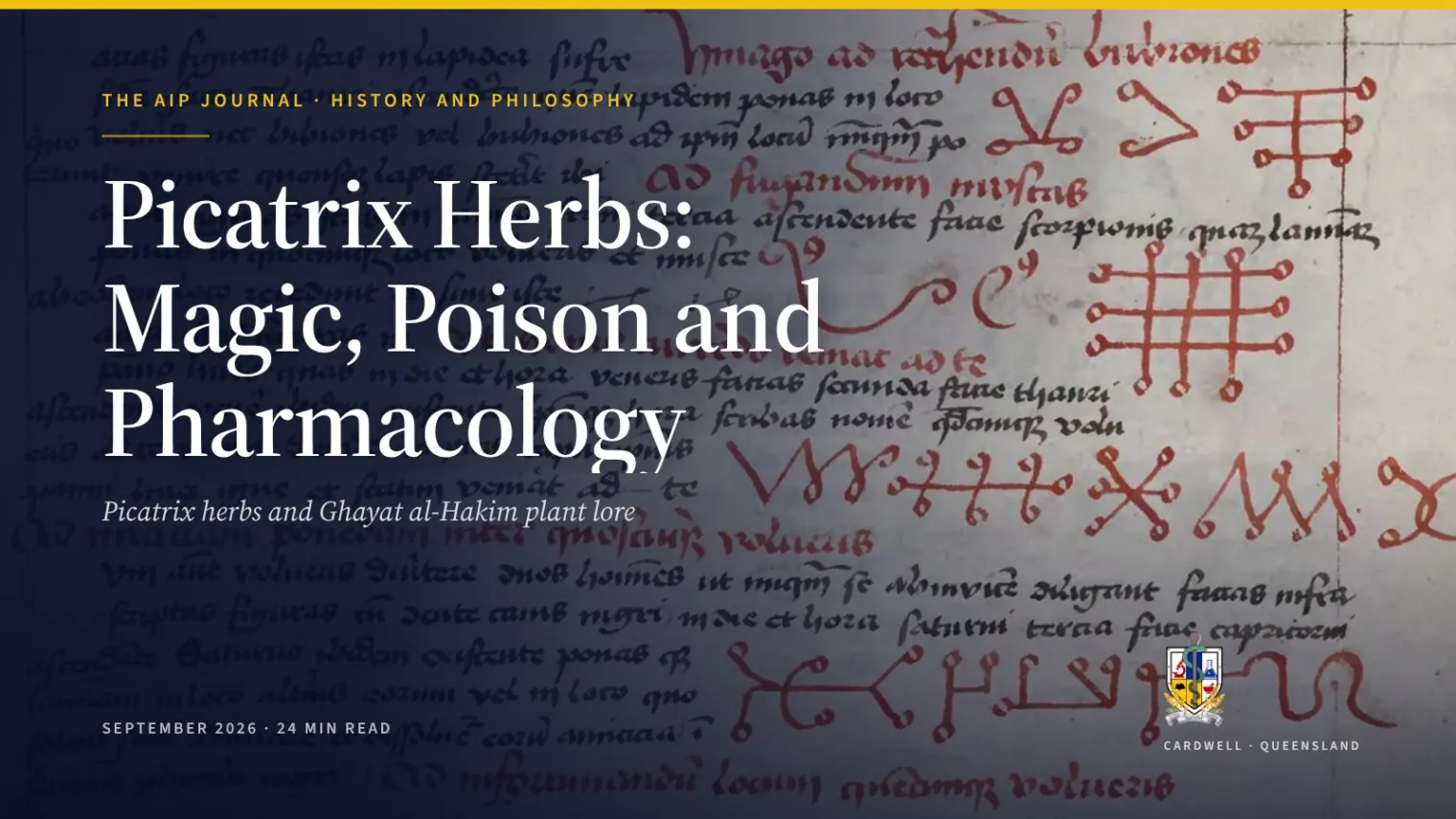
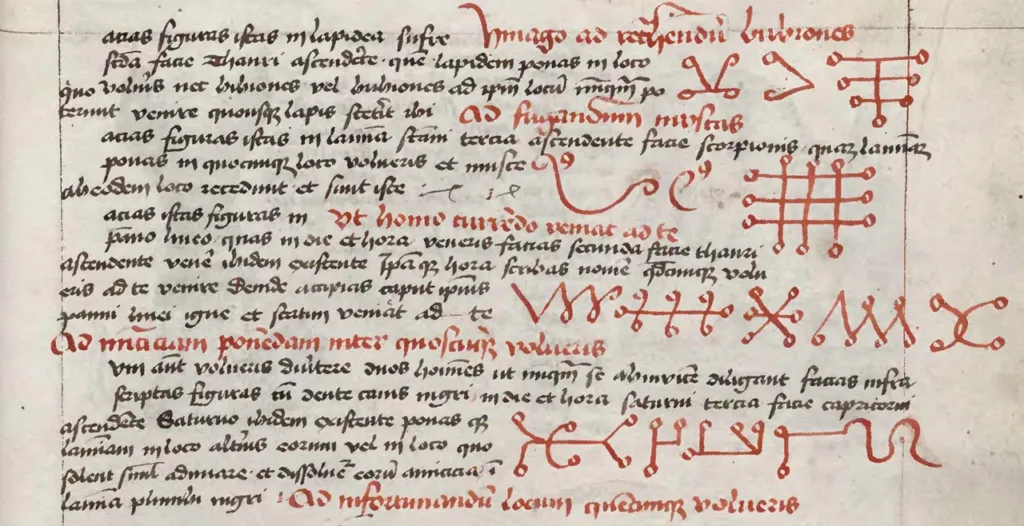
Cover: talismanic figures in a fifteenth-century Latin Picatrix, catalogued as Kraków, Jagiellonian Library MS 793, fol. 189r. Public domain · Wikimedia Commons
A medieval magician did not open the Picatrix and find a neat pharmacology chapter waiting politely between the planets. He found a grimoire: smoke, images, timings, planetary sympathies, borrowed authorities and enough poisonous botany to make a safety officer reach for the coffee with both hands. The interesting question is not whether the magic works. It is what the plant choices reveal about observation.
This essay turns AIP’s plant register into an essay a reader can sit down with. It follows the Ghayat al-Hakim across its herbs, resins, trees, aromatics, narcotics and poisons, asking where medieval sensory classification overlaps with chemistry, and where symbolism simply wears a laboratory coat it has not earned.
This article is educational. It is not medical advice, and nothing in it is a recommendation to obtain, prepare, burn, inhale, ingest or apply any plant, resin or product named here.
Several plants named in this historical text are poisonous, controlled, prohibited in therapeutic goods, or otherwise dangerous. For snakebite in Australia: call 000 immediately, apply a pressure immobilisation bandage, keep the person still, and do not apply, take or burn any plant. Antivenom, given in hospital, is the only specific treatment. For suspected poisoning by any plant, call the Poisons Information Centre on 13 11 26, 24 hours a day, anywhere in Australia, or 000 in an emergency. There, that’s the part medieval romance always forgets.
| Text | Ghayat al-Hakim, known in Latin Europe as Picatrix. Attested §1 |
| AIP count | 153 distinct plant entries in the working register; disputed names are counted conservatively and marked as uncertain. Attested §1 |
| Core finding | The strongest pharmacological matches are in sleep, delirium, purging and poison; love, favour and kingly material is mostly symbolic. Mechanism §4 |
| Safety line | This is education and intellectual history, not a pharmacopoeia and not a recommendation to obtain, prepare, burn or ingest anything named here. §6 |
The Picatrix is esoteric literature: a learned technical grimoire with manuscript descent, named authorities and a theory of matter and the heavens. It is not folklore, and calling it folklore muddies both fields.
Working through all four books, AIP’s current register counts 153 distinct plant entries. Resins and aromatics dominate because the normal operation is suffumigation: plants are burned to make ritual smoke. Nobody in the text is brewing a tea.
The text is most accurate where the effect is fast, physical and hard to miss: sleep, stupor, purging, delirium and poisoning. It is weakest where the desired result is social or symbolic: love, favour, authority and attraction. In short, it knew a poison when one ruined the afternoon; it did not chemically bind anyone’s affections, despite centuries of very confident stationery.
 1 · The Book Before The Plants
 2 · The Sorting Hat Is Galen
 3 · Everything Goes On The Fire
 4 · Where The Book Is Right
 5 · Where The Book Is Poetry
 6 · Where The Book Is Dangerous
 7 · The Hidden Virtue
 8 · What AIP Can Use
 9 · Discussion And Research Agenda
Chapter 1The Book Before The Plants
The Arabic title is Ghayat al-Hakim, the Goal of the Sage. The Latin title Picatrix is the later European name by which the work became famous, or at least notorious in the way learned books become notorious when readers are frightened of footnotes. Attested
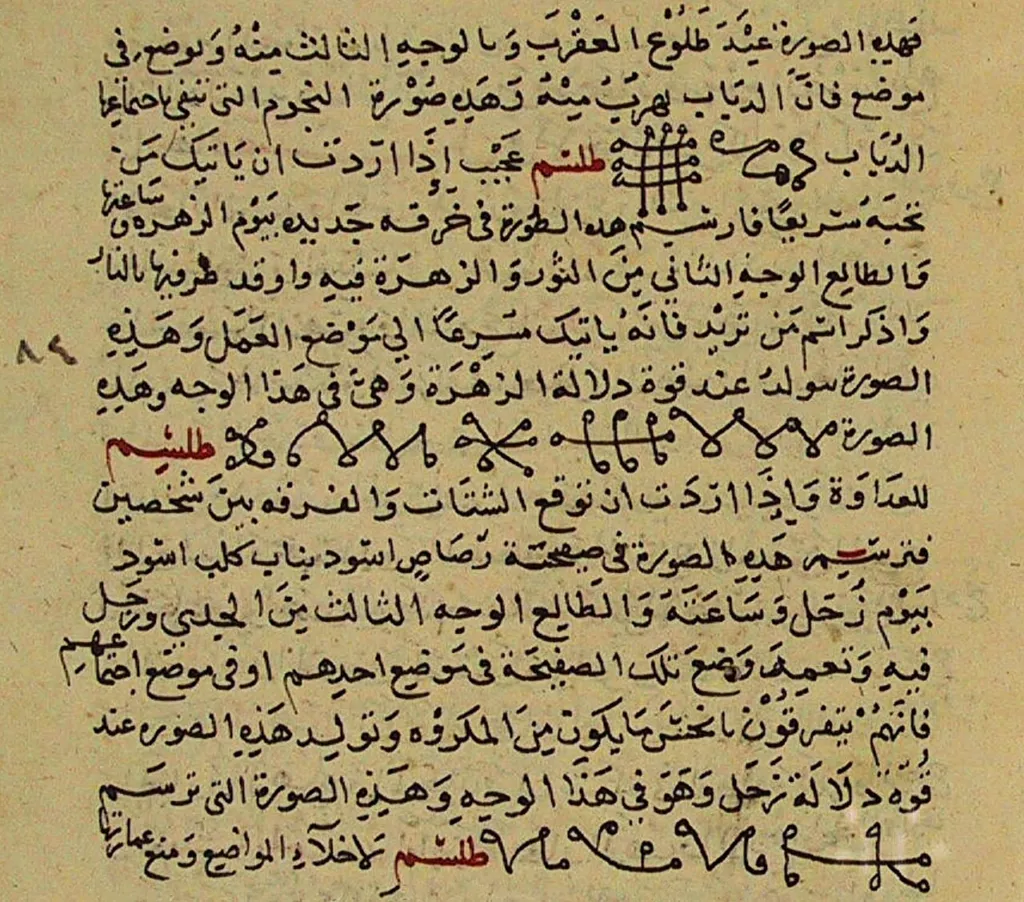
Image · Public domain · Wikimedia Commons
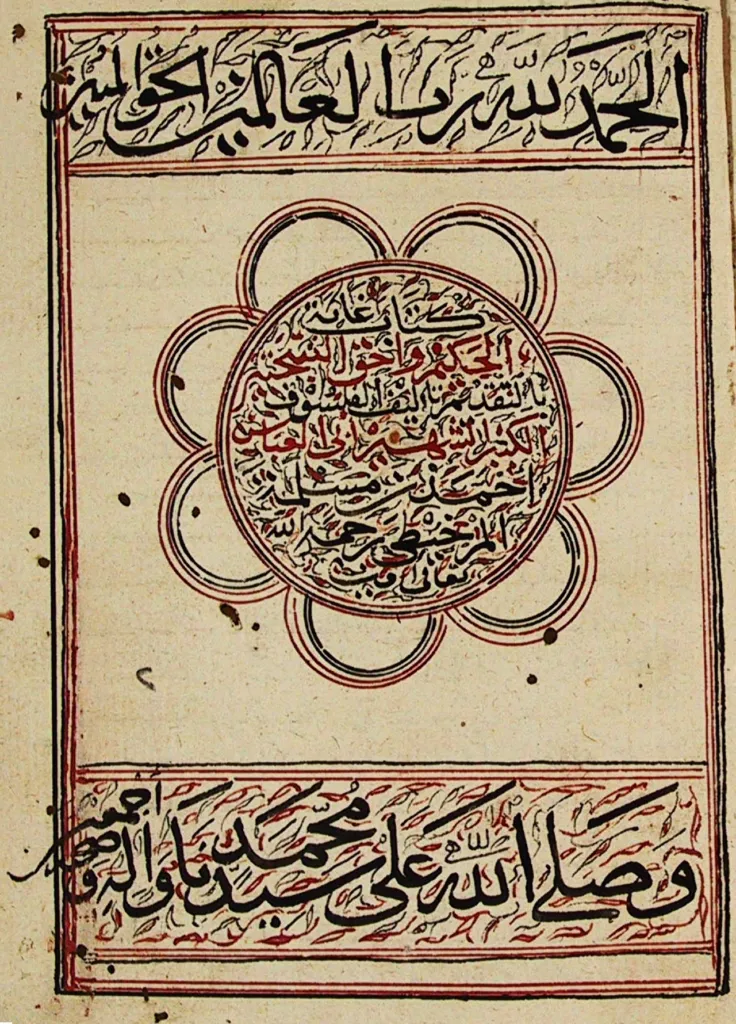
Image · Public domain · Wikimedia Commons
A responsible public essay has to start here because plant names in medieval texts are not self-identifying museum labels. A Latin word, an Arabic word, a translator’s guess and a modern binomial are four different things. AIP’s register therefore keeps confidence grades: secure, probable, conjectural and unidentified. That is not fussiness. It is the difference between Conium, Cicuta and a tree called hemlock by someone holding a field guide upside down.
The essay uses Attrell and Porreca’s English translation as the accessible base text, checks the Latin against Pingree where needed, and uses Ritter and Plessner for the German rendering of the Arabic tradition. A translation is cited as a translation. A reading is not promoted into an original merely because it flatters the argument. Attested
Who compiled it, and when
For most of the modern period the Arabic compilation was credited to the Madrid astronomer and mathematician Maslama al-Majriti (d. c. 1007), and older scholarship calls its author pseudo-Majriti. In 1996 Maribel Fierro argued that the author was a different and earlier Maslama: Maslama ibn Qasim al-Qurtubi of Cordoba, who died in 353 AH (964 CE) and who also wrote an alchemical companion volume, the Rutbat al-Hakim [10]. Godefroid de Callataÿ and Sébastien Moureau added manuscript evidence from the Rutbat in 2016 [11], and Attrell and Porreca accept al-Qurtubi as “most plausible” [1, p. 3]. On that reckoning the Ghayat is a work of tenth-century al-Andalus, written by a scholar who, the translators note, travelled east in the early 930s and met the learned men of distant cities [1, p. 3]. Attested
The compiler claims more than two hundred source books. Pingree’s 1980 study of those sources [8] and the translators’ notes identify the heaviest borrowing: Arabic Hermetica, planetary prayers that Fritz Saxl in 1912 connected with the Sabians of Harran, and above all the Kitab al-Filaha al-Nabatiyya, the Nabataean Agriculture attributed to Ibn Wahshiyya, which the Latin calls Liber Alfilaha and which Attrell and Porreca rank among the book’s “most heavily quoted” sources [1, Introduction, pp. 6-7, and the translators’ note on the Liber Alfilaha]. Most of the Book IV plant material, the laurel that speaks, the olive of forty-eight illnesses, the radish that makes scorpions sting themselves, comes from that agricultural stratum. Attested
The Latin title is its own puzzle. The prologue says the book was written by “the noble and honored Picatrix,” who “compiled this tome from over two hundred books of philosophy and then named it after himself” [1, Prologue 1]. No Arabic author of that name exists. The candidates reviewed by Attrell and Porreca are a garbled Arabic Buqratis, Hippocrates, the Alexandrian grammarian Harpocration, and Johannes Thomann’s proposal that a Castilian translator punned on the Arabic root of Maslama, s-l-m, which can mean to sting, with Spanish picar. They call Thomann’s idea “the least implausible” and still conjectural [1, pp. 3-4]. So do we. Attested
From Arabic to Castilian to Latin
The Latin prologue dates a Castilian translation made for Alfonso X of Castile to 1256, with parallel dates in the eras of Alexander, Caesar and the Hijra that do not quite agree with one another; Pingree placed the work between 1256 and 1258 [9]. Only a short fragment of the Castilian survives, published by Antonio Solalinde in 1926. Pingree suggested, cautiously, that the Castilian translator was Yehuda ben Moshe of the Alfonsine court, and more cautiously that the Latin was made by the notary Aegidius de Tebaldis of Parma [1, p. 5]; [9]. He judged the Castilian translator to have “often blundered”, worst of all in the philosophical passages and the planetary prayers. Charles Burnett has since defended the Latin as a translation faithful to sense [1, p. 5]. Attested
Two facts about that route matter for plant names. First, the Latin is shorter than the Arabic. Passages that were too difficult for the translator, or offensive to a Christian reader, were dropped [1, pp. 4-5]. Second, the Latin gained material the Arabic never had. Following Bakhouche, Fauquier and Pérez-Jean [5], Attrell and Porreca list the most significant interpolations at 1.5.26-27, 2.12.1-59, 3.11.58-112 and 4.9.29-56 [1, Introduction, n. 21]. The third block sits in the middle of the Book III recipes, and several of the plant entries this essay discusses (valerian at 3.11.92 and 3.11.110, the “herb of light” at 3.11.109) fall inside it. A plant name inside an interpolation is a Latin reading with no Arabic behind it, and it has to be weighed that way. Attested
The witnesses, and the modern editions
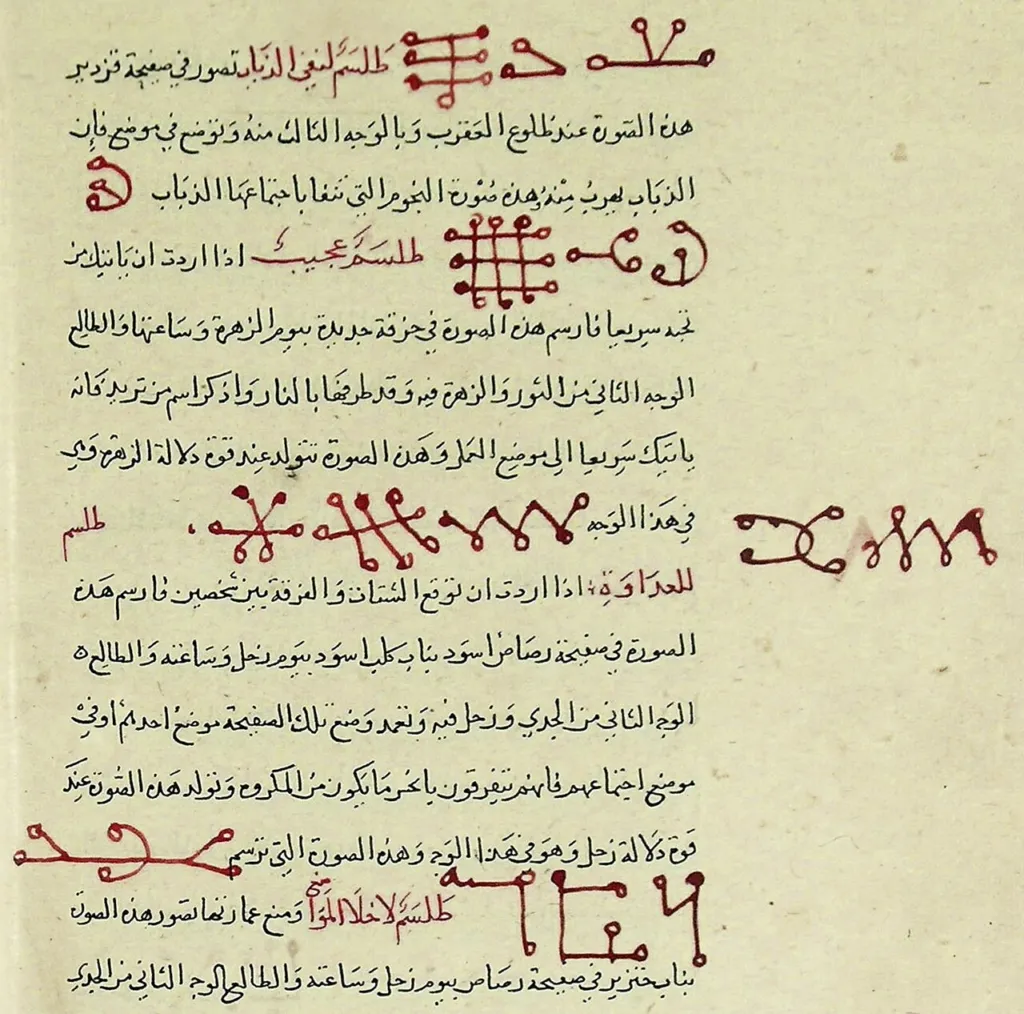
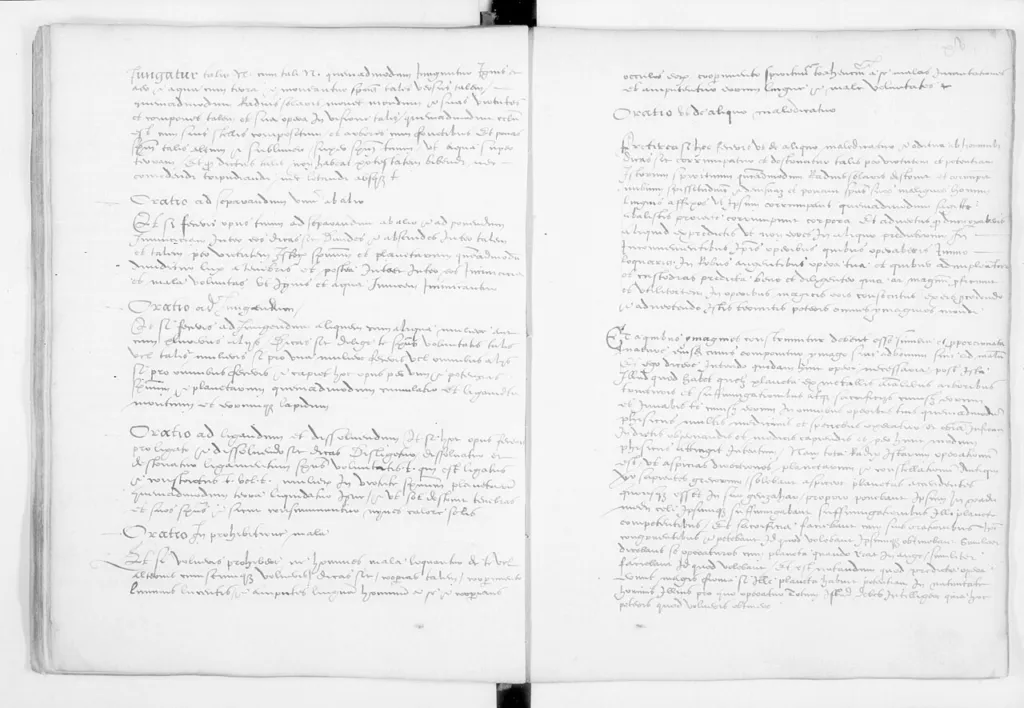
Wide circulation of the Latin begins around 1450. Attrell and Porreca list manuscripts in Paris, Florence, Oxford, London, Kraków, Hamburg, Prague and Darmstadt, copied between the fifteenth and seventeenth centuries [1, p. 5]. The oldest dated Latin copy is Kraków, Biblioteka Jagiellońska, MS 793, copied in 1458-59, the illustrated manuscript on our cover; Benedek Láng gives it a full study [12, pp. 83-104]. Fragments are older: Pingree dated the earliest to the fourteenth century, while Alfonso d’Agostino put one in the thirteenth [1, Introduction, n. 22]. The first explicit mention is Johannes Hartlieb’s list of forbidden books of about 1456, and north of the Alps the earliest citation is in the commonplace book of the Cambridge physician John Argentine, dated 1477 [1, pp. 5-6 and n. 22]. The Arabic copies on this page, Hamidiye 852 and Hagia Sophia 2443, are late witnesses of the Arabic line and are shown here as images, with the shelfmarks their public-domain photographs carry. AIP has inspected none of these manuscripts in person. Attested
The book never reached print in the early modern period. Marsilio Ficino drew on it for the third book of De vita (1489); Giovanni Pico della Mirandola owned a copy; Heinrich Cornelius Agrippa used it heavily in De occulta philosophia, the subject of AIP Grimoire Herbal No. 2; Symphorien Champier called it “a very pointless book, full of superstitions”; and Rabelais made “Picatris” the rector of a diabolical faculty [1, pp. 5-6]. The modern editions came out of the Warburg circle after a long and painful history. Hellmut Ritter’s Arabic text appeared in 1933 without its introduction [4]. Plessner’s German translation, ready in page proof by 1927 and surviving the war in a single copy, appeared in 1962 [3]. Pingree’s Latin edition followed in 1986 [2]. There are now French [5], Italian [7] and two English translations, Greer and Warnock’s [6] and Attrell and Porreca’s, the scholarly English from Pingree’s Latin used as the base text here [1]. Attested
Chapter 2The Sorting Hat Is Galen
The planetary lists look, at first, like arbitrary magic. Saturn receives bitter, black, foul and dangerous things: hemlock, colocynth, opium, mandrake, asafoetida and black myrobalan. Mars receives hot, biting things: pepper, ginger, mustard, cress and euphorbium. Venus receives the sweet and fragrant: rose, violet, myrtle, nutmeg, costus and mastic. The Moon receives the cold or watery: camphor, lily, iris and cabbage. Traditional
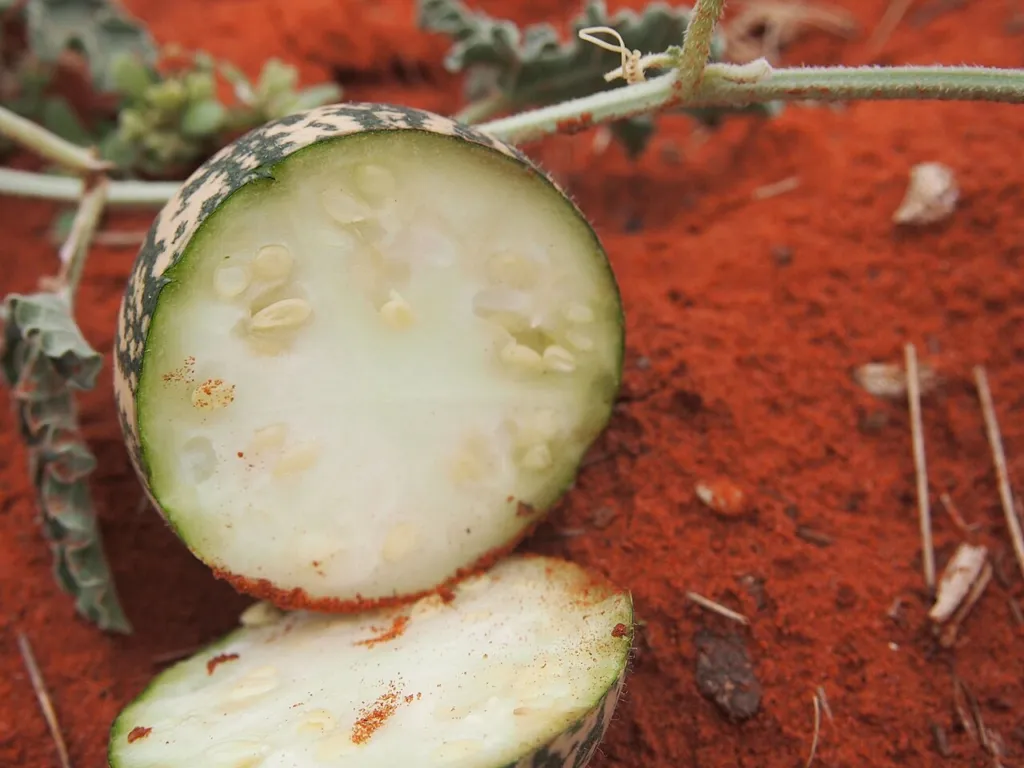
Photo: Mark Marathon · CC BY-SA 3.0 · Wikimedia Commons
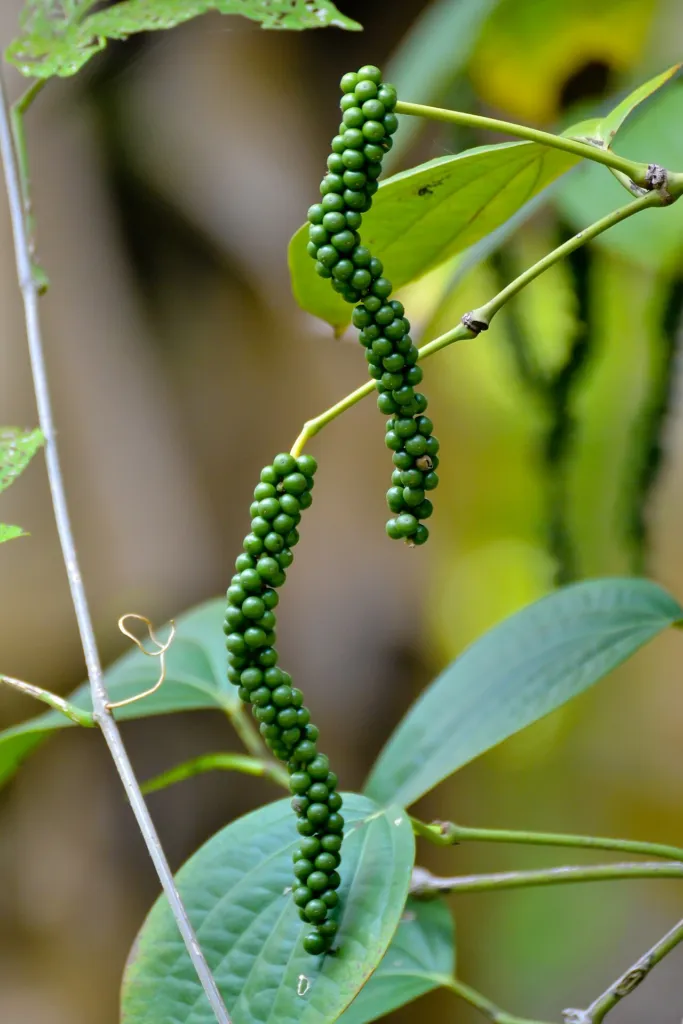
Photo: K Hari Krishnan · CC BY-SA 3.0 · Wikimedia Commons
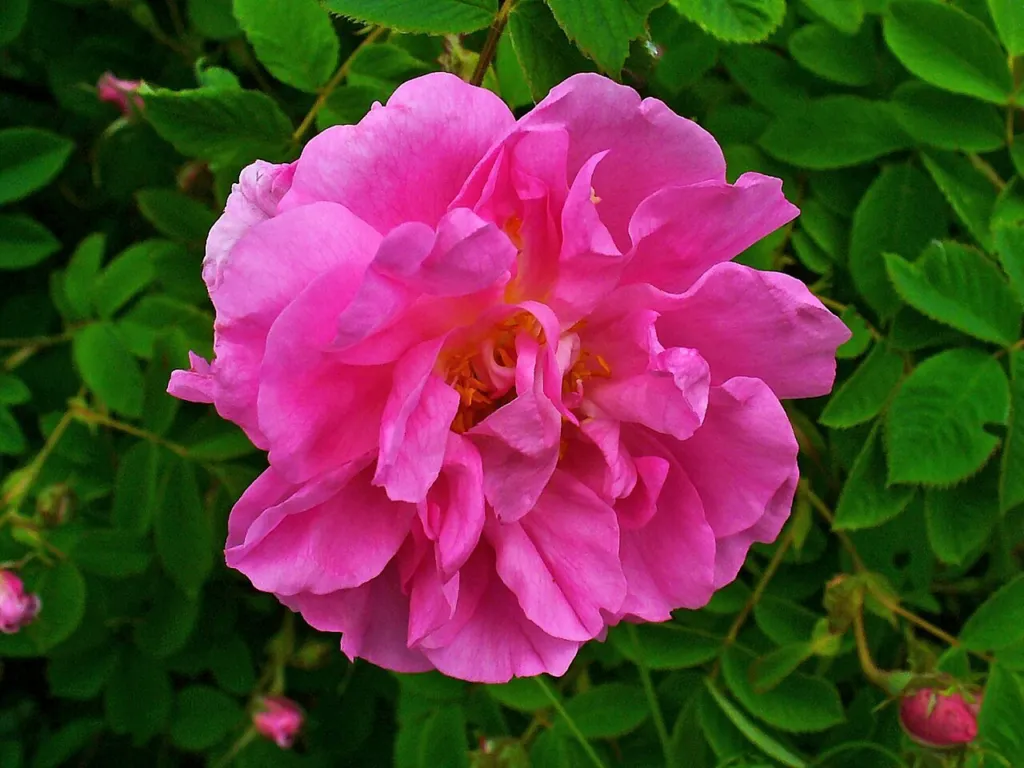
Photo: H. Zell · CC BY-SA 3.0 · Wikimedia Commons
The old drawer labels are planets, but the sorting hand is Galenic quality theory: hot, cold, dry and moist, read through taste, odour, colour, texture and effect. Taste and odour carry chemical information. Bitterness often flags alkaloids, cucurbitacins, glycosides and other defensive chemistry. Pungency points toward irritant channels: TRPV1 for pepper, ginger and the spurges, whose resiniferatoxin is among the most potent TRPV1 activators known[22]; TRPA1 for mustard and cress. Mechanism
“From the plants, he governs every hot plant, such as pepper, pine, scammony, cumin, caraway, laurel, euphorbia, hemlock, and trees that are good for burning.”
Mars, Picatrix 3.1, trans. Attrell and Porreca [1]
Saturn’s entry in the same chapter reads: “From the trees, he governs elderberries, oaks, carobs, palms, and vines. From the herbs, he governs cumin, rue, onions, and all the plants that have deep leaves,” and it adds colocynth [1, 3.1]. The suffumigation classes of 3.3 are set out by smell alone: Saturn takes “all foul-smelling things, like asafoetida, gum, bdellium, hemlock”, Jupiter “all good and balanced scents”, Mars “everything hot, like pepper and ginger”, Venus the rose, the violet and green myrtle, Mercury “everything with composite odors”, and the Moon “all the cold scents” [1, 3.3]. So hemlock turns up twice, as a hot Martial plant in 3.1 and as a foul Saturnine smell in 3.3. The compiler classified it under two different senses, and did not mind. Attested
The Moon’s coldness is a useful lesson in being precise. Menthol is the clean TRPM8 example; camphor, one of the Moon’s own materials in the text, is messier, acting around TRPV1, TRPV3 and TRPA1 and reported differently at TRPM8[18][19]. The medieval call is right about sensation and not equipped to explain mechanism. That is not failure; it is exactly why old plant categories can preserve observations inside obsolete theories. Mechanism
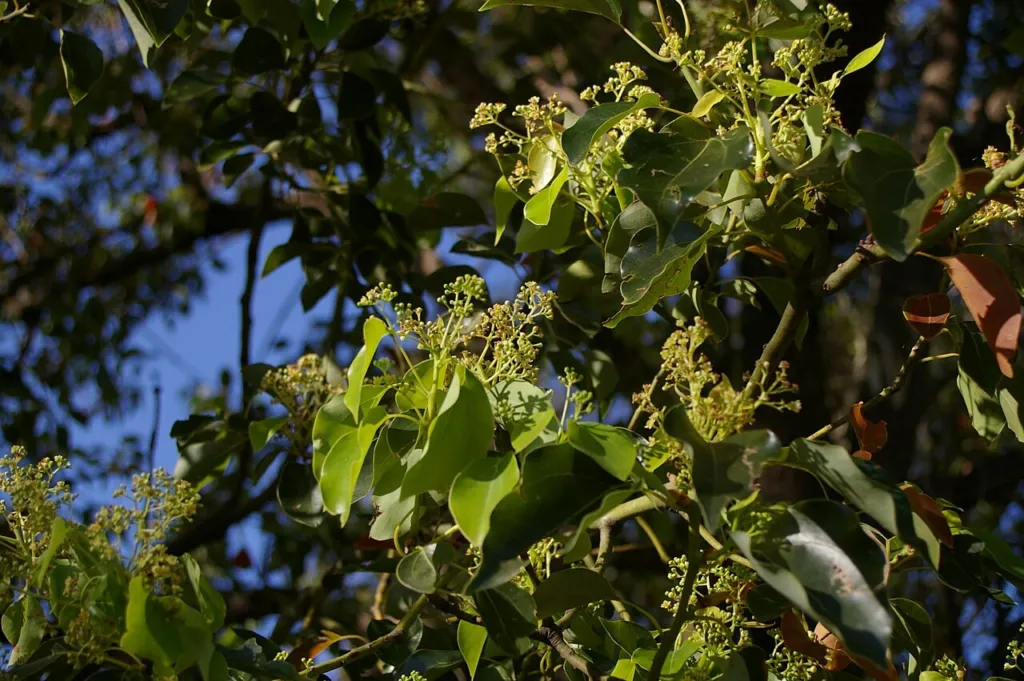
Photo: John Robert McPherson · CC BY-SA 4.0 · Wikimedia Commons
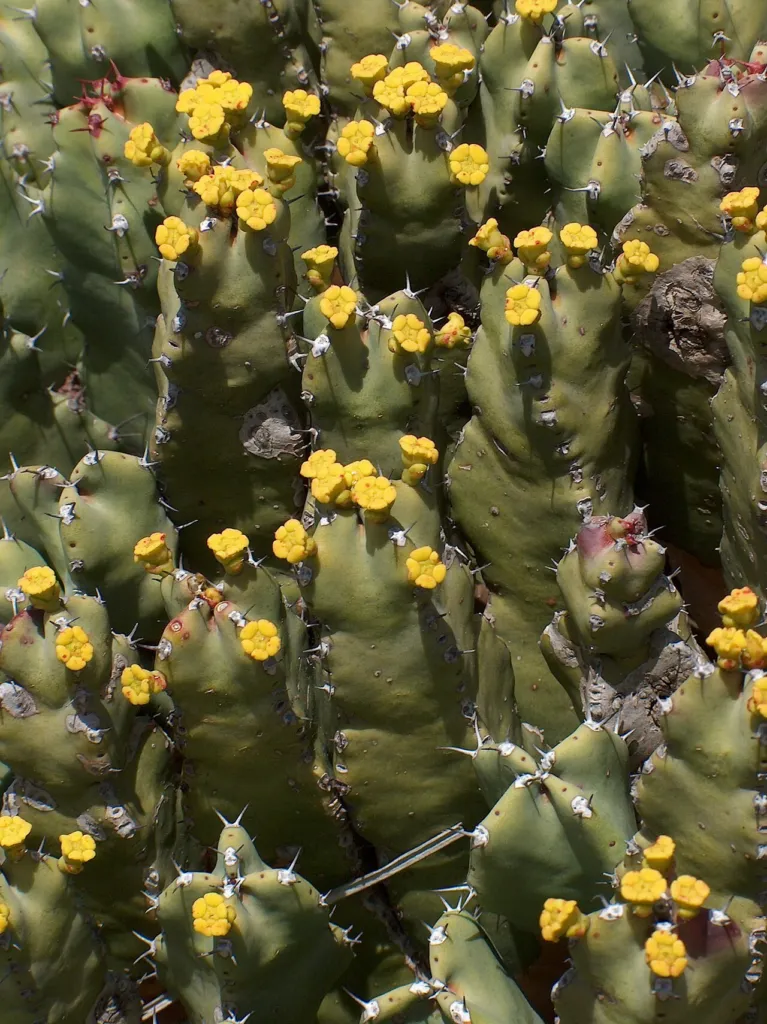
Photo: Valérie & Agnès · CC BY-SA 3.0 · Wikimedia Commons
Chapter 3Everything Goes On The Fire
The characteristic Picatrix operation is not a spoonful of herbal mixture. It is smoke. Storax, frankincense, mastic, myrrh, labdanum, galbanum, agarwood and sandalwood recur because suffumigation is the ritual machine: a compound is burned at the right time over a figure, image or material object. Traditional
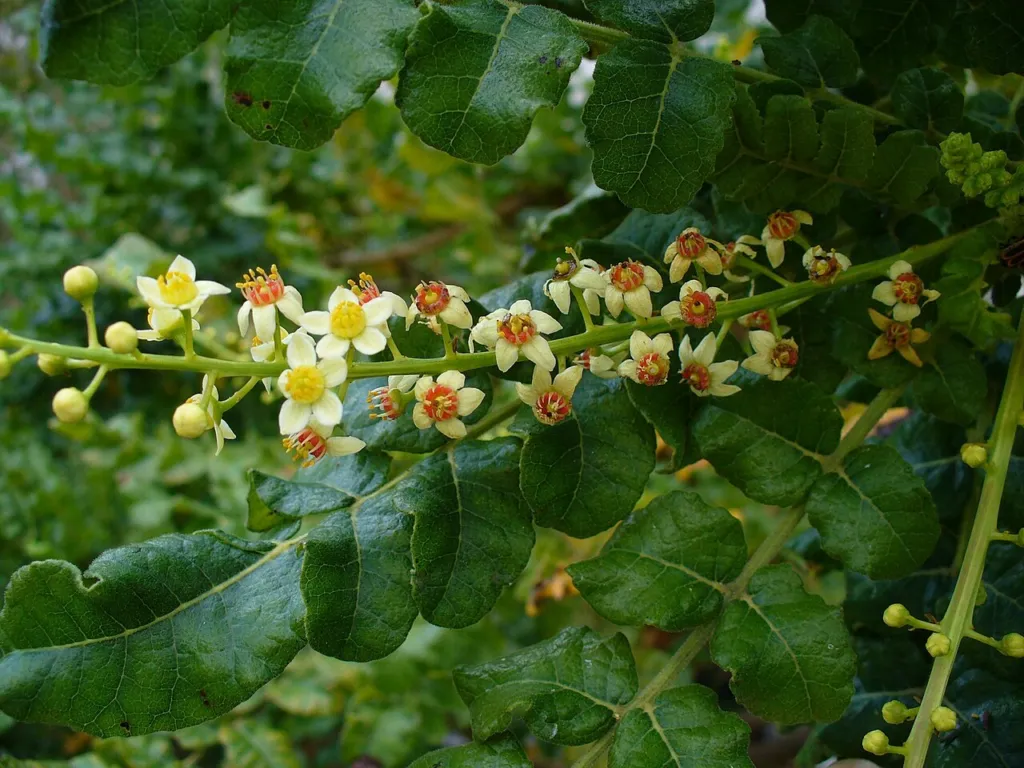
Photo: Scott Zona from USA · CC BY 2.0 · Wikimedia Commons
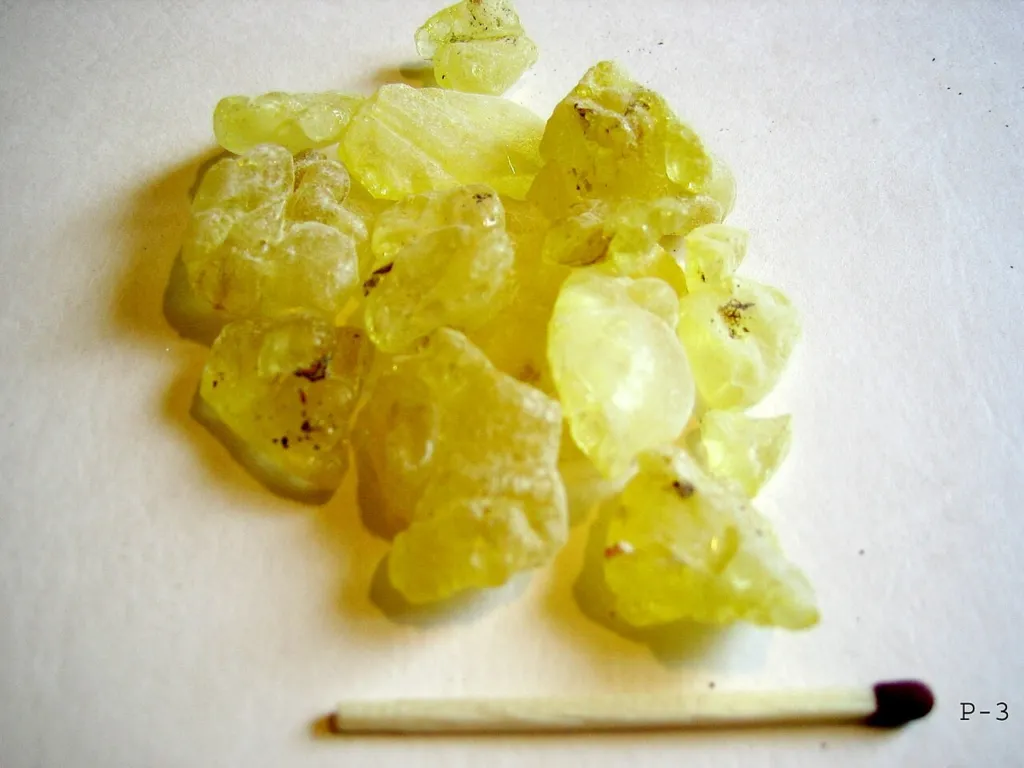
Photo: Lemmikkipuu · CC BY-SA 3.0 · Wikimedia Commons
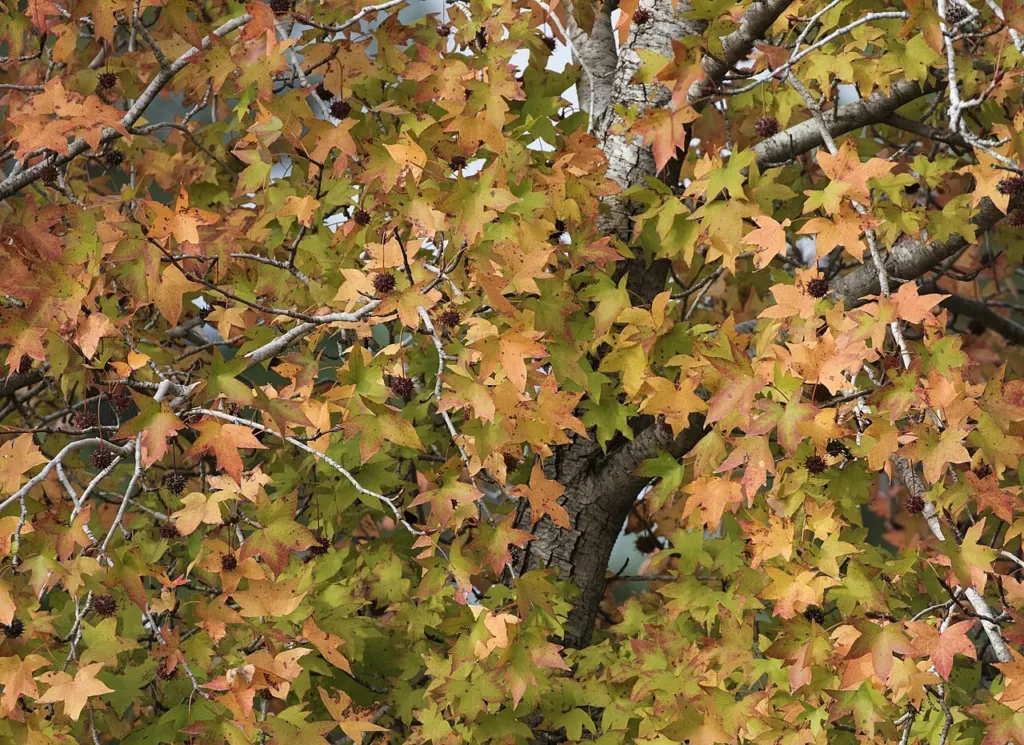
Photo: Zeynel Cebeci · CC BY-SA 4.0 · Wikimedia Commons
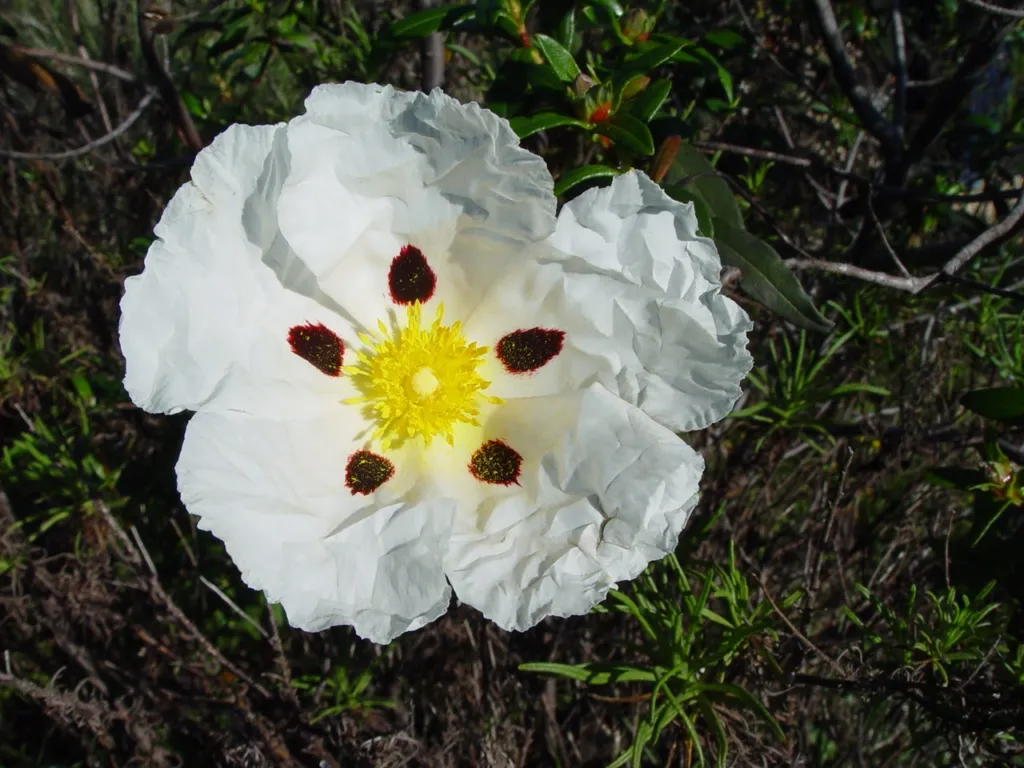
Photo: Carsten Niehaus · CC BY-SA 3.0 · Wikimedia Commons
Most aromatic smoke is better understood as mood, setting and sensory technology than as systemic pharmacology. A room full of resin smoke changes attention, breath, smell, expectation and ceremony. It may alter the operator’s state; that does not make it a drug dose, and saying so is not scepticism so much as basic housekeeping.
The exceptions deserve harder treatment. Henbane goes on the fire. Opium goes on the fire. Cannabis appears in a lunar incense compound. Those are active materials, and heating psychoactive or toxic plants changes the safety question. This essay gives no methods, no quantities, no preparation sequence and no encouragement. Anyone looking for a recipe has mistaken AIP for a very poorly supervised bonfire.
Chapter 4Where The Book Is Right
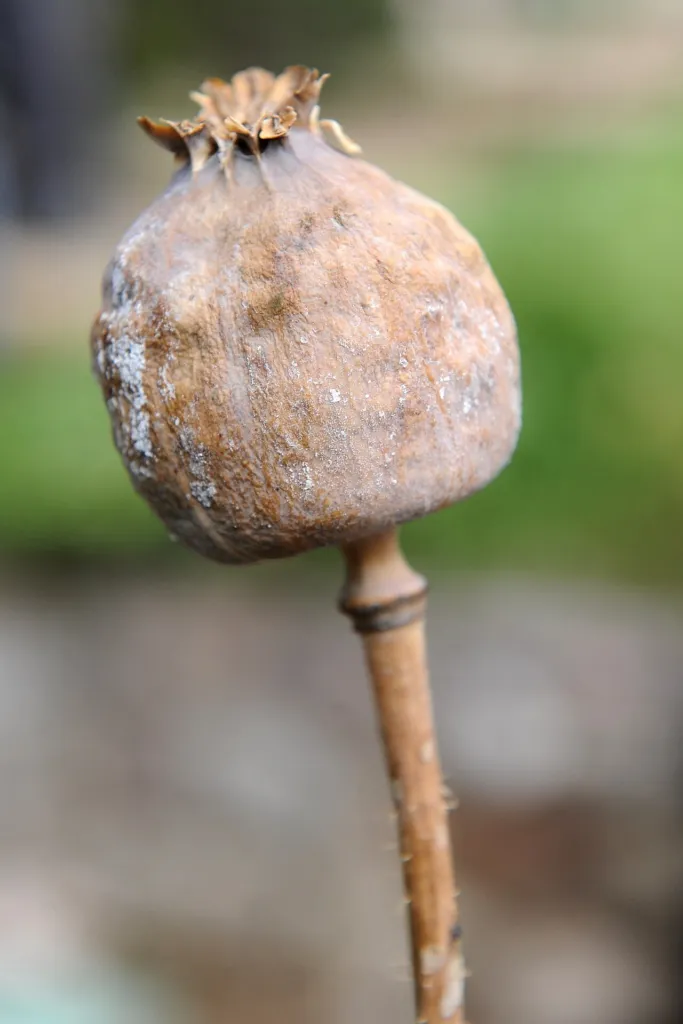
The strongest matches appear where the effect is crude and unmistakable: sleep, muting, stupor, delirium, purging and death. Book III’s soporific and stupefying material includes opium, mandrake, henbane, datura, nightshade, poppy, lettuce, darnel and nutmeg. Six of those carry pharmacology that no modern reader needs to romanticise: opioid agonism, anticholinergic delirium, sedation, toxicity and genuine poisoning. Tropane alkaloid pharmacology is reviewed by Kohnen-Johannsen and Kayser[13]. Confirmed
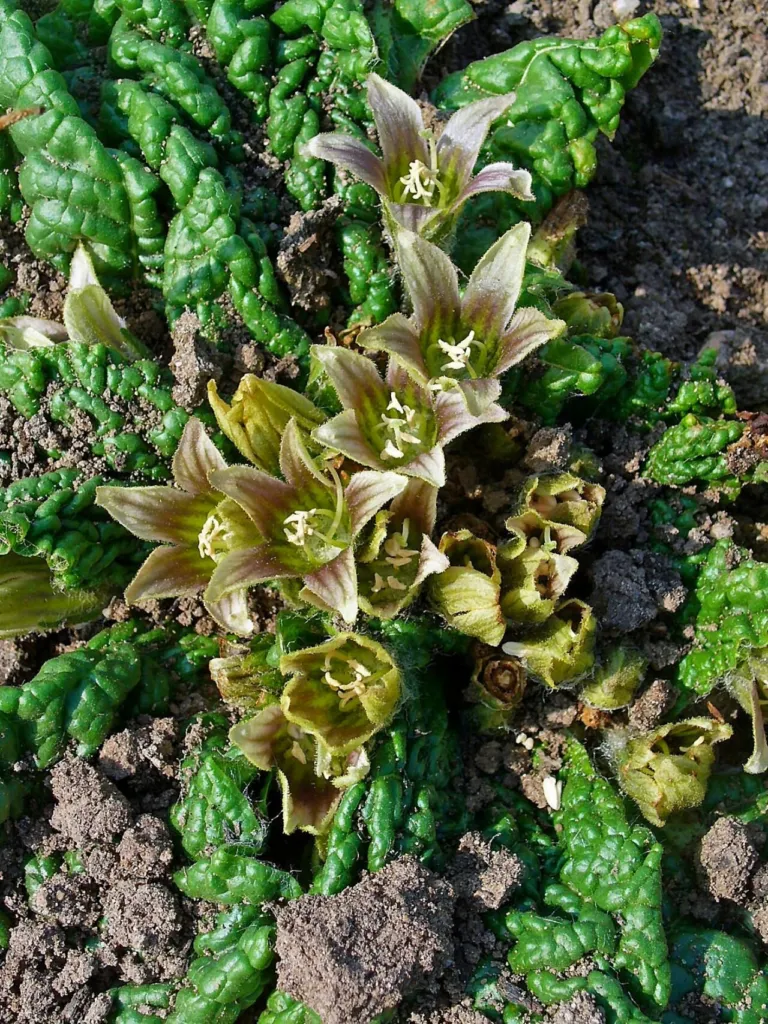
Photo: H. Zell · CC BY-SA 3.0 · Wikimedia Commons
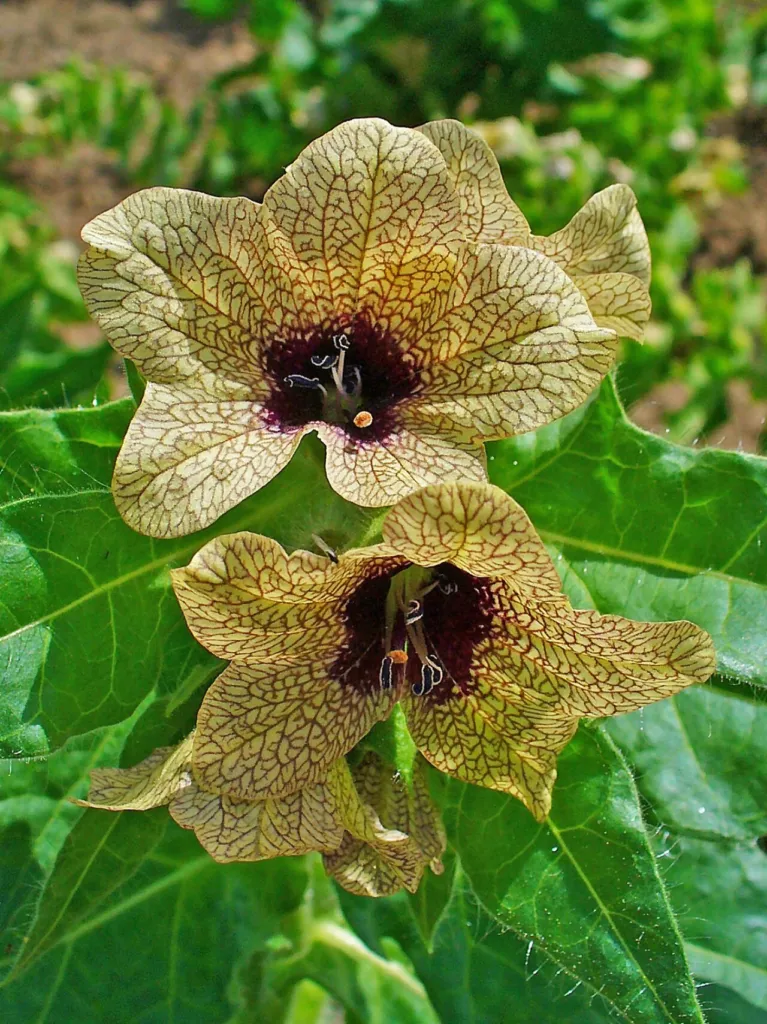
Photo: H. Zell · CC BY-SA 3.0 · Wikimedia Commons
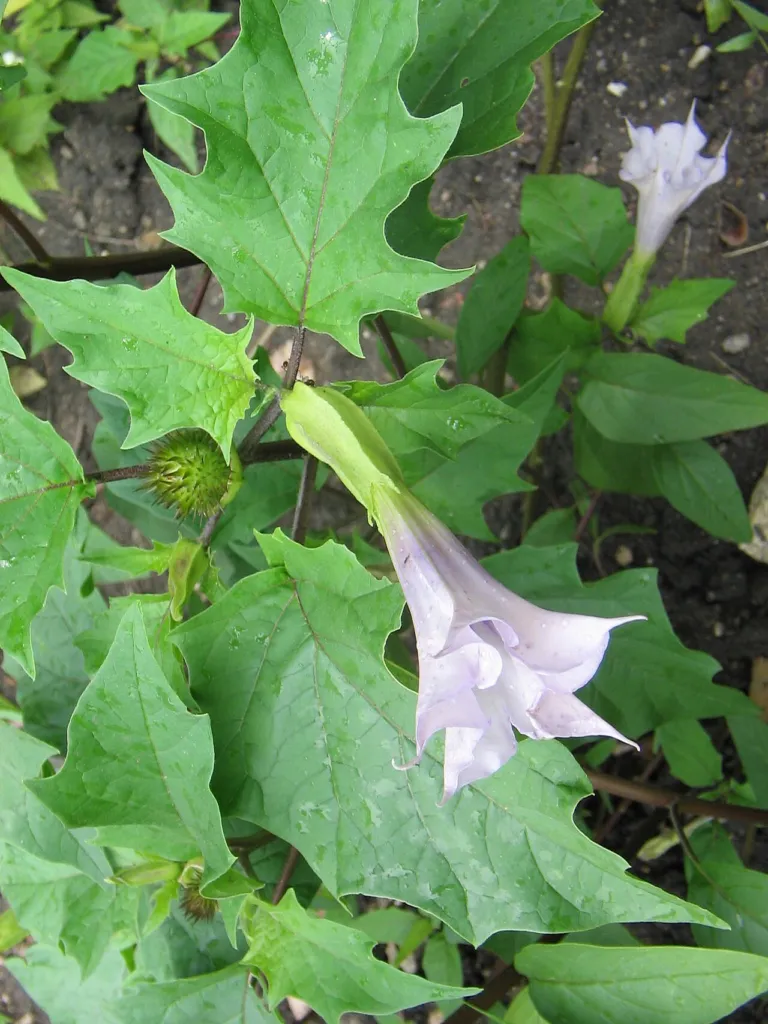
Photo: Taka · CC BY-SA 3.0 · Wikimedia Commons
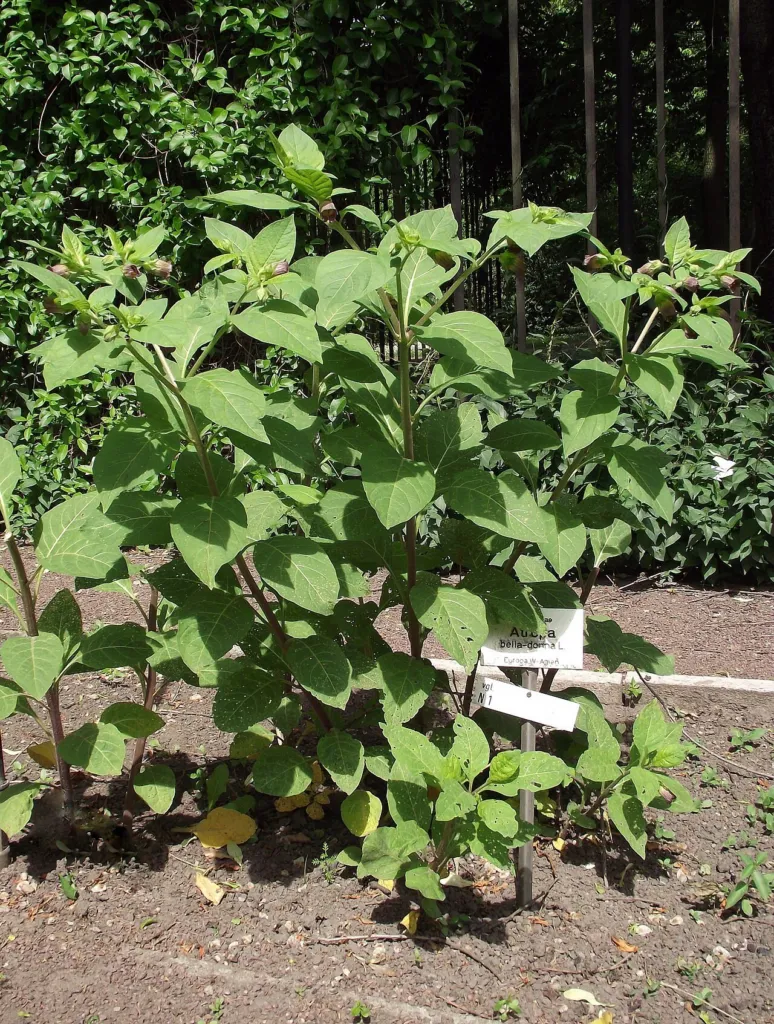
Photo: Rillke · CC BY-SA 3.0 · Wikimedia Commons
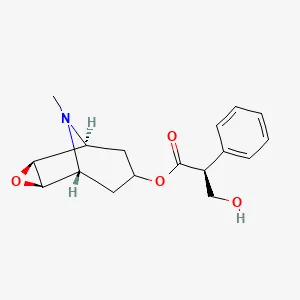
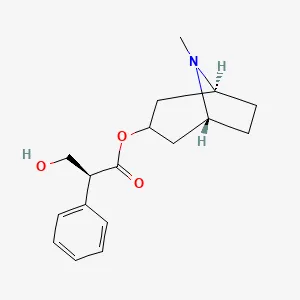
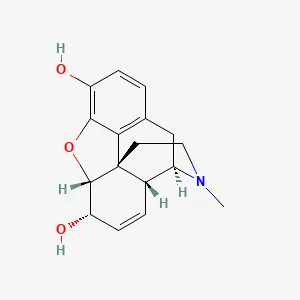
Darnel is more interesting than a clean hit. Its reputation for intoxicating grain is old, but the modern explanation probably involves a seed-borne fungal passenger, since the grass alone does not account for it, and the responsible compound has not been pinned down. Nutmeg genuinely intoxicates in case reports, but the familiar myristicin story is too neat: the mechanism is not established in humans, and the experience is plain poisoning. The Illinois Poison Center’s ten-year review lists tachycardia, nausea, vomiting, agitation and hallucinations after large amounts[16]. Evidence suggests
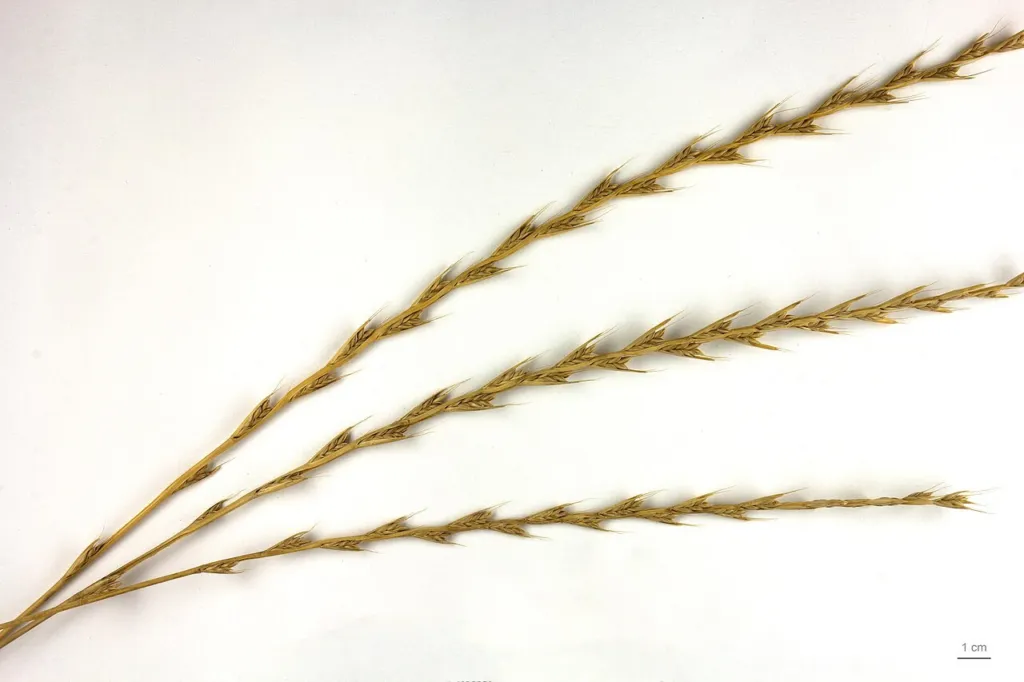
Photo: Roger Culos · CC BY-SA 4.0 · Wikimedia Commons
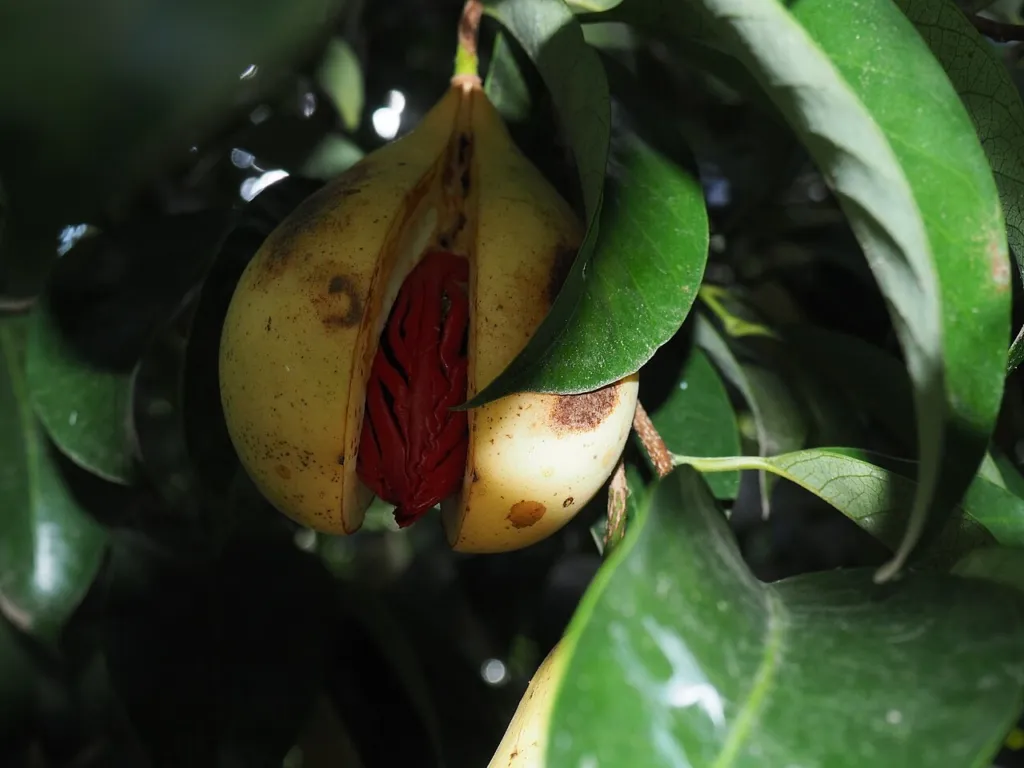
Photo: Schlawensko · CC BY-SA 4.0 · Wikimedia Commons
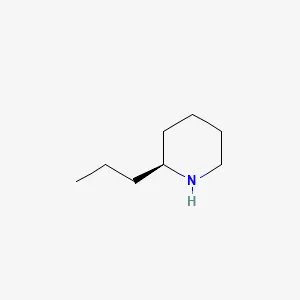
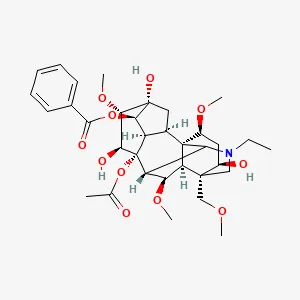
The poisons are clearer. Coniine from poison hemlock causes ascending paralysis. Aconitine holds voltage-gated sodium channels open so they cannot reset, which is why aconite poisoning can end in arrhythmia[14][15]. Squill contains bufadienolides; black hellebore and white hellebore must be separated because medieval names hide different genera and different toxicologies. One name, two poisons. It is a tidy nuisance, which is scholarship’s natural habitat. Confirmed
Opium in the text deserves a note of its own. Book III lists it among Saturn’s suffumigations and in a run of soporific and stupefying mixtures (3.7.16; 3.11.54, 69, 103, 117, 119-120, 128). The translators say in their introduction that the solanaceous recipes carry warnings of “lethal potency”, so that the magician might use them “as poisons against enemies” [1, Introduction]. The Arabic compiler knew, in other words, that these were dangerous materials, and wrote them down partly because they were. This essay reproduces no quantities from any of those recipes. Attested
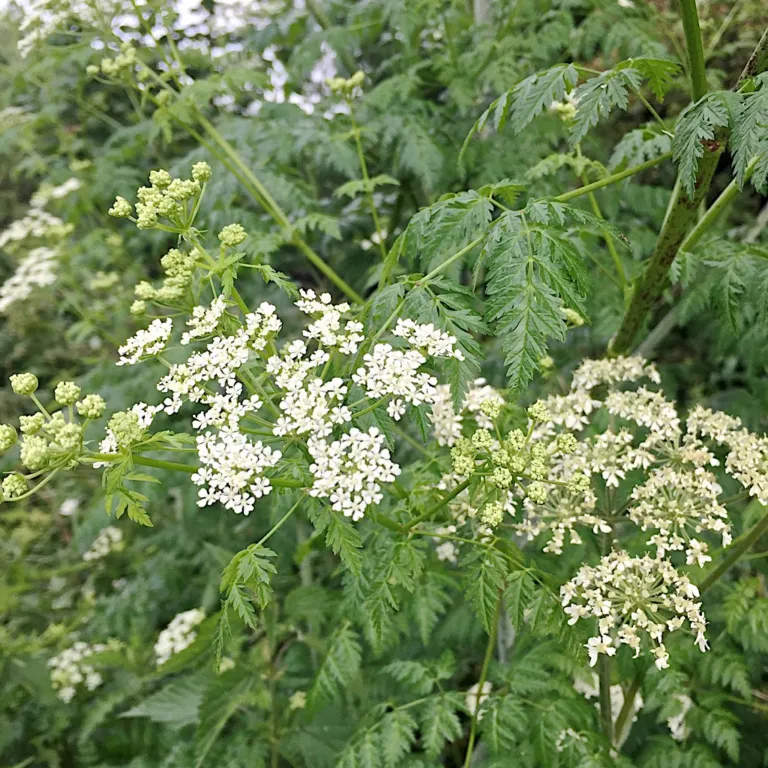
Photo: Robin Stott · CC BY-SA 2.0 · Wikimedia Commons
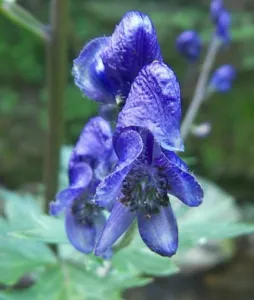
Photo: I.Sáček, senior · Public domain · Wikimedia Commons
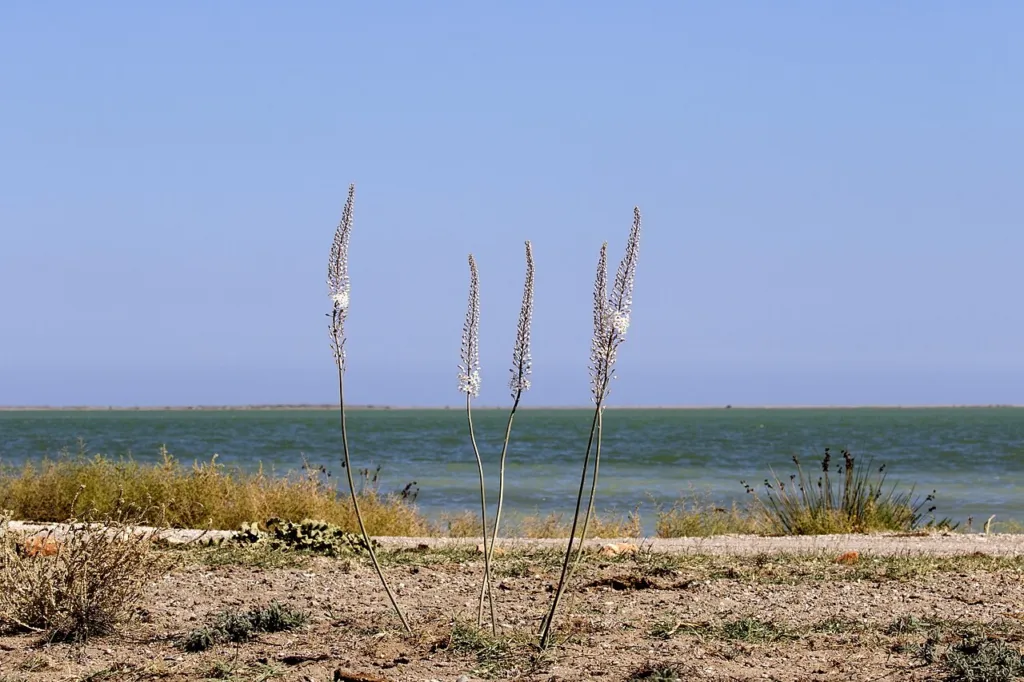
Photo: Zeynel Cebeci · CC BY-SA 4.0 · Wikimedia Commons
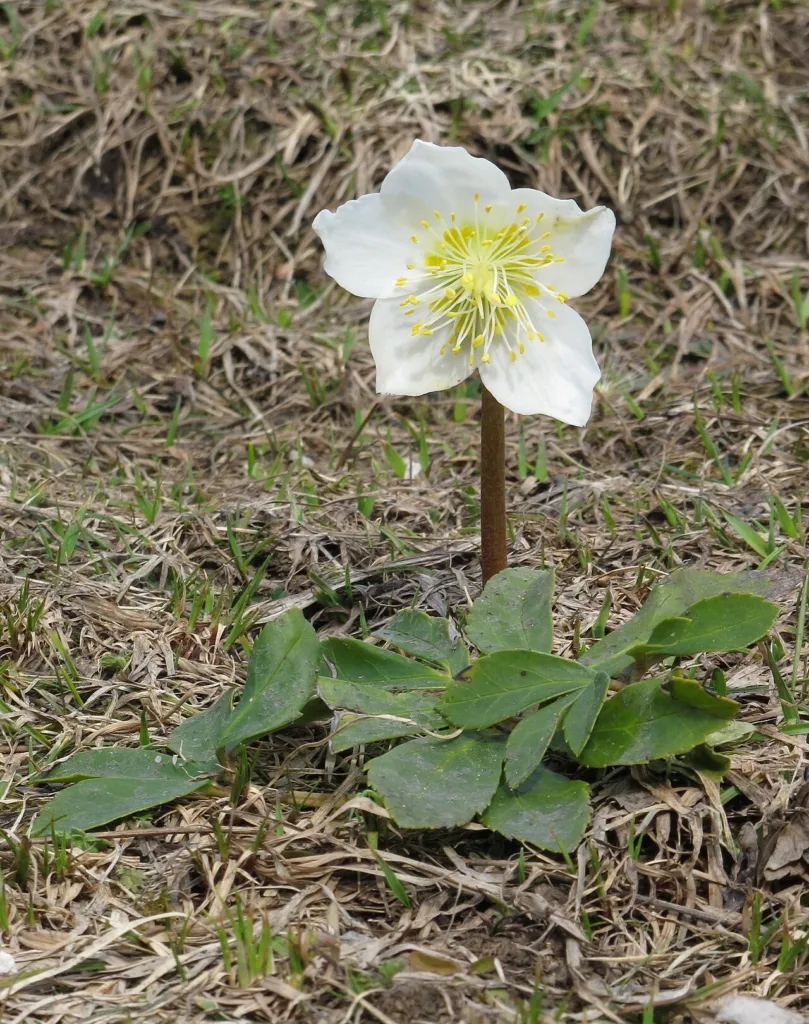
Photo: Robert Flogaus-Faust · CC BY 4.0 · Wikimedia Commons
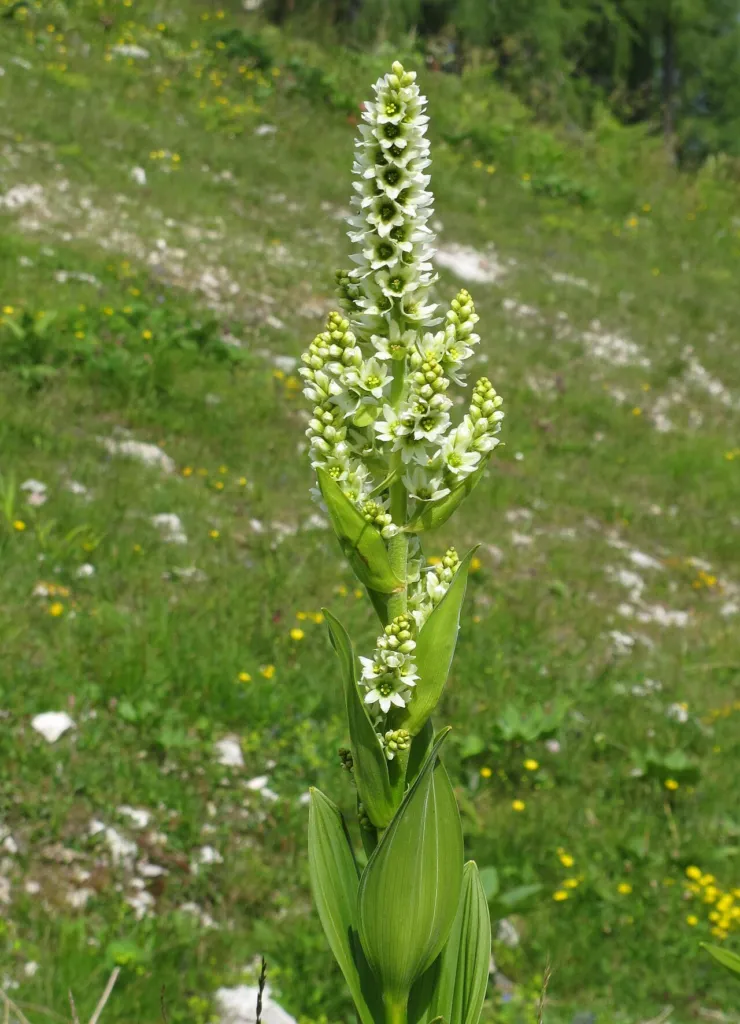
Photo: Robert Flogaus-Faust · CC BY 4.0 · Wikimedia Commons
Chapter 5Where The Book Is Poetry
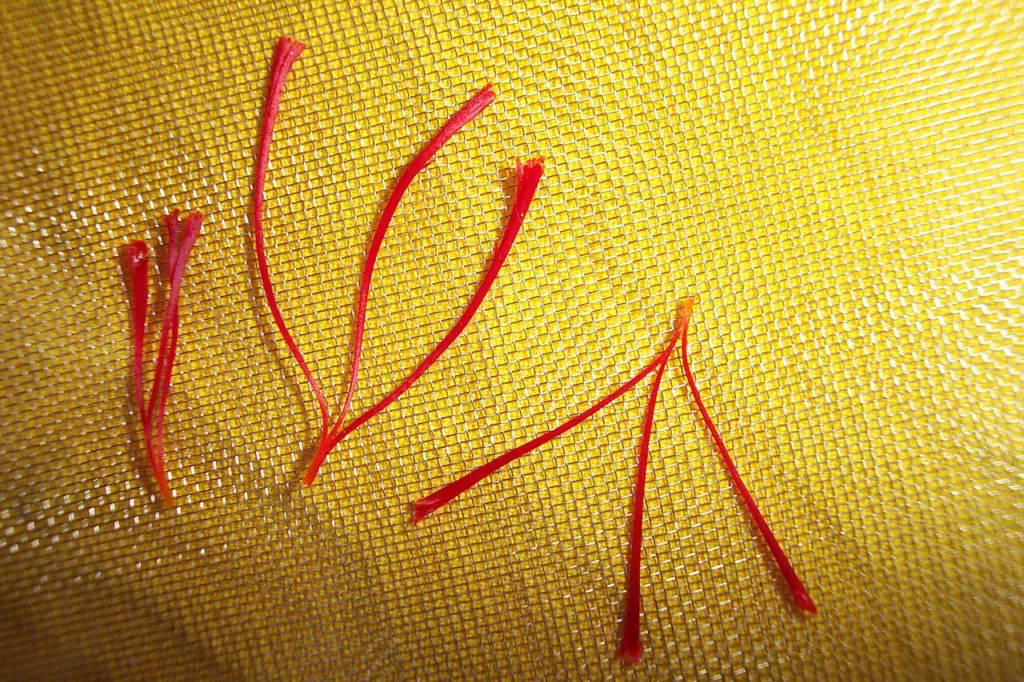
When the text turns to love, favour and kingly success, the pharmacological concordance thins dramatically. Rose, violet, saffron, myrtle, nutmeg, costus and mastic are fragrant, costly and symbolically charged. Pharmacology will grant a pleasant smell, and pleasant smells can change the feeling of a room. It will not grant a binding agent or a demonstrated erotic action. Mechanism
Valerian shows the danger of flattening evidence. Its modern sleep-aid reputation rests on traditional use, laboratory mechanisms around GABA-A, and mixed human trial data; a 2006 meta-analysis found possible benefit with evidence too weak to settle the question[20]. That is some support, well short of a clean claim. The Picatrix deploys it as a love philtre, pointing it away from the only action anyone has plausibly argued for it. Evidence suggests
Chaste tree is even neater as a warning label for lazy corroboration. It carried an anaphrodisiac reputation for centuries; modern work points instead toward dopaminergic effects at the pituitary and prolactin in specific research contexts[21]. Those are not the same claim. The old reputation is history, the receptor work is mechanism, and neither proves that a smoke can manufacture hatred or chastity on request. Traditional Mechanism
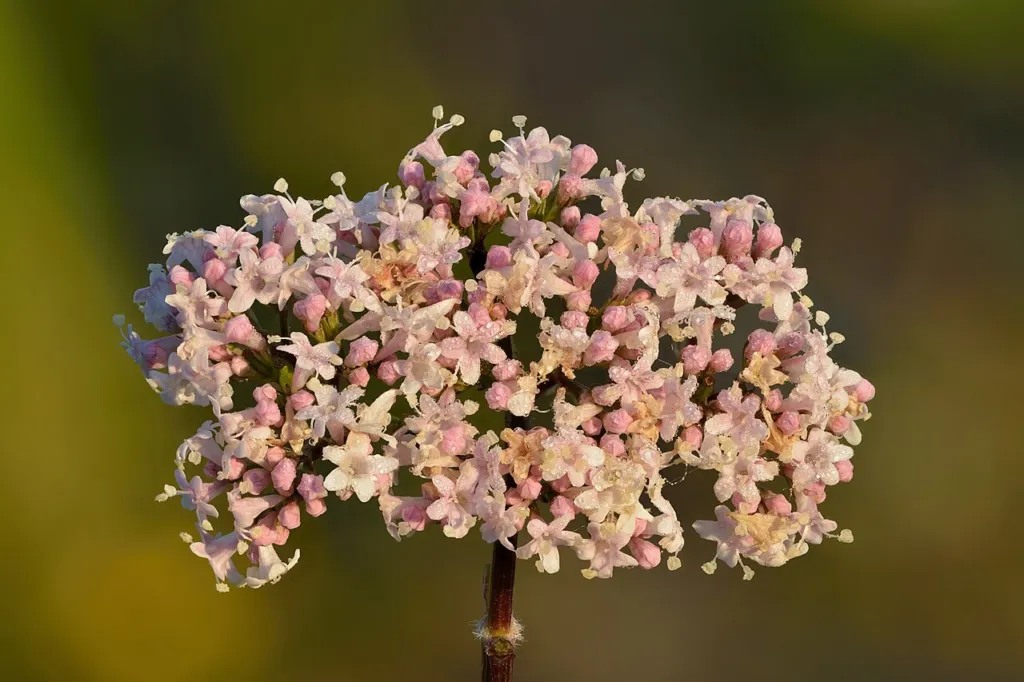
Photo: Ivar Leidus · CC BY-SA 4.0 · Wikimedia Commons
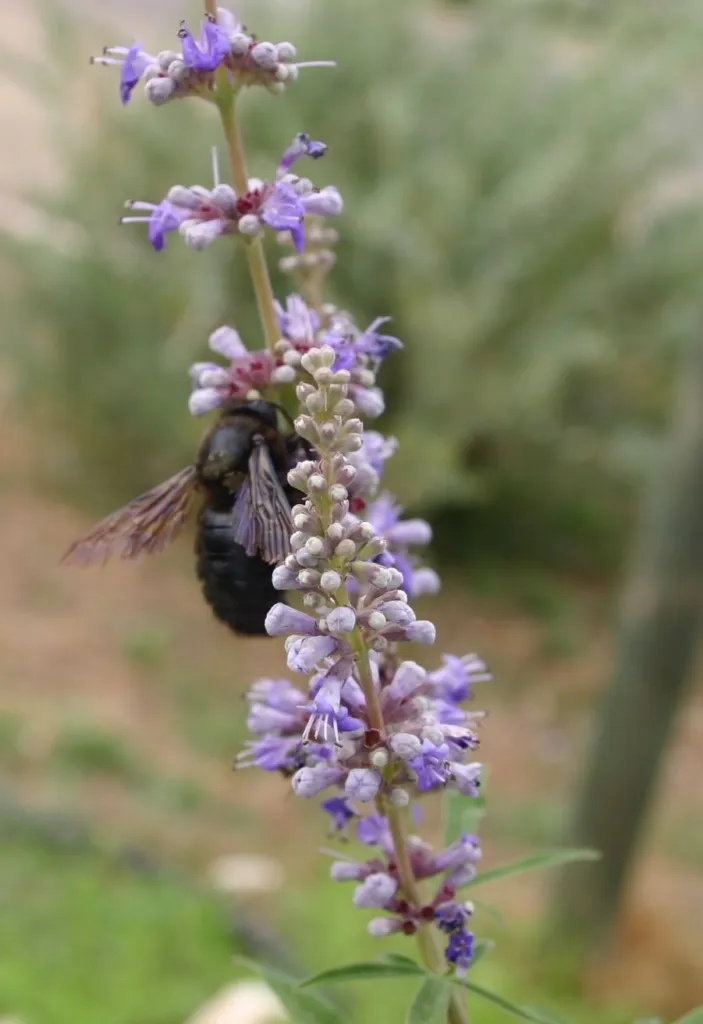
Photo: Sten Porse · CC BY-SA 3.0 · Wikimedia Commons
Chapter 6Where The Book Is Dangerous
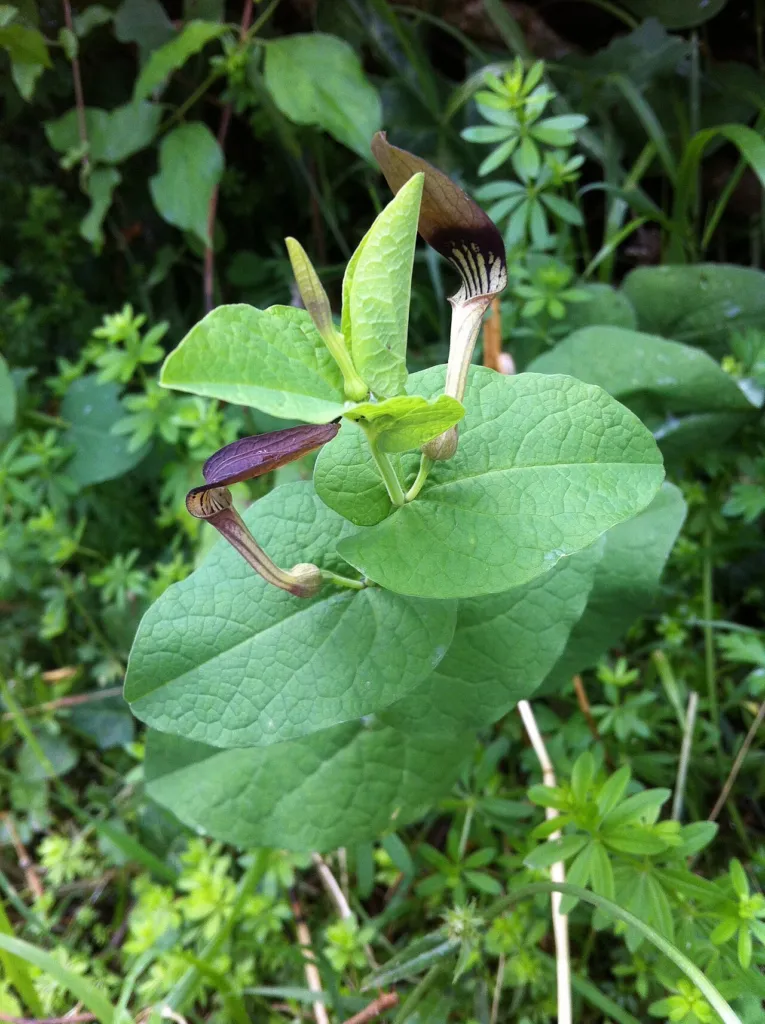
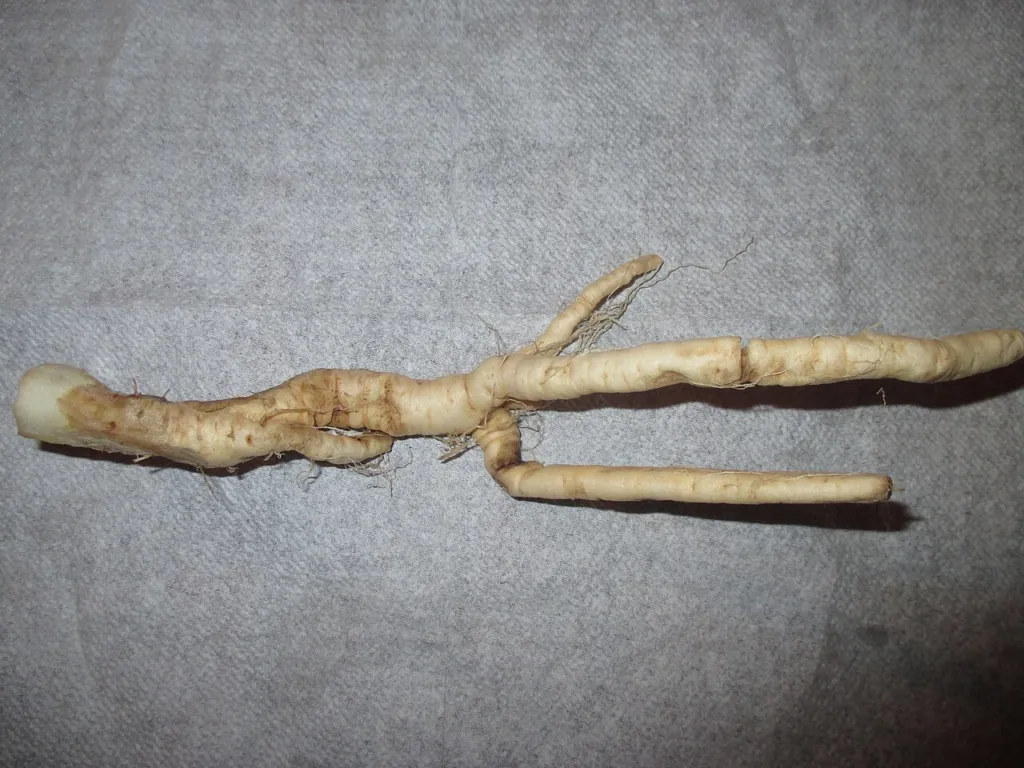
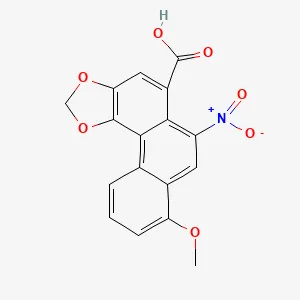
Birthwort is the hard stop. The Picatrix includes round birthwort, Aristolochia rotunda, in a talismanic preparation against adders. Aristolochic acids are nephrotoxic and carcinogenic; the human harms include kidney failure and urothelial cancer[17]. Against snakebite, there is no reliable evidence that Aristolochia does anything useful in a human being. Aristolochia is prohibited from use in medicines in Australia today for exactly this reason[23][24]. Confirmed
That last sentence must be read in Queensland English. Medieval Latin has no standing here. For snakebite in Australia: call 000 immediately, apply a pressure immobilisation bandage, keep the person still, and do not apply, take or burn any plant. Do not wash, cut or suck the bite, and do not use a tourniquet. Antivenom, given in hospital, is the only specific treatment. If that ruins the atmosphere, splendid; the atmosphere was poisonous.
This is the essay’s central public-safety point. The same historical tradition can preserve a correct warning about poisons and a dangerous false remedy beside it. AIP’s job is not to sneer at the past or baptise it whole. It is to separate observation, symbolism and hazard with enough discipline that nobody confuses a manuscript witness for a clinical instruction.
It is worth being exact about what the text does with the plant, because the exactness makes the modern hazard clearer. The Latin chapter heading reads Ad fugandum colubros. Recipe aristologiam rotundam, “For driving away snakes. Take round birthwort” [2, IV.ix.11]. In Attrell and Porreca’s English, the root is worked with the flesh of a large green lizard and lion gall into tablets, a tablet is dissolved to make an ink, and the ink is used to write on paper or parchment that is then wrapped in cloth and carried [1, 4.9.11]. Nobody in the passage swallows anything. The danger is modern: Aristolochia’s older medical reputation against snakebite runs back through Dioscorides, and a reader who knows only that “the old books used birthwort for snakes” is one short step from a poisoning. Attested
We have not yet found the matching entry in Ritter and Plessner’s German of the Arabic, so whether the birthwort talisman belongs to the Arabic Ghayat or to the Latin transmission is an open question. It sits outside the interpolated block at 4.9.29-56 named above. Collation of Book IV is the next textual task. Attested
Chapter 7The Hidden Virtue
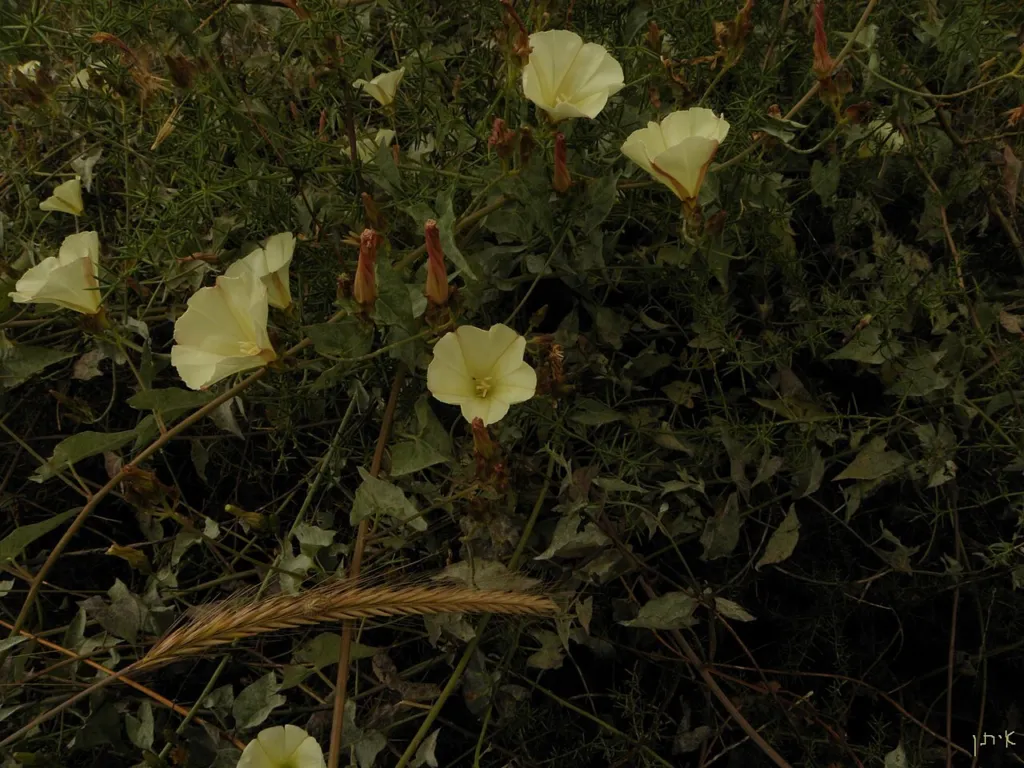
The bridge between pharmacy and magic in the Picatrix is the old idea of hidden virtue. Scammony is the useful example: a violent purgative whose effect was observable but not reducible, in medieval terms, to obvious hot-cold-dry-moist qualities. The answer was a specific hidden power of the substance. Attested
Et hoc est quemadmodum virtus scammonee que coleram virtute propria attrahit, et hoc propter convenienciam quam colera secum habet ..
Picatrix II.vi.3, ed. Pingree [2]
Attrell and Porreca render it: “the virtue of scammony, which attracts cholera by its special power, exists on account of the harmony that cholera has in and of itself with hotness and dryness” [1, 2.6.3]. The passage is one of the clearest statements in medieval literature of how a pharmacist and a magician could share a single theory. Scammony moves yellow bile by its own specific power, virtute propria, and that power is explained by likeness, the hot and dry drug drawing out the hot and dry humour. The compiler then applies exactly the same logic of likeness to images and stars. Attested
Once that category exists, a drug and a talisman can become neighbouring claims. A medicine acts by a hidden virtue in a plant; an image acts by a hidden virtue received from the heavens. We keep the two apart. The compiler held them closer together than our filing cabinets would prefer.
This is why the plant register is so valuable. It shows a world in which empirical pharmacy, agricultural lore, textual authority and astral theory could be stitched into one operating system. Some of the stitches hold. Some unravel as soon as touched. Several are best handled with gloves.
Chapter 8What AIP Can Use
What can AIP use from all this? Not a pharmacopoeia. Nobody should take a single instruction in the Picatrix as guidance for doing anything to a human body. Several named plants are toxic, some are controlled or prohibited in therapeutic goods, and a few are ordinary kitchen or garden materials only until someone starts treating a grimoire as an instruction manual.
What it is good for is the history of pharmacognosy: a record of what a learned Mediterranean compiler and his sources noticed about plants, how they sorted those observations, and how a theory of cosmic sympathy absorbed genuine sensory and toxicological knowledge. That is rich material for research. The mess is the point.
The honest shape is simple enough. The Picatrix is right most often where the body gives fast feedback: sleep, purging, delirium, poisoning. It is poetic where the goal is social magic. It is dangerous where a remedy is asserted because a tradition said so. A modern institute can learn from it, provided it keeps one hand on the source and the other on the brake.
The whole register
The first edition of this essay discussed about forty plants. The register behind it holds 153 rows, some of which group closely related materials such as the cereal grains, and AIP counts 153 distinct plant entries across the four books. Every row is printed below, grouped as in the register. The name is the one used in Attrell and Porreca’s English, with the Latin or Arabic where it matters; the identification is a modern binomial, graded secure, probable, conjectural or unidentified; the loci are book.chapter.section; and the last field says what the text does with the plant. Those uses are the text’s own claims, reported as history. None of them is a recommendation, a remedy or evidence that anything works. Attested
Rows marked as collated were corrected in September 2026, when AIP compared Book III chapter 7 across Pingree’s Latin, Ritter and Plessner’s German and Attrell and Porreca’s English. That pass changed four identifications. The Latin pes columbinus at 3.7.18, long read as columbine, sits where the Arabic has alkanet root (Alkanna tinctoria). Celtica is Celtic or “Greek” nard, never the nettle tree. Squinantum is camel grass (Cymbopogon schoenanthus). And the Latin policaria, fleabane, stands for two different Arabic materials in two places. Of the 153 rows, 21 remain conjectural or unidentified, and the confidence field says so for each [1]; [2]; [3]. Attested
Resins, gums and incense woods (22)
storax gum; liquid storax – Styrax officinalis (solid storax); liquid storax = Liquidambar orientalis. Confidence: probable. Loci: 3.1; 3.3; 3.7.16, 18, 26, 28, 33; 4.2 (lunar rites, many); 4.6.6, 8; 4.7.60-61; 4.9 lunar mansions. In the text: The workhorse suffumigant: Saturn, Jupiter, Sun, Moon and Venus rites; liquid storax on images for enmity and destruction.
incense; frankincense – Boswellia sacra and allied spp. Confidence: secure. Loci: 1.5; 2.1; 2.12; 3.6; 3.7.19, 27-28, 31, 33; 3.9; 3.10.8-16; 3.11.100; 4.2; 4.6.3, 6, 12; 4.7.37, 60-61; 4.9. In the text: Jupiter, Sun and Venus rites; soft medium for impressing talismanic seals; paired with galbanum in every love-compulsion rite of 3.10.
mastic gum – Pistacia lentiscus. Confidence: secure. Loci: 2.12; 3.3; 3.6; 3.7.26, 30-31, 33; 3.9; 3.11.100, 123; 4.2.17; 4.6.6; 4.9 lunar mansions. In the text: Jupiter table rite and Venus rites; seal impressed in mastic for kidney complaints; mixed with wax to model love and king images.
aloewood (lign-aloes) – Aquilaria spp., resinous heartwood (agarwood). Confidence: secure. Loci: 3.1 (Sun, Jupiter); 3.3.12, 27; 3.6; 3.7.26, 28, 30; 3.9; 3.10.5, 8-14; 3.11.117; 4.2 (many); 4.9 lunar mansions. In the text: Sun and Jupiter’s ‘balanced’ scent; love images; the text’s prestige incense, with a geography of grades by island.
aloe – Aloe spp. (Socotrine aloe), bitter leaf exudate; Latin aloes can blur with aloewood. Confidence: probable. Loci: 3.1 (Saturn); 3.7.23 (Mars); 3.11.1. In the text: Saturn’s bitter class; Mars suffumigation.
myrrh; sweet myrrh; red myrrh – Commiphora myrrha; ‘sweet myrrh’ possibly opopanax. Confidence: probable. Loci: 3.7.19, 27, 33; 3.9 (Saturn, Mars, Sun); 3.10.16-18; 3.11.57; 4.7.61; 4.9.5, 32. In the text: Jupiter and Sun suffumigations; enmity and malice mixtures; myrrh-tree smoke said to hinder epidemics.
bdellium – Commiphora wightii. Confidence: secure. Loci: 3.3.12; 3.7.27. In the text: Saturn’s ‘foul-smelling’ suffumigation class; Sun’s thirty-one-ingredient compound.
labdanum – Cistus ladanifer / C. creticus resin. Confidence: secure. Loci: 3.7.27, 30, 33; 3.11.62. In the text: Sun, Venus and Moon suffumigations; burnt hair with labdanum ‘warms the brain’.
galbanum; black and red galbanum – Ferula gummosa. Confidence: secure. Loci: 3.10.8-16, 19; 4.7.27 (Arabic), 49; 4.9.1, 25. In the text: Invariable partner of incense in the 3.10 love and binding rites; softening hard bodies.
asafoetida; red asafoetida – Ferula assa-foetida. Confidence: secure. Loci: 3.3.12; 4.6.4; 4.7.18, 26; 4.9 lunar mansions (separation, destruction). In the text: Saturn’s foul class and Mars suffumigation; drives off fleas and snakes; separation and destruction images.
sarcocolla – Gum of Astragalus sarcocolla (Persian gum). Confidence: probable. Loci: 3.9.13; 4.2.17; perhaps ‘arcole’ 3.11.119 and ‘ariole’ 3.11.122. In the text: Mars sacrifice suffumigation; Moon-in-Pisces compound.
ammoniac gum; ammonia – Dorema ammoniacum gum-resin (some loci may mean sal ammoniac, a mineral). Confidence: probable. Loci: 3.5; 3.10.17; 4.6.12; 4.9.6. In the text: Image of diamond and ammoniac; enmity suffumigation; protective planetary compound; bird-stunning smoke.
classe (Arabic: sandarac) – Tetraclinis articulata resin. Confidence: probable. Loci: 3.7.18. In the text: Jupiter suffumigation (Latin ‘classe’; the Arabic has sandarac).
terebinth – Pistacia terebinthus resin. Confidence: secure. Loci: 3.7.27; 4.6.4. In the text: Sun compound; Mars suffumigation.
pine; pine resin; pine nuts; pine leaves – Pinus spp.; nuts of Pinus pinea. Confidence: secure. Loci: 3.1 (Jupiter, Mars); 3.7.18, 27, 33; 4.2; 4.6.4, 12; 4.9 lunar mansions. In the text: Jupiter and Mars tree; resin in Jupiter, Mars and sickness rites; pine nuts in the hermits’ compounds.
cannabis resin; page made of cannabis; hemp string – Cannabis sativa. Confidence: secure. Loci: 4.2 (paper); 4.2.17; 4.9.4. In the text: Moon-in-Pisces compound of cannabis and plane-tree resin; hemp paper for lunar figures.
plane tree resin – Platanus orientalis. Confidence: probable. Loci: 4.2.17. In the text: Partner of cannabis resin in the Moon-in-Pisces compound.
gum (ink binder) – Gum arabic, Acacia senegal / Vachellia spp. Confidence: probable. Loci: 3.1 (Mercury rules all gums); 3.3.13-24. In the text: Binder for the planetary-face inks.
balsam; balsam seed – Commiphora gileadensis (balm of Gilead). Confidence: secure. Loci: 3.1 (Venus); 3.7.27; 3.10.5; 4.6.3; 4.7.53. In the text: Venus spice; Jupiter suffumigation; hand-protecting remedy for poison work; said to grow only in Egypt.
camphor – Cinnamomum camphora / Dryobalanops aromatica. Confidence: secure. Loci: 3.1 (Jupiter); 3.3.12 (Moon); 3.9; 3.10.9-14; 3.11.1; 4.2.17; 4.6.3, 12; 4.9 lunar mansions. In the text: The Moon’s cold scent; recurrent in love and king-favour compounds.
white, yellow and red sandalwood – Santalum album (white/yellow); red = Pterocarpus santalinus. Confidence: secure. Loci: 3.1 (Jupiter yellow, Mars red, Sun); 3.10.5, 11; 4.2; 4.6.5, 12; 4.9 lunar mansions. In the text: Planet-coded by colour: yellow Jupiter, red Mars; Sun suffumigation; antidote compound.
lac tree resin – Lac, an insect secretion on host trees (not strictly a plant product). Confidence: secure. Loci: 3.1 (Sun); 3.3.4, 16-17. In the text: Sun’s spice; red ink and Mercury’s colour.
Spices and aromatics (9)
costus; Indian costus – Saussurea costus. Confidence: secure. Loci: 3.7.30, 33; 4.6.5, 10; 4.7.60. In the text: Best suffumigation for Venus images; Mercury anointing; its smoke said to ward off disease.
spikenard; nard; Celtic nard – Nardostachys jatamansi; Celtic nard = Valeriana celtica. Confidence: secure. Loci: 3.1 (Mercury); 3.7.26-27, 33; 4.6.5, 12; 4.7.52. In the text: Mercury’s incense ‘for setting the mind straight’; Sun and Moon compounds; cats drawn to its smell.
cinnamon; red cinnamon bark; cinnamon leaves – Cinnamomum verum / C. cassia. Confidence: probable. Loci: 3.1 (Saturn, Moon); 3.11.100; 4.2; 4.6.5, 8, 11-12. In the text: Saturn’s incense, Moon’s medicinal spice; Sun and Moon suffumigations; rejuvenation mixture.
nutmeg; nutmeg shell; mace – Myristica fragrans (mace = aril). Confidence: secure. Loci: 3.1 (Venus; mace Jupiter); 3.7.26-28, 32; 3.9; 3.10.5, 9-14; 3.11.117; 4.2; 4.6.3, 12; 4.7.60-61; 4.8.20; 4.9. In the text: Venus spice; in nearly every love compound of 3.10; soporific 3.11.117; amulet against quartan fever.
clove; dried cloves – Syzygium aromaticum. Confidence: secure. Loci: 3.1 (Mercury); 3.7.27, 32; 3.11.100. In the text: Mercury’s bitter plant; Sun and Mercury suffumigations; rejuvenation mixture.
cardamom; amomum – Elettaria cardamomum; amomum = Amomum spp. Confidence: probable. Loci: 3.7.27, 33. In the text: Sun and Moon hermits’ compounds.
pepper; large pepper – Piper nigrum (large pepper possibly P. longum). Confidence: probable. Loci: 3.1 (Mars, Mercury, Moon); 3.3.12; 3.7.23. In the text: Mars’s hot suffumigation.
ginger – Zingiber officinale. Confidence: secure. Loci: 3.1 (Mercury, Moon); 3.3.12. In the text: Mars’s hot class; Mercury’s mind-setting incense.
saffron; crocus; saffron water – Crocus sativus. Confidence: secure. Loci: 2.6; 3.1 (Jupiter, Sun, Venus); 3.3; 3.7.16, 27-28, 30, 33; 3.11.118; 4.2; 4.6.12; 4.7.37, 60; 4.8.11. In the text: Solar and Venusian; ink for lunar figures; strengthens Venus smoke; scorpions flee it; in a soporific.
Flowers and fragrant herbs (11)
rose; dried roses; rosewater; rose oil; arhenda – Rosa x damascena / R. gallica. Confidence: secure. Loci: 2.6; 3.1 (Sun, Venus); 3.3.12; 3.7.27, 30, 33, 37; 4.2; 4.6.13; 4.7.33, 60; 4.9 lunar mansions. In the text: Venus’s balanced scent; rosewater binds Venus tablets and bathes love images; rose oil for the Sun ointment.
violet; violet oil – Viola odorata. Confidence: secure. Loci: 3.3.12; 4.7.33. In the text: Venus and Mercury suffumigation classes.
myrtle; myrtle sap, seeds, flowers, branches, root – Myrtus communis. Confidence: secure. Loci: 2.11; 3.3.12; 3.5; 3.7.32; 3.9; 3.10.5, 12, 19; 4.6.3; 4.7.7, 60. In the text: Venus plant; crowns in decan images; root ‘like a human’ carved into images; sap as a carrier; augments magical works.
narcissus – Narcissus spp. Confidence: secure. Loci: 3.3.12. In the text: Mercury’s composite-odour class.
lily; lily root; lily seeds – Lilium candidum (probable). Confidence: probable. Loci: 3.3.12; 3.7.27, 30, 33; 4.9.5. In the text: The Moon’s cold scent; Venus and Sun compounds; bird-catching mixture.
water lily – Nymphaea spp. Confidence: probable. Loci: 2.11. In the text: Held by the figure of a decan face (iconography of love and games).
iris; behem – Iris spp. (orris). Confidence: probable. Loci: 3.1 (Moon); 4.6.8. In the text: Moon plant and Moon suffumigation.
henna root; henna leaves – Lawsonia inermis. Confidence: secure. Loci: 3.7.33; 4.8.26. In the text: Moon hermits’ compound; henna sap in an alchemical quench.
white mint; julep mint – Mentha spp. Confidence: probable. Loci: 3.1 (Jupiter, Venus). In the text: Jupiter’s and Venus’s fragrant herbs.
thyme – Thymus spp. / Thymbra capitata. Confidence: probable. Loci: 2.6; 4.6.5. In the text: Draws wasps; Sun suffumigation.
basil seeds; forest basil – Ocimum basilicum; ‘forest basil’ uncertain. Confidence: probable. Loci: 3.10.5; 4.9.19. In the text: Hand-protecting remedy; the ‘generation’ of venomous tarantulas.
Soporific and stupefying plants (10)
opium; fresh opium – Papaver somniferum latex. Confidence: secure. Loci: 3.7.16; 3.11.54, 69, 103, 117, 119-120, 128. In the text: Saturn suffumigation; opium oil for ‘seeing whatever you wish’; soporifics; with woman’s milk for insomnia; stupefying oil.
black poppy; woodland black poppy seeds; poppy husks – Papaver somniferum (dark-seeded forms). Confidence: probable. Loci: 3.7.30; 3.11.34, 114, 118-119, 121; 4.7.37. In the text: Venus suffumigation (husks); soporifics, muting and poison mixtures.
mandrake seed, root, fruit, husk, sap – Mandragora officinarum / M. autumnalis. Confidence: secure. Loci: 3.10.3, 5, 19; 3.11.4, 33, 35, 114-115, 118-120; 4.6.2, 12; 4.7.37, 45; 4.9.6, 15. In the text: Saturn’s great suffumigation (mandrake fruits); soporifics, muting, deafening, killing desire; antidote; bird-stunning smoke; human-shaped root.
black and white henbane; seed, stalks, flowers, sap – Hyoscyamus niger; white = H. albus. Confidence: secure. Loci: 3.11.56, 117-118, 120; 4.6.6-7; 4.7.37; 4.9.3. In the text: Venus and Mercury suffumigations; visionary powder; soporifics; gathering mice.
datura seeds, branches (Latin nux scialte) – Datura spp. (translators’ conjecture after Bakhouche et al.). Confidence: probable. Loci: 3.11.55-56, 118-121, 128. In the text: Appearing in animal form; visions; soporifics; deadly poison; stupefying oil.
deadly nightshade, ‘herb of light’ (Latin lucula mortifera) – Atropa belladonna (conjectural; Rossi reads white nettle). Confidence: conjectural. Loci: 3.11.109. In the text: With blood and magnetite: power over incantations and illusions.
lettuce; lettuce seed; wild lettuce seed – Lactuca sativa / L. virosa. Confidence: probable. Loci: 3.11.114, 119-120; 4.7.37. In the text: Muting and soporific mixtures.
darnel seed – Lolium temulentum. Confidence: secure. Loci: 4.7.37, 40. In the text: ‘Damages the brain and causes sleep’; stupor draught with saffron, frankincense and wine dregs; bird-stunning bait.
fu (Arabic) / valerian (Latin) – Valeriana officinalis / V. phu. Confidence: secure. Loci: 3.11.92, 110. In the text: Love philtre; power over illusions.
milkvetch, male and female – Astragalus spp. (uncertain). Confidence: conjectural. Loci: 4.8.31-32. In the text: Aphrodisiac; flower in wine brings three days’ sleep; leaves heal wounds.
Poisons and purgatives (12)
hemlock; fresh hemlock sap – Conium maculatum. Confidence: secure. Loci: Intro; 3.1 (Mars); 3.3.12; 3.9 (Saturn, Sun); 4.9.6. In the text: Saturn’s foul class; Saturn and Sun rite suffumigations; bird-killing smoke.
colocynth – Citrullus colocynthis. Confidence: secure. Loci: 3.1 (Saturn); 3.7.16; 3.11.26, 38, 49, 121; 4.2. In the text: Saturn plant; in ‘deadly’ mixtures and a named lethal poison.
black hellebore; hellebore seeds – Helleborus spp. (classical ‘black hellebore’, likely H. orientalis / H. niger). Confidence: probable. Loci: 3.7.18; 3.10.3; 3.11.119; 4.7.29. In the text: Jupiter suffumigation; poison stones; soporific; oil that fells mice.
wolfsbane; white wolfsbane (Latin alcondiz/condisi) – Aconitum spp. Confidence: probable. Loci: 3.10.3; 3.11.122; 4.7.33-34; 4.9.9. In the text: Poison stones; arrow poison ‘from Armenia’; deadly poison; kills flies.
euphorbia; spurge; euphorbia wood – Euphorbia resinifera (euphorbium) and Euphorbia spp. Confidence: secure. Loci: 3.1 (Mars); 3.7.23; 3.9; 3.11.6-10, 122; 4.7.25. In the text: Mars plant; added to blood mixtures for enmity; poison; fumigates snakes away.
scammony – Convolvulus scammonia. Confidence: secure. Loci: 2.6.3; 3.1 (Mars); 4.9.14. In the text: The text’s own example of a hidden ‘virtue’; Mars plant; filling for a contraceptive image.
squill; squill sap – Drimia maritima. Confidence: secure. Loci: 3.11.60; 4.9.3, 9, 16. In the text: With burnt skull for epilepsy; gathering mice; killing flies; ‘iron to water’.
round birthwort – Aristolochia rotunda. Confidence: secure. Loci: 4.9.11. In the text: Talisman ink against adders.
common corn-cockle – Agrostemma githago. Confidence: probable. Loci: 4.9.12. In the text: Root said to shine at night; fire-like vapours.
rue; forest rue sap; rue sap – Ruta graveolens / R. montana; ‘forest rue’ possibly wild rue (Peganum harmala). Confidence: probable. Loci: 3.1 (Saturn); 3.11.39, 115; 4.7.56. In the text: Saturn herb; soporific/’deadly’ mixture; sap cures deafness.
broomrape – Orobanche spp. Confidence: secure. Loci: 4.7.51. In the text: Blights all plants around it; uprooted only by a virgin with a crestless white cock.
cuscuta – Cuscuta spp. (dodder). Confidence: secure. Loci: 3.7.27. In the text: Sun compound.
Medicinal and ritual herbs (28)
wormwood; southern wormwood; absinth – Artemisia absinthium; southern wormwood = A. abrotanum. Confidence: secure. Loci: 3.3.26; 3.7.16-17, 23; 4.8.13, 37. In the text: Saturn and Mars suffumigations; vultures line nests with it; heals adder sting; sap maddens fleas.
elecampane – Inula helenium. Confidence: secure. Loci: 3.7.27, 33; 3.9 (Sun rites). In the text: Sun and Moon compounds; solar sacrifice smoke.
fleabane (Latin policaria) – Unstable: at 3.7.19 the Arabic reads Teucrium polium (R&P), at 3.7.27 it reads storax; Pulicaria dysenterica is a Latin-side reading only. Confidence: conjectural. Loci: 3.7.19, 27. In the text: Jupiter and Sun suffumigations. Collated III.7, September 2026: one Latin word, two Arabic materials.
St John’s wort – Hypericum perforatum. Confidence: secure. Loci: 3.7.33; 3.9. In the text: Moon hermits’ compound; Saturn sacrifice smoke.
savin – Juniperus sabina. Confidence: secure. Loci: 3.7.33. In the text: Moon hermits’ compound.
juniper root – Juniperus spp. Confidence: secure. Loci: 3.7.17. In the text: Saturn suffumigation.
poley germander; Indian poley germander – Teucrium polium. Confidence: probable. Loci: 3.7.27, 33; 4.6.6. In the text: Sun, Moon and Venus suffumigations.
camel grass (Latin squinantum, schoenanthus) – Cymbopogon schoenanthus; R&P read Kamelgras at 3.7.27 and 3.7.33 with quantities matching. Asperula cynanchica was an English-side reading of squinancywort. Confidence: probable. Loci: 3.7.23, 27, 32-33. In the text: Mars, Sun, Mercury and Moon suffumigations. Corrected from collation, September 2026.
cicely – Myrrhis odorata (uncertain). Confidence: conjectural. Loci: 3.7.27. In the text: Sun compound.
sonchus – Sonchus oleraceus. Confidence: probable. Loci: 3.7.27. In the text: Sun compound.
cinquefoil – Potentilla reptans. Confidence: probable. Loci: 3.7.27. In the text: Sun compound.
root of caper – Capparis spinosa. Confidence: secure. Loci: 3.7.27. In the text: Sun compound.
saxifrage (Latin saxifraga) – Delphinium staphisagria (stavesacre); R&P read scharfer Rittersporn at 3.7.28, the other seven ingredients matching item for item. Confidence: probable. Loci: 3.7.28. In the text: Sun suffumigation.
dove’s foot (Latin pes columbinus) – Alkanna tinctoria root; R&P footnote the Arabic as literally foot of a wood pigeon and render it Alkannawurzel. Aquilegia was a reading of the Latin as a plant name. Confidence: probable. Loci: 3.7.18. In the text: Jupiter suffumigation. Corrected from collation, September 2026.
peony – Paeonia officinalis. Confidence: secure. Loci: 3.7.18; 4.8.10. In the text: Jupiter suffumigation; its bough expels a demon by its odour.
aromatic calamus; sweet flag; aromatic reed – Acorus calamus (aromatic reed may be Cymbopogon). Confidence: probable. Loci: 3.2; 3.7.18, 27. In the text: Scorpio’s aquatic plants; Jupiter and Sun suffumigations.
fennel; fennel sap/juice – Foeniculum vulgare. Confidence: secure. Loci: 3.11.112; 4.8.1; 4.9.1. In the text: Cure for magically induced blindness; eye medicine.
chastetree – Vitex agnus-castus. Confidence: secure. Loci: 3.5; 3.10.5; 3.11.18; 4.9.25. In the text: Wax image; antidote to poison-stone work; hatred suffumigation; tarantula capture.
hazelwort – Asarum europaeum. Confidence: secure. Loci: 4.6.7. In the text: Mercury suffumigation.
sedge – Cyperus spp. (probably C. rotundus). Confidence: probable. Loci: 4.6.5. In the text: Sun suffumigation.
indigo; indigo leaves – Indigofera tinctoria. Confidence: secure. Loci: 3.3; 4.6.7. In the text: Colour; Mercury suffumigation.
dyer’s weed – Reseda luteola (weld). Confidence: probable. Loci: 4.2. In the text: Dye for the operator’s linen in a lunar rite.
gypsophila – Gypsophila struthium (soaproot). Confidence: probable. Loci: 4.9.5. In the text: Bird-stunning mixture.
goat’s-thorn – Astragalus spp. (gorse or broom in other versions). Confidence: conjectural. Loci: 4.2. In the text: Moon-in-Cancer tablets with cinnamon, sandalwood, storax.
amreps herbs (male barberry in Greer & Warnock) – Berberis vulgaris (uncertain). Confidence: conjectural. Loci: 3.11.90. In the text: ‘Evil amreps herbs’ as a cure.
purslane – Portulaca oleracea. Confidence: secure. Loci: 4.8.33. In the text: Restricts blood; heals stings.
mallow; mallow seed; mallow leaves – Malva sylvestris. Confidence: secure. Loci: 3.11.116; 4.7.14, 17. In the text: Cure for induced madness; with olive oil keeps bees from stinging.
vetch – Vicia ervilia (probable). Confidence: probable. Loci: 4.8.38. In the text: Flour with milk on a rabid dog’s bite.
Food plants, vegetables and oils (21)
cumin – Cuminum cyminum. Confidence: secure. Loci: 3.1 (Saturn, Mars); 3.7.32; 4.6.8; 4.8.11. In the text: Saturn and Mars herb; Mercury and Moon suffumigations; ants die of its odour.
caraway – Carum carvi. Confidence: secure. Loci: 3.1 (Mars). In the text: Mars’s hot plants.
green coriander; coriander sap – Coriandrum sativum. Confidence: secure. Loci: 3.11.112, 117, 120. In the text: Blindness cure with fennel; vehicle of soporifics.
dilled meats – Anethum graveolens. Confidence: secure. Loci: 2.10. In the text: Food taboo for the wearer of a Saturn ring.
mustard – Brassica nigra / Sinapis spp. Confidence: probable. Loci: 3.7.37; 3.9; 4.6.4; 4.7.27. In the text: Mars suffumigations; repels reptiles and mice.
onion; garden onion – Allium cepa. Confidence: secure. Loci: 3.1 (Saturn); 4.7.47-48. In the text: Saturn herb; toothache conjuration to the Moon; makes a cock follow you.
garlic – Allium sativum. Confidence: secure. Loci: 4.8. In the text: Anointed on a magnet, robs it of power.
radish; radish sap and leaves – Raphanus sativus. Confidence: secure. Loci: 3.11.123; 4.7.2, 30, 34. In the text: Cure for laurel-induced possession; scorpions sting themselves; bandage for adder bite.
cabbage – Brassica oleracea. Confidence: secure. Loci: 3.1 (Moon); 3.9; 4.9.8. In the text: Moon plant; ritual banquet; prevents intoxication.
watercress – Nasturtium officinale / Lepidium sativum. Confidence: probable. Loci: 3.7.23. In the text: Mars suffumigation.
cucumber and seeds; bitter cucumber roots – Cucumis sativus; bitter cucumber probably Ecballium elaterium. Confidence: probable. Loci: 3.7.27, 33; 4.7.18. In the text: Sun and Moon compounds; flea-killing sprinkle.
watermelon – Citrullus lanatus. Confidence: secure. Loci: 4.7.44-46. In the text: United powers of Saturn and Mars; skull-grown melons that give or rob intellect.
chickpeas; black chickpeas – Cicer arietinum. Confidence: secure. Loci: 2.6; 3.7.37; 4.6.2; 4.7.19-20, 41. In the text: Increase sperm; Saturn suffumigation; cure bitter wine, sadness and warts.
beans; bean straw – Vicia faba. Confidence: secure. Loci: 4.2; 4.7.31, 39-40; 4.9.4. In the text: Straw for a sacrificial fire; make a lover forget; leprosy charm; bird and fish bait.
lentils; swamp lentil – Lens culinaris; swamp lentil = duckweed (Lemna). Confidence: probable. Loci: 3.7.37; 4.8.12. In the text: Food of the oracle victim; ‘algae that does not burn’.
lupine seeds – Lupinus albus. Confidence: secure. Loci: 4.6.11. In the text: Saturn confection.
wheat; barley; rice; millet; chaff – Triticum, Oryza sativa, Panicum miliaceum. Confidence: secure. Loci: 1.4; 2.12; 3.1; 3.7.37; 4.9.4, 17. In the text: Seal weights in wheat grains; food of the oracle victim; fish bait.
sesame oil – Sesamum indicum. Confidence: secure. Loci: 3.6; 3.7.37; 3.11.54, 129; 4.7.32. In the text: Carrier oil for the visionary opium oil and the animal-shape oil.
sweet and bitter almond; almond oil – Prunus dulcis (and var. amara). Confidence: secure. Loci: 3.6; 3.7.32; 3.10.9; 4.8.37; 4.9.8. In the text: Table offering; Mercury suffumigation; rabid-dog bite; bitter-almond oil prevents intoxication.
sugar – Saccharum officinarum. Confidence: secure. Loci: 3.6; 3.9. In the text: Sweet offerings on the spirit’s table.
grapevine; grapes; grape seeds; white grape leaves; wine; vinegar – Vitis vinifera. Confidence: secure. Loci: Throughout; 3.1 (Saturn); 3.7.19, 27, 31-33; 3.10.5; 4.7.24, 43; 4.9.3. In the text: Wine is the universal vehicle of the pills; vine images for weather; grapes in Jupiter, Sun, Venus, Moon compounds.
Trees, fruit and wood (27)
laurel (bay): leaves, berries, seeds, wood, oil – Laurus nobilis. Confidence: secure. Loci: 2.6.3; 3.1 (Mars); 3.5; 3.7.16; 3.10.5; 4.6.6; 4.7.1-5, 35-36; 4.9.22. In the text: Jupiter’s honoured tree that speaks; berries against adder venom; seeds cause possession; leaves against drunkenness; bough calms infants; banishes fear.
olive: leaves, branches, pits, oil; wild olive wood – Olea europaea. Confidence: secure. Loci: 3.1 (Sun, Saturn); 3.2; 4.2; 4.6.2; 4.7.8-13; 4.8.31. In the text: The ‘golden tree’ of Saturn that heals forty-eight illnesses; branches for household health; pits against sadness and anger; oil sharpens sight.
oak; holm oak; oak gall (green gall) – Quercus spp.; holm oak Q. ilex; galls of Q. infectoria. Confidence: secure. Loci: 1.5; 3.1 (Saturn); 3.2; 3.3 (inks); 3.7.32; 4.7.60-61. In the text: Saturn tree; love ‘with the strength of an oak’; gall ink; holm oak in Venus and Mercury smokes.
date palm; dates; palm branches – Phoenix dactylifera. Confidence: secure. Loci: 3.1 (Saturn, Sun); 3.7.17, 27, 33; 3.9; 4.7.9, 43. In the text: Saturn and Sun tree; old dates in Saturn smoke; palm branches for household health.
fig tree; fig leaves; fig wood; fig jelly – Ficus carica. Confidence: secure. Loci: 2.11; 3.9; 3.11.105, 120; 4.7.2; 4.9.53. In the text: Solar rites performed at a fig tree; fig-wood sigil to protect harvests; fig jelly binds a soporific.
pomegranate: fruit, flower, leaves, husks – Punica granatum. Confidence: secure. Loci: 2.11; 3.3; 3.5; 3.7.28; 3.9; 4.2; 4.6.10; 4.7.27; 4.9.16. In the text: Virgo’s decan of sowing and harvest; Sun suffumigation (flower); dye; Mercury ointment.
apple; apple leaves – Malus domestica. Confidence: secure. Loci: 2.10; 3.3.8; 3.5; 3.7.33. In the text: The apple in the hand of Venus’s image; Moon compound.
peach leaves – Prunus persica. Confidence: secure. Loci: 3.11.30; 4.6.8. In the text: Enmity mixture; Moon suffumigation.
nut (walnut); hazelnut; nut oil; nut wood and leaves – Juglans regia; Corylus avellana. Confidence: probable. Loci: 3.1 (Jupiter); 3.6; 3.7.17; 3.9; 4.2; 4.6.3, 6; 4.8.37. In the text: Jupiter’s shelled-fruit trees; Jupiter and Venus suffumigations; hazelnuts against tarantula stings.
pistachio – Pistacia vera. Confidence: secure. Loci: 3.1 (Jupiter). In the text: Jupiter tree.
carob – Ceratonia siliqua. Confidence: secure. Loci: 3.1 (Saturn); 3.7.16; 4.9 (Albelda). In the text: Saturn tree; destruction image with sulphur and carob.
elderberries – Sambucus nigra. Confidence: probable. Loci: 3.1 (Saturn). In the text: Saturn tree.
mulberry; dried mulberries – Morus spp. Confidence: secure. Loci: 3.5. In the text: Sticks of seven trees in a jug; wax image.
willow; willow leaves – Salix spp. Confidence: secure. Loci: 3.5; 3.7.30. In the text: Seven-tree jug rite; Venus suffumigation.
tamarisk; red tamarisk; seeds; bark – Tamarix spp. Confidence: secure. Loci: 3.3.24; 3.7.32, 35. In the text: Ink; Mercury suffumigation; the Mars fire-rite of the boy.
acacia – Vachellia nilotica (Acacia arabica). Confidence: probable. Loci: 3.7.32. In the text: Mercury suffumigation.
black myrobalan seeds – Terminalia chebula. Confidence: secure. Loci: 4.6.2, 11. In the text: Saturn suffumigation and confection.
moringa seeds and oil (Latin alben) – Disputed: ben-nut Moringa peregrina (Ritter & Plessner); privet; centaury. Confidence: conjectural. Loci: 3.10.5; 4.6.12. In the text: Antidote compound; carrier oil of the protective planetary pills.
cedar; ‘the bitter of cedars’ – Cedrus libani (cedar tar/oil). Confidence: probable. Loci: 3.11.123; 4.7.49. In the text: Bittered wine in an alchemical preparation; softening hard bodies.
ash tree – Fraxinus spp. Confidence: secure. Loci: 4.7.5. In the text: Cooked leaves gather bedbugs.
sebestan – Cordia myxa (disputed; jujube in Rossi and Bakhouche et al.). Confidence: conjectural. Loci: 4.7.42. In the text: Seeds sow discord between friends.
jujube – Ziziphus spp. Confidence: probable. Loci: 4.8.12. In the text: Burns without flame.
catlam (‘sorbus’, the translators’ reckoning) – Sorbus spp. (uncertain). Confidence: conjectural. Loci: 4.9.7. In the text: Crown that sharpens vision; sap for scabies.
bramble; blackberry juice – Rubus spp. Confidence: secure. Loci: 4.7.22; 4.9.25. In the text: Mirror suspended from a bramble branch; tarantula image.
ebony – Diospyros ebenum. Confidence: secure. Loci: 4.7.53. In the text: Named as a regional plant (geography of virtues).
lemon leaves and seeds – Citrus limon / C. medica. Confidence: probable. Loci: 4.2; 4.6.10. In the text: Lunar ground-cover; Mercury ointment.
reed; aquatic reeds; cotton; flax – Phragmites/Arundo; Gossypium; Linum usitatissimum. Confidence: secure. Loci: 2.11; 3.1 (Mercury, Moon); 3.2; 3.5; 4.2; 4.9.4. In the text: Mercury’s plants; thong of aquatic reeds for a lunar rite; linen vestments.
Unidentified or disputed names (13)
sukk (Latin gallie) – Arabic sukk: a compound perfume of date juice, gall-nuts and Indian astringents (Ritter & Plessner); gall-nut, chive, lady’s bedstraw, amber or civet in other versions. Confidence: conjectural. Loci: 3.7.30-31; 3.11.117; 4.2; 4.2.17. In the text: Venus suffumigations; soporific; Moon compounds.
peppered thistle (Latin cardellum piperatum; also cardinella, cardomella) – Storax, twice confirmed positionally against R&P (3.7.31 and 3.7.33, quantities matching). The cardinella and cardomella spellings at 3.7.17 and 3.7.27 sit against Arabic asparagus, so the Latin cluster is not one plant. Long pepper (G&W), pepper dandelion (French) and eryngo (Rossi) are Latin-side conjectures. Confidence: conjectural. Loci: 3.7.17, 27, 31, 33. In the text: Saturn, Sun, Venus and Moon suffumigations. Collated in September 2026.
Celtic nard (Latin Celtica) – Valeriana celtica / Nardostachys; R&P read griechische Narde at 3.7.19, 3.7.27 and 3.7.33. Celtis australis came from reading Celtica as the nettle tree. Confidence: probable. Loci: 3.7.19, 27, 33. In the text: Jupiter, Sun and Moon suffumigations. Corrected from collation, September 2026.
bericus seed – Unresolved. Slot two of six in the second Saturn suffumigation, where R&P read Juniperus sabina; an Arabic juniper name (abhal) fits the position, the word itself is unattested in Latin. Confidence: unidentified. Loci: 3.7.17. In the text: Saturn suffumigation. Slot fixed by collation, September 2026; identification still open.
dar sessahal – Unresolved. Fourth of eight at two ounces in the lunar compound, the run matching item for item, where R&P read Stechginster (a spiny broom or gorse). Confidence: unidentified. Loci: 3.7.33. In the text: Moon hermits’ compound. Slot fixed by collation, September 2026.
arcole sap; ariole – Possibly sarcocolla; ‘daphne’ and ‘sneezewort’ in the Arabic per Ritter & Plessner. Confidence: unidentified. Loci: 3.11.119, 122. In the text: Soporific; poison.
oil of caubac – Jasmine in the French translation; unresolved. Confidence: unidentified. Loci: 3.10.18. In the text: Enmity suffumigation.
quia gum – Unidentified gum. Confidence: unidentified. Loci: 4.6.12. In the text: Protective planetary compound.
thistle; white thistle – Unresolved (Carduus / Silybum?). Confidence: unidentified. Loci: 3.7.17; 4.9.25. In the text: Saturn suffumigation; tarantula capture.
holly – Ilex aquifolium in the English; source term unverified. Confidence: conjectural. Loci: 3.7.26. In the text: Polar-star suffumigation.
tarsia – Unidentified. Confidence: unidentified. Loci: 3.11.111. In the text: Harming a horse.
yembut – Unidentified. Confidence: unidentified. Loci: 4.8.37. In the text: Heals tarantula bite.
camesir – Unidentified. Confidence: unidentified. Loci: 4.9.16. In the text: ‘Iron into water’ with squill and pomegranate husk.
Discussion: Conclusions, Hypotheses And Research Still Required
This is the part of the article where the author has to say plainly which claims survive scrutiny, which are merely interesting, and what anyone wanting to take the subject further should actually do. The evidence tags below mean exactly what they mean in the body: a textual reading stays a textual reading, and traditional use never gets promoted to clinical evidence on the way past.
What this article supports
- The register. AIP’s working register counts 153 distinct plant entries across the four books, with disputed names counted conservatively. Resins, gums, incense woods and aromatics form the largest block, and suffumigation – burning – is the dominant route the text prescribes. Attested
- The sorting principle. Planetary allocation in the Ghayat al-Hakim tracks Galenic sensory qualities – hot, cold, dry, moist, bitter, sweet, foul, costly. No independent celestial botany is at work. That is a reading of the text and its sources. Nobody measured anything. Attested
- The concordance pattern. Agreement with modern pharmacology is strongest where the effect is acute and unmistakable – sleep, stupor, delirium, purging, poisoning – and weakest to absent where the aim is social: love, favour, kingship, control of spirits. Mechanism
- The constituents. The plants in that acute group do contain the compound classes named in the body: tropane alkaloids, morphinan alkaloids, coniine, aconitine, cucurbitacins, cardiac glycosides and irritant diterpenes. Those are analytical facts about the plants, established independently of anything the grimoire believed about them. Confirmed
- The uncertainty. Thirteen names in the register remain unidentified or disputed, and a number of the accepted identifications rest on a translator’s conjecture with no botanical determination behind them. The article supports the uncertainty and leaves it open. Attested
- The limit. None of this is clinical evidence. The text records what was used and why its compilers thought it worked; it does not demonstrate that anything worked. No therapeutic claim is made here about any plant named in it. Traditional
What remains hypothesis
Four propositions run underneath the argument above. They follow from the material, they are worth testing, and they are hypotheses – they are not conclusions and should not be quoted as though they were.
- Hypothesis 1 – sensory classification as a chemical proxy. That a medieval sensory taxonomy (bitter, pungent, cooling, sweet, foetid) sorts plants along axes that correlate with modern constituent classes, so an astral plant list can carry empirical pharmacognostic signal while explaining itself in terms of hidden virtue. Testable: score the whole register against constituent classes and see whether planetary group predicts chemistry better than chance. Mechanism
- Hypothesis 2 – smoke is a different question from ingestion. That most suffumigations deliver volatile terpenoids and combustion products at exposures that alter atmosphere and mood, with systemic drug effects unlikely, with a small set of genuine exceptions. Nobody should assume the pharmacology of a swallowed plant transfers to its smoke, in either direction. Mechanism
- Hypothesis 3 – accuracy tracks the source stratum. That the entries which hold up toxicologically cluster in the material drawn from the Arabic agricultural and medical tradition, including Ibn Wahshiyya’s Nabataean Agriculture, and do not spread evenly through the compilation. Testable philologically by mapping each accurate entry to its source layer. Attested
- Hypothesis 4 – identification drift. That some plants now confidently called “Picatrix plants” were fixed by Latin translators and early modern editors with no warrant in the Arabic text, and that the confidence attaches to the transmission and never to the original. Testable by collation. The interpolation list already gives a first test: the Book III entries for valerian and the “herb of light” fall inside 3.11.58-112, a block the French editors identify as Latin addition [5]. Attested
What research is still required
Named work, by discipline. “More research is needed” is not a research agenda.
- Manuscript and textual studies. A three-way collation of the plant-bearing chapters – Book III chapters 7 and 11 and the Book IV material – across Pingree’s 1986 Latin edition (Warburg Studies 39), Ritter and Plessner’s 1962 German translation from the Arabic (Warburg Studies 27) and Attrell and Porreca’s 2019 English, recording every variant plant name against book.chapter.section. Where the Latin and the Arabic diverge, the reading goes back to Ritter’s 1933 Arabic edition (Studien der Bibliothek Warburg 12) and to the witnesses that edition lists. AIP has inspected no manuscript, so this article cites no shelfmark and no folio; building a verified witness list from library catalogues is itself the first task. Attested
- History of materia medica. An entry-by-entry comparison of the register against the Arabic pharmacological corpus the compilation drew on – the Arabic Dioscorides tradition, Ibn al-Baytar’s Kitab al-Jami, al-Biruni’s Kitab al-Saydana and Ibn Wahshiyya – scoring each entry as preserving, altering or inventing the property it assigns. Attested
- Ethnobotany. A structured literature and interview survey of the resins and aromatics still traded and burned around the eastern Mediterranean and the Levant – storax, mastic, frankincense, myrrh, labdanum, galbanum, aloewood – recording use category, preparation and season, so that continuity with the text can be measured instead of assumed. Traditional
- Taxonomy of the uncertain identifications. A confidence-graded identification table for the thirteen disputed names – among them sukk (Latin gallie), cardellum, bericus seed, dar sessahal, arcole sap, lucula mortifera and nux scialte – with every candidate identification attributed to whoever proposed it and every accepted modern name tied to an accessioned herbarium voucher. Determinations are the Head of Botanical’s call. Attested
- Phytochemistry and pharmacology. GC-MS profiling of the volatile fraction of the seven planetary incense groups, run on authenticated reference material and on combustion headspace, because smoke is the route the text actually uses; plus targeted LC-MS/MS on the sleep-and-stupor group for hyoscyamine and scopolamine (Hyoscyamus, Atropa, Mandragora, Datura), morphinan alkaloids (Papaver somniferum) and coniine (Conium maculatum). Bench chemistry on plant material. No human exposure work is proposed, and none would be designed by this department. Mechanism
- Toxicology and regulatory science. Every poisonous or scheduled plant in the register cross-checked against the current Poisons Standard (SUSMP) and TGA scheduling, and against Queensland biosecurity status for anything that is declared or restricted matter before it is grown, held or photographed on site. Aristolochia is handled separately, because aristolochic acids are an established human nephrotoxin and carcinogen Confirmed – which is precisely why the text’s snakebite remedy is the most dangerous sentence in it. This review belongs to Medicine and Legal, and the Australian position must be rechecked at the date of publication; an overseas summary will not do. Attested
- Medicine and clinical research. Nothing, deliberately. There is no clinical question that can honestly be derived from a grimoire, and no traditional use in this text amounts to evidence of efficacy or safety. Anything touching dose, human exposure, interactions or treatment goes to the Head of Medicine before it goes anywhere at all. Traditional
The honest summary of the research position: the textual work can start tomorrow with three editions and a spreadsheet, the chemistry needs authenticated material and an instrument, and the medicine needs to stay where it is. A reader who wants to move this subject forward should begin with the collation, because every botanical and pharmacological question downstream depends on knowing which plant name the text actually carries.
About the Australian Institute of Pharmacognosy
The Australian Institute of Pharmacognosy is a clinic and research laboratory in Cardwell, far north Queensland, studying medicinal plants and natural products to the same evidentiary standard as any other branch of pharmacology: traditional knowledge taken seriously, and tested honestly.
References
Full numbered references – tap to open
- Attrell D, Porreca D, trans. Picatrix: A Medieval Treatise on Astral Magic. University Park, PA: Penn State University Press; 2019. Base English text; cited by book.chapter.section or page.
- Pingree D, ed. Picatrix: The Latin Version of the Ghayat al-Hakim. Studies of the Warburg Institute 39. London: Warburg Institute; 1986. Open-access digitisation by the Warburg Institute, CC BY-NC 3.0.
- Ritter H, Plessner M, trans. “Picatrix”: Das Ziel des Weisen von Pseudo-Magriti. Studies of the Warburg Institute 27. London: Warburg Institute; 1962.
- Ritter H, ed. Pseudo-Magriti: Das Ziel des Weisen (Arabic text of the Ghayat al-Hakim). Studien der Bibliothek Warburg 12. Leipzig: Teubner; 1933.
- Bakhouche B, Fauquier F, Pérez-Jean B, trans. Picatrix: un traité de magie médiéval. Turnhout: Brepols; 2003.
- Greer JM, Warnock C, trans. The Picatrix: Liber Rubeus Edition. Phoenix, AZ: Adocentyn Press; 2011.
- Rossi PA, ed. Picatrix: dalla versione latina del Ghayat al-Hakim. Milan: Mimesis; 1999.
- Pingree D. Some of the sources of the Ghayat al-hakim. Journal of the Warburg and Courtauld Institutes. 1980;43:1-15. doi:10.2307/751185.
- Pingree D. Between the Ghaya and Picatrix I: the Spanish version. Journal of the Warburg and Courtauld Institutes. 1981;44:27-56. doi:10.2307/751050.
- Fierro M. Bātinism in al-Andalus. Maslama b. Qāsim al-Qurtubī (d. 353/964), author of the Rutbat al-Hakīm and the Ghāyat al-Hakīm (Picatrix). Studia Islamica. 1996;84:87-112. doi:10.2307/1595996.
- de Callataÿ G, Moureau S. De nuevo sobre Maslama Ibn Qāsim al-Qurtubī, los Ijwān al-Safā’ e Ibn Jaldūn: nuevos datos de dos manuscritos de la Rutbat al-hakīm. Al-Qantara. 2016;37(2):329-372. doi:10.3989/alqantara.2016.011.
- Láng B. Unlocked Books: Manuscripts of Learned Magic in the Medieval Libraries of Central Europe. University Park, PA: Penn State University Press; 2008.
- Kohnen-Johannsen KL, Kayser O. Tropane alkaloids: chemistry, pharmacology, biosynthesis and production. Molecules. 2019;24(4):796. PMID 30813289; full text PMC6412926; doi:10.3390/molecules24040796.
- Hotti H, Rischer H. The killer of Socrates: coniine and related alkaloids in the plant kingdom. Molecules. 2017;22(11):1962. PMID 29135964; full text PMC6150177; doi:10.3390/molecules22111962.
- Chan TYK. Aconitum alkaloid poisoning related to the culinary uses of aconite roots. Toxins. 2014;6(9):2605-2611. PMID 25184557; full text PMC4179150; doi:10.3390/toxins6092605.
- Ehrenpreis JE, DesLauriers C, Lank P, Armstrong PK, Leikin JB. Nutmeg poisonings: a retrospective review of 10 years experience from the Illinois Poison Center, 2001-2011. Journal of Medical Toxicology. 2014;10(2):148-151. PMID 24452991; full text PMC4057546; doi:10.1007/s13181-013-0379-7.
- Jadot I, Declèves AE, Nortier J, Caron N. An integrated view of aristolochic acid nephropathy: update of the literature. International Journal of Molecular Sciences. 2017;18(2):297. PMID 28146082; full text PMC5343833; doi:10.3390/ijms18020297.
- Xu H, Blair NT, Clapham DE. Camphor activates and strongly desensitizes the transient receptor potential vanilloid subtype 1 channel in a vanilloid-independent mechanism. Journal of Neuroscience. 2005;25(39):8924-8937. PMID 16192383; full text PMC6725586; doi:10.1523/JNEUROSCI.2574-05.2005.
- Nguyen THD, Itoh SG, Okumura H, Tominaga M. Structural basis for promiscuous action of monoterpenes on TRP channels. Communications Biology. 2021;4(1):293. PMID 33674682; full text PMC7935860; doi:10.1038/s42003-021-01776-0.
- Bent S, Padula A, Moore D, Patterson M, Mehling W. Valerian for sleep: a systematic review and meta-analysis. American Journal of Medicine. 2006;119(12):1005-1012. PMID 17145239; full text PMC4394901; doi:10.1016/j.amjmed.2006.02.026.
- Puglia LT, Lowry J, Tamagno G. Vitex agnus castus effects on hyperprolactinaemia. Frontiers in Endocrinology. 2023;14:1269781. PMID 38075075; full text PMC10702745; doi:10.3389/fendo.2023.1269781.
- Szallasi A. Resiniferatoxin: nature’s precision medicine to silence TRPV1-positive afferents. International Journal of Molecular Sciences. 2023;24(20):15042. PMID 37894723; full text PMC10606200; doi:10.3390/ijms242015042.
- Therapeutic Goods Administration. Aristolochia alert for practitioners. Canberra: TGA. tga.gov.au. Accessed September 2026.
- Therapeutic Goods Administration. Listed medicines that are required to be tested for the presence of aristolochic acids. Canberra: TGA. tga.gov.au. Accessed September 2026.
- Ibn al-Baytar. Kitab al-Jami li-mufradat al-adwiya wa-l-aghdhiya. 13th century. Named as a comparator corpus for future work; not used as a source here.
- al-Biruni. Kitab al-Saydana fi al-tibb. 11th century. Named as a comparator corpus for future work; not used as a source here.
Image credits
- 15 th Latin Picatrix Kraków, Jagiellonian Library MS 793 fol 189r.png — Public domain.
- Late Arabic Picatrix manuscript Hamidiye Library, MS 852 fol 45v.jpg — Public domain.
- Warrior with the Plant Kestron, De Materia Medica of Dioscorides, Iraq 1224. Harvard Art Museums.jpg — Unknown 13th-century artist, Harvard Art Museums. Public domain.
- Coffee ceremony of Ethiopia and Eritrea 3.jpg — ProtoplasmaKid. CC BY-SA 4.0.
- Papaver somniferum – Capsule – GBA Viote.jpg — Niccolò Caranti. CC BY-SA 4.0.
- Crocus sativus, saffron.jpg — Emilie40. CC0.
- Aristolochia rotunda Montenegro.JPG — MurielBendel. CC BY-SA 4.0.
- Convolvulus scammonia.JPG — איתן פרמן. CC BY-SA 3.0.
- Mandragora autumnalis Root.jpg — D arckangel. CC BY-SA 4.0.
- Picatrix. – btv1b90781944 (018 of 144).jpg — Public domain.
- 17th century Picatrix man Istanbul, Hagia Sophia 2443 fol 84r.jpg — Public domain.
- 17th century Picatrix frontispiece Istanbul, Hagia Sophia 2443.png — Public domain.
- Citrullus colocynthis fruit.jpg — Mark Marathon. CC BY-SA 3.0.
- Black Pepper (Piper nigrum) fruits.jpg — K Hari Krishnan. CC BY-SA 3.0.
- Rosa damascena 002.JPG — H. Zell. CC BY-SA 3.0.
- Cinnamomum camphora flowers, Downfall Creek Parkland Wavell Heights 01.jpg — John Robert McPherson. CC BY-SA 4.0.
- Euphorbia resinifera.jpg — Valérie & Agnès. CC BY-SA 3.0.
- Boswellia sacra.jpg — Scott Zona from USA. CC BY 2.0.
- Mastic.jpg — Lemmikkipuu. CC BY-SA 3.0.
- Liquidambar orientalis – Turkish sweetgum 01.jpg — Zeynel Cebeci. CC BY-SA 4.0.
- Cistus ladanifer f.JPG — Carsten Niehaus. CC BY-SA 3.0.
- Mandragora officinarum 002.JPG — H. Zell. CC BY-SA 3.0.
- Hyoscyamus niger 0002.JPG — H. Zell. CC BY-SA 3.0.
- Datura stramonium 2 (2005 07 07).jpg — Taka. CC BY-SA 3.0.
- Atropa belladonna 005.jpg — Rillke. CC BY-SA 3.0.
- Lolium temulentum MHNT.BOT.2015.34.16.jpg — Roger Culos. CC BY-SA 4.0.
- Nutmeg fruit with mace.jpg — Schlawensko. CC BY-SA 4.0.
- Flowers of Hemlock (Conium maculatum) – geograph.org.uk – 6078013.jpg — Robin Stott. CC BY-SA 2.0.
- Aconitum napellus 02.jpg — I.Sáček, senior. Public domain.
- Drimia maritima – Sea onion 05-2.jpg — Zeynel Cebeci. CC BY-SA 4.0.
- Helleborus niger RF.jpg — Robert Flogaus-Faust. CC BY 4.0.
- Veratrum album RF.jpg — Robert Flogaus-Faust. CC BY 4.0.
- Valeriana officinalis inflorescence – Niitvälja.jpg — Ivar Leidus. CC BY-SA 4.0.
- Vitex-agnus-castus-flowers.JPG — Sten Porse. CC BY-SA 3.0.
- Chemical structures: PubChem, US National Library of Medicine (public domain).
The Institute sets and publishes its own monographs. The catalogue is in Publications.