
Australian Herbal Pharmacopoeia (working title), Monograph AIP-HP 008
Status: version 1.0 draft. Internal draft, not public. Technical reviews by Botanical, QA and Medicine are requested and pending; History and Philosophy (section 11), the Librarian reference audit and the Legal read are still to come.
Date: 2026. Next review: on sign-off, then three-yearly or sooner if a major trial, a safety signal or a new pharmacopoeial text appears.
Prepared by: Dr Thomas Ridley, Head of Education and Research, Australian Institute of Pharmacognosy, Cardwell QLD.
Contributors: Dr Thomas Ridley (library and literature search, full-text retrieval, registry and regulatory-instrument search, synthesis, drafting, figure sourcing and placement, AIP schematics and charts, reference verification). Technical review requested of Dr Fiona MacAllister (Botanical, sections 1-5 and 10), Dr Hana Suzuki (QA, sections 6-10) and Dr Eleanor Whitcombe (Medicine, sections 12, 13, 15). Dr Luke Iggulden set the scope of the series in the CEO directive; he did not write this monograph.
0. Free teaser
0.1 Identity card
| Monograph | AIP-HP 008, Licorice root. Version 1.0 draft, 23/09/2026. Next review: on sign-off |
| Accepted name | Glycyrrhiza glabra L., Leguminosae (Fabaceae Lindl., APG IV), order Fabales. Protologue: Linnaeus, Species Plantarum 2: 742 (1 May 1753); IPNI 496941-1, flag inPowo: true [2]. Accepted in the World Checklist of Vascular Plants, read 23/09/2026 through ChecklistBank dataset 2000; WCVP native-range note "C. Medit. to Mongolia and Pakistan" [1] |
| Synonyms | Heterotypic (WCVP, 23/09/2026): Liquiritia officinalis Moench; Liquiritia officinarum Medik.; Glycyrrhiza glandulifera Waldst. & Kit.; G. violacea Boiss.; G. hirsuta L.; G. laevis Pall.; G. officinalis Lepech.; G. pallida Boiss. & Noë; G. echinata Lepech. (not G. echinata L., which is a separate accepted species); and the trade "varieties" G. glabra var. typica, var. glandulifera, var. violacea, all now sunk into the species [1] |
| Drug name | Liquiritiae radix. The article of commerce is the dried, unpeeled or peeled, whole or cut root and stolons of G. glabra and/or G. inflata Batalin and/or G. uralensis Fisch. ex DC. The Ph. Eur. label must state whether the drug is peeled or unpeeled [3] |
| Common names | Licorice, liquorice, sweet root, sweetwood (English); Süssholzwurzel, Lakritzenwurzel (German); réglisse, bois doux (French); liquirizia (Italian); regaliz (Spanish); yashtimadhu, jethimadh, madhuyashti (Sanskrit and Indian vernaculars); gancao (Chinese, usually G. uralensis); kanzo (Japanese); irksos, ud al sus (Arabic) [7,9,10] |
| Pharmacopoeial status | Ph. Eur.: yes, Liquorice root 01/2012:0277, plus Liquorice dry extract for flavouring purposes 01/2012:2378 and Liquorice ethanolic liquid extract, standardised 01/2012:1536 [3,4,5,8]. BP: yes (the BP adopts the Ph. Eur. monograph) [10,12]. WHO: yes, Radix Glycyrrhizae, WHO monographs vol. 1, pp. 183-94, library copy [9]. EMA/HMPC: yes, EU herbal monograph EMA/HMPC/108399/2024, final revision 1, adopted 04/03/2026 — traditional use only [7]. USP-NF: yes, as recorded by Mills and Bone at USP 34-NF 29 [10]. Chinese Pharmacopoeia and Japanese Pharmacopoeia: yes, for G. uralensis and allied species [9]. BHP 1996: yes (BHP 1983 entry cited by Mills and Bone; AIP does not hold either edition) [10] |
| Australian status | Poisons Standard: not scheduled. Glycyrrhiza glabra and liquorice appear nowhere in the Schedules of the Therapeutic Goods (Poisons Standard—June 2026) Instrument 2026; the only entry is "LIQUORICE, DEGLYCYRRHISINISED", Appendix B clause 3 (substances considered not to require control by scheduling), area of use 7.1 "any use", reason (a) "low toxicity", included May 1999 [14]. Permissible Ingredients Determination: item 2418 GLYCYRRHIZA GLABRA, purposes A, E, H (active, excipient, homoeopathic), column 4 blank — no dose ceiling, no warning statement, no specific requirement; also item 2420 G. uralensis, item 2419 Glycyrrhiza species (flavour only), item 2421 glycyrrhizinic acid (excipient), items 3066-3069 LIQUORICE, LIQUORICE DRY, LIQUORICE LIQUID EXTRACT and LIQUORICE POWDER [13]. ARTG: 243 entries returned for "Glycyrrhiza glabra" on 23/09/2026, including MediHerb Licorice High Grade Liquid (347191, Integria Healthcare Australia Pty Ltd) [15,16]. Not native; not a declared weed in Queensland; 103 Atlas of Living Australia records, none from Queensland [17] |
| Assay marker | 18β-Glycyrrhizic acid (glycyrrhizin, PubChem CID 14982; C42H62O16, Mr 823). Ph. Eur. limit: minimum 4.0 per cent, calculated with reference to the dried drug, by liquid chromatography against monoammonium glycyrrhizate CRS (CID 62074) at 254 nm [3]. WHO sets the same 4 per cent minimum [9] |
| Identity markers | 18β-Glycyrrhetinic acid (CID 10114), the TLC identity zone after hydrolysis, and isoliquiritigenin (CID 638278), the yellow upper-third zone [3]. Species markers (not pharmacopoeial): glabridin (CID 124052) for G. glabra, licochalcone A (CID 5318998) for G. inflata, glycycoumarin (CID 5317756) for G. uralensis [56] |
| Purity limits | Loss on drying maximum 10.0 per cent; total ash maximum 10.0 per cent unpeeled / 6.0 per cent peeled; ash insoluble in hydrochloric acid maximum 2.0 per cent unpeeled / 0.5 per cent peeled; ochratoxin A maximum 20 µg/kg (Ph. Eur. 2.8.22) [3,6] |
| Evidence snapshot | Blood-pressure rise and potassium fall from regular intake: Tier A — the best-supported human effect of this drug is an adverse one. 18 studies, n = 337, pooled systolic +5.45 mm Hg (95% CI 3.51 to 7.39), plasma potassium −0.33 mmol/L [38]; confirmed in 8 RCTs, n = 541 [39], and reproduced in a randomised crossover trial at only 100 mg glycyrrhizic acid a day [40]. Post-operative sore throat, topical gargle: Tier B — 5 RCTs, n = 574, relative risk 0.44 (95% CI 0.28 to 0.69), number needed to treat 4, with a sensitivity analysis that overturns the result [25]. Functional dyspepsia, deglycyrrhizinated acetone extract 75 mg twice daily: Tier B — one RCT, n = 50 [18]. H. pylori gastric load and eradication, as add-on: Tier B — 2 small RCTs, n = 227 [19,20]. Recurrent aphthous stomatitis, topical: Tier B — 6 small trials [8]. Peptic-ulcer healing with deglycyrrhizinated licorice: Tier C and conflicting [8,31,32,33]. Menopausal hot flushes, PCOS, oral mucositis, COVID-19: Tier C. Cough, bronchial catarrh, adrenal support: Tier T, traditional only. Antiviral, hepatoprotective, antitumour: Tier P, preclinical only |
| Main safety point | Glycyrrhizin is hydrolysed by gut bacteria to 18β-glycyrrhetinic acid, which inhibits renal 11β-hydroxysteroid dehydrogenase type 2 and lets cortisol act at the mineralocorticoid receptor. The result is apparent mineralocorticoid excess: sodium and water retention, potassium loss, suppressed renin and aldosterone, raised blood pressure, and at the extreme hypokalaemic myopathy, rhabdomyolysis, arrhythmia and hypertensive encephalopathy [8,10,11,38]. The European Scientific Committee on Food set an upper limit for regular intake at 100 mg glycyrrhizin a day and said even that will not protect everyone [8]; a 2024 randomised crossover trial found a measurable blood-pressure rise at exactly that dose [40]. Every routine therapeutic dose of whole root in the practitioner literature exceeds it. Liquorice is contraindicated in pregnancy, in hypertension, in hypokalaemia, in cholestatic liver disease and cirrhosis, and in severe renal insufficiency [7,9,10,11]. Anyone considering licorice should consult a degree-qualified herbalist with competencies and adequate training in pharmacognosy |
| Suggested citation | Ridley T. Licorice root (Glycyrrhiza glabra L.). Australian Herbal Pharmacopoeia monograph AIP-HP 008 (draft v1.0). Cardwell (QLD): Australian Institute of Pharmacognosy; 2026. DOI to be assigned |
| Compiler and review | Compiled by Dr Thomas Ridley (Education and Research). Technical review: Dr Fiona MacAllister (Botanical, sections 1-5, 10) pending; Dr Hana Suzuki (Botanical QA, sections 6-10) reviewed in 2026; Dr Eleanor Whitcombe (Medicine, sections 12, 13, 15) reviewed in 2026; Dr Thomas Ridley (Education and Research, evidence and citation audit of sections 1-3, 6-9 sources, 11-14 and 16-19, done in 2026; this is the compiler’s own check of his own draft and is not an independent review); Jesse Kirby (Community Outreach, free-teaser and whole-document layout: figure placement, caption numbering, source and licence credit lines) reviewed 23/09/2026. Published: not yet. Last modified: 2026. Version 1.0 draft |
| Provenance | Original AIP data: none. No bench, field or clinic data of AIP’s own appears anywhere in this monograph. Every limit, method, measurement, assay figure and trial result comes from the cited pharmacopoeias, regulators, reference works and papers; sections 4, 5, 7, 8, 9 and 10 are marked "AIP bench data pending". AIP’s own primary records here are of two kinds only, and neither is data about the drug: the dated literature, registry, regulatory and image searches recorded in sections 3, 5, 13 and 15, and the AIP-drawn map, charts and schematics, each captioned with what it was drawn from |
| Canonical URL | /pharmacopoeia/glycyrrhiza-glabra/ (on publication) |
0.2 Summary
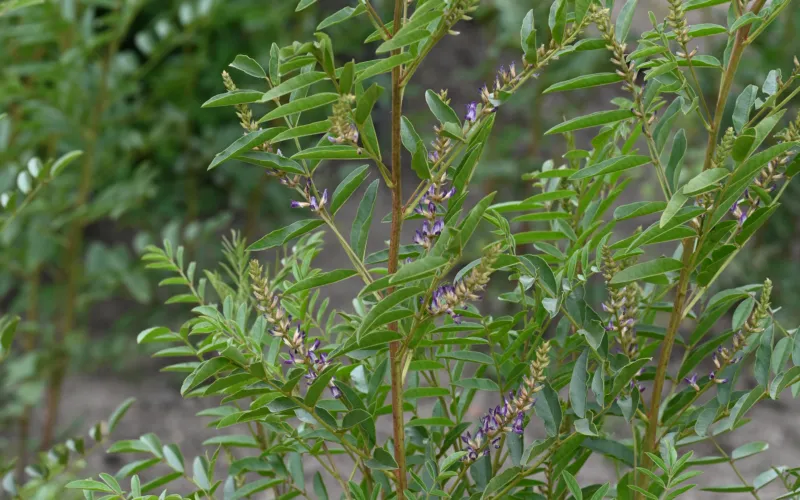
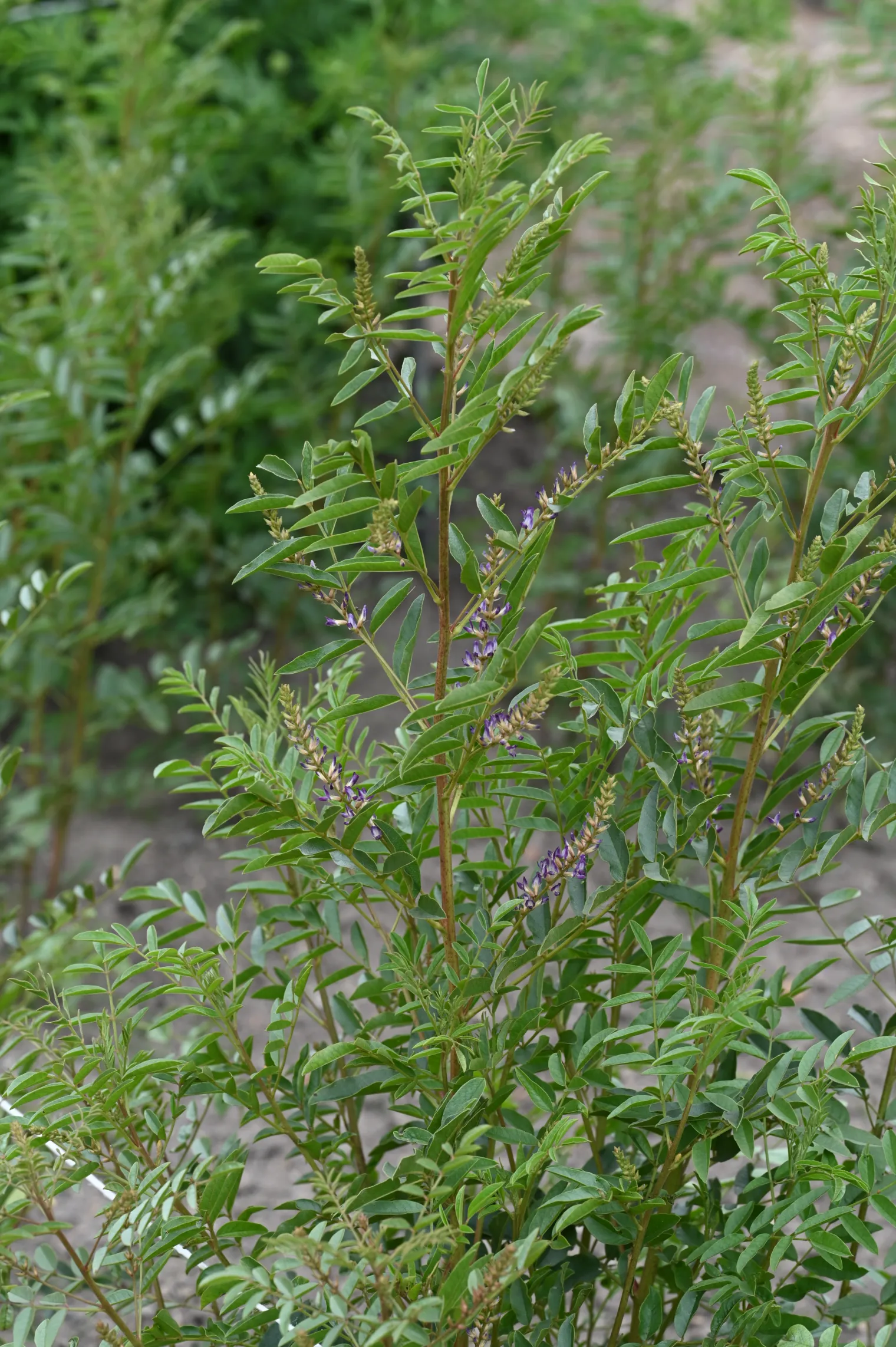
Licorice is the dried root and stolons of Glycyrrhiza glabra, a leguminous perennial of the belt running from the central Mediterranean through western and central Asia to Mongolia and Pakistan. The European Pharmacopoeia admits two further species to the same drug name, G. inflata and G. uralensis, and requires at least 4.0 per cent 18β-glycyrrhizic acid on the dried drug. Glycyrrhizin gives the root its sweetness — about fifty times that of sucrose — and also gives it its characteristic toxicity, because its gut metabolite blocks the enzyme that protects the mineralocorticoid receptor from cortisol. Identity rests on a yellow, fibrous, splintery root with a distinct cambium ring, on a powder of long thick-walled fibres in crystal sheaths with prismatic calcium oxalate and simple round starch, and on a TLC and HPLC profile keyed to glycyrrhetinic acid and glycyrrhizic acid. The clinical evidence is thinner than the reputation and points in an awkward direction: the strongest and most consistent human finding about licorice is that regular intake raises blood pressure and lowers plasma potassium, at doses well inside ordinary practitioner prescribing. Efficacy evidence exists for a topical gargle in post-operative sore throat, for a deglycyrrhizinated extract in functional dyspepsia, and for licorice added to Helicobacter pylori regimens, all of it low-certainty. In Australia the drug is not scheduled and carries no dose ceiling in the Permissible Ingredients Determination, which places the whole burden of safe dosing on the prescriber. Anyone considering licorice should consult a degree-qualified herbalist with competencies and adequate training in pharmacognosy.
0.3 Contents and extent (draft)
| Section | Approx. pages |
|---|---|
| 1-3 Nomenclature, definition, source and Australian supply (1 map, 1 historical plate, 2 photographs, 1 chart) | 6 |
| 3.1 Origin, climate and chemistry: where it must be grown (1 chart, 3 tables) | 4 |
| 4-5 Macroscopy and microscopy (4 photographs, 1 labelled schematic, 1 pending slot) | 5 |
| 6-7 Chemistry, markers and limits (14 structures, 4 tables) | 6 |
| 8-9 TLC and HPLC fingerprints (2 AIP schematics, 1 licensed published chromatogram) | 4 |
| 10 Identity, purity, adulterants, contaminants (3 tables) | 4 |
| 11 Traditional use | 2 |
| 12 Current practice and doses (1 chart, 2 tables) | 3 |
| 13 Clinical evidence (search, graded trials, registries, 1 evidence chart) | 7 |
| 14 Pharmacology and pharmacokinetics | 3 |
| 15 Safety, interactions, pregnancy (1 forest chart, 5 tables) | 6 |
| 16-18 Discussion, conclusions, research needed | 4 |
| 19-20 References and document control | 5 |
| Totals (draft) | about 52 A4 pages in the laid-out PDF; 25 tables; 32 embedded figures (7 licensed or public-domain photographs, 1 public-domain botanical plate, 14 PubChem structures, 1 AIP microscopy schematic, 2 AIP chromatography schematics drawn from the Ph. Eur. method text, 1 licensed CC BY published HPLC fingerprint, 1 AIP map, 5 AIP data charts), each placed in the section it illustrates. Photomicrographs: none — AIP bench data pending. A search of Wikimedia Commons and of Europe PMC open-access literature on 23/09/2026 found no openly licensed photomicrograph of G. glabra root transverse section or powder, so figure slot F4 stays open and is shown as a captioned placeholder in section 5. Chromatograms: none measured by AIP; the section 8 and section 9 figures are AIP schematics drawn from the published Ph. Eur. method and are labelled as such. Trials graded: 25 human studies graded individually and 5 syntheses in section 13.2, 8 harms studies in 13.3, 23 registry records retrieved. 83 numbered references. Every one of the 61 PMIDs and 58 DOIs in the list was resolved live at NCBI and Crossref on 23/09/2026 and checked against what the text says (section 19). |
0.4 Contributors and access
Prepared by Dr Thomas Ridley, Head of Education and Research. Botanical, QA and Medicine reviews are requested and pending; who covers what is set out in 0.1 and 20.3. History and Philosophy (section 11), the Librarian reference audit and the Legal read are outstanding. A Legal read is advisory and does not gate publication (CEO order 22/09/2026, as amended 17/09/2026). The Australian Herbal Pharmacopoeia is AIP’s own series and carries no statutory, TGA or government standing. Access to the full monograph beyond the free sample follows the membership rules set by the CEO.
49 more pages follow · 24,538 words, 31 figures, 28 tables
Still to come in this monograph
- 1. Nomenclature
- 2. Definition
- 3. Source and Australian supply
- 3.1 Where it must be grown: origin, climate and chemistry
- 4. Macroscopy
- 5. Microscopy
- 6. Chemistry
- 7. Named markers and assay limits
- 8. TLC fingerprint
- 9. HPLC fingerprint
- 10. Identity, purity, adulterants and contaminants
- 11. Traditional use
- 12. Current practice: use, preparations and doses
- 13. Clinical evidence
- 14. Pharmacology
- 15. Safety
- 16. Discussion
- 17. Conclusions
- 18. Research still needed
- 19. References
- 20. Document control
The rest of this monograph reads in the AIP Reader: every page in your name, always the current version, on a Scholar membership or the AUD $20 copy of this one title.
Checking your membership…
Report an error or submit evidence
If something in this monograph is wrong, out of date or missing, tell us and show us the evidence. Every report is logged under the AIP Evidence Charter and assessed on the evidence alone; the outcome is kept on the record, and an upheld report is corrected with a dated notice on this page.
Open the report form
The typeset edition of this monograph, set for print with the plates and chromatograms at full size, is $20 AUD in Publications.