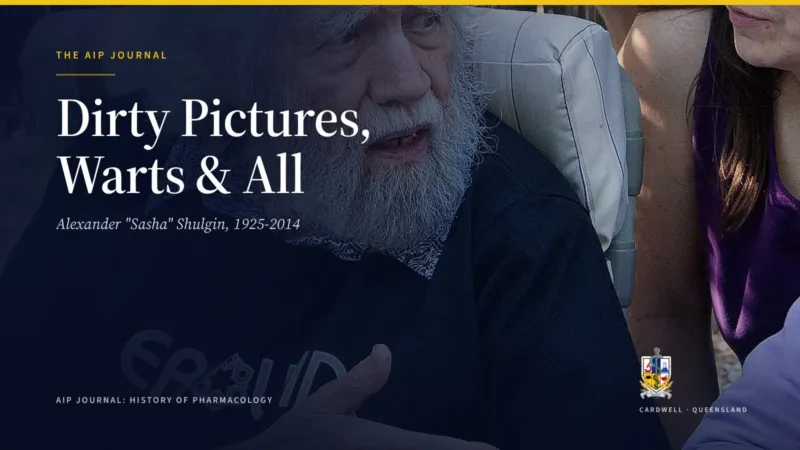


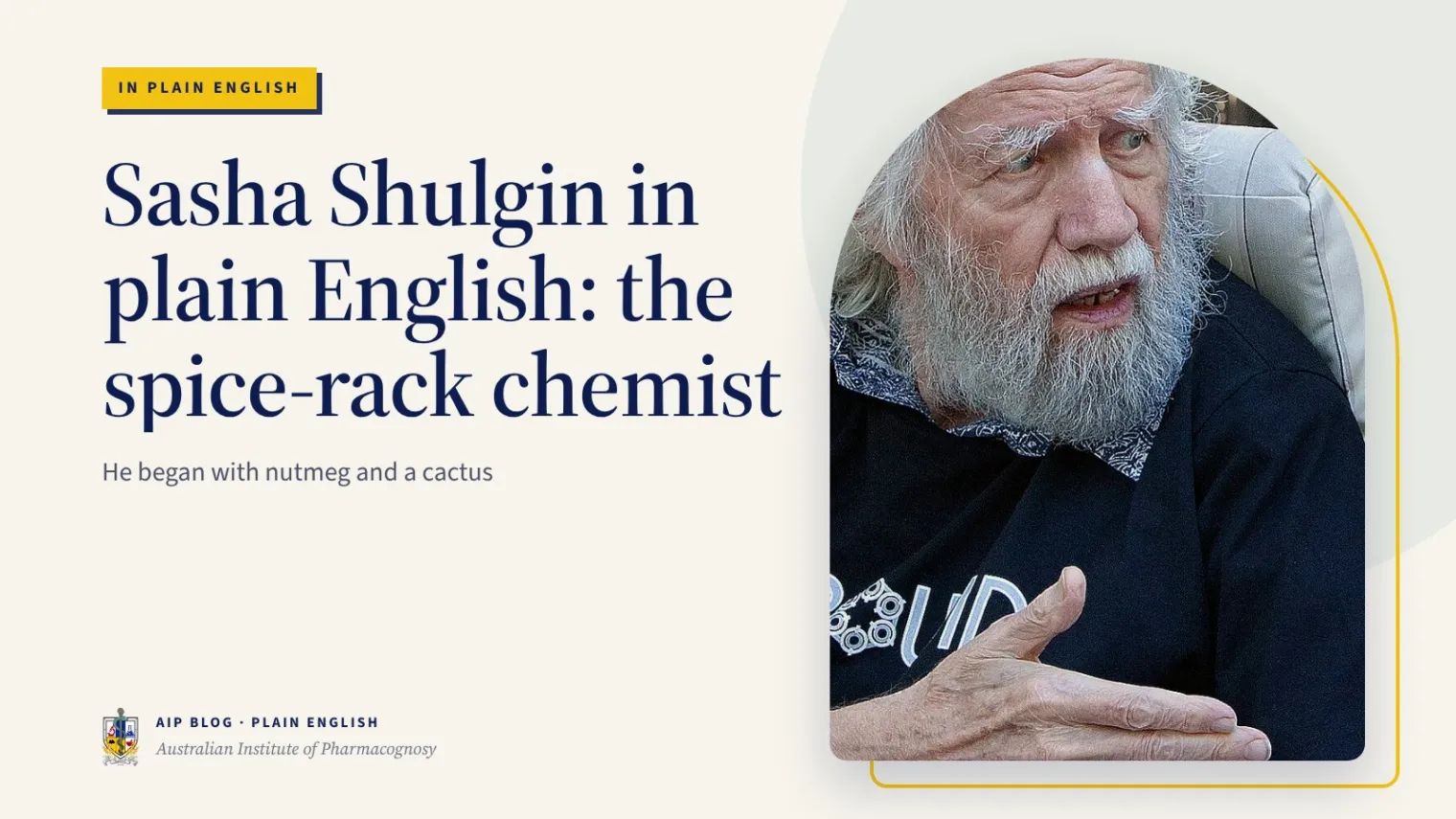
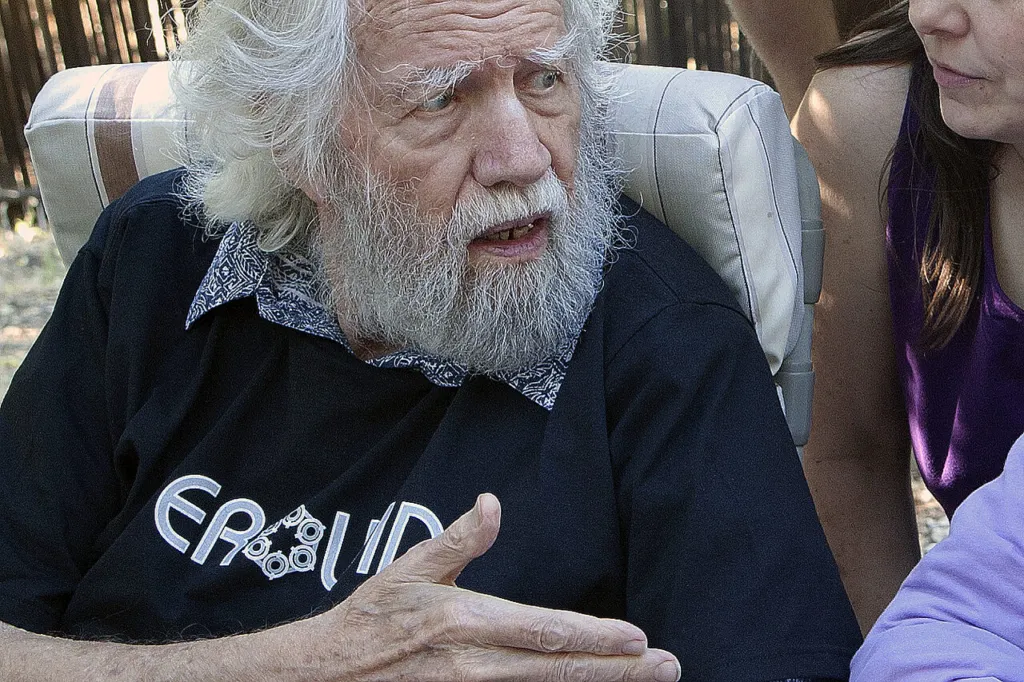
Photo: Jon Hanna, 2009 · CC BY-SA 3.0 · Wikimedia Commons
There is probably nutmeg in your kitchen. In 1966 a Californian chemist asked, in print, whether the body could turn something in its oil into a mind-altering drug.
He was Sasha Shulgin. A drug he championed is now prescribed in Australia, most of his compounds are illegal here, and one warning from his world touches a herb you may keep.
Educational only: no medical, legal or dosing advice. Legal content is the Institute’s reading of Australian rules, October 2026.
Emergency: phone 000. Suspected poisoning or overdose: Poisons Information Centre, 13 11 26, 24 hours, Australia-wide.
Almost every compound here is a prohibited substance in Australia, and in Queensland a dangerous drug. Possessing, supplying or making one is a criminal offence.
Since 1 July 2023, MDMA may be prescribed for PTSD only by a psychiatrist the TGA has authorised, with ethics committee approval (psilocybin has a matching path for treatment-resistant depression). Every other use stays prohibited.
Street tablets and powders are often a different drug from the one named. The trials used pharmaceutical-grade drug, screened patients and trained therapists present throughout.
Interactions can kill. MDMA and its relatives taken with antidepressants, above all MAOIs (which include the harmala alkaloids of Syrian rue and ayahuasca brews), lithium or stimulants can cause serotonin toxicity, a dangerous overload of a brain messenger. Overheating, and dangerously low blood sodium from drinking too much water, also cause serious harm.
For any botanical medicine, consult a degree-qualified herbalist with competencies and adequate training in pharmacognosy.
- A chemist (1925–2014) who started from plants: cactus, nutmeg, parsley.
- He tested new compounds on himself and friends and kept honest notes. We don’t endorse the method.
- He didn’t invent MDMA, but saw its promise for therapy.
- Authorised psychiatrists here may prescribe it for PTSD; how much it helps, and for how long, is unsettled.
- Otherwise it’s illegal, and with antidepressants or Syrian rue it can kill.
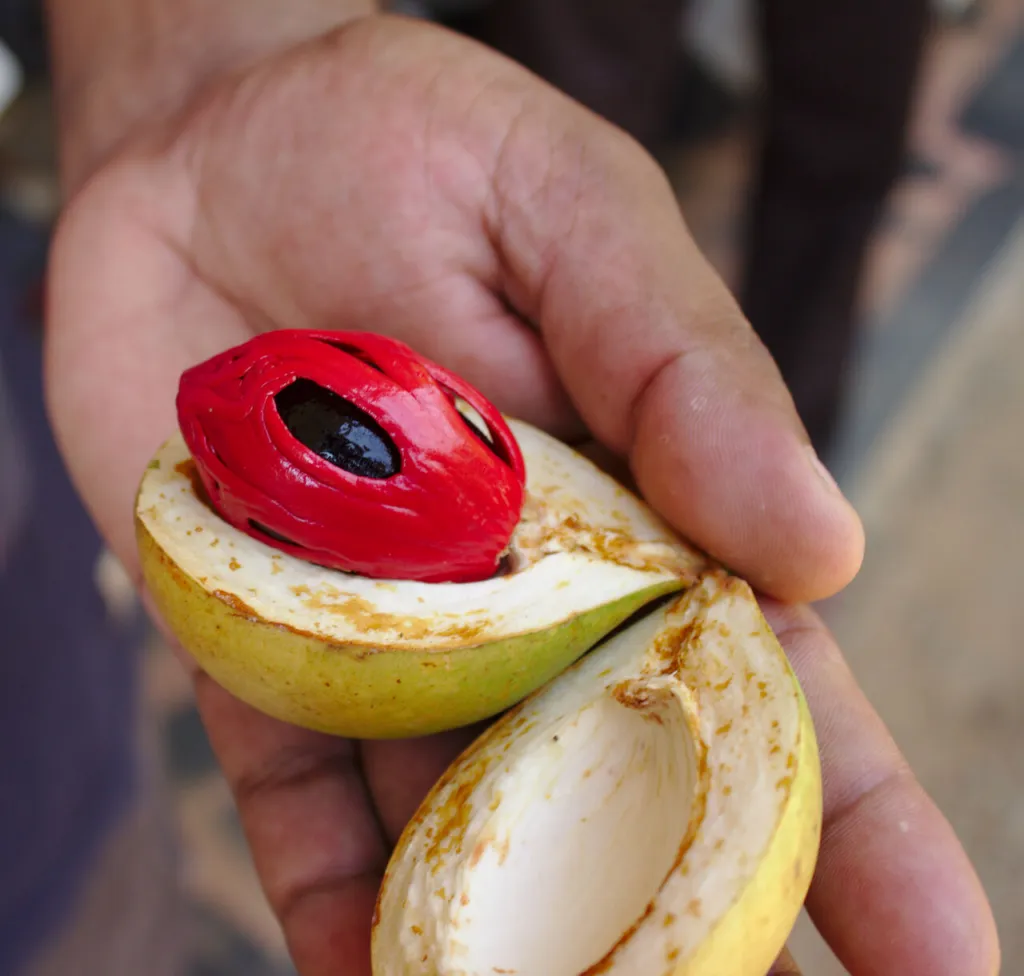
It began in the spice drawer
He came to the mind through plants.
Berkeley-born, Shulgin made Dow a profitable snail bait, which bought him time for his own questions. In 1960 he took mescaline, the peyote cactus compound, and the questions changed.
Nutmeg was a folk intoxicant long before him. Its oil is rich in myristicin, shaped much like a mind-altering molecule of his, and in 1966 he wondered in print if the body could finish the job. He ran the same idea over parsley and dill. Nobody has shown it explains nutmeg poisoning in people; that is still open.
Nutmeg poisoning is real and its cause unsettled, so treat any post ‘explaining’ a nutmeg high as a guess.
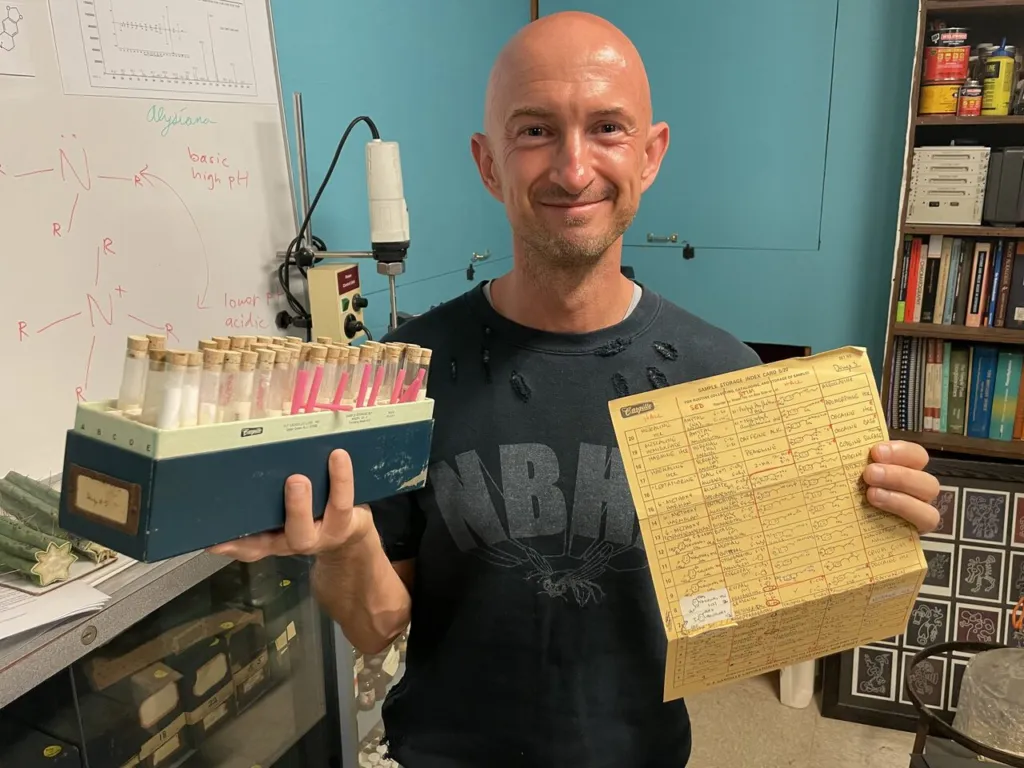
Pictures on the bottles
A backyard lab, a few friends, careful notes.
From the late 1960s he worked in a lab behind his house in the Lafayette hills, the Farm. Each bottle had a molecule sketched on its label: his dirty pictures.
He made something new, tried a tiny amount himself, crept upward over separate days, then shared it with friends who kept notes. No ethics committee would allow that now, and we don’t recommend it. What we honour is the record: over two hundred new compounds in print, the flops reported too.
He is often called the father of ecstasy. He wasn’t: a German firm made MDMA in 1912. His 1977 gift of it to the psychologist Leo Zeff put it in therapists’ hands until the 1985 ban.
Nearly every compound here is illegal in Australia. Borrow the notebook habit instead: log each remedy and what you noticed, and show your herbalist.
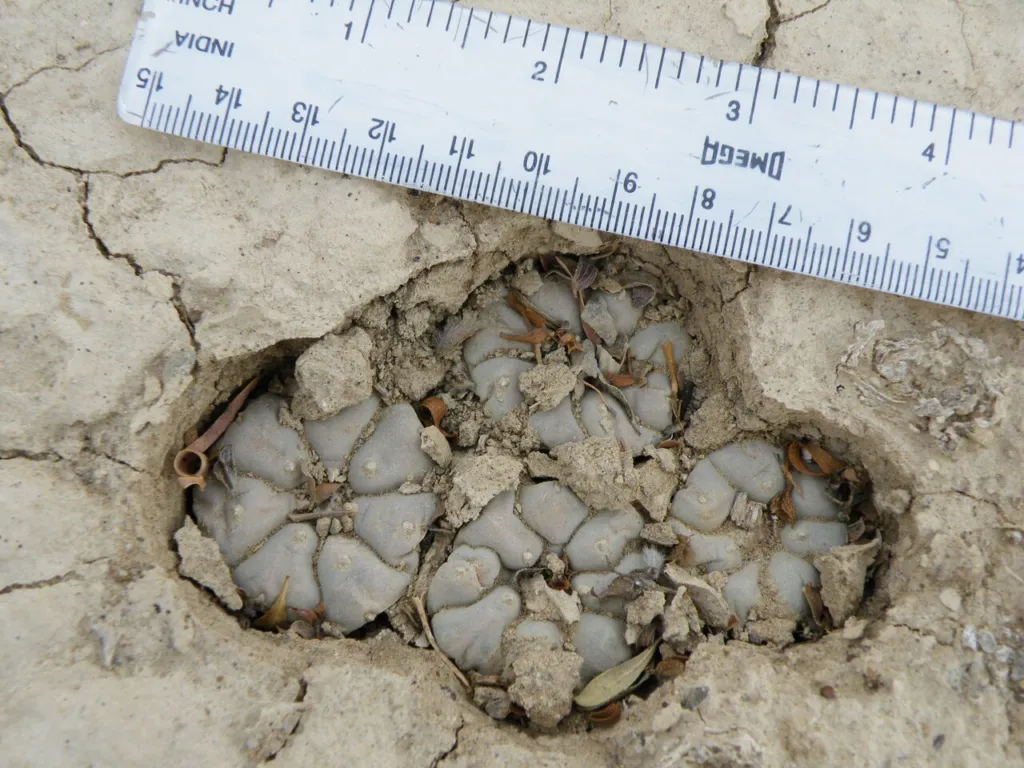
From a notebook to an Australian clinic
Hopeful, and unfinished.
Since 2023 Australia has let authorised psychiatrists use MDMA for PTSD, the first country to do so. In two late-stage overseas trials, therapy with MDMA eased symptoms clearly more than therapy with a dummy pill. Severe side effects were commoner on the drug, though the second trial had no serious adverse events.
America’s regulator turned it down in 2024 and asked for another trial (overseas; not binding here). A 2025 Australian overview found large average gains but low to very low certainty, patchy side-effect records and no long-term safety data. Our reading: real benefit for some, size and staying power unconfirmed.
With PTSD, the lawful route is an authorised psychiatrist. A street pill is not the trial drug, and with an antidepressant, lithium or Syrian rue it can kill.
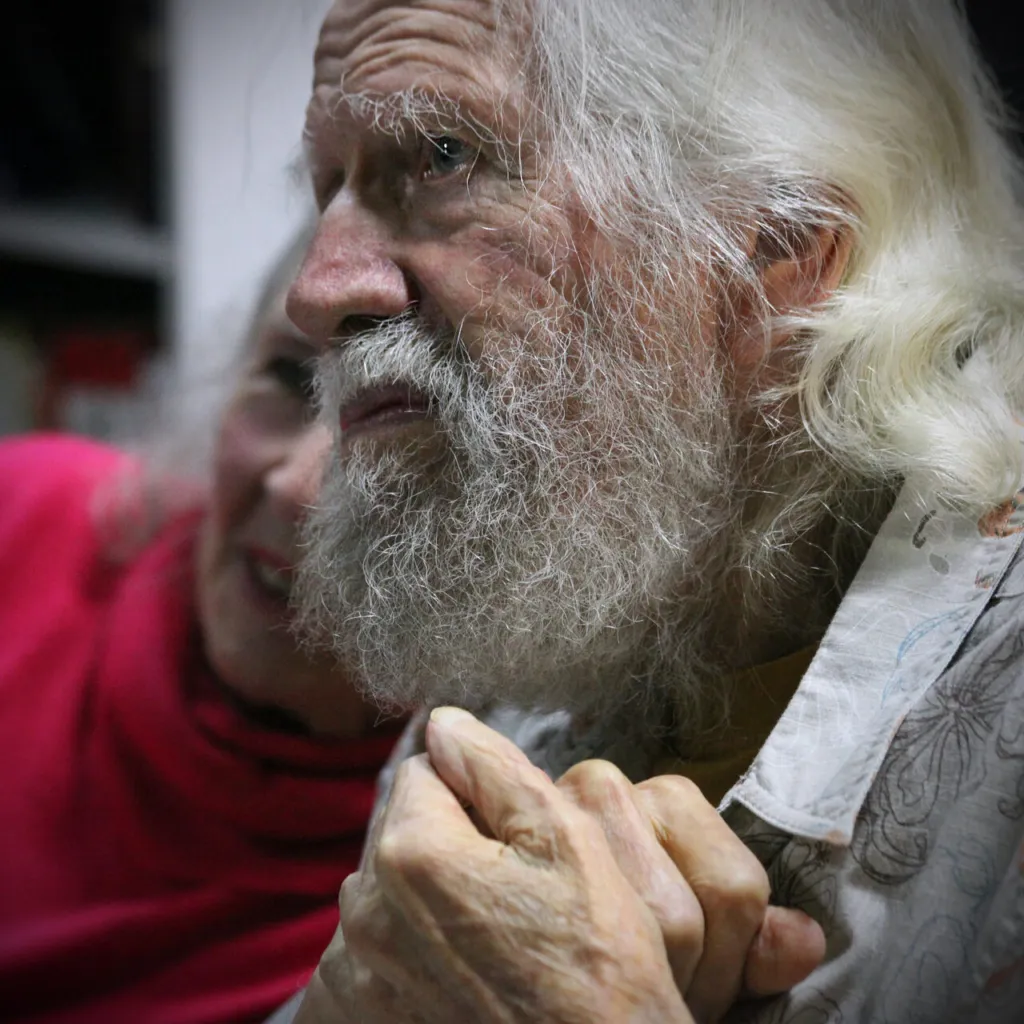
Orange juice, and a classroom in 1987
Where his humility came from.
In 1944, awaiting Navy thumb surgery, he drank orange juice with crystals in it, took them for a sedative and passed out before the anaesthetic came. They were sugar. He never forgot what expectation can do, or that a fair drug test must allow for it.
In 1987 he taught a beginners’ drugs course at San Francisco State, and his wife Ann taped it. The transcripts keep the jokes and detours: warts and all. Dr Iggulden, who directed our essay, was struck by the humility. He never tells a student they are wrong; he builds from the interesting part of the question.
Do not fall in love with the hypothesis.
Sasha Shulgin, to his class
He died at home in 2014, aged 88. Ann died in the same house eight years later.
When a remedy seems to work, ask what else could explain it, your hopes included. That is his glass of orange juice.
The short version of Dr Thomas Ridley’s AIP Journal essay. Every date, trial and source sits there:
- Jesse Kirby — Took shorthand notes from the essay, shut it, and wrote this page from them: chose the spice-drawer opening, the four sections and every sentence, and carried the law and interaction warnings into the red box at full strength
- Zoe Bennett — Wrote the page title, the search description and the labels, and built the share around the nutmeg jar most readers already own
- Theo Karras — Picked the Farm portrait for the cover and the nutmeg, laboratory, peyote and Sasha-and-Ann banners from the essay’s licensed set, looked at each one and wrote alt text to what it shows
- Leah Bianchi — Built the page: red safety box, one-minute card, the pull quote, the four what-this-means cards and the card back to the essay, checked for a phone-width read
- Dr Luke Iggulden, Chief Scientific Officer — Senior author. Commissioned the Explainer series, set its direction and approved it
Contributors
- Dr Thomas Ridley — Wrote the AIP Journal essay this page retells
Image credits. Cover (2009) and Sasha and Ann Shulgin, Oakland (2011): Jon Hanna, CC BY-SA 3.0. Farm laboratory, 2025: Satosomani, CC BY-SA 4.0. Nutmeg: Slashme, CC BY-SA 4.0. Peyote: Amante Darmanin, CC BY 2.0. All via Wikimedia Commons, as licensed for the parent essay.
AIP Explainers are the plain-language editions of the Institute’s technical articles, published alongside the original. Everything on this page is carried by the full essay, where the evidence, the references and the regulatory sources are set out. Australian regulatory information was read in October 2026 and may change; it is the Institute’s published reading, not legal advice. Spotted an error? Write to our contact form. We would rather correct a claim than repeat it.
Jesse Kirby
Head of Community Outreach
Australian Institute of Pharmacognosy
Cardwell QLD, Australia
australian-pharmacognosy.org · our contact form
The Institute sets and publishes its own monographs. The catalogue is in Publications.