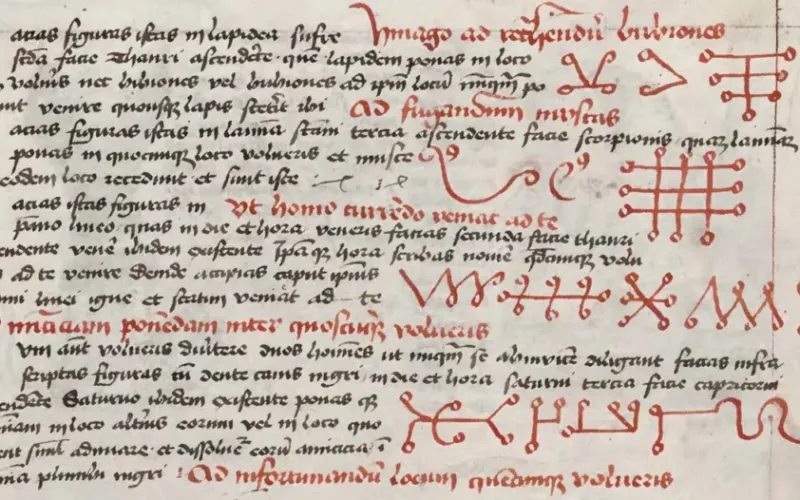

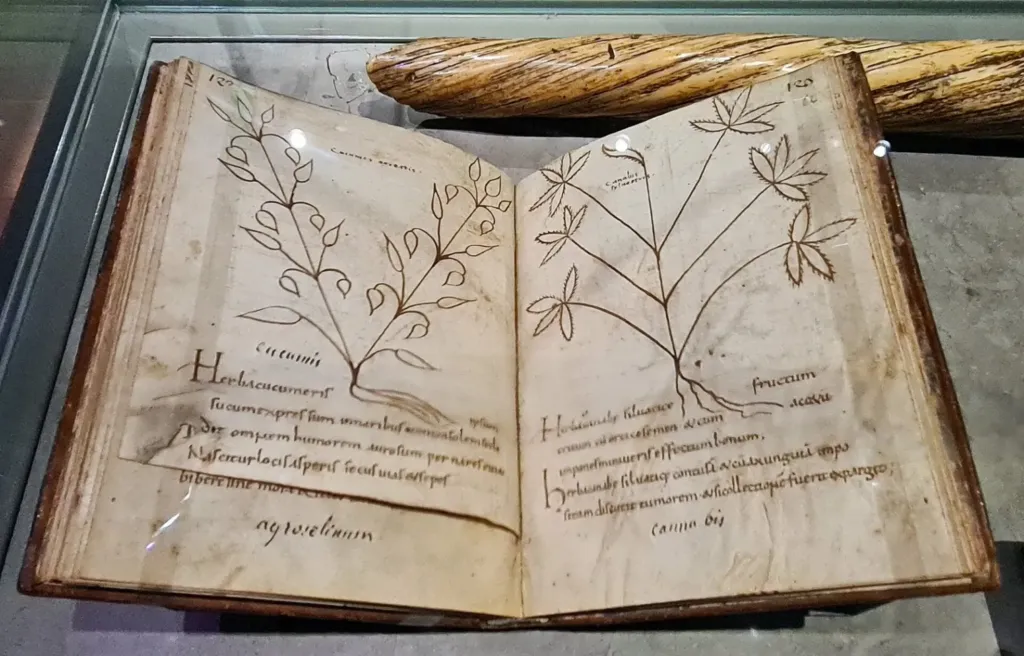
Photo: Kleon3, Rijksmuseum van Oudheden, Leiden · CC BY-SA 4.0 · Wikimedia Commons
It might be pinned inside a cupboard door: a chart matching herbs to planets. Rose with Venus, oak with Jupiter, mandrake with gloomy Saturn.
Charts like that often borrow from one book, printed in Cologne in 1533. Parts of that book gather plants that can put you in hospital, and one grows freely around Cardwell.
Educational only; no preparation or dosing detail. Legal passages are the Institute’s reading of Australian rules at 20/09/2026, not legal advice.
Suspected poisoning by any plant: phone the Poisons Information Centre on 13 11 26, 24 hours a day, anywhere in Australia, and follow its advice. In an emergency phone 000.
The dangerous ones include hemlock, henbane, mandrake, monkshood, both hellebores, savin, pennyroyal oil, castor seed and birthwort. Some are controlled or banned from medicines in Australia.
Do not burn, brew or handle these plants because an old text names them.
Before taking any herb, consult a degree-qualified herbalist with competencies and adequate training in pharmacognosy.
- A Renaissance scholar filed plants under planets by taste, smell and myth, and tested almost none of it.
- Where he sorted by effect, the groups hold up: Saturn’s stupefying plants and Mars’s burning ones.
- One of his smoke recipes burns henbane with hemlock. That is poisoning. Never try it.
- Castor oil plant, whose seeds hold ricin, grows freely around Cardwell.
- Nothing in the book shows that any herb works.
Sorting the garden by the sky
Smell, taste and story decided where each plant went.
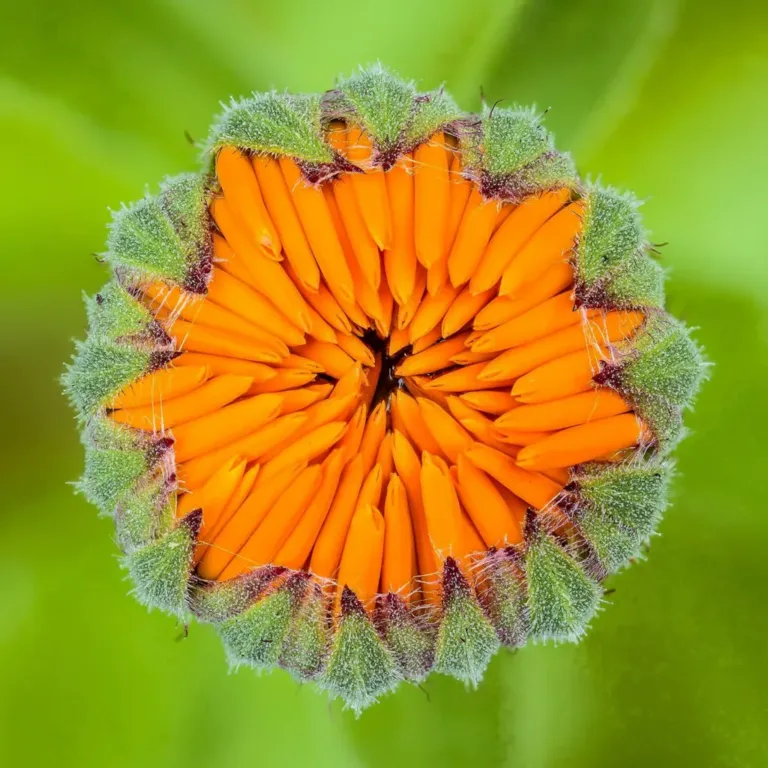
Heinrich Cornelius Agrippa wrote a learned handbook of esoteric magic whose first volume is really a herb book. A flower that follows the sun, like the pot marigold, belongs to the Sun. Sweet things go to Venus and Jupiter, deadening ones to Saturn, stinging ones to Mars. Where a plant already had a god, the god won.
Much of it is perfume and legend. There is no evidence a Venus rose brings love.
A planet beside a herb tells you how a scholar filed it, and nothing about what it does in your body.
Saturn and Mars were paying attention
Sorting by effect held up.
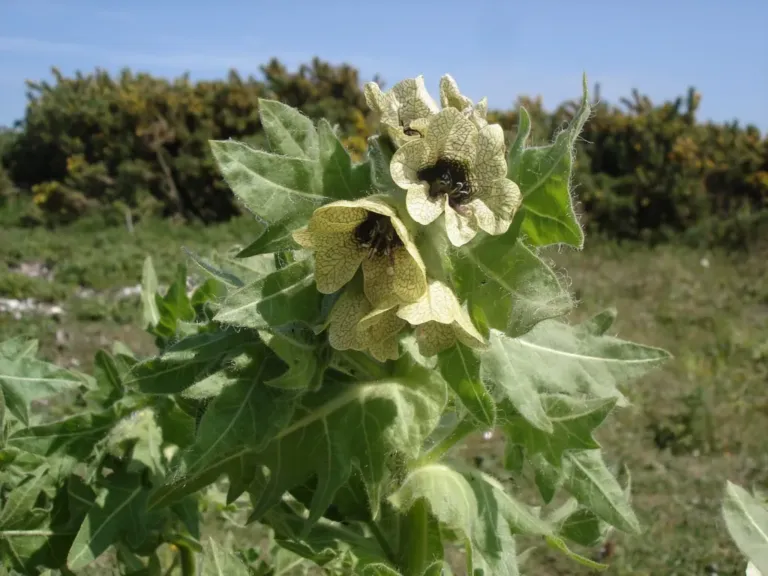
Saturn got the plants that stupefy: mandrake and opium, with henbane in his smoke. Mandrake and henbane block receptors for one of our nerve messengers, bringing drowsiness, confusion and, with more, delirium and hallucinations. Opium’s main ingredient is morphine.
Mars got whatever burns the mouth, blisters the skin or brings tears: mustard, onion, nettle. Most trip the body’s sensors for heat and irritation. His Mars list also holds real poisons: wolfsbane and hellebore.
The lists he got right are the ones built on what a plant does to the body.
A Saturn or Mars label may hint at a strong plant, but no planet marks one safe: henbane sits on kindly Jupiter’s list.
The smoke recipes, and what grows out the back
Where the book stops being quaint.
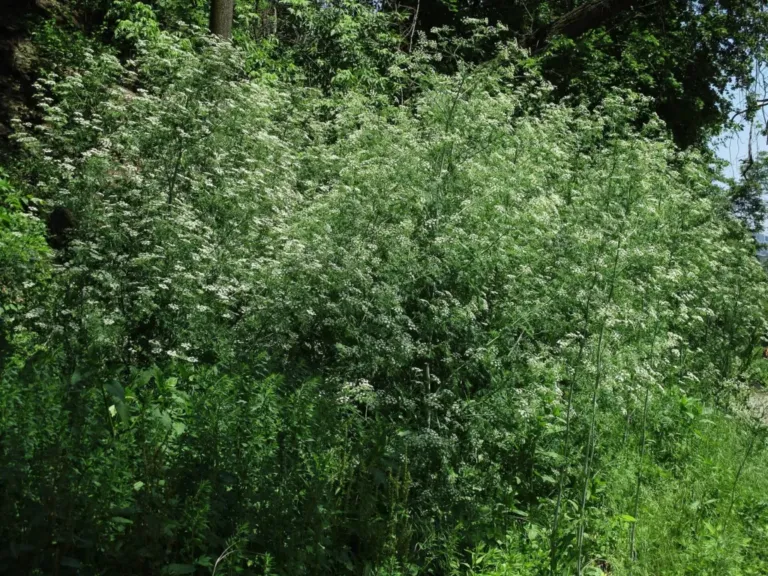
One of Agrippa’s smoke recipes, meant to gather spirits, burns henbane with hemlock. Henbane smoke poisons, often with vivid visions, so the spirits may have been hallucinations, though that is our reading, not a tested finding. Hemlock’s poison brings creeping paralysis; never handle or heat it. Birthwort, also in the book, causes kidney failure and cancer of the urinary tract, and the TGA bans it from therapeutic goods in Australia.
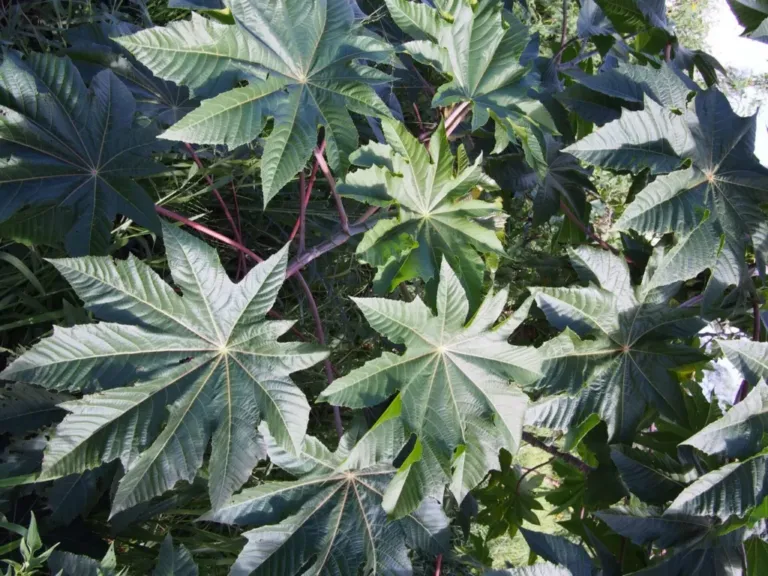
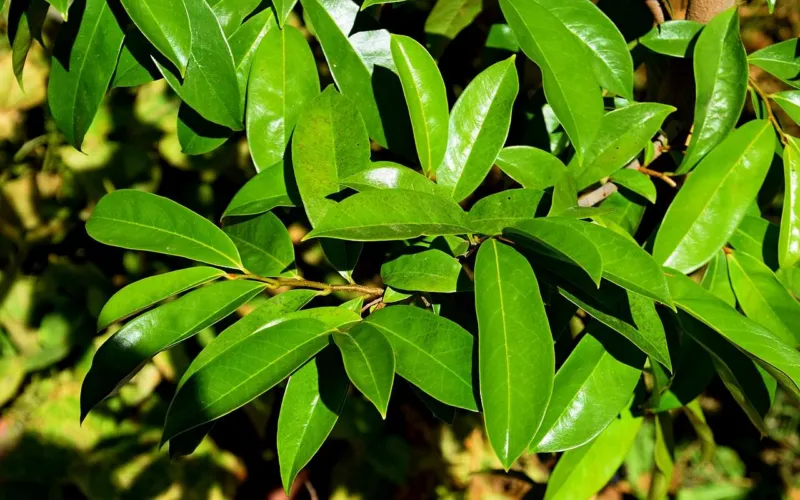
Closer to home, castor oil plant, burned in one of his recipes, is a weed across north Queensland; its seeds contain ricin. Thornapple grows here too, and hemlock in cooler districts. Camphor is poisonous if swallowed, above all for children, and in Queensland the camphor laurel is a restricted invasive tree you must not give away, sell or release. Opium poppy is a prohibited plant under Queensland drug law, and growing it without a Commonwealth licence is a criminal offence.
Leave these plants alone. If anyone is exposed to one, phone 13 11 26, or 000 in an emergency.
The cat was right all along
Catnip, and a man’s second thoughts.
Agrippa says the cat delights in catnip, and cats really do love it. He wrote the book young, attacked all learning, magic included, in middle age, and printed it anyway. He collected plant lore all his life, honest enough to doubt he understood it.
Anything you would swallow or burn deserves a better authority than a Renaissance astrologer.
This page is the short version of Ambrose Fenwick’s essay. Read the full one:
- Jesse Kirby — Wrote every sentence of this edition from his own notes with the essay closed, chose the four things a reader with a planet chart needs, and carried the poisoning warnings and the Queensland law across at full strength
- Zoe Bennett — Wrote the page title, the search description and the labels, and framed the share around the herb-and-planet chart a reader may already own
- Theo Karras — Picked the herbal manuscript for the cover and the marigold, henbane and hemlock banners from the essay’s own photographs, added the Townsville castor weed, and wrote alt text to match what each shows
- Leah Bianchi — Built the page: the red safety box, the one-minute card, the pull quote, the four what-this-means cards and the card back to the essay, checked for reading on a phone
Contributors
- Ambrose Fenwick — Wrote AIP Grimoire Herbal No. 2, the essay this page retells
Direction and oversight
- Dr Luke Iggulden — Commissioned the Explainer series, set its direction and approved it
Image credits. Cover: pseudo-Apuleius herbarium, Rijksmuseum van Oudheden, Leiden, photo Kleon3, CC BY-SA 4.0. Pot marigold: Dominicus Johannes Bergsma, CC BY-SA 4.0. Henbane: Ian Cunliffe, CC BY-SA 2.0. Poison hemlock: Cbaile19, CC0. Castor oil plant, Townsville: User:Btcpg, CC BY-SA 3.0. All via Wikimedia Commons, resized and cropped for the web, otherwise unaltered.
AIP Explainers are the plain-language editions of the Institute’s technical articles, published alongside the original. Everything on this page is carried by the full essay, where the evidence, the references and the regulatory sources are set out. Regulatory information was read on 20/09/2026 and may change. Spotted an error? Write to our contact form. We would rather correct a claim than repeat it.
Jesse Kirby
Head of Community Outreach
Australian Institute of Pharmacognosy
Cardwell QLD, Australia
australian-pharmacognosy.org · our contact form