
Australian Herbal Pharmacopoeia (working title), Monograph AIP-HP 006
Status: version 1.0, live at https://www.australian-pharmacognosy.org/pharmacopoeia/ginkgo-biloba/, all reviews and the pre-publication final test on record. Published at first draft under the CEO’s order of 23/09/2026. Botanical, QA and Medicine technical reviews and the Education and Research evidence and citation audit done 23/09/2026; Community Outreach layout review done 23/09/2026; not reviewed by Legal (internal draft).
Date: 23/09/2026 (AEST). Next review: on sign-off, then three-yearly or sooner if a major trial, safety signal or new pharmacopoeial text appears.
Prepared by: Dr Thomas Ridley, Head of Education and Research, Australian Institute of Pharmacognosy, Cardwell QLD.
Contributors: Dr Thomas Ridley (library and literature search, full-text retrieval, registry and regulatory instrument search, synthesis, drafting, figure sourcing and placement, AIP schematics and charts, reference verification). Dr Fiona MacAllister, Head of Botanical (technical review of sections 1-5 and the adulterants in section 10, 23/09/2026). Dr Hana Suzuki, Head of Botanical QA (technical review of sections 6-10 and figures F6-F8, 23/09/2026). Dr Eleanor Whitcombe, Head of Medicine (technical review of sections 12, 13 and 15 and figures F10 and F10b, 23/09/2026). Jesse Kirby, Head of Community Outreach (figure placement, captions, credit lines and page layout, 23/09/2026). Dr Luke Iggulden set the scope of the series in the CEO directive of 22/09/2026; he did not write this monograph.
0. Free teaser
0.1 Identity card
| Monograph | AIP-HP 006, Ginkgo leaf. Version 1.0, 23/09/2026. Next review: on sign-off |
| Accepted name | Ginkgo biloba L., Ginkgoaceae (a gymnosperm; sole living species of the order Ginkgoales). First published in Linnaeus, Mantissa Plantarum Altera 313 (1771) (IPNI 262125-1) [57]. Accepted in WCVP (release of 16/09/2026, read 23/09/2026 through ChecklistBank dataset 2000), the dataset behind Plants of the World Online; the POWO page itself refused automated access on 23/09/2026 [1] |
| Synonyms | Salisburia adiantifolia Sm., Salisburia biloba (L.) Hoffmanns., Salisburia ginkgo Rich., Pterophyllus salisburiensis J.Nelson, Salisburia macrophylla Reyn., Ginkgo macrophylla K.Koch, and many cultivar-level names (WCVP) [1]; WHO gives Salisburia macrophylla with the authority "C. Koch" [4]. TGA (Permissible Ingredients) and MediHerb both use Ginkgo biloba, the accepted name [8,9] |
| Drug name | Ginkgonis folium (Ph. Eur. 1828, Ginkgo leaf: whole or fragmented dried leaf) [3]; WHO title Folium Ginkgo [4]; EMA/HMPC Ginkgo biloba L., folium [5] |
| Common names | Ginkgo, maidenhair tree (English); Ginkgoblätter (German); arbre aux quarante écus (French); yin xing, yinhsing, bai guo (seed) (Chinese); icho, ginnan (Japanese); eun-haeng (Korean) [4,7] |
| Pharmacopoeial status | Ph. Eur.: 1828 Ginkgo leaf (text 01/2011) and 1827 Ginkgo dry extract, refined and quantified (text 04/2008), read in the Ph. Eur. 8.0 library copy [3,6]. WHO monographs vol. 1 (1999): yes [4]. EMA/HMPC: EU herbal monograph 2015, well-established use (refined extract) and traditional use (powdered leaf) [5]. USP-NF: Powdered Ginkgo Extract monograph, named in the Australian Permissible Ingredients Determination [9]. Mills and Bone record the leaf as official in the BP 2012 and USP 34-NF 29 [7] |
| Australian status | Permitted in listed medicines: Therapeutic Goods (Permissible Ingredients) Determination (No. 2) 2026, Schedule 1 item 2357, GINKGO BILOBA, purposes A, E, H; a leaf extract must comply with Identification Test B of the USP 32-NF 27 monograph Powdered Ginkgo Extract (does not apply to powdered or dried leaf) [9]. No entry in the Poisons Standard June 2026 [10] or the Medicines Advisory Statements Specification 2021 [11]. Not native; 36 Atlas of Living Australia records, all planted or herbarium material, one in Queensland [17]. Not a declared invasive plant in Queensland [20]. Not CITES-listed [12] |
| Assay marker | Flavonoids, expressed as flavone glycosides (Mr 757): not less than 0.5% in the dried leaf (Ph. Eur. 1828, HPLC after acid hydrolysis to quercetin, kaempferol and isorhamnetin) [3] |
| Extract specification | Refined and quantified dry extract (Ph. Eur. 1827): flavone glycosides 22.0-27.0%, bilobalide 2.6-3.2%, ginkgolides A+B+C 2.8-3.4%, ginkgolic acids not more than 5 ppm (dried extract) [6] |
| Safety marker | Ginkgolic acids (CID 5281858 for the C15:1 homologue), upper limit 5 ppm in refined extract [6]; no limit is set for the leaf |
| Evidence snapshot | Dementia (Alzheimer, vascular, mixed), refined extract 240 mg/day: Tier B, 13+ RCTs in four syntheses that disagree, low certainty. Dementia with neuropsychiatric symptoms: Tier B, 4 RCTs (n=1,628), all manufacturer-run. Prevention of dementia or cognitive decline in older people: Tier A for no benefit, 1 large RCT (n=3,069). Tinnitus: Tier C, 12 RCTs, no clear benefit. Intermittent claudication: Tier B, 14 RCTs, no clinically significant benefit. Altitude sickness prevention: Tier B, no benefit. Acute stroke, macular degeneration: Tier C. Traditional leaf uses: little documented (Tier T) |
| Main safety point | Mild gastrointestinal upset, headache and allergic skin reactions; bleeding events are reported in case series with causality unresolved, so caution with anticoagulants, antiplatelet drugs, bleeding disorders and surgery; the EMA contraindicates use in pregnancy. The crude leaf and simple tinctures contain allergenic ginkgolic acids that the refined extract removes. The seed (nut) is a separate drug with a neurotoxin |
| Suggested citation | Ridley T. Ginkgo leaf (Ginkgo biloba L.). Australian Herbal Pharmacopoeia monograph AIP-HP 006 (v1.0). Cardwell (QLD): Australian Institute of Pharmacognosy; 2026. DOI to be assigned |
| Compiler and review | Compiled by Dr Thomas Ridley (Education and Research). Technical review: Dr Fiona MacAllister (Botanical, sections 1-5, 10), reviewed 23/09/2026; Dr Hana Suzuki (QA, sections 6-10), reviewed 23/09/2026; Dr Eleanor Whitcombe (Medicine, sections 12, 13, 15), reviewed 23/09/2026; Dr Thomas Ridley (Education and Research, evidence and citation audit, sections 0-20 and figures), reviewed 23/09/2026 (the audit is by the compiler, so the Librarian audit of section 19 is the independent reference check); Jesse Kirby (Community Outreach, figure placement, captions and page layout, whole document), reviewed 23/09/2026. Published: 23/09/2026. Last modified: 23/09/2026. Version 1.0 |
| Provenance | Original AIP data: none. Every limit, method, measurement and trial result comes from the cited pharmacopoeias, regulators, reference works and papers; sections 4, 5, 8, 9 and 10 are marked "AIP bench data pending" |
| Canonical URL | /pharmacopoeia/ginkgo-biloba/ |
0.2 Summary
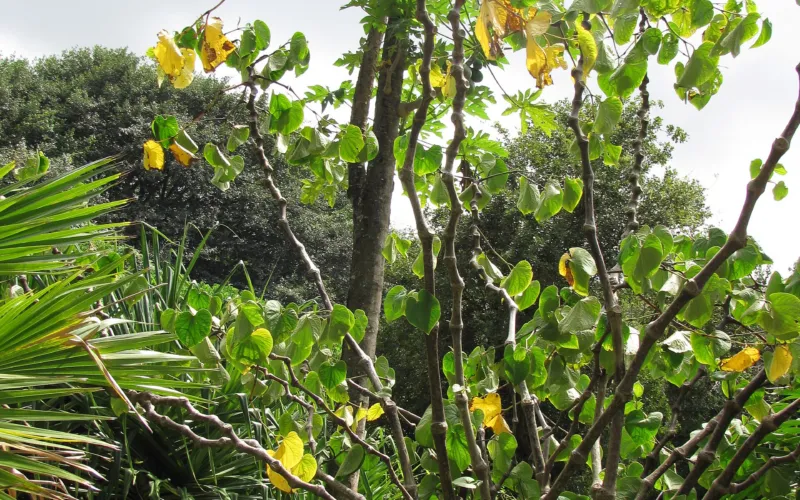
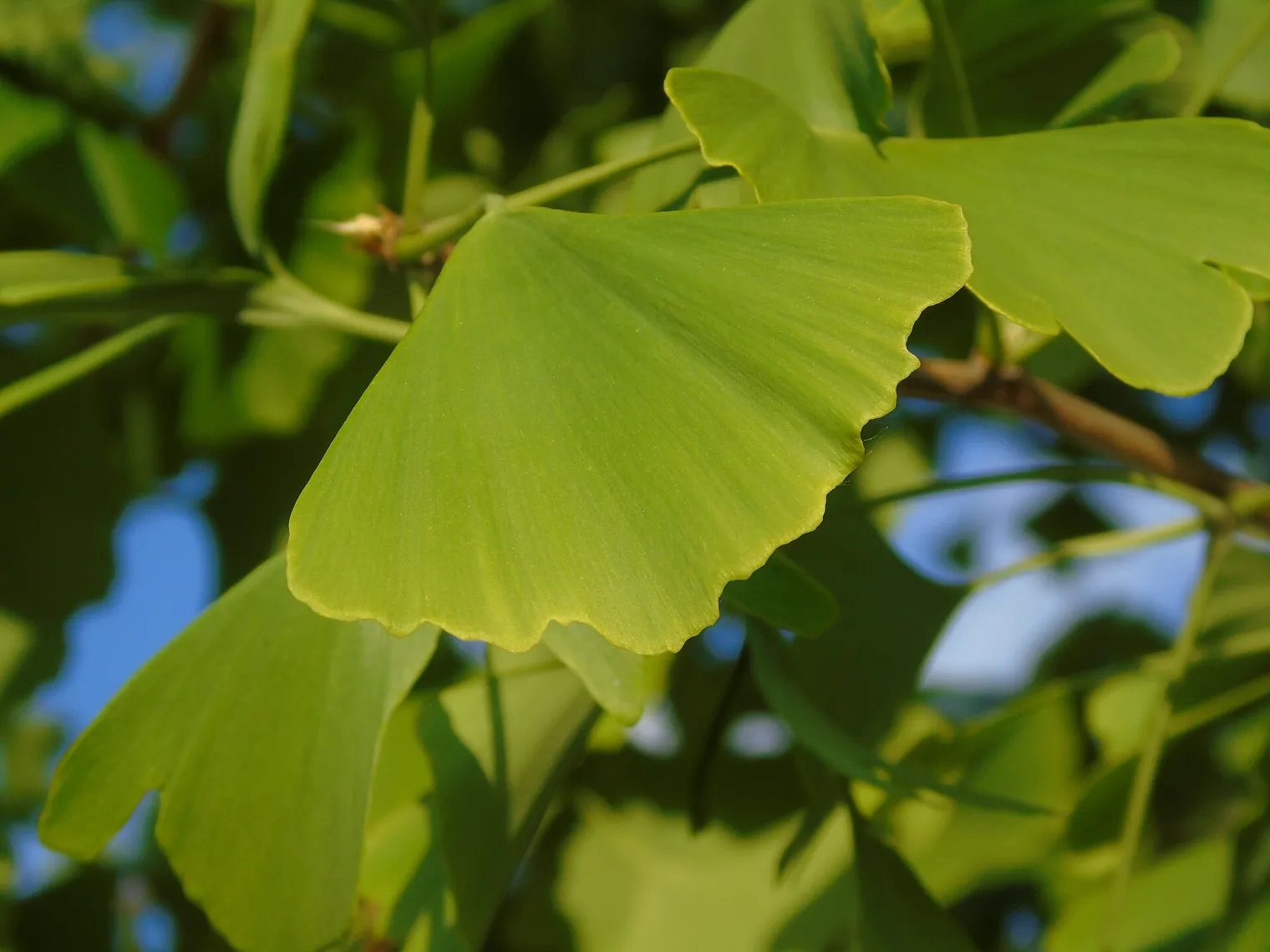
Ginkgo leaf is the dried fan-shaped leaf of Ginkgo biloba, a deciduous gymnosperm tree whose only wild stands are in eastern China and which is planted as a street tree across the temperate world, including southern Australia. The leaf is recognised by its bilobed, fan-shaped blade with forked, parallel veins; under the microscope it shows sinuous upper epidermal cells, a papillose lower epidermis with deeply sunken stomata and cluster crystals of calcium oxalate beside the veins. The European Pharmacopoeia identifies it by a flavonoid TLC pattern against rutin and chlorogenic acid and assays at least 0.5 per cent flavonoids. Almost all clinical work used refined acetone-water extracts (50:1) standardised to 22-27 per cent flavone glycosides and about 6 per cent terpene lactones, with ginkgolic acids held below 5 ppm. Trials in dementia disagree: several meta-analyses favour 240 mg a day of one extract, while a Cochrane review found the evidence inconsistent, and a 3,069-person prevention trial found no effect on new dementia. Trials in tinnitus, claudication and altitude sickness have not shown a useful benefit (low or very low certainty). Adulteration of extracts with rutin, quercetin or sophora fruit is documented. The main safety concerns are bleeding with blood-thinning drugs, pregnancy and a few interactions. Anyone considering it should consult a degree-qualified herbalist with competencies and adequate training in pharmacognosy.
0.3 Contents and extent (draft)
| Section | Approx. pages |
|---|---|
| 1-3 Nomenclature, definition, source and Australian supply (1 map) | 3 |
| 4-5 Macroscopy and microscopy (8 figures) | 4 |
| 6-7 Chemistry, markers and limits (11 structures) | 3 |
| 8-9 TLC and HPLC (1 schematic, 2 published chromatograms) | 3 |
| 10 Identity, purity, adulterants, contaminants | 2 |
| 11 Traditional use (1 historical figure) | 1 |
| 12 Current practice and doses | 1.5 |
| 13 Clinical evidence (search, graded trials, registries, 1 evidence chart) | 5 |
| 14 Pharmacology | 1.5 |
| 15 Safety, interactions, pregnancy (1 chart) | 3 |
| 16-18 Discussion, conclusions, research needed | 2 |
| 19-20 References and document control | 4 |
| Totals (draft) | about @@PAGES@@ A4 pages as rendered; 17 tables; 27 embedded figures (4 licensed photographs, 3 licensed photomicrographs, 2 public-domain plates, 1 licensed herbarium sheet, 11 PubChem structures, 2 published CC BY chromatograms, 2 AIP schematics each labelled "schematic redrawn", 1 AIP map, 2 AIP data charts); 3 photomicrographs (licensed, none AIP); 2 chromatograms (published, refs 28-29). Gaps: AIP photomicrographs, AIP TLC plate and AIP HPLC run are bench data pending; no licensed TLC plate photograph was found, so F7 is a schematic. Trials: 8 systematic reviews and 6 individual RCTs graded, each with a RoB 2 call confirmed at Medicine review. Registry gaps: ANZCTR and WHO ICTRP hand searches and a DAEN hand search are still to do. 60 references: 1-54 read in full text, except ref 40 (abstract and author page only) and the method papers 35, 52 and 53 (cited for their methods, full text not held); 55-58 added at Botanical review (55 checked by its DOI record only); 59 added at QA review (library copy read); 60 added at Medicine review (TGA page read) |
0.4 Contributors and access
Prepared by Dr Thomas Ridley, Head of Education and Research. Botanical review by Dr Fiona MacAllister, Head of Botanical (sections 1-5 and the adulterant part of 10), done 23/09/2026; QA review by Dr Hana Suzuki, Head of Botanical QA (sections 6-10), done 23/09/2026; Medicine review by Dr Eleanor Whitcombe, Head of Medicine (sections 12, 13 and 15), done 23/09/2026; Education and Research evidence and citation audit by Dr Thomas Ridley, done 23/09/2026; the Librarian reference audit is pending; A Legal read is advisory only and does not gate publication (CEO order 22/09/2026). The Australian Herbal Pharmacopoeia is AIP’s own series and carries no statutory, TGA or government standing. Access to the full monograph beyond the free sample follows the membership rules set by the CEO (paywall wording to come from Legal and Community Outreach).
1. Nomenclature
- Accepted name: Ginkgo biloba L., accepted in the World Checklist of Vascular Plants release of 16/09/2026, read on 23/09/2026 through ChecklistBank (dataset 2000; IPNI 262125-1) [1]. WCVP is the checklist Plants of the World Online (Kew) displays; the POWO web page returned a bot challenge on 23/09/2026, so the name was read from the WCVP data release and the IPNI record, which flags the name as present in POWO [1,57]. Place of publication: Linnaeus, Mant. Pl. Altera 313 (October 1771); the type locality given is "Japon" [57]. The Catalogue of Life release of 11/09/2026 gives the same accepted name [16]. The pharmacopoeial drug is defined at species level [3].
- Synonyms (WCVP): Salisburia adiantifolia Sm., Salisburia biloba (L.) Hoffmanns., Salisburia ginkgo Rich., Salisburia macrophylla Reyn., Pterophyllus salisburiensis J.Nelson and Ginkgo macrophylla K.Koch [1]. WCVP counts four homotypic synonyms (Pterophyllus salisburiensis, Salisburia adiantifolia, S. biloba, S. ginkgo) and 33 heterotypic ones, most of them varietal, form or cultivar-level names for horticultural selections (for example var. pendula, f. fastigiata, var. epiphylla), all sunk into the species [1]. WHO lists Pterophyllus salisburiensis, Salisburia adiantifolia and Salisburia macrophylla "C. Koch"; WCVP attributes Salisburia macrophylla to Reynier, and the WCVP authority is used here [1,4]. The TGA Permissible Ingredients Determination lists the species as GINKGO BILOBA [9] and MediHerb as Ginkgo biloba [8]; neither uses an outdated name.
- Family and rank: Ginkgoaceae, order Ginkgoales, a gymnosperm and the only living member of its order [4,13]. APG IV classifies flowering plants only, so it does not place this species; the family and order follow the gymnosperm classification of Christenhusz et al. 2011 [58], and WCVP gives the same family [1]. No recent family change.
- Common names: ginkgo, maidenhair tree, kew tree, temple balm; yin guo, yinhsing (Chinese); icho, ityo, gin-nan (Japanese); eun-haeng (Korean) [4]; Ginkgoblätter (German), arbre aux quarante écus (French) [7]. The EMA gives the drug name in the EU languages, for example Ginkgo leaf, Ginkgoblätter, Ginkgo (feuille de) [5].
- Drug name and state: Ginkgonis folium, the whole or fragmented dried leaf [3]. This monograph covers the dried leaf and gives the refined extract (Ph. Eur. 1827 [6]) as the preparation almost all trials used.
- Trade names in Australia: MediHerb "Ginkgo Biloba 2:1 Standardised", botanical name Ginkgo biloba, part "Leaf" [8]. MediHerb tablets naming ginkgo on the 2026 stockist listing: Ginkgo Forte, Horsechestnut Complex, PulmaCo and Tissue Regenex (A-Z work list item 70); current label compositions not checked for this draft.
- Name confusion: the seed ("nut", Chinese bai guo) is a separate drug with different chemistry and a neurotoxin (section 15) [2,7]. "Maidenhair" also names the fern Adiantum; the species name adiantifolia refers to that likeness.
2. Definition
The whole or fragmented, dried leaf of Ginkgo biloba L., containing not less than 0.5 per cent of flavonoids, expressed as flavone glycosides (Mr 757), calculated with reference to the dried drug.
Basis: Ph. Eur. monograph 1828, text 01/2011, as printed in the library’s Ph. Eur. 8.0 [3]. The WHO monograph sets the same figure (not less than 0.5% flavonol glycosides, or 0.2-0.4% as aglycones) and records ginkgolides at 0.06-0.23% and bilobalide up to 0.26% of the leaf without setting limits for them [4]. No terpene-lactone or ginkgolic-acid limit is set for the leaf itself; both are controlled only in the refined extract (Ph. Eur. 1827, section 7) [6]. QA is asked to confirm the text against the Ph. Eur. edition in force before release.
27 more pages follow · 13,250 words, 26 figures, 15 tables
Still to come in this monograph
- 3. Source and Australian supply
- 4. Macroscopy
- 5. Microscopy
- 6. Chemistry
- 7. Named markers and assay limits
- 8. TLC fingerprint
- 9. HPLC fingerprint
- 10. Identity, purity, adulterants and contaminants
- 11. Traditional use
- 12. Current practice: use, preparations and doses
- 13. Clinical evidence
- 14. Pharmacology
- 15. Safety
- 16. Discussion
- 17. Conclusions
- 18. Research still needed
- 19. References
- 20. Document control
The rest of this monograph is open to members. One membership covers every members’ feature on the site.
Checking your membership…
Report an error or submit evidence
If something in this monograph is wrong, out of date or missing, tell us and show us the evidence. Every report is logged under the AIP Evidence Charter and assessed on the evidence alone; the outcome is kept on the record, and an upheld report is corrected with a dated notice on this page.