

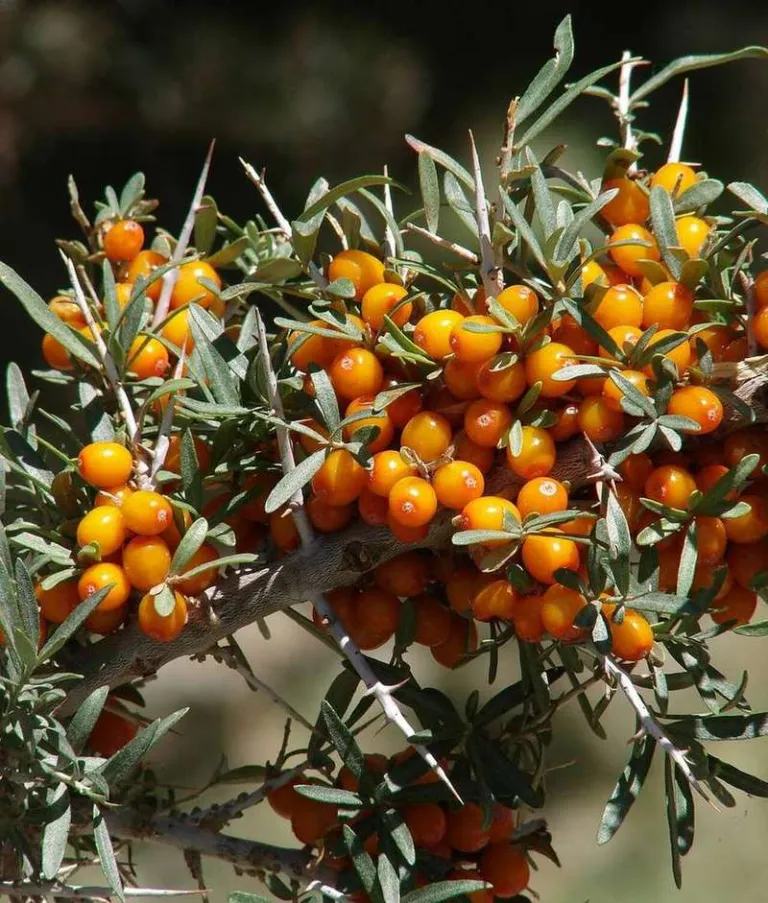
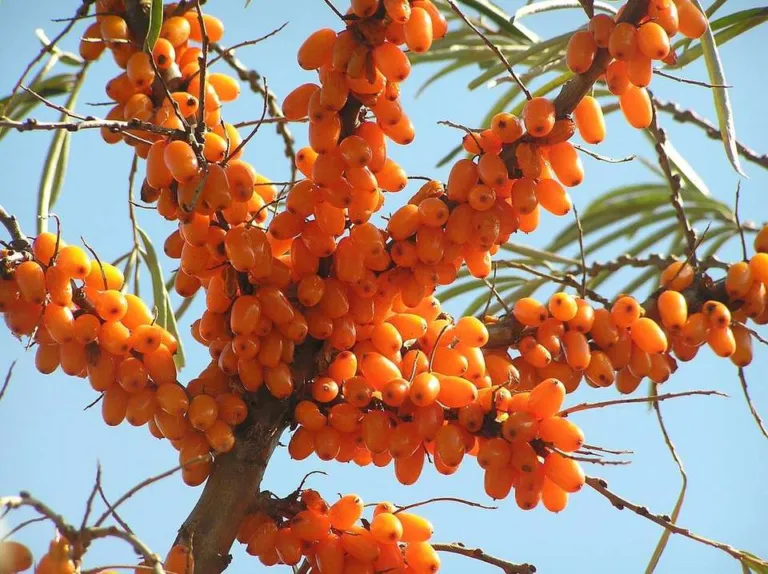
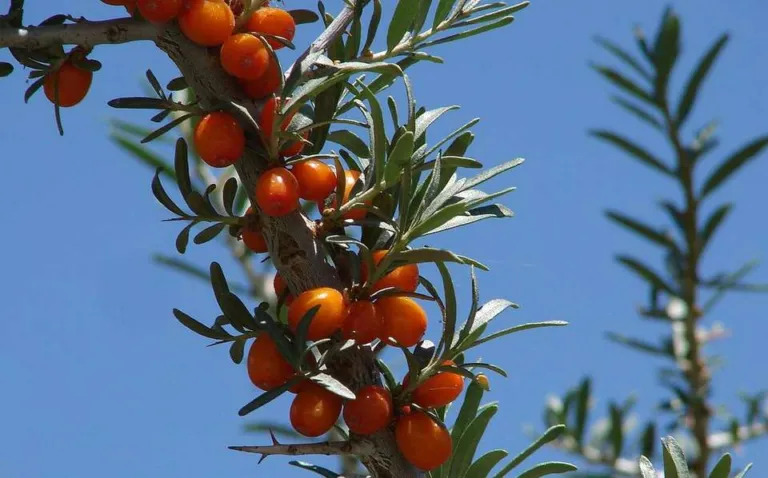
Cover: ripe sea buckthorn berries. Photo: Jaana Siitonen · CC BY 4.0 · Wikimedia Commons
Sea buckthorn is a thorny, silver-leaved shrub of European coasts and Asian mountain rivers, and its sour orange berries have been food and medicine from the Baltic to the Tibetan plateau for a very long time Traditional. Most Australians have never seen one growing. Many have now seen its oil, in a soft capsule on a pharmacy shelf, sold for dry eyes, skin and something called “omega-7”.
This Literature Review and Critical Analysis from the Australian Institute of Pharmacognosy introduces the plant properly. It sets out what sea buckthorn is and where it grows, why the oil from the seed and the oil from the berry pulp are two different products, what palmitoleic acid (the fatty acid sold as omega-7) is, and what the human trials found. We read every cited paper in full, and we were strict about it: several of the best-known sea buckthorn trials were not available to us in full text when this review was written, so they appear only as described in reviews we did read, and we say so each time. Two trials that are still cited in the literature turned out to have been retracted. The rest of the evidence is modest, real in places, and worth knowing about before you buy.
This article is educational. It is not medical advice and does not recommend any product, dose or treatment.
1. Sea buckthorn is a low-risk food plant with thin long-term data. The berries, juice and oils have a long food history, rodent toxicity studies found no serious harm, and the human trials report only mild stomach upsets (Chen 2024, PMID 39494241 [1]; Sasagawa 2021, PMID 34444963 [2]). Evidence suggests Systematic long-term safety data in people are lacking (Liu 2026, PMID 41868122 [3]), and we found no human data for pregnancy or breastfeeding. See §9.
2. Blood-thinning medicines. In one small trial, sea buckthorn berry oil reduced platelet aggregation in healthy men (Chen 2024, PMID 39494241 [1]). Evidence suggests If you take warfarin, a direct oral anticoagulant, aspirin, clopidogrel or similar, an added effect on bleeding is possible in principle and has not been tested. Mechanism
3. “Omega-7” is a fatty acid, and the label may not mean sea buckthorn. The two recent palmitoleic acid trials we read used marine oils, one of them a fish oil from pollock (§7). Check the ingredient list for Hippophae rhamnoides and the plant part.
Before taking any botanical drug for a health problem, consult a degree-qualified herbalist with competencies and adequate training in pharmacognosy. In an emergency call Triple Zero (000); for poisoning advice call the Poisons Information Centre on 13 11 26 (24 hours, Australia-wide).
| The plant | Hippophae rhamnoides L. (Elaeagnaceae), common sea buckthorn. A thorny, dioecious shrub or small tree with orange berries. Confirmed §1, §2 |
| Range and Australia | Temperate Europe and Asia, from coasts to the Himalaya. No Australian occurrence records found; the products sold here are imported. Evidence suggests §3 |
| Traditional role | Used in Tibetan and Mongolian medicine, and in Chinese practice, for cough and phlegm, digestion and circulation; the oil is applied to burns. Traditional §4 |
| Two oils | Seed oil is mostly linoleic and alpha-linolenic acid. Pulp oil is rich in palmitoleic acid and carotenoids. Confirmed §5 |
| “Omega-7” | Palmitoleic acid, a monounsaturated fat also found in macadamias and seafood. Two RCTs of marine palmitoleic oils found no fall in inflammation markers. Confirmed §7 |
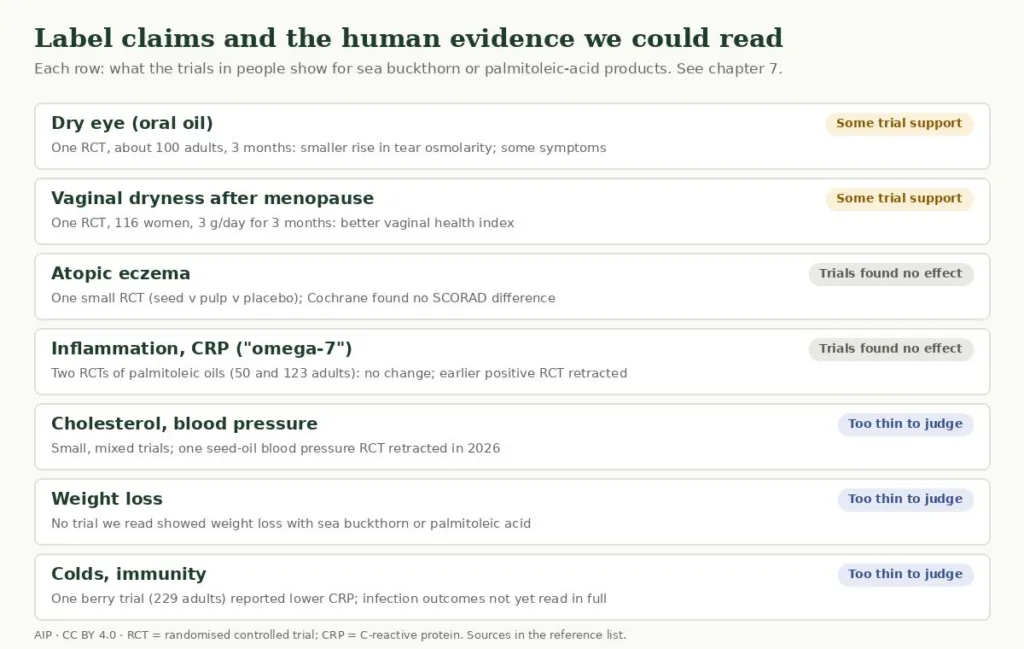
| Best-supported use | Dry eye and postmenopausal vaginal dryness: one randomised trial each, both modestly positive, from one research group. Evidence suggests §8 |
| Thin areas | Heart, cholesterol, weight and immunity claims rest on small, mixed trials; one blood pressure trial was retracted in 2026. Evidence suggests §8 |
| Australian law | A permitted ingredient for listed medicines; not in the Poisons Standard. Listed products may carry indications such as “relieve dry eyes”, which the TGA does not evaluate before listing. Confirmed §10 |
- Confirmed: established in humans by trial, or an unambiguous analytical, chemical or regulatory fact.
- Evidence suggests: real published data, but preclinical, observational, small, inconsistent or not yet replicated.
- Mechanism: a plausible pharmacological inference, not an outcome measured in people.
- Traditional: historical or ethnomedical use. Evidence of practice, not of efficacy.
- Attested: a documentary fact attested in a named edition or record. A textual reading, not a claim about what a plant does.
Every PubMed ID (PMID) links to its PubMed record and was checked against PubMed in November 2026, and every compound was checked against PubChem. We cite only papers we read in full. Where a primary trial is known to us only through a review, the text says which review. Where a widely repeated claim could not be traced, it is marked unsourced.
Sea buckthorn, Hippophae rhamnoides, is a hardy shrub of Europe and Asia with bright orange, very sour berries. It has a long medicinal record in Tibetan, Mongolian and Chinese practice, and the oil is a traditional dressing for burns in Mongolia, Russia and China (Liu 2026, PMID 41868122 [3]; Zielińska and Nowak 2017, PMID 28526097 [4]). Traditional It does not grow wild in Australia. What reaches us is imported oil, powder, juice and skincare.
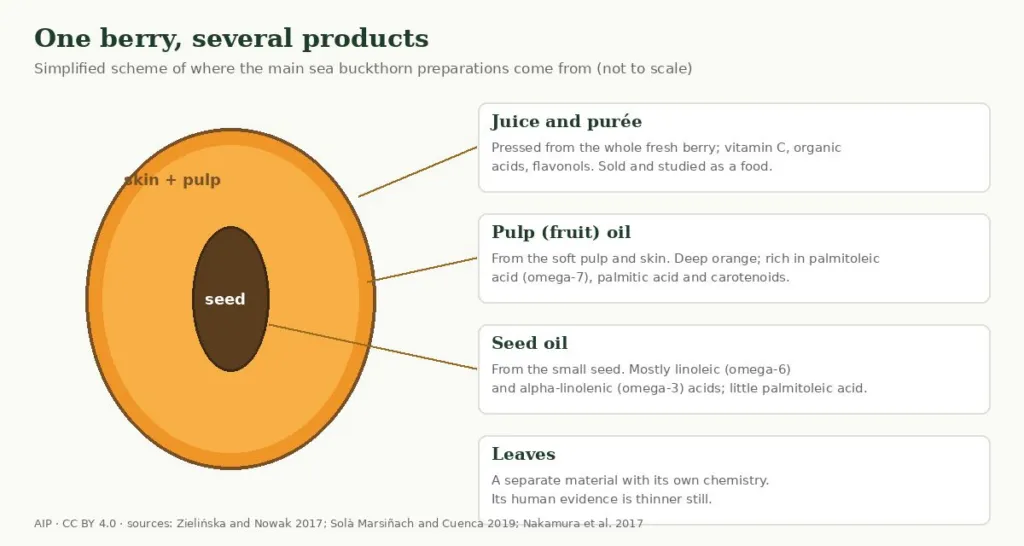
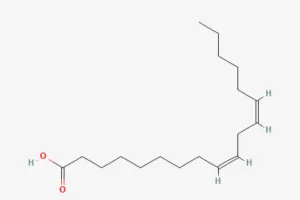
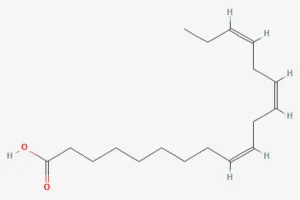
The berry gives two quite different oils. Seed oil is mostly the omega-6 and omega-3 fatty acids linoleic and alpha-linolenic acid, and has almost no palmitoleic acid. Pulp oil, from the soft flesh and skin, is about a quarter to a third palmitoleic acid and carries the orange carotenoids (Solà Marsiñach and Cuenca 2019, PMID 31228942 [5]). Confirmed A capsule label that says “sea buckthorn oil” without naming the part is leaving out the most useful fact about it.
“Omega-7” is a label for palmitoleic acid, an ordinary monounsaturated fatty acid that the human body also makes for itself. Two recent randomised trials of concentrated palmitoleic acid oils, both from marine sources, found no effect on C-reactive protein or other inflammation and metabolic markers (Bridges 2025, PMID 40456315 [6]; Sasagawa 2021, PMID 34444963 [2]). Confirmed The small positive trial behind much of the early interest in omega-7 was retracted in 2021 (retraction notice 2021, PMID 34144766 [7]).
The best human evidence is for dryness of the eye and of the vaginal lining. A Finnish randomised trial of 2 g a day of sea buckthorn oil for three months in about 100 adults with dry eye reported a smaller rise in tear film osmolarity and some easing of burning and redness, and a trial in 116 postmenopausal women reported a trend towards a better vaginal health index with 3 g a day (Solà Marsiñach and Cuenca 2019, PMID 31228942 [5]; Liu 2026, PMID 41868122 [3]). Evidence suggests Each is a single trial, both come from the same research group, and we have not yet read either in full. Claims for the heart, weight and immunity rest on smaller, mixed studies. Before taking sea buckthorn for a health problem, consult a degree-qualified herbalist with competencies and adequate training in pharmacognosy.
 Chapter 1Names and identity
 Chapter 2The plant: thorns, sexes and berries
 Chapter 3Where it grows, and Australia
 Chapter 4Tibetan, Mongolian, Chinese and European use
 Chapter 5Chemistry: two oils from one berry
 Chapter 6Pharmacology: what the laboratory shows
 Chapter 7Omega-7: what palmitoleic acid is
 Chapter 8Clinical evidence: eyes, mucosa, skin, heart
 Chapter 9Safety and interactions
 Chapter 10In Australia: listings, foods and labels
 Chapter 11Quality and adulteration
 Chapter 12Discussion and research still required
Also: About AIP · References · Image credits
Chapter 1Names and identity
The plant in this review is common sea buckthorn, Hippophae rhamnoides L., of the oleaster family, Elaeagnaceae (Zielińska and Nowak 2017, PMID 28526097 [4]; WHO WPRO 2013 [8]). Confirmed The name “buckthorn” is borrowed. True buckthorns are Rhamnus species in a different family, Rhamnaceae, and Polish chemists writing on the oil suggest hyphenating “sea-buckthorn” for exactly that reason (Zielińska and Nowak 2017, PMID 28526097 [4]). Attested English has a handful of other names for it: sandthorn, sallowthorn and seaberry, and “Siberian pineapple” in some trade writing (Zielińska and Nowak 2017, PMID 28526097 [4]). Attested
The genus name is usually traced to Greek hippos, horse, and phaos, shining: the story is that the leaves were fed to horses to give them a glossy coat (Zielińska and Nowak 2017, PMID 28526097 [4]). Traditional We could not find the story in an ancient source, and it should be read as etymological folklore that happens to be well loved.
Taxonomy is not settled. H. rhamnoides is divided into several subspecies, and two of them, subsp. sinensis of China and subsp. rhamnoides of Europe, supply most commercial material (Solà Marsiñach and Cuenca 2019, PMID 31228942 [5]). Confirmed The subspecies differ in their oils, which matters when a trial from Finland is used to sell a capsule made from Chinese or Mongolian fruit. Some botanical databases now place the species in Elaeagnus, as Elaeagnus rhamnoides (L.) A.Nelson, and a few pharmacology papers use that name. Australian regulation, the TGA ingredient list and nearly all of the clinical literature still use Hippophae rhamnoides (Permissible Ingredients Determination 2026 [9]). Confirmed
| Field | Detail |
|---|---|
| Accepted name used here | Hippophae rhamnoides L. (the WHO Mongolian entry gives the author as (Willd.) L.) (WHO WPRO 2013 [8]). Synonym in some databases: Elaeagnus rhamnoides (L.) A.Nelson. |
| Family | Elaeagnaceae, the oleaster family. Not related to the buckthorns (Rhamnus, Rhamnaceae). |
| Other names | Seaberry, sandthorn, sallowthorn; Mongolian chatsargana, Tibetan darbu (WHO WPRO 2013 [8]). Attested |
| Parts used | Fruit (juice, purée, dried powder), pulp oil, seed oil and leaves (Liu 2026, PMID 41868122 [3]; Zielińska and Nowak 2017, PMID 28526097 [4]). Confirmed |
| Pharmacopoeial status | Listed in the Chinese Pharmacopoeia, which gives uses for cough with phlegm, indigestion and circulation (Liu 2026, PMID 41868122 [3]). Attested The WHO regional work on Mongolian medicinal plants sets fruit quality standards (§11) (WHO WPRO 2013 [8]). Attested |
Chapter 2The plant: thorns, sexes and berries
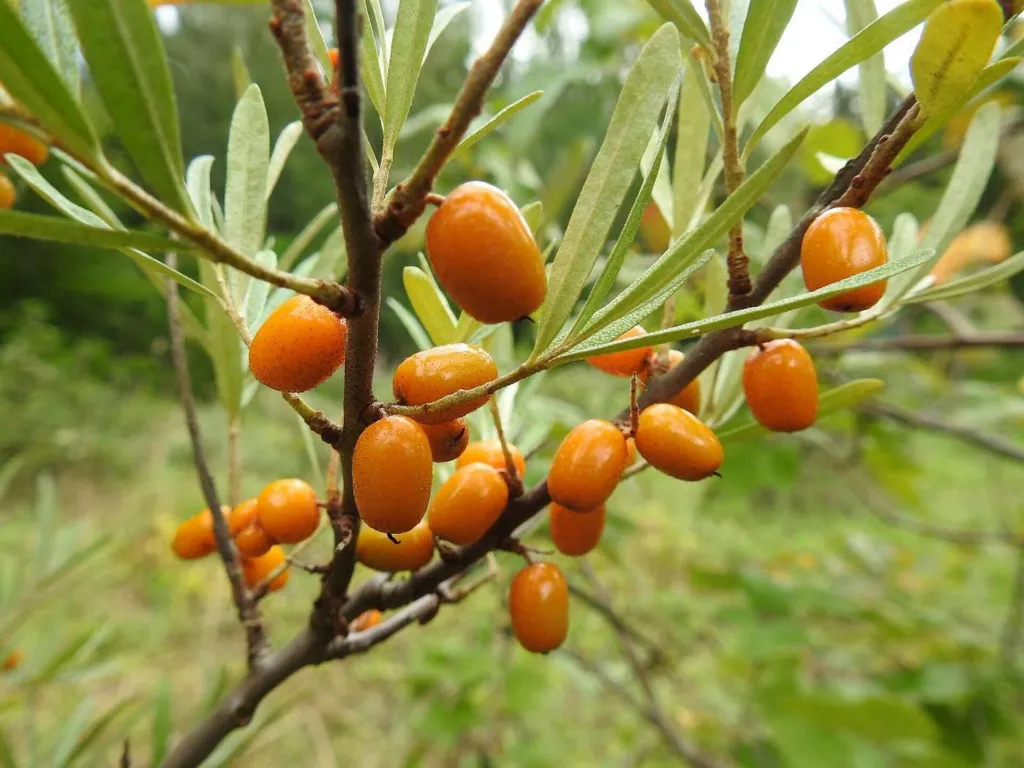
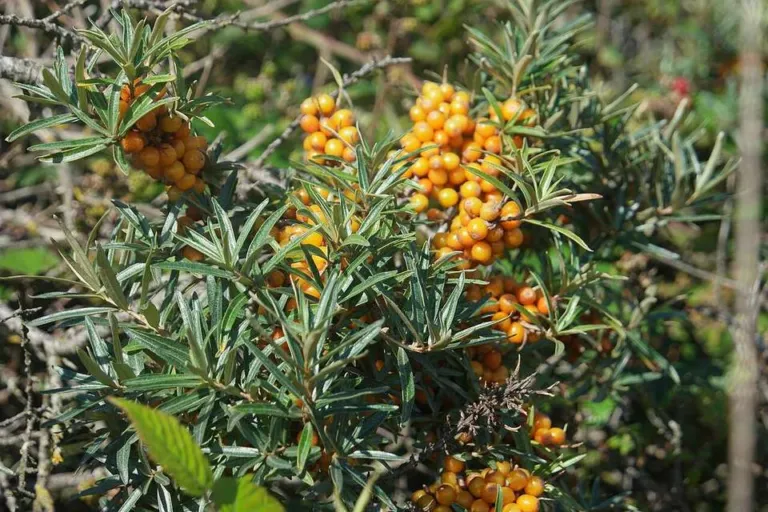
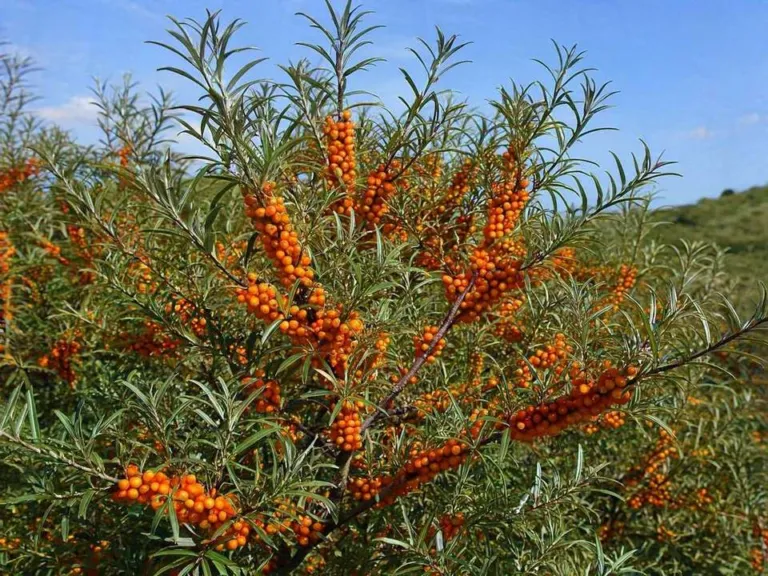
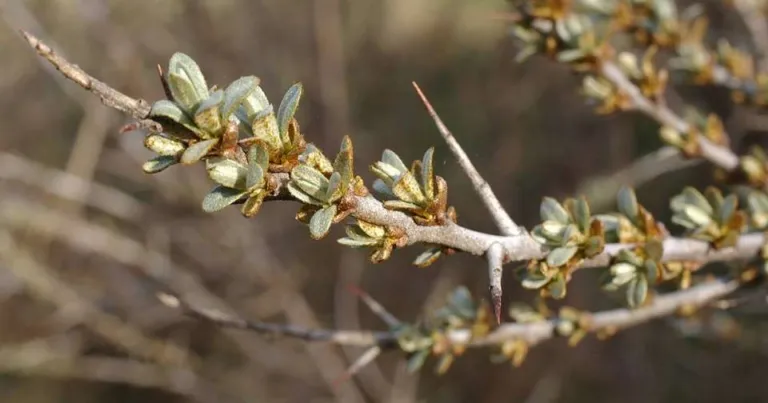
Sea buckthorn is a strongly branched shrub or small tree, usually one to a few metres tall and up to about 7 m, with brown or reddish bark and a great many thorns (WHO WPRO 2013 [8]; Zielińska and Nowak 2017, PMID 28526097 [4]). Confirmed The leaves are narrow and stalkless, 2 to 8 cm long and only a few millimetres wide, pale green above and silvery-white beneath because of a covering of tiny scales (WHO WPRO 2013 [8]). Confirmed Those scales give a stand of sea buckthorn its grey shimmer from a distance.
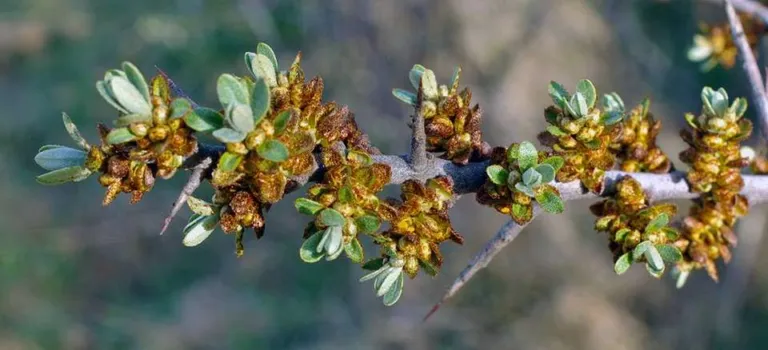
The plant is dioecious: each shrub is male or female, and only females bear fruit (WHO WPRO 2013 [8]; Zielińska and Nowak 2017, PMID 28526097 [4]). Confirmed Male flowers sit in short round spikes in the axils of young branches; female flowers are solitary, small and easy to miss, with a protruding stigma (WHO WPRO 2013 [8]). Confirmed A grower needs both sexes, and a female shrub grown on its own will not fruit.
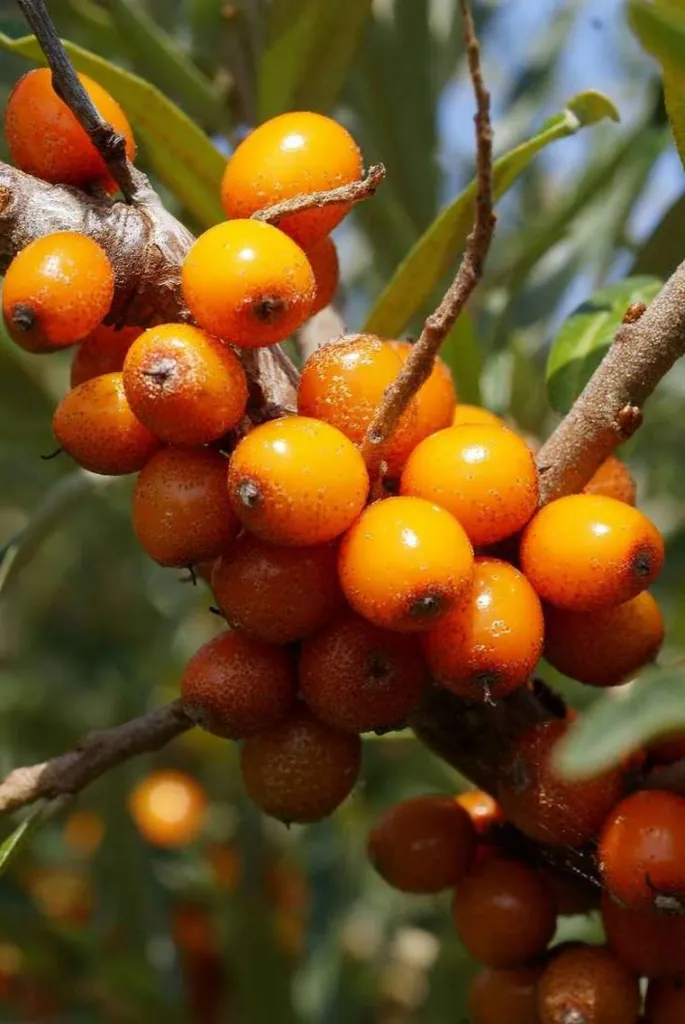
The fruit is a small, round to oval berry, yellow to deep orange, with a single hard seed. The WHO description of the Mongolian drug notes thick-walled skin cells, oil globules in the flesh, and peltate (shield-shaped) hairs on the surface, which are a useful microscopic check on identity (WHO WPRO 2013 [8]). Attested The berries cling tightly to the stems. Zielińska and Nowak report that commercial harvesting often means cutting whole fruiting branches, which reduces the next crop, so a stand may be harvested only every second year (Zielińska and Nowak 2017, PMID 28526097 [4]). Evidence suggests
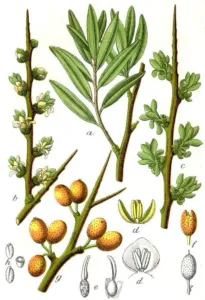
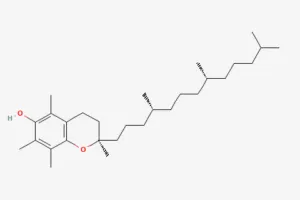
The berry is very sour. Fresh fruit is rich in vitamin C; Zielińska and Nowak give a figure of roughly 900 mg per 100 g depending on variety, along with carotenoids, tocopherols (vitamin E), flavonoids, organic acids and sugars (Zielińska and Nowak 2017, PMID 28526097 [4]). Evidence suggests We give that vitamin C figure as reported. Published values vary widely with cultivar, ripeness and handling, and we did not trace it to a single analytical study.
Chapter 3Where it grows, and Australia
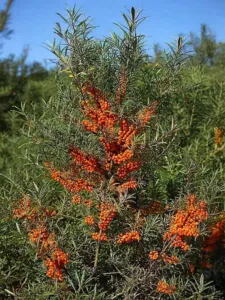
Sea buckthorn has a very wide temperate range. It grows through Europe, the Caucasus, Asia Minor, Central Asia, Siberia, China and Tibet (Zielińska and Nowak 2017, PMID 28526097 [4]), with large populations in the Himalaya and across Russia and China, where it occurs in more than ten provinces (Liu 2026, PMID 41868122 [3]). Confirmed In Mongolia it grows on river banks and lake shores, waterside rocks, forest margins and canyon slopes (WHO WPRO 2013 [8]). Confirmed In north-western Europe it is a familiar shrub of coastal dunes. It tolerates cold, wind, poor soil and dry ground, and Liu and colleagues note its use in land rehabilitation in Germany and China (Liu 2026, PMID 41868122 [3]). Evidence suggests
Australian status
When we searched the Atlas of Living Australia in November 2026 it held 63 occurrence records for Hippophae rhamnoides. Every record with a location was collected overseas, mostly in Germany, Austria, Denmark, Sweden and China, and the records are there because Australian herbaria hold the specimens. None gives an Australian location (ALA records [10]). Evidence suggests We found no record of the species naturalised here, and no state weed declaration for it. That absence of records is not a clearance to plant it: anyone thinking of importing seed or plants must check the federal import conditions (BICON) and their state’s weed lists first, because those systems exist to screen plants before they are grown here. Confirmed
Climate is the other limit. The plant’s home is cold-temperate and montane, and the wet tropics around Cardwell are about as far from that as Australia gets. We are not aware of any commercial Australian planting, and everything on the Australian market that we examined was imported finished product. We have not surveyed import or sales data, so we give no figures.
Chapter 4Tibetan, Mongolian, Chinese and European use
The deepest written record of sea buckthorn as a medicine comes from the high-altitude medical traditions of Asia. A 2026 review from Xinjiang traces it through the Tibetan rGyud-bzhi (the Four Medical Tantras), the Jing Zhu Ben Cao (Crystal Pearl Materia Medica), Mongolian materia medica including the Yin Shan Zheng Yao, and Li Shizhen’s Bencao Gangmu (Liu 2026, PMID 41868122 [3]). Attested We have not checked these readings against critical editions, so they are reported at second hand, through that review.
Tibetan medicine
In Sowa-Rigpa, the Tibetan system, the fruit is sour and slightly sweet, warm, dry and sharp in nature. Its strongest reputation is for the lungs and throat: it is given for thick phlegm, cough and asthma, and in older terms for lung abscess and tuberculosis. It is also used to “promote blood circulation”, for digestive complaints including indigestion, gastritis and ulcer, and for menstrual disorders, and is made into ointments and into compound powders such as the five-ingredient Wu Wei Sha Ji San (Liu 2026, PMID 41868122 [3]). Traditional The same source records that it has no obvious toxicity apart from “mild impacts on the gallbladder” with excessive consumption (Liu 2026, PMID 41868122 [3]). Traditional
Mongolian medicine
The WHO Western Pacific volume on Mongolian medicinal plants gives the Mongolian names chatsargana and yagshilduu, the Tibetan darbu, and the fruit as the part used. It describes the taste as sweet and sour and the potency as “blunt, oily and dry”, and lists uses to expectorate and “dilute blood”, for lung and throat phlegm, liver, stomach and spleen disorders, to stop cough and to fortify the body, with an ointment for burns (WHO WPRO 2013 [8]). Traditional It also names fifteen traditional compound prescriptions containing the fruit, among them Darbu-4 and Gantig-92 (WHO WPRO 2013 [8]). Attested
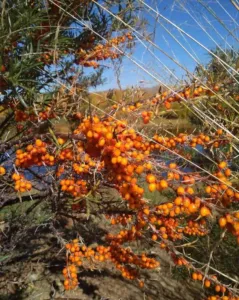
Russia, Central Asia and Europe
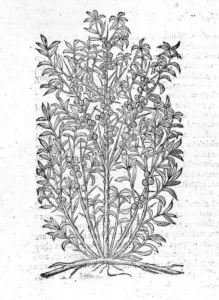
In Russia and Central Asia the plant’s use leans to the skin and the gut, and pulp oil is used on burns in Mongolia, Russia and China (Liu 2026, PMID 41868122 [3]; Zielińska and Nowak 2017, PMID 28526097 [4]). Traditional In Europe it was mostly a coastal shrub and a jam and juice fruit. Gerard’s Herball, in its 1633 edition, figures it as the “Sallow-Thorne” (Gerard 1633 [11]). Attested We found no early European record of it as a major medicine, and claims that it was a classical Greek or Roman remedy are, as far as we could trace them, unsourced.
The pattern matters for reading modern claims. In the Asian traditions the fruit is part of compound formulas, chosen for a pattern of illness, and its oil is a topical dressing. The modern capsule of pulp oil, taken daily for the eyes or skin, is a twentieth-century product. Its evidence has to come from trials, and the traditional record tells us where trials might look. Traditional
Chapter 5Chemistry: two oils from one berry
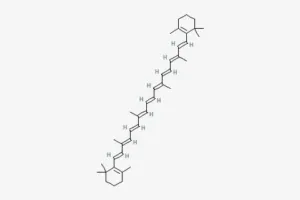
The single most useful chemical fact about sea buckthorn is that the berry holds two oils with different fatty acid profiles. Seed oil, pressed or extracted from the small seed (which contains up to about 12.5% oil by weight), is dominated by the polyunsaturated fatty acids linoleic acid (omega-6) and alpha-linolenic acid (omega-3) (Zielińska and Nowak 2017, PMID 28526097 [4]; Solà Marsiñach and Cuenca 2019, PMID 31228942 [5]). Confirmed Pulp oil, from the soft flesh and skin, is dominated by palmitoleic acid and palmitic acid, with oleic acid and the omega-7 vaccenic acid, and is coloured deep orange by carotenoids (Solà Marsiñach and Cuenca 2019, PMID 31228942 [5]; Zielińska and Nowak 2017, PMID 28526097 [4]). Confirmed
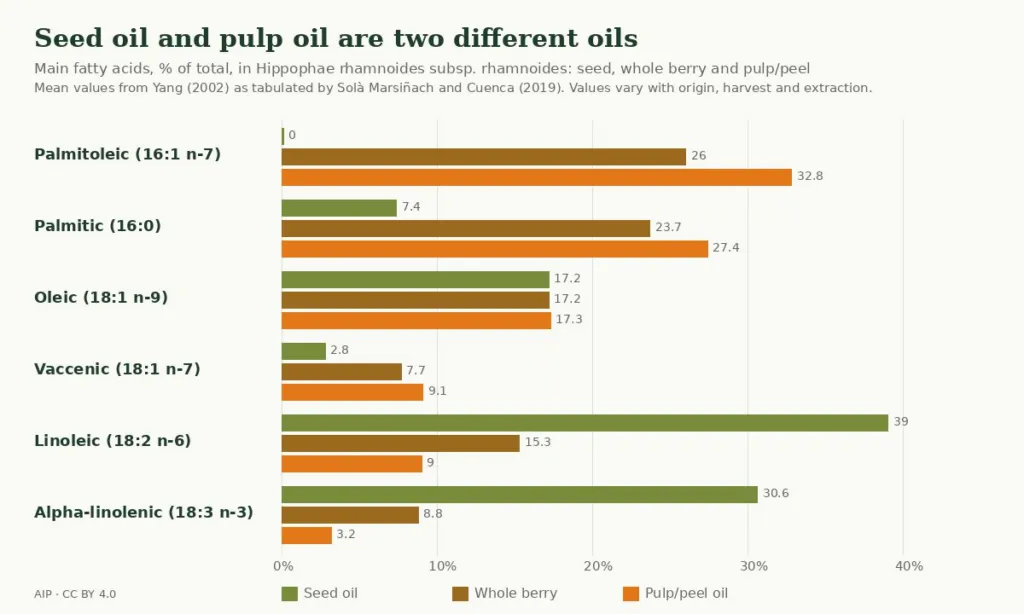
The numbers are striking. In the means tabulated by Solà Marsiñach and Cuenca for subsp. rhamnoides, palmitoleic acid is 0% of seed fatty acids, 26% of whole-berry fatty acids and 32.8% of pulp/peel fatty acids; for subsp. sinensis the berry and pulp figures are 33.6% and 27.2% (Solà Marsiñach and Cuenca 2019, PMID 31228942 [5]). Confirmed The same review cites pulp oils with up to 43% palmitoleic acid, and seed oil with less than 0.5% (Solà Marsiñach and Cuenca 2019, PMID 31228942 [5]). Japanese researchers who analysed commercial oils found palmitate, oleate and palmitoleate 1.5 to 3 times higher in pulp oil, and linoleate and alpha-linolenate about a tenth of the seed-oil level (Nakamura 2017, PMID 28379171 [12]). Confirmed The authors of that table stress that origin, subspecies, harvest time and extraction method all shift the figures (Solà Marsiñach and Cuenca 2019, PMID 31228942 [5]).
Two practical points follow. A product sold for its “omega-7” content needs to contain pulp or whole-berry oil, because seed oil has almost none. And a product sold for its omega-3 needs to be seed oil, whose alpha-linolenic acid is the plant omega-3, not the long-chain EPA and DHA of fish oil. A claim that sea buckthorn oil is “the only oil with a 1:1 ratio of omega-3 to omega-6” circulates widely; one review we read repeats it (Solà Marsiñach and Cuenca 2019, PMID 31228942 [5]), it applies at most to some seed oils, and we treat it as unsourced as a general statement.
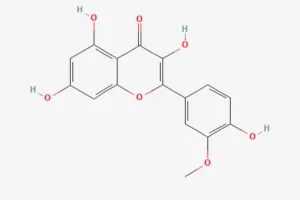
Beyond the fatty acids
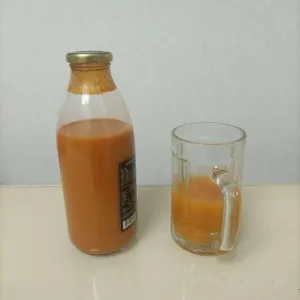
The oils also carry fat-soluble micronutrients. A sea buckthorn seed oil characterised in a table that Zielińska and Nowak reproduce from an earlier analysis contained about 41 mg of carotenoids and 175 mg of vitamin E equivalents per 100 g, the tocopherols being mostly the alpha and gamma forms (Zielińska and Nowak 2017, PMID 28526097 [4]). Confirmed The berries contain flavonols, especially glycosides of isorhamnetin and quercetin, together with procyanidins, triterpenes such as ursolic and oleanolic acids, phytosterols and polysaccharides (Larmo 2013, PMID 23945716 [13]; WHO WPRO 2013 [8]; Liu 2026, PMID 41868122 [3]). Confirmed When the fresh berries are pressed, the juice separates into layers, a thick orange cream at the top over a fatty middle layer and the juice beneath (Zielińska and Nowak 2017, PMID 28526097 [4]). Confirmed
Each of these groups gets cited for something. That is the difficulty with a chemically rich plant: almost any health claim can be pinned to some constituent. The fatty acid figures above are analytical facts. The leap from “contains isorhamnetin” to “supports heart health” is a separate claim and needs its own evidence, which chapters 6 to 8 look for.
Chapter 6Pharmacology: what the laboratory shows
The laboratory literature on sea buckthorn is large and almost uniformly positive, which is a reason for care. Reviews list hepatoprotective, anti-inflammatory, antioxidant, cardioprotective, wound-healing and anticancer activity in cells and animals (Liu 2026, PMID 41868122 [3]; Song 2025, PMID 41306783 [14]; Chen 2024, PMID 39494241 [1]). Evidence suggests Liu and colleagues, in the most recent of these reviews, add an unusually frank caveat. Many of the plant’s flavonoids and tannins are known pan-assay interference compounds (PAINS), molecules that give false positives in cell and antioxidant tests through redox activity or by sticking to proteins, and claims based on such assays alone are “highly speculative” until checked with counter-screens, dose-response work and studies in living animals and people (Liu 2026, PMID 41868122 [3]). Confirmed We agree, and we have weighted the evidence below accordingly.
Tear secretion in a mouse model
The most relevant animal work for the dry-eye claim comes from Keio University in Tokyo. In mice with stress-induced dry eye, oral pulp oil restored tear secretion and seed oil did not. Of the oil’s main fatty acids, palmitoleic acid restored tear secretion as well as the pulp oil did and palmitic acid did not, and pulp oil raised serum palmitoleic acid. In a second, rat model of dry eye repeated pulp oil also restored tear secretion. The authors concluded that palmitoleic acid is likely an active component (Nakamura 2017, PMID 28379171 [12]). Evidence suggests It is one group’s work in two rodent models, and two of the authors were employees of Gifu Shellac Manufacturing Co., but it gives a specific, testable mechanism for an effect that has also been reported in people. Mechanism
Skin, mucosa and wounds
Animal studies of sea buckthorn oils and extracts report faster healing of burns and wounds, protection against chemotherapy-induced oral mucositis in rats, reduced eczema-like inflammation in mice and repair of gastric ulcers (Song 2025, PMID 41306783 [14]). Evidence suggests Proposed mechanisms include damping of NF-κB signalling and inflammatory cytokines and increases in collagen and new blood vessel formation (Song 2025, PMID 41306783 [14]). Mechanism These findings line up neatly with the traditional use of the oil on burns, and they are still almost entirely preclinical. The review authors themselves describe the clinical evidence as limited by small samples, poor blinding and short follow-up (Song 2025, PMID 41306783 [14]).
Platelets and blood vessels
Phenolic fractions from berries, leaves and twigs reduce platelet activation and adhesion in human blood in the test tube, and berry flavonols have been reported to interfere with the platelet thrombin receptor (Chen 2024, PMID 39494241 [1]). Evidence suggests Those results, together with the small human platelet trial described in chapter 9, are why we flag anticoagulant and antiplatelet medicines in the safety box. Mechanism
Palmitoleic acid as a “lipokine”
Palmitoleic acid has its own pharmacology literature. In rodents it behaves as a “lipokine”, a fat-derived signal that improves insulin sensitivity, reduces liver fat production and damps inflammation in macrophages (Bridges 2025, PMID 40456315 [6]; Solà Marsiñach and Cuenca 2019, PMID 31228942 [5]). Evidence suggests In people the picture is muddier. Higher blood levels of palmitoleic acid have been associated with insulin resistance and adverse lipids in some studies and with better insulin sensitivity in others, and blood levels rise with body fat, partly because the body makes palmitoleic acid from palmitic acid (Bridges 2025, PMID 40456315 [6]). Evidence suggests That alone makes it a weak target for a weight-loss claim.
Chapter 7Omega-7: what palmitoleic acid is
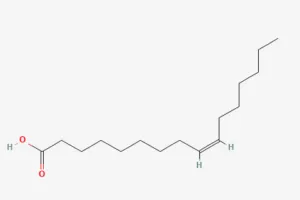
“Omega-7” describes where the first double bond sits in a fatty acid chain: seven carbons in from the tail end. Palmitoleic acid (PubChem CID 445638) is a 16-carbon monounsaturated fatty acid with that bond, written 16:1 n-7 (Bridges 2025, PMID 40456315 [6]). Confirmed Unlike linoleic and alpha-linolenic acid it is not an essential nutrient. The body makes it from palmitic acid using the enzyme stearoyl-CoA desaturase 1 (Sasagawa 2021, PMID 34444963 [2]). Confirmed The omega-3 and omega-6 labels carry real nutritional meaning because those fats must come from food. “Omega-7” borrows that vocabulary for a fat the body can make itself.
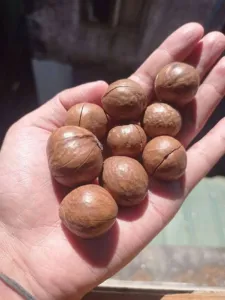
It is not rare in the diet. The main food sources are seafood and some vegetable oils, and two plant foods stand out for high levels: sea buckthorn pulp and macadamia nuts (Bridges 2025, PMID 40456315 [6]). Confirmed The macadamia is an Australian plant. The Atlas of Living Australia holds nearly a thousand occurrence records for Macadamia integrifolia, about two-thirds of them in Queensland (ALA records [10]). Evidence suggests An Australian looking for dietary palmitoleic acid has a native source in the pantry.
Where the capsule oil comes from
Read the ingredient list. Of the two recent randomised trials of omega-7 supplements we read, one used a fish oil blend from Alaskan pollock and the other a “marine-source” palmitoleic acid oil (Sasagawa 2021, PMID 34444963 [2]; Bridges 2025, PMID 40456315 [6]). Confirmed Neither was sea buckthorn. The products sold in Australia under sea buckthorn names that we checked on the ARTG list Hippophae rhamnoides as the active ingredient, from fruit, seed, or both (chapter 10). Some products sold elsewhere as “omega-7” may be fish-derived; a label that says only “omega-7” does not tell you which.
The human trials of palmitoleic acid
Much of the early interest in omega-7 supplements traced back to a 2014 trial reporting that purified palmitoleic acid lowered C-reactive protein (CRP, a blood marker of inflammation), triglycerides and LDL cholesterol in 60 adults. That paper was retracted in 2021 (retraction notice 2021, PMID 34144766 [7]). Confirmed According to the retraction statement as quoted by later researchers, the paper raised “serious concerns about Food and Drug Administration guidance and about data or statistical interpretation”, and its claimed statistical accuracy was “not consistent with known variability” of blood lipids (Sasagawa 2021, PMID 34444963 [2]). Confirmed Huang and colleagues had also pointed out that its placebo held 1,000 mg of medium-chain saturated fat and was not inert (Huang 2020, PMID 32140719 [15]).
Two independent attempts to find that effect have failed. At Bastyr University, 56 adults with chronic musculoskeletal discomfort were randomised in a crossover trial to 688 mg a day of palmitoleic acid (a pollock-derived oil) or a medium-chain triglyceride placebo for three weeks each; among the 50 who completed it there was no difference in CRP, TNF-α or IL-6, and no difference in pain or fatigue scores (Sasagawa 2021, PMID 34444963 [2]). Confirmed The investigators also found that the capsules contained 344 mg of palmitoleic acid each, half as much again as the 227 mg on the certificate of analysis (Sasagawa 2021, PMID 34444963 [2]). In a larger trial from North Carolina, 123 adults with CRP of 2 mg/L or more took 500 mg or 1,000 mg of palmitoleic acid or placebo daily for 12 weeks. CRP did not change, and neither did IL-6, TNF-α, fasting glucose, insulin, HbA1c, LDL cholesterol, triglycerides or the appetite hormones measured (Bridges 2025, PMID 40456315 [6]). Confirmed Both trials were industry-funded (by Barlean’s Organic Oils and by Wiley Companies respectively), which makes their null results harder to dismiss.
Sea buckthorn oil itself was tested for how much palmitoleic acid reaches the blood. In a small Tufts University dose-escalation trial, 13 adults took an unmodified sea buckthorn oil (380 to 1,520 mg of cis-palmitoleic acid a day) and an oil enriched in the trans form, each for three weeks per dose. Blood phospholipid levels rose modestly, there were no adverse effects, and glucose, insulin and lipids did not change, though the study was not designed to detect such changes (Huang 2020, PMID 32140719 [15]). Confirmed The interest in the trans isomer comes from observational studies linking it with a lower incidence of type 2 diabetes (Huang 2020, PMID 32140719 [15]). Evidence suggests We note for completeness that one of the authors is a co-inventor on university patents for using trans-palmitoleic acid in insulin resistance and diabetes, as the paper discloses (Huang 2020, PMID 32140719 [15]).
Taken together, the trials do not support the idea that an omega-7 capsule lowers inflammation in generally healthy adults. Confirmed A pilot of 720 mg a day in 20 people with ulcerative colitis reported lower CRP and IL-6, as cited in both trial reports (Bridges 2025, PMID 40456315 [6]; Huang 2020, PMID 32140719 [15]); we have not read it and give it no weight here beyond noting that it exists. We found no trial showing weight loss with palmitoleic acid or sea buckthorn oil. Evidence suggests
Chapter 8Clinical evidence: eyes, mucosa, skin, heart
Several of the trials below, including the eczema trial and the 2013 berry trial, were run at the University of Turku in Finland, and the dry-eye trial shares authors with them, as the 2013 trial’s own reference list shows (Bath-Hextall 2012, PMID 22336810 [16]; Larmo 2013, PMID 23945716 [13]). Confirmed The PubMed record of the vaginal trial lists Larmo, Yang and Kallio among its authors as well. The 2013 trial declares commercial links: its first author was an employee of Aromtech Ltd of Tornio, Finland, which was also among its funders with other Finnish food companies (Larmo 2013, PMID 23945716 [13]). Confirmed Industry-linked research is common in this field and is no reason to discard it. It is a reason to want replication by other groups, and for most of these outcomes there is none yet.
The primary reports of the Finnish dry-eye trial (2010), its tear-fatty-acid companion (2011), a later eye-spray trial (2019) and the postmenopausal vaginal trial (2014), together with a 2022 meta-analysis of metabolic outcomes and the original eczema trial (1999), were sought in November 2026 through open-access copies and the Institute’s library request queue, and had not been obtained in full text when this review was written. Under our rules we do not cite a paper we have not read in full. Where those trials are described below, the description comes from the full-text reviews named in each citation, and it is graded as second-hand. One of those reviews, Solà Marsiñach and Cuenca, attaches its account of the vaginal trial to the reference for a different Finnish trial, which is one more reason to read the original.
Dry eye
Dry eye appears among the indications of two of the three ARTG entries we read (chapter 10), and it has the best single trial behind it. As described by Solà Marsiñach and Cuenca, a randomised, double-blind, placebo-controlled parallel trial recruited 100 volunteers with dry eye, who took 2 g of sea buckthorn oil or placebo daily for three months during the cold season. The oil group had a smaller rise in tear film osmolarity, a measure of tear concentration that climbs as dry eye worsens, and there were signs of an effect on the worst burning and redness symptoms (Solà Marsiñach and Cuenca 2019, PMID 31228942 [5]). Evidence suggests The rodent work in chapter 6 supplies a plausible route, through palmitoleic acid, though the trial oil also contained alpha-linolenic acid and the review attributes the effect partly to omega-3 (Solà Marsiñach and Cuenca 2019, PMID 31228942 [5]; Nakamura 2017, PMID 28379171 [12]). Mechanism
That is a respectable start and a thin base for a confident label. It is one trial, of modest size, with an effect on a laboratory measure and only partial effects on symptoms, and it needs an independent repeat. A product that says “relieve dry eyes” is using an indication the TGA permits for listed medicines (chapter 10), which is a different thing from the claim having been evaluated. Dry eye can hide other problems. A red eye that is painful, sensitive to light or accompanied by any change in vision needs same-day assessment, and persistent symptoms deserve an examination before a supplement is tried.
Vaginal dryness after menopause
In the same Finnish programme, 116 postmenopausal women were randomised to 3 g a day of sea buckthorn oil, about 24% palmitoleic acid, or placebo for three months. Solà Marsiñach and Cuenca describe a positive trend in the vaginal health index, a clinical score of the vaginal lining, in the oil group, and Liu and colleagues describe an improvement without any rise in circulating oestrogen (Solà Marsiñach and Cuenca 2019, PMID 31228942 [5]; Liu 2026, PMID 41868122 [3]). Evidence suggests Liu and colleagues read that as pointing to a local, possibly anti-inflammatory effect on the mucosa (Liu 2026, PMID 41868122 [3]). Mechanism An earlier report of five women given sea buckthorn capsules for 12 weeks, three of whom improved, is too small to add much (Solà Marsiñach and Cuenca 2019, PMID 31228942 [5]). For women who cannot or prefer not to use vaginal oestrogen, this is a lead worth an independent trial. It is not yet a replacement for treatments with much larger evidence bases. Any vaginal bleeding after menopause needs prompt assessment, whatever else is being used.
Atopic eczema
The eczema evidence is clearer, and it is negative. The Cochrane review of dietary supplements for established atopic eczema included one sea buckthorn trial: 49 evaluable adults in Turku took 5 g a day of seed oil, pulp oil or paraffin-oil placebo for four months. There was no significant difference in the SCORAD eczema severity score between either oil and placebo at one or four months; for seed oil against placebo at four weeks the mean difference was -5.70 points (95% CI -17.75 to 6.35) (Bath-Hextall 2012, PMID 22336810 [16]). Confirmed The trial was far too small to rule out a modest benefit, and the Cochrane authors made the same point about every supplement they reviewed (Bath-Hextall 2012, PMID 22336810 [16]). Topical use on skin is a separate question that has barely been tested in people (Song 2025, PMID 41306783 [14]). Evidence suggests
Cholesterol, blood pressure and the heart
The cardiovascular trials are small and mixed. In the 80-woman Turku crossover trial, a month of sea buckthorn oil produced downward trends in total, IDL and LDL cholesterol in women whose baseline metabolic profile suggested higher risk, and dried berries lowered triglycerides and VLDL in the same group; most individual changes were not statistically significant after correction for multiple testing, and a berry-phenolic extract mixed with maltodextrin pushed triglycerides up (Larmo 2013, PMID 23945716 [13]). Evidence suggests A review of the cardiovascular literature tabulates other small trials of berries, juice and flavonoids, some reporting lower blood pressure or better lipids and others no change (Chen 2024, PMID 39494241 [1]). Evidence suggests
One of the trials that review relies on, a 2017 Indian study reporting that 0.75 mL a day of seed oil normalised blood pressure and lowered cholesterol in hypertensive people, was retracted by its journal in 2026 (retraction notice 2026, PMID 41735131 [17]; Chen 2024, PMID 39494241 [1]). Confirmed Reviews written before the retraction still carry its findings. We do not use it, and readers should discount any summary of sea buckthorn and blood pressure that leans on it. A 2022 systematic review and meta-analysis of metabolic-syndrome outcomes exists and is on our reading list; we report none of its findings until we have read it.
Colds, infections and immunity
A randomised trial in 229 healthy adults given 28 g a day of a sea buckthorn berry preparation (juice in the review’s text, berries in its table) or placebo for 90 days is reported to have lowered CRP and raised blood flavonols, with no effect on blood lipids (Chen 2024, PMID 39494241 [1]). Evidence suggests We have not read the primary report, so we make no claim either way about colds or infections. “Immune support” on a sea buckthorn label rests, as far as we could find, on that trial, on laboratory work and on the berries’ vitamin C. Evidence suggests
Weight
We found no trial in which sea buckthorn oil, berries or palmitoleic acid caused meaningful weight loss. Evidence suggests In the small platelet trial, five grams a day of berry oil for four weeks did not change body weight (Chen 2024, PMID 39494241 [1]). The weight-loss association comes from rodent lipokine studies and from marketing, and the human data on palmitoleic acid and body fat point, if anything, the other way (chapter 6).
Chapter 9Safety and interactions
Sea buckthorn has the safety profile of a food plant, which is what it mostly is. In rats given sea buckthorn oil for 90 days there were no deaths or signs of toxicity, mice tolerated acute doses above 20 mL/kg, and genotoxicity tests (bacterial mutation, mouse micronucleus and sperm morphology) were negative (Chen 2024, PMID 39494241 [1]). Evidence suggests A rat teratology study found the oil was not toxic to pregnant rats or their embryos (Chen 2024, PMID 39494241 [1]). Evidence suggests A leaf extract had an LD50 above 10 g/kg in rats (Chen 2024, PMID 39494241 [1]). One observation runs the other way: rats given a sea buckthorn extract at 250 or 500 mg/kg daily for 90 days had raised blood glucose, which returned to normal two weeks after stopping, and 100 mg/kg was set as the no-observed-adverse-effect level (Chen 2024, PMID 39494241 [1]). Evidence suggests We do not know how that translates to people.
In human trials adverse events have been few and mild. The Tufts dose-escalation trial reported none (Huang 2020, PMID 32140719 [15]). In the Bastyr omega-7 trial, the events on active capsules were single reports of gas, loose stools, other gut symptoms, drowsiness and constipation, much like those on placebo (Sasagawa 2021, PMID 34444963 [2]). Confirmed Liu and colleagues are right that systematic long-term human safety data, and maximum tolerated doses for the different extracts and routes, are still missing (Liu 2026, PMID 41868122 [3]). Confirmed
| Situation | What the evidence says | Tag |
|---|---|---|
| Anticoagulants and antiplatelet drugs (warfarin, apixaban, rivaroxaban, aspirin, clopidogrel) | Berry oil 5 g/day reduced ADP-induced platelet aggregation in 11 healthy men (Chen 2024, PMID 39494241 [1]); extracts inhibit platelets in vitro. No interaction trial. Added bleeding risk is possible in principle. | Mechanism |
| Before surgery | No data. The platelet finding is the only reason for caution; tell your surgical team about any supplement. | Mechanism |
| Diabetes medicines | No human interaction data. One rat study saw raised glucose at high extract doses (Chen 2024, PMID 39494241 [1]); omega-7 trials saw no glucose change (Bridges 2025, PMID 40456315 [6]). | Evidence suggests |
| Pregnancy and breastfeeding | No human data. Rat teratology negative (Chen 2024, PMID 39494241 [1]). Ordinary food amounts of the fruit are a different matter from concentrated capsules. | Evidence suggests |
| Children | No trials of capsules in children were found. The berries, juice and purée are foods, and ordinary food use says nothing about concentrated capsule doses in children. | Evidence suggests |
| Allergy | We found no published case series of allergy in the sources we read; any plant food can cause allergy in a sensitised person. | Mechanism |
| Traditional caution | Tibetan sources note “mild impacts on the gallbladder” with excessive consumption (Liu 2026, PMID 41868122 [3]). | Traditional |
The berries are very acidic, and the pulp oil is intensely coloured. Neither is a hazard in itself. A person who reacts badly to a new supplement should stop it, and anyone with symptoms of a bleeding problem, such as unusual bruising, nosebleeds or black stools, should seek medical care promptly. If a child swallows someone else’s capsules, or anyone takes a large overdose, call the Poisons Information Centre on 13 11 26; for collapse, difficulty breathing or heavy bleeding call Triple Zero (000).
Chapter 10In Australia: listings, foods and labels
In Australia the same plant can be sold under three different sets of rules, and which one applies depends on what the product claims. Confirmed
Listed medicines
Hippophae rhamnoides is a permissible ingredient for listed medicines. The Therapeutic Goods (Permissible Ingredients) Determination (No. 2) 2026 includes it at item 2563 as an active ingredient, an excipient or a homoeopathic ingredient, with no specific conditions attached (Permissible Ingredients Determination 2026 [9]). Confirmed It has no entry in the October 2026 Poisons Standard, so it is unscheduled (Poisons Standard, October 2026 [18]). Confirmed
Listed medicines (AUST L on the label) are a low-risk category. The TGA pre-assesses their ingredients for quality and safety, but it does not individually evaluate a listed medicine for quality, safety or efficacy before it is supplied. The sponsor certifies that the product meets requirements and must hold evidence for its indications, which the TGA can ask to see in a compliance review (TGA, listed medicines [19]). Confirmed Indications are chosen from a fixed list of permitted indications (TGA, listed medicines [19]).
The public summaries of three ARTG entries we read in November 2026 show what this looks like in practice (ARTG public summaries [20]). Confirmed One soft capsule (ARTG 401500) contains 400 mg of a fruit liquid extract concentrate and 100 mg of a seed liquid extract concentrate, and lists indications including “Relieve dry eyes”, “Maintain/support vaginal health in post-menopausal women”, “Maintain/support skin hydration” and antioxidant claims. A second (ARTG 449617) contains 500 mg of a fruit soft extract concentrate and lists dry-eye, eye-redness, skin and vaginal-health indications worded for females. A third (ARTG 136278), listed since 2007, contains 500 mg of seed fixed oil and lists only skin indications. The eye indications carry the condition that the product must not imply vision correction or serious eye disease such as macular degeneration (ARTG public summaries [20]). Confirmed None of the three is described on the ARTG as omega-7.
Two things are worth noticing. The products that claim dry-eye relief contain fruit extract, which fits the chemistry and the rodent work, and the seed-oil product does not claim it. And the amounts are not directly comparable with the trials: each capsule holds 500 mg of extract or oil, while the Finnish trials, as reported, used 2 to 3 g of oil a day. Because the fruit ingredients are recorded as extract concentrates, the oil content of a capsule cannot be read from the public summary. We make no comment on any particular product beyond what its public ARTG record shows.
Foods and cosmetics
Sea buckthorn juice, purée and berry powder sold without therapeutic claims are foods, regulated under the Australia New Zealand Food Standards Code and state food law. We found no FSANZ novel-food ruling on sea buckthorn fruit in the time available, and food sellers should check their own position. Evidence suggests Skincare containing sea buckthorn oil is regulated as a cosmetic so long as it makes cosmetic claims only. Once a product claims to treat a condition it moves into therapeutic goods territory, with its advertising subject to the TGA advertising rules. Confirmed
For consumers, the practical checklist is short: look for an AUST L number on capsules, find the plant part (fruit, pulp or seed), find the amount, and treat “omega-7” as a description of one fatty acid, not as a recommendation.
Chapter 11Quality and adulteration
Sea buckthorn oil is a variable natural product, and three kinds of variation matter. The first is botanical: subspecies, origin and harvest time shift the fatty acid profile, and the palmitoleic acid figures for berry and pulp oils in a single review run from 26% to 43% (Solà Marsiñach and Cuenca 2019, PMID 31228942 [5]). Confirmed The second is the part used and the extraction: pressing, hexane extraction and supercritical CO2 extraction of seed or pulp give different oils (Solà Marsiñach and Cuenca 2019, PMID 31228942 [5]; Zielińska and Nowak 2017, PMID 28526097 [4]). Confirmed The third is labelling. The Bastyr investigators’ finding that capsules held 344 mg of palmitoleic acid against 227 mg on the certificate of analysis is a reminder that independent analysis can disagree with paperwork (Sasagawa 2021, PMID 34444963 [2]). Confirmed
Oxidation is the everyday quality problem. Oils rich in polyunsaturated fat go rancid, and peroxide and anisidine values measure how far. The seed oil in that same table had a peroxide value of about 20.7 mEq/kg (Zielińska and Nowak 2017, PMID 28526097 [4]), just above the 10 to 20 mEq/kg range that the Bastyr authors cite as “very fresh” for fish oil (Sasagawa 2021, PMID 34444963 [2]). Evidence suggests Pulp oil, with more saturated and monounsaturated fat, is more stable, and its carotenoids and tocopherols act as natural antioxidants. Mechanism
The WHO volume on Mongolian medicinal plants gives a set of quality standards for the fruit used in traditional medicine: loss on drying not more than 75.0%, ash not more than 1.0%, juice yield not less than 70%, total acid not more than 3.0%, oil content not less than 7.0%, and assays for carotenoids by spectrophotometry and vitamin C by titration (WHO WPRO 2013 [8]). Attested Liu and colleagues identify the lack of phytochemical standardisation as the main obstacle to good clinical research on the plant (Liu 2026, PMID 41868122 [3]). Confirmed For oils sold on omega-7 content, a gas-chromatography fatty acid profile is the obvious identity and assay test, and it would show at once whether a product is pulp oil, seed oil or a fish oil. Mechanism
We found no published reports of deliberate adulteration of sea buckthorn oil in the sources we read; given the price of the oil, substitution with cheaper coloured oils is plausible and has not, to our knowledge, been surveyed on the Australian market. Mechanism
Chapter 12 · DiscussionDiscussion: conclusions, hypotheses and research still required
What we know
Sea buckthorn is a well-characterised food plant with a long traditional medical record across Tibetan, Mongolian, Chinese and Russian practice. Traditional Its berry yields two oils with sharply different chemistry: seed oil rich in linoleic and alpha-linolenic acid, and pulp oil rich in palmitoleic acid and carotenoids. Confirmed It is a permissible ingredient for Australian listed medicines and is unscheduled. Confirmed Concentrated palmitoleic acid (“omega-7”) from marine sources did not lower inflammation markers in two independent randomised trials, and the trial that suggested it would was retracted. Confirmed Sea buckthorn seed or pulp oil showed no significant benefit over placebo for atopic eczema in the one small trial assessed by Cochrane. Confirmed Short-term use in trials has been well tolerated. Confirmed
What we can reasonably hypothesise
Hypothesis 1. Oral pulp oil may ease dry eye and postmenopausal vaginal dryness through a local effect of palmitoleic acid on mucosal and glandular tissue. The rodent tear-secretion work, the vaginal trial’s lack of oestrogenic change and the pulp-oil chemistry all point the same way. Mechanism This is a hypothesis built partly on trials we have read only second-hand, and it needs an independent test.
Hypothesis 2. If the dry-eye effect is real, it should depend on the part used. A pulp-oil capsule and a seed-oil capsule should differ in effect, and a fish-derived palmitoleic acid oil should reproduce part of the pulp-oil effect. Mechanism A three-arm trial would separate the fatty acid from the rest of the berry.
Hypothesis 3. The traditional topical use of pulp oil on burns may have a real basis in wound-healing pharmacology, given the consistent animal data. Mechanism This is the oldest documented use and the least tested in people.
What research is still required
Medicine and clinical research. An independent, adequately powered, randomised, placebo-controlled trial of oral pulp oil in dry eye, using validated symptom scores (such as OSDI) alongside tear osmolarity and meibomian gland measures, run by a group without a commercial interest in the oil, and dosed at the 2 g a day used in the Finnish work. A similar trial for postmenopausal vaginal dryness, with an active comparator arm. A registered trial of topical pulp oil on partial-thickness burns or radiation dermatitis.
Quality analysis and regulatory science. A market survey of sea buckthorn and “omega-7” products sold in Australia: gas-chromatography fatty acid profiles to confirm pulp versus seed versus fish origin, palmitoleic acid per capsule against the label, and peroxide and anisidine values at purchase. That is a modest HPLC/GC project well suited to an Australian university or independent laboratory, and it would show whether the label “omega-7” tells shoppers anything reliable.
Pharmacology and toxicology. Counter-screened, dose-response work on the flavonoid fractions to separate genuine activity from PAINS artefacts, as Liu and colleagues urge; a human study of platelet function and INR in people taking warfarin or a direct oral anticoagulant alongside the oil; and formal long-term and reproductive toxicity studies on standardised pulp oil.
Botany, ethnobotany and history. A properly sourced account of the Tibetan and Mongolian texts from critical editions, and a weed-risk assessment for Australia before anyone proposes cultivation here. For the Institute’s own region, the more interesting question may be local: Australian native plants with high palmitoleic acid, beginning with the macadamia, deserve a proper look of their own.
Evidence synthesis. The full texts of the Finnish dry-eye, eye-spray and vaginal trials and of the 2022 meta-analysis are on the Institute’s library request list. Until they have been read, everything this review says about those trials is second-hand, and direct readings of them are the first gap to close.
About AIP and this series
The Australian Institute of Pharmacognosy is a clinic and research laboratory in Cardwell, far north Queensland, studying medicinal plants and natural products to the same evidentiary standard as any other branch of pharmacology: traditional knowledge taken seriously, and tested honestly.
The Literature Reviews and Critical Analyses are the Institute’s evidence-graded reviews of herbs Australians are buying, searching for or asking about. Each one grades every claim by the evidence behind it, so you can see what is tradition, what is laboratory or animal work, and what has been tested in people. Nothing in the series is an offer of treatment, a product or a service. More reviews are on the Institute’s journal, and the Institute itself is at australian-pharmacognosy.org. Follow the series there for the next review.
Corrections. If you find an error, or a source we have missed, please write to the Institute at our contact form; the Secretary passes every message to the author, and corrections are made openly.
Dr Thomas Ridley
Head of Education and Research
Australian Institute of Pharmacognosy
Cardwell QLD, Australia
australian-pharmacognosy.org · our contact form
Suggested citation: Ridley T. Sea buckthorn (Hippophae rhamnoides L.): a literature review and critical analysis. Literature Review and Critical Analysis AIP-LR-HIPRHA. Cardwell (QLD): Australian Institute of Pharmacognosy; 2026.
Educational content only; not medical, legal or regulatory advice. The Permissible Ingredients Determination, Poisons Standard, ARTG summaries and Atlas of Living Australia records are described as read by the Institute in November 2026 and may change.
References
Show all 20 references (every PMID links to PubMed)
All PMIDs verified against PubMed in November 2026, and every cited paper read in full; retraction notices are cited as records of retraction. Regulatory and web sources read the same month. Listed in order of first citation. Trials requested but not yet read in full are described only through the reviews cited beside them and are not listed here.
- Chen Y, He W, Cao H, Wang Z, Liu J, Wang B, et al. Research progress of sea buckthorn (Hippophae rhamnoides L.) in prevention and treatment of cardiovascular disease. Front Cardiovasc Med. 2024;11:1477636. PMID 39494241. DOI 10.3389/fcvm.2024.1477636.
- Sasagawa M, Boclair MJ, Amieux PS. Omega-7 mixed fatty acid supplementation fails to reduce serum inflammatory biomarkers: a placebo-controlled, double-blind randomized crossover trial. Nutrients. 2021;13(8):2801. PMID 34444963. DOI 10.3390/nu13082801.
- Liu M, Yu T, Nurlan U, Wu Z, Zhao J. Ethnopharmacology, phytochemistry, and pharmacology of sea buckthorn (Hippophae rhamnoides L.): a comprehensive review. Front Pharmacol. 2026;17:1759697. PMID 41868122. DOI 10.3389/fphar.2026.1759697.
- Zielińska A, Nowak I. Abundance of active ingredients in sea-buckthorn oil. Lipids Health Dis. 2017;16(1):95. PMID 28526097. DOI 10.1186/s12944-017-0469-7.
- Solà Marsiñach M, Cuenca AP. The impact of sea buckthorn oil fatty acids on human health. Lipids Health Dis. 2019;18(1):145. PMID 31228942. DOI 10.1186/s12944-019-1065-9.
- Bridges MD, Vennam SS, Davis T, Wilcox ML, Maki KC, Shea J, et al. Effects of a palmitoleic acid concentrated oil on C-reactive protein levels in adults: a randomized, double-blind placebo-controlled clinical trial. Am J Clin Nutr. 2025;122(5):1243-1251. PMID 40456315. DOI 10.1016/j.ajcnut.2025.05.032.
- Retraction notice to “Purified palmitoleic acid for the reduction of high-sensitivity C-reactive protein and serum lipids: a double-blinded, randomized, placebo controlled study” (Bernstein AM, Roizen MF, Martinez L; J Clin Lipidol 2014;8(6):612-617). J Clin Lipidol. 2021;15(3):522. Cited as the record of retraction; the reason is quoted from Sasagawa 2021. PMID 34144766. DOI 10.1016/j.jacl.2021.03.003.
- World Health Organization Regional Office for the Western Pacific. Medicinal plants in Mongolia. Manila: WHO WPRO; 2013. Entry for Hippophae rhamnoides (Willd.) L., pp. 82-83. Copy held in the Institute library; read in November 2026. https://www.who.int/publications/i/item/9789290616320
- Therapeutic Goods (Permissible Ingredients) Determination (No. 2) 2026 (F2026L00707), commenced 12 June 2026. Schedule 1, item 2563, HIPPOPHAE RHAMNOIDES (permitted as A, E, H). Federal Register of Legislation; read by the Institute in November 2026. https://www.legislation.gov.au/F2026L00707/asmade/text
- Atlas of Living Australia. Occurrence records for Hippophae rhamnoides (63 records; none with an Australian location) and Macadamia integrifolia, queried by the Institute in November 2026. Counts change as records are added. https://biocache.ala.org.au/occurrences/search?q=taxon_name%3A%22Hippophae%20rhamnoides%22
- Gerard J. The Herball or Generall Historie of Plantes. London; 1633 edition. Woodcut of “Sallow-Thorne”, digitised by the Wellcome Collection (image M0016376), via Wikimedia Commons. https://commons.wikimedia.org/wiki/File:Sallow-Thorne,_John_Gerard,_1633_Wellcome_M0016376.jpg
- Nakamura S, Kimura Y, Mori D, Imada T, Izuta Y, Shibuya M, et al. Restoration of tear secretion in a murine dry eye model by oral administration of palmitoleic acid. Nutrients. 2017;9(4):364. (PubMed lists the authors from Kimura Y.) PMID 28379171. DOI 10.3390/nu9040364.
- Larmo PS, Kangas AJ, Soininen P, Lehtonen HM, Suomela JP, Yang B, et al. Effects of sea buckthorn and bilberry on serum metabolites differ according to baseline metabolic profiles in overweight women: a randomized crossover trial. Am J Clin Nutr. 2013;98(4):941-951. PMID 23945716. DOI 10.3945/ajcn.113.060590.
- Song X, Sun X, Yuan H, Tang Y, Zheng F. The role of sea buckthorn in skin and mucosal health: a review from an anti-inflammatory perspective. Front Pharmacol. 2025;16:1643146. PMID 41306783. DOI 10.3389/fphar.2025.1643146.
- Huang NK, Matthan NR, Galluccio JM, Shi P, Lichtenstein AH, Mozaffarian D. Supplementation with seabuckthorn oil augmented in 16:1n-7t increases serum trans-palmitoleic acid in metabolically healthy adults: a randomized crossover dose-escalation study. J Nutr. 2020;150(6):1388-1396. PMID 32140719. DOI 10.1093/jn/nxaa060.
- Bath-Hextall FJ, Jenkinson C, Humphreys R, Williams HC. Dietary supplements for established atopic eczema. Cochrane Database Syst Rev. 2012;(2):CD005205. PMID 22336810. DOI 10.1002/14651858.CD005205.pub3.
- Retraction notice to “Effect of seabuckthorn seed oil in reducing cardiovascular risk factors: a longitudinal controlled trial on hypertensive subjects” (Vashishtha V, et al.; Clin Nutr 2017;36(5):1231-1238). Clin Nutr. 2026;59:106600. Cited as the record of retraction only; the original trial is not used as evidence here. PMID 41735131. DOI 10.1016/j.clnu.2026.106600.
- Therapeutic Goods (Poisons Standard—October 2026) Instrument 2026 (F2026L01327). Federal Register of Legislation. Full text searched by the Institute in November 2026 for Hippophae, sea buckthorn and palmitoleic acid; no entry found. The Standard is amended several times a year. https://www.legislation.gov.au/F2026L01327/asmade/text
- Therapeutic Goods Administration. Listed medicines: overview (last updated 15 November 2023). Read by the Institute in November 2026. https://www.tga.gov.au/products/medicines/listed-medicines/overview/listed-medicines
- Australian Register of Therapeutic Goods. Public summaries for ARTG 401500 (Sea Buckthorn Oil), 449617 (Sea Buckthorn Clinical) and 136278 (Mongolian Seabuckthorn 100%), produced 19 November 2026 from the TGA eBusiness Services public summary service. Read by the Institute in November 2026; entries can change. https://www.tga.gov.au/resources/artg/401500
Image credits
- Hippophaë rhamnoides DSCN3694-01.jpg · Jaana Siitonen · CC BY 4.0 · resized by the Institute.
- Hippophae rhamnoides – geograph.org.uk – 4634660.jpg · Bob Harvey · CC BY-SA 2.0 · resized by the Institute.
- Hippophae rhamnoides (sea buckthorn), fruiting shrub (SaatPilot).jpg · Steffen Bauer (saatpilot.de) · CC BY 4.0 · resized by the Institute.
- Hippophae rhamnoides female flowers.jpg · Proton02 · CC0 · resized by the Institute.
- Hippophae rhamnoides male flowers.jpg · Proton02 · CC0 · resized by the Institute.
- Hippophae rhamnoides Sturm41.jpg · Johann Georg Sturm (Painter: Jacob Sturm) · Public domain · resized by the Institute.
- Seabuckthorn berries, Nubra valley, Ladakh.jpg · Karunakar Rayker from India · CC BY-SA 2.0 · resized by the Institute.
- Sallow-Thorne, John Gerard, 1633 Wellcome M0016376.jpg · Wellcome Collection (John Gerard, The Herball or Generall Historie of Plantes, 1633 edition) · CC BY 4.0 · resized by the Institute; converted to greyscale.
- Ripe berries of sea-buckthorn. Selenginsky district, Buryatia, Russia.jpg · Bgelo777 · CC BY-SA 4.0 · resized by the Institute.
- Hippophae rhamnoides (sea buckthorn), fruit, close-up (SaatPilot).jpg · Steffen Bauer (saatpilot.de) · CC BY 4.0 · resized by the Institute.
- Macadamia nuts.jpg · စာကလေး SarKaLay · CC0 · resized by the Institute.
- Sea buckthorn Russia 2007.JPG · Paul144 · Public domain · resized by the Institute.
- Original sea buckthorn juice and 5-times diluted sea buckthorn juice.jpg · François Nguyen · CC BY 2.0 · resized by the Institute.
- Leh Berry Hippophae Sea-buckthorn Horticulture Agriculture Produce of India.jpg · Karunakar Rayker from India · CC BY 2.0 · resized by the Institute.
- Hippophae rhamnoides.jpg · Hans Hillewaert · CC BY-SA 3.0 · resized by the Institute.
- Chemical structures of palmitoleic acid, linoleic acid, alpha-linolenic acid, beta-carotene, alpha-tocopherol and isorhamnetin: PubChem (NCBI, US National Library of Medicine), CIDs 445638, 5280450, 5280934, 5280489, 14985 and 5281654 · structure depictions from a US Government database, public domain.
- Diagrams of the berry and its products, the fatty acid profiles and the evidence map: original figures by the Australian Institute of Pharmacognosy, CC BY 4.0, from the sources cited in their captions.
The Institute sets and publishes its own monographs. The catalogue is in Publications.